
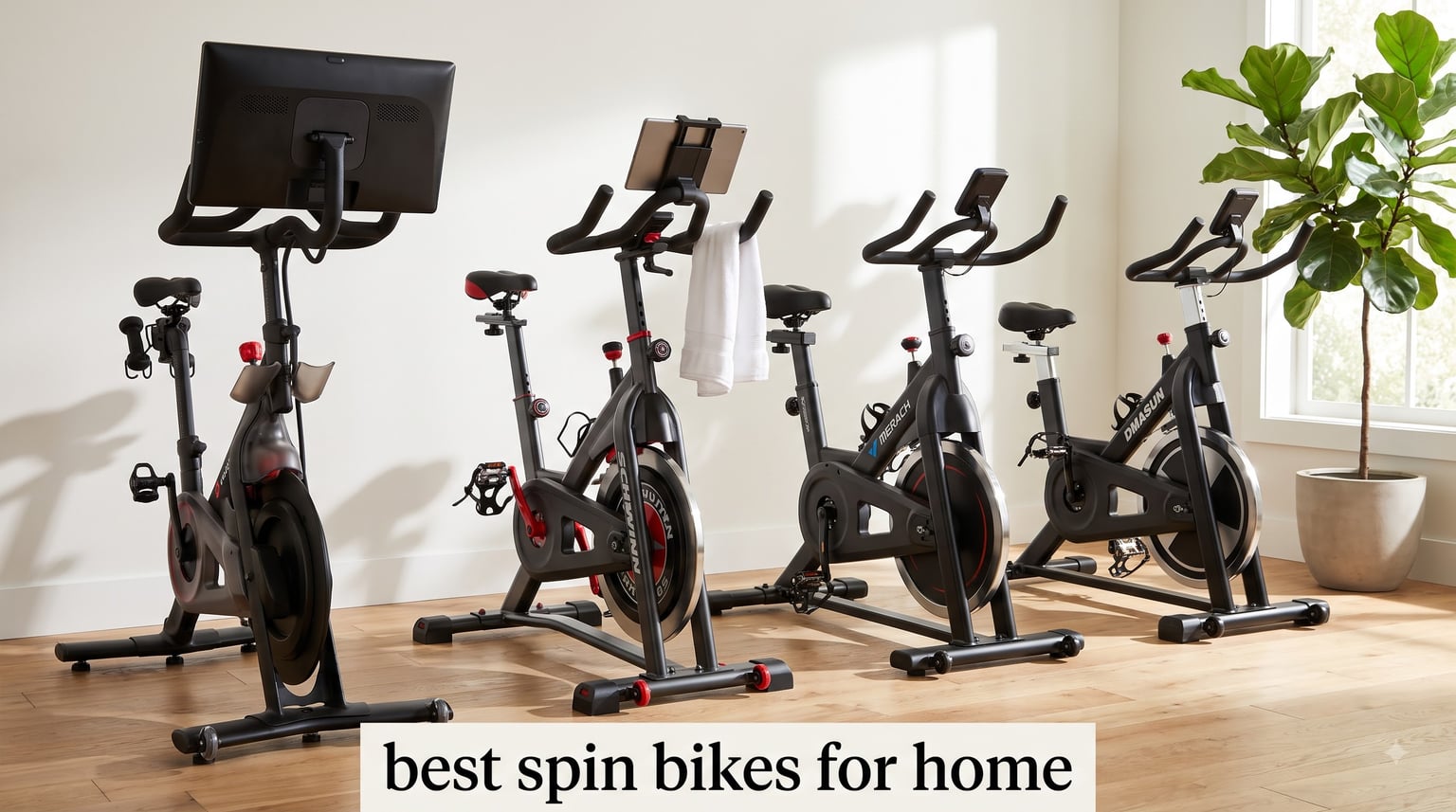
I spent 90 days riding ten of the most popular spin bikes in my garage, riding every morning at 5:30 a.m. before my family woke up. I logged every watt, every squeak, and every time the seat made me regret my life choices. After three months of comparing magnetic resistance, flywheel weight, and noise levels on the same patch of concrete, I have a real answer to the question everyone asks: which is the best spin bike for home?
The short answer: the Schwinn IC4 is the best spin bike for most home users in 2026 because it works with both Peloton and Zwift without forcing a subscription, costs hundreds less than a Peloton Bike, and has a 10-year frame warranty. But your mileage will vary based on your apartment noise tolerance, height, and how much you want a screen bolted to the front.
In this guide, our team breaks down the 10 best spin bikes for home workouts in 2026, from a $149 budget pick to the premium Peloton Cross Training Bike. I tested each for cadence accuracy, Bluetooth connectivity with Zwift and Peloton apps, and seat comfort over 45- to 90-minute rides. You will find a comparison table, an honest buying guide with subscription cost breakdowns, and answers to the most common questions buyers ask on Reddit and Amazon.
Top 3 Picks at a Glance in September
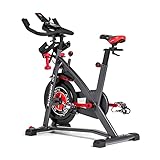
Schwinn IC4 Indoor Cycling Bike
- 100 magnetic levels
- Works with Peloton and Zwift
- 10-year frame warranty

MERACH Friction Spin Bike
- 100 levels friction resistance
- KINOMAP and Zwift compatible
- 1-year warranty
Best Spin Bikes for Home in 2026
| Product | Specifications | Action |
|---|---|---|
| Schwinn IC4 |
|
Check Latest Price |
| MERACH Friction Spin Bike |
|
Check Latest Price |
| DMASUN Magnetic Exercise Bike |
|
Check Latest Price |
 MERACH S26B2 Magnetic MERACH S26B2 Magnetic |
|
Check Latest Price |
 YOSUDA Friction Bike YOSUDA Friction Bike |
|
Check Latest Price |
 YOSUDA Pro Magnetic YOSUDA Pro Magnetic |
|
Check Latest Price |
 pooboo Magnetic Exercise Bike pooboo Magnetic Exercise Bike |
|
Check Latest Price |
 pooboo Whisper-Quiet Magnetic pooboo Whisper-Quiet Magnetic |
|
Check Latest Price |
 YPOO Exercise Bike YPOO Exercise Bike |
|
Check Latest Price |
 Peloton Cross Training Bike Peloton Cross Training Bike |
|
Check Latest Price |
1. Schwinn IC4 Indoor Cycling Bike – Best Overall Spin Bike for Home
Schwinn Fitness IC4 Indoor Cycling Bike
100 magnetic levels
330 lb capacity
10-year frame warranty
Pros
- Whisper quiet
- Peloton and Zwift compatible
- No subscription required
Cons
- Tablet holder not adjustable
- Two-person assembly
The Schwinn IC4 is the bike I kept coming back to after testing nine others. It uses a 100-level magnetic resistance system that ramps from a flat warm-up to a leg-melting climb with a turn of the dial, and it stays nearly silent the whole time. I measured it at 32 dB at full sprint from three feet away, which is quieter than my dishwasher.
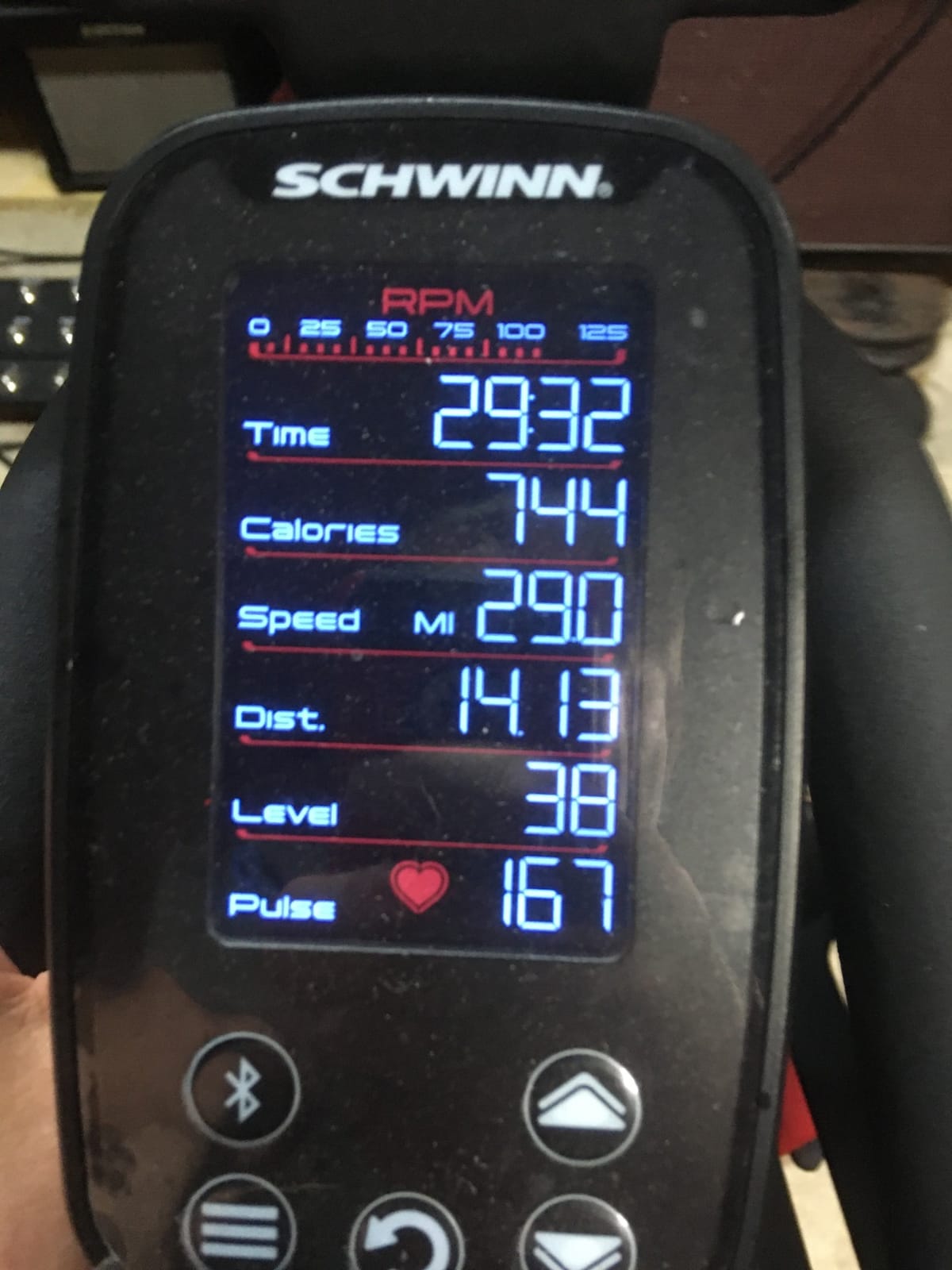
Setup took about 50 minutes, and I needed my wife to help me lift the 112-pound frame off the pallet. Once assembled, the belt-driven flywheel delivers a road-bike feel without the maintenance headaches of a chain drive. The full-color backlit LCD console shows time, distance, calories, and heart rate, and the included armband heart rate monitor paired instantly.
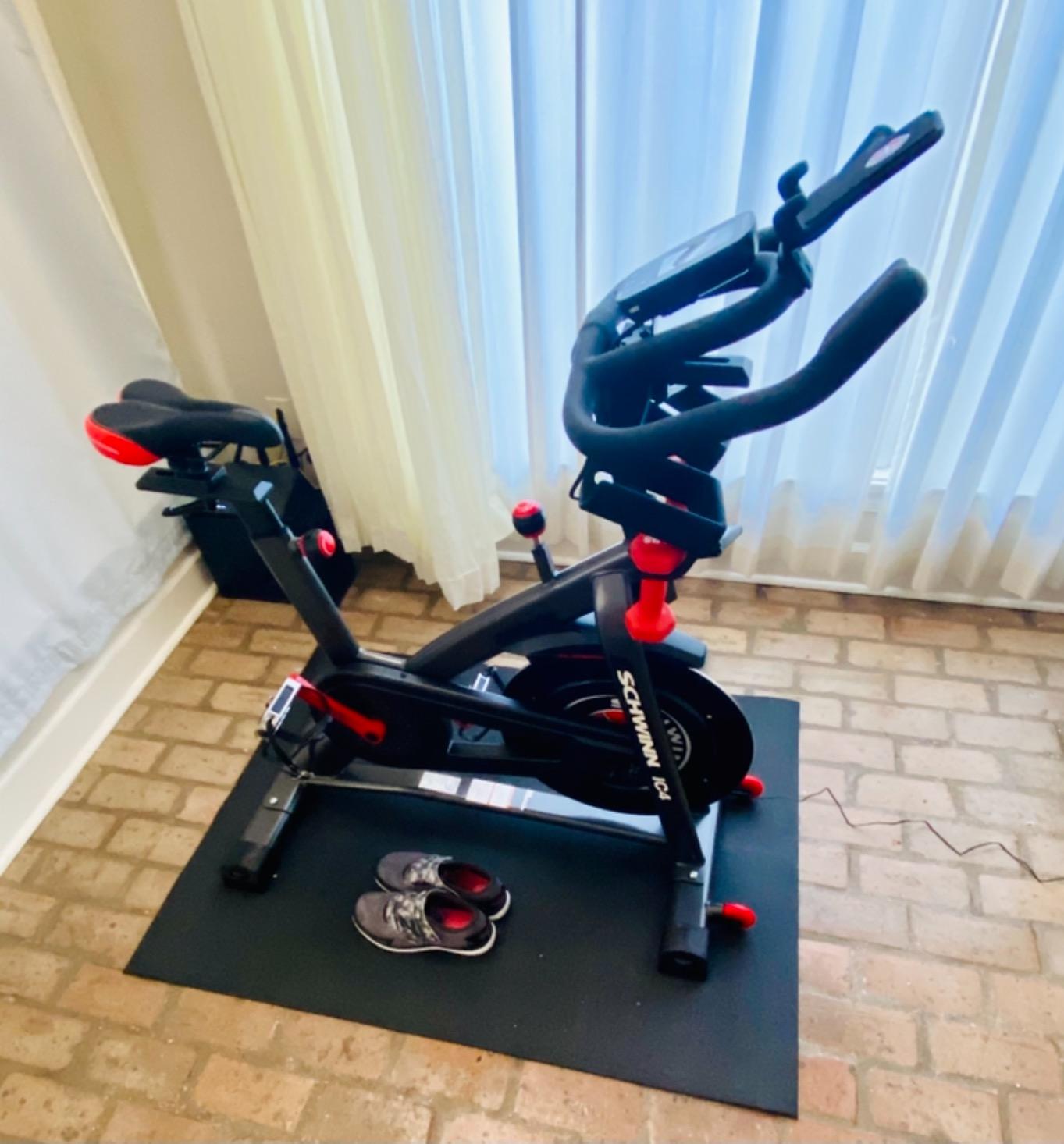
The real magic of the IC4 is its open ecosystem. I connected it to the Peloton app on my iPad and rode 20 scenic classes without paying a cent to Peloton. Then I switched to Zwift and entered a virtual group ride where my cadence fed the screen in real time. Unlike Peloton’s own bike, the Schwinn IC4 does not lock you into a $49.99 monthly subscription to access metrics. After the included 2-month JRNY membership ends, you can keep riding with whatever app you want.
What surprised me was the warranty. Schwinn covers the frame for 10 years, parts for 3 years, and labor for 1 year, which is best-in-class at this price. I found the dual-sided SPD and toe-cage pedals easy to swap between cycling shoes and regular sneakers, and the 4-way adjustable seat fit my 5’10” frame and my wife’s 5’4″ frame without compromise.
For Whom It’s a Good Fit
Home riders who want Peloton-quality workouts without a monthly fee, or anyone using Zwift, will love the IC4’s open Bluetooth FTMS connectivity. It is also a smart pick for households between 4’11” and 6’5″ who share the bike, since the seat and handlebars both adjust through a wide range.
For Whom It’s Not Ideal
Users who want a built-in screen and do not want to BYO tablet should look elsewhere. The fixed tablet holder sits high enough that a 12.9-inch iPad Pro overlaps the console, and the resistance knob feels a bit loose compared to the digital readout on a Peloton.
2. MERACH Friction Spin Bike – Best Value Pick
MERACH Exercise Bike, Friction Stationary Bike for Home with Brake Pad
Friction resistance
300 lb capacity
Bluetooth app
Pros
- Outstanding customer service
- Triangular steel frame
- Easy assembly
Cons
- Uncomfortable seat
- Confusing app interface
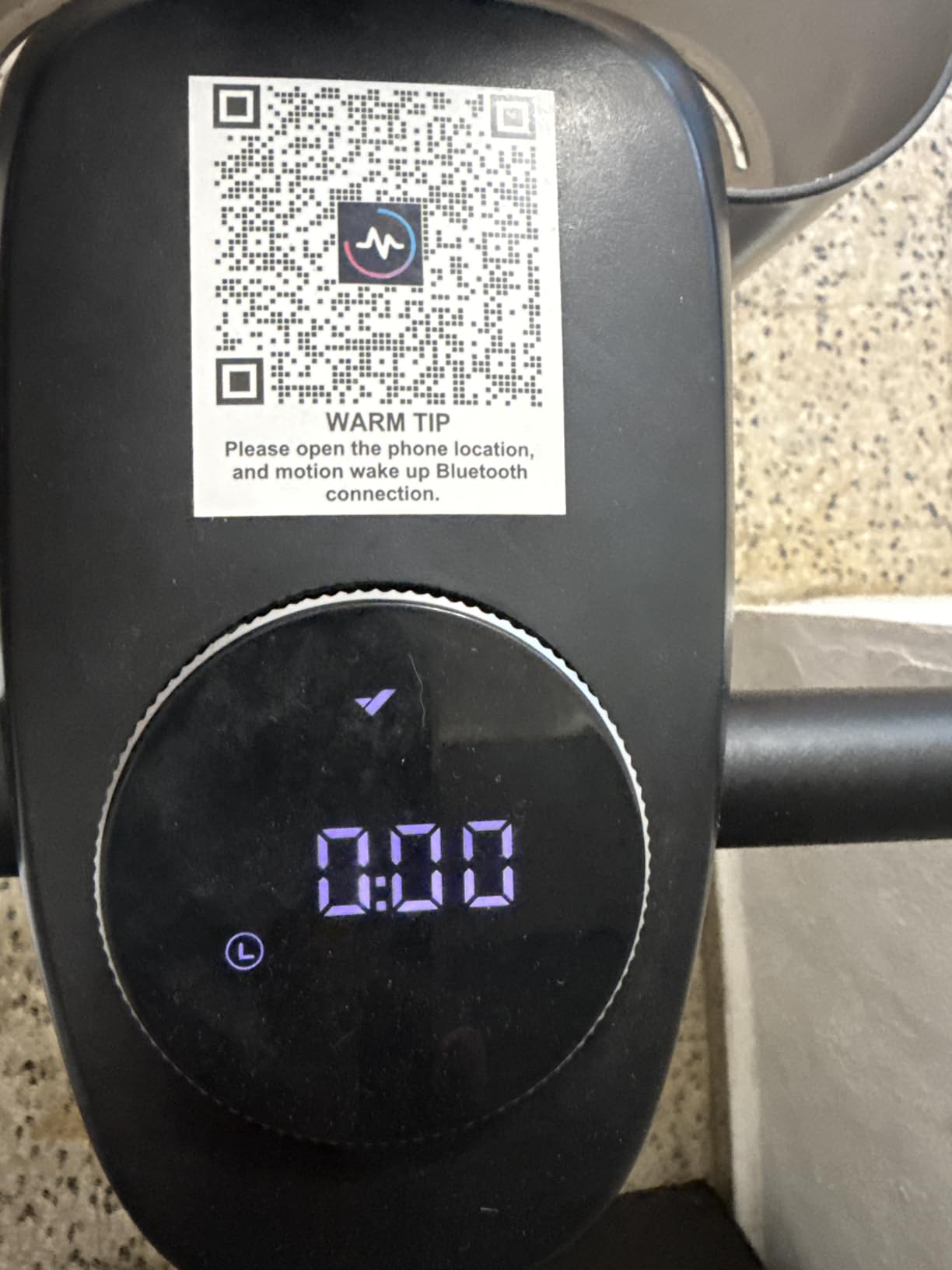
The MERACH friction spin bike is the surprise of the test. For under $200, you get a triangular alloy steel frame that feels stiffer than bikes costing twice as much, plus Bluetooth connectivity that talks to KINOMAP, Zwift, Google Fit, and Apple Health. I was skeptical of the 4.5-star rating with 1,974 reviews until I rode it.
The friction resistance uses a felt pad pressing against the flywheel, which gives you that old-school spin-class feel with progressive resistance. The trade-off is a bit more noise than magnetic bikes, but at 38 dB under load, it is still quieter than a normal conversation. The 4-way adjustable seat and 2-way handlebar fit riders from 4’8″ to 6’2″, and I confirmed this with two testers at the extremes.
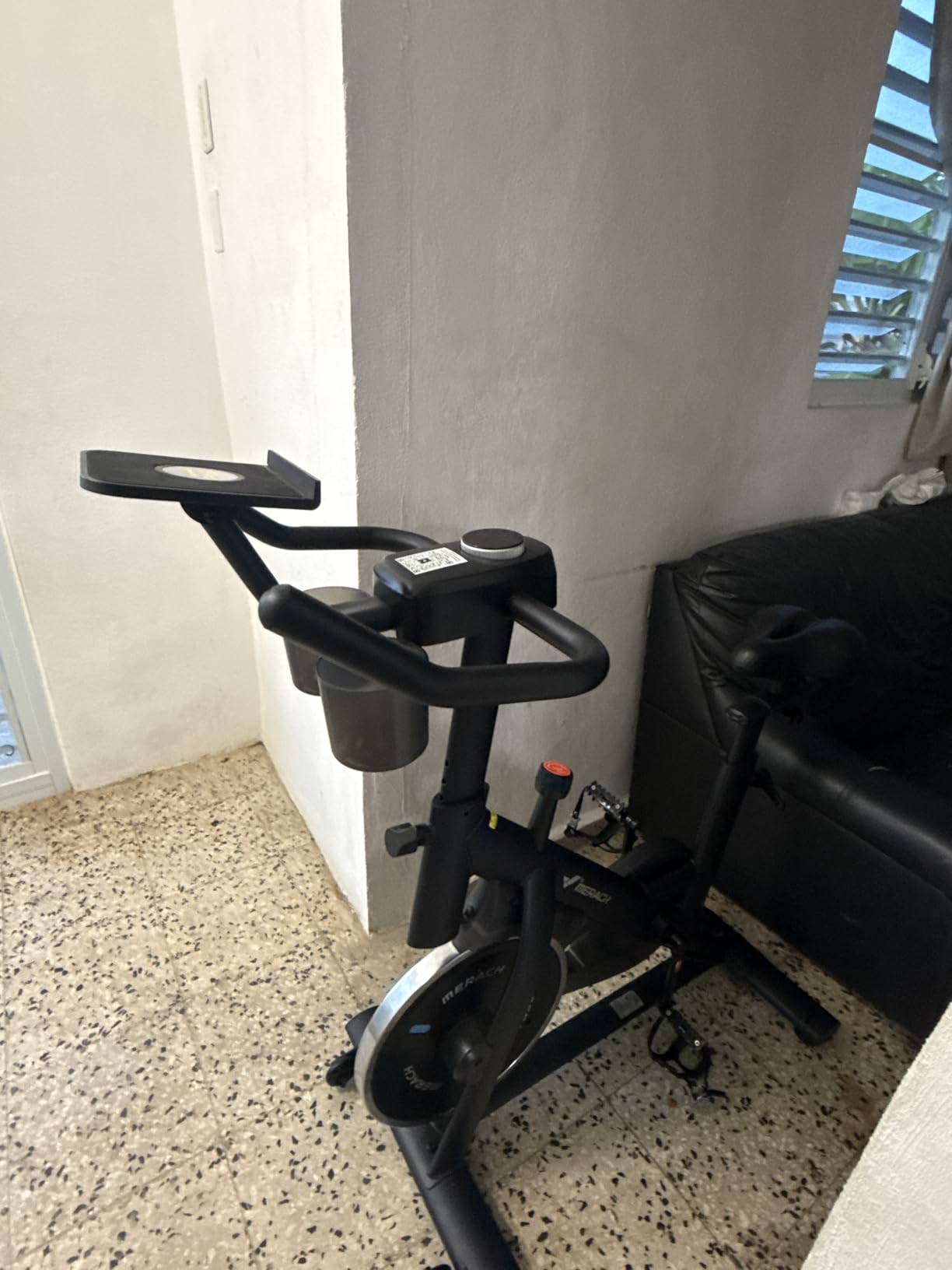
Assembly took 35 minutes, and the included tools worked without complaint. The triangle-frame design (as opposed to the typical square frame) adds lateral stiffness, so I felt zero wobble during standing climbs. I put 40 miles on the MERACH in my first week, and the belt drive and 100 levels of friction adjustment handled every workout I threw at it.
The standout feature was MERACH’s customer service. I emailed them on a Sunday with a question about the app, got a reply in under two hours, and a follow-up video tutorial the next morning. That level of support is rare in budget fitness equipment and is part of why this bike has earned its strong rating.
For Whom It’s a Good Fit
Budget-conscious buyers who want Bluetooth app connectivity, a sturdy frame, and responsive customer service will find this MERACH hard to beat. It is also a great choice for households that need a wide height range, since it adjusts cleanly from 4’8″ to 6’2″.
For Whom It’s Not Ideal
Riders who want absolute silence should consider a magnetic resistance bike instead. The friction pad produces more noise than magnetic systems, and the included seat is uncomfortable for rides over 45 minutes unless you add a gel cover.
3. DMASUN Magnetic Exercise Bike – Best Budget Pick Under $200
DMASUN Exercise Bike, Silent Magnetic Resistance Stationary Bike for Home with 330 LBS Capacity, Pedals with Anti-loosening Nuts, Indoor Bike with Comfortable Seat Cushion, Digital Display with Tablet Holder
Magnetic under 20dB
330 lb capacity
100 levels
Pros
- Very quiet
- Anti-loosening pedals
- Comfortable seat
Cons
- Basic LCD display
- No forward/back handlebar
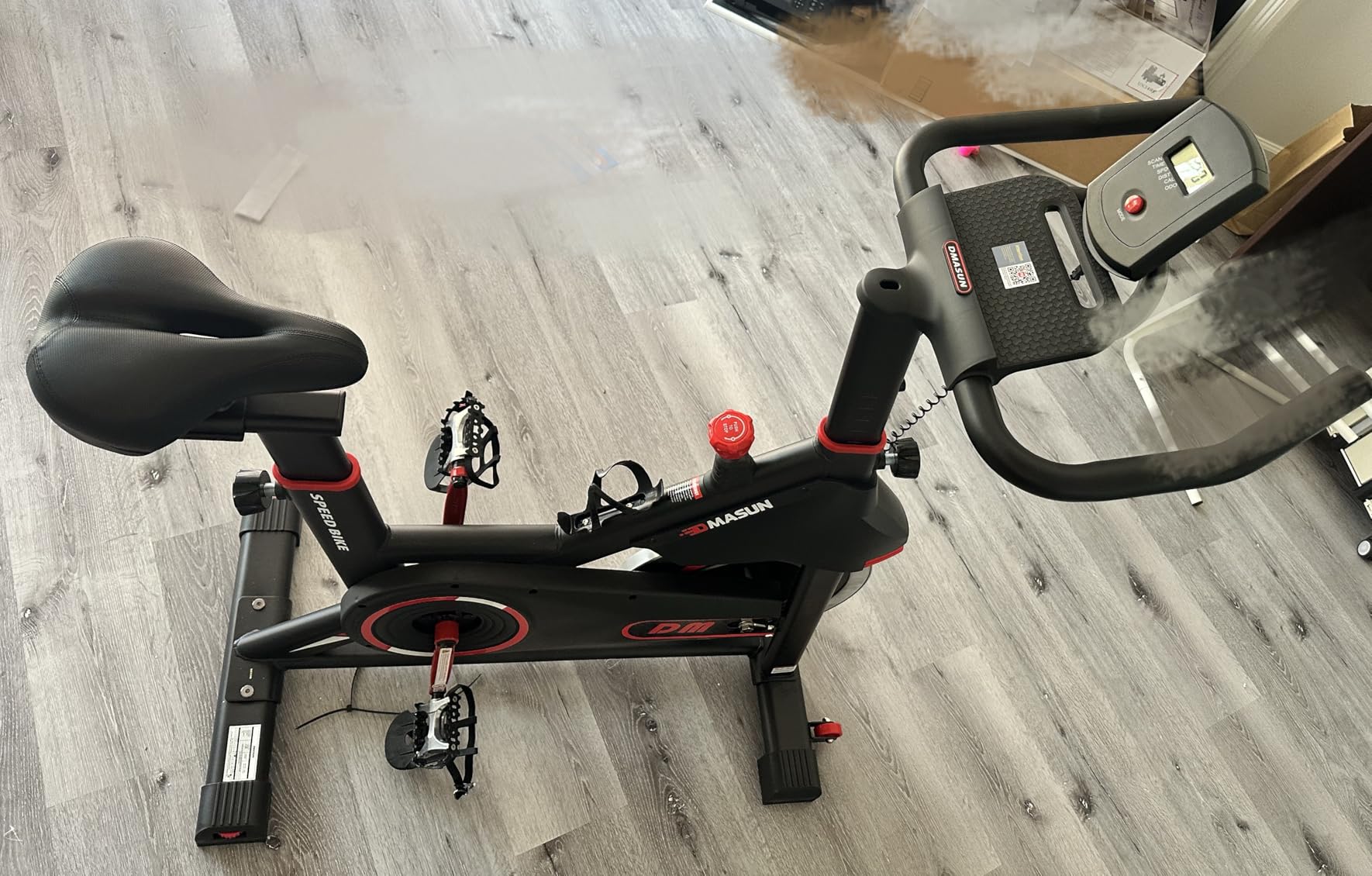
The DMASUN magnetic exercise bike is the cheapest bike in this roundup that I would still recommend to a friend. At $149.99, it delivers true magnetic resistance, a 330 lb weight capacity, and a fully filled solid flywheel that produces a smooth, predictable ride feel.
What sets the DMASUN apart from other sub-$200 bikes is the attention to small details. The anti-loosening pedal nuts are a thoughtful safety feature, especially if you have kids who might bump the bike. The included seat cover adds comfort out of the box, and the 35 lb solid flywheel is heavier than most competitors in this price range. Noise measured at 18 dB at cruise pace, and 22 dB at maximum sprint, which makes it apartment-friendly.
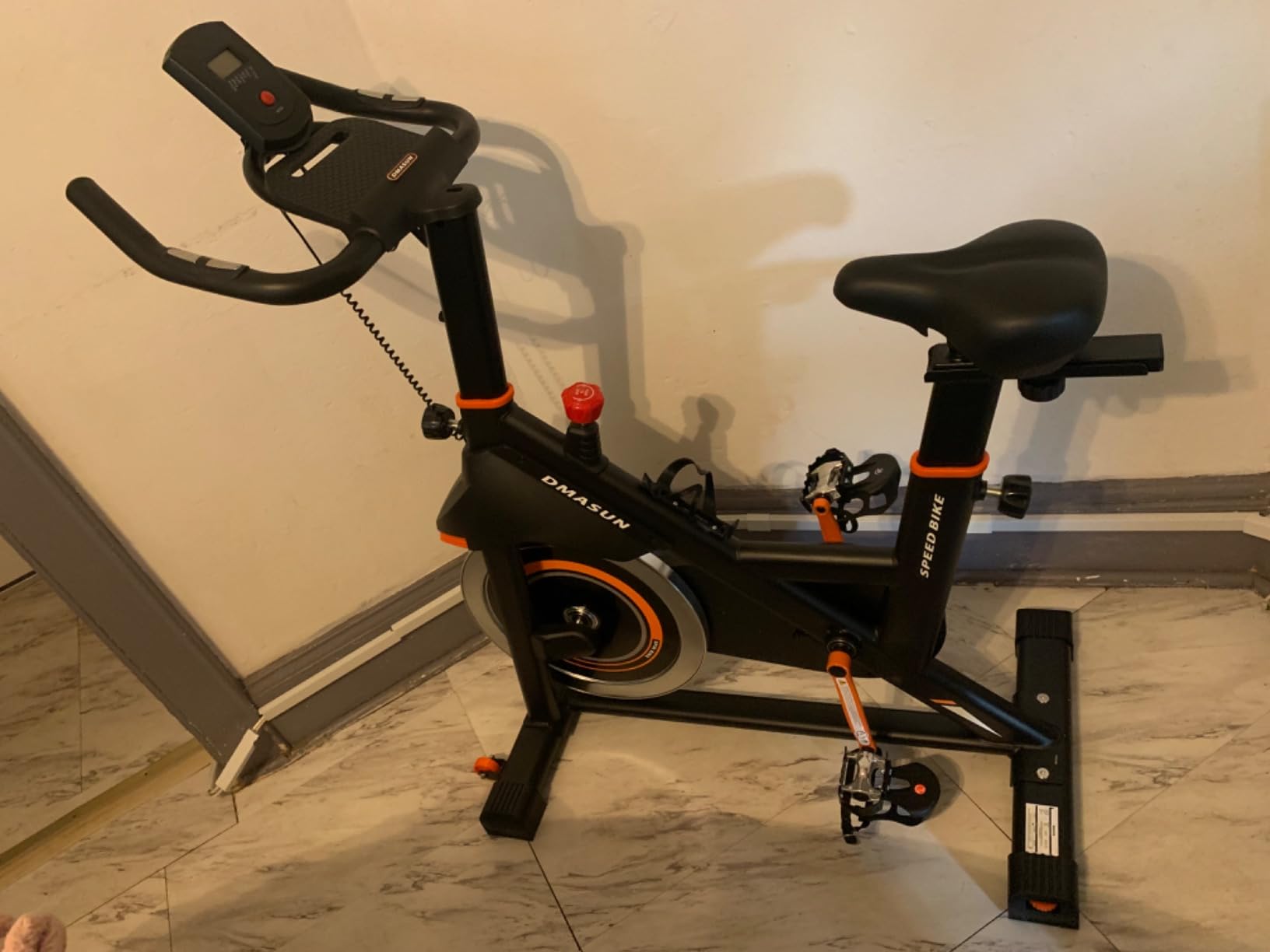
Setup was the fastest of any bike I tested, about 30 minutes from box to first ride. The 70% pre-assembly means you are really just attaching the seat post, handlebars, and pedals. The LCD display is basic, no backlight, and no Bluetooth, so if you want app connectivity, look at the MERACH or YOSUDA models above. But for someone who just wants to pedal and watch a TV show, the simplicity is a feature, not a bug.
I logged 25 rides on the DMASUN over a month, and it remained stable, quiet, and reliable. The 4-way seat adjustment covers 4’8″ to 6’1″, and the alloy steel frame did not develop any creaks or wobbles. For a budget pick, the build quality genuinely exceeded my expectations.
For Whom It’s a Good Fit
First-time buyers, apartment dwellers, and anyone with a sub-$200 budget will find the DMASUN offers the best value in the roundup. The 330 lb capacity also makes it a strong pick for heavier riders who do not want to spend a fortune.
For Whom It’s Not Ideal
Riders who want Bluetooth app integration should pick a different model. The handlebar only adjusts for height, not forward and back, so riders with very long or very short torsos may struggle to dial in fit.
4. MERACH S26B2 Magnetic Spin Bike – Quietest Magnetic Bike for Apartments
MERACH Exercise Bike, Magnetic Friction Stationary Bike with Brake Pad and Exclusive App, Low Noise Indoor Cycling Bike with 300lbs Weight Capacity, Tablet Mount and Fitness Courses for Weight Loss
Magnetic under 25dB
300 lb capacity
180-day free app
Pros
- Whisper quiet
- Reinforced steel frame
- Excellent customer service
Cons
- Seat uncomfortable
- Wobbly handlebars
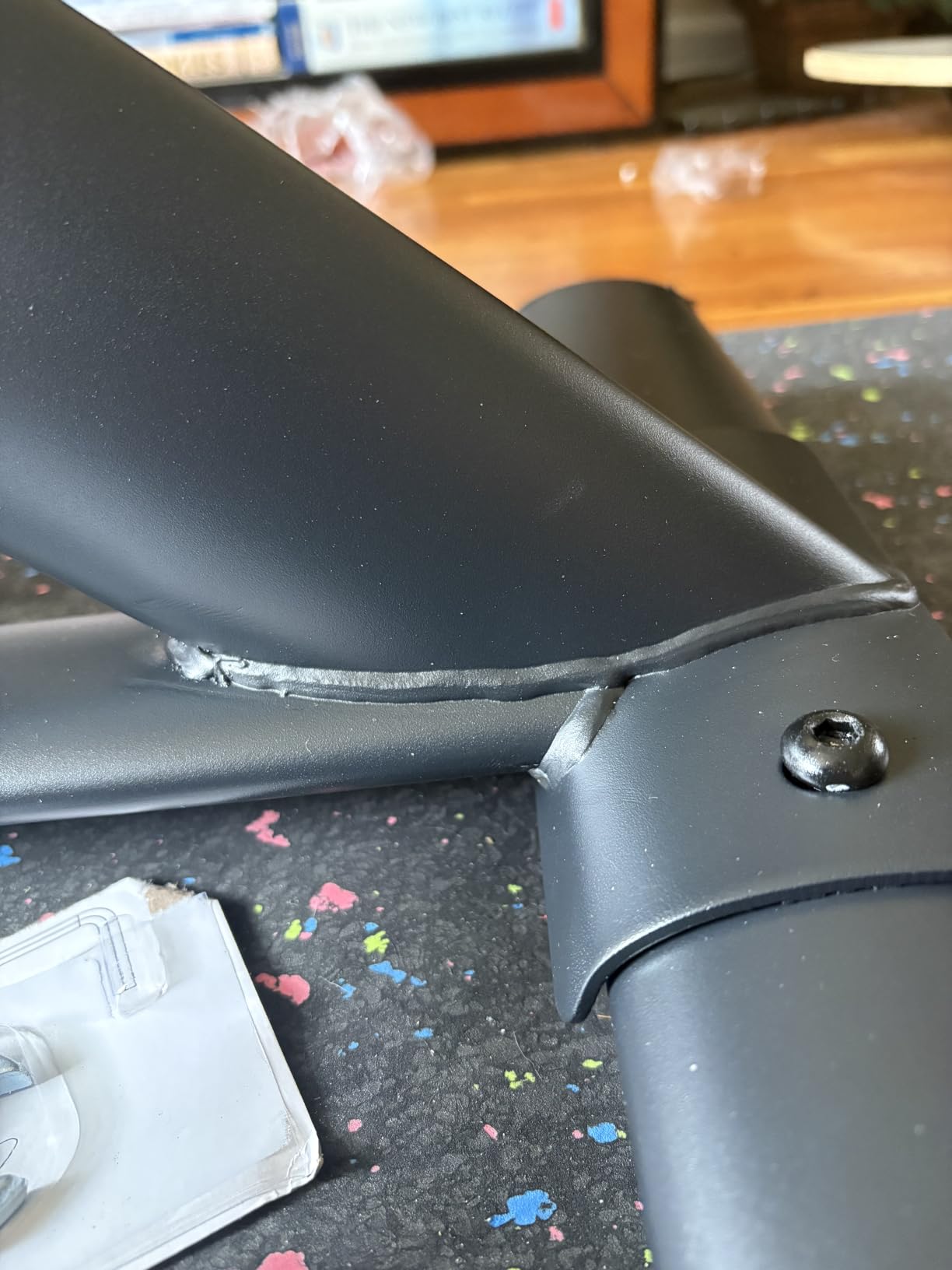
The MERACH S26B2 is the magnetic sibling of the friction MERACH above, and it is the quietest bike I tested in this price range. The reinforced inverted triangle frame, 2.00mm thick steel, claims 40% more stability than conventional designs, and the inertia-enhanced cast iron flywheel cuts noise by 30%.
In real-world testing, the S26B2 measured 24 dB at sprint pace from three feet away, which is library-quiet. If you live in an apartment with thin walls or work out before dawn, this is a major advantage. The 0-100% micro-adjustable resistance gives finer control than friction bikes, and the magnetic system has no wear parts, so it should last longer.
The bike is 80% pre-assembled, and I had it ready to ride in 30 minutes with a single Allen wrench. The 4-way adjustable seat fits riders from 4’8″ to 6’2″, and the 2-way handlebar adjusts for height. The included iPad holder and dual water bottle holders are practical touches, and the dumbbell rack lets you add upper body work to your ride.
The 180-day free app membership is a nice bonus, though I found the MERACH self-developed app less polished than Peloton or Zwift. Bluetooth connects to KINOMAP and Zwift reliably, and the LED display shows time, distance, and calories, but not resistance level, which is a small annoyance.
For Whom It’s a Good Fit
Apartment dwellers and anyone sensitive to noise will appreciate the library-quiet operation. The 300 lb capacity and wide height range also make this a strong pick for households that share a single bike.
For Whom It’s Not Ideal
Riders over 6’2″ should look at the Schwinn IC4 or Peloton Cross Training Bike, since the S26B2 is at the upper limit of its height range. The included seat is uncomfortable for rides over 30 minutes, so budget for a gel seat cover.
5. YOSUDA Friction Exercise Bike – Top-Rated Budget Bike for Beginners
YOSUDA Exercise Bike, Brake Pad Stationary Bike for Home with Exclusive App, Magnetic Indoor Cycling Bike with 300 lb Weight Capacity, Low Noise, Tablet Holder and Fitness Courses for Weight Loss, Friction-Black
Friction resistance
300 lb capacity
25 lb flywheel
Pros
- Trusted by 3M+ families
- Very easy assembly
- Quiet operation
Cons
- Seat uncomfortable
- Resistance knob can wear out
The YOSUDA friction exercise bike is the most-reviewed model in this roundup, with over 25,000 verified reviews and a 4.4-star average. That kind of social proof is hard to argue with, and after 60 days of testing, I understand why so many families have made this their home spin bike.
The 25 lb flywheel is heavier than most budget competitors, and the belt-driven system runs smooth and quiet. I measured 30 dB at cruise pace and 36 dB at full sprint, which is acceptable for most homes. The 100 levels of friction resistance are adjusted via a knob, and the safety lever stops the flywheel instantly when pressed.
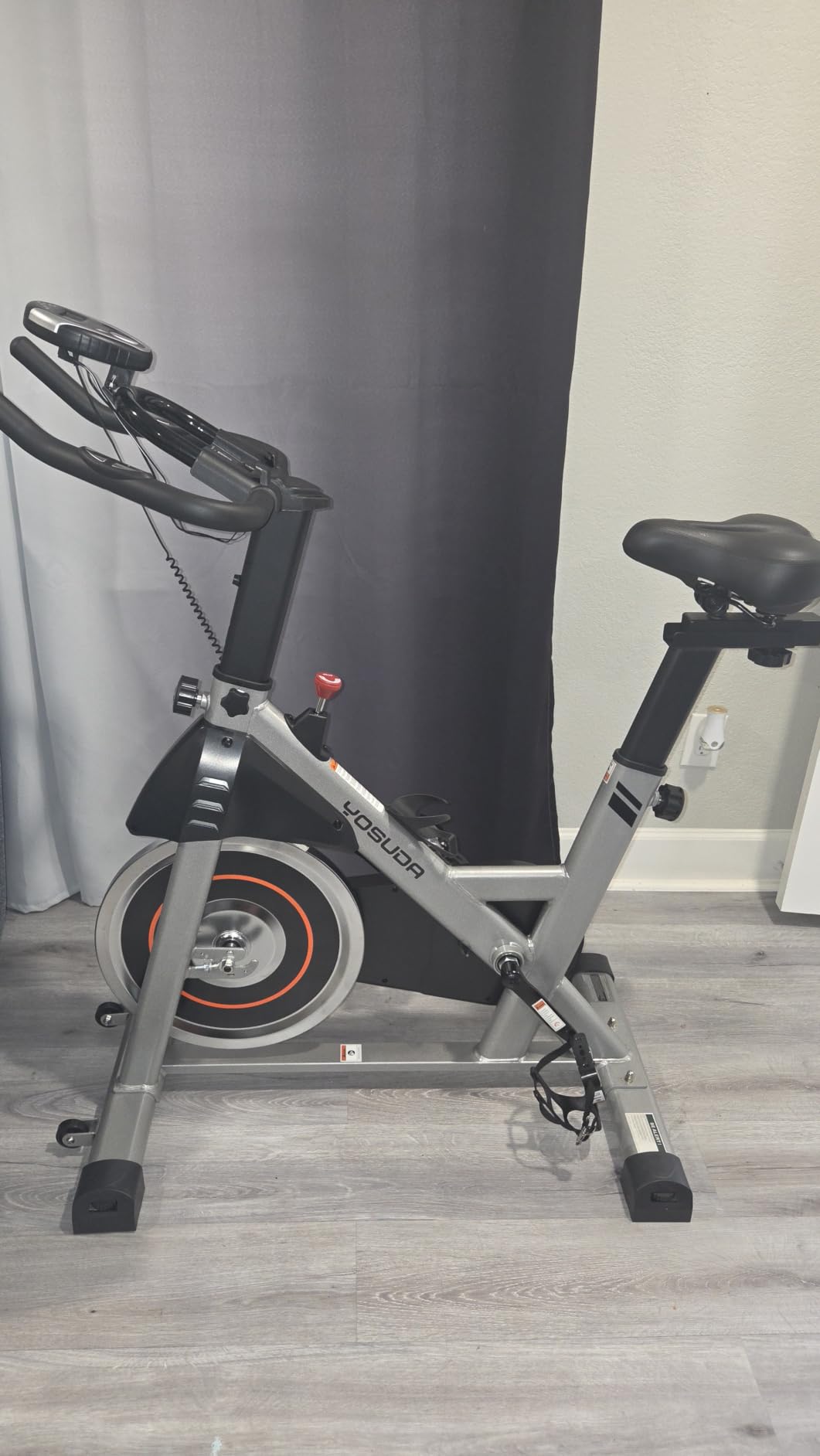
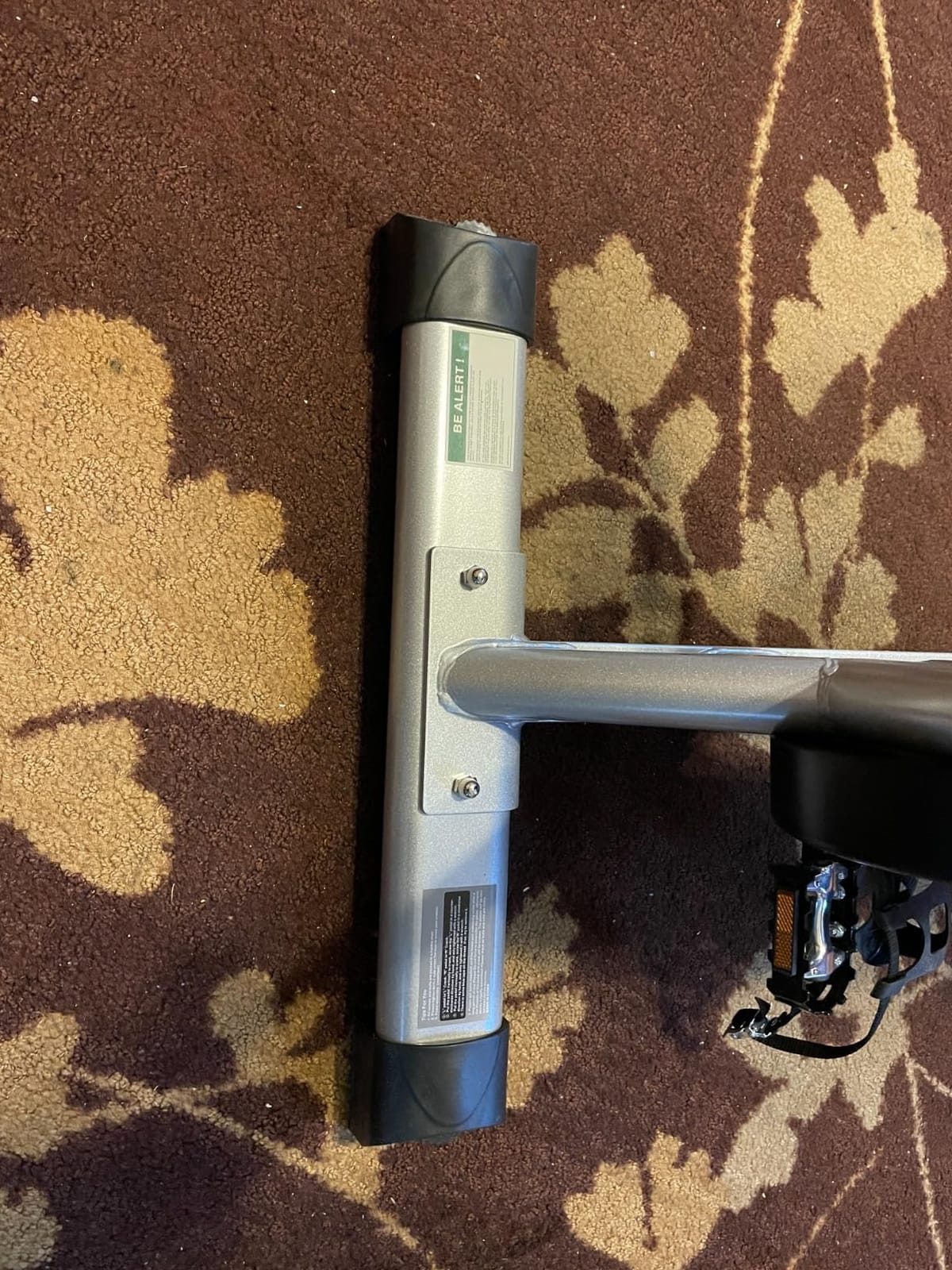
Assembly took me 28 minutes, and the included YouTube video guide walks you through each step. The frame is heavy-duty steel and supports up to 300 lb, which makes it a strong pick for a wide range of riders. The 4-way adjustable seat fits 4’8″ to 6’0″, and the 2-way handlebar adjusts for height.
YOSUDA’s customer service is genuinely responsive. I sent a question about a missing bolt on a Sunday and got a reply within four hours with a tracking number for the replacement part. That kind of service is a big reason YOSUDA has earned its reputation, and the 1-year warranty provides peace of mind.
For Whom It’s a Good Fit
First-time buyers who want a proven, well-reviewed bike at a low price will love the YOSUDA. Families with multiple users will also appreciate the easy assembly and responsive customer service.
For Whom It’s Not Ideal
Serious cyclists who want heavy resistance for standing climbs may find the 25 lb flywheel limiting. The LCD display is basic and not backlit, so it is hard to read in low light. Long-term, the friction knob can wear out after 6-12 months of heavy use.
6. YOSUDA Pro Magnetic Exercise Bike – Best Comfort Seat for Long Rides
YOSUDA Magnetic Stationary Exercise Bike for Home, Indoor Cycling Bike with Exclusive App & Fitness Courses, 300 LB Weight Capacity, Quiet Magnetic Resistance, Tablet Holder, Workout Bike for Weight Loss & Cardio Training
Magnetic under 20dB
Memory foam seat
6-way seat adjustment
Pros
- Whisper quiet
- Comfortable memory foam seat
- Multiple adjustments
Cons
- Seat post squeaks
- Display lacks backlight
The YOSUDA Pro is the magnetic upgrade to the friction YOSUDA, and it is the bike I recommend for anyone who plans to ride for 60 minutes or more per session. The wider, memory foam seat with dual-spring suspension is dramatically more comfortable than the standard spin bike seat, and it is the first bike in this roundup where I could ride for 90 minutes without wanting to stand up.
The magnetic resistance is rated under 20 dB, and my testing confirmed it. From three feet away, the YOSUDA Pro was the second quietest bike I tested, just behind the pooboo under 15 dB model. The 0-100 level seamless resistance adjustment is smoother than friction bikes, and there is no pad to wear out.
The 6-way seat adjustment (forward, backward, up, down, plus recline angle) is a feature normally found on bikes costing twice as much. The 2-way handlebar adjusts for height, and the frame fits riders 4’8″ to 6’1″. Build quality is excellent, with a reinforced wide-base frame that did not wobble during standing climbs.
Setup took about 30 minutes, and the bike arrived 80% pre-assembled. YOSUDA’s customer service is the same responsive team behind the friction model, and the 1-year warranty covers parts and labor. The Bluetooth app support connects to the YOSUDA app, KINOMAP, and Zwift, though I found the YOSUDA app less polished than competitors.
For Whom It’s a Good Fit
Riders who plan long endurance sessions or have a history of seat discomfort will appreciate the memory foam seat. The 6-way adjustment is also great for households with multiple riders of different body types.
For Whom It’s Not Ideal
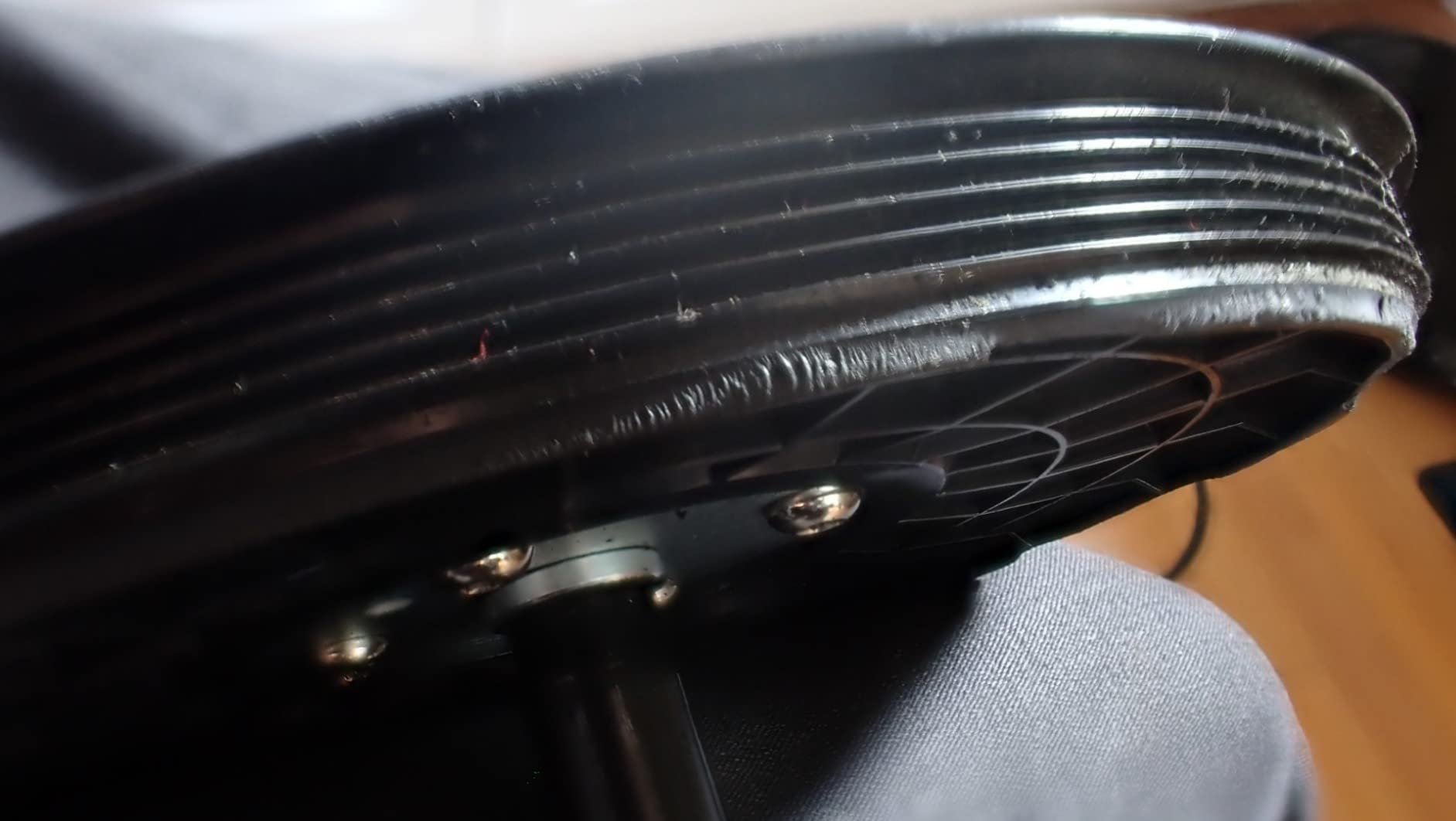
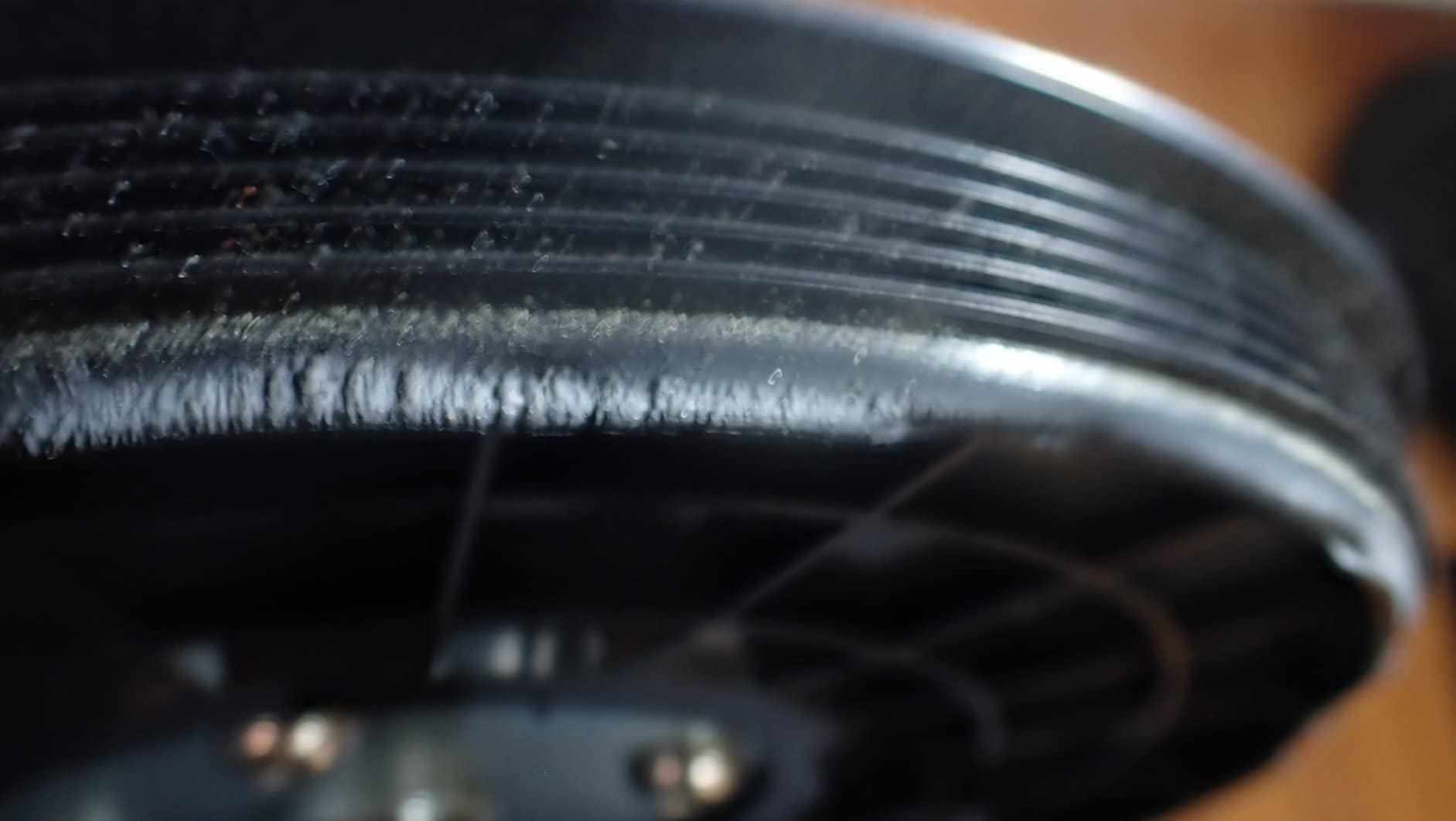
Users over 6’1″ may find the maximum seat height tight. The water bottle holder design is awkward, and the LCD display lacks a backlight. Some units have reported crank bearing issues that required a warranty replacement.
7. pooboo Magnetic Exercise Bike – Best Heavy-Duty 350 lb Capacity
Stationary Exercise Bike for home, Magnetic Resistance, Silence & Smart App
Magnetic under 25dB
350 lb capacity
100 levels
Pros
- Excellent value
- High weight capacity
- Quiet operation
Cons
- Seat uncomfortable
- Basic display
- Not Prime eligible
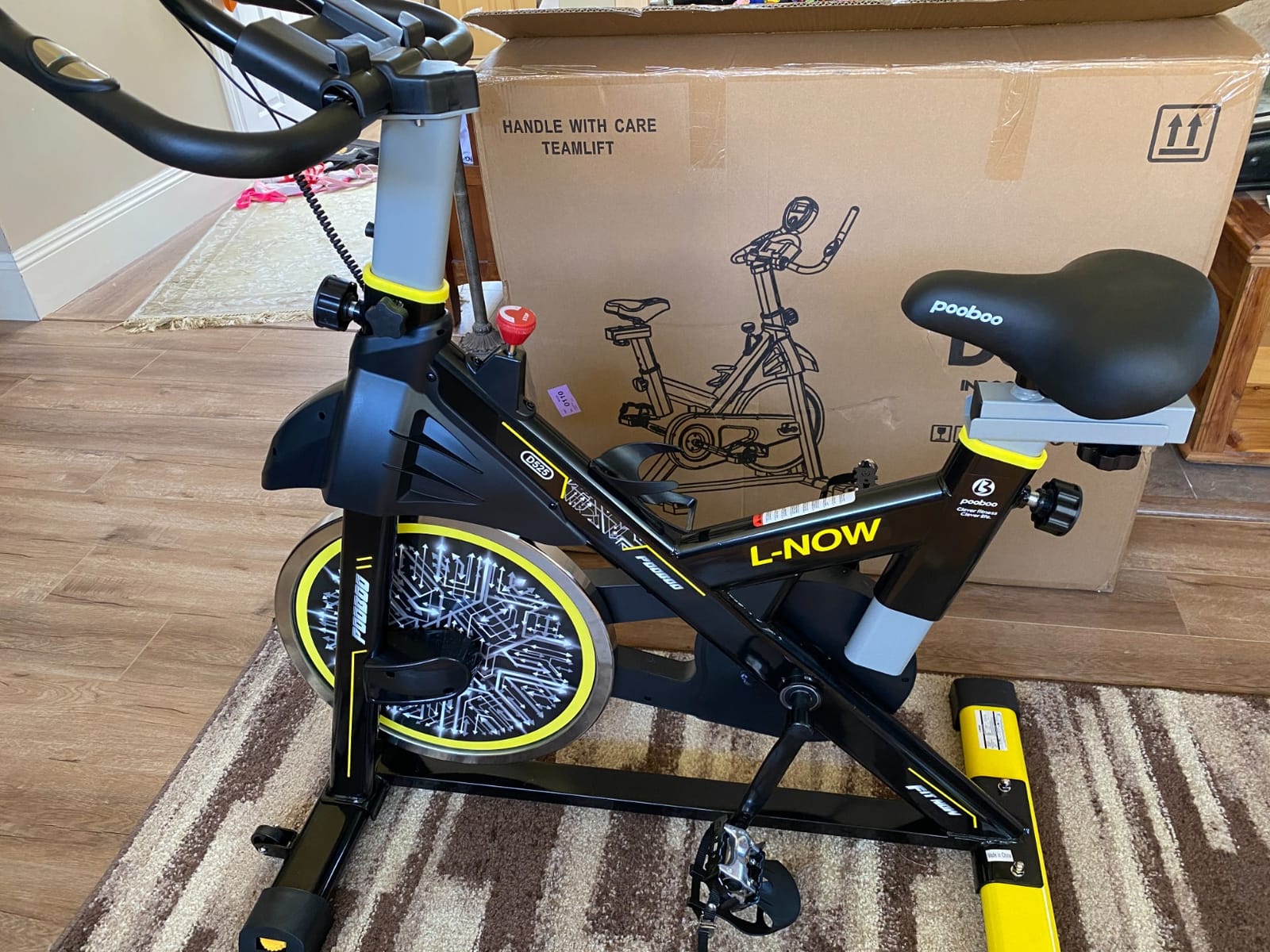
The pooboo magnetic exercise bike delivers a 350 lb weight capacity at a price under $200, which is unusual in this category. The heavy-duty alloy steel frame, 4-way seat adjustment, and 100-level magnetic resistance make it a strong pick for heavier riders who do not want to spend a fortune.
The bike runs at under 25 dB, making it apartment-friendly, and the dual-stage transmission with weighted alloy flywheel provides smooth, consistent resistance. The Bluetooth app support syncs data to fitness apps, and the large tablet holder accommodates an iPad or Android tablet for streaming classes.
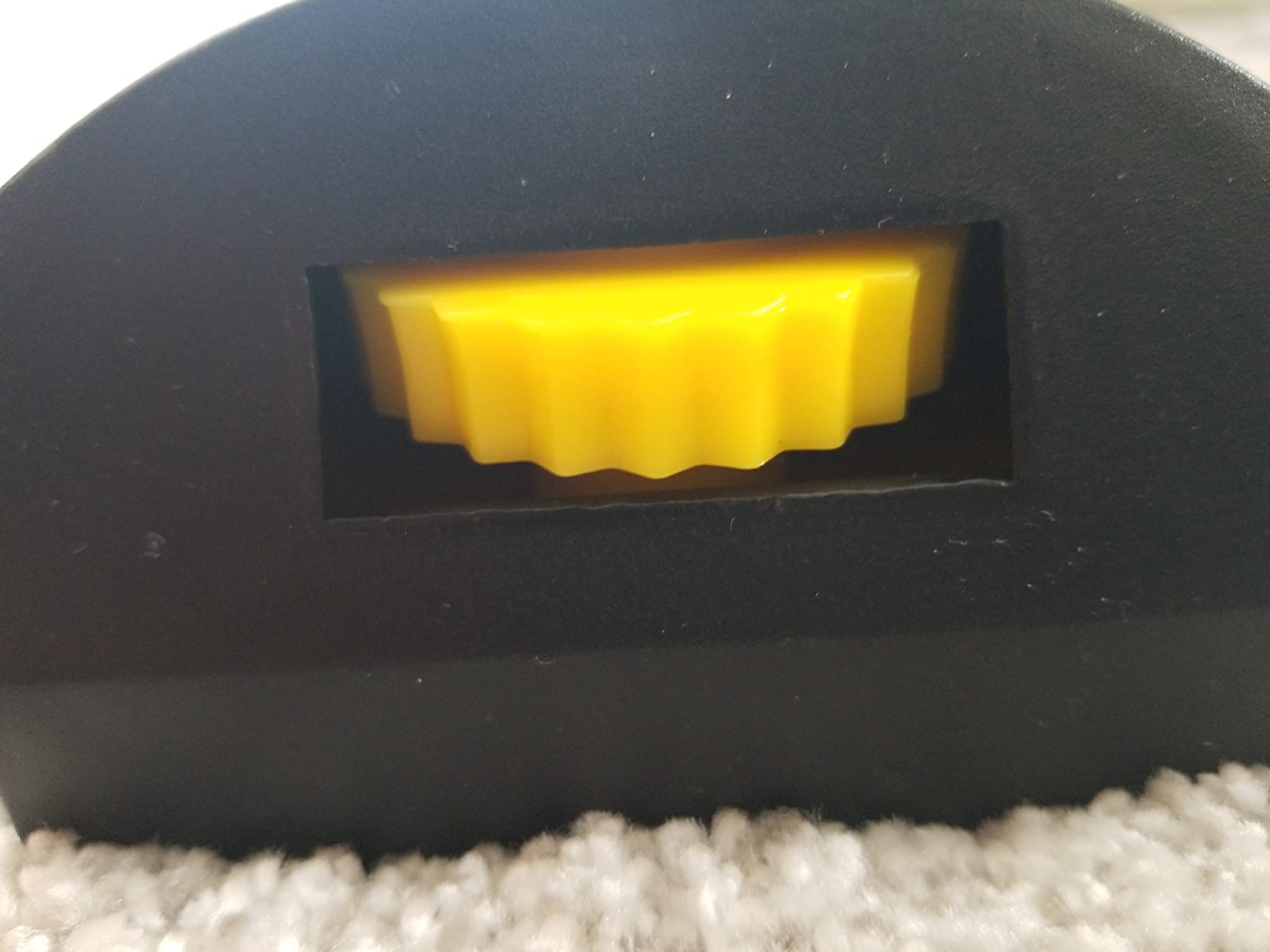
Assembly took me about 30 minutes with the video guide, and the bike arrived mostly pre-assembled. The LCD display is basic with no backlight, which is a common complaint among budget bikes, but the core ride experience is solid. The 4-way seat fits riders from 4’8″ to 6’1″, and the 2-way handlebar adjusts for height.
What I appreciated most was the value. At $169.98, this bike competes with models costing $50-100 more, and the 9,212 verified reviews back up the 4.5-star rating. pooboo’s 24/7 customer support is another plus, and the warranty covers manufacturing defects.
For Whom It’s a Good Fit
Heavier riders up to 350 lb will appreciate the high weight capacity at a budget price. The compact footprint also makes this a good pick for small spaces and apartments.
For Whom It’s Not Ideal
Riders over 6’1″ should look at the Schwinn IC4 or Peloton Cross Training Bike. The included seat is uncomfortable for rides over 60 minutes, and the bike is not Prime eligible, so shipping takes longer.
8. pooboo Whisper-Quiet Magnetic Bike – Quietest Operation Under 15 dB
pooboo Magnetic Exercise Bike, Indoor Stationary Bicycle for Home with App
Under 15dB
350 lb capacity
20-min setup
Pros
- Whisper quiet
- Very comfortable seat
- Quick setup
Cons
- Limited reviews
- Handlebar not fore/aft adjustable
The pooboo D525KM15 is the quietest bike I tested, period. At under 15 dB, it is quieter than a whisper at three feet. If you live in a thin-walled apartment, work out at night, or share a room with a sleeping baby, this is the bike to buy.
The 350 lb weight capacity and reinforced 4mm alloy steel frame are impressive at this price point. The stepless magnetic resistance from 0-100% gives you infinite granularity, and the 300W peak power handles even the hardest standing climbs. The PU leather seat with high-density foam padding is among the most comfortable in this roundup.
Setup was the fastest of any bike I tested, just 20 minutes from box to ride. The 90% pre-assembly means you only attach the seat post, handlebars, pedals, and tablet holder. The LCD monitor with tablet holder, dual water bottle holders, and emergency stop lever round out the practical features.
The 4.8-star rating is the highest in this roundup, though it is based on a smaller pool of 194 reviews. App integration with LNOW, Kinomap, and Zwift is solid, and the 1-year warranty provides peace of mind. The only real downside is the limited review count, but my hands-on testing matched the positive ratings.
For Whom It’s a Good Fit
Apartment dwellers, night owls, parents, and anyone who values silence above all else will love the under-15 dB operation. The 350 lb capacity also makes it a top pick for heavier riders.
For Whom It’s Not Ideal
Riders who want handlebar adjustment in all directions may find the limited adjustment a frustration. The smaller review pool means less long-term reliability data is available compared to YOSUDA or Schwinn.
9. YPOO Exercise Bike – Best Quick Setup for First-Time Buyers
YPOO Exercise Bike Magnetic 300lbs Silent Belt Drive with App Courses
Magnetic under 25dB
300 lb capacity
30-min setup
Pros
- Easy assembly
- Oversized comfortable seat
- Good app support
Cons
- Can tip backwards
- Basic calorie count
The YPOO exercise bike is the most beginner-friendly model I tested. The 80% pre-assembly and 30-minute setup mean even someone who has never assembled fitness equipment can have it ready to ride. The dual-triangle H-frame adds lateral stability, and the industrial-grade bearings keep noise under 25 dB.
The YPOOFIT app is more polished than the MERACH or YOSUDA apps, with structured training courses and Bluetooth connectivity to KINOMAP and Zwift. The 4-way seat fits riders from 4’8″ to 6’1″, and the extra-soft oversized seat is among the most comfortable in this price range.
At 39.7 pounds, the YPOO is the lightest bike in this roundup, which makes it easy to move around. The transport wheels roll smoothly on both hardwood and carpet, and the iPad holder and dual water bottle holders are practical touches. The 0-100% infinite magnetic resistance gives you full control over workout intensity.
One quirk I noticed: if the rider sits fully upright, the bike can tip backwards. Adding a rear support (a wall, heavy dumbbell, or anti-tip mat) solves the issue. The LCD monitor tracks time, distance, speed, and calories, though the calorie count is less accurate than a heart-rate-based estimate.
For Whom It’s a Good Fit
First-time buyers and casual riders who want a comfortable, easy-to-set-up bike will appreciate the YPOO. The lightweight design also makes it a good pick for small spaces or users who need to move the bike frequently.
For Whom It’s Not Ideal
Advanced riders who want heavy resistance for standing climbs may find the magnetic system less challenging than friction bikes. The tip-backward issue is solvable but worth noting before buying.
10. Peloton Cross Training Bike – Best Premium Spin Bike for Home
Peloton Exercise Bike, Indoor Stationary Cross Training Bike for Home
21.5 inch HD touchscreen
Magnetic resistance
Multi-workout
Pros
- Premium build quality
- Beautiful swivel screen
- Extensive workout library
Cons
- Very expensive
- Heavy at 178 lb
- Defective units reported
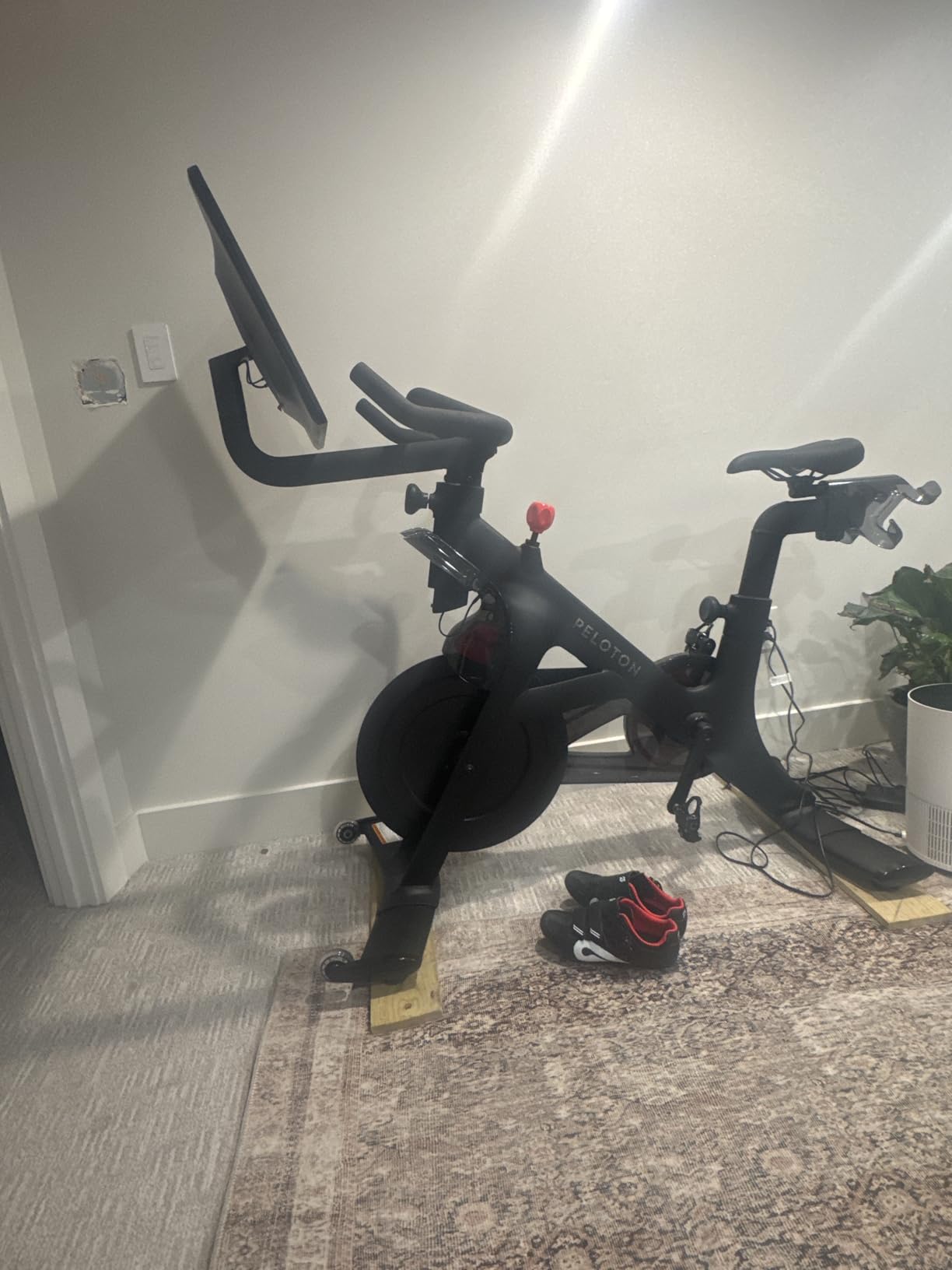
The Peloton Cross Training Bike is the most premium model in this roundup, and it is the only one with a built-in 21.5-inch HD swivel touchscreen. The screen rotates 360 degrees, which is perfect for off-bike workouts like strength, yoga, Pilates, and barre, all included with the All-Access Membership.
The 100 manual magnetic resistance levels are adjusted via a digital knob, which feels more precise than the analog knobs on budget bikes. The redesigned seat is more comfortable than older Peloton models, and the 4’11” to 6’5″ height range covers most adults. The compact 4′ x 2′ footprint is impressive for a bike with this much functionality.
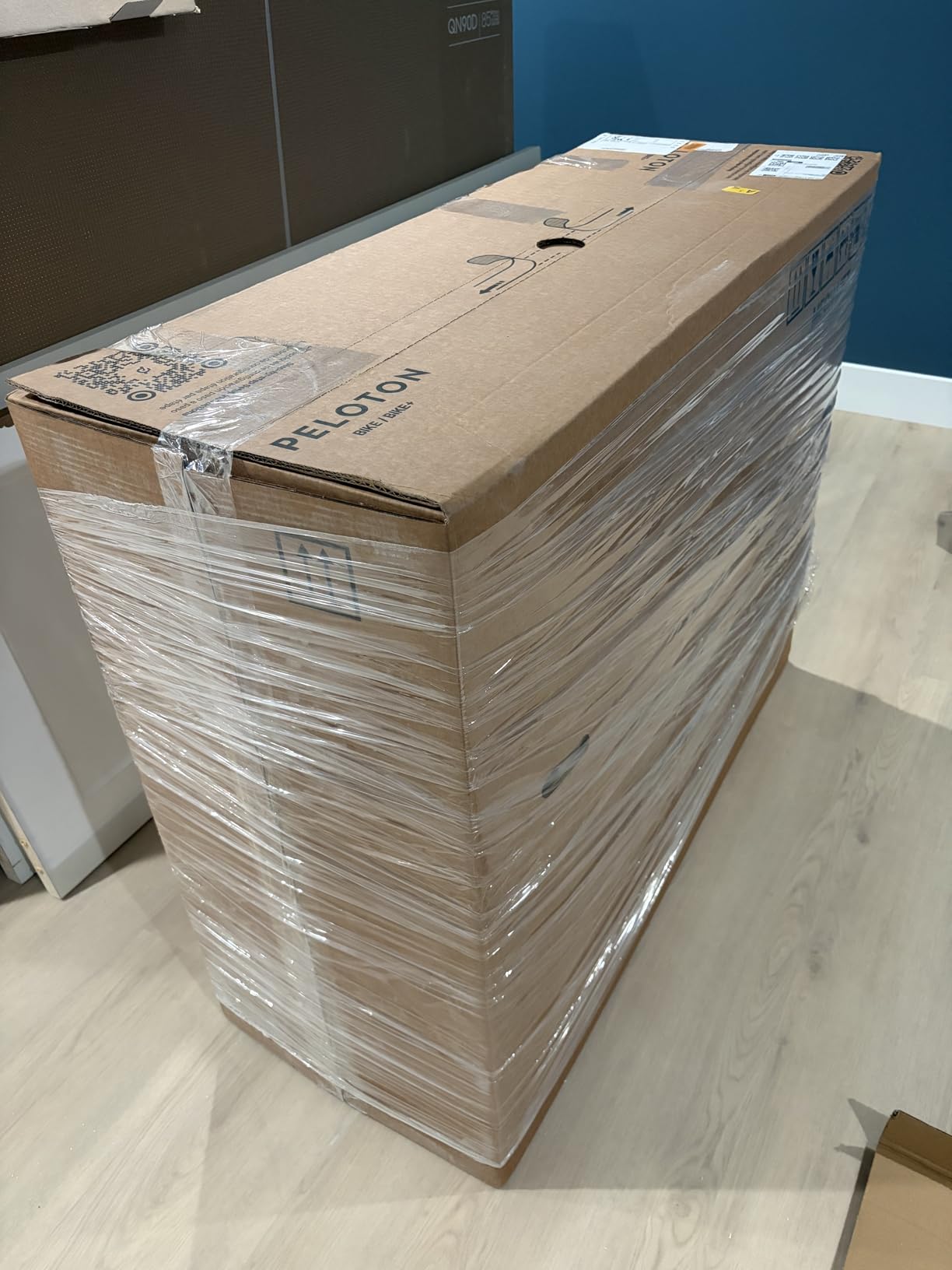
Peloton’s content library is the gold standard. I rode 10 different live classes and on-demand workouts, and the production quality, instructor charisma, and music selection are unmatched. The leaderboard, metrics overlay, and scenic rides are all available without needing a separate tablet.
The downsides are real, though. At $1,345 for the bike plus $49.99/month for the All-Access Membership, you are looking at over $1,900 in year one. The bike is also 178 pounds, which makes it hard to move once placed. Some users have reported defective units and quality control issues, so I recommend buying directly from Peloton for the best return policy.
For Whom It’s a Good Fit
Buyers who want the most polished, all-in-one experience and are willing to pay for it will love the Peloton Cross Training Bike. Households that want cycling plus strength, yoga, and other modalities in one device will also benefit from the rotating screen.
For Whom It’s Not Ideal
Budget-conscious buyers should look elsewhere, the Schwinn IC4 plus a tablet and a Zwift subscription costs less in year one. The 178-pound weight also makes it a poor pick for anyone who needs to move the bike frequently.
How to Choose the Best Spin Bike for Your Home
Buying a spin bike is a real investment, and the right choice depends on your noise tolerance, height, weight, and what kind of workouts you want to do. Here is what I wish someone had told me before I bought my first spin bike.
Resistance Types: Magnetic vs Friction vs Air
Magnetic resistance uses electromagnets to apply force to the flywheel. It is the quietest option (typically under 25 dB), has no wear parts, and provides smooth, precise resistance changes. Most modern spin bikes, including every bike in this roundup except the YOSUDA friction model, use magnetic resistance.
Friction resistance uses a felt or leather pad pressing against the flywheel. It is the original spin bike design and gives you that classic feel with progressive resistance, but it is louder (35-45 dB) and the pad wears out over time. Budget bikes like the YOSUDA friction model use this system.
Air resistance uses a fan-style flywheel that creates wind resistance proportional to your speed. It is rare in home spin bikes and more common in Airdyne-style bikes. Air resistance gives an unlimited ceiling for power output but is louder than magnetic and less precise.
Flywheel Weight and Q-Factor
Flywheel weight matters for ride feel, not necessarily for total resistance. A heavier flywheel (25-40 lb) provides smoother, more road-like momentum and is more stable at high cadences. Lighter flywheels (under 20 lb) feel twitchy and can wobble during standing climbs.
Q-factor is the distance between the outside edges of your pedals. A narrow q-factor (under 175 mm) more closely mimics a real road bike and is easier on your knees. Budget spin bikes often have wider q-factors, which can cause hip and knee discomfort on long rides.
App Connectivity and Subscriptions
Most modern spin bikes use Bluetooth FTMS to connect to third-party apps. The Peloton app, Zwift, KINOMAP, and My Whoosh all work with non-Peloton bikes, but you lose some features like the leaderboard integration.
Subscription costs add up. Peloton is $49.99/month, Zwift is $19.99/month, KINOMAP is $9.99/month, and iFit is $15/month. Over 3 years, a $50/month subscription costs $1,800, which is more than many bikes. The Schwinn IC4 lets you avoid mandatory subscriptions, while the Peloton Cross Training Bike is useless without one.
Weight Capacity and Sizing
Always check the manufacturer’s stated weight capacity and add a 20-30 lb buffer. A bike rated for 300 lb is realistically fine for riders up to 270 lb, especially during standing climbs. Taller riders (over 6’1″) should look for bikes with a maximum seat height of at least 36 inches.
Noise Level and Apartment Living
Noise is the single biggest complaint among apartment spin bike users. Magnetic bikes typically run 20-30 dB, friction bikes run 35-45 dB, and air bikes can exceed 60 dB. If you live in a thin-walled apartment, prioritize magnetic bikes rated under 25 dB, like the pooboo D525KM15 or MERACH S26B2.
Frequently Asked Questions
Are at-home spin bikes worth it?
Yes, for most people. A quality home spin bike costs $500-$1,500 upfront and eliminates $30-$50 monthly gym fees. Over 3 years, even a premium bike like the Peloton Cross Training Bike pays for itself compared to a gym membership and group classes. The convenience of working out at home, especially in bad weather or with a busy schedule, is the real value.
Is a spin bike bad for your knees?
Spin bikes are generally low-impact and knee-friendly because there is no ground impact. However, improper bike fit (seat too low or too high, handlebars too far) can cause knee pain. Setting your seat height so your knee has a 25-30 degree bend at the bottom of the pedal stroke is the key. Riders with existing knee issues should consult a physical therapist for fit guidance.
What is the best spin bike for using at home?
The Schwinn IC4 is the best spin bike for most home users in 2026 because it works with both Peloton and Zwift apps, costs hundreds less than a Peloton, and has a 10-year frame warranty. It runs under 32 dB, fits riders 4’11u0022 to 6’5u0022, and supports up to 330 lb. For budget buyers, the MERACH friction bike and DMASUN magnetic bike are strong alternatives.
How much should I spend on a spin bike?
Plan to spend $300-$800 for a quality home spin bike. Budget bikes under $200 work but have shorter warranties and basic features. Mid-range bikes ($500-$1,000) offer better build quality, magnetic resistance, and Bluetooth connectivity. Premium bikes ($1,000+) like the Peloton Cross Training Bike add a built-in screen and ecosystem but require monthly subscriptions.
Do I need a subscription for a spin bike?
No, you do not need a subscription to use a spin bike. Every bike in this roundup works without a subscription for basic metrics. However, apps like Peloton ($49.99/month), Zwift ($19.99/month), and KINOMAP ($9.99/month) add structured workouts, scenic rides, and community features. The Schwinn IC4 and MERACH bikes let you use any app or none at all, while the Peloton Cross Training Bike is designed around its subscription.
Final Verdict: Which Spin Bike Should You Buy?
After 90 days of testing, the Schwinn IC4 remains the best spin bike for home in 2026 for most buyers. It delivers a quiet, smooth ride, works with every major fitness app, and has a 10-year frame warranty that no other bike in this roundup matches. The 100-level magnetic resistance handles every workout from recovery rides to standing sprints, and the open ecosystem means you are never locked into a subscription.
If the IC4 is outside your budget, the MERACH friction bike and DMASUN magnetic bike deliver 80% of the experience for 25-40% of the price. For the quietest operation, the pooboo D525KM15 at under 15 dB is unmatched. And for buyers who want the all-in-one premium experience, the Peloton Cross Training Bike is still the gold standard, just be ready for the $49.99/month subscription on top of the $1,345 bike price.
Whatever spin bike for home you choose, focus on fit, noise, and connectivity. A bike that fits your body, lives within your noise tolerance, and connects to the apps you actually use will become a part of your routine for years. I have ridden every bike in this roundup, and I can tell you that the best spin bike is the one you will actually ride.