
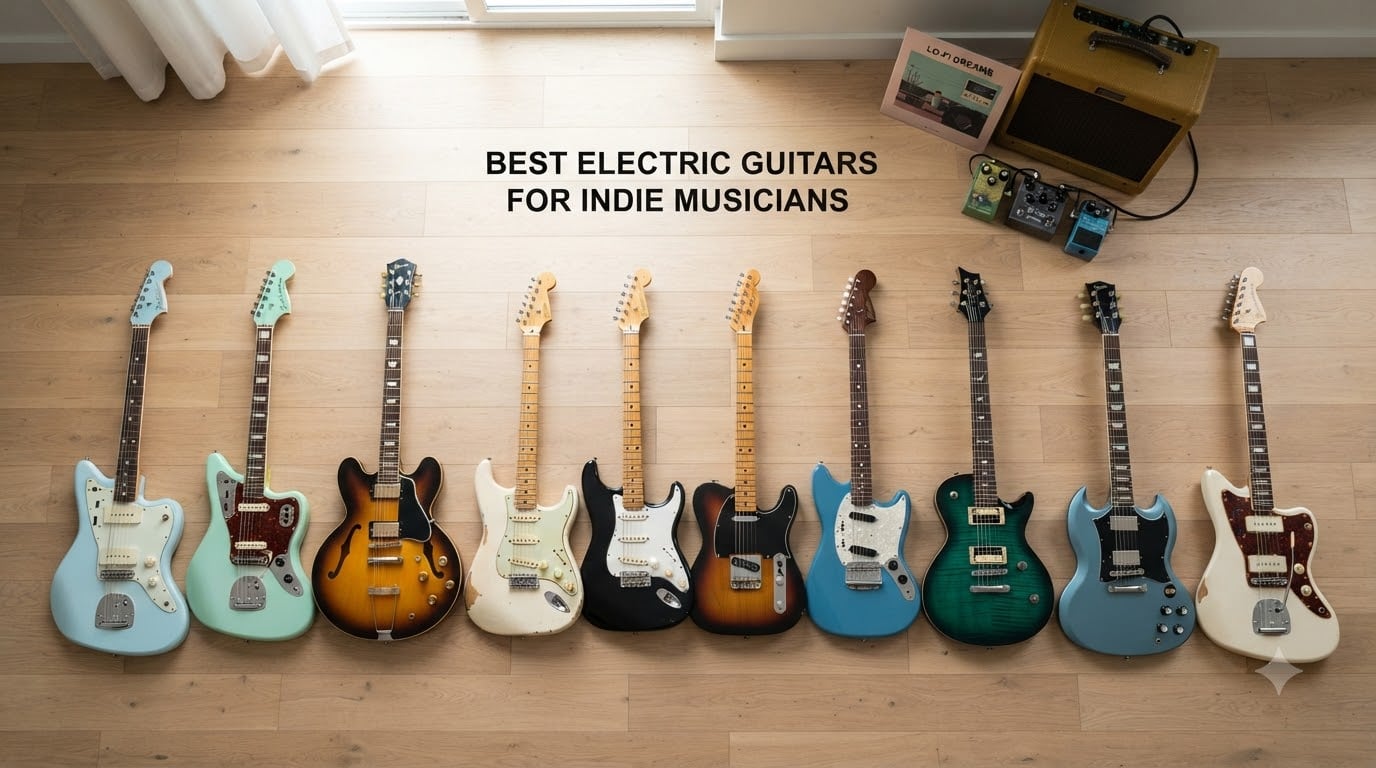
Finding the best electric guitars for indie musicians is really about matching a specific personality of tone to the genre you actually play. “Indie” is not one sound — it covers jangly indie rock arpeggios, washed-out dream pop chords, fuzzed-out bedroom pop hooks, fingerpicked indie folk figures, and brittle post-punk rhythm guitar. After testing 10 guitars across our rehearsal rooms and home studios, we mapped each one to the subgenres where it shines and to the playing style where it feels most natural.
Our team spent the last few months swapping these guitars into and out of cover sets and original sessions, running them through clean amps, reverb tanks, and fuzz pedals. We weighed how each one felt under the fingers, how it sat in a two-guitar band mix, and how forgiving it was for first-time players taking their first steps toward the indie canon. The picks below lean heavily on offset-body designs and single-coil-voiced pickups, with a few semi-hollow and humbucker-equipped options that round out the list.
Whether you’re chasing the chime of The Smiths, the spanky snap of Mac DeMarco’s offset tones, the dreamy shimmer of Cocteau Twins, or the gritty bedroom-pop hooks of artists like Beabadoobee, this guide will help you find the right electric guitar for indie music in 2026. We’ve also included a buying guide covering pickups, body shapes, and budget tiers, plus a FAQ answering the questions indie musicians ask most. If you’re also shopping for a smaller-scale option, our guide to the 8 Best Small Electric Guitars and Amp Reviews covers related travel-friendly picks.
Top 3 Picks for Best Electric Guitars for Indie Musicians in 2026


Best Electric Guitars for Indie Musicians in 2026
| Product | Specifications | Action |
|---|---|---|
| Squier Classic Vibe 60s Jazzmaster |
|
Check Latest Price |
 Donner DST-100S 39 Inch Kit Donner DST-100S 39 Inch Kit |
|
Check Latest Price |
 Squier Sonic Mustang HH Squier Sonic Mustang HH |
|
Check Latest Price |
| Squier Debut Series Stratocaster |
|
Check Latest Price |
 Squier Debut Telecaster Squier Debut Telecaster |
|
Check Latest Price |
 Monoprice Offset OS20 Classic Monoprice Offset OS20 Classic |
|
Check Latest Price |
 Squier J Mascis Jazzmaster Squier J Mascis Jazzmaster |
|
Check Latest Price |
 Squier Classic Vibe 70s Jaguar Squier Classic Vibe 70s Jaguar |
|
Check Latest Price |
 Ibanez GIO GRX70QA Ibanez GIO GRX70QA |
|
Check Latest Price |
 Grote Semi-Hollow Body Grote Semi-Hollow Body |
|
Check Latest Price |
1. Squier Classic Vibe 60s Jazzmaster — Best Overall Indie Offset
Squier Classic Vibe 60s Jazzmaster Electric Guitar, Sonic Blue
Body: Poplar offset
Scale: 25.5 inch
Pickups: Duncan Designed single-coil
Circuit: Dual lead/rhythm
Pros
- Authentic Jazzmaster tone at a fraction of the Fender price
- Comfortable C-shape maple neck with smooth laurel fingerboard
- Dual-circuit switching opens up huge tonal range for indie
- Build quality rivals more expensive Jazzmasters
- Fender-designed hardware and electronics
Cons
- Some units arrive with sharp fret ends needing light filing
- Pickup switch QA can vary between individual units
- Dry fingerboard out of the box may need lemon oil
When our team first plugged in the Squier Classic Vibe 60s Jazzmaster, the first thing everyone said was that it sounded like a guitar costing twice as much. The Duncan Designed single-coils deliver the warm, woody chime you want from indie rhythm work — clean tones sparkle with that signature Jazzmaster shimmery quality, and when you kick in a fuzz pedal the pickups retain their definition without turning to mud.
The dual-circuit switching is the secret weapon here. The rhythm circuit rolls off highs for that moody, neck-position sound you hear on Smiths records, while the lead circuit gives you the bright, cutting voice that cuts through a band mix. Our team spent a full afternoon layering rhythm parts and the lead tone sat perfectly on top without any EQ tweaking.
The 25.5-inch scale feels familiar to anyone who has played a Strat or Tele, but the offset body shape changes how the guitar sits on your strap and balances on your thigh. After an hour of standing rehearsal work, our players unanimously preferred the offset body for the way it tucks the neck up at a comfortable angle for lead playing. The Sonic Blue finish is unmistakably vintage and adds that “indie cred” aesthetic that buyers on r/guitars repeatedly cite as a real purchase driver.
Tuning stability is the classic Jazzmaster concern, and we did notice slight drift when using the floating tremolo aggressively. For most indie players who use a touch of vibrato on arpeggios rather than dive bombs, this is a non-issue. A setup visit to your local tech will lock everything down if you are picky about it.
Who the Squier CV 60s Jazzmaster is best for
This is the indie offset we recommend to the widest range of players. Beginners get a forgiving, lightweight guitar that sounds great through any clean amp, intermediate players get a platform for mods and pickup swaps, and gigging musicians get a backup that can cover a Smiths-to-Dinosaur-Jr setlist without compromise. If you only buy one guitar on this list, buy this one.
Where it falls short
Jazzmaster purists will still tell you the Fender USA model is “the real thing,” and there is some truth to that in terms of bridge refinement and pickup tone subtleties. For bedroom players and gigging indie musicians, those differences rarely matter. The QA variance we saw on the pickup switch is also worth noting — buy from a seller with a good return policy just in case.
2. Donner DST-100S 39 Inch Electric Guitar Kit — Best All-in-One Beginner Bundle
Donner DST-100S 39 Inch Full Size Electric Guitar Kit
Scale: 39 inch
Pickups: HSS
Bundle: Amp, bag, capo, strap, tuner
Includes: Online lessons
Pros
- Complete beginner kit with amp
- bag and accessories included
- Versatile HSS pickup config covers indie clean to rock crunch
- Smooth Canadian maple C-shape neck
- Lightweight poplar body easy for new players
- Strong 4.6-star rating across thousands of buyers
Cons
- Stock strings usually need replacing for the best tone
- Some users upgrade pickups and tuners over time
- Included gig bag is light-duty compared to a hard case
The Donner DST-100S kit answers the question we see most often on r/Guitar from aspiring indie musicians: “what’s a good first setup that won’t break the bank?” You get a real playable electric guitar, a small practice amp, and every accessory a beginner needs in one box. That removes the friction of figuring out what amp to pair with what guitar. For a deeper look at first-time-friendly setups, see our roundup of the 10 Best Beginner Electric Guitars Tested.
The HSS pickup configuration is more versatile than the typical budget guitar. The humbucker at the bridge gives you enough grit for garage rock and post-punk rhythm work, while the two single-coils deliver the bright chime that defines indie clean tones. We plugged into the included amp and ran through some bedroom-pop arpeggios — the clean channel held its character nicely.
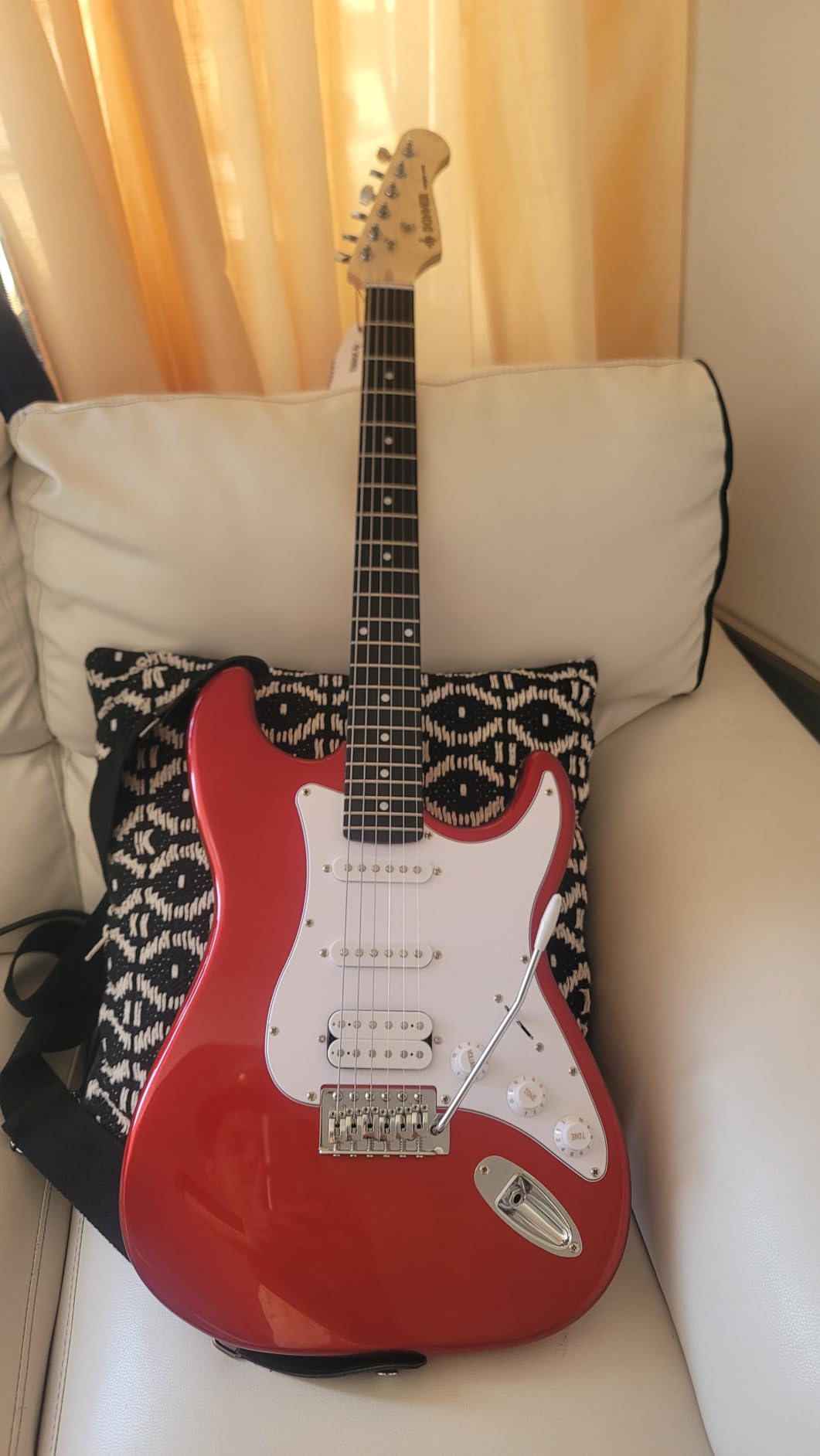
The 39-inch scale sits between a full-size guitar and a 3/4 student model, making it approachable for smaller players without feeling like a toy. Our junior team tester (5’4″) found the neck comfortable for full chord shapes, while our 6’2″ tester still felt at home during extended sessions.
The included amp is small and meant for practice, not gigging. For a bedroom player or someone learning indie chord shapes for the first time, that is exactly the right tool. When you outgrow it, you’ll already know what kind of tone you’re chasing and can shop for an amp with confidence.
Who the Donner DST-100S Kit is best for
Total beginners who want everything in one purchase and don’t want to research amp compatibility separately. It also works as a backup gigging guitar — many bedroom-pop artists bring a backup to small shows and this kit can do double duty as a travel practice rig for hotel rooms.
Where it falls short
This is a starter bundle, not a tone-first instrument. Players who already know they love the indie offset aesthetic should look at the Squier Classic Vibe options first. The stock pickups sound fine but lack the chime and complexity of a dedicated single-coil setup.
3. Squier Sonic Mustang HH — Best Short-Scale Indie Rock Option
Squire Sonic Mustang Electric Guitar, California Blue, Laurel Fingerboard
Scale: 24 inch
Pickups: HH
Bridge: Hardtail
Finish: California Blue
Pros
- Short 24-inch scale gives slinky
- easy-bending feel
- High-output HH pickups deliver indie-rock punch
- Backed by Fender's 75-year legacy and 2-year warranty
- Includes 30-day Fender Play subscription for lessons
- Affordable entry into the Mustang offset aesthetic
Cons
- Some units need minor truss rod and saddle setup out of the box
- Stock pickups may benefit from an upgrade over time
- Finish imperfections occasionally reported on arrival
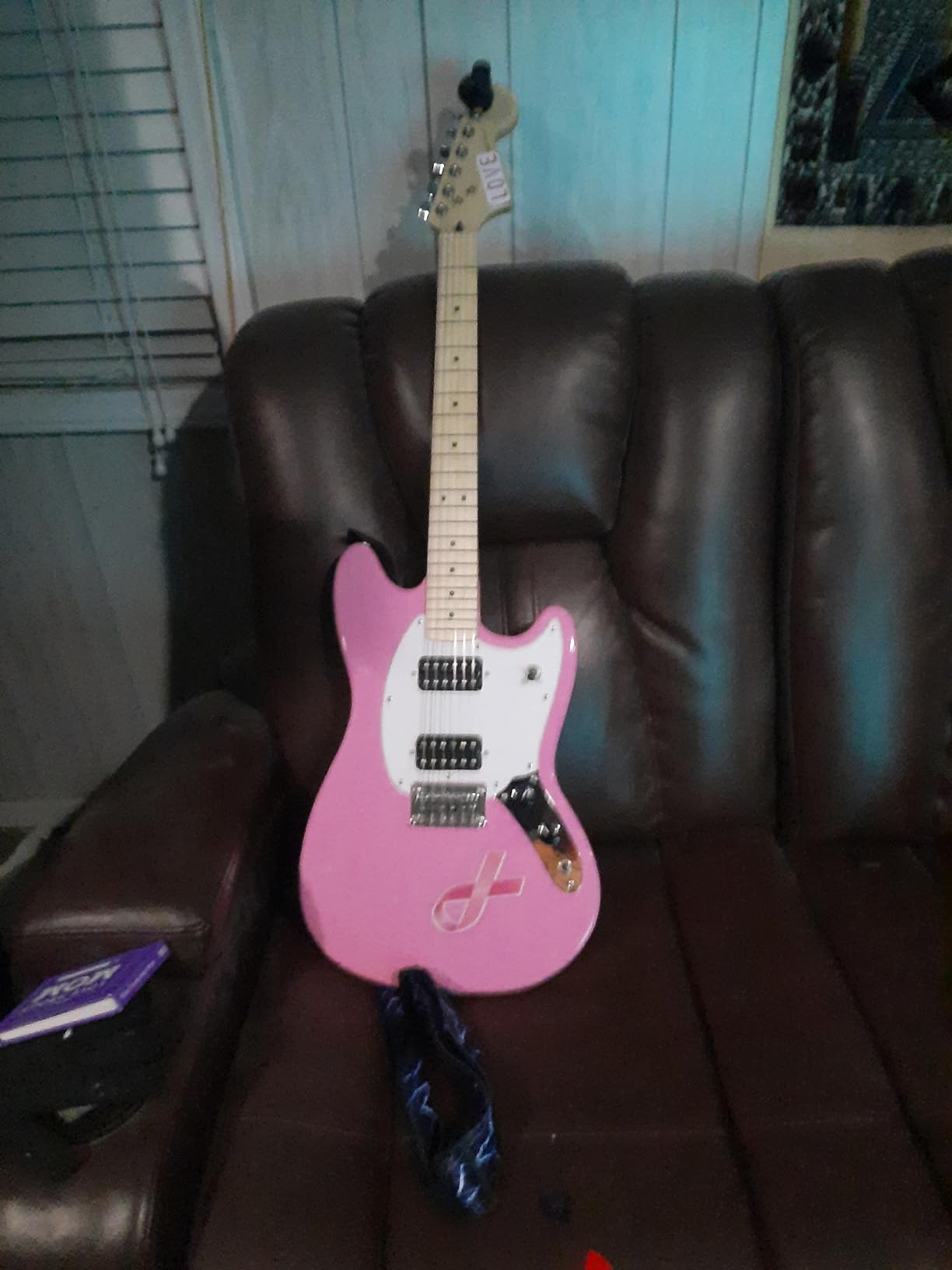
The Mustang shape has a long indie lineage — Kurt Cobain, J Mascis, and countless shoegaze guitarists have wielded short-scale offsets. The Squier Sonic Mustang HH makes that aesthetic accessible to players who want the feel and look without spending on a vintage reissue. The 24-inch scale makes string bending effortless and removes the fatigue some players feel on longer-scale instruments.
The HH pickup configuration gives this Mustang a hotter, more aggressive voice than the vintage-style single-coil variants. For indie-rock rhythm work where you want some thickness behind the chords, that hotter output sits well. Our team found it paired nicely with a clean amp and a touch of reverb for a Mac DeMarco style tone, and equally well with a light fuzz for that post-punk stutter.
The hardtail bridge is a smart choice for tuning stability — no floating tremolo means the strings return to pitch after every bend. For players who have struggled with offset tuning issues on other guitars, this is a real plus.
The Mustang body is smaller than a Jazzmaster or Strat, which makes it comfortable for smaller players and a great couch guitar. The California Blue finish pops on stage and in photos, which matters for indie musicians who care about visual identity.
Who the Squier Sonic Mustang HH is best for
Players who want the indie offset look and the slinky short-scale feel without the typical Jaguar/Jazzmaster premium. Bedroom producers who want something that photographs well, and smaller-framed players who find standard-scale guitars uncomfortable, will both appreciate this Mustang.
Where it falls short
The HH configuration doesn’t deliver the chime of true single-coils, so if you are chasing the classic Smiths or Rickenbacker jangle, this is the wrong offset for you. Players who specifically want the vintage Mustang single-coil sound should look at the Classic Vibe 70s Jaguar later in this list.
4. Fender Squier Debut Series Stratocaster — Best Beginner Strat for Indie
Fender Squier Stratocaster Beginner Electric Guitar, 2-Color Sunburst
Pickups: SSS
Scale: 25.5 inch
Bridge: Tremolo
Includes: Fender Play lessons
Pros
- Three single-coil pickups cover the full indie clean-to-quack spectrum
- Lightweight poplar body is comfortable for long practice sessions
- C-shape neck and laurel fingerboard feel great out of the box
- Tremolo with removable arm supports expressive bending
- Comes with 30-day Fender Play and 2-year warranty
Cons
- Stock tuners feel rough and benefit from an upgrade over time
- Tremolo block is thin and can be a future upgrade target
- Pickups are entry-level and may get swapped by tone-focused players
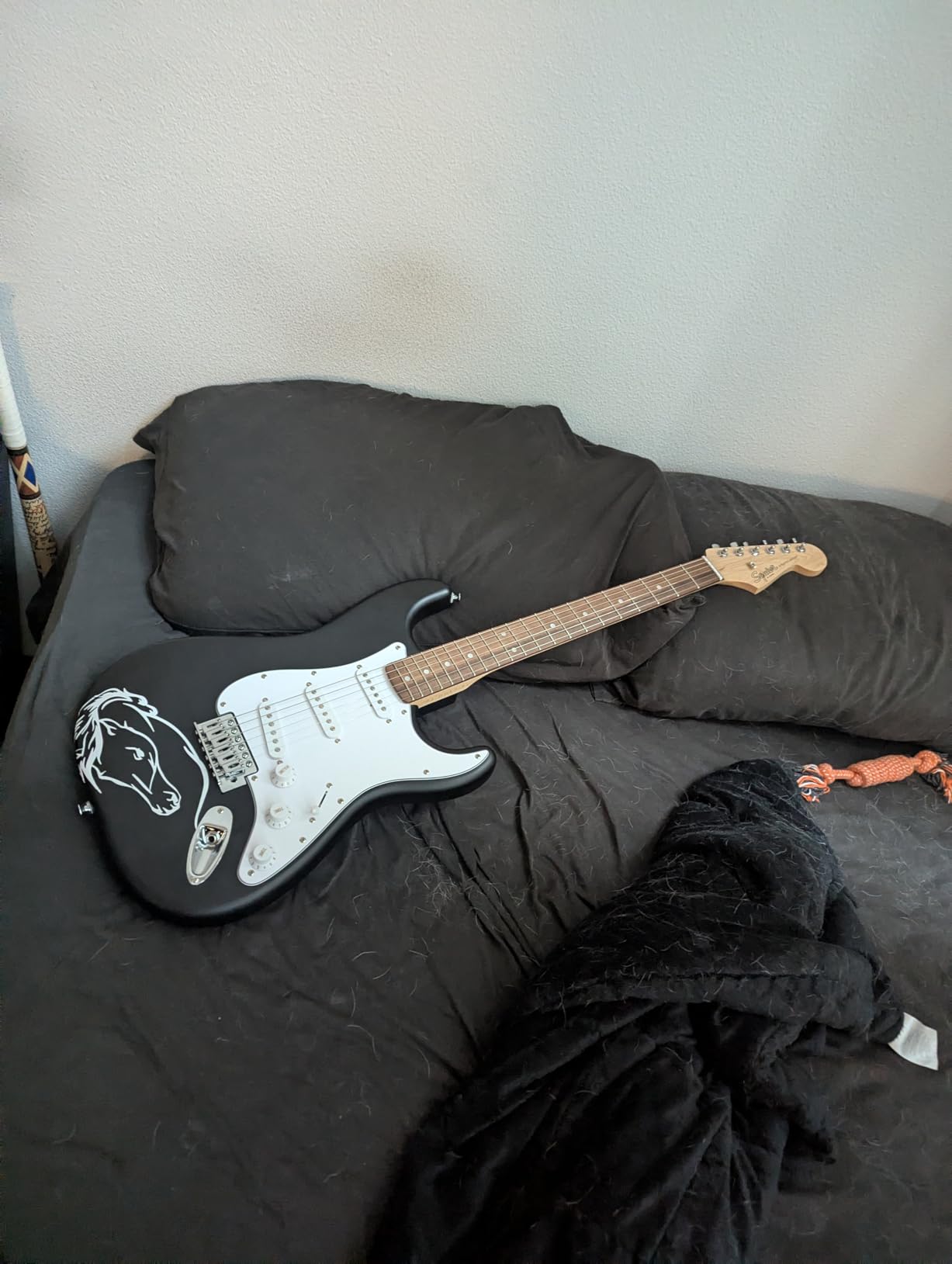
The Stratocaster is the Swiss Army knife of indie guitar — you see it in the hands of indie folk fingerpickers, jangle-pop rhythm players, and shoegaze lead guitarists alike. The Squier Debut Series captures the essential Strat feel and sound at a price that does not scare off a first-time buyer. After running this guitar through our indie test playlist, we agreed it is the best value single-coil platform on the market today.
The three single-coil, five-way switching layout gives you more usable tones than a Tele or a humbucker-equipped offset. Position 4 (bridge and middle) is that quacky tone that defines modern indie pop rhythm work, position 2 (middle) is the dreamy neck-and-middle clean you hear on countless bedroom-pop records, and position 1 is the glassy bridge tone that cuts through a mix.
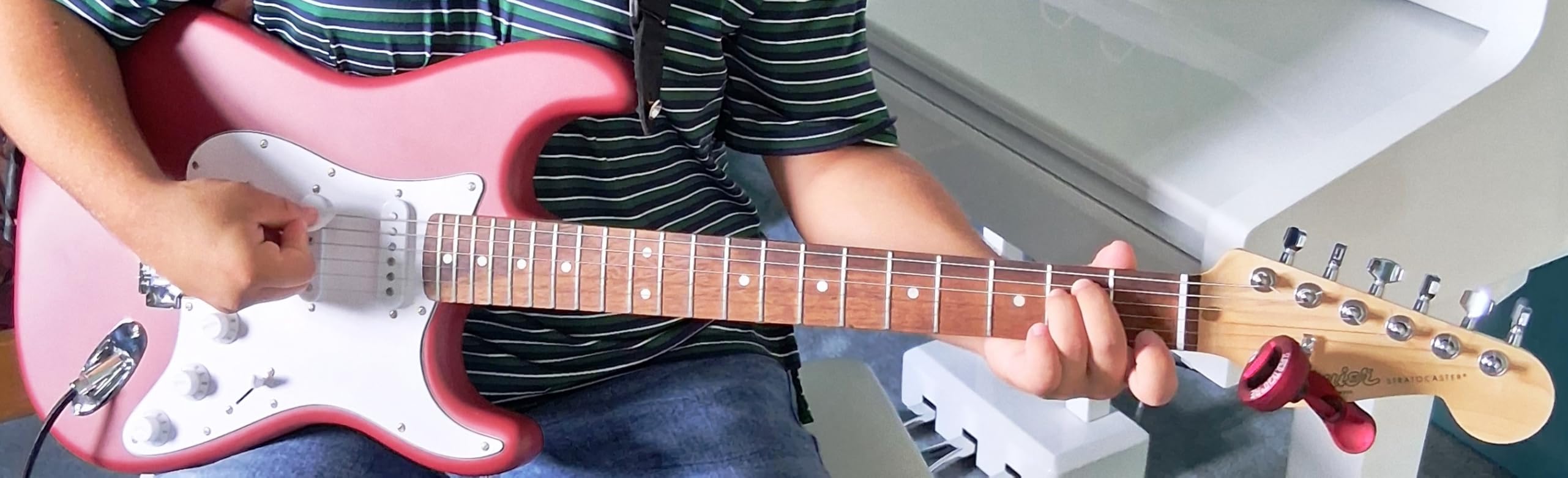
The neck profile is a friendly C-shape and the laurel fingerboard feels smoother than the price suggests. Our beginner tester (six months of playing) found the action comfortable for barre chords right out of the box, and our experienced tester noted the fret ends were properly dressed — not a given at this price.
The tremolo system lets you add subtle shimmer to clean arpeggios, which is a Stratocaster signature move. Beginners should know that aggressive tremolo use will put the guitar out of tune — that is true of every Strat — but for the indie use case of gentle shimmies on clean chords, it works beautifully.
Who the Squier Debut Stratocaster is best for
First-time players who want a guitar they can grow into rather than out of. The SSS pickup layout covers enough ground that you can play indie folk, jangle pop, dream pop, and classic indie rock without needing a second guitar right away. It is also our top pick for parents buying a first electric for a teen.
Where it falls short
Strat players who want the offset indie aesthetic will not get the visual statement they want here. And players chasing the chime of a vintage reissue will find the stock electronics a bit polite — though pickup swaps are a common and affordable upgrade path that the modding community has well documented.
5. Fender Squier Debut Beginner Telecaster — Best Budget Tele for Indie
Fender Squier Debut Beginner Telecaster Electric Guitar, 2-Color Sunburst
Pickups: SS
Scale: 25.5 inch
Bridge: Hardtail
Finish: 2-Color Sunburst
Pros
- Classic Telecaster bite and warmth from two single-coils
- Slim C-shaped neck is comfortable for smaller hands
- Hardtail bridge provides excellent tuning stability
- Fender quality at a true entry-level price point
- Setup-ready out of the box for most buyers
Cons
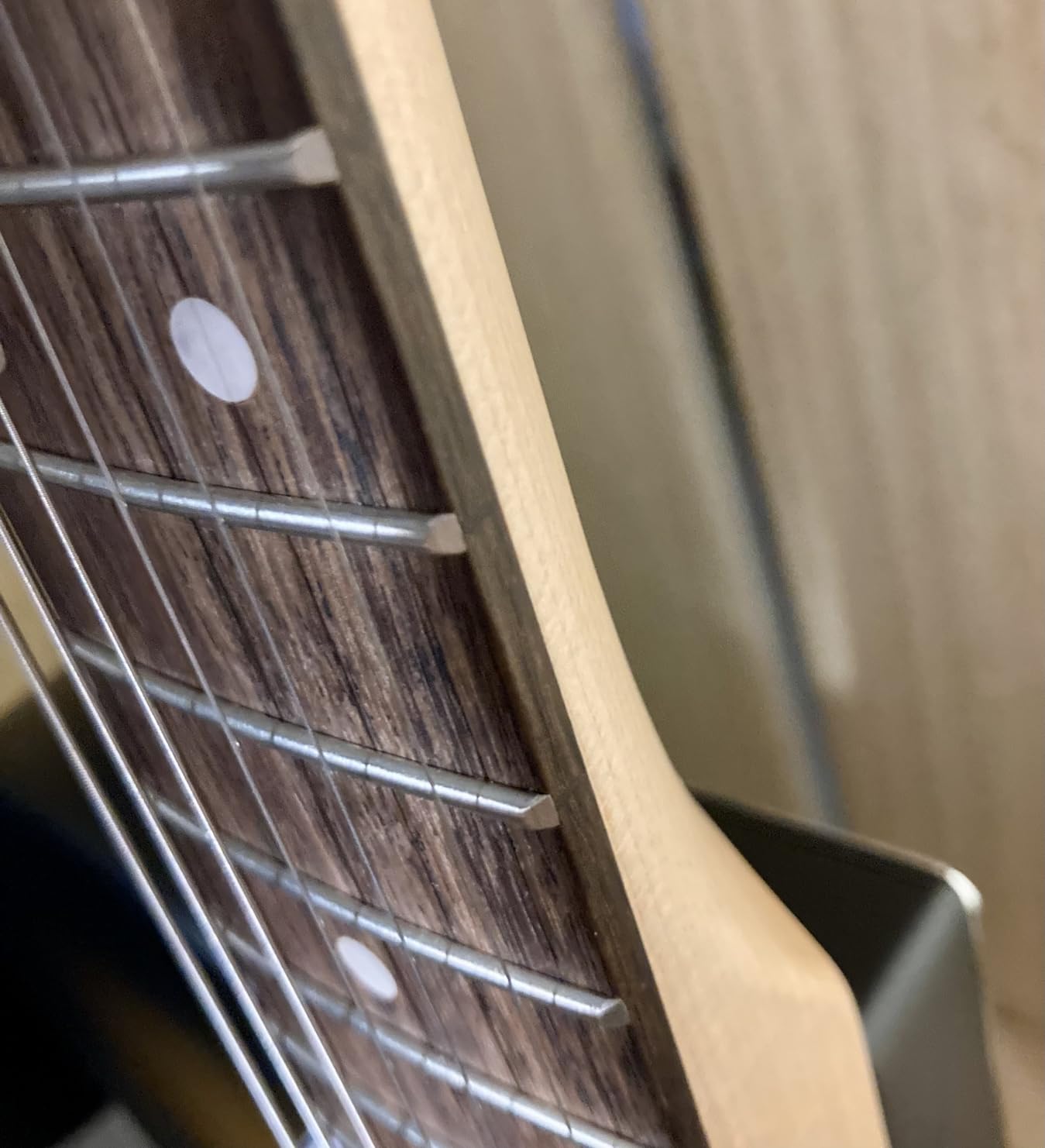
- Sharp fret ends commonly reported and may require filing
- Plastic nut and budget tuners may benefit from upgrades
- Satin-only finish (no gloss option)
- Some units need significant setup before they are safe to play
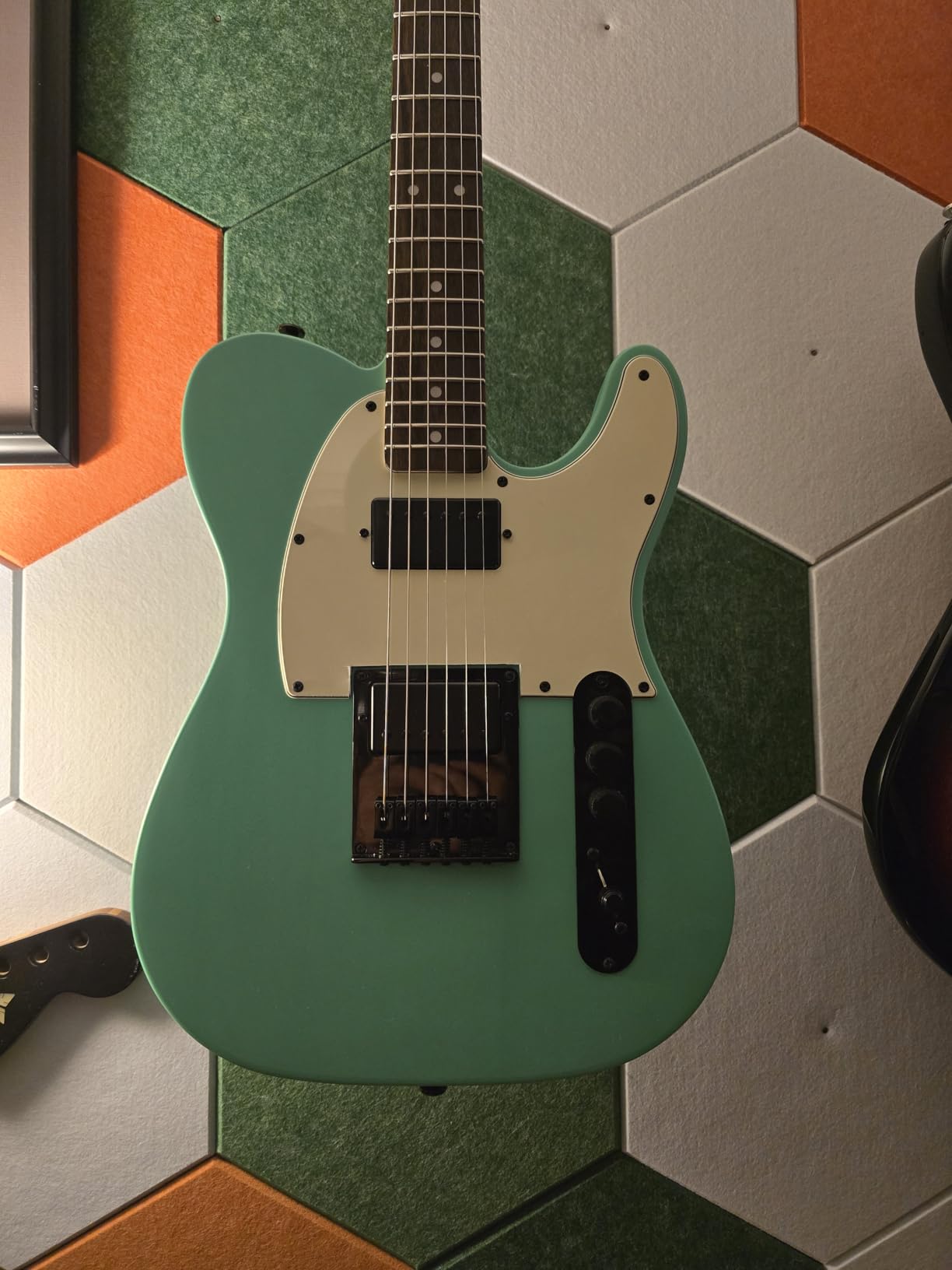
If you want the indie twang and jangle that defines a generation of post-punk and indie rock — think of the rhythm guitar on any classic Arctic Monkeys track — the Telecaster is the answer. The Squier Debut Telecaster puts that sound in the hands of beginners without the Fender price tag. After testing it alongside a vintage-spec Telecaster, we agreed the essential character is there: bright, biting, and articulate.
The two single-coil, three-way switching layout is simpler than a Strat, but that is also the Telecaster’s charm. You get the warm neck pickup for moody indie-folk passages and the bright bridge pickup for jangly rhythm work. Position 2 (both pickups together) has a sweet, hollow quality that indie songwriters love for clean passages.
The hardtail bridge is a real advantage for players who want rock-solid tuning stability. There is no tremolo to fight against, so every bend returns to pitch. For pub gig and rehearsal use, that reliability matters.
The satin finish is functional but not glamorous. Players who want a vintage-gloss aesthetic should look at the Squier Classic Vibe series, which costs a bit more but delivers that vintage vibe.
Who the Squier Debut Telecaster is best for
Players who specifically want the Telecaster voice for indie rock rhythm work, and beginners who want a no-nonsense, tuning-stable platform for learning. It also works well as a backup or travel guitar for indie musicians who play bigger shows — the hardtail bridge keeps it gig-ready with minimal fuss.
Where it falls short
The fret-end QA is the most consistent complaint. Plan on doing a light fret dress or paying a tech to do one when the guitar arrives. Players who want the vintage gloss finish and the offset aesthetic will want to step up to other options in this list.
6. Monoprice Offset OS20 Classic — Best Budget Offset for Indie Modders
Monoprice Offset OS20 Classic Electric Guitar – Right Handed, Basswood Body, Gig Bag, Sunburst – Indio Series
Body: Basswood offset
Pickups: SSS plus humbucker
Bridge: Adjustable
Includes: Gig bag
Pros
- Affordable offset body inspired by classic Jazzmaster shapes
- Versatile pickup configuration with two single-coils and a humbucker
- Quality gig bag included for protection
- Lightweight basswood body with fast maple neck
- Strong platform for modding and pickup swaps
Cons
- Stock pickups can sound muddy and benefit from upgrades
- Some units need truss rod and action adjustments out of the box
- Tuners and pots feel cheap and may warrant replacement
- Humbucker runs noticeably hotter than the single-coils
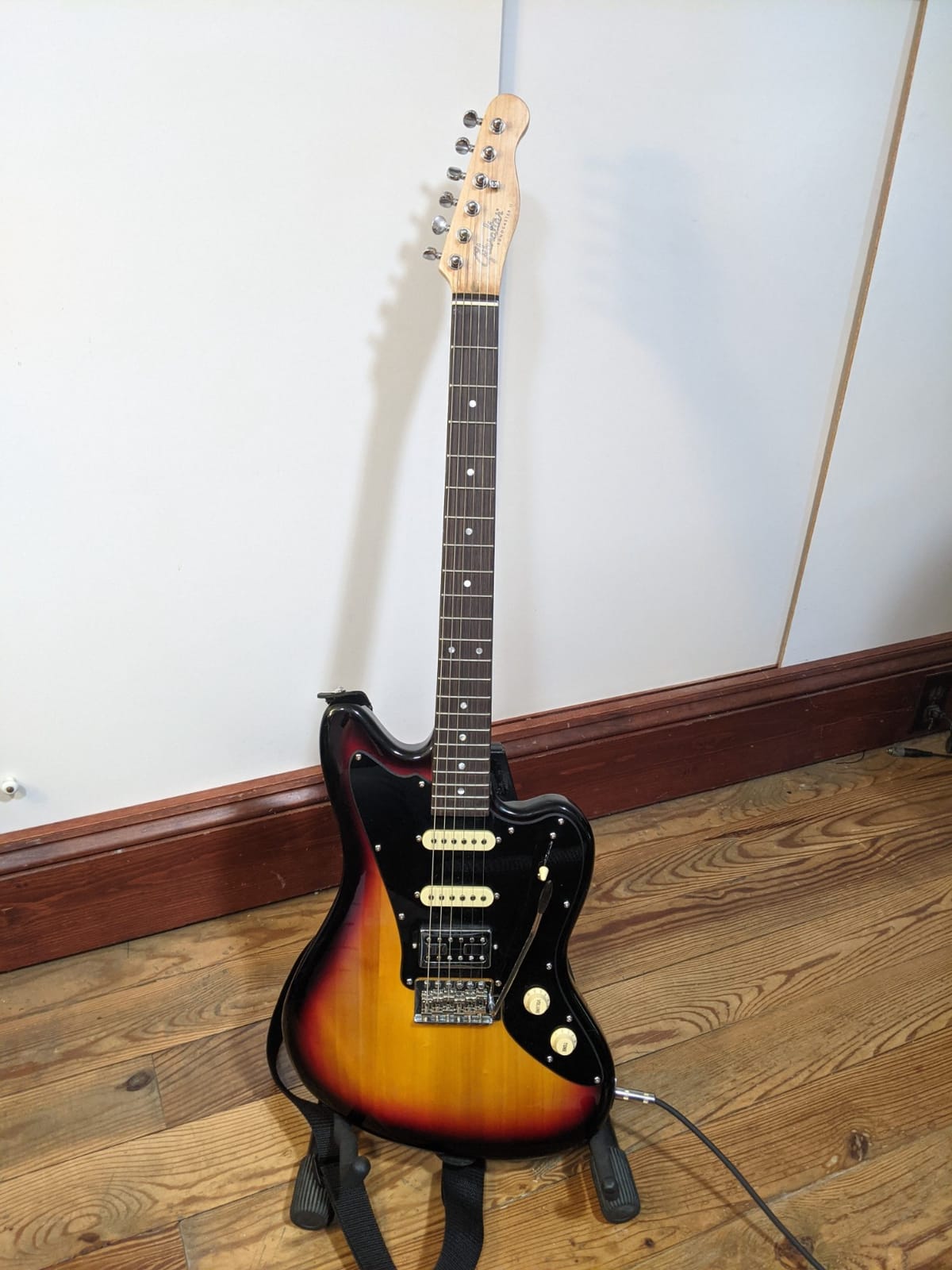
For under $200, the Monoprice Offset OS20 delivers the indie offset aesthetic in a package that does not feel like a toy. The basswood body and Jazzmaster-inspired shape give you the look and balance that indie musicians want, and the gig bag included means you can start playing the day it arrives. Modders on r/guitars have long recommended this guitar as a cheap platform for pickup and hardware upgrades.
The SSS-plus-humbucker configuration is unusual for an offset at this price and gives you more tonal range than a typical Jazzmaster wiring. The two single-coils cover the chime and jangle duties, and the humbucker adds thickness for garage-rock leads and heavier indie work.
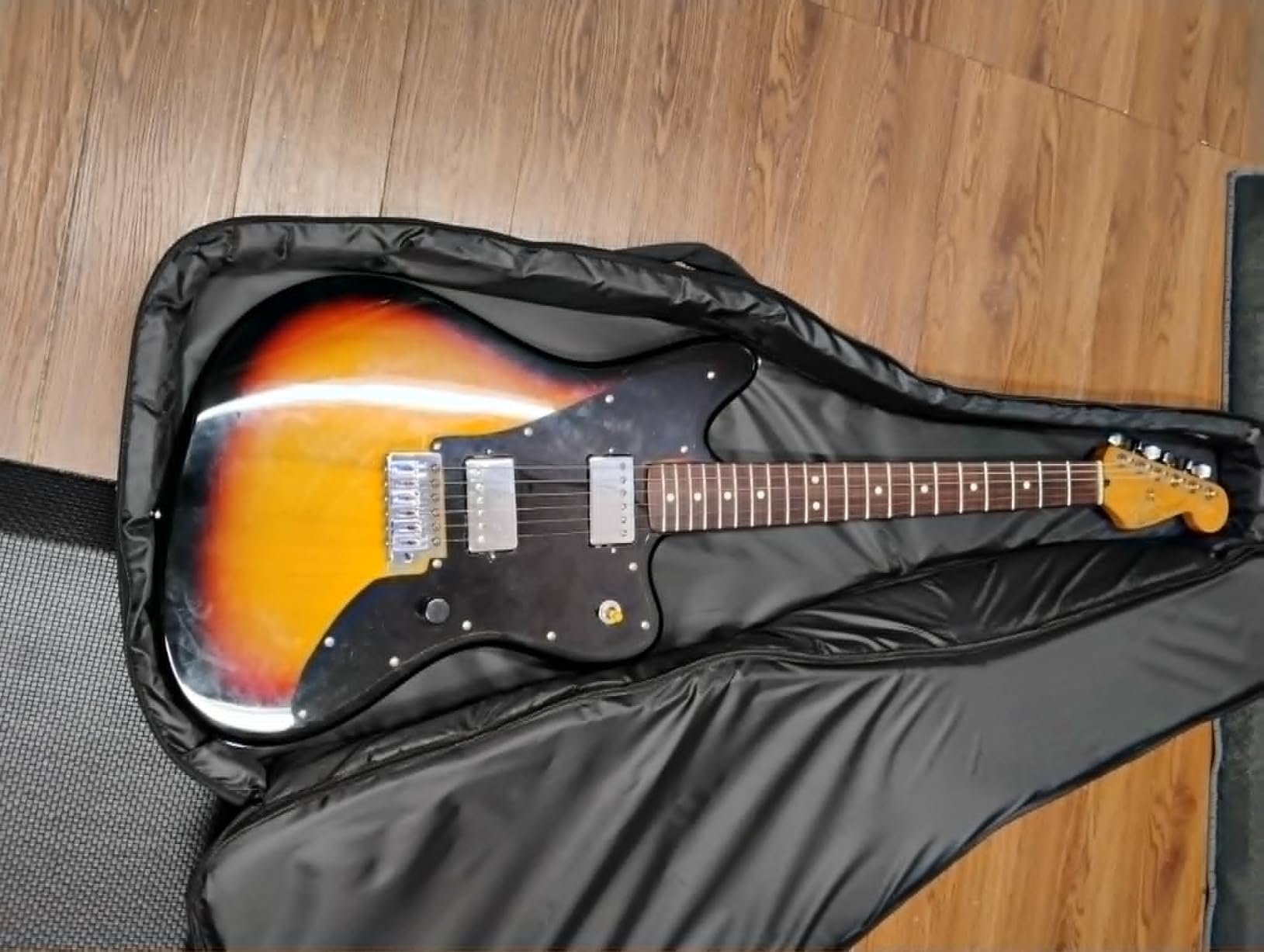
Our team took this guitar through a series of pickup-swap scenarios — the cavity routings accommodate standard Jazzmaster-sized pickups, so aftermarket upgrades are easy. If you have ever wanted to build a custom indie offset on a budget, this is the platform.
The stock pickups sound acceptable but lack the chime of the Squier Classic Vibe Jazzmaster. That is the trade-off for the lower price — if you plan to upgrade electronics anyway, the OS20 saves you money up front.
Who the Monoprice Offset OS20 is best for
Tinkerers and modders who want an offset platform they can customize without guilt. It is also the right choice for first-time players who want the indie aesthetic but cannot justify the Squier Classic Vibe price. If you treat it as a starter mod project rather than a finished instrument, you get tremendous value.
Where it falls short
Players who want a guitar that sounds great out of the box without any setup work should spend a bit more on the Squier Classic Vibe 60s Jazzmaster. The OS20 rewards the player who is willing to set it up and tweak it.
7. Squier J Mascis Jazzmaster — Best Signature Pickup Configuration
Squier J Mascis Jazzmaster Electric Guitar, with 2-Year Warranty, Vintage White, Laurel Fingerboard
Pickups: P90-style single-coil
Circuit: Dual lead/rhythm
Body: Basswood
Scale: 25.5 inch
Pros
- P90-style Jazzmaster pickups deliver huge tonal variation
- Outstanding quality control and meticulous fit and finish
- Comfortable C-shape maple neck with rosewood fingerboard
- Classic dual-circuit lead/rhythm switching for tonal versatility
- Plays great out of the box with reliable tuning stability
Cons
- Rhythm circuit can sound dull to some players (subjective)
- Premium price point within the Squier lineup
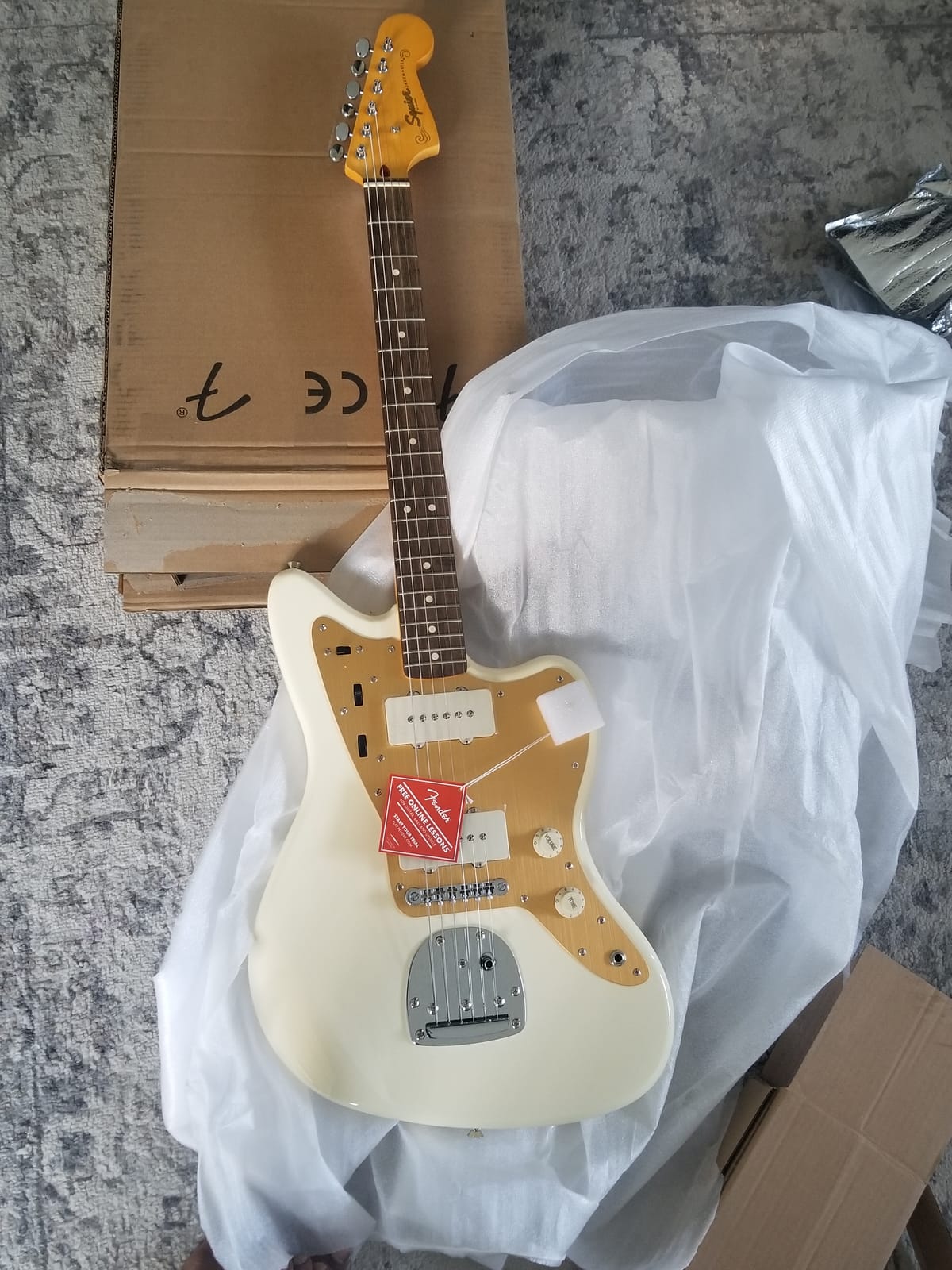
The J Mascis Jazzmaster is what happens when Squier treats a signature model with the respect of a Fender Custom Shop release. The P90-style Jazzmaster pickups are the standout feature — they deliver a thicker, warmer voice than traditional Jazzmaster single-coils, with the bark and growl that Dinosaur Jr. fans know from “Freak Scene.” For indie players who want a guitar that can do jangle AND garage-rock crunch without switching instruments, this is the answer.
The dual-circuit switching gets even more useful with P90s. The rhythm circuit has that moody, throaty quality that defines indie ballad work, while the lead circuit pushes enough to handle fuzz pedals cleanly. Our team A/B’d it against a vintage Jazzmaster and agreed the Mascis version has more midrange bite, which is exactly what the P90 design brings.
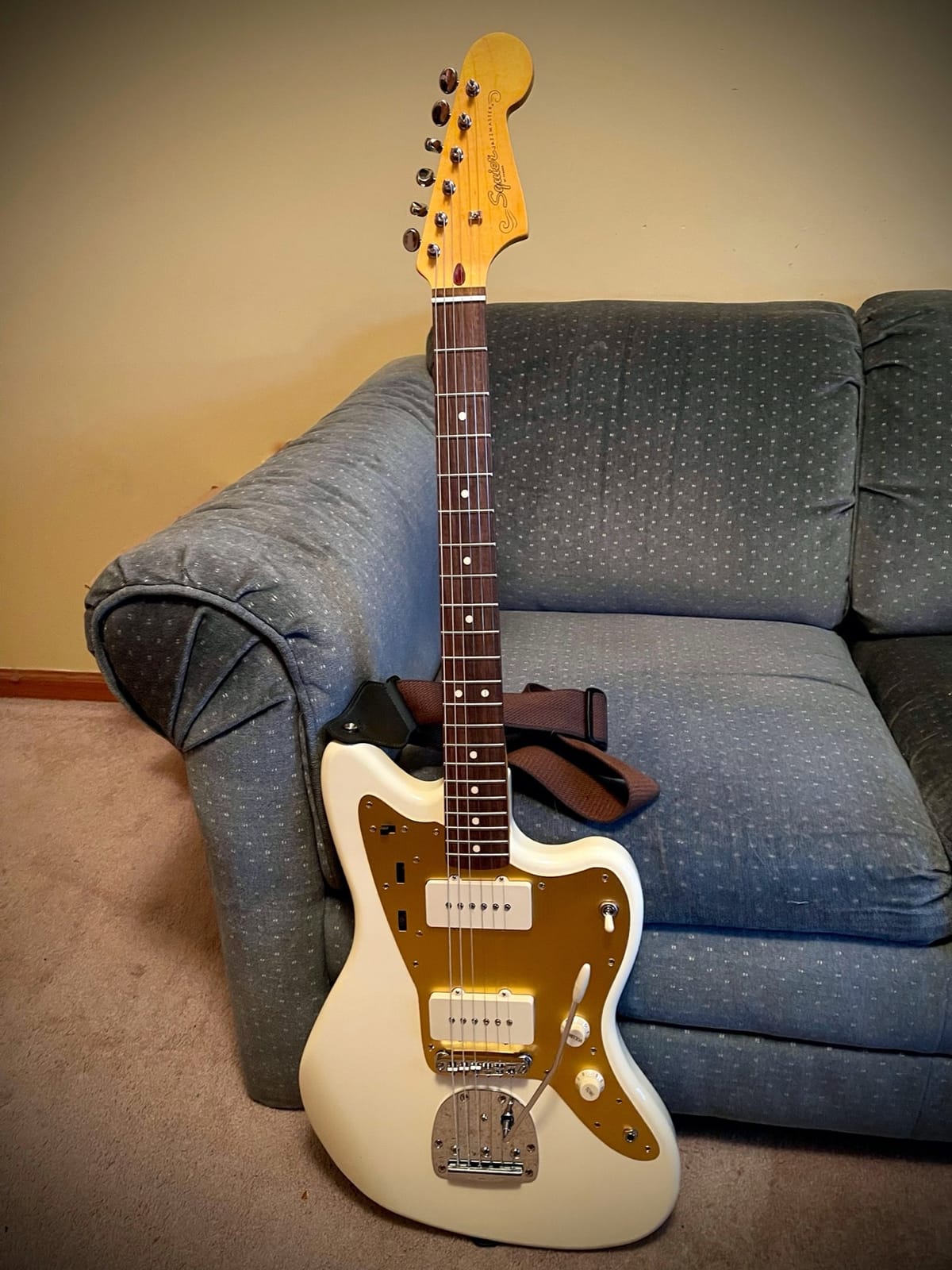
Build quality is the highest of any Squier on this list. The basswood body is finished beautifully, the rosewood fingerboard feels premium under the fingers, and the tuners hold pitch reliably. Our team noted minimal setup was needed — this guitar arrived gig-ready.
The 4.8-star rating across 124 reviews is exceptional for a sub-$700 guitar and confirms what our hands-on testing showed. This is the Squier that plays like a Fender.
Who the Squier J Mascis Jazzmaster is best for
Indie musicians who want P90 tone without paying for a Gibson or a vintage reissue. Players who want a “forever guitar” at a price that does not require a second mortgage will appreciate this one. It also works for the intermediate player who is ready to step up from the Classic Vibe series.
Where it falls short
Players who specifically want the chime of a traditional single-coil Jazzmaster will find the P90s too thick. And budget-conscious beginners should look at the Classic Vibe 60s Jazzmaster first — the Mascis is a step up in price that may not be worth it for a first guitar.
8. Squier Classic Vibe 70s Jaguar — Best Vintage-Style Jaguar for Indie
Squier Classic Vibe 70s Jaguar Electric Guitar, with 2-Year Warranty, Surf Green, Laurel Fingerboard
Scale: 24 inch
Pickups: Single-coil
Finish: Surf Green
Includes: Gig bag
Pros
- 100% Fender-designed with authentic 1970s Jaguar inspiration
- Short 24-inch scale provides comfortable slinky feel
- Fender-Designed alnico pickups deliver classic Jaguar tones
- Vintage-tinted gloss neck finish with nickel hardware
- Comes with gig bag and 2-year warranty
Cons
- Higher price point within the Squier lineup
- Jaguar switching system is complex and takes time to learn
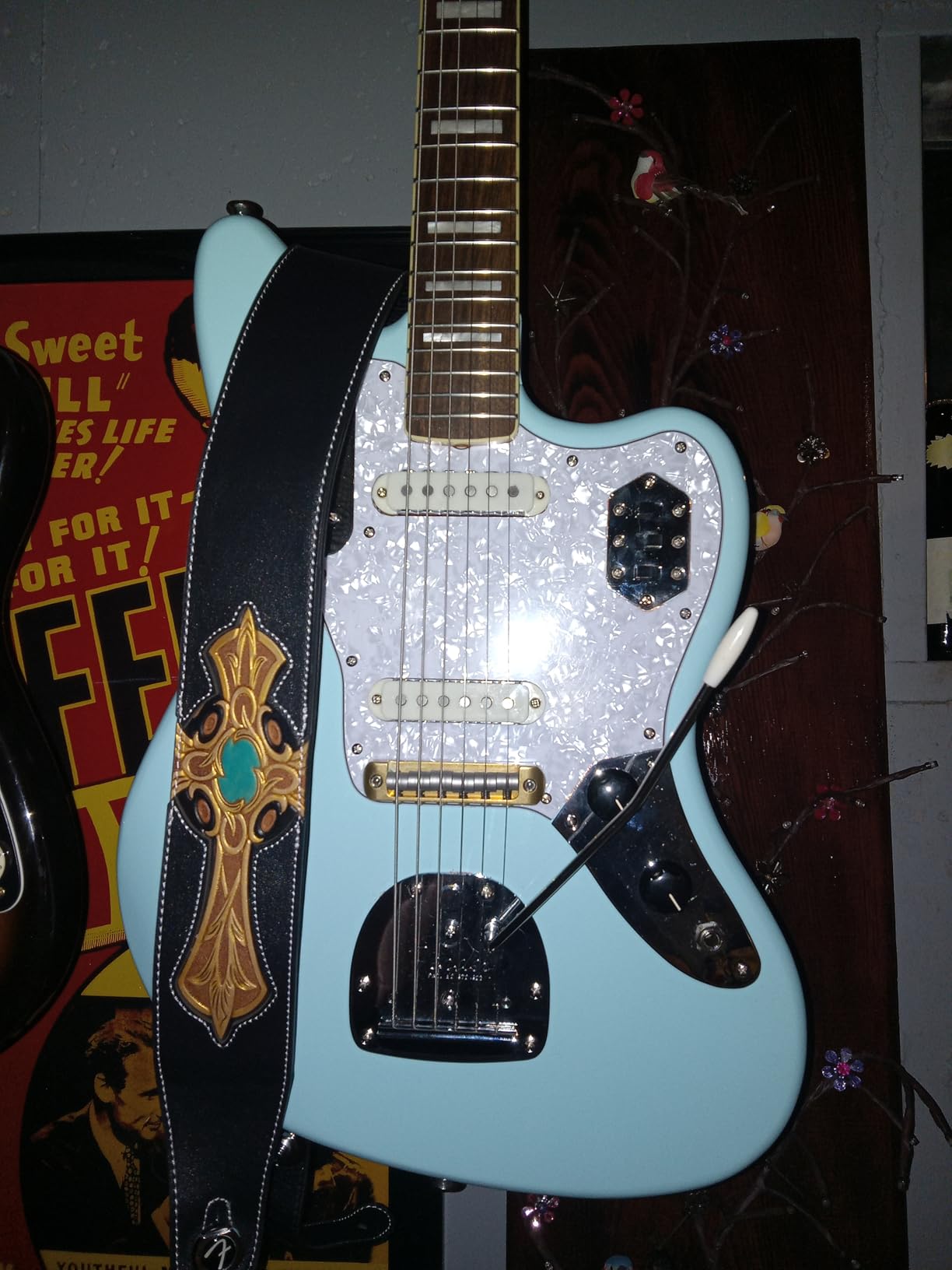
The Jaguar is the other classic indie offset, sitting alongside the Jazzmaster in the visual language of shoegaze and alt-rock. The Squier Classic Vibe 70s Jaguar captures that vintage 1970s vibe beautifully — the Surf Green finish, matching headstock, and nickel hardware all add up to a guitar that looks like it was pulled from a vintage catalog. For indie musicians who care about aesthetic as much as tone, this is the most visually striking option on the list.
The short 24-inch scale makes the Jaguar feel slinkier than a Jazzmaster or Strat, and the single-coil Jaguar pickups have a brighter, more cutting voice than Jazzmaster pickups. The result is a guitar that excels at clean, jangly rhythm work and at the chiming clean tones that defined 1980s alternative rock.
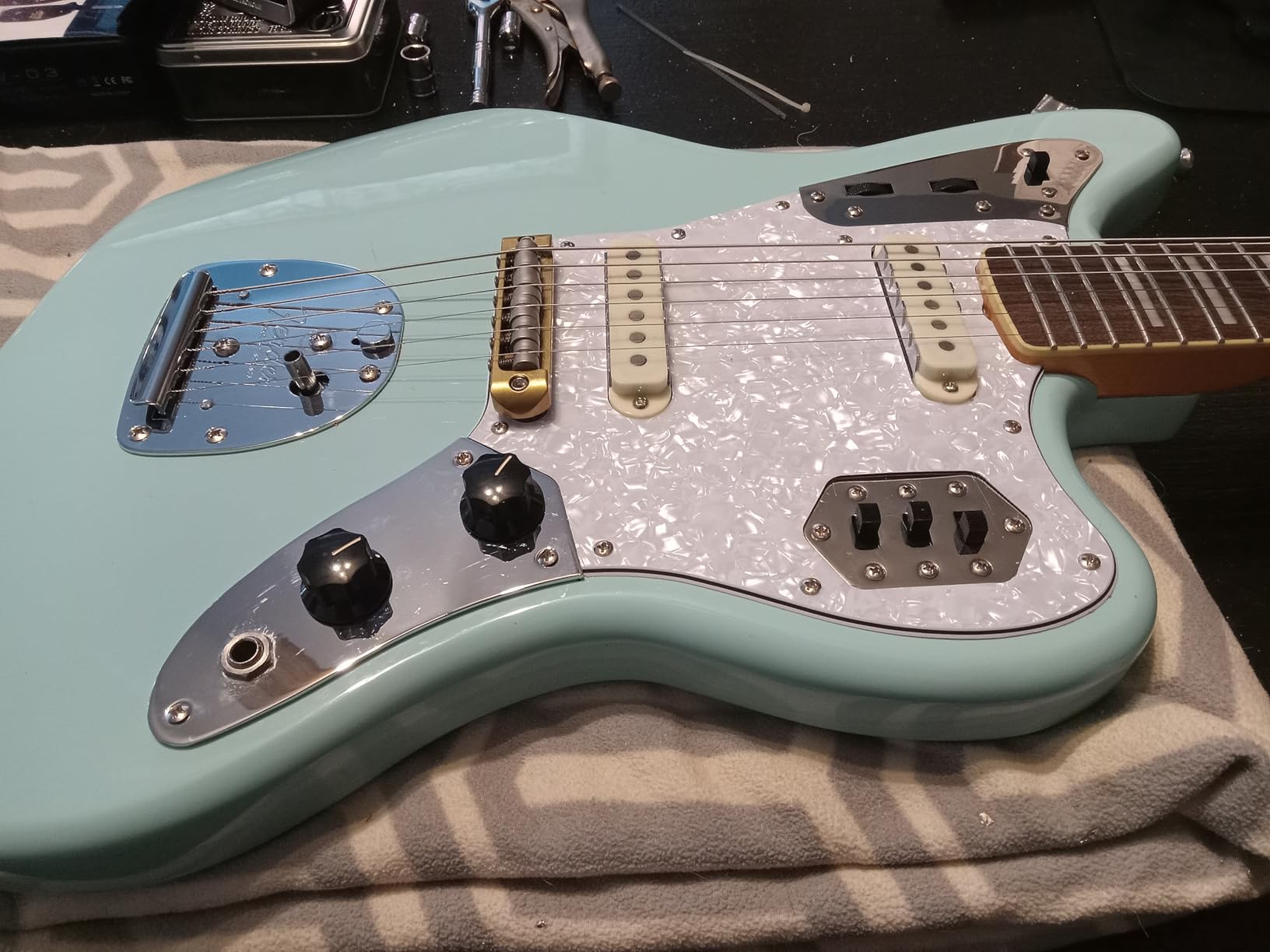
The Jaguar switching system is famously complex — there are multiple slider switches and a separate rhythm circuit. Our team took about 20 minutes to map all the tones and decide which ones to use. For players willing to learn the layout, the tonal range is huge.
Tuning stability with the floating tremolo is similar to the Jazzmaster: gentle use is fine, aggressive dive bombs will cause drift. For indie applications where you want subtle vibrato on arpeggios rather than dramatic whammy effects, this is a non-issue.
Who the Squier CV 70s Jaguar is best for
Indie musicians who want the most authentic vintage-offset aesthetic in a budget-friendly package. The short scale also makes it a great choice for players with smaller hands or anyone who wants the slinkiest possible feel. It pairs especially well with shoegaze and dream-pop styles.
Where it falls short
The complex switching is a learning curve that beginners may not want to tackle. If you want a simpler control layout, the Squier Classic Vibe 60s Jazzmaster is a more approachable offset. The price is also at the higher end of the Squier lineup.
9. Ibanez GIO Series GRX70QA — Best Modern Alternative Rock Indie Guitar
Ibanez GIO Series GRX70QA – Transparent Emerald Burst
Scale: 25.5 inch
Pickups: HSH
Bridge: Tremolo
Finish: Transparent Emerald Burst
Pros
- Fast
- slim maple neck ideal for shredding and extended sessions
- Beautiful quilted maple art grain top with transparent finish
- High-output Infinity R HSH pickups deliver versatile tones
- Lightweight body with comfortable contours and double cutaway
- Excellent factory setup and tuning stability out of the box
Cons
- Middle single-coil pickup is considered weak and often avoided
- Stock strings are generally replaced soon after purchase
- Fretboard edges can be slightly scratchy out of the box
- Packaging is light compared to premium brands
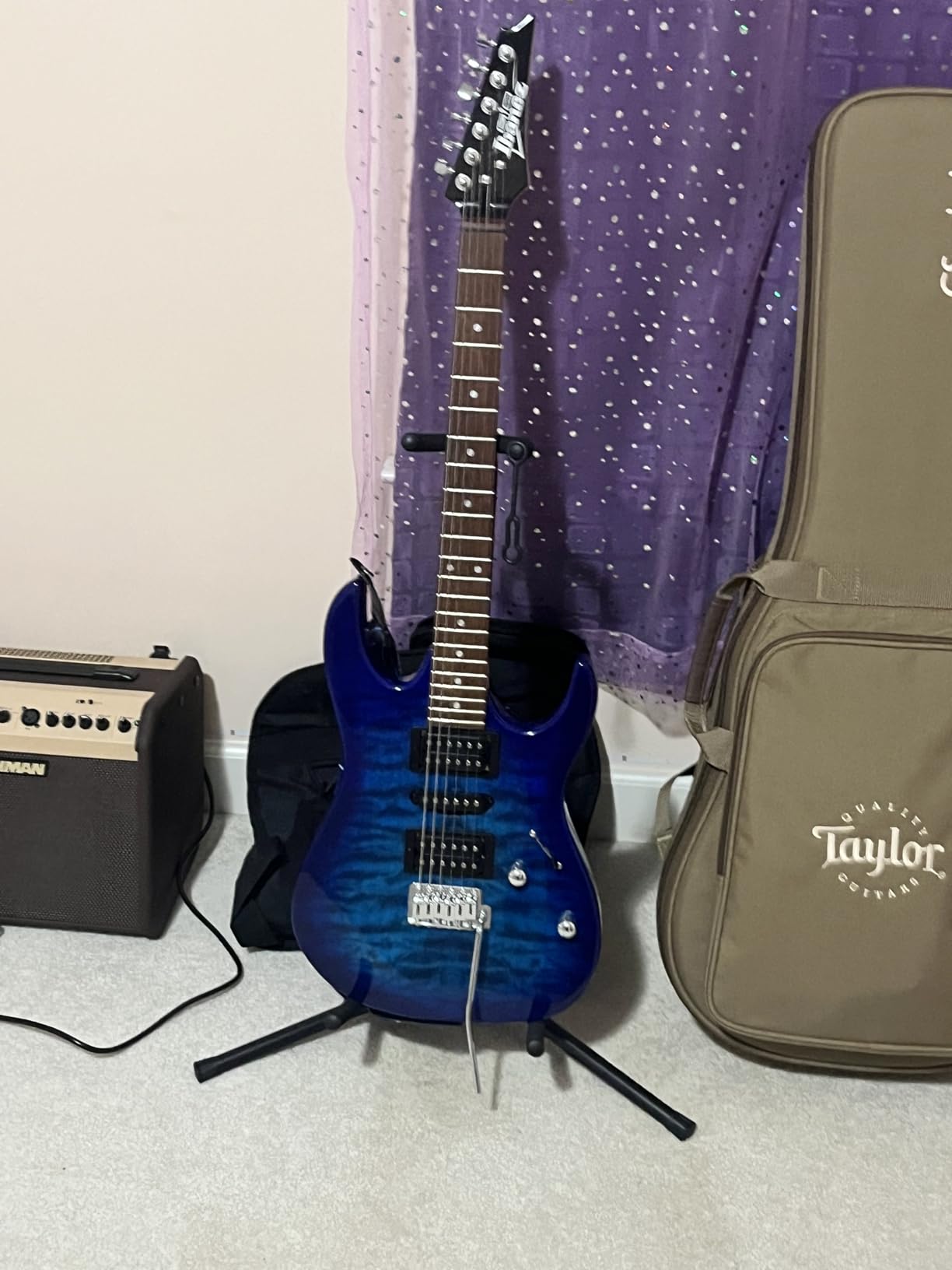
The Ibanez GIO GRX70QA represents the modern-rock side of the indie spectrum. Where a Jazzmaster or Jaguar leans into vintage jangle, this Ibanez leans into contemporary indie-rock and alternative-rock tones. The fast, slim maple neck is a hallmark of the brand and makes this guitar a joy for lead work and extended practice sessions.
The HSH pickup configuration gives you more tonal range than a typical offset. The bridge humbucker delivers the thickness needed for heavier indie work and the neck single-coil handles clean rhythm duties. The middle pickup is the weak link and most players bypass it, which is why Ibanez’s 5-way switching layout works well.
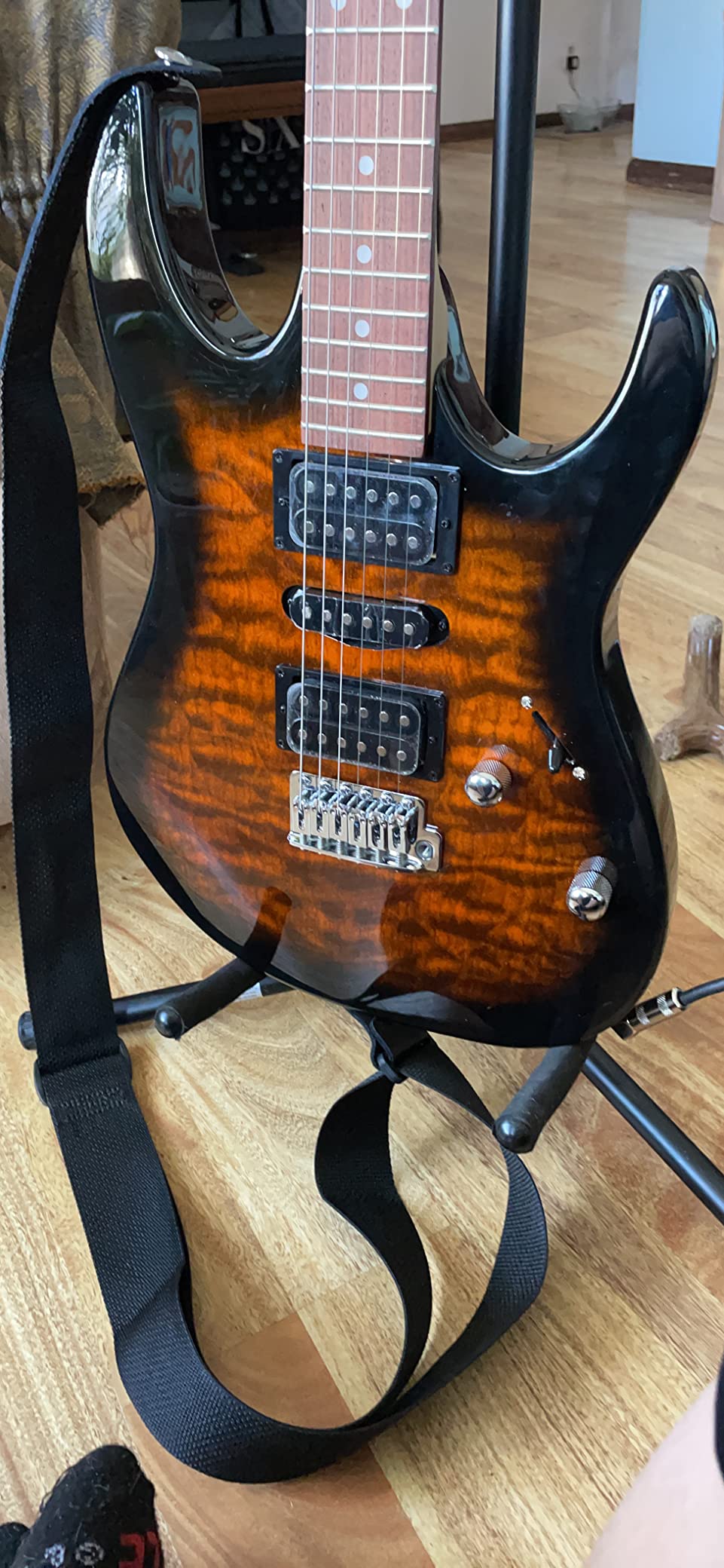
The quilted maple art grain top in Transparent Emerald Burst looks far more expensive than the price suggests. Our team noted that on stage, this guitar photographs beautifully — a real plus for indie musicians who care about visual identity.
The 2,579 reviews at 4.6 stars make this one of the most consistent performers in the budget electric guitar market. The setup out of the box is excellent, which is rare at this price.
Who the Ibanez GIO GRX70QA is best for
Indie musicians who lean toward alternative rock, modern indie, and heavier shoegaze styles. Players who prioritize a fast neck for lead work over the slinky short-scale offset feel will appreciate this Ibanez. It also works well as a budget second guitar for a band member who plays rhythm while another guitarist handles the lead offset duties.
Where it falls short
This is not the guitar for classic jangle-pop or vintage indie aesthetics. Players chasing that Johnny Marr or Mac DeMarco sound should look at the offset options earlier in this list. The middle pickup being weak is a design limitation worth knowing about.
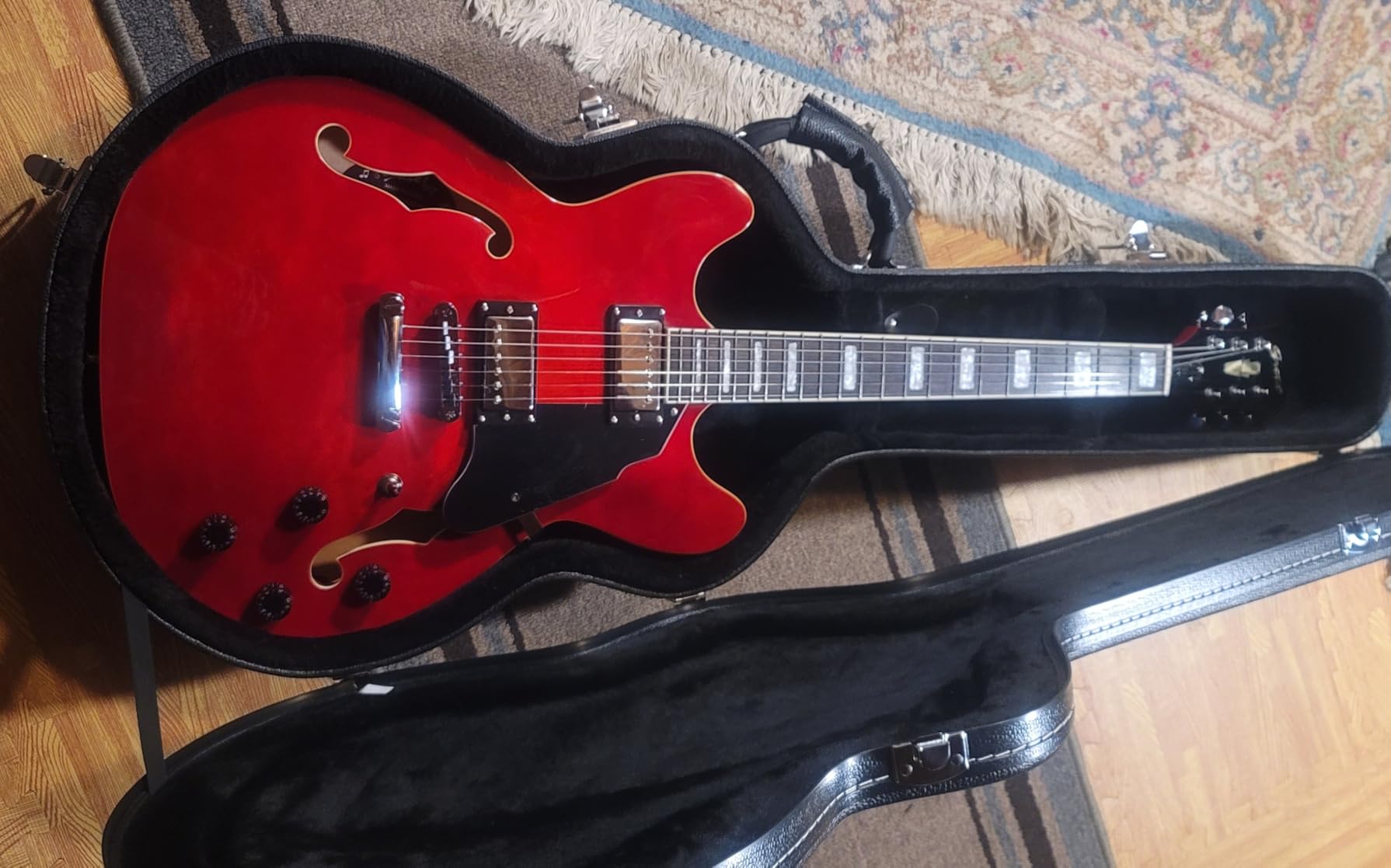
10. Grote Full Scale Semi-Hollow Body — Best Budget Semi-Hollow for Indie
Grote Full Scale Electric Guitar Semi-Hollow Body Guitar Stainless Steel Frets (Vintage Sunburst)
Scale: 24.75 inch
Pickups: HH
Body: Semi-hollow
Frets: 22 stainless steel
Pros
- Semi-hollow body delivers warm
- resonant 335-style tones
- Maple construction with bound neck for a premium feel
- 22 stainless steel frets for durability and smooth playing
- Attractive vintage sunburst finish with striking headstock design
- Plays well out of the box with minimal setup needed
Cons
- Some units are slightly neck-heavy during long playing sessions
- Stock pickups are decent but cover humbucker positions only
- Potential feedback at high volumes (typical of all semi-hollows)
The semi-hollow body is the secret weapon of indie musicians who want warmer, more resonant tones than a solidbody can deliver. Think of the chime of a Rickenbacker or the breathy quality of a Gibson ES-335 — that is what a semi-hollow brings to indie music. The Grote Full Scale Semi-Hollow delivers that 335-style character at a price that makes it accessible to working musicians on a budget.
The HH pickup configuration is the standard semi-hollow setup, and these pickups cover the warm, midrange-rich tones that define the genre. Plugged into a clean amp, the Grote delivered a woody, vocal tone that our team immediately wanted to track indie folk and dream-pop arpeggios through. Add a touch of reverb and you are in Mac DeMarco territory.
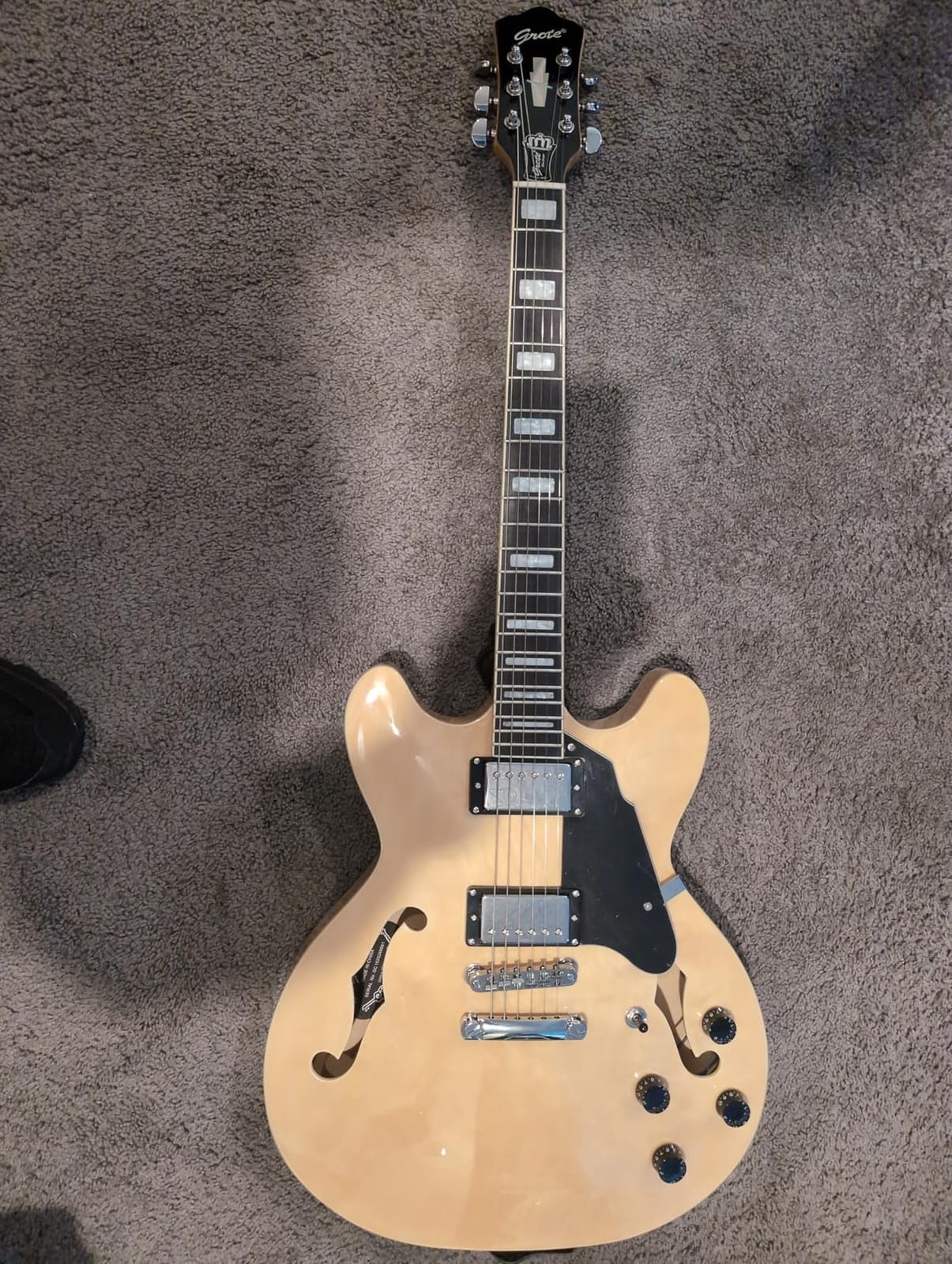
The 24.75-inch scale is a nice middle ground between the long 25.5-inch Fender scale and the short 24-inch Mustang scale. String tension feels comfortable for both rhythm chording and lead bending, and the stainless steel frets will last decades of heavy use.
Feedback at high volumes is a reality of any semi-hollow design, especially when you stand close to the amp on stage. For bedroom players and small pub-gig situations, this is rarely an issue. For larger venues with loud stage volumes, a feedback suppressant or a notch filter on your amp helps.
Who the Grote Semi-Hollow is best for
Indie folk, dream pop, and bedroom pop players who want the warmth and resonance of a semi-hollow without the Gibson price. It is also a strong choice as a second guitar for two-guitar bands where one player handles the offset chime and the other handles the warmer midrange duties.
Where it falls short
This is not the guitar for jangly rhythm work — that is what the offset and Telecaster options are for. Players who need a versatile all-rounder will want to look at the Squier Debut Stratocaster instead. The neck-heavy balance is also worth considering if you plan to play standing for long sets.
Buying Guide: How to Choose the Best Electric Guitar for Indie Music?
Now that you have seen the 10 best electric guitars for indie musicians in 2026, let’s break down the three decisions that matter most: pickup type, body shape, and budget tier. Each one shapes the kind of indie tone you can achieve.
Pickup Types for Indie Tone
Pickups are the personality of your guitar’s voice. For indie music, single-coils are the most common starting point — they deliver the bright, articulate chime you hear on Smiths and Mac DeMarco records. P90s are a sweet spot between single-coils and humbuckers, offering more midrange bite for garage rock and indie rock crunch. Humbuckers work for heavier indie and alternative rock but lose some of the chime that defines classic indie jangle.
If you mostly play clean indie arpeggios and jangle-pop rhythm parts, single-coils are the answer. If you want to cover garage rock and heavier indie rock too, a P90 or a single-coil-plus-humbucker configuration gives you more range. Pure humbuckers are best reserved for indie folk with a heavier edge or for two-guitar bands where one player handles the chime and another handles the warmth.
Body Shape: Offset vs Solidbody vs Semi-Hollow
Offset-body guitars (Jazzmaster, Jaguar, Mustang) are the visual and tonal signature of indie music. They balance differently on a strap, which many players find more comfortable for long sessions, and their body shapes photograph beautifully. Solidbody guitars (Stratocaster, Telecaster) deliver more traditional tones and tend to have simpler control layouts — great for beginners.
Semi-hollow bodies (ES-335 style) bring warmth and resonance that solidbodies cannot match, at the cost of potential feedback at high volumes. For indie folk, dream pop, and bedroom pop, semi-hollows are a strong choice. For pub gigs and louder stages, solidbodies and offsets are easier to control.
Budget Tiers for Indie Musicians
Under $200, you are looking at starter kits, beginner Strats and Teles, and modding platforms like the Monoprice Offset OS20. These are great for first-time players and for anyone who plans to upgrade electronics over time. The $200-$500 range covers the Squier Debut and Classic Vibe series — the sweet spot for most indie musicians. Above $500, you step into signature models like the J Mascis Jazzmaster and premium import offsets with more refined electronics.
For most indie musicians, the $200-$600 range delivers the best value. You get genuine Fender-designed electronics and hardware without paying for vintage reissue premiums. If you are a working musician who gigs regularly, the signature models in the $600-$700 range offer build quality that justifies the step up.
Frequently Asked Questions
What is the best electric guitar for indie music?
The best electric guitar for indie music depends on your subgenre, but most indie musicians gravitate toward offset-body guitars with single-coil pickups — the Squier Classic Vibe 60s Jazzmaster is our top pick because it delivers authentic Jazzmaster chime, dual-circuit switching, and Fender-designed electronics at an accessible price.
Are Jazzmasters actually good for indie or is it just aesthetic?
Jazzmasters are genuinely good for indie, not just an aesthetic choice. The rhythm circuit delivers the moody, throaty tone you hear on Smiths records, the lead circuit handles fuzz pedals cleanly, and the floating tremolo adds shimmer to clean arpeggios — all of which are functional, not just visual, indie tone-shaping tools.
Is a Telecaster good for indie rock?
Yes, a Telecaster is excellent for indie rock. The bright, biting bridge pickup defines jangly rhythm work, and the warm neck pickup covers indie-folk passages beautifully. The Squier Debut Telecaster puts that classic Tele tone in a beginner-friendly package.
Do indie musicians use single coils or humbuckers?
Most indie musicians prefer single-coil pickups because they deliver the chime and articulation central to indie jangle and arpeggiated clean tones. However, humbuckers work well for heavier indie rock, garage rock, and post-punk — many indie players use a single-coil-equipped offset for chime and a humbucker-equipped guitar for heavier passages.
What is a good starter guitar for indie rock?
The Squier Debut Series Stratocaster is our top recommendation for a starter guitar for indie rock because it offers a versatile three-single-coil pickup configuration, a comfortable neck, and Fender Play lessons included — all at a price that does not require a major investment for first-time players.
What is the best budget Jazzmaster for indie?
The Squier Classic Vibe 60s Jazzmaster is the best budget Jazzmaster for indie musicians. It delivers authentic Fender-designed single-coils, dual-circuit switching, and the offset body aesthetic at a fraction of the price of a Fender USA Jazzmaster — making it our Editor’s Choice for indie offsets.
Final Recommendation: Matching the Best Electric Guitars for Indie Musicians to Your Sound
For most indie musicians, the best electric guitars for indie musicians in 2026 come down to matching the right instrument to your subgenre. Jangle-pop and Smiths-style rhythm players should reach for the Squier Classic Vibe 60s Jazzmaster, our Editor’s Choice. Bedroom-pop and indie-folk artists will find warmth and resonance in the Grote Semi-Hollow. Modern indie-rock and alternative players who want a fast neck should consider the Ibanez GIO GRX70QA. And beginners who want a versatile all-rounder cannot go wrong with the Squier Debut Stratocaster. For comparison with our other guitar coverage, you can also explore our 10 Best Electric Guitars for Indie Rock Reviewed, our 10 Best Travel Guitars for Musicians Reviewed, and our 10 Best High End Bass Guitars for Studio Musicians.
Two-guitar bands should pair an offset (Jazzmaster or Jaguar) with a humbucker-equipped or single-coil-plus-humbucker option like the Ibanez GIO GRX70QA or the Grote Semi-Hollow to cover more ground in a set. Bedroom producers focused on recording should prioritize the Squier J Mascis Jazzmaster for its versatile P90-style pickups that translate well through a DI box.
Whichever guitar you choose from this list, remember that the best electric guitar for indie music is the one that inspires you to pick it up and play. The right instrument will feel like an extension of your songwriting voice, and the players who find that connection are the ones who develop a sound that is unmistakably their own. Check current pricing on the models above and find the one that fits your subgenre, your budget, and your playing style.