
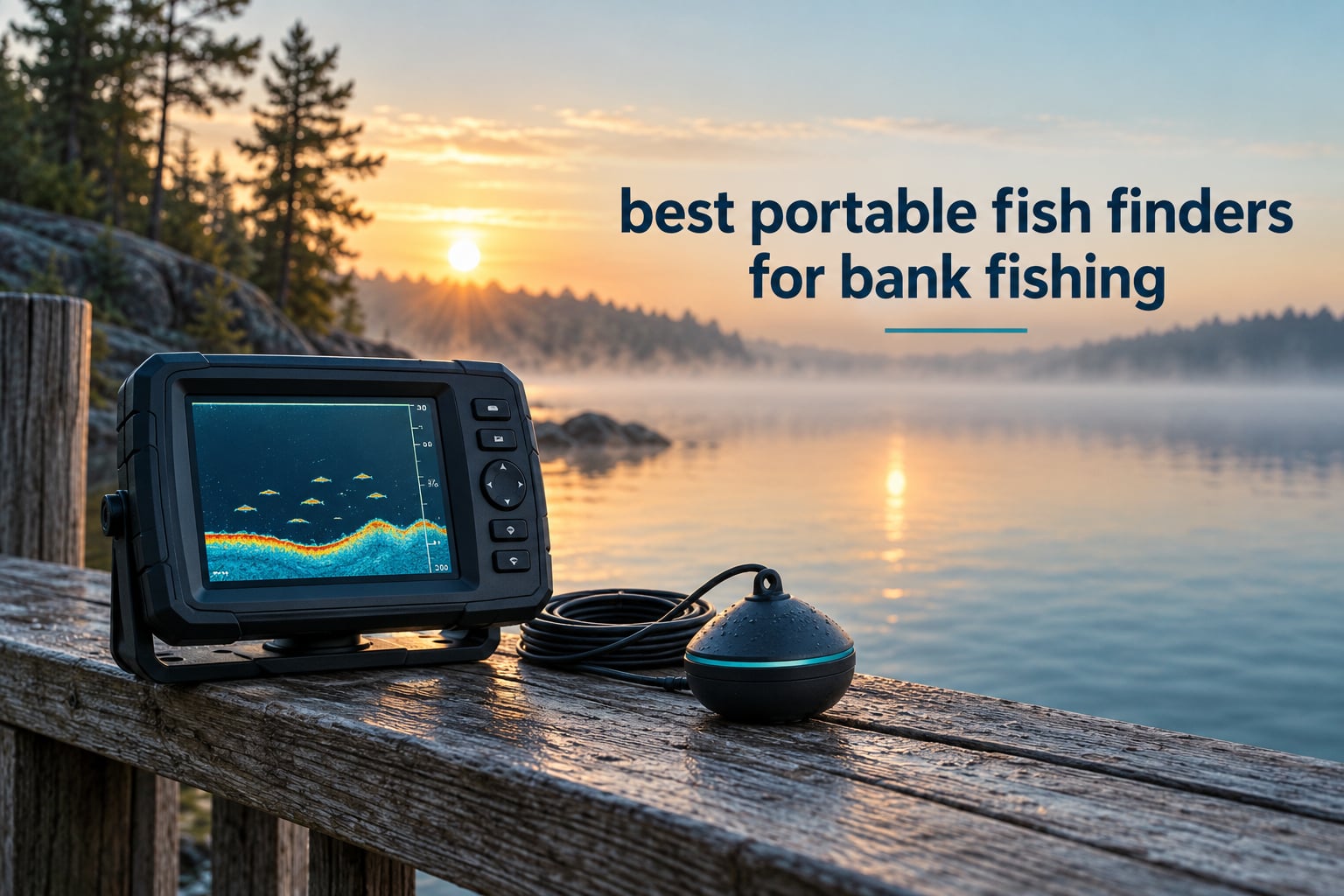
The best portable fish finder for bank fishing is the Garmin Striker 4 with Portable Kit, a dedicated-screen unit that shows crisp CHIRP sonar, runs about two days on a charge, and weighs just 8 ounces in your bag. If you would rather throw a pod and read your phone, the Garmin Striker Cast GPS and the Deeper PRO+ 2 are the two castable options worth serious money.
Bank fishing has one big weakness: you are standing on the water, not in it. You cannot see the drop-off three rod lengths out, you cannot tell a ledge from a shallow bar, and you cannot mark the spot you just cracked so you can find it again next trip. A portable fish finder closes that gap. You cast a sonar pod, tow it back, and the screen shows you depth, bottom hardness, and fish arches along the line you just swam.
We spent six weeks comparing eight units across the three designs that actually make sense from shore: dedicated-screen portable kits, castable sonars that pair with a phone, and simple handheld depth units. Everything below reflects real specs from the manufacturer listings and patterns that show up repeatedly in buyer feedback.
Top 3 Picks: Portable Fish Finders for Bank Fishing in 2026

Garmin Striker 4 Portable Kit
- CHIRP sonar with crisp fish arches
- Dedicated 3.5 inch LCD screen
- About two days of battery per charge

Garmin Striker Cast GPS
- Built-in GPS with Quickdraw contours
- Streams up to 200 ft from the bank
- 10+ hour USB rechargeable battery
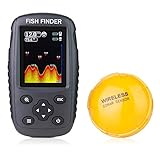
Venterior Portable Wireless Finder
- Own 2.6 inch color display
- Wireless sensor with 262 ft range
- Two year warranty
Best Portable Fish Finders for Bank Fishing in October
| Product | Specifications | Action |
|---|---|---|
| Garmin Striker 4 with Portable Kit |
|
Check Latest Price |
 Humminbird PiranhaMAX 4 Humminbird PiranhaMAX 4 |
|
Check Latest Price |
| Garmin Striker Cast GPS |
|
Check Latest Price |
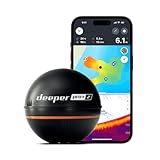 Deeper PRO+ 2 Deeper PRO+ 2 |
|
Check Latest Price |
 Reelsonar iBobber Reelsonar iBobber |
|
Check Latest Price |
 Deeper START Deeper START |
|
Check Latest Price |
| Venterior Portable Wireless Fish Finder |
|
Check Latest Price |
 LUCKY FFC1108 Handheld LUCKY FFC1108 Handheld |
|
Check Latest Price |
1. Garmin Striker 4 with Portable Kit – Best Overall Portable Fish Finder
Garmin 010-01550-10 Striker 4 Fish-Finder with Portable kit, 3.5″
3.5 inch LCD
Chirp sonar
200 W RMS transmit
1600 ft max depth freshwater
8 ounce weight
Pros
- Crisp fish arches and good target separation from CHIRP sonar
- Dedicated keyed buttons with nothing to learn
- Screen readable in direct sunlight
- Bundled battery ran two full days without a recharge
- Includes a kayak in-hull transducer mount
Cons
- Documentation is thin so setup needs video help
- Included transducer is not an ice flasher transducer
- Carry handle can be slippery with gloves
This is the unit we kept reaching for. The STRIKER 4 does something the castables cannot: it puts a real screen in your hands, so you can drop the phone in your pocket and still read the water. The 3.5 inch LCD is bright enough to read in direct sun, which is the condition every bank angler faces at 11am in July.
CHIRP sonar sends a continuous sweep of frequencies rather than a single tone, and the difference shows up exactly where bank anglers need it. Brush piles and stumps separate from fish instead of merging into one blob. Owners repeatedly describe the arches as crisp with better target separation than entry-level conventional units.
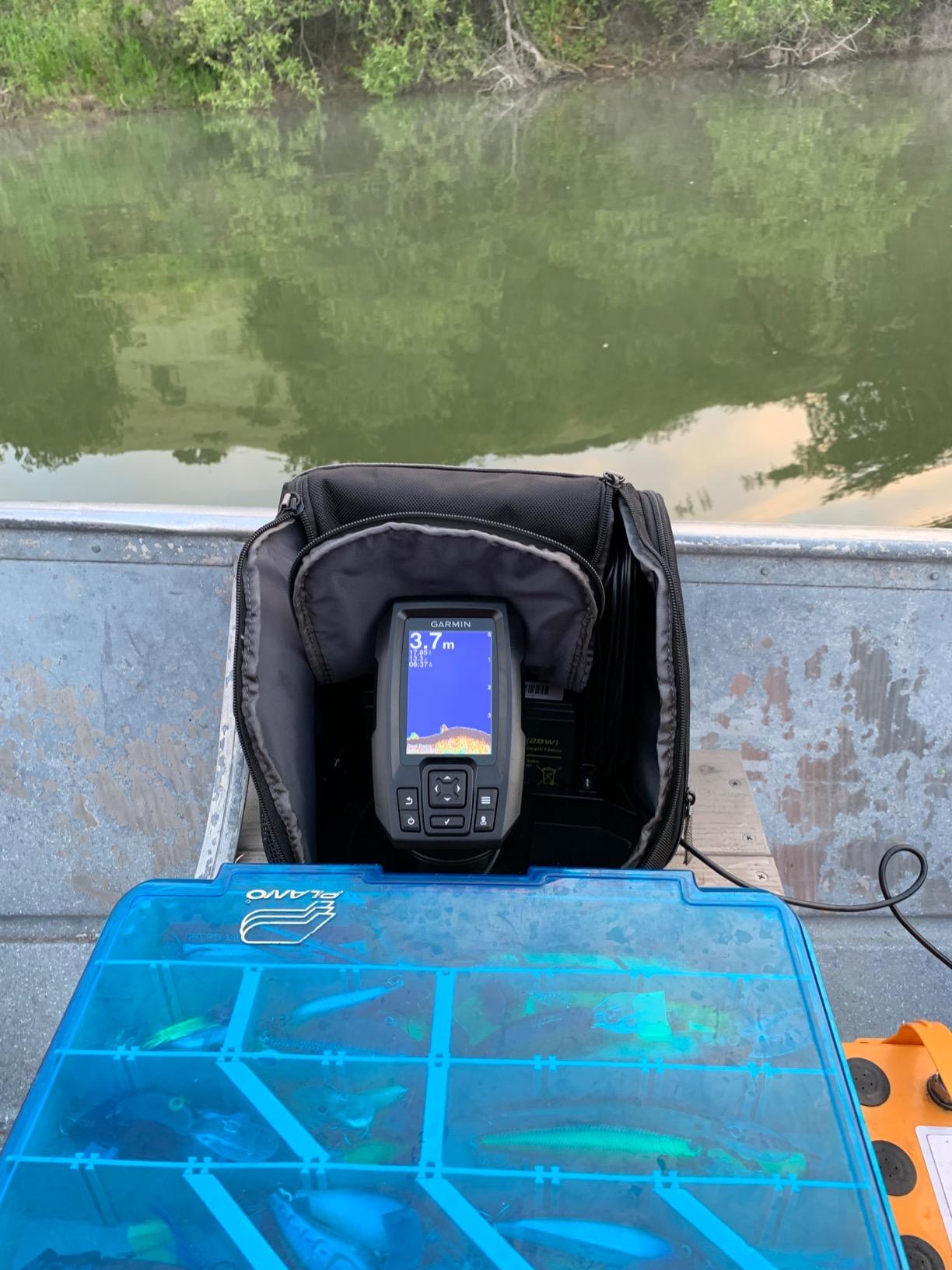
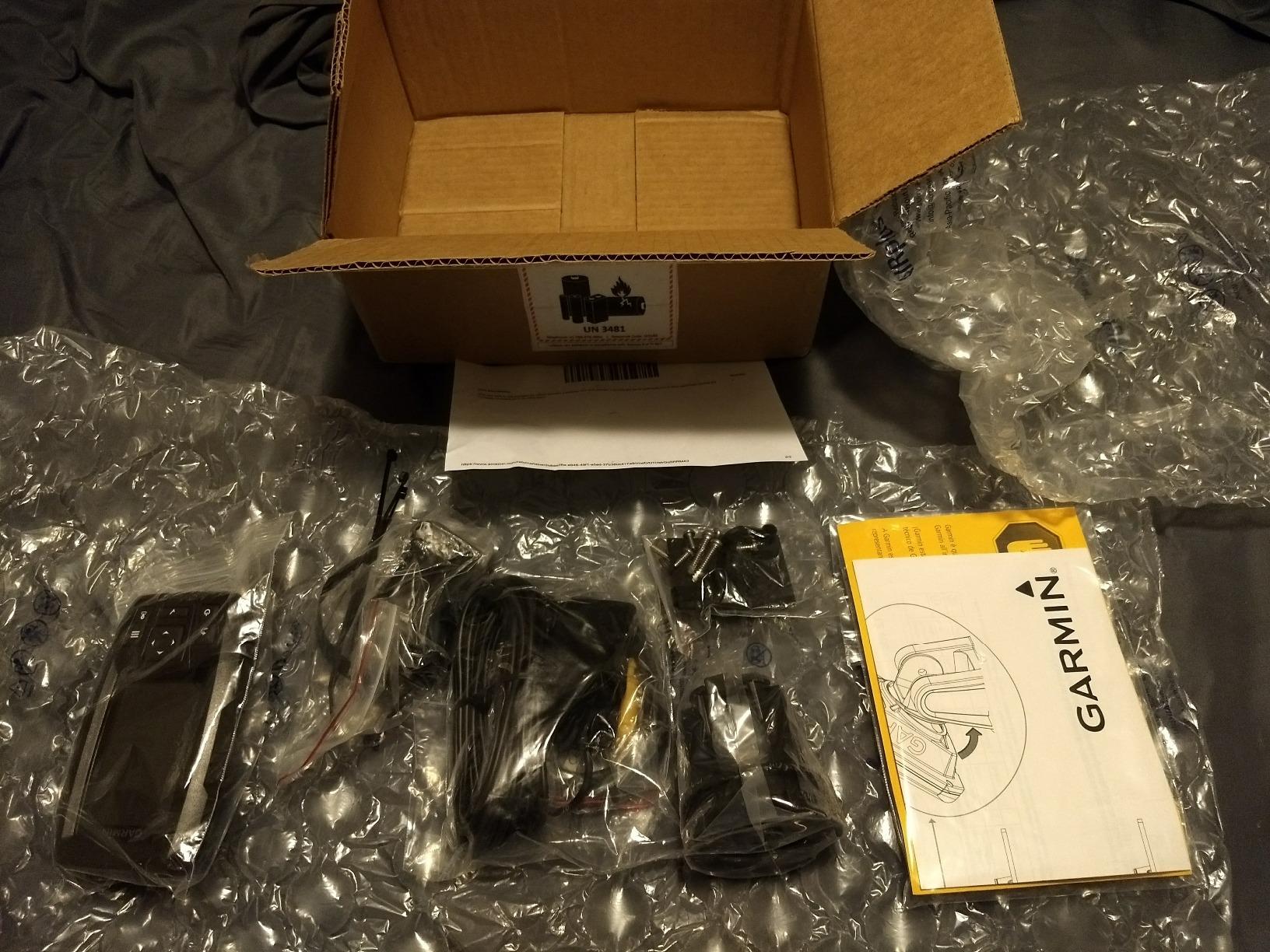
The dedicated keypad is another quiet advantage. No swipe gestures, no missed taps with wet hands, nothing to learn in the parking lot. The bundle also includes a rechargeable battery, a tilt and swivel mount, a foam float, a power and data cable, and a bag with dedicated slots for the cables and charger.
Battery life is the standout number in buyer feedback. Multiple owners report the bundled battery lasting two full days of fishing without a recharge. The kit also ships with a kayak in-hull transducer mount, so the same purchase covers shore, kayak, and small-boat use later in the season.
When this portable fish finder makes sense
Buy this if you fish the same water for a season and want a screen that works with gloves on, in rain, and in glare. It is also the right pick if you will use a kayak or an ice hole this year and want one unit for all three. The flasher mode handles vertical jigging and ice use, and the waypoint map lets you mark and return to brush piles, stumps, and docks.
When to pick something else
The most repeated complaint is documentation, not hardware. Setup and menu navigation need outside help, so budget ten minutes with a video tutorial before your first trip. The included transducer is also not an ice flasher transducer and has no arm to hold it away from the hole edge, so serious ice anglers need a separate arm. At 1600 ft freshwater depth and 750 ft saltwater, depth rating is never the limitation here.
2. Humminbird PiranhaMAX 4 – Best Portable Kit for New Anglers
Humminbird PiranhaMAX 4 Fish Finder with Transducer, Dual Beam Sonar, Portable Carrying Case
4.3 inch color TFT
Dual beam sonar
7 Ah battery and charger included
2.5 pound kit
Soft carrying case
Pros
- Narrow and wide beam choice from one transducer
- Battery and wall charger both in the box
- Tilt and swivel mount adjusts the viewing angle fast
- Soft case included for transport
Cons
- Soft case is too small for the battery and cables
- Suction cup transducer can detach from a moving hull
- Not usable for ice fishing
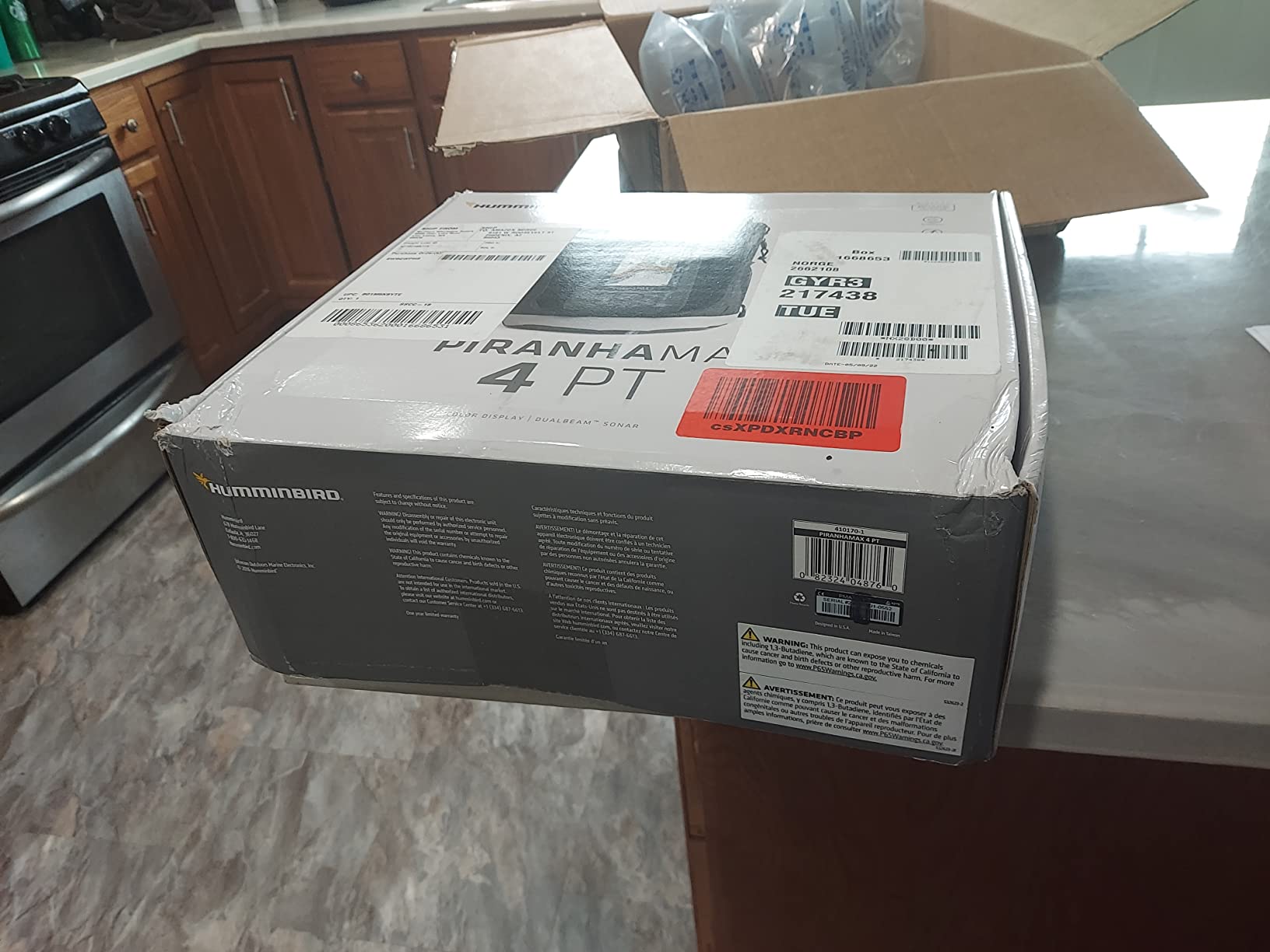
The PiranhaMAX 4 is the box most first-time buyers should want. The transducer, soft case, 7 amp hour battery, and wall charger all ship together, which removes the accessory shopping that usually follows a bare fish finder. Owners set it up quickly and call the color display readable with adequate sonar detail.
Dual beam sonar is the feature that matters most from shore. You can run a narrow beam for detail when you want to inspect a specific ledge or a wide beam for coverage when you are walking a shoreline and scanning quickly. That flexibility is exactly the tradeoff bank fishing demands, since you are constantly switching between searching and inspecting.
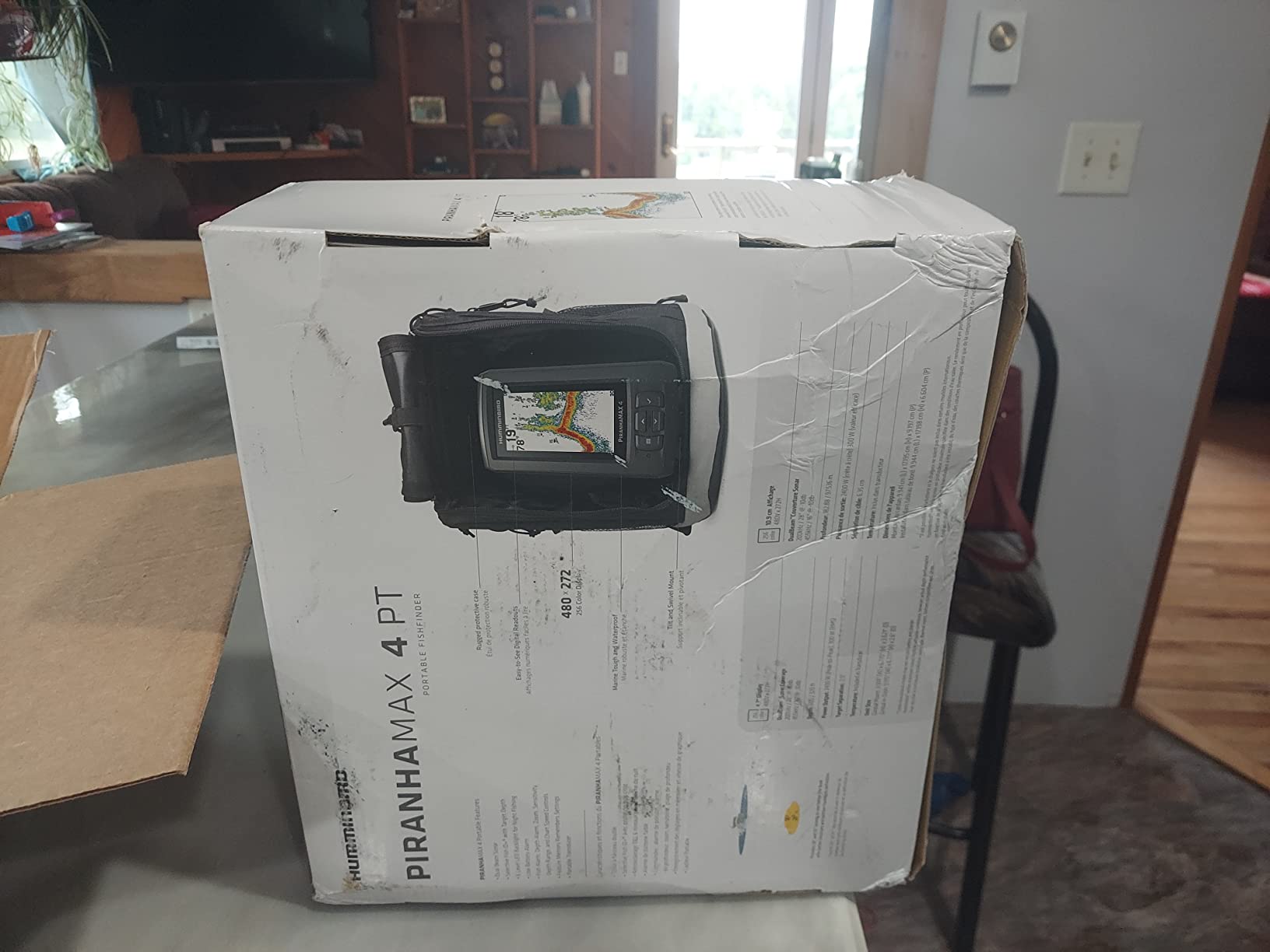
At 2.5 pounds for the whole kit, it carries without feeling like luggage, and the battery covers full fishing days according to buyer reports. The tilt and swivel mount makes it simple to angle the screen away from overhead sun, which saves a lot of squinting.
There is no GPS here, so this unit cannot remember a productive spot for you. If you rotate through new water every trip, that is a real limitation. If you fish one or two spots you already know, depth and bottom detail are what actually catch fish.
Who this kit suits
This is a good first electronics purchase for someone who wants a real display, a real battery, and zero fuss. It also works well for kayak and small-boat anglers because everything needed is already in the box and the whole package stays light enough to carry down a ramp. Dual beam coverage makes it a solid walking-the-bank option.
What to know before you buy
The included soft case is the most common complaint. It is sized for the unit alone, so the battery and cables do not fit alongside it, and the battery access zipper is too small to reach the terminals without removing the unit. The suction cup transducer can also lose grip on a moving hull. And while the packaging does not make it obvious, this unit is not usable for ice fishing.
3. Garmin Striker Cast GPS – Best Castable for Mapping Uncharted Water
Garmin Striker Cast, Castable Sonar with GPS, Pair with Mobile Device and Cast from Anywhere, Reel in to Locate and Display Fish on Smartphone or Tablet (010-02246-02)
75 g castable pod
Built-in GPS with Quickdraw contours
Streams up to 200 ft
10+ hour battery
IPX6 and IPX7 rated
Pros
- Built-in GPS plus Quickdraw one foot contour maps
- Streams up to 200 ft from the bank
- 10+ hour USB rechargeable battery
- IPX6 and IPX7 water resistance
- Smart on and off when it enters or leaves water
Cons
- Phone or tablet is the only display
- Read depth is lower than a dedicated console unit
- Needs 20 lb test line or heavier to cast
The STRIKER Cast is the tool we reach for when the water is new and the goal is to come back. Built-in GPS plus Quickdraw contours means every cast you make from shore can become a custom fishing map with one foot contours, saved on your phone. That is the feature that turns a one-off trip into a repeatable spot.
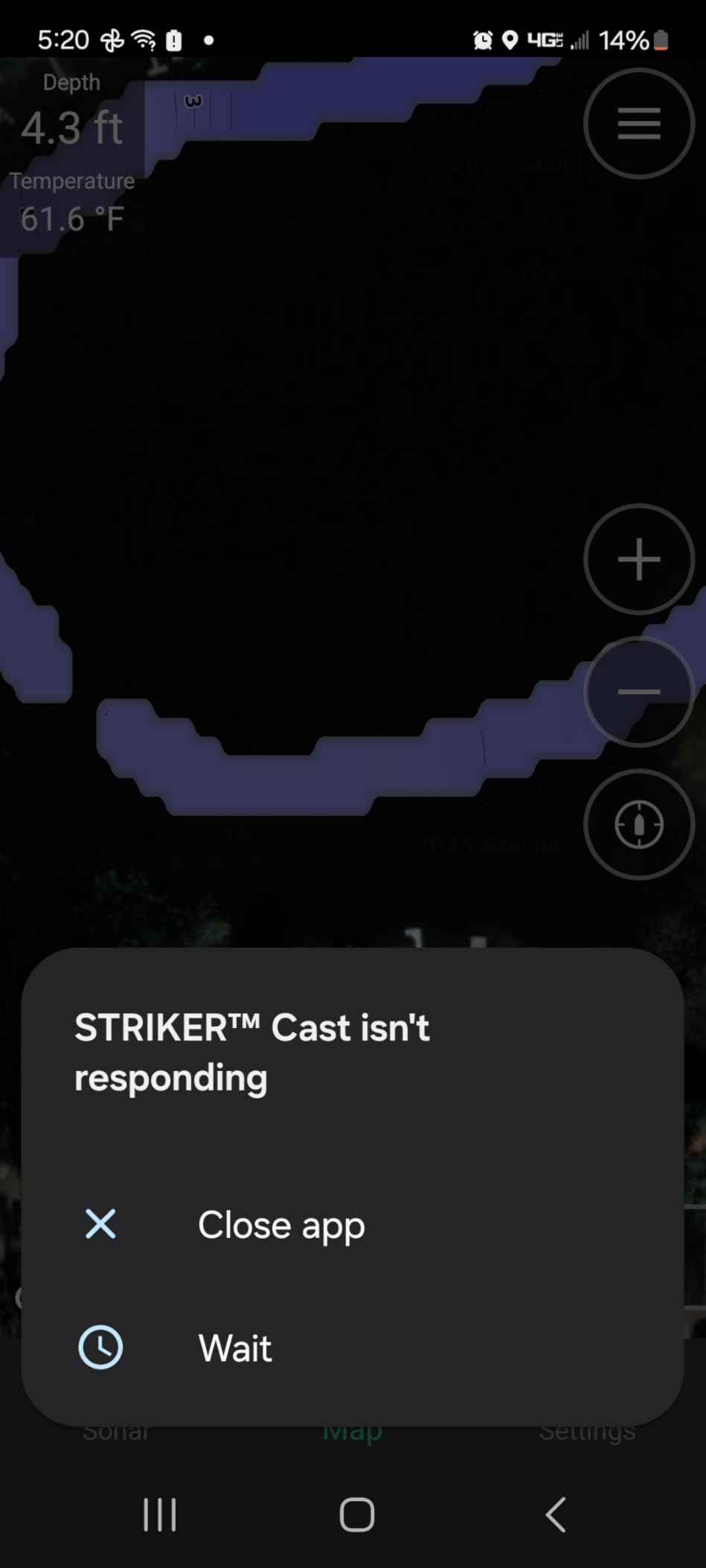
Setup takes minutes: download the Striker Cast app, pair with the pod, and fish. It works on both Apple and Android phones and tablets, and the Garmin Quickdraw community lets you pull maps other anglers have drawn for the same water. Traditional 2D sonar and an ice fishing flasher mode both stream wirelessly from up to 200 feet away.
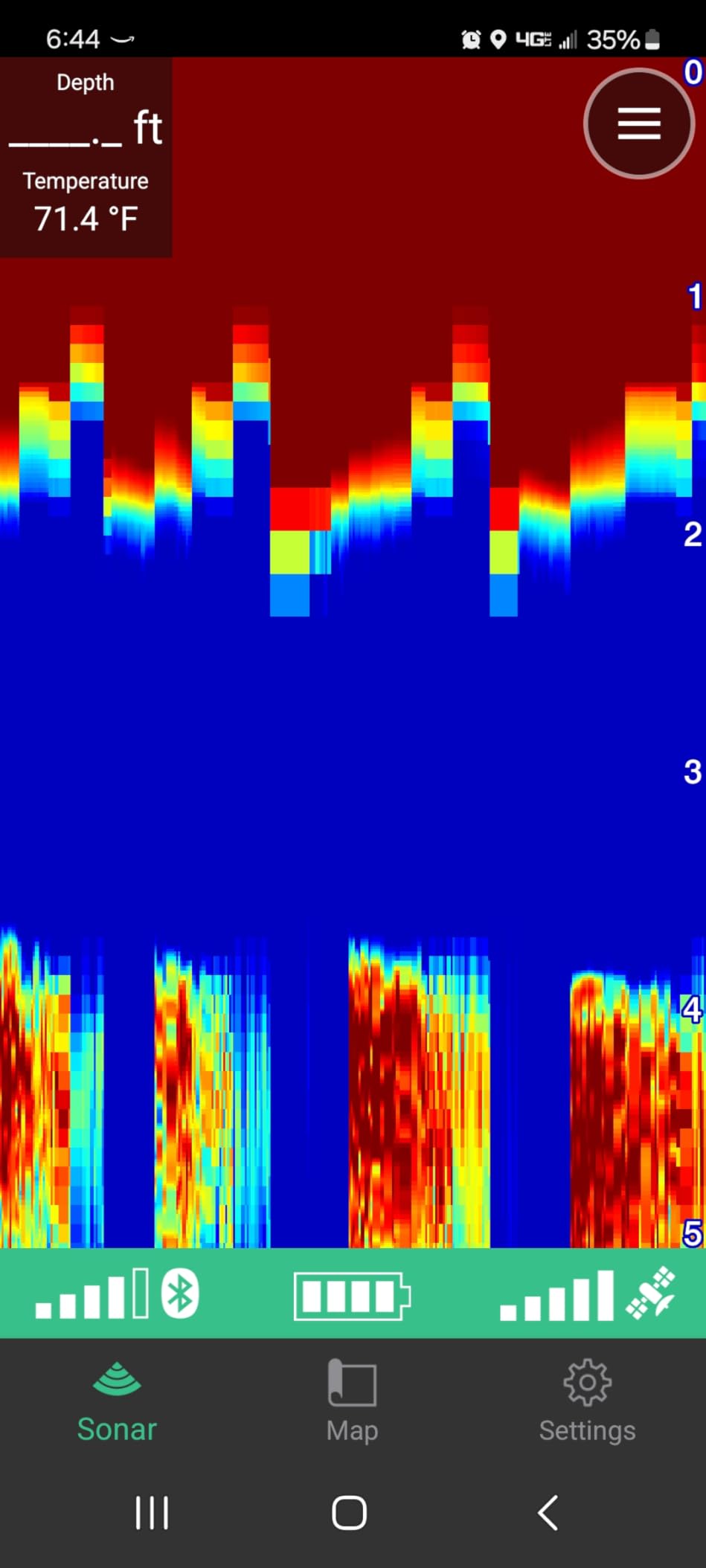
Power management is handled unusually well. The unit turns itself on when it floats in water and off when you pull it out, so a forgotten pod does not sit draining all day. The internal USB rechargeable battery runs 10+ hours depending on usage, which covers a full day of intermittent casting.
Durability is not the concern it once was. It is rated to IPX6 and IPX7 standards, which covers exposure to water up to 1 meter for up to 30 minutes, and the body weighs 75 g. It is designed to be cast on 20 lb test line or heavier, and it performs in shallow and deep water alike.
Who should buy the Striker Cast
Buy it if you fish water you cannot name from memory and want to build a private map of it. It is also strong for dock and pier work where you cast straight down or short of the structure, and the flasher mode covers the ice season. Waypoint marking from shore is the single biggest practical win here.
Where it falls short
Your phone is the display, which means battery drain and sun glare are your problems to solve. A power bank and a shade hood handle most of it, but on a hot July day the screen will never match a dedicated LCD. Cast range and detail are also lower than a hardwired console unit, and you need 20 lb test or heavier to cast it reliably without line twist.
4. Deeper PRO+ 2 – Best Castable for Beam Control and Vertical Jigging
Deeper PRO+ 2 Sonar Fish Finder – Portable Fish Finder and Depth Finder For Kayaks, Boats and Ice Fishing with GPS Enabled | Castable Deeper Fish Finder with FREE User Friendly App
330 ft range
0.4 in target separation narrow beam
Built-in GPS
3.2 ounce body
2 year limited warranty
Pros
- Wide mid and narrow beam options
- 0.4 in target separation in narrow beam
- Built-in GPS creates bathymetric maps
- Self generated Wi-Fi uses no mobile data
- Weighs 3.2 ounces
Cons
- No built-in screen so it needs a phone or tablet
- App pairing can drop when the phone is far away
- One star reviews cite firmware and app stability
The PRO+ 2 is the most technically capable castable in this group, and the reason is beam control. You get wide, mid, and narrow beam options, so you can scan a broad area for structure and then drop into a narrow beam to inspect one specific spot at 0.4 inch target separation. That is tight enough to see a small lure while vertical jigging.
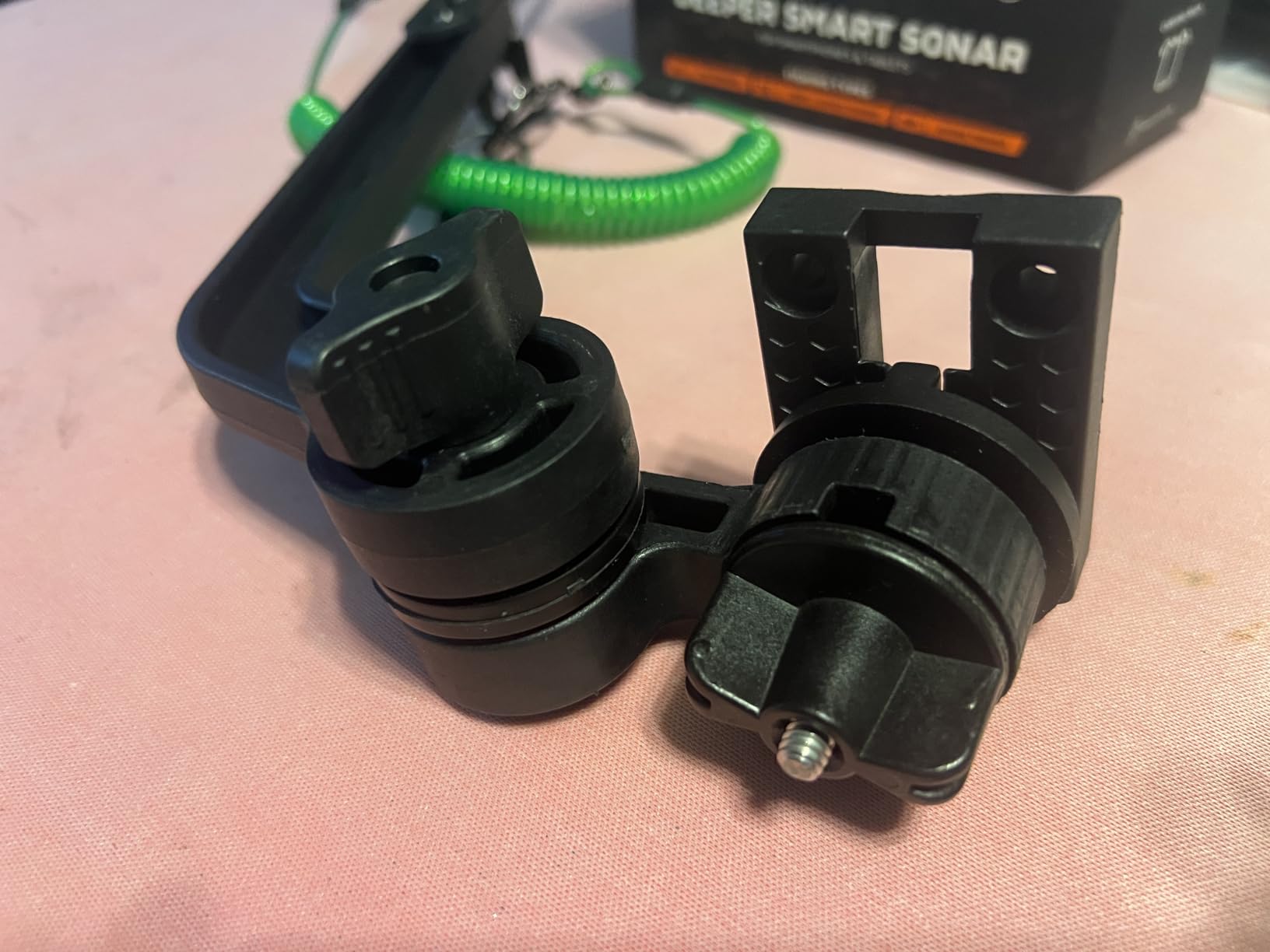
Range is rated to 330 ft with dependable self-generated Wi-Fi, meaning the unit creates its own network and never touches your mobile data. At 3.2 ounces in a 2.56 inch cube, it disappears into a tackle box, which matters when you are walking a mile of bank.
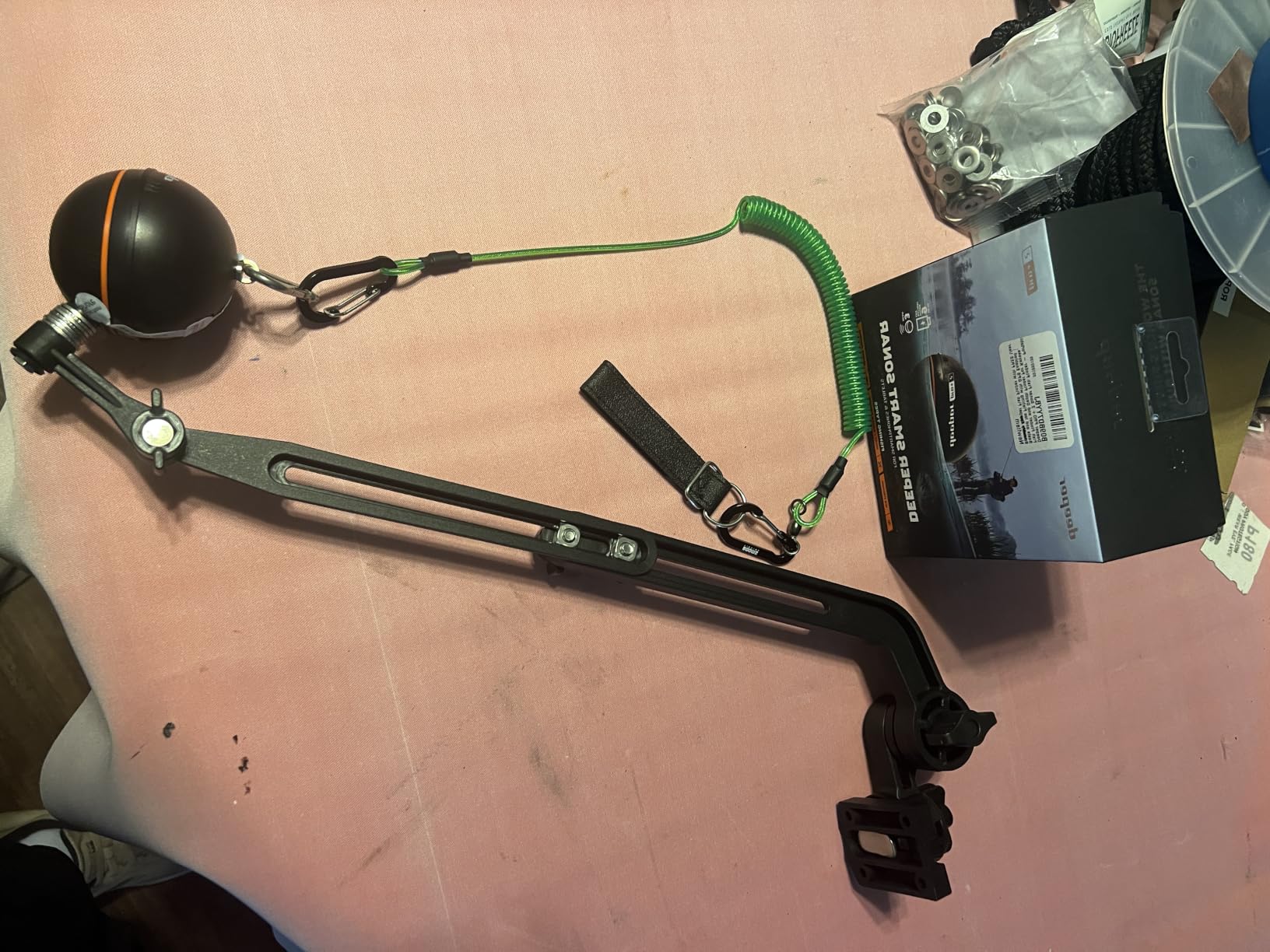
Built-in GPS lets you create bathymetric maps from shore, dock, or bank, and every map saves into the Fish Deeper app so you can revisit a cast later. Owners consistently praise that combination of mapping and packability as the reason this one became their shore tool.
The honest drawback is stability. Buyers report app pairing that drops when the phone is not held close, and this unit has a visibly larger share of one-star feedback than the Garmin devices in the group, with firmware and app stability cited most often. If you fish from a boat rather than a bank, that complaint is worth weighing carefully.
Where the PRO+ 2 earns its place
This is the pick for an angler who wants serious sonar detail from shore, especially on vertically structured water. The narrow beam is genuinely useful for creek fishing, tight drop-offs, and jigging over structure. The three beam options also make it easy to cover new water quickly and then zero in, all from one castable body.
Who should skip it
Skip it if your phone drops connections regularly or if you fish alone far from a signal with no patience for re-pairing. There is no built-in screen, so every session depends on the app running well. If app reliability is not something you want to think about, the dedicated-screen kits in this roundup remove the variable entirely.
5. Reelsonar iBobber – Best Budget Castable for Night Fishing
Reelsonar Portable Fish Finder Accurate Fish Depth Finder with Depth Range of 135 feet 10+ Hours Battery Life with iOS & Android App Wireless
135 ft depth range
10+ hour rechargeable battery
Fish icons color coded by size
LED ring on the float
1 year warranty
Pros
- Depth tagged fish icons color coded by size
- LED ring helps find the float after dark
- Fish alarm and strike alert for dock work
- Runs close to nine to ten hours per charge
- Works from shore or on ice in any weather
Cons
- Bluetooth range is effectively about 40 to 50 ft
- Depth readings unreliable in water shallower than 5 ft
- The app drains the phone battery heavily
The iBobber is the most heavily reviewed product in this roundup by a wide margin, and the reason is simple: it works from a dock at night with nothing but a phone and a charged battery. Depth-tagged fish icons color coded by size give you an at-a-glance read, and a fish alarm alerts you when fish gather under a dock or pier. The strike alert goes one step further and tells you when something bites.
The body is a floating, self-contained sonar that powers on in water and off when dry, so there is no charging ritual between casts. Build quality is better than the price suggests, with a metal-lined attachment eyelet instead of a simple plastic hole. Owners typically get nine to ten hours per charge, and the app supports iOS, Android, and smartwatch displays.
It works regardless of weather, in freshwater or saltwater, from shore or on ice. That makes it a genuine multi-season tool rather than a fair-weather gadget, and it is one of the few units here that will serve both a summer evening dock session and a winter ice hole.
Buyer feedback is genuinely split, and you should know the failure mode before you commit. Bluetooth range is effectively about 40 to 50 ft, not the full range the category advertises, so you must reel in close to reconnect. Depth readings are unreliable in water shallower than about 5 ft and bottom contact is often not shown at all. Some units also lost charge while stored out of the water.
Who this unit works for
Pick the iBobber if your fishing is dock and pier based, especially at night, and you want fish icons rather than sonar arches. The color coding by size is genuinely easier to read than raw returns for beginners and for kids learning to spot structure. It also handles saltwater and ice, which few budget castables do.
When it will disappoint
It is the wrong tool for walking a bank, because the 40 to 50 ft effective Bluetooth range forces constant reeling. The aggressive strike alarm triggers on nearly any movement, which makes it impractical as a working float if you plan to fish with it. And the phone battery drain is severe enough that you should carry a power bank to every session.
6. Deeper START – Best Castable for Saved Scan History
Deeper Start Fish Finder – Portable and Depth Finder for Recreational Fishing from Dock, Shore, Bank or Kayak | Castable Deeper Smart Sonar with Free User Friendly App
165 ft cast and depth range
40 degree sonar beam
About 6 hours of battery
2.5 hour full charge
Saved scans with time and location
Pros
- Every scan saved with time and location
- Casts and reads to 165 ft with a 40 degree beam
- Self generated Wi-Fi uses no mobile data
- Full charge in 2.5 hours
- Night fishing mode built in
Cons
- Single beam gives less detail than the PRO+ 2
- Needs a phone or tablet to read
- Some users report the app dropping or needing a resync
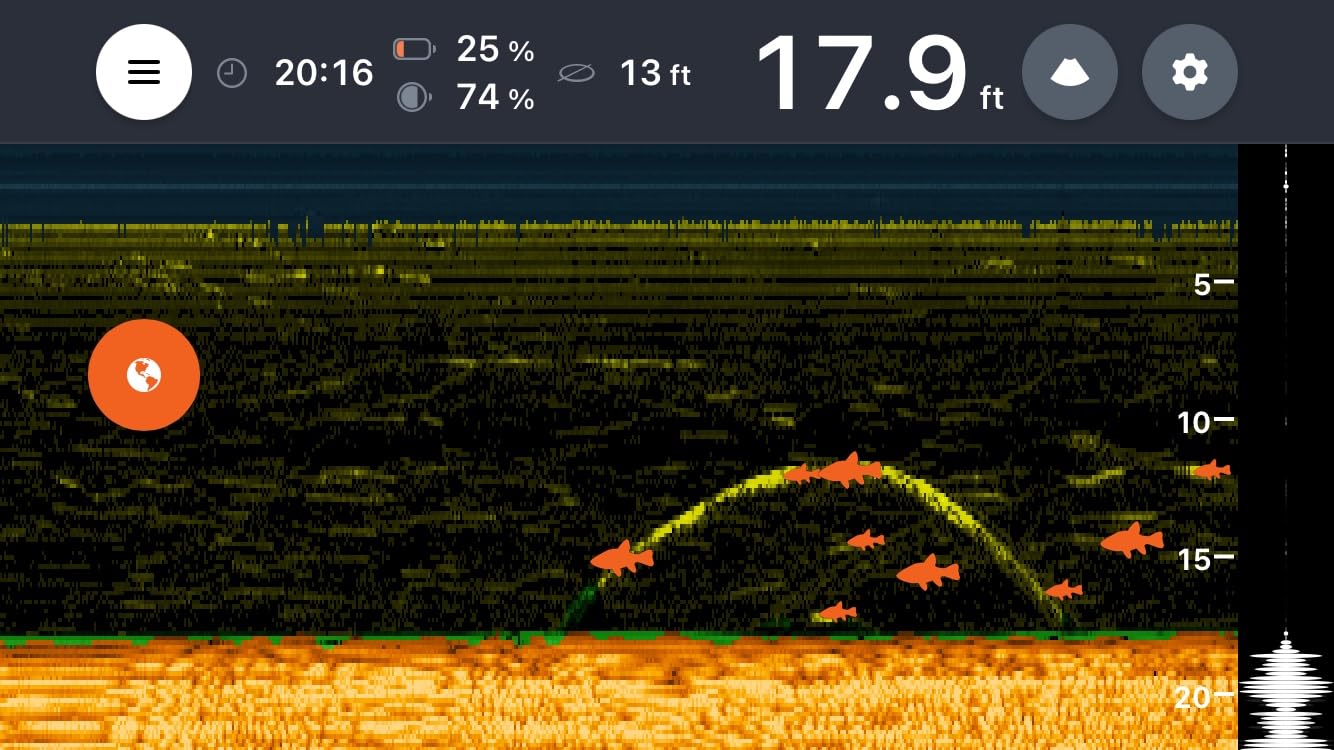
The START is the entry point into the Deeper line, and the feature that separates it from cheaper budget pods is scan history. Every scan is saved automatically with its time and location, so when you find something good you can revisit it later instead of hoping to remember it. The app shows fish location and size, depth, bottom contour, and vegetation.
Casting range and depth range are both 165 ft with a 40 degree sonar beam, which covers most bank and dock work on a pond or a small lake. It generates its own Wi-Fi, so it never consumes mobile data, and there are no external batteries or wires to manage.
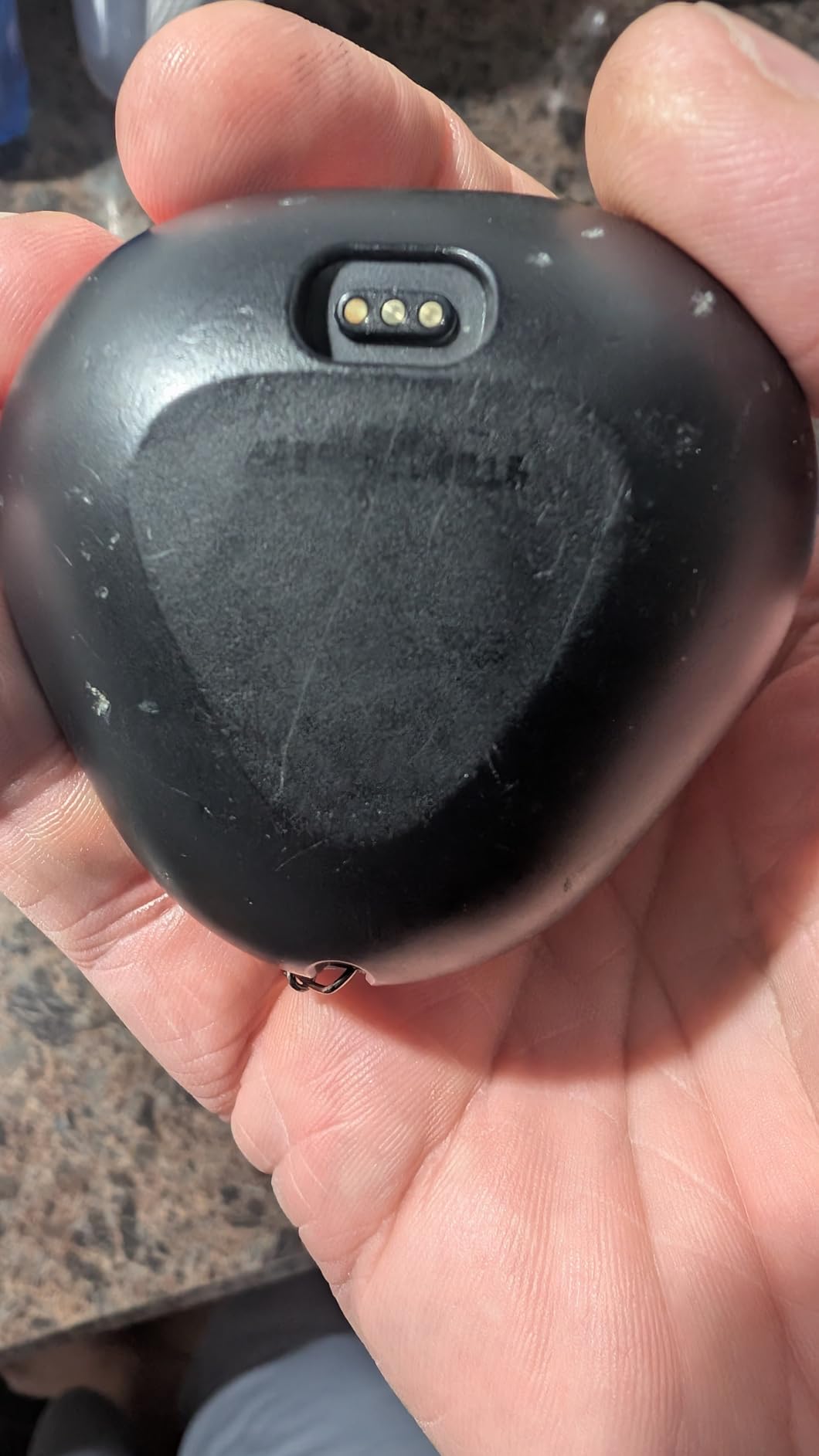
Battery life is about 6 hours from a full charge that takes 2.5 hours, which suits casual outings and weekend trips. A night fishing mode is built in, so low light sessions are covered. Owners describe pairing with the Fish Deeper app as quick and painless.
The tradeoff is resolution. This is a single-beam unit, so you get less detail than the PRO+ 2 or any dedicated display, and you give up the multiple beam options that make the more expensive castable useful on specific structure. There is also no fish size or target separation figure to lean on.
Why the START is worth considering
Choose this if you want saved, timestamped scans without moving up to a premium castable. It is well suited to shore, dock, bank, and kayak use, and the 165 ft range reaches plenty of structure on a typical pond. Families and casual anglers who want an easy first setup will find pairing straightforward.
Where it runs out of road
Six hours of battery is shorter than several competing castables, so a full day of continuous casting needs a top-up. Like every phone-dependent unit, it cannot be read without a mobile device. And some users report the app connection dropping or needing a restart of the sonar to resync, which is frustrating at the moment a fish is biting.
7. Venterior Portable Wireless Fish Finder – Top Rated Standalone Unit
Venterior Portable Rechargeable Fish Finder Wireless Sonar Sensor Fishfinder Depth Locator with Fish Size, Temperature, Bottom Contour, Color Display
2.6 inch color TFT
262 ft sensor to unit range
105 degree sonar beam
2.6-164 ft depth range
2 year warranty
Pros
- Has its own display so no phone is required
- Wireless sensor to unit range of 262 ft
- White background mode for bright sun
- Reports depth temperature fish size and bottom contour
- Two year warranty with fast support response
Cons
- Battery life drops sharply in cold conditions
- 105 degree beam gives coarse fish size readings
- Wave action behind a moving hull causes false readings
This is the value pick in the roundup, and the reason is one feature the castable crowd cannot match: it has its own display. The 2.6 inch color screen means no phone, no app, and no battery drain on your only navigation device. Owners frequently compare it favorably to a name-brand unit they gave up on because of cord and suction pad problems.
The sensor is fully wireless, with a maximum distance of 262 ft between sensor and handheld unit, and two small tethering holes let you cast it with a medium rod. It detects and displays water depth, temperature, fish size as small, medium, or big, fish depth, and bottom contour. Work Mode and Simulation Mode are both built in, and depth and temperature units convert.
Sunlight readability is handled properly. You can select a black or white screen background, and the manufacturer explicitly recommends switching to white in bright sun. That is a small design choice that does more for bank anglers than most spec sheets admit.
Depth range runs 2.6 to 164 ft with a 105 degree sonar beam, which is wide enough to cover a lot of water quickly but coarse for separating close targets. Fish size categories are subjective and rough, so treat them as a hint rather than a measurement.
Who should buy this unit
Buy it if you want depth and bottom structure from shore without carrying a phone. It suits remote and fly-in trips where connectivity is a coin flip, and the 15 ounce weight packs into a small bag. The white background mode makes it one of the more readable screens in bright conditions, and two year warranty coverage adds confidence for a first electronics purchase.
Where it falls short
Cold weather is the biggest problem. Owners report battery life dropping sharply in ice fishing conditions. The 105 degree beam also bounces off ice hole walls, which reduces depth accuracy under ice, and the unit is not intended for deep water beyond roughly 120 to 164 ft. Wave action while towing behind a moving boat can produce false readings.
8. LUCKY FFC1108 Handheld – Best Value for Kayak and Ice Anglers
LUCKY Kayak Portable Fish Depth Finder Water Handheld Fish Finder Sonar Castable Kayak Boat Fishfinder Transducer Fishing LCD Display FFC1108
2 inch backlit LCD
3 to 328 ft depth detection
Five sensitivity levels
Fish and school alarms
4-5 hour run time
Pros
- Lowest cost handheld in this roundup
- Backlit screen readable in sunshine or darkness
- Five sensitivity levels for clear or turbid water
- Alerts when fish or a school passes the transducer
- One handed size with a neck strap
Cons
- No fish size categories so a big fish looks like a minnow
- Transducer must be mounted in or on a craft rather than cast from shore
- Will not read reliably through a fiberglass hull
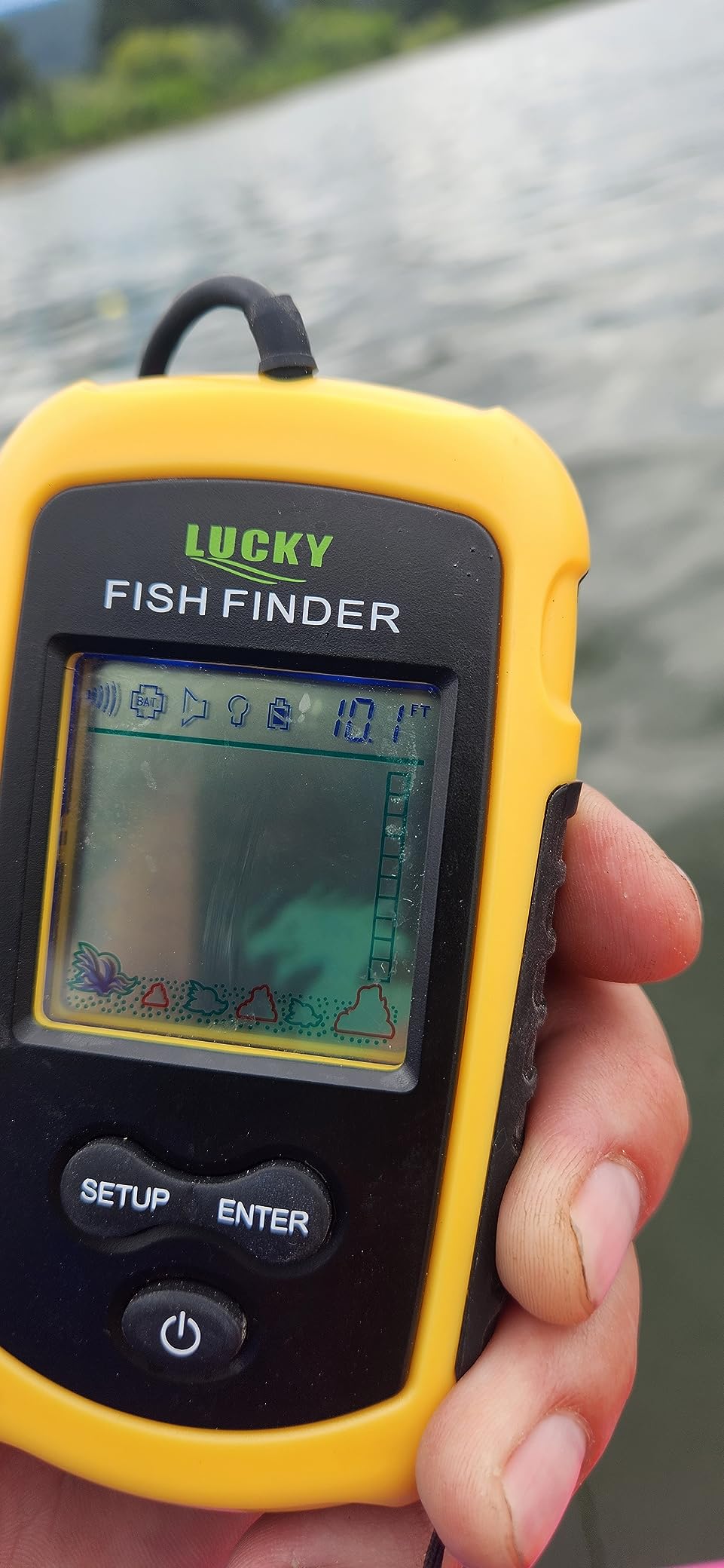
The LUCKY FFC1108 is the cheapest way to stop guessing at depth, and buyers treat it accordingly as a dependable depth meter rather than a fish identification tool. It displays approximate fish location, water depth, and what is on the bottom, including short and tall weeds, sand, and rocks. Depth units switch between feet and meters, and a backlight makes the display visible in sunshine or darkness.
The transducer attaches to the hull of a kayak or boat so you can read changing depth while moving, which makes it a natural companion to a kayak setup. Water depth detection runs from 3 ft to 328 ft with the transducer fully immersed. Five sensitivity levels let you work in clear or turbid water, and alarms sound when fish or a school passes by.
Owners also report that the basic depth readings match a transducer mounted in the water, so the numbers stay consistent with what you would get from a more expensive setup. It runs at least 4 to 5 hours on a fresh battery, and longer with battery save mode.
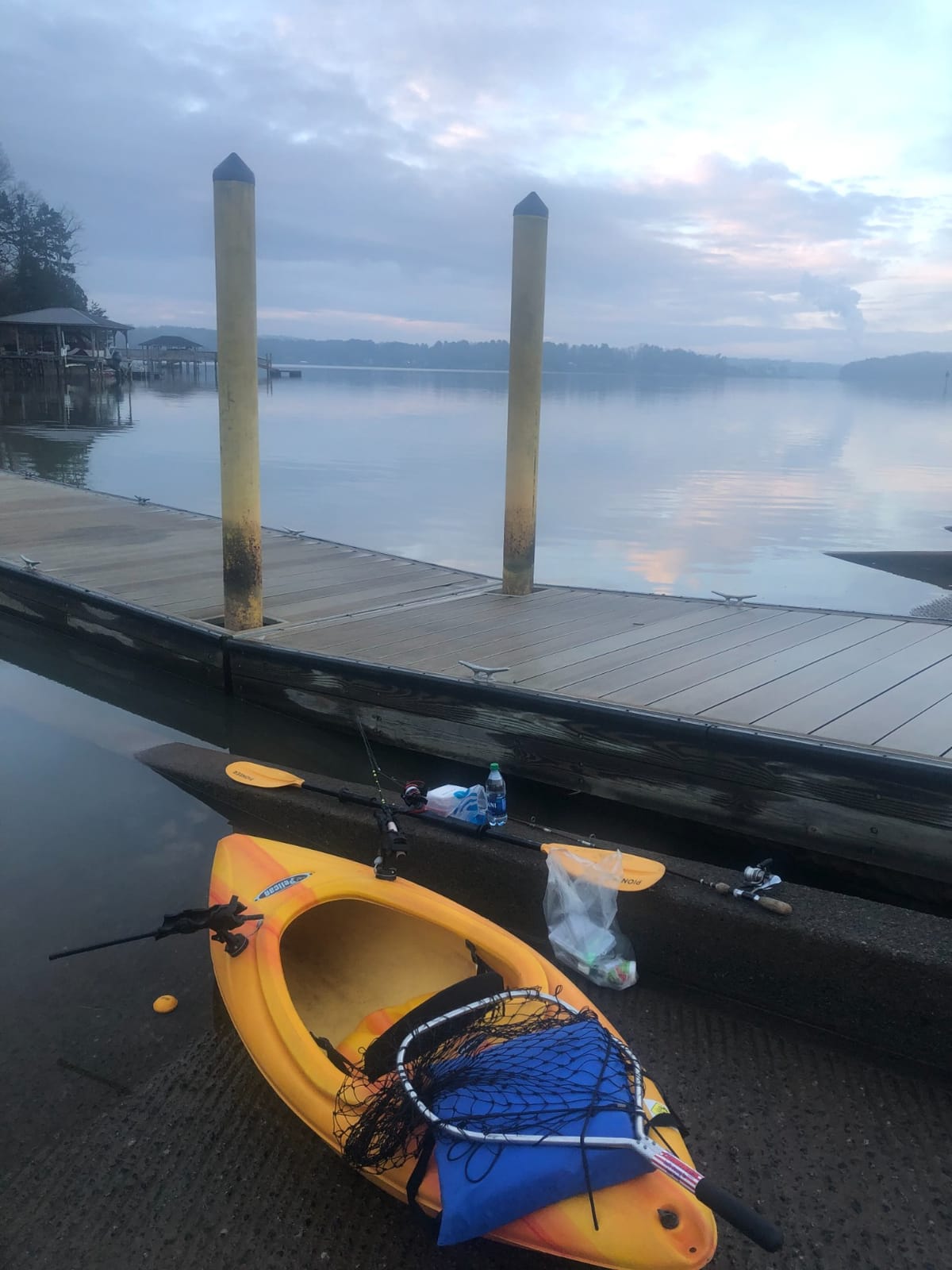
The size is designed for one hand, with a neck strap included so you can wear it while both hands are busy on the kayak or boat. Buyers mostly use it as a cheap backup or an entry-level unit, and several specifically note how well it works mounted in a kayak.
Where the LUCKY handheld fits
This is the right buy for a family introducing kids to electronics, or for anyone who mainly needs to find ledges and drop-offs rather than individual fish. The fish icon display is simple enough that younger anglers can read structure quickly. It also works for shore fishing, boat fishing, and ice fishing in freshwater and saltwater.
Why it is the wrong bank fishing tool
It is not a castable unit. The transducer has to be mounted in or on a kayak or boat, so there is no way to throw it out from a bank, which is the whole point of a portable fish finder for shore anglers. It also has no fish size categories, so a passing minnow and a genuine target look the same, and it will not read reliably through a fiberglass hull.
How a Portable Fish Finder Works From the Bank
A portable fish finder is a small sonar unit, either a castable pod you attach to your line or a handheld or kit unit with a built-in screen, that shows depth, bottom structure, and fish arches so you can fish targets instead of guessing. That removes the biggest weakness of bank fishing, which is not knowing what lies beneath you.
The physics are simple. A transducer sends a sonar ping into the water, and when the sound wave hits the bottom, a submerged branch, or a fish, it bounces back. The unit measures the round trip time and converts that into a depth reading and an image. A firm bottom returns a strong reading, a soft sediment bottom returns a weaker one, and a fish shows up as a small mark or arch.
From shore you read that image while towing the pod slowly behind you. The depth trace scrolling down the screen is your path, and any deviation from a flat line is structure worth investigating. Deeper bumps are drop-offs, weed edges, or brush piles. A sudden depth change you did not expect is usually where the fish are.
One thing to know before you buy: a portable fish finder cannot show you a live bottom image the way a boat-mounted unit can, because the transducer and the display are physically separated by your line. Everything you see is a recording of where the pod has already been. That is why retrieval speed matters so much.
Castable vs Dedicated Display vs Handheld: Which Do You Actually Need?
Pick a castable sonar if you walk the bank, cast from a dock, or travel light. The pod is small, the phone provides the screen, and you can reach far more water than you could with a mounted unit. The tradeoff is that your phone is the display, so battery drain and sun glare become your problem to solve.
Pick a dedicated-screen kit if you want no phone dependency at all. You get a real LCD that reads in glare, real buttons that work with wet hands, and usually a longer rated depth and stronger transmit power. The tradeoff is weight, a battery that lives in the bag, and a transducer you have to position rather than cast.
Pick a handheld if your real problem is that you do not know where the water drops off. Units like the LUCKY FFC1108 tell you depth and bottom type cheaply and reliably. Just understand that most handhelds need their transducer mounted in a craft, so they suit kayak and ice anglers better than pure bank anglers.
A simple rule we use: if you fish one known spot, any of these will work. If you fish new water every trip, buy the castable with GPS, because the saved maps pay for themselves on the second visit. If you will be out in bad weather with a full day ahead of you, buy the dedicated screen.
Bluetooth vs Wi-Fi: Why Your Cast Range Is Shorter Than Advertised
Most anglers who feel shortchanged by a castable sonar are actually looking at a transmission difference. Bluetooth units transmit effectively about 40 to 50 ft in real conditions, which is why the iBobber has to be reeled in close to reconnect. Wi-Fi units stream much further, with the Deeper PRO+ 2 rated to 330 ft.
Wi-Fi units create their own network rather than borrowing your phone’s cellular signal. That is why both Deeper castables generate their own Wi-Fi instead of using mobile data. You get a stronger link at distance, but it costs more battery on both ends and depends on the app staying connected.
Bluetooth units are simpler and cheaper, and the connection usually holds fine at dock distance. The range number on the box describes a theoretical best case in open air. Water, wind, hills, trees, and a phone screen going to sleep all shorten it. Treat the advertised figure as a lab number and plan your retrieves around roughly half of it.
CHIRP, Side Scan, Down Imaging and LiveScope: What Helps From Shore
CHIRP sonar, short for Compressed High-Intensity Radiated Pulse, sends a continuous sweep of frequencies instead of a single tone. A sweep gives the unit more information to work with, which produces crisper fish arches and better target separation. On a bank, that separation is what tells you a fish apart from a stump.
Side scan sonar looks out to either side of the transducer, which sounds perfect for shore fishing until you realize you are towing the pod behind you, so the beams sweep over water you have already passed. Side imaging pays off in a kayak or a small boat where you can hold a heading. Down imaging looks straight down and shows more fish holding near structure.
LiveScope, which renders a live view of sonar images as they return, is not yet a bank fishing option. LiveScope relies on a fixed transducer bolted to the hull of a boat so the beam angle stays constant. The whole point of a castable is that the transducer tumbles, swings, and changes depth on every retrieve, which produces an unreadable image. If you want LiveScope, you need a boat with a mounting point.
For stationary bank fishing, conventional CHIRP sonar plus a waypoint map does more for you per dollar than any live imaging feature. Fish also respond to vibration, and angler reports on live-view sonar note spooked fish in the beam, so it is not a magic fishing advantage even when you have a boat.
GPS, Waypoints and Mapping Uncharted Water
GPS is the feature that separates a toy from a tool. Any unit with GPS lets you mark the spot where you found fish and return to it next trip. Without it, you can locate structure but not record it, which means re-finding yesterday’s ledge is pure memory. That is the most common complaint about budget tiers.
Beyond waypoints, Garmin units support Quickdraw Contours, which turns recorded sonar into custom fishing maps with one foot contours. The community layer lets you download maps other anglers have drawn for the same water. Deeper units save bathymetric maps into the Fish Deeper app, and the Deeper START timestamps every scan so you can revisit a specific cast.
If you only ever fish one pond you know by heart, none of this matters much. If you move between reservoirs, or fish water that gets drawn down each summer, GPS changes the return rate on the whole unit. Buy the castable with GPS and contour mapping before you buy anything with a bigger screen.
Battery Life and Power Management on the Bank
Battery chemistry explains most of the differences here. Castables run internal rechargeable cells, which is why they lose charge fast in cold air and why the app on your phone is often the real drain. Kit units usually ship with a separate rechargeable pack, which is heavier but lasts longer per charge.
Real usage numbers from buyer reports beat the spec sheets more often than manufacturers like to admit. The Garmin Striker 4 bundle has been reported running two full days without a recharge. The Striker Cast is rated 10+ hours. The Deeper START manages about 6 hours from a 2.5 hour charge. The LUCKY handheld runs at least 4 to 5 hours on a fresh battery, longer in battery save mode.
Three habits extend any of them. Turn brightness down and use a shade hood before you add battery packs. Carry a power bank for phone-dependent units, since the phone drains faster than the pod. And do not store castables out of the water for weeks in cold conditions, because owners report units losing charge in storage.
Watch the small power features too. The Garmin Striker Cast powers on when it floats and off when you pull it out. The Reelsonar iBobber does the same. That single behavior eliminates the most common way these units die on a trip.
How to Read Your Fish Finder and Actually Find Fish From Shore
Map the area first, in a fan pattern. Cast to one side, retrieve straight in, then step along the bank and repeat. You are building a depth profile of the shoreline rather than fishing random spots. Mark anything that stands out before you move on.
Identify structure next. A sudden depth change is a drop-off or a ledge. A soft return is weed or silt. A hard return over a shallow area is rock. Fish hold on the edge of these features, not in the middle of open water, so the interesting reading is the transition.
Find the thermocline if the lake has one. In summer, the cold dense layer sits below warm surface water and bass often hug it. On a depth trace, the thermocline often shows as a band where the bottom echo softens or where suspended returns cluster below a clear line.
Target the spot with the slowest retrieve. Roughly one foot per second is the working speed for casting sonar. Faster retrieves outrun the transducer and you get gaps in the trace. Slower retrieves cost battery, so balance the two against how much time you have left.
Finally, deploy in a way that suits the bank. Cast and retrieve is the default. On a dock, clamp or suction cup the transducer to a piling and read straight down. On an overhang or a bridge, pole-mount it. On a steep bank with brush, a streamlined pod retrieves better than a wide-bodied kit. The different units here suit those different jobs.
One last note on expectations. Portable electronics show you where fish are, not what they are. Nobody has ever caught a fish because a screen said so. They save you the empty casts, which across a full season is the difference between knowing your water and guessing at it.
If you also fish from a boat, our guide to the best fish finders covers mounted setups, and our fish finder GPS combo roundup is worth a look if you want mapping first. If shore fishing is the plan but a kayak is on the horizon, start with one of the kayaks we recommend and add electronics that work in both places, like the STRIKER 4 kit.
Frequently Asked Questions
What is the best portable fish finder for bank fishing?
The Garmin Striker 4 with Portable Kit is the best all-round choice, with a dedicated 3.5 inch LCD, CHIRP sonar, about two days of battery per charge, and an 8 ounce weight. If you prefer casting a pod and reading your phone, the Garmin Striker Cast GPS is the strongest mapping option and the Deeper PRO+ 2 offers the best beam control.
Are castable fish finders any good?
Yes. A castable sonar sends a ping from a pod on your line and streams the returns to your phone, showing depth, bottom hardness, and fish arches along the path you just swam. Anglers on fishing forums regularly recommend the Garmin Striker Cast and Deeper models for shore and small pond work. The limits are phone battery drain, sun glare, and the fact that you cannot see live images.
What are the differences between the Garmin Striker Cast and the Deeper PRO+ 2?
The Garmin Striker Cast GPS streams up to 200 ft, runs 10+ hours on an internal USB battery, is rated to IPX6 and IPX7, and pairs with the Striker Cast app plus Quickdraw Contours. The Deeper PRO+ 2 reaches 330 ft on self-generated Wi-Fi, offers wide, mid, and narrow beams with 0.4 inch target separation in the narrow beam, and saves bathymetric maps to the Fish Deeper app. Both are phone-dependent castables with built-in GPS.
Is side scan or LiveScope better?
Neither is a good bank fishing tool. Side scan sweeps to either side of a towed pod, so it mostly shows water you have already passed. LiveScope needs a fixed hull-mounted transducer to hold a steady beam angle, and a castable that tumbles produces an unreadable image. For stationary shore fishing, conventional CHIRP sonar plus GPS waypointing gives the most useful information per dollar.
Do portable fish finders work from shore?
Yes, and that is the design target. Castables are meant to be thrown from a bank, dock, or bridge and towed back. Dedicated-screen kits can be clamped to a piling or pole-mounted so you read straight down under a dock. Handhelds with hull-mounted transducers are the exception, since those suit kayak and ice anglers rather than pure bank fishing.
How far can a castable fish finder cast?
It depends on the unit and the transmission. The Deeper PRO+ 2 is rated to 330 ft using self-generated Wi-Fi, the Garmin Striker Cast streams up to 200 ft, and the Deeper START and Venterior wireless sensor reach 165 ft and 262 ft respectively. Bluetooth units such as the Reelsonar iBobber are effective at roughly 40 to 50 ft in practice, so plan retrieves around half the advertised figure.
Do I need GPS on a portable fish finder?
Only if you fish water you cannot name from memory. GPS lets you mark structure and return to it next trip, and contour mapping features on the Garmin Striker Cast and Deeper castables turn your own casts into reusable maps. If you fish one or two spots you already know, depth and bottom detail will catch more fish than GPS ever will.
Is a handheld fish finder worth buying?
Yes, if your real problem is not knowing where the water drops off. Handhelds such as the LUCKY FFC1108 give reliable depth, bottom type, and a backlit screen at the lowest cost in this roundup, and they work well mounted in a kayak or on ice. The limitation is that most handhelds cannot be cast from shore and give no fish size categories.
Which Portable Fish Finder Should You Buy?
Buy the Garmin Striker 4 with Portable Kit if you want one screen that handles shore, kayak, small boat, and ice without a phone in the picture. Buy the Garmin Striker Cast GPS if you need to map unfamiliar water and come back to it later. Buy the Deeper PRO+ 2 if sonar detail and beam control matter more than app stability. Buy the Venterior if you want a standalone screen without committing to the top of the range, and buy the LUCKY handheld only if your fishing happens from a kayak or on ice.
Whichever one you choose, the technique matters as much as the hardware. Cast in a fan pattern, retrieve at about one foot per second, mark everything that looks different, and go back to it. That is the whole game, and in 2026 these eight units cover every realistic bank fishing situation we could find.