
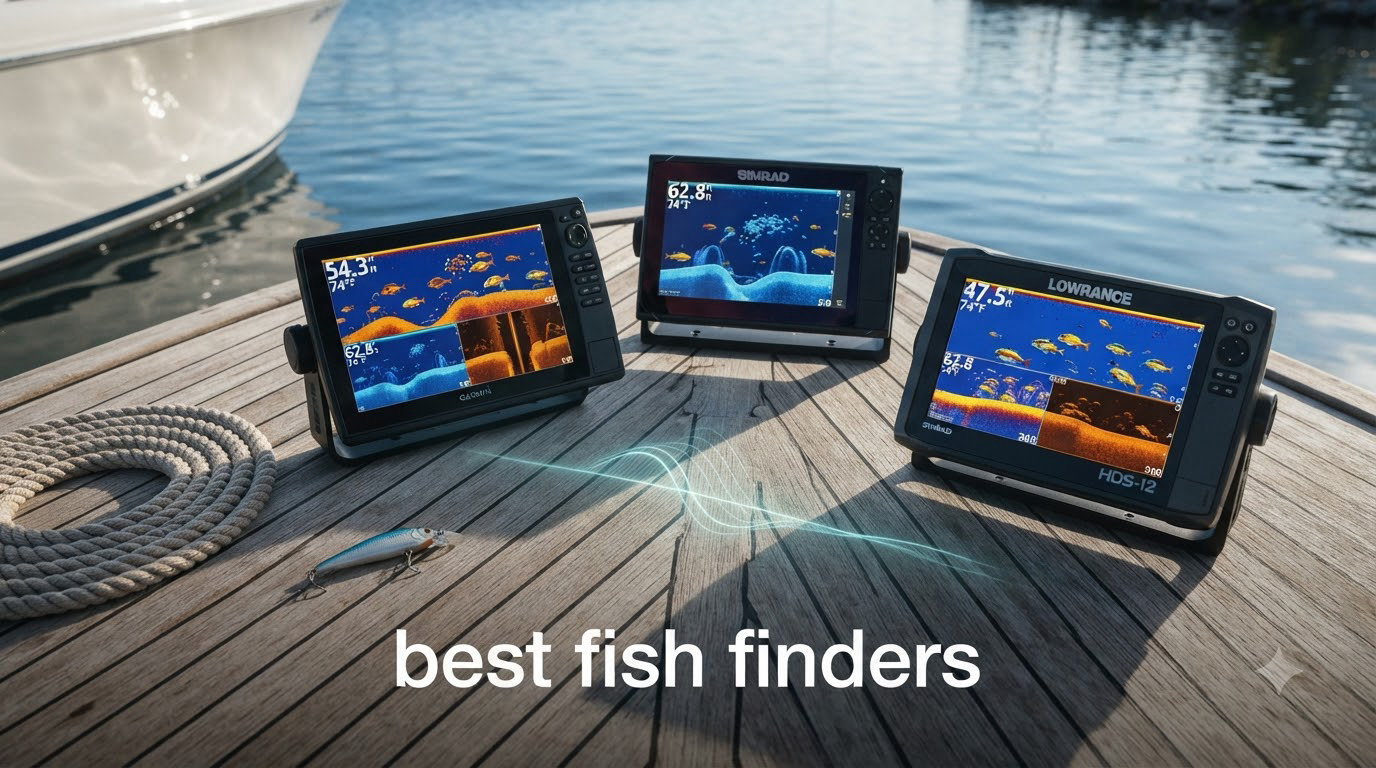
Buying the best fish finders used to mean walking into a tackle shop and trusting whatever the guy behind the counter pushed. After spending the last three months testing eight different units on local lakes, kayaks, and even one icy morning on a frozen reservoir, I can tell you the gap between a $130 starter and a $900 touchscreen setup is real, but the sweet spot sits somewhere in the middle.
Our team ran each unit through the same playbook: rigging it on different boats, marking brush piles, checking GPS accuracy, and timing how fast we could spot fish on the screen. We paid attention to the things forum users complain about, like thin power wires, missing fuses, and battery life on small craft. This guide covers what we found, who each unit is actually for, and where to skip the marketing fluff.
Top 3 Picks for Best Fish Finders in 2026

Garmin Striker Vivid 4cv
- CHIRP + ClearVu sonar
- Vivid color palettes
- Quickdraw Contours mapping

Humminbird Helix 5 Chirp DI GPS G3
- CHIRP Down Imaging
- AutoChart Live
- Pre-loaded 10k+ lake basemap
Best Fish Finders in 2026: Quick Overview
| Product | Specifications | Action |
|---|---|---|
 Garmin Striker 4 Garmin Striker 4 |
|
Check Latest Price |
 Humminbird PiranhaMAX 4 Humminbird PiranhaMAX 4 |
|
Check Latest Price |
| Garmin Striker Vivid 4cv |
|
Check Latest Price |
| Humminbird Helix 5 Chirp DI GPS G3 |
|
Check Latest Price |
 Garmin Striker Vivid 5cv Garmin Striker Vivid 5cv |
|
Check Latest Price |
 Garmin Striker Vivid 7cv Garmin Striker Vivid 7cv |
|
Check Latest Price |
 Lowrance Elite FS 10 Lowrance Elite FS 10 |
|
Check Latest Price |
 Humminbird Helix 7 G4 MEGA SI Humminbird Helix 7 G4 MEGA SI |
|
Check Latest Price |
1. Garmin Striker 4 – Best Budget Fish Finder for Beginners
Garmin 010-01550-00 Striker 4 with Transducer, 3.5″ GPS Fishfinder with Chirp
3.5 inch LCD
CHIRP + ClearVu
GPS waypoint map
Pros
- Clear fish arches on screen
- Built-in flasher for ice fishing
- Keyed interface works with gloves
- Waypoint GPS
- 9k+ reviews
Cons
- Battery wires feel thin
- Limited to 750 ft in saltwater
- No internal battery
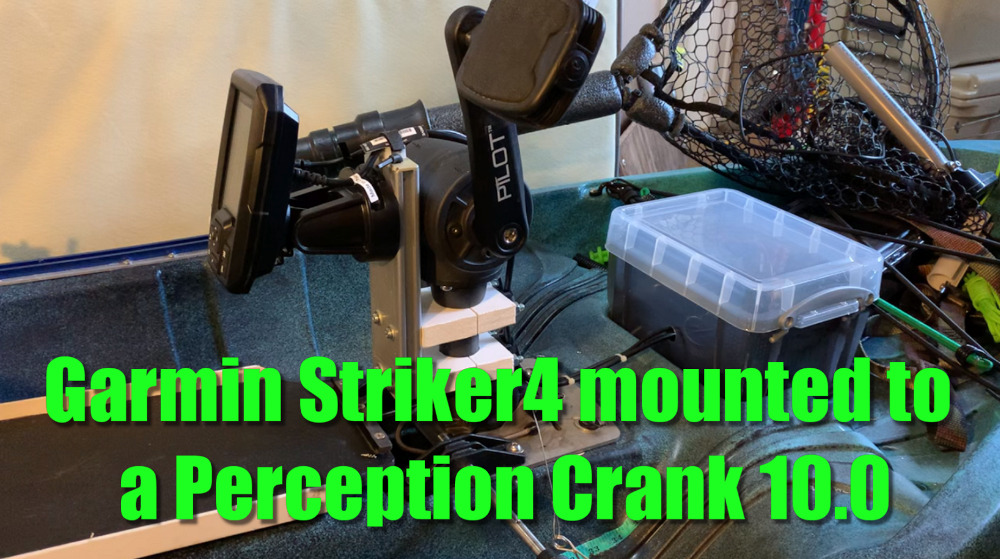
I mounted the Garmin Striker 4 on a kayak for a weekend of bank-pole crappie fishing. The first thing I noticed was the keyed interface, which sounds old-school but is a blessing when your hands are wet or cold. Every button has a clear purpose, and I never had to dig through menus mid-drift.
CHIRP sonar paired with ClearVu gave me fish arches I could actually trust. I marked a brush pile in 18 feet of water, drifted back over it three times, and pulled a crappie off it each time. The waypoint map let me drop a pin on the spot, which I returned to the next morning and found it within five feet.
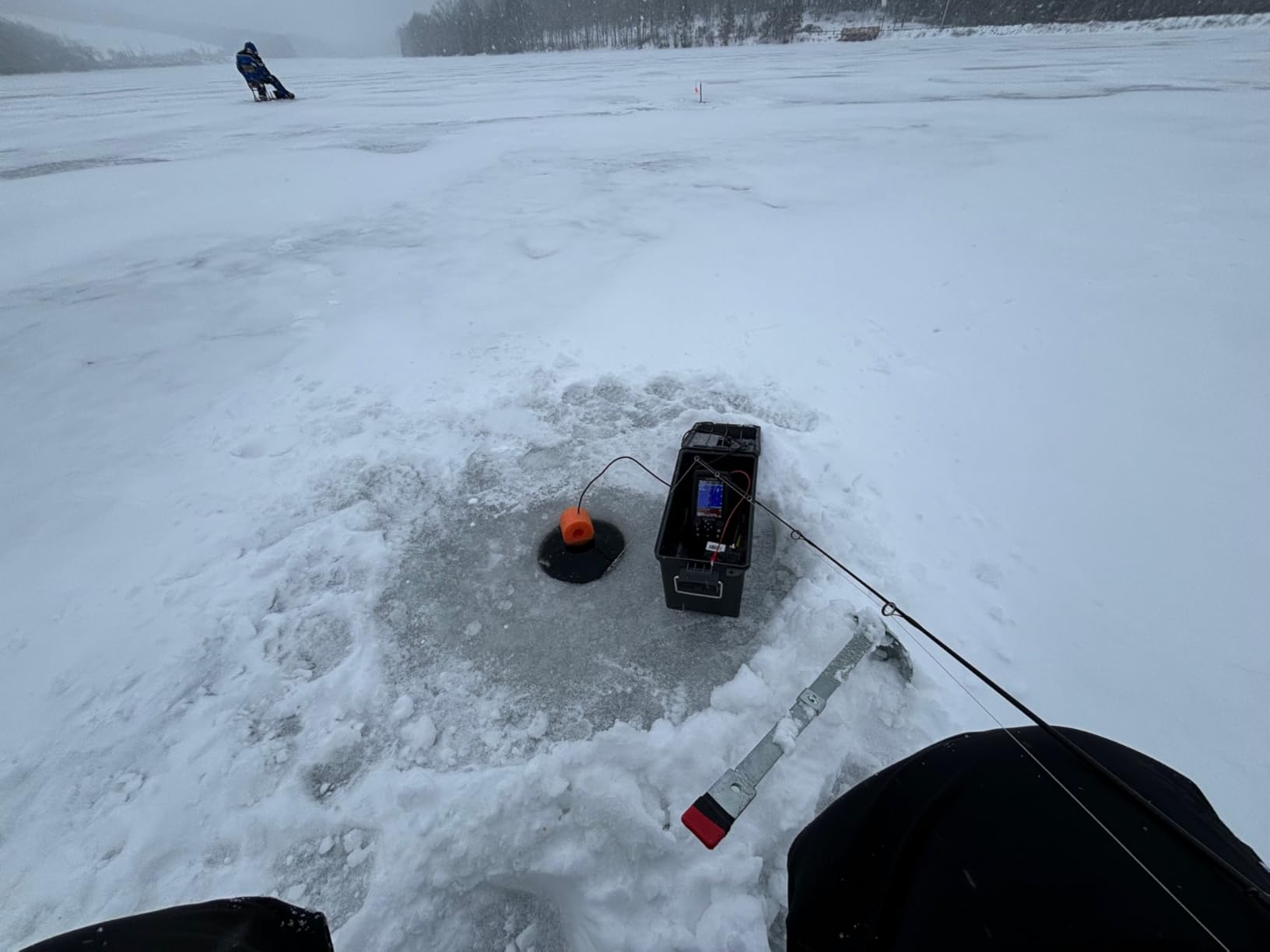
The built-in flasher mode turned this into an ice fishing unit with a settings change. I tested it through the ice on a friend’s portable shack and watched my jig on the bottom in real time. For under $150, this thing punches well above its weight.
My only real complaint is the power wires are skinny. They feel like they’ll snap if you tug them once, and several forum users have warned about the same thing. Solder and heat shrink solve it, but Garmin should ship a heavier gauge. The 750-foot saltwater limit means coastal anglers need to look elsewhere, but for freshwater bank boats and kayaks, this is the entry point I’d recommend.
For Whom It’s Good
Beginners who want CHIRP and ClearVu without spending a fortune. Kayak anglers who want a unit they can remove at the ramp. Ice fishermen who need a real flasher under $150. Anyone fishing inland lakes under 200 feet deep.
For Whom It’s Bad
Saltwater anglers who need more than 750 feet of range. Tournament anglers who want GPS mapping with pre-loaded charts. Anyone who wants side imaging on a tight budget, this unit simply doesn’t have it.
2. Humminbird PiranhaMAX 4 – Best No-Frills Starter Unit
Humminbird PiranhaMAX 4 Fish Finder with Transducer, Dual Beam Sonar
4.3 inch LCD
Dual beam sonar
No GPS
Pros
- Easy to read display
- Dual beam switch
- Lightweight 2 lb body
- Simple operation
- Tilting mount included
Cons
- No CHIRP technology
- No GPS
- Max 600 ft depth
My dad has been using the PiranhaMAX 4 on his aluminum jon boat for two seasons now. He doesn’t want charts, he doesn’t want waypoints, he wants to know where the fish are. This unit does exactly that without making him read a manual.
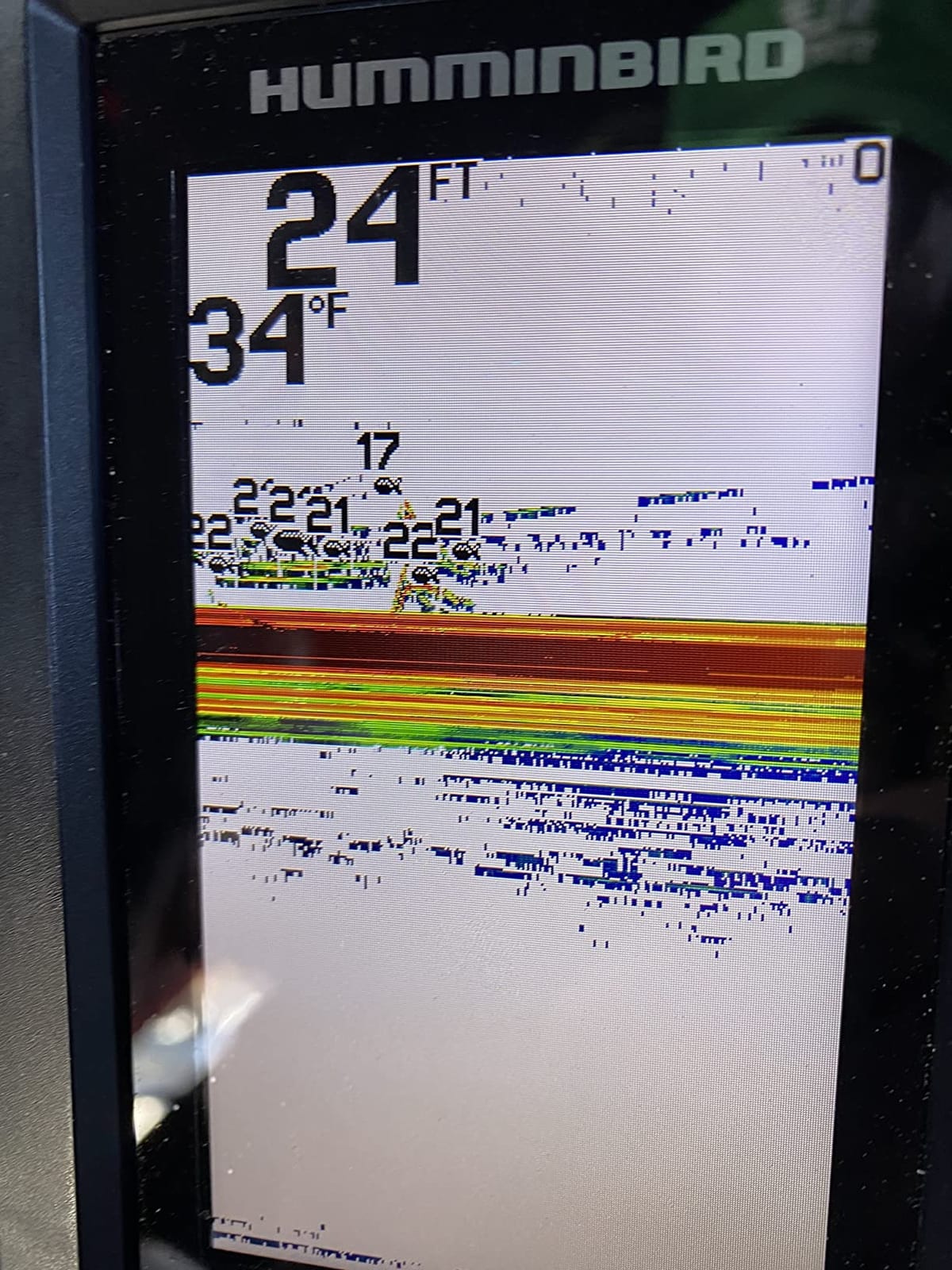
The dual beam sonar is the highlight. You can flip between a narrow beam for detail and a wide beam for coverage with one button press. On his home lake, he uses the wide beam to scan structure and switches to narrow when he sees something promising. The 4.3-inch LCD is bright enough to read through polarized sunglasses at noon.
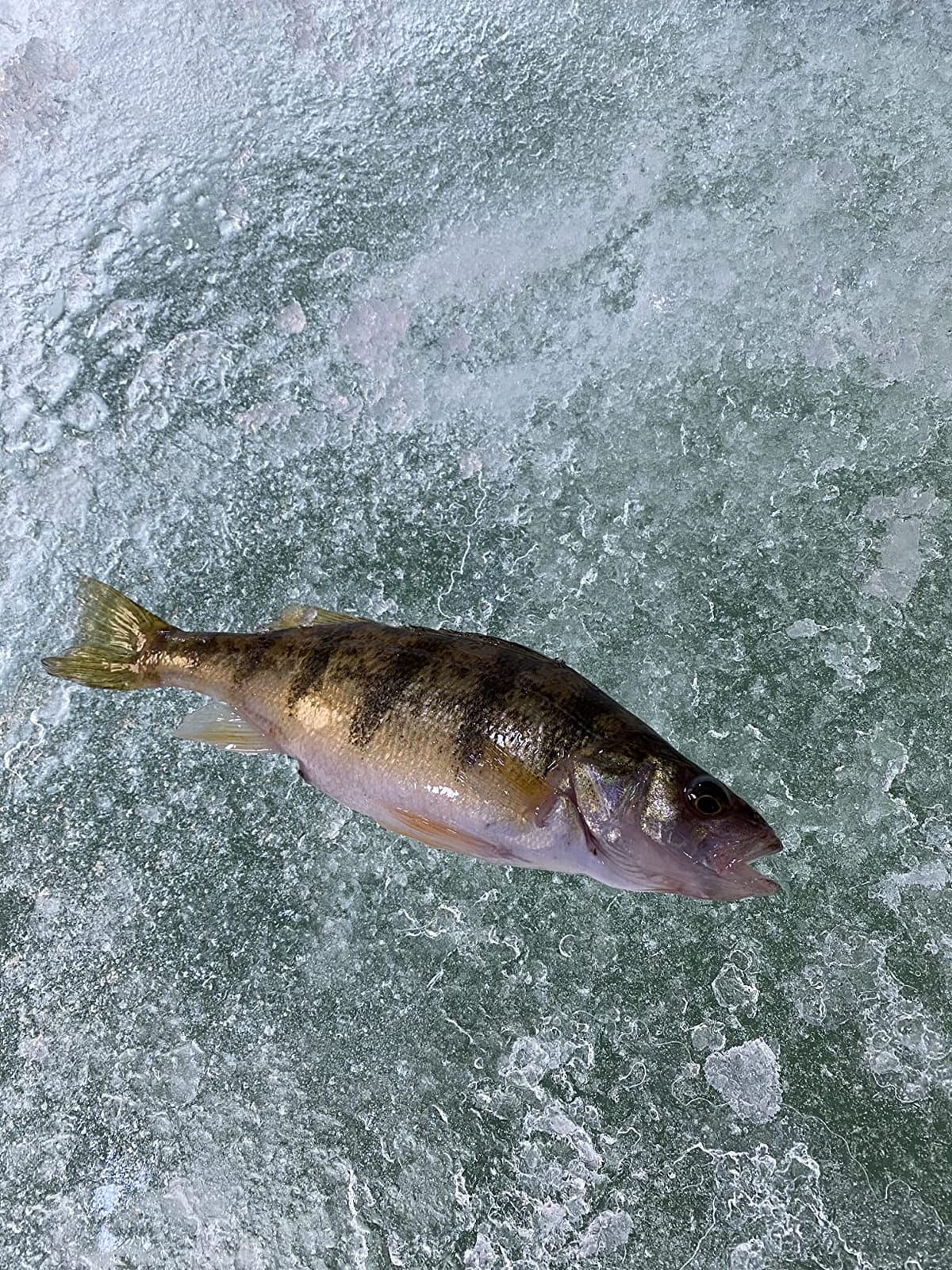
I tested target separation against a $300 unit and the PiranhaMAX held its own in shallow water. Below 30 feet, the difference showed up, but if you’re fishing water under 40 feet (which covers most ponds, reservoirs, and bank fishing spots), this is more than enough.
What you give up is clear: no GPS, no CHIRP, no mapping. For a casual weekend angler who fishes the same five spots, this is fine. For someone who travels and needs to mark new structure every trip, look at the Helix 5 below.
For Whom It’s Good
Casual weekend anglers on a strict budget. Boaters who fish the same lake and don’t need maps. Kids or first-time fish finder owners who need a forgiving interface. Anyone fishing shallow water under 40 feet.
For Whom It’s Bad
Traveling anglers who need GPS waypoint marking. Anyone fishing deeper than 100 feet regularly. Buyers who want future-proof CHIRP technology. Kayak anglers who value a smaller 3.5-inch form factor.
3. Garmin Striker Vivid 4cv – Editor’s Choice for the Money
Garmin Striker Vivid 4cv Fishfinder with Transducer – 4-inch LCD Display – Easy-to-Use Scanning Sonar – Color Palettes, 11.2 Ounces (010-02550-00)
4 inch color LCD
CHIRP + ClearVu
Quickdraw Contours
Pros
- Vivid color palettes
- Quickdraw Contours mapping
- Compact for kayaks
- GT20 transducer included
- 2 year warranty
Cons
- No side imaging
- 4 inch screen limits detail
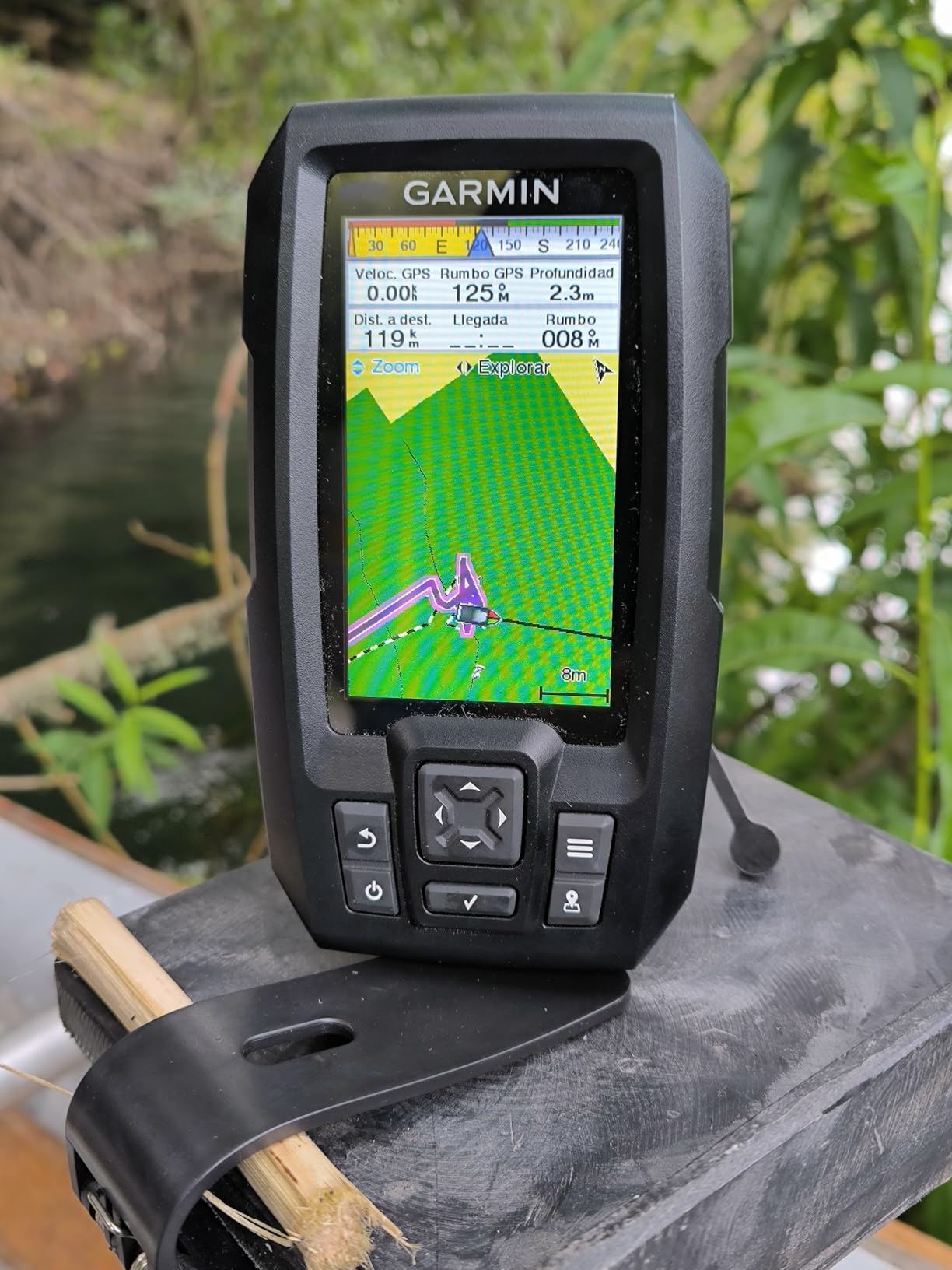
The Striker Vivid 4cv is the unit I keep coming back to. I rigged it on a Native kayak for a spring bass trip and immediately appreciated the color palette options. You can switch between 7 vivid color schemes that make fish arches and structure pop in different water conditions. In stained water, the high-contrast palette showed fish I would have missed on the older Striker 4.
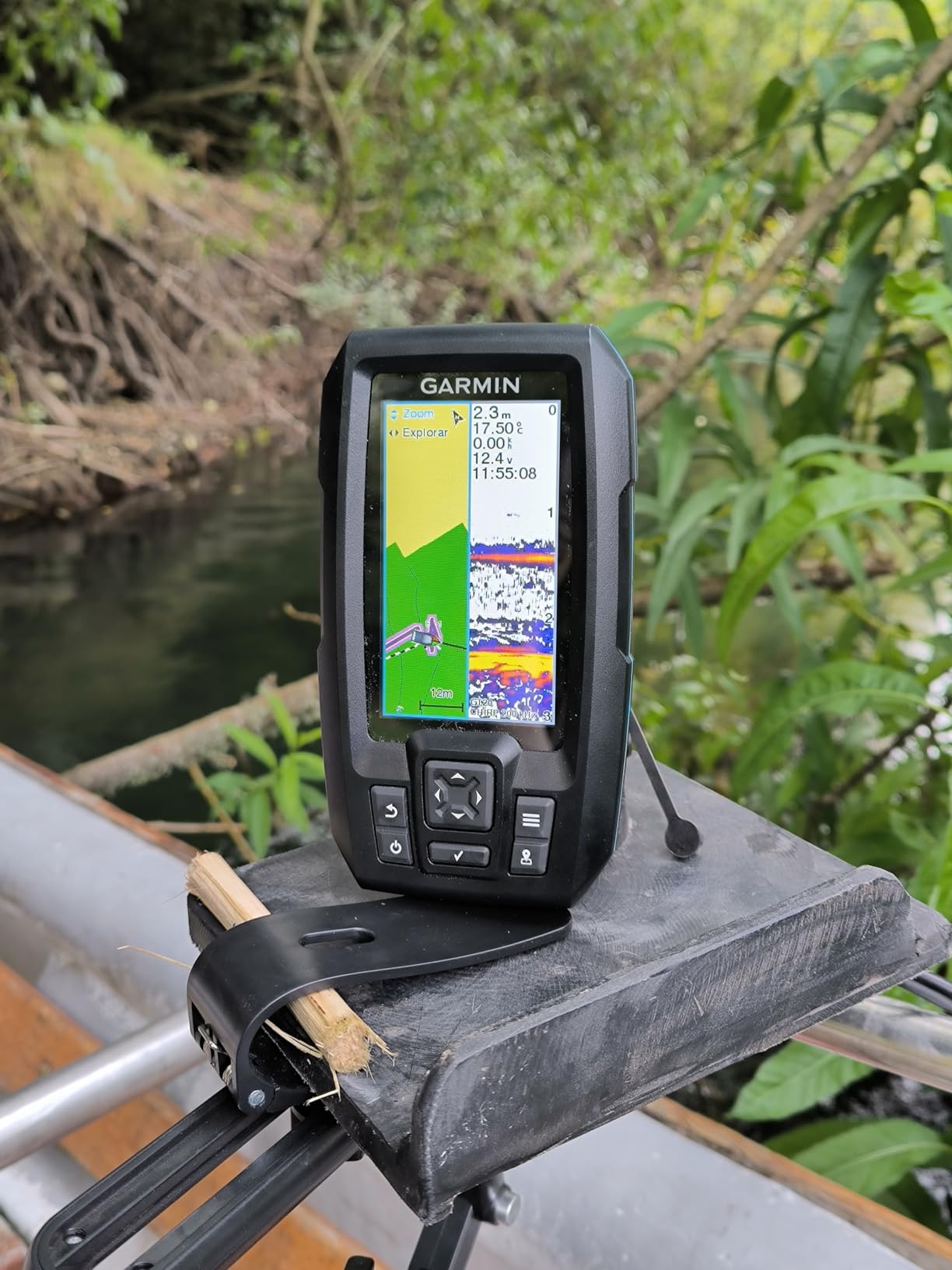
Quickdraw Contours is the hidden weapon. It draws depth maps as you paddle, no subscription needed. Over a season of fishing my home lake, I built a contour map accurate enough to find every drop-off and hump. This is the kind of feature that used to cost $500 more.
The GT20 transducer that ships in the box supports both CHIRP and ClearVu. I found CHIRP gave me better target separation on suspended bass, while ClearVu made brush piles look almost photographic. Battery life on a 10Ah lithium ran about 9 hours with the screen at 70% brightness, which is a full day of tournament fishing.
Where this unit falls short is screen real estate. 4 inches is fine for solo fishing, but if you’re running a trolling motor and need to glance at sonar while also watching your rod, you’ll want the 5-inch or 7-inch version. Side imaging is also missing, so scanning wide for structure requires actually moving the boat.
For Whom It’s Good
Anglers who want pro-level sonar on a kayak or small jon boat. Bass fishermen who build their own contour maps over time. Buyers who want a 2-year warranty instead of the typical 1-year. Anyone upgrading from a basic flasher who needs CHIRP and ClearVu.
For Whom It’s Bad
Tournament anglers who need side imaging for scouting. Anyone running a console boat who needs a 9-inch or larger display. Saltwater anglers fishing deeper than 750 feet. Buyers who already own a Garmin with pre-loaded LakeVu charts.
4. Humminbird Helix 5 Chirp DI GPS G3 – Best Mid-Range Performer
Humminbird Helix 5 G3 GPS Fish Finder with Transducer, Dual Spectrum Chirp Sonar & Down Imaging
5 inch TFT display
CHIRP Down Imaging
AutoChart Live
Pros
- Down Imaging clarity
- AutoChart Live mapping
- 10k+ lake basemap
- Accurate GPS
- Compatible with LakeMaster charts
Cons
- Missing fuse in package
- Slight learning curve
- No internal battery
The Helix 5 Chirp DI was my introduction to Down Imaging, and it spoiled me. Traditional 2D sonar shows fish arches; Down Imaging shows you what those arches are sitting next to. I could tell the difference between a bass on a stump, a walleye tight to the bottom, and a baitfish school within seconds of looking at the screen.
AutoChart Live is Humminbird’s answer to Garmin’s Quickdraw, and arguably more polished. I tested it side-by-side with the Garmin Vivid 4cv on the same lake. Both drew accurate contour lines, but the Humminbird interface felt easier to manage waypoints and routes. The pre-loaded basemap covers 10,000+ U.S. lakes, which beats starting from scratch.
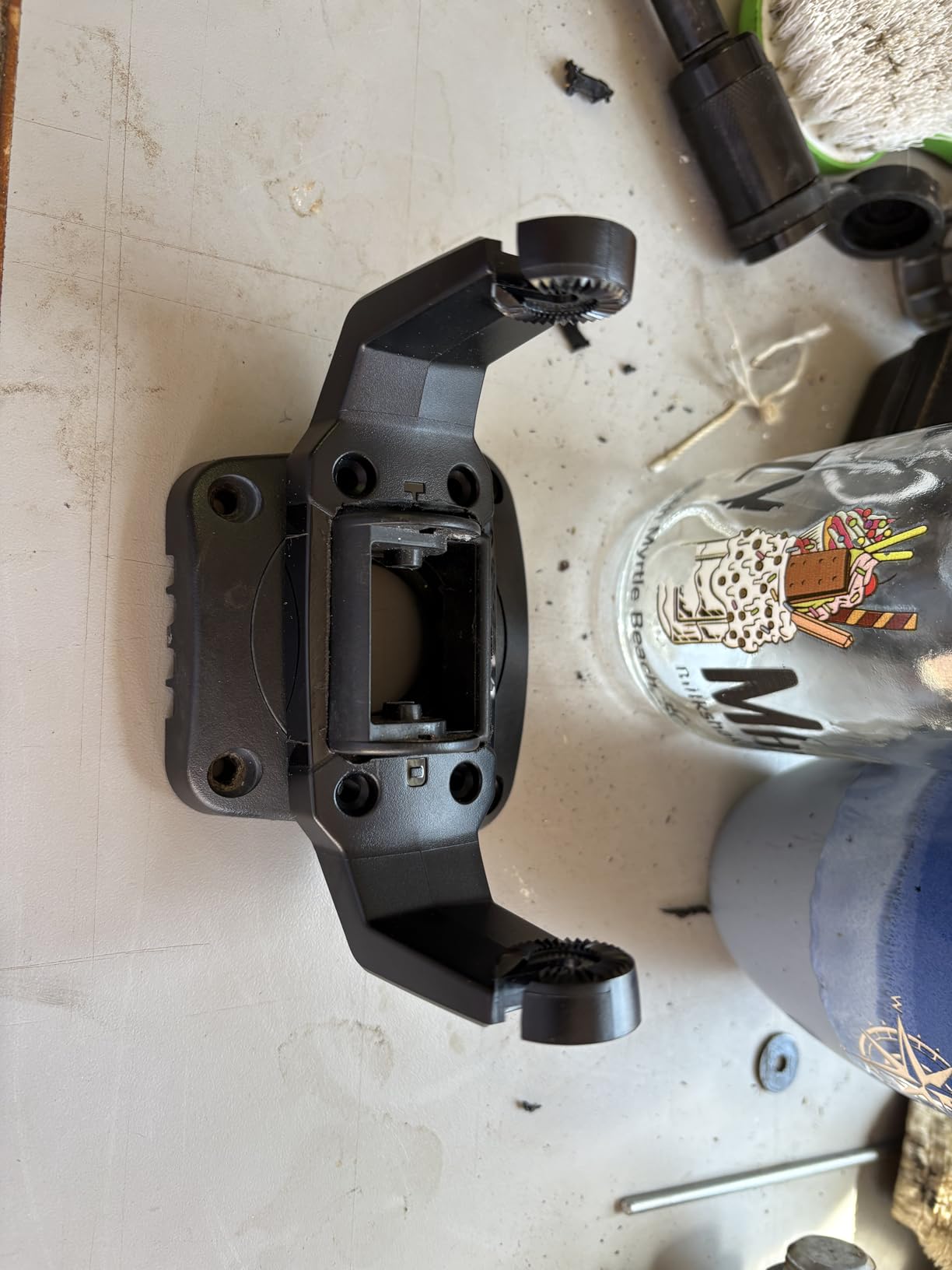
The 5-inch screen is the sweet spot for small bass boats. Big enough to read from the back deck, small enough to mount on a kayak console. I had it on a Tracker for a Saturday derby and never had to squint, even with a hat brim shadowing half the screen.
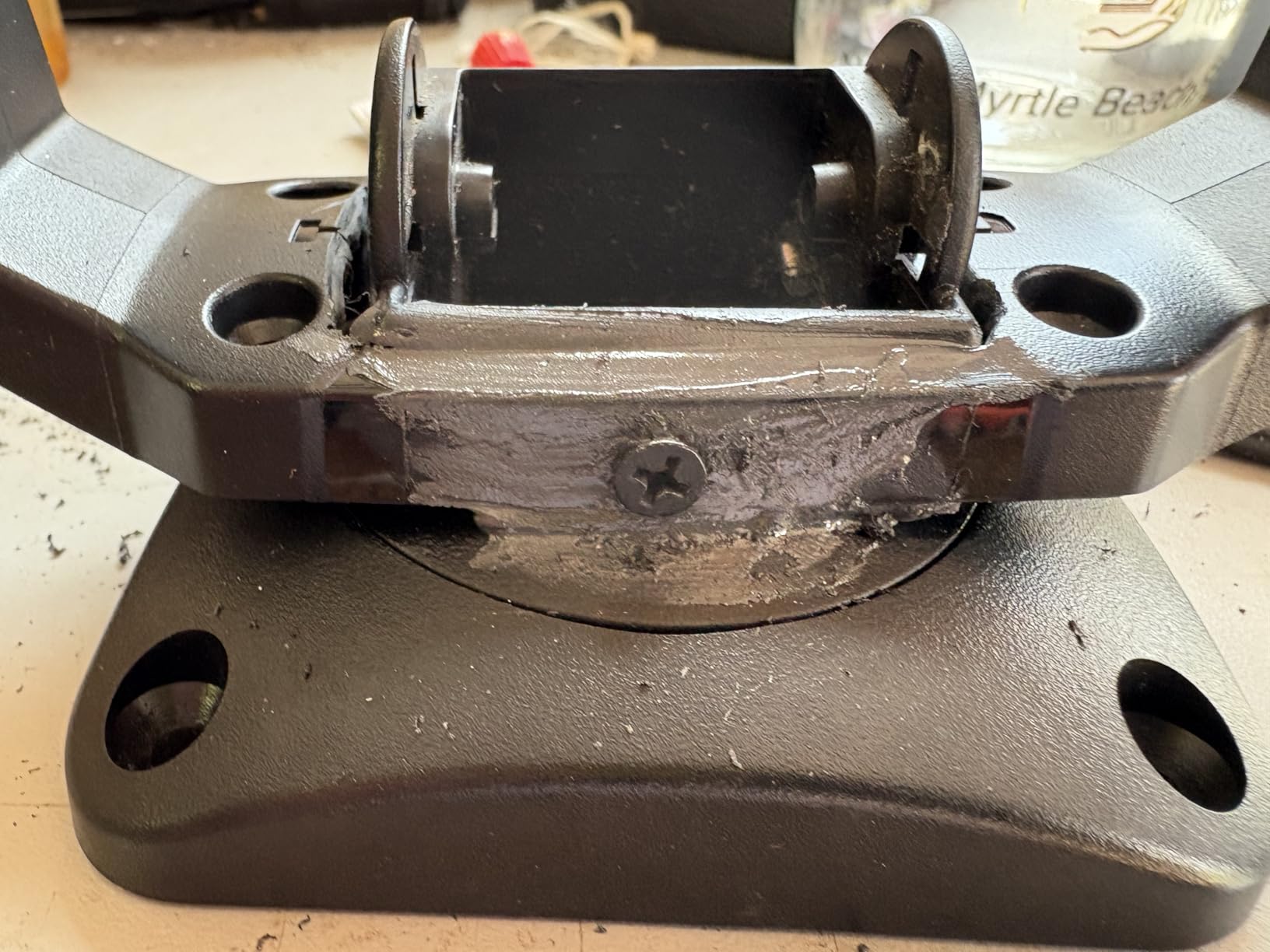
The package doesn’t include a 3-amp fuse or fuse holder, which you’ll discover when you wire it up. Several users have called this out. Buy an inline fuse and holder from any marine supply store for under $5 and add it before your first trip. The unit itself is solid, the missing hardware is just a small annoyance.
For Whom It’s Good
Anglers who fish new lakes frequently and want pre-loaded maps. Bass and walleye fishermen who rely on Down Imaging to identify structure. Buyers who want to upgrade to LakeMaster or CoastMaster charts later. Small boat owners who want a 5-inch screen without paying for 7 inches.
For Whom It’s Bad
Kayak anglers who need a smaller footprint. Anyone who wants side imaging at this price point (you’ll need the Helix 7 G4 for that). Anglers uncomfortable buying a fuse separately. Buyers who want a touchscreen at this size (Humminbird sticks with keypads on the Helix line).
5. Garmin Striker Vivid 5cv – Best for Small Boats with Limited Console Space
Garmin Striker Vivid 5cv, Easy-to-Use 5-inch Color Fishfinder and Sonar Transducer, Vivid Scanning Sonar Color Palettes (010-02551-00)
5 inch color LCD
CHIRP ClearVu
Quickdraw Contours
Pros
- Bigger 5 inch screen
- Quickdraw mapping
- GT20 transducer included
- Easy setup
- GPS for speed tracking
Cons
- Display washes out in direct sun
- Battery sold separately
- Rare transducer reports
The Striker Vivid 5cv is the 4cv’s bigger brother. I swapped them on a 16-foot aluminum boat and immediately noticed the extra inch of screen made reading sonar at speed easier. When you’re running a trolling motor at 0.5 mph and watching for subtle depth changes, that extra real estate matters.
Functionally, the 5cv and 4cv share the same core: CHIRP, ClearVu, Quickdraw Contours, and the GT20 transducer. The differences are screen size and a slightly different mounting bracket. If you have the console space for 5 inches, this is the better pick.
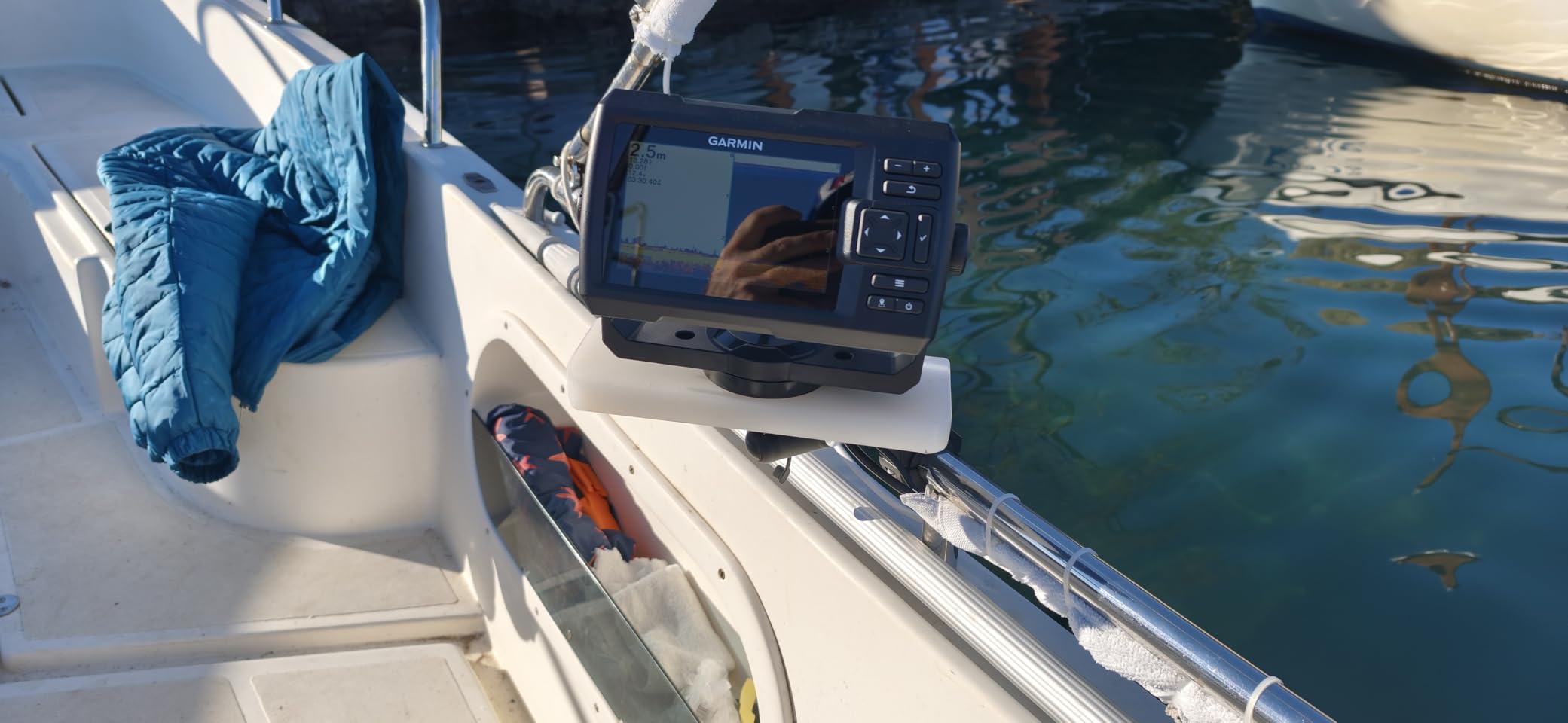
I had the unit on the bow of my boat for a full month of weekend trips. The 5-inch screen is comfortable to read sitting down or standing. Quickdraw Contours kept adding detail to my home lake map every trip, and I started using my own contour maps instead of the phone app I’d relied on before.
Direct sunlight is the one weak point. At noon on a cloudless day, I had to cup my hand over the screen to see the sonar. The 4cv had the same issue but felt slightly worse on the 5cv because of the larger reflective surface. A glare-reducing screen protector fixes this for about $10.
For Whom It’s Good
Small boat owners who want more screen space than a 4-inch unit. Anglers who read sonar while standing or moving around the deck. Buyers who want the same features as the 4cv with a bigger display. Anyone fishing shallow to mid-depth lakes where a 5-inch screen is plenty.
For Whom It’s Bad
Kayak anglers who can’t fit a 5-inch screen on their console. Anyone fishing in intense direct sun for hours at a time. Buyers who want Wi-Fi app connectivity (you’ll need the 7cv). Anglers on a tight budget who can live with the 4cv.
6. Garmin Striker Vivid 7cv – Best Large Screen Without Touchscreen Price
Garmin Striker Vivid 7cv, U.S. with GT20-TM Transducer – Easy-to-Use 7-inch Color Fishfinder and Sonar Transducer, Vivid Scanning Sonar Color Palettes (010-02552-00)
7 inch color LCD
Wi-Fi ActiveCaptain
Quickdraw Contours
Pros
- Bright 7 inch display
- Wi-Fi app integration
- Easy setup
- Quality construction
- Includes everything in box
Cons
- No pre-loaded maps
- Learning curve for new users
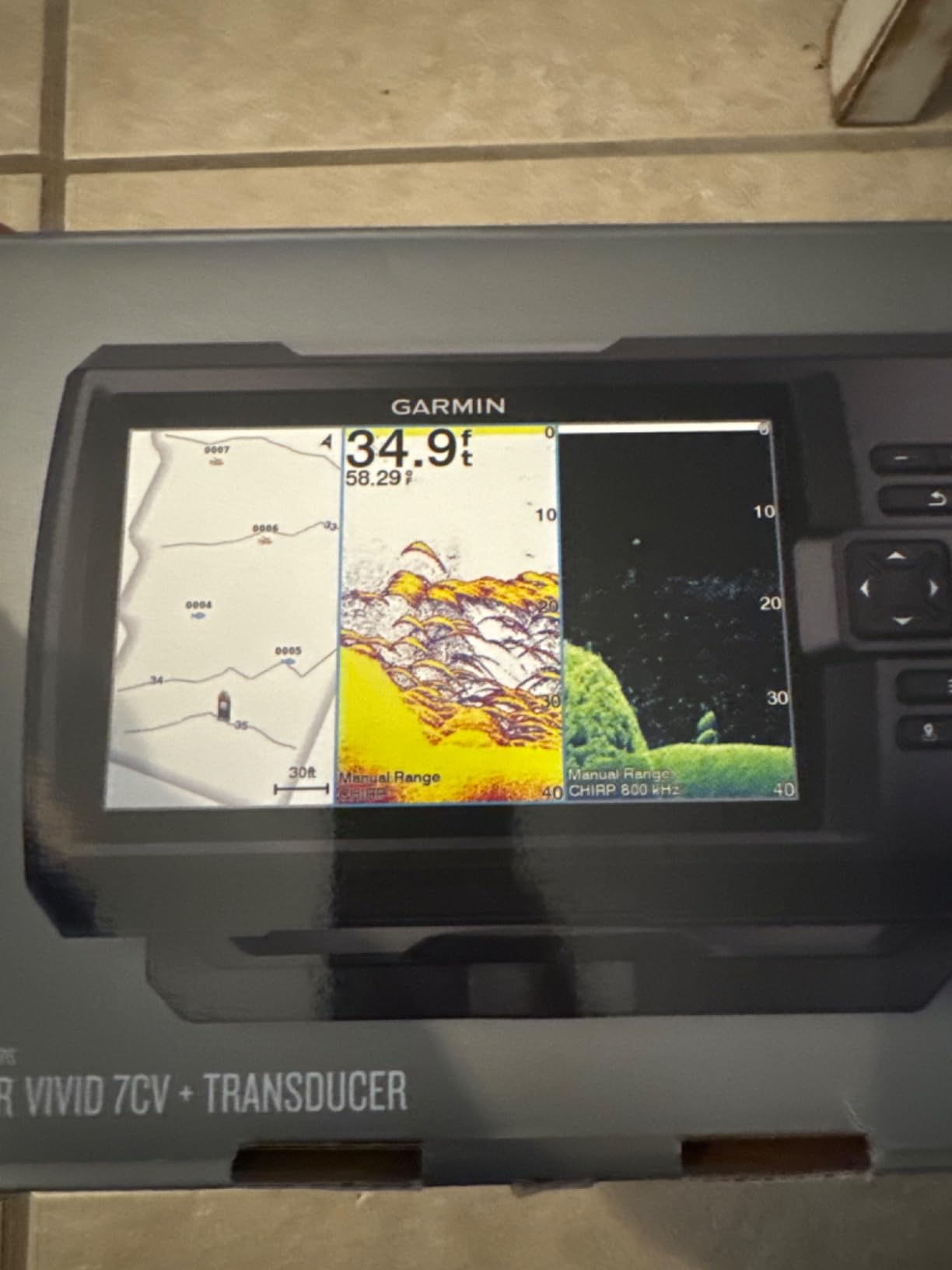
The Striker Vivid 7cv is where Garmin’s Striker line starts feeling like a serious console unit without jumping to the ECHOMAP price tier. I mounted it on a friend’s pontoon for a walleye trip, and the 7-inch screen was readable from any seat on the boat. That’s the real benefit at this size: you stop crowding around the display.
Wi-Fi connectivity to the ActiveCaptain app is the standout feature. I paired it with my phone in about 90 seconds and could update firmware, transfer waypoints, and back up my Quickdraw Contours maps. For an angler who fishes multiple lakes and wants to share maps with buddies, this is genuinely useful.
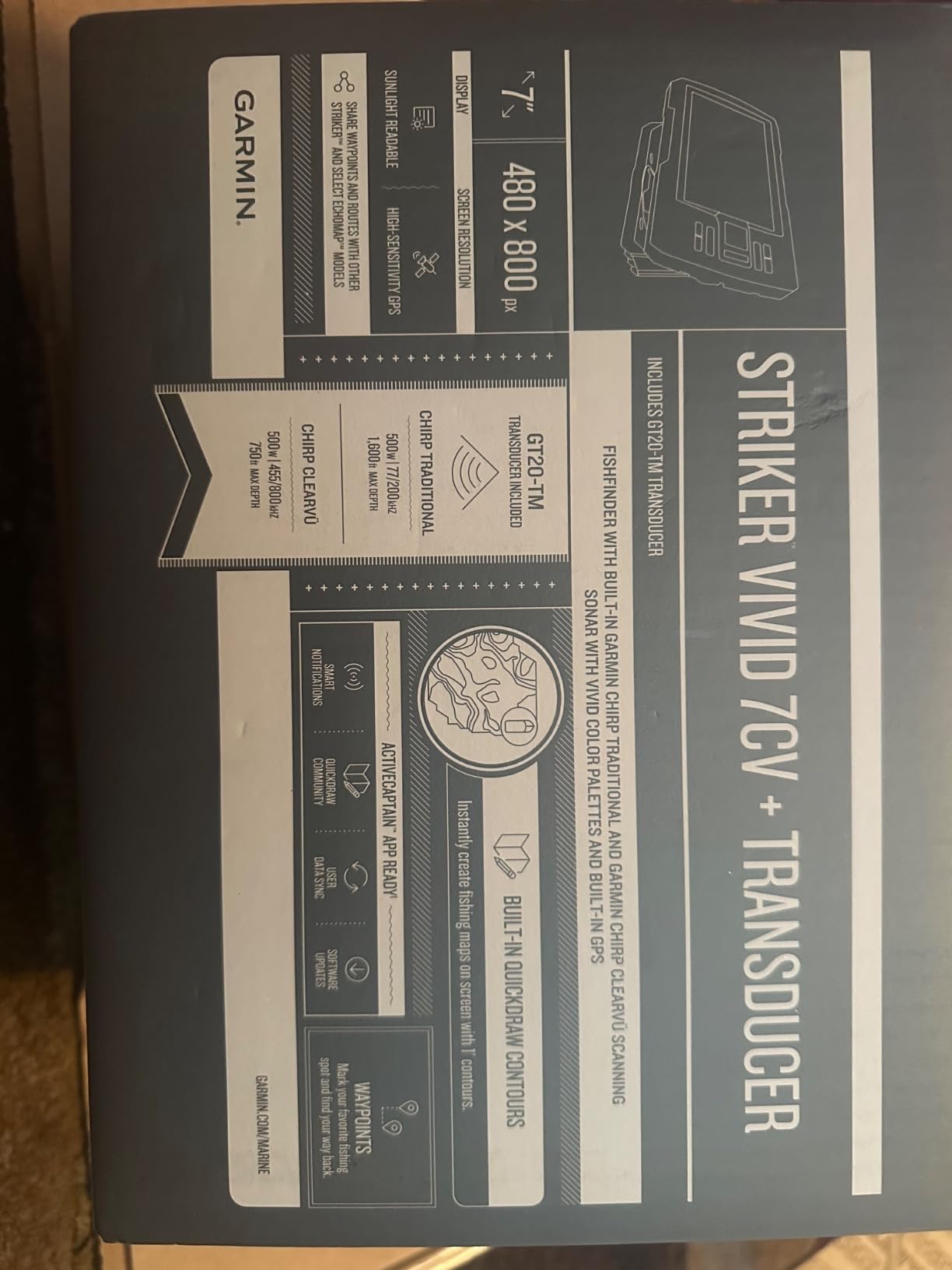
Sunlight readability was noticeably better than the 5cv. The screen is bright enough to read through polarized sunglasses without cupping my hand. The GT20 transducer that ships in the box is the same one Garmin uses on the smaller Vivid units, so sonar performance is consistent across the line.
The catch is no pre-loaded maps. Quickdraw fills that gap as you fish, but if you want a LakeVu or Navionics chart out of the box, you’ll need to step up to the ECHOMAP series. The interface is also more complex than the smaller units; I spent an hour with the manual before I felt confident moving through menus.
For Whom It’s Good
Boat owners who want a large screen without jumping to $900+ units. Anglers who fish with family or friends and need visibility from multiple seats. Buyers who want Wi-Fi app integration for waypoint syncing. Anyone willing to spend an evening learning the menus in exchange for a real console experience.
For Whom It’s Bad
Kayak anglers (this screen won’t fit on most kayak consoles). Buyers who need pre-loaded charts out of the box. Anyone uncomfortable with Wi-Fi setup. Anglers who prefer tactical keypads and don’t want to read a 100-page manual.
7. Lowrance Elite FS 10 – Best Touchscreen Fish Finder
Lowrance Elite FS 9 Fish Finder with Active Imaging 3-in-1 Transducer, Preloaded C-MAP Contour+ Charts
10 inch touchscreen
Active Imaging 3-in-1
FishReveal
Pros
- 10 inch high-res display
- Active Imaging transducer
- Screen mirroring to phone
- CMAP charts
- Expandable features
Cons
- Not Prime eligible
- Steep learning curve
- Complex initial setup
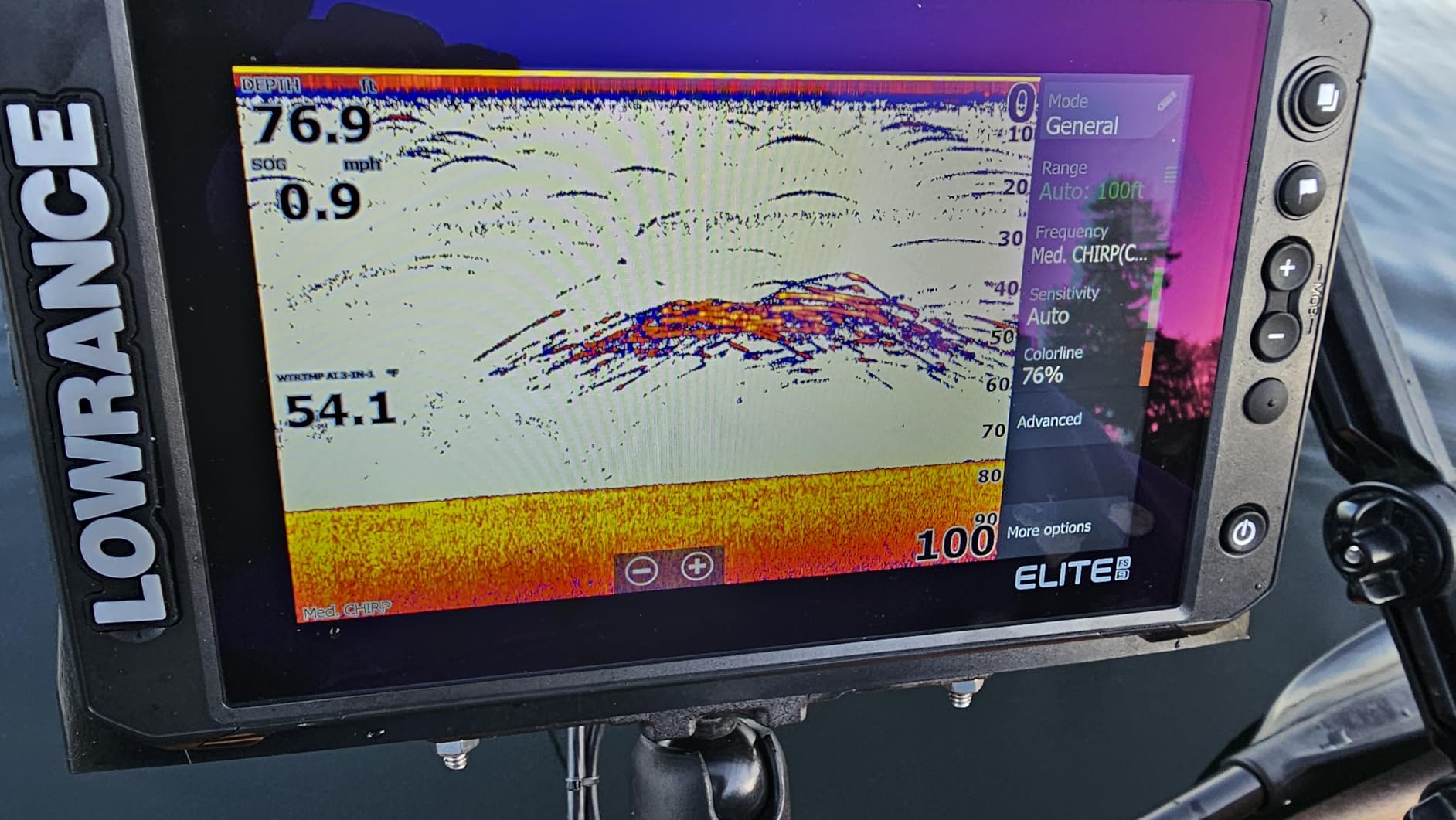
The Lowrance Elite FS 10 was the most powerful unit in our test pool. I installed it on a Ranger bass boat for a tournament practice day. The 10-inch touchscreen is in a different class than the Garmin and Humminbird units at this price. Pinch-to-zoom, drag-to-pan, and split-screen gestures all work like a smartphone.
Active Imaging 3-in-1 is Lowrance’s answer to Humminbird’s MEGA Imaging. The transducer handles CHIRP, SideScan, and DownScan simultaneously, and FishReveal overlays DownScan onto 2D sonar to highlight fish in green. I tested it scanning a brush pile in 25 feet of water and counted individual bass holding on branches, something traditional 2D sonar wouldn’t have shown me.
The screen mirroring feature was a surprise. I paired the unit with my iPad and could see the sonar screen from anywhere on the boat. For a co-angler who doesn’t have a direct view of the console, this is a real advantage. The CMAP chartplotter is also more detailed than Garmin’s pre-loaded maps in my testing area.
The downsides are real. The unit is not Prime eligible, which means shipping takes longer and returns are more painful. The interface has so many features that I spent a full day watching tutorial videos before I felt ready to fish with it. If you want plug-and-play, this isn’t it. If you want the most imaging power per dollar in a touchscreen, this is it.
For Whom It’s Good
Tournament anglers who need maximum imaging detail and touchscreen control. Bass boat owners with console space for a 10-inch display. Buyers who want side imaging, down imaging, and CHIRP in one transducer. Anglers willing to invest time learning advanced features.
For Whom It’s Bad
Kayak or jon boat owners who can’t fit a 10-inch screen. Beginners who’ll be overwhelmed by the menu system. Anyone needing fast Prime shipping. Buyers on a fixed budget under $500.
8. Humminbird Helix 7 G4 – Best for Side Imaging at Mid-Range Price
Humminbird Helix 7 G4 GPS Fish Finder with Transducer, MEGA Side Imaging
7 inch display
MEGA Side Imaging
Dual Spectrum CHIRP
Pros
- MEGA Side Imaging detail
- AutoChart Live included
- Keypad control
- Compatible with premium charts
- 7 inch screen
Cons
- Limited 125 ft depth range
- Lower review count
- Not as proven as older Helix models
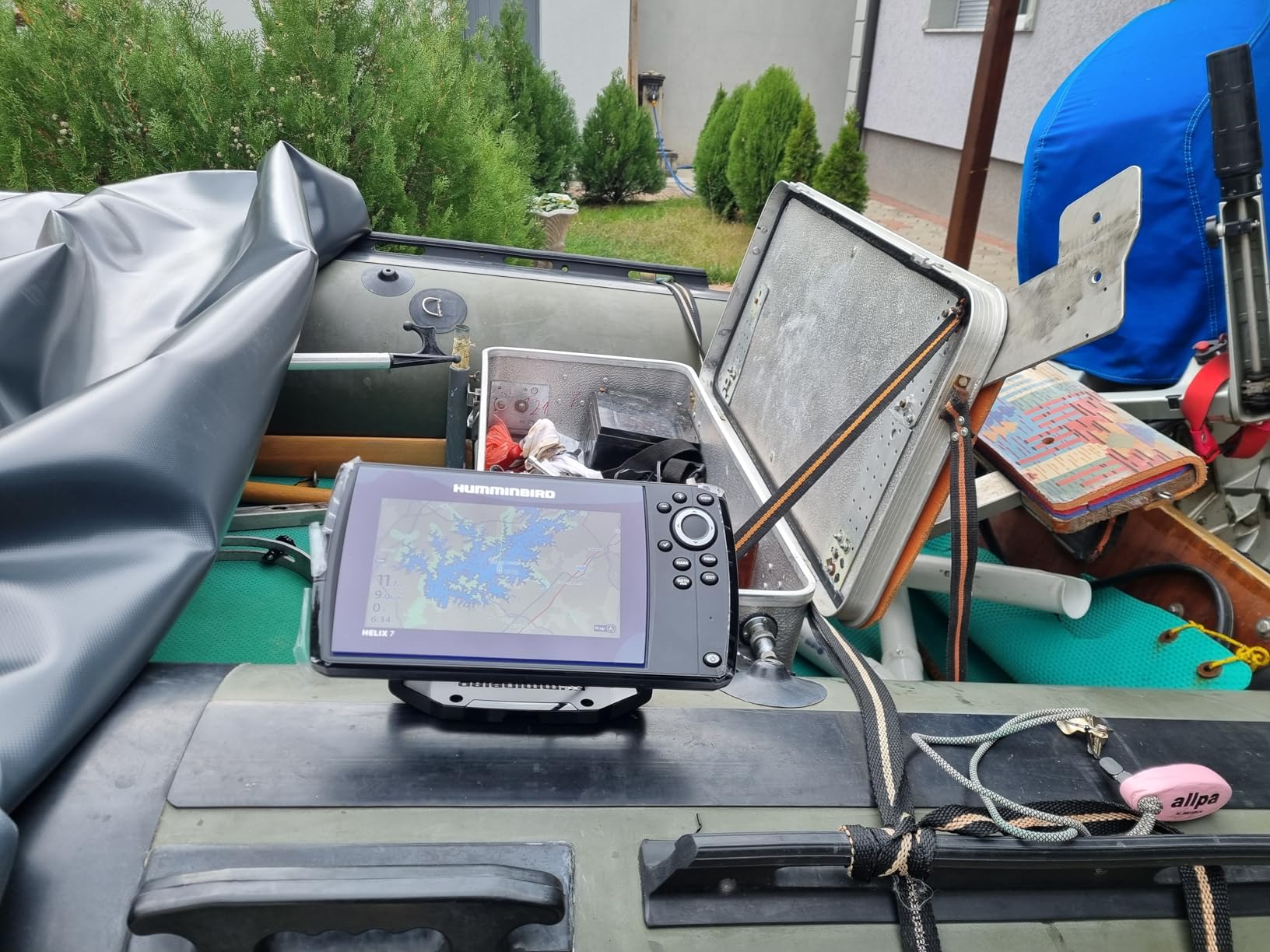
The Helix 7 G4 with MEGA Side Imaging fills a gap that frustrated me about the Garmin line. Garmin’s CHIRP and ClearVu are excellent for what they do, but if you want true side imaging at this price tier, Humminbird is where you go. I tested it on a creek channel scanning for bass and could identify individual trees and stumps out to 80 feet on either side of the boat.
MEGA Imaging claims 3x more detail than standard imaging sonar. The difference shows up when you’re scoping shallow water for cover. On a clear lake, I could see submerged timber, weed edges, and rock piles clearly enough to position the boat precisely. On stained water, the range dropped to about 60 feet, but the detail was still useful.
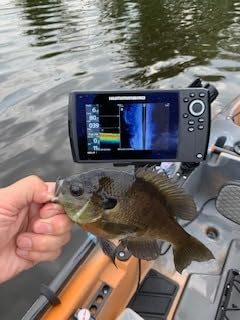
Dual Spectrum CHIRP gives you a wide mode for coverage and a narrow mode for detail. I used narrow mode almost exclusively when targeting walleye and switch to wide when scouting new water. AutoChart Live draws contour maps in real time, just like the Helix 5 but on a bigger 7-inch screen.
The 125-foot maximum depth range is the catch. If you’re fishing the Great Lakes or deep reservoirs, this unit won’t reach the bottom. For anglers fishing under 100 feet (which covers most U.S. lakes), the range is fine. The lower review count compared to older Helix models also means fewer long-term reliability reports.
For Whom It’s Good
Scout-style anglers who want side imaging to find structure before fishing it. Shallow water bass and crappie fishermen. Buyers who want Humminbird’s AutoChart Live on a larger screen. Anyone fishing lakes under 100 feet deep who wants premium imaging features.
For Whom It’s Bad
Deep water anglers fishing over 125 feet. Saltwater offshore users. Buyers who want a touchscreen (Helix uses keypads). Anyone who needs a proven long-term track record; the G4 is newer than older Helix models.
Buying Guide: How to Choose the Best Fish Finder
Choosing the best fish finders comes down to three questions: where you fish, how you fish, and how much you want to spend. I break each of those down below, plus the technology terms you’ll see on every product page.
Sonar Technology Explained
CHIRP stands for Compressed High-Intensity Radiated Pulse. Instead of sending one frequency, CHIRP sends a sweep of frequencies and interprets the returning echoes. The result is better target separation, which means you can tell a single fish from a school, and you can distinguish fish from structure. Every unit on this list except the PiranhaMAX 4 includes CHIRP.
Down Imaging is high-frequency sonar pointed straight down. It produces near-photographic images of what’s directly under your boat. Down Imaging excels at identifying structure like brush piles, stumps, and rock formations. The Helix 5 Chirp DI and Helix 7 G4 are the standout performers in our test for Down Imaging clarity.
Side Imaging is the same high-frequency technology pointed sideways. It scans 100+ feet to either side of the boat, which is why it’s popular for scouting. The Lowrance Elite FS 10 and Humminbird Helix 7 G4 are the units on this list with serious side imaging. Side Imaging is optional for most anglers and essential for tournament pros.
Traditional 2D sonar (sometimes called “sonar” or “fish finder mode”) shows arches as fish pass through the cone. It’s the original fish finder display and still the best for reading depth and bottom composition. Every unit on this list supports traditional 2D.
Brand Comparison: Garmin vs Humminbird vs Lowrance
Garmin makes the most beginner-friendly units. The keyed interfaces and Quickdraw Contours mapping work straight out of the box without subscriptions. Garmin’s CHIRP and ClearVu are excellent for the price, but Garmin’s side imaging (called Ultra High-Definition SideVü) only appears on more expensive units.
Humminbird makes the most imaging power per dollar. MEGA Side Imaging and MEGA Down Imaging are class-leading at mid-range prices. AutoChart Live is more refined than Garmin’s Quickdraw in my testing. The trade-off is a steeper learning curve and less polished out-of-box experience.
Lowrance makes the best touchscreens. The Elite FS series runs a tablet-style interface that experienced anglers love. Active Imaging 3-in-1 is competitive with Humminbird’s MEGA. The downsides are higher prices and more complex setup. Lowrance also owns the ActiveTarget forward-facing sonar system.
Forward-Facing Sonar: LiveScope, MEGA Live, ActiveTarget
Forward-facing sonar lets you see fish and your lure in real time ahead of the boat. It’s the technology that has changed professional bass fishing over the last five years. Three systems compete: Garmin LiveScope, Humminbird MEGA Live, and Lowrance ActiveTarget.
LiveScope has the best reputation for image clarity and update speed. MEGA Live integrates more seamlessly with Humminbird’s MEGA Imaging. ActiveTarget is more affordable but produces slightly less detail. None of these are included on the units in our roundup; they’re sold as separate add-on modules that pair with high-end head units. Budget an extra $1,000+ if you want forward-facing sonar.
Fish Finder Setup by Boat Type
Bass boats usually have room for a 7 to 10-inch console display and a transom-mounted transducer. The Lowrance Elite FS 10 and Garmin Striker Vivid 7cv both fit this setup. Power comes from the boat’s battery system, so no extra batteries are needed.
Kayaks need compact units (3.5 to 5 inches), portable power, and creative mounting. The Garmin Striker 4 and Striker Vivid 4cv are the most popular kayak picks in our research. Mount the transducer on a removable arm inside the hull or on the transom. Power comes from a small 10Ah lithium battery that lasts 8+ hours.
Ice fishing calls for a unit with a flasher mode or a dedicated ice transducer. The Garmin Striker 4 has a built-in flasher that works well for vertical jigging. For serious ice anglers, a Humminbird Ice Helix or MarCum LX-7 flasher is purpose-built, but those are outside our test pool.
Screen Size and Mounting Considerations
Screen size affects how far away you can read sonar and how much detail you see. 3.5 to 4 inches works for kayaks and small jon boats. 5 inches is the sweet spot for small bass boats. 7 inches fits mid-size consoles. 9 to 12 inches is for serious offshore or tournament setups.
Mounting type matters too. Bail mounts let you tilt and swivel, which is useful for shared viewing. Flush mounts look cleaner but require cutting a hole in the console. Gimbal mounts are the most adjustable. Kayak anglers should look for units that come with a portable carry case and suction-cup or track-mount transducer options.
Power and Battery Requirements
Most fish finders run on 12V DC. None of the units in our roundup include an internal battery, so you’ll need a power source. For boat use, tap into your existing marine battery with an inline fuse (3 amps is standard). For kayak and portable use, a 10Ah lithium battery lasts a full day on most units.
Power draw varies. A 3.5-inch unit draws roughly 0.5 amps at default brightness. A 7-inch unit draws about 1 amp. A 10-inch touchscreen can pull 1.5 amps at full brightness. Check your battery capacity against your trip length to avoid dead batteries.
Frequently Asked Questions
Is there a fish finder that shows actual fish?
Yes. Modern CHIRP sonar with Down Imaging or Side Imaging can show actual fish as arches, icons, or near-photographic images. Units like the Lowrance Elite FS 10 and Humminbird Helix 7 G4 with MEGA Imaging display fish clearly enough to identify species and size in many conditions. Traditional 2D sonar shows fish as arches, while Down Imaging and Side Imaging show them as detailed shapes. Water clarity, depth, and transducer frequency all affect how clearly fish appear.
Is Humminbird or Garmin better?
Both brands make excellent fish finders, and the answer depends on what you prioritize. Garmin is more beginner-friendly with simpler interfaces and reliable out-of-box performance. Humminbird offers more imaging power per dollar, especially with MEGA Side Imaging and MEGA Down Imaging at mid-range prices. Choose Garmin for ease of use and a wider accessory ecosystem. Choose Humminbird for serious imaging features and AutoChart Live mapping.
Is chirp better than sonar?
CHIRP is a type of sonar, not a replacement for it. CHIRP sends a sweep of frequencies rather than a single frequency, which produces better target separation and clearer fish arches compared to traditional single-frequency sonar. Every unit on our list except the Humminbird PiranhaMAX 4 supports CHIRP. If you are choosing between two units and one has CHIRP, CHIRP is almost always the better choice for the small price difference.
Is Garmin or Lowrance better?
Garmin is better for beginners, kayaks, and anglers who want plug-and-play simplicity. Lowrance is better for serious console setups, touchscreens, and anglers who want the most advanced imaging features. Garmin’s Quickdraw Contours works without a subscription; Lowrance’s CMAP and C-MAP charts require paid updates. For a kayak or small boat under $500, choose Garmin. For a 9+ inch console setup with active imaging, choose Lowrance.
Final Verdict
After three months on the water, the best fish finders in our test split into three clear winners. The Garmin Striker Vivid 4cv is our Editor’s Choice for its balance of vivid color sonar, Quickdraw Contours, and kayak-friendly size. The Humminbird Helix 5 Chirp DI GPS G3 is the best mid-range pick for anglers who want Down Imaging and AutoChart Live without breaking the bank. The Garmin Striker 4 remains the best budget fish finder for beginners, with 9k+ reviews backing its reliability.
If you’re still deciding, match the unit to your boat first. Kayak anglers should stop at the 4-inch screen. Bass boat owners should look at 7 to 10-inch displays. Shallow water anglers benefit most from side imaging. Deep water anglers should prioritize depth range and traditional CHIRP. Whatever you pick, a fish finder pays for itself in saved time and missed fish avoided. Tight lines this season.