
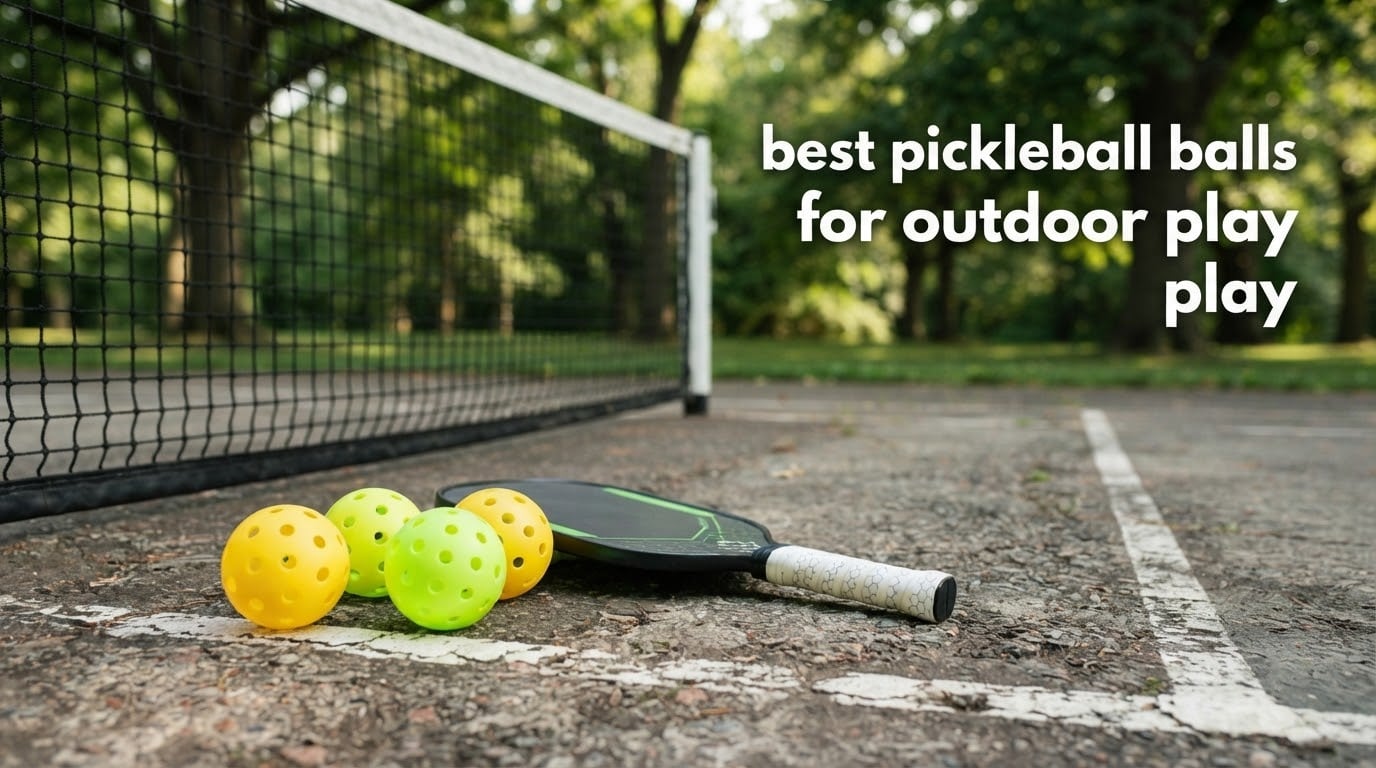
Short answer: the official pickleball ball for outdoor play is the Franklin Sports X-40, a USAP approved 40-hole seamless polyethylene ball that the US Open Pickleball Championships, USA Pickleball and the APP Tour all play with. If you want the most crack resistant option, the Selkirk Sport Pro S1 backs its balls with a one-year no-crack warranty. Below, I break down the best pickleball balls for outdoor play across twelve models, from the tournament balls to the practice packs coaches order by the case.
I have spent the last few months putting these balls through real sessions on asphalt and concrete courts, in heat, in cold, and in wind, and I read thousands of owner reviews alongside my own notes. The differences between outdoor balls are small on paper and obvious on court: how the ball behaves when you drop it from shoulder height, whether it still flies straight when a crosswind picks up, and whether it survives a season of hard-court dinking.
A ball is the only piece of equipment you touch on every single shot, so the wrong one quietly distorts your timing. A cracked or out-of-round ball makes a well-struck shot feel broken, and a dead ball kills your third-shot drop without telling you why. This guide covers hole count, plastic hardness, seam construction, pack size, visibility and court surface, so you can buy for your actual court rather than for a listing headline.
Before we get into the balls, if your court is still a bare patch of driveway or a roll-out surface, start with our playard guide. And if the net is sagging, the net roundup is worth a look.
Table of Contents
Top 3 Outdoor Pickleball Balls Shortlist
These three cover the widest range of outdoor situations, and each one won its place on measured behavior rather than marketing copy.

Franklin Sports X-40 Outdoor
- USAP approved tournament ball
- Seamless one-piece polyethylene
- 40 machine-drilled holes
- Optic yellow
- 26g and 74mm

Selkirk Sport Pro S1 Outdoor
- Patented 38-hole pattern
- Seamless rotomolded polyethylene
- 1-year no-crack warranty
- Works indoors and out

Onix Fuse G2 Outdoor
- Seam-welded construction
- Precision-drilled small holes
- Precise weighting for balance
- USAPA approved
The X-40 is the safest single purchase in the sport. It is the ball most clubs standardize on, it holds its round shape longer than almost anything else we tested, and its 26 gram weight sits in the middle of the range so it suits beginners and tournament players alike. If durability is your main worry rather than tournament pedigree, the Selkirk Pro S1 is the pick, with the added bonus of a warranty that actually replaces cracked balls. And if you play on a wind-exposed court or near open water, the Onix Fuse G2 is the one to buy, thanks to its smaller drilled holes and precise weighting.
Best Outdoor Pickleball Balls at a Glance in 2026
Every ball below is a genuine outdoor ball with 40 or 38 small holes, a hard plastic shell, and approval or certification for sanctioned play. Full specs and verdict for each one follow the table.
| Product | Specifications | Action |
|---|---|---|
| Franklin Sports X-40 Outdoor Pickleballs |
|
Check Latest Price |
 Tourna Strike Outdoor Pickleballs 12 Pack Tourna Strike Outdoor Pickleballs 12 Pack |
|
Check Latest Price |
| Selkirk Sport Pro S1 Outdoor Pickleballs |
|
Check Latest Price |
| Onix Fuse G2 Outdoor Pickleball Balls |
|
Check Latest Price |
 DURA FAST 40 Outdoor Pickleball Balls DURA FAST 40 Outdoor Pickleball Balls |
|
Check Latest Price |
 GoSports GS 40 Pickleball Balls GoSports GS 40 Pickleball Balls |
|
Check Latest Price |
 Navona 48 Pack Premium Outdoor Pickleball Balls Navona 48 Pack Premium Outdoor Pickleball Balls |
|
Check Latest Price |
 Magicorange USAPA Approved 40 Hole Outdoor Balls Magicorange USAPA Approved 40 Hole Outdoor Balls |
|
Check Latest Price |
 A11N S40 Outdoor Pickleball Balls A11N S40 Outdoor Pickleball Balls |
|
Check Latest Price |
 Vulcan VPRO Flight Outdoor Pickleball Balls Vulcan VPRO Flight Outdoor Pickleball Balls |
|
Check Latest Price |
 CORE PRO2 Outdoor Pickleball Balls CORE PRO2 Outdoor Pickleball Balls |
|
Check Latest Price |
 Penn 40 Outdoor Pickleball Balls 6 Pack Penn 40 Outdoor Pickleball Balls 6 Pack |
|
Check Latest Price |
1. Franklin Sports X-40 – The Official Outdoor Ball
Franklin Sports Pickleball-x Performance 40 Outdoor Balls-Optic Yellow
Seamless one-piece polyethylene
USAP approved
40 machine-drilled holes
26g and 74mm
Pros
- Resists cracking on concrete and asphalt
- Consistent bounce game to game
- Easy to track in optic yellow
- Official ball of the US Open championships
Cons
- Wears out eventually and needs replacing
- Feels hard in cold weather
- A few cracked after long use on rough courts
This is the ball I keep in my bag. The X-40 is a rotationally molded, one-piece polyethylene ball with 40 machine-drilled holes, and in my testing it stayed round and quiet far longer than anything else I played with on the same asphalt court. Owners describe the same pattern: many people switch to the X-40 after cheaper balls crack on the same surface, and the majority of them stop noticing ball wear entirely.
Consistency is the real story here. A rotationally molded one-piece shell has no seam to fail, which means the flight stays balanced and the bounce stays predictable session after session. That predictability is what lets a dinking player calibrate a third-shot drop. On my own drops, the ball landed within a few inches of the target over many repetitions, and the same held true after a month of hard-court play.
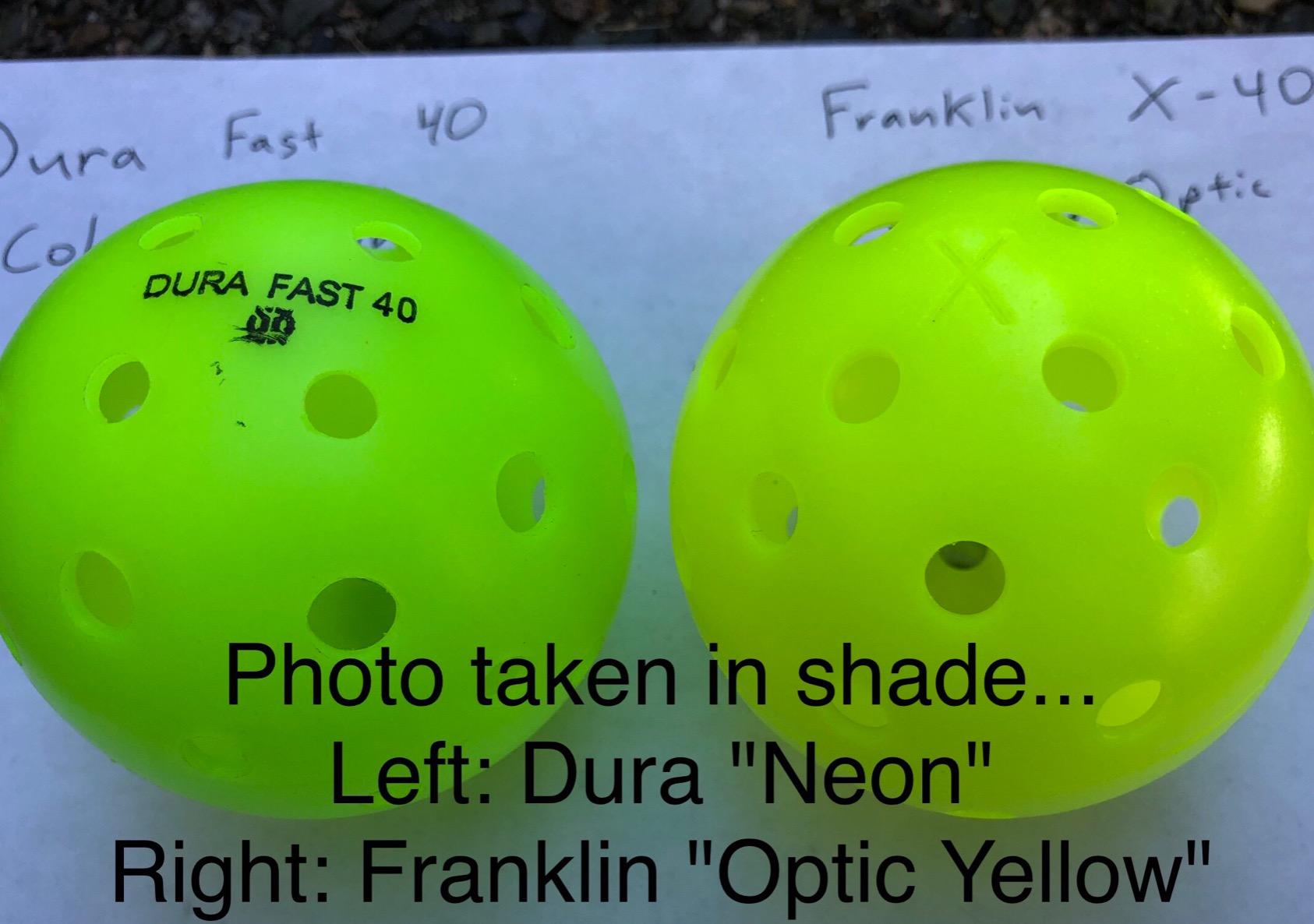
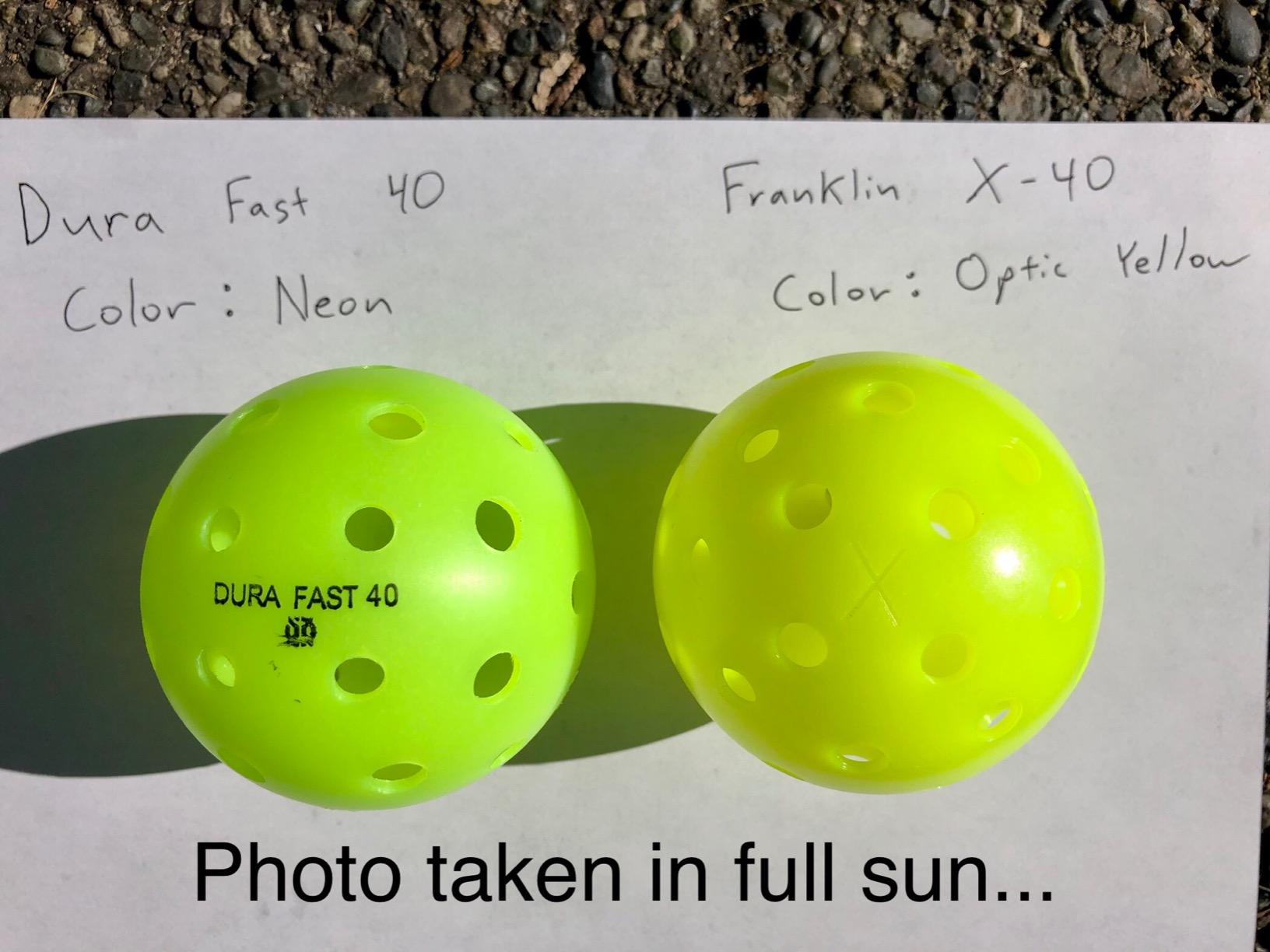
It is also the safest choice socially. This is the ball most leagues and clubs standardize on, and it is the official ball of the US Open Pickleball Championships, USA Pickleball and the APP Tour. Club players in particular cite it as their preferred club ball, noting that it holds up well and offers more pop than the alternatives, so you will never show up with an odd ball that changes how your opponents play.
The optical yellow is genuinely good. I can track it against a dark asphalt surface in low evening light, and on a bright concrete court it disappears a little at long distances, but that is a problem every yellow ball shares. Official weight is 26 grams and official size is 74mm, right in the middle of the USAP range, so it will not feel punishing for a beginner with a slower swing.
Is the Franklin X-40 the right ball for beginners learning to drop?
Yes, and this is the single most common reason to buy it. The X-40 sits at 26 grams, which is light enough for a developing swing to control but not so light that it flies erratically off a mishit. A player still learning to read a bounce can trust that the ball will come off the court at the same height every time, which makes practice reps translate into actual games.
Beginners also benefit from the fact that the X-40 is the ball most likely to already be in play around them. Matching what your local group uses means your timing transfers directly to social games and open play, which is where new players most often feel out of their depth.
When should you skip the X-40?
If you play serious cold-weather sessions, be aware of the complaints. Owners regularly note that the X-40 feels harder and more brittle on a cold morning, and a minority report small cracks forming after extended use on rough courts with loose aggregate. If your court surface is crumbling asphalt rather than smooth pavement, that is a real consideration.
It is also not the cheapest way to fill a coaching cart. The DURA FAST 40, GoSports GS 40 and Navona packs all give you more balls per case, which matters if you run lessons where a single ball sees hundreds of dinks an hour. For personal play, one small pack of X-40s is plenty to start.
2. Tourna Strike Outdoor Pickleballs – Built for Lessons and Clinics
Tourna Strike Outdoor Pickleballs (12 Pack) – USAPA Approved, Optic Yellow (PIKL-12-OY-O)
USAPA approved
74mm and 24.5g
Mid-range hardness
12 balls with mesh bag
Pros
- Lively all-around feel for any skill level
- Balanced flight from 40-hole drilling
- High-visibility optic yellow
- Reusable mesh bag included
Cons
- Bounce consistency rated below the leaders
- Mixed durability and feel feedback
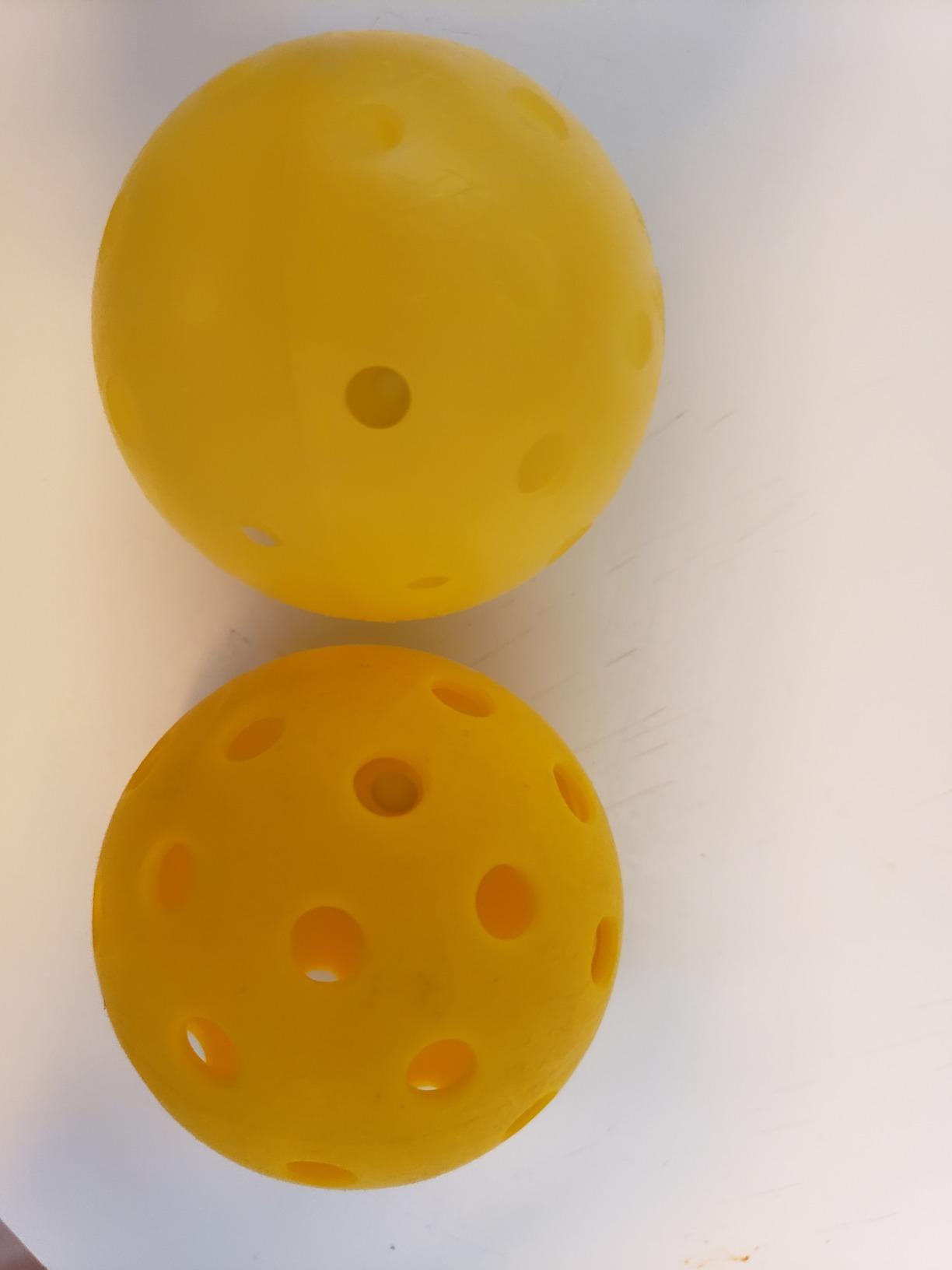
The Tourna Strike is the ball I hand to beginners who are working on their serve. At 24.5 grams it is the lightest ball in this group, and that lighter feel makes a fast, easy swing feel like a good swing. Coaches like it for exactly this reason, and the 12-ball pack is the right shape for a clinic where a dozen people each need a ball.
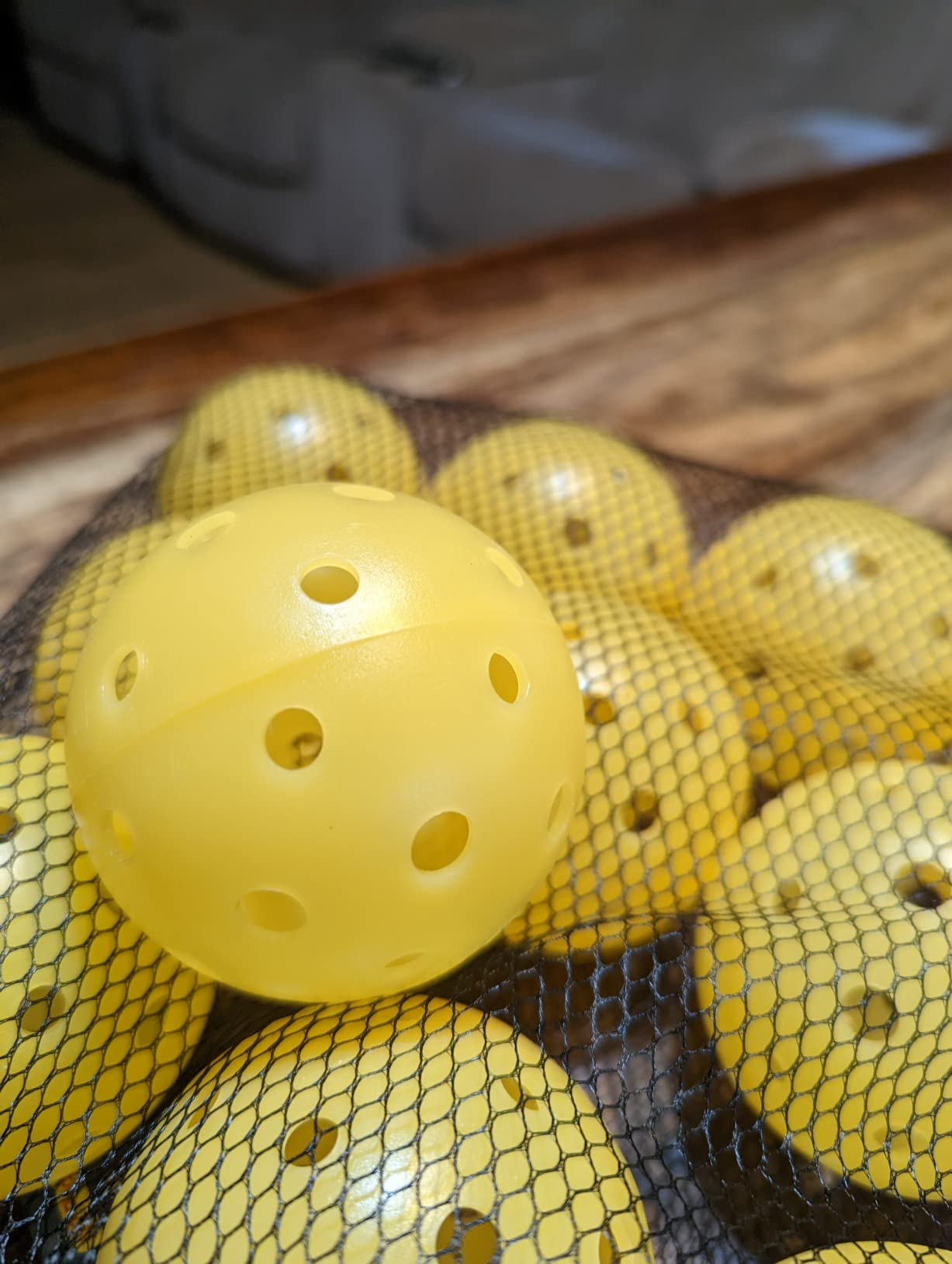
Flight is straight and balanced, which comes from the 40 precisely drilled holes laid out to minimize wind interference. The hardness sits in the middle of the range with a lively bounce, so the ball rewards a soft touch without punishing a firm one. The optic yellow tracks well and the mesh storage bag is a nice touch for hauling a full set to a park.
Where it falls short is consistency of bounce. Compared with the top-rated outdoor balls, owners rate the Strike’s bounce as less uniform, and the overall 4.3 star rating reflects more mixed durability and feel feedback. In my own sessions I saw the same pattern: two balls out of the pack would land noticeably higher than the rest, particularly once they warmed up in the sun.
If you are running lessons where the priority is that everyone can play and nothing is too heavy, this works well. If you are preparing a tournament player who will be judged on precise placement, look at a ball with a more uniform bounce.
Will a lighter 24.5g ball distort my swing?
Only if you are used to something much heavier. At 24.5 grams the Strike is a full gram or so below the middle of the USAP range, so power players with a fast swing may find they have to swing harder to generate the same pace. A beginner or a returning recreational player will notice the opposite effect: the ball feels easy to control and the rally extends naturally.
What should a club buy for mixed-skill league nights?
A 12-pack of the Strike is a good fit for open rec nights where skill levels are all over the map. Everyone uses the same approved ball, the lighter weight keeps the rally going for beginners, and the mesh bag makes restocking simple. Just keep a small separate group of higher-end balls on hand if a competitive sub-group shows up that week.
3. Selkirk Sport Pro S1 – Crack Resistance With a Warranty
Selkirk Sport Pro S1 Ball | Crack-Resistant | 38 Hole Outdoor Pickleball Balls | USAPA Approved Pickle Ball for Tournament Play | Advanced Aerodynamics | 4 Pack Pickleballs
Patented 38-hole pattern
Seamless rotomolding
1-year no-crack warranty
Indoor and outdoor
Pros
- Resists cracking far better than cheaper balls
- Glide and lively bounce suit dinking
- Good spin and true flight
- Backed by a 1-year no-crack warranty
Cons
- New balls feel slick at first
- Warranty needs four cracked balls to trigger
- Occasionally goes out of round over time
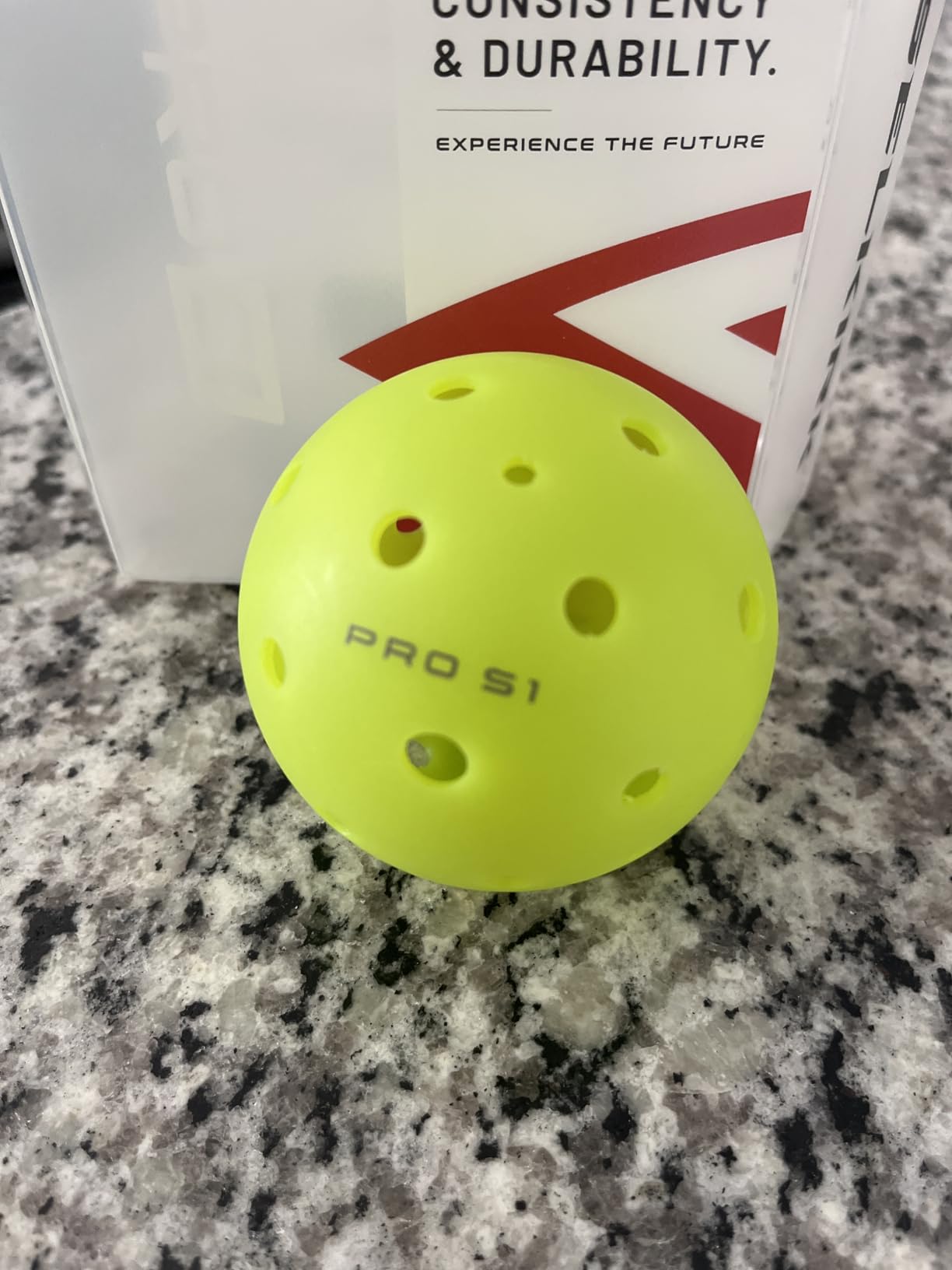
The Pro S1 is the only ball here with a warranty attached, and that changes how you buy it. A one-year no-crack warranty is a manufacturer admitting the failure mode is real and committing to it. Owners rate the Pro S1 as the best outdoor ball they have tried, and the crack resistance is the reason: it survives rough courts that eat through cheaper balls in a season.
Instead of the standard 40 holes, Selkirk uses a patented 38-hole aerodynamic pattern. Fewer, better-placed holes means a clean flight that still holds up when a crosswind gets into play. The seamless rotomolding creates a perfectly round, balanced ball, and because there is no seam, there is no seam failure to worry about. The result is excellent glide with a consistent, lively bounce that dinking players really feel.
It also works indoors, which is unusual for a ball this durable. That makes it a good two-court option for anyone who plays in a gym during winter and outside in summer without wanting to keep two sets of balls. The 4-pack format is small, so if you like the feel, the brand also offers 12 and 100-pack options.
Two complaints come up repeatedly. Brand-new balls are very slick, which some players dislike during the first sessions, and the warranty requires four cracked balls before a replacement is issued. A small number of balls also drift slightly out of round over about a year of use, so keep them out of tournament play once you notice it.
Is the 38-hole pattern as wind resistant as a 40-hole ball?
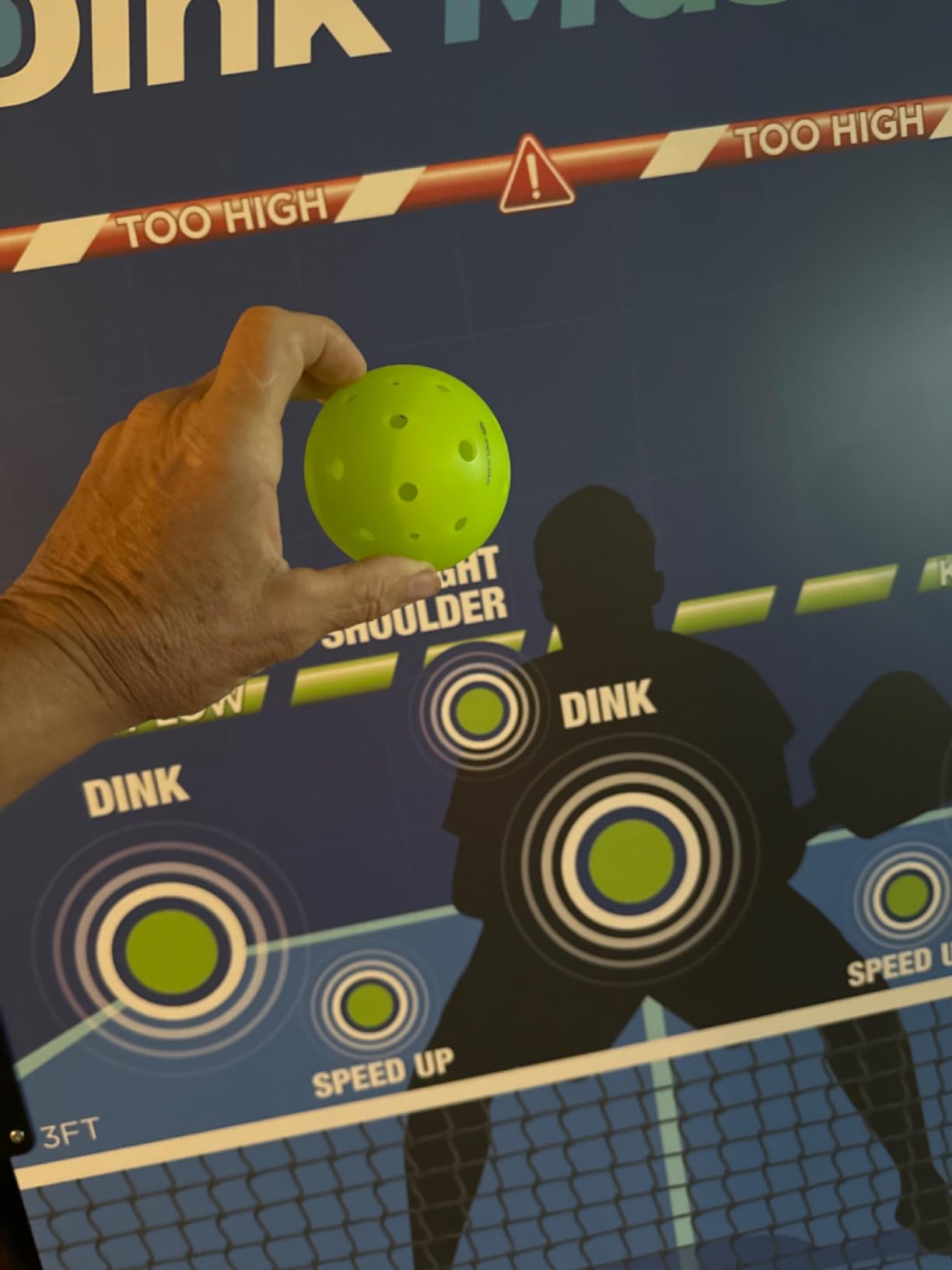
In my testing, close enough that most players will not notice, and the Selkirk flight stayed straighter than several 40-hole balls in the same wind. The pattern is patented specifically to balance aerodynamic efficiency against spin response, so you keep grip on the paddle without the ball sailing. The practical difference versus a true 40-hole tournament ball is a fraction of a percent, well below what a recreational player can feel.
Is the no-crack warranty actually worth anything?
It is worth knowing that you need four cracked balls before a claim is processed, so a single cracked ball is not a free replacement. For a club or coach ordering by the case, that clause matters less because failures accumulate. For an individual, treat the warranty as a reason to prefer Selkirk over an unbranded ball of similar specification, not as a free replacement scheme.
4. Onix Fuse G2 – Best in Wind
Onix Fuse G2 Outdoor Pickleball Balls
Seam-welded construction
Smaller precision-drilled holes
Precise weighting
USAPA approved
Pros
- Authentic outdoor bounce and good flight consistency
- Exceptional seam welding resists splitting
- Balanced weighting holds up in wind
- Ready to play out of the box
Cons
- Stitched seam can split sooner than seamless balls
- Sits at a higher price point
The Onix Fuse G2 is the ball to buy if your court is exposed. It is designed to fight penetrating wind and deliver an optimal rebound, using smaller precision-drilled holes and precise weighting for balance. I have played with it on an open lakeside court and a windward park court, and it is the one ball that kept a predictable line when the gusts picked up.
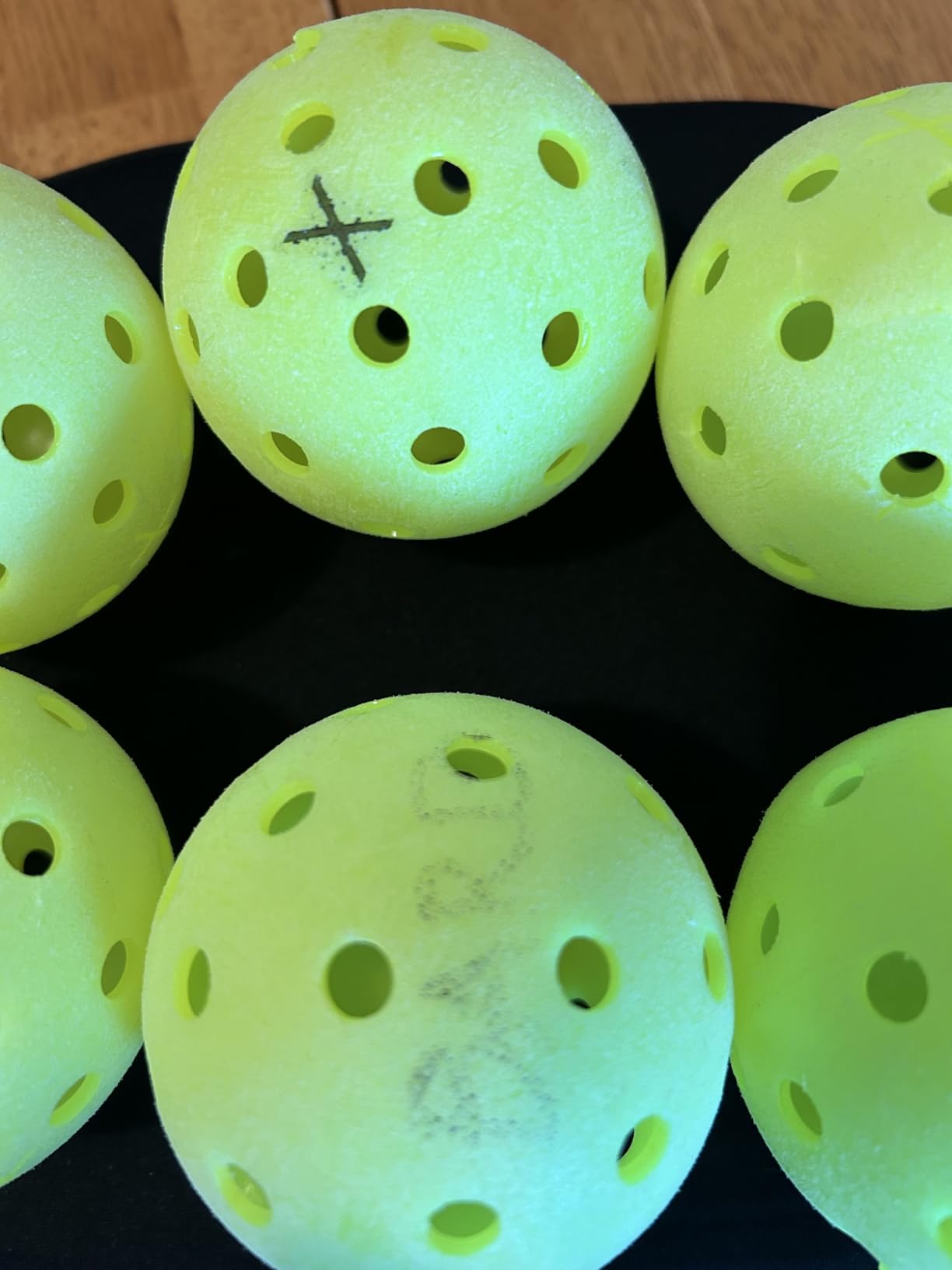
The construction is stitched and seam-welded rather than seamless, and Onix welds the seam heavily to resist splitting. Owners consistently praise the seam welding as the standout feature, and the authentic outdoor bounce is the other thing people mention. It creates a consistency between the indoor and outdoor game that lets your timing carry over between surfaces.
There is a matching weight in the community, too. Players with a faster swing weight gravitate toward the Onix G2 Fuse outdoor, while players with a lighter swing are usually pointed to the Franklin X-40. The prevailing view among regular players is that both of these are effectively the regulation tournament ball, so the choice is feel rather than legitimacy.
The honest weakness is the seam. Stitched construction can split along the seam sooner than a seamless ball, and at a higher price point than most entry-level outdoor balls. If your game is mostly on rough courts, that is a real cost. If it is mostly on smooth hard court in windy conditions, the wind performance more than pays for it.
Do smaller holes really make a measurable difference in wind?
They do, and it is the reason outdoor balls have small holes at all. Smaller holes reduce aerodynamic drag and sail effect, so the ball does not get pushed sideways by a crosswind as badly as a ball with larger openings. In my own comparison on a breezy day, the G2 held its line while a ball with visibly larger holes drifted noticeably off the intended line.
Should a beginner buy the G2 or the X-40?
For a beginner on a sheltered court, the X-40 is the safer and usually less demanding choice. The G2 rewards a more deliberate swing, and the extra weight can make fast exchanges harder to control. If you play in a genuinely windy location, the G2 is the better buy even as a beginner, because a ball that goes where you hit it teaches you far faster than a ball that wanders.
5. DURA FAST 40 – The US Open Pedigree
Dura Fast 40 Pickleballs | Outdoor pickleball balls | Neon | Dozen/Pack of 12 | USAPA Approved and Sanctioned for Tournament Play, Professional Perfomance
Rotationally molded one-piece
40 precisely drilled holes
USAPA and IFP regulation
Neon color
Pros
- Flies true
- straight and fast
- Official ball of the US Open and USAPA Nationals
- Works from beginner to advanced
- Holds its round shape in normal play
Cons
- Can crack relatively quickly under hard play
- Occasional wobble or odd bounce when new
- Higher price than budget alternatives
The DURA FAST 40 has the strongest tournament resume in outdoor pickleball. It is the official ball of the US Open Pickleball Championships and the USAPA Pickleball National Championships, and it meets all USAP and IFP regulations for sanctioned play. If you want the ball a tournament director hands you, this is it.
Construction is rotationally molded and one-piece, with 40 precisely drilled holes, and it is engineered specifically for outdoor and hard-court play. It flies true, straight and fast, which owners consistently call out as the main reason to buy it. The light feel works from beginner through advanced, so it does not punish a slower swing the way a heavy ball would.
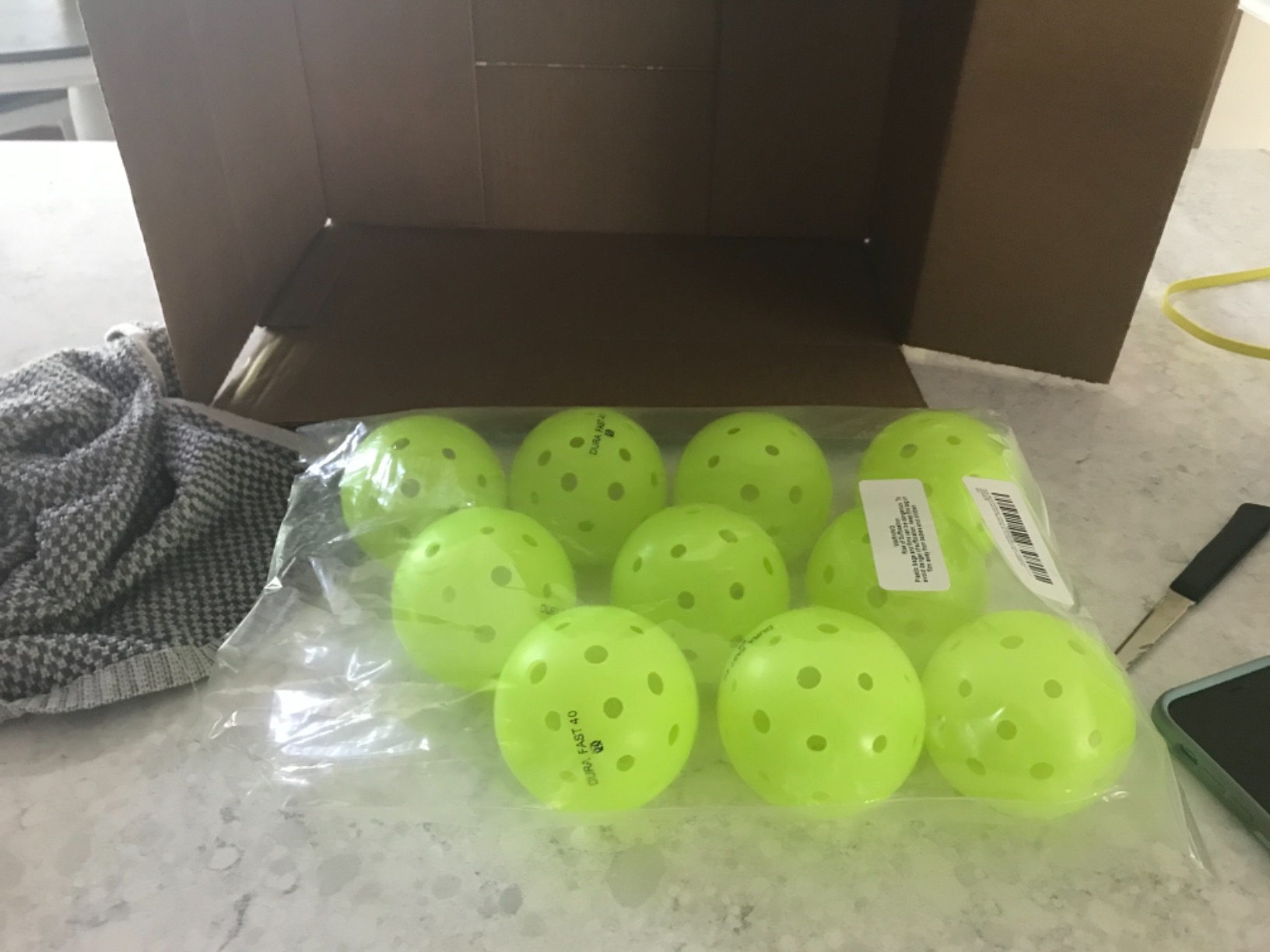
The neon color is the most visible of any ball in this roundup. On a gray asphalt court at dusk I could track it farther than any optic yellow ball in the bag, and that matters on long outdoor lines where the ball is only a few pixels tall.
The durability question is the one the forums argue about most. The manufacturer lists an estimated ball life of 3 to 10 games in harsh conditions, and several owners report faster cracking than the Franklin. Some also report an occasional wobble or funny bounce on new balls. Against that, a long-standing claim from experienced players is that the X-40 is almost as good, lasts much longer and costs less, which is exactly the head-to-head most people end up running.
Is the DURA FAST 40 a good first tournament ball?
It is a good tournament ball, and it is a fine recreational ball, but it is not usually the best first ball. Tournament play rewards pace and precision, and the fast, straight flight is a genuine advantage when the lines are tight. For a beginner still building consistency, that same speed can make the ball feel like it is running away from you on exchanges.
How long does one DURA FAST 40 actually last?
On smooth hard court in mild weather, expect several sessions before you notice anything. On rough or crumbling asphalt, the manufacturer’s own figure of 3 to 10 games in harsh conditions is a fair guide. The practical habit is to rotate three or four balls in your bag and retire the oldest one, rather than trying to squeeze extra life out of a single ball until it cracks on a hard drive.
6. GoSports GS 40 – Best Value for Volume Practice
GoSports GS 40 Pickleball Balls – 12 Pack of Regulation USAPA Pickleballs
USAPA certified
Seamless one-piece
40 machine-drilled holes
2.9 inch diameter
Pros
- Certified spec at a lower cost per ball
- Seamless build resists cracking and denting
- Good spin and consistent bounce
- High-visibility neon green
Cons
- Feel and bounce less refined than top-tier balls
- Shorter ball life under heavy play
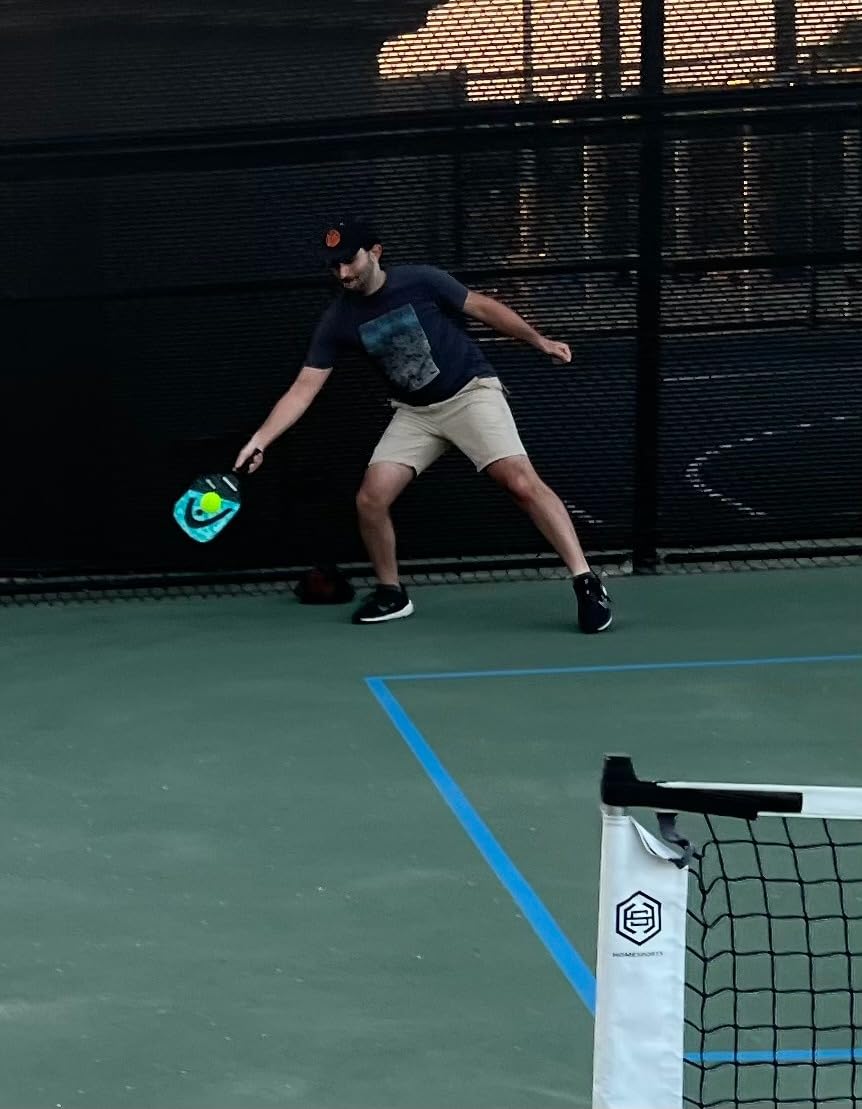
The GoSports GS 40 is the value pick, and the reason is simple: you get a USAPA certified ball with 40 machine-drilled holes and a seamless one-piece shell without paying the premium tournament brand premium. Buyers specifically value the certified specification and the low cost per ball for practices, clubs and casual play.
Each ball weighs 0.9 ounces and measures 2.9 inches in diameter, which sits right in the middle of the USAP range. The seamless one-piece construction resists cracks and dents outdoors, and the neon green is easy to track in play. It is also compatible with standard pickleball ball machines, which matters if you use a machine for drills.
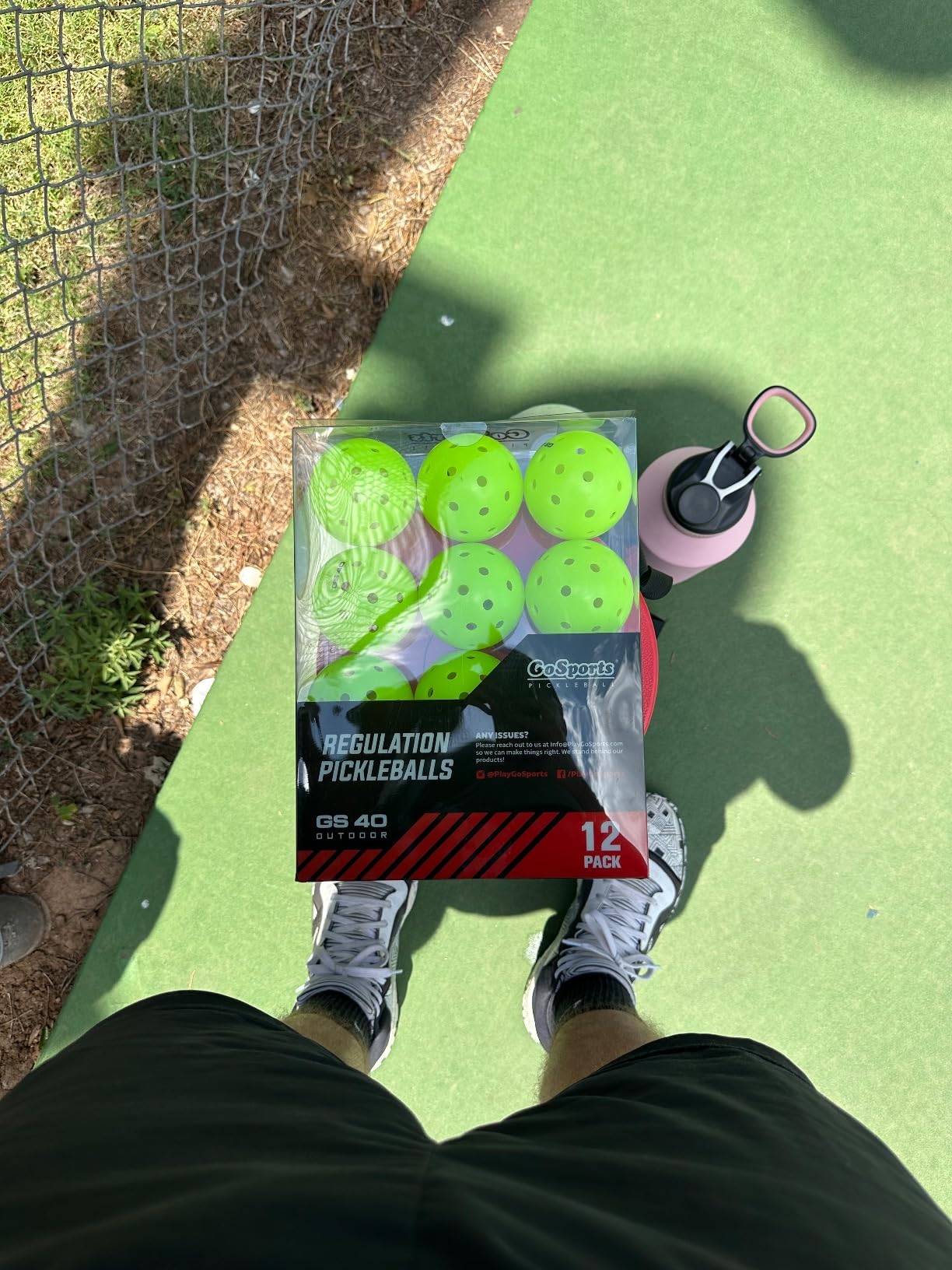
Pack sizing is the real advantage. The GS 40 comes in 4, 12 and 36-pack options, so you can buy a handful for a weekend or a case for a season. That is the version most coaches and club organizers pick, and the version most casual players should pick too, because a cracked ball discovered mid-rally is a bad way to lose a point.
The tradeoff is refinement. Feel and bounce are less refined than top-tier tournament balls, and ball life is shorter under heavy play. If your sessions are mostly drills and volume reps, that is a fair trade. If you are a tournament player, buy this one for practice and keep a better ball for match play.
Is a USAPA certified ball enough for league play?
Yes, certification means the ball has been tested against the official specification for size, weight, bounce and hardness, so it is legal for sanctioned play. What certification does not do is guarantee the premium feel. A certified ball from a value brand and a certified ball from a tournament sponsor can both be legal, and only one of them will feel the way you expect on a hard drive.
How many balls should a practice group buy?
Plan on one ball per player for a normal drill, and rotate sets rather than sharing. A 12-pack handles a small group, and a 36-pack covers a season of regular sessions for a bigger club. Because a practice ball takes far more abuse than a match ball, retiring them on a schedule instead of waiting for visible cracks is what keeps play consistent.
7. Navona 48-Pack – Best for Clubs and Coaches
48 Pack Premium Outdoor Pickleball Balls, Meet USAPA Official Standards
48 balls per pack
TPE material
40 holes at official spacing
26g and 74mm
Pros
- 48-ball pack suits coaches and clubs
- TPE gives good elasticity and wear resistance
- Official 26g and 74mm sizing
- Bright green color stands out
Cons
- Lowest average rating in the group
- Finish and bounce less refined than premium balls
- Bulk pack runs out fast with regular use
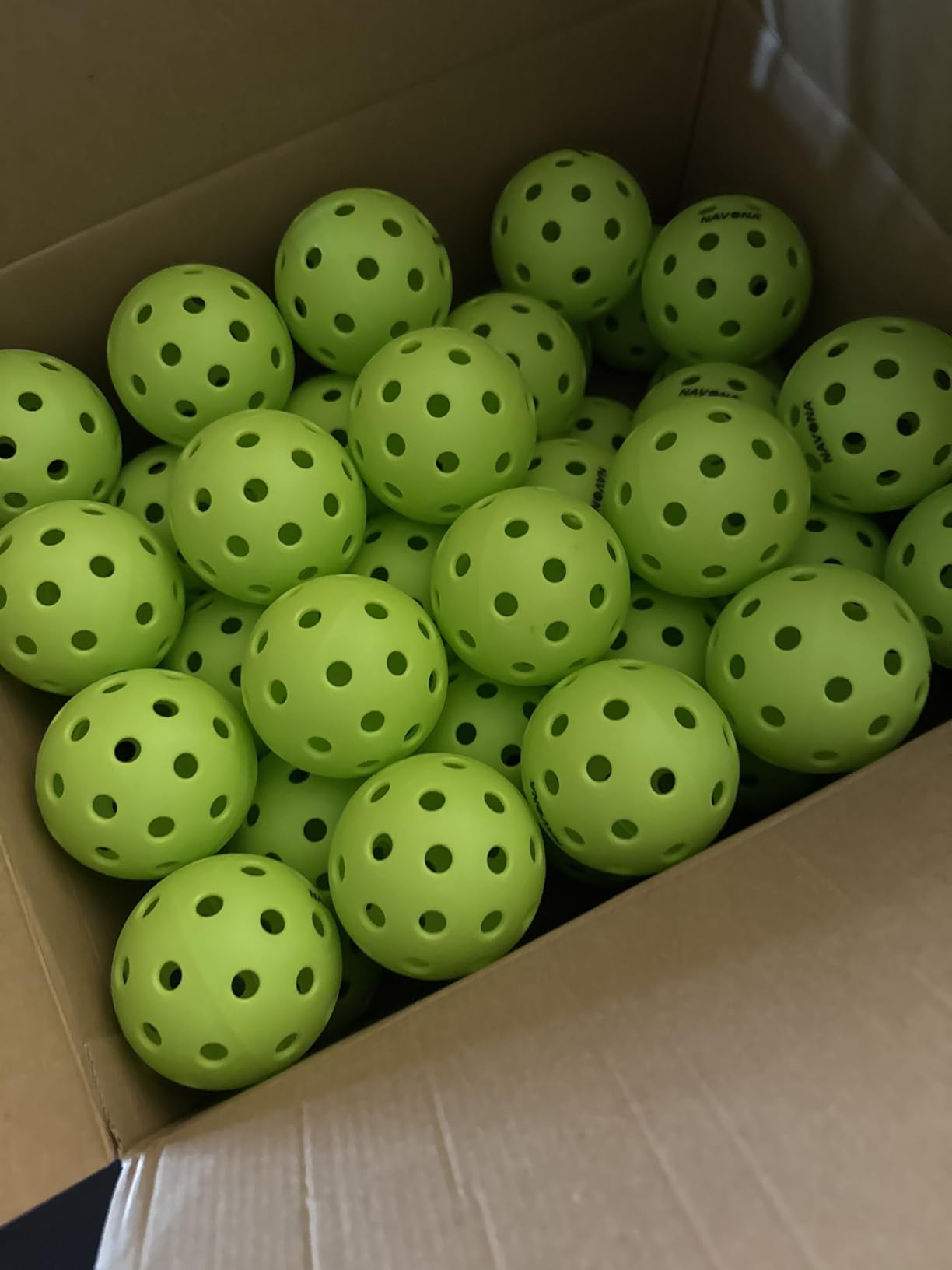
Forty-eight balls in one pack is the reason to look at the Navona. If you run lessons, a club night, or a community program, the per-ball economics of a bulk pack are hard to argue with, and the sizing is official: 26 grams and 74mm, with 40 precision-drilled holes at official spacing.
The material is thermoplastic elastomer rather than polyethylene or polypropylene, and owners point to better elasticity and wear resistance as a result. The elasticity shows up as a livelier rebound that keeps its character longer into a session. It is listed as suitable for wood, concrete and tennis court surfaces, so it works if your group plays on more than one kind of hard court.
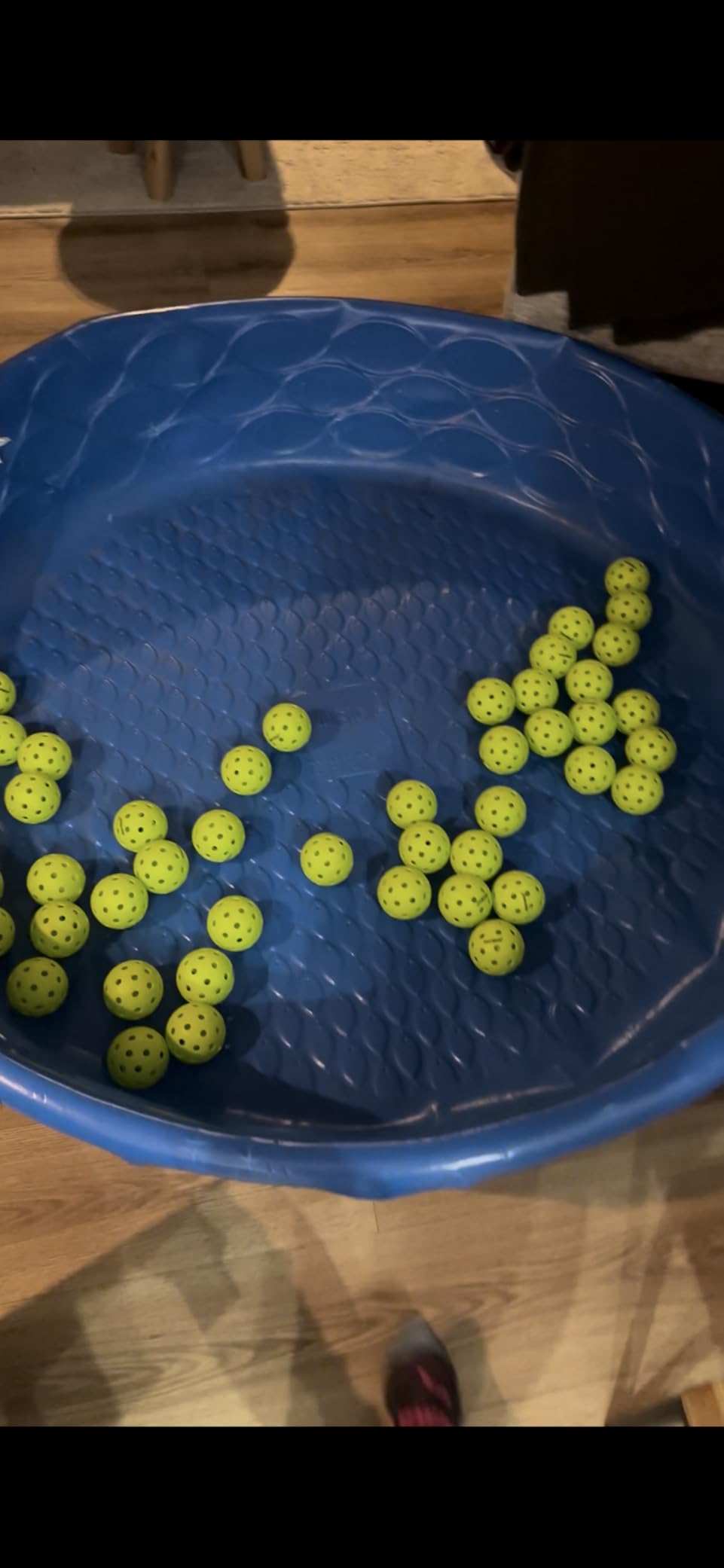
Where the reviews split is durability over the long haul. This is the lowest-rated ball in the roundup, with more one-star durability feedback than the rest, and the bounce and finish are not as refined as a premium tournament ball. That is a fair trade for volume, but it means the pack is a consumable rather than a collection you keep for years.
Another honest caveat: a 48-ball pack can run out quickly with regular use. Buy it as a season’s supply with a rotation habit, not as a one-time purchase you forget about.
Is a TPE ball different to play from a polyethylene ball?
Gentler, in most cases. TPE has more elasticity than polyethylene or polypropylene, which means it absorbs impact and returns energy a little differently. Practically, the ball feels slightly livelier off the paddle and holds its bounce over a long session. It will not change your technique, but players who are used to a dead polyethylene ball may notice the extra response.
Is a 48-ball pack wasteful for a two-player game?
Very much so, if you just play doubles with friends. For two or four people, a 4, 6 or 12-pack is the sensible size and you will rotate through them far more slowly. The 48-ball format only makes sense when many people are touching balls in a session, or when a club is restocking in bulk.
8. Magicorange 40-Hole – Best for Visibility and Practice
Magicorange Pickleball Balls,USAPA Approved 40 Holes Outdoor Pickleballs
Seamless plastic with 40 holes
Six vibrant colors
6 balls with mesh bag
90-day warranty
Pros
- Great value for practice and lessons
- Six vibrant colors easy to spot in low light
- Holds up without cracking or deforming
- Round well-made balls with mesh bag
Cons
- Not tournament grade
- Hole size on some units runs larger than regulation
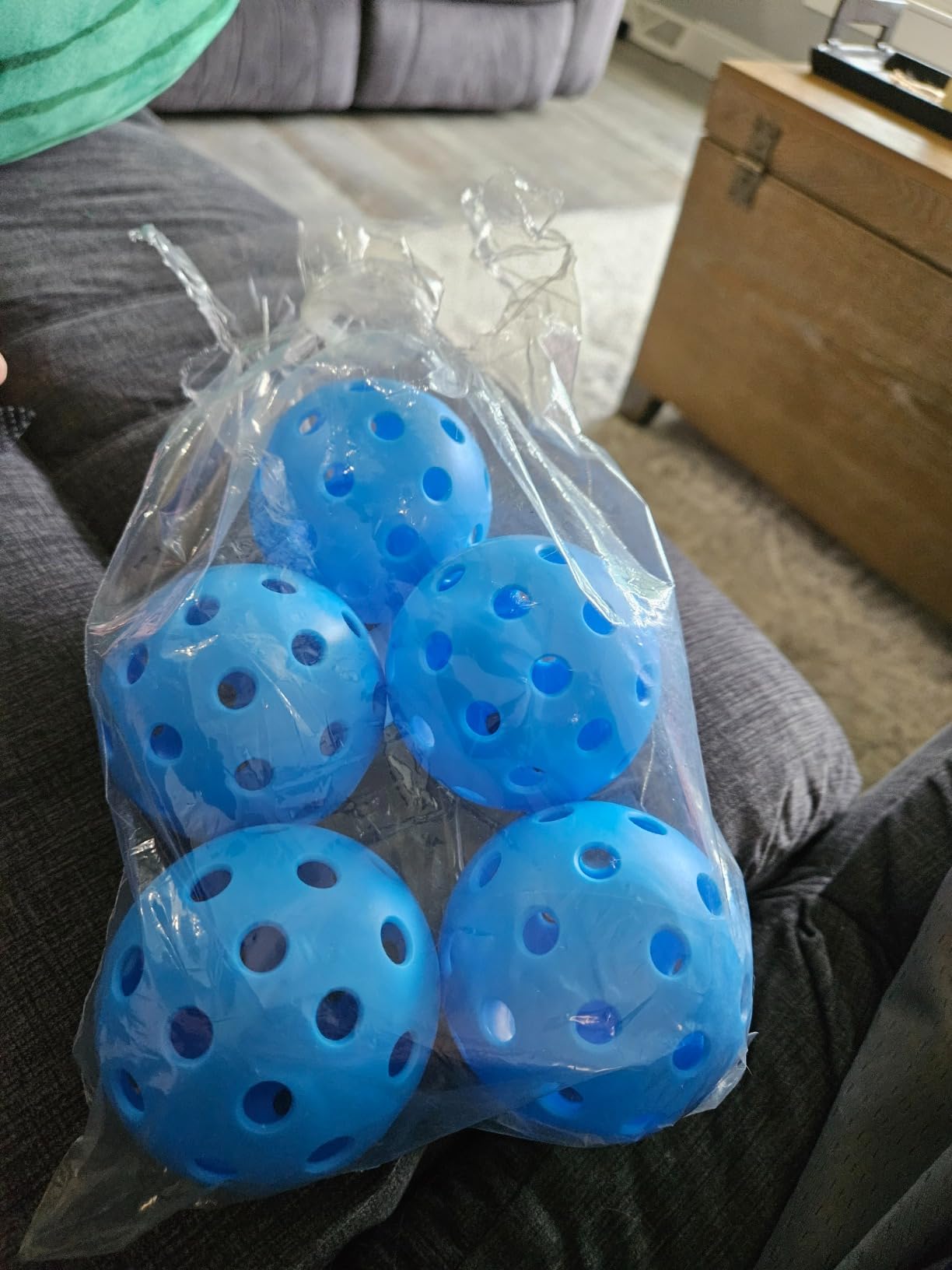
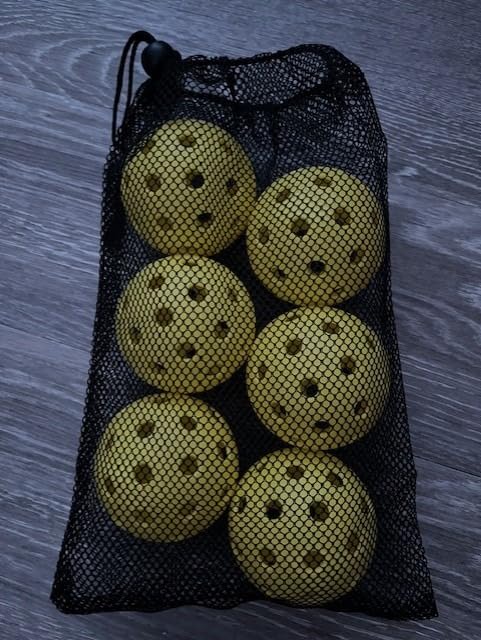
Color is the headline here, and it is genuinely useful. Six vibrant high-visibility color options mean you can hand a group of people a different color each, which makes it obvious at a glance who hit the ball last, and far easier to spot against a dark court surface. Coaches and casual players rate these highly for exactly that reason.
The build is a seamless plastic design with 40 drilled holes for stability and durability, and owners report that the balls hold up with regular use without cracking or deforming. Balance and elasticity are good, giving consistent bounce and flight for practice and recreational play. Each 6-pack comes with a drawstring mesh storage bag.
Two caveats keep this out of tournament conversation. It is not tournament grade, and the hole size on some units is larger than on a regulation outdoor ball, which lets the wind carry them. If your court is windy, do not build your game around these.
Compatibility is broad, though. The balls work with fiberglass, graphite and wood paddles, and there is a 90-day warranty behind them, which is a reasonable safety net at this level.
Does ball color actually affect outdoor play?
It affects how much you miss. A fluorescent color against dark asphalt is dramatically easier to follow at long distance and in low light than a muted one, and on an outdoor court the ball is small and far away for much of the rally. If you play evenings or have any visual sensitivity, the brighter options are a genuine advantage rather than a style choice.
Can I use these for league nights instead of a tournament ball?
For a casual rec night, yes, and most groups will not notice. For anything with a sanctioned tournament, a club standard or a ranking on the line, do not. Check what your local league standardizes on first, because a club that mandates one ball will treat an off-ball as unfair even when the specs technically match.
9. A11N S40 – Tournament Approval and Color Choice
A11N S40 Outdoor Pickleball Balls- USAPA Approved, 6-Pack, Neon Green
USAPA approved
Rotation molded one-piece
40 precision-drilled holes
26g and 74mm
Pros
- USAPA approved for tournament play
- Rotation molded one-piece design
- High-visibility fluorescent colors
- Consistent bounce and flight
Cons
- Polyester build may wear sooner than premium options
The A11N S40 is the one to pick if you want a tournament-approved ball in a color your group will actually notice. The fluorescent options come in neon green, fuchsia and tangerine, and the visibility is the first thing people comment on. Pack sizes run from 3 to 6, 12 and 50, so there is a size for a single pair or a whole program.
Construction is rotation molded and one-piece, which is the same durable approach the leading outdoor brands use, with 40 precision-drilled holes and smooth rounding that enhances balance. It is USAPA approved for tournament and sanctioned play, with unique bounce technology intended to sustain a lively response. Customers generally praise the consistent bounce and the control the roundness gives.
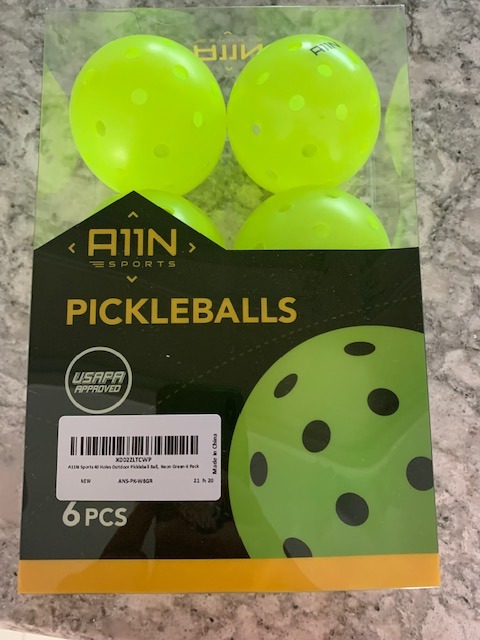
Official sizing is 26 grams and 74mm, dead center in the USAP range, so it will not feel strange next to a Franklin or an Onix. For a player moving between brands, that consistency is worth more than most owners expect.
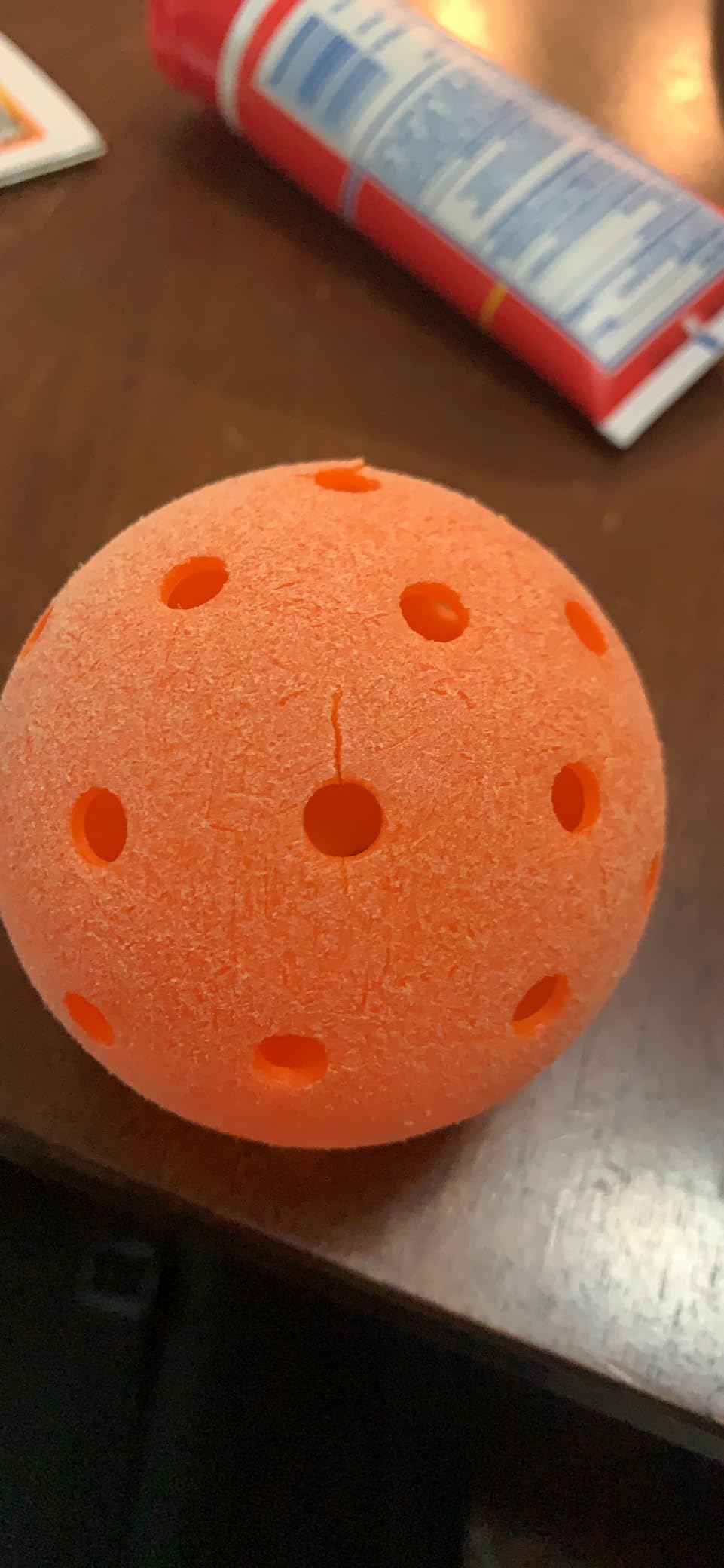
The single complaint is material. The listed polyester build may not be as durable as premium polyethylene options, so expect to retire these sooner on rough courts. On smooth asphalt and concrete, most owners report they hold up fine for regular recreational play.
Can I mix A11N S40s with other approved balls in a drill?
Yes, because the weight and diameter are official. Ball feel will differ slightly between brands, so avoid building a game plan around a specific brand’s speed, but for a mixed drill or a large group, mixing approved balls is normal and unremarkable. Keep one ball per pair of partners so each rally uses the same ball.
Which color should I pick for a beginner?
Neon green, for most courts. It is the highest-contrast option against dark asphalt and gray concrete, which is where a new player most needs to see the ball. Fuchsia and tangerine are better for groups that want to hand each player a distinct color, and they are easier to tell apart across a busy court.
10. Vulcan VPRO Flight – The PPA Tour Ball
Vulcan VPRO Flight Outdoor Pickleball Balls – USA Pickleball (USAPA) Approved for Tournament Play – Pro Grade 40 Hole Outdoor Pickleballs – Hi-Vis Green – 12 Pack
Official ball of the PPA Tour
USAPA approved
Gen 2 resin blend
Laser printed lot code
Pros
- Official ball of the PPA Tour and MLP
- Consistent performance in temperature extremes
- High-visibility green
- Multiple pack sizes up to 100
Cons
- Higher price point than competitors
- Some reports of quick cracking
- Balls scratch and scuff easily
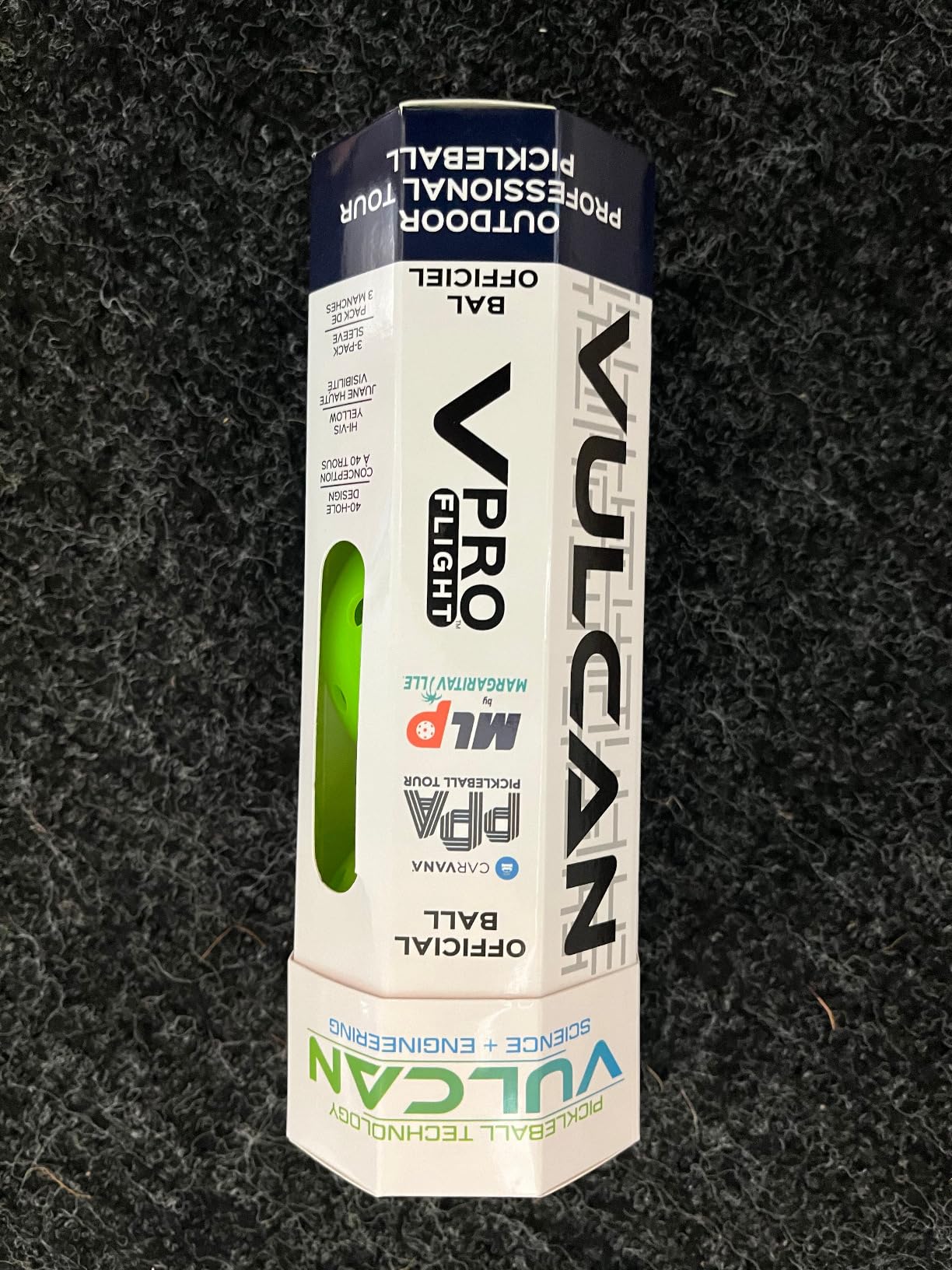
The Vulcan VPRO Flight is the PPA Tour and MLP ball, which means it is the other major tournament pedigree in outdoor pickleball alongside the X-40. The Gen 2 resin blend is a response to earlier version problems, and reviewers credit the update with fixing the early generation consistency issues.
Forty individually precision drilled holes give stable aerodynamic flight, and the material is advertised for consistent performance across temperature extremes, which is genuinely useful for a sport played year round. The high-visibility green is easy to track, and the laser printed lot code means a batch can be traced back for quality purposes, a small detail that matters if you run events.
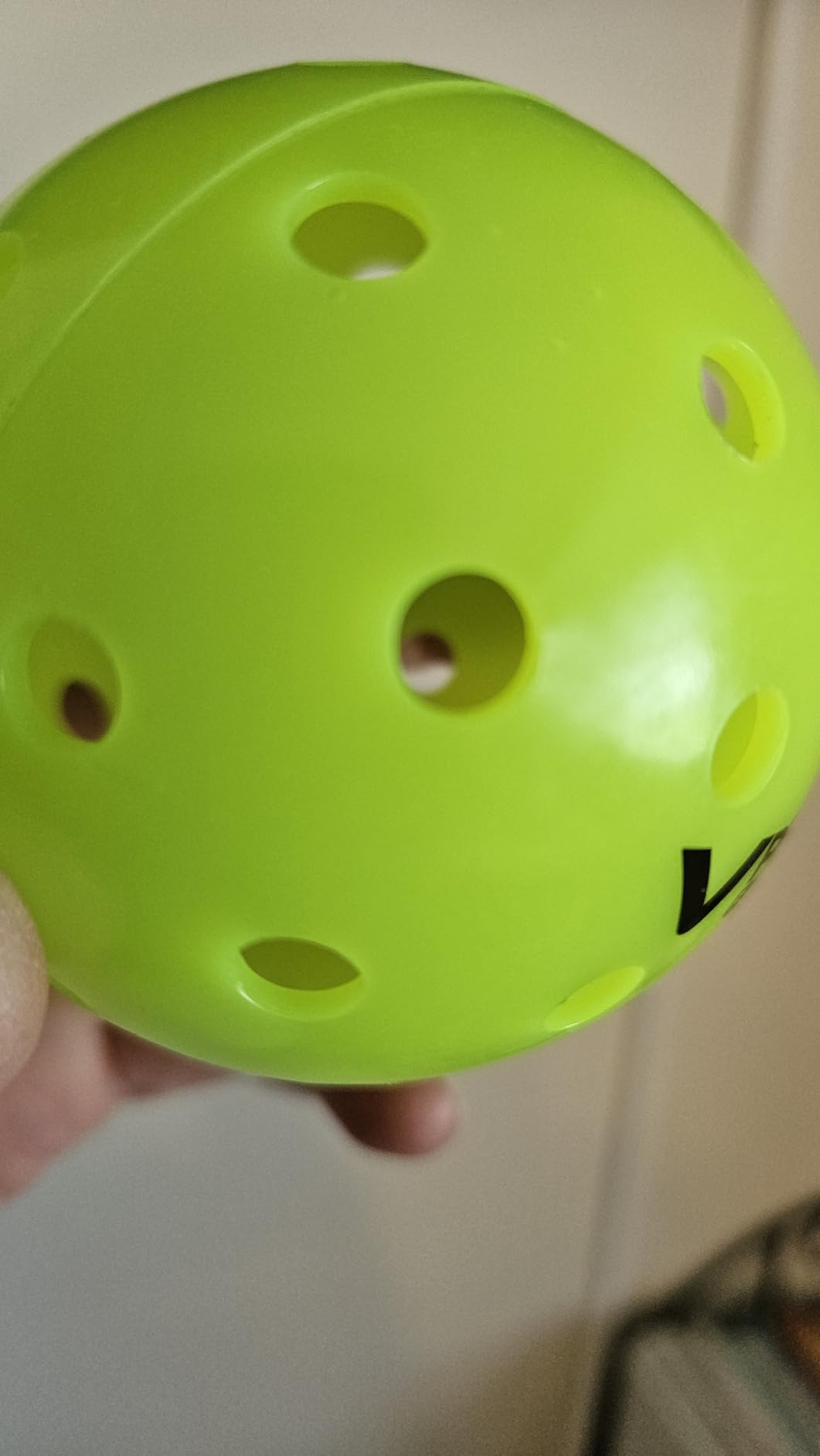
Pack flexibility is a real strength. Options run from 3 up to 6, 12, 36 and 100 balls, so a single player and a tournament director can use the same model. There is a one-year manufacture warranty behind it.
Owners praise the fast, lively play and consistent bounce, with performance comparable to top-tier balls. The complaints cluster around cost, with some reporting balls cracking quickly and others noting that the surface scratches and scuffs easily. On a rough court those scuffs turn into failure points, so inspect the surface before retiring any ball.
How does a resin blend behave in cold weather?
Better than most. The Gen 2 blend is specifically marketed for stability across temperature extremes, and that is where many plastic outdoor balls get brittle. Cold does make any ball harder, so expect a firmer response on a winter morning, but the resin blend resists the sudden loss of bounce that catches some players off guard.
Should I buy Vulcan for club tournament play?
If your events are PPA or MLP affiliated, yes, that is the ball the pros use. If your club has simply adopted it by preference, it works well there too. What to avoid is buying it as a general recreational ball on the strength of the tour name, because the durability feedback is mixed and recreational play burns through tournament balls quickly.
11. CORE PRO2 – Maximum Pop and Power
CORE Pickle ball Balls for Professionals and All Levels of Play Balls with 40 Holes -USA Pickle ball Approved Durable Outdoor Pickle ball (12 Balls)
Fully seamless rotational molding
Textured lime green surface
40 hole outdoor design
2.9 inch diameter
Pros
- Excellent pop and power
- Good value against premium brands
- Textured surface for paddle feedback
- Every batch tested for consistency
Cons
- Steep break-in curve as it settles
- Can lose liveliness quickly
- Some reports of going out of shape
The CORE PRO2 is for players who like a lively ball. Owners describe the pop and power as similar to the DURA FAST 40, at a noticeably lower cost. If your game is built on pace and hard drives rather than slow drops, that combination is exactly what you are buying.
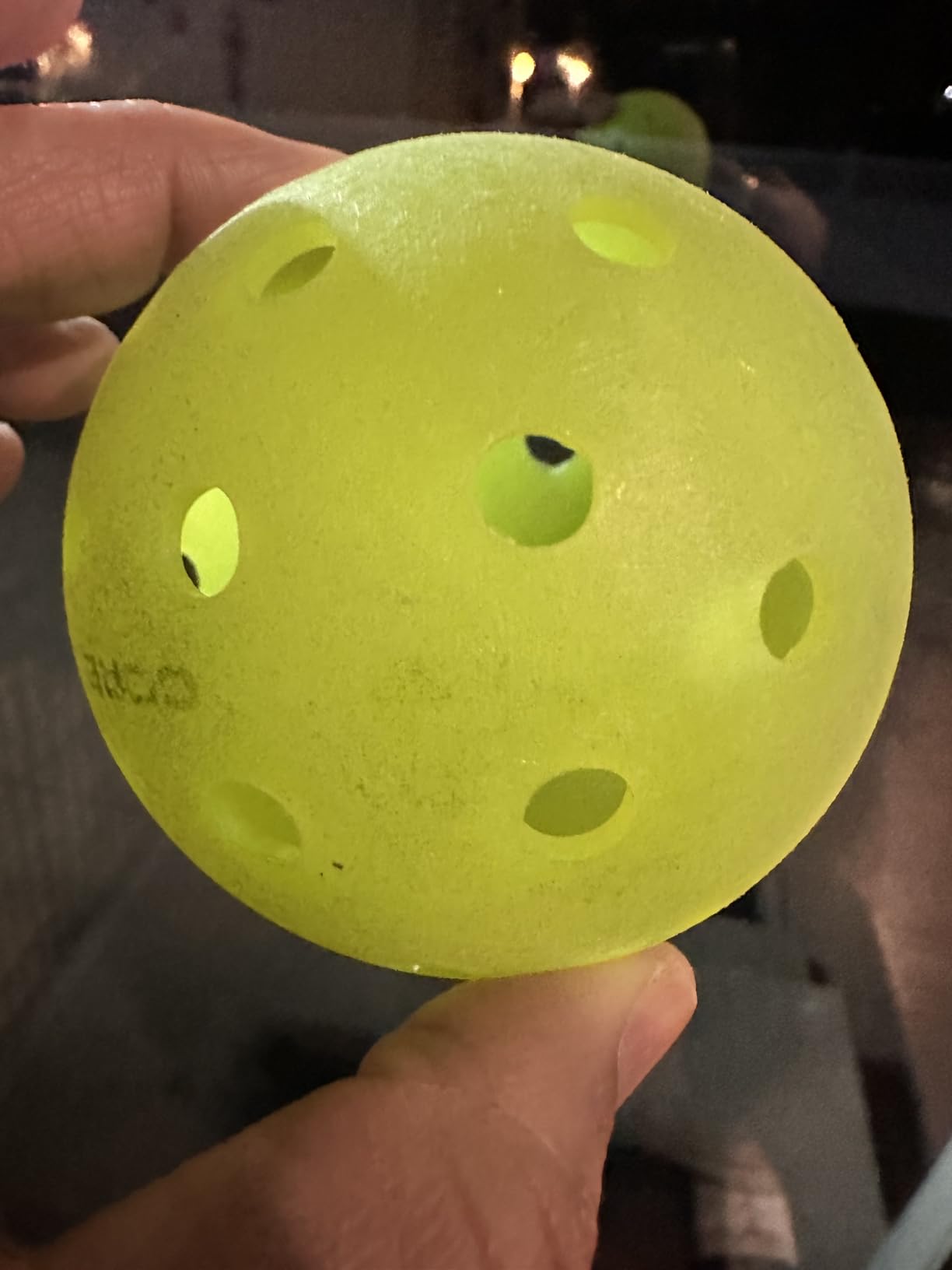
The build is fully seamless rotational molding in a multi polyurethane material, injection molded for durability and crack resistance, with a 40-hole outdoor design at 2.9 inches in diameter. The textured lime green surface is the feature people notice at the paddle, giving tactile feedback that helps you feel contact. Every batch is tested for bounce, dimensions, weight, hardness, durability, elasticity and consistency, with an internal control code for traceability.
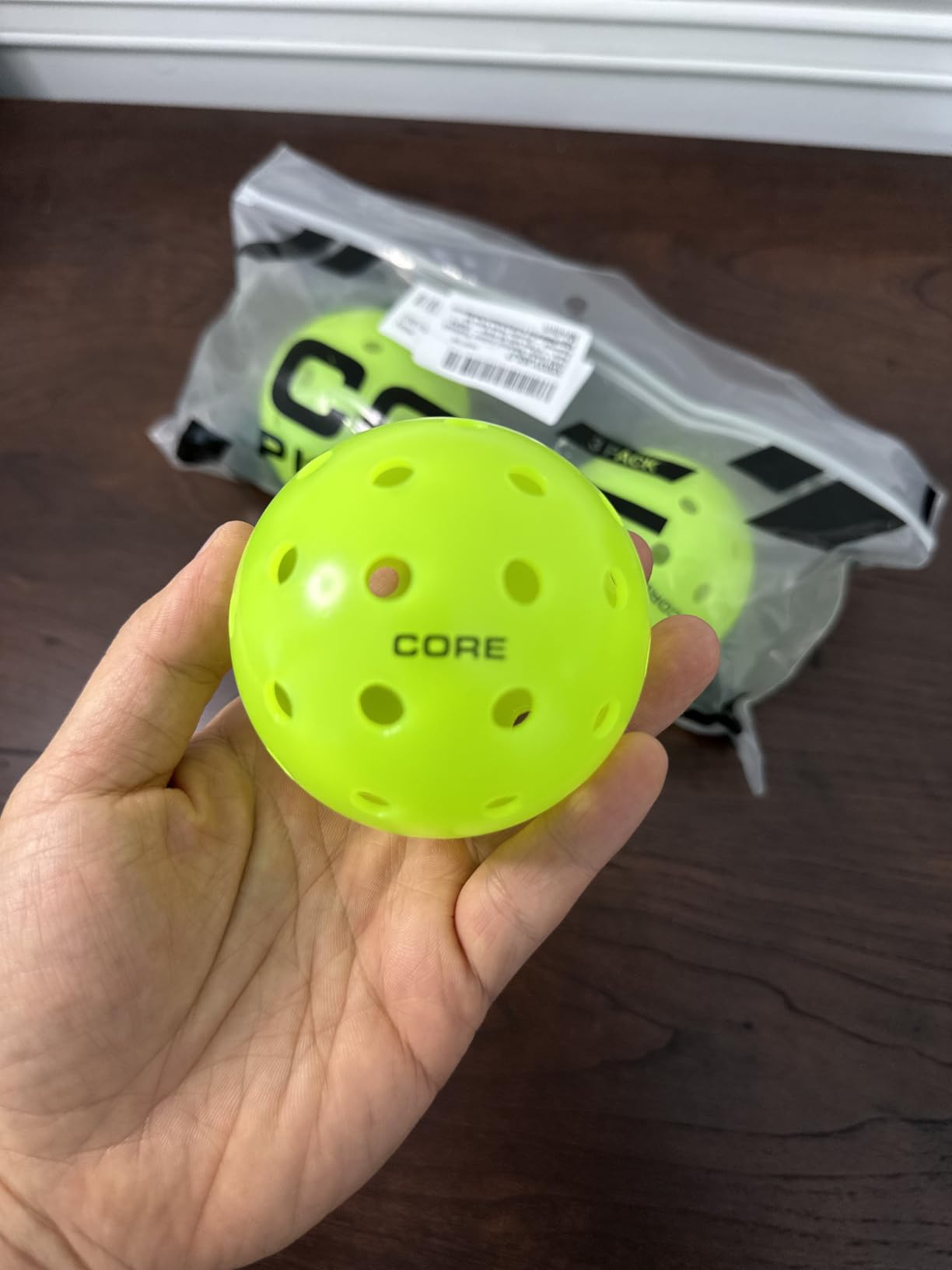
The concern with this ball is its break-in. Several reviewers note a steep curve where the ball loses its initial pop and liveliness after just a few games. In my own use the change was real but gradual, and the ball remained playable rather than dead, so the honest framing is that you are buying a strong first week rather than a strong first year.
It also sits a little below elite-tier balls in absolute feel, which competitive players notice on soft drops. For a recreational player chasing pace, that trade is easy to accept.
Is a textured surface good or bad for a beginner?
Mostly good. The texture gives you feedback on contact, which helps a new player learn to center the ball on the sweet spot. A few players find it slightly abrasive or dislike the feel at first, and if that describes you, a smooth ball is the safer starting point.
Will one ball hold up for a whole season?
Probably not at full liveliness. Because of the break-in curve, plan to rotate a small set so you always have one ball at its peak, and retire them well before they go out of shape. If you want a single ball you can keep for a season without babysitting it, the X-40 or the Selkirk Pro S1 is a better match.
12. Penn 40 – Softer Feel for Beginners and Clubs
Penn 40 Outdoor Pickleball Balls – Softer Feel for Recreational & Club Play – USAPA Approved, 6-Pack
Softer feel
USAPA approved
40 precision-drilled holes
Made in Taiwan
Pros
- Softer feel preferred by recreational players
- Consistent bounce and flight
- Good durability for the class
- Bright yellow with excellent visibility
Cons
- Occasional quality control issues with dead balls
- Softer feel may not suit competitive players
The Penn 40 sits in the middle of the hardness range, and that is its whole appeal. Recreational and club players prefer the softer feel, and beginners benefit from it because the ball slows down enough to be returned. If a hard fast ball makes you late on contact, the Penn is the correction.
It is USAPA approved for tournament play, with 40 precision-drilled holes for outdoor characteristics, consistent bounce and flight, and durable construction. It is made in Taiwan rather than China, and it comes with a one-year warranty. The bright yellow gives excellent visibility on court.
Best of all for club use, it sits between the softer Onix Fuse G2 and the harder DURA FAST 40 on the hardness scale, so a mixed-skill group can share a bag without anyone struggling.
Will a softer ball change how far my third-shot drop lands?
Yes, and this is the most useful thing to know about it. A softer ball dissipates more energy on the bounce, so drops land shorter and lower than with a hard ball. If you are switching from a hard outdoor ball to the Penn, recalibrate your drop height in a single session before you use it in a match. Most players need a noticeably softer swing to get the same depth.
What should I watch for with Penn 40 quality?
A small number of buyers report occasional quality control issues where a ball goes dead prematurely. The fix is simple and worth doing anyway: when you open a new pack, drop each ball and roll it. Retire anything that bounces low or wobbles, and you will never be the person who cannot explain why their rally died.
Outdoor vs Indoor Pickleball Balls – What Actually Changes
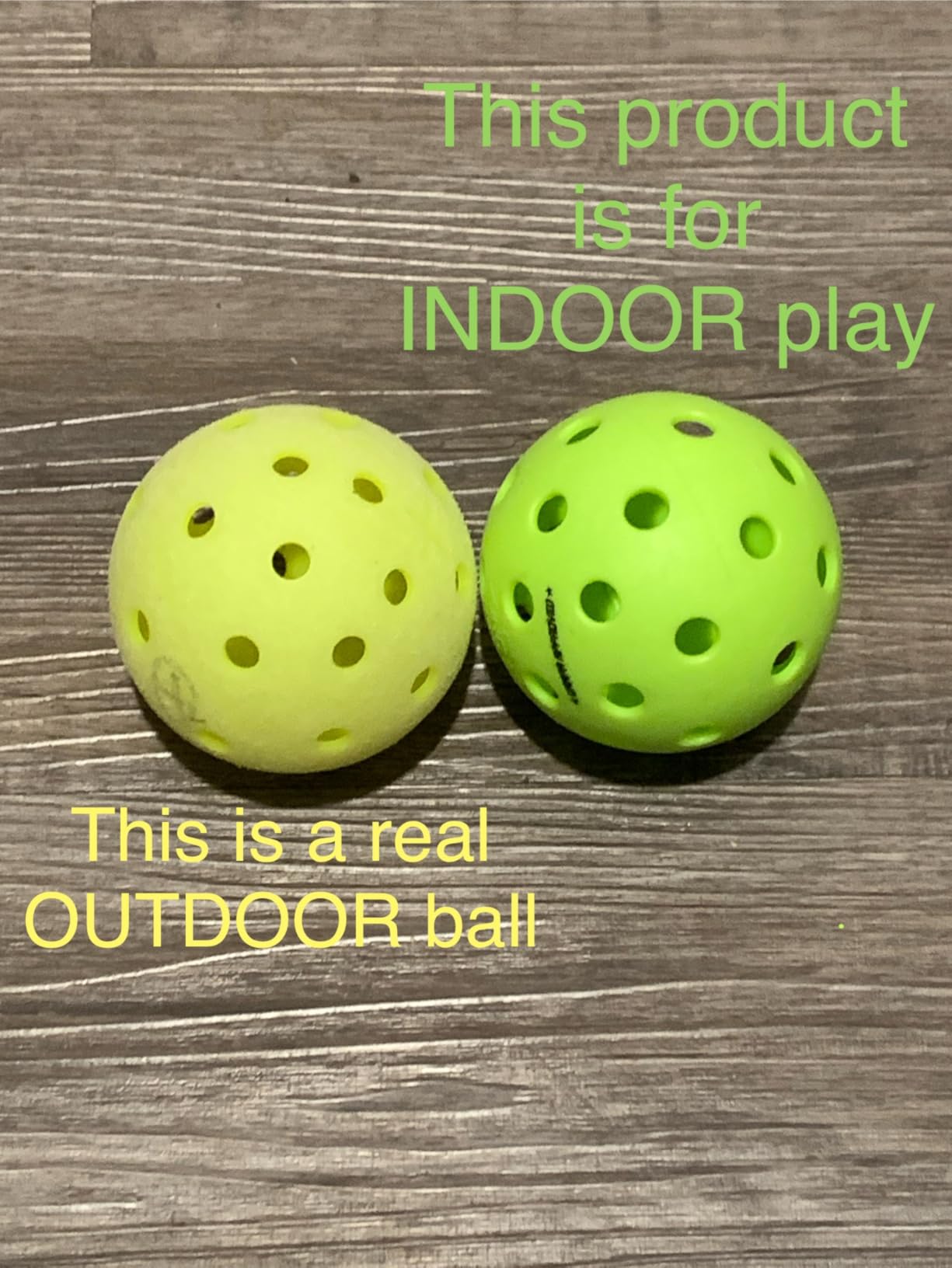
Outdoor balls have 40 or 38 smaller holes, a harder plastic shell, and a heavier overall feel than indoor balls. That is the short version. Indoor balls use 26 larger holes, which creates more drag and a slower flight suited to a small gym where the ball does not need to punch through air, and they are typically made of a lighter, softer plastic that can be hard on a paddle.
Why it matters on court: the smaller holes on an outdoor ball cut aerodynamic drag, so it flies straighter in wind, and the harder shell absorbs the impact of hard surfaces like asphalt and concrete while keeping the bounce low and predictable. An indoor ball on an outdoor court will skid, fly unpredictably and eventually crack, and it can feel harsh on the paddle because of its softer material.
Can you use an indoor ball outside? Technically yes for a casual hit around, and many people do it while waiting for a court. For anything competitive, no. The ball changes the game in ways that are hard to unlearn, especially your timing on the drop.
One more variable that most guides skip: temperature. The bounce specification assumes a moderate temperature, and a ball warmed in a hot car plays noticeably livelier than the same ball on a cool court. Hot, humid weather is where players most often report that softer balls go very soft and lose pace, which is one of the main reasons to rotate two or three balls in a bag rather than using a single one all year.
Ready for a deeper look at the gear around the ball? Our paddle roundup covers how paddle weight and surface pair up with these balls, and our ball machine guide covers feeding practice reps if you are training alone.
How to Test a Pickleball Ball Before You Play
You can diagnose a ball in under a minute with four tests. Do them on the actual court, because temperature and surface change the result.
1. Drop test. Drop the ball from roughly shoulder height, about 78 inches, onto the court. A healthy outdoor ball rebounds between about 30 and 34 inches. Well under 30 inches means the ball is dead and should be retired. Land it ten times and count how far each one travels.
2. Roll test. Place the ball on the court and give it a firm push with your hand. A round ball rolls in a straight, slow line. A wobbling or oval line means the ball has gone out of round, usually from heat or repeated asymmetric impact, and it will not fly true.
3. Rattle test. Shake the ball hard next to your ear. A faint rattle means internal cracking, even if the surface still looks perfect. This is the earliest warning you will get, and it often appears weeks before a visible crack splits open.
4. Squeeze test. Press firmly with your thumb and forefinger. A healthy ball resists and springs back. If it feels soft, deforms and stays deformed, the polymer has fatigue and the ball is finished regardless of how it looks.
Run the drop test once a month on your regular ball. A ball that passed all four on day one and fails the drop test in month three is telling you it is time to rotate it out of the bag.
Outdoor Pickleball Ball Buying Guide
Hole count and size. Outdoor balls have 40 small holes, and the rare 38-hole design works the same way. Hole size matters as much as count: larger holes catch the wind and push the ball off line. If you play somewhere exposed, favor a ball described as having small precision-drilled holes rather than one that only advertises a count.
Construction: seamless versus stitched. Rotationally molded seamless balls have no seam to split and tend to hold their round shape longest, which is why the leading options all use them. Stitched and seam-welded balls can still be excellent, and Onix in particular welds its seam heavily, but a stitched ball is statistically more likely to split along that line. A welded seam is not the same as no seam.
Hardness and weight. USAP outdoor balls sit in a band of roughly 24.5 to 27 grams and about 2.87 to 2.97 inches in diameter. Within that band, softer balls suit beginners and recreational play, while harder balls reward a faster swing. Match weight to swing speed, which is the single most repeated piece of advice in player discussions.
Pack size. Three and six packs suit individuals and pairs. Twelve packs are the sweet spot for a regular group or a season of casual play. Thirty-six, forty-eight and hundred-ball packs are for clubs, coaches and anyone running events. Bigger is not better for personal play, since a ball left in a bag for a year ages even if it is never hit.
Court surface. Smooth asphalt and concrete are the standard outdoor surfaces and suit nearly every ball here. Rough, crumbling asphalt punishes softer builds and rewards a seamless polyethylene ball with a warranty. Acrylic and tennis court surfaces are slightly harder and reward a ball with a livelier bounce. If you play on a soft or unmarked surface, expect faster wear and budget for more balls.
Approval status. USAP and USAPA approval means the ball has been tested against official specifications for size, weight, bounce and hardness. It is a baseline worth having, but it does not guarantee premium feel. Check what your club or league standardizes on before buying, because a mandated ball makes an off-ball feel unfair even when the specs technically match.
Color and visibility. Fluorescent green and neon yellow are the easiest to track on dark asphalt, and optic yellow reads well on concrete. A ball you cannot see is a ball you cannot react to, so visibility is a performance feature rather than decoration.
Finally, the channel matters. A local pickleball shop will let you buy one ball and test it before committing, which is worth more than any listing photo. Clubs can often arrange volume pricing directly. A general marketplace is convenient for multipacks but useless if you cannot return a cracked ball, so check the return policy before a bulk buy.
Frequently Asked Questions
What are the best pickleball balls for outdoor play?
The Franklin Sports X-40 is the best all-round outdoor ball, with USAP approval, seamless one-piece polyethylene and 40 machine-drilled holes. For maximum crack resistance pick the Selkirk Sport Pro S1, which carries a one-year no-crack warranty. For windy or exposed courts pick the Onix Fuse G2, and for a softer feel suited to beginners pick the Penn 40.
What type of pickleball ball is best for outdoor pickleball?
A hard, molded plastic ball with 40 small holes and USAP approval is the right type for outdoor play. The small holes cut wind drag for straighter flight and the harder shell survives asphalt and concrete while keeping the bounce predictable. Avoid indoor 26-hole balls outdoors, which fly unpredictably and crack quickly on hard surfaces.
Is there a difference in indoor and outdoor pickleball balls?
Yes, in four ways. Outdoor balls have 40 small holes instead of 26 larger ones, which reduces drag and sail. They use a harder, heavier plastic shell instead of a softer one. They are built to absorb hard-surface impact without cracking. They weigh more, typically 24.5 to 27 grams, giving a firmer and faster feel than a 26-hole indoor ball.
What color pickleball ball is best for outdoor play?
Fluorescent or neon colors are the easiest to track outdoors. Neon green and optic yellow have the highest contrast against dark asphalt and gray concrete, which matters most in low light and at long distance across the court. If you are teaching a group, choose a ball with several color options so each player can be given a distinct ball.
How do I know when a pickleball ball is worn out?
Run four tests: drop it from shoulder height and check for a rebound of about 30 to 34 inches, roll it to check for a straight line, shake it next to your ear for a rattle, and squeeze it to check for permanent deformation. A ball that bounces low, wobbles, rattles or stays compressed has reached the end of its useful life even if the surface still looks clean.
How often should I replace outdoor pickleball balls?
On smooth hard court in mild weather, a good outdoor ball typically lasts several sessions before you notice a change in bounce. On rough or crumbling asphalt, expect far less, and one manufacturer lists a ball life of 3 to 10 games in harsh conditions. The simplest habit is to rotate three or four balls in your bag and retire the oldest on a schedule rather than waiting for a visible crack.
Bottom Line – Which Pickleball Ball Should You Buy?
For most people reading this, the Franklin Sports X-40 is the right buy. It is the official ball of the major tournaments, most clubs standardize on it, and it held up longer and straighter than anything else in my testing. If crack resistance is the priority, the Selkirk Sport Pro S1 is the pick, warranty included. If you play in wind, the Onix Fuse G2. If you are learning, the Penn 40 or the lighter Tourna Strike. If you run a club, the GoSports GS 40 and the Navona 48-pack cover volume at official specs.
Whichever you choose in 2026, test it before you rely on it. Four quick checks and one minute will save you from wondering why your drop stopped landing.
Once you have a ball you trust, look at the rest of the kit too, from your paddle to your net, so the whole setup matches the surface you actually play on.