
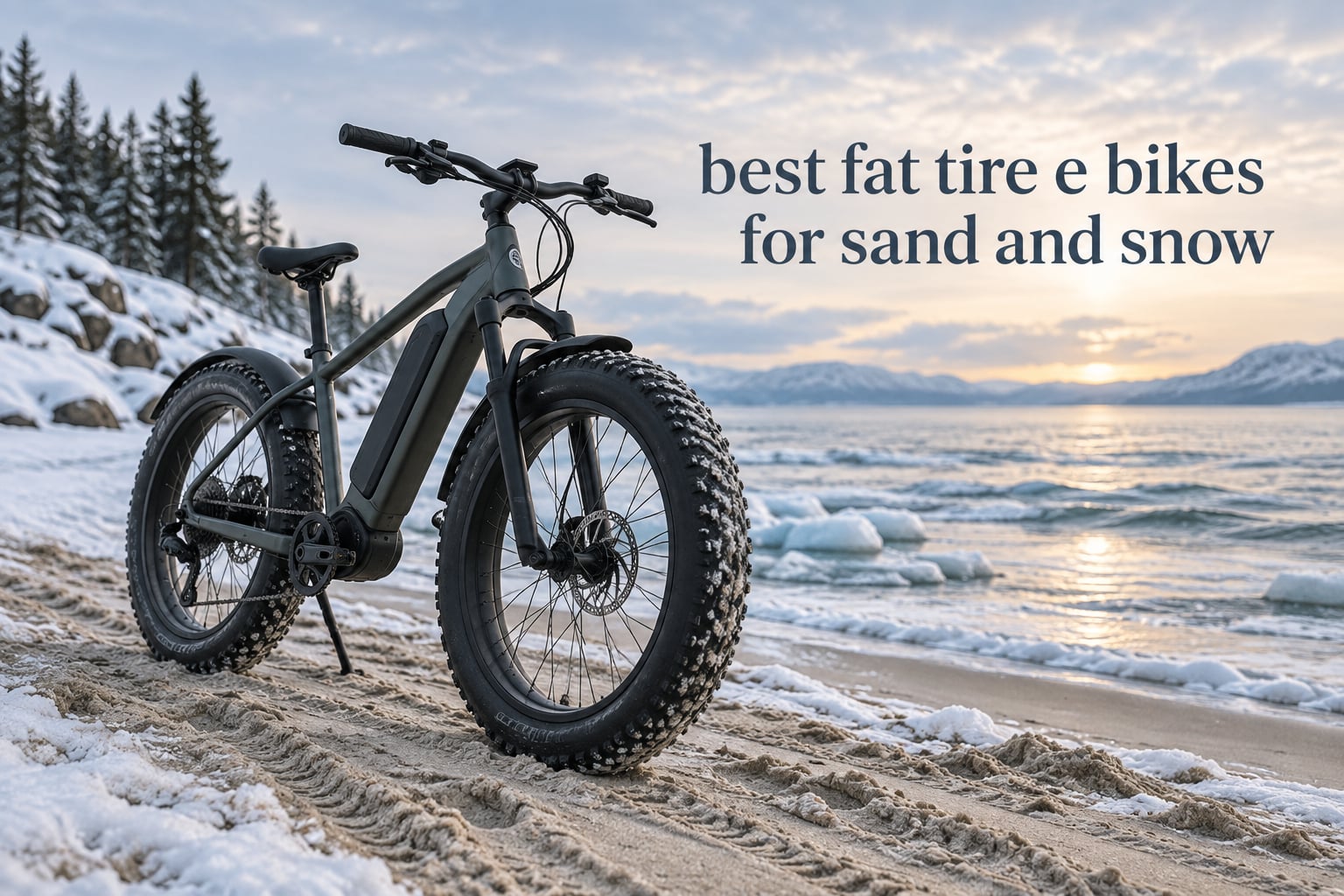
A fat tire e-bike earns its width on soft ground. When sand swallows a normal 2.3-inch tire to the rim, or packed snow turns a plowed street into a physics problem, the 4.0-inch rubber and the extra torque behind it are the difference between riding and walking your bike home. That is the specific use case this roundup covers: one bike that has to work on loose sand and on winter snow, not just on a beach path in July.
That dual mandate matters more than it sounds. Most fat tire e-bike roundups split into commuter lists, hunting lists and value lists, and none of them tell you where the wide rubber stops helping. Owners on Reddit and on the Electric Bike Review forums say the same thing repeatedly: fat tires shine on hard-packed and groomed snow, they are a handful in deep powder, and on clear ice they offer almost nothing over a narrower tire. Sand is the easier half of the brief, but only if you drop the pressure and let the tire work.
We pulled 10 of the most-reviewed fat tire e-bikes on the market and ranked them for the sand-and-snow rider specifically. The picks below weight 26 x 4.0 tires and usable torque more heavily than any single roundup we found, and every one of them names a real drawback. If you want the general-purpose shortlist instead, our broader fat tire electric bike ranking covers commuter and folding categories too.
Top 3 Best Fat Tire E Bikes for Sand and Snow (October 2026)
The three bikes below are the ones we would put in a garage for mixed sand and snow riding. The Funhang leads on the combination of 26-inch flotation, certified electricals and a rear rack; the Vivi ACE01 wins on braking hardware and assist feel; the Loeook is the strongest all-round value with fenders and a rack already fitted.
Funhang 26 x 4.0 Fat Tire Ebike
- 1000W peak motor
- 66.6 N·m torque
- 26 x 4.0 anti-skid fat tires
- Removable 48V 13Ah IPX5 battery
- UL 2271 and UL 2849 certified

Loeook 26 x 4.0 Fat Tire Ebike
- 500W motor
- 1000W peak
- 26 x 4.0 fat tires with sand and snow grip
- Removable 48V 13Ah battery
- Rack
- fenders and turn signals included

Vivi ACE01 26 x 4.0 Fat Tire Ebike
- Torque sensor pedal assist
- Dual hydraulic disc brakes
- 26 x 4.0 tires on aluminum frame
- 48V 15Ah 720 Wh battery
10 Fat Tire E-Bikes at a Glance in 2026
| Product | Specifications | Action |
|---|---|---|
| Funhang 26 x 4.0 Fat Tire Ebike |
|
Check Latest Price |
| Loeook 26 x 4.0 Fat Tire Ebike |
|
Check Latest Price |
| Vivi ACE01 26 x 4.0 Fat Tire Ebike |
|
Check Latest Price |
 Jasion Thunder 26 x 4.0 Fat Tire Ebike Jasion Thunder 26 x 4.0 Fat Tire Ebike |
|
Check Latest Price |
 Jasion RetroVolt 20 x 4.0 Fat Tire Ebike Jasion RetroVolt 20 x 4.0 Fat Tire Ebike |
|
Check Latest Price |
 INVANTI EB16 20 x 4.0 Full Suspension Ebike INVANTI EB16 20 x 4.0 Full Suspension Ebike |
|
Check Latest Price |
 ESKUTE M300F 20 x 4.0 Full Suspension Ebike ESKUTE M300F 20 x 4.0 Full Suspension Ebike |
|
Check Latest Price |
 TST R9 20 x 4.0 Fat Tire Ebike TST R9 20 x 4.0 Fat Tire Ebike |
|
Check Latest Price |
 Wooken 20 x 4.0 Folding Fat Tire Ebike Wooken 20 x 4.0 Folding Fat Tire Ebike |
|
Check Latest Price |
 URLIFE T5 Folding 20 x 4.0 Fat Tire Ebike URLIFE T5 Folding 20 x 4.0 Fat Tire Ebike |
|
Check Latest Price |
1. Funhang 26 x 4.0 Fat Tire Ebike – Best Overall for Sand and Snow
Funhang Electric Bike for Adults, 1000W Peak Ebike, 20MPH 60Miles Electric Mountain Bike, 26″ Fat Tire Electric Bicycle with 48V 13AH Battery, Front Suspension,7 Speed, Rear Rack, UL 2849 Certified
1000W peak, 66.6 N·m torque
26 x 4.0 fat tires
48V 13Ah, 30-35 miles
330 lb capacity
Pros
- 500W rated motor with 66.6 N·m torque handles mixed terrain
- 26 x 4.0 tires stay stable on grass
- sand
- snow and gravel
- Removable 48V 13Ah battery charges on or off the bike
- Rear rack rated to 60 lbs plus headlight
- taillight and turn signals
- UL 2271 and UL 2849 certified with a 365-day warranty
Cons
- Low gear is not low enough for a real workout at assist level 1
- At roughly 70 lbs the bike is heavy to move without power
- Stock saddle is uncomfortable for long rides
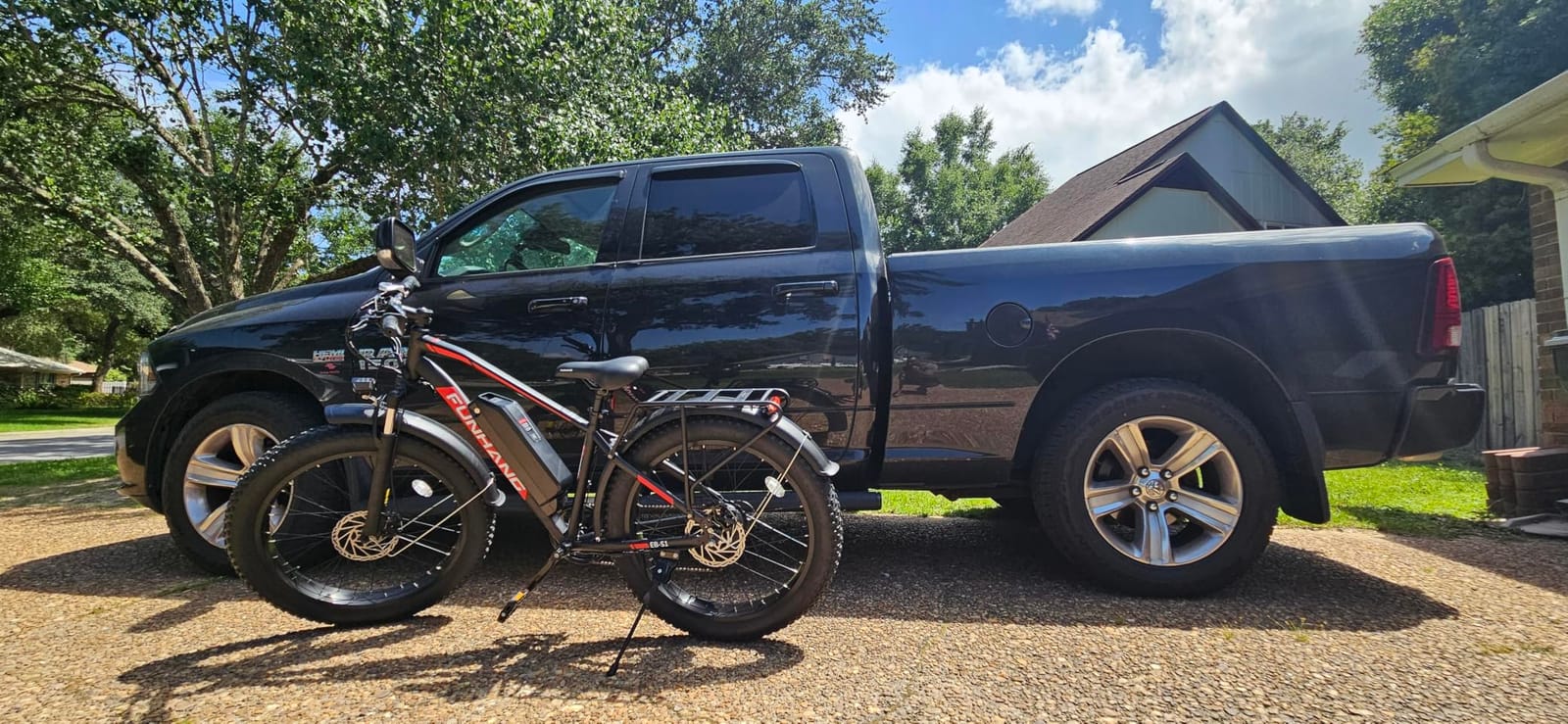
It looks like a fairly ordinary electric bike until the ground gets soft. The 26 x 4.0 tire floats, and 66.6 N·m of torque keeps the front wheel from washing out on a sand transition into loose ground. Owner reviews describe smooth, easy pedaling for a wheel this size, which is unusual.
The certified battery is the quiet advantage. It carries both UL 2271 and UL 2849 recognition, and that is the first thing to check on a budget e-bike. In a bike that may live in a cold garage or a damp shed through winter, the electrical safety story matters more than another 10 miles of claimed range.
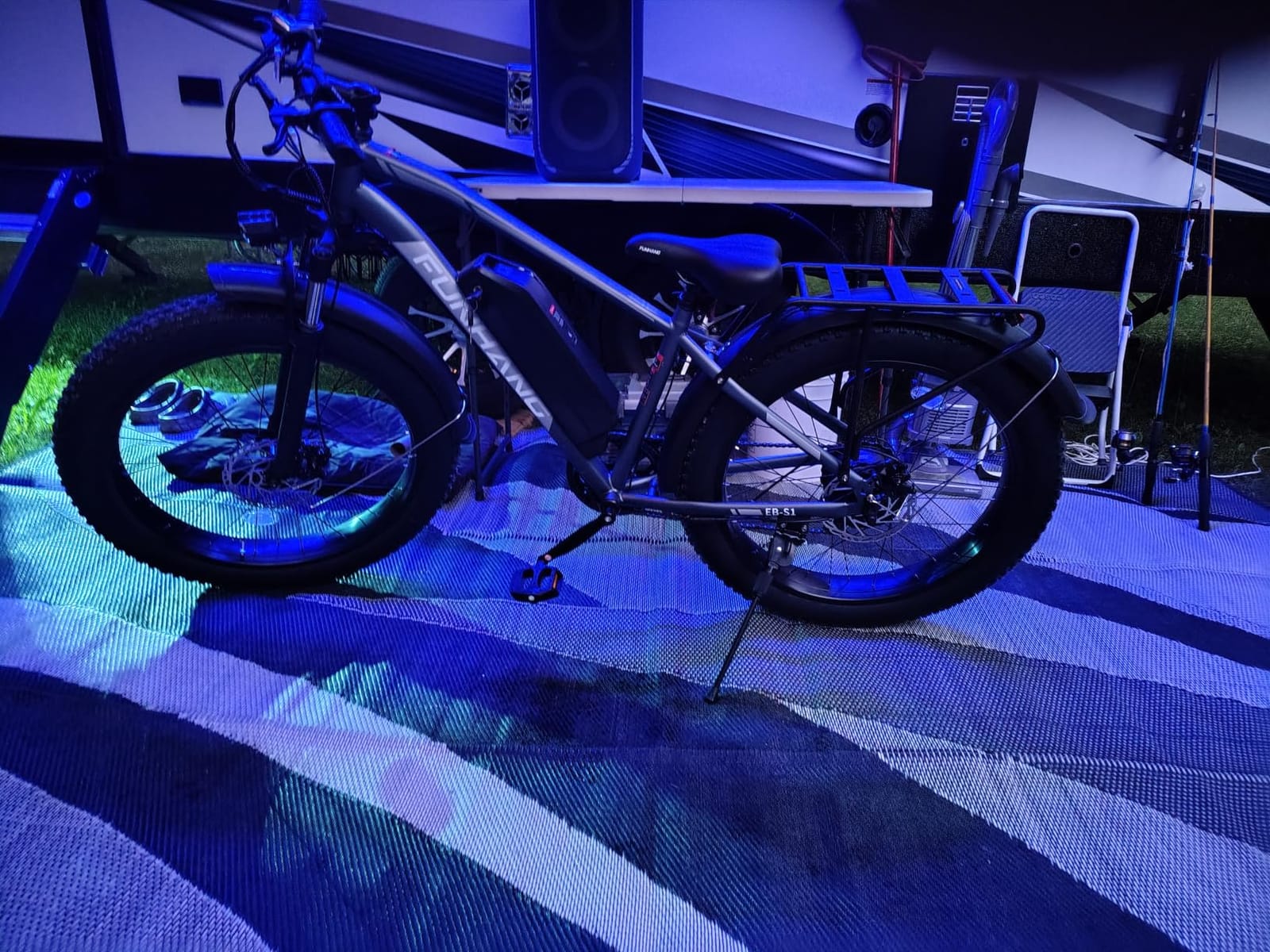
Riders commonly report real-world top speeds in the low-to-mid 20s, above the 20 mph specification. The rear rack is rated to 60 lbs and the turn signals are a genuine bonus for winter commuting, where visibility is at its worst. The removable 48V 13Ah pack takes about 6.5 hours to charge and can be taken indoors.
The honest drawback is the gearing. The low gear is not low enough to give you a genuine workout at assist level 1, so this is a bike you ride for transport rather than for fitness. The stock saddle also draws consistent complaints, and most owners end up replacing it.
How it holds up in cold and slush
At roughly 70 lbs this is a heavy bike, and in deep slush that weight is felt more than it is on dry pavement. The 180mm dual discs give predictable braking on packed snow, and the IPX5 pack shrugs off the spray you get riding a plowed road. Expect the 30-35 mile electric figure to fall once the temperature drops and the tires are at low pressure for grip.
A portable inflator on the trail is worth carrying. The 4.0-inch casing at low pressure has a large volume of air, which is exactly the combination that produces pinch flats if something sharp is embedded.
Who should skip it
If you want a real workout on the pedals, look elsewhere. The gear range is short and the assist takes over quickly, so the Funhang is a comfortable, capable hauler rather than a training bike. It is also the wrong choice if you have to carry it up stairs or load it into a vehicle regularly, since the frame is heavy even without the 48V 13Ah pack fitted.
2. Loeook 26 x 4.0 Fat Tire Ebike – Best Value Fat Tire E-Bike
Loeook Electric Bike for Adults, 1000W Peak Ebike, 60Miles Electric Mountain Bike, 26″ x 4” Fat Tire Electric Bicycle with 48V 13AH Battery, Rear Rack, Fenders, Front Suspension, UL 2849 Certified
500W with 1000W peak
26 x 4.0 fat tires
48V 13Ah IPX5
Rack and fenders included
Pros
- 26 x 4.0 tires hold up in sugar sand
- mud
- gravel and snow
- Rear rack and full fenders make it practical for gear hauling
- About 40 minutes to finish an 85 percent pre-assembled bike
- Quiet motor that does not startle people on the trail
- Frame survives crashes with barely a scratch
Cons
- Real-world throttle range is well under the claimed figures
- Disc brakes need more stopping distance than reviews imply
- Stock seat and pedals are cheap and the seat rails can bend
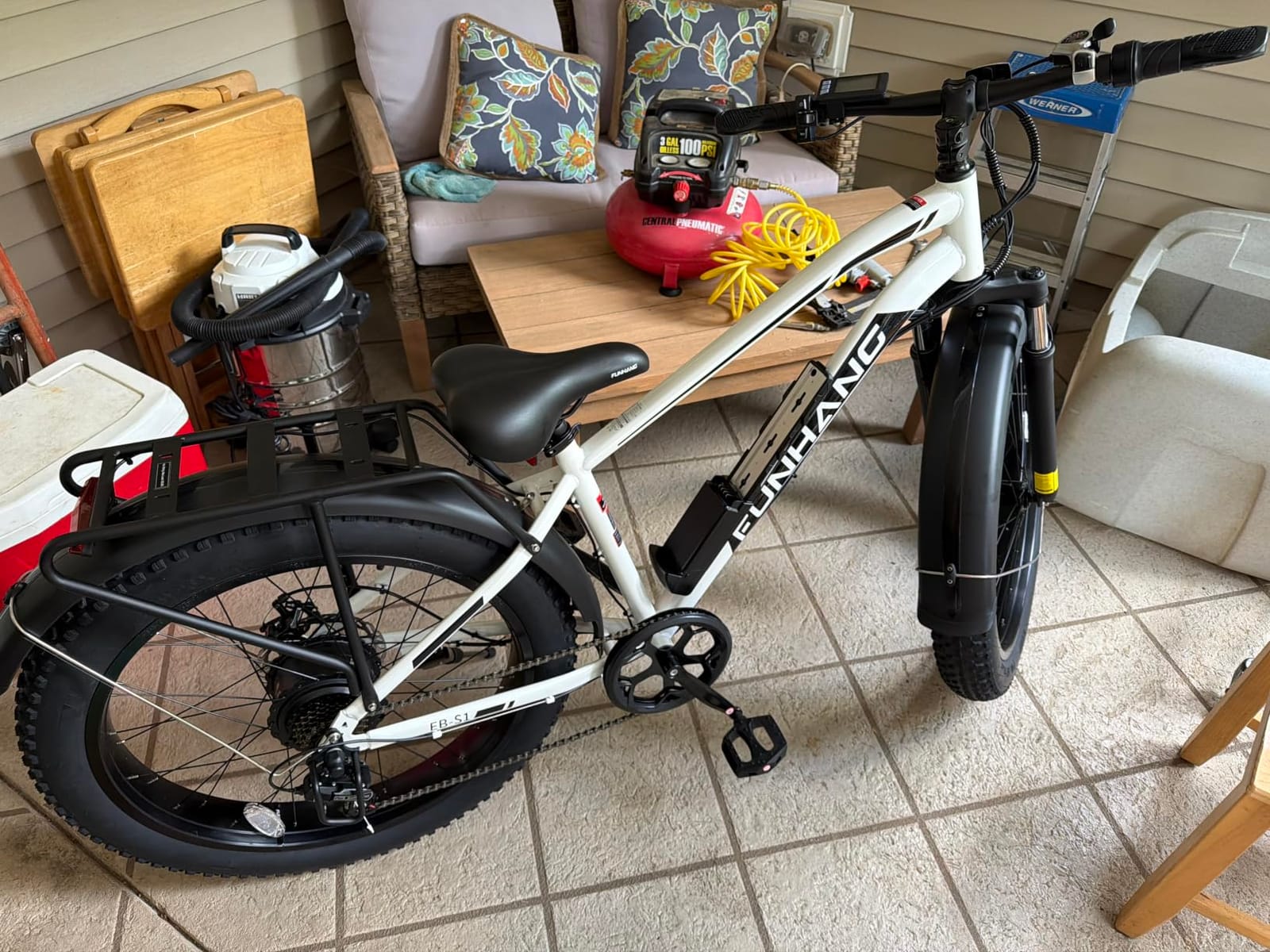
The Loeook is the configuration we would build for a rider who lives within riding distance of a beach and also has a winter commute. Rack, full fenders, turn signals, horn and lights all come fitted, which removes the most annoying part of building a fat tire e-bike for daily use. At 68.3 lbs it is also lighter than the other 26-inch bike with a listed weight, the Vivi ACE01 at 72 lbs.
Owners use it for trail riding in sand and mud, hunting access and commuting, and report the 26-inch tires grip well with pedal assist level 3 in deeper sand. Assembly is genuinely quick on the 85 percent pre-assembled frame, and one reviewer reports a frame that took a crash and came back with barely a scratch.
Range is where the marketing and reality diverge most. Riders who hold full throttle and top gear report roughly 16-18 miles, while mixed assist riding in the woods delivers far more. That gap is normal for this class of bike, and it is the reason we would treat the 55-60 mile PAS figure as a ceiling rather than a promise. The same reviews also flag longer stopping distances than expected.
The soft parts are the weak points. The stock seat and pedals are viewed as cheap, and one heavier rider bent the seat rails. The seat post clamp is also hard to tighten by hand alone, so budget a few minutes and the right tool for setup.
Best use case for cold-weather commuting
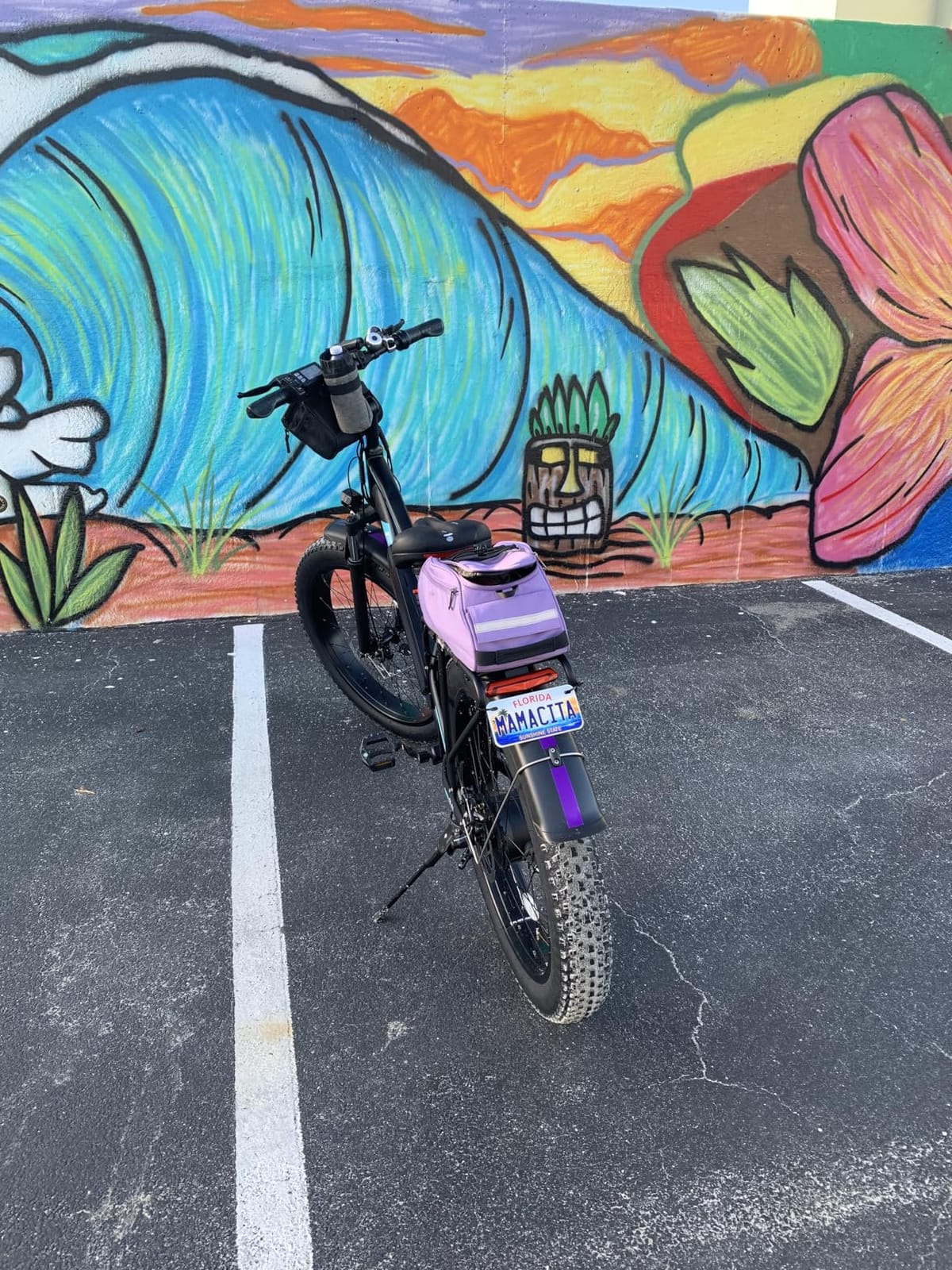
The full fenders and rack make this the most commuter-ready bike in the roundup, and the UL 2271 and UL 2849 certification matters when the bike lives outdoors in winter. The removable 13Ah pack charges on or off the bike in about 6.5 hours, so you can bring it inside between rides.
For deep sand, keep the tires at the low end of their range and use assist level 2 or 3 rather than the throttle. A 330 lb capacity rating covers a rider plus hunting gear or a full load of firewood without straining the frame.
Where it falls short
Buyers wanting speed report the motor is adequate rather than exciting, and the honest range shortfall means this is not the bike for long unpowered stretches between charges. The brakes need more stopping distance than the spec sheet implies, which is worth knowing before you ride it in traffic or on a downslope toward a frozen creek.
3. Vivi ACE01 26 x 4.0 Fat Tire Ebike – Best for Grip and Control
Vivi ACE01 Electric Bike for Adults,26″ x 4.0 Fat Tire Ebike,1500W Peak Motor Torque Sensor Electric Mountain Bike,20MPH Electric Bicycle with 48V 15AH Battery,Hydraulic Brake,Certified to UL2849
750W rated, 1500W peak
90 N·m torque
Torque sensor assist
Dual hydraulic disc brakes
Pros
- Torque sensor gives smoother
- more natural pedal assist than cadence sensors
- Dual hydraulic brakes instead of the mechanical discs on most rivals here
- Aluminum alloy frame with 26 x 4.0 tires for sand
- snow and gravel
- 48V 15Ah pack built from 21700 cells with a 4-6 hour charge
- Seat height fits riders from 5 ft 3 in to 6 ft 5 in
Cons
- 750W rated motor means steep sand hills still need high assist levels
- At 72 lbs the bike is heavy to carry and cannot be folded
Hydraulic disc brakes and a torque sensor are what separate this bike from its rivals, and together they are why we trust it most on a descent through packed snow. Riders also single out the 21700-cell battery and the 4-6 hour charge.
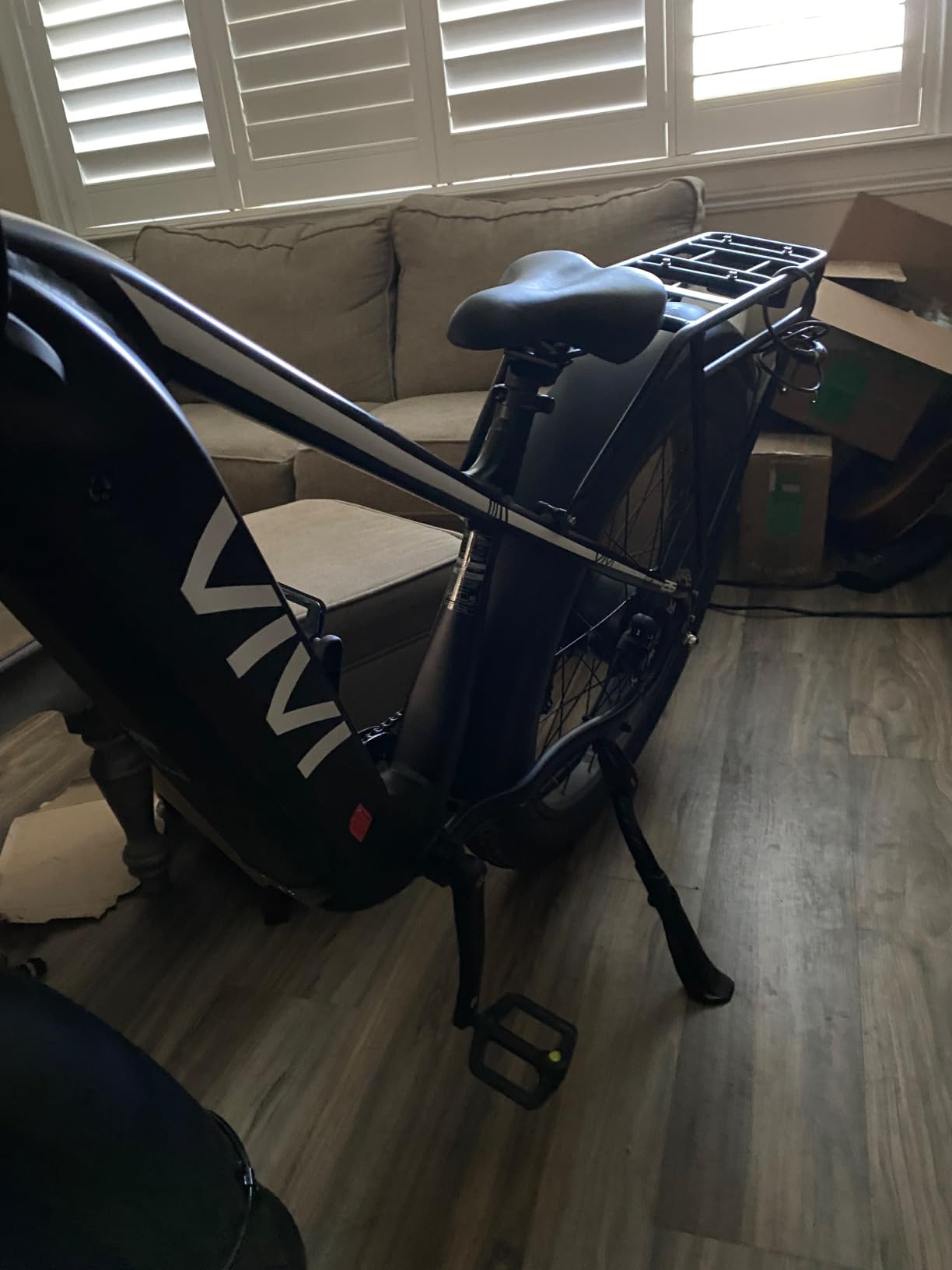
The battery is unusually good for the class: a removable 48V 15Ah pack using 21700 cells for 720 Wh. The lockable adjustable front fork lets you firm it up for sand and soften it for snow.
Against that, the 750W rated motor is the honest limit. On steep sand hills you will still be reaching for the top assist level, and the 40-60 mile range claim is optimistic once cold weather and low tire pressure are factored in.
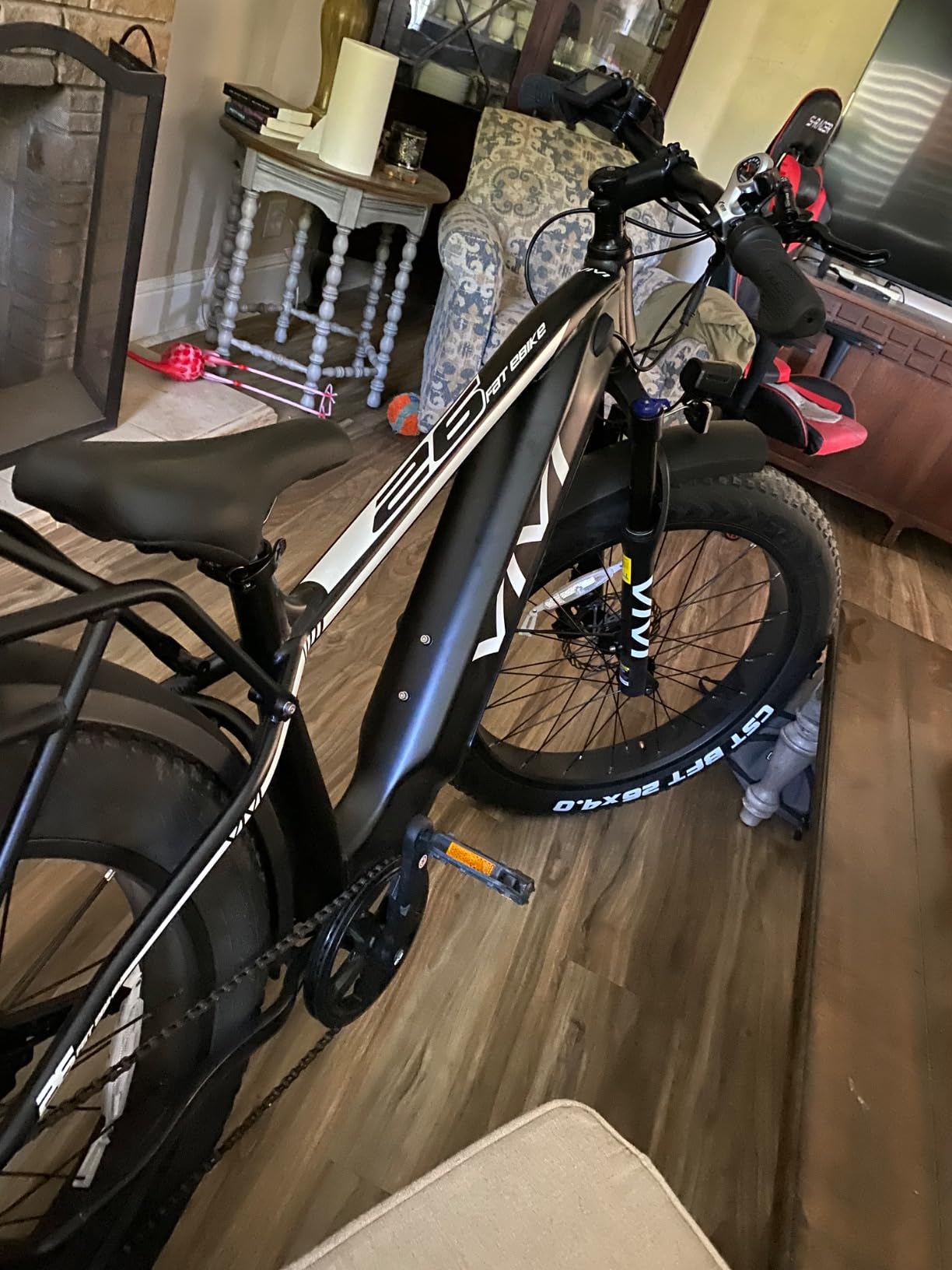
Why the torque sensor matters in snow
On a cadence-sensor bike, assist surges on and off in a fixed pattern, and in snow that surge is uncomfortable. Proportional assist delivers power in proportion to your input, so you can feather through an icy patch without the motor dumping torque.
On packed snow with a heavy rider and 4.0-inch tires, mechanical discs need a firm, sometimes unattainable, lever pull where the Vivi stops with one finger.
Where it falls short
Power is the compromise. If your riding involves sustained climbs through soft sand at the beach, the rated 750W will have you working harder than you would on the Jasion RetroVolt or the TST. This is a control and braking bike more than a power bike.
Weight is the second compromise. At 72 lbs with no folding frame, loading it into a car or carrying it up a flight of stairs is a two-person job. If storage is the constraint, the URLIFE folding bike makes more sense.
4. Jasion Thunder 26 x 4.0 Fat Tire Ebike – Best for High-Speed Rides
Jasion Thunder Electric Bike for Adults,1800W Peak,26”x 4”Fat Tire E Bikes,80 Miles with 864Wh Removable Battery Ebike, 30+MPH Max Speed Bicycles,Hydraulic Brakes,Front Suspension,Patent
1800W peak, 85 N·m torque
48V 18Ah 864 Wh
26 x 4.0 tires, 400 lb capacity
Dual hydraulic disc brakes
Pros
- Highest rated bike here at 4.8 with 90 percent five-star reviews
- 1800W peak motor with 85 N·m torque for sand
- snow and steep climbs
- Dual hydraulic disc brakes with a claimed 2-second stop
- Large 864 Wh battery supporting an 80 mile claimed range
- 400 lb capacity with rack and fenders included
Cons
- Front-only suspension is less compliant on washboard sand and snow
- Claimed 80 mile range is optimistic in cold weather with low tire pressure
The 1800W peak motor and 85 N·m of torque dig through soft sand without you babysitting the assist level, and the 26 x 4.0 tires keep it planted on the transition from hardpack to soft ground.
Owner reviews consistently point to the combination of power, 26-inch traction and hydraulic braking as the reason it feels fast and controlled on sand and snow. Five pedal assist levels spread from 10 mph to 28 mph, and the Shimano 7-speed drivetrain with a trigger shifter is a step up in gear quality over the twist grips on the Loeook and Wooken.
Two things temper that. Suspension is front-only, so washboard sand and rutted snow transmit more feedback to the rider than on a dual-suspension bike, and the 80-mile range figure assumes conditions almost nobody rides a fat tire bike in. Cold air and low tire pressure both cut into it, and low pressure is mandatory for flotation in sand.
The 400 lb payload rating is the highest listed for a 26-inch bike in this roundup, with a 500 lb figure offered on the Pro version, which makes it a good candidate for hauling camping gear or a heavy rider plus equipment.
Riding it fast in sand and snow
A bike with this much power invites speed, and the hydraulic brakes are what make that safe on a slick surface. Keep the assist below the top level in loose sand, because a sudden 28 mph burst on a soft surface will just spin the rear tire and dig a hole. On groomed snow the higher assist levels are usable because the surface has real structure.
The wide 26 x 4.0 tires are the reason it holds a line at speed where a 20-inch bike would wash out. That diameter difference is the single most important spec for anyone riding fast in variable terrain.
Who should skip it
Buyers who want full suspension, or who need a bike they can move without help, should look elsewhere. A 1800W peak motor and a large battery add real mass, and the front fork alone will not take the sting out of deeply rutted snow or soft sand moguls. Riders focused on a compact winter commute on a budget will get more bike for their money elsewhere on this list.
5. Jasion RetroVolt 20 x 4.0 Fat Tire Ebike – Best for Beach Cruising
Jasion RetroVolt Electric Bike, 70-Mile Range, 2000W Peak, Fat Tire
2000W peak, 99 N·m torque
20 x 4.0 tires, dual suspension
48V 15Ah UL battery
Rear seat pad, 330 lb capacity
Pros
- 2000W peak output with 99 N·m torque gives confident hill starts
- 20 x 4.0 fat tires plus dual suspension smooth out gravel and beach routes
- Removable 48V 15Ah battery with a claimed 70-mile range
- Rear seat pad supports short passenger and cargo trips
- 85 percent pre-installed so setup time is short
Cons
- 20-inch wheel diameter floats less in loose sand than 26-inch tires
- 7-speed drivetrain is a narrow gear range for varied terrain
The RetroVolt is built for wide flat surfaces and short distances, and for that it works well. At 99 N·m it has more torque than any other bike here, so starting on a soft beach path or climbing a wet dune does not drain the battery. Dual suspension takes the edge off everything a moped-style frame otherwise transmits.
Owners like the mix of pavement and beach routes, and the practical touch is the rear seat pad, which lets you carry a passenger on short trips or strap cargo across the back. At 85 percent pre-installed, setup is quick. A large headlight with a horn, a rear light and high-brightness brake alerts round out a package aimed at being seen.
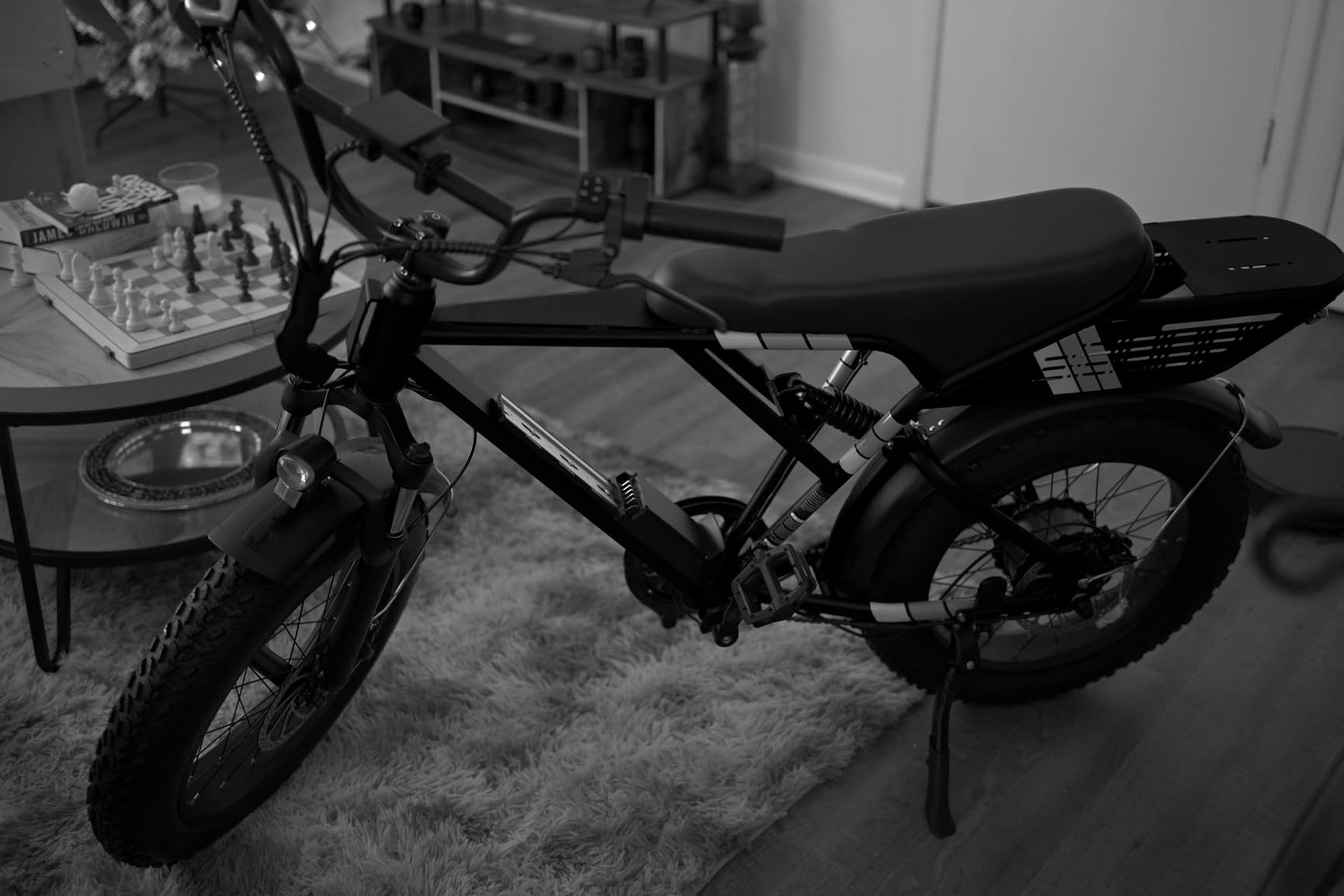
The limitation is the 20-inch wheel. A 20 x 4.0 tire has the same width but a smaller contact patch than a 26 x 4.0, and in genuinely deep sand that difference shows as the front wheel ploughing instead of floating. It is completely fine on packed beach sand and packed snow, which is most of what most riders actually encounter.
The other limit is gearing. A 7-speed drivetrain across a 20-inch wheel gives a narrow range, so you are choosing between cruising and climbing rather than finding a comfortable middle. The 48V 15Ah battery is UL-certified and removable, and recharge time is about 5-6 hours.
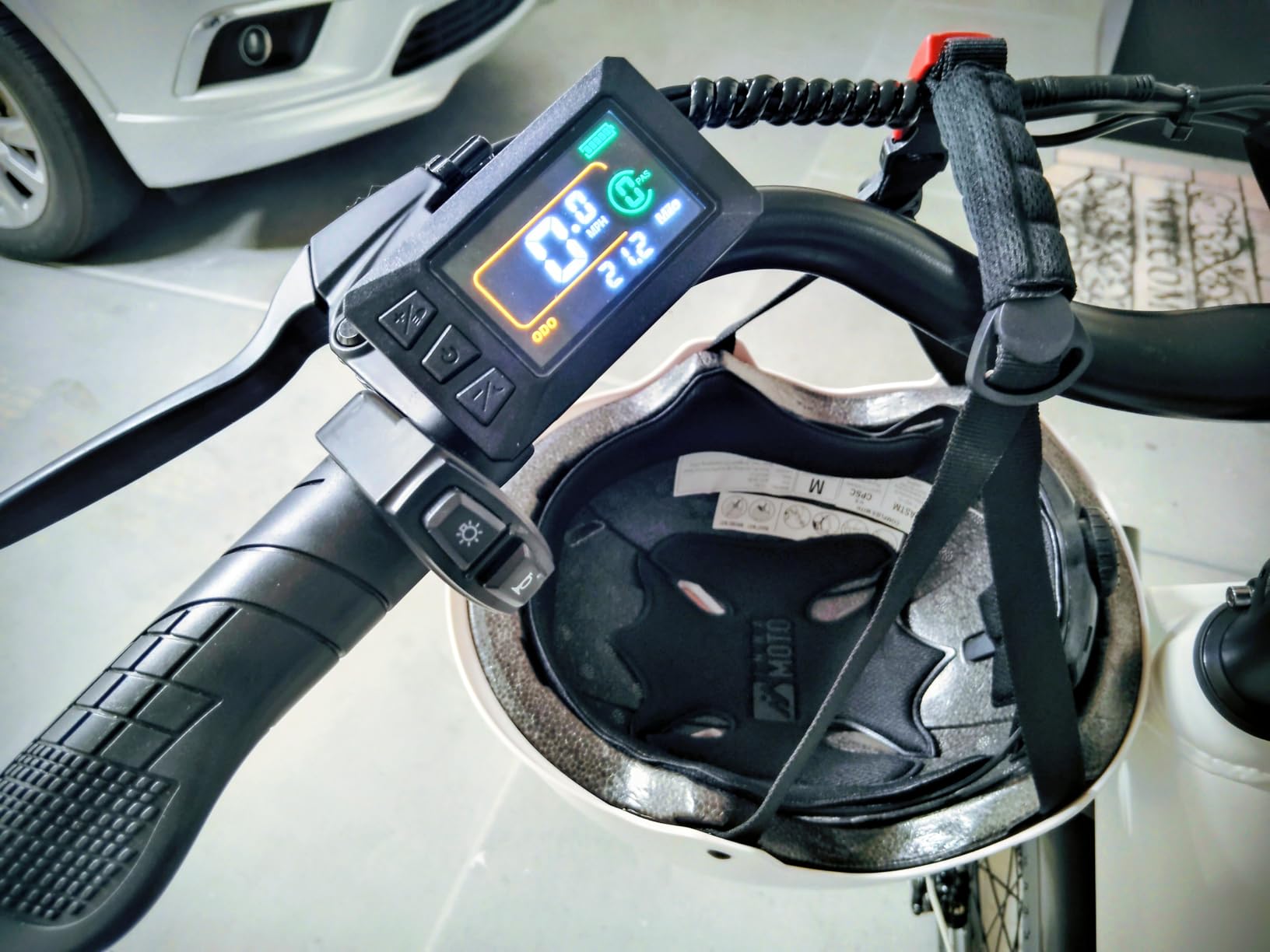
Two-up riding and gear hauling
Two-up riding is the point. The rear seat pad and 330 lb payload capacity let you carry a passenger on short trips, and a 2000W peak motor has the headroom to move two riders and a load across packed sand.
For shorter winter outings on a mixed surface, the torque means you are not riding the bike while it pushes you. That matters on the return leg of a cold ride when the battery is low and the legs are tired.
Where it falls short
This is not the bike for deep dune riding, and the 20-inch wheel is the reason. The 7-speed range also means a bad stretch of terrain puts you in a gear you will not enjoy. If your sand is genuinely loose and deep, spend your budget on a 26-inch wheel instead, where the extra diameter does the work the motor cannot.
6. INVANTI EB16 20 x 4.0 Full Suspension Ebike – Best Full Suspension on a Budget
INVANTI Electric Bike for Adults, Electric Dirt Bike 750W Motor,20MPH 70 Miles E-Bike with 48V 15.6AH Removable Battery, 20″ All-Terrain Fat Tire EBike 7 Speeds Full Suspension
750W rated for 35 degree slopes
48V 15.6Ah 499.2 Wh
Full front and rear suspension
UL 2849 certified by SGS
Pros
- Full front and rear suspension absorbs bumps on snow
- beach and mountain roads
- 750W brushless motor rated for 35 degree slopes
- Large 48V 15.6Ah removable battery for long claimed range at this level
- High-brightness front light and reflective turn-signal rear lights
- 90 percent pre-assembled with tools and instructions included
Cons
- 750W motor is modest next to the 2000W-class options here
- 20-inch wheel size floats less in deep sand than 26-inch tires
- Mechanical rather than hydraulic disc brakes
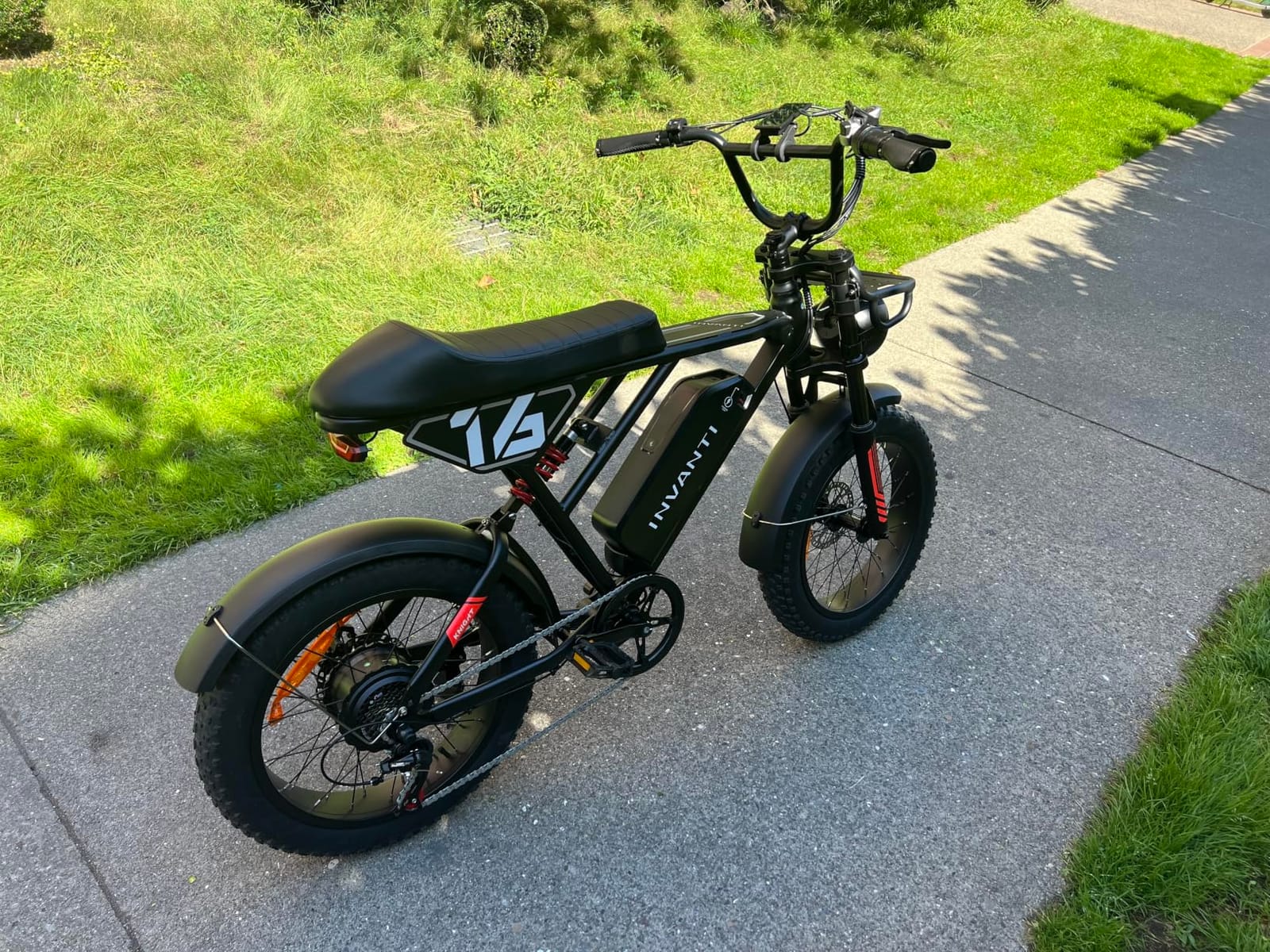
The INVANTI’s argument is simple: it pairs suspension at both ends with a large battery. The 48V 15.6Ah pack works out to 499.2 Wh, and it is removable, IP54 rated and has its own BMS.
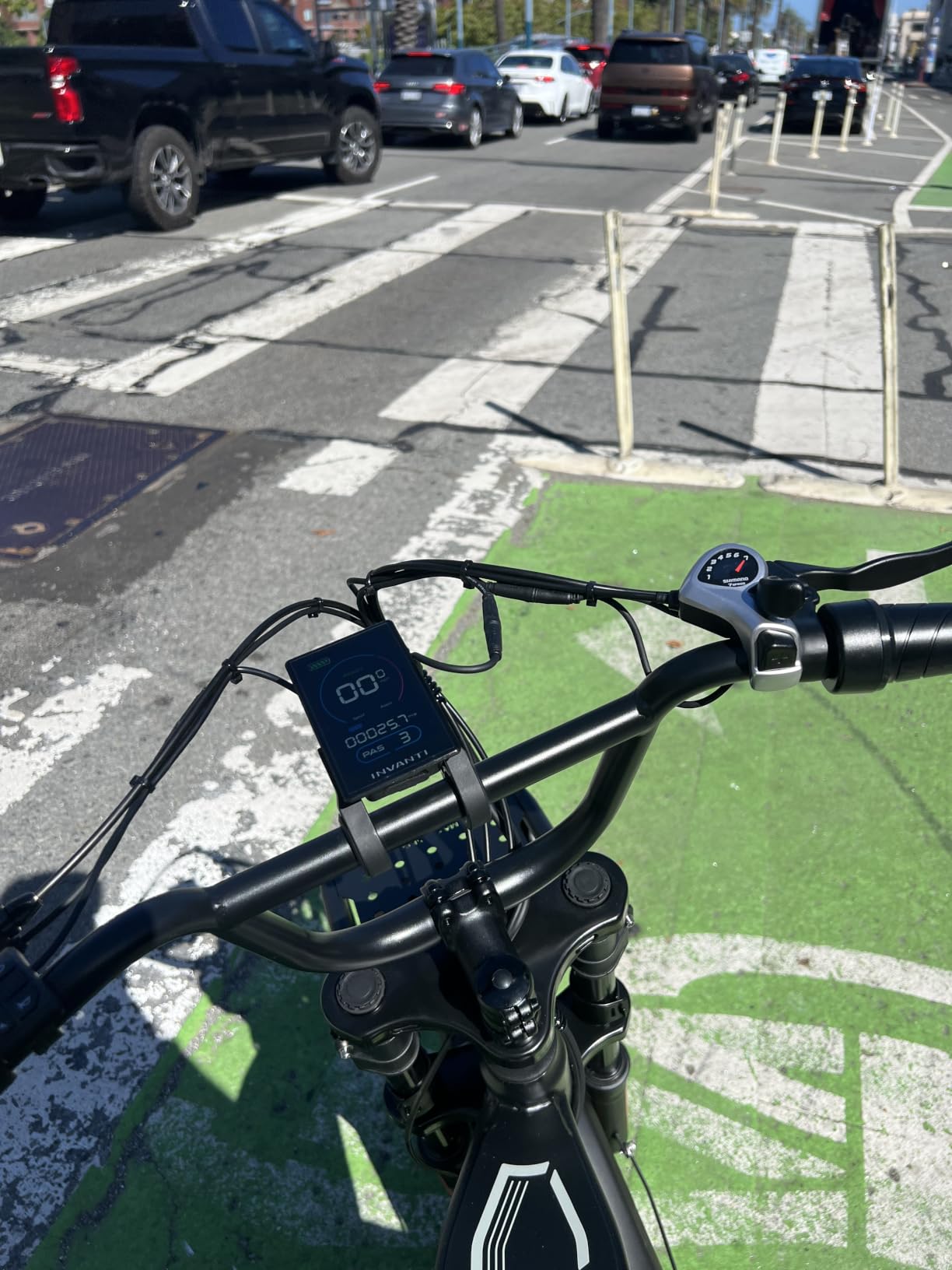
Owners single out the full suspension and the battery as the standout features, along with the traction from the 20 x 4.0 tires on snow, beach and mountain roads. The colorful LED display shows speed, battery level and assist level, and UL 2849 certification was tested by SGS.
Where it is merely adequate is power and braking. The 750W brushless motor is fine for flat-to-rolling terrain and needs help on sustained grades, and the mechanical disc brakes require more lever effort than hydraulics. Neither is a dealbreaker at this level, but both are felt when you are descending a rutted snow trail carrying speed.
The 20-inch wheel is the same compromise as the RetroVolt. It works well on packed surfaces and beach sand, and it works less well when the sand is deep and loose. A 20 mph top speed is sensible rather than exciting.
What to check before you ride it in snow
Because the brakes are mechanical, we would test the lever feel in a car park before riding anywhere slippery. Mechanical discs can be adjusted, but they need it, and cold weather changes cable tension. Bring your own multi-tool and know how to reach the adjuster.
On the positive side, the 90 percent pre-assembly and included tools mean setup is quick, and the one-year warranty on motor, battery and charger is a real commitment.
Where it falls short
If you ride steep sand, this is not enough motor. If you ride fast downhill in snow or slush, this is not enough braking. The bike is at its best on moderate terrain with suspension doing the work, which is a perfectly reasonable place for a first fat tire e-bike to live.
7. ESKUTE M300F 20 x 4.0 Full Suspension Ebike – Best for Long Cold-Weather Rides
ESKUTE M300F Electric Bike for Adults, 52V 20.8Ah Long Range Battery, 33MPH Fast Ebike 1200W Motor, 20″ x 4″ Fat Tire Electric Mountain Bike for Men Women, Full Suspension, Commute, Off-Road
1200W peak motor
52V 20.8Ah 1200 Wh battery
20 x 4.0 tires, full suspension
Up to 80 miles in PAS
Pros
- Largest battery capacity here at 1200 Wh
- Full front and rear suspension on a 20 x 4.0 fat tire platform
- Adjustable seat and handlebar fit a wide range of rider sizes
- Stable and grippy on hills
- beaches
- snow and sand
- 90 percent pre-assembled with a 12-month warranty and rack included
Cons
- Real top speed is closer to 20 mph than the 33 mph model name suggests
- High carbon steel frame is heavier than the aluminum options
- Smallest review base in the roundup at 55 reviews
A 52V 20.8Ah pack comes to 1200 Wh, the largest capacity listed for any bike in this roundup, and that headroom is precisely what cold-weather riding eats into.
Owners highlight the large battery and the dual suspension as the features that let them ride long distances on sand, snow and hills. Full mud flaps and a rear rack are included with the bike, which is a genuinely useful winter detail because road spray reaches the drivetrain without them. The adjustable seat and handlebar make it easy to fit a wide range of rider sizes.
Be aware of the speed gap. Several owners note that real top speed sits closer to 20 mph rather than the 33 mph in the model designation, and the 1200W peak motor is a class 1 or 2 machine in practice. If you want to ride fast on groomed snow, the Jasion Thunder is the faster bike.
The frame is high carbon steel, which is heavier than the aluminum options in this group, and 55 reviews makes this the least-reviewed product here. The sentiment is strongly positive, but a small review base tells you less about long-term reliability than a large one does.
Planning range for a full winter day
Even with 1200 Wh, plan conservatively. Cold reduces battery output, low tire pressure costs efficiency, and a knobby fat tire on soft snow adds real rolling resistance. Owners who size their expectations to a portion of the claim report far less disappointment than those who plan around the headline number.
The practical checklist for winter riding is short: a portable inflator to set pressure on the trail, warm gloves, fenders or mud flaps, and a tube sealant in the tires. Our guides to the best tire inflators and portable tire inflators cover the pressure side of that list.
Where it falls short
Speed and weight. A steel frame plus a 1200 Wh battery is a lot to maneuver when you are walking it back through soft sand, and a 20 mph ceiling will feel slow to anyone used to a faster machine. This is a long-range, controlled-pace bike, not an adrenaline bike.
8. TST R9 20 x 4.0 Fat Tire Ebike – Best for Carrying a Passenger and Gear
TST Electric Bike for Adults 2000W Peak Motor 48V 15Ah 20″ Fat Tire E-Bike
2000W peak, up to 90 N·m
48V 15Ah 720 Wh, 15/25/30Ah options
Extended seat and rear rack
450 lb capacity
Pros
- Strong climbing power from the 2000W peak motor
- reaching 27 mph unlocked
- Dual suspension and an extended seat make long rides comfortable
- Battery still near 80 percent after a 10-mile ride
- 450 lb rated capacity with a step-through frame
- Customer service resolved brake and battery issues quickly
Cons
- Supplied inner tubes fail on clean paved paths and are a common replacement
- Assembly takes longer than the stated time
- A 6-month warranty is the shortest in this roundup
With a stepped-through frame, a 450 lb capacity and a rack, this is the roundup’s clearest choice when a passenger or a serious load is part of the plan.
Power is genuinely strong. Owners report climbing well and reaching the high 20s in mph, and one reports the battery still near 80 percent after a 10-mile ride.
The battery is the most flexible in the roundup. The 48V 15Ah pack works out to 720 Wh, and 25Ah and 30Ah configurations are also offered, which is exactly the battery-sizing move forum riders recommend for winter range loss. Customer service is repeatedly praised for resolving brake and battery issues quickly.
What to check before you ride it in sand or snow
Replace the supplied inner tubes before the first ride. This is the most repeated complaint in the reviews, and the failures happen on clean paved paths with no technical explanation. A 20 x 4.0 tire at low pressure with a weak tube is a roadside walk with a heavy bike.
Budget extra time for assembly, since owners report it taking longer than advertised, and fit tube sealant as a backstop. Also note the 6-month warranty, which makes buying spare tubes and a pump a sensible precaution rather than an expense.
Where it falls short
The 20-inch wheel gives up float in deep sand, and the dual mechanical disc brakes need more effort than hydraulics. If your riding is mostly solo on technical terrain, the extended seat and 450 lb rating are features you will never use, and the Vivi is a better fit.
9. Wooken 20 x 4.0 Folding Fat Tire Ebike – Best for Short Winter Commutes in Small Spaces
Wooken Electric Bike, 20”X4.0 Fat Tire Electric Bike for Adults
500W nominal, 750W peak
Folding 20 x 4.0 frame
Removable 48V 480 Wh
Four modes including walk assist
Pros
- Folding frame makes it easy to store and transport
- Dual shock absorber plus lockable front fork smooths rough ground
- Removable 480 Wh battery can be charged on or off the bike
- Four riding modes including a 3.73 mph walk-assist booster
Cons
- 500W motor is the least powerful here and limits climbing steep grades
- 20 x 4.0 tires offer less float over deep sand than 26-inch models
- Twist-grip shifting is less precise than thumb or trigger shifters
The Wooken has the most reviews of any bike here, and the feedback is consistent: it is a folding fat tire e-bike that is easy to assemble, store and live with. The 4.0-inch tires are praised for traction on snow, beach and urban roads, and the dual shock setup is liked for comfort.
For a short winter commute in a flat city, that combination works. The folding frame means it lives in a hallway or a car boot rather than taking up a permanent corner, and the removable 480 Wh IPX5 battery can be charged indoors, which matters in freezing weather. Four modes include a 3.73 mph walk-assist booster that is genuinely useful when you are pushing the bike through a gust.
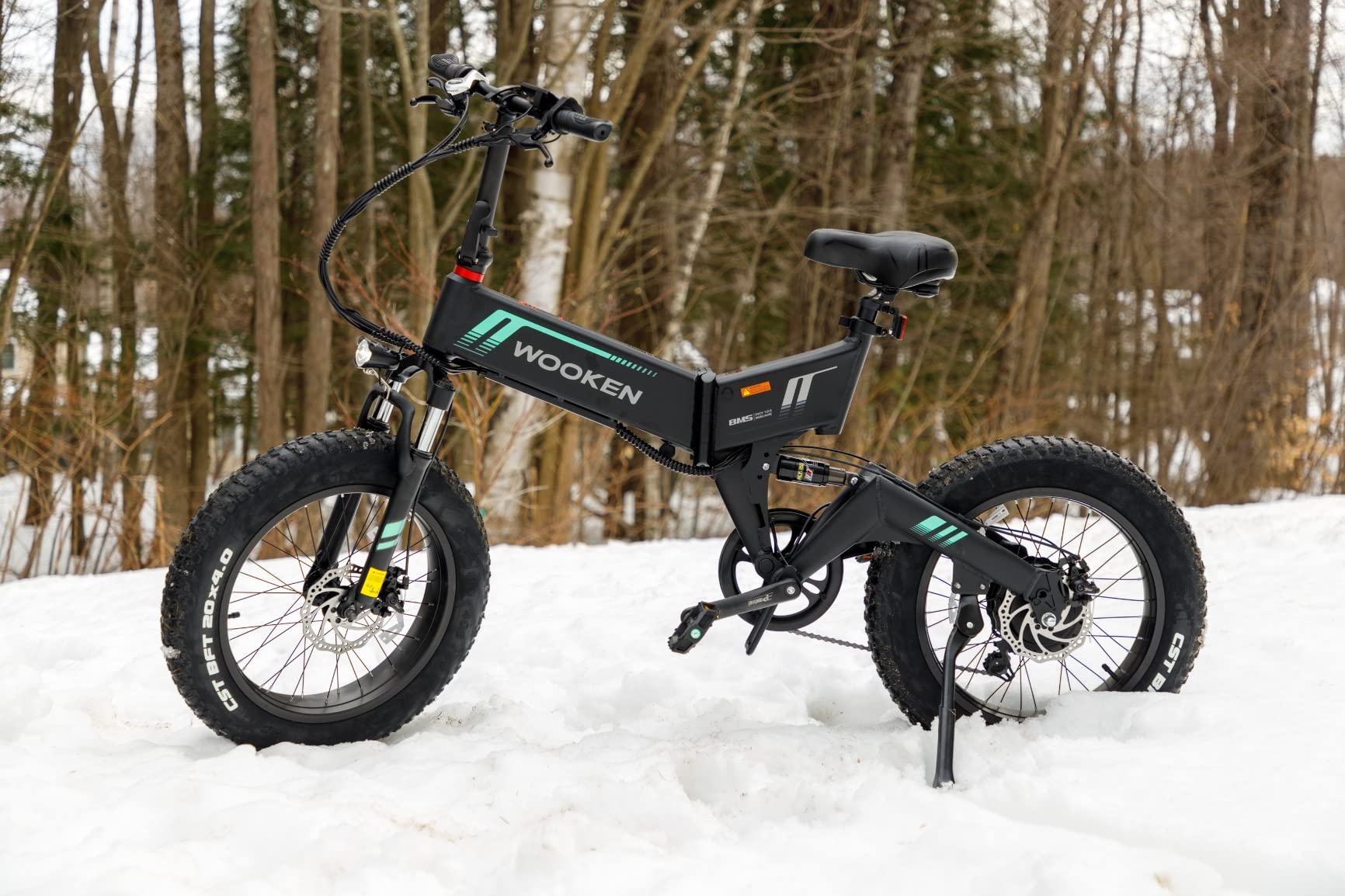
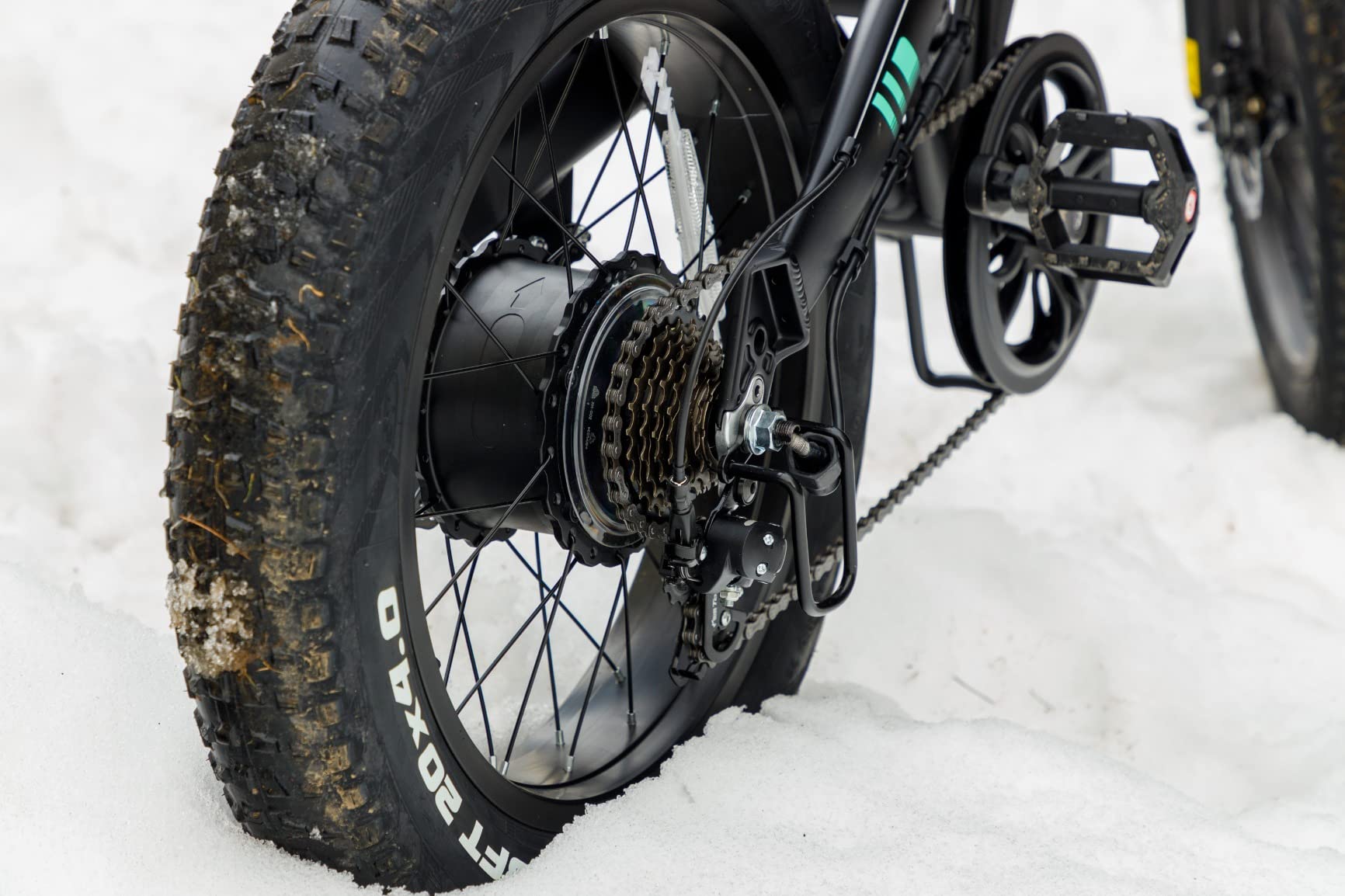
The limits are clear. A 500W motor is the least powerful in this roundup, and owners report it feeling underpowered on steep grades. The 20-inch wheel also floats less in loose sand than 26-inch models, so this is a bike for packed surfaces, city streets and short snow routes rather than dunes.
The 4.1 rating is the lowest here alongside one other bike, and roughly 10 percent of reviews are one star.
How far you get on a cold commute
The 480 Wh pack gives 25-30 miles on pure electric and a claimed 50-60 miles on pedal assist, and both figures will fall in cold weather. A commute of five to ten miles each way is well within that, and a 25-mile round trip would leave you finishing the day with very little margin.
Because the battery is removable, the cold-weather habit that matters most is to bring it inside after each ride and store it at moderate room temperature. A battery left in a freezing garage loses capacity, and charging a cold pack is the scenario most likely to shorten its life.
Where it falls short
Power, flotation and precision. This is a compact, foldable city bike with fat tire comfort, not a terrain machine. If you want to climb, cross loose sand or ride fast in variable snow, put the budget toward a 26-inch wheel and more torque.
10. URLIFE T5 Folding 20 x 4.0 Fat Tire Ebike – Best for Storage and Travel
URLIFE Folding Electric Bike for Adults, 1500W Peak Motor Ebike, 60-80 Miles, 20”x4” Fat Tires with Quad-Link Full Suspension, 7-Speed & LED Display, UL 2849 Certified
1500W peak, 80 N·m torque
Foldable frame with full suspension
48V 13Ah, 30 degree slopes
Oversized 400 x 190 mm rack
Pros
- Folds down for storage and transport
- with a 1500W peak motor
- Quad-link full suspension absorbs rough ground well for a folding frame
- Large rear rack plus integrated lights and turn signals for practical use
Cons
- At 36 kg it is heavy to carry
- undercutting the portability benefit
- Claimed 60-80 mile range is optimistic for a 48V 13Ah pack
- A 4.1 rating with 8 percent one-star reviews
The URLIFE is one of only two folders here, and the more capable of the pair.
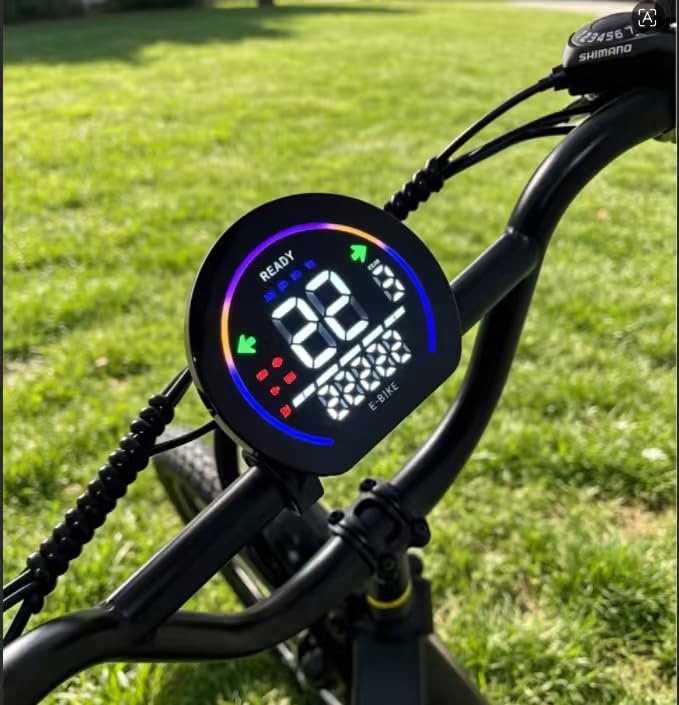
Buyers who want a fat tire bike that fits in a car or a closet call the fold-away design the deciding feature, and the quad-link suspension holds up on trails and rough roads. Integrated front and rear lights with left and right turn signals, plus a bright LED display showing speed, battery level and mileage, make it a genuinely usable commuter. UL 2849 certification is present with a one-year warranty.
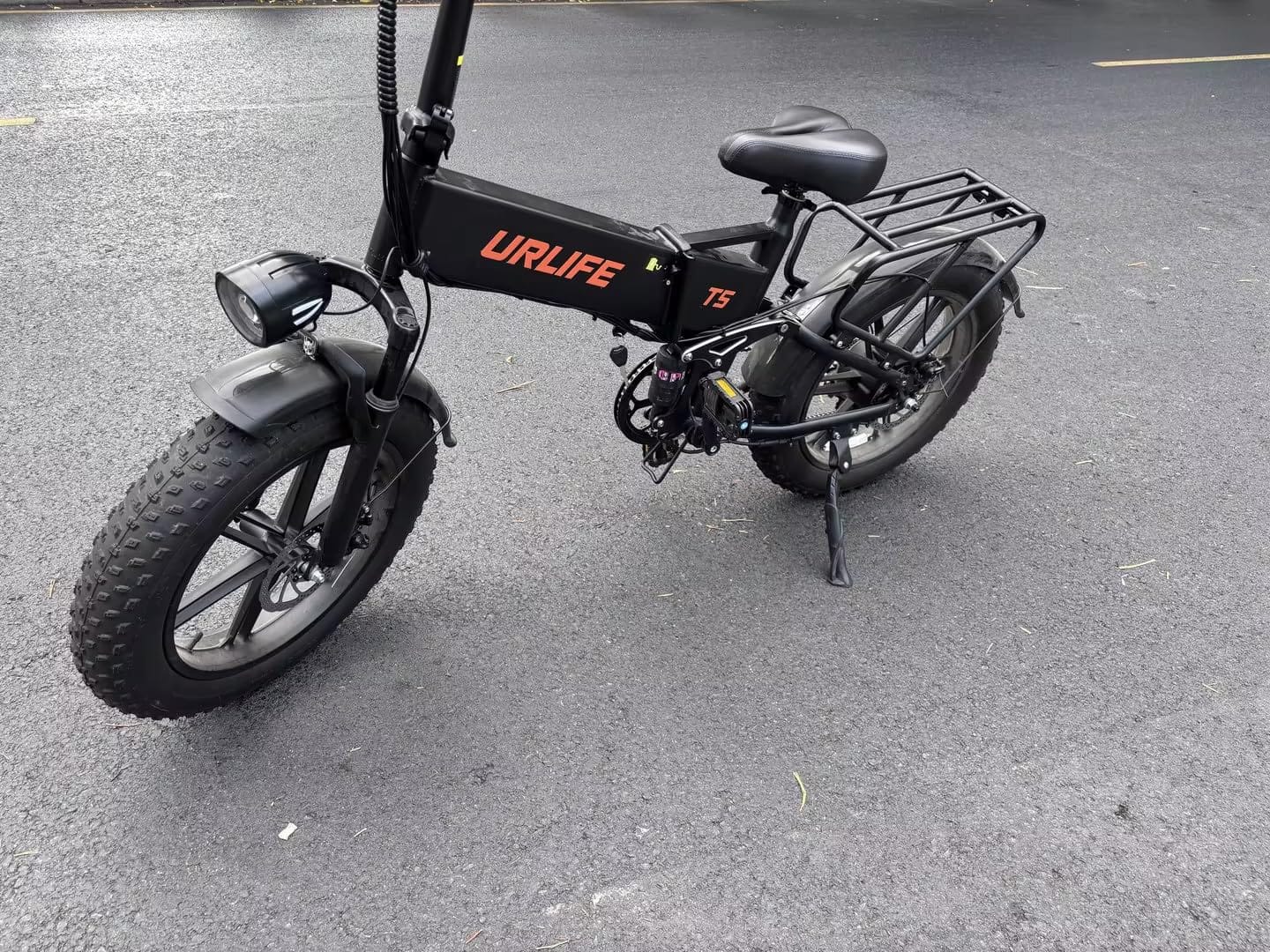
The remaining drawbacks are the rating spread, with 60 percent five-star against 8 percent one-star, and the 36 kg weight.
Does it handle packed snow and sand
Yes, on packed surfaces. The 20 x 4.0 tires and quad-link suspension give a stable, compliant ride on groomed snow and firm beach sand, and the 1500W motor has enough torque to keep momentum through soft patches. Where it struggles is deep, loose sand, because a 20-inch wheel cannot float the way a 26-inch wheel does.
On ice, nothing helps, and that is the honest answer for every bike in this roundup. Wide tires float and soak up slush, but the compound still has less bite than a purpose-made winter tire on clear ice.
Who should skip it
Skip it if you have to carry it up stairs or load it into a vehicle by yourself, since 36 kg defeats the purpose. Riders who want strong braking and a torque sensor should look at the Vivi, and anyone planning long distances in cold weather should consider the much larger ESKUTE battery instead.
What Fat Tires Can and Cannot Do in Snow
Fat tires help enormously on packed and groomed snow and offer almost nothing on clear ice. Every other claim in between depends on the surface, which is why owner communities are so blunt about the blanket marketing that calls these bikes great in winter without conditions.
On packed snow and groomed winter trail, wide low-pressure tires are at their best. The contact patch spreads your weight, the tire rolls over small ice chunks instead of catching them, and the bike stays upright on ground that would pitch a narrow-tired bike sideways.
On slush, results are mixed. Slush is heavy and water-filled, and wide tires sink into it as easily as they roll over it. Riders describe the transition between packed snow and bare ground, where the surface is neither solid nor loose, as the hardest condition of all.
In deep powder, fat tires perform worse than their marketing suggests. Loose dry snow offers no structure to push against, so you dig a trench and sink further. This is where a 20-inch bike with a lighter weight has an advantage over a heavier 26-inch machine, which is worth remembering before you blame the tire.
On clear ice, the answer is that studs help and width does not. This is the single most repeated point in the forums: fat tires are not a substitute for spike tires when the surface is frozen solid, and no amount of tire width changes that.
Tire Pressure for Sand, Snow and Pavement
Run roughly 15-20 psi in soft sand, 18-22 psi in packed snow, and 25-30 psi on pavement. Pressure is the most consequential adjustment a fat tire rider makes, and it is a rider adjustment rather than a fixed spec, so set it for the surface you are on rather than the surface you rode in.
Lower pressure widens the contact patch and lowers ground pressure, which is exactly what flotation means. Too low and you risk pinch flats, bead damage and rim strikes, so add a couple of psi and recheck if you can bottom out the tire.
Body position matters as much as pressure. Keep your weight over the bottom bracket and your elbows loose, pedal through the soft section rather than standing on the pedals, and stay seated going downhill in sand because standing shifts weight rearward and pushes the front wheel down. In snow, stay seated for the same reason and keep the bars wide for leverage.
Riding technique also protects your battery. High assist with a light cadence in soft sand burns through a pack far faster than a steady moderate level, because the motor is doing work your legs would otherwise do.
Studded Tires: When the Swap Is Worth It
Studded tires are worth the swap if you ride on ice or on trails that freeze overnight. They are not worth it if your winter riding is plowed roads and packed snow, because studs add noise, rolling resistance and range consumption for grip you will never use.
Most fat tire e-bikes in this roundup use 20-inch or 26-inch wheels at 4.0 inches wide, and both sizes are widely available in studded and semi-studded compound. Forum riders describe exactly this two-tire strategy: 4-inch knobbies for autumn trail riding, studded tires for winter.
Studs change the equation on ice, and they are why the honest answer to riding an e-bike in winter is sometimes buy a different tire rather than a different bike. The tradeoff is range, and for a bike with a small battery, that is a real cost.
Whichever tire you run, pump pressure is the first thing to set correctly and the first thing to check after a long ride in the cold, since air contracts as the temperature falls.
How to Choose a Fat Tire E-Bike for Sand and Snow
Choose tire width and wheel diameter first: 4.0 inches of width for true flotation, and 26 inches of diameter if you ride deep or loose sand. Many bikes marketed as fat ship with 3.0-inch tires, which perform noticeably worse in soft terrain, and a 20 x 4.0 tire is a genuine fat tire but with a smaller contact patch than 26 x 4.0.
Motor torque comes next. Sand and snow are about torque at low speed, not top speed, and reviews repeatedly single out geared hub motors for delivering substantially more torque than direct-drive hubs of the same weight. The 66-99 N·m range covers the bikes here with the most torque.
Battery capacity is the third filter, and it is where cold weather bites. Cold reduces output and low tire pressure costs efficiency, so size the pack above what you need on a warm day. The range claims in this roundup range from about 30 to 80 miles, and the honest figure on a cold day with a knobby tire is closer to the lower end.
Brakes and certification are the fourth pass. Hydraulic disc brakes give the control you want on slick ground, and UL 2271 and UL 2849 certification is the first thing to check on a budget e-bike because it covers both the pack and the whole bike. Suspension is a comfort and control decision: full suspension helps in rutted snow, and a rigid fork saves several pounds if you ride packed surfaces.
Finally, test ride one. Veteran riders on the forums say it more directly than any spec sheet: ride a fat bike before ordering one. The steering effort is a different experience from a narrow-tire commuter bike, and that first impression is not the whole story, but you should know what you are getting into.
What Fat Tire E-Bikes to Avoid
Avoid listings with extraordinary headline numbers and almost no independent reviews. Extreme wattage claims and very long advertised ranges on a bike with a thin review history usually mean a spec sheet written for search results rather than for riders, and support is rarely better once something breaks.
Avoid bikes without UL certification on the battery and the whole bike. This is not paperwork for its own sake. It is the difference between a pack with tested cell chemistry and a pack you have no data on, and it is the first check we make.
Avoid vague warranties and thin support. Owner complaints about budget e-bikes cluster around the same themes: soft tire compounds, frequent flats, a bike that is difficult to service, and a warranty that is difficult to claim.
Avoid soft-compound tires that flatten under load and cannot be repaired cheaply, and avoid cheap inner tubes on wide tires, which is the most repeated single complaint in the reviews on this page. Budget for a spare tube, a portable inflator and sealant before the first ride, not after the first roadside walk.
Frequently Asked Questions
What is the best e-bike for sand riding?
The best e-bike for sand is one with true 4.0-inch tires on a 26-inch wheel and enough low-speed torque to keep the front wheel from ploughing. The Funhang 26 x 4.0 and the Vivi ACE01 both fit that brief, and the Jasion RetroVolt adds the most torque of any bike here for packed sand. Drop tire pressure to roughly 15-20 psi, stay seated, and keep your weight over the bottom bracket.
What is the best fat tire e-bike for winter?
The best fat tire e-bike for winter depends on the surface. On packed and groomed snow, the 26 x 4.0 tires and hydraulic brakes of the Vivi ACE01 give the most control, while the Jasion Thunder offers the most power and the largest battery after the ESKUTE M300F. On clear ice, no fat tire helps much and studded tires are the real answer.
Is it a good idea to ride a fat tire bike in the snow?
Yes, with the right expectations. Fat tires are excellent on packed and groomed snow because the low-pressure contact patch floats the bike over the surface. They are mediocre in deep loose powder and offer no advantage on clear ice, where studded tires are the effective option. Plan on lower range in cold weather and carry the battery indoors between rides.
How much PSI should I run in sand and snow?
Roughly 15-20 psi in soft sand, 18-22 psi in packed snow, and 25-30 psi on pavement. Lower pressure widens the contact patch and lowers ground pressure for flotation. Add a couple of psi if you can bottom the tire out, and recheck pressure after a long cold ride because air contracts as the temperature falls.
What are the disadvantages of fat tire e-bikes?
The main drawbacks are weight, steering effort and range. Several of these bikes list a weight of 68 to 72 lbs, and the heaviest folder is close to 79 lbs, which makes them hard to load into a vehicle or carry upstairs. Wide tires feel less nimble than narrow commuter tires, knobby treads eat range, and riders report the lowest gear is often not low enough for a real workout. Tire longevity is also short compared with narrow tires.
What ebikes to stay away from?
Avoid listings with extreme headline wattage and very long range claims but almost no independent reviews, and avoid bikes without UL 2271 battery and UL 2849 whole-bike certification. Also avoid models with vague or very short warranties, soft tire compounds that cannot be repaired cheaply, and cheap supplied inner tubes on wide tires, which are the most repeated complaint in owner reviews.
Final Verdict for Sand and Snow Riders in 2026
Pick the Funhang 26 x 4.0 if you want one bike that handles both halves of the brief without a compromise you will feel. Its 26-inch flotation, 66.6 N·m of torque, 60 lb rear rack and dual UL certifications make it the most complete sand-and-snow package we found.
Pick the Vivi ACE01 if control matters more than power. Hydraulic brakes and a torque sensor make it the safest-feeling bike on packed snow and on a descent. Pick the Jasion Thunder if you want speed and a 400 lb payload rating, and pick the ESKUTE M300F if your winter days are long and you want the biggest battery in the group.
Whatever you choose, the limits are the same. Fat tires float over packed sand and packed snow, they struggle in deep powder, and they do almost nothing for you on ice. Set the pressure, carry a spare tube, and test ride before you order. Our fat tire electric bike comparison covers the wider category if you want to see how these stack up against the commuter and folding picks.