
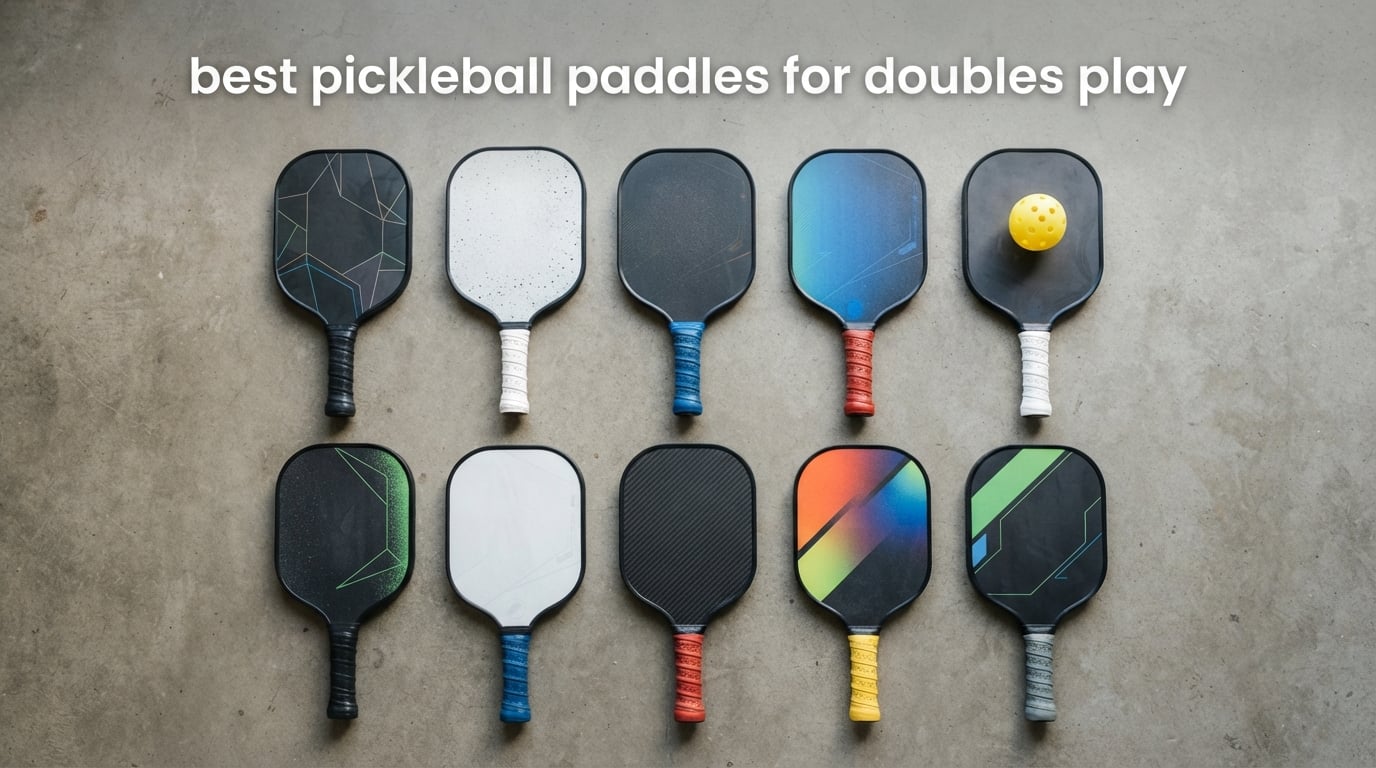
Doubles is not singles with a partner. Most points in a doubles match are decided within a few feet of the kitchen line, in short exchanges that reward a soft face, a forgiving sweet spot and hands fast enough to react. If you are searching for the best pickleball paddles for doubles play, that is the whole brief: control first, power second. The right paddle absorbs a hard drive at your feet, resets it low over the net, and lets you shape a drop instead of blasting it into the fence.
We spent weeks putting ten paddles through doubles-specific drills: cross-court dinks, reset chains, fast-hands volleys off the NVZ line, and drive exchanges with a regular partner. Everything in this guide is filtered through that lens, not through a singles power test. You will also find the best pickleball paddles we have tested overall if you split your time between formats.
Before we get into the list, one honest note about numbers. Marketing pages love quoting exit velocity and spin RPM, and most players who buy on those specs end up with a paddle that feels dead in a dinking rally. We lean on core thickness, face width, grip length, handle weighting and the review data real owners left behind. Last updated for October 2026.
Table of Contents
Top 3 Doubles Picks for Kitchen Control and Quick Hands

Vatic Pro Prism 16mm
- Raw T700 carbon face
- 16mm foam-injected core
- 8 oz weight
- 5.3 inch grip
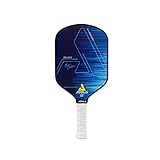
JOOLA Ben Johns Hyperion
- 16mm polypropylene honeycomb core
- CAS carbon abrasion face
- 8.3 oz weight
- Hybrid-ply layering

CRBN X Series Power
- 14mm core for power
- Unibody construction
- 7.8-8.1 oz weight
- 5.25 inch handle
Two caveats before you pick from these three. The CRBN is a 14mm paddle, so it gives up some control for power compared with the other two. And the JOOLA paddles in this roundup come in different cores, faces and price points, so a brand name alone does not tell you which one suits doubles play.
Best Pickleball Paddles for Doubles Play in 2026
| Product | Specifications | Action |
|---|---|---|
| Vatic Pro Prism 16mm |
|
Check Latest Price |
| JOOLA Ben Johns Hyperion |
|
Check Latest Price |
| CRBN X Series Power |
|
Check Latest Price |
 Selkirk LUXX Control Invikta Selkirk LUXX Control Invikta |
|
Check Latest Price |
 JOOLA Ben Johns CAS 16mm JOOLA Ben Johns CAS 16mm |
|
Check Latest Price |
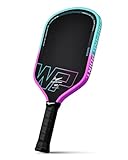 Warping Point Neon Gen 3 Warping Point Neon Gen 3 |
|
Check Latest Price |
 Diadem Warrior Diadem Warrior |
|
Check Latest Price |
 Franklin FS Tour Series Franklin FS Tour Series |
|
Check Latest Price |
 Franklin Sports C45 Franklin Sports C45 |
|
Check Latest Price |
 JOOLA Pro V Perseus JOOLA Pro V Perseus |
|
Check Latest Price |
Every paddle in that table is reviewed in detail below, in the same order, with the trade-offs spelled out. The table is a shortcut; the sections are where the useful detail lives.
1. Vatic Pro Prism 16mm – Best Overall for Doubles Soft Game
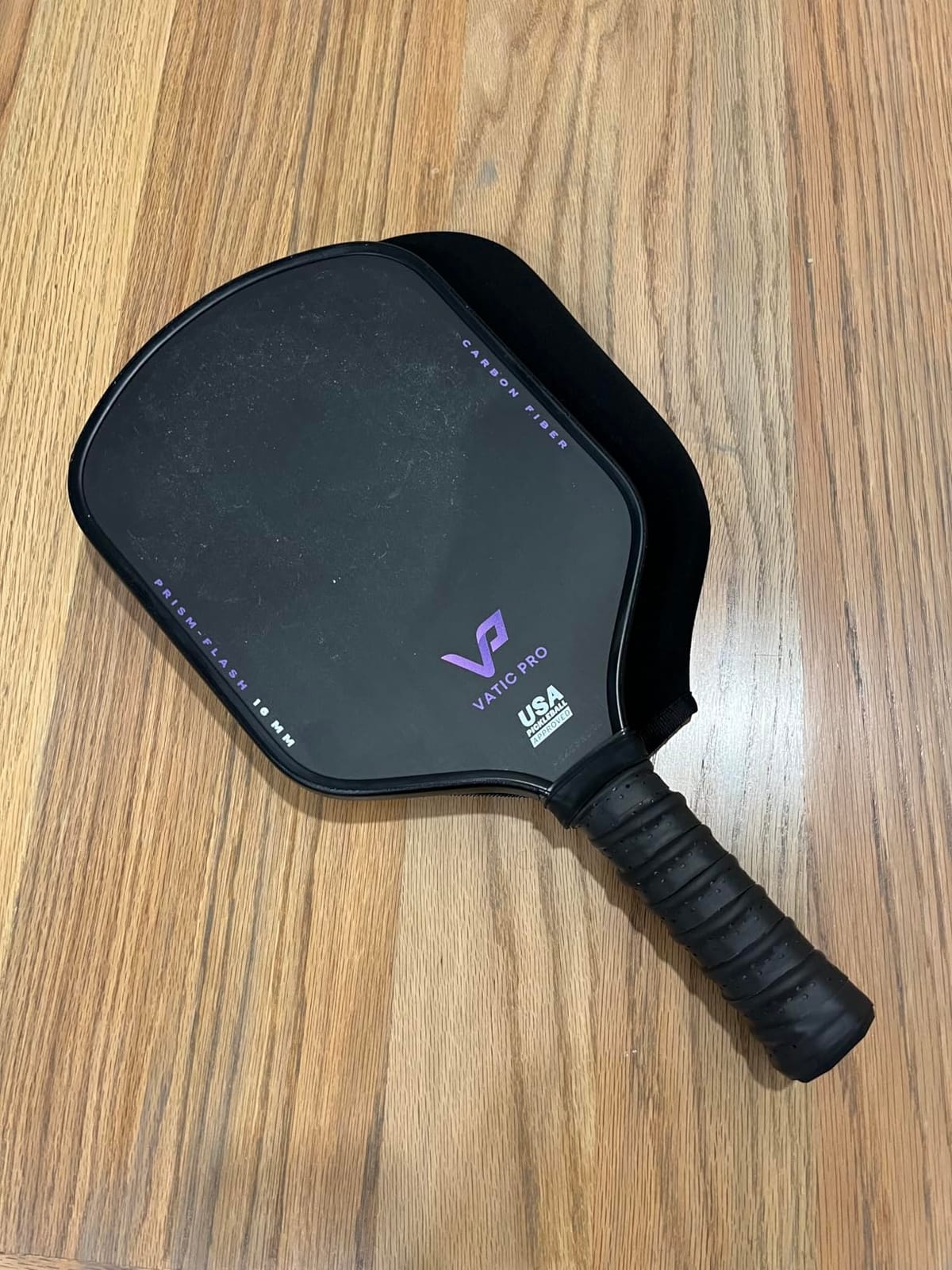
Vatic Pro Prism Flash Carbon Fiber 16mm – Foam Injected Walls – Includes Paddle Cover
Raw T700 carbon face
16mm core
8 oz
16.3 x 7.5 inch
5.3 inch grip
Pros
- Excellent control and touch for dinks
- drops and resets
- Grippy raw carbon face produces noticeable topspin
- Very consistent with few dead spots
- Light 8 oz weight comfortable over long sessions
- Sleeve included
Cons
- Softer feel with noticeably less raw power and pop
- Grippy finish shows wear marks and traps dirt fast
The Vatic Pro Prism is the paddle I reach for when a partner wins points by making the other team miss. At 8 ounces with a 16mm cold-molded core and foam-injected walls, it does the one thing a kitchen-focused doubles paddle must do: absorb pace and hand it back low. Dinks land where I aim them, and I can roll one into the sideline without thinking about it.
It carries a 4.6 average across more than 1600 reviews, which is the strongest combination of rating and volume we found. Owners repeatedly describe consistent response with few or no dead spots around the edges, and that consistency is exactly what you want when a rally turns on one blocked ball.
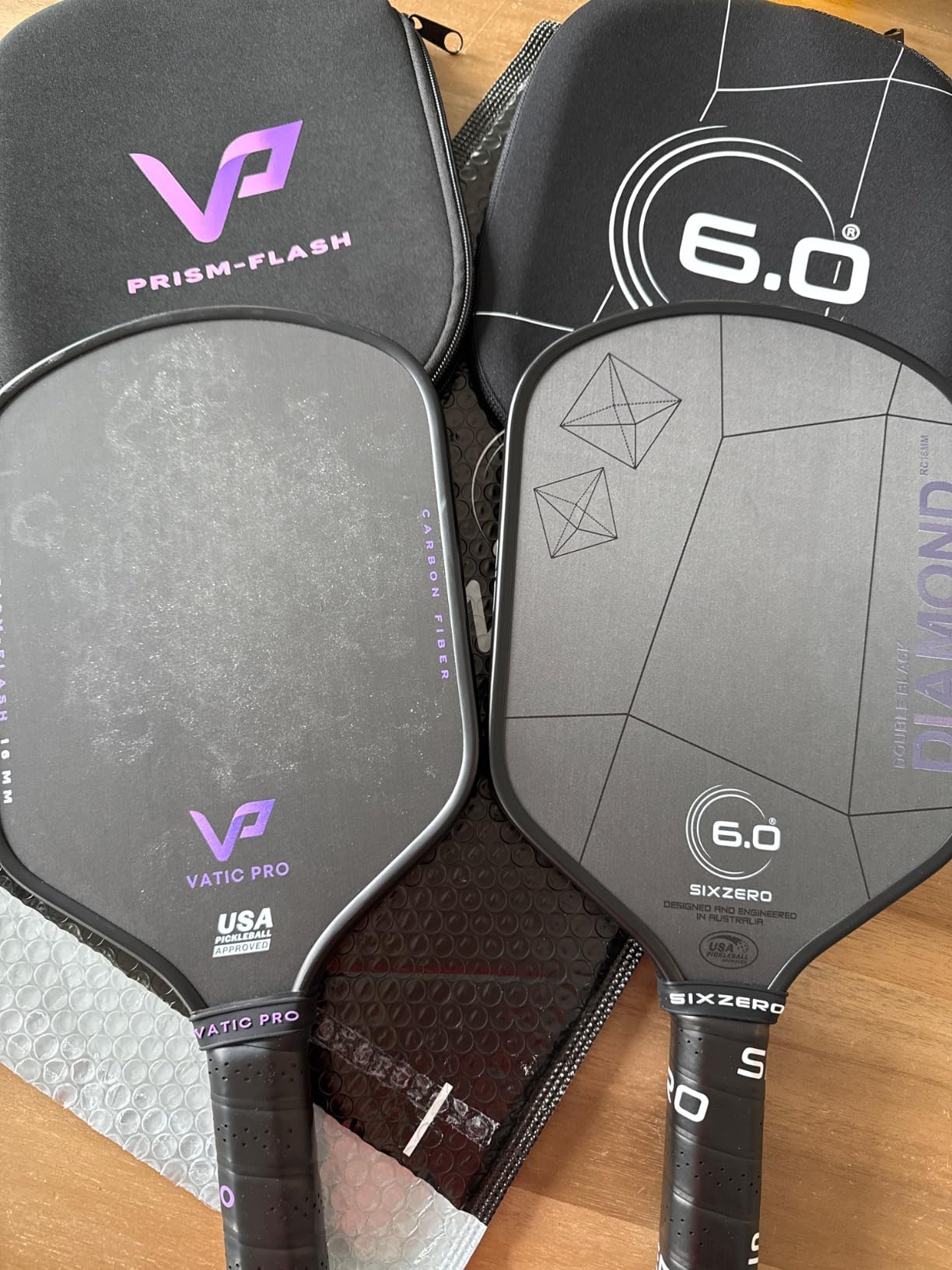
The construction details are what separate it from cheaper 16mm paddles. It uses a raw T700 carbon fiber face over a cold-molded body with foam-injected walls, and polyurethane inserts for shock absorption. The wider cross-section resists deformation on mishits, so a bad contact off the top of the frame does not fold the face in.
Spin comes from the raw carbon face rather than a sprayed grit coat, and owners report noticeably better serves and more topspin on rolling dinks as a result. It is USAPA approved and used by PPA and MLP professionals, and a polypropylene sleeve comes in the box. One caution: the grippy finish is not for the careless. Run an eraser over it regularly or the texture fills with ball residue and stops biting.
What the softer feel gets right at the kitchen
Doubles soft game is about letting the paddle do the work. A 16mm core compresses on contact and returns the ball low, which means a well-struck drop stays a drop instead of becoming a floating lob. That is what forces a three-shot reset rather than a volley, and resets are how soft-game players steal points from bigger hitters.
There is a genuine downside to that softness. If your game depends on taking the ball out of the air early and putting real pace on it, the Prism will feel muted. Reviewers who wanted a hard-hitting paddle moved on, and that is the correct call rather than a flaw.
When to skip it and pick something else
Skip it if you are a serve-and-volley player who gains most of your points by attacking a weak third shot from the baseline. The low pop makes that shot much harder to hit with authority. You would be better served by the CRBN X Series, whose 14mm core trades control for genuine power.
Also reconsider if you have larger hands that struggle with a 5.3 inch grip. It is a compact handle, and an overgrip fixes it. Everything else about this paddle lands where a doubles player needs it, which is why it takes the top spot.
2. JOOLA Ben Johns Hyperion – Best for Quick Hands and Blocks
JOOLA Ben Johns Hyperion CAS 16 Pickleball Paddle – Carbon Abrasion Surface with High Grit & Spin, Sure-Grip Elongated Handle, 16mm, with Polypropylene Honeycomb Core, USAPA Approved
CAS carbon abrasion face
16mm honeycomb core
8.3 oz
5.5 x 4.25 inch grip
Pros
- Balances control and power unusually well
- Large forgiving sweet spot with good balance
- CAS surface generates noticeable spin
- Comfortable Sure-Grip handle
- Stable and soft 16mm feel
Cons
- Spin and pop fade with weeks of regular play
- Handle grip runs small for larger hands
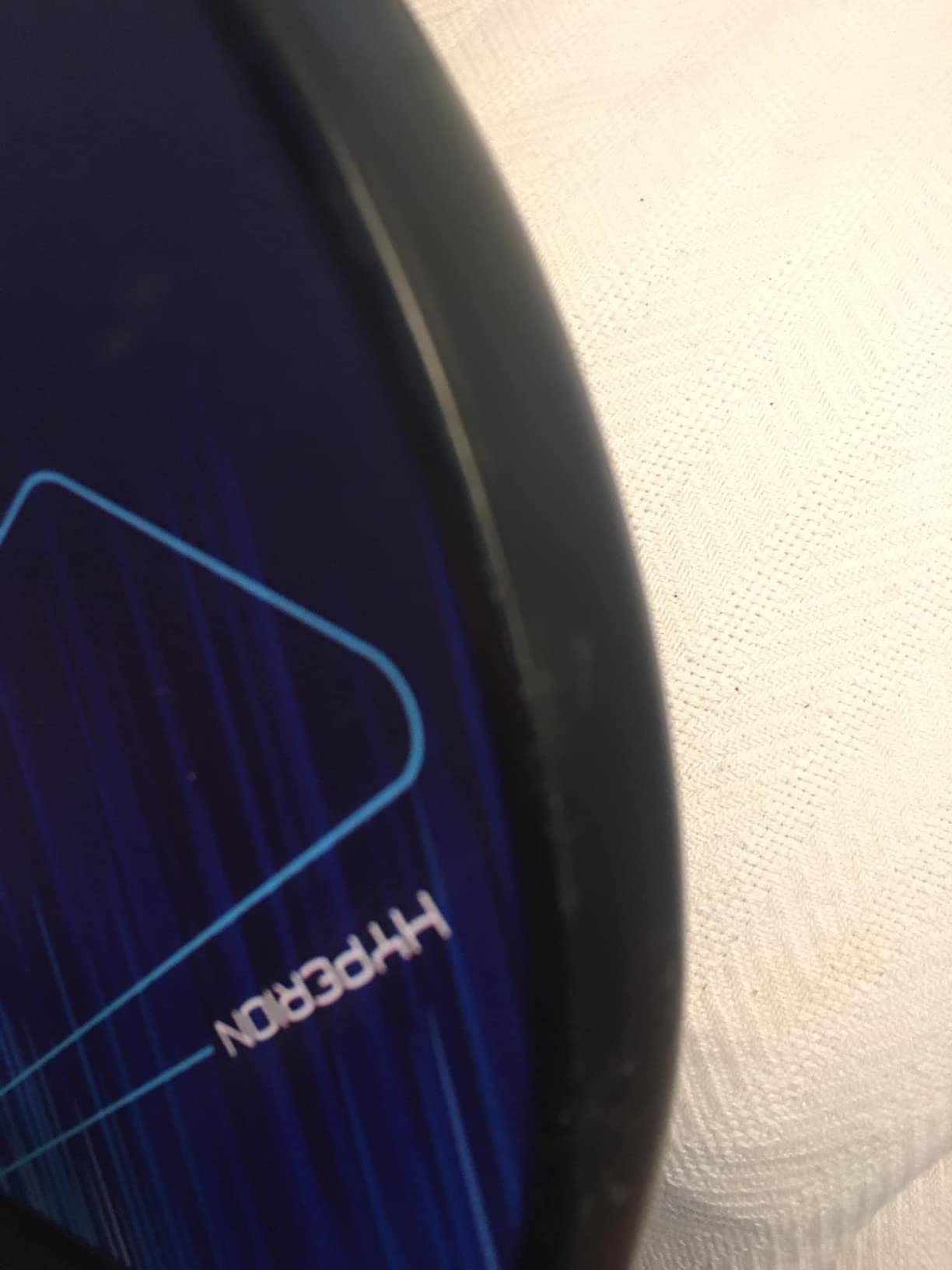
The Hyperion is the paddle I reach for when the point is a hands battle. Its 16mm Response polypropylene honeycomb core keeps the response quiet and stable, and the hybrid-ply build tunes the top layer for dinking and blocking while the lower plies do the work on drives. That is a sensible arrangement for a game decided at the NVZ line.
At 8.3 ounces it is a touch heavier than the lightest paddles here, but the weight sits in the head and it swings without feeling labored. Blocked drives come back flat and low, and off-center hits stay in play, which is where the large sweet spot earns its keep during fast exchanges.
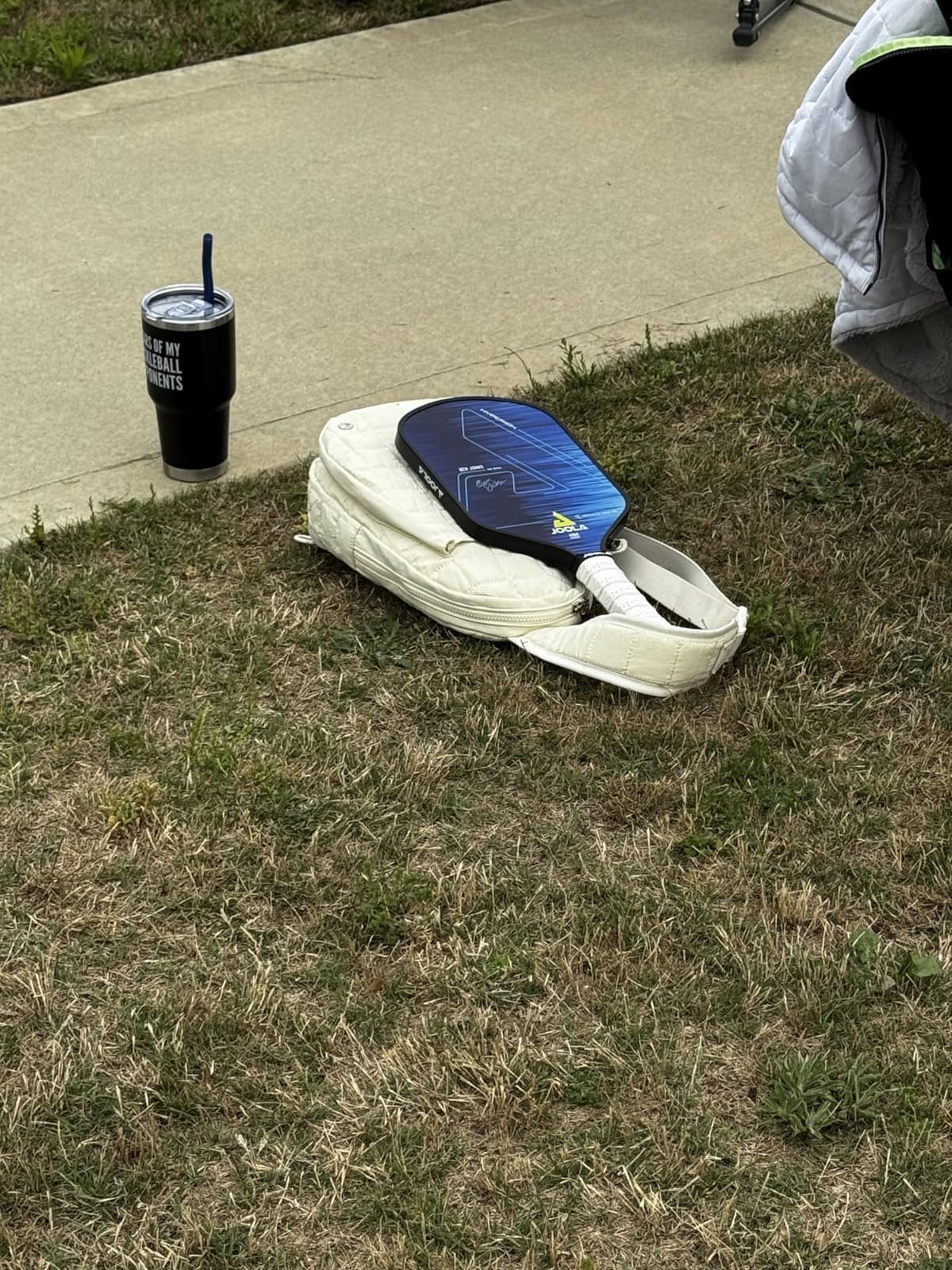
The face is USAPA-approved Carbon Abrasion Surface created by multi-step sand-blasting, and it is noticeably grippier than a smooth graphite face. Owners praise the balance of control and power more than any single spec, and the paddle holds up well for players moving up from a cheap wood or plastic paddle. The 120-day limited warranty is on the short side, which is worth knowing.
Be aware of what the durability data says. Some long-term owners report that spin and pop diminish after weeks to months of regular play, and that the polymer honeycomb core is prone to crushing under heavy use. That makes it a better fit for recreational and developing players than for someone logging tournament blocks every weekend.
How it handles a fast-hands exchange
Doubles hands battles are won on reaction, and this paddle reacts fast without demanding a huge swing. The 16mm core softens contact, so a rushed volley still goes where the face is pointed rather than spraying off the edge. For a 3.0 to 3.5 player still cleaning up their positioning at the kitchen, that forgiveness is the main selling point.
The Sure-Grip perforated ridge handle stays comfortable through long sessions and sheds sweat reasonably well. If your hands run large, note that the 4.25 inch circumference grips a bit snug, and an overgrip or two of tape resolves it in about two minutes.
When it is the wrong call
It is the wrong call if you are a 4.0-plus player who needs a genuinely light paddle for reaction speed, or if you are playing a hard-driving style where a 14mm core’s extra pop matters. At 8.3 ounces with a 5.5 inch handle it also suits traditional one-handed grip players better than a two-handed backhander.
And if you play six days a week, the core-crush reports should give you pause. For a recreational or improving doubles game, this is a strong, well-balanced paddle. For a full tournament schedule, look at a thermoformed unibody design with an edge-reinforced frame instead.
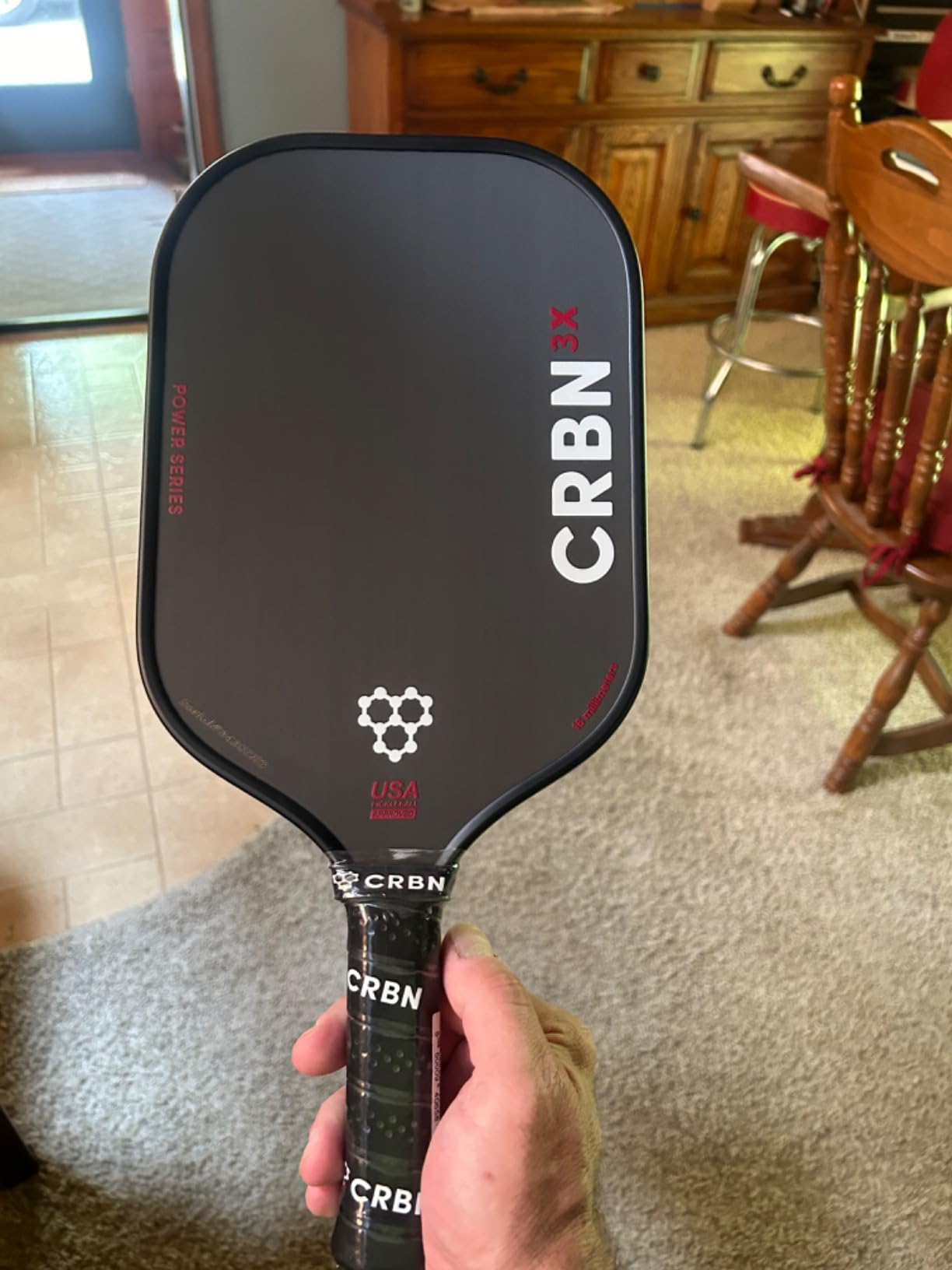
3. CRBN X Series Power – Best for Two-Handed Backhand Doubles
CRBN Pickleball, X Series Power Carbon Fiber Paddle, (3X 14mm)
Carbon fiber face
14mm core
Unibody build
7.8-8.1 oz
5.25 inch handle
Pros
- Expansive sweet spot with real vibration damping
- Strong spin and power for the weight class
- Unibody design feels solid and durable
- Handle length suits a two-handed backhand
- Light enough for quick hands
Cons
- Base handle is small for larger hands
- Very light out of the box so some add balance tape
Two-handed backhand players are usually told to buy a longer handle, and the CRBN X Series is the paddle in this group that answers that instruction honestly. The Dynasty-style handle measures 5.25 inches, and it is long enough that both hands sit on the grip without your bottom hand crowding the throat. That matters more at the kitchen than most spec sheets admit.
The unibody construction is the real story. Instead of a separate neck bonded to the face, the frame is one piece, which stiffens the paddle, removes the weak joint and cuts vibration on mishits. Combined with an expanded sweet spot, it means off-center blocks still come back in play instead of rattling into the net.
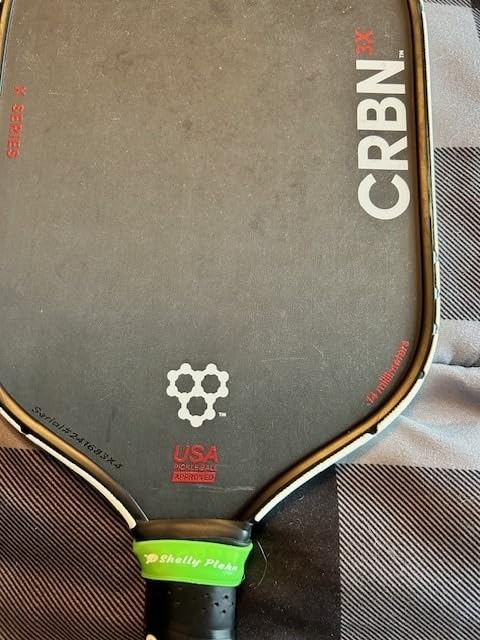
Owners rate it at 4.5 across more than 550 reviews, and the praise is consistent: a large sweet spot, strong spin, solid control-to-power balance and a light, quick-swinging feel. It comes in both 14mm power and 16mm control versions, though the version reviewed here is the 14mm, and a neoprene cover is included. It is USAP approved.
Two practical warnings from user feedback. The base handle circumference of 4.25 inches runs small for larger hands, so budget for an overgrip or added tape. And the face collects dust and ball residue quickly, meaning you will want a paddle eraser in your bag to keep the surface biting.
Why 14mm works here and what it costs
A 14mm core is stiffer and livelier than a 16mm, which means more pace off the face with less dwell time. For a player who wins points by taking the ball early and driving it hard at an opponent’s hip, that trade is worth making. For a pure soft-game player, the same paddle will feel like it is trying to help you hit harder when you do not want that.
The 7.8 to 8.1 ounce range is genuinely light, and some players add balance tape at the handle to firm up control. That is an easy customization, and it is the standard fix when a paddle feels too lively out of the box rather than a sign you bought the wrong one.
When to pick something else
Skip it if your soft game is your strongest weapon, because the lower dwell time makes shaped drops harder to place with confidence. Also skip it if you have large hands and dislike modifying your grip, since the handle will feel cramped before you add anything to it.
Where it shines is a partnership where both of you attack. A 14mm paddle that can finish a ball and block a hard drive gives you more options on the same exchange than a pure control paddle, and the two-handed handle means your backhand side stays strong.
4. Selkirk LUXX Control Invikta – Premium Control With Reach
Selkirk Sport LUXX Control Pickleball Paddle | Carbon Fiber X7 Core
19mm X7 THIKSET honeycomb core
Florek carbon face
InfiGrit surface
4.25 inch grip
Pros
- Excellent control and spin for kitchen play
- Lightweight and well balanced
- Borderless edge feels smooth and responsive
- Large forgiving sweet spot
- Limited lifetime warranty
Cons
- Some users report less spin than expected from the grit surface
- Gold colorway logo can wear or peel with play
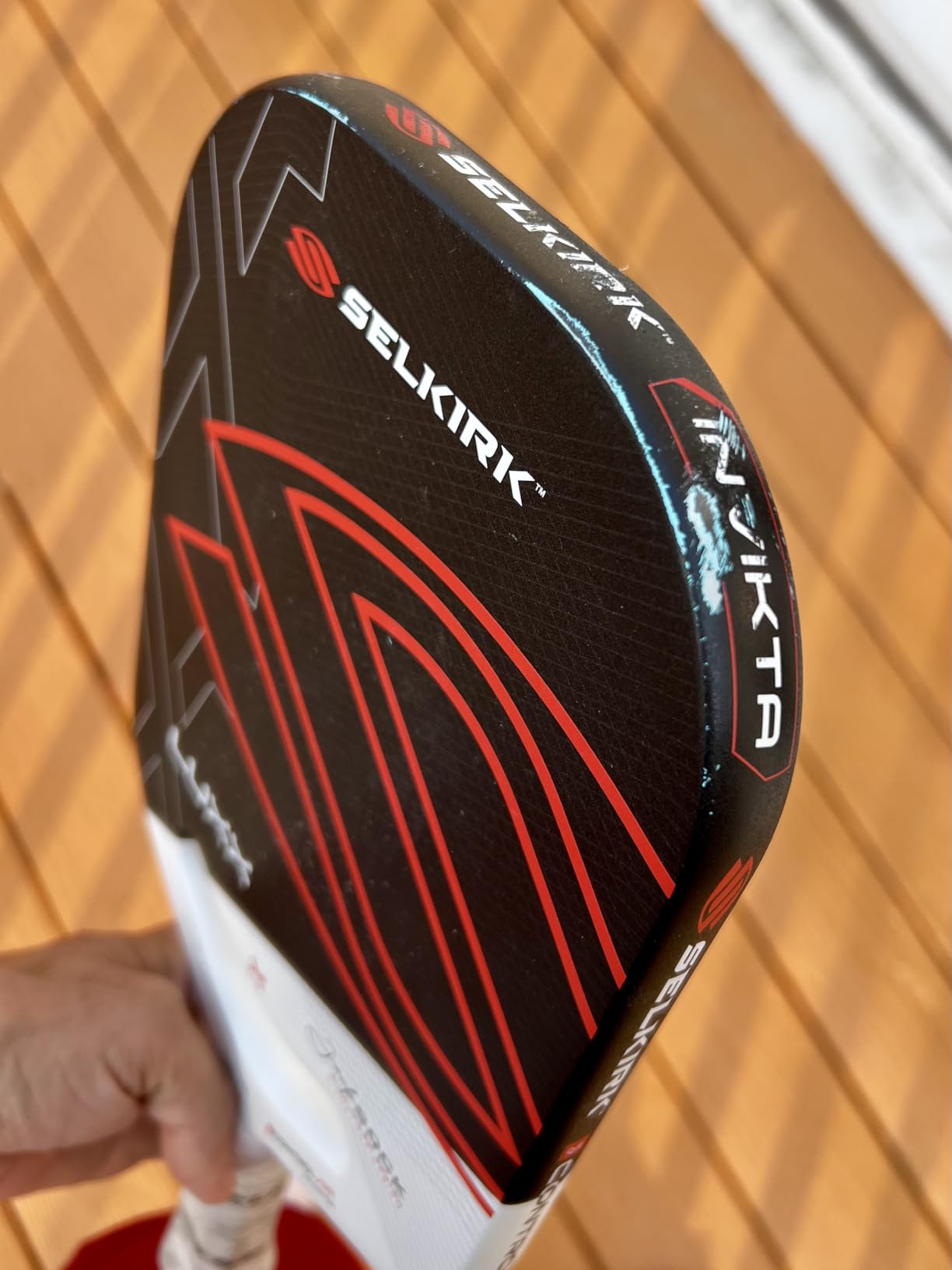
The LUXX Control is the answer for a doubles player who wants a wide, stable platform with a bit of extra reach off the top of the head. The Invikta shape is elongated rather than widebody, and paired with Selkirk’s Florek carbon fiber face and 19mm X7 THIKSET honeycomb core, it produces a calm, quiet paddle that suits players who place the ball rather than hit it.
The borderless edge is the detail I notice most. There is no raised rim to catch the ball, so volleys that clip the edge roll off instead of dribbling into the kitchen. On a 4.0 doubles team that deals with constant fast-hands volleys, that alone feels like an upgrade.
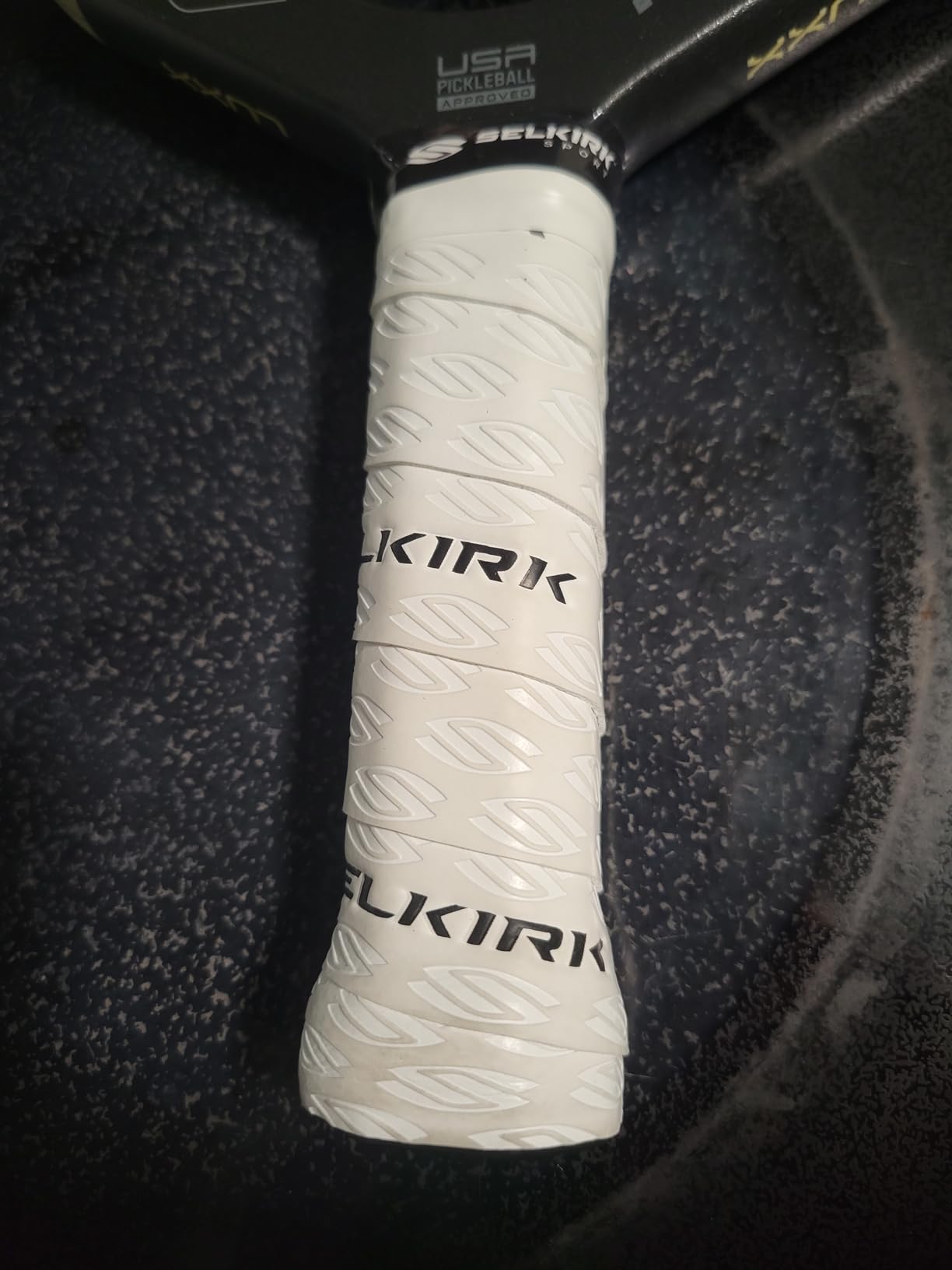
The InfiGrit surface triples raw carbon durability and boosts spin, and an EVA-injected handle and throat absorb vibration while adding a little pop. Owners describe it as lightweight and well balanced with a comfortable grip, and the large sweet spot helps on off-center hits. A limited lifetime warranty is unusual in this category and a genuine plus.
The honest complaint is about grit expectations. A minority of users report less spin than the surface name suggests, which is not unusual when a marketing term promises more than the coating delivers. There is also a durability note on the gold colorway, where the logo wore off after about five months of frequent play, though Selkirk replaced the paddle.
Whether an elongated shape belongs in doubles
Elongated shapes get a bad reputation in doubles, and the criticism is fair for some players. The longer head takes longer to turn over, and if your hands are late, you will misjudge cross-court angles. That is why community consensus leans toward widebody for most doubles play.
It works here because the paddle is light and the sweet spot is genuinely large, so reach comes without a heavy rotational penalty. If you already play a stretched-out paddle in singles and want one paddle for both formats, this is a sensible choice. If you are starting from scratch in doubles, a widebody is the safer recommendation.
Who should pass on it
Pass if you need maximum raw power to finish points, because a 19mm core with a control-first carbon face will not overpower a defended ball. Pass as well if you are the kind of player who plays best with heavy spin on the ball and expects the grit to do heavy lifting on every drive.
For an experienced 3.5-plus doubles player who values feel and consistency over firepower, the control and forgiveness here are the main event. The warranty makes it an easy paddle to commit to.
5. JOOLA Ben Johns CAS 16mm – Best for Doubles Beginners
JOOLA Ben Johns Hyperion Pickleball Paddle – Carbon Surface, High Grit & Spin, Elongated Handle, Polypropylene Honeycomb Core, Custom Cover
CAS grit face
16mm honeycomb core
8.32 oz
Aero Curve head
5.5 x 4.25 inch grip
Pros
- Gritty CAS face imparts strong spin for beginners
- Padded grip stays comfortable in long sessions
- Forgiving sweet spot with solid weight and feel
- Good control on blocks while keeping power
- Cover included
Cons
- Grit surface can smooth out after a couple of months
- Hollow sound when striking the ball hard
This is the paddle I hand to a 3.0 who is upgrading from a wood or cheap plastic paddle and needs the ball to go where they point it. The USAPA-approved Carbon Abrasion Surface generates enough spin to learn placement on, which is the single biggest skill jump when leaving a wood paddle behind. Dinks stop falling into the net because you are no longer guessing at the face angle.
It weighs 8.32 ounces and runs a 16mm Response polypropylene honeycomb core, so the feel is stable and soft without being dead. The Aero Curve rounded head adds a little reach at the top, and hybrid-ply layering tunes the top of the paddle for dinking while the lower plies handle drives. Control on blocks is good, and enough power survives for a putaway.
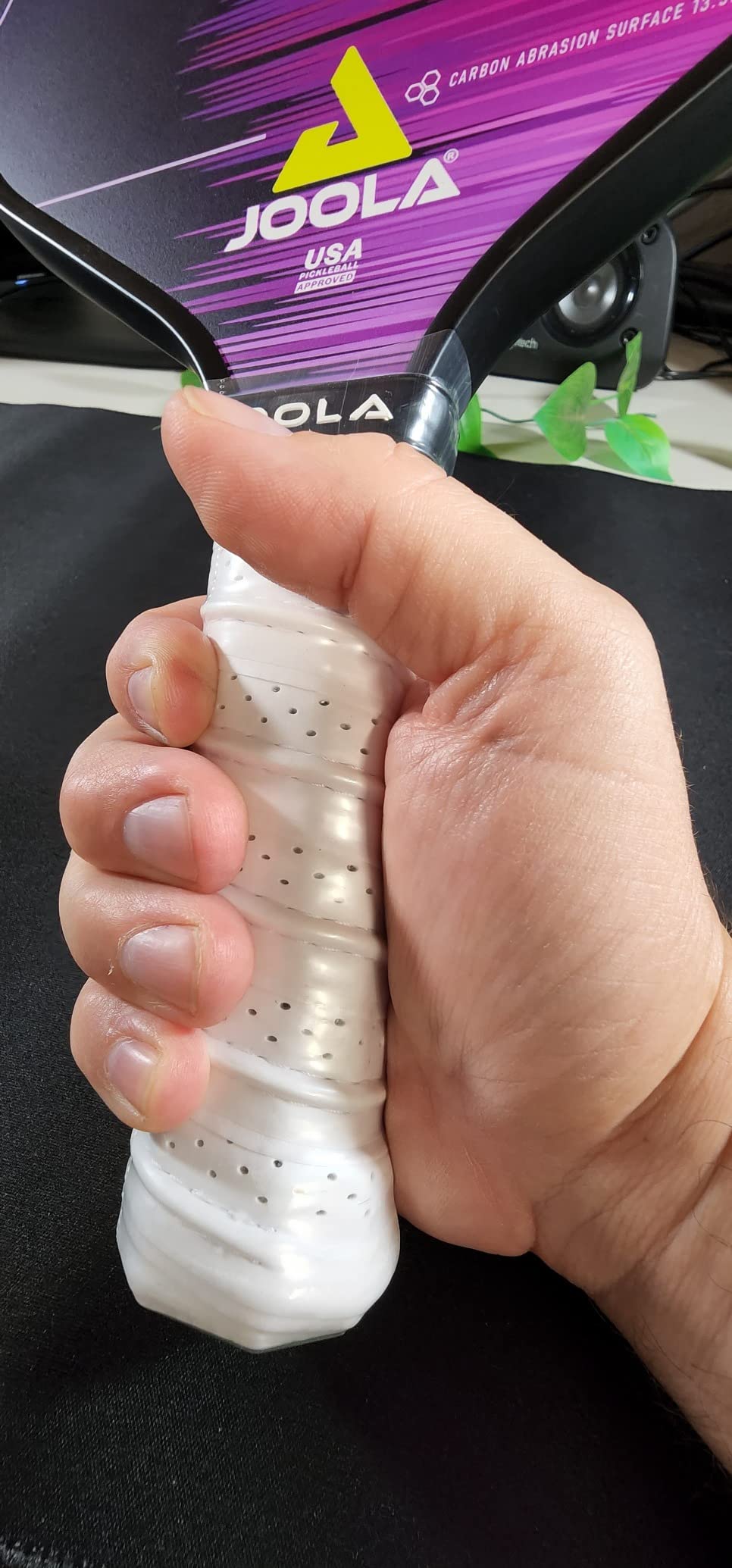
Owners consistently praise the padded Sure-Grip handle for long sessions and the forgiving sweet spot, and a custom paddle cover is included, which is unusual at this level. The 180-day limited warranty is reasonable. At more than 300 reviews with a 4.4 average, it is a well-worn recommendation rather than a risky one.
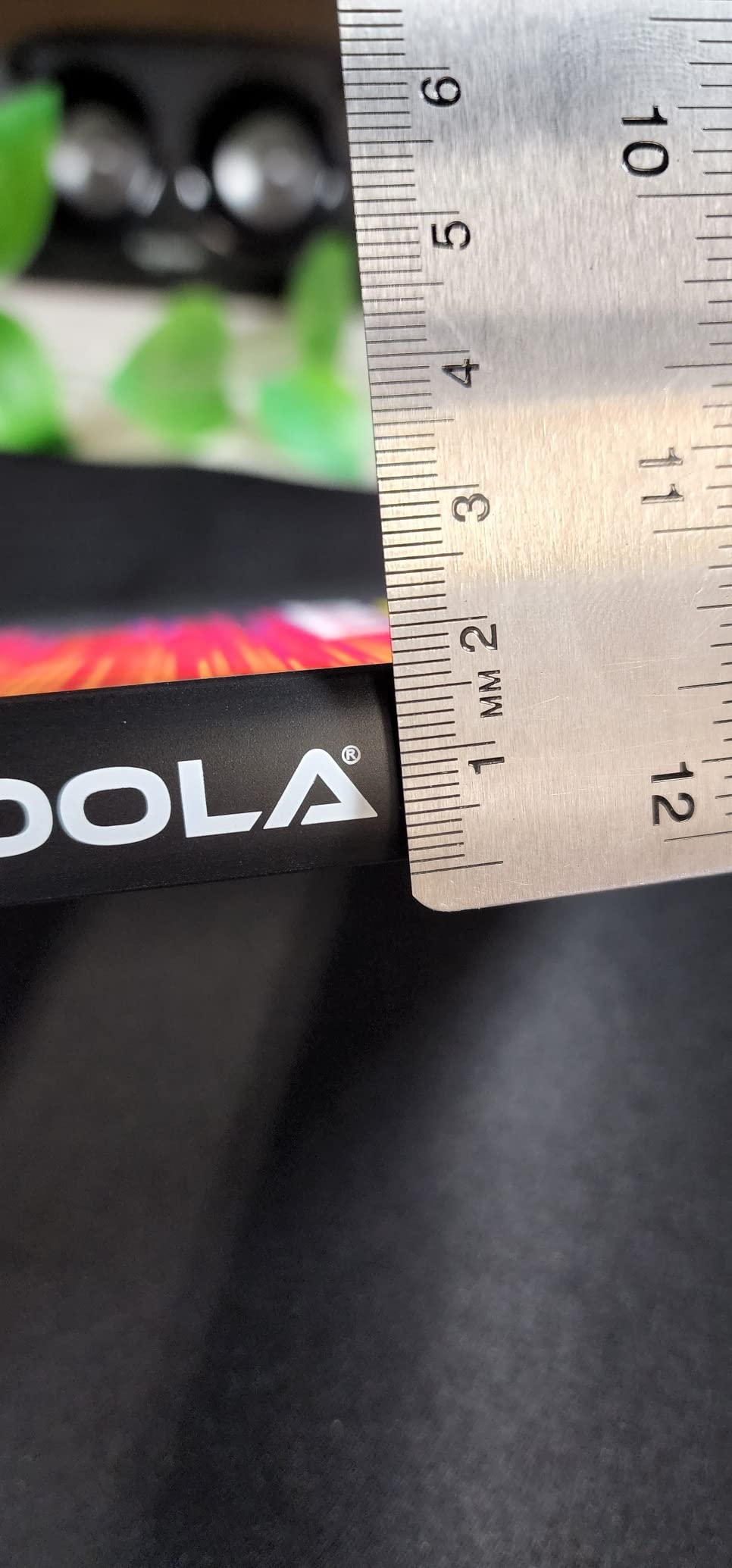
Two things to weigh. Some owners report the gritty surface smoothing out after a couple of months of heavy play and losing spin, and it uses older honeycomb-core technology compared with newer foam-core designs. There is also a hollow sound when you strike the ball hard, which is a feel issue more than a performance one.
What a beginner actually needs to win points
A beginner doubles player needs three things: to keep the ball in play, to aim it away from an opponent, and to avoid shanking balls into the ground. Spin helps because it lets you place a drop short of the net, and grit is the cheapest way to buy that. It is why so many of the most popular entry-level paddles use a textured surface instead of smooth carbon.
The 16mm core is the second piece. It softens contact so a mishit becomes a mediocre shot rather than a rocket into the out-of-bounds line. That forgiving response is what keeps a new player confident enough to keep swinging at the kitchen, which is where doubles points are won.
When to outgrow it
Outgrow it when you start wanting shaped angles on your drop shots rather than simply getting the drop over the net, since a grit-coated surface gives you less dwell time than raw carbon. It is also a step below where you want to be if you are playing in a competitive league with hard drivers, because a 16mm honeycomb core is the first thing to feel dead under pace.
As a first serious paddle it is hard to argue with, particularly for a player who will play two to four times a week. Just know the surface has a limited life under heavy use, and factor in a replacement eventually.
6. Warping Point Neon Gen 3 – Best for Grip, Spin and Topspin Dinks
Warping Point Neon Gen 3 Pickleball Paddle, UPA-A Approved, Triple-Layer T700 Raw Carbon Fiber, 16MM EdgeFusion Core, Thermoformed Frame, Tour-Level Spin, Control & Power
Triple-layer T700 raw carbon
16mm EdgeFusion core
Thermoformed unibody
5.5 inch grip
Pros
- Strong predictable grip for topspin
- slice and roll volleys
- Light and fast swing with good kitchen maneuverability
- Forgiving sweet spot on off-center contact
- Crisp satisfying pop off the face
- Replacement grip tape included
Cons
- Some players find the balance top-heavy or too heavy for quick hands
- Thick edge guard can catch the ball
- No paddle cover included
The Neon Gen 3 is the paddle that plays like a far more expensive one, and the reason is the face. Triple-layer raw T700 carbon fiber in a multi-directional weave gives long dwell time and a genuinely predictable grip, which is what makes topspin drops, slice dinks and rolling volleys repeatable instead of a coin flip. You can brush the ball and trust where it goes.
It is UPA-A approved and built on a 16mm EdgeFusion core, which is a 16mm polypropylene honeycomb reinforced with a high-density EVA perimeter. That perimeter reinforcement is why the frame survives hard drives and why the edge feels solid rather than spongy. The thermoformed unibody frame with EVA-reinforced edges does the rest of the durability work.
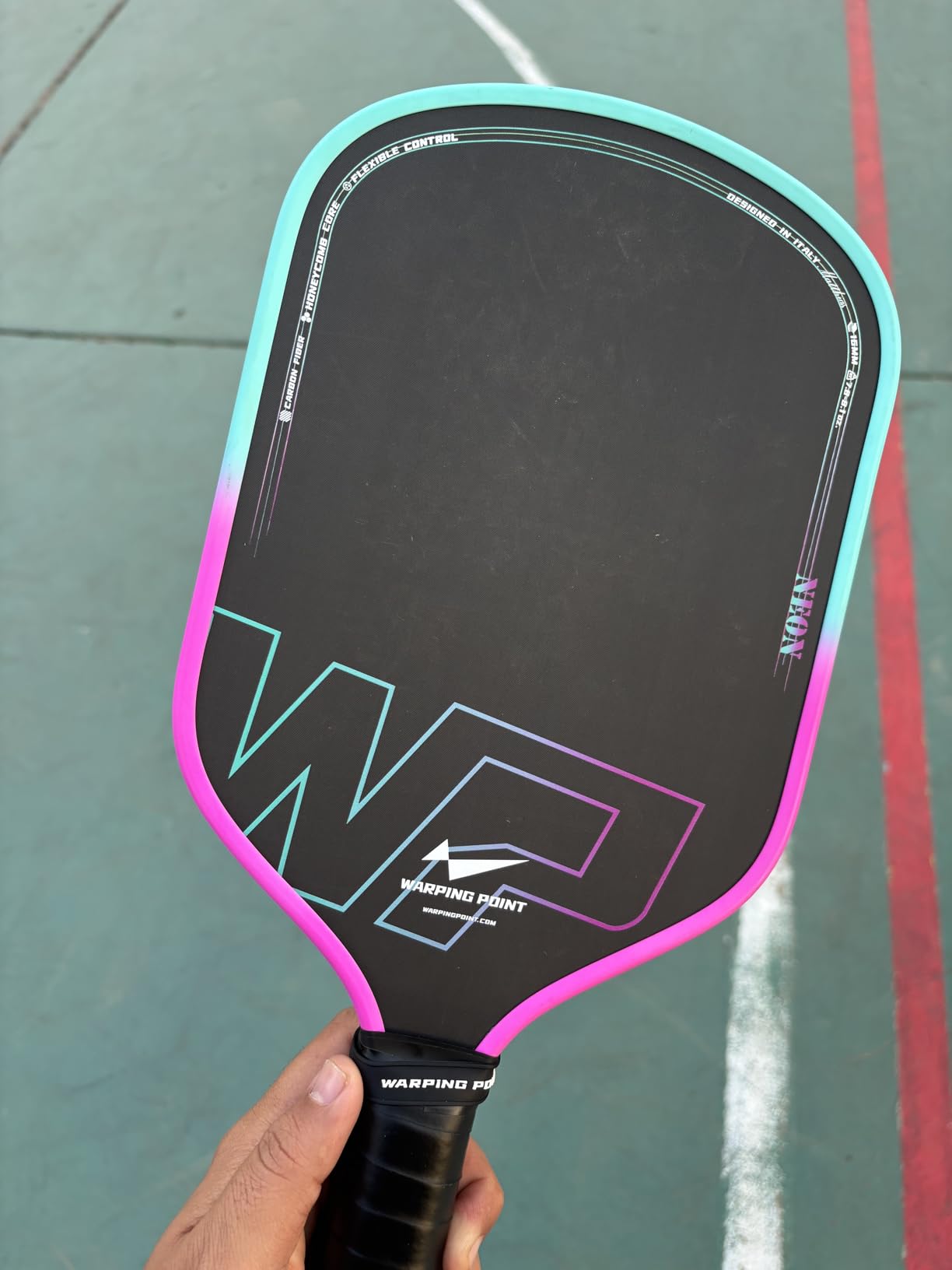
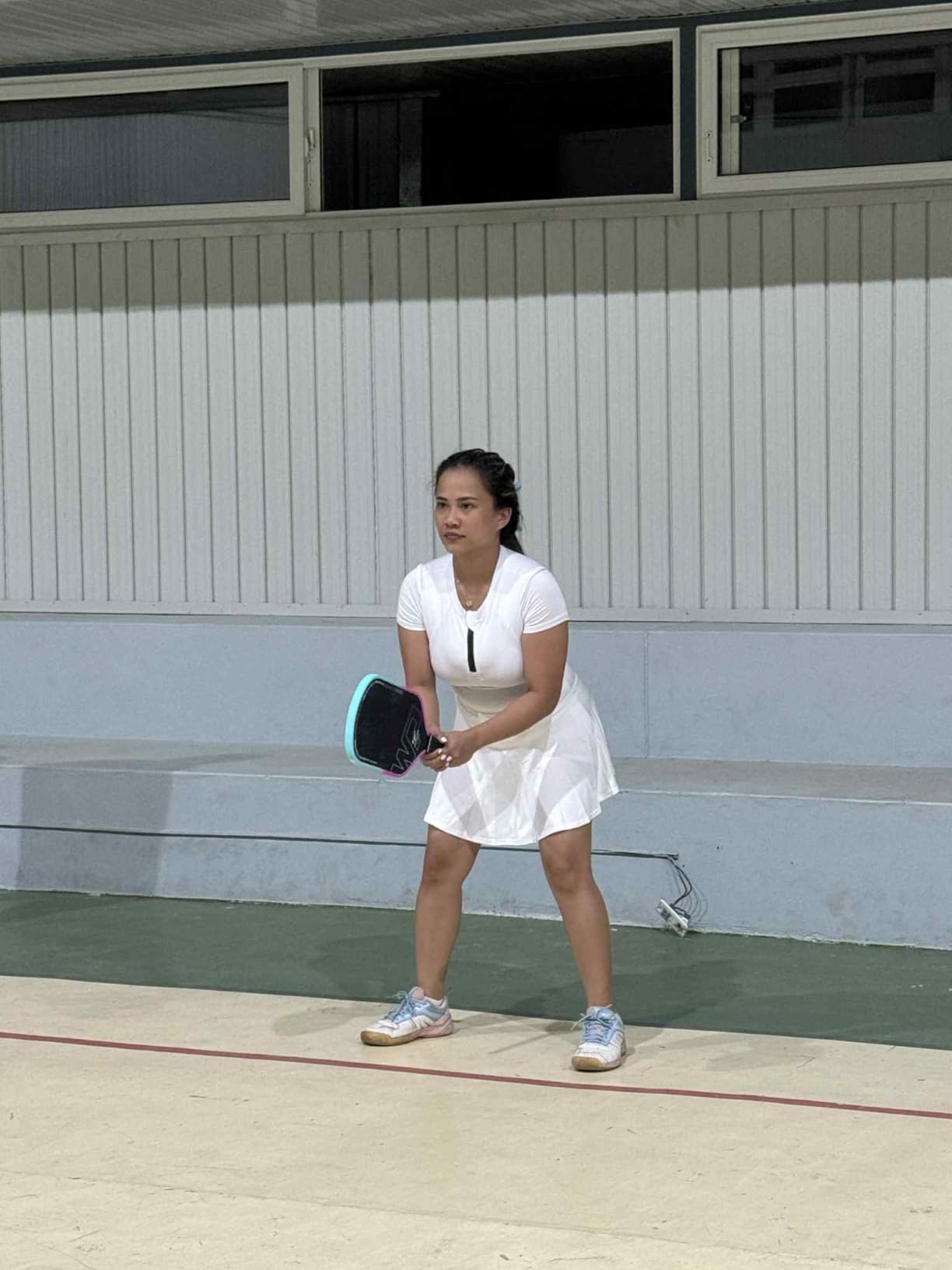
Reviewers describe a light, fast swing with good maneuverability at the kitchen, a forgiving sweet spot on off-center contact and a crisp, satisfying pop. The elongated 5.5 inch octagonal cushion grip is longer than most, and replacement grip tape comes in the box, which is a small touch that saves money later. There is a one-year warranty.
The complaints cluster around balance. Some players find the weight distribution top-heavy, or the overall feel too heavy for genuinely fast hands, and that is a legitimate reason to skip it if your game is all reaction volleys. The thick edge guard can also catch the ball more than a borderless paddle would, and no cover is included.
What the raw carbon weave changes on a drop shot
Dwell time is the quiet number behind shaped dinks. A grippy raw carbon face holds the ball slightly longer at contact, so you have more of the contact window to brush across the ball and send it downward with forward spin. The result is a drop that clears the net by a foot and dives away from a defender standing at the baseline.
Slice and roll volleys are the other side of the same coin. Because the surface grips rather than slides, a brushed volley at the kitchen stays low instead of floating, and that is how you win hands battles without swinging hard. The crisp pop owners describe gives you that control on a paddle that is not trying to be a pure soft-game stick.
When it is the wrong paddle
It is the wrong paddle if you react faster than the head can turn. A 16.4 by 7.55 inch face with a top-heavy feel asks something of your hands in a tight exchange, and a player whose game depends on instant reaction volleys will want something lighter and more compact.
Also consider the edge guard. If you play a lot of ball off the rim during blocks, a thick guard adds drag. For a spin-focused player building a dinking game, though, the face is the main reason to consider it at an intermediate skill level.
7. Diadem Warrior – Best Budget Control Paddle for Doubles
Diadem Warrior Pickleball Paddle, USAPA Approved, Taper Tech Grip, Ghost
19mm 3X L-Core hybrid
Carbon face with grit paint
8 oz
5 inch handle
4.125 inch grip
Pros
- Comfortable narrow grip reduces hand fatigue in long sessions
- Grit paint surface gives usable spin and control
- Wide forgiving coverage for the price
- Light handle-balanced feel suits fast exchanges
Cons
- 19mm core gives less raw power than thinner paddles
- Narrow 4.125 inch grip may feel small for larger hands
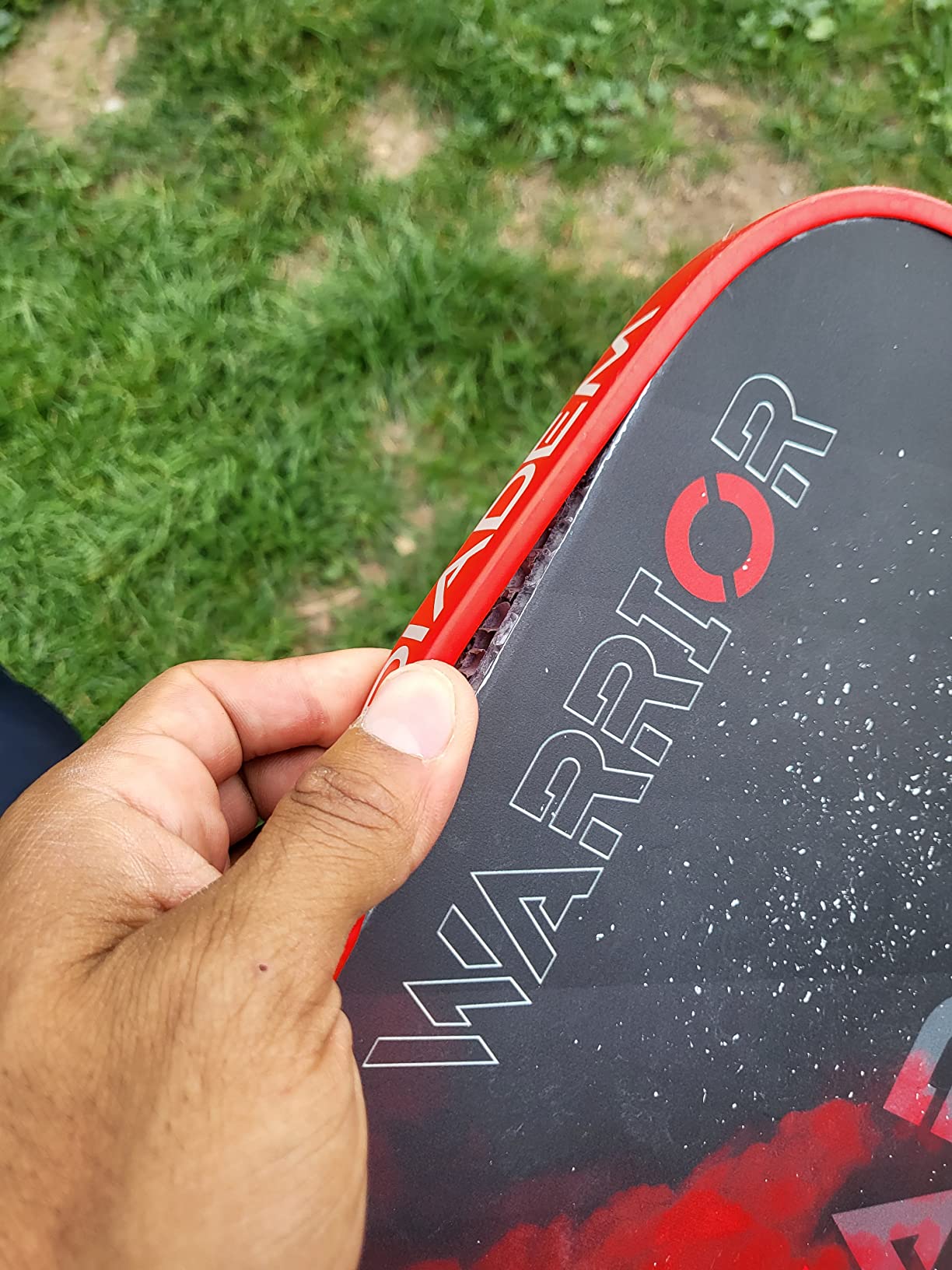
The Diadem Warrior is the entry point on this list, and it is a budget control paddle that holds up well. The 19mm 3X L-Core sandwiches an aramid honeycomb layer between polypropylene honeycomb layers, which is a construction normally seen higher up the price range. It gives you a controlled, quiet paddle at 8 ounces that handles a fast exchange without a hint of wobble.
Handle-based weighting is the detail that makes it work at the kitchen. Instead of putting all the mass in the head, it distributes weight toward the handle, so the swing stays light even though the paddle is long at 16.4 inches. Owners cite a comfortable narrow grip that reduces hand fatigue in long sessions, and that is a real consideration if you play several matches in an evening.
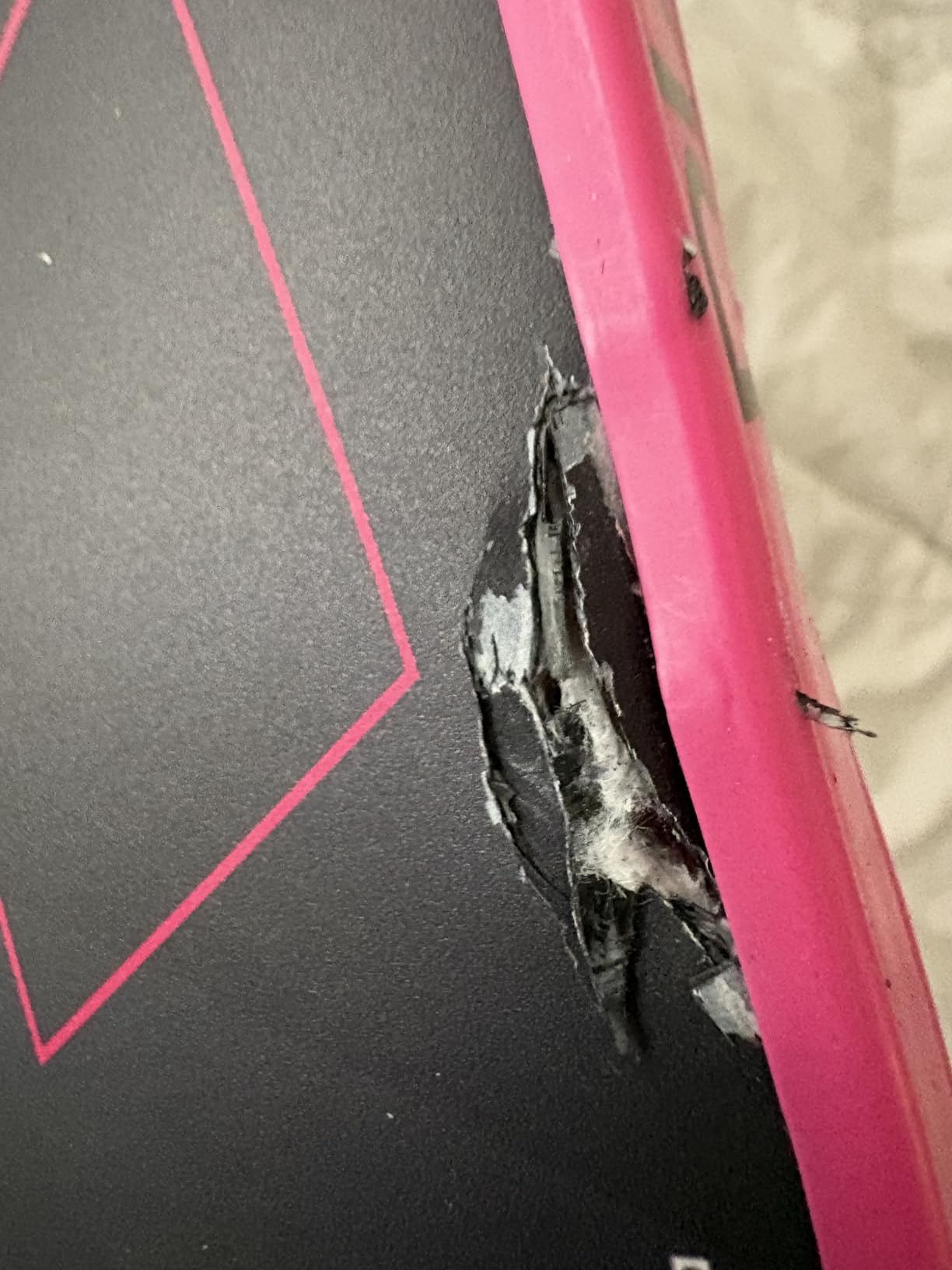
The carbon fiber face with a Grit Paint surface delivers usable spin and control without the aggressive bite of a full abrasion texture, which suits a player who wants placement over topspin. It is USAPA approved for indoor and outdoor play, and at a 4.3 average across roughly 290 reviews it is a consistent, low-risk choice.
The limitation is power, and it is not a small one. A 19mm core simply gives you less raw pop than a 14mm paddle, so if you want to finish balls rather than move them, you will feel the ceiling. The 4-1/8 inch grip circumference also runs narrow, and players with larger hands often add tape.
Where a budget control paddle still wins points
Control paddles win points in doubles through resets. When you can move the ball from the baseline to the kitchen and then keep a low exchange going, you force your opponents into the mistake. That takes placement and consistency rather than power, and it is why control paddles dominate competitive doubles at every level, not just among beginners.
The Warrior’s 19mm core and grit paint face give you exactly the toolkit for that. Dinks stay low, drops land short, and the large relative sweet spot keeps mediocre contact in play. The handle-weighted balance means you can do all of that without a heavy swing that tires your arm out.
When to spend more instead
Spend more when you have moved past a 3.5 rating and want to attack rather than move the ball, because you will outgrow the control ceiling quickly. A 16mm or thermoformed paddle with a raw carbon face gives you more placement control and more bite as your soft game matures.
Until then, the Warrior is a sensible place to start. It is a paddle that teaches good habits, does not punish a developing swing, and stays comfortable for a full season of regular play.
8. Franklin FS Tour Series – Best Midweight All-Rounder for Doubles
Franklin Sports FS Tour Series Dynasty Pro Pickleball Paddle – 14mm – Gray
T700 raw carbon surface
14mm core with foam perimeter
8-8.4 oz
5.6 inch handle
Pros
- Elongated Dynasty handle supports a two-handed backhand
- Good mix of control and power at 8-8.4 oz
- Dampened vibration and solid feel on hard returns
- T700 carbon surface produces noticeable spin
- Solid long-term durability
Cons
- Some players find the head slightly heavy
- One owner reported dead spots and a hollow sound after a few months
The FS Tour Series is the paddle for a player who needs to do everything moderately well. The 14mm polymer core with a high-density foam-injected perimeter enlarges the sweet spot, and the one-piece singular core is fully wrapped in carbon fiber to dampen vibration. On a hard return, the paddle absorbs the hit instead of buzzing up your forearm, and that is what keeps you comfortable in a long match.
It comes in at 8 to 8.4 ounces, which puts it in the middle of the range here, and the Dynasty model has an elongated 5.6 inch cushioned handle at 4.3 inches of circumference. That handle is repeatedly singled out by owners as good for a two-handed backhand, which makes this a strong second option behind the CRBN for that style of player.
The T700 raw carbon surface layer gives natural texture and noticeable spin without a heavy grit coat, and multiple owners cite this as a go-to or backup paddle after long-term play. It is USA Pickleball authorized and developed with Franklin’s pro roster, so it holds up in league settings without any adjustment.
Two honest notes. Some players find the head slightly heavy at the top, which slows their reaction at the kitchen. And one intermediate owner reported dead spots and a hollow sound after about three and a half months of weekly play, which is a single report but worth weighing if you play indoors against hard-surfaced courts.
Why the foam perimeter matters for blocks
Blocks are where a doubles match is often decided, because a team that blocks well takes away the other team’s third-shot drive. A foam-injected perimeter around the core adds material exactly where off-center contact happens, which spreads the impact and keeps the response consistent. You get a steadier block on the edge of the face than a bare core would give you.
The wrapped one-piece core is the other half of the story. Fully wrapping the core in carbon fiber stiffens the paddle and dampens vibration, which reduces the sting in your elbow on mishits. Players coming from a composite or all-fiberglass paddle notice the difference within a few sessions.
When to choose a different paddle
Choose something else if your game is built on soft play, because a 14mm core shortens dwell time and makes shaped drops harder to place. Choose something else if you need a very light paddle for reaction speed, since 8 to 8.4 ounces is a midweight, not a featherweight.
For a 3.0-plus recreational or league player who wants one paddle for both doubles and singles, this is a balanced pick for both. The elongated handle covers the two-handed backhand case, the midweight is forgiving without being sluggish, and the durability reports are generally strong.
9. Franklin Sports C45 – Best for Lightweight Power and Reach
Franklin Sports C45 Carbon Fiber Hybrid Pro Pickleball Paddle – 14mm – Blue
PowerFlex 14mm core
45-degree T700 texture
7.6-7.9 oz
5.7 inch handle
16.3 inch length
Pros
- Rigid responsive double-thermoformed unibody
- 45-degree carbon texture grips across the whole face
- Light weight delivers quick swing speed
- Premium tacky wrap grip reduces vibration
- USAP and UPA approved
Cons
- 4.2 average carries the highest one-star share in this group
- 14mm core is lively for control-first players
The C45 is the lightest option in the roundup, and the published numbers explain why. It lists a swing weight of 104 and a twist weight of 5.7 at 7.6 to 7.9 ounces, and that combination means the paddle turns over fast while resisting twisting on off-center blocks. If your doubles game is about reaction speed at the NVZ line, that is precisely the profile you want.
The double thermoforming process produces a stronger unibody with reduced vibration, and the whole face carries a 45-degree T700 carbon fiber peel-ply texture. A consistent texture across the entire face matters more than most players expect, because a grit coat applied only to the sweet spot leaves the edges slick during fast-hands volleys.
The PowerFlex 14mm polymer core has an inner foam layer for extra pop, and the handle is a generous 5.7 inches on a 16.3 inch paddle. That makes it the longest handle in the group and a natural fit for a two-handed backhand. It is approved by both USAP and UPA for competitive play.
What the measured balance numbers tell you
Swing weight of 104 is genuinely quick, and it is the reason a player with fast hands can hold a volley position at the kitchen against a heavier opponent. Twist weight of 5.7 is the counterweight: it resists the paddle twisting in your hand when you take a ball off center, which is what keeps a block from sailing long instead of dropping back at their feet.
Taken together, low swing weight and high twist weight is the most doubles-relevant combination in this guide. Many players shop by static weight alone and end up with a paddle that is heavy to swing. The distinction matters far more at the kitchen than anywhere else on court.
Where the risk sits
Its 4.2 average is among the lowest of the paddles here, driven by a 13 percent one-star share, so durability and long-term feel deserve scrutiny before you commit. With 190 reviews the sample is on the thinner side, so treat the rating as directional rather than conclusive.
Separately, the 14mm core with a foam layer is lively by design. If your game is built on resets and soft drops rather than drives and putaways, the low power ceiling may frustrate you, and a 16mm control paddle will suit you better. For a power-leaning doubles player who wants the lightest feel available, nothing else here matches it.
10. JOOLA Pro V Perseus – Best for Extra Reach and Speed
JOOLA Pro V Pickleball Paddle – 14mm/16mm – Raw Carbon Fiber Textured Surface – Enhanced Frame & Propulsion Core, USAPA & UPA-A Certified, NFC Chip Enabled, Premium Control & Lightweight Performance
KineticFrame flex construction
16mm raw carbon face
8.1 oz
16.5 x 7.5 inch
5.5 inch grip
Pros
- Elongated shape adds reach and faster swing speed
- Very light at 8.1 oz for a premium carbon paddle
- Textured raw carbon face grips for spin and placement
- Flex frame adds power without giving up control
- Standard and slim grip options available
Cons
- 4.2 average with a 10 percent one-star share
- Elongated head feels less stable for control-first players
The Pro V Perseus is built on KineticFrame construction, which borrows its flex profile from hockey sticks. The frame loads on contact and then releases, and the result is a paddle that adds power without the stiff, dead feeling of a purely rigid unibody. The TechFlex Power core blend handles weight distribution and expands the sweet spot while keeping the face consistent.
At 8.1 ounces on a 16.5 by 7.5 inch elongated face, it is both long and light, which is the combination that produces reach and swing speed together. A 5.5 inch grip with 4.25 inches of circumference works for most hands, and standard or slim grip options are available. It carries both USAP and UPA-A certification and a 12-month warranty through the app registration.
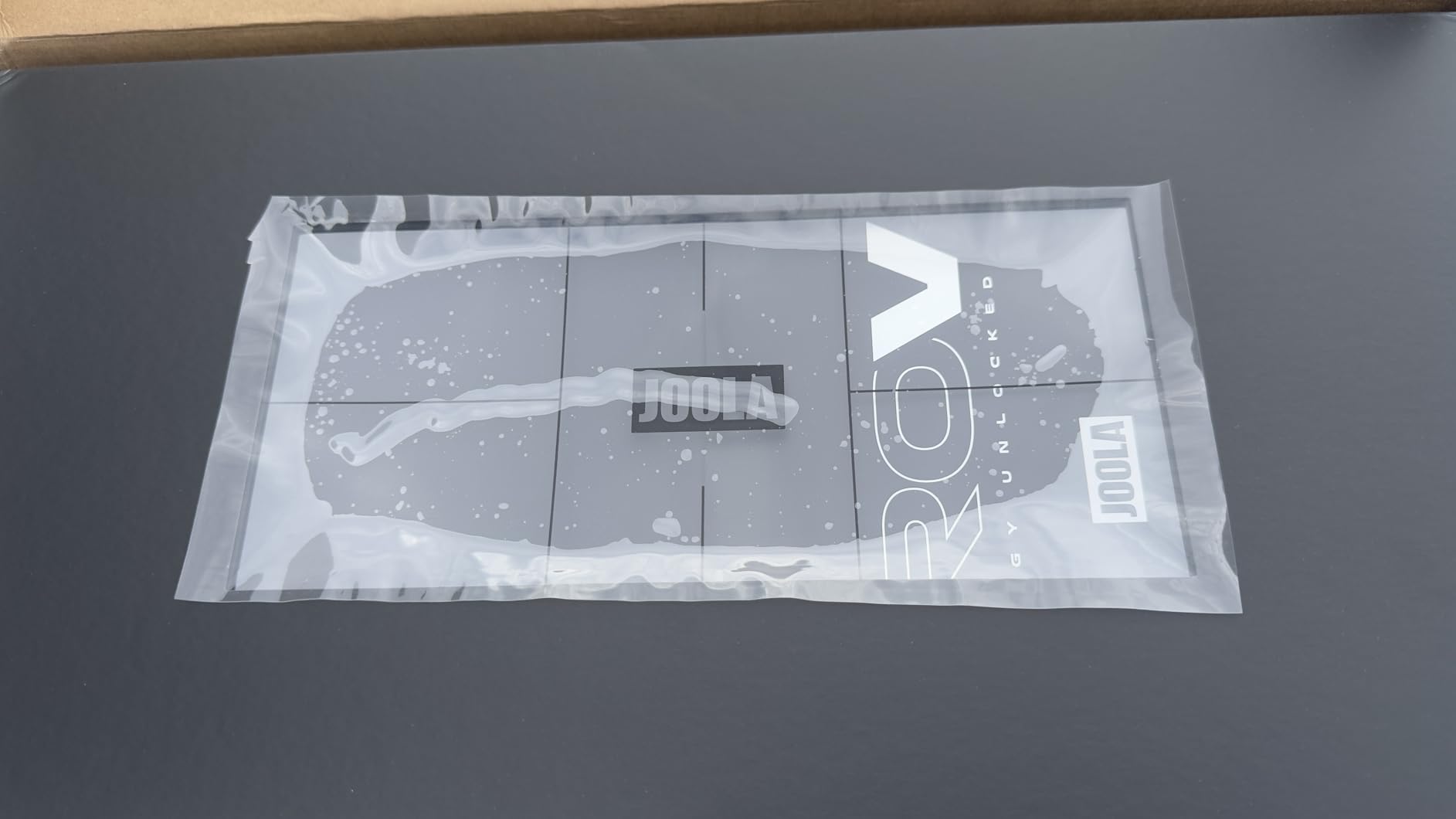
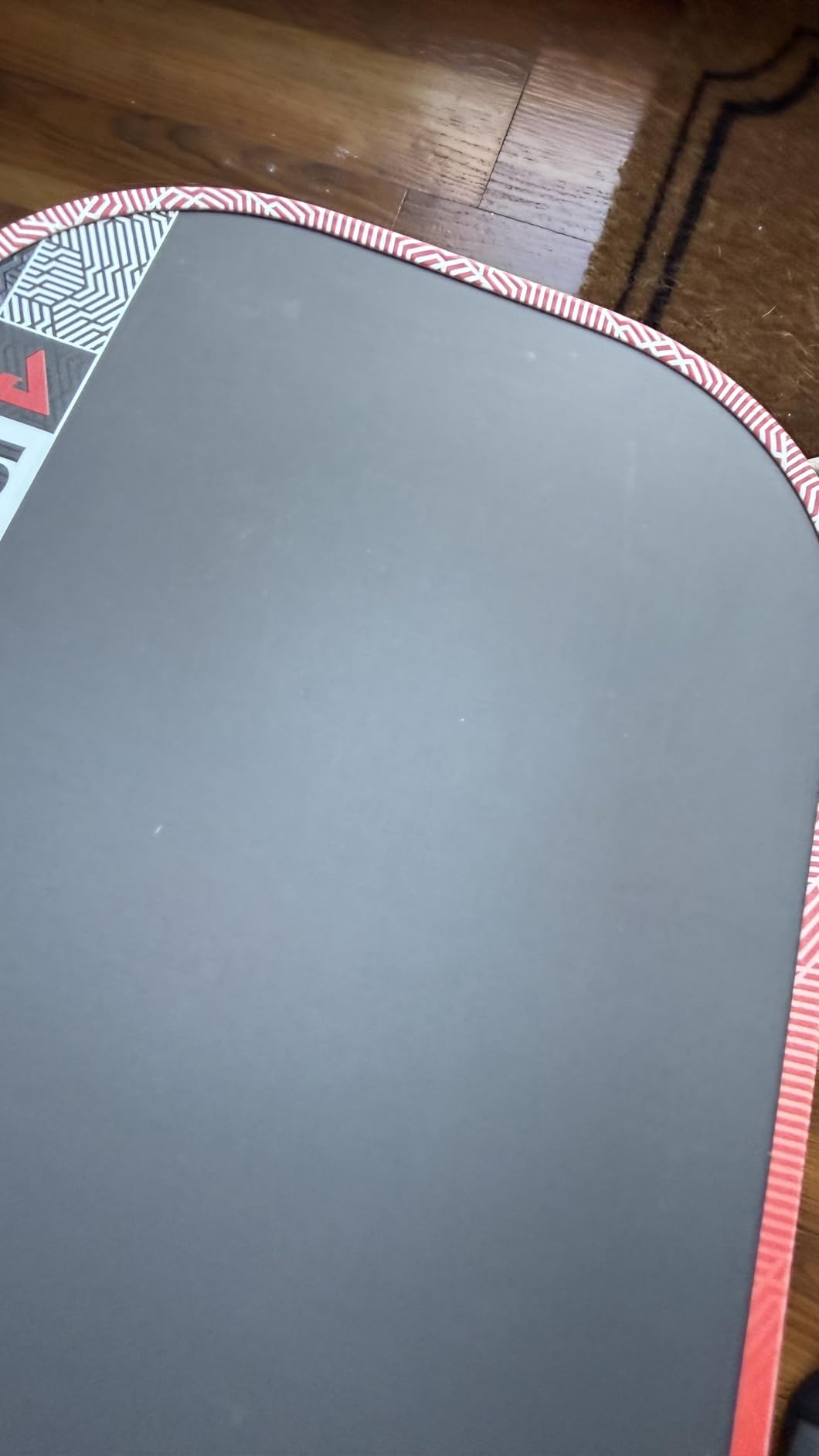
The raw carbon fiber textured face gives high-friction grip for spin and precise placement, and buyers who try it tend to highlight the light weight, elongated reach and grippy face. This is also the only paddle here with an embedded NFC chip for app registration, which is a novelty more than a feature, but it does tie into the warranty registration.
At 147 reviews it sits near the bottom of the group on review volume, and its 4.2 average includes a 10 percent one-star share. Skeptics question whether the premium tier delivers the same jump as cheaper carbon paddles, and that is a fair challenge to put to yourself before buying.
When elongated geometry actually helps at the net
Reach is the honest reason to consider an elongated paddle in doubles. On a cross-court reset, the extra length of the head extends your angle, so a ball that would land on the tape can be pushed wide of the sideline. Against a net player who is cheating toward the middle, that extra half inch of angle is a real point.
Swing speed is the secondary benefit. A longer, lighter head moves through the air faster, which matters when you are reacting to a fast-hands volley rather than planning a shot in advance. Community players are split on elongated paddles for doubles, and the honest summary is that it depends on whether your hands are already fast enough to manage the longer face.
Who should skip it
Skip it if you rely on a compact control shape to keep your blocks stable. The elongated head feels less stable for players who prefer a smaller sweet spot, and a 4.2 average with a meaningful one-star share makes this a riskier buy for a developing player than for an experienced one.
For a 4.0-plus player with quick hands who wants reach, power and spin in one paddle, it delivers. For everyone else, a widebody control paddle will win more points with less effort.
Core Thickness: 16mm vs 14mm for Doubles
Sixteen millimeters is the better choice for doubles, because the thicker core compresses on contact, absorbs incoming pace and gives you more dwell time to shape the ball. Fourteen millimeters is stiffer and livelier, which means more raw power and less control. Most players who move up in skill level do so by adding power, so the 16mm crowd stays competitive longer.
The practical effect shows up in two places. A 16mm paddle turns a well-struck drop into a drop that stays low, while a 14mm paddle often turns the same contact into a floating ball your opponent can attack. And on a blocked drive, the thicker core returns the ball with less pace, which is what makes a three-shot reset possible at all.
Where 14mm wins is when you need to finish points. A 14mm core with a foam layer, like the CRBN X Series or the Franklin C45, gives you more pop off the face and more reach on a putaway. If your game is attack-first, that power ceiling matters. If your game is built on resets, 16mm is the better bet, and several of the highest-reviewed paddles in this guide use it.
Core thickness is not the only variable, though. A 19mm core like the Diadem Warrior’s or the Selkirk LUXX’s sits even further toward control, which is useful if you want maximum forgiveness and you do not need power from the face at all.
Widebody vs Elongated: Which Shape Wins at the Kitchen
Widebody wins for most doubles players. A wider face, typically 8.25 to 8.5 inches across, gives you a larger sweet spot and keeps off-center volleys in play during a fast-hands exchange. The extra width also shortens the distance between your hand and the ball on a reaction volley, which is where doubles points are often decided.
Elongated paddles, 16.5 inches or longer, trade that forgiveness for reach and swing speed. They suit players with fast hands and an attacking game, and former tennis players often gravitate to them out of habit. The adjustment takes time. Players in the community report a five to ten match period to unlearn the baseline instinct and start using the whole face in a soft game.
Look at the shape in this roundup and you can see the spread. The Warping Point Neon Gen 3, JOOLA Pro V Perseus and CRBN X Series are longer and narrower, while the Selkirk LUXX Invikta sits in between with a longer head and a very large sweet spot. Each of those paddles has a reason to be there, and the reason is reach rather than forgiveness.
If you are still deciding, the honest default is a widebody or hybrid control shape at 16mm and around 8 ounces. Move to elongated only once you can consistently keep a cross-court dink inside the sideline lines with a normal swing.
Two-Handed Backhand and Grip Size
For a two-handed backhand, handle length is the criterion that matters. A conventional handle runs about 4.25 to 4.5 inches, which leaves your bottom hand crowding the throat and forces you to choke up. A longer handle in the 5.5 to 5.7 inch range lets both hands sit on the grip and gives you a two-handed backhand that can actually block pace.
Three picks in this group qualify. The CRBN X Series has a 5.25 inch handle, the Franklin FS Tour Series Dynasty runs 5.6 inches, and the Franklin C45 measures 5.7 inches, the longest here. The Warping Point Neon Gen 3 and the JOOLA Pro V both sit at 5.5 inches, which is long enough for most two-handed players as well.
Grip circumference is the other half. Anything at 4.25 inches fits a standard hand, while a 4.1 to 4.125 inch circumference can feel cramped on larger hands, and that is the most common complaint about the Diadem Warrior and the base CRBN handle. The quick test is a one-finger check: wrap your fingers around the grip and see whether you can slide a finger between your ring finger and the base of the hand. If you cannot, add an overgrip.
Two-handed players should also test the weight. A heavier paddle with a long handle feels very different from a light one because both hands are sharing the load. The lightest two-handed options here are the CRBN at 7.8 to 8.1 ounces and the C45 at 7.6 to 7.9 ounces.
Doubles vs Singles: Do You Need Two Paddles?
Most players do not need two paddles, at least not yet. A 16mm control paddle handles singles perfectly well for a recreational or intermediate player, and the extra forgiveness simply makes the baseline game easier to control. Most of the paddles in this roundup, including the top pick, are used by players in both formats.
Advanced singles players want a different set of traits, and the differences are structural. Singles demands reach, so a 14mm core and an elongated face make sense. Singles also rewards power on a deep ball, which is the opposite of the control priority at the kitchen. That is why the 14mm paddles in this list, the CRBN and the Franklin C45, are the ones most likely to be used for both formats.
There is one more difference worth naming. In singles you are often reacting to a ball you hit yourself, so paddle forgiveness matters less than in doubles, where the ball is coming at you off someone else’s racquet at short range. A doubles-specific paddle is optimized for absorbing pace from another player, which is a genuinely different job.
If your singles game is limited to warm-up rounds and you play doubles four times a week, choose for doubles. If you genuinely compete in both, the 14mm options here will serve you in both, and you will not have to learn two paddles.
Matching Weights With Your Doubles Partner
Matching your paddle weight to your partner’s within about 0.3 ounces is the most practical doubles-only rule in this guide, and most players have never heard it. When both players at the net use paddles of similar weight, your reactions arrive at the same moment, which is how you win middle balls in a fast-hands exchange. A large weight mismatch means one of you is always half a beat late.
The second decision is whether your partnership pairs a control paddle with a power paddle or runs matched styles. A control-and-power pairing creates openings: your soft drops force the opponent up, and your partner’s power paddle punishes the defensive ball that comes back. Two control paddles make it very hard for opponents to attack, and two power paddles make it very hard for opponents to survive.
Partnership height matters less than people expect, but sweet spot height is worth matching if you are very different sizes. A tall player with a low sweet spot and a shorter player with a high sweet spot can struggle to exchange middle balls, because you are both presenting the same vertical window.
Nothing about this requires identical paddles. The CRBN at 7.8 to 8.1 ounces and the Warping Point Neon Gen 3 sit close enough in weight to pair well, while the heavier 8.3 ounce JOOLA Hyperion is a better match for the C45 at 7.6 to 7.9 ounces than it is for the lightest paddle on the list.
How to Choose a Doubles Paddle by Skill Level
At a 3.0 rating, buy forgiveness and comfort rather than power. The JOOLA Ben Johns CAS 16mm and the Diadem Warrior are the sensible choices here, because both tolerate bad contact and both have grips that stay comfortable over several matches. You are still building the stroke, and a paddle that punishes timing slows that down.
At 3.0 to 3.5, most players outgrow a wood or cheap composite paddle and want something with grip and a modern core. The JOOLA Ben Johns Hyperion is the pick, since it blends control and power and has a 16mm core that stays quiet under pace. The Vatic Pro Prism is the alternative if your partner is already the soft-game player on the team.
At 3.5 to 4.0, control and placement start to matter more than raw power, and this is where the 16mm and 19mm paddles pull ahead. The Vatic Pro Prism 16mm and the Selkirk LUXX Control Invikta both suit this level, and the Warping Point Neon Gen 3 works well if you are developing a topspin drop shot.
At 4.0 and above, choose based on your role. Control players take the Selkirk LUXX or the Vatic Pro Prism. Attack players take the Franklin C45 or the CRBN X Series. Two-handed backhand players should start from the CRBN, the FS Tour Series or the C45 based on weight preference. Former tennis players should pick a widebody or hybrid 16mm and accept a slower adjustment period.
Beyond 4.0, the only advice that matters is to pick a paddle you can still play with when you are tired. Consistency at the end of a long match is worth more than any spec advantage, and that is what a control-first doubles paddle is for. If you would rather practise than queue for court time, our picks for the best pickleball machines let you feed yourself a steady dinking drill in your driveway.
Frequently Asked Questions
Is a 14mm or 16mm paddle better for doubles?
A 16mm paddle is better for doubles because the thicker core absorbs pace and gives you more dwell time to shape dinks and resets. A 14mm paddle is livelier and offers more raw power, which suits players who attack rather than reset. Most doubles players stay on 16mm as they improve, and move to 14mm only when they need a higher power ceiling.
What kind of pickleball paddle should I use for a two-handed backhand?
Look for a handle in the 5.5 to 5.7 inch range so both hands sit on the grip without crowding the throat. A midweight or light paddle around 8 ounces also helps, since both hands share the load. In this roundup the CRBN X Series, the Franklin FS Tour Series Dynasty and the Franklin C45 all have handles long enough for a two-handed backhand.
What is the best widebody pickleball paddle?
For most doubles players, the best widebody option is the Vatic Pro Prism 16mm. Its 16mm core with foam-injected walls, a wide forgiving face and an 8 oz weight pair well for most doubles players. If you want more reach than width, the Selkirk LUXX Control Invikta offers a long face with a very large sweet spot. Widebody shapes dominate community recommendations for doubles because they keep off-center volleys in play.
Do pro pickleball players use widebody paddles?
Yes, widebody paddles are common at the professional level because forgiveness at the kitchen decides so many points. Even elongated tournament paddles are designed to enlarge the sweet spot, since a 16.5 inch face with a low center of gravity behaves much more like a widebody than a narrow one. Shape alone does not tell you much, so judge a paddle by where its sweet spot actually sits.
Do pro pickleball players use 14mm or 16mm paddles?
Both are used at the professional level, and the choice usually reflects role rather than skill. Control-focused players use 16mm so they can reset and place the ball, while attacking players use 14mm to finish points and put the ball away. Several of the paddles in this roundup, including the JOOLA Ben Johns Hyperion and the Vatic Pro Prism, are sponsored by or used by touring professionals in 16mm.
Should I use a different paddle for doubles vs singles?
Most players do not need two paddles. A 16mm control paddle handles singles fine for recreational and intermediate play, and the paddles in this roundup cover both formats. Advanced singles players often prefer a 14mm core and an elongated face for reach and power, so if you compete in both formats, a 14mm model such as the CRBN X Series or the Franklin C45 serves you well in each.
Before you buy, make sure the rest of your kit keeps up. A steady court matters as much as the paddle, and our picks for the best pickleball nets will keep ball behavior consistent as you change paddles. If you are still deciding between complete setups, the best pickleball paddle sets bundle paddles with bags and spare balls for new players.
Final Verdict: The Best Pickleball Paddles for Doubles Play
The Vatic Pro Prism 16mm is the best pickleball paddle for doubles play overall. Its 16mm core with foam-injected walls, raw T700 carbon face and 8 oz weight give you the control, forgiveness and hand speed that kitchen play demands, and its 4.6 average across more than 1600 reviews is the strongest combination of rating and volume we found.
Choose the JOOLA Ben Johns Hyperion if you want more power available to you in fast-hands exchanges. Choose the CRBN X Series or the Franklin C45 if you attack and you play a two-handed backhand. Choose the Selkirk LUXX Control Invikta if you want reach with a large sweet spot, the Warping Point Neon Gen 3 if your game is built on topspin dinks, the Diadem Warrior if you are starting out or building a budget kit, and the Franklin FS Tour Series if you want one midweight paddle that handles both formats.
Whichever one you pick, give it two weeks of doubles drills before you judge it. Every paddle above is a tool for placing the ball, and the fastest way to improve is to find the one that lets you place it while you are moving. Check the current price for your pick below, then get to the court.