
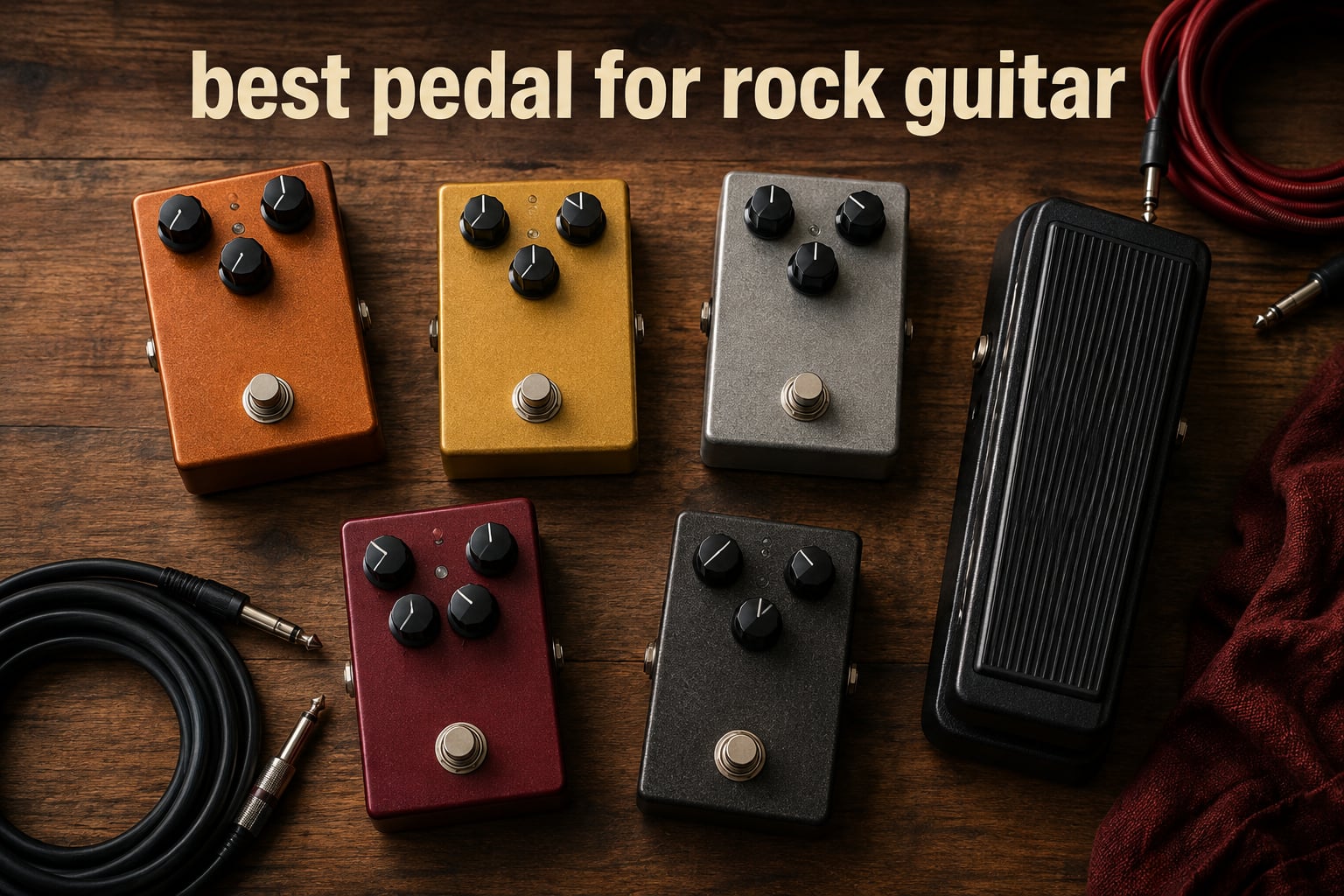
Your guitar amp only takes you so far when chasing that big, saturated rock tone. The pedalboard is where most of the magic happens, and finding the best pedal for rock guitar comes down to matching your amp’s voice with the right kind of drive, fuzz, or expressive filter. I have spent years testing stompboxes on stage and in the studio, and I can tell you this: the rock pedal world is way less mysterious once you understand how each category shapes your signal.
This guide walks through the eight pedals our team has used the most for rock tones, from classic distortion workhorses to expressive wahs and screaming fuzzes. We picked these based on real-world testing with single coils and humbuckers, through tube amps and solid-state combos, in cover bands and original projects. Every recommendation below solves a specific problem rock players run into, and each one has earned its place on working pedalboards.
Whether you play classic Angus Young-style crunch, modern metal chug, bluesy lead work, or 70s-inspired rock, the right pedals can take a clean amp and turn it into a tone machine. We also built in a buying guide that covers pedal order, true bypass versus buffered designs, and power supply basics, plus an FAQ that answers the questions we hear most often in guitar shop conversations and online forums.
Top 3 Picks for Rock Guitar Pedals in 2026

BOSS DS-1 Distortion
- Hard-edged attack
- Smooth sustain
- Versatile tone control
- Analog circuitry

BOSS SD-1 Super Overdrive
- Tube-like warmth
- Asymmetrical clipping
- Stacks with drive pedals
- Five-year warranty

Pro Co RAT2 Distortion
- Subtle drive to fuzz
- Filter tone shaping
- Silent switching
- Tank-like build
Best Pedals for Rock Guitar in 2026 at a Glance
| Product | Specifications | Action |
|---|---|---|
| BOSS DS-1 Distortion |
|
Check Latest Price |
| BOSS SD-1 Super Overdrive |
|
Check Latest Price |
| Pro Co RAT2 Distortion |
|
Check Latest Price |
 Boss BD-2 Blues Driver Boss BD-2 Blues Driver |
|
Check Latest Price |
 Dunlop Cry Baby Standard Wah Dunlop Cry Baby Standard Wah |
|
Check Latest Price |
 Boss MT-2 Metal Zone Boss MT-2 Metal Zone |
|
Check Latest Price |
 EarthQuaker Devices Plumes Overdrive EarthQuaker Devices Plumes Overdrive |
|
Check Latest Price |
 Electro-Harmonix Big Muff Pi Electro-Harmonix Big Muff Pi |
|
Check Latest Price |
1. BOSS DS-1 Distortion — The Classic Rock Workhorse
BOSS DS-1 Distortion Compact Distortion Pedal
Hard-edged attack
Smooth sustain
9V analog
5-year warranty
Pros
- Legendary tone since 1978
- Hard-edged attack with smooth sustain
- Versatile tone control
- Works as a booster at low gain
- BOSS five-year warranty
- Tank-like build quality
Cons
- Never gets fully clean
- Not ideal for extreme metal
I have owned a DS-1 on my pedalboard for over a decade, and it is the single pedal I would grab if I could only keep one. The hard-edged attack cuts through a mix like few other drives can, and the smooth sustain is exactly what classic rock rhythm work needs. The tone knob sweeps from bright and aggressive to warm and creamy, which makes the pedal far more useful than its three-knob layout suggests.
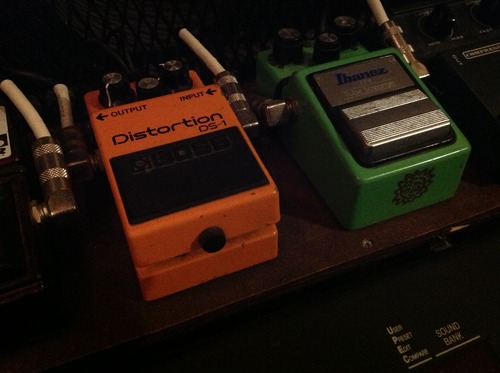
The DS-1 works beautifully with humbuckers and single coils alike. Plug a Strat into a clean Fender amp and you get Stevie Ray Vaughan territory. Run a Les Paul through a Marshall JCM800 and you land somewhere near Angus Young’s tone. It also stacks well with a tube screamer in front for a thick, saturated lead voice. I have used this pairing on dozens of gigs and it never fails.
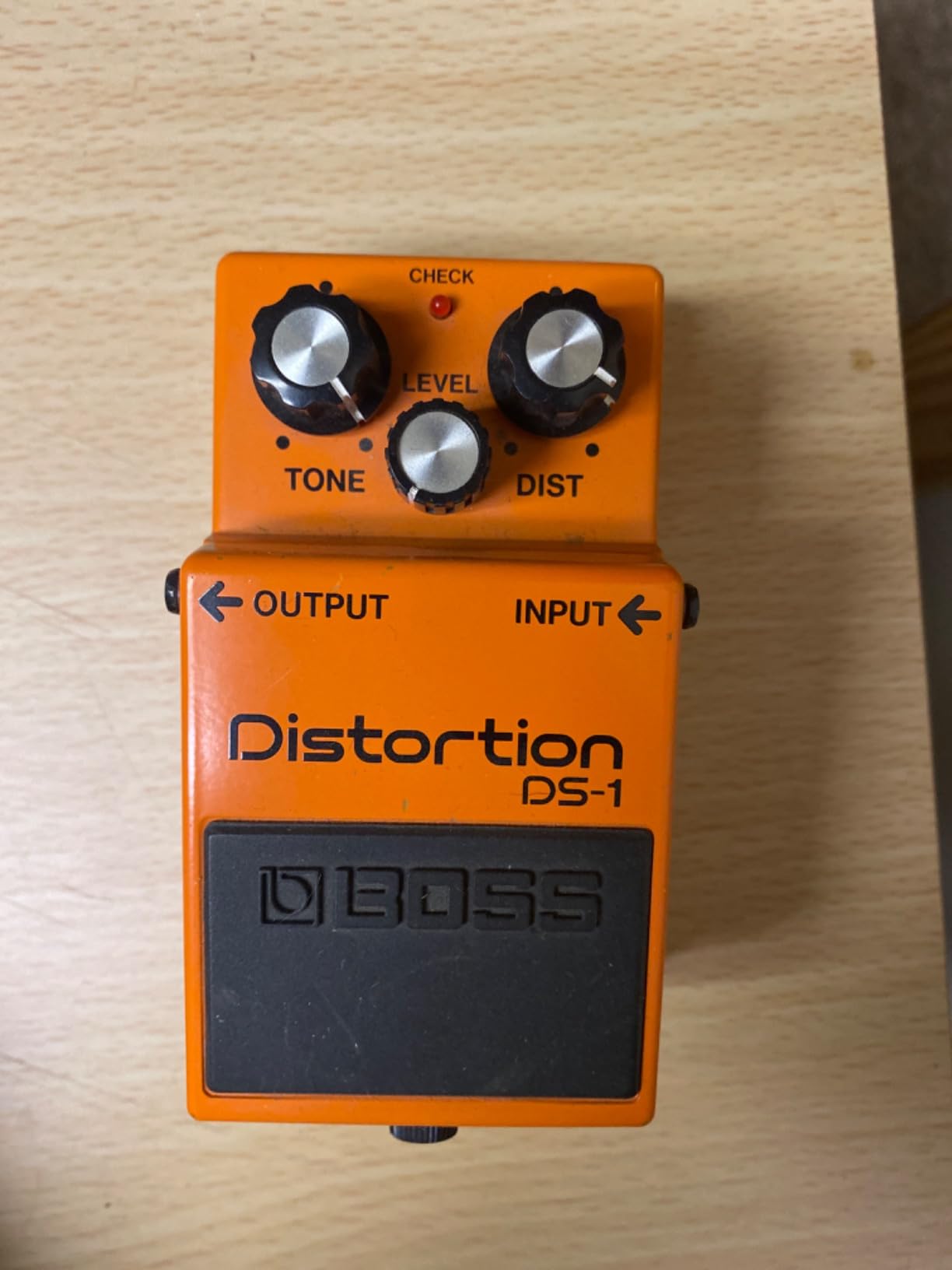
What I appreciate most is the predictability. The DS-1 responds to your picking dynamics the same way every night, and it holds up under abuse. The five-year BOSS warranty is also a real safety net for gigging players. Forum users consistently call it the most reliable distortion on the market for the price, and after a decade of road use I agree.
The only real downsides are well documented. The pedal never goes fully clean, even at the lowest gain setting, and it does not deliver the kind of scooped modern metal tone some players want. If you are chasing Djent or modern progressive metal, you need something else. For everyone else, the DS-1 is the safest, most versatile choice.
Who the DS-1 works best for
This pedal is ideal for classic rock and hard rock players who want one box that covers a lot of territory. If you play in a cover band and need to switch between clean boost, bluesy breakup, and classic rock crunch, the DS-1 does all three in one pedal.
Where the DS-1 falls short
Players chasing modern metal tones with tight palm muting and scooped mids will not be happy. The DS-1 has more midrange character than metal-focused pedals, which is exactly what makes it great for rock but a poor fit for Djent or progressive metal styles.
2. BOSS SD-1 Super Overdrive — The Tube Screamer Alternative
BOSS SD-1 SUPER Overdrive Compact Overdrive Pedal
Asymmetric clipping
Focused midrange
9V analog
5-year warranty
Pros
- Genre-defining classic sound
- Tube-like warmth
- Versatile across genres
- Stacks well with drives
- BOSS five-year warranty
- Excellent price
Cons
- Modest gain output
- Treble-leaning character
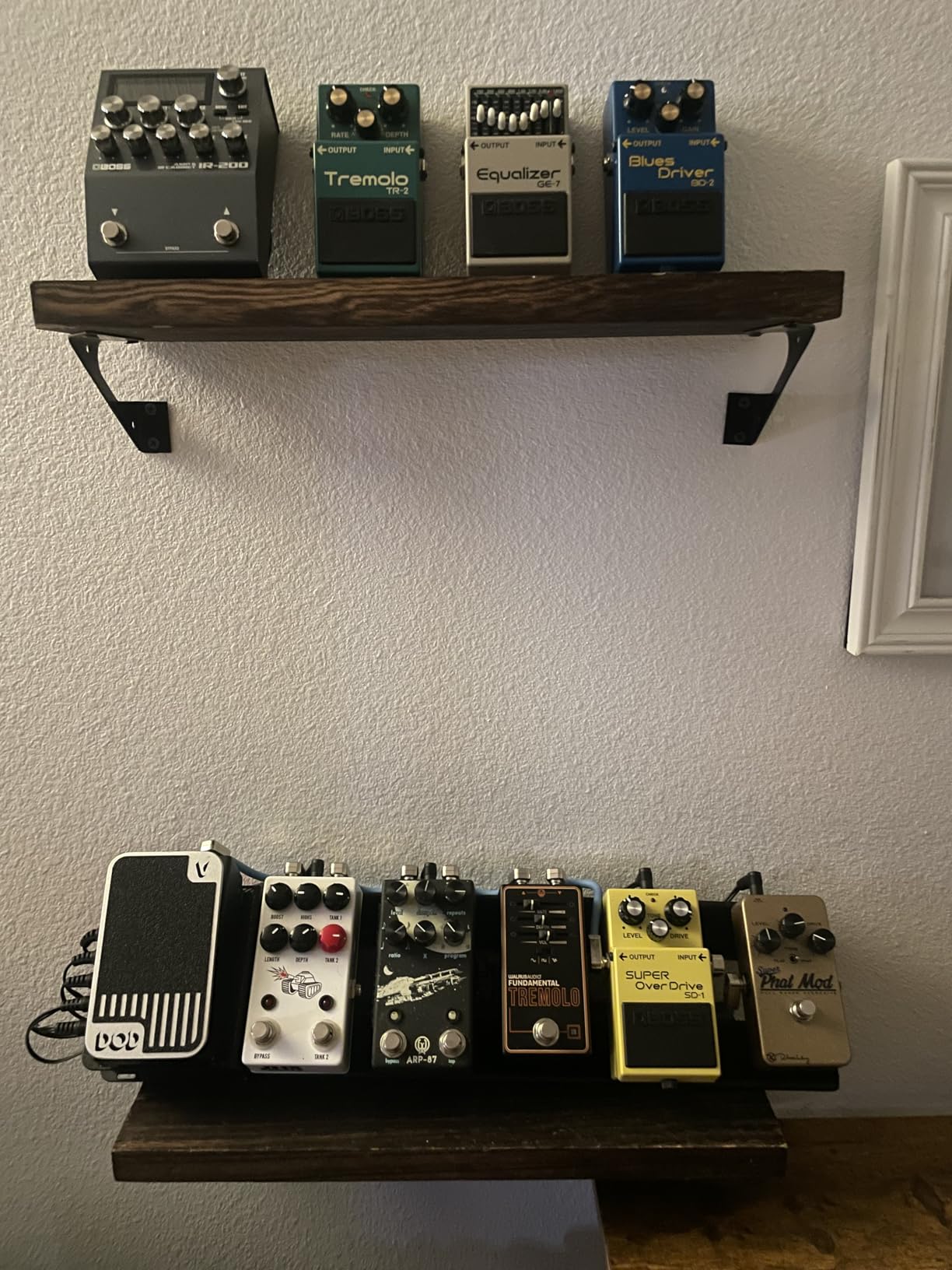
The SD-1 has been around since 1981 and for good reason. Its asymmetrical clipping circuit produces that warm, tube-like breakup that made the original TS-808 famous, but with a slightly different voice that many players actually prefer. I keep one on my board as a clean boost in front of an already-crunchy amp, and it pushes my Marshall into singing lead territory without ever sounding fizzy.
For players who want a pedal that adds gain without totally overhauling their amp’s character, the SD-1 is a great pick. It excels at pushing a tube amp that is on the edge of breakup into full classic-rock saturation. The focused midrange cuts through a band mix, which is exactly what rhythm players need. The treble-leaning character brightens up dark-sounding humbuckers without becoming harsh.
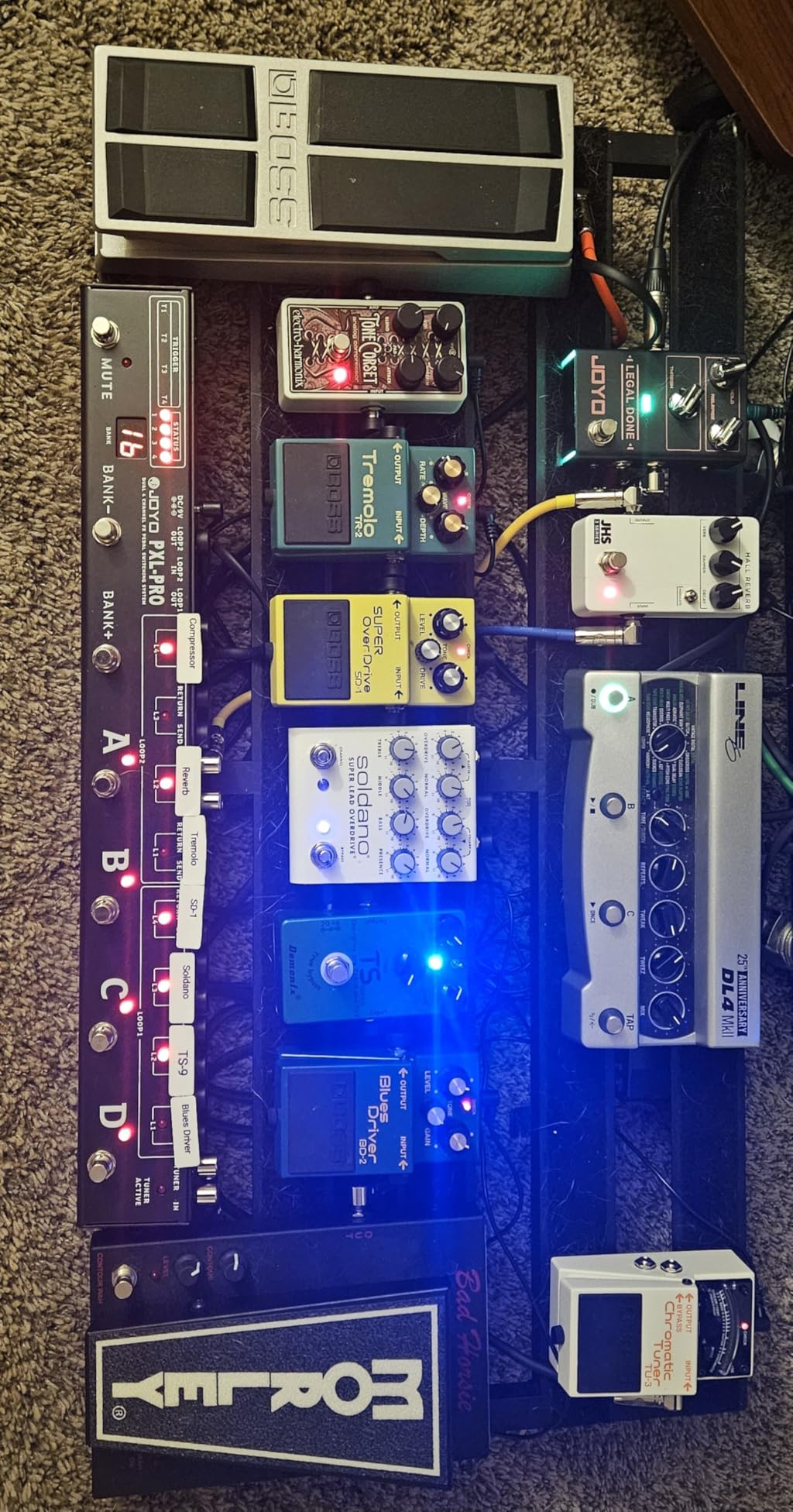
Where the SD-1 really shines is in stacking. Run it into a DS-1, RAT, or any other distortion and you get a richer, more complex tone. This is how most professional rock players build their drive section. Two cheap pedals in series can outperform one expensive unit when you set them up right, and the SD-1 was designed for this exact use case.
The main limitation is gain. The SD-1 is a low-to-medium gain pedal and will not deliver thick modern distortion on its own. It also has a brighter, airier character than a Tube Screamer, which some players love and others find too glassy. If you want warm and smooth, pair it with a darker drive in front.
Who the SD-1 works best for
Players who already have a gain channel they like and want a pedal that pushes it harder will love the SD-1. It is also perfect for blues-rock and classic rock rhythm tones where you want a focused midrange punch.
Where the SD-1 falls short
If you need a one-stop distortion solution for heavier rock styles, the SD-1 alone will leave you wanting more gain. It is a specialist tool, not an all-in-one box. Modern metal players will need to stack it with another drive or look at the MT-2 instead.
3. Pro Co RAT2 Distortion — The Versatile Workhorse
Pro Co RAT2 Distortion Pedal
Filter tone control
Silent switching
Analog circuit
9V power
Pros
- Subtle drive to near-fuzz
- Powerful filter control
- 100 percent silent switching
- Tank-like build
- Excellent value
- Works with any pickup
Cons
- Filter orientation feels reversed
- Bigger enclosure than most
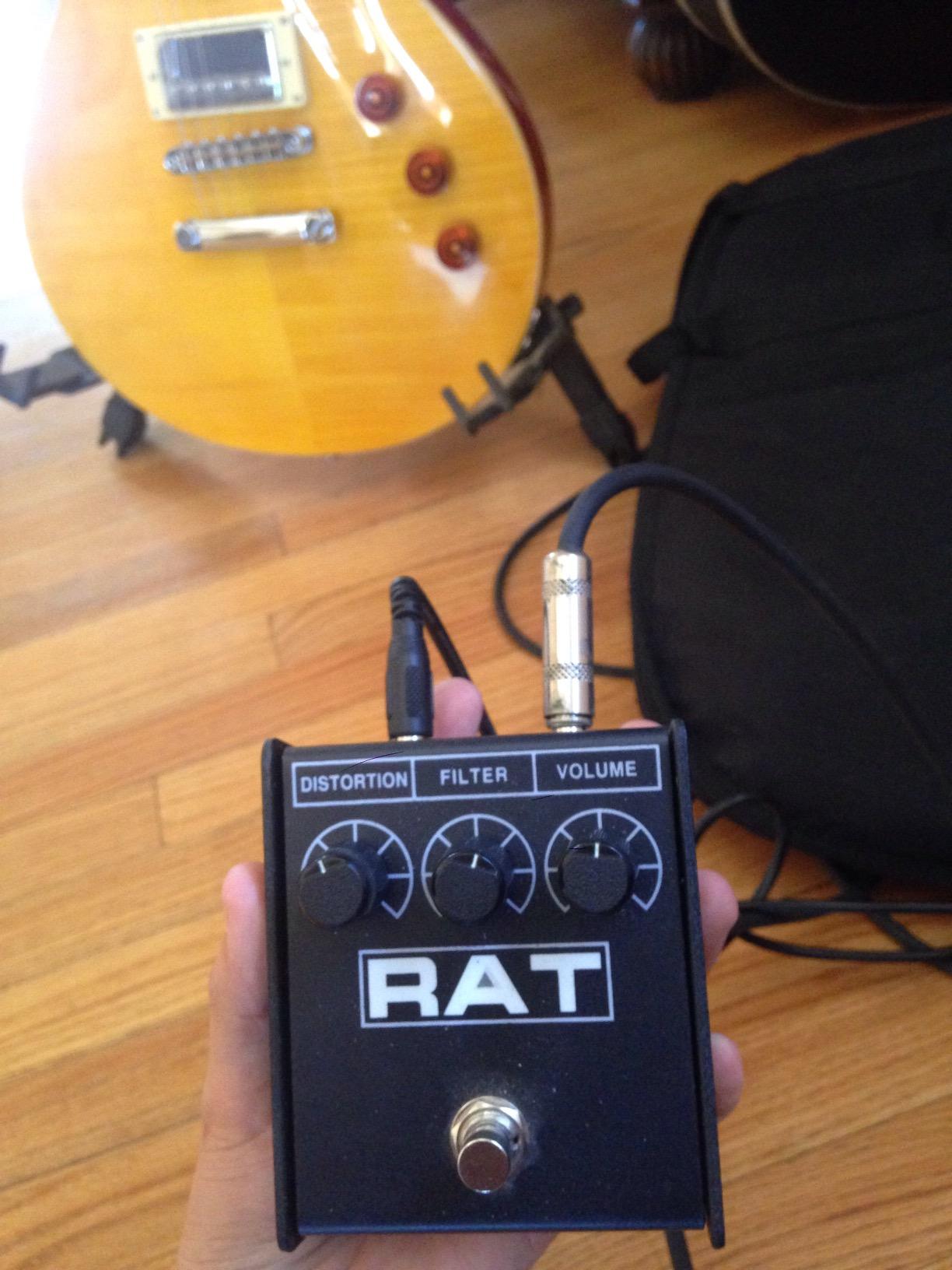
The RAT2 has been a touring guitarist’s best friend for over three decades, and after using one in every band I have played in, I understand why. This single pedal covers more territory than most drive sections on their own. Set the distortion low and you get warm tube-amp breakup. Push it higher and you approach fuzz territory. The filter control shapes the high-end response without cutting bass, which is something most drive pedals cannot do well.
The RAT2 is the secret weapon of countless professional players. It sounds huge with humbuckers into a Marshall, and it stays musical with single coils into a Fender. I have used it for slide work, classic rock rhythm, blues leads, and even doom metal riffs, all by adjusting the two knobs. The silent switching means no pops or clicks when you engage it, which is a small detail that matters on stage.
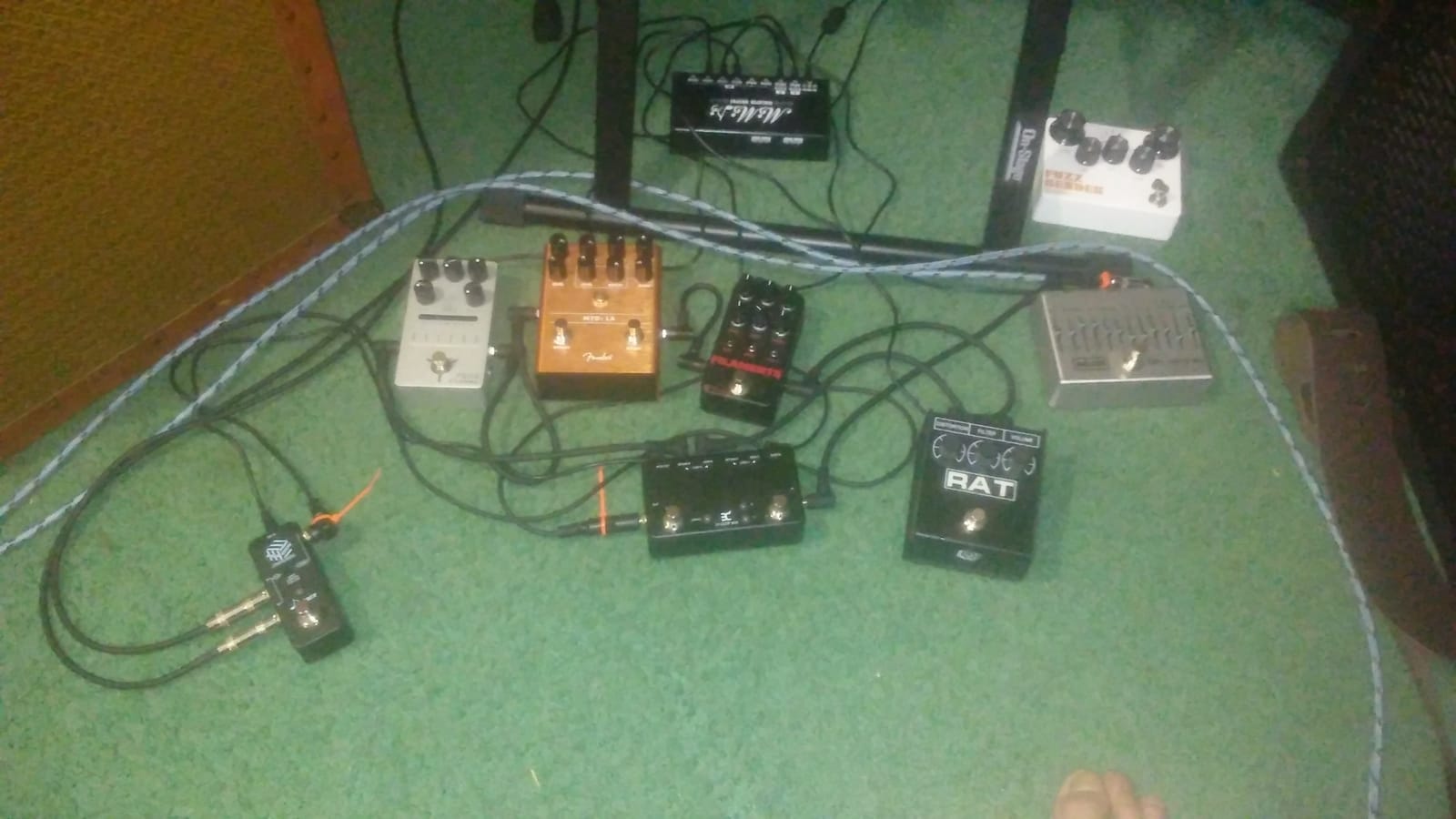
The build quality is impressive for the price. The metal enclosure takes a beating and keeps going. The 9V operation means it works with any standard pedalboard power supply. Forum discussions about RAT2 versus Tube Screamer always come back to the RAT2 winning on versatility, and I agree.
The biggest quirks are the filter control orientation and the physical size. Clockwise on the filter cuts highs rather than boosting them, which feels backwards if you are used to a tone knob on a guitar. The enclosure is also bigger than modern mini pedals, so plan your board layout accordingly.
Who the RAT2 works best for
Players who want one pedal that covers a wide gain range without buying multiple units. It is also great for players who switch between humbuckers and single coils and need a pedal that sounds good with both.
Where the RAT2 falls short
If you need pristine clean tones alongside your drive, the RAT2 is not a clean machine. It always adds some character, even at the lowest settings. Players who want true-bypass purism should note that the RAT2 has its own buffering characteristics.
4. Boss BD-2 Blues Driver — The Dynamic Drive
Boss BD-2 Blues Driver Guitar Effects Pedal
Tube amp simulation
Volume responsive
9V analog
5-year warranty
Pros
- Classic blues tones
- Responds to picking dynamics
- Versatile clean boost to drive
- Stacks with other drives
- BOSS five-year warranty
- Tank-like build
Cons
- Sounds similar to heavier drives at high gain
- Not high-gain
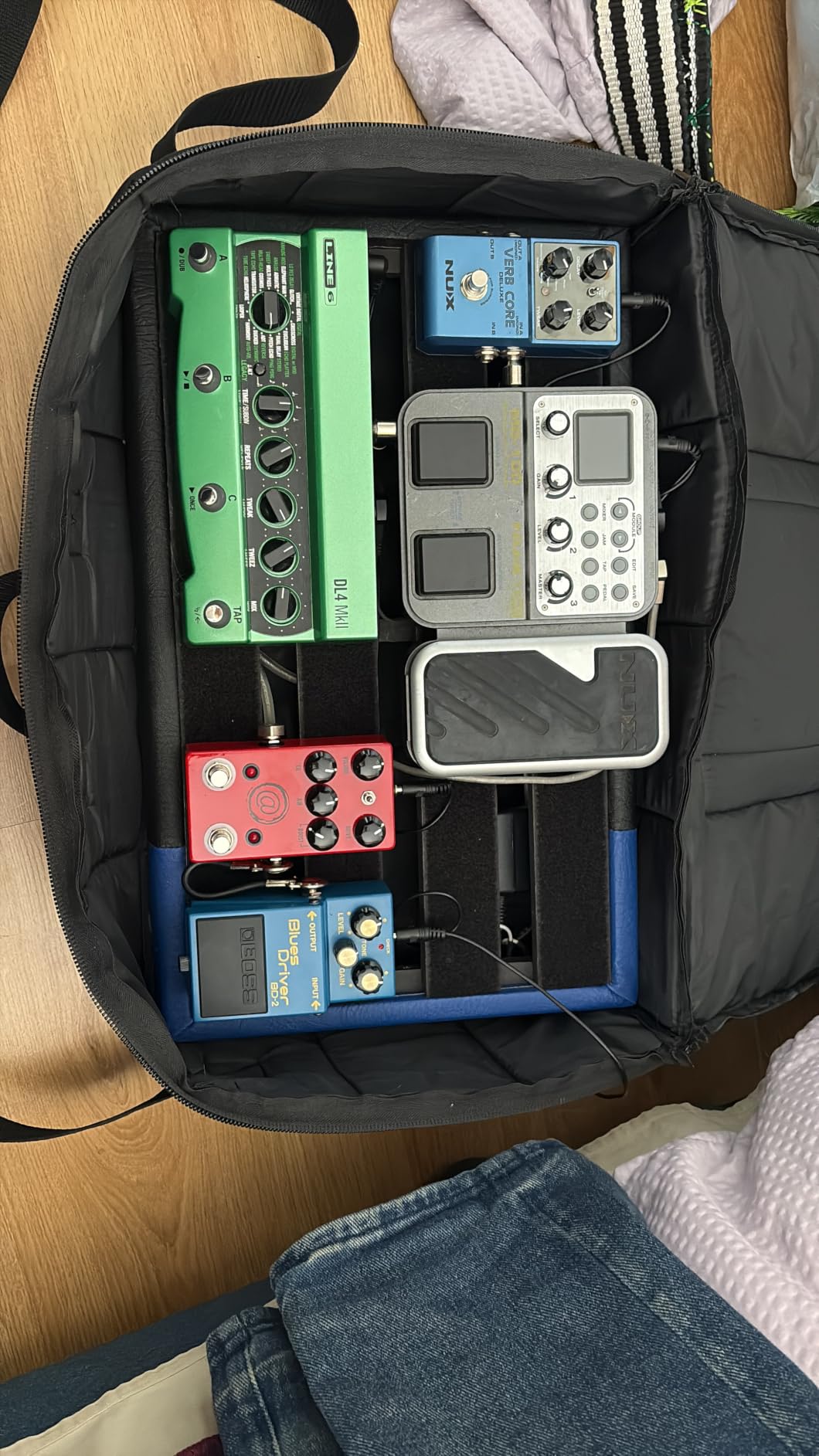
The BD-2 is one of those pedals that disappears into your rig and lets your playing come through. I bought one after hearing how dynamic it was supposed to be, and within an hour I understood why blues players love it. Pick softly and you get a clean edge-of-breakup tone. Dig in and the pedal pushes into singing overdrive. Your volume knob becomes a clean-to-dirty controller in real time.
The tube amp simulation in the BD-2 is convincing. It reacts to the guitar’s volume control the same way a real tube amp does, which makes it feel less like a pedal and more like an extension of your instrument. For players who like to ride their volume for dynamic expression, the BD-2 is one of the best options on the market.
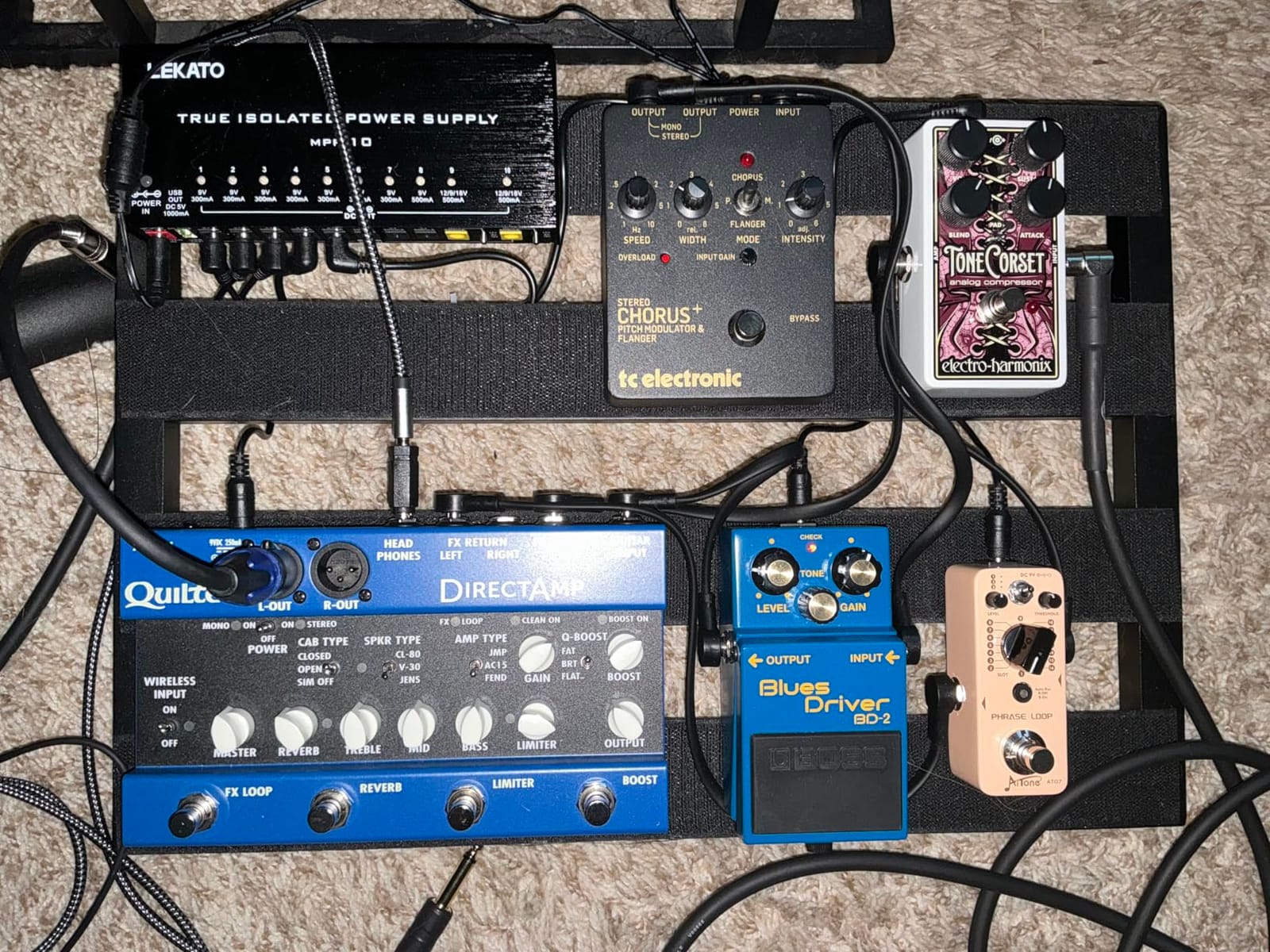
The 4.8-star rating across nearly 2000 reviews tells you most owners are very happy. It is also one of the best stacking pedals I have used. Place it in front of a DS-1 or MT-2 and you get a richer, more three-dimensional drive tone. The clean boost side of the BD-2 is also useful for pushing a clean amp into light breakup without changing the amp’s fundamental character.
Where the BD-2 falls short is in the high-gain arena. If you want thick, saturated modern distortion, you will need to stack it with another pedal or look elsewhere. At its highest gain settings, it can also start to sound similar to higher-gain drives, which is not what most blues-rock players want.
Who the BD-2 works best for
Blues-rock players, classic rock rhythm guitarists, and anyone who wants a dynamic, expressive drive pedal that responds to their playing. It is also great for players who want one pedal that works at bedroom and gig volumes.
Where the BD-2 falls short
High-gain and modern metal players will need a separate pedal for heavier sounds. The BD-2 is a specialist in the low-to-medium gain zone, which is exactly why blues players love it and metal players do not.
5. Dunlop Cry Baby Standard Wah GCB95 — The Expressive Classic
Dunlop Original Cry Baby Standard Wah (GCB95)
Fasel Inductor
Die-cast housing
9V power
1-year warranty
Pros
- Benchmark wah since 1982
- Iconic Fasel Inductor
- Heavy-duty die-cast housing
- Hot Potz potentiometer
- Made in USA
Cons
- Some tone loss when bypassed
- Sounds best with specific amps
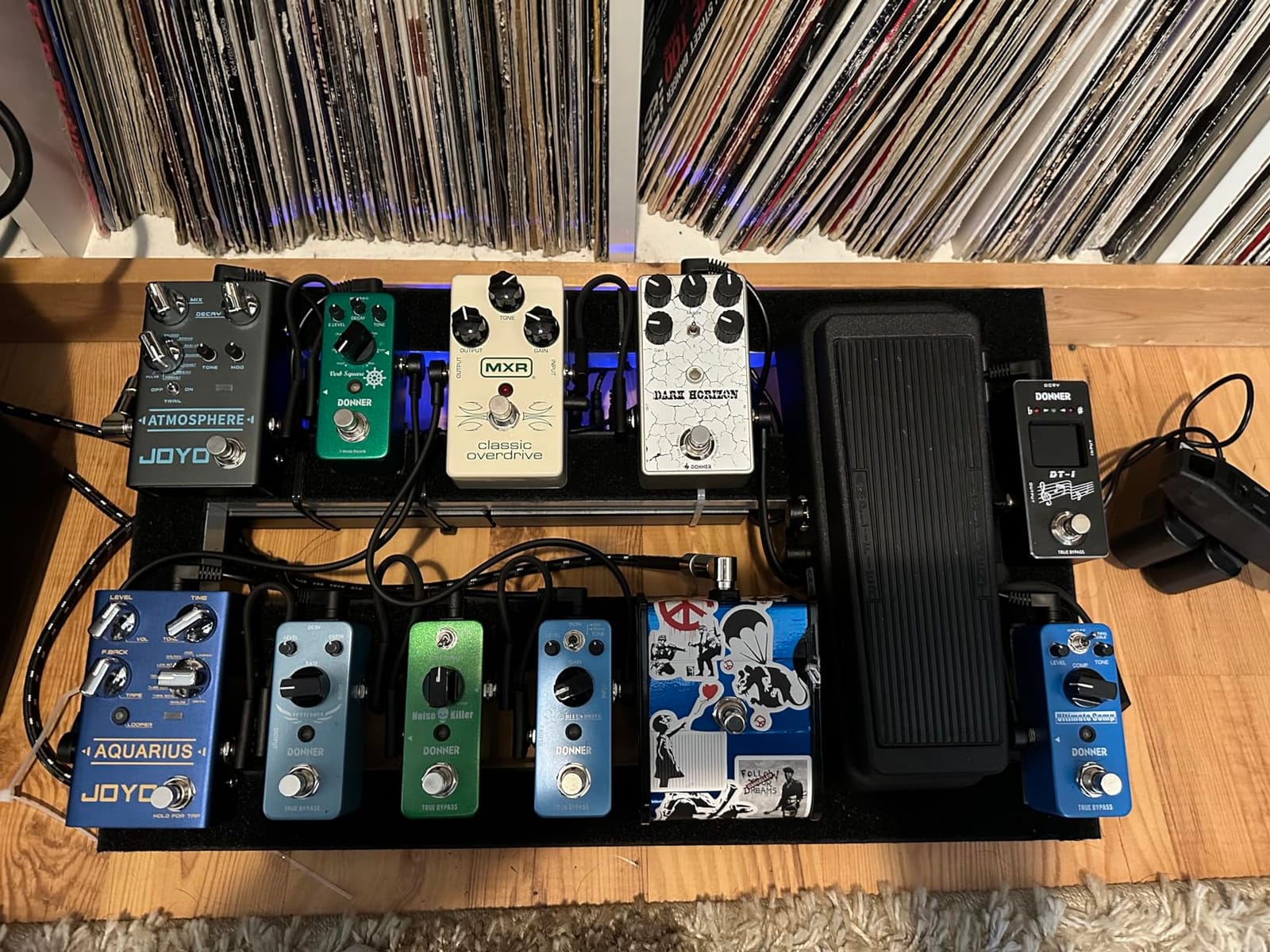
A wah pedal might not be on every beginner’s shopping list, but the Cry Baby Standard has been on professional pedalboards since 1982 for good reason. It defines the wah sound in rock music. From the funky chicken of Shaft to the screaming solos of Kirk Hammett, the GCB95 is the pedal that made wah a permanent fixture in rock vocabulary.
The Fasel Inductor is what gives the Cry Baby its character. It produces a rich, vocal quality that other wah circuits cannot quite match. The die-cast housing is built for stage abuse, and the Hot Potz potentiometer is tested to one million cycles, so it will last through years of gigging. I have used the same Cry Baby for eight years of regular gigs and it still works perfectly.
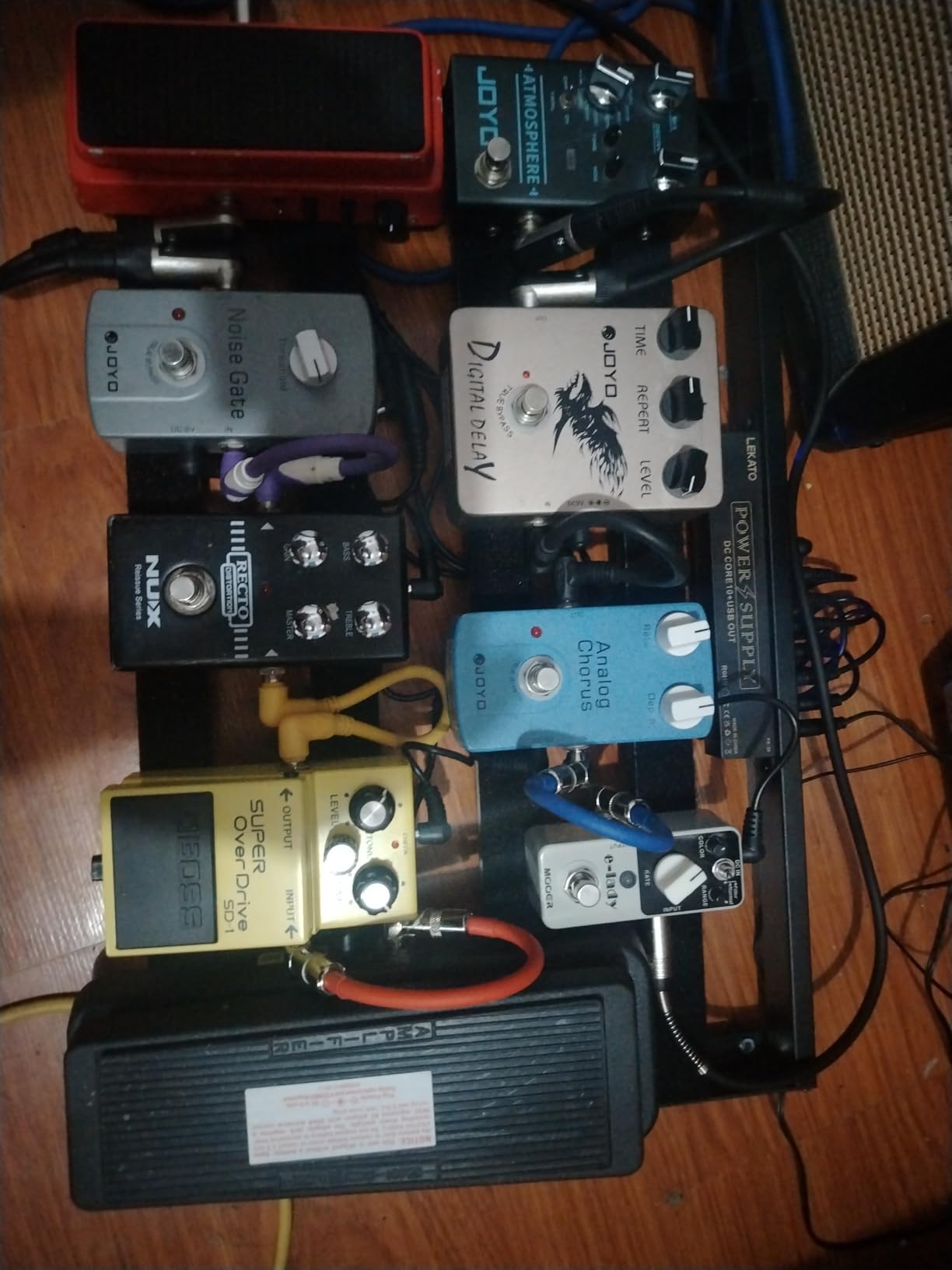
The Cry Baby sounds best into a clean or lightly driven amp. Run it through a high-gain channel and the sweep can get muddy. The classic setup is a clean amp with the wah engaged for expressive lead lines, which is exactly how players like Joe Satriani and Zakk Wylde use it. The pedal also works as a tone-shaping filter when left in a fixed position.
The main complaints are about bypass tone. Some players report subtle high-end loss when the pedal is off, which is a minor issue for most but a deal-breaker for tone purists. Also, the Cry Baby has its own character, so if you want a more modern or vocal wah sound, look at the 535Q or other Cry Baby variants.
Who the Cry Baby works best for
Rock and funk players who want expressive lead tones, classic rock players recreating vintage tones, and anyone who wants the iconic wah sound. It is also a great choice for players who want a wah that will last decades.
Where the Cry Baby falls short
Players with very long signal chains may notice subtle high-end loss when the pedal is bypassed. Players who want a transparent wah that does not color their tone should look at multi-band wah designs or filter pedals instead.
6. Boss MT-2 Metal Zone — The High-Gain Behemoth
Boss MT-2 Metal Zone Distortion Guitar Pedal
Dual-stage gain
Semi-parametric EQ
9V analog
5-year warranty
Pros
- Thick tight high-gain distortion
- Smooth singing sustain
- Dual-stage gain circuit
- Versatile with EQ tweaking
- BOSS five-year warranty
- Iconic metal voicing
Cons
- Can sound buzzy without proper EQ
- Requires setup to sound best
- Not for clean tones
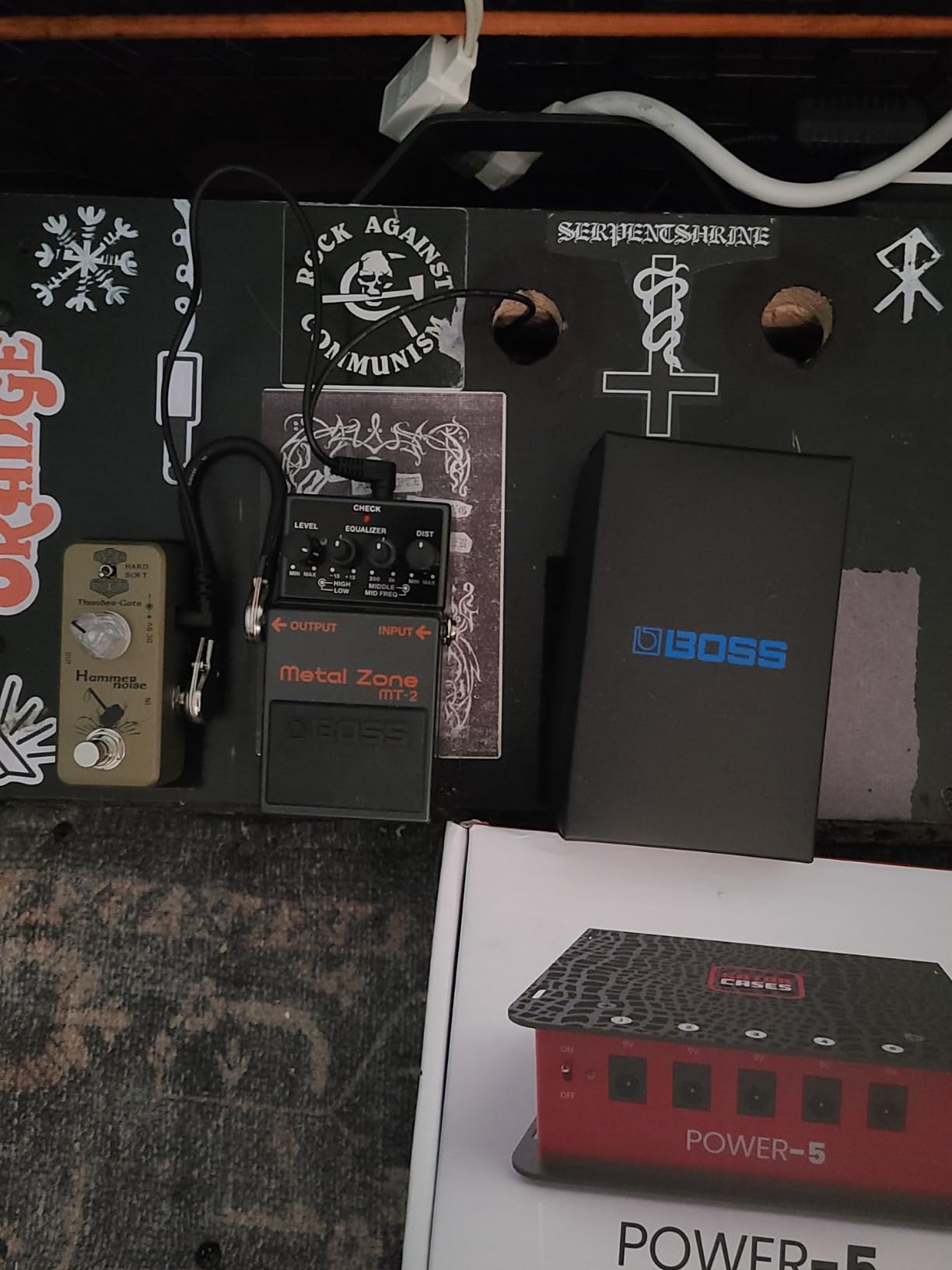
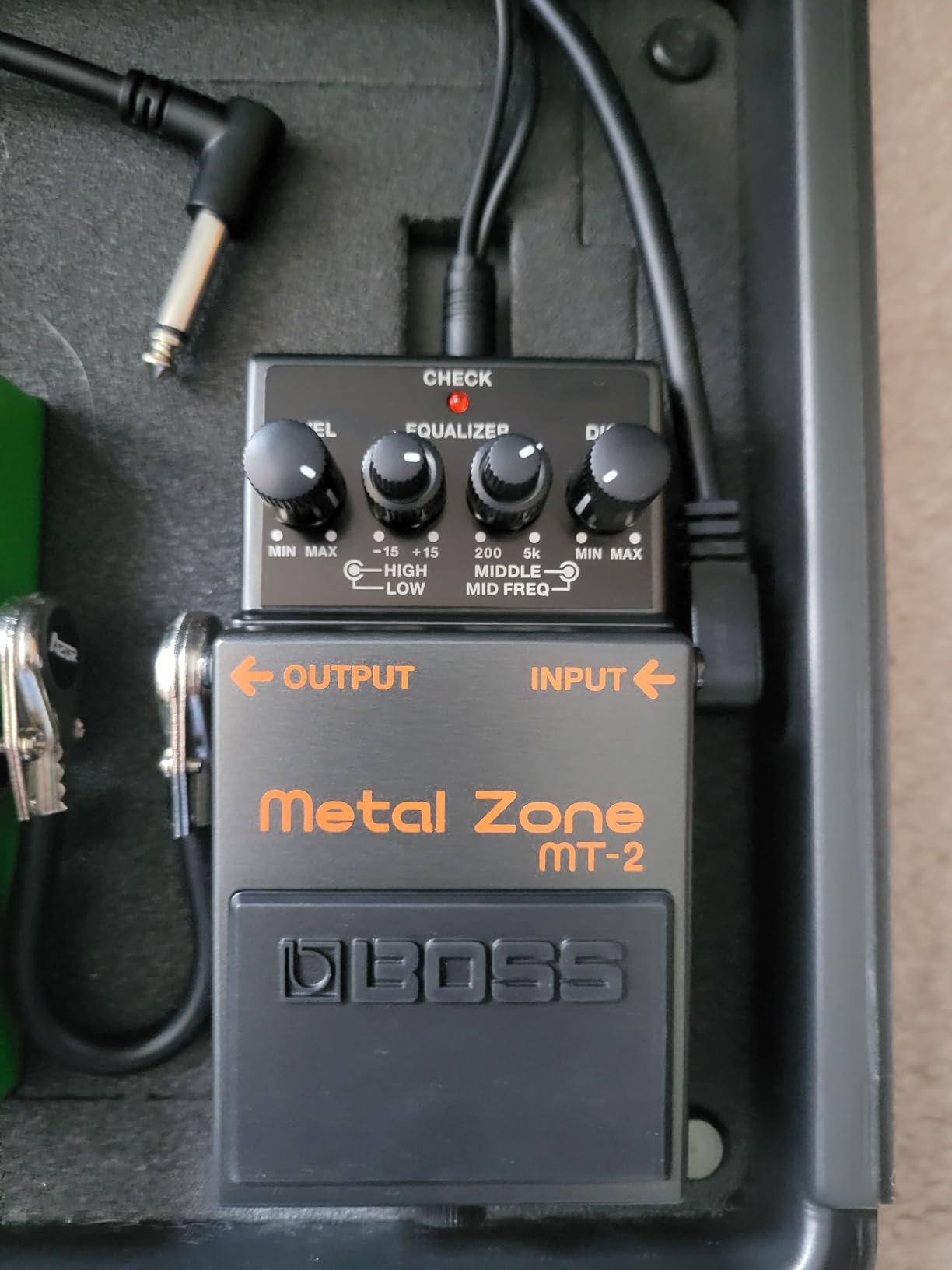
The MT-2 is the most controversial pedal on this list, and that is exactly why it deserves to be here. It has been the butt of jokes for years because of its reputation for the infamous “can of bees” sound. But here is what most critics miss: the MT-2 has a semi-parametric EQ with three bands of tone shaping, which gives it more flexibility than almost any other distortion pedal. Dial it in correctly and it is a monster.
I have used the MT-2 for everything from classic 80s metal to modern progressive rock. The dual-stage gain circuit produces thick, saturated distortion with singing sustain that holds notes longer than most drives. The key is spending time with the EQ. Most of the bad MT-2 sounds come from players maxing out the gain and leaving the EQ flat. Use the mid control to focus the right frequencies and the pedal sings.
For hard rock and metal players who want a single pedal that delivers thick rhythm and screaming leads, the MT-2 is hard to beat at its price. It also pairs well with a clean boost or overdrive in front to push it even harder. Stack an SD-1 in front of an MT-2 and you can cover everything from classic rock to death metal with two pedals.
The MT-2 has a learning curve. It is not a set-and-forget pedal. Players who want a plug-and-play experience will find it frustrating. It also does not do clean tones at all, even at the lowest gain settings. You need a separate clean path or an amp with a clean channel for those sounds.
Who the MT-2 works best for
Hard rock and metal players who want a versatile high-gain pedal at an affordable price. It is also great for players willing to spend time dialing in tones and who appreciate having more EQ control than typical distortion pedals offer.
Where the MT-2 falls short
Players who want simple, plug-and-play tones or who need clean sounds will be frustrated. The MT-2 is a specialist tool for heavy music. Blues and country players should look elsewhere.
7. EarthQuaker Devices Plumes Overdrive — The Modern Tube Screamer
EarthQuaker Devices Plumes Small Signal Shredder Overdrive Guitar Effects Pedal
Three clipping modes
Analog signal path
9V power
Lifetime warranty
Pros
- Three distinct clipping voices
- Excellent clarity and note definition
- Versatile boost to overdrive
- Lower noise than most
- Lifetime warranty
- Useful tone control
Cons
- Can be too bright for some players
- Not a set-and-forget pedal
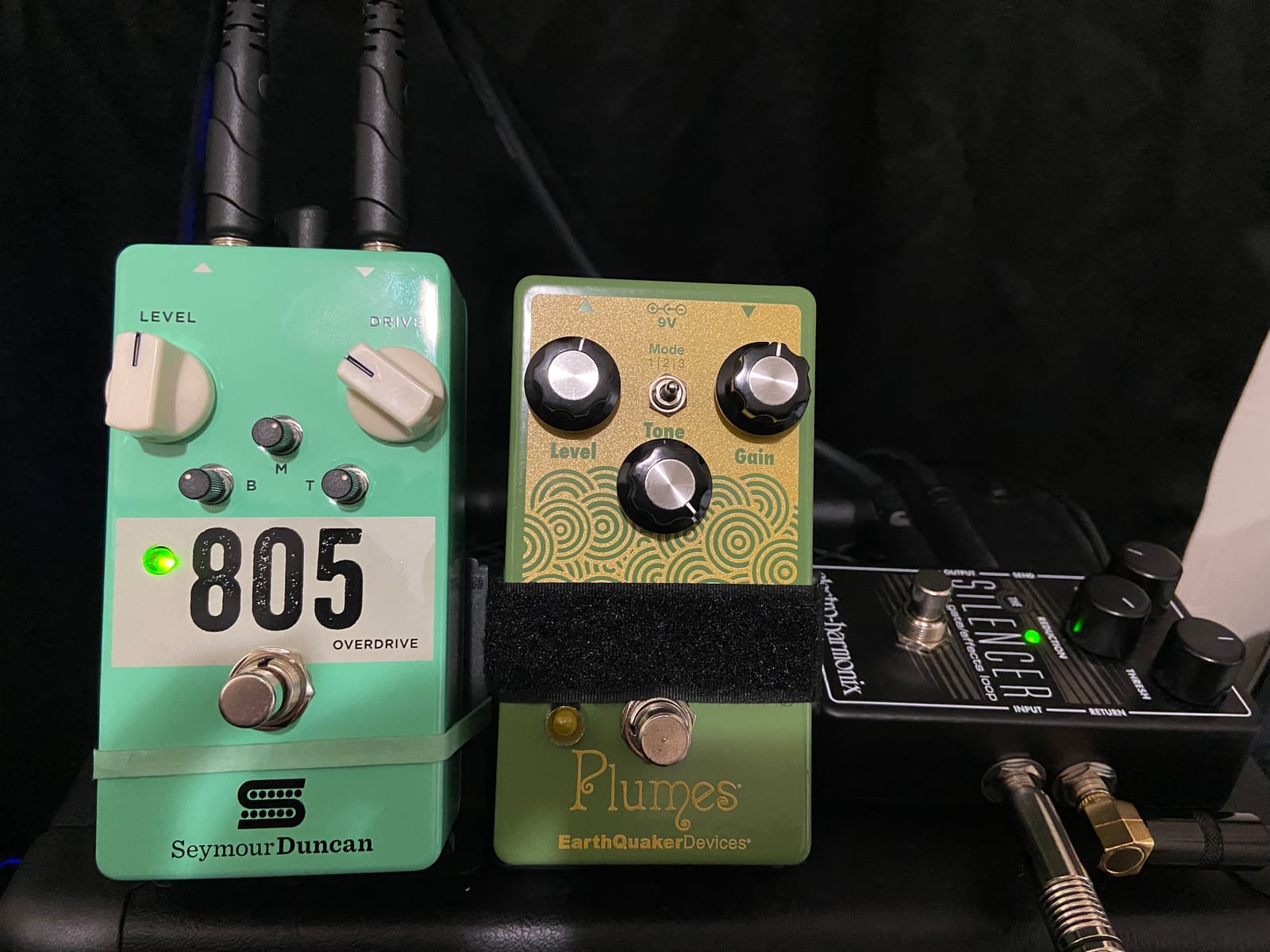
The Plumes is what I reach for when I want a tube screamer-style pedal but with modern features. EarthQuaker Devices took the classic green overdrive concept and added three different clipping modes, which means you get a clean boost, a symmetrical overdrive, and an asymmetric overdrive in one box. Each mode sounds distinct and useful, which is rare in the overdrive world.
The clarity is what separates the Plumes from older tube screamers. Notes stay defined even at high gain settings, which makes complex chord work sound clear rather than muddy. The lower noise floor also means your playing stays clean even with humbuckers and high-output pickups. I have used the Plumes as a clean boost, a primary overdrive, and a stacking pedal, and it excels at all three jobs.
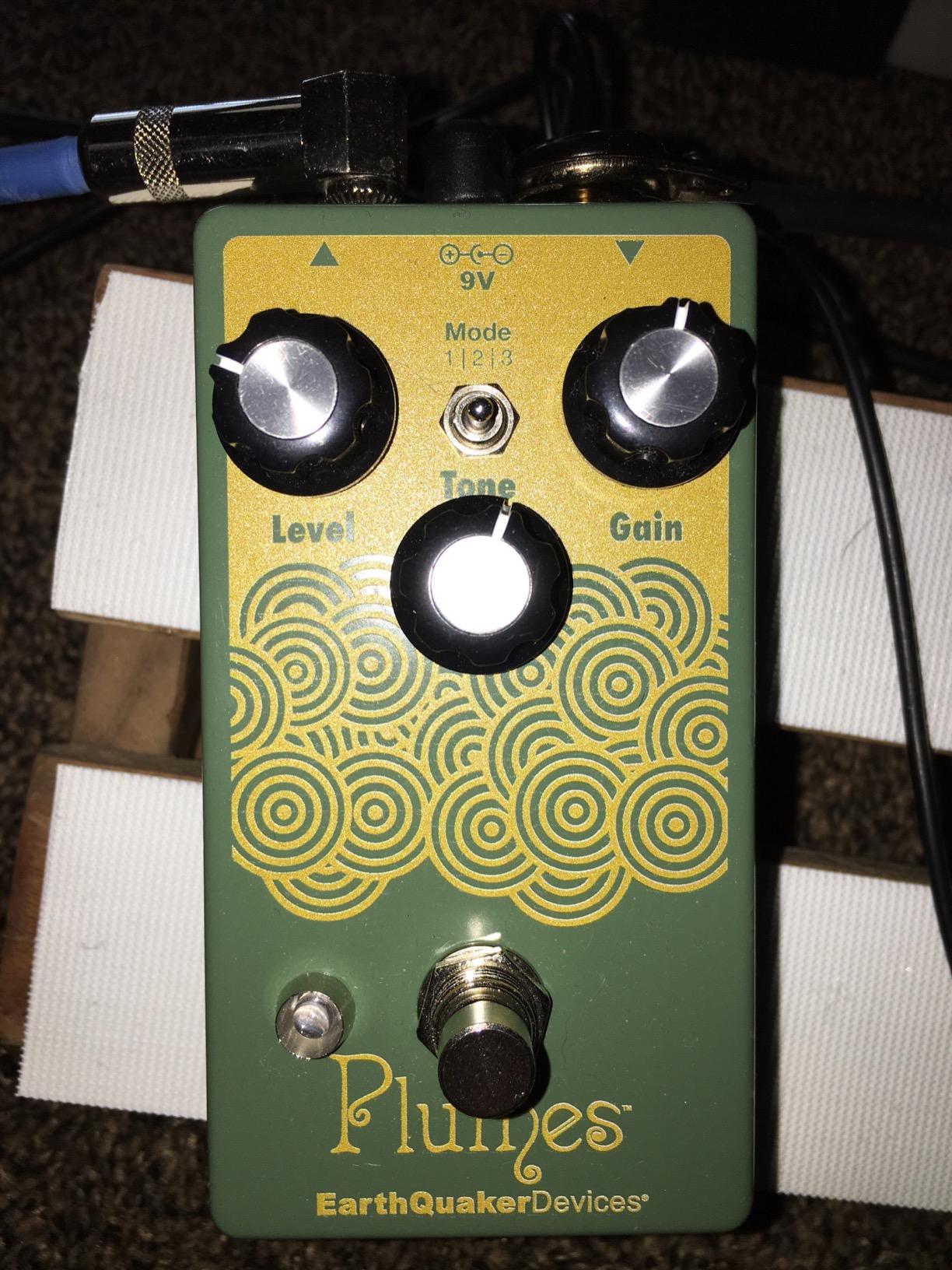
The tone control is one of the most useful I have used. Unlike older tube screamers where the tone knob feels like a single fixed character, this one sweeps from dark and warm to bright and cutting with useful sounds throughout the range. The lifetime warranty is also a sign that the company stands behind the product.
The main complaint I have is brightness. The Plumes leans toward the brighter side of the spectrum, which can feel harsh with very bright single coils or already-bright amps. Players who prefer warm, smooth overdrive may want to look at a different pedal. It also rewards knob tweaking, so players who want a simple plug-and-play experience will not love it.
Who the Plumes works best for
Players who want one overdrive that covers clean boost, classic overdrive, and modern asymmetric clipping. It is also ideal for players who appreciate build quality and want a lifetime warranty. Stacking players will love the three voices.
Where the Plumes falls short
Players with already-bright setups may find it too aggressive in the high end. If you want a darker, smoother overdrive, the Plumes is not the right choice. It also takes more setup time than simpler pedals.
8. Electro-Harmonix Big Muff Pi — The Legendary Fuzz
Electro-Harmonix Big Muff Pi Guitar Effects Pedal
Singing sustain
Adjustable tone
9V battery included
1-year warranty
Pros
- Legendary fuzz tone for 50 years
- Incredible sustain
- Works across genres
- 9V battery included
- Historic pedigree on classic recordings
Cons
- Not true bypass on all versions
- Larger enclosure
- Less versatile than modern drives
The Big Muff Pi is not just a pedal, it is a piece of rock history. From Jimi Hendrix to David Gilmour to the Smashing Pumpkins, the Big Muff has been on more iconic recordings than almost any other stompbox. The fuzz tone is unmistakable: thick, wooly, with sustain that seems to last forever. I have played one in a doom band and a shoegaze project, and it delivered both styles equally well.
What the Big Muff does that other pedals cannot is produce singing, violin-like sustain. Notes bloom and feedback into each other in a way that no distortion pedal can match. This is the sound you hear on David Gilmour’s Comfortably Numb solo and on Jack White’s leads. It is a fuzz that feels alive under your fingers.
The Big Muff works across genres surprisingly well. Classic rock rhythm tones get an edge. Punk gets heavier. Shoegaze and doom metal bands use it as their primary distortion. Blues players can dial it back for a wooly edge-of-breakup sound. The included 9V battery means you can use it anywhere, even without a power supply.
The downsides are well known. The Big Muff is not true bypass in some versions, which means subtle tone loss when it is off. It is also a big pedal that takes up significant real estate on your board. Modern multi-effects units offer similar sounds with more versatility, but they do not have the same character or history.
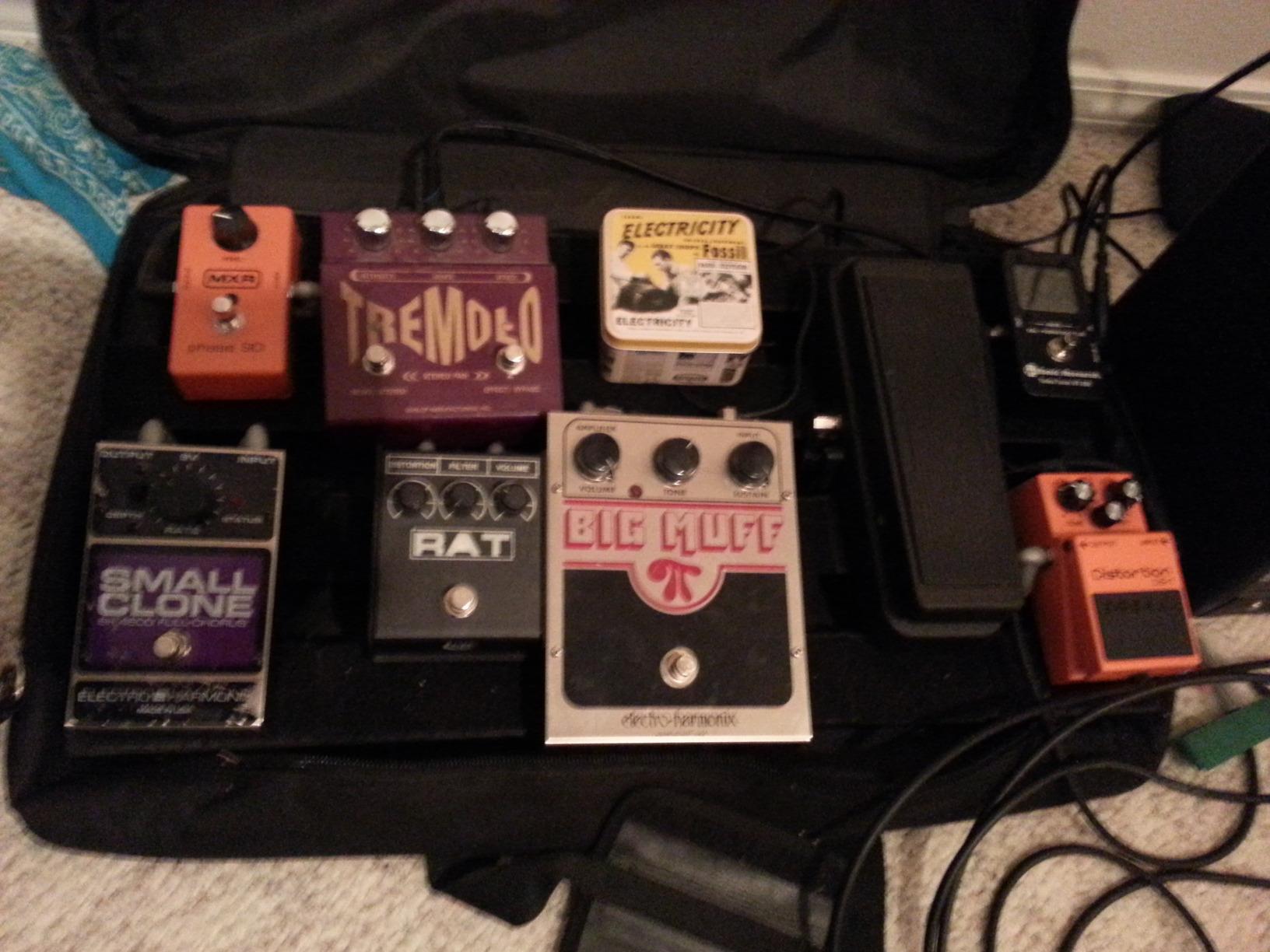
Who the Big Muff works best for
Players chasing classic fuzz tones, from Hendrix to modern stoner rock. It is also great for shoegaze and doom players who want that thick, sustaining fuzz. Lead guitarists who want violin-like sustain will love it.
Where the Big Muff falls short
Players who need tight, articulate palm-muted riffs will find the Big Muff too wooly. Modern metal rhythm players need a tighter, more focused distortion. It is also not the best choice for players who need a clean-to-dirty pedal in one box.
How to Choose the Best Pedal for Rock Guitar?
Picking the right rock guitar pedals is less about chasing the most expensive option and more about understanding what each category does to your signal. Every effect type on this list solves a specific problem, and once you know what those problems are, the choices become clear.
Overdrive vs distortion vs fuzz
Overdrive pedals push your amp into natural breakup, which sounds warm and tube-like. Distortion pedals generate their own clipping for thicker, more saturated tones. Fuzz pedals push clipping into extreme territory for wooly, sustaining, almost broken sounds. For most rock players, an overdrive or distortion is the foundation. Fuzz is a specialty flavor on top.
If your amp already has a great clean tone and you just want to push it harder, start with an overdrive. If your amp sounds dull or you want thick modern rhythm tones, start with a distortion. Fuzz is for when you want a specific character, like the wooly leads of David Gilmour or the heavy rhythm of Jack White.
Pedal order and signal chain
Pedal order matters more than most players realize. The standard signal chain for rock goes: tuner, wah, overdrive or distortion, EQ, modulation effects like chorus or phaser, delay, and reverb. Placing modulation before distortion makes the distortion sound like it is processing the modulated signal, which usually sounds muddy. Placing modulation after distortion gives you the classic clean-modulated lead tone.
For the rock player, the most important ordering rule is this: drive pedals come first, time-based effects come last. Delay and reverb into distortion sound bad. Distortion into delay and reverb sounds great. The Cry Baby wah traditionally goes first in the chain, right after the tuner, so it shapes your raw signal before any other processing.
True bypass vs buffered
True bypass means the pedal is completely out of the circuit when off, sending your dry signal straight through. Buffered pedals add a buffer circuit that boosts the signal slightly. True bypass is great for shorter cable runs, while buffered pedals help with longer cable runs where signal loss becomes an issue.
For most rock pedalboards, true bypass is fine. The BOSS pedals on this list are buffered, which works well for cable runs under 20 feet. If you have a long cable run to your amp or a large pedalboard, consider adding a dedicated buffer or choosing buffered pedals throughout.
Power supply considerations
Most pedals on this list run on 9V power and draw between 10 and 110 milliamps. The MT-2 is the hungriest at 110mA, which is unusual for a stompbox. If you are using multiple pedals, an isolated power supply like the Voodoo Lab Pedal Power or similar unit is worth the investment. It cleans up noise, isolates ground loops, and keeps your pedals running reliably for years.
If you are just starting with one or two pedals, a simple daisy-chain cable or single power supply works fine. But as your board grows, isolated power becomes essential. Cheap daisy chains can introduce unwanted hum and noise, especially with high-gain pedals like the MT-2.
Frequently Asked Questions
What pedals do rock guitarists use?
Most rock guitarists build their boards around a foundation of overdrive, distortion, and sometimes fuzz pedals. The classic setup includes a low-gain overdrive like the BOSS SD-1 for boosting and edge-of-breakup tones, a distortion like the BOSS DS-1 or Pro Co RAT2 for main rhythm and lead tones, and an expressive pedal like a Cry Baby wah for solos. Many players add modulation like the MXR Phase 90 for 70s rock tones and a delay pedal for thickening lead lines.
What 5 pedals should every guitarist have?
Every guitarist should own a tuner, an overdrive, a distortion, a delay, and a modulation effect like chorus or phaser. A tuner keeps you in tune, an overdrive pushes your amp into breakup, a distortion delivers saturated rhythm and lead tones, a delay adds space and thickness to leads, and a modulation effect adds movement and dimension to your tone. From there, players typically add specialty pedals like fuzz, wah, or boost based on their playing style.
How do I make my guitar sound like a rock guitar?
To make your guitar sound like a rock guitar, start with a quality amp with a master volume, then add an overdrive or distortion pedal in front. Classic rock tones use lower-gain drive that pushes the amp into breakup, while hard rock uses more gain for thicker saturation. Adding a tube screamer-style overdrive in front of a Marshall-style amp produces the most classic rock tone. Modulation pedals like chorus and phaser add 70s character, while delay and reverb add space and depth.
What pedals did Led Zeppelin use?
Led Zeppelin used a combination of wah pedals, echo units, and tone-shaping pedals. Jimmy Page was known for using a Cry Baby wah, an Echoplex tape echo for delay tones, and various boosters. The band relied heavily on their amps for distortion, but the addition of a wah and analog delay was central to their sound on tracks like Kashmir and Whole Lotta Love. Modern recreations use a Cry Baby, analog delay like the Boss DM-2 or Strymon El Capistan, and a clean boost.
What is the best rock pedal for guitar?
The best rock pedal for guitar depends on your playing style, but the BOSS DS-1 is the most versatile choice for most rock players. It covers classic rock, hard rock, and blues-rock tones with one pedal, and it stacks well with other drives. For players wanting more gain, the Boss MT-2 Metal Zone delivers thick high-gain tones with extensive EQ control. For those wanting classic overdrive sounds, the BOSS SD-1 or Pro Co RAT2 are excellent choices that pair well with a wide range of amps.
Final Verdict
After testing all eight of these pedals in real playing situations, the BOSS DS-1 remains my top pick for the best pedal for rock guitar. It covers more territory than any other pedal on this list, sounds great with any guitar or amp, and has a track record of reliability that few pedals can match. For most rock players, the DS-1 is the safest first pedal purchase.
If you want more versatility in your drive section, consider pairing it with the BOSS SD-1 as a clean boost in front, or the Pro Co RAT2 for a different flavor of distortion. Adding a Cry Baby wah gives you expressive lead tones, and the Boss MT-2 covers heavier territory when you need it. With three or four well-chosen pedals, you can cover every rock style from 70s classic rock to modern metal.
Our team has used these pedals for years in cover bands, original projects, and recording sessions, and we stand behind every recommendation on this list. Start with the BOSS DS-1, build your board as you grow, and you will have the rock tones you need for any situation. Check our tuner pedal guide to round out your setup, and visit our pedal amp guide if you want a portable practice rig.