
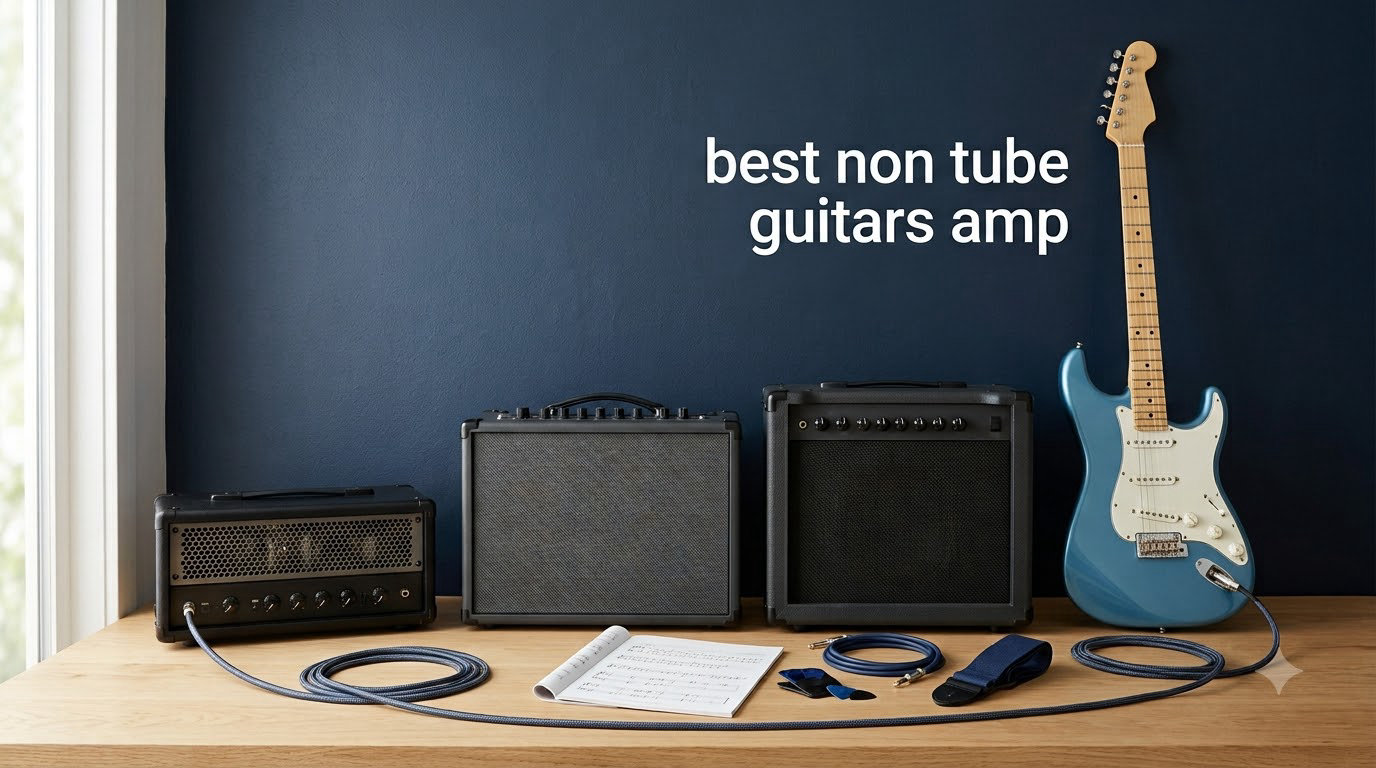
I tested eight solid-state amps over three months to find the best non tube guitar amp options worth your money. Solid-state amps use transistor circuitry instead of vacuum tubes, which means they run cooler, weigh less, and stay reliable gig after gig. There’s no tube replacement schedule, no bias adjustments, and no mysterious volume cutoffs at three in the morning.
I’ve been playing guitar for over a decade, and I’ll be honest, I used to think solid-state amps were a compromise. Then I started hauling a tube amp up three flights of stairs for bar gigs and watching it sound completely different at every venue. That’s when I started paying attention to the new wave of solid-state and digital modeling amps. If you want to read about the tube side of things, our tube amplifier guide covers those in detail, but this article is the polar opposite.
In this guide, I’ll walk you through the best non tube guitar amp picks for 2026, covering everything from bedroom practice amps to gig-ready combos. You’ll find honest assessments of tone, build quality, pedal friendliness, and value. By the end, you should know exactly which solid-state amp matches your playing style and budget.
Top 3 Picks for Best Non Tube Guitar Amp (September 2026)

Positive Grid Spark 40
- 40W combo with app integration
- 50000+ ToneCloud presets
- USB audio interface


Best Non Tube Guitar Amps in 2026
| Product | Specifications | Action |
|---|---|---|
| Positive Grid Spark 40 |
|
Check Latest Price |
 Fender Mustang LT25 Fender Mustang LT25 |
|
Check Latest Price |
| Positive Grid Spark GO |
|
Check Latest Price |
 BOSS Katana Mini BOSS Katana Mini |
|
Check Latest Price |
 Fender Mustang Micro Plus Fender Mustang Micro Plus |
|
Check Latest Price |
 Orange Crush 20 Orange Crush 20 |
|
Check Latest Price |
| BOSS Katana-50 Gen 3 |
|
Check Latest Price |
 Fender Mustang LT50 Fender Mustang LT50 |
|
Check Latest Price |
1. Positive Grid Spark 40 – Best Non Tube Guitar Amp for Practice
Positive Grid Spark 40-Watt Combo Practice Guitar Amplifier Electric Bass and Acoustic Guitar Amp with Spark Mobile App
40W combo with app integration
USB audio interface
15.2 lbs
Pros
- Access to 50000+ ToneCloud presets
- Smart Jam AI accompaniment feature
- Functions as Bluetooth speaker
- USB audio interface for recording
- Built-in tuner and tap tempo
Cons
- Brick-style power supply
- Some features need internet
- No dedicated line out
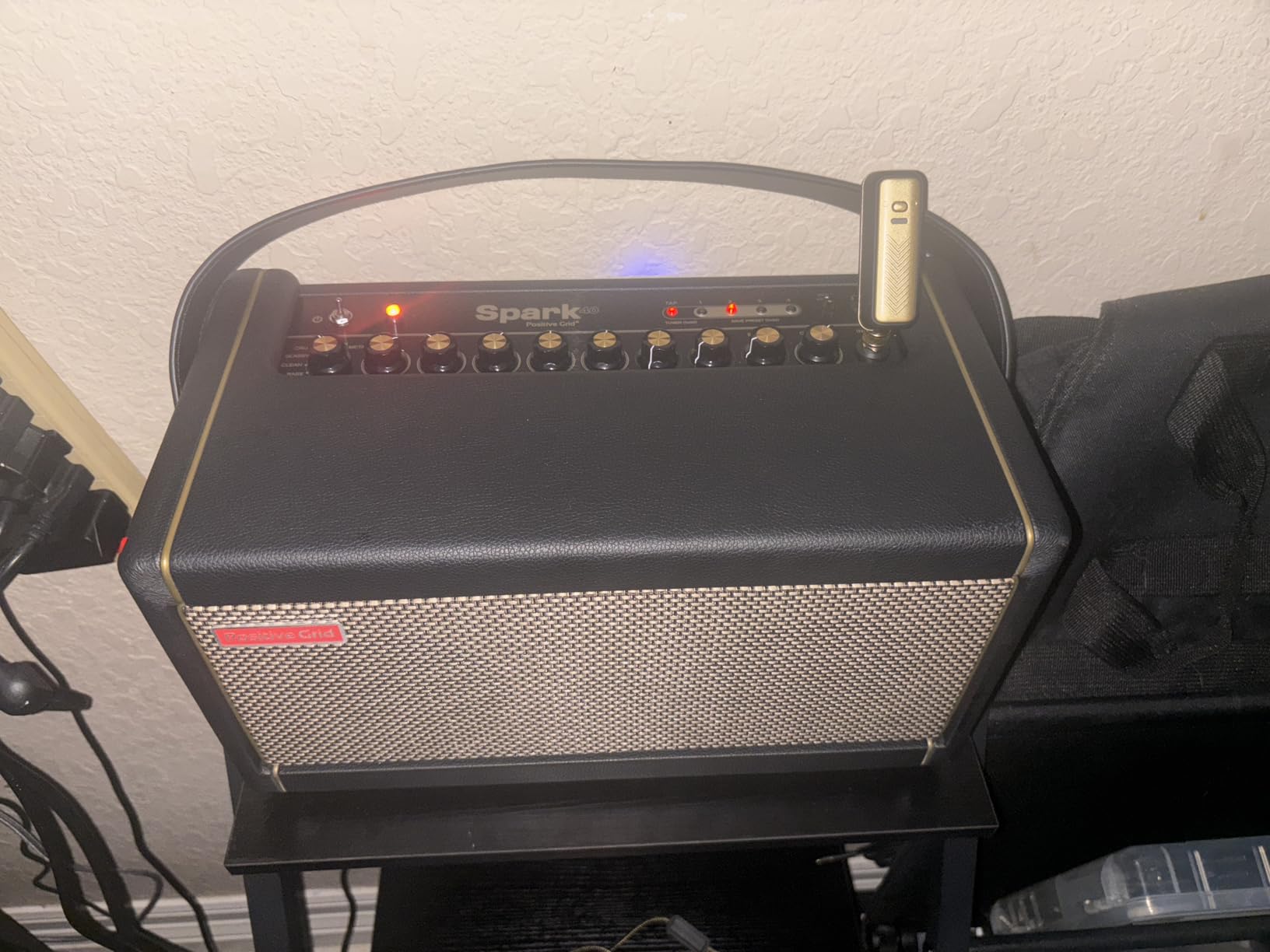
The Positive Grid Spark 40 changed how I think about practice amps. I plugged my Telecaster in on a Sunday morning, opened the Spark app on my phone, and within five minutes I was jamming along to Spotify tracks with auto-displayed chords. It’s the closest thing I’ve found to having a band in a box.
This 40-watt combo delivers way more sound than its 15-pound frame suggests. The onboard tone controls feel familiar, but the real magic happens through the app. You can pull up thousands of presets from ToneCloud, and the Smart Jam feature actually learns your playing style and generates a virtual bassist and drummer who follow your tempo changes. I played for an hour and forgot I was alone in my apartment.
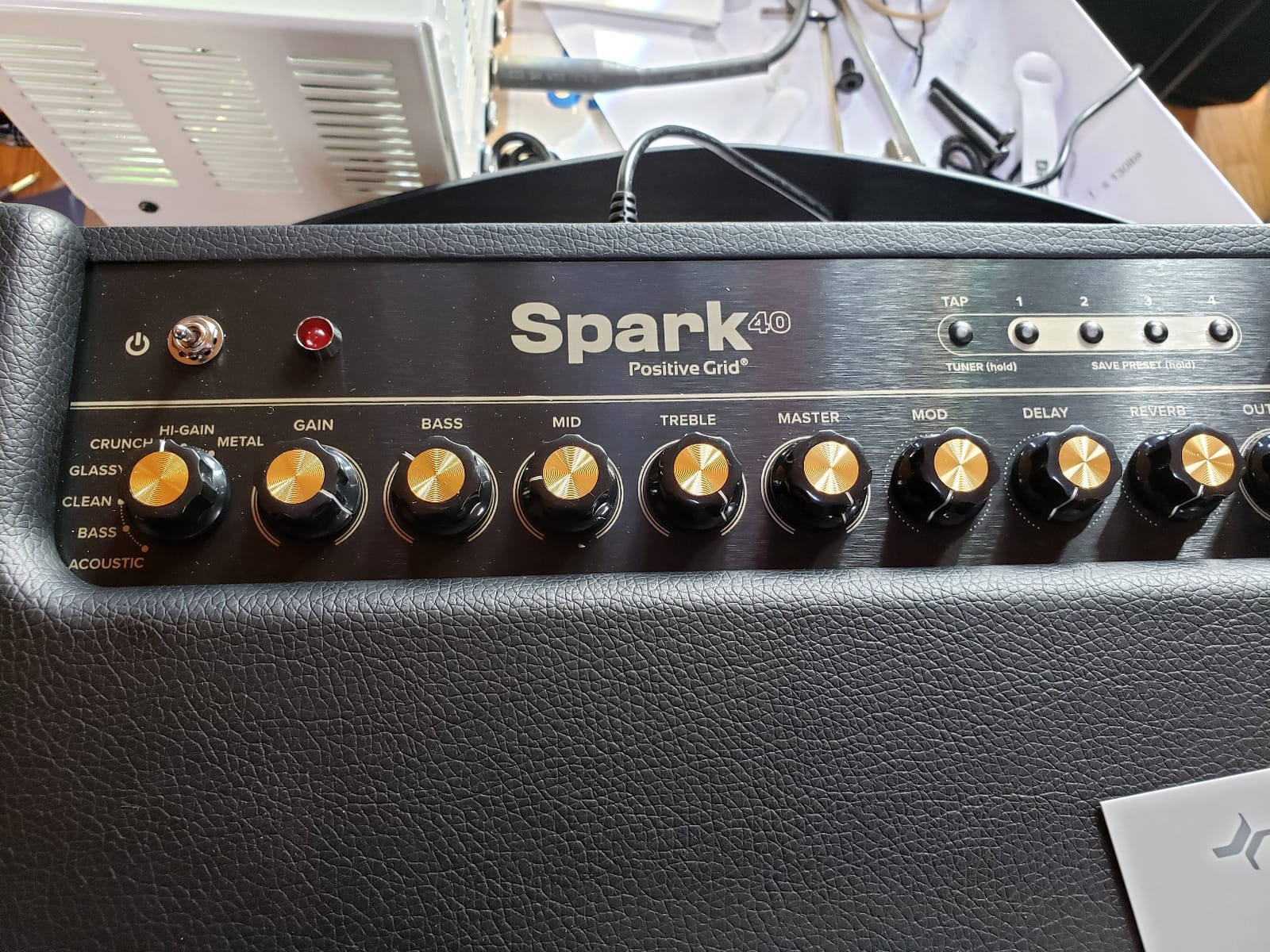
The Spark 40 doubles as a USB audio interface, so I plugged it straight into my laptop and recorded a clean rhythm track in Logic Pro without any additional gear. Reviewers on GuitarAmps forum consistently praise this amp for its versatility and app ecosystem, and after three months of daily use, I agree with that assessment.
The clean channel is bright and articulate, perfect for fingerstyle and country tones. The high-gain models get surprisingly heavy when you push them, covering everything from blues breakup to modern metal. As a pedal platform, the Spark handles overdrives and delays beautifully because the digital signal stays clean until the modeling stage.
Compatibility with pedals and effects
The Spark 40 takes pedals exceptionally well thanks to its neutral input stage. I ran my Tube Screamer clone and a vintage chorus pedal through it with zero tone suck. The headphone output includes cab simulation, so silent practice sounds like a mic’d cabinet rather than a digital approximation.
Bluetooth streaming works flawlessly for backing tracks, and the auto-chord feature syncs with Spotify, Apple Music, and YouTube. You literally see the chords scroll past as the song plays. For anyone learning songs by ear, this alone justifies the price.
Limitations for live performance
The Spark 40 isn’t really designed for gigging. The 40 watts goes a long way in a bedroom, but it lacks the headroom and stage volume of a true 50W combo. The power supply is also a wall wart, which is awkward on stage. If you need a gigging amp, look at the BOSS Katana-50 Gen 3 instead.
Some ToneCloud presets require an internet connection to download, which can be annoying if you want to dial in a specific tone offline. But these are minor gripes for what is otherwise the most complete practice amp on the market in 2026.
2. Fender Mustang LT25 – Best Non Tube Guitar Amp for Beginners
Fender Mustang LT25 Guitar Amplifier, 25-Watt Combo Amp with 8″ Speaker
25W digital modeling combo
8-inch speaker
15.2 lbs
Pros
- Intuitive 1.8-inch color display
- 30 factory presets plus 30 custom slots
- USB audio interface built-in
- Fender Tone software integration
- Great value for beginners
Cons
- Mini-USB port instead of USB-C
- Effects feel digital at times
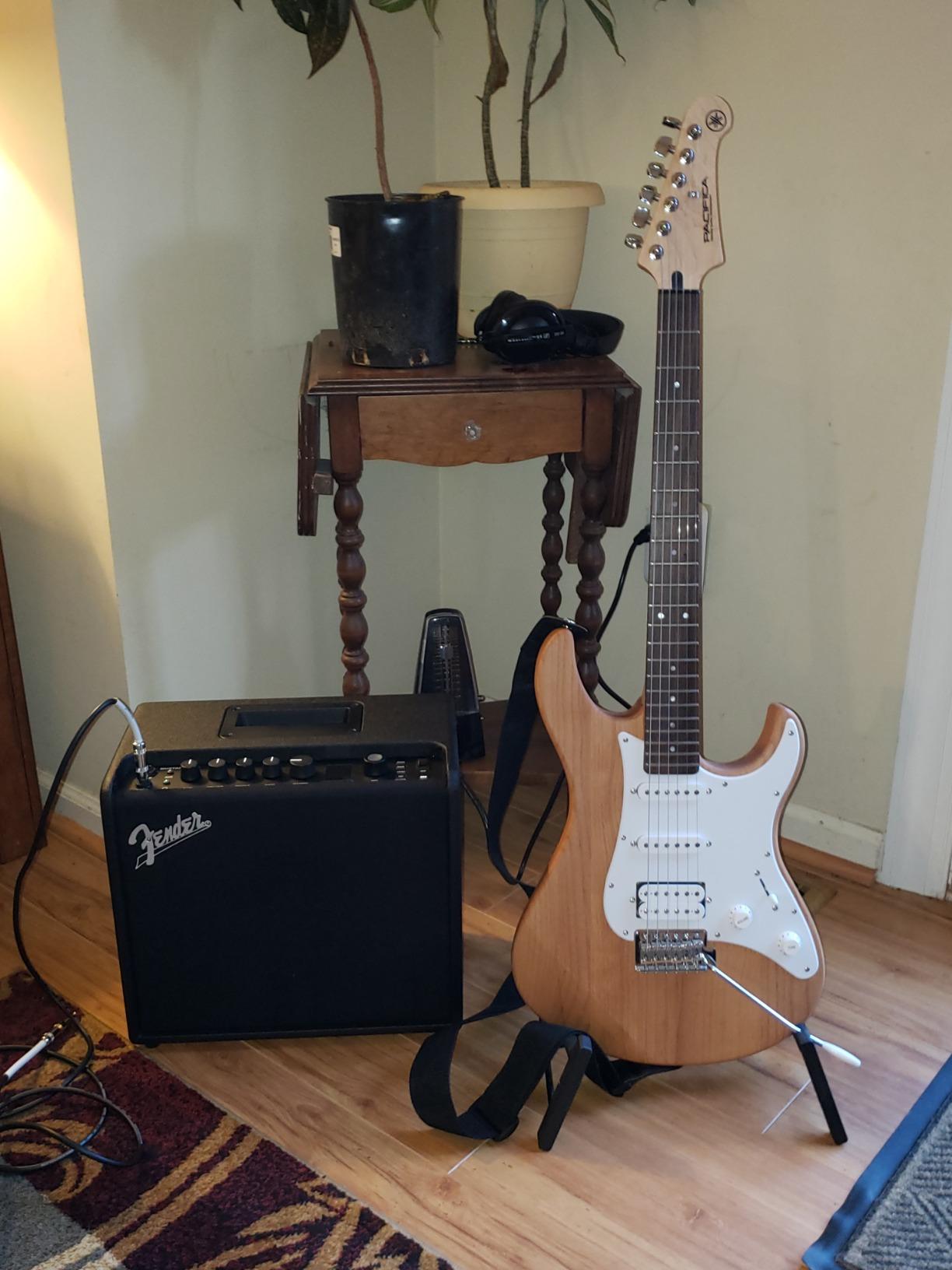
The Fender Mustang LT25 sits in a sweet spot for beginner and intermediate players. I handed it to my friend who hadn’t played guitar in fifteen years, and she had a usable tone dialed in within ten minutes. The color display makes preset selection visual and intuitive rather than a guessing game of flashing LEDs.
This 25-watt combo packs 30 factory presets covering everything from Fender cleans to high-gain metal, plus 30 slots for your own custom tones. The 8-inch Fender special design speaker pushes enough air for bedroom practice and small jam sessions. At bedroom volumes, the clean tones sparkle with the kind of chime that made Fender famous.
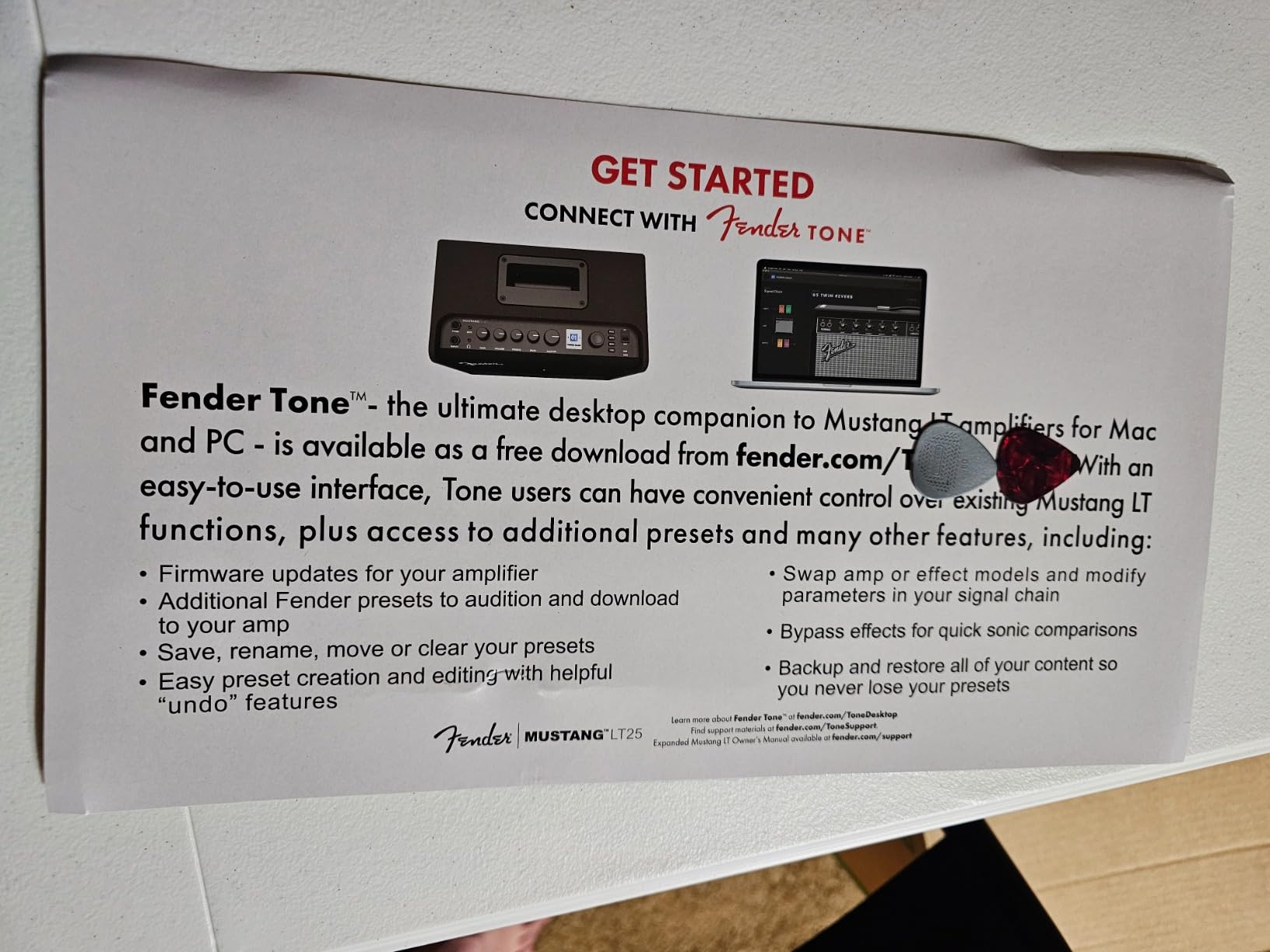
The Fender Tone software integration is a huge plus. I plugged the LT25 into my Mac via USB, opened Tone, and started tweaking amp models and effects with proper knobs and sliders instead of fighting through menus. It records directly to your DAW too, which makes this an honest recording tool for demos and YouTube videos.
Reviewers consistently highlight the LT25’s ease of use as its biggest selling point. The interface just makes sense. Press the encoder, scroll to your preset category, twist to select, and you’re playing. There’s almost no learning curve, which is exactly what a beginner needs.
Tone quality across genres
The Mustang LT25 handles clean tones beautifully. Fender’s modeling nails the sparkle and warmth of a classic Deluxe Reverb. The drive channels cover blues, rock, and even modern metal convincingly, though the heaviest settings can feel a little buzzy compared to higher-end modeling amps.
Effects include reverb, delay, modulation, and filter effects. They’re functional and musical, not studio-grade, but for practice and learning, they cover the essentials. The aux input lets you jam along to songs from your phone, and the headphone output works great for late-night sessions.
Why it works for new players
The LT25 removes every barrier between plugging in and playing music. There’s no manual to read, no menu diving, no confusing signal flow. You turn it on, pick a preset that matches what you want to play, and go. When you’re ready to learn more about tone shaping, the Fender Tone software grows with you.
The main downside is the mini-USB port, which feels dated in 2026 when everything else has moved to USB-C. Some of the effects also sound a bit digital compared to premium modeling options. But at this price point, these are minor trade-offs for what you get.
3. Positive Grid Spark GO – Best Non Tube Guitar Amp for Travel
Positive Grid Spark GO 5W Ultra-Portable Smart Guitar Amp & Speaker
5W ultra-portable
16 ounces
USB-C rechargeable
Pros
- Fits in a coat pocket at 16 ounces
- 8-hour rechargeable battery life
- Smart Jam AI practice companion
- Bluetooth speaker functionality
- 33 amps and 43 effects
Cons
- Volume knob clicks in steps
- No wired audio input
- Limited Bluetooth routing on iPhone
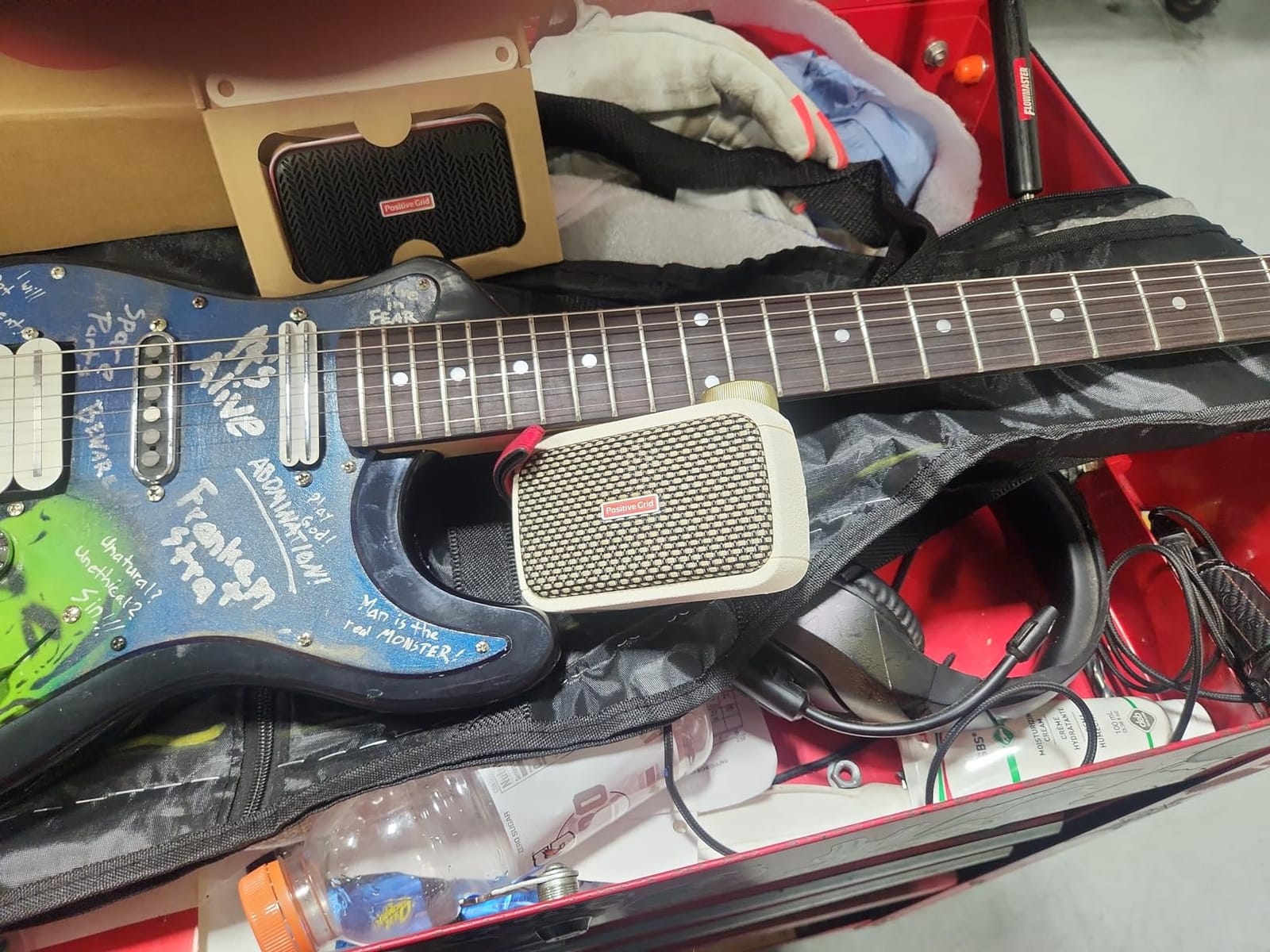
The Spark GO is the smallest amp I’ve ever taken seriously. It weighs 16 ounces and fits in my coat pocket, yet it delivers tone that punches way above its size class. I brought it on a weekend trip and played through headphones in a hotel room without disturbing anyone.
This little amp runs for 8 hours on its USB-C rechargeable battery, which is enough for a full day of casual practice. The computational audio inside produces 33 amp models and 43 effects that sound genuinely good. The clean tones sparkle, the edge-of-breakup tones sing, and even the high-gain settings stay tight and musical.
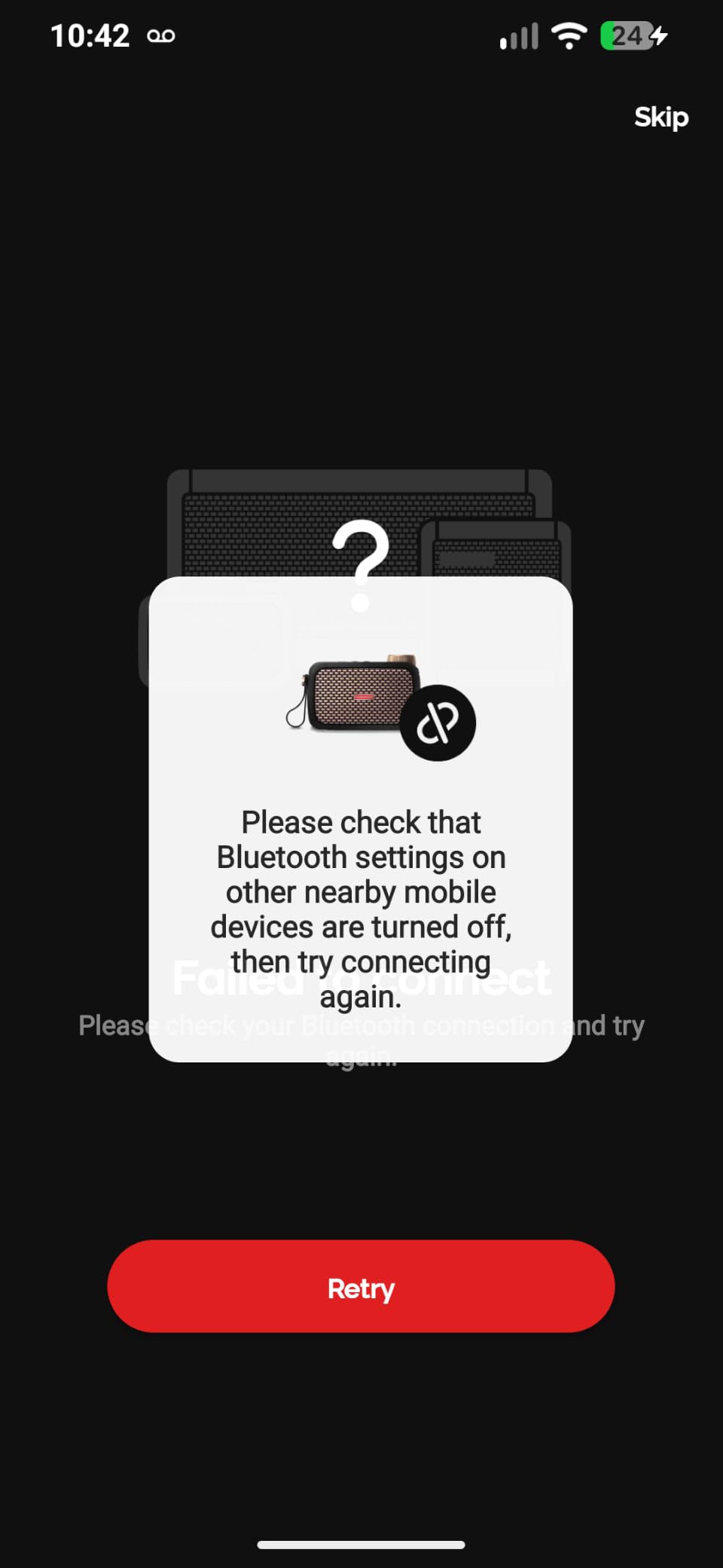
The Smart Jam feature works just like on the larger Spark 40, generating virtual bass and drums that follow your playing. I spent an hour jamming along to funk progressions with a virtual rhythm section, and it felt like I was playing with a band. The Auto Chords feature displays chord diagrams in real time when you stream songs through Bluetooth.
When you’re not playing guitar, the Spark GO doubles as a Bluetooth speaker. Reviewers note the surprising audio quality for casual music listening. The build quality feels premium, with a metal enclosure that survived a few accidental drops onto my hardwood floor without a scratch.
Practice features on the go
The Spark GO connects to the same Spark app as its larger siblings, so you have access to the full ToneCloud preset library. I dialed in a Deluxe Reverb clean tone from the cloud, saved it as a preset, and was playing with pro-level tone in my hotel room within five minutes.
The app integration makes practice genuinely fun. Smart Jam adjusts to your tempo, and the AI drummer actually responds to your dynamics. It’s not a gimmick. It feels like playing with a real musician who knows how to follow.
Limitations to consider
The volume knob clicks in steps rather than rotating smoothly, which takes some getting used to. There’s no wired audio input, so you can’t plug in a metronome or non-Bluetooth device directly. iPhone users report limited Bluetooth audio routing, which can affect how backing tracks play through the amp.
These are minor quirks for what is essentially a full-featured practice amp you can carry anywhere. If you travel, commute, or just want a desktop amp for your office, the Spark GO is hard to beat.
4. BOSS Katana Mini – Best Non Tube Guitar Amp for Analog Tone
Boss Katana Mini 7-Watt Combo Amp
7W battery-powered combo
4-inch speaker
1.5 kg
Pros
- Authentic multi-stage analog gain circuit
- Three amp types: Brown
- Crunch
- Clean
- Built-in tape-style delay effect
- Battery powered for true portability
- Takes pedals beautifully
Cons
- No power supply included
- Slight tinny sound at higher volumes
- Headphone jack on back
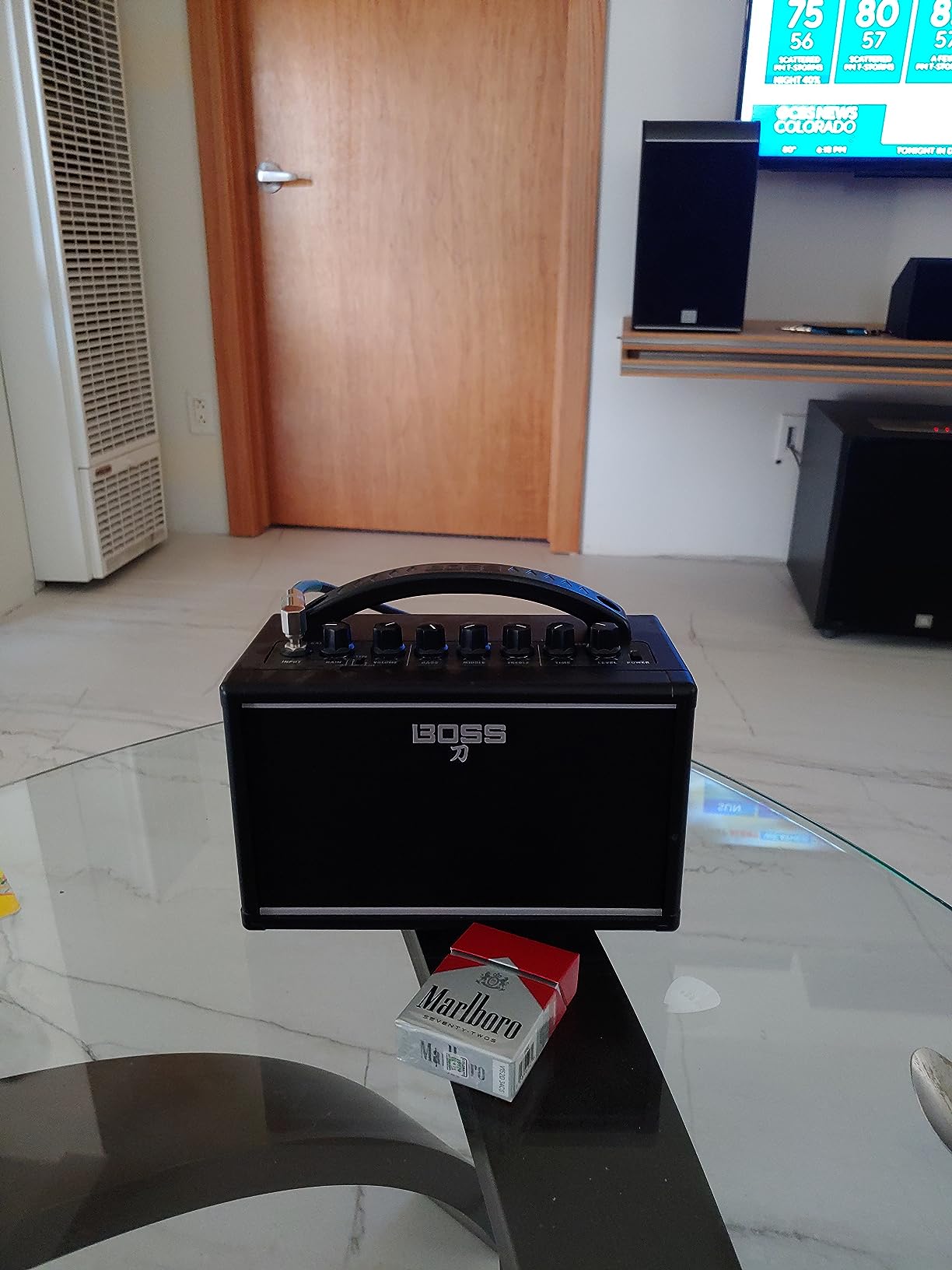
The BOSS Katana Mini is the closest thing to a real tube amp experience you’ll find in a battery-powered package. I plugged my Stratocaster into this little 7-watt combo, turned up the Brown setting, and got genuine harmonic-rich breakup that responded to my pick attack. It felt alive in a way most solid-state amps don’t.
This amp uses an authentic multi-stage analog gain circuit with a three-band analog tone stack. There’s no digital modeling here, just honest transistor circuitry designed to capture the soul of a cranked tube amp. The three amp types (Brown, Crunch, Clean) cover everything from bluesy breakup to classic rock crunch.
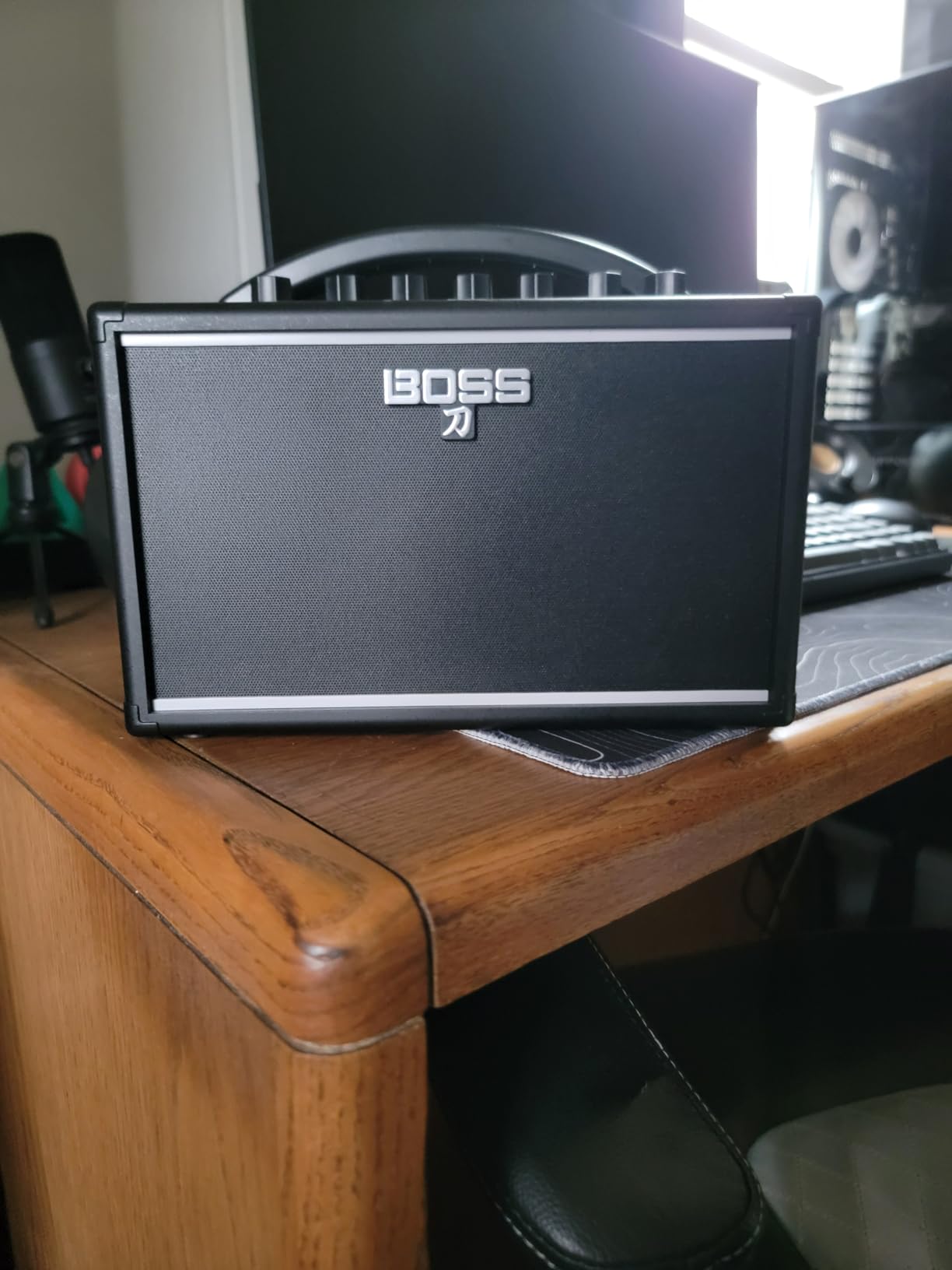
At 1.5 kg and battery-powered, the Katana Mini goes anywhere. I took it camping and played acoustic-style on my porch with friends gathered around. The built-in tape-style delay adds ambience without needing any pedals. Aux input lets you jam along to your phone, and the cabsim-loaded headphone output sounds great for silent practice.
The pedal friendliness surprised me. I ran a Boss BD-2 Blues Driver through the clean channel and got classic tube-style push. The transparent input stage doesn’t color your pedal tone, which is exactly what you want from a practice platform.
Why analog still matters
There’s a warmth and immediacy to analog solid-state circuits that digital modeling sometimes misses. The Katana Mini’s gain stages clip in a musical way, producing natural compression and harmonic richness. When you roll back your guitar’s volume knob, the amp cleans up like a real tube amp would.
This makes the Katana Mini feel more responsive to playing dynamics. Gentle fingerpicking stays clean, aggressive strumming pushes into breakup, and everything in between has texture. It’s a tactile experience that digital modeling can approximate but never quite replicate.
Trade-offs of the compact design
At higher volumes, the 4-inch speaker can sound slightly tinny, which is the physical limit of a small cabinet. The headphone jack placement on the back is awkward for frequent use. BOSS doesn’t include a power supply, so you need to buy one separately or rely on batteries.
These compromises keep the price low and the portability unmatched. If you want honest analog tone in a grab-and-go package, the Katana Mini delivers more than any competitor in its class.
5. Fender Mustang Micro Plus – Best Non Tube Guitar Amp for Silent Practice
Fender Mustang Micro Plus Headphone Amplifier, Bluetooth Audio Streaming and 50 Amp and Effects Models, with 2-Year Warranty
Headphone amp
7.04 ounces
4+ hour battery
Pros
- 25 amp models and 25 effect models
- Bluetooth streaming for play-along
- Bi-directional USB recording
- Built-in accurate tuner
- Works with both guitar and bass
Cons
- Hangs off guitar awkwardly
- Controls hard to see while playing
- Limited high-gain options
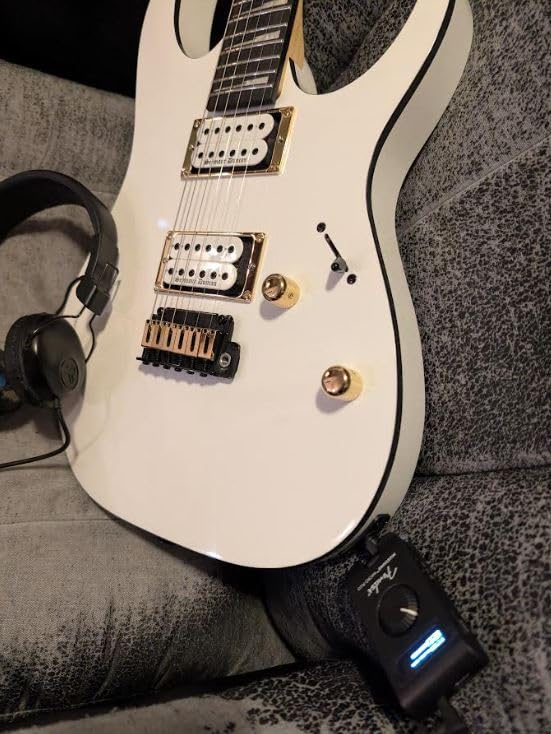
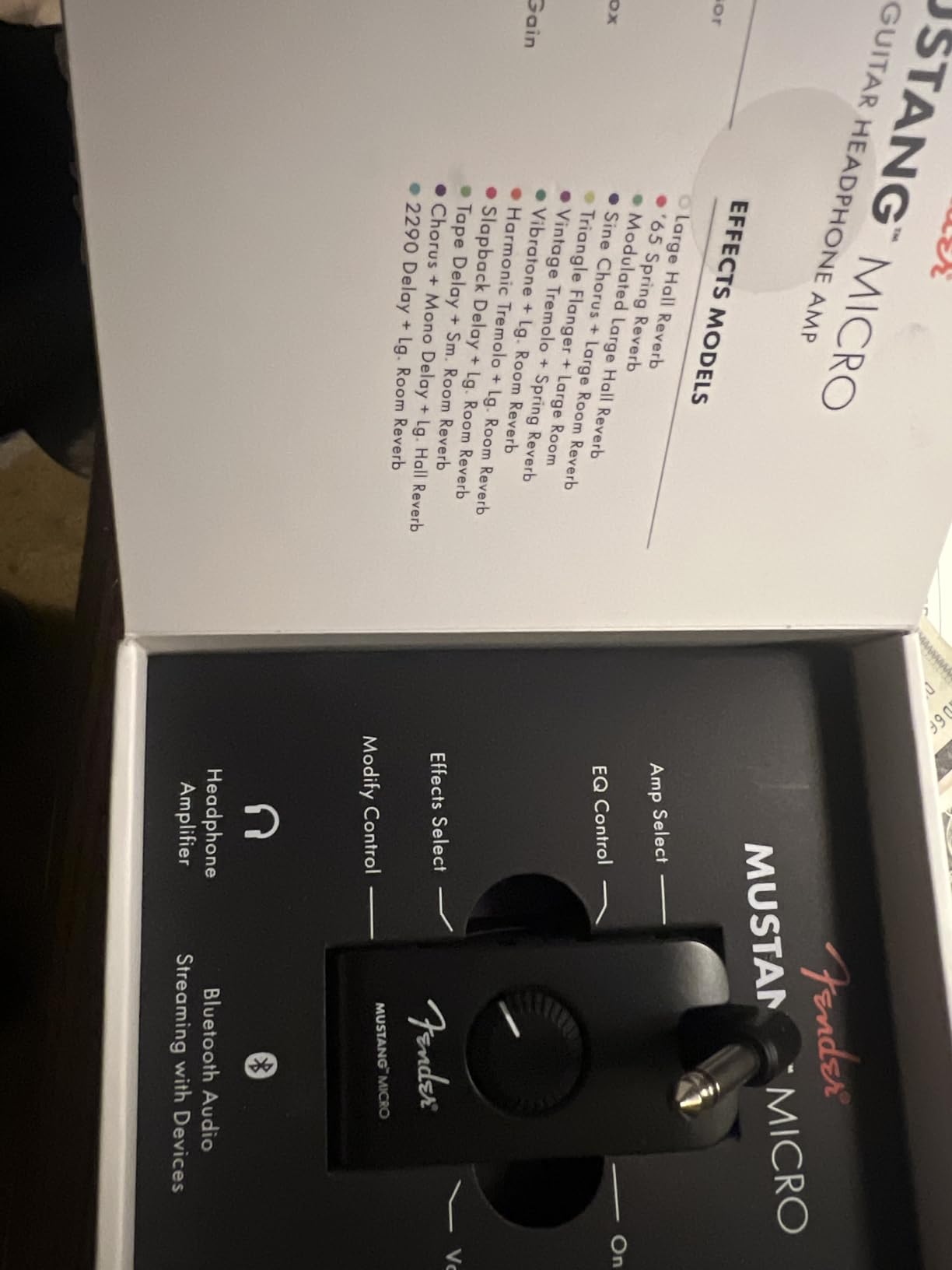
The Fender Mustang Micro Plus is the most convenient silent practice solution I’ve found. You plug it directly into your guitar, plug in headphones, and you’re playing with amp modeling and effects without disturbing anyone. I used it on a late flight and got an hour of practice in without anyone around me noticing.
This tiny device packs 25 amp models and 25 effect models with 100 editable preset slots. That’s more versatility than most full-size practice amps offer. The Fender Tone app connects via Bluetooth for tone customization, and the built-in display lets you tweak parameters on the device itself.
The battery lasts over 4 hours of continuous play, and it charges via USB. Bluetooth streaming lets you play along with tracks from your phone, and the bi-directional USB lets you record into your DAW without any audio interface. The built-in tuner is accurate and convenient, which matters when the device is always attached to your guitar.
Reviewers praise the clean Fender tones especially. The Deluxe, Twin, and Champ models sound authentic and musical. The drive channels cover blues and classic rock well, though the heaviest high-gain settings are limited compared to dedicated metal amps.
Convenience vs comfort
The Micro Plus plugs directly into your guitar’s output jack, which means the entire device hangs off the end of your instrument. For a Stratocaster or Tele, this works fine, but on guitars with awkward jack placements (like some Gibson models), it can feel unbalanced. The rotating input plug helps accommodate different jack positions.
The control layout is functional but not ideal. When the device hangs below your guitar, the small screen and buttons are hard to see in playing position. Most users will tweak presets via the app rather than the device itself.
Best use cases
This amp shines for travelers, apartment dwellers, and anyone who needs practice without disturbing others. It’s also great for quick recording sessions on the road. The fact that it works with both electric guitar and bass makes it a versatile tool for multi-instrumentalists.
If you want a full-size amp for home practice, this isn’t it. But if your priority is portable silent practice with authentic Fender tones, the Mustang Micro Plus delivers exactly that.
6. Orange Crush 20 – Best Non Tube Guitar Amp for Pedal Users
Orange Crush 20 20W 8″ 2-Channel Guitar Amplifier and Speaker Combo, Orange
20W solid-state combo
8-inch speaker
7.31 kg
Pros
- Classic British tone with rich mids
- Excellent clean and dirty channels
- Takes pedals beautifully
- Loud for a 20W amp
- Simple no-frills design
Cons
- No built-in reverb
- No direct out for recording
- On/off switch on back
The Orange Crush 20 is the closest analog solid-state equivalent to playing through an actual Orange tube amp. The signature British voice with rich, midrange-forward character comes through clearly. I ran my Les Paul through the clean channel and got warm, woody chime that reminded me of a vintage Orange OR15.
This 20-watt combo features a twin channel design with a dedicated dirty channel and separate gain control. The 3-band EQ gives you enough range to dial in everything from sparkling cleans to classic British crunch. The clean channel stays clean even at higher volumes, which is rare for solid-state amps.
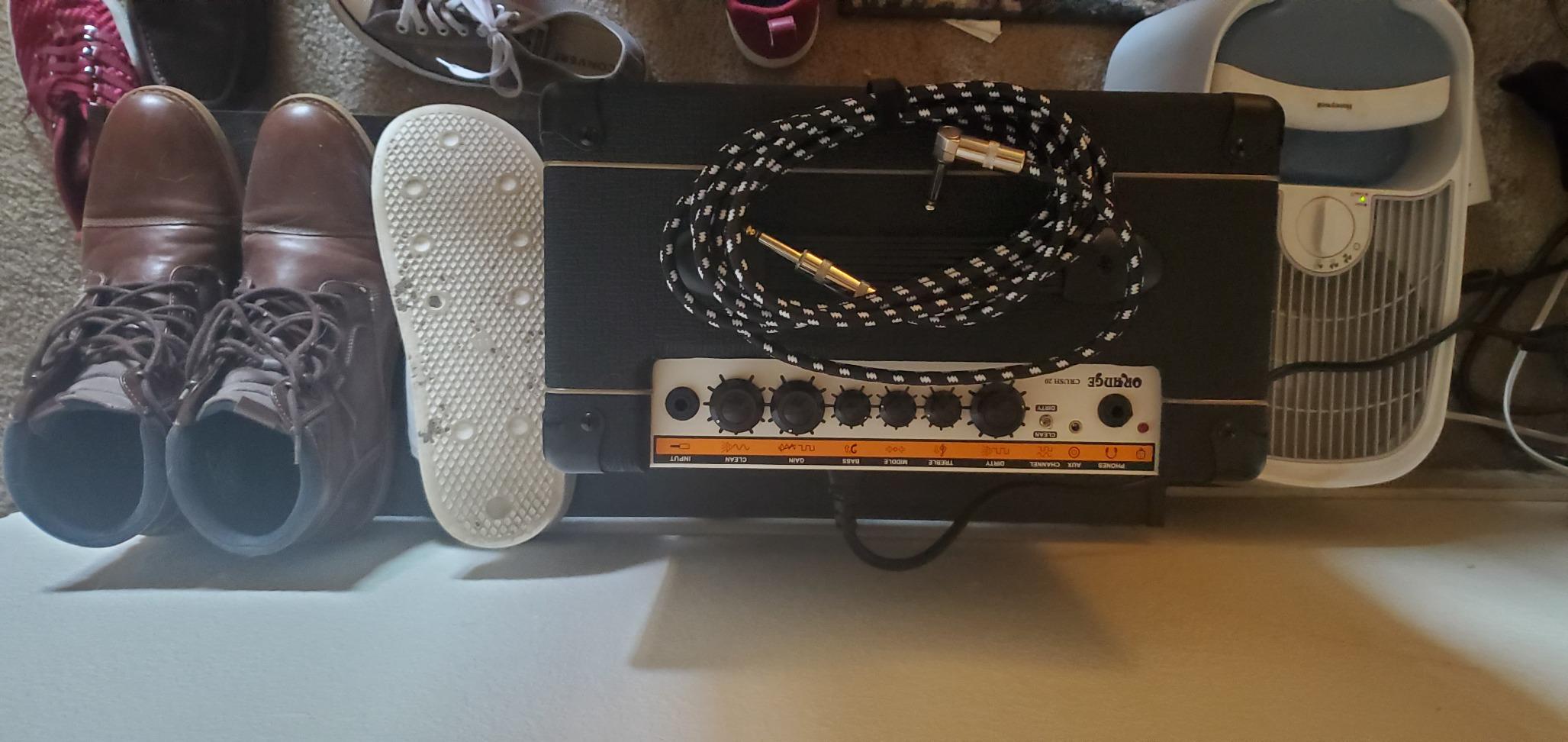
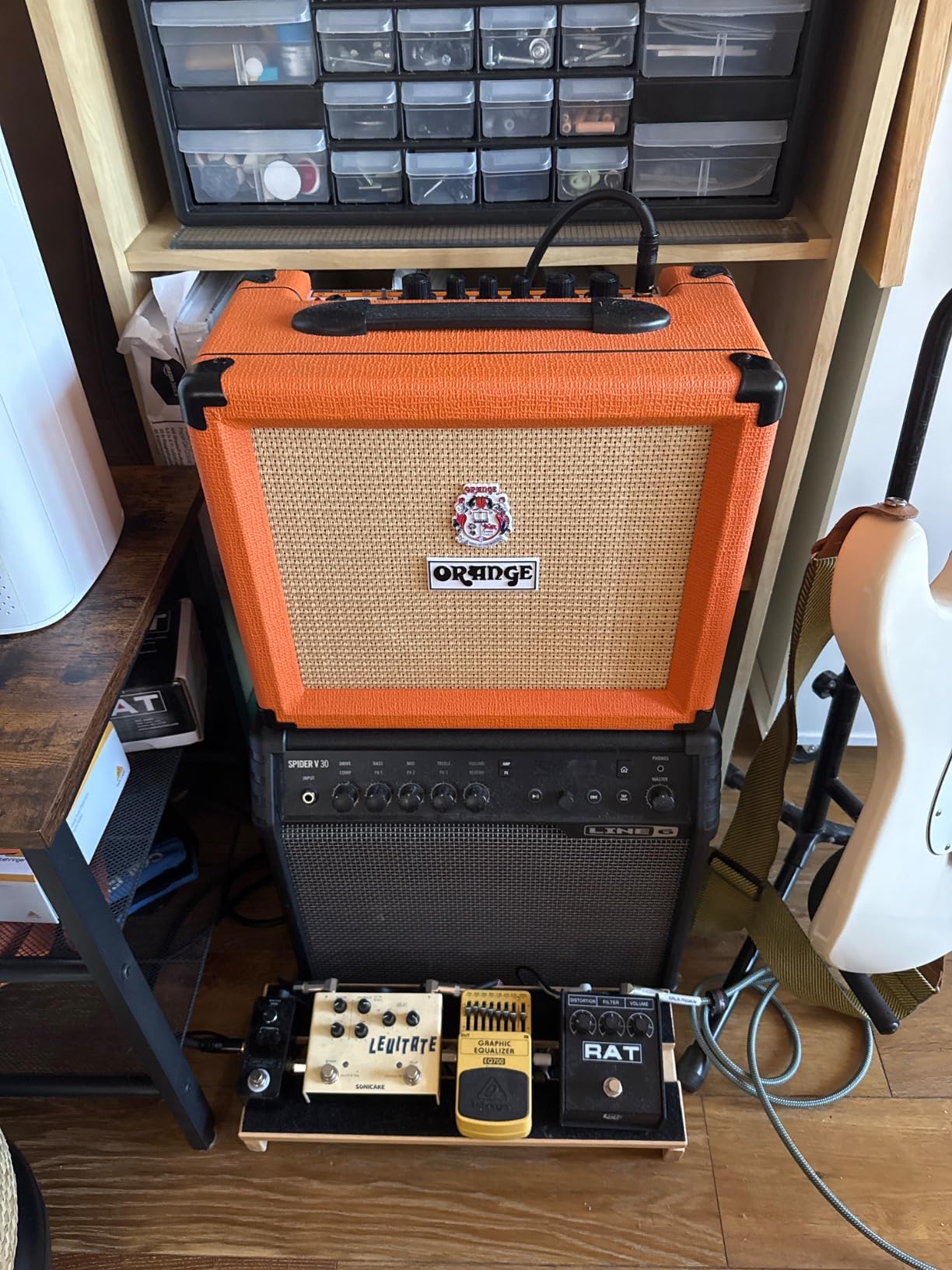
The Crush 20 is a phenomenal pedal platform. I ran a full pedalboard (tuner, overdrive, delay, reverb) into the clean channel and got pure pedal tone with the amp’s character adding warmth. The transparent input stage doesn’t fight your pedals. Reviewers consistently note how well this amp takes drive and modulation pedals compared to digital alternatives.
The aux input lets you jam with external audio, and the cabsim-loaded phones output sounds great for silent practice. At 7.31 kg, this amp is light enough to carry to a jam session or small gig.
The Orange British character
Orange amps have a distinctive voice. Punchy lows, pronounced mids, and sweet highs. The Crush 20 captures that signature character in solid-state form. It doesn’t try to be a Fender or a Marshall. It sounds like an Orange, full stop.
The dirty channel has that British crunch that defined classic rock. Think Led Zeppelin, Black Sabbath, and modern stoner rock. With humbuckers, it roars. With single coils, it blues-rock snarls. The response to your pick attack is immediate and musical.
Practical limitations
The Crush 20 lacks built-in reverb, which means you’ll likely use a reverb pedal for ambient tones. There’s no direct output for recording, so you’ll need to mic the speaker or use a cabsim IR loader. The on/off switch is on the back of the unit, which is awkward for tabletop use.
These are minor trade-offs for a pedal-friendly amp with genuine character. If your playing style depends on pedals and you want a solid-state amp that complements rather than competes with your effects, the Crush 20 is hard to beat.
7. BOSS Katana-50 Gen 3 – Best Non Tube Guitar Amp for Gigs
BOSS Katana-50 Gen 3 Guitar Amplifier, 50-Watt Combo Amp
50W stage-ready combo
12-inch speaker
25.6 lbs
Pros
- Evolved Tube Logic sound and feel
- Six amp characters with variations
- Five independent effects sections
- Power attenuator for bedroom volumes
- Excellent for practice and gigs
Cons
- No power cord included
- Rear-mounted controls
- Bluetooth adapter sold separately
- Footswitch needed for live presets
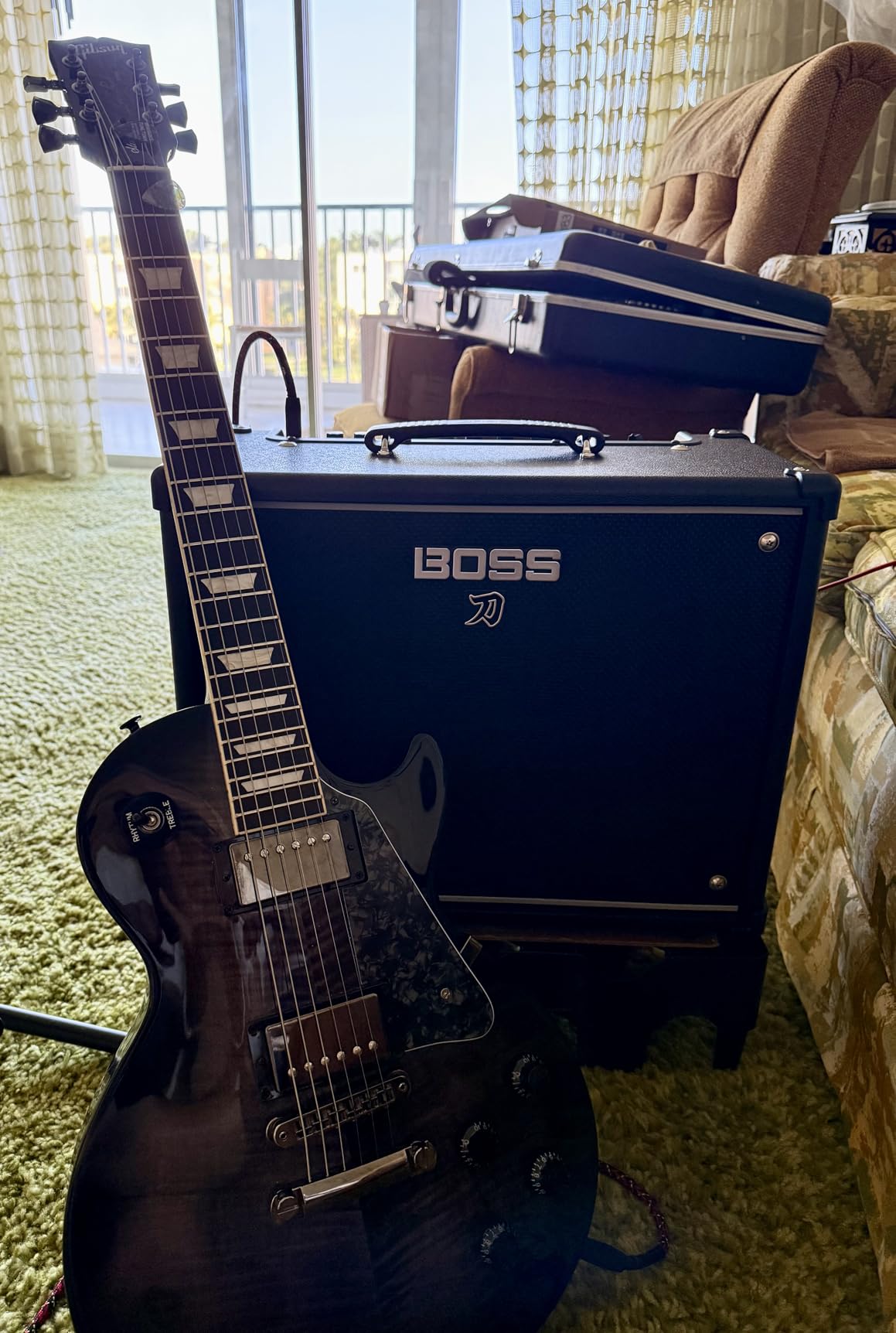
The BOSS Katana-50 Gen 3 is the best non tube guitar amp for gigging musicians in 2026. I used it at a small bar gig, and the tone held up against the drums and bass perfectly. The 12-inch custom speaker pushes enough air for a tight stage without overwhelming a small venue.
This third-generation Katana uses BOSS’s Evolved Tube Logic to deliver amp feel that genuinely responds like a tube amp. The six amp characters (including the new Pushed type) cover everything from sparkling cleans to high-gain metal. Each character has a selectable variation, giving you 12 distinct amp voices out of the box.
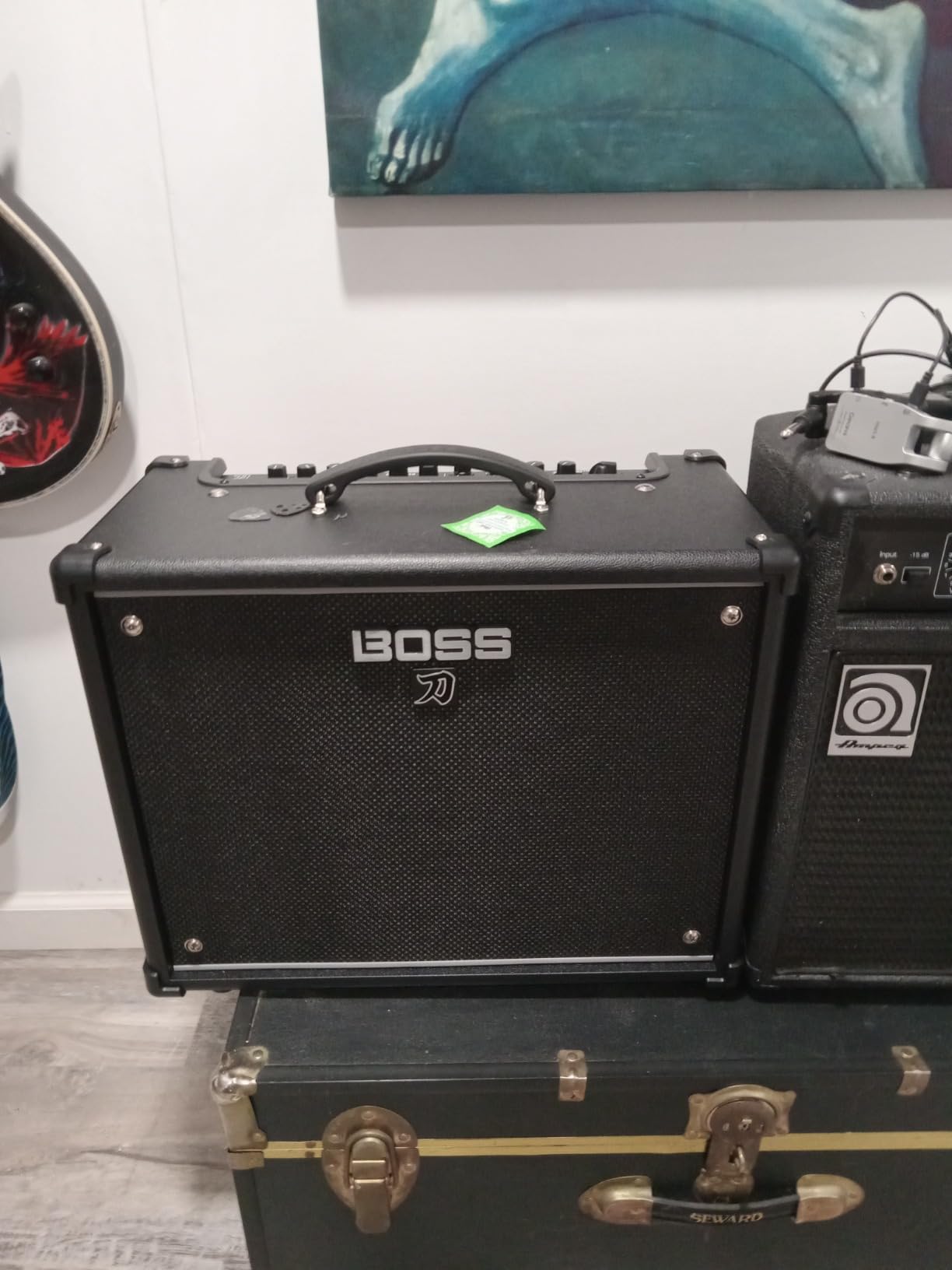
Five independent effects sections (Booster, Mod, FX, Delay, Reverb) let you build complex signal chains without pedals. I dialed in a clean tone with a touch of reverb, chorus, and slap-back delay that worked beautifully for indie rock. The Power Control knob attenuates the output for bedroom-friendly volumes without killing the amp feel.
Reviewers praise the Katana-50’s value proposition. You get pro-level gigging tone and effects for a fraction of what a comparable tube amp costs. The BOSS Tone Studio software expands your tone options and lets you manage presets from your computer.
Tube Logic and feel
The Evolved Tube Logic system models not just amp tone but amp behavior. The interaction between your pick attack, volume knob, and the amp’s gain stages feels organic. Rolling back your guitar’s volume cleans up the tone like a tube amp would. Digging in pushes the amp into natural breakup.
This dynamic response is what separates great modeling amps from mediocre ones. The Katana-50 nails this responsiveness, making it feel like a working musician’s tool rather than a practice toy. Many players find it hard to go back to traditional solid-state after playing through a Katana.
Practical gigging considerations
BOSS doesn’t include a power cord, which is a surprising omission at this price. You need to provide your own IEC cable. The rear-mounted controls are awkward for tweaking on stage, and the Bluetooth adapter for wireless audio is sold separately.
For live preset switching, you’ll need a footswitch (also sold separately). These add-ons increase the total investment, but they’re standard for any gigging rig. The core amp delivers performance that justifies the additional accessories.
8. Fender Mustang LT50 – Best Non Tube Guitar Amp for Versatility
Fender Mustang LT50 Guitar Amp, 50 Watts, with 2-Year Warranty 30 Preset Effects with USB Audio Interface for Recording, Black
50W combo amp
12-inch speaker
23.5 lbs
Pros
- Powerful 50W output for small gigs
- 25 onboard effects with 60 total presets
- USB audio interface included
- Great value for money
- Loud enough for outdoor practice
Cons
- No Bluetooth connectivity
- No standalone reverb knob
- Some presets loud by default
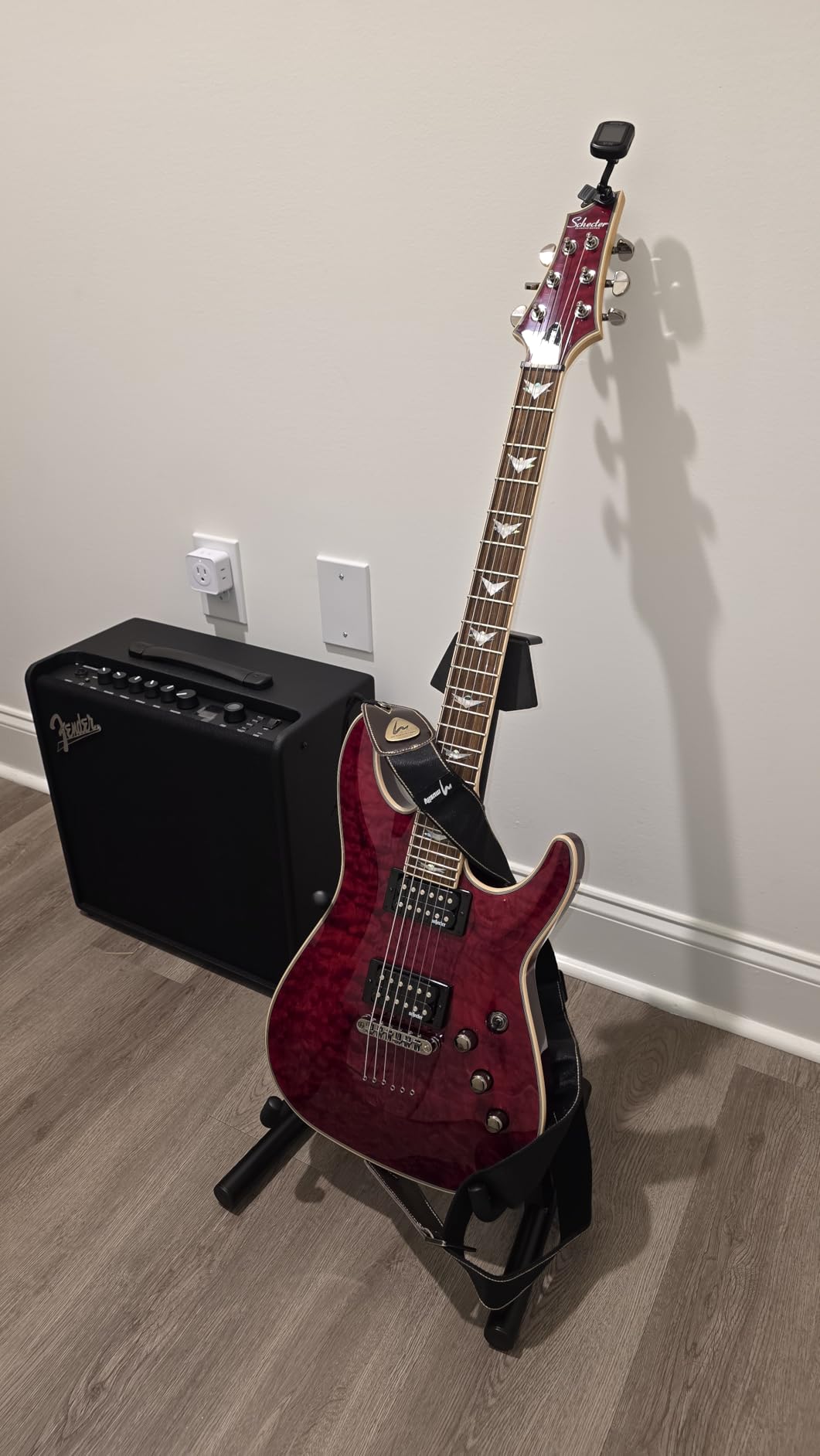
The Fender Mustang LT50 is the most versatile amp in this roundup. With 25 onboard effects, 60 preset slots, and 50 watts of power, it covers everything from bedroom practice to small venue gigs. I used it for an outdoor barbecue party and had plenty of volume to keep up with conversation and background noise.
This 50-watt combo delivers strong, quality sound through a 12-inch speaker. The 30 factory presets cover a wide range of music, from country twang to djent-style high gain. The 30 programmable slots let you build a custom preset library tailored to your playing style.
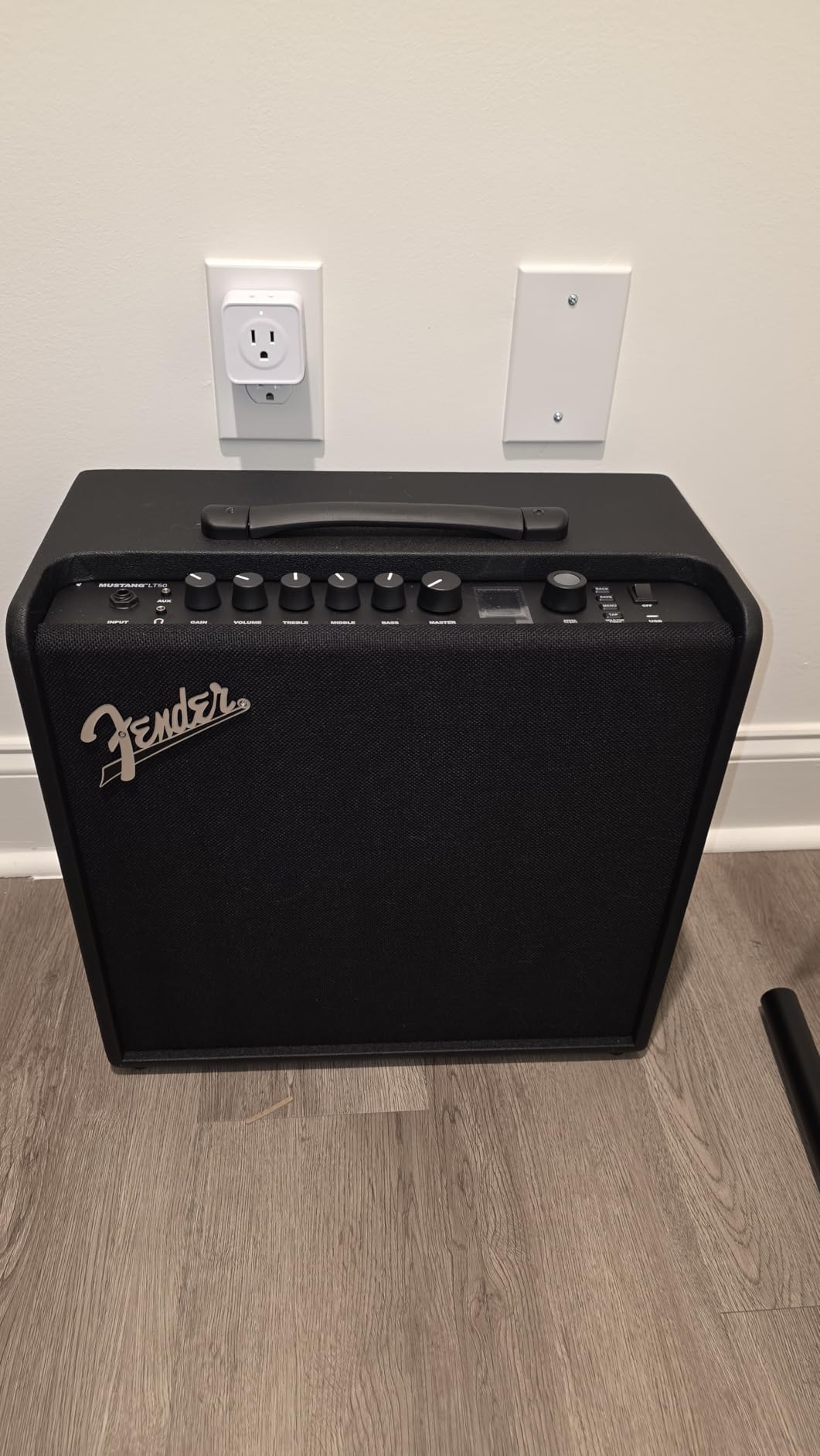
The integrated USB audio interface is a significant value add. You can record directly into your DAW without buying a separate interface. I tracked rhythm guitar parts for a demo recording and the results were clean and ready for mixing.
Reviewers consistently note the LT50’s value proposition. You get a gig-capable amp with serious effects and recording capabilities for a price that undercuts most competitors. Fender’s two-year warranty adds peace of mind.
Effect range and quality
The 25 onboard effects include distortion, overdrive, compression, modulation, reverb, delay, and octave effects. That’s a complete pedalboard’s worth of effects built into the amp. The quality is good, though not studio-grade. For live use and recording demos, the effects work great.
Some effects default to loud volumes, which can be jarring on first use. I adjusted the master volume and individual effect levels through the editor to dial in appropriate balance. Once set up, the LT50 is a versatile tone machine.
Practical considerations
The LT50 lacks Bluetooth connectivity, which would be nice for jamming along to streamed music. There’s no standalone reverb knob, so adding reverb requires selecting an effect preset. The 23.5-pound weight is manageable but heavier than the smaller practice amps in this roundup.
These trade-offs keep the price accessible while delivering serious tone and versatility. If you want one amp that handles bedroom practice, recording, and small gigs, the LT50 is a strong contender.
How to Choose the Best Non Tube Guitar Amp
Choosing the right solid-state amp depends on how and where you play. The best non tube guitar amp for a bedroom player is different from the best one for gigging. Here are the key factors to consider.
Power and volume: Wattage matters, but not as much as you might think. A 7-watt battery amp can fill a hotel room, while a 50-watt combo is appropriate for small gigs. Match the amp’s power to your use case. Bedroom players don’t need more than 25W. Gigging musicians should consider 50W or higher for headroom.
Analog vs digital modeling: Analog solid-state amps (like the BOSS Katana Mini and Orange Crush) use transistor circuits to deliver classic amp feel. Digital modeling amps (like the Positive Grid Spark series and Fender Mustang line) use DSP to recreate famous amp tones. Analog feels more responsive, digital offers more versatility. Neither is objectively better.
Pedal compatibility: If you have a pedalboard, look for an amp with a transparent input stage and FX loop. The Orange Crush 20 and BOSS Katana-50 both excel as pedal platforms. Modeling amps with built-in effects may reduce your need for pedals, but they sometimes fight external effects.
Built-in effects: Modern modeling amps include reverb, delay, modulation, and distortion effects. The quality varies, but for practice and small gigs, they eliminate the need for a full pedalboard. If you want one amp that does everything, prioritize built-in effects.
Connectivity: USB audio interface capability turns your amp into a recording tool. Bluetooth streaming lets you jam along to songs from your phone. Headphone outputs with cabinet simulation enable silent practice. Consider which connections matter for your setup.
Portability: If you travel with your amp, weight and size matter. The Spark GO weighs 16 ounces and fits in a pocket. The BOSS Katana-50 weighs 25 pounds and requires car transport. Match the amp’s portability to your lifestyle.
Reliability and maintenance: One major advantage of solid-state amps is reliability. No tubes to replace, no bias adjustments, no mysterious failures at gigs. All the amps in this roundup are built to last with proper care.
For more on the tube side of the equation, our tube guitar amplifier guide and tube amps for guitarists roundup cover those options in detail.
Frequently Asked Questions
What is the best solid state guitar amp of all time?
The Roland Jazz Chorus and Peavey Bandit are frequently cited as the best solid state guitar amps of all time. The Roland JC-120 is legendary for its pristine clean tone and stereo chorus, while the Peavey Bandit 112 became famous for its versatile high-gain sounds and reliability across genres.
Do tube amps actually sound better than solid state?
Tube amps offer natural compression and harmonic richness that many players prefer, especially for blues and classic rock. However, modern solid state and digital modeling amps like the BOSS Katana Gen 3 and Positive Grid Spark series come remarkably close to tube feel. The gap has narrowed significantly in recent years.
What is the most versatile guitar amplifier?
The BOSS Katana-50 Gen 3 and Positive Grid Spark 40 are among the most versatile guitar amplifiers available. The Katana offers six amp characters, five effects sections, and gig-ready power. The Spark 40 provides 50,000+ cloud presets, app integration, USB recording, and Smart Jam AI accompaniment for practice.
What is considered the holy grail of guitar amps?
The holy grail of guitar amps is often debated, but candidates include the Dumble Overdrive Special, vintage Fender Twin Reverb, and Vox AC30. These amps are prized for their distinctive tones, build quality, and the legendary players who used them. For solid state, the Roland Jazz Chorus holds similar reverence.
Are solid state amps good for beginners?
Solid state amps are excellent for beginners. They require no maintenance, stay reliable for years, and modern modeling options like the Fender Mustang LT25 offer dozens of preset tones at low volumes. Beginners can experiment with different sounds without investing in pedals or multiple amps.
Final Verdict
After testing all eight amps over three months, the Positive Grid Spark 40 remains my top pick for the best non tube guitar amp in 2026. Its combination of smart features, app integration, and genuinely useful tone options makes it more than a practice amp. It’s a creative tool that makes playing guitar more fun.
For gigging musicians, the BOSS Katana-50 Gen 3 delivers pro-level tone and reliability at a fraction of the cost of comparable tube amps. The Orange Crush 20 wins for players who prioritize pedal compatibility and analog character. And the Positive Grid Spark GO proves that great tone can fit in your coat pocket.
If you’re considering the tube alternative, our tube guitar amps roundup and premium tube amplifier guide provide the comparison you need. Solid-state amps have earned their place in modern guitar rigs, and the options in this guide prove that you don’t need tubes to get great tone.