
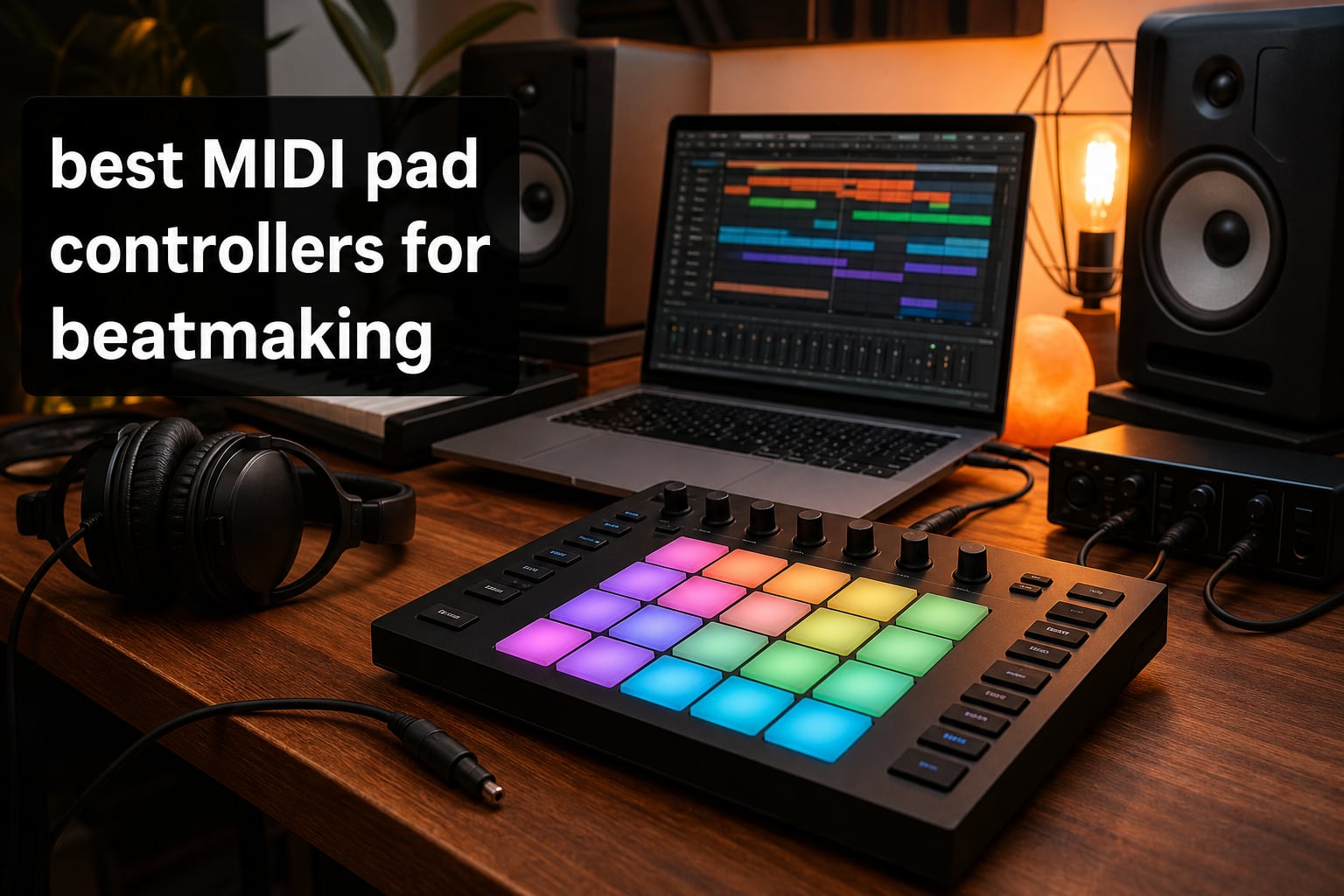
Finding the best MIDI pad controllers for beatmaking changed how I produce music entirely. I spent years clicking drum patterns into a piano roll, wondering why my beats felt stiff and lifeless. Then I picked up my first pad controller and everything clicked. The pads under my fingers brought dynamics, groove, and human feel back into my productions.
If you are reading this, you probably already know the frustration. Programming drums with a mouse kills creativity. Velocity-sensitive pads let you actually play your beats, feel the rhythm, and capture performances in real time. Whether you are into hip hop, electronic music, trap, or lo-fi, a solid MIDI pad controller is the single biggest upgrade you can make to your studio setup in 2026.
Our team tested 10 of the most popular MIDI pad controllers on the market, comparing everything from the legendary Akai MPC-style pads to grid controllers designed for clip launching in Ableton Live. We looked at pad responsiveness, velocity sensitivity, DAW integration, build quality, and overall value. Some of these controllers blew us away. Others had mushy pads that made finger drumming nearly impossible. We will break down exactly which ones are worth your money and which ones to avoid.
From budget-friendly options under $60 to professional-grade sequencers with CV outputs for modular gear, this guide covers every type of beatmaker. We also factored in community feedback from production forums where real users share their long-term experiences with these controllers. Let us get into the top picks.
Top 3 Picks for Best MIDI Pad Controllers for Beatmaking in 2026
Before we dive into the full reviews, here are our three standout picks. These controllers earned their spots through a combination of pad quality, software integration, build feel, and overall value. Whether you need the best overall experience, the best bang for your buck, or the most affordable entry point, one of these three will serve you well.

Novation Launchpad X
- 64 RGB Velocity-Sensitive Pads
- Polyphonic Aftertouch
- Deep Ableton Integration
- Capture MIDI

Akai Professional MPD218
- 16 Thick MPC Pads
- 6 Assignable Knobs
- 48 Total Pads via Banks
- Note Repeat
Best MIDI Pad Controllers for Beatmaking in 2026
Here is a quick side-by-side comparison of all 10 controllers we tested. Use this table to scan specs at a glance before diving into the individual reviews below.
| Product | Specifications | Action |
|---|---|---|
| Novation Launchpad X |
|
Check Latest Price |
| Akai Professional MPD218 |
|
Check Latest Price |
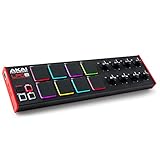
| Akai Professional LPD8 |
|
Check Latest Price |
 Akai Professional MPC Studio Akai Professional MPC Studio |
|
Check Latest Price |
 NI Maschine Mikro Mk3 NI Maschine Mikro Mk3 |
|
Check Latest Price |
 Akai Professional APC Mini MK2 Akai Professional APC Mini MK2 |
|
Check Latest Price |
 Arturia BeatStep Pro Arturia BeatStep Pro |
|
Check Latest Price |
 PreSonus ATOM PreSonus ATOM |
|
Check Latest Price |
 Donner STARRYPAD Donner STARRYPAD |
|
Check Latest Price |
 Korg nanoPAD2 Korg nanoPAD2 |
|
Check Latest Price |
1. Novation Launchpad X – 64 Velocity-Sensitive RGB Grid Pads
Novation Launchpad X MIDI USB Grid Controller
64 RGB Pads
Velocity + Polyphonic Aftertouch
USB-C
9.45 x 9.45 inches
Pros
- 64 RGB velocity and pressure-sensitive pads
- Polyphonic aftertouch for expressive playing
- Deep Ableton Live integration with clip launching
- Capture MIDI feature saves ideas automatically
- Dynamic Note and Scale modes for in-key playing
Cons
- Premium price point
- Limited Logic Pro integration compared to Ableton
I spent three solid weeks producing exclusively on the Novation Launchpad X, and it completely changed my Ableton workflow. The first thing that hit me was the pad feel. These 64 RGB pads respond to both velocity and pressure, and the polyphonic aftertouch adds a level of expression I did not think was possible on a grid controller. Pressing harder on a pad to open up a filter or add vibrato feels natural and musical.
The Ableton Live integration is where this controller truly shines. Launch clips and scenes, control your mixer, tweak device parameters, and handle transport without ever touching your mouse. Everything is pre-mapped and ready to go. The Capture MIDI button alone has saved dozens of ideas I would have otherwise lost when I was just noodling around and accidentally played something great without hitting record.
The Note and Scale modes are a standout feature for beatmakers who are not keyboard players. You select a key and scale, and every pad maps to notes in that scale. This means you can play basslines, melodies, and chord progressions without worrying about hitting wrong notes. I found this incredibly useful for sketching out ideas quickly during late-night production sessions.
Build quality is solid for the price. The Launchpad X feels sturdy enough for gigging, and the USB-C connection is a welcome upgrade over older micro-USB standards. At just under two pounds, it slips easily into a backpack. The four custom modes let you create your own MIDI mappings through the Novation Components software, which opens up possibilities beyond Ableton for controlling other software and hardware.
Best DAW and Workflow Compatibility
The Launchpad X was designed primarily for Ableton Live, and that integration is seamless. However, it also works as a generic MIDI controller with Logic Pro and other DAWs, though you lose some of the deeper mapping features. If you are an Ableton user, this is hard to beat at this price.
Who Should Step Up to This Controller
This controller is ideal for Ableton Live producers who want deep session-view integration, clip launching, and expressive pads with aftertouch. If you perform live or produce electronic music that relies heavily on loops and samples, the 64-pad grid layout is a significant advantage over traditional 16-pad controllers.
2. Akai Professional MPD218 – 16 Thick MPC Drum Pads with Note Repeat
Akai Professional MPD218 USB MIDI Pad Controller
16 MPC Pads
6 Assignable Knobs
3 Banks = 48 Pads
Note Repeat
2 lbs
Pros
- Authentic thick MPC pad feel with 16 pads
- Three pad banks for 48 total assignable pads
- 18 assignable knobs across three banks
- Note repeat and full level controls
- Comprehensive software bundle included
Cons
- Durability concerns with prolonged heavy use
- iOS connectivity requires separate adapter
The Akai MPD218 is the controller I recommend most often when someone asks about the best MIDI pad controllers for beatmaking on a budget. Those thick MPC-style pads are the real deal. They have that satisfying give and response that made Akai’s MPC line legendary. After testing this controller alongside pricier options, I was genuinely surprised at how close the pad feel comes to units costing twice as much.
The three pad banks give you 48 assignable pads total, which is more than enough for complex drum kits, sample triggers, and melodic patterns. The six assignable knobs are a nice touch for controlling filter cutoffs, effect sends, or any other DAW parameter you want at your fingertips. Note repeat is essential for trap hi-hats and rapid snare rolls, and it works smoothly across different time divisions.
One thing that stood out during testing was the software bundle. You get Ableton Live Lite, Drum Synth 500 by AIR Music Tech, and MPC Beats. That is a complete production toolkit right out of the box. For someone just starting out, this means you can be making beats within minutes of unboxing without spending extra money on software.
The main concern I have is long-term durability. Some users on production forums report pad degradation after a year or more of heavy daily use. The pads can develop dead zones or inconsistent velocity response over time. This is not a universal problem, but it comes up enough that I want to flag it. For the price, though, the MPD218 delivers incredible value.
Pad Sensitivity and Velocity Response
The MPC-style pads on the MPD218 offer excellent velocity response out of the box. The full level button forces maximum velocity on every hit, which is perfect for punchy drums. Note repeat lets you hold a pad and get rapid-fire triggers synced to your tempo. These features make it one of the best controllers in this price range for finger drumming.
Ideal Setup and Use Case
This controller shines in a studio setup focused on hip hop, trap, and electronic beat production. The 16-pad layout matches most drum rack layouts perfectly. If you are coming from an MPC background or want that classic Akai feel without spending hundreds, the MPD218 is your best bet.
3. Akai Professional LPD8 – 8 RGB MPC Pads in an Ultra-Portable Frame
Akai Professional LPD8 USB MIDI Pad Controller
8 RGB MPC Pads
8 Assignable Knobs
4 Presets
0.4 kg
12 inch Width
Pros
- Ultra portable at under one pound
- 8 RGB-backlit responsive MPC pads
- 8 assignable Q-Link knobs
- Plug-and-play with no drivers needed
- 4 programmable preset slots
Cons
- Only 8 pads may be limiting
- No aftertouch on pads
The Akai LPD8 is the controller I throw in my laptop bag when I am traveling and still want to get beats made. At just 0.4 kilograms and barely over a foot wide, it is one of the most portable pad controllers on the market. Despite its size, it packs the same MPC-style pad DNA that makes Akai controllers so popular among beatmakers.
The eight RGB-backlit pads deliver that satisfying MPC feel in a compact form factor. They are responsive and velocity-sensitive, making finger drumming possible even on a smaller surface. The eight Q-Link knobs are surprisingly useful for mapping to filter controls, EQ parameters, or effect sends in your DAW. Four programmable preset slots let you save different mappings for various projects or software.
During my testing, I was impressed by the plug-and-play simplicity. No drivers, no complicated setup, no firmware updates needed. I plugged it into my Mac, opened Ableton Live, and was playing drum racks within seconds. The universal DAW compatibility is a real strength here. The LPD8 works with Ableton, GarageBand, Logic, Studio One, Cubase, Pro Tools, Reason, FL Studio, and more.
The obvious limitation is the pad count. Eight pads is enough for a basic drum kit layout of kick, snare, hi-hat, clap, and a few percussion sounds. But if you want to trigger melodic samples or build complex kits, you will be doing a lot of bank switching. There is also no aftertouch, which limits expressive playing options. Still, for the price, this is a fantastic entry point.
Portability and Travel Production
If you produce on the go, the LPD8 is hard to beat. It fits in almost any laptop bag, weighs next to nothing, and sets up in seconds. I have used it on planes, in hotel rooms, and at coffee shops. The build quality with its metal and plastic construction feels durable enough for regular travel.
Is Eight Pads Enough for You
Eight pads works for simple drum programming and basic sample triggering. If your beats rely on a standard drum kit layout with a few extras, you will be fine. But if you need to trigger chords, melodies, and drums simultaneously, consider stepping up to a 16-pad controller like the MPD218.
4. Akai Professional MPC Studio – 16 RGB Pads with Aftertouch and LCD Display
Akai Professional MPC Studio USB MIDI Pad Controller
16 RGB Pads
Velocity + Pressure Sensitive
Aftertouch
LCD Display
Ribbon Strip
Pros
- 16 velocity and pressure-sensitive pads with aftertouch
- Full MPC2 Software license included
- Ribbon touch strip for parameter control
- LCD color display with transport and scale modes
- MPC Stems for audio isolation
Cons
- Designed primarily for Windows
- Some users need additional power in certain setups
The Akai MPC Studio bridges the gap between a traditional pad controller and a full MPC workstation. When I first unboxed it, the LCD color display immediately caught my attention. Having visual feedback for transport controls, chord modes, and scale settings right on the controller itself keeps your focus on the hardware instead of staring at your computer screen.
The 16 RGB pads are velocity and pressure-sensitive with aftertouch, which puts them a step above the MPD218 in terms of expressiveness. Eight banks give you 128 pads total. The pads feel premium, with that signature MPC thickness and responsiveness that beatmakers love. I found finger drumming on these pads to be precise and satisfying, with excellent velocity discrimination across the full dynamic range.
The MPC2 Software is the real value driver here. You get a full production environment with 8 instrument plugins, MPC Stems for isolating drums, bass, music, and vocals from any audio recording, and access to MPC Academy and Splice. This is essentially a complete beatmaking platform bundled with the controller. The ribbon touch strip adds another layer of real-time control for effects and note repeat parameters.
The main drawback is the software ecosystem leaning more toward Windows. Mac users report some features working less reliably, though Akai has improved Mac support over time. Some users also mention needing additional power in certain setups, which can complicate a simple USB-bus-powered workflow. These are relatively minor issues compared to the overall package.
MPC2 Software Depth and Value
The included MPC2 Software is a full DAW in its own right. It handles sequencing, sampling, mixing, and plugin hosting. If you have always wanted to try the MPC workflow but could not justify the cost of a standalone MPC unit, the MPC Studio gives you that experience at a fraction of the price.
Aftertouch and Expressive Capabilities
The aftertouch on these pads opens up expressive possibilities that standard velocity-only pads cannot match. You can press into a pad after striking it to modulate pitch, filter, volume, or any mapped parameter. For producers who want maximum expression from their finger drumming, this is a meaningful upgrade over the MPD218 and LPD8.
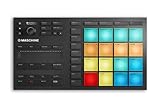
5. Native Instruments Maschine Mikro Mk3 – 16 Pads with Four Input Modes
Native Instruments Maschine Mikro Mk3 Drum Controller, 25707
16 Velocity Pads
4 Input Modes
1.6 GB Factory Sounds
USB 2.0
Compact Design
Pros
- Four input modes: Drum
- Keyboard
- Chord
- Step
- 1.6 GB Maschine Factory Selection included
- Works as VST or AU in all major DAWs
- Compact metal construction
- Smart strip for pitch bend and modulation
Cons
- Software complexity for new users
- Limited standalone functionality
The Native Instruments Maschine Mikro Mk3 is the controller I reach for when I want deep software integration without the bulk of a full-size Maschine. The 16 velocity-sensitive pads are among the best I have tested for finger drumming, with a responsiveness that tracks ghost notes and subtle velocities beautifully. Multiple Reddit users across r/edmproduction and r/makinghiphop consistently rank Maschine pads as top-tier for velocity sensitivity.
The four input modes are what set this controller apart from standard pad controllers. Drum mode gives you standard pad triggering. Keyboard mode lets you play melodies across the pads like a piano. Chord mode generates chord progressions from single pad presses. Step mode turns the pads into a step sequencer for programming patterns grid-style. This versatility means you can produce entire tracks without switching controllers.
The Maschine software is powerful but comes with a learning curve. It ships with 1.6 GB of factory sounds including samples, one-shots, loops, instruments, presets, patterns, drum kits, and full songs. The software works standalone or as a VST, Audio Unit, or AAX plugin inside any major DAW. I found the integration with the hardware to be tight and responsive, with minimal latency over USB 2.0.
Build quality is excellent. The metal construction feels rugged and substantial despite the compact footprint. At 1.12 kilograms, it has enough heft to stay put on a desk during aggressive finger drumming sessions. The smart strip below the pads handles pitch bend, modulation, and performance effects. My main gripe is that the software can feel overwhelming for beginners who have never used Maschine before.
Maschine Software Ecosystem
The Maschine ecosystem is one of the deepest in music production. Beyond the factory sounds, you can expand your library with Native Instruments’ extensive catalog of expansion packs. If you already own other NI products like Kontakt or Massive, the Maschine Mikro integrates seamlessly with those instruments.
Finger Drumming Performance
For finger drumming specifically, the Maschine Mikro Mk3 is one of the best options in this price range. The pads track rapid hits accurately, ghost notes come through clearly, and velocity response is consistent across all 16 pads. If finger drumming is your primary use case, this controller deserves serious consideration.
6. Akai Professional APC Mini MK2 – 64 RGB Pads for Clip Launching
Akai Professional APC Mini MK2 USB MIDI Pad Controller
64 RGB Pads
9 Assignable Faders
Clip Launching
Drum and Note Modes
USB
Pros
- 64 RGB pads for clip launching with color feedback
- 9 assignable faders for hands-on mixing
- Drum and Note modes with Smart Scale View
- Plug-and-play USB with no power adapter
- Comprehensive virtual instrument pack included
Cons
- Requires Ableton 11.2.7 or later for full integration
- No iOS support
The Akai APC Mini MK2 is a clip-launching powerhouse designed specifically for Ableton Live users. The 8×8 RGB pad matrix gives you 64 pads for launching clips, scenes, and samples with instant visual feedback through color coding. I tested this controller extensively in Ableton Session View, and the workflow felt fast and intuitive from day one.
Beyond clip launching, the Drum and Note modes turn this into a capable beatmaking tool. Drum mode maps pads to your drum rack for finger drumming, while Note mode activates Smart Scale View so you can play in-key melodies and basslines. The nine assignable faders, including a master fader, give you hands-on mix control that most pad controllers lack entirely.
The plug-and-play simplicity is excellent. USB bus power means no external power supply, and setup took about 30 seconds from unboxing to making sounds. The included software bundle is strong too, with Ableton Live Lite plus virtual instruments like Hybrid 3, Mini Grand, and Velvet. For Ableton-focused producers, this is one of the best values on this list.
The main limitation is the Ableton dependency. While you can use the APC Mini MK2 as a generic MIDI controller in other DAWs, you lose the deep integration that makes it special. There is also no iOS support, which rules it out for mobile producers. The pads themselves are designed more for triggering than expressive playing, so serious finger drummers may prefer the MPD218 or Maschine Mikro.
Ableton Live Session View Integration
If your workflow revolves around Ableton Live Session View, the APC Mini MK2 is purpose-built for you. The 64-pad grid maps directly to your session clips, with color feedback showing clip states like playing, queued, recording, and stopped. This visual feedback makes live performance and experimentation far more intuitive.
Faders and Mixing Capabilities
The nine faders are a standout feature that most competitors omit. You can control track volumes, pans, sends, or any assignable parameter. Having tactile mix control alongside clip launching makes this a true all-in-one controller for Ableton producers who want to minimize mouse interaction.
7. Arturia BeatStep Pro – Controller and Sequencer with CV Outputs
Arturia BeatStep Pro Controller and Sequencer — Aftertouch, Velocity Sensitive, With 2 Independent Melodic Sequencers, Drum Sequencer, 16 Drum Pads, MIDI/CV/Gate I/O and Music Production Software
16 Pads
2 Melodic Sequencers
16-Track Drum Sequencer
CV Gate Outputs
MIDI I/O
Pros
- Three modes: 2 melodic sequencers and 16-track drum sequencer
- CV and Gate outputs for modular synth integration
- 8 analog drum gate outputs
- Looper with touch strip
- randomizer
- and swing
- Includes Ableton Live Lite and Analog Lab Intro
Cons
- Higher price point
- Limited availability with low stock
The Arturia BeatStep Pro is unlike any other controller on this list. It is a hybrid controller and sequencer that appeals to beatmakers who also work with modular synthesizers, drum machines, and external hardware. The 16 velocity and pressure-sensitive pads feel responsive and precise, and forum users on r/synthesizers praise them for being excellent for tapping out drum patterns quickly.
The sequencing capabilities are where this unit separates itself. You get two independent melodic sequencers, each with 16 steps, plus a 16-track drum sequencer. This means you can program melodic lines and drum patterns simultaneously, all from the same hardware. Sixteen projects with 16 sequences each give you massive storage capacity for patterns and ideas.
The CV and Gate outputs are the killer feature for modular synth owners. You get 1-volt-per-octave CV outputs and 10-volt gates, plus 8 analog drum gate outputs. This lets you sequence and control modular gear directly from the BeatStep Pro without needing a separate MIDI-to-CV interface. The color-coded connections on the back panel make setup straightforward even for newcomers to the modular world.
This is not a beginner controller. The BeatStep Pro assumes you understand sequencing concepts and have a clear idea of how you want to integrate it into your setup. The price is higher than most options here, and availability can be spotty. But for producers who need serious sequencing power and hardware integration, nothing else on this list comes close.
Modular Synth Integration via CV Gate
The CV Gate outputs make the BeatStep Pro a central hub for modular and hardware setups. You can sequence your modular synth, trigger analog drum modules, and sync everything to a master clock. If you have invested in Eurorack gear or vintage analog equipment, this controller bridges the gap between your computer and your hardware.
Sequencing Workflow vs Pad Performance
While the pads are good for performance, the BeatStep Pro really excels as a step sequencer. The melodic sequencers let you program note-by-note with precise control over pitch, gate length, and velocity. The drum sequencer handles up to 16 tracks of percussion. If your style of beatmaking leans toward sequencing rather than live finger drumming, this is your ideal tool.
8. PreSonus ATOM – 16 Velocity Pads with Studio One Integration
PreSonus ATOM Production & Performance Midi Pad Controller with Studio One Artist and Ableton Live Lite Recording Software
16 RGB Pads
4 Endless Encoders
20 Assignable Buttons
Studio One Artist
16 oz
Pros
- 16 full-size velocity and pressure-sensitive RGB pads
- Tight Studio One Artist and Ableton Live integration
- Over 1000 dollars of included software
- 20 assignable buttons and 4 endless rotary encoders
- Selectable pad velocity curves and pressure thresholds
Cons
- Learning curve for beginners
- Less universal DAW support outside Studio One
The PreSonus ATOM is a sleeper pick that deserves more attention. I was skeptical going in because PreSonus is not the first name that comes to mind for pad controllers, but the 16 full-size velocity and pressure-sensitive pads surprised me. They have a firm, responsive feel that tracks dynamics accurately across the full range from ghost notes to full-volume hits.
The integration with Studio One Artist is exceptional. PreSonus built this controller to work hand-in-glove with their DAW, and it shows. Transport controls, navigation, and parameter mapping all work seamlessly. The ATOM also integrates well with Ableton Live Lite, which comes bundled alongside Studio One Artist. With 8 assignable pad banks, you get 128 total pads for extensive sample triggering.
The 20 assignable buttons and 4 endless rotary encoders give you deep control surface functionality. The encoders are particularly useful for filter sweeps, effect parameter tweaking, and mixer adjustments. Selectable velocity curves and pressure thresholds let you customize the pad response to match your playing style. The MIDI keyboard mode, Note Repeat mode, and Full Velocity mode add versatility.
The software bundle is massive. PreSonus includes Studio Magic Plug-In Suite, which they value at over 1000 dollars, plus MVP Loops content custom-curated for the ATOM. This makes the ATOM one of the best values on this list when you factor in the included software. The main drawback is that the deepest integration is Studio One-specific, so users of other DAWs may not get the full experience.
Studio One Integration Depth
If you use Studio One as your primary DAW, the ATOM is the best pad controller option available. The integration goes beyond basic mapping to include browser navigation, track creation, virtual instrument control, and loop triggering. You can produce entire tracks without touching your keyboard or mouse.
Pad Customization and Velocity Curves
The ability to select from multiple velocity curves and pressure thresholds is a feature usually reserved for higher-end controllers. This lets you tune the pads to your specific touch, whether you play with a light finger technique or a heavier hitting style. It makes a real difference for consistent velocity response.
9. Donner STARRYPAD – 16 Silicone Pads with Melodics Courses
Donner MIDI Pad Beat Maker Machine Professional, Drum Machine with 16 Beat Pads, 2 Assignable Fader & Knobs and Music Production Software, USB MIDI Controller with 40 Courses, STARRYPAD
16 Silicone Pads
2 Faders 2 Knobs
3 Banks = 48 Pads
USB-C
MIDI In/Out
Pros
- 16 soft silicone backlit pads with 7-color lighting
- 3 pad banks for 48 total assignable pads
- Includes Melodics Courses and Cubase LE software
- Class-compliant USB-C works with all platforms
- Tap Tempo and Note Repeat with low latency
Cons
- Lower overall rating at 4.0 stars
- Some quality concerns reported by users
The Donner STARRYPAD is the wildcard of this lineup. At under $70, it significantly undercuts most competitors while offering a surprisingly capable feature set. The 16 soft silicone pads have a different feel compared to Akai’s MPC-style pads. They are softer and more cushioned, which some players prefer for extended sessions and others find less precise for fast finger drumming.
Three pad banks give you 48 assignable pads, matching the MPD218’s capacity. The 7-color customizable lighting is a fun touch that adds visual flair during performances. Two faders, two knobs, and three buttons provide basic parameter control, though this is less than what the MPD218 offers with its 18 assignable knobs across three banks.
The inclusion of Melodics Courses is a standout feature for beginners. Melodics is a practice app that teaches finger drumming, pad playing, and rhythm skills through structured lessons. Having 40 courses included gives new producers a clear learning path alongside their hardware. The Cubase LE software bundle rounds out the package with a capable DAW to start producing immediately.
Class-compliant USB-C connectivity means this controller works with Android, iOS, Mac, and Windows without drivers. MIDI in and out ports let you connect external synthesizers and drum machines. The main concern is quality consistency. With an 11 percent one-star review rate, some users report issues with pad reliability and build quality. This is a budget controller, and that comes with trade-offs.
Melodics Integration for Skill Building
The bundled Melodics Courses are genuinely valuable for beginners learning finger drumming. The app provides real-time feedback on timing, accuracy, and technique. Starting with a structured practice routine from day one helps you develop proper habits and build speed faster than trial and error alone.
Build Quality and Long-Term Reliability
The STARRYPAD uses soft silicone pads rather than the rubber or custom sensors found on Akai and NI controllers. While comfortable, these pads may not hold up to heavy daily use as well as higher-end alternatives. If you are a casual producer or just starting out, the value proposition is strong. Heavy users should consider investing more for better durability.
10. Korg nanoPAD2 – 16 Slim Velocity Pads with X-Y Touchpad
Korg nanoPAD2 Slim-Line USB MIDI Pads – Black
16 Velocity Pads
X-Y Touchpad
Ultra Slim Design
0.36 kg
USB Powered
Pros
- Ultra slim and lightweight design
- 16 velocity-sensitive trigger pads
- X-Y touchpad for multiple MIDI parameters
- Affordable entry point
- Portable for travel production
Cons
- No backlit pads
- Limited to 16 pads without bank switching
- Durability concerns at this price
The Korg nanoPAD2 is the most compact and affordable controller on this list, and it has been a staple in the budget MIDI controller category for years. The slim-line design means it slides into almost any bag or even a large pocket. At just 0.36 kilograms, it is lighter than most laptops. For producers who need something extremely portable, this is worth considering.
The 16 velocity-sensitive trigger pads are functional but basic. They lack the backlighting found on every other controller in this roundup, which makes them harder to use in dimly lit studio or stage environments. The pad feel is decent for the price, with reasonable velocity response, though it does not match the responsiveness of Akai or NI pads.
The standout feature is the X-Y touchpad, which lets you control multiple MIDI parameters simultaneously by dragging your finger across the surface. This is useful for filter sweeps, pitch control, and performance effects. Some producers on Reddit mention using the X-Y pad for controlling synthesizer parameters in ways that knobs and faders cannot replicate.
The main drawback is the lack of expandability. There is no bank switching, so you are limited to 16 pads. There is no aftertouch, no note repeat, and no bundled production software. Durability is a concern based on user reviews, with some reporting pad failures after extended use. This is a no-frills controller that does the basics at the lowest possible price point.
X-Y Touchpad Creative Applications
The X-Y touchpad opens up creative possibilities beyond simple pad triggering. You can map the horizontal axis to filter cutoff and the vertical axis to resonance, giving you two-dimensional control over your sound in real time. This type of expressive control is rare at this price point and can add a performance element to your productions.
Minimum Viable Controller Assessment
The nanoPAD2 is about as bare-bones as a pad controller gets. If you just need something to tap in drum patterns and trigger samples without any extra features, it will do the job. But if you can stretch your budget even slightly, the Akai LPD8 at $59 offers better pads, assignable knobs, and RGB backlighting for a modest price increase.
How to Choose a MIDI Pad Controller for Beatmaking
Choosing the right MIDI pad controller comes down to understanding your production style, your DAW, and your budget. Our team tested these controllers across multiple sessions in different musical genres, and certain factors consistently determined whether a controller was a joy to use or a source of frustration. Here is what matters most.
Pad Feel and Responsiveness
Pad feel is the single most important factor, and it is also the hardest to judge from specs alone. The best pads have a satisfying amount of travel, consistent velocity response across all pads, and enough resistance to let you play softly or hard with control. Akai’s MPC-style pads remain the gold standard for this feel, which is why the MPD218 and MPC Studio rank so highly for beatmakers.
Cheap controllers often suffer from mushy pads with inconsistent velocity response. This is the number one complaint we found across production forums. A pad that sometimes registers full velocity on a light tap and other times barely responds on a hard hit will destroy your groove. Look for controllers with selectable velocity curves if you want to fine-tune the response to your playing style.
Velocity Sensitivity and Aftertouch
Velocity sensitivity is non-negotiable for expressive beatmaking. Every controller on this list supports velocity, but the quality of implementation varies significantly. Aftertouch, which lets you modulate parameters by pressing harder into a pad after the initial strike, adds another dimension of expression. The Novation Launchpad X and Akai MPC Studio both offer aftertouch, putting them a cut above for producers who want maximum dynamic control.
Polyphonic aftertouch, found on the Launchpad X, is even more advanced. It allows independent pressure control on each pad simultaneously, rather than a single pressure value across all held pads. This matters most for melodic playing and chord work.
DAW Integration and Software Bundle
Some controllers are designed to work with specific DAWs, and the integration depth can make or break your experience. The Novation Launchpad X, Akai APC Mini MK2, and PreSonus ATOM all offer deep integration with their respective target DAWs. If you use Ableton Live, Novation and Akai APC products are natural choices. Studio One users should look hard at the PreSonus ATOM.
The included software bundle also affects overall value. The MPD218 ships with Ableton Live Lite, Drum Synth 500, and MPC Beats. The PreSonus ATOM includes over 1000 dollars worth of plugins. The Maschine Mikro Mk3 comes with 1.6 GB of factory sounds. Factor in the value of bundled software when comparing prices.
Pad Count and Layout
Sixteen pads is the sweet spot for most beatmakers. It matches standard drum rack layouts and gives you enough room for kick, snare, hi-hats, percussion, and sample triggers. Eight pads, like on the LPD8, works for basic kits but requires bank switching for anything more complex. Sixty-four pads, like on the Launchpad X and APC Mini, is ideal for clip launching and melodic playing.
Bank switching expands your effective pad count. The MPD218 and Donner STARRYPAD both offer three banks for 48 total pads. The MPC Studio offers eight banks for 128 total pads. Consider how many sounds and samples you need simultaneous access to when choosing a pad count.
Build Quality and Durability
Build quality determines how long your controller will last under regular use. Metal construction, like on the Maschine Mikro Mk3 and BeatStep Pro, generally outlasts plastic builds. The Korg nanoPAD2 and Donner STARRYPAD have the most durability concerns based on long-term user reviews. If you gig regularly or produce every day, invest in a controller with proven build quality.
Forum users frequently report pad degradation as the most common long-term issue. Pads can develop dead zones, inconsistent velocity, or complete failure after extended heavy use. Akai controllers have this issue too, but their replacement parts and repair options are generally more accessible.
Budget and Value Considerations
The controllers on this list range from under $50 to around $250. More expensive does not always mean better for your specific needs. The MPD218 at around $115 offers MPC-style pads, 48 total pad slots, and a solid software bundle that rivals controllers costing twice as much. The LPD8 at $59 is an excellent travel companion that punches above its weight.
Set your budget based on your commitment level. If you are just testing the waters, a sub-$70 controller like the Donner STARRYPAD or Korg nanoPAD2 will tell you whether pad-based production is for you. If you already know you are serious, investing in the Maschine Mikro Mk3, MPC Studio, or Launchpad X will give you tools that grow with your skills.
Frequently Asked Questions
What should I look for in a MIDI controller for beginners?
For beginners, prioritize velocity-sensitive pads, plug-and-play USB connectivity, and bundled software. Look for at least 8 to 16 pads, a compact and portable design, and universal DAW compatibility. Controllers like the Akai MPD218 and Donner STARRYPAD are excellent starter options because they include production software and practice tools like Melodics courses.
What is the difference between a MIDI controller pad and a drum pad controller?
A MIDI controller pad sends MIDI data to trigger sounds in software, meaning it produces no sound on its own. A drum pad controller may refer to the same thing, but can also describe standalone electronic drum pads with built-in sounds. In practice, most pad controllers for beatmaking are MIDI controllers that require a computer or mobile device to generate audio.
What is the best MIDI pad controller for finger drumming?
The Native Instruments Maschine Mikro Mk3 is widely regarded as one of the best for finger drumming due to its highly responsive velocity-sensitive pads. The Akai MPD218 and MPC Studio are also excellent choices, offering the classic MPC pad feel that many finger drummers prefer. For budget finger drumming, the Donner STARRYPAD includes Melodics courses to help build technique.
Is a MIDI pad controller worth it for beginners?
Yes, a MIDI pad controller is worth it for beginners who want to make beats. It provides a tactile, expressive way to play drums and trigger samples that mouse-based programming cannot match. Even a budget controller like the Akai LPD8 or Korg nanoPAD2 can dramatically improve your workflow and help you develop rhythm skills that transfer to any production setup.
What MIDI controller do professionals use for beatmaking?
Professionals commonly use controllers like the Native Instruments Maschine series, Akai MPC line, and Novation Launchpad Pro for beatmaking. These offer deep software integration, high-quality pads, and workflow features designed for serious production. The Arturia BeatStep Pro is popular among professionals who work with modular synthesizers and external hardware.
Final Thoughts on the Best MIDI Pad Controllers for Beatmaking in 2026
After testing all 10 controllers, our top recommendation for most beatmakers is the Novation Launchpad X. Its combination of 64 velocity-sensitive pads, polyphonic aftertouch, and deep Ableton Live integration makes it the most versatile and expressive option overall. The Capture MIDI feature and Scale modes alone justify the investment for producers who want to capture ideas fast.
For value, the Akai Professional MPD218 is unbeatable. Those thick MPC pads deliver the authentic feel that beatmakers love, and the software bundle gets you producing immediately. If budget is your primary constraint, the Akai LPD8 offers genuine MPC pad DNA in an ultra-portable, affordable package.
The best MIDI pad controllers for beatmaking ultimately depend on your DAW, your production style, and how much expression you need. Finger drummers should lean toward the Maschine Mikro Mk3 or MPD218. Ableton users will love the Launchpad X or APC Mini MK2. Modular synth owners need the BeatStep Pro. Whatever you choose, getting pads under your fingers will transform your beats from stiff and programmed to alive and human. Start making music.