
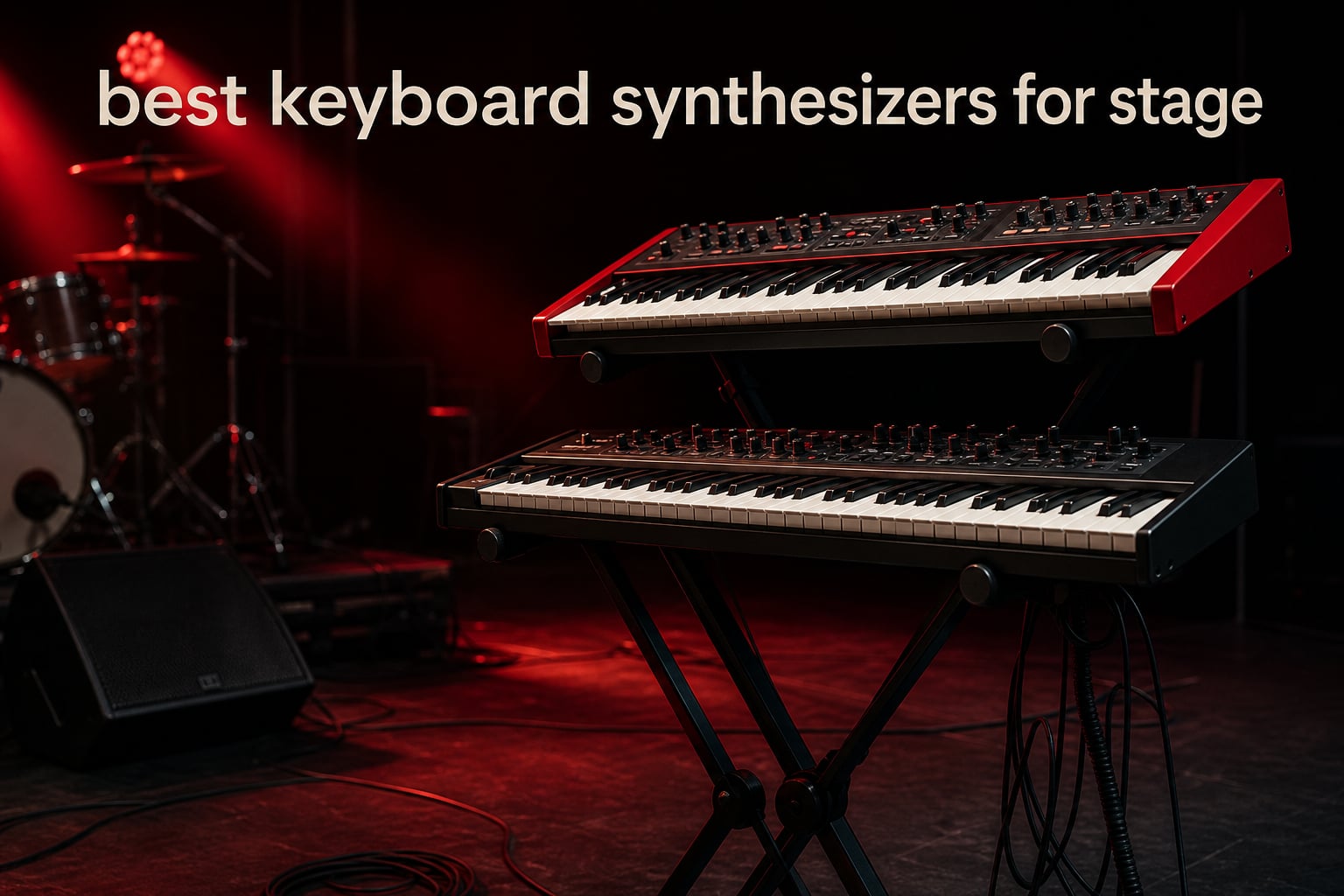
The best keyboard synthesizers for stage put dependable sound access ahead of studio-only novelty. A good stage synth lets you call up a piano, pad, bass, lead, organ, or sequence without hunting through a menu while the band is already counting in.
A keyboard synthesizer generates or shapes electronic sound through a sound engine, then makes it playable from keys and performance controls. For live performance, the practical question is not only how impressive a patch sounds alone; it is whether the right sound, key range, controls, and connections are ready at the exact moment a song needs them.
I would begin with the role the instrument has to cover. A 76- or 88-key workstation can carry an entire set, while a 25- to 37-key hardware synthesizer makes more sense above a main keyboard for bass, leads, motion, or a single distinctive texture.
The twelve instruments below range from weighted stage keyboards with piano, organ, and synth sections to compact analog, FM, hybrid, and digital synthesizers. I have kept the focus on documented keys, sound engines, patch tools, sequencing, connectivity, physical controls, and carry weight rather than making vague claims about what belongs on every stage.
The top 3 picks answer most stage needs quickly in 2026

The Roland FANTOM-07 is my broadest recommendation for a player who needs many sound types and hands-on performance access from one 76-key board. Its ZEN-Core and SuperNATURAL technologies, touchscreen, sliders, knobs, RGB pads, and virtual tonewheel organ point to a full-band workflow rather than a single-sound instrument.
The Korg Kross 2-61 is the compact workstation choice because it combines a 61-key synth-action keybed, EDS-i sound engine, step and MIDI sequencers, mic/line inputs, and an audio recorder in a 3.8-kilogram instrument. Choose the Nord Stage 4 88 when the set centers on convincing piano action plus independent piano, organ, and synth work.
These keyboard synthesizers for stage cover the full shortlist in 2026
| Product | Specifications | Action |
|---|---|---|
 Roland FANTOM-07 Roland FANTOM-07 |
|
Check Latest Price |
 MOOG Messenger MOOG Messenger |
|
Check Latest Price |
 ASM Hydrasynth Explorer ASM Hydrasynth Explorer |
|
Check Latest Price |
 Korg Kross 2-61 Korg Kross 2-61 |
|
Check Latest Price |
 Roland JUNO-D7 Roland JUNO-D7 |
|
Check Latest Price |
 Arturia MicroFreak Arturia MicroFreak |
|
Check Latest Price |
 Yamaha reface DX Yamaha reface DX |
|
Check Latest Price |
 Yamaha reface CS Yamaha reface CS |
|
Check Latest Price |
 Yamaha CK61 Yamaha CK61 |
|
Check Latest Price |
 Roland JD-Xi Roland JD-Xi |
|
Check Latest Price |
| Nord Stage 4 88 |
|
Check Latest Price |
 Arturia AstroLab Arturia AstroLab |
|
Check Latest Price |
There is no single right key count. Full arrangements, two-hand piano parts, and wide splits favor 76 or 88 keys; compact boards become more persuasive when they are a second tier in a rig and need to do one job exceptionally well.
Patch recall is the common thread. Forum discussions repeatedly raise the same concern: a sound that works in practice must appear consistently at the venue, and it must be reachable without menu-heavy steps between songs.
1. Roland FANTOM-07 is the best all-round keyboard synthesizer for a busy stage rig
FANTOM-07 brings your creative world together,combining the sonic power and fluid workflow of the top-of-the-line FANTOM series in streamlined instruments that go everywhere your inspiration takes you
76 keys
ZEN-Core and SuperNATURAL
Touchscreen and RGB pads
Pros
- Thousands of electronic and acoustic sounds
- Virtual Tonewheel Organ
- Knobs sliders and RGB pads
- 76-note keyboard
Cons
- 76 keys rather than 88
- AC adapter power
The Roland FANTOM-07 is the instrument I would put at the center of a set that moves between acoustic piano, electronic layers, organ, pads, and synth parts. Roland lists thousands of electronic and acoustic sounds from its ZEN-Core and SuperNATURAL technologies, including SuperNATURAL pianos and a Virtual Tonewheel Organ.
Its 76-note keyboard is a sensible middle ground for a player who needs room for two-handed parts but does not need the full 88-key range. At 24.2 pounds, it is still a substantial board, so the stand and transport plan deserve as much thought as the sound selection.
The control surface is the reason this is such a strong stage candidate. A color touchscreen, high-resolution knobs, sliders, RGB performance pads, and a dedicated synth control section give the player several routes to reach and shape a sound.
I would prepare each song as a compact performance scene: assign the sound, set levels at rehearsal, label the pad or control role, and leave enough headroom for the front-of-house engineer. That approach reduces the chance that a last-second patch change turns into a screen search.
The control layout supports quick changes during a set
The FANTOM-07 offers physical knobs and sliders alongside its display, so a player is not forced into one style of control. RGB pads can also make visual grouping practical when a set includes cues, samples, or repeated transitions.
Its listed headphone support accepts either 6.35 mm or 3.5 mm plugs, which is useful during silent pre-show checks. USB connectivity and Roland Cloud software support give it a clear place in a computer-assisted rehearsal or production setup.
The 76-key format suits players who need breadth without a weighted piano board
Choose this model when broad sound coverage matters more than a fully weighted 88-key action. The 53 by 19 by 9 inch dimensions and 24.2-pound weight make it better treated as a primary stage keyboard than a casual add-on.
It is especially sensible for a band player whose set changes sound families constantly. For a piano-led performance that calls for full weighted action, the Nord later in this guide fits that particular job better.
2. Korg Kross 2-61 is the best lightweight workstation-style choice
Korg Kross 2-61 61-Key Synthesizer Workstation
61 synth-action keys
EDS-i sound engine
Step and MIDI sequencers
Pros
- 3.8 kilogram carry weight
- Mic and line inputs
- Step and MIDI sequencers
- Audio recorder
Cons
- 61-key range
- Synth-action keybed
The Korg Kross 2-61 makes a strong case for the player who wants workstation features without making load-in harder than necessary. It has 61 synth-action keys, the EDS-i sound engine, step and MIDI sequencers, mic/line inputs, and an audio recorder.
Its specified 3.8-kilogram weight is the headline stage fact. That is a major contrast with full-size weighted keyboards and gives it a clear role for musicians moving their own gear between rehearsals, venues, and home practice.
I would view its sequencers as a way to hold song-specific patterns or cues inside the instrument rather than as a reason to build an overcomplicated live show. The fewer actions required before the downbeat, the more dependable the result tends to be.
The mic/line inputs also give a small setup more options, although any input levels should be checked with the same monitoring and gain structure used at the venue. A sound that feels balanced in headphones can need a different level once it meets drums and guitar amplification.
The built-in sequencing makes compact arrangements easier to carry
The step and MIDI sequencers are documented features, and they let this workstation hold rhythmic or note data as part of its job. The audio recorder is another useful built-in tool for capturing rehearsals or checking an arrangement without reaching for a separate recorder.
USB is listed as its connector, so I would verify the exact cabling and MIDI-routing needs before the show rather than assuming an existing rig will connect directly. This basic rehearsal check prevents a common multi-keyboard problem: every device is working alone but not receiving the intended MIDI data together.
The 61-key synth-action layout favors mobility and sound switching
A 61-key layout works well for organ, synth, bass, and many chord parts, particularly when the player has a second controller or does not need the extreme ends of an 88-key piano. The trade-off is less real estate for wide piano voicings and big splits.
Use a stable stand with space for a pedal and keep the cable exits clear of feet. The published dimensions of 36.81 by 10.59 by 3.46 inches make it compact enough that careful placement can leave room for another small synthesizer above it.
3. Nord Stage 4 88 is the best answer for weighted piano action and layered stage sounds
Nord Stage 4 88-Key Fully-Weighted Keyboard
88 weighted keys
Piano organ and synth engines
Three synth layers
Pros
- Triple-sensor weighted keybed
- Piano organ and synth sections
- Three independently managed synth layers
- Nord Sample Library support
Cons
- 53 pound weight
- Large 88-key footprint
The Nord Stage 4 88 is aimed squarely at players who refuse to choose between a credible piano foundation and synth or organ capability. Its 88-key fully weighted triple-sensor keybed sits alongside piano, organ, and synthesizer sound engines.
The organ section includes simulations of B3 Tonewheel, B3 Bass, Vox, Farfisa, and pipe organ models. That range makes sense for a covers, worship, soul, pop, or theatre player who may switch keyboard identities several times in one performance.
The instrument supports three synth layers that can be independently managed and attenuated, using the Wave 2 Synth Engine. I would use this capability with restraint on stage: build layers that have separate musical jobs, then rehearse the combined output with the rest of the band so it does not crowd the mix.
At 53 pounds and nearly 60 inches wide, this is not a grab-and-go compact synth. It is a committed primary keyboard, and a hard case, an appropriate stand, and a second person at difficult load-ins are sensible practical considerations.
The weighted keybed gives piano-focused players the right starting point
The full 88 keys and fully weighted, triple-sensor action are the clearest reasons to pick this model. A pianist can keep normal hand spacing and full register while retaining organ and synth tools in the same instrument.
The doubled sample memory supports adding selected sounds from the Nord Piano Library. I would load only the sounds that belong in the current setlist and keep a written backup of patch order, library choices, and pedal assignments.
The independent engines support layered parts without a second main keyboard
Three synth layers help with arrangements that need pad, motion, and a focused lead component at once. The right question is not how many layers can be active; it is whether each one has a defined range and level on the keyboard.
This model suits an advanced player who needs one main weighted stage keyboard. A musician who mainly needs a portable synth action board should consider the lighter Kross 2-61, JUNO-D7, or CK61 instead.
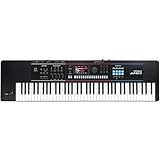
4. Roland JUNO-D7 is the best broad-sound 76-key option with mobile power support
Roland JUNO-D7 Synthesizer | 76-Note Keyboard with Synth Action | ZEN-Core Engine with Over 3800 Onboard Sounds | Intuitive Creative Tools | USB-C Audio/MIDI Interface for Mobile & Computers
76 keys
ZEN-Core with 3800 plus sounds
8-track sequencer
Pros
- Over 3800 ready-to-play sounds
- USB-C audio and MIDI
- Mic input and vocoder
- Sample import
Cons
- 76 keys rather than 88
- 15-pound instrument
The Roland JUNO-D7 is built around fast access to familiar live-band sounds: acoustic and electric pianos, organs, synths, and other stage staples. Its flagship-class ZEN-Core engine supplies more than 3,800 ready-to-play sounds, which makes breadth a core part of its appeal.
The 76-key layout and 15-pound weight put it in a very practical zone for a musician who wants more range than a 61-key board but does not want the physical scale of a full 88-key instrument. Roland also lists support for USB-C mobile battery power.
An 8-track sequencer, mic input, vocoder, and WAV sample import make this more than a preset keyboard. I would assign samples and sequence material only where the arrangement needs them, then rehearse the handoff from playing to triggering so it feels musical rather than technical.
USB-C provides audio and MIDI interface functionality, so it can fit a laptop or mobile-device-centered rig. Test that path before a gig, and carry the correct cable plus a fallback method; one cable should not be the only route to your essential sound.
The ready-to-play sound library suits bands with mixed keyboard parts
A library of over 3,800 sounds is useful when the set calls for recognizable categories rather than a single bespoke synth personality. The key is curating the choices into a short, rehearsed performance list instead of treating the entire library as a live menu.
Roland Cloud Sound Packs and Wave Expansions offer a documented way to expand the palette. I would keep any added content consistent across rehearsal and show instruments so a recalled patch does not point to a sound that is missing at the venue.
The mobile-power option changes how small rigs can be planned
Battery-powered operation via USB-C can matter at pop-up shows, rehearsals, and stages where power outlets are inconvenient. It does not remove the need for a power plan: bring the appropriate power source, test runtime under normal use, and keep cables secured.
The listed 3.5 mm headphone jack makes private checking straightforward. Its 47.91-inch length still needs a full keyboard stand, so avoid treating battery support as a reason to compromise basic physical setup.
5. Arturia AstroLab is the best preset-forward virtual-synthesis stage keyboard
Arturia AstroLab Stage Keyboard (61 Key)
61 semi-weighted keys
Aftertouch
1300 plus onboard presets
Pros
- 34 instruments and 1300 plus presets
- Aftertouch keybed
- Two-part split and layer
- USB-C Wi-Fi and Bluetooth
Cons
- 61-key range
- 29-pound carry weight
The Arturia AstroLab is designed for players who want a large catalog of classic and current sound types in a dedicated 61-key stage keyboard. Its documented setup includes 34 instruments, more than 1,300 onboard presets, a semi-weighted keybed with aftertouch, and two-part split and layer capability.
It also includes Analog Lab Pro software and supports V Collection, placing it at the meeting point between a software-centered sound library and a hardware performance keyboard. I would see that as a reason to establish a careful pre-show sync and backup routine rather than a reason to depend on last-minute edits.
Aftertouch is particularly useful when a player wants pressure after the initial note strike to add expression. Assign it consistently across patches where possible, so a press that adds vibrato or brightness on one lead does not create an unexpected effect on the next sound.
At 13.22 kilograms, or roughly 29 pounds, it is not as light as small compact synthesizers. It is a stage keyboard with a 61-key footprint, so it fits best as the main sound-source board for a player who prioritizes a broad preset collection.
The preset catalog gives setlists a wide sound starting point
The 1,300-plus onboard presets and 34 available instruments mean there is ample raw material for pop, electronic, cinematic, and classic keyboard colors. The live-performance discipline is to make a much smaller show list with clearly named presets and known level differences.
Two-part split and layer capability can cover left-hand bass with right-hand keys, or a pad beneath a piano-like sound. Rehearse each split at the same octave and volume it will have on stage, since dense layers can mask the rest of the group quickly.
The connectivity supports a connected but self-contained performance approach
USB-C, Wi-Fi, and Bluetooth are listed connectivity options. Wireless tools can be convenient for preparation, but I would favor tested physical connections for show-critical audio and MIDI paths.
Its semi-weighted keys with aftertouch target a player who wants expressive synth response more than heavy piano action. If the set is mostly acoustic-piano repertoire, a fully weighted 88-key option remains the more natural starting point.
6. MOOG Messenger is the best expressive monophonic analog keyboard for leads and bass
MOOG Messenger Monophonic Analog Synthesizer
32 semi-weighted keys
Monophonic analog
256 presets and 64 steps
Pros
- Wavefolding oscillators
- Ladder filter with RES BASS
- Velocity and aftertouch keys
- Five-pin MIDI and USB-C
Cons
- Monophonic design
- 32-key range
The MOOG Messenger is the specialist choice in this list: a monophonic analog keyboard for bass, leads, and focused electronic character rather than full chordal arrangements. It has 32 semi-weighted full-size keys with velocity and aftertouch, a metal panel, and 256 presets.
Its two variable-shape VCOs offer sync and frequency modulation, and a sub-oscillator provides more bass weight. The next-generation ladder filter supports 4- or 2-pole low-pass, band-pass, and high-pass responses, with a RES BASS switch intended to keep the low end full as resonance changes.
I would place this above or beside a main keyboard when the music needs a tactile analog voice that can be reached quickly. Knob-per-function control is a meaningful benefit in that role because a player can make a musical adjustment without navigating to a hidden page.
The 64-step sequencer offers probability-based generative behavior and parameter recording, while the arpeggiator has multiple patterns and rhythmic programming. Those are useful performance tools, but a sequence should be rehearsed against the band’s tempo source and given a clear start and stop responsibility.
The analog voice is built for parts that should cut through with intention
Two loopable ADSR envelopes and two LFOs provide sound-shaping tools, and the envelopes respond to velocity. This supports patches whose attack, movement, and brightness can react to the way a part is played.
Because Messenger is monophonic, it is not the board for piano voicings or thick polyphonic pads. It is far better as the dedicated lead or bass voice in a tiered setup, where the limitation becomes a deliberate musical assignment.
The CV and MIDI connections help it join mixed hardware rigs
Messenger has six analog CV patch points, external audio into the filter, expression and sustain pedal inputs, five-pin DIN MIDI I/O, and MIDI over USB-C. That gives it several documented ways to communicate with controllers, other hardware, or a computer setup.
I would decide before rehearsal whether Messenger is the MIDI clock leader or follower, then save the matching configuration with the song notes. Clock disagreements and double-triggered notes are much easier to solve in an empty room than in front of an audience.
7. ASM Hydrasynth Explorer is the best compact polyphonic synth for expressive sound design
ASM Hydrasynth Explorer Synthesizer
37 keys
8-voice wave morphing
POLYTOUCH aftertouch
Pros
- Eight-voice polyphony
- Polyphonic aftertouch
- MPE compatibility
- Three oscillators per voice
Cons
- 37 mid-sized keys
- 4.8 kilogram weight
The ASM Hydrasynth Explorer is a portable eight-voice polyphonic digital wave-morphing synthesizer with an unusually expressive playing surface. Its 37 mid-sized keys support note on and off velocity plus POLYTOUCH polyphonic aftertouch.
Polyphonic aftertouch matters because pressure can be applied independently to notes after they are played. For a player using evolving chords or a lead within a chord, that can create a different kind of expression from channel-wide aftertouch.
The architecture lists three oscillators per voice and four mutators total. MPE compatibility and microtuning support through MIDI Tuning Standard files make this a strong fit for performers whose material uses advanced controllers, alternative tuning, or patches that evolve under hand pressure.
I would prepare expressive patches carefully for a live band mix. A patch that moves dramatically with pressure can be compelling in headphones but can also obscure the rhythmic center, so set modulation depth in rehearsal with the full group.
The expressive key response supports a player-first electronic performance
POLYTOUCH, note-on velocity, note-off velocity, and MPE compatibility give the Explorer a rare amount of per-note expressive potential in a compact synth. That makes it suited to players who want touch to be an active part of the sound rather than only a trigger.
The 37 mid-sized keys require a little adaptation for players used to a full 61- or 76-key board. It works especially well as an upper tier or a standalone electronic instrument where the set does not need broad two-handed piano range.
The digital wave-morphing engine rewards repeatable patch preparation
Its wave-morphing approach and mutators point toward deep patch design, but the live player benefits from reducing decisions. Build a controlled bank of sounds, name them by song and role, and document any pedal or MIDI assignments that are essential.
USB connectivity is listed, as is support for Windows, macOS, and Linux. Its 4.8-kilogram weight helps when a portable synth must travel with a laptop and other compact hardware.
8. Yamaha CK61 is the best direct all-purpose stage keyboard for splits and staple sounds
Yamaha CK Series 61-Key Stage Keyboard with Built-In Speakers, Black (CK61)
61 keys
Two split points
Piano organ and synth sounds
Pros
- Three simultaneous keyboard zones
- Multiple organ types
- Expressive synth control
- 12.3-pound weight
Cons
- 61-key range
- Intermediate skill level listing
The Yamaha CK61 is a stage keyboard for a player who needs familiar keyboard categories organized around live use. It has a 61-key keyboard, built-in speakers, two split points for three sounds across the keyboard, and a focused set of piano and keyboard sounds.
Its sound groups include vintage drawbar and combo transistor organ types, expressive synth sounds with real-time control, plus realistic string and brass ensembles. That makes it a practical choice for a cover-band or ensemble player who must cover varied arrangements without building a large multi-instrument rig.
The stated 12.3-pound weight is friendly for regular transport. I would still set it on a stable stand at normal playing height, since lightweight gear is only an advantage if it remains fixed when the player reaches for controls or plays a strong rhythmic part.
Two split points can create three zones, which is more useful than it first sounds. One song might use left-hand bass, center piano, and upper strings; another might use organ on one side and a controlled synth layer on the other.
The split architecture supports arranged parts from one 61-key board
Three simultaneous sounds across the keyboard help a player divide roles without changing instruments. Map each zone so its volume and octave are consistent from rehearsal to show, then record the setup in the setlist notes.
A 61-key board naturally limits the size of each zone once three parts are active. Keep split layouts simple and avoid assigning a part to a cramped area that cannot be played cleanly at performance tempo.
The sound categories make it practical for band-centered keyboard work
The CK61 includes acoustic-style keyboard sounds, organ choices, orchestral sections, and synth sounds rather than focusing on one synthesis method. That is useful when the job is supporting songs, not presenting a dedicated analog or experimental-synth set.
USB connectivity is listed, and the instrument includes a power supply. I would use the built-in speakers only for personal preparation or limited monitoring, then make the venue connection and stage-monitor balance part of the soundcheck plan.
9. Arturia MicroFreak is the best compact hybrid synth for unusual textures and modular links
Arturia MicroFreak Synthesizer Keyboard
25 touch keys
17 oscillator modes
Analog SEM filter
Pros
- Seventeen oscillator modes
- Polyphonic aftertouch touch surface
- CV Gate outputs
- Four automation lanes
Cons
- Unusual PCB keyboard
- Advanced feature learning curve
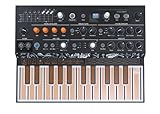
The Arturia MicroFreak is not a conventional stage keyboard, and that is the point. It pairs digital oscillators with a 12 dB Oberheim SEM state-variable analog filter and offers 17 paraphonic oscillator modes, including engines associated with Arturia, Mutable Instruments, and Noise Engineering.
Its 25-key capacitive PCB touch keyboard has pressure detection per note and polyphonic aftertouch. At 2.3 pounds, it can occupy a small space on a second tier and add an entirely different color without turning the rig into a transport problem.
The 5 by 7 modulation matrix and four automation lanes give the MicroFreak a lot of motion potential. I would keep a stage patch intentional: identify the one control that should move in a song, set safe ranges, and leave the remaining routing as a preset decision.
Its touch surface will feel different from a conventional velocity-sensitive keybed. Treat it as its own instrument rather than as a miniature replacement for a piano controller, and give yourself rehearsal time to learn how pressure and note placement respond.
The oscillator range makes it useful for a distinctive second-tier voice
Seventeen oscillator modes can provide varied digital character while the analog filter shapes the final sound. This makes the MicroFreak appealing for a performance that needs a recognizable texture, vocal-like movement, wavetable-style motion, or experimental arpeggio.
The built-in arpeggiator and step sequencer add repeatable movement. Use a documented tempo and MIDI-clock plan if the pattern must lock to a drummer, a loop, or another sequencer.
The CV and MIDI options suit hardware-centered performance systems
CV/Gate outputs, USB, and MIDI connectivity make the MicroFreak capable of joining modular gear and conventional MIDI devices. It also includes two 3.5 mm to five-pin DIN adapters, which matters when planning the physical connection list.
The 25-key size means it works best for short parts, patterns, leads, and as a sound-design layer. A player needing full-size keys or broad two-hand parts should use it beside a larger main keyboard rather than alone.
10. Yamaha reface CS is the best small analog-modeling poly synth for immediate layers
Yamaha REFACE CS Portable Analog Modeling Synthesizer
37 mini keys
8-note polyphony
Analog modeling and looper
Pros
- Eight-note polyphony
- Mono mode for bass
- Built-in speakers
- Battery-powered design
Cons
- Mini keys need adjustment
- White finish may show wear
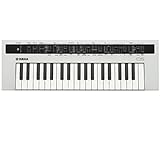
The Yamaha reface CS is a small analog-modeling synthesizer built around an eight-note polyphonic engine that can switch to mono. It uses 37 mini keys, includes a phrase looper and built-in speaker system, and can run on batteries.
That combination gives it a straightforward stage role: place it above a main board for pads, chord stabs, bright synth parts, or a dedicated mono bass or lead patch. At six pounds, it is easy to carry, but its compact format still needs a stable surface and secure cables.
I like the division of labor implied by its polyphonic and mono modes. Use polyphony where the arrangement needs chords or pads, then switch to mono only for a part that benefits from a focused, thicker single-note line.
The phrase looper can help a solo performer layer a simple motif, but it should be practiced as part of the arrangement. A looper is only stage-friendly when the start, stop, and clearing gestures are as familiar as the notes.
The small polyphonic engine works best as a dedicated color keyboard
Eight-note polyphony gives the reface CS enough room for many chord and pad roles. The 37-key mini keyboard keeps the instrument compact but limits the natural span for players who use wide voicings or two-hand comping.
The analog physical modeling engine provides a different option from sampled stage keys or pure FM sounds. It suits a musician who wants hands-on synth flavor from a board that does not dominate the whole rig.
The battery-powered format supports flexible stage placement
Battery operation and a built-in speaker make preparation away from an outlet simple. For a show, treat batteries as a managed power source: start with a tested set, have replacements or an alternate power route, and do not bury the power access under other gear.
MIDI USB connectivity is listed, which makes it easier to integrate with a compatible computer or controller setup. The mini keys may take adjustment, so rehearse fast repeated parts and expressive lines on the actual keyboard, not only on a full-size controller.
11. Yamaha reface DX is the best small FM synth for crisp digital tones and looped phrases
Yamaha REFACE DX Portable FM Synthesizer
37 mini keys
4-operator FM
32 voice locations and looper
Pros
- Four-operator FM engine
- Thirty-two voice locations
- Phrase looper
- Battery-powered portability
Cons
- Mini keys may not suit all players
- Limited voice memory
The Yamaha reface DX brings a 4-operator FM sound engine to a six-pound, 37-mini-key format. FM synthesis is a natural fit for crisp keys, bells, metallic textures, basses, and digitally animated sounds that contrast with analog-style pads or sampled pianos.
It includes 32 voice locations, a phrase looper, built-in speakers, initial touch on the mini keyboard, and battery-powered operation. The limited voice memory is not automatically a problem for a show if the player curates the set carefully rather than trying to keep every experiment available.
I would create a small performance bank: one sound per song role, plus a few clearly labeled alternates. That is a better live method than treating 32 locations as an invitation to create ambiguous near-duplicates that are hard to find under stage pressure.
Its additive synthesis listing and FM engine provide a focused digital identity within this roundup. It is not trying to replace a full workstation; it is a compact source of a particular family of sounds.
The FM engine gives a set clear digital contrast
Four operators provide an accessible structure for shaping FM tones. The reface DX is especially useful when a band already has warm piano, organ, or analog-style sounds and needs a sharper electronic layer that occupies another part of the spectrum.
Initial touch gives the small keybed some performance response. Spend time matching touch sensitivity and patch output levels so one bright FM patch does not jump far above the rest of the set.
The small format fits rehearsal, travel, and an upper-tier stage role
At six pounds with a built-in speaker, the reface DX is easy to bring to writing sessions and rehearsal. On a stage, its 29.52 by 9.4 by 3.9 inch dimensions allow it to sit above a primary keyboard without much depth demand.
Battery power is useful for flexible setup, while the 3.5 mm connectivity and auxiliary connection should be planned around the actual mixer or DI path. Mini keys are the main physical trade-off, so choose it for designated parts rather than unprepared full-range keyboard work.
12. Roland JD-Xi is the best compact hybrid synth for patterns, vocals, and layered parts
Roland JD-XI 37-Key Interactive Analog/Digital Crossover Synthesizer, Black
37 keys
Analog plus SuperNATURAL
Four-track sequencer and vocoder
Pros
- Analog lead and bass section
- Two digital SuperNATURAL sections
- Four-track sequencer
- Vocoder with included microphone
Cons
- 37-key range
- Critical low stock listing
The Roland JD-Xi combines an analog section for lead and bass with two digital synth sections using SuperNATURAL tones. It has 37 keys, a four-track pattern sequencer, four simultaneous effects, rhythm sounds, and a built-in vocoder with AutoPitch.
The included gooseneck microphone makes the vocoder a real performance possibility rather than an extra accessory to source. I would only use it if the vocal routing and monitoring are rehearsed, because intelligibility and feedback management need the same attention as any other live vocal path.
Its hybrid design gives it a broad compact role. An analog line can sit beside layered digital chords or a pattern, allowing a solo electronic performer or a band keyboardist to create movement from a small board.
At 4.14 pounds, it is light enough to add to a larger rig without much carry burden. The limitation is the 37-key range, which again points toward a dedicated upper-tier role rather than a single keyboard for piano-oriented sets.
The sequencer and rhythm sounds support arrangement-driven performances
The four-track pattern sequencer can hold structured parts, while high-quality rhythm sounds provide an internal rhythmic source. Before a show, decide whether it is following an external MIDI clock or running independently and rehearse every transition at song tempo.
Four simultaneous effects, including Effect 1, Effect 2, delay, and reverb, can make a small sound large. Set levels with the rest of the band or playback system, as long tails and dense effects can blur a live arrangement.
The hybrid engine makes it a useful specialty board rather than a main piano keyboard
The analog section is intended for authentic lead and bass tones, while the digital sections broaden the available palette. That division makes the JD-Xi appealing to a player who wants one small device to cover sequenced electronic parts and played synth lines.
USB connectivity is listed, and the included microphone gives the vocoder an immediate route into the rig. It is best for performers who can work comfortably within 37 keys and who will prepare patterns, effects, and vocal cues before the performance.
The right buying method starts with the sound role each keyboard must cover
Choose a stage keyboard by writing down the exact jobs it must do during a set. List piano, organ, pad, bass, lead, sample trigger, sequence, and vocal-processing duties, then mark whether each duty needs two hands, a split, an expression pedal, or a fast sound change.
This simple inventory stops a common mistake: buying a compelling synth engine that cannot physically cover the parts you play. It also reveals when a small specialist board paired with a dependable main keyboard is more sensible than forcing one instrument to do everything.
The key count should match the parts rather than a spec-sheet preference
An 88-key weighted board such as the Nord Stage 4 88 suits piano-centered sets and wide left-hand/right-hand parts. A 76-key board such as the Roland FANTOM-07 or JUNO-D7 retains more range than a 61-key instrument while reducing the size of the keyboard.
Sixty-one keys work well for many organ, synth, and band parts, particularly when splits remain modest. Thirty-two to 37 keys can be excellent on an upper tier for a monophonic lead, compact poly synth, sequencer, or specialty texture, but they do not replace the playing range of a primary keyboard.
The sound engine should match the character the set is missing
Analog and analog-modeling designs often appeal when a player wants direct control over bass, lead, filter movement, and synth color. The MOOG Messenger is a monophonic analog specialist, while the reface CS provides analog modeling with eight-note polyphony.
Digital, hybrid, and workstation instruments often cover more categories from one board. FM on the reface DX supplies a distinct digital tone; the Hydrasynth Explorer focuses on wave morphing and expression; Roland and Korg workstation-style boards bring broad libraries, sequencing, and performance functions.
Polyphony is the number of notes a synth can sound at once. Do not judge it in isolation: a monophonic synth can be exactly right for bass, while an eight-voice or broader multi-sound keyboard is a better match for chords, pads, and layered arrangements.
The patch workflow should be rehearsed as seriously as the musical parts
Forum users frequently report that patch reliability and quick recall matter more on stage than extra hidden features. Create a show order that gives every sound a clear song and section name, and avoid changing the same patch during a performance unless that action has been rehearsed repeatedly.
I recommend a one-page setlist sheet that records each patch name, split point, octave shift, tempo source, pedal behavior, and any sequence cue. Photographing important screen settings can also help rebuild a sound after transport or a mistaken edit.
Test sounds through the same basic signal path you will use live. Headphones are useful for preparation, but they will not reveal how a bass patch, bright FM layer, or dense reverb behaves through a DI, monitor, and full band.
The MIDI and audio plan must have one clear leader
When several synths, a controller, a laptop, or a drum machine are involved, decide which device sends MIDI clock and which devices receive it. Connect and test that layout at rehearsal, then label cables so the stage setup can be rebuilt quickly.
USB MIDI, five-pin MIDI, CV/Gate, and audio connections serve different roles. The MOOG Messenger and MicroFreak provide notable hardware-routing options, while boards such as the JUNO-D7 include USB-C audio and MIDI functionality; the right choice is the one that works with the rest of your actual rig.
Carry the correct adapters, power supplies, and a backup cable for each show-critical connection. This is not glamorous preparation, but it addresses the very real venue problem of a forgotten connector or a single point of failure.
The weight and power plan shape whether a keyboard gets used often
Touring and regular local gigs make physical weight important. The Kross 2-61 is listed at 3.8 kilograms, the JUNO-D7 at 15 pounds, the CK61 at 12.3 pounds, and the Nord Stage 4 88 at 53 pounds; those differences affect cases, stands, vehicles, and load-in help.
Battery-powered instruments such as the JUNO-D7, reface CS, and reface DX can offer placement freedom, but they still need a documented power plan. Check battery condition or external battery support before departure, bring the official power option when possible, and keep power cables away from walking paths.
Place the main board at a height that lets the shoulders stay relaxed, then place a small synth where its controls can be reached without blocking the main keys. A sturdy two-tier stand, secured pedals, and a visible cable route make performance easier than a crowded tabletop arrangement.
The stage piano and synth difference is mainly about sound focus and control design
A stage piano is generally centered on piano-style action and piano, electric-piano, and organ performance, though models can include synth capability. A synthesizer centers on generating or shaping electronic sound through oscillators, filters, envelopes, modulation, samples, or digital sound engines.
There is overlap: the Nord Stage 4 88 combines piano, organ, and synth engines, while the FANTOM-07, JUNO-D7, AstroLab, Kross 2-61, and CK61 cover broad stage-keyboard territory. Choose by the parts you need to perform, not by the label printed on the category.
The most common stage-keyboard questions have direct answers
Which keyboard is best for stage performance?
The Roland FANTOM-07 is the broadest pick here for stage performance because it combines 76 keys, ZEN-Core and SuperNATURAL sounds, a Virtual Tonewheel Organ, a touchscreen, physical knobs and sliders, and RGB pads. Choose the Nord Stage 4 88 instead when fully weighted piano action is the priority, or the Korg Kross 2-61 when low carry weight and workstation tools matter most.
What is the best keyboard synthesizer?
The best keyboard synthesizer depends on its role. For one instrument that can cover a large live set, the Roland FANTOM-07 has the strongest documented mix of 76 keys, broad sound engines, organ capability, and hands-on controls. For a dedicated analog lead or bass voice, the monophonic MOOG Messenger is the more focused choice.
What is the difference between a stage piano and a synth?
A stage piano is usually built around piano-style key action and piano, electric-piano, and organ sounds. A synthesizer is built to generate or shape electronic sound through analog or digital sound engines, oscillators, filters, envelopes, and modulation. Hybrid stage keyboards can combine both roles, as the Nord Stage 4 88 does with piano, organ, and synth engines.
What synthesizer does Billie Eilish use?
The research supplied for this guide does not identify a confirmed synthesizer model used by Billie Eilish. It is better to choose from this list based on the sound role, key range, performance controls, and connections your own stage set requires than to rely on an unverified artist-gear claim.
The best final choice is the keyboard that makes your set easier to play
For the best keyboard synthesizers for stage, the Roland FANTOM-07 is the strongest all-purpose answer when one 76-key board must cover many sounds and hands-on control. The Nord Stage 4 88 is the piano-led choice, the Korg Kross 2-61 is the notably light workstation-style option, and the JUNO-D7 brings broad ZEN-Core sound access with USB-C mobile battery support.
Choose a compact second-tier instrument for a defined musical job: MOOG Messenger for monophonic analog bass and lead, Hydrasynth Explorer for expressive digital polyphony, MicroFreak for experimental hybrid textures, reface CS or DX for compact focused color, and JD-Xi for patterns, hybrid sound, and vocoder work.
Before the next performance in 2026, build a small show bank, verify every cable and power route, rehearse each split and transition, and play the complete set through the monitoring path you will actually use. That preparation will matter more than any untested extra feature when the count-in begins.