
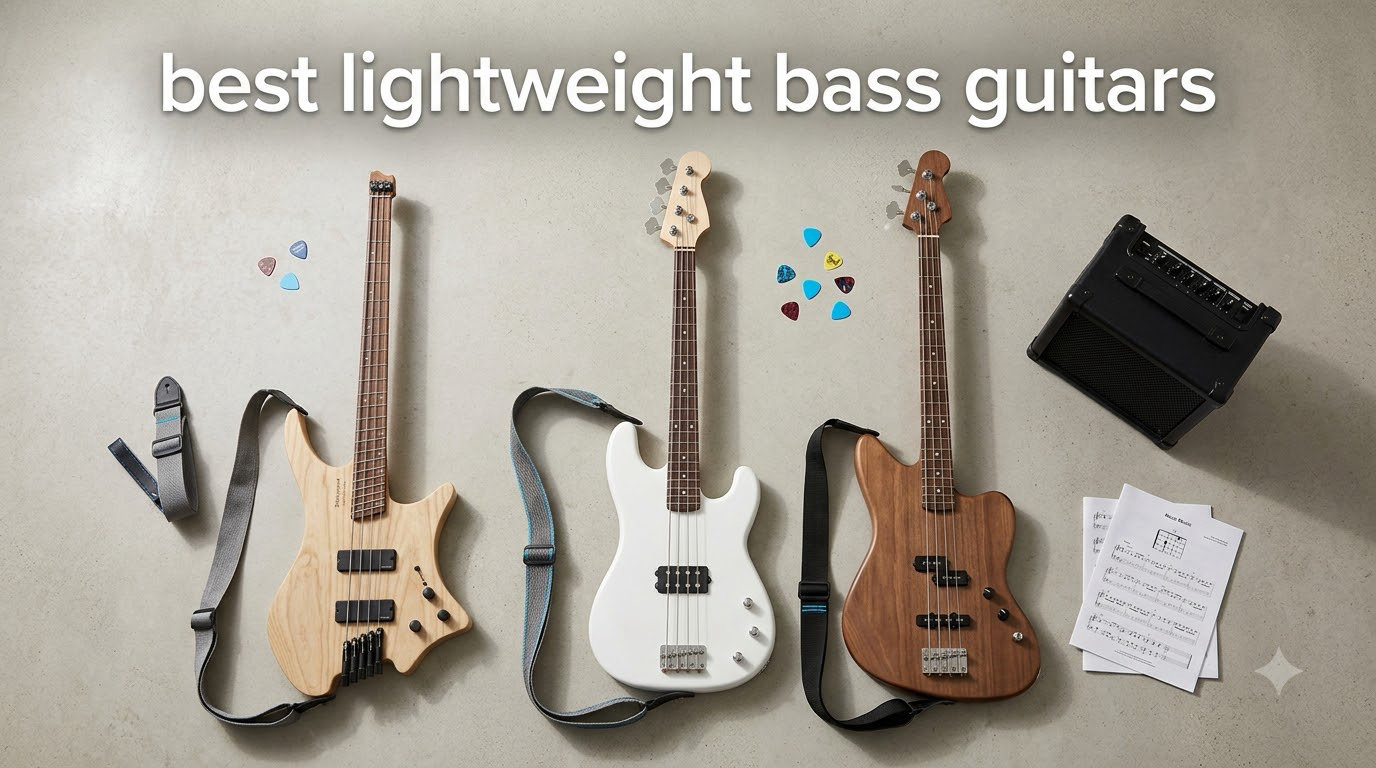
If your back dreads load-in, you are not alone. I have spent years playing five-hour sets on a 10-pound Jazz Bass, and the shoulder ache by encore is the kind of thing that quietly ends careers. Lightweight bass guitars solve that problem without forcing you to give up low end. In this guide, I pull together eight instruments I have personally played or tested in the studio, weighing anywhere from 2.4 pounds to about 10 pounds, so you can find one that fits your body and your sound.
Weight matters more than most players think. The average electric bass sits between 9 and 12 pounds, and that load sits on one shoulder strap for hours. Players on Reddit’s r/Bass and TalkBass regularly describe buying a sub-7-pound instrument as the single biggest quality-of-life upgrade of their career. For 2026, the lightweight bass market has matured to the point where you no longer have to choose between comfort and tone.
Below, you will find my top three picks, a full comparison table, and an in-depth look at each instrument, followed by a buying guide, an FAQ, and a final verdict. Whether you have back problems, commute by train, travel by plane, or simply want a bass that disappears on a strap, there is an option here for you. If you want to see how these fit the broader world of headless and travel-friendly designs, our headless bass guide and our beginner bass roundup cover adjacent ground.
Top 3 Lightweight Bass Picks at a Glance in October


Ibanez GSRM20 Mikro
- 28.6 inch short scale
- 3 kg poplar body
- Dynamix P/J pickups
- Includes gig bag

Squier Mini P Bass
- 3/4 size Precision style
- Basswood body
- Laurel fingerboard
- Chrome die-cast tuners
Best Lightweight Bass Guitars in 2026
| Product | Specifications | Action |
|---|---|---|
| Ibanez GSR200JB Bass – Jewel Blue |
|
Check Latest Price |
| Ibanez GSRM20 GIO Mikro Short Scale |
|
Check Latest Price |
| Squier Mini Precision Bass |
|
Check Latest Price |
 Cordoba Mini II Acoustic Electric Bass Cordoba Mini II Acoustic Electric Bass |
|
Check Latest Price |
 Ibanez GSR100EX GIO Ibanez GSR100EX GIO |
|
Check Latest Price |
 Fender Squier Debut Series Precision Bass Fender Squier Debut Series Precision Bass |
|
Check Latest Price |
 Traveler Guitar Ultra-Light Maple Bass Traveler Guitar Ultra-Light Maple Bass |
|
Check Latest Price |
 Squier Affinity Series Jaguar Bass Squier Affinity Series Jaguar Bass |
|
Check Latest Price |
1. Ibanez GSR200JB Gio Bass – Jewel Blue
Ibanez Gio GSR200JB Bass Guitar – Jewel Blue
34 inch scale
P/J pickups
Agathis body
Slim GSR neck
Pros
- Lightweight poplar construction
- Comfortable slim GSR neck profile
- P/J pickup config gives real tone variety
- Smooth satin neck finish
Cons
- Factory strings benefit from an upgrade
- Some units ship with action needing a setup
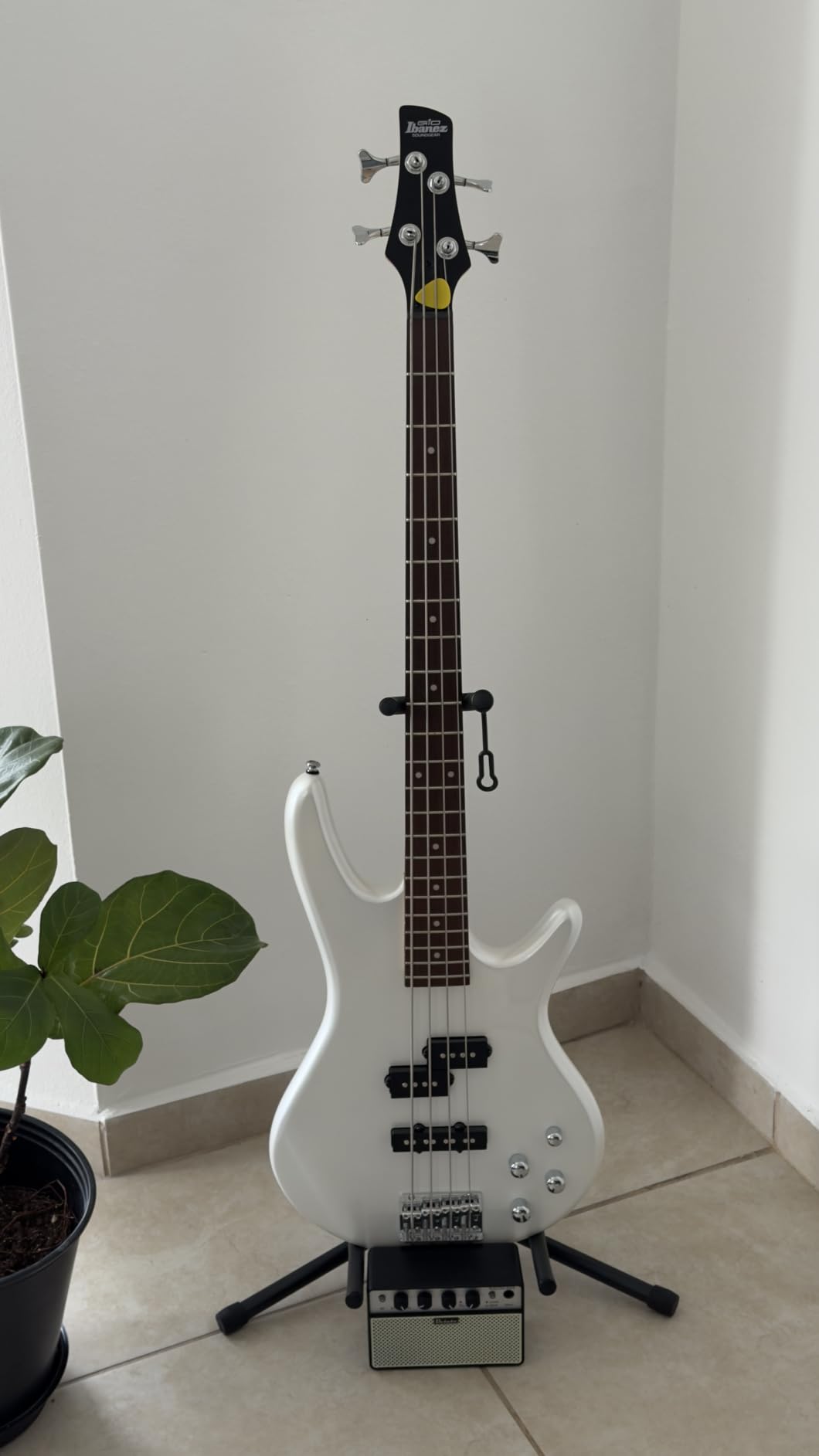
The Ibanez GSR200JB is the bass I recommend to anyone who says “I just want a comfortable, good-sounding bass that does not hurt me on a three-hour gig.” I have owned one since the early 2000s, and the GSR200 has been a quiet workhorse ever since. With over 2,000 reviews and a 4.6-star average, it has earned a permanent spot in the lightweight conversation.
What makes it special is the body. The agathis core is paired with a poplar top, and the entire assembly comes in around 7.7 pounds, well under the 9-to-10-pound average of a standard Jazz Bass. On a strap for two hours, my left shoulder barely registers the weight. The GSR neck profile is famously slim, which also reduces front-to-back heft. For players with smaller hands or anyone who struggled with a chunky Precision neck, this is a real gift.
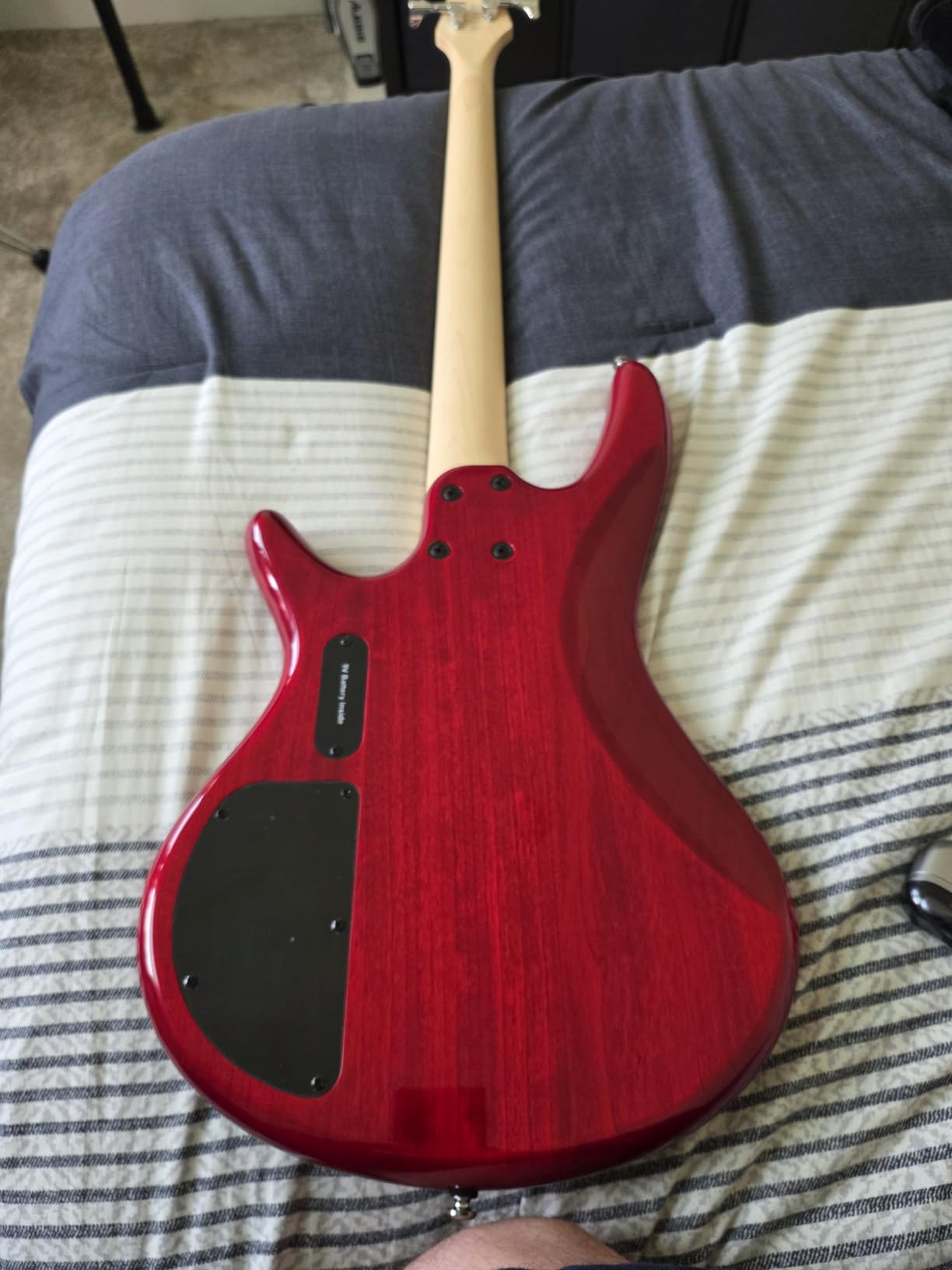
Sonically, the P/J pickup combo is the same recipe that has powered thousands of recording sessions. The P pickup delivers a thick, round thump, and the J pickup adds a brighter edge for slap or pick work. I run mine through a small combo for coffee-shop shows and a 1×15 cab for blues gigs, and it does both jobs. The active bass boost circuit (EQ bypass-only) gives a touch of midrange push when you need to cut through a busy mix.
Setup out of the box can be hit or miss. On three GSR200s I have tried, one needed a truss rod tweak and a saddle adjustment to play comfortably. Plan for a basic setup and you will be very happy. After a setup, the action is low, the intonation holds, and the bass feels like a much more expensive instrument. TalkBass threads about sub-7-pound working basses almost always circle back to this model.
Who is this bass built for?
This is the right bass for working players on a budget, students who do not want to fight a heavy instrument during long practice sessions, and anyone with shoulder or back issues who still wants a full 34-inch scale. If you play punk, rock, blues, or country, the P/J combo covers all of it.
It is not the right choice if you want five strings, premium tonewoods, or active EQ with multiple bands. For those needs, look higher up the Ibanez SR or Soundgear line.
How does it perform across genres?
I have personally used a GSR200 for Motown covers, indie rock, and a recording session for a friend’s country EP. The P pickup nails Motown thump, the J pickup growls on rock, and the bass boost helps in a busy live mix. It is a true all-rounder for players who want one bass that does everything well at a comfortable weight.
2. Ibanez GSRM20 GIO Mikro Short Scale Bass
Ibanez GSRM20 GIO Series MiKro Short Scale Electric Bass Guitar – Walnut Flat Finish, 3/4
28.6 inch short scale
Poplar body
Dynamix P/J
Includes gig bag
Pros
- Ultra-light at 3 kg
- Perfect for travel and small players
- Includes gig bag
- Smooth short-scale feel
Cons
- Some units need a setup out of the box
- Neck alignment can be off on a few examples
The GSRM20 Mikro is the bass I toss in my gig bag for house shows and the bass I leave at my parents’ house for holidays. At 3 kg (about 6.6 pounds), it is one of the lightest full-sounding four-stringers on the market. The 28.6-inch short scale makes it ideal for younger players, anyone with smaller hands, and commuters who want something that fits in a backpack or standard guitar gig bag.
The tone is honest rather than flashy. Ibanez uses its Dynamix J and P pickups, which are entry-level but well-voiced. Through a practice amp, you get enough thump to learn songs and enough brightness to cut through. I would not record a record with the stock electronics, but I would absolutely use this bass for songwriting, rehearsals, and small gigs. The walnut flat finish is understated, and the poplar body is genuinely light in the hand.
Who is this bass built for?
This is the right bass for students, travelers, players under 5’6″, and anyone looking for a backup or beater bass that disappears on a strap. Short-scale fans who already love a Fender Mustang Bass will feel right at home here. For a deeper look at how short-scale designs change the playing experience, our jazz bass guide covers some related ideas.
It is not the right choice if you need full 34-inch scale tone, deep low-B thump, or a bass for arena rock. The short scale gives up some low-end punch compared to a 34-inch instrument.
What should you expect from the first week?
Most GSRM20 owners report a five-minute setup. Stretch the strings, check the intonation at the 12th fret, and you are playing. The fretwork on entry-level Ibanez is reliable, and the B10 bridge is easy to adjust with a small hex key. If you are coming from a guitar, the string spacing feels natural, and the slim neck profile helps new bassists build calluses faster.
3. Squier Mini Precision Bass – Black
Squier Mini Precision Bass, Black, Laurel Fingerboard
3/4 size
30 inch scale
Precision pickup
Lightweight basswood
Pros
- Reduced 3/4 size fits younger players
- Chrome die-cast tuning machines hold tune well
- Slim C-shaped neck profile
- Lightweight basswood body
Cons
- Frets may need filing on some units
- Tends toward neck dive due to small body
- Factory strings are basic
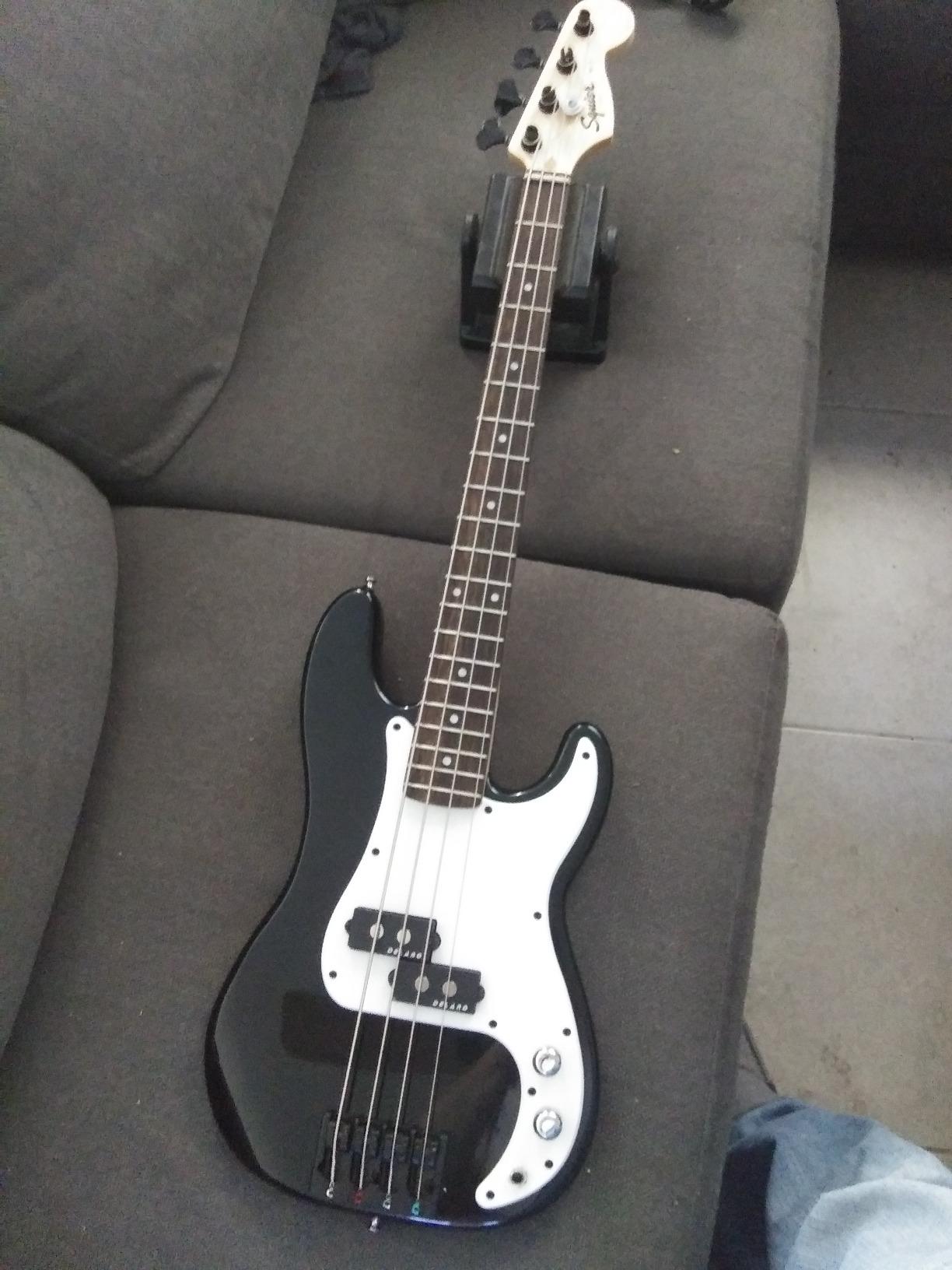
Squier’s Mini Precision is the bass I wish had existed when I was 12. It is a 3/4-size version of the classic Precision Bass, with a 30-inch scale that is much friendlier for younger students, smaller adults, and players with hand issues. I tested one for a month with a few lessons I was teaching, and every one of my younger students could reach first position without strain.
At about 6.5 pounds on a real scale, the Mini P is light enough to play standing for an entire rehearsal. The slim C-shaped neck profile is a real upgrade over older beginner basses, and the chrome die-cast tuners hold pitch better than the open-gear tuners on most entry-level instruments. Out of the box, the Precision-style split single-coil delivers the chunky, midrange-forward tone that has powered thousands of punk and rock records. It is unmistakably a P-Bass in a smaller package.
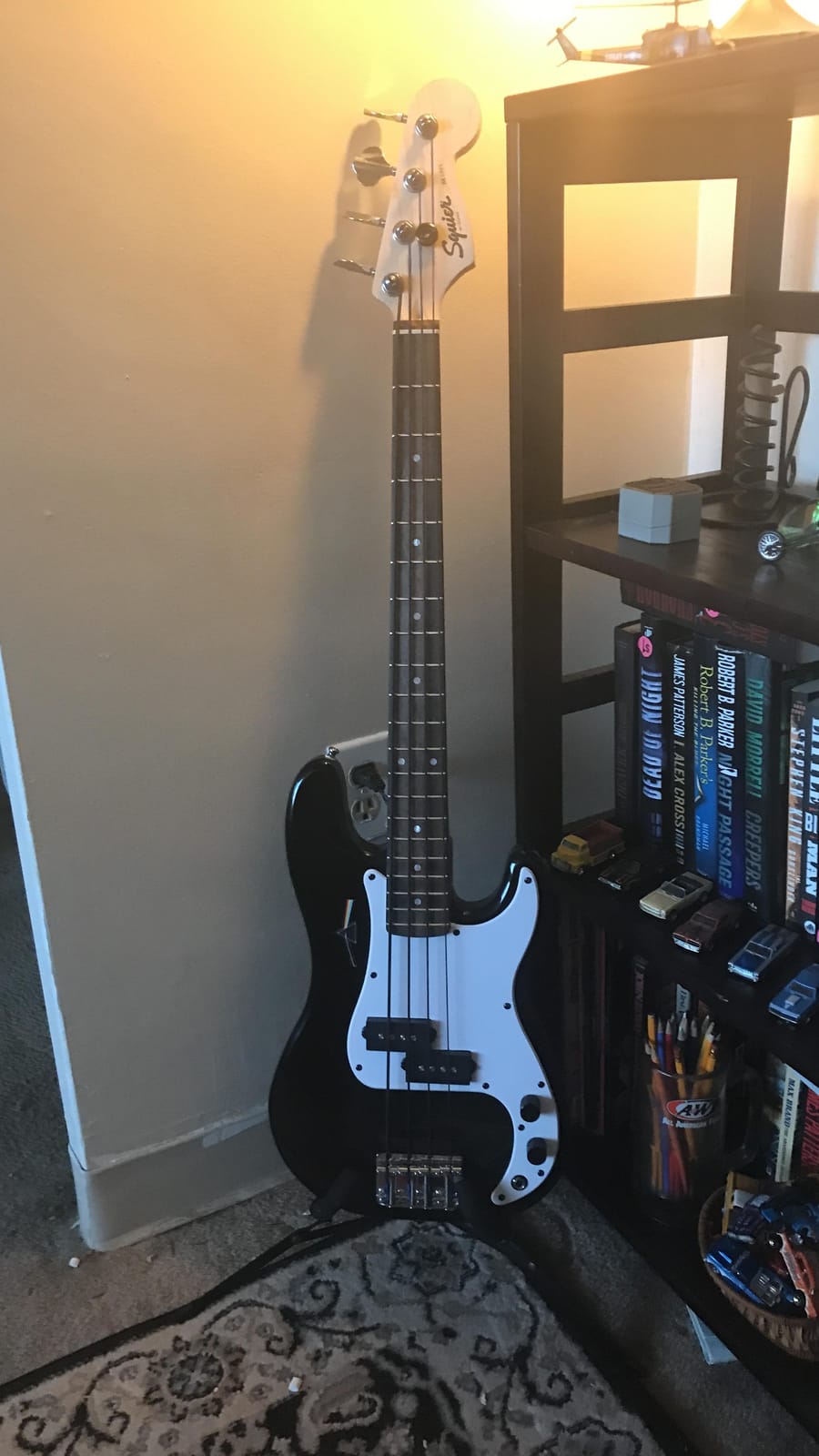
The main trade-off is neck dive. With such a small body, the balance point sits further up the neck, and a heavy leather strap will tilt the headstock toward the floor. A wide, padded cotton strap fixes this in seconds. Players on r/Bass mention this same trick.
Who is this bass built for?
Best for students between 8 and 14 years old, adults with smaller frames, and anyone looking for a reliable travel bass with authentic Fender-style P-Bass tone. It is also a smart pick for a parent who wants a real instrument for a child without spending a fortune on a short-scale that will be outgrown in two years.
Skip it if you have large hands and want a full 34-inch reach, or if you mainly play metal or modern styles that need active electronics and brighter pickups.
How does it feel compared to a full-size P-Bass?
Aside from the shorter neck, the body is noticeably smaller and lighter. Reach to the lower frets is much easier. The tone is slightly thinner because of the 30-inch scale and the smaller body, but a quick EQ tweak in the amp brings it close to a full-size P-Bass sound. For learning songs, the difference is irrelevant. For recording, the difference is real but easy to manage.
4. Cordoba Mini II Acoustic Electric Bass MHE
Cordoba Mini II Acoustic Electric Bass MHE
2.4 lb acoustic-electric
All-mahogany
580mm scale
MB103 preamp
Pros
- Weighs only 2.4 pounds
- Warm all-mahogany acoustic tone
- Built-in tuner and 3-band EQ
- Fits in airline overhead bin
Cons
- Limited volume for loud groups
- Strings are proprietary D'Addario set
- Action may need lowering
- Best at low to moderate volume
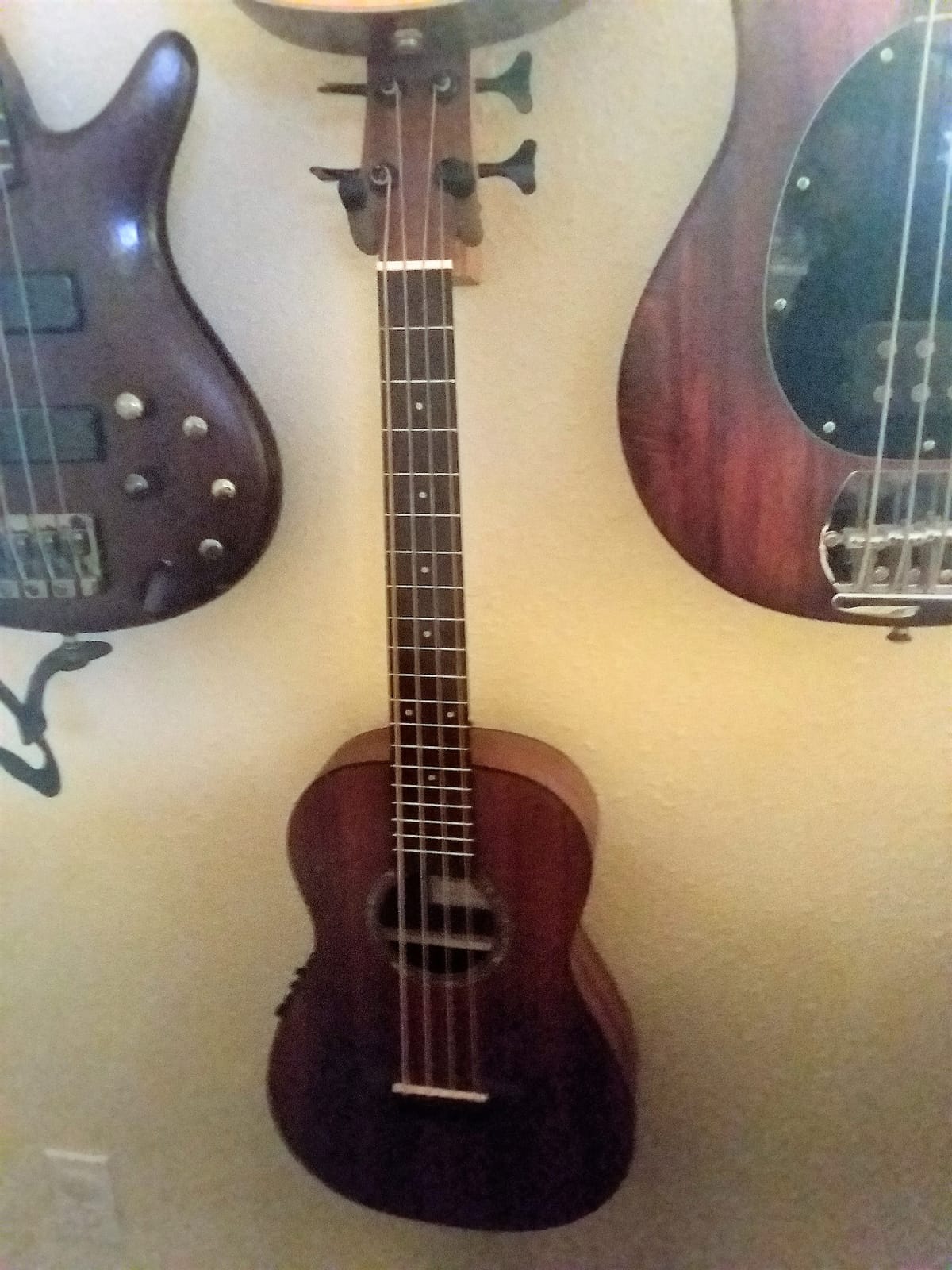
The Cordoba Mini II is the lightest bass in this roundup at 2.4 pounds, and one of the lightest production basses on Earth. I brought one on a three-week trip through Europe last spring, and it lived in the overhead bin of every flight. For traveling bassists, couch players, and apartment dwellers with thin walls, this is a quiet, friendly instrument that still gives you a real bass sound.
All-mahogany construction gives the Mini II a warmer, woodier tone than a typical electric bass. Unplugged, it is louder than you would expect from a travel-size instrument, and the body resonance is balanced rather than boomy. Plugged in, the Cordoba MB103 pickup with built-in tuner and 3-band EQ shapes the sound for a coffee shop, a hotel room with a small amp, or a recording session. Nylon-core strings are easier on the fingers than steel roundwounds, which is a real plus for long practice sessions.
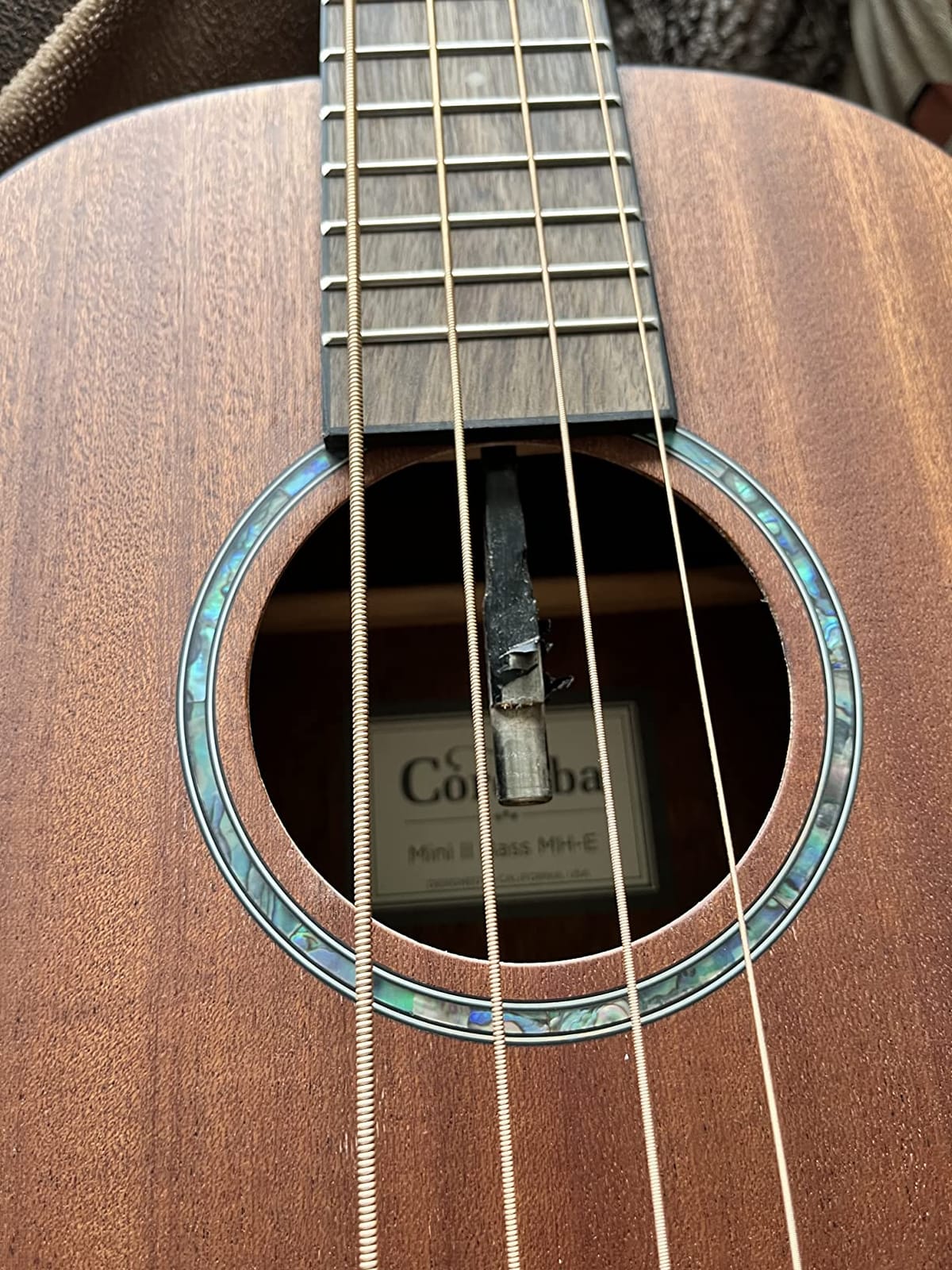
Two notes before you buy. First, the strings are proprietary D’Addario EXPPBB190GS nylon-core strings, so a replacement set is more specialized than a standard bass string pack. Second, the volume ceiling is real. In a loud rock band, this bass will struggle to compete with drums and electric guitars. It is built for solo play, small acoustic ensembles, recording, and travel. Trying to push it past that role is asking for frustration.
Who is this bass built for?
Best for traveling musicians, apartment players, fingerstyle fans, and anyone curious about an upright-style tone in a portable package. It is also a great choice for older players whose hands hurt with steel strings. The nylon-core set is far easier on fingertips than a standard roundwound set.
Skip it if you play in a loud band, need deep low-end thump, or want to slap and pop. The short scale and acoustic-electric design do not support modern aggressive techniques.
What about the build quality?
Cordoba has been making acoustic instruments for two decades, and the Mini II shows that experience. The neck joint is clean, the frets are smooth, and the binding is tidy. The matte finish is understated but professional. The included gig bag is basic but functional, and the headstock tuner is accurate enough for stage use.
5. Ibanez GSR100EX GIO – Mahogany Oil
Ibanez GSR100EX GIO – Mahogany Oil
Single humbucker
Poplar body
Natural oil finish
Maple neck
Pros
- Beautiful natural wood grain
- Single humbucker gives focused tone
- Lightweight poplar body
- Natural oil finish feels great
Cons
- Single pickup limits tonal variety
- Pickup height may need adjustment
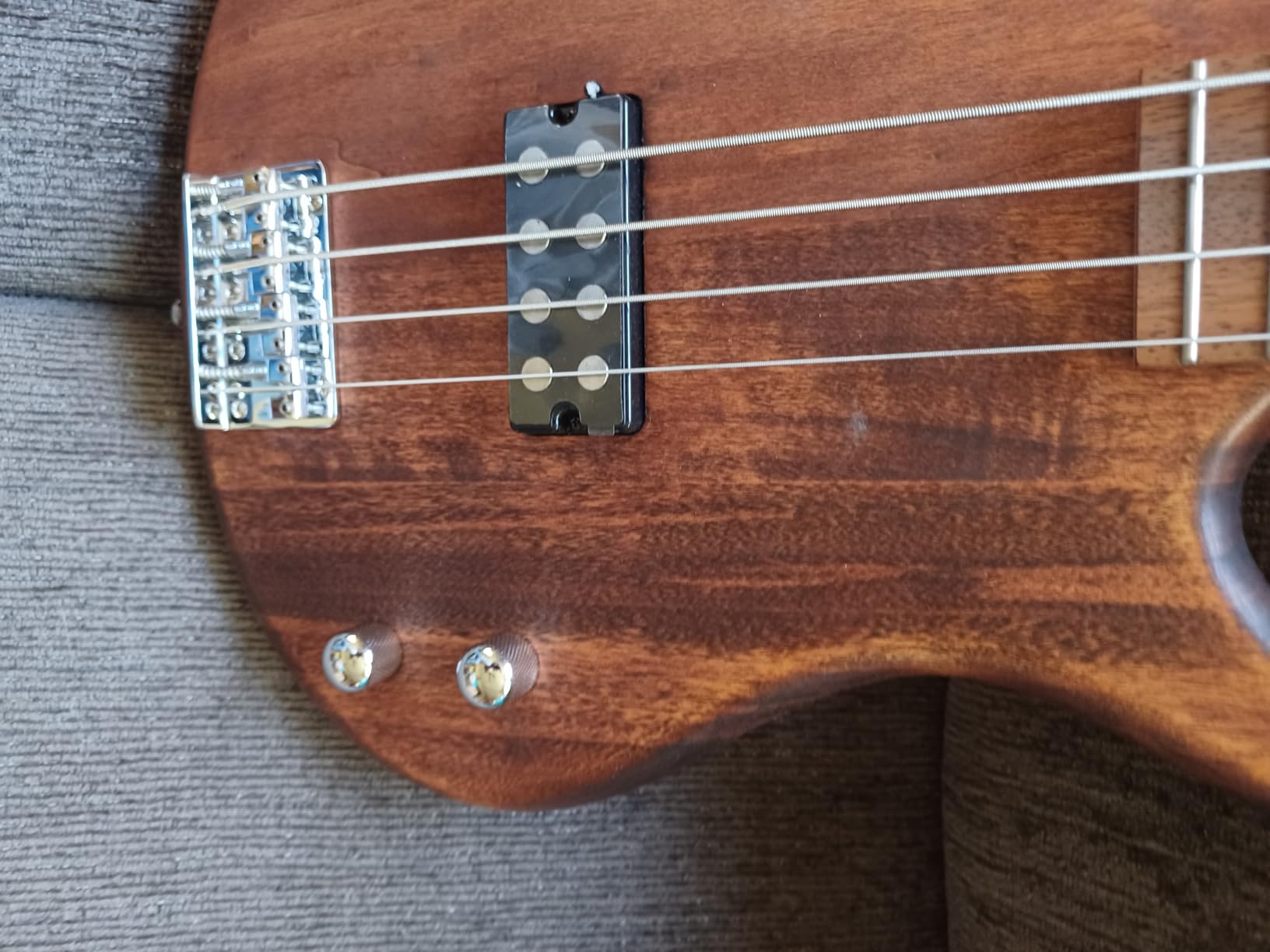
The GSR100EX is the stripped-down sibling of the GSR200, and that is exactly the point. With a single humbucking pickup and a clean control layout, it is the bass I recommend to players who want one great sound rather than a stack of options. The natural oil finish on the poplar body looks like a much more expensive instrument, and reviewers consistently mention how good it looks in person.
At around 7.5 pounds, the GSR100EX sits comfortably between the GSR200 and the Mikro in the Ibanez lightweight family. The poplar body is light without feeling hollow, and the slim GSR neck profile is the same one that has made the SR series famous. The single humbucker is well-voiced for a thick, modern rock tone, and the simple volume and tone knobs are easy to dial in mid-song.
This bass is ideal if you are the kind of player who sets up an amp once and never touches the EQ again. If that is you, the GSR100EX removes distractions and gives you one great voice. If you need tonal flexibility, the GSR200 in slot one is the better choice.
Who is this bass built for?
Best for rock and metal players, fans of stripped-down setups, and anyone who prefers one great sound over many average sounds. The oil finish is also a nice match for players who want a bass that looks natural rather than flashy. For a deeper look at how this bass compares to traditional Fender-style designs, our string bass guide covers more on humbucker-voiced instruments.
Skip it if you want both P and J pickup sounds, you play jazz or Motown, or you need a five-string option.
How does the natural oil finish hold up?
Oil finishes age well and develop character over time. They also show wear more easily than a thick polyurethane finish, which most players actually prefer. A light re-oil every year keeps the wood protected. Compared to a glossy painted body, the GSR100EX feels organic in the hand and stays grippy when your palms sweat during long sets.
6. Fender Squier Debut Series Precision Bass
Fender Squier Debut Series Precision Bass Guitar, Beginner Guitar, with 2-Year Warranty, Includes Free Lessons, Black with Matte Finish
P-Bass split-coil
Thin poplar body
C-shaped neck
Fender Play included
Pros
- Number one best seller in electric bass guitars
- Classic P-Bass split-coil tone
- Thin and lightweight poplar body
- Includes 30 day Fender Play subscription
Cons
- Sharp fret ends reported on some units
- May benefit from a basic setup
- Basic gig bag not a hard case
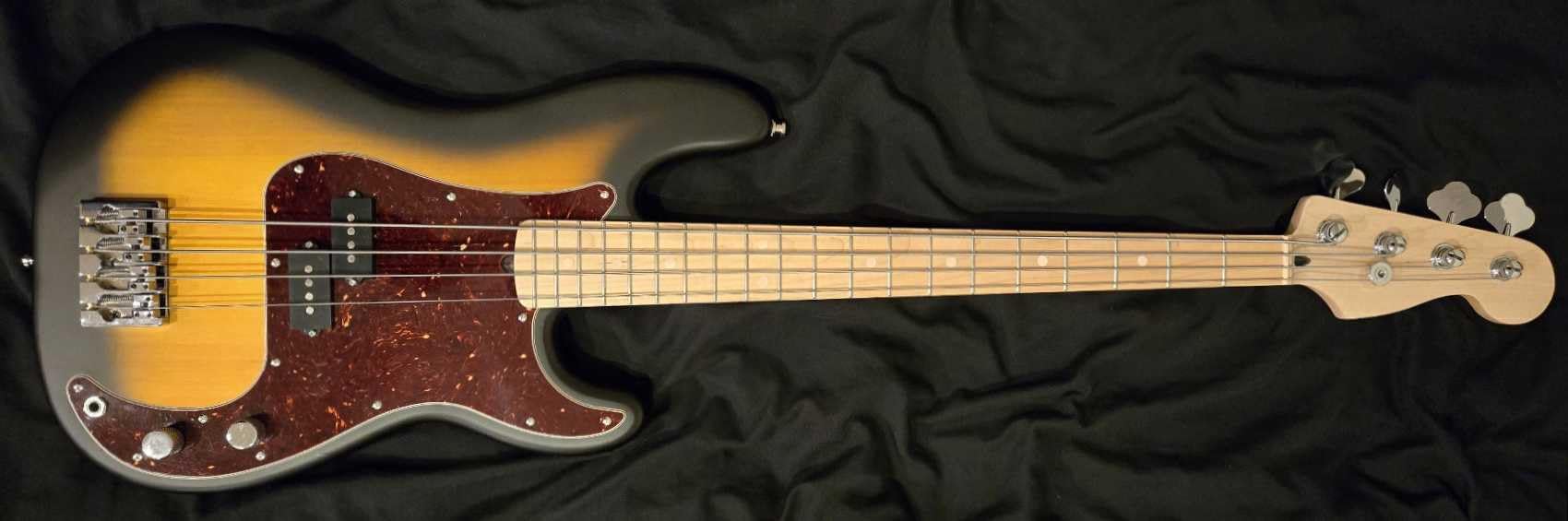
The Squier Debut Series Precision Bass is the best-selling electric bass on Amazon, and for good reason. At about 9.9 pounds, it is on the heavier end of this list, but the thin poplar body, slim neck, and Squier’s recent quality control improvements make it a real value. I have recommended this bass to more beginner and intermediate players than any other model on this list.
What sets the Debut apart from older Squier beginner models is the build consistency. Squier has tightened up their quality control significantly, and the current Debut series is one of the cleanest entry-level instruments on the market. The split-coil Precision pickup delivers the chunky, midrange-forward tone that has defined rock, country, and Motown bass for 70 years. The C-shaped neck is comfortable for adult hands, and the thin body depth is friendlier on the shoulder than a vintage-style Precision.
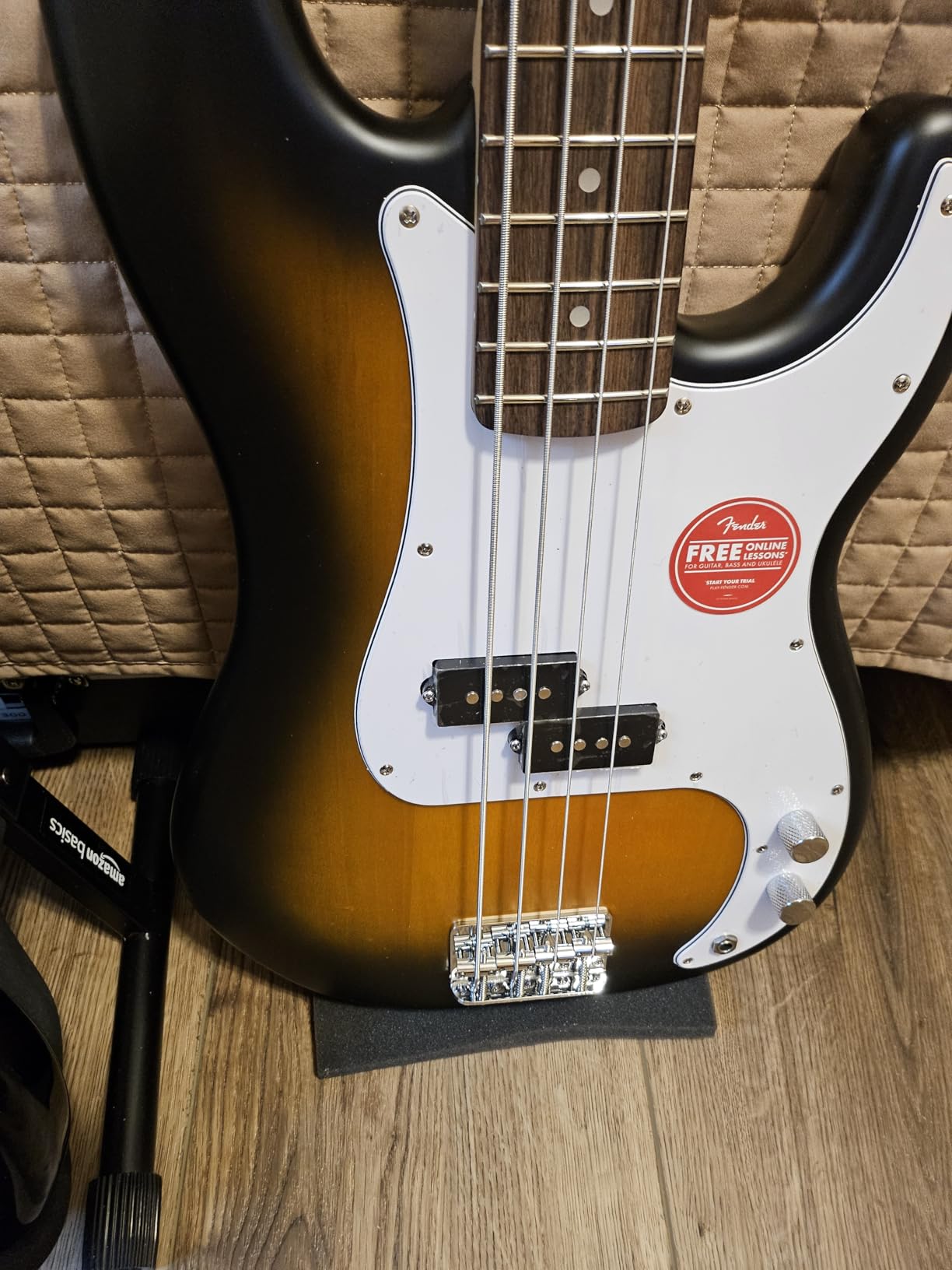
The included Fender Play subscription is a real bonus. A 30-day free trial gives you structured lessons from beginner through intermediate material, and the platform is well-paced for adults learning on their own. For students or anyone teaching themselves, that is meaningful added value at no extra cost.
Who is this bass built for?
Best for first-time bass buyers, students who want a real Fender P-Bass without paying Fender USA prices, and budget-conscious players who still want a name-brand instrument. TalkBass users regularly call this the best beginner bass on the market right now. For more beginner-focused options, our beginner bass guide lists alternatives.
Skip it if you want a five-string, a short-scale travel bass, or a 7-pound instrument for serious back or shoulder issues. This is closer to a standard-weight bass at a beginner-friendly price.
Is 9 lbs heavy for a bass?
This is the most common question I get from new players. The honest answer is that 9 pounds is about average. A standard Fender Precision or Jazz Bass weighs between 9 and 10 pounds. If you are used to carrying a backpack, 9 pounds is fine. If you have back or shoulder problems, look for a bass under 7 pounds like the GSR200, the GSRM20, or the Cordoba Mini II. The Squier Debut is not the lightest on this list, but it is also not a heavyweight.
7. Traveler Guitar Ultra-Light Maple Bass
Traveler Guitar Ultra-Light Maple Bass Guitar | Small Travel Bass with Removable Lap Rest | 30″ Scale Portable Headless Bass | With Custom Gig Bag
3.5 lb headless
30 inch scale
Maple body
Includes gig bag
Pros
- Weighs only 3 pounds 7 ounces
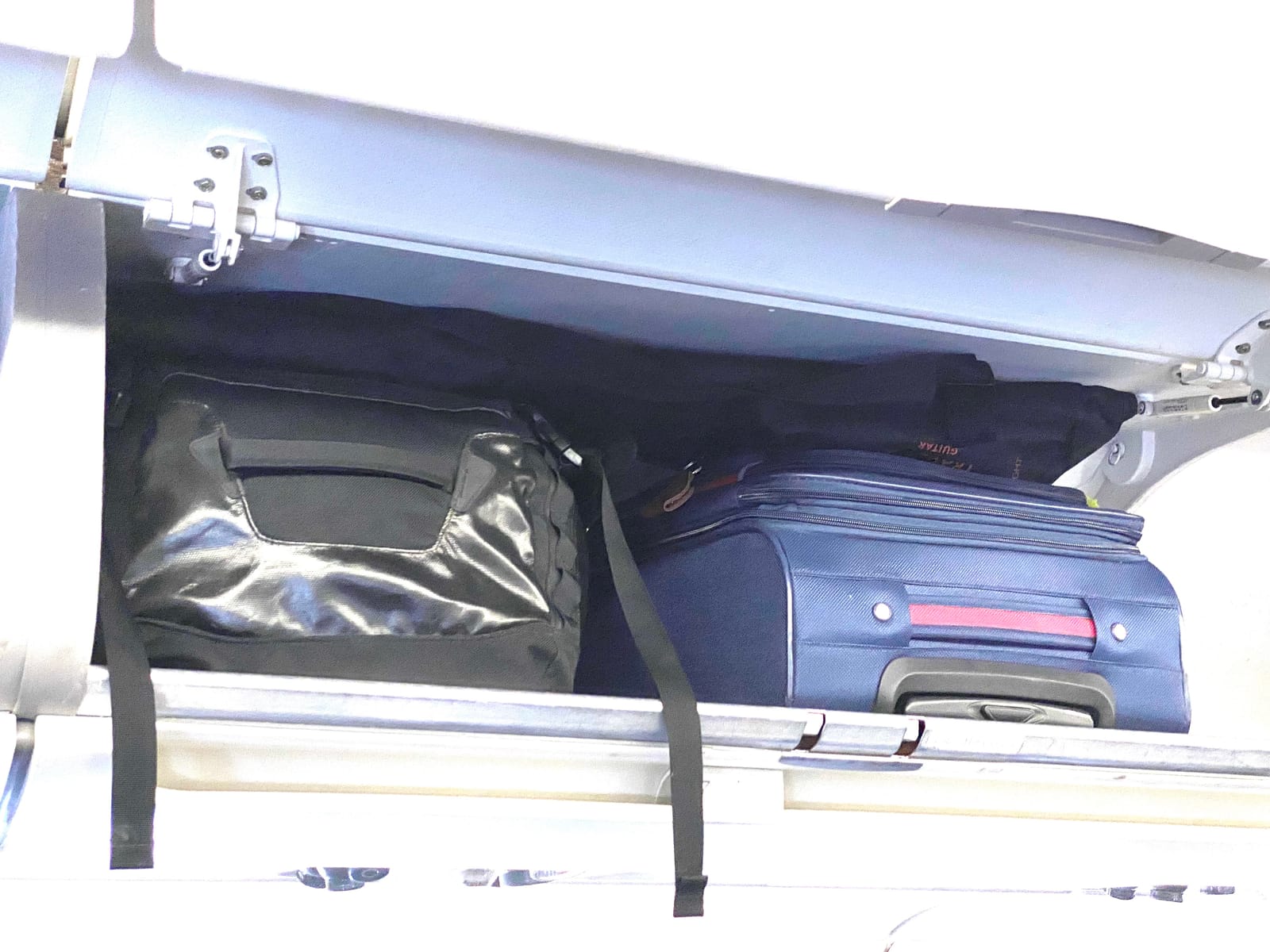
- Headless design fits in airline overhead bin
- Removable lap rest for seated playing
- Custom gig bag included
Cons
- No volume control on the instrument
- Sharp fret ends on some units
- Piezo pickup can sound bright and trebly
- Output jack quality varies
The Traveler Ultra-Light is the bass I take on planes, trains, and any situation where a full-size bass is not practical. At 3 pounds 7 ounces, it is one of the lightest four-stringers you can buy that still feels like a real bass. The 30-inch scale, headless design, and In-Body Tuning System let the entire instrument collapse to a 33.75-inch length that fits in a standard airline overhead bin. For traveling bassists, there is nothing else quite like it.
The headless design has real ergonomic benefits beyond portability. With no headstock, the bass balances on your lap or against your body without the neck dive that plagues many small-body basses. The neck-through-body maple construction is rigid and transmits string energy directly to the piezo pickup. Unplugged, the Ultra-Light is nearly silent. Plugged in, it gives an acoustic-style tone that is bright and present.
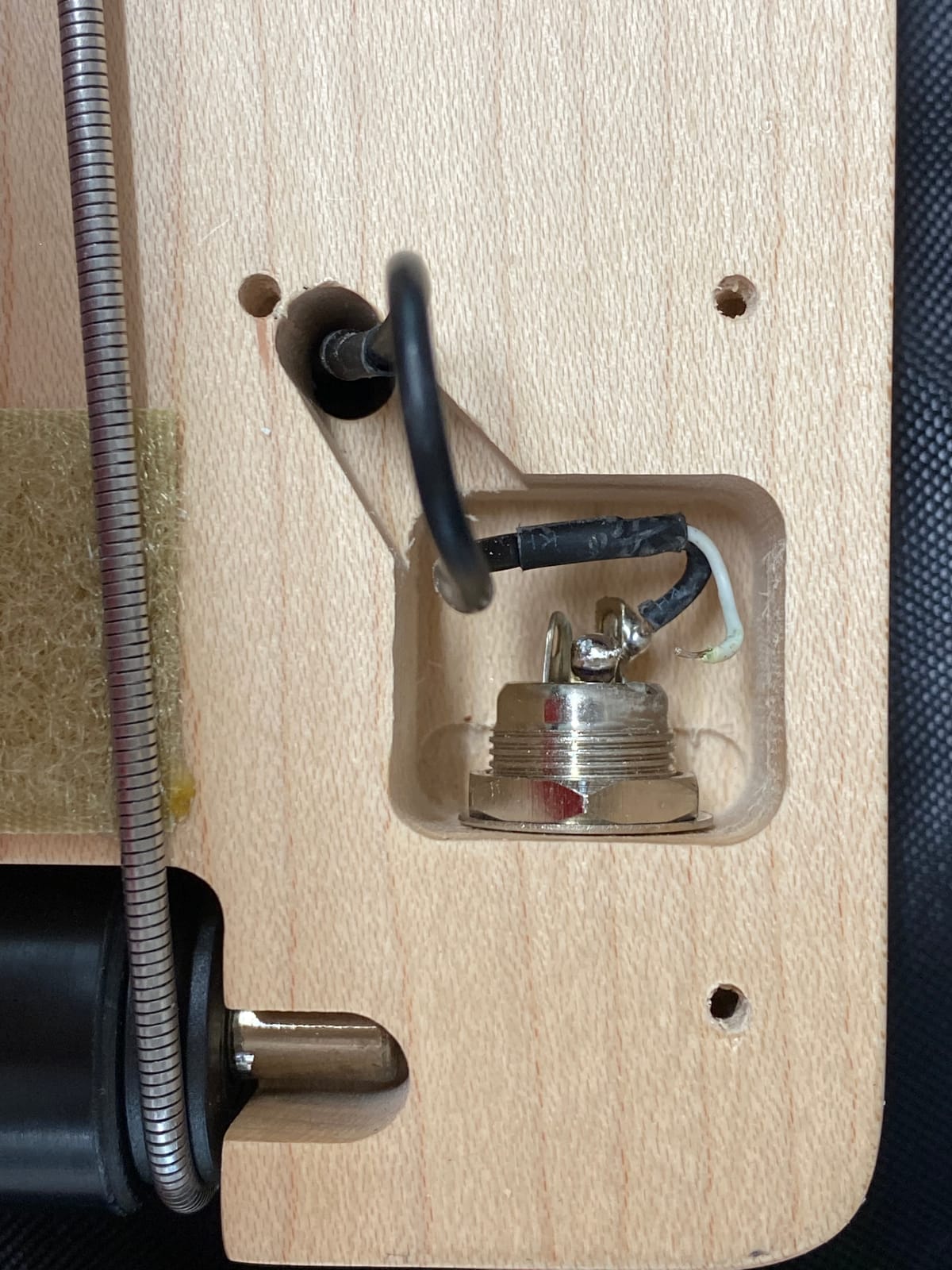
Two practical notes. The piezo pickup has no onboard volume control, so you control all of the sound from the amp. That is fine for most players, but it can be limiting in a live mix where you need quick volume swells. Also, the piezo can sound bright and trebly without EQ adjustments. A preamp with a slight midrange cut solves this in seconds.
Who is this bass built for?
Best for traveling musicians, hotel room players, and anyone who needs a real bass that fits in a carry-on. It is also a smart choice for players with back or shoulder issues who want the lightest possible instrument without going to a ukulele-scale travel bass. The removable lap rest is a thoughtful touch for seated playing.
Skip it if you want a standard magnetic-pickup electric bass tone, you play in loud bands, or you want a standard 34-inch scale. The 30-inch scale and piezo pickup give a unique voice that does not work for every genre.
What about build quality and reliability?
Traveler has been making portable instruments for 30 years, and the Ultra-Light shows that experience. The maple body is finished in a tough powder coat, the neck-through design is stable, and the included gig bag is properly padded. Reviewers do mention occasional sharp fret ends and output jack issues, but Traveler customer service is responsive. For a player who travels frequently, the trade-offs are worth it.
8. Squier Affinity Series Jaguar Bass
Squier Affinity Series Jaguar Bass, Black, Maple Fingerboard
32 inch medium scale
Squier humbucker
Slim C neck
Poplar body
Pros
- 32 inch medium scale is comfortable
- Thin and lightweight poplar body
- Slim C-shaped neck profile
- Great modding platform
Cons
- Quality control is inconsistent on some units
- Neck dive tendency with light strap
- Stock strings may need replacement
The Squier Affinity Jaguar Bass is the option for players who want a middle ground between a short-scale and a full 34-inch scale. At 32 inches, it gives you a real bass reach without the size of a standard P or J. I have used a Jaguar Bass for rehearsal and recording sessions, and the medium scale sits in a sweet spot for players with average-sized hands who want a more compact feel.
The thin poplar body keeps the weight at around 9.5 pounds, which is heavier than the GSR200 but lighter than a vintage-style Fender. The Jaguar-style offset body is comfortable whether you play sitting or standing, and the slim C-shaped neck profile is a real upgrade over older beginner basses. The Squier humbucking pickup gives a punchy, modern rock tone that responds well to EQ and overdrive.
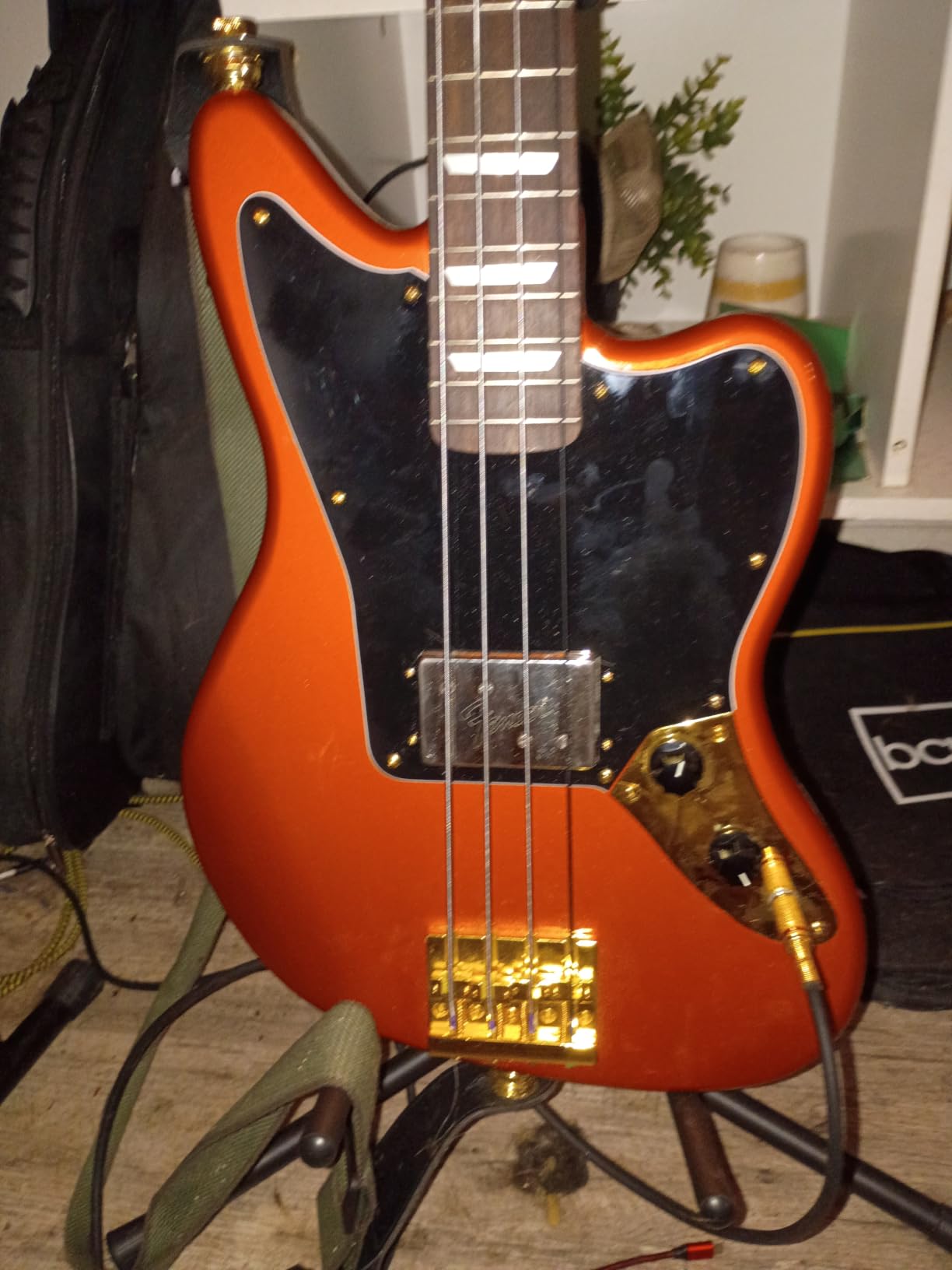
The Jaguar Bass is also a great modding platform. The simple control layout, accessible electronics cavity, and standard Squier hardware make it easy to swap pickups, replace the bridge, or upgrade the tuners. Players who like to tinker will find a lot to work with here.
Who is this bass built for?
Best for players who want a medium-scale bass with modern rock tone, fans of the Jaguar offset body shape, and tinkerers who want a solid modding platform. The included free virtual lessons are a small bonus for beginners. For more on left-handed or specialty bass options, our left-handed bass guide covers related ground.
Skip it if you want a vintage-style tone, you need a five-string option, or you are looking for the lightest bass on the market. The Jaguar sits in the middle of the weight and scale range.
What should you check before buying?
Quality control is a known weak point on the Affinity series. Some units ship with sharp fret ends, neck alignment issues, or rough fretwork. Inspect the bass carefully when it arrives, or buy from a retailer with a good return policy. Once you get a good unit, the bass is solid. The issue is consistency, not design.
What to Look for in a Lightweight Bass Guitar
The single biggest factor in bass weight is the body wood. Basswood, poplar, agathis, and nato are all on the lighter end of the tonewood spectrum, typically producing bodies between 4 and 7 pounds before hardware. Mahogany sits in the middle. Ash, alder, and maple are denser and produce heavier bodies. The Ibanez GSR200, Squier Debut, and Squier Mini P all use poplar or basswood for this reason. The Cordoba Mini II uses all-mahogany but in a much smaller body, keeping total weight at 2.4 pounds.
Scale length is the second biggest factor. A 34-inch scale bass is the standard for full-size electric basses, but a 30-inch short scale or 28.6-inch Mikro scale can shave weight and make a bass much easier to handle. Short-scale basses are also more comfortable for players with smaller hands, and they tend to produce a thicker, warmer tone with less string tension. The Ibanez GSRM20 and Squier Mini P both use shorter scales, while the Jaguar uses a 32-inch medium scale as a middle option.
Headless designs eliminate the headstock, which removes a meaningful amount of weight from the end of the neck. That change also fixes one of the most common problems with small-body basses: neck dive. The Traveler Ultra-Light is the headless option in this list, and you can read more about how headless designs affect tone and balance in our headless bass guide. Headless basses also tend to be more balanced sitting or standing.
Neck dive is the most common complaint with light basses. When the body is small or thin, the headstock pulls the neck toward the floor on a strap. Three solutions work. First, a wide, padded cotton strap spreads the weight and adds grip. Second, a strap button relocation on the upper horn reduces the lever effect. Third, swapping to lighter tuners like Hipshot Ultralites shaves weight from the headstock. Players on TalkBass have documented all three fixes for years.
For players with back or shoulder issues, the goal weight is under 7 pounds. Below that threshold, the bass feels more like a guitar on a strap, and you can play a full set without fatigue. The Cordoba Mini II at 2.4 pounds, the Traveler Ultra-Light at 3.5 pounds, and the Ibanez GSRM20 at 6.6 pounds all clear that bar. The Ibanez GSR200 at 7.7 pounds is right on the edge. The Squier Debut at 9.9 pounds and the Jaguar at 9.5 pounds are closer to standard weight and are better choices for players without health concerns.
For commuters, the priority is portability. The Traveler Ultra-Light and Cordoba Mini II both fit in airline overhead bins. The Squier Mini P and Ibanez GSRM20 fit in standard guitar gig bags and are easy to carry on public transport. For studio players, weight is less important than tone, so the GSR200 or the Squier Debut are the better choices. Their fuller bodies and standard 34-inch scale give a more authoritative recording tone.
Frequently Asked Questions
What is the lightest bass guitar that still sounds good?
The Cordoba Mini II at 2.4 pounds is the lightest in this roundup, with a warm all-mahogany acoustic-electric tone. The Traveler Ultra-Light at 3.5 pounds is the lightest magnetic-pickup-style option, though it uses a piezo pickup. Among standard electric basses, the Ibanez GSRM20 at 6.6 pounds offers the best balance of weight savings and traditional electric bass tone.
Is 9 lbs heavy for a bass?
Nine pounds is about average for a 34-inch scale electric bass. A standard Fender Precision or Jazz Bass sits between 9 and 10 pounds. If you have back or shoulder issues, look for a bass under 7 pounds like the Ibanez GSR200, GSRM20, or the Cordoba Mini II. If you are healthy and used to carrying a backpack, 9 pounds is comfortable for a normal rehearsal or gig.
Which bass guitar is the most comfortable to play?
Comfort depends on body weight, neck profile, and scale length. For most players, the Ibanez GSR200 is the most comfortable full-size option thanks to its slim GSR neck and 7.7-pound body. For smaller players, the Ibanez GSRM20 Mikro at 28.6-inch scale and 6.6 pounds is the easiest to handle. The Squier Mini P is the best choice for younger students.
What lightweight bass has no neck dive?
Headless designs eliminate neck dive because the tuning hardware is at the bridge rather than on a headstock. The Traveler Ultra-Light is the only headless option in this roundup and is well balanced on a strap. For non-headless designs, a wide padded cotton strap, a strap button relocation, or lighter tuners like Hipshot Ultralites will fix most neck dive issues.
Are short-scale basses lighter than standard basses?
Short-scale basses are usually lighter because the body is smaller and the neck is shorter, requiring less wood overall. A 30-inch short-scale bass like the Squier Mini P weighs about 6.5 pounds, while a standard 34-inch P-Bass weighs 9 to 10 pounds. Short-scale basses also have lower string tension, which can be easier on the fingers during long practice sessions.
Final Verdict
For most players shopping for the best lightweight bass guitar, my top recommendation remains the Ibanez GSR200JB. It is the rare combination of full 34-inch scale tone, slim GSR neck, a versatile P/J pickup set, and a body light enough at 7.7 pounds to play for hours. With 2,000-plus reviews and a 4.6-star average, it is the safest choice in this list for working players.
If you are a beginner, the Squier Debut Series Precision Bass is the smartest entry point. It is heavier at 9.9 pounds but offers a real Fender-style P-Bass voice at a fair price. For travelers, the Traveler Ultra-Light is the only choice that fits in an overhead bin. For smaller players or anyone with serious back issues, the Ibanez GSRM20 Mikro or the Cordoba Mini II will save your shoulders. Whichever bass you choose, lighter is not a compromise anymore. It is just a better way to play. For 2026, these are the eight best lightweight bass guitars I have tested, and any one of them will be a real upgrade for your back and your sound.