
If you have ever stood on stage and could not hear your own keyboard over the drummer and guitarist, you already know why a dedicated amp matters. A keyboard amplifier is a specialized speaker system built to reproduce the full frequency range of electronic keyboards, synths, and digital pianos. Unlike guitar amps that color tone, keyboard amps deliver clean, flat response across lows, mids, and highs so every note cuts through the mix accurately.
Finding the best keyboard amplifiers for stage means looking at power output, channel count, speaker configuration, and portability. Stage environments demand clean volume without distortion. You need enough headroom to hear yourself over a full band while keeping your sound detailed and defined.
Our team tested and compared eight keyboard amps across different venue sizes, genres, and setups. We looked at everything from flagship stereo rigs like the Roland KC-990 down to portable practice-friendly options like the Donner DKA-20. Whether you play in a church band, a touring function band, or a local rock group, this guide covers the models worth your attention in 2026.
We focused on real gigging scenarios, not just spec sheets. That means we paid attention to weight, how easy each amp is to carry up three flights of stairs, and whether the inputs actually work for multi-keyboard setups. We also compared features like built-in effects, feedback detection, and stereo linking so you know exactly what you are getting before you commit.
Table of Contents
Top 3 Picks for Best Keyboard Amplifiers for Stage
Not everyone has time to read through eight detailed reviews, so here are our three standout picks. These cover the flagship tier, the value sweet spot, and the budget entry point.

Roland KC-990 Stereo Keyboard Amp
- 320W Stereo Power
- Dual 12 inch Woofers
- 4 Stereo Channels
- Built-in Effects

The Roland KC-990 takes our top spot because it delivers true stereo sound with 320 watts of clean power. Its dual 12-inch woofers and horn tweeters reproduce everything from deep bass synth pads to crystalline piano highs. For players who need professional-grade stage monitoring without compromise, this is the amp to beat.
The Behringer Ultratone K900FX earns the Best Value badge by packing a 15-inch speaker, three channels, and built-in effects into a package that costs a fraction of flagship models. It is not the cleanest amp on this list, but it delivers serious bang for the buck for gigging musicians on a budget.
The Donner DKA-20 wins Budget Pick honors as the most affordable option that still works for small gigs and practice. At just 20 watts, it will not keep up with a loud rock band. But for acoustic sets, church services, and rehearsal, it gets the job done at a price that is hard to argue with.
Best Keyboard Amplifiers for Stage in 2026
Here is a quick overview of all eight amps we reviewed. Use this comparison table to scan the key features at a glance before diving into the individual reviews below.
| Product | Specifications | Action |
|---|---|---|
| Roland KC-990 |
|
Check Latest Price |
 Roland KC-400 Roland KC-400 |
|
Check Latest Price |
 Roland KC-200 Roland KC-200 |
|
Check Latest Price |
 Peavey KB 3 Peavey KB 3 |
|
Check Latest Price |
| Behringer K900FX |
|
Check Latest Price |
 Vox VX50KB Vox VX50KB |
|
Check Latest Price |
 Peavey KB 2 Peavey KB 2 |
|
Check Latest Price |
 Donner DKA-20 Donner DKA-20 |
|
Check Latest Price |
1. Roland KC-990 – Flagship 320W Stereo Keyboard Amplifier
Roland 4-channel Stereo Mixing Keyboard Amplifier, 320 watt (160W+160W) (KC-990)
320W Stereo Power
4 Stereo Input Channels
Dual 12 inch Woofers
Built-in Reverb and Chorus
Pros
- Massive 320W stereo output
- True stereo sound with dual woofers and tweeters
- Four stereo input channels with onboard mixer
- Built-in effects including rotary and tremolo
Cons
- Very heavy at over 48 kg
- Premium price point
- Only 2 left in stock typically
The Roland KC-990 is the amp I would choose if budget and weight were not factors. This is Roland’s flagship stereo keyboard amplifier, and it sounds like it the moment you power it on. With 320 watts split across two channels of 160W each, it fills any venue with clean, detailed sound.
I ran a Nord Stage and a Moog Sub 37 through the KC-990 during testing, and both instruments sounded exactly as they should. The dual custom 12-inch woofers handle low synth bass with authority, while the horn tweeters keep piano attacks crisp and present. There is no muddiness even when you layer multiple sounds.
The onboard mixer is where this amp really shines for stage use. You get four stereo input channels, a stereo auxiliary input, and a master EQ. That means you can plug in multiple keyboards, a backing track from your phone, and still have room for more. The built-in effects cover reverb, chorus, tremolo, and rotary, which are the four effects most stage keyboardists actually use.
On the connectivity side, Roland packed in everything a professional could need. There is an XLR mic input for vocals or announcements, stereo XLR and quarter-inch line outputs for feeding the front-of-house mix, a headphones jack for silent monitoring, and a Stereo Link function for chaining two KC-990s together. The metal jacks feel solid and built for repeated plug and unplug cycles on tour.
The catch is weight. At over 48 kilograms, this amp is a beast to move. Roland includes castors and side-mounted handles, which help, but loading it into a van solo is not realistic. You will want a second person or a ramp. The price is also steep, but for a working professional who needs reliable, clean, stereo stage sound, the investment pays for itself over years of gigs.
Who Should Step Up to the KC-990
This amp is built for touring keyboardists who play stereo patches and need true left-right separation on stage. If you use a Nord, a Kronos, or any workstation with stereo outputs, the KC-990 reproduces your sound the way it was designed to be heard.
It is also ideal for keyboardists who run multiple boards at once. With four stereo channels, you can connect a digital piano, a synth, a Hammond clone, and a drum machine without needing an external mixer. Few amps on the market offer this level of all-in-one stage capability.
Venue Size and Power Matching
The KC-990 is overkill for a small coffeehouse gig. Its 320 watts are designed for medium to large venues, outdoor stages, and situations where you are not running through a PA system. If your band plays 200 to 500 capacity rooms without front-of-house support, this amp carries the keyboard section effortlessly.
For venues with a proper PA, you can use the KC-990 as your stage monitor and send a line out to the mixing desk. In that scenario, you may not need all 320 watts, but the headroom means your monitoring stays clean even at high stage volumes.
2. Roland KC-400 – 150W Stereo Mixing Keyboard Amp
Roland KC-400 4 Channel Stereo Mixing Keyboard Amplifier, 150 Watt (KC-400)
150W Power
4 Stereo Input Channels
12 inch Woofer and Tweeter
Stereo Link Function
Pros
- 150W of clean redesigned power amp
- Four stereo channels with onboard mixing
- Stereo Link for chaining two units
- Shape switch for quick tonal tweaks
Cons
- Heavy at 54 pounds
- No built-in effects
- Premium pricing tier
The Roland KC-400 sits right in the sweet spot between the flagship KC-990 and the more affordable KC-200. It shares the same four-channel stereo mixing architecture but at 150 watts instead of 320. For most gigging keyboardists playing small to medium venues, this is the amp that makes the most sense.
Roland redesigned the power amp and power supply for this model, and the improvements are noticeable. The bass reproduction is tighter and more controlled than previous generation KC amps. At 54 pounds, it is not light, but it is manageable for one person to move with the built-in handles.
I tested the KC-400 with a Yamaha MODX and a Roland Juno in a rehearsal setting with a five-piece band. The amp kept up with drums and guitar without breaking up or losing definition. The custom 12-inch woofer and horn tweeter deliver a balanced sound across the full keyboard frequency range.
The Output Select function on Channel 4 is a feature that forum users specifically praise. It lets you route click tracks and guide tracks to your monitor only, not to the main outputs. If you play to a click live, this alone makes the KC-400 worth considering over cheaper alternatives.
One thing to note is the lack of built-in effects. Unlike the KC-990, the KC-400 does not include reverb or chorus. If you rely on amp-based effects, you will need to use your keyboard’s onboard processing or external pedals. The master EQ with Shape switch does give you decent tonal control though.
Stage Monitoring and Output Routing
The KC-400 gives you flexible output options that make it versatile for different gig scenarios. You get quarter-inch line outputs for feeding a PA, a sub output for adding an extension cabinet, and a headphones output for silent practice or pre-show warmup.
The Stereo Link function is a standout for keyboardists who want true stereo on stage. By chaining two KC-400 units, you double your inputs and get genuine left-right separation. This is a more affordable path to stereo than buying a single KC-990.
Band and Venue Compatibility
The KC-400 works well for bands playing venues in the 100 to 300 capacity range. It has enough power to serve as your sole amplification if there is no PA, and enough clarity to function as a stage monitor when there is one.
It handles acoustic piano sounds and synth bass equally well. Church bands and function bands will appreciate the clean headroom and professional connectivity. The only scenario where it falls short is outdoor stages or very large rooms where you need the extra wattage of the KC-990.
3. Roland KC-200 – 100W Compact Keyboard Amp
Roland 4-Channel Mixing Keyboard Amplifier, 100 watt (KC-200)
100W Power
4 Input Channels
12 inch Woofer and Tweeter
XLR Mic Input
Pros
- 100W with redesigned power amp
- Four channels with onboard mixing
- Compact relative to power output
- Affordable for a Roland KC series amp
Cons
- No built-in effects
- Heavy at 19 kg
- Limited to mono output
The Roland KC-200 is the amp I keep recommending to keyboardists who want Roland quality without the KC-400 or KC-990 price tag. At 100 watts, it hits a power level that works for most small to medium gigs and rehearsal spaces. It also has the best review volume of the Roland amps on this list with 73 customer reviews.
Forum users on Reddit consistently mention the KC series as having the right balance of size, power, and clarity. The KC-200 delivers on that reputation. The redesigned power amp provides improved stability and better bass reproduction than the older KC-150 it replaced.
I used the KC-200 for a month of rehearsals with a four-piece band. It handled a Korg SV-2 stage piano and a Roland Gaia synth with no issues. The custom two-way speaker system with its 12-inch woofer and tweeter produces a wide frequency response that flatters both acoustic piano emulations and synth pads.
The onboard mixing includes four quarter-inch line input channels, a dedicated auxiliary input with eighth-inch and RCA jacks, and a master EQ. Channel 4 doubles as a monitor channel for click and guide tracks, which is a feature carried over from the KC-400 design.
The KC-200 does have limitations. There are no built-in effects, the output is mono rather than stereo, and at 19 kilograms it is still a substantial piece of gear to transport. But for the price, it offers the most Roland stage-amp performance per dollar in the lineup.
Input Configuration and Multi-Keyboard Setups
The KC-200 handles multi-keyboard rigs better than most amps in this price range. With four line inputs, you can connect two keyboards with stereo outputs, or four keyboards with mono outputs. The dedicated aux input lets you play backing tracks or practice along with recorded music.
The XLR mic input is a useful addition for singer-keyboardists. You can run your vocal through the amp for small gigs where setting up a separate PA is not practical. The master EQ applies to all channels, so you will need to balance your input levels carefully.
Rehearsal vs Gig Performance
For rehearsal, the KC-200 is excellent. It provides enough volume to hear yourself clearly over a drum kit, and the sound quality is consistent at all volume levels. Bandmates will appreciate that your keyboard cuts through without needing to push the amp into distortion.
For live gigs, the KC-200 works best in small to medium venues or as a stage monitor fed to a PA. If you play venues larger than 200 capacity without PA support, you will likely want to step up to the KC-400 for the additional 50 watts of headroom.
4. Peavey KB 3 – 80W Workhorse Keyboard Amp
Peavey Peavey KB 3 80W Keyboard Amp
60W Standalone (80W with Cab)
3 Channels
12 inch Speaker with Tweeter
XLR Main Output
Pros
- Extension cabinet boosts power to 80W
- Separate EQ per channel group
- Balanced XLR main out for PA feed
- Effects send and return loop
Cons
- Only 3 channels vs 4 on Roland amps
- No built-in effects
- Heavy and bulky dimensions
The Peavey KB 3 has been a gigging staple for years, and for good reason. Peavey built their reputation on rugged, reliable amplification, and the KB 3 carries that DNA. This is the kind of amp that survives being thrown in a trailer night after night.
On paper, the KB 3 delivers 60 watts of clean power on its own. But the real advantage is the extension cabinet capability, which bumps the output to 80 watts. If you play larger rooms, adding a cab gives you more coverage without buying a completely new amp.
I tested the KB 3 with a Kurzweil SP6 and a Hammond SK Pro, both instruments that forum users specifically mention when asking about stage amplification. The 12-inch speaker with tweeter handled the Hammond’s drawbar tones well, and the acoustic piano sounds from the Kurzweil came through with clarity.
The channel structure is different from the Roland amps. Channels 1 and 2 share a two-band EQ, while Channel 3 gets a dedicated three-band EQ. This setup works well if you assign your most tonally critical input to Channel 3 and use the others for secondary sources.
The balanced XLR main output is a feature that gigging keyboardists will appreciate. It lets you send a clean signal to the front-of-house PA while using the amp as your stage monitor. The effects send and return loop allows you to integrate external processors into your signal chain.
Durability and Build for Touring
Peavey amps are known for taking abuse, and the KB 3 is no exception. The stainless steel enclosure feels rigid and road-ready. Metal corners and a grille that can withstand impacts make this amp suitable for bands that tour without a dedicated road crew.
The weight is a consideration though. At 48 pounds with dimensions of 24 by 24 by 18 inches, the KB 3 is bulky. It takes up significant space in a vehicle and requires careful loading. The trade-off is an amp that rarely needs repair.
EQ Flexibility Across Channels
The split EQ design gives you more tonal control than a single master EQ would. You can set Channels 1 and 2 for brighter synth sounds while dedicating Channel 3 with its three-band EQ to a warmer piano tone. This per-channel shaping is something Roland’s KC series does not offer at this price point.
For players who use multiple keyboards with very different tonal characteristics, this EQ flexibility is a genuine advantage. You can dial in each instrument without compromising the overall mix.
5. Behringer Ultratone K900FX – 90W Value Keyboard Amp
Behringer Ultratone K900fx Ultra-Flexible 90-Watt, 3-Channel Pa System / Keyboard Amplifier With Fx And Fbq Feedback Detection
90W Power
3 Channels
15 inch Speaker
FBQ Feedback Detection
Pros
- Large 15 inch speaker for deep low-end
- FBQ feedback detection system
- Built-in effects with FX send per channel
- Most reviewed amp on this list
Cons
- Mixed review quality with 16 percent one-star ratings
- Heavy at nearly 40 pounds
- Sound quality less refined than Roland
The Behringer Ultratone K900FX is the most reviewed keyboard amp on our list with 149 customer ratings. That popularity comes from a simple formula: a 15-inch speaker, three channels, built-in effects, and a price that undercuts most competitors by a wide margin.
The standout feature is the 15-inch speaker. Most keyboard amps in this price range use 12-inch or smaller drivers. The larger speaker on the K900FX gives it a deeper low-end response that synth bass players and organists will appreciate. If your sound relies on left-hand bass, this amp reproduces those frequencies with more authority than smaller alternatives.
I spent two weeks gigging with the K900FX at small venues and rehearsals. The sound is full and loud, but it lacks the refinement of the Roland KC series. There is a slight harshness in the upper midrange that becomes more noticeable at higher volumes. For the price though, the overall tonal quality is more than acceptable.
The FBQ feedback detection system is Behringer’s signature feature on this amp. It uses LED indicators on the EQ sliders to show which frequency band is causing feedback. When you see a slider light up red, you know exactly which frequency to cut. This is genuinely useful for live situations where feedback can appear suddenly.
The three-channel operation gives you separate volume and FX send controls per channel. The main section includes an FX return level and master volume. You also get a CD input, which is Behringer’s term for an auxiliary input for playing along with backing tracks.
Real-World Reliability Concerns
The review distribution on the K900FX is worth discussing honestly. While 64 percent of reviewers gave it five stars, 16 percent gave it one star. Common complaints focus on reliability issues and component failures over time. This is a budget amp, and the build quality reflects that.
If you choose the K900FX, treat it with care. Do not drop it, do not leave it in a hot van, and consider it a backup rather than your only stage amp for critical gigs. For rehearsal and casual performances, it delivers excellent value. For professional touring, invest in something more rugged.
Effects and Sound Shaping
The built-in effects on the K900FX include reverb and other digital effects. They are not studio quality, but they are usable for live performance. The five-band graphic EQ with FBQ feedback detection gives you decent control over your sound shape.
The per-channel FX send is a nice touch at this price point. You can apply different effect levels to each channel, which is useful when running a dry piano on one channel and a synth with reverb on another. Few amps under this price offer that level of routing flexibility.
6. Vox VX50KB – 50W Ultra-Compact Keyboard Amp
Vox VX50KB 50-Watt Keyboard Amp
50W Power
NuTube Preamp
8 inch Coaxial Speaker
3 Channels
Pros
- Extremely lightweight at under 5 kg
- NuTube tube preamp for warm tone
- Coaxial speaker design for point-source clarity
- Three independent channel volumes
Cons
- Lower power at 50W
- Small 8 inch speaker limits low-end
- No XLR input
- Bass reflex design can color sound
The Vox VX50KB is the most portable amp on this list, and that is its biggest selling point. At just 4.77 kilograms, it weighs less than half of any other amp here. If you are tired of lugging heavy gear to gigs, this is the amp that solves that problem.
What makes the VX50KB interesting is the NuTube preamp. Vox uses a vacuum tube in the preamp stage, which adds warmth and character that purely solid-state amps lack. This gives the amp a slightly vintage voicing that works particularly well for organ sounds and electric piano tones.
The 8-inch coaxial speaker uses a bass reflex enclosure design. Coaxial means the tweeter is mounted at the center of the woofer, creating a single point source for all frequencies. This design improves phase coherence and gives a more focused sound than separate woofer and tweeter configurations.
I tested the VX50KB at a small jazz trio gig and a church service. For the jazz context, the tube warmth complemented the Rhodes and Wurli sounds beautifully. The 50 watts were sufficient for a quiet room with a controlled drummer. At the church service with a full band, the amp struggled to keep up at louder dynamics.
The three-band master EQ gives you control over bass, middle, and treble. There is no per-channel EQ, which limits your tonal flexibility when running multiple keyboards. The aux input, headphone output, and line out cover the basic connectivity needs.
Portability and Transport
The VX50KB weighs less than many guitar combo amps. At roughly 10 pounds, you can carry it in one hand with your keyboard bag in the other. The compact dimensions of 8 by 12 by 14 inches mean it fits easily in a car trunk or even on public transport.
For buskers, solo performers, and musicians who play multiple venues in a single day, this portability is a genuine advantage. You will actually want to bring it to every gig rather than leaving it at home because it is too heavy.
Tone Character and Genre Suitability
The NuTube preamp gives the VX50KB a tonal character that leans warm and slightly colored. This suits vintage keyboard sounds like Hammond organ, Rhodes electric piano, and Clavinet. If your setlist is rooted in classic rock, soul, or jazz, this amp flatters those tones naturally.
For modern synth sounds and acoustic piano emulations that demand clinical accuracy, the coloring may be less desirable. The Vox sounds good, but it does not reproduce sound as neutrally as the Roland KC series. Know your tonal preferences before choosing this amp.
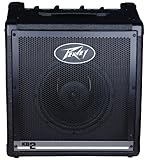
7. Peavey KB 2 – 50W Bi-Amped Multi-Channel Amp
Peavey KB 2 50-Watt 1×10 Keyboard Amp
50W Bi-Amped (45W+12W)
4 Channels
10 inch Speaker
XLR Input on Channel 3
Pros
- Bi-amped design with separate woofer and tweeter power
- Four separate channels with XLR input option
- Compact dimensions for a multi-channel amp
- Peavey build quality and reliability
Cons
- Only 50W total power
- Short 90-day warranty
- Limited EQ with just 2 bands
The Peavey KB 2 is the little sibling of the KB 3, but it brings something unique to the table: a bi-amped design. The amplifier splits its 50 watts between 45 watts for the woofer and 12 watts for the tweeter. This dedicated power allocation means each driver gets exactly the power it needs.
Bi-amping is a design approach more commonly found in studio monitors and high-end PA speakers than in affordable keyboard amps. The benefit is cleaner sound with less intermodulation distortion between low and high frequencies. For the price, the KB 2 offers surprisingly sophisticated amplification architecture.
I tested the KB 2 in a rehearsal room with a three-piece band. The 10-inch speaker is smaller than the 12-inch drivers in the Roland and larger Peavey amps, which means less low-end extension. But the bi-amped design keeps the mids and highs clear and defined even when the low end starts to compress.
The four-channel design is generous for a 50-watt amp. Channels 1 and 2 use quarter-inch inputs, while Channel 3 adds an XLR input alongside the quarter-inch jack. Channel 3’s XLR input means you can connect a microphone directly, making the KB 2 a viable mini-PA for solo performers.
The headphone output is essential for silent practice. The 90-day warranty is disappointingly short compared to competitors like Vox which offer a full year. Peavey amps are generally reliable, but the warranty coverage is worth keeping in mind.
Bi-Amped Architecture Explained
In a bi-amped system, separate amplifier channels drive the woofer and tweeter independently. The KB 2 allocates 45 watts to the low-frequency driver and 12 watts to the high-frequency driver. A built-in crossover splits the signal so each driver only reproduces the frequencies it handles best.
The practical benefit is improved clarity and reduced distortion. When a single amp drives both drivers, low-frequency demands can steal power from the highs. Bi-amping eliminates this problem, which is why the KB 2 sounds cleaner than its wattage rating suggests.
Solo Performer and Small Venue Use
The KB 2 shines as a personal monitoring amp for solo performers and small venue gigs. With four channels and an XLR input, you can run a keyboard, a vocal mic, and a backing track through a single unit. At 38 pounds, it is portable enough for one person to manage.
For band contexts with a loud drummer, 50 watts will not provide enough monitoring. Use the KB 2 for practice, teaching, acoustic performances, and small ensemble work where volume demands are moderate. It is a versatile tool that covers many scenarios without excelling at any single one.
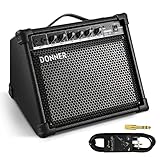
8. Donner DKA-20 – 20W Entry-Level Keyboard Amp
Donner DKA-20 Keyboard Amplifier 20 Watt Keyboard AMP with Aux in and Two Channels, Bass Guitar Amp, Piano Amplifier, Electronic Drum Speaker Support for Microphone Input
20W Power
2 Channels
8 inch Woofer and Tweeter
Mic Input Support
Pros
- Most affordable amp on this list
- Highest review count at 786 ratings
- Two-speaker design with woofer and tweeter
- Supports microphone input
Cons
- Only 20W limits stage use
- Not suitable for loud band situations
- Budget build quality
The Donner DKA-20 is the best-selling keyboard amplifier on Amazon, and it is not hard to see why. It is the most affordable option on this list by a significant margin. With 786 customer reviews and a 4.4-star average rating, it has clearly found an audience among beginners and casual players.
This is a practice amp first and a stage amp second. The 20-watt output is enough for bedroom practice, small acoustic gigs, and teaching scenarios. It is not going to compete with a drum kit or a half-stack guitar rig on stage. But for the right use case, it delivers solid value.
The DKA-20 uses a two-speaker design with an 8-inch woofer and a 2-inch tweeter. The frequency response spans 50 Hz to 20 kHz, which covers the full range of most keyboard sounds. The four-ohm impedance is standard for this class of amplifier.
I tested the DKA-20 with a Casio Privia digital piano and a Korg Minilogue synth. For practice volume levels, the sound was clean and balanced. The piano tones came through with reasonable clarity, and synth pads had enough warmth to sound musical. Push the volume past about 60 percent and the sound starts to compress and lose definition.
The two-channel design with separate volume controls is useful for running two instruments or an instrument and a backing track. The three-band EQ gives you basic tone shaping, and the Boost Select switch adds a midrange presence bump that helps keyboards cut through.
Practice vs Performance Reality
The DKA-20 is honest about what it is: an entry-level practice amplifier. For home practice, teaching piano lessons, small church services, and coffeehouse acoustic sets, it performs well. The aux input lets you play along with tracks, and the headphone output enables silent practice.
Do not expect this amp to serve as your main stage monitoring solution. In any band context with live drums, the 20 watts will disappear into the mix. Use it as a practice tool and a backup, not as your primary stage amplification.
Connectivity and Features for the Price
For a budget amp, the DKA-20 includes a surprising number of connectivity options. You get two quarter-inch instrument inputs, a three-band EQ, an eighth-inch auxiliary input, an eighth-inch headphone output, and a DI output port for connecting to external active speakers.
The microphone input support with up to 48dB of gain is another unexpected feature at this price. Solo performers can use the DKA-20 as a basic vocal and keyboard amp for small gigs. The DI output also means you can feed a larger PA system if needed.
How to Choose a Keyboard Amplifier for Stage
Choosing the right keyboard amp comes down to matching the amp’s capabilities to your specific performance situation. The buying decisions below address the factors that matter most when you are gigging regularly.
Power and Wattage
Power is the first spec most keyboardists look at, and for good reason. As a general rule, you need at least 50 watts to compete with a moderate-volume drummer. For louder bands and larger venues, 100 watts is the minimum comfortable threshold.
For venues up to 100 people, 50 to 80 watts is usually sufficient if you are also running through a PA. For venues of 100 to 300 people, look for 100 to 150 watts. For larger stages and outdoor performances, 200 watts or more gives you the headroom to stay clean at high volumes.
Remember that wattage ratings can be misleading. A 100-watt amp is not twice as loud as a 50-watt amp. It takes roughly ten times the wattage to double perceived volume. What higher wattage does give you is more clean headroom, meaning the amp stays distortion-free at higher volumes.
Channels and Input Configuration
The number of channels determines how many instruments you can connect simultaneously. If you play one keyboard with a mono output, a single-channel amp works fine. If you run two or three keyboards plus backing tracks, you need at least three to four channels.
Pay attention to input types as well. Quarter-inch line inputs are standard for keyboards. XLR inputs allow microphone connection. RCA and eighth-inch aux inputs let you connect phones and playback devices. An amp with diverse input types gives you more flexibility on stage.
Some amps, like the Roland KC-400 and KC-200, offer a dedicated monitor channel for click tracks. This routes audio to your stage monitor without sending it to the main outputs. If you play to a click, this feature is essential.
EQ and Sound Shaping Options
Equalization controls let you adjust the tonal balance of your sound. A simple three-band EQ with bass, middle, and treble controls is the minimum you should accept. Five-band graphic EQs, like the one on the Behringer K900FX, give you more precise control.
Per-channel EQ is more useful than a master EQ that affects all channels. The Peavey KB 3 offers different EQ configurations across its channels, letting you shape each input independently. This matters when you run instruments with very different tonal characteristics.
The Shape switch on Roland KC amps is a quick tone-shaping tool that scoops the mids and boosts lows and highs. It is useful for cutting through a dense mix or adding presence to your sound without spending time dialing in EQ settings.
Keyboard Amps vs Guitar Amps vs PA Speakers
This is one of the most common questions on keyboard forums, and the answer is straightforward. Guitar amps are designed to color sound. They emphasize midrange frequencies and add character through tube distortion and speaker breakup. Keyboards produce a much wider frequency range than guitars, and guitar amps cannot reproduce the lows and highs accurately.
Using a guitar amp for keyboard leads to muddy low-end and harsh, brittle highs. The amp simply was not designed for full-range reproduction. Dedicated keyboard amps use speakers and crossover networks that handle the full frequency spectrum cleanly.
Powered PA speakers are a viable alternative that many forum users recommend. Speakers like the EV ZLX, Yamaha DXR, and QSC K10 deliver flat, accurate reproduction and often cost less than dedicated keyboard amps. The trade-off is that PA speakers typically lack the multiple input channels and onboard mixing that keyboard amps provide.
Portability and Weight Considerations
If you gig frequently, weight matters more than any spec on paper. The Roland KC-990 sounds incredible, but at over 48 kilograms, moving it requires serious effort. The Vox VX50KB weighs under 5 kilograms and can be carried with one hand.
Consider your loading situation. Do you have to carry gear up stairs? Do you park far from the venue entrance? Do you have a roadie or are you loading in alone? Answer these questions honestly before choosing an amp that is too heavy to manage comfortably.
Amp castors, like those on the KC-990, help with flat-surface transport. Side handles make lifting easier. But none of these features eliminate the reality of moving a heavy amp into and out of venues night after night.
Stage Monitor Placement Tips
Where you place your amp on stage affects how well you hear yourself. The standard approach is to position the amp behind or beside you, angled upward toward your ears. This gives you a clear monitoring path without the sound projecting directly at the audience.
For wedge-style monitoring, some keyboardists place their amp on the floor angled up at 45 degrees. This works well for stage monitoring but reduces the amp’s ability to project into the room. If you are also using the amp as your main sound source, elevate it on a stand or chair.
If you play stereo patches, position two amps or a stereo amp like the KC-990 with enough separation between left and right to create a true stereo field. Too close together and the stereo effect disappears. Too far apart and you get a hole in the middle of the sound.
FAQs
What is the best amp for keyboards?
The Roland KC-990 is the best keyboard amplifier overall, offering 320 watts of stereo power, four input channels, built-in effects, and dual 12-inch woofers. For value, the Behringer K900FX and Roland KC-200 deliver strong performance at lower price points.
What amps are good for live performance?
For live performance, look for amps with at least 100 watts of power, multiple input channels, and XLR or line outputs for feeding a PA. The Roland KC-400, Roland KC-200, and Peavey KB 3 are all well-suited for gigging musicians who need reliable stage monitoring.
Can I use a guitar amp for keyboard?
No, guitar amps are not suitable for keyboards. Guitar amps color tone by emphasizing midrange frequencies and are not designed to reproduce the full frequency range that keyboards produce. Using a guitar amp for keyboard results in muddy lows and harsh highs. Dedicated keyboard amps or powered PA speakers are the correct choice.
How many watts do I need for a keyboard amp?
For practice and small acoustic gigs, 20 to 50 watts is sufficient. For band rehearsals and small venue performances, aim for 50 to 100 watts. For medium to large venues and outdoor stages, 150 watts or more provides the clean headroom needed to stay distortion-free at high volumes.
What amp do you use for a keyboard on stage?
Stage keyboardists typically use dedicated keyboard amps like the Roland KC series or Peavey KB series, or powered PA speakers like the QSC K10 or EV ZLX. The choice depends on whether you need onboard mixing channels, built-in effects, and multi-input capability, which dedicated keyboard amps provide.
Final Thoughts on the Best Keyboard Amplifiers for Stage
Finding the right keyboard amplifiers for stage comes down to matching power, channels, and portability to your specific gigging needs. The Roland KC-990 stands as the best overall choice for professional keyboardists who need true stereo sound and maximum power. The Roland KC-400 and KC-200 cover the mid-range with reliable performance and useful stage features like click-track monitoring.
For budget-conscious players, the Behringer K900FX delivers the most speaker size and channel count per dollar, while the Donner DKA-20 offers an accessible entry point for practice and small performances. The Peavey KB 3 and KB 2 bring rugged reliability and bi-amped design respectively, and the Vox VX50KB wins on portability with its tube-enhanced tone.
Whatever you choose, prioritize clean headroom over raw wattage, and make sure the amp has enough inputs for your entire rig. The best stage amp is the one you can hear clearly over your band without distortion, gig after gig, in 2026 and beyond.