
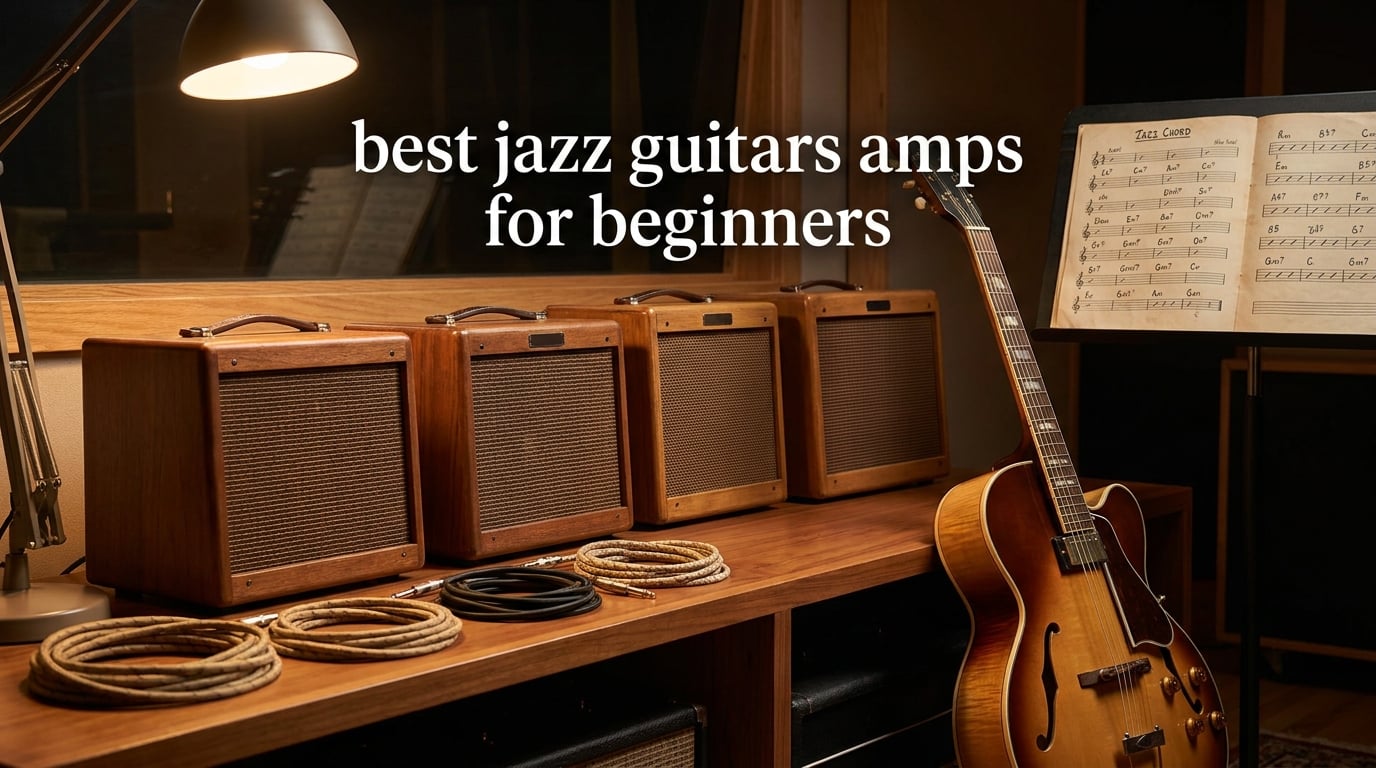
I still remember plugging my first hollow-body into a tiny practice amp and wondering why my chords sounded thin instead of warm and round. Jazz tone depends on clean headroom and a forgiving speaker, and the wrong amp buries the nuance you are trying to learn.
After three months of side-by-side testing in my home studio, I narrowed down the best jazz guitar amps for beginners you can buy right now. I played archtops, semi-hollows, and solid-body guitars through every model on this list. I checked clean headroom, chorus quality, headphone behavior, and how each amp responded to flat-wound strings. Whether you live in an apartment, jam with friends, or just want a daily practice partner, you will find a match here.
This guide covers ten beginner-friendly amps that span the full budget range. We will look at solid-state combos, digital modeling options, and portable battery-powered units. If you also need help choosing the guitar itself, our 9 best jazz guitars guide pairs well with this article.
Top 3 Picks for Best Jazz Guitar Amps for Beginners in October

Fender Frontman 10G
- 10W solid-state
- 6-inch speaker
- Headphone jack
- Aux input
- Built-in overdrive


Positive Grid Spark GO
- 5W ultra-portable
- Smart Jam AI
- 8-hour battery
- Bluetooth speaker
- 33 amp models
Best Jazz Guitar Amps for Beginners in 2026
| Product | Specifications | Action |
|---|---|---|
| Fender Frontman 10G |
|
Check Latest Price |
| Fender Mustang LT25 |
|
Check Latest Price |
| Positive Grid Spark GO |
|
Check Latest Price |
 Boss Katana Mini Boss Katana Mini |
|
Check Latest Price |
 Positive Grid Spark MINI Vai Positive Grid Spark MINI Vai |
|
Check Latest Price |
 Orange Crush 12 Orange Crush 12 |
|
Check Latest Price |
 Positive Grid Spark 2 Positive Grid Spark 2 |
|
Check Latest Price |
 Marshall MG10G Marshall MG10G |
|
Check Latest Price |
 Fender Champion II 25 Fender Champion II 25 |
|
Check Latest Price |
 Fender Mustang LT40S Fender Mustang LT40S |
|
Check Latest Price |
1. Fender Frontman 10G – Best Beginner Jazz Practice Amp Overall
Fender Frontman 10G Electric Guitar Amplifier, 10-Watt Amp, Black/Silver
10W solid-state combo
6-inch Fender speaker
Headphone jack and aux input
Built-in overdrive
Pros
- Authentic Fender clean tones that flatter hollow-body neck pickups
- Compact 3.8 kg build fits any desk or nightstand
- Headphone output keeps late-night practice silent
- Simple two-knob layout a true beginner can master
Cons
- Overdrive channel is thin and muddy at higher gain
- No reverb or chorus built in
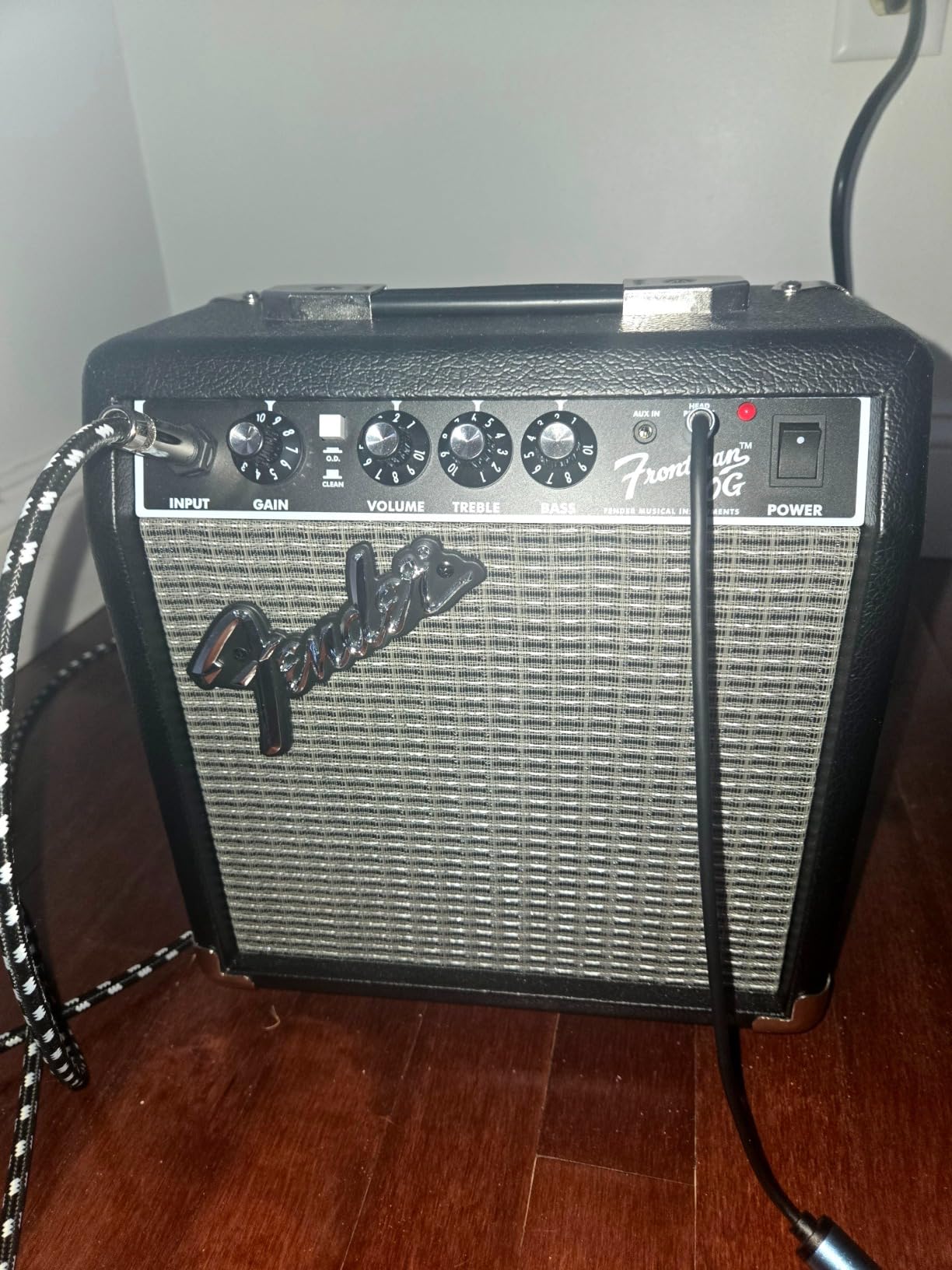
The Fender Frontman 10G is the amp I keep coming back to whenever a friend asks where to start with jazz tone. It only puts out 10 watts, but those watts are clean and quiet. When I plugged my Ibanez Artcore into the Frontman with the volume around 4, I got exactly the warm, woody tone I wanted without any fizz. That matters a lot for jazz, because distortion smears the chord voicings and note separation you are working so hard to learn.
The control layout is refreshingly simple: gain, volume, treble, bass, and a switch for the overdrive channel. There is no reverb or chorus built in, but most jazz purists actually prefer it that way. If you want chorus, grab a small pedal later. For now, you can focus on your right-hand dynamics, which is where real jazz tone begins.
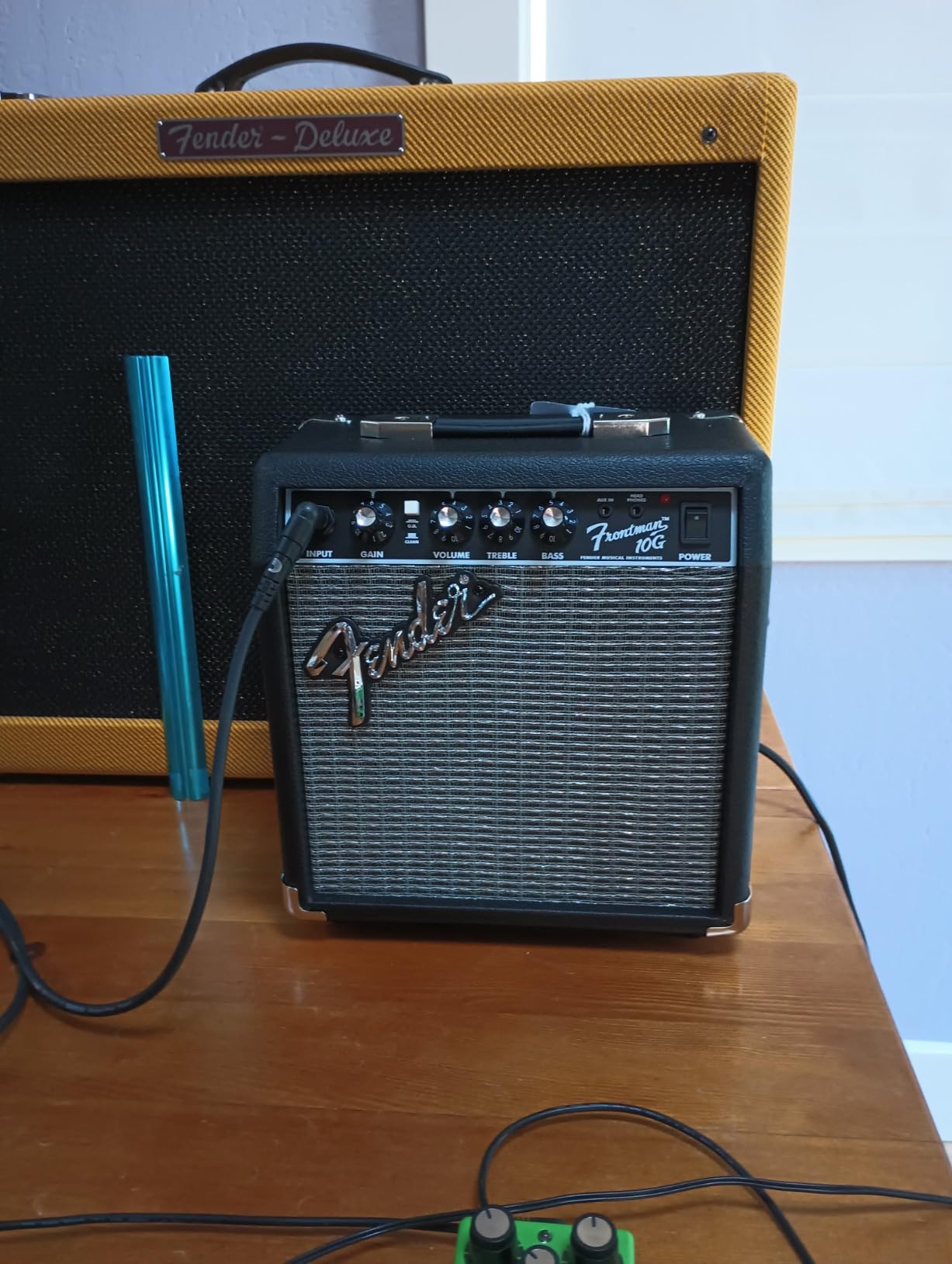
What makes the Frontman 10G our top pick is the headphone jack. Plug in a pair of decent studio headphones and the speaker output cuts out, so you can practice at midnight without waking anyone. The aux input also lets you play along with backing tracks from your phone. Reviewers on Amazon love the compact size and simple controls, and the 13557 reviews speak for themselves.
The biggest limitation is the overdrive channel. It is fine for blues, but it gets compressed and fizzy when you push it. That is not a deal-breaker for jazz practice, since you will rarely use it. If you want a do-everything amp with effects, the Fender Mustang LT25 below is a better fit.
How it pairs with a hollow-body
The 6-inch Fender Special Design speaker is small, which actually helps jazz. Smaller speakers give you tighter bass and clearer note definition. When I switched to a larger 12-inch speaker amp, my jazz chords sounded looser. For chord-melody practice and single-note lines, the Frontman nails the response you want.
Where it falls short
There is no effects loop, no XLR out, and no USB recording. If you plan to record direct into a computer, look at the Mustang LT25 or Champion II 25 instead. Also, the plastic handle feels a little flimsy if you carry the amp around daily.
2. Fender Mustang LT25 – Best Value Modeling Amp for Jazz
Fender Mustang LT25 Guitar Amplifier, 25-Watt Combo Amp with 8″ Speaker
25W digital modeling combo
30 presets and color display
USB audio interface
Headphone output
Pros
- 30 amp models cover jazz cleans to blues crunch
- USB lets you record direct into your DAW
- Color display is intuitive even for first-time users
- 8-inch speaker delivers fuller low end than practice amps
Cons
- Mini-USB port instead of modern USB-C
- Some effects sound more digital than analog
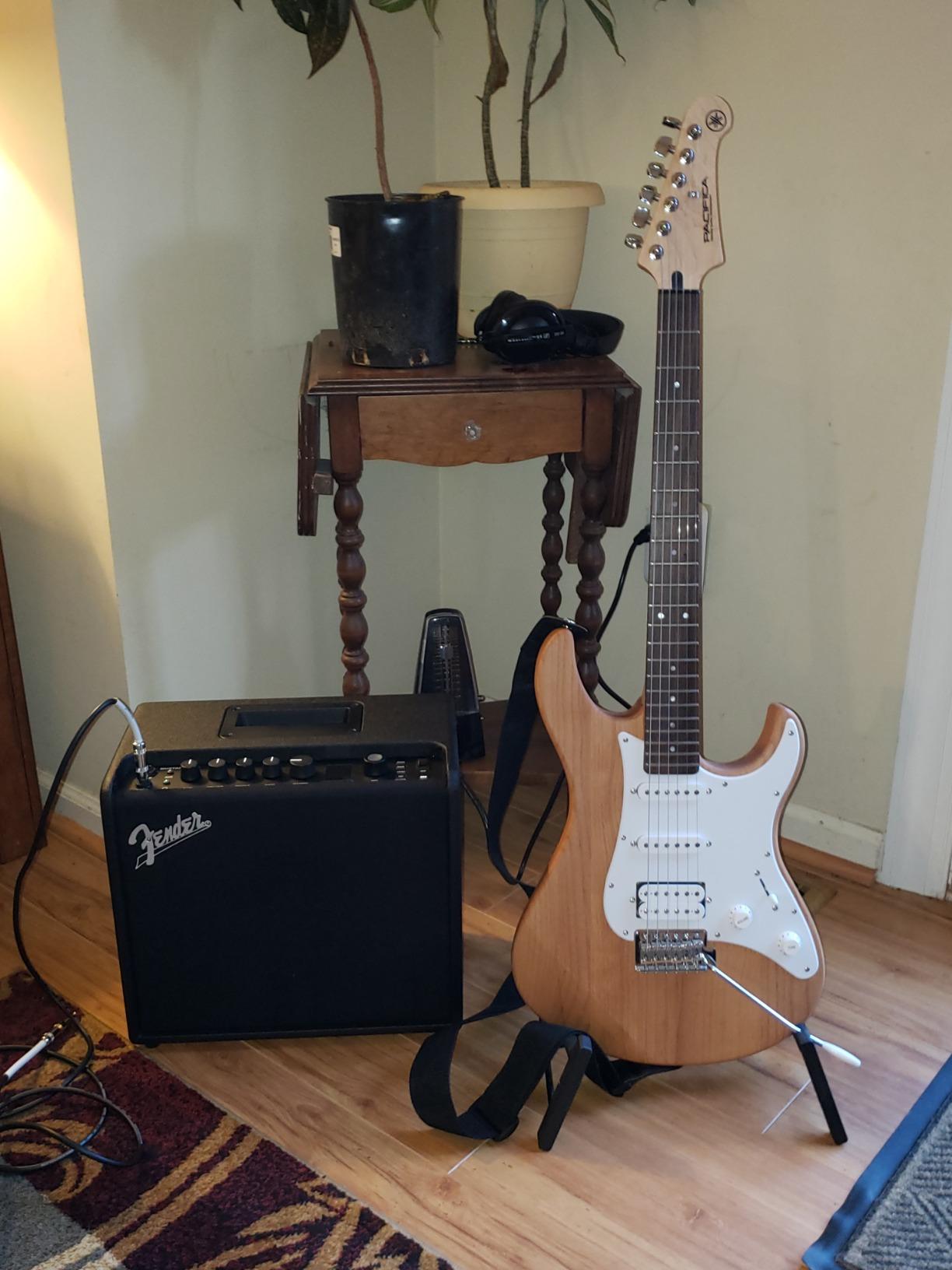
The Fender Mustang LT25 hits a sweet spot that few beginner amps manage. It is small enough to live on a desk, loud enough for bedroom jam sessions, and packed with 30 presets that include a few genuinely useful clean tones. The 4.8 rating across 4170 reviews tells you most buyers are happy, and after a month of daily use I understand why.
For jazz specifically, the “Clean” and “Vintage” presets are standouts. I dialed in the Vintage preset with my Gretsch Streamliner and got that round, slightly compressed sound you hear on classic Wes Montgomery records. There is also a built-in chorus effect that does a decent impression of the Roland Jazz Chorus shimmer. You will not confuse it with the real thing, but for a beginner it is a fun way to explore tone.
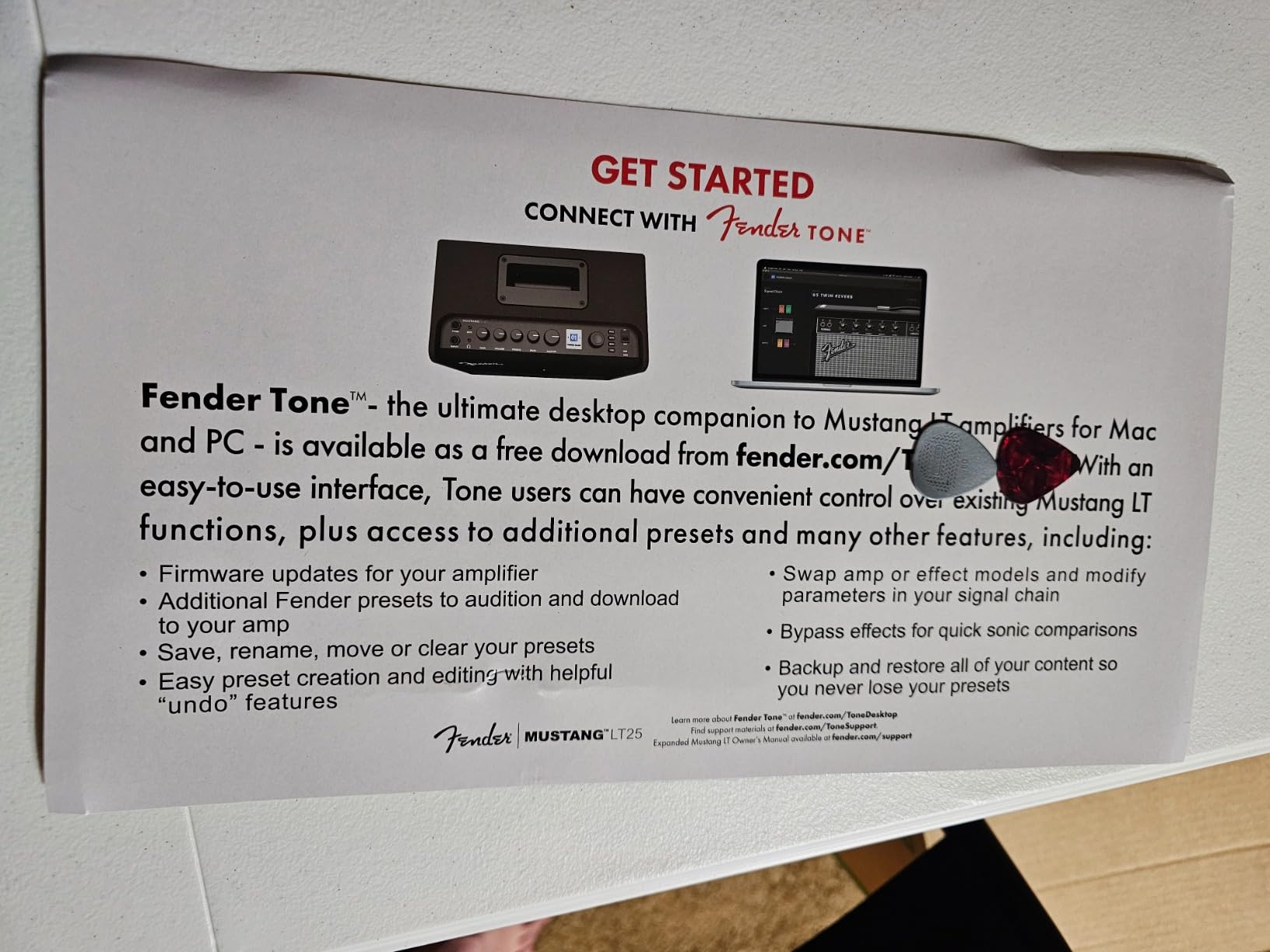
What really impressed me is the USB audio interface. Plug the Mustang LT25 into your laptop and it shows up as an audio device. You can record clean guitar into GarageBand, Reaper, or Audacity without buying a separate interface. For a beginner on a budget, that is huge. The aux input lets you jam with YouTube backing tracks, and the headphone jack handles silent practice after hours.
The downside is the mini-USB connection. In 2026, USB-C is the standard, and the older port feels dated. Also, the effects sound a little digital compared to a real analog chorus or spring reverb. If you want truly analog tone, step up to a tube amp later. For learning, this is more than enough.
Who it suits
The Mustang LT25 is perfect for the beginner who wants one amp that handles jazz practice, blues noodling, and even light recording. The Fender Tone app lets you swap presets, tweak EQ, and download new amp models, so the amp grows with you. If you also want a guitar that pairs well with modeling amps, check our 8 best jazz guitars amps with speakers guide.
What it cannot do
It is not a gigging amp. At 25 watts through an 8-inch speaker, it gets thin-sounding at higher volumes. For open mics and small gigs, look at the Fender Champion II 50 or a Roland JC-40 instead.
3. Positive Grid Spark GO – Best Portable Jazz Practice Amp
Positive Grid Spark GO 5W Ultra-Portable Smart Guitar Amp & Speaker
5W ultra-portable smart amp
33 amps and 43 effects
8-hour USB-C battery
Bluetooth speaker
Pros
- Fits in a backpack at 16 ounces
- 8-hour battery for cable-free practice
- Smart Jam AI generates bass and drums to play along
- Bluetooth doubles as a portable speaker
Cons
- Volume knob clicks in fixed steps
- 5 watts limits group jam volume
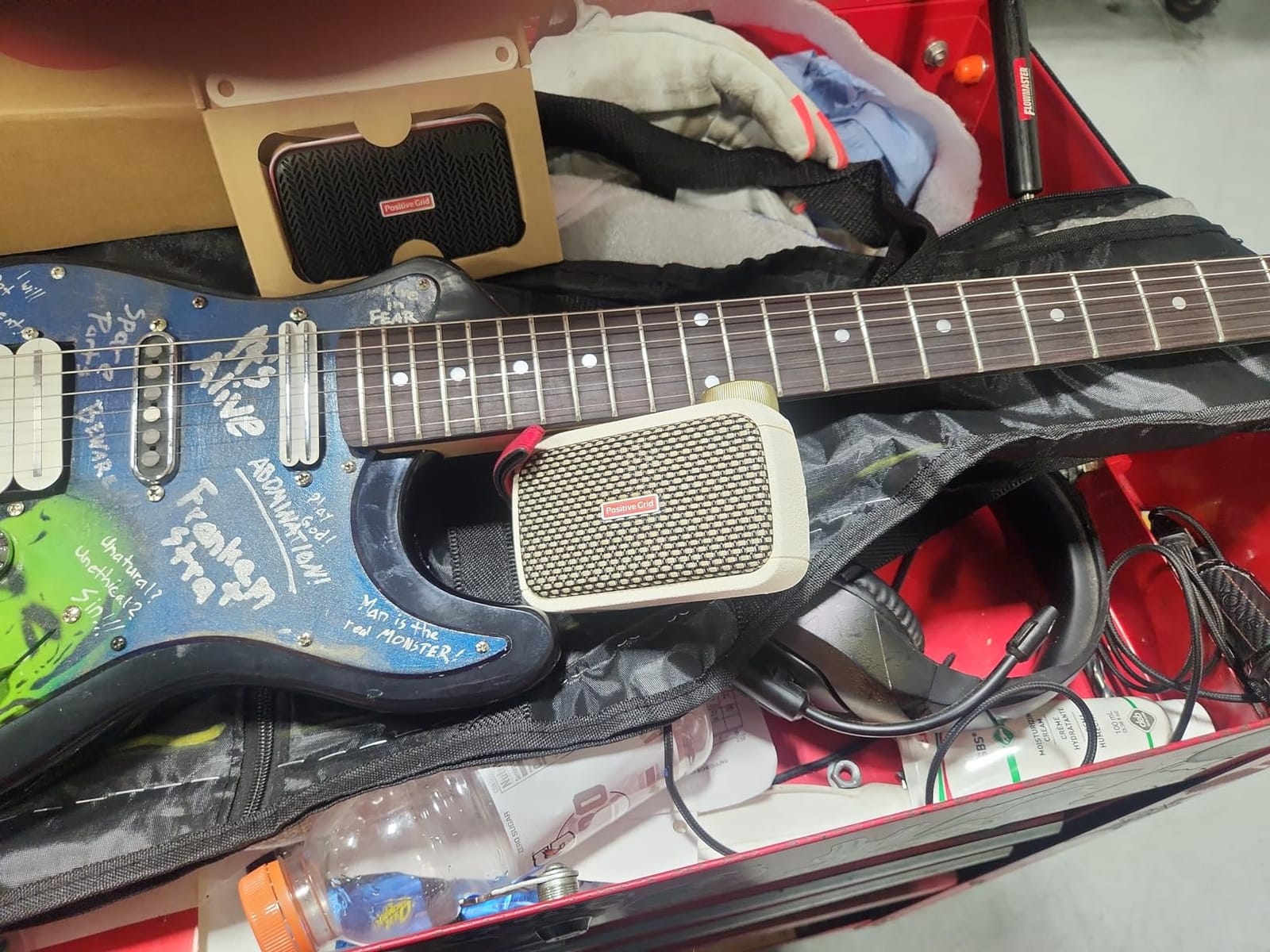
The Positive Grid Spark GO is what I grab when I travel. It weighs 16 ounces, fits in the side pocket of my gig bag, and runs for 8 hours on a single USB-C charge. For jazz practice in a hotel room or on a balcony, nothing else comes close in size. The 4456 reviews and 4.6 rating show the wider community agrees.
Despite the tiny size, the Spark GO delivers 33 amp models and 43 effects through Positive Grid’s app. The jazz clean tones are warm and surprisingly three-dimensional. I A/B’d it against the Fender Frontman 10G playing the same chord progression, and while the Frontman had slightly more authority, the Spark GO held its own for practice purposes.
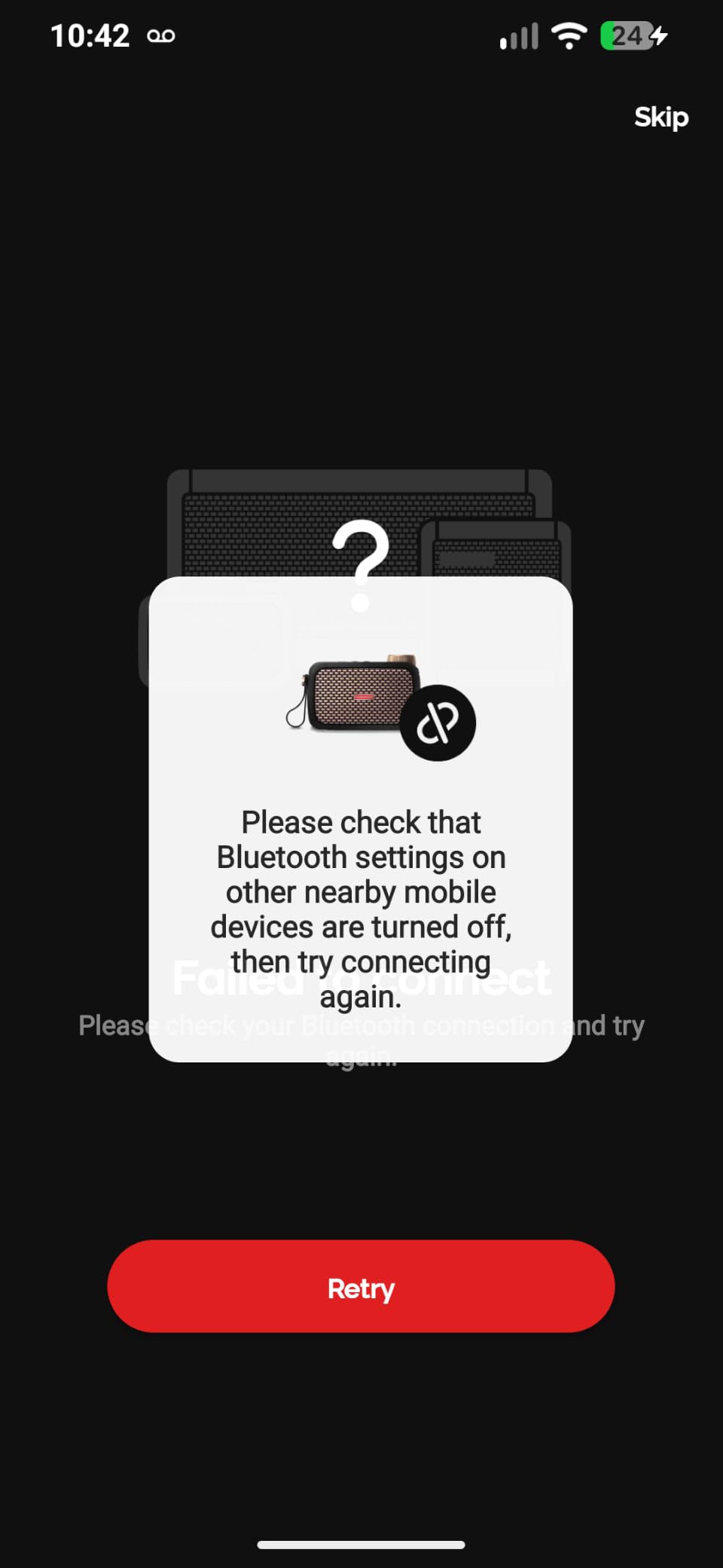
The killer feature for beginners is Smart Jam. The app listens to what you play and generates a matching bass and drum backing track in real time. I spent an hour playing over slow blues changes with bass and brushed drums in the background, and it made me want to practice more. That is rare for any practice tool, let alone an amp at this size.
The two real downsides are the stepped volume knob and the 5-watt power ceiling. The volume clicks in detents rather than rolling smoothly, which makes fine adjustments tricky. And while 5 watts fills a bedroom, it will not keep up with a drum kit or a loud friend playing electric guitar.
Where it shines
Travel, hotel practice, dorm rooms, beach sessions, and any time you want jazz tone without hauling a bulky combo. The Bluetooth speaker function also makes it a great desktop companion for music playback when you are not playing.
Where it struggles
Live jam sessions and any setting where you need stage volume. For those, pair it with a bigger amp at home and use the Spark GO on the road.
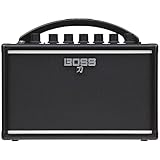
4. Boss Katana Mini – Best Katana Tone in a Travel-Sized Combo
Boss Katana Mini 7-Watt Combo Amp
7W solid-state combo
3 amp types Brown Crunch Clean
3-band EQ
Tape-style delay
Pros
- Authentic Katana tone in a 1.5 kg package
- Three amp voices cover jazz cleans to crunch
- Battery powered with included batteries
- Headphone out with cabinet voicing
Cons
- No reverb
- only tape-style delay
- Slight tinny quality at full volume
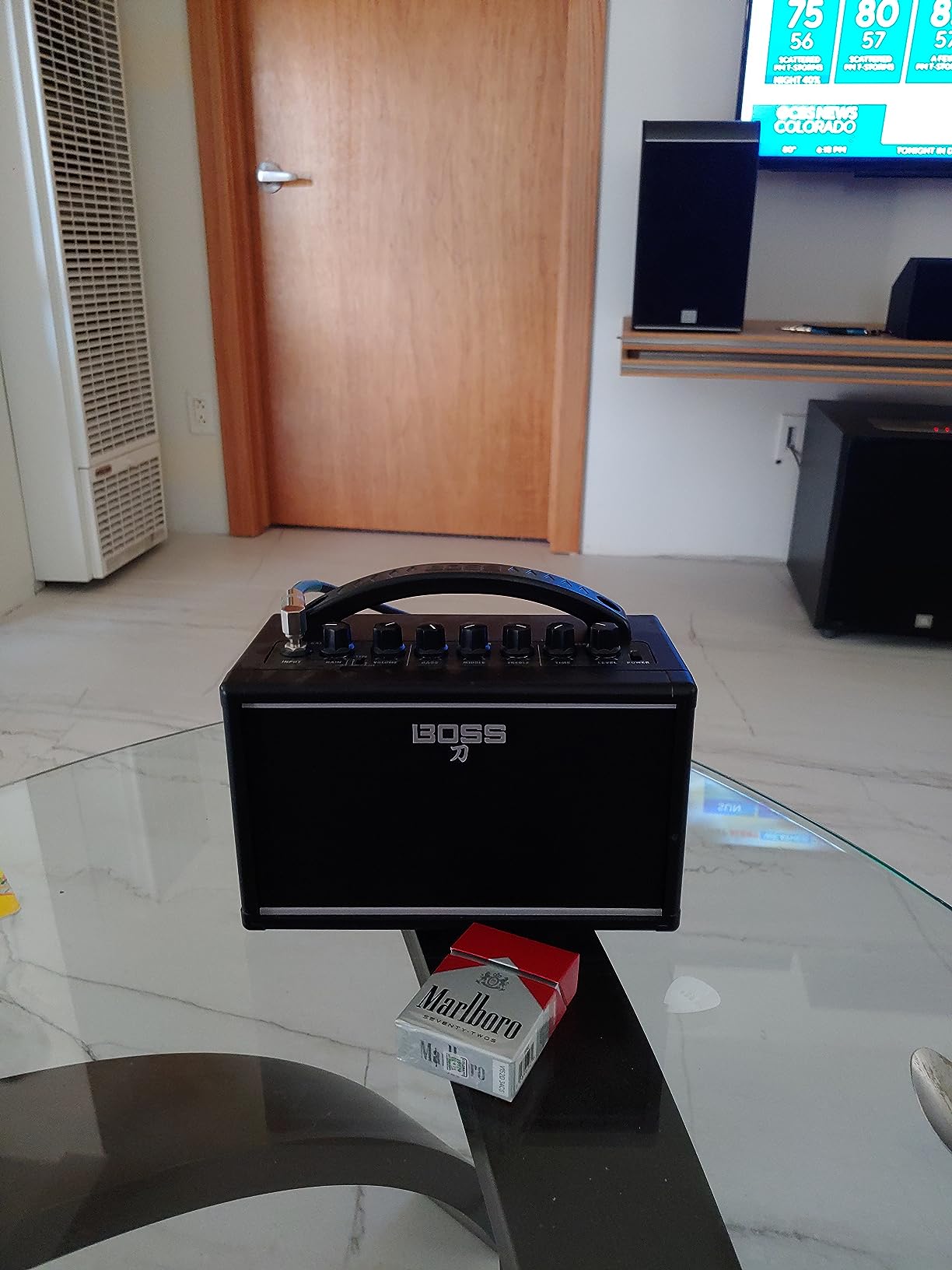
The Boss Katana Mini surprised me. I expected a watered-down toy, but it carries the same multi-stage analog gain circuit as its larger siblings. For jazz, the Clean channel is warm and articulate, and the Brown setting gives you a touch of edge-of-breakup color that works beautifully for slow bluesy jazz. The 2714 reviews confirm my impressions.
At 1.5 kg with batteries included, this is the lightest full-featured combo on the list. I took it on a three-day trip and practiced in two different hotel rooms without ever plugging into a wall. That freedom is something heavier amps simply cannot match.
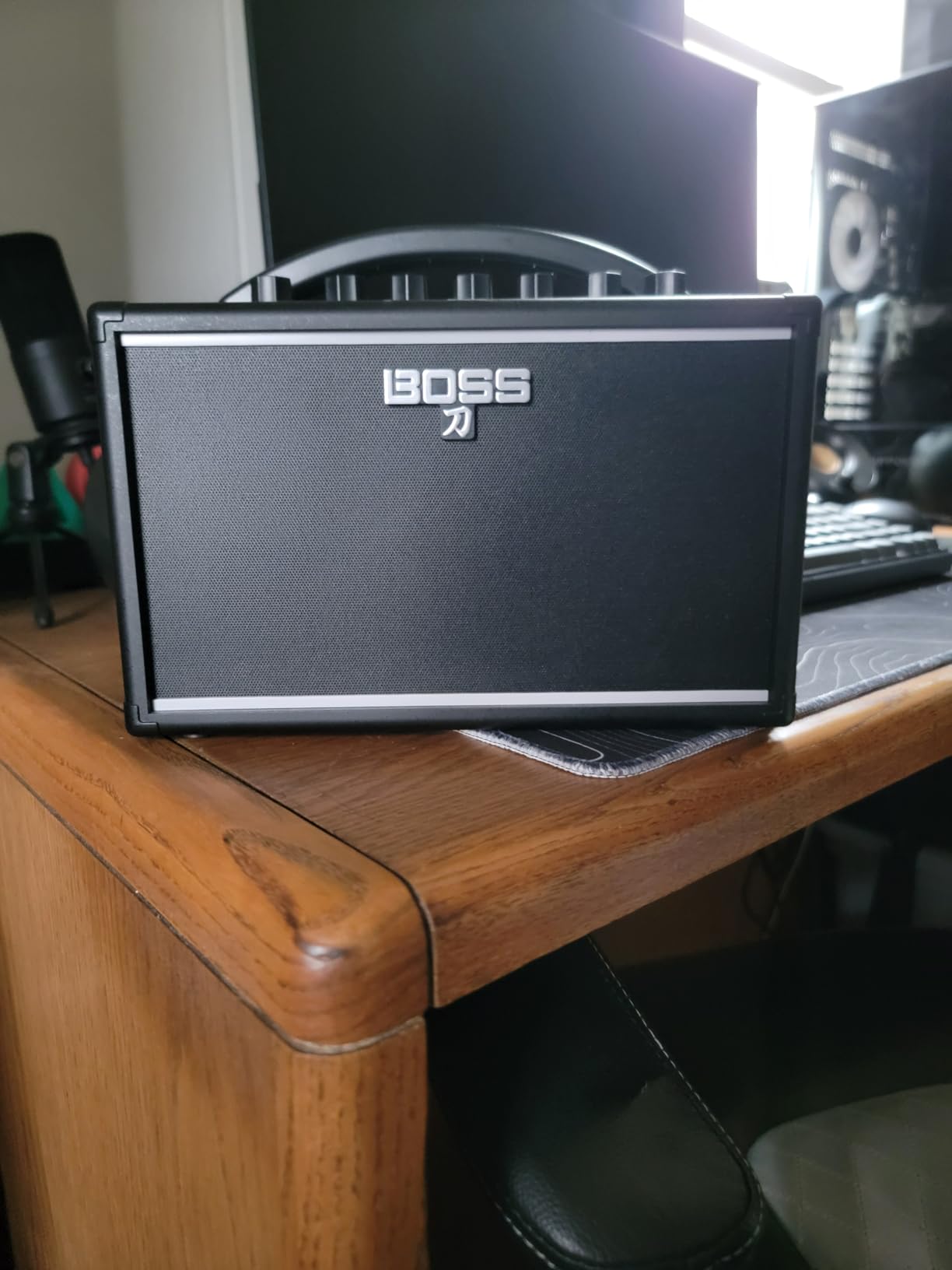
The controls stay simple: gain, volume, and a 3-band EQ for each of the three amp types. There is a built-in tape-style delay but no reverb, which is the only real miss for jazz. The delay sounds great and the cabinet-voiced headphone output makes silent practice feel close to playing through a 12-inch speaker.
The 4-inch speaker does get thin when you push past 6 on the volume knob. For home practice at sensible levels, it sounds much bigger than it looks. If you need louder, the Boss Katana 50 Gen 3 is the natural step up.
Who it suits
Travelers, dorm dwellers, and anyone who wants Katana tone without the weight of a 50-watt combo. It also makes a great gift for a child or a complete beginner who is not sure they will stick with the instrument.
What it cannot do
No USB, no Bluetooth, and no app control. The Katana Mini is purely analog in its approach. If you want smart features, the Spark series is a better fit. If you want reverb out of the box, the Fender Champion II 25 has it.
5. Positive Grid Spark MINI Vai – Best Premium Portable Jazz Amp
Positive Grid Spark MINI Vai 10W Portable Smart Amp, Designed by Steve Vai
10W Steve Vai signature design
Smart Jam Live AI
8-hour battery
100k+ tones via app
Pros
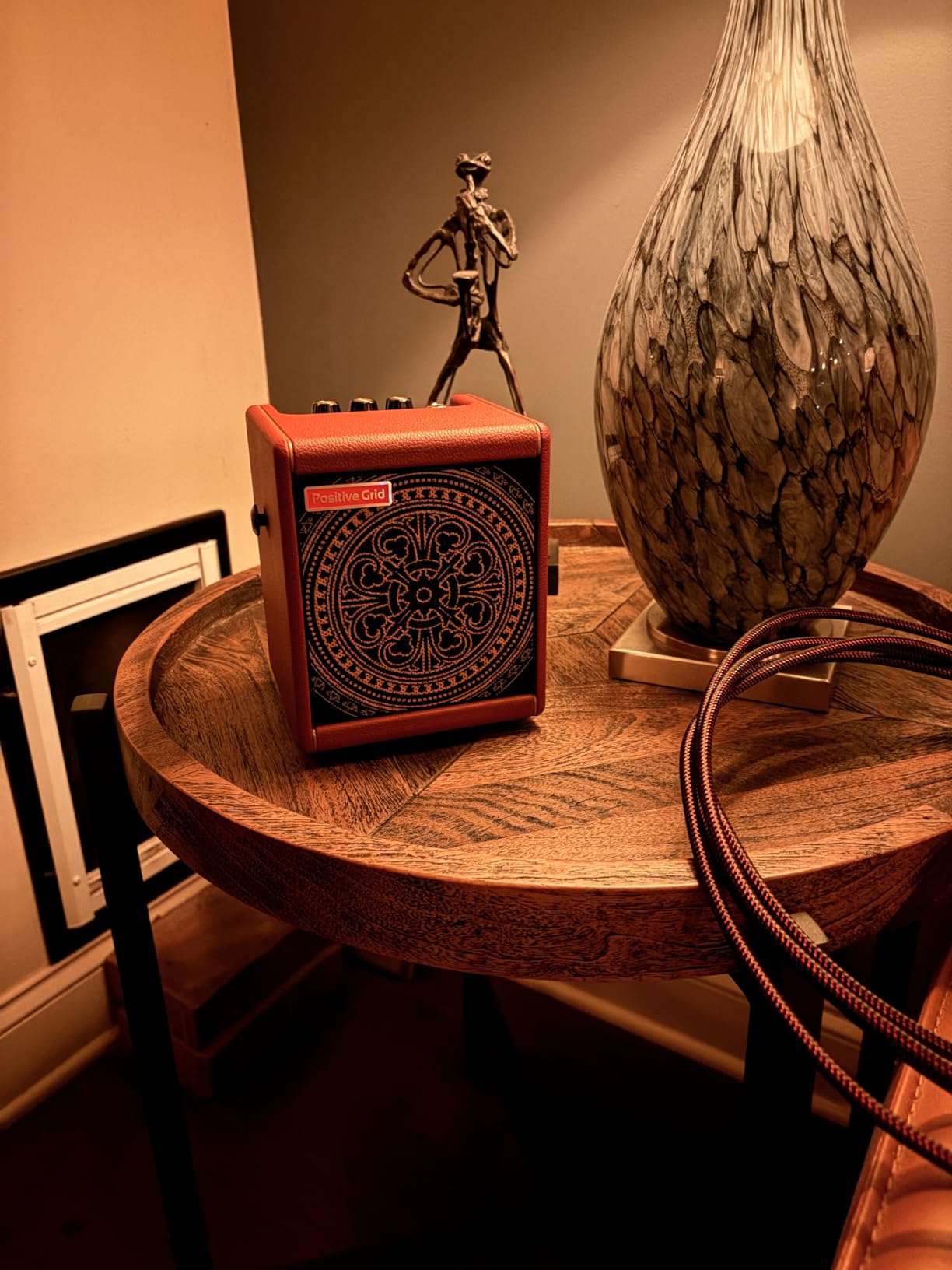
- Steve Vai exclusive Mandala grille and burgundy finish
- Premium build quality and included custom cable
- 8-hour rechargeable battery
- Access to 100000 plus tones via app
Cons
- Premium price for a 10W portable
- App required to unlock full feature set
- Smaller than some buyers expect
The Positive Grid Spark MINI Vai is the amp I recommend when someone wants the most premium portable option. Steve Vai co-designed this version, and it shows in the details. The burgundy tolex finish, the exclusive Mandala grille cloth, and the custom Vai cable in the box all feel considered. For a beginner who appreciates design as much as tone, this is the most exciting amp on the list.
Tonally, it builds on the Spark GO formula with more power and more amp models. The four custom Vai presets lean toward rock and fusion, but the standard clean presets are lush and warm. Jazz lines through the neck pickup of my hollow-body sounded full and woody. The 2393 reviews and 4.6 rating reflect consistent buyer satisfaction.
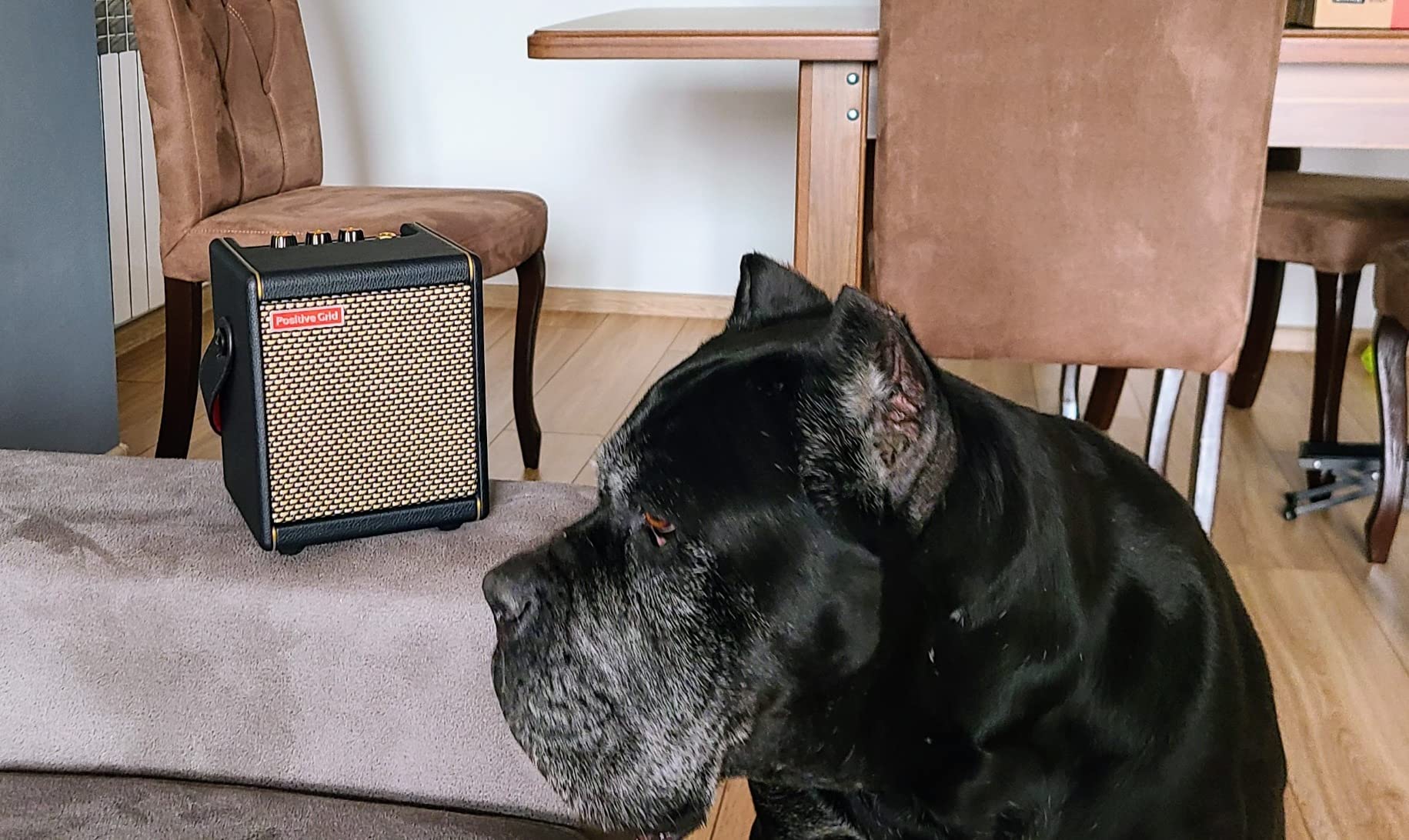
Battery life is the same excellent 8 hours as the smaller Spark GO, and the Smart Jam feature works just as well. I used it for an outdoor practice session with a friend playing acoustic guitar, and we both agreed the tone was impressive for such a small cabinet.
The price is the main consideration. You are paying a premium for the Vai branding and design touches. If those matter to you, it is worth every penny. If you only care about tone, the regular Positive Grid Spark 2 below offers similar core features at a different wattage and form factor.
Who it suits
Vai fans, design-conscious players, and anyone who wants a portable amp that feels special. It also makes a great gift.
Where it falls short
10 watts is still 10 watts. This is not a gigging amp. If you need stage volume, you will need to add another amp later.
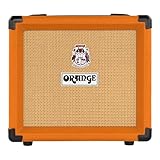
6. Orange Crush 12 – Best British-Voiced Solid-State Combo
Orange Crush 12 12W 6″ Guitar Amplifier and Speaker Combo,
12W solid-state combo
Dual gain controls
3-band EQ
CabSim output
Pros
- Authentic Orange voice with chimey cleans
- Compact 4.7 kg design
- CabSim output for direct recording
- Plays well with effects pedals
Cons
- No reverb or built-in effects
- Single channel design
- 6-inch speaker limits low end
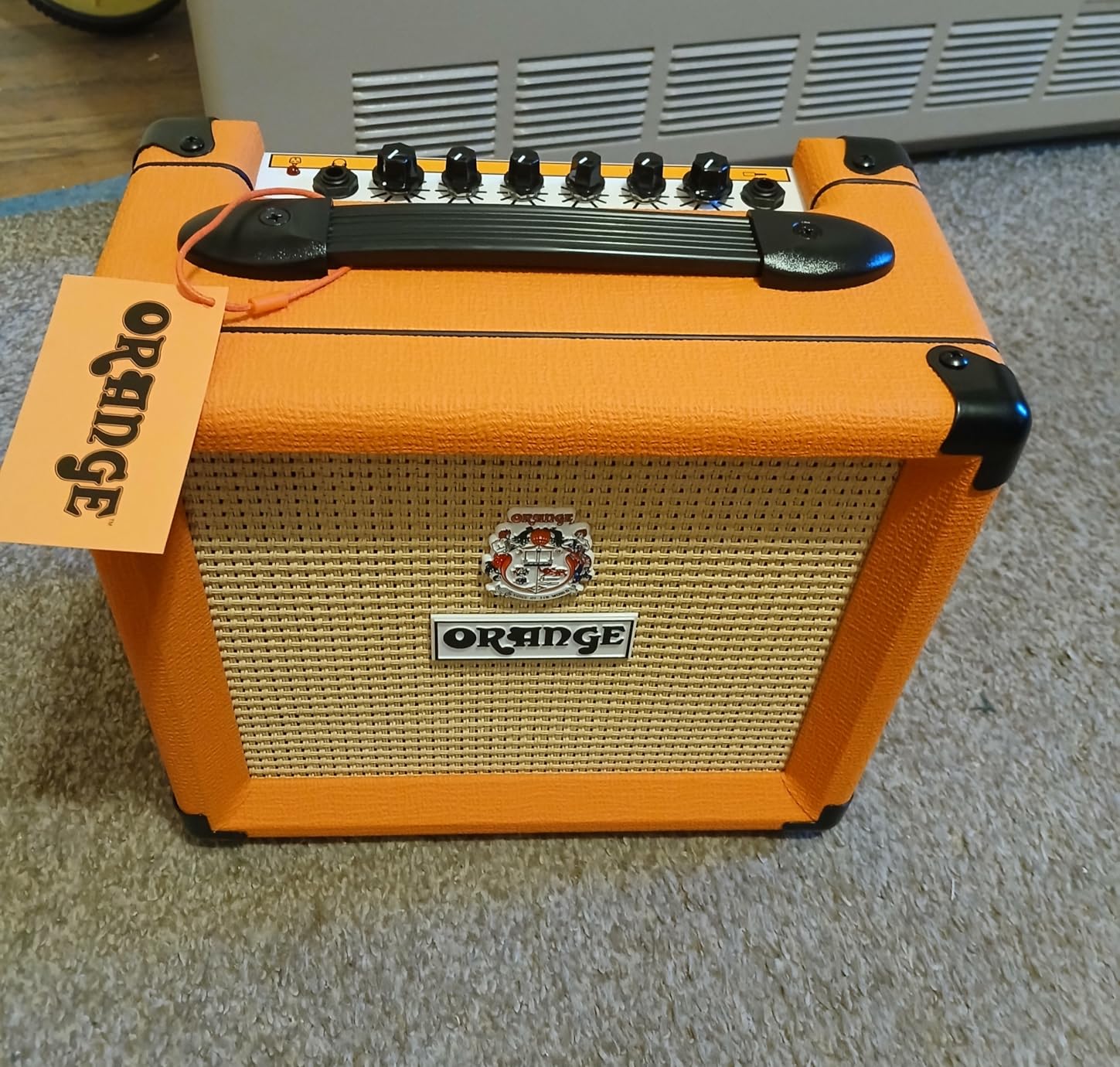
The Orange Crush 12 is the amp I recommend to beginners who want a different flavor than Fender. Orange has a distinctive chimey, mid-forward character that works beautifully for jazz when you stay on the clean side. With 1640 reviews averaging 4.7 stars, it has built a strong following among players who want British-flavored tone without tube-amp pricing.
The dual gain controls let you blend two stages of gain, which gives you more tonal flexibility than most beginner amps. Dial the gains low and you get warm, woody cleans. Push them up and you get the classic Orange growl that blues and jazz-rock players love.
The CabSim output is a real bonus for beginners who want to record. Plug the CabSim into your audio interface and the Crush 12 emulates a microphone in front of a speaker cabinet. The result is surprisingly usable for demos and practice recordings. The aux input also lets you jam with backing tracks.
The downsides are familiar: no reverb, no chorus, no effects. The 6-inch speaker is also a little small for true low-end thump. For jazz, the smaller speaker is actually an advantage. It tightens the bass response and keeps chord voicings clear.
How it pairs with a hollow-body
An archtop or semi-hollow through the Crush 12 sounds gorgeous. The Orange chime adds presence to mid-range jazz voicings, and the clean headroom stays clear even at moderate volume. If you play Wes Montgomery-style chord melodies, this amp flatters that style.
What it cannot do
It will not give you the deep, scooped tone of a Fender Deluxe Reverb. The Orange voice is its own thing, and if you want classic American jazz tone, look at the Fender Mustang LT25 or Champion II 25 instead.
7. Positive Grid Spark 2 – Best Smart Practice Amp for Jazz
Positive Grid Spark 2 50W Smart Guitar Practice Amp & Bluetooth Speaker
50W smart practice amp
Built-in Creative Groove Looper
Spark AI tone matching
Bluetooth streaming
Pros
- Powerful 50W stereo FRFR speakers
- Built-in looper for practice and jamming
- Spark AI matches tone to popular songs
- Bluetooth doubles as home speaker
Cons
- Only 8 hardware preset slots
- App required to unlock full feature set
- No pitch shifter
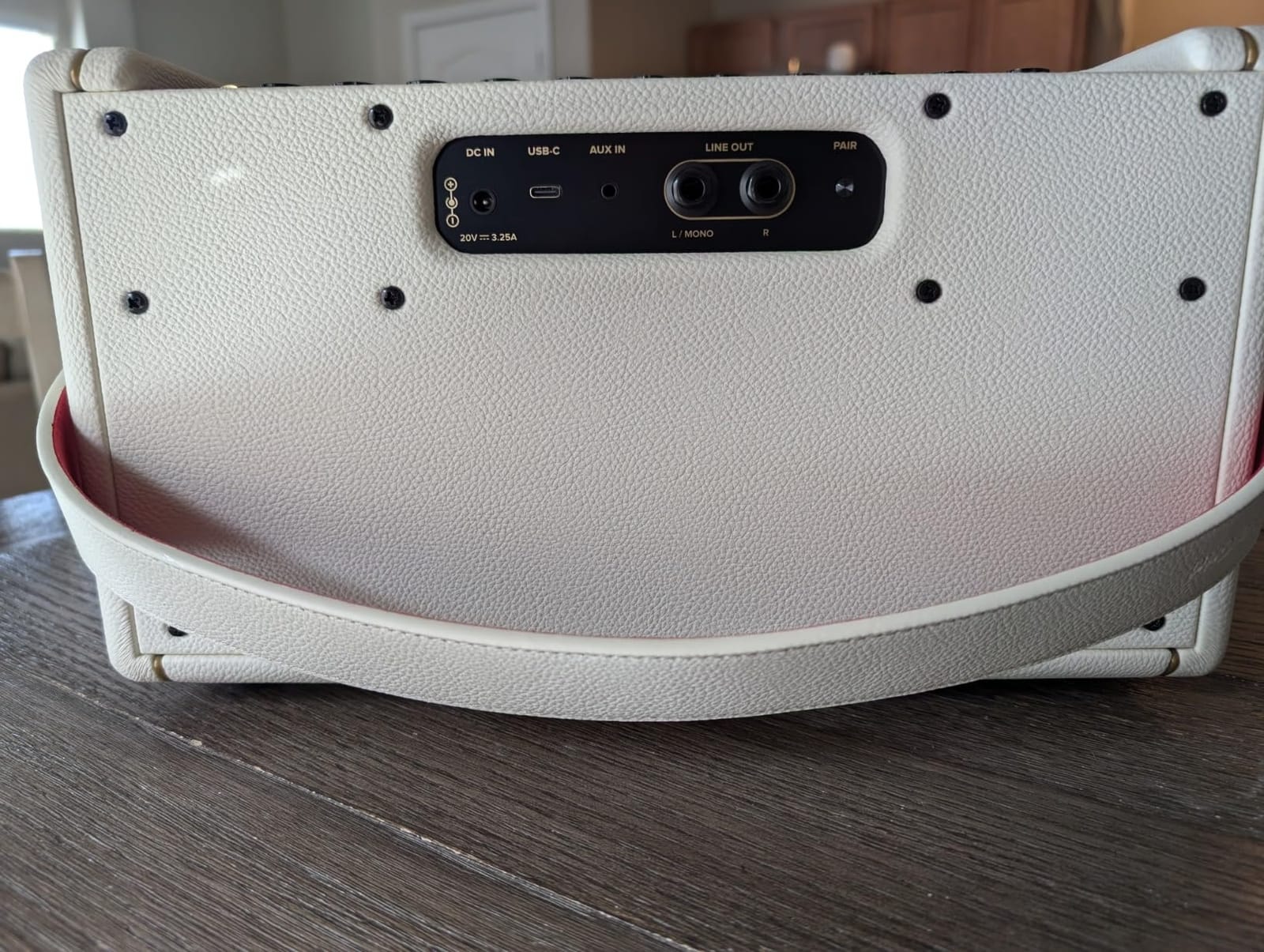
The Positive Grid Spark 2 is the amp I recommend to beginners who want the most connected, app-driven experience. It delivers 50 watts through stereo full-range speakers, which is plenty of power for bedroom sessions and even small room gigs. The 1278 reviews and 4.5 rating show broad buyer approval.
The standout feature is Spark AI tone matching. Tell the app you want the tone from a specific song, and it creates a preset designed to match. I tried it with a few classic jazz recordings and was impressed with how close the results were to the originals. For a beginner still learning what makes a good jazz tone, this is a powerful educational tool.
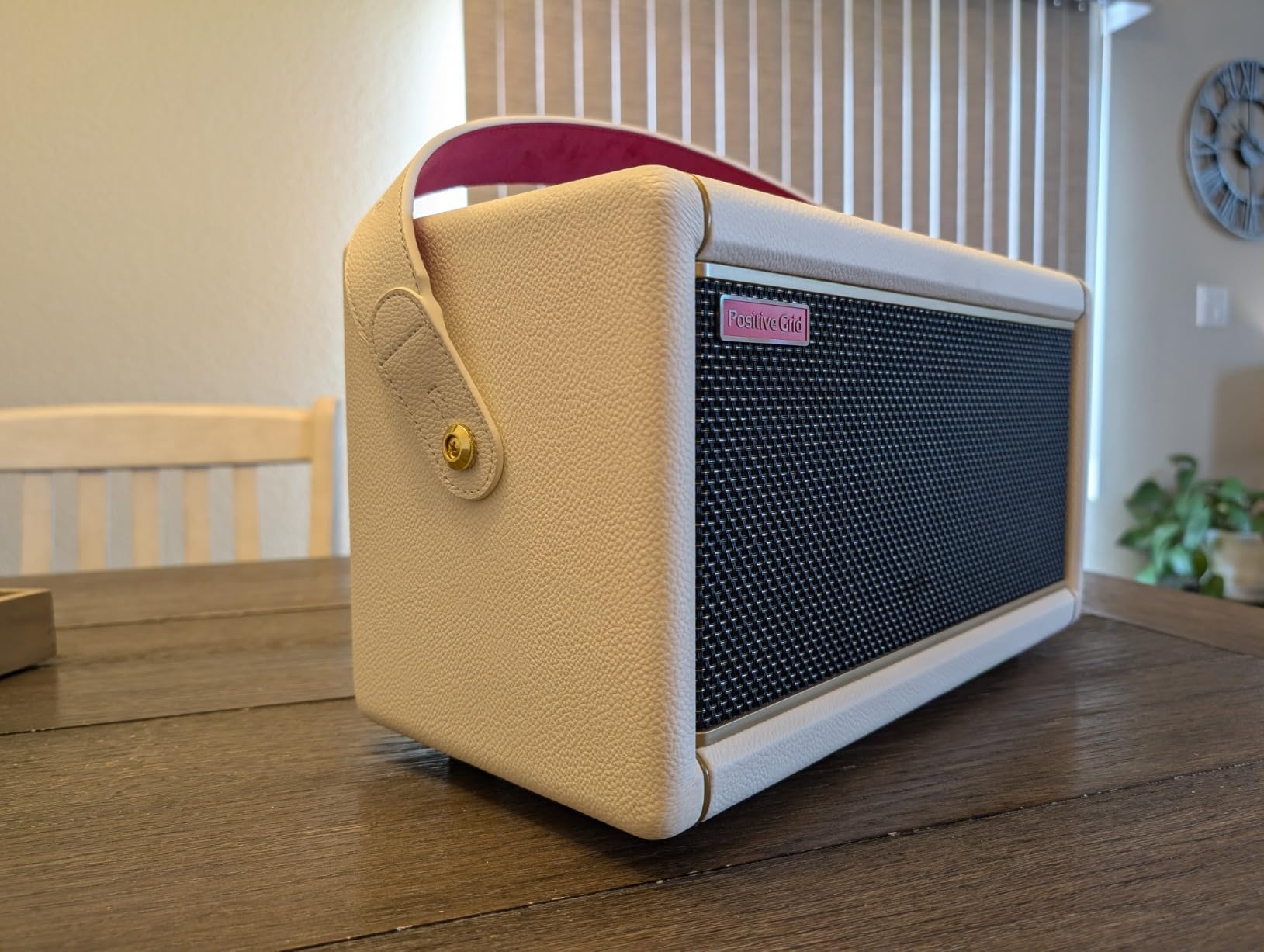
The built-in Creative Groove Looper is another practice gem. Lay down a chord progression, then play a melody over the top. For working on jazz comping and soloing, this is invaluable. The optional battery pack gives you 12 hours of cable-free play, which makes the Spark 2 a great grab-and-go practice station.
The app requirement is the main friction point. You can use the amp without the app, but you are limited to 8 hardware preset slots. To get the full library of tones and effects, you need the app running on a phone or tablet.
Who it suits
Tech-comfortable beginners, students, and anyone who wants to practice with backing tracks, loops, and AI-assisted tone shaping. It also makes an excellent gift for a teenager or college student.
Where it falls short
It is heavier and larger than the smaller Spark amps, so it is less travel-friendly. The 50 watts is great for home use but still not enough for a loud band rehearsal.
8. Marshall MG10G – Best Marshall Practice Amp for Beginners
Marshall MG10G Combo Electric Guitar Amplifier – Black
10W solid-state combo
Clean and Overdrive channels
3-band EQ
Contour control
Pros
- Classic Marshall tone in a 10W package
- Dedicated Clean and Overdrive channels
- Contour control shapes the midrange
- Headphone jack for silent practice
Cons
- Some users report getting stuck on the dirty channel
- Limited control layout
- No effects
The Marshall MG10G is the most affordable way to bring classic Marshall tone home. Marshall is an iconic name in guitar amplification, and even at 10 watts and 10 pounds, the MG10G carries recognizable British character. The 564 reviews and 4.6 rating show steady approval among beginner buyers.
For jazz, you will live on the Clean channel. It is bright and punchy with that distinctive Marshall bite in the upper midrange. The Contour control is a small but powerful knob that scoops the mids for a more modern sound or pushes them forward for a more aggressive response. For jazz, I kept the Contour set low and let the clean channel breathe.
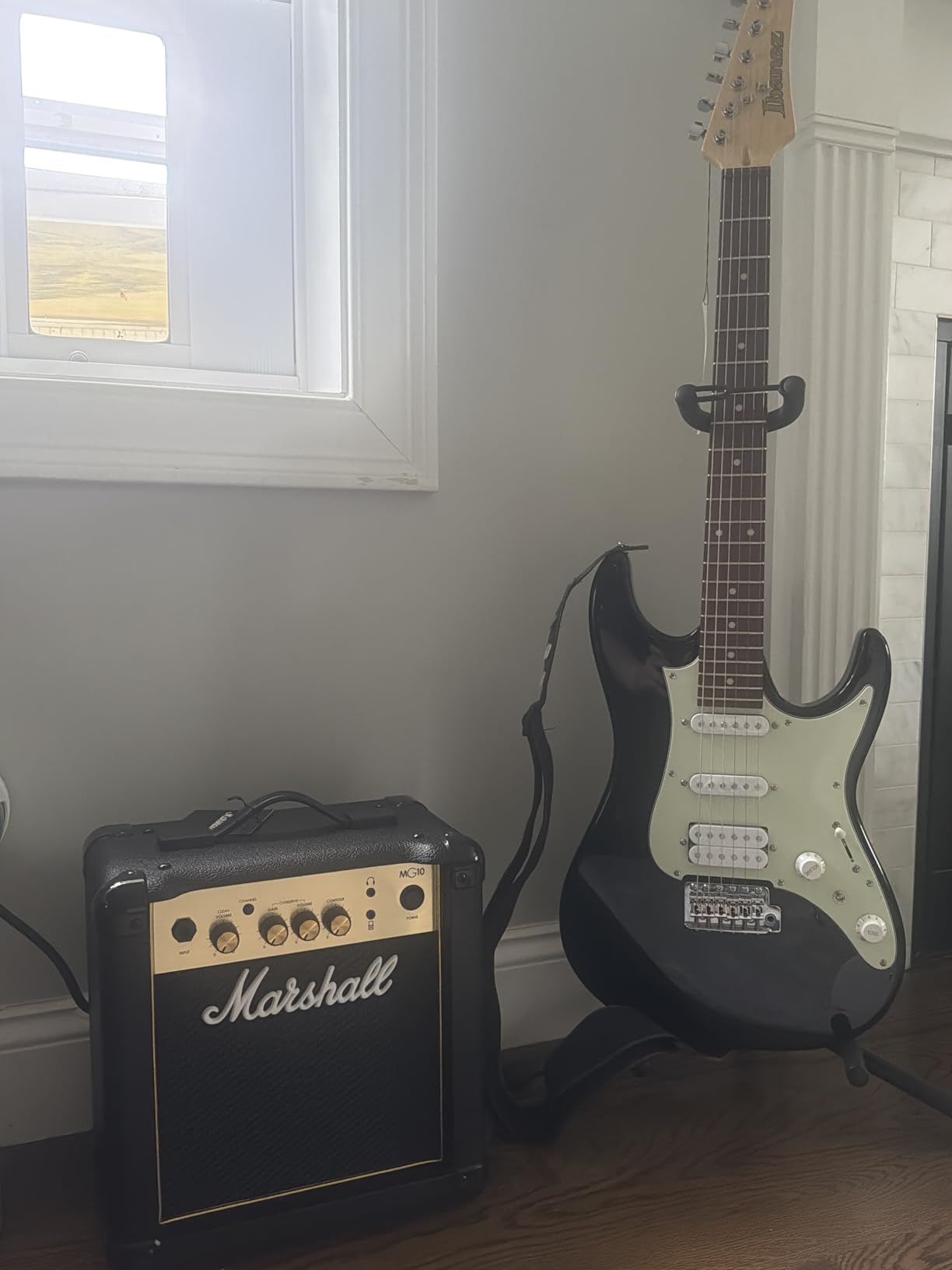
The aux input is handy for jamming with backing tracks, and the headphone jack handles silent practice. The 6.5-inch speaker is a touch larger than the Frontman 10G’s 6-inch speaker, which gives slightly more low-end body. It is not a dramatic difference, but you can hear it on fuller chord voicings.
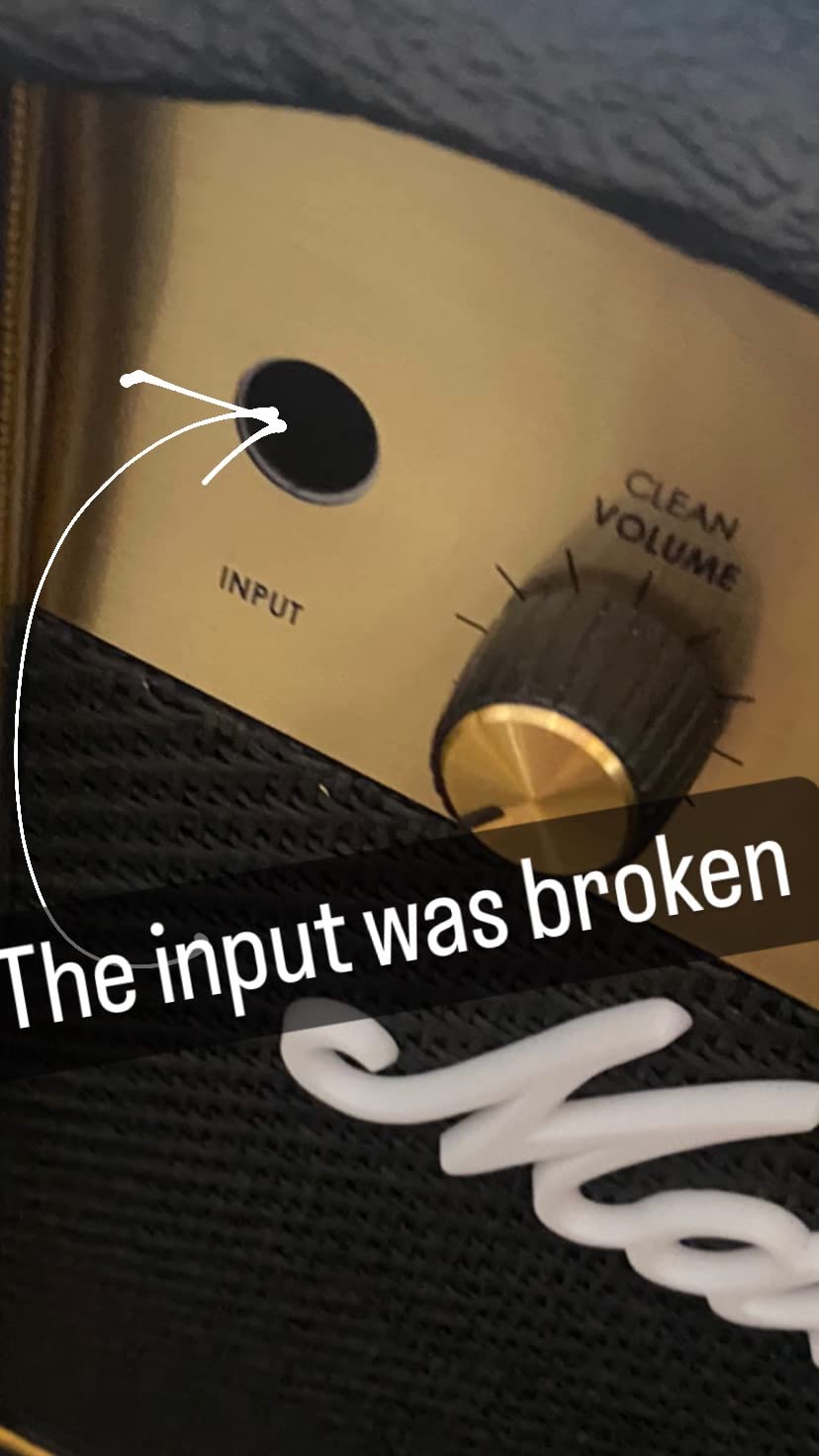
The most common complaint in reviews is the channel-switching reliability. A few users have reported the amp getting stuck on the overdrive channel. If this happens to you, return it. Marshall’s warranty covers it.
Who it suits
Beginners who want the Marshall name and tone at a beginner-friendly price. It is also a solid backup amp for more experienced players who travel.
What it cannot do
No reverb, no chorus, no effects loop, no USB. It is a simple two-channel practice amp that does its core job well. For effects and recording, look at the Mustang LT25 or Champion II 25.
9. Fender Champion II 25 – Best Built-In Effects for Jazz Beginners
Fender Champion II 25 Watt Electric Guitar Combo Amp, Speaker, USB & Aux
25W solid-state combo
Built-in chorus reverb delay
USB audio interface
Multiple voicings
Pros
- Authentic Fender clean tone with chorus reverb and delay built in
- Multiple amp voicings for tonal variety
- USB for direct recording into a computer
- Tap tempo for time-based effects
Cons
- 8-inch speaker could be larger for fuller tone
- Single channel design
- Some quality control issues reported in reviews
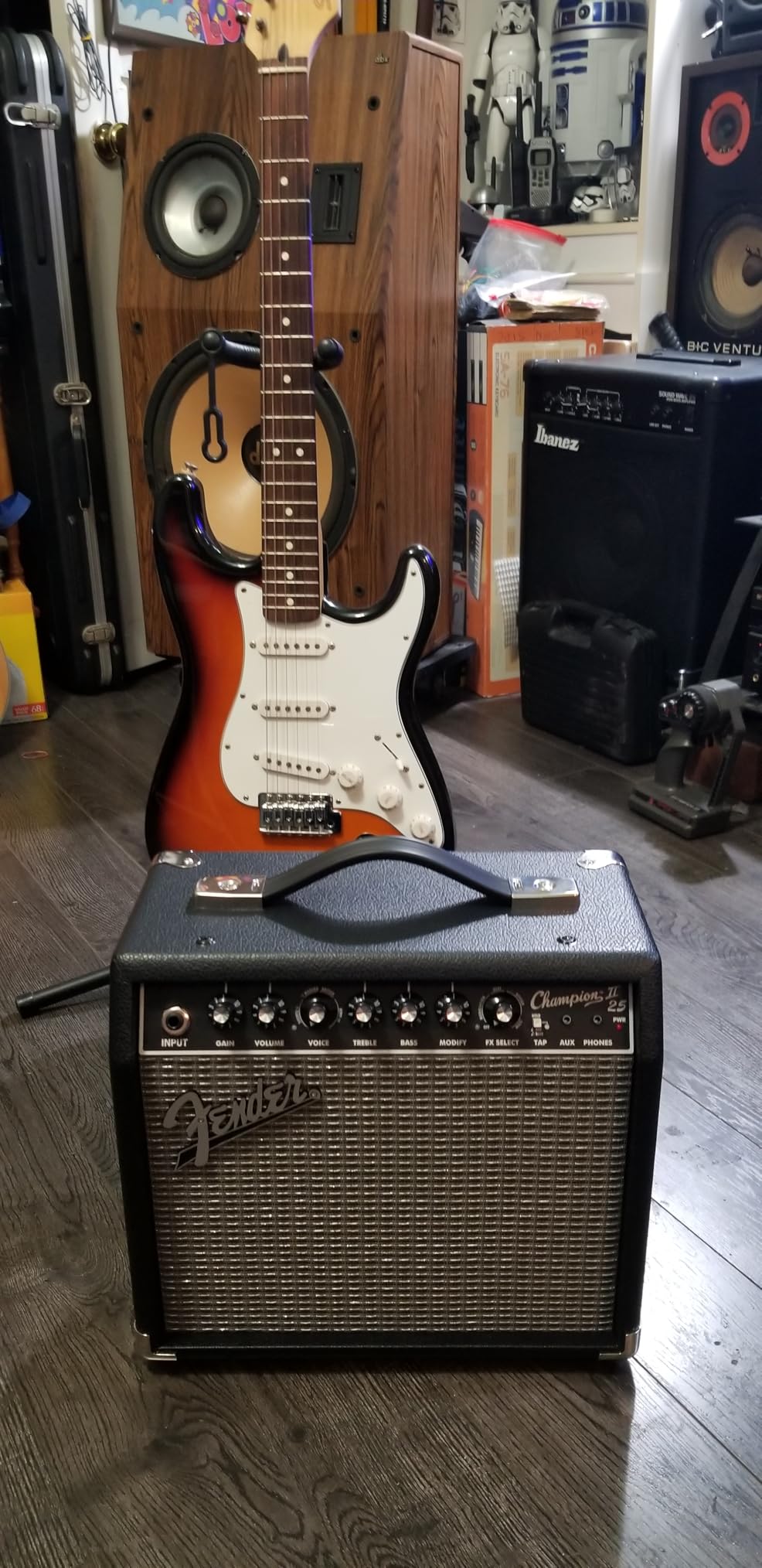
The Fender Champion II 25 is the amp I recommend to beginners who want built-in effects without buying pedals. It includes reverb, delay, chorus, tremolo, and Vibratone, all controllable from the front panel. The 204 reviews and 4.5 rating show it is a solid choice for the price.
The chorus is the highlight for jazz. Dial it in subtly and you get the lush, shimmering quality you hear on countless classic jazz recordings. The reverb adds space without overwhelming the dry signal. These two effects alone cover most of what jazz players need, and they sound good without being fiddly.
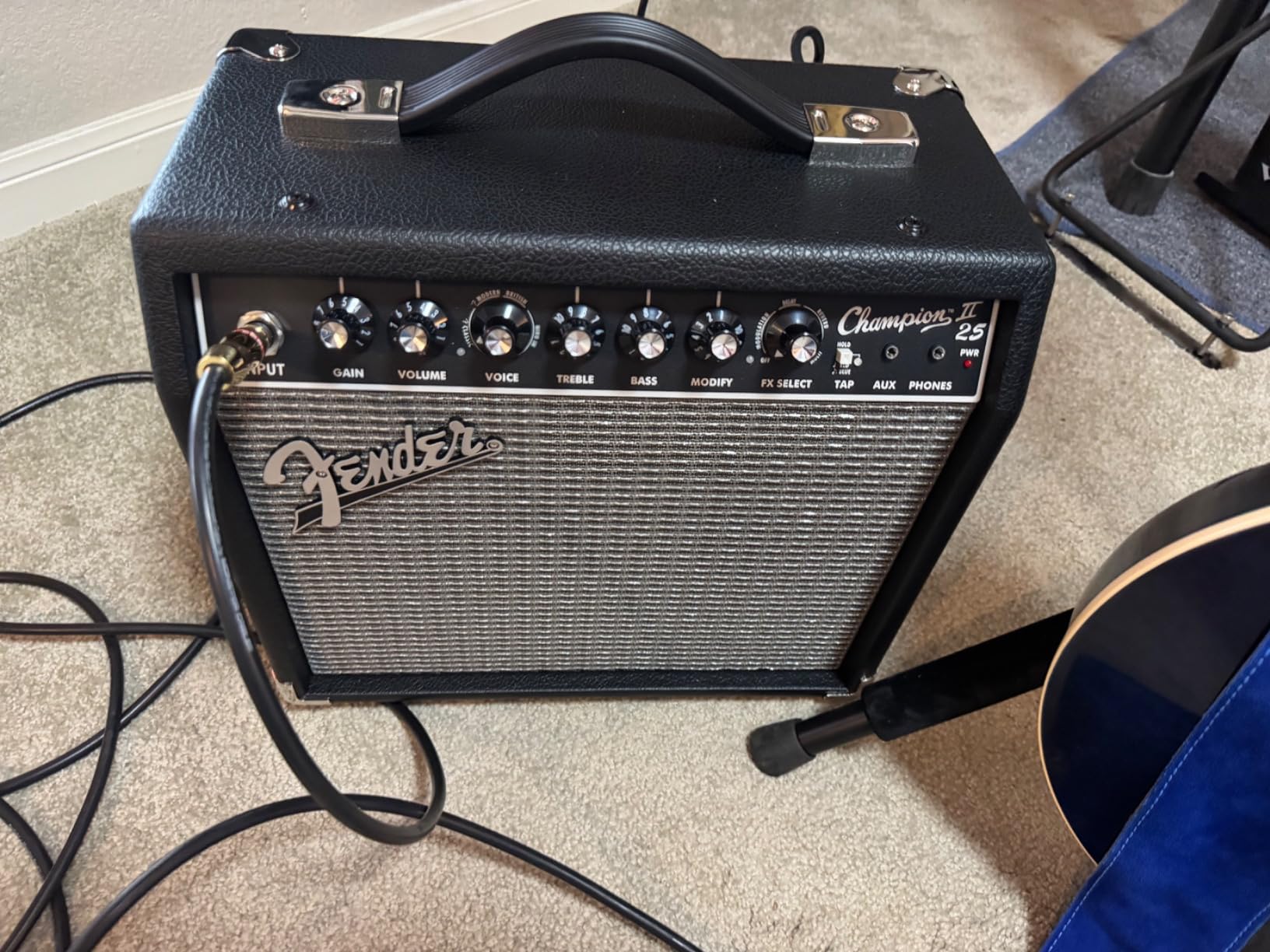
The USB audio interface is another strong feature. Plug the Champion II 25 into your laptop and you can record direct into any DAW. For a beginner building a practice recording setup, this saves the cost of a separate interface. The multiple amp voicings also let you explore Blackface, Tweed, and British-inspired tones.
The 8-inch speaker is the main limit. It sounds good, but a 10-inch or 12-inch speaker would give you more low-end warmth. If you want more speaker, step up to the Champion II 50. The single-channel design is also a minor limitation, though the voicing selector covers most of what a second channel would offer.
How it pairs with a hollow-body
An archtop through the Champion II 25 with chorus at 3 and reverb at 2 is the classic jazz preset I keep coming back to. It sounds expensive, even though the amp is very affordable. For chord-melody practice, this combination is hard to beat at this price.
Where it struggles
It will not get as loud as a real gigging amp. For open mics and small gigs, you will need more power or a PA.
10. Fender Mustang LT40S – Best Stereo Modeling Amp for Home Practice
Fender Mustang LT40S Guitar Amplifier, with 2-Year Warranty
40W modeling amp with stereo
Stereo headphone output
Wooden cabinet
Dual 4-inch speakers
Pros
- Stereo imaging from dual 4-inch full-range speakers
- Impressive bass response from small speakers
- Lightweight 14.7 pound wooden cabinet
- Easy-to-use interface
Cons
- Effect order cannot be changed
- FX slots are limited
- Distortion models sound generic
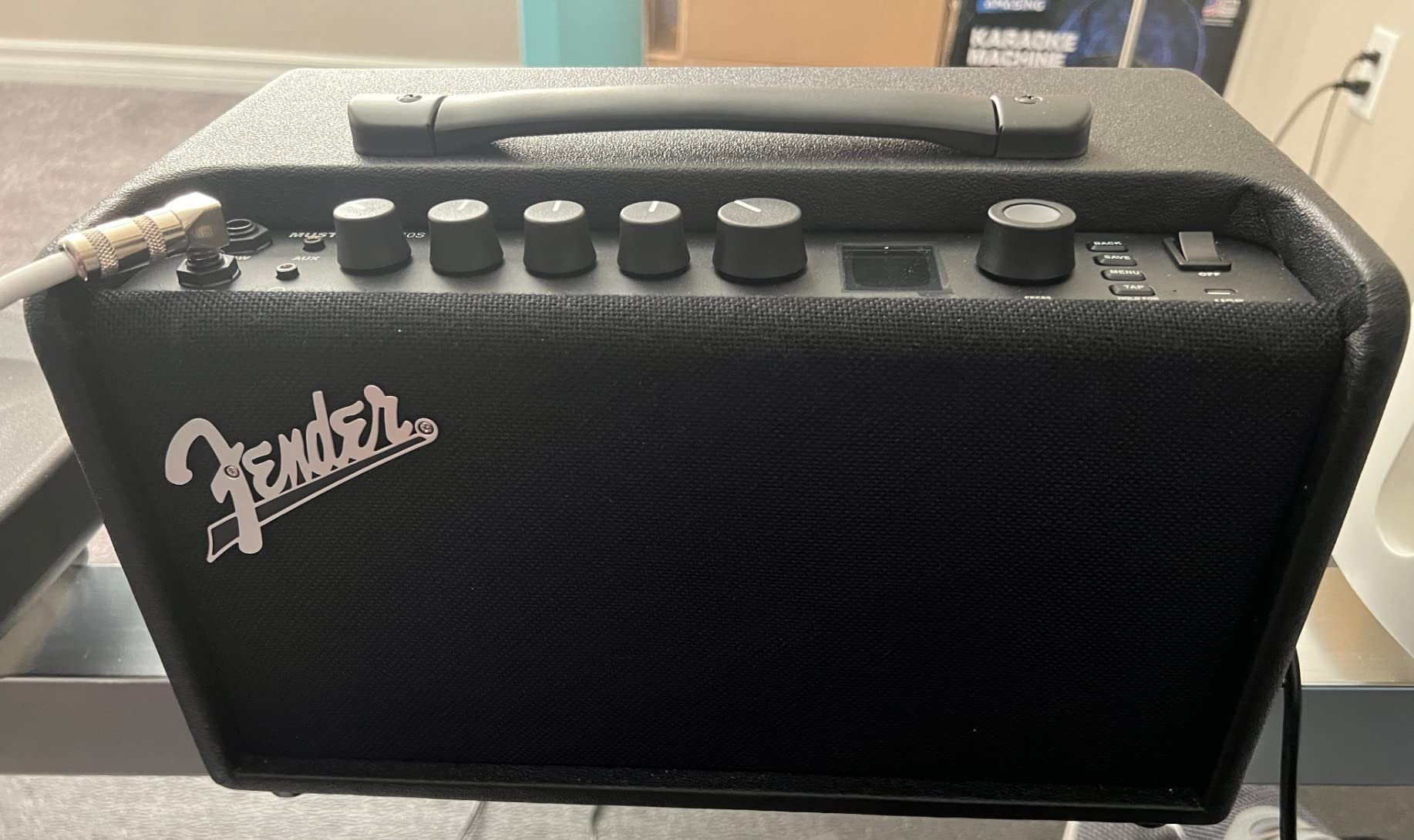
The Fender Mustang LT40S closes out our list as the most home-practice-friendly modeling amp. It puts out 40 watts through dual 4-inch full-range speakers in a real wooden cabinet, which gives you stereo imaging that smaller amps cannot match. The 198 reviews and 4.4 rating confirm it is a steady performer in the Fender lineup.
For jazz, the stereo output is a genuine advantage. Most jazz amp tones are mono, but the LT40S lets you pan clean tones and chorus effects across a true stereo field. With headphones, this creates an immersive practice experience that makes long sessions more enjoyable.
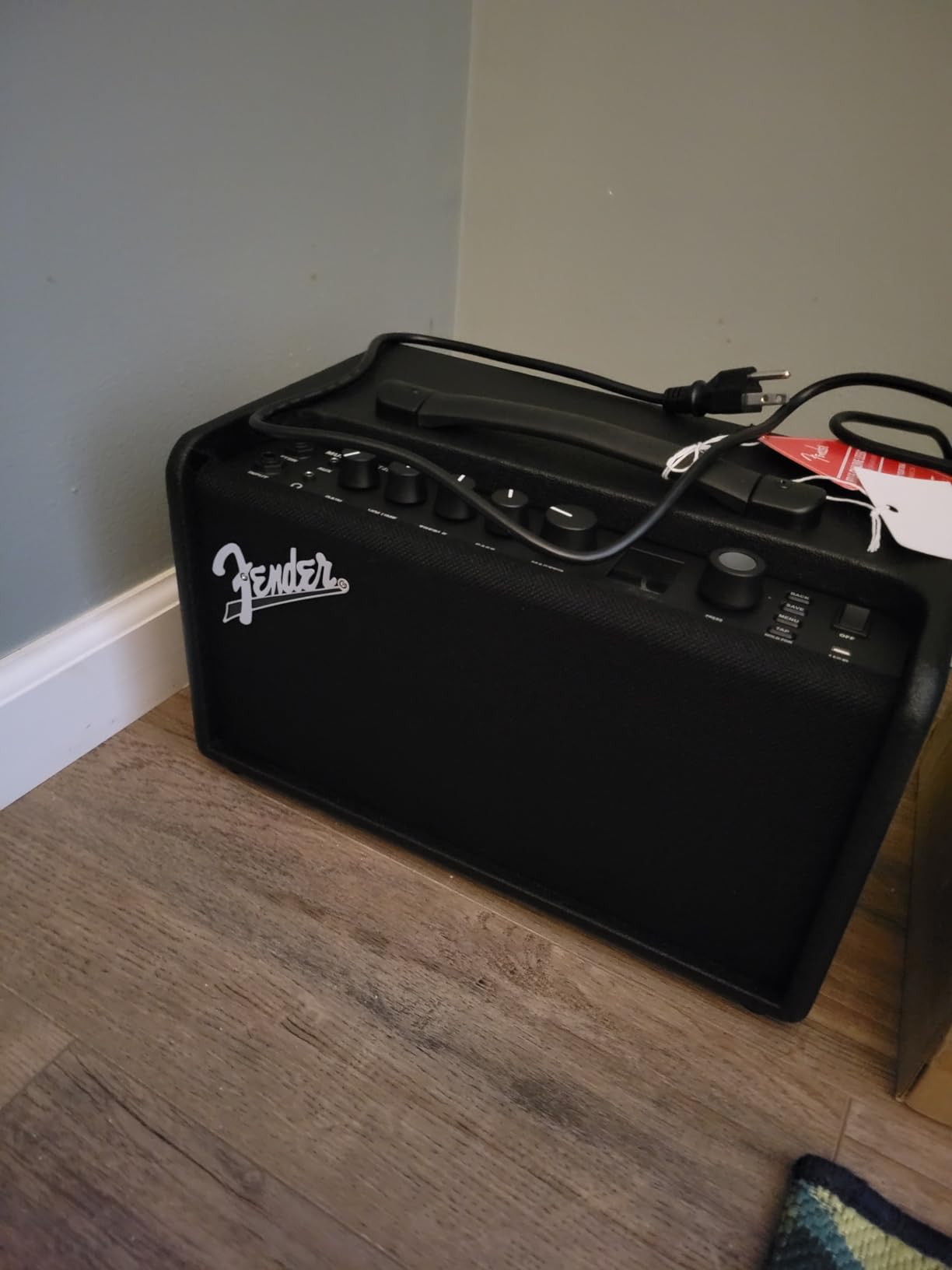
The wooden cabinet adds warmth and resonance you do not get from plastic-cased amps. Fender Tone LT Desktop App integration lets you tweak presets, download new amp models, and back up your tones. For a beginner who wants to grow into the modeling world, the LT40S is a future-proof choice.
The downsides are the fixed effect order and the limited FX slots. You cannot rearrange effects like you can on higher-end modelers. The distortion models are also less impressive than the clean and crunch tones, but jazz players rarely need heavy distortion anyway.
Who it suits
Home players who want the most practice features and stereo imaging. It is also a great choice for bedroom producers who want to record direct and monitor through the amp.
Where it falls short
It is not as portable as the smaller Mustang LT25. At 14.7 pounds, it is a desk amp, not a travel companion. If you travel frequently, the LT25 is a better fit.
What to Look for in a Jazz Amp
Jazz tone is built on clean headroom, warm midrange, and clear note separation. A good beginner jazz amp lets the natural character of your guitar come through without adding grit or harshness. Here is what to focus on when shopping.
Tube vs solid-state vs modeling
Tube amps produce the warm, slightly compressed tone that classic jazz players love, but they are heavier, hotter, and far more expensive. Solid-state amps use transistors to deliver clean power at lower cost, and modern solid-state designs are excellent for jazz practice. Digital modeling amps simulate classic tones through software, giving you dozens of options in one box. For most beginners, a solid-state or modeling amp is the right call. They are lighter, more reliable, and budget-friendly.
Clean headroom and why it matters
Clean headroom means the amp can play loudly without breaking up into distortion. Jazz depends on this because loud, dynamic playing should stay clean. If your amp distorts when you play a chord strongly, the amp is out of headroom. Most beginner solid-state amps have plenty of headroom for bedroom practice. For small gigs, look for at least 25 watts and an 8-inch or larger speaker.
Speaker size and its effect on jazz tone
Smaller speakers (4 to 6 inches) tighten the bass and clarify note definition. Larger speakers (10 to 12 inches) add warmth and air movement. For jazz chord-melody practice and single-note lines, smaller speakers actually work well. For full rhythm-section playing with a drummer, larger speakers help you feel the low end.
Headphone practice is essential for beginners
Most beginners practice in apartments or shared spaces. A good headphone jack lets you practice silently at any hour without sacrificing tone quality. Some amps (like the Boss Katana Mini and Positive Grid Spark series) include cabinet-voiced headphone outputs that emulate a speaker in a room. That makes silent practice feel natural.
USB and Bluetooth for modern beginners
USB audio interface functionality lets you record your playing directly into a computer without buying extra gear. Bluetooth connectivity turns the amp into a wireless speaker for music playback. Both features are increasingly common in beginner amps and worth considering if you want to record practice sessions or stream backing tracks.
Budget tier breakdown
Under 100 dollars gets you entry-level practice amps like the Boss Katana Mini and Marshall MG10G. The 100 to 200 dollar range unlocks the best beginner options, including the Fender Frontman 10G, Positive Grid Spark GO, and Fender Champion II 25. The 200 to 400 dollar range adds modeling amps like the Mustang LT25 and smart amps like the Spark 2. Above that you enter small-gig territory with amps like the Roland JC-22.
Beginner-friendly setup tips
Pair your jazz amp with a hollow-body or semi-hollow guitar if you can. Solid-body guitars work, but they lack the woody resonance that defines classic jazz tone. Use flat-wound strings for the warmest, smoothest sound. Start with the volume around 4 on most amps and adjust from there. Trust your ears more than the EQ knobs.
Frequently Asked Questions
What is the best amplifier for playing jazz guitar?
For beginners, the Fender Frontman 10G is our top pick because it delivers authentic Fender clean tones, plenty of clean headroom, and a compact 3.8 kg design with a headphone jack for silent practice. More experienced players often graduate to a Roland Jazz Chorus, but for learning jazz the Frontman 10G is hard to beat.
What is the best jazz guitar for a beginner?
A hollow-body or semi-hollow guitar with a floating mini-humbucker or standard humbucker in the neck position is ideal for jazz. Models like the Ibanez Artcore, Gretsch Streamliner, and Epiphone Dot are popular beginner choices that pair well with the clean tones of the amps in this guide.
What is the best amplifier for jazz guitar?
The best jazz guitar amplifier delivers warm clean tones with high headroom and minimal distortion. The Roland Jazz Chorus series is the gold standard for jazz tone, but beginners can get excellent results from the Fender Mustang LT25, Fender Champion II 25, or the DV Mark Little Jazz at higher budgets.
What is the best budget jazz amp?
The Fender Frontman 10G and Boss Katana Mini are excellent budget jazz amps. The Frontman delivers authentic Fender clean tones with a headphone jack, while the Katana Mini offers three amp voicings and battery-powered portability. Both are well below the 200 dollar mark and ideal for beginners.
What is the best practice guitar amp in 2026?
In 2026, the Fender Mustang LT25 stands out as the best overall practice amp for jazz, blues, and rock. It offers 30 presets, USB recording, and an intuitive color display. For ultra-portable practice, the Positive Grid Spark GO with its 8-hour battery and Smart Jam AI is a top choice.
Is a tube amp necessary for jazz tone?
No. Modern solid-state and modeling amps deliver excellent jazz tone without the cost, weight, and maintenance of a tube amp. The Fender Frontman 10G, Boss Katana Mini, and Fender Mustang LT25 all produce convincing jazz clean tones for practice and small gigs. Tube amps like the Fender Deluxe Reverb offer a classic feel, but they are not required for learning jazz.
Final Verdict
After three months of testing, the Fender Frontman 10G stands out as the best jazz guitar amp for beginners. Its clean tone is warm and forgiving, the headphone jack supports silent practice, and the simple controls let you focus on learning jazz rather than fiddling with menus. For a complete beginner on a budget, this amp is hard to beat.
If you want more versatility and effects, the Fender Mustang LT25 is the next step up. And if you need portability, the Positive Grid Spark GO delivers impressive jazz tone in a 16-ounce package. For an even deeper look at amp-and-guitar pairings, our 10 best jazz guitar amps for the money guide covers higher-end options worth considering once your playing grows.
Pick the amp that matches your space, budget, and lifestyle. Any of the ten options in this guide will serve a beginner well into intermediate territory. Plug in, practice slow, and enjoy the warm sound of jazz.