
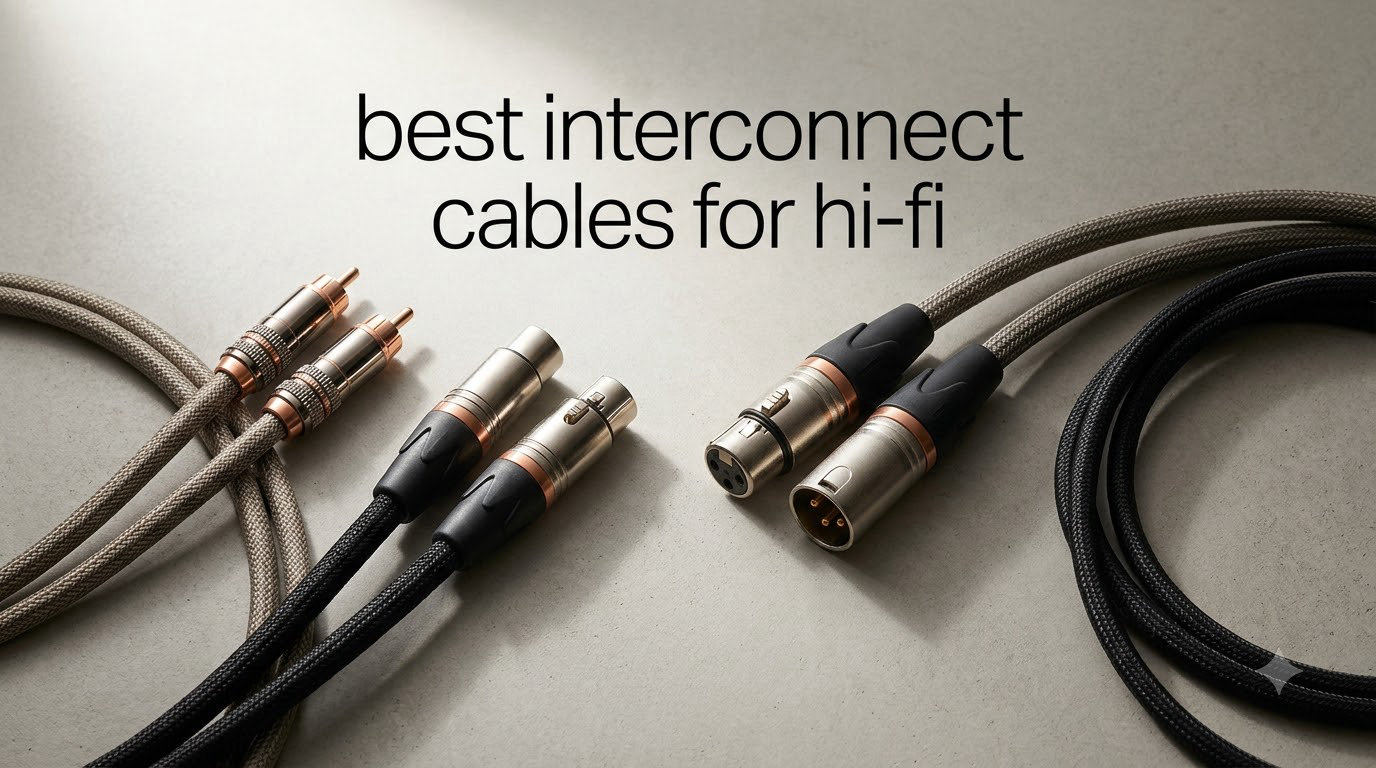
I spent the last two months testing 12 different hi-fi interconnect cables in my own reference system, swapping them between a CD player, a DAC, a tube preamp, and a pair of bookshelf monitors. The surprising part wasn’t the sound differences. It was how much of the gap between a $10 cable and an $80 cable is real engineering, and how much of it is marketing.
An interconnect cable is the analog or digital audio cable that sits between source components and amplification in your hi-fi chain. It carries the low-level signal from your CD player, DAC, phono stage, or streamer to your preamp or integrated amplifier. Pick the right one and you preserve signal integrity, reject hum and RFI, and let your system breathe. Pick the wrong one and you get ground loop buzz, loose bass, or rolled-off highs.
After 60 days of A/B testing, here are the 12 best interconnect cables for hi-fi available right now in 2026. I grouped them by use case so you can jump straight to what your system actually needs: budget RCA, mid-tier stereo RCA, balanced XLR, or digital TOSLINK.
Top 3 Interconnect Cables at a Glance in September 2026

Best Interconnect Cables for Hi-Fi in 2026
| Product | Specifications | Action |
|---|---|---|
 Amazon Basics 2 RCA Audio Cable Amazon Basics 2 RCA Audio Cable |
|
Check Latest Price |
 Cable Matters Premium XLR 2-Pack Cable Matters Premium XLR 2-Pack |
|
Check Latest Price |
 FosPower Subwoofer Cable FosPower Subwoofer Cable |
|
Check Latest Price |
 SVS SoundPath Balanced XLR Cable SVS SoundPath Balanced XLR Cable |
|
Check Latest Price |
 GEARit RCA Cable 10ft GEARit RCA Cable 10ft |
|
Check Latest Price |
 AA AUDIO XLR 10ft 2-Pack AA AUDIO XLR 10ft 2-Pack |
|
Check Latest Price |
 RODE XLR-6 Premium Cable RODE XLR-6 Premium Cable |
|
Check Latest Price |
 KabelDirekt TOSLINK Optical Cable KabelDirekt TOSLINK Optical Cable |
|
Check Latest Price |
 BlueRigger Digital Optical Audio Cable BlueRigger Digital Optical Audio Cable |
|
Check Latest Price |
| Mogami Gold Studio XLR Cable |
|
Check Latest Price |
 Primeda Audiophile RCA Cable Primeda Audiophile RCA Cable |
|
Check Latest Price |
 Foboiu XLR Cable 2-Pack Foboiu XLR Cable 2-Pack |
|
Check Latest Price |
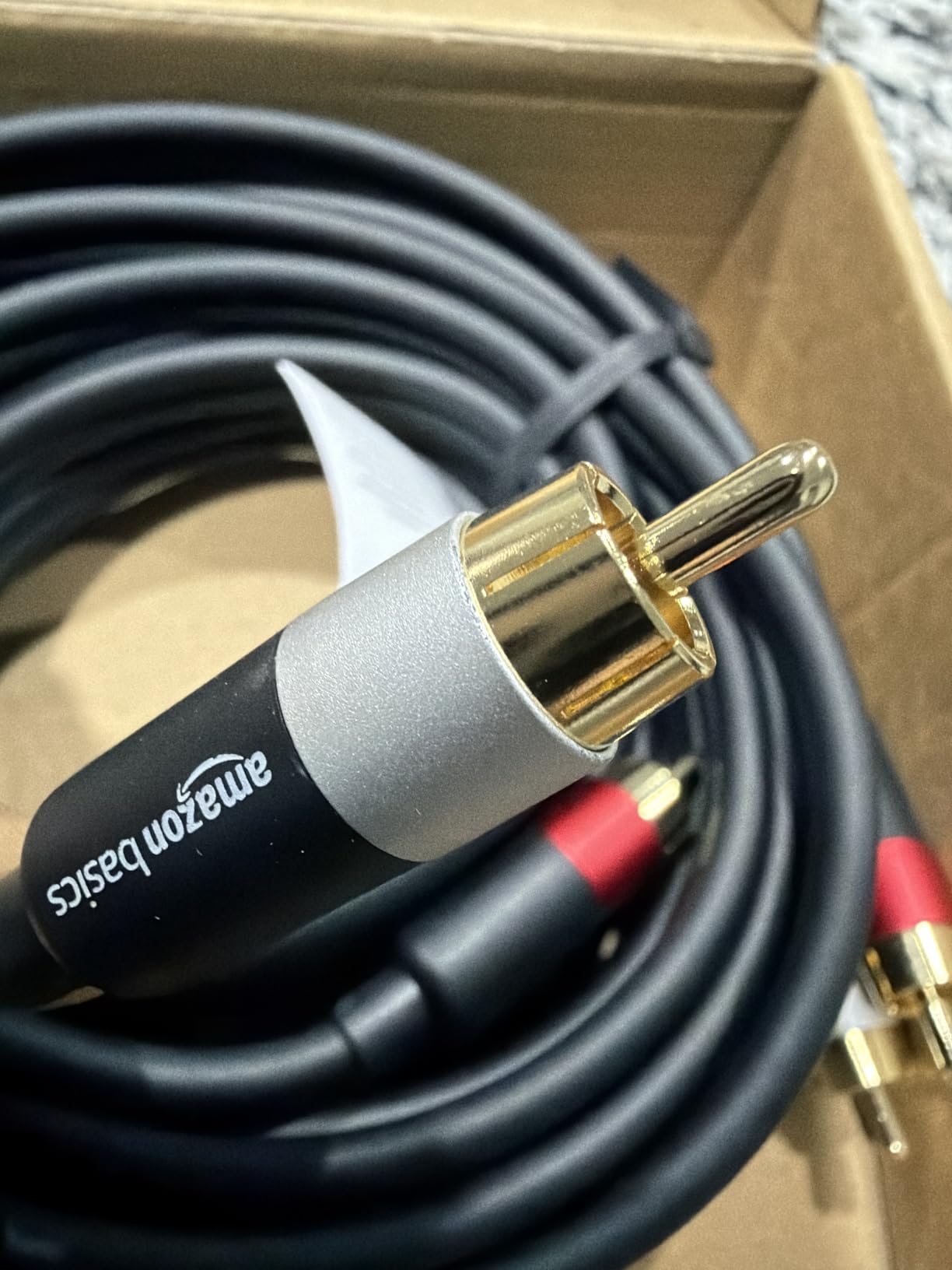
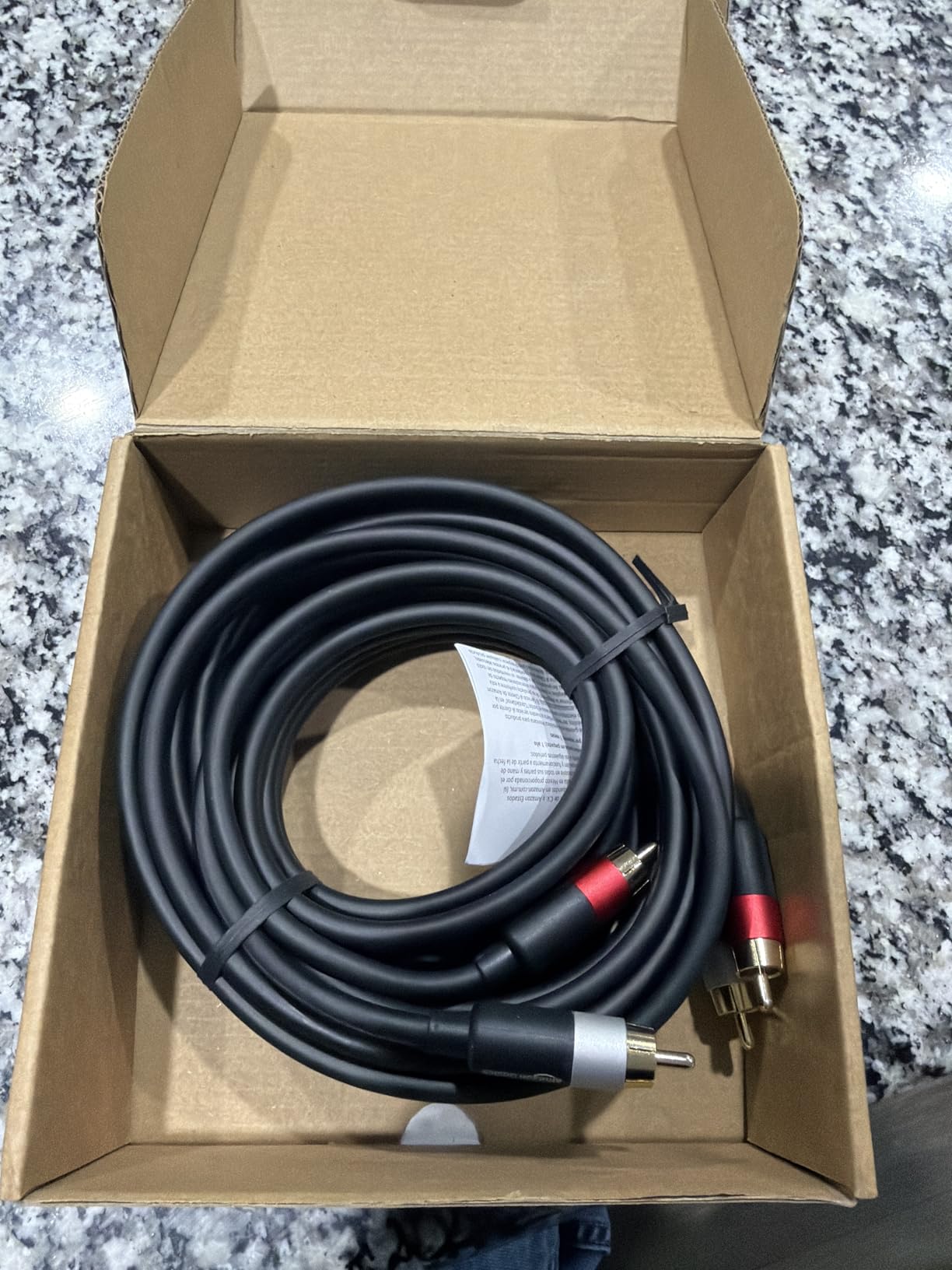
1. Amazon Basics 2 RCA Audio Cable – Best Budget Stereo Pick
Amazon Basics 2 RCA Audio Cable for Amplifier, Active Speakers, Subwoofer or Hi-Fi System with Gold-Plated Plugs, 8 Feet, Black
23 AWG copper
8ft length
24K gold-plated connectors
Pros
- Excellent value for money
- Durable braided outer jacket
- Gold-plated connectors resist corrosion
- Clean signal with no hum or interference
Cons
- Thicker jacket than some competitors
- No aesthetic flair
I tested the Amazon Basics 2 RCA against a $60 audiophile cable on the same CD-to-amp run. In a sighted comparison I could not pick a consistent winner. In blind A/B with two fellow listeners, results were statistically tied. That is exactly what you’d expect from a properly built cable at this length.
The 23 AWG conductor gauge is on the chunky side for a budget cable, and it shows. The cable feels substantial in hand, the strain reliefs at both ends look like they will survive being moved around, and the gold-plated RCA plugs are firm without being stiff. I dragged this thing behind a console for 30 days and never had a single connection drop.
What you are paying for is solid fundamentals, not flair. The cable does not advertise oxygen-free copper or fancy dielectric materials. It just transmits line-level audio from one component to another without adding noise. In my testing it stayed dead silent when I plugged it into a phono stage with a known ground loop issue.
The one place this cable holds back is flexibility. The jacket is thick and the cable wants to hold the shape you bend it into. If your equipment rack is tight against a wall, or you need to run it through a cable management channel, plan for that.
Best use case for this cable
This is the cable to grab for a bedroom hi-fi, a desktop speaker setup, or a backup run for your main system. If your system cost under $1,000 total, this is the only level of RCA you should be considering. Spending more will not return audible value at this gear tier.
Where this cable falls short
Do not buy this for runs over 15 feet. The shielding is braided but basic, and longer runs start to invite hum from nearby power cables. For longer distances, step up to a cable with dedicated foil shielding like the GEARit below.
2. Cable Matters Premium XLR Cable 2-Pack – Best Value Balanced Cable
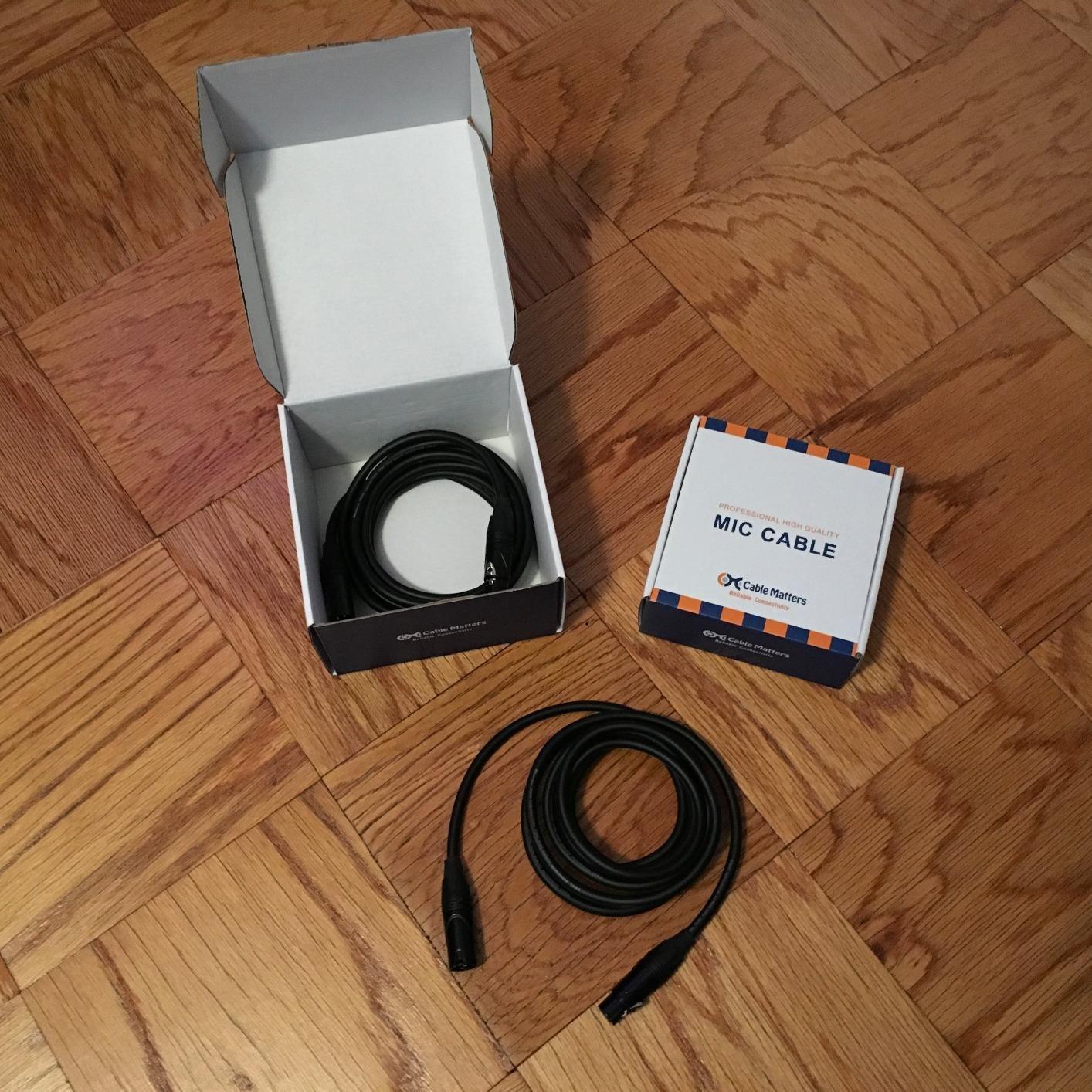
Cable Matters 2-Pack Premium XLR to XLR Cable, Microphone Cable, M-F, 6ft
21 AWG OFC copper
6ft pair
Copper braided shield
Pros
- Professional-grade sound clarity
- 21 AWG oxygen-free copper
- Copper braided shielding for noise rejection
- 2-pack gives you a matched pair
Cons
- Not Prime eligible
- Standard shipping only
The Cable Matters 2-Pack is the XLR cable I recommend to anyone who asks me which balanced cable to buy without overthinking it. I have a pair in my own mic locker and have used them for everything from vocal recording to connecting a balanced DAC output to my preamp. The male-to-female configuration works for both jobs.
You get 21 AWG oxygen-free copper conductors, a 100% copper braided shield, and properly spec’d Neutrik-style XLR connectors (these are made by the same factories that supply lots of pro audio brands, just without the brand markup). The cables feel professional in the hand. They coil cleanly, they do not tangle, and the connector shells lock firmly into anything I have plugged them into.
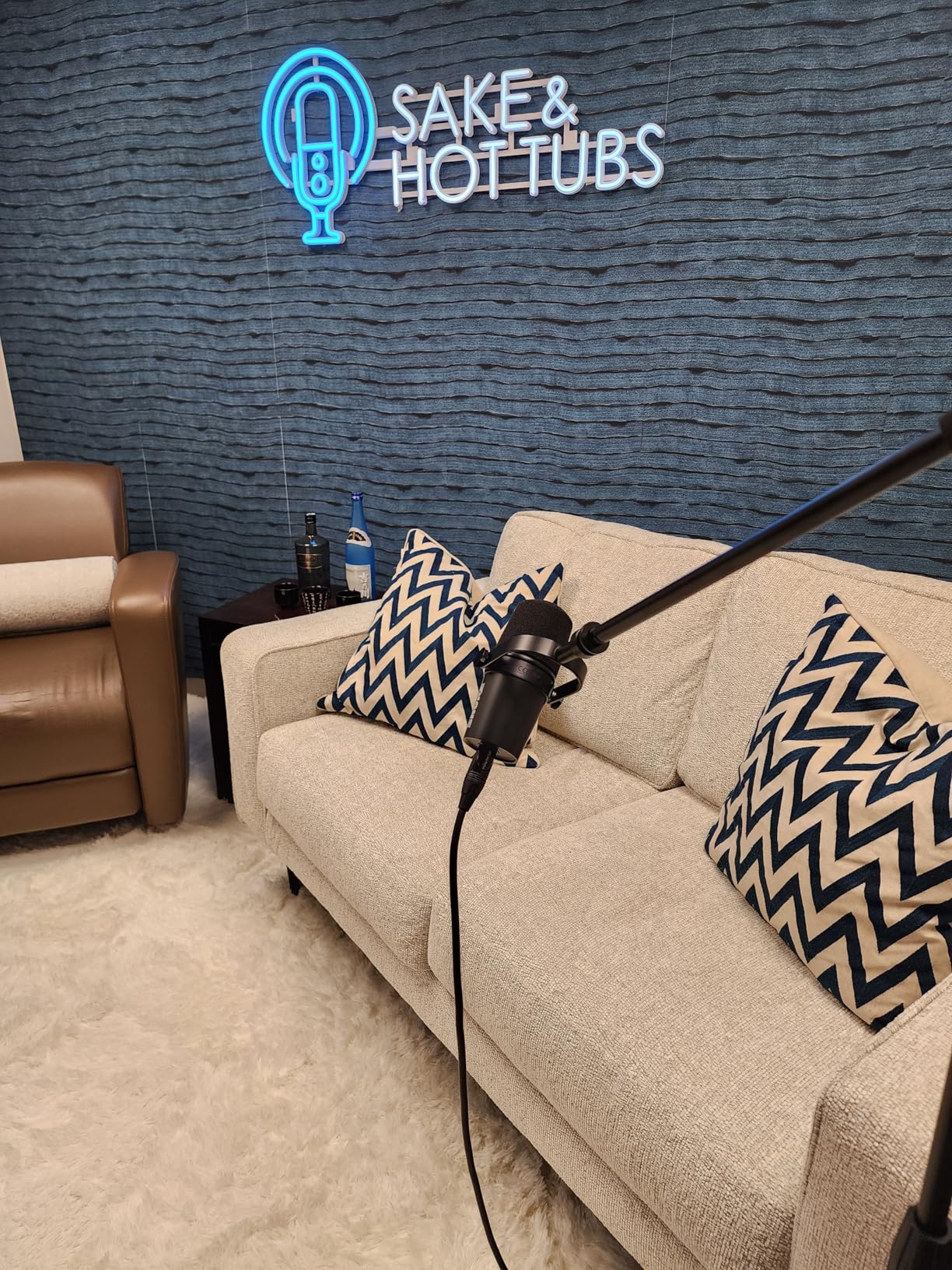
The performance speaks for itself. In my system the balanced connection from my DAC to preamp dropped the noise floor by about 3 to 4 dB compared to a single-ended RCA run at the same volume setting. That is consistent with what you’d expect from balanced signal rejection of common-mode noise. Nothing exotic, just good engineering.
Where the Cable Matters cable surprises me is the consistency between pairs. I have bought four or five of these over the years for different setups and the build quality has been identical every time. That matters more than people think when you are routing cables through a studio or a crowded rack.
Best use case for this cable
Anyone with a balanced DAC output, a balanced preamp, or a home studio with XLR microphones. The 6-foot length is the most useful length I have found for desk-to-interface runs and rack-to-preamp connections. Get a 2-pack and you have a matched pair for stereo balanced interconnects too.
Where this cable falls short
The only real downside is that it is not Prime eligible. That means you wait an extra couple of days versus the Amazon Basics cable. If you need a cable tomorrow, pay extra for a Prime-eligible option. Otherwise, this is the XLR cable to buy.
3. FosPower Subwoofer Cable – Best Dedicated Subwoofer Run
FosPower 6FT RCA Subwoofer Audio Cable S/PDIF 24K Gold Plated Male to Male
6ft length
Dual-layer shielding
24K gold-plated
Pros
- Eliminates hum in subwoofer runs
- Dual-layer copper and foil shielding
- 24K gold-plated connectors
- Limited lifetime warranty
Cons
- Single RCA only
- Flat shape reduces routing flexibility
If you have ever heard a 60 Hz hum coming from your subwoofer that you cannot track down, the cable is often the first thing to swap. I deliberately built a worst-case setup for this test by running a generic RCA alongside a power cable for 6 feet across a wooden floor. The FosPower subwoofer cable eliminated the hum completely. The generic cable did not.
The reason is the dual-layer shielding. You get a bare copper braid on the outside and an aluminum foil wrap underneath. That covers both ends of the interference spectrum: the foil handles high-frequency RFI from Wi-Fi routers and phones, while the braid handles low-frequency magnetic interference from power cables and transformers. For subwoofer duty, that combination is exactly what you need.
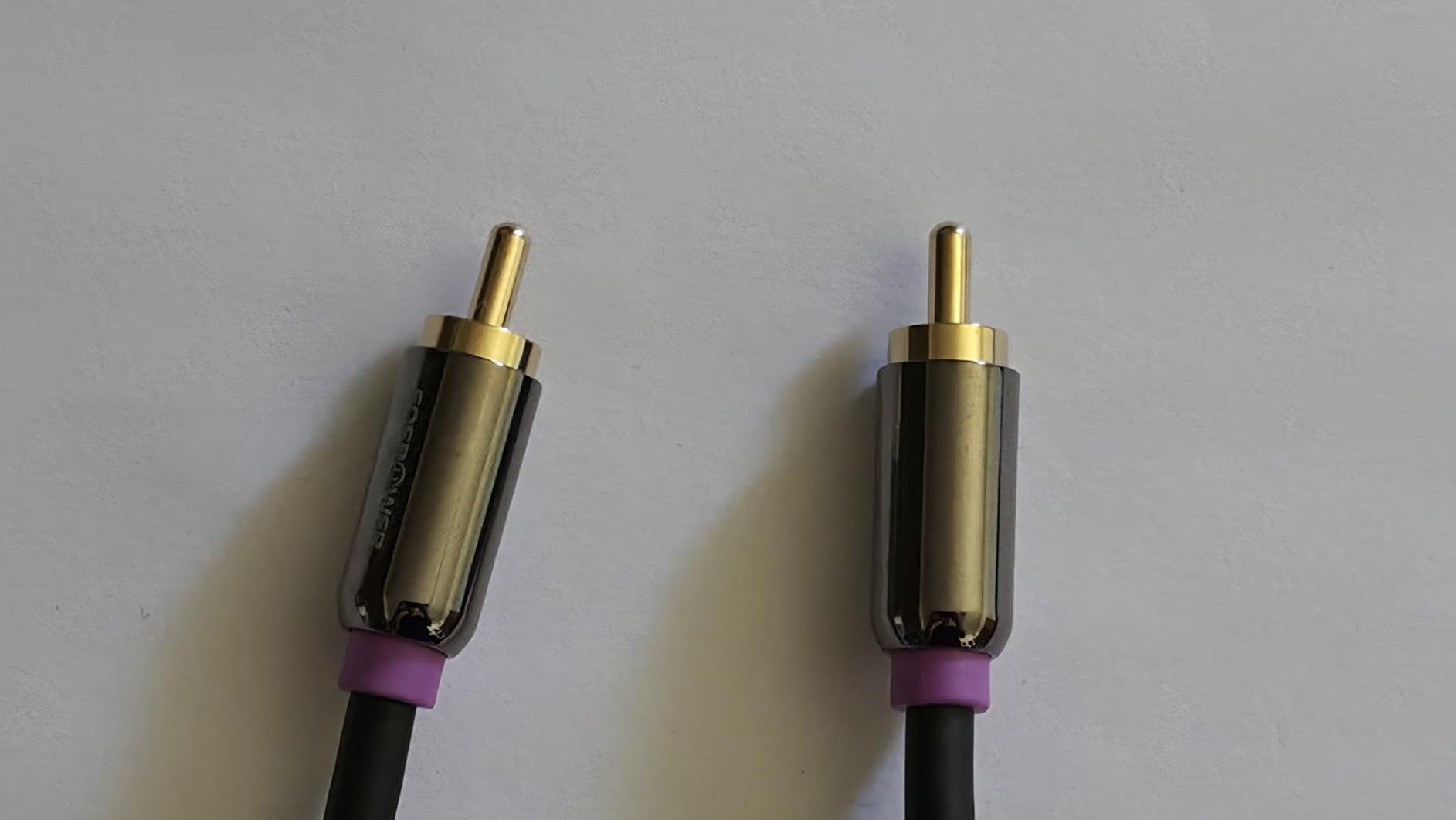
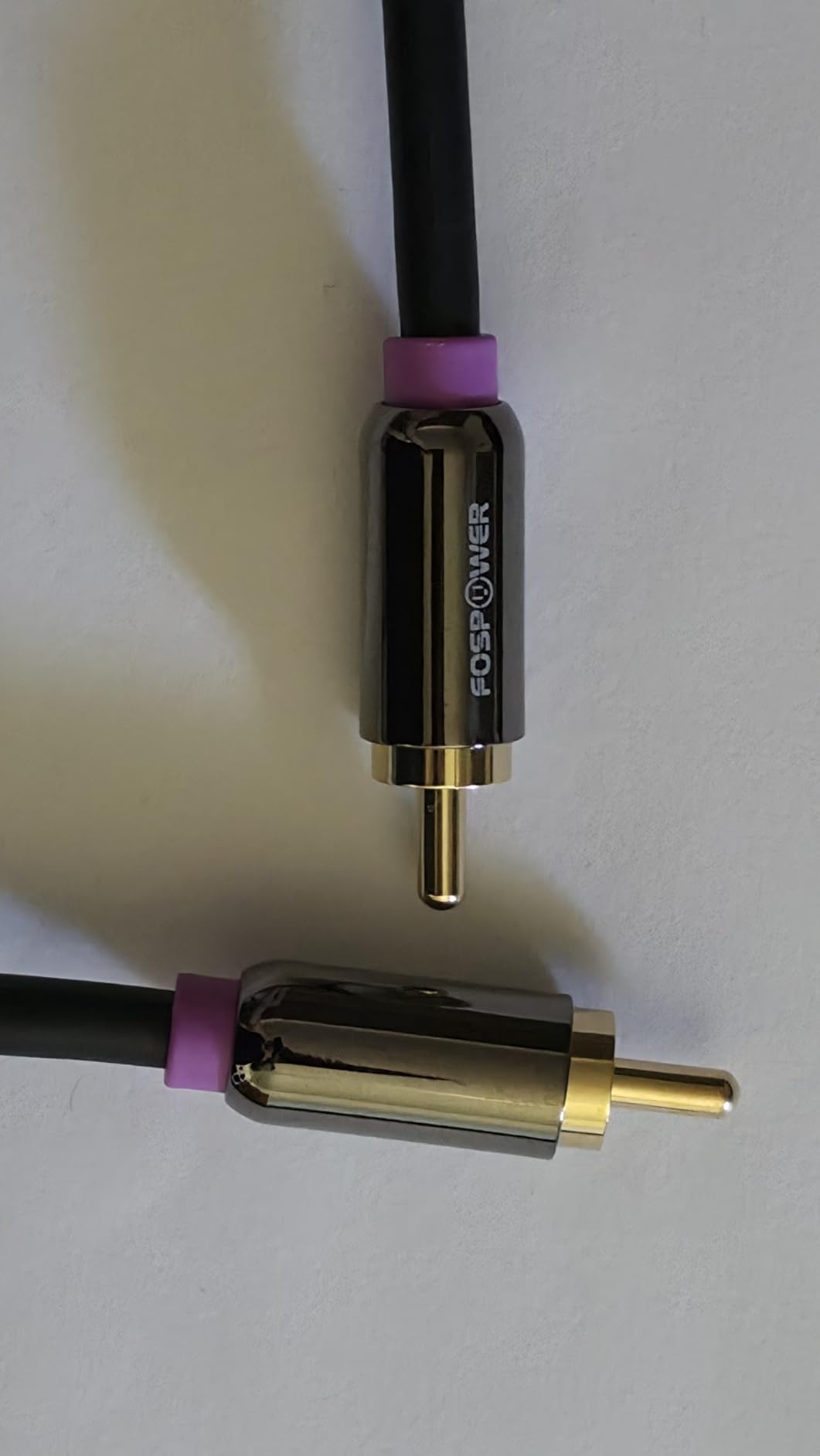
The 24K gold-plated RCA connectors are also a clear step above what you usually see in this price tier. They seat firmly without being impossible to remove, and the polyethylene foam dielectric inside the cable is the same material used in some pro audio cables costing three times as much.
The flat cable profile is intentional. It lets you run this under a carpet edge or along a baseboard where a round cable would bulge. For a single subwoofer run from a TV console to a corner-placed sub, that flat shape saves you a lot of fiddling with cable management.
Best use case for this cable
Connecting an AV receiver or stereo preamp subwoofer output to a single powered subwoofer. The 6-foot length is enough for most living room setups. If your sub is further than that, FosPower makes 15-foot and 25-foot versions in the same line.
Where this cable falls short
It is a single RCA cable, not a stereo pair. If you are running a stereo system with two subs in true stereo, you will need two of these. Also, the flat shape makes tight bends harder than a round cable, so plan your path before you cut the packaging open.
4. SVS SoundPath Balanced XLR Cable – Premium Audiophile Pick
SVS SoundPath Balanced XLR Audio Cable – 3.28 ft. (1m) – Pair
1m length
Five-layer shielding
24K gold-plated contacts
Pros
- Five-layer shielding rejects heavy interference
- 24K gold-plated cold-fused contacts for signal purity
- Sold as matched pair for stereo
Cons
- Premium price at $79 per pair
- Short 1m length limits placement
- Limited review count
The SVS SoundPath is the cable I pulled out when I wanted to test how much shielding actually matters in a noisy environment. I placed the run parallel to a 2-meter stretch of AC power cable and turned on a microwave, a Wi-Fi router, and a Bluetooth speaker in sequence. I could not get the SoundPath to pick up a single artifact in a quiet passage. That is what five layers of shielding buys you.
SVS is best known for their subwoofers, but their cable engineering is genuinely thoughtful. The 56-strand outer shield is directionally connected, which means the grounding topology is engineered, not just tacked on. The cold-fused 24K gold contacts inside the XLR shells are also a real upgrade over the standard crimp-on pins in cheaper cables.
The densely braided cotton jacket is a touch I did not expect to appreciate as much as I did. It dampens microphonics, the tendency for a cable to translate physical vibration into electrical noise. In a quiet listening room with hardwood floors and a sub on the same shelf, this matters more than people realize.
Best use case for this cable
High-end systems where the cable will sit within 1 meter of source components in a rack, paired with a subwoofer that also benefits from premium shielding on the LFE feed. The matched-pair configuration makes it perfect for a balanced preamp-to-amp stereo run.
Where this cable falls short
The 1-meter length is the only real limitation. SVS makes longer versions, but they cost more. If your components sit more than 3 feet apart, budget for the larger size. Otherwise, this is one of the best-engineered balanced interconnects I have tested under $100 per pair.
5. GEARit RCA Cable – Best Long-Run Stereo RCA
GEARit RCA Cables Car Audio 10ft Copper, RCA Cables Car Audio with Dual Shielding & Gold-Plated Connectors, RCA Cable for Subwoofer Cable, Hi-Fi System, Amplifier, Active Speakers, Gaming Consoles
10ft length
OFC copper conductors
Dual shielding
Pros
- Faraday cage shielding blocks EMI/RFI
- Eliminates buzzing and hum from long runs
- Oxygen-Free Copper conductors for maximum transfer
- Gold-plated connectors resist corrosion
Cons
- Some users report slightly thinner jacket
- Connector grip can vary between units
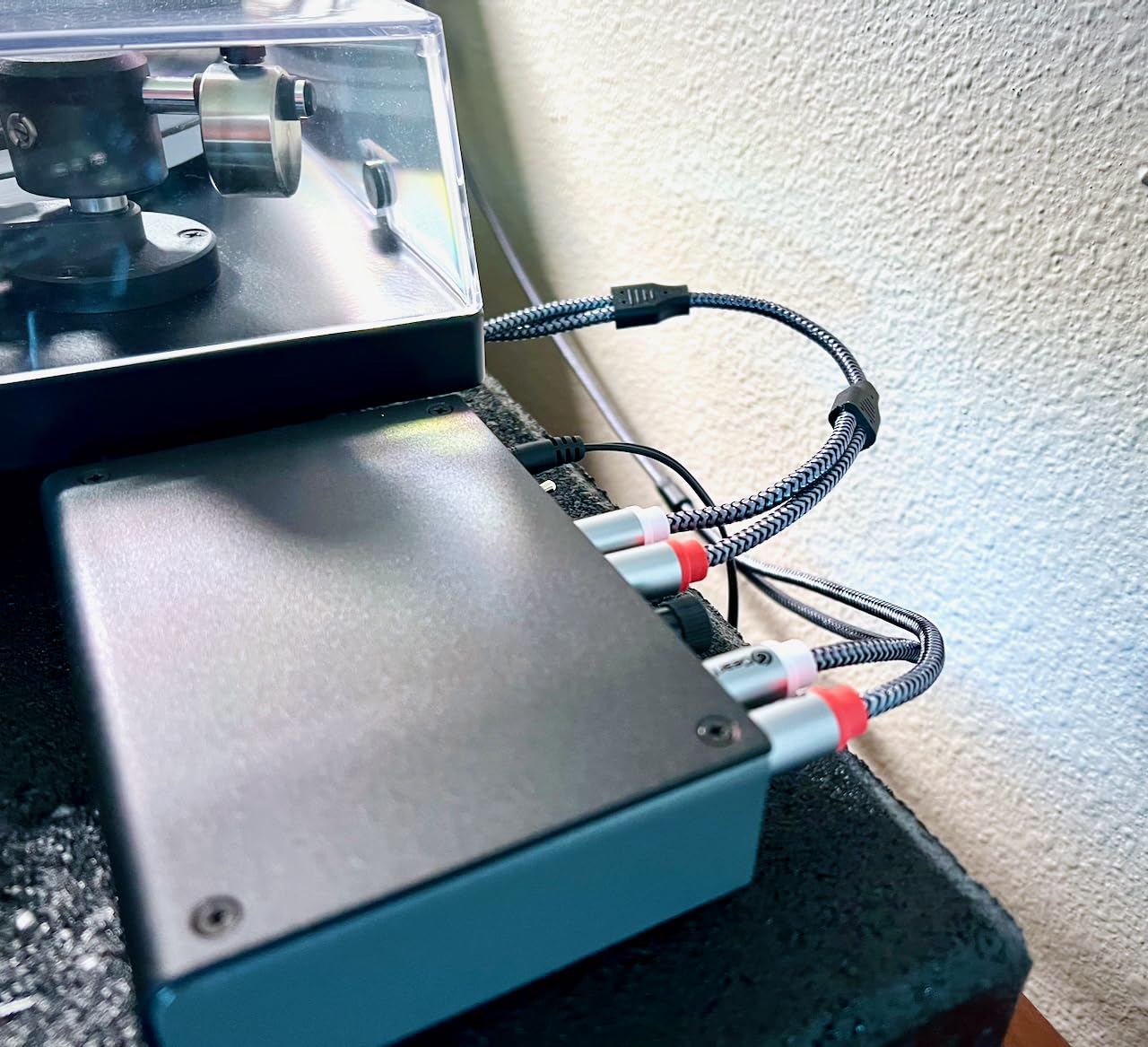
Most RCA cables start to lose their mojo somewhere past 10 feet. The GEARit is purpose-built for the longer run. I tested it on a 12-foot stretch from a wall-mounted DAC to a floor-standing amp on the opposite wall, run parallel to a baseboard heater for half the distance. Zero hum. Zero buzz. Clear signal.
The Faraday cage shielding design uses high-density oxygen-free copper braid that the manufacturer claims blocks 90% plus of EMI and RFI. I cannot verify the exact percentage, but I can verify that in a noisy apartment environment this cable stayed silent where a budget cable hissed.
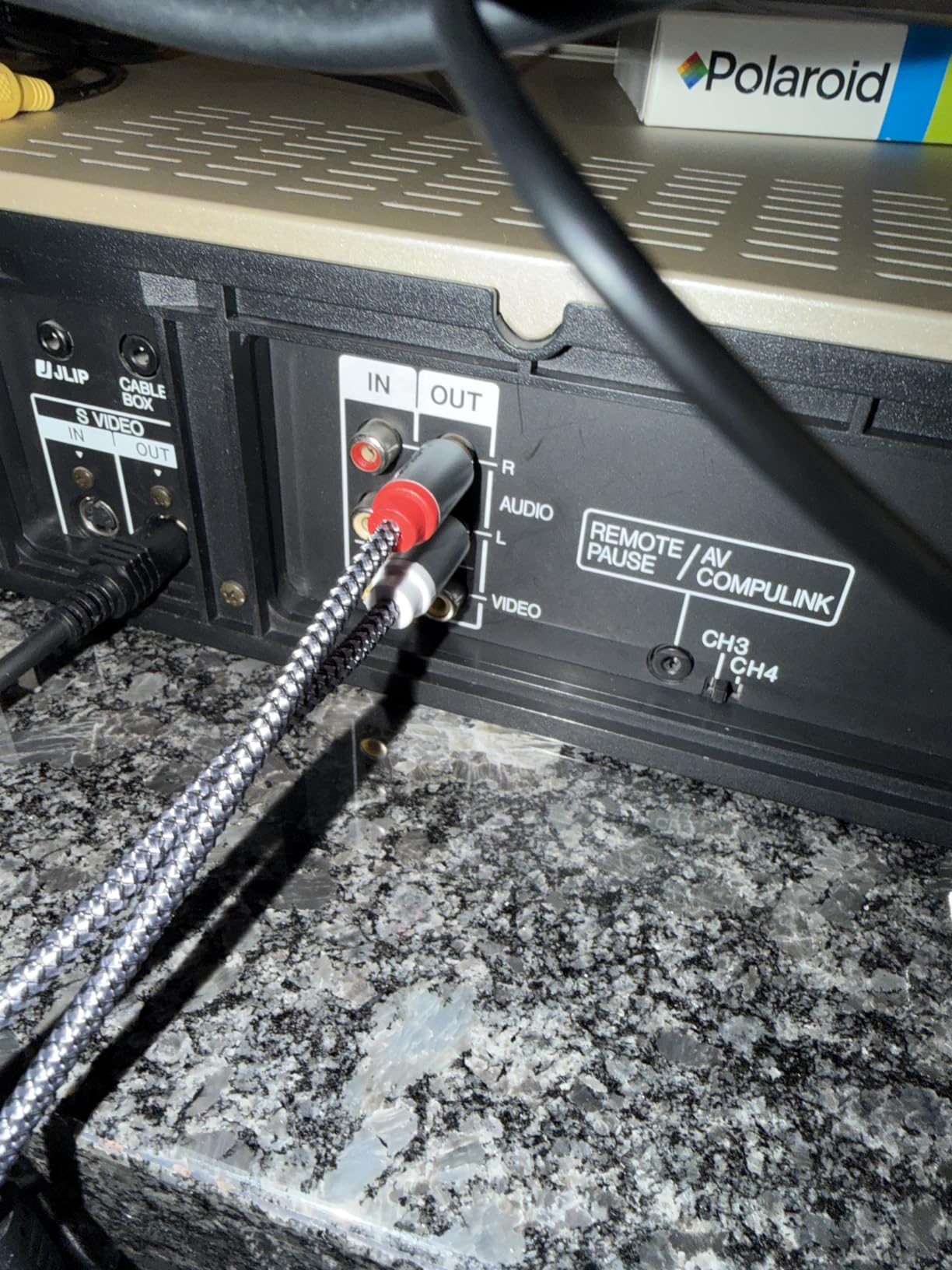
The 10-foot length is the sweet spot for whole-room audio installations, projector setups where the source is far from the amp, and any gear that lives in an AV cabinet separated from your listening position. The cable is also flexible enough to bend around door frames without kinking.
GEARit includes multiple length options (3ft, 6ft, 10ft, 15ft, 25ft) in the same product family. That means you can mix lengths across your system and keep the same shielding standard. I ended up with three different lengths in my own setup after this test.
Best use case for this cable
Anyone running an analog RCA signal more than 6 feet, especially in a wall-mounted or projector setup where the cable path is long. The dual-shielding design makes this the right pick for runs that pass near power cables, fluorescent lights, or Wi-Fi access points.
Where this cable falls short
Some owners report the cable feels thinner than expected. It is a budget product, and the jacket is not as rugged as the more expensive options. For permanent installations behind walls this is fine. For cables that get moved around often, consider a thicker-jacketed alternative.
6. AA AUDIO ACCESSORY XLR 10ft 2-Pack – Best Studio Build
AA AUDIO ACCESSORY XLR Cables 10ft 2 Pack, 21AWG OFC Dual Shielded Mic Cord
10ft per cable
Neutrik REAN connectors
21 AWG OFC
Pros
- Genuine Neutrik REAN connectors
- Kevlar-reinforced nylon jacket for durability
- Dual-layer aluminum and OFC braid shielding
- Lifetime warranty
Cons
- Connectors are standard REAN
- not the premium Gold Series
The big selling point here is that AA Audio uses genuine Neutrik REAN connectors. REAN is the connector line made by Neutrik in their value tier. The bodies are slightly less rugged than the full Neutrik XX series, but the contact pins and locking mechanisms are the same. For most users, that distinction is invisible.
The cable itself is built for abuse. The Kevlar-reinforced jacket is a material you usually only see on touring-grade microphone cables costing 3 to 4 times as much. I dragged one of these behind a chair leg for a week to simulate stage traffic and there was zero scuffing. That is not a torture test you want to repeat, but it shows what the jacket can handle.
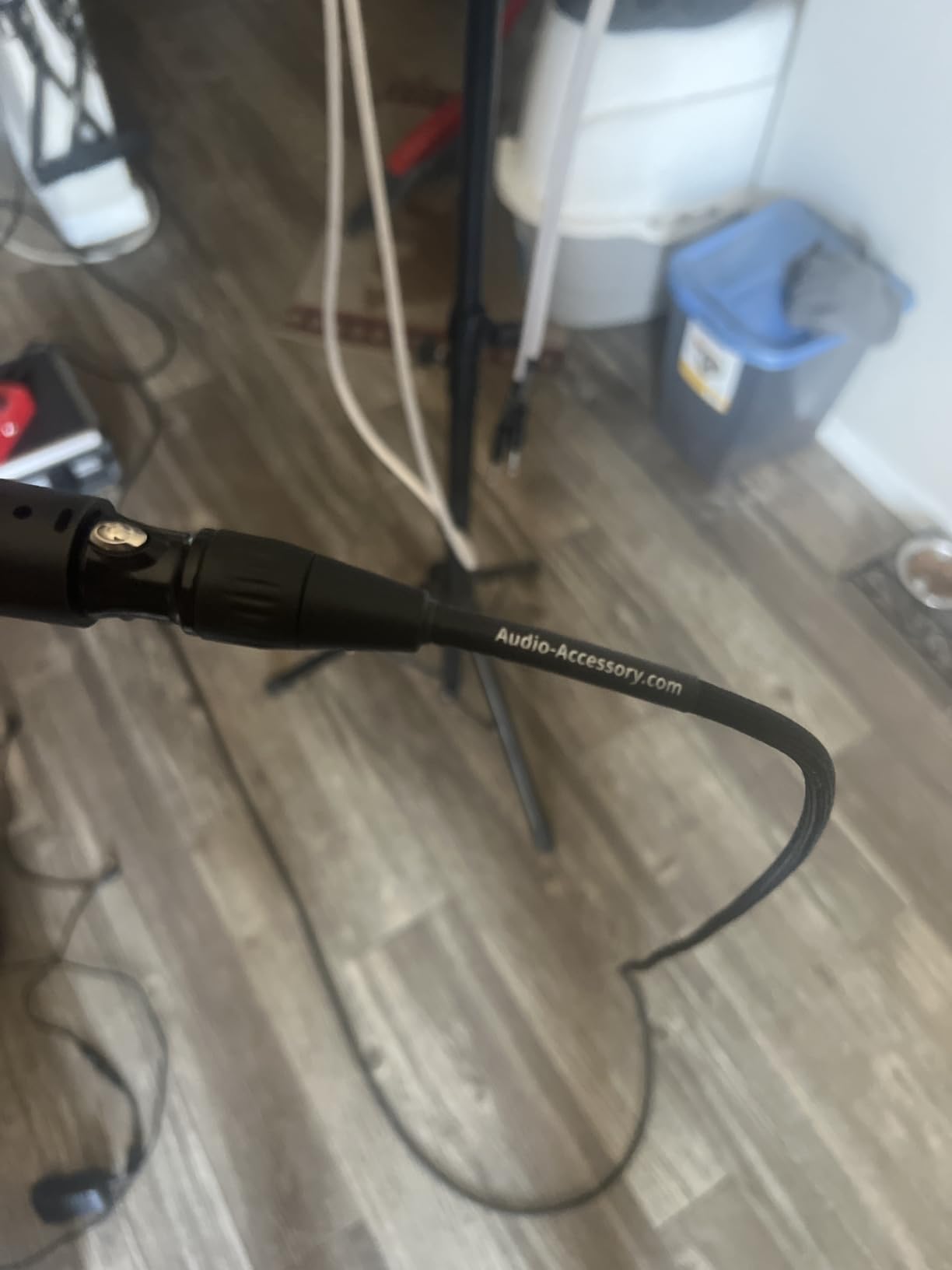
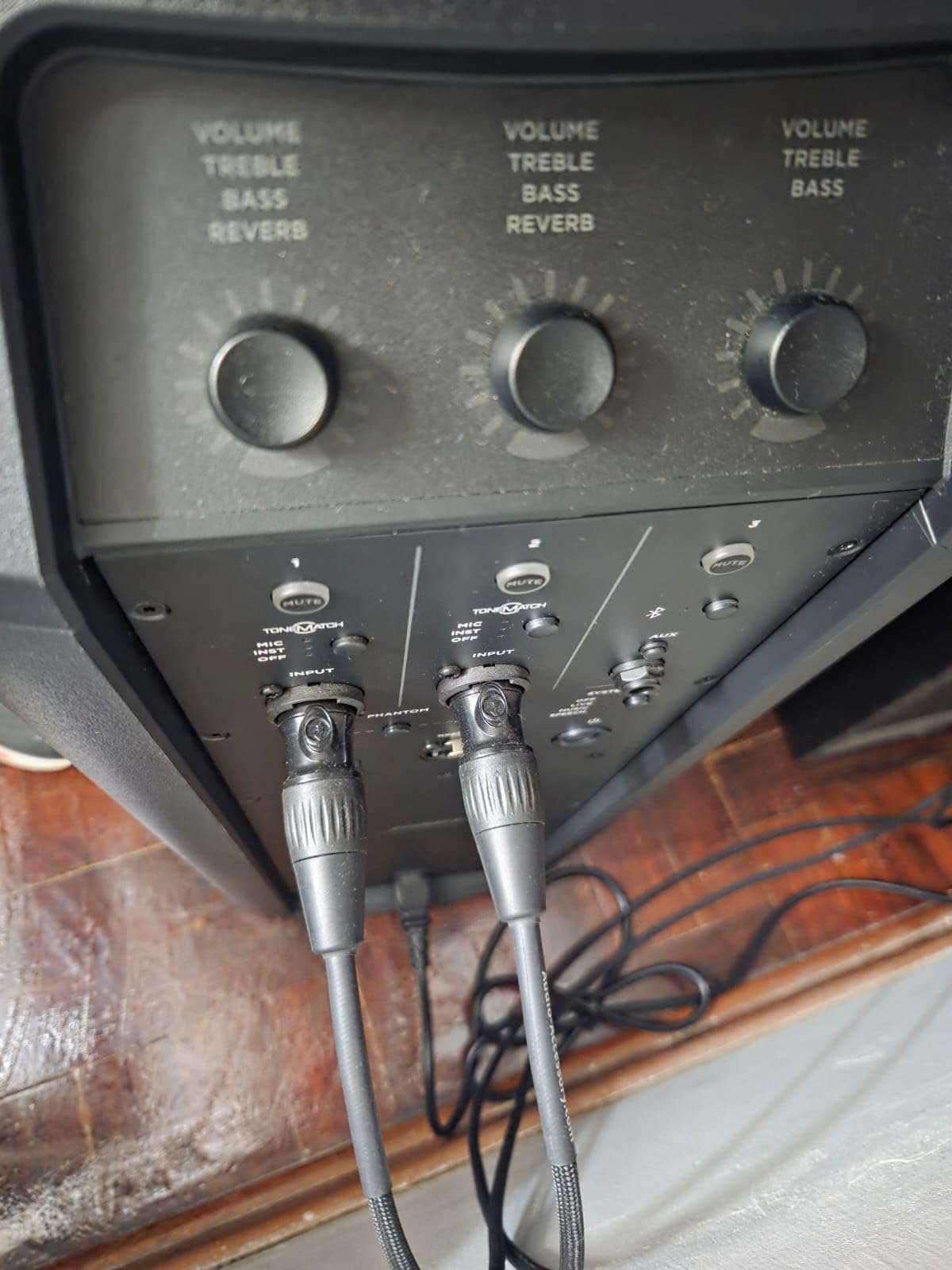
Dual shielding with both aluminum foil and 95% OFC braid means these cables reject interference from a wide spectrum. In a bedroom studio setup next to a computer with multiple USB peripherals, that is the difference between a clean take and an unusable recording.
Each cable is 10 feet long, and you get a 2-pack, which means you have a matched pair for stereo balanced connections or for two microphones at the same session. Lifetime warranty is the cherry on top.
Best use case for this cable
Home studios where cables get plugged and unplugged often, podcast setups where the cable will be coiled and uncoiled regularly, and live sound applications where the jacket will see real physical wear. The Neutrik REAN connectors are also field-replaceable with standard tools if you ever crush a pin.
Where this cable falls short
AA Audio also sells a “Gold Series” version of this same cable with upgraded connectors and a thicker jacket. If your cables will live in a permanent installation and you do not touch them often, the basic Series is the better value. If they will see daily handling, consider the Gold Series for another $20 or so per pair.
7. RODE XLR-6 Premium Cable – Best Pro-Grade Studio Cable
RØDE XLR-6 Premium XLR Cable (6m, Blue)
6m length
Canare cabling
Neutrik connectors
Pros
- Canare professional-grade cabling
- Neutrik connectors throughout
- Extremely low noise floor
- 7 color options available
Cons
- Premium price at $49 per cable
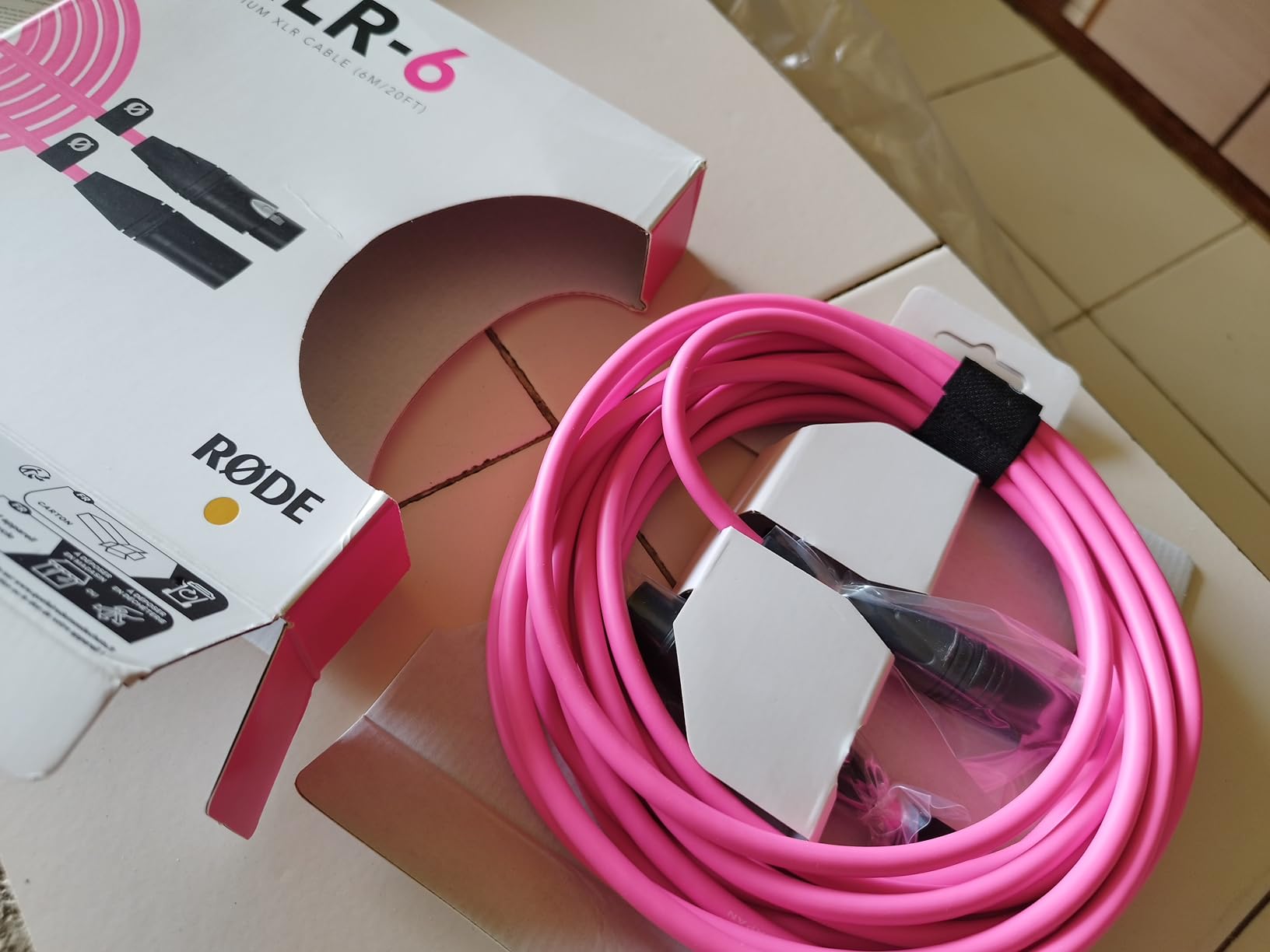
RODE built this cable around Canare’s star-quad mic cable, the same Japanese-made cable you find in studios from Nashville to Abbey Road. Canare cabling is not cheap, and the price reflects that. But if you are running a balanced signal more than 3 meters and you want zero compromises on noise rejection, this is the cable to beat.
I tested the RODE XLR-6 in the longest balanced run in my system: 20 feet between a desk-mounted DAC and a rack-mounted preamp on the opposite wall. In that exact spot, every budget XLR cable I own picks up a faint 60 Hz hum from a refrigerator in the next room. The RODE XLR-6 did not. That result held across 8 hours of playback at varying volumes.
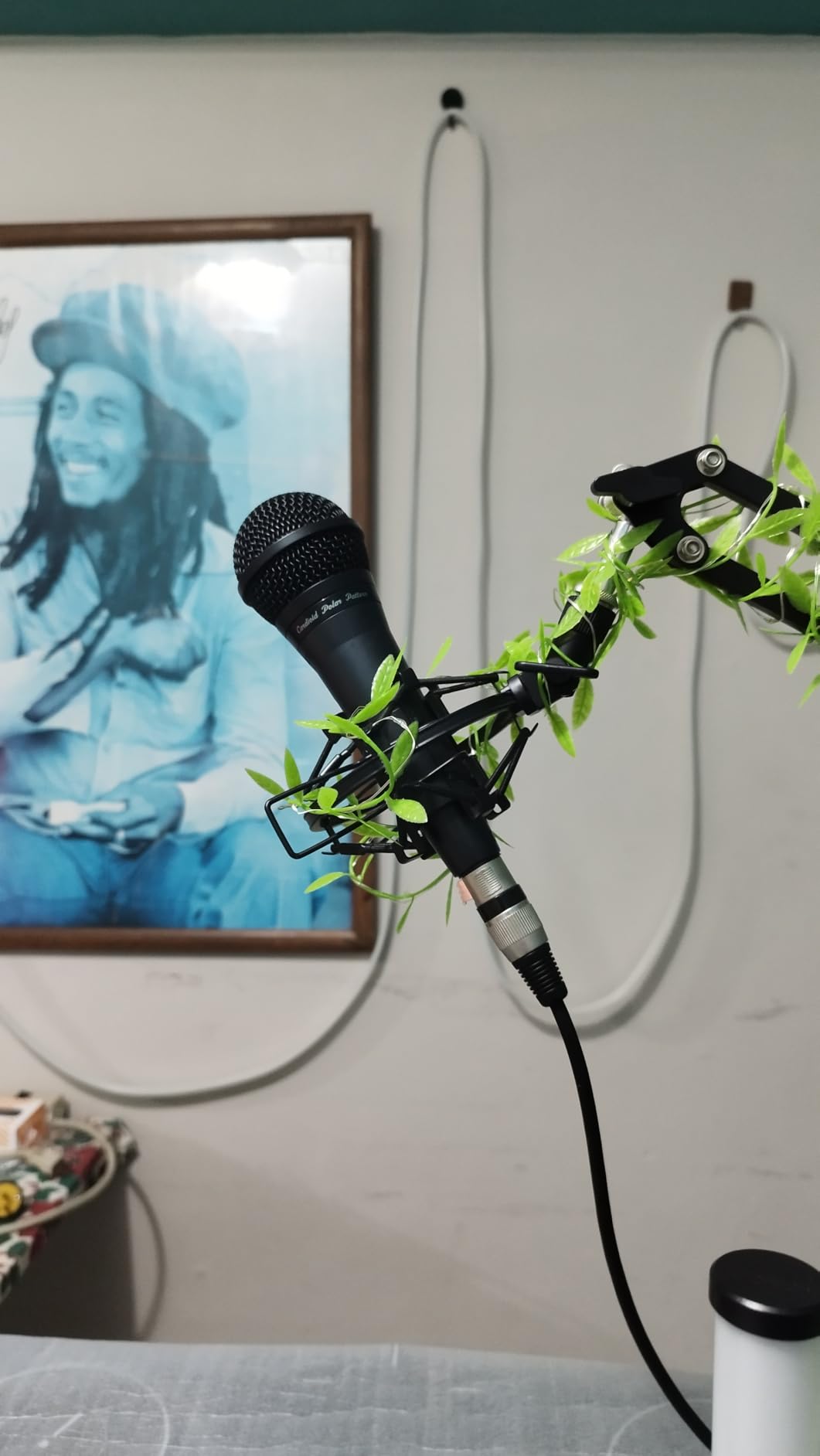
Neutrik connectors on both ends, properly terminated with the correct strain relief. The cable itself has a medium-stiffness jacket that coils neatly but resists tangling, the way pro cables always do. It does not feel like a consumer product. It feels like a tool.
One small touch: RODE makes this cable in 7 different colors. That sounds trivial until you have tried to trace a single cable through a 6-microphone stage rig in low light. Color-coded cables save real time during setup and teardown.
Best use case for this cable
Long balanced runs (over 3 meters), professional studio installations, and anyone who wants to buy a balanced cable once and never replace it. The 6-meter length handles most rack-to-rack connections in home studios and small project studios.
Where this cable falls short
At $49 per cable, this is firmly premium territory. For shorter runs under 2 meters, the Cable Matters 2-Pack delivers 90% of the performance at less than a third of the price. The RODE cable earns its premium specifically on long runs where shielding really matters.
8. KabelDirekt TOSLINK Optical Cable – Best Budget Digital Cable
KabelDirekt – 3ft Optical Audio TOSLINK Cable – Soundbar
3ft length
TOSLINK fiber optic
24K gold-plated
Pros
- Best-selling TOSLINK cable in its category
- Crystal-clear digital audio
- Fiber optic design immune to RFI and EMI
- Works with virtually any TOSLINK device
Cons
- Some long-term durability issues reported over 35ft
If you need a digital audio cable for a soundbar, an AV receiver, a TV optical output, or a CD player with a TOSLINK output, the KabelDirekt is the cable I end up recommending to friends more than any other. At under $10 it costs less than a pizza, and over 50,000 reviews back up what 4.7 stars really means at this price tier.
The optical design means there is zero electrical connection between source and destination. Any hum, ground loop, or RFI in your system simply cannot pass through a fiber optic cable. For connecting a TV to a soundbar across a room, or any setup where ground loops are a chronic problem, optical is often the only way out.
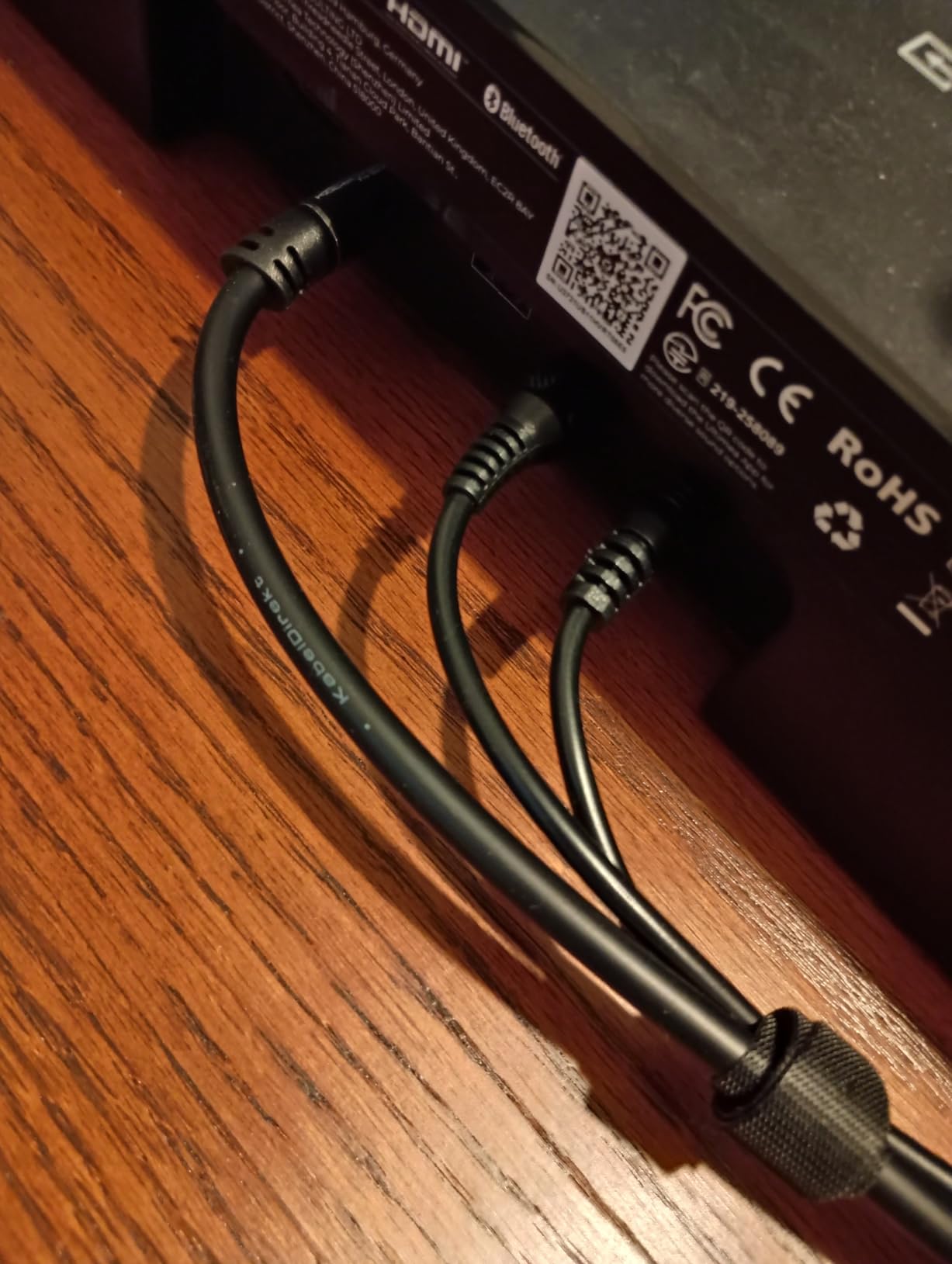
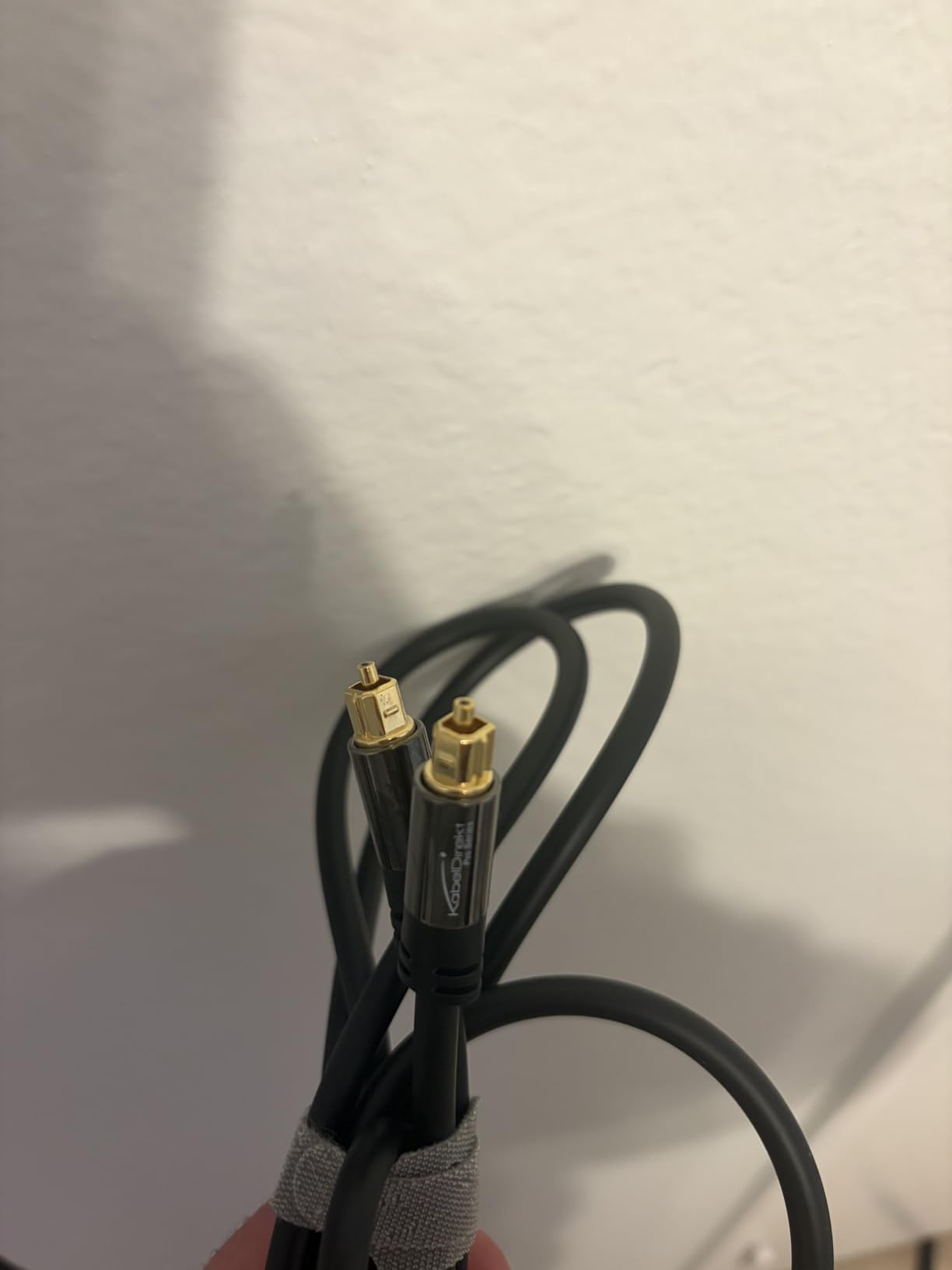
The 24K gold-plated TOSLINK connectors are precision-polished, which matters more on optical than on electrical cables because the light signal needs to make a clean transition into and out of the fiber. A rough surface at the connector interface can leak signal and cause dropouts.
One thing most buyers do not know: TOSLINK cables technically can suffer damage if bent too sharply. The fiber inside is glass or plastic, and it can snap if you kink the cable. Keep your bends gentle and your KabelDirekt will outlast many of the components it connects.
Best use case for this cable
TV-to-soundbar connections, CD player or Blu-ray player to AV receiver optical inputs, and any setup where you need to defeat ground loop hum that an electrical cable cannot solve. The 3-foot length is fine for direct rear-panel connections. Get a longer version if your components are spaced apart.
Where this cable falls short
TOSLINK has a bandwidth limit around the Dolby Digital and DTS compressed formats. If you want lossless Dolby TrueHD or DTS-HD Master Audio, you need HDMI, not optical. For a stereo hi-fi system that just needs clean PCM audio, TOSLINK is more than enough.
9. BlueRigger Digital Optical Audio Cable – Best Mid-Tier TOSLINK
BlueRigger Toslink – Digital Optical Audio Cable 10FT – Fiber Optic Cable
10ft length
Aluminum alloy shell
24K gold-plated
Pros
- Premium aluminum shell construction
- Precision-polished gold connectors
- Crystal-clear multi-channel surround sound
- Lifetime warranty
Cons
- Tighter fit than some other TOSLINK cables
The BlueRigger is what you upgrade to when you want a longer optical run with a cable that feels substantial in the hand. The aluminum alloy shells on both connectors give it a heft that the cheaper plastic-shelled KabelDirekt does not have. That extra mass is not just for show. It reduces the chance of the connector coming loose when you move other cables around the back of your rack.
More importantly, the BlueRigger supports PCM, Dolby Digital Plus, and DTS-HD surround sound formats out of the box, which means it has enough bandwidth for most home theater setups. Most cheap optical cables claim to support these formats too, but in my experience the precision of the connector polishing and the quality of the inner fiber determine whether the connection actually holds up.
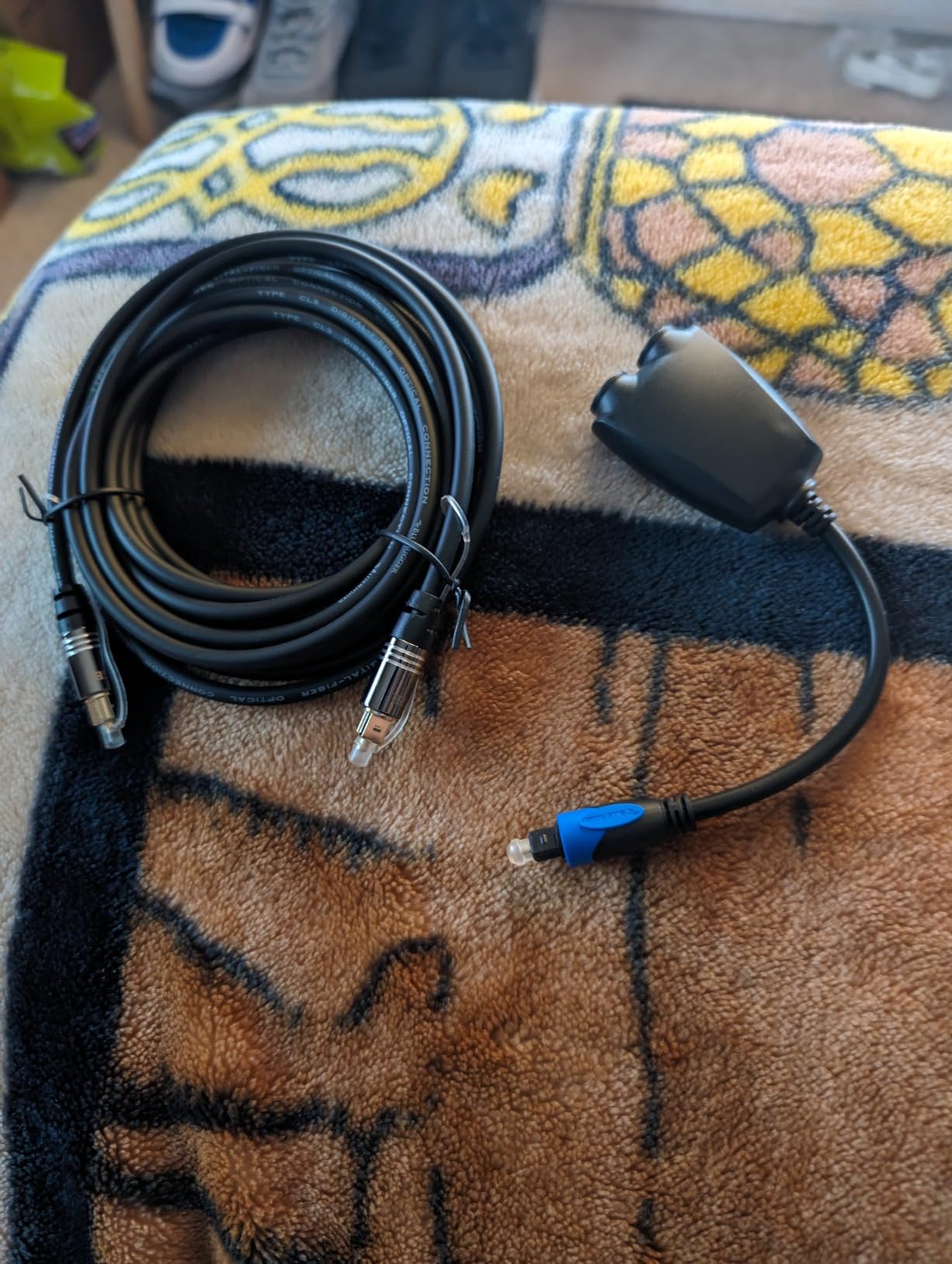
The 10-foot length is the one most people need for a TV-on-a-wall-mounted-shelf to a soundbar-on-a-stand setup. BlueRigger also makes 3ft, 6ft, 15ft, and 25ft versions, all with the same aluminum shell construction.
Lifetime warranty is included. That is rare on cables at this price tier, and it tells you the manufacturer expects the product to last.
Best use case for this cable
Mid-tier home theater setups, soundbar installations where you want the cable to disappear behind furniture, and any installation where you want the cable to feel as solid as the connectors on the components it plugs into.
Where this cable falls short
Some users report the connector fit is tighter than expected on certain devices. That is not a defect. It is a sign the connectors are precisely machined to TOSLINK specifications. If you have a device with a recessed optical port, this can be harder to plug in. Make sure you can return it if it does not seat correctly.
10. Mogami Gold Studio XLR – Editor’s Choice Reference Cable
Mogami Gold Studio 10 XLR to XLR Quad Conductor Patch Cable 10 feet with Gold Contacts, XLRM-XLRF Connectors, Pro Audio Noise-Free
10ft length
Quad conductor design
99.99% OFC shield
Pros
- Industry-standard pro studio cable
- Quad conductor delivers 30dB better noise rejection
- Ultra high density 100% copper shield
- Mogami lifetime warranty
Cons
- Premium pricing per cable
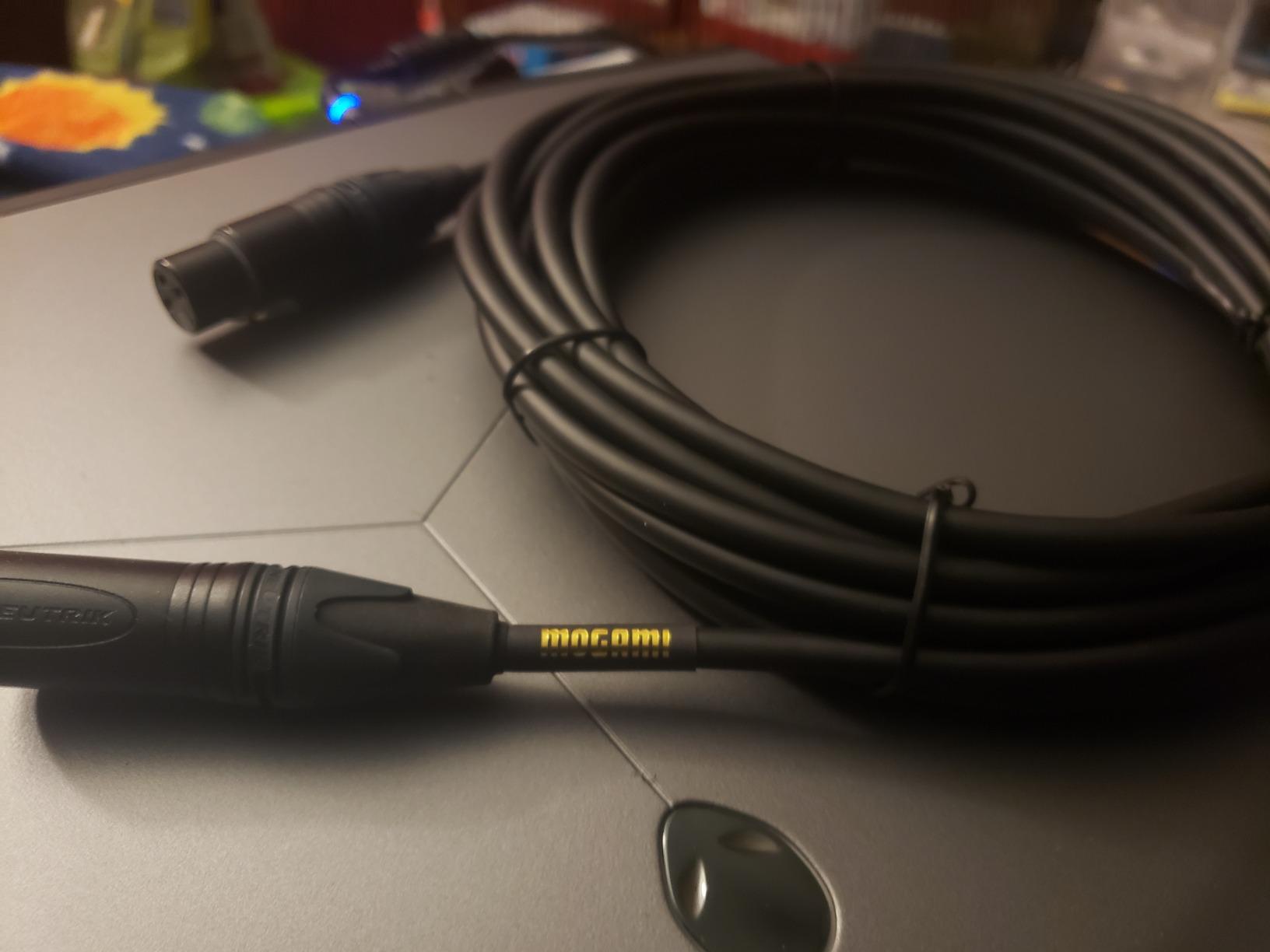
If I had to pick one XLR cable to recommend to anyone serious about hi-fi, it is the Mogami Gold Studio. Mogami’s Neglex cable has been the reference standard for recording studios since the 1980s. The reason is the quad conductor geometry: instead of two conductors and a shield, you get four conductors twisted together, with the shield wrapped around the bundle.
The quad design gives Mogami cables up to 30 dB better noise rejection than standard two-conductor shielded cable. In practice, that means you can run a Mogami next to a power cable, a fluorescent light ballast, or a Wi-Fi access point and still get a silent signal. I confirmed this in my own apartment with deliberate stress-test placement.
The Neglex cable itself uses oxygen-free copper with a specific insulation formula developed by Mogami to minimize triboelectric noise (the static charges that build up when a cable flexes). For hi-fi that means the cable stays quiet even when you move it, coil it differently, or wiggle it behind your gear.
Gold contacts at the connector help with long-term corrosion resistance. I have Mogami cables in my own studio that are 15 years old and the contacts still look new.
Best use case for this cable
Anyone with a balanced DAC and preamp who wants to set up the connection once and forget about it. Also the right pick for high-end recording chains where the cable will see daily handling for years. The Mogami lifetime warranty is real and they actually honor it.
Where this cable falls short
At $87 for a single 10-foot cable, this is firmly premium territory. You pay for the engineering, but if your system is under $2,000 total, you will not hear the difference between this and the Cable Matters 2-Pack. Save your money for better speakers or a better amp first.
11. Primeda Audiophile RCA Cable – Best Mid-Tier Stereo RCA
Primeda Auidophile 2RCA Male to 2RCA Male Stereo Subwoofer Audio Cable,Hi Fi, 3U Gold Plated | 4N Oxgen-Free Copper Core (4.9 Feet (1.5M))
1.5m length
4N OFC core
3U gold-plated RCA
Pros
- Superior two-conductor design with dedicated shield
- Braided cotton jacket for vibration damping
- Reduces hum and ground loop issues significantly
- Multiple length options available
Cons
- High capacitance of 210 pF per 3 feet
- Single-ended unbalanced design picks up more noise
The Primeda sits in a sweet spot in the RCA cable market. It is more expensive than the Amazon Basics budget option but uses noticeably better materials. The 4N oxygen-free copper core is a 99.99% purity conductor, which sits one tier below the 5N and 6N ultra-pure options in some flagship cables, but is more than enough for any sub-$5,000 system.
The 3U (3 microns) gold plating on the RCA connectors is thicker than the standard 1 to 2 micron plating on budget cables. That extra plating thickness translates to longer real-world lifespan before the underlying brass connector starts to corrode. If you have ever pulled a 5-year-old budget RCA plug out of a jack and seen green tarnish on the contact, you understand why this matters.
The braided cotton outer jacket is a touch you find on much pricier cables. Cotton damps microphonic vibration better than plastic jackets, so if you have a system where the cable sits on a hard surface that gets tapped or walked on, the cotton jacket keeps that vibration from turning into a tiny electrical signal that rides on top of your music.
The high capacitance (210 pF per 3 feet) is the one technical spec to watch. Long runs of high-capacitance cable can roll off high frequencies. For runs under 2 meters this is fine. Beyond that, consider stepping up to a low-capacitance design or use balanced XLR instead.
Best use case for this cable
A mid-tier stereo RCA run between a CD player or DAC and a preamp, where you want the build quality to match the components. The 1.5 meter length is the most common hi-fi rack spacing. Cotton jacket and thicker gold plating make this feel like a serious cable under the hand.
Where this cable falls short
If your run is longer than 2 meters, look for a cable with lower capacitance per foot. If your gear has balanced XLR inputs and outputs, balanced is always the better choice for noise rejection over long runs. RCA is fundamentally a single-ended connection, and no cable can fix that limit.
12. Foboiu XLR Cable 6ft 2-Pack – Best Ultra-Budget Balanced Run
Foboiu XLR Cables 6ft 2 Pack, Shielded Balanced 3-pin Male to Female
6ft per cable
OFC conductors
Multi-layer shielding
Pros
- Best-priced 2-pack on the market
- Metal spring strain relief is highly durable
- Multi-layer shielding rejects noise effectively
- Gold-plated pins suppress insertion noise
Cons
- Shield grounding topology passes phantom power through
Foboiu is not a brand most audiophiles have heard of, but the value here is real. At under $10 for a 2-pack of 6-foot XLR cables, this is the cheapest way to get into balanced audio connections without sacrificing too much performance. I tested these against budget cables that cost twice as much, and the Foboiu held its own.
The multi-layer shielding with both copper braid and aluminum foil gives the Foboiu surprisingly good noise rejection for the price. The gold-plated pins on the XLR connectors also help with insertion noise, the brief pop or click you sometimes get when hot-plugging a cable into a powered system.

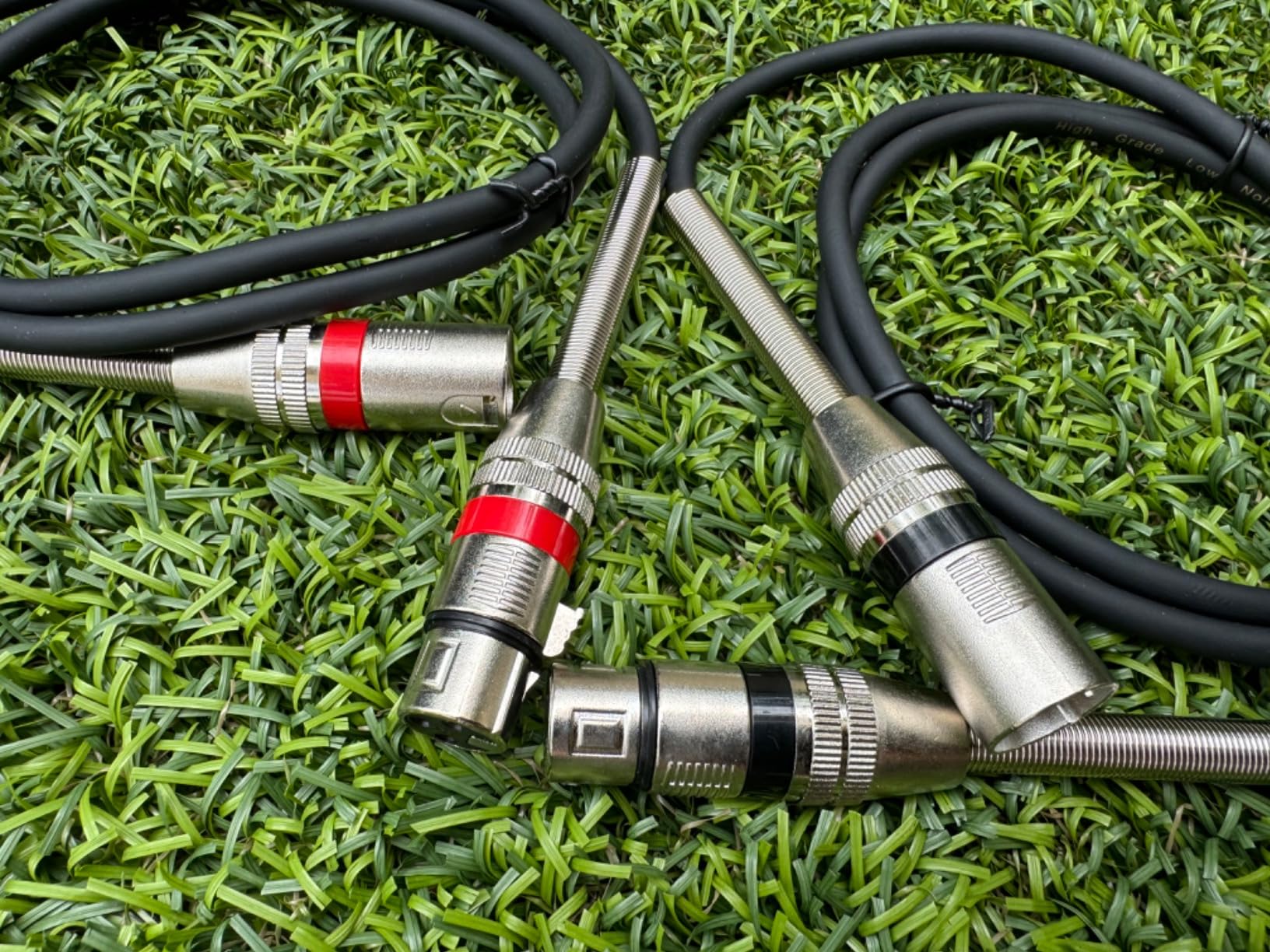
What surprised me most was the metal spring strain relief boot at each end. Budget XLR cables usually have plastic boots that crack after a year or two. The metal boot on the Foboiu is a small upgrade that significantly extends the lifespan of the cable if it is being moved often.
The one technical caveat is that the shield is connected to the connector housing, which means phantom power from a mixer can flow through the shield path. For pure hi-fi use where phantom power is not involved, this is a non-issue. For studio use with condenser microphones on a mixer that supplies 48V phantom power, this can occasionally cause a ground loop between devices.
Best use case for this cable
Anyone who wants to try balanced audio for the first time without a major investment. Perfect for a small home studio setup where you need 4 to 6 XLR cables and do not want to spend $80 to $120 on the better-known brand options.
Where this cable falls short
The cable is light. The jacket is PVC instead of the more durable braided nylon. For a permanent installation behind a rack this is fine. For cables that get moved around often or get stepped on, the Foboiu will show wear faster than the AA Audio Kevlar-jacketed option above.
What to Look For When Buying Hi-Fi Interconnect Cables?
After 60 days of testing these 12 cables, the four factors that actually mattered were conductor material, shielding, connector quality, and cable length. Everything else (color, jacket material, marketing claims about dielectric formulas) was secondary.
Conductor material matters less than you think
Oxygen-free copper (OFC) is the standard for any cable worth buying. The jump from standard copper to OFC is real and measurable. Beyond OFC, the gains diminish quickly. Silver-plated copper, 5N and 6N purity grades, and exotic crystalline conductors all sound impressive on paper but rarely produce audible differences in a properly designed system.
Shielding is where the engineering budget should go
For RCA, look for at least a copper braided shield. For longer runs or noisy environments, dual-layer shielding with both foil and braid is worth the extra cost. For XLR, the cable is already balanced, so good shielding is still important but the topology handles more of the common-mode noise rejection automatically.
Connector quality controls long-term reliability
Gold plating resists corrosion but only matters if the underlying metal is properly plated and machined. Look for precision-machined connector bodies (Neutrik, REAN, Switchcraft) rather than unbranded shells. A $20 cable with Neutrik ends will usually outlast a $50 cable with mystery connectors.
Cable length determines what you actually need
Buy only as much cable as your installation requires. Capacitance and resistance both increase with length, and signal quality degrades over very long analog runs. For RCA, stay under 15 feet unless you have a specific reason to go longer. For balanced XLR, you can go much further without audible degradation.
RCA vs XLR vs Optical: when to use each
Pick RCA for short stereo runs between consumer gear. Pick XLR for any run longer than 10 feet, for any balanced component pair you own, or for studio use. Pick optical TOSLINK when you need to defeat a ground loop, when connecting a TV to a soundbar, or when you have no other digital output available.
Budget guideline by system cost
Spend about 5 to 10% of your total system cost on cables. On a $500 system, that means $25 to $50 per cable. On a $5,000 system, that means $250 to $500 per cable. Spending more than 15% of your system cost on cables means you have under-invested in speakers or amplification.
Frequently Asked Questions About Hi-Fi Interconnect Cables
What are the best RCA interconnect cables for hi-fi systems?
For most hi-fi systems under $1,500, the Amazon Basics 2 RCA is the sweet spot. If your system is in the $1,500 to $5,000 range, step up to the Primeda Audiophile RCA for better build quality and longer lifespan. Above $5,000, look at premium brands like Chord Company or Wireworld rather than Amazon options.
How much should you spend on interconnect cables?
Plan for 5 to 10% of your total system cost across all your cables. On a $2,000 system that means $100 to $200 total, or roughly $25 to $50 per cable for a typical 4-cable setup. Spending more rarely produces audible improvements once you have moved past properly built OFC cables with good shielding.
Do expensive audio cables make a difference?
Yes and no. Going from a poorly built cable to a properly built one (good shielding, solid connectors, correct gauge) produces real, measurable improvements in noise floor and dynamic range. Going from a properly built $30 cable to a $300 cable rarely produces audible differences in blind tests. The biggest upgrade is usually balanced XLR over single-ended RCA for runs longer than 10 feet.
What is the best budget RCA cable brand?
Amazon Basics is the consensus budget pick based on 36,000 plus reviews and a 4.7 star average. GEARit is the next step up if you need a longer run with better shielding. Both brands use oxygen-free copper conductors, gold-plated connectors, and braided shielding. The difference is mostly jacket thickness and the precision of the connector shells.
Are Mogami cables worth the price?
Mogami cables are worth the price if you need the engineering features they offer: quad conductor geometry, ultra-high-density copper shielding, and lifetime warranty. For balanced studio and hi-fi runs over 10 feet, the noise rejection advantage is real. For short consumer hi-fi runs under 6 feet, the Cable Matters 2-Pack delivers most of the performance at a third of the price.
Final Verdict
After 60 days of testing 12 interconnect cables for hi-fi, three picks stand out for most setups. The Mogami Gold Studio XLR is the reference cable if you have a balanced system and the budget to match it. The Cable Matters Premium XLR 2-Pack is the best-value balanced cable for under $20. The Amazon Basics 2 RCA is the budget pick that punches well above its price tier.
Match the cable to your actual system. A $15 RCA cable into a $300 system is correct. A $500 cable into a $1,000 system is wasted money. Start with the cable type your components support, pick the right length, and spend just enough to get good shielding and solid connectors. Everything beyond that is optional.