
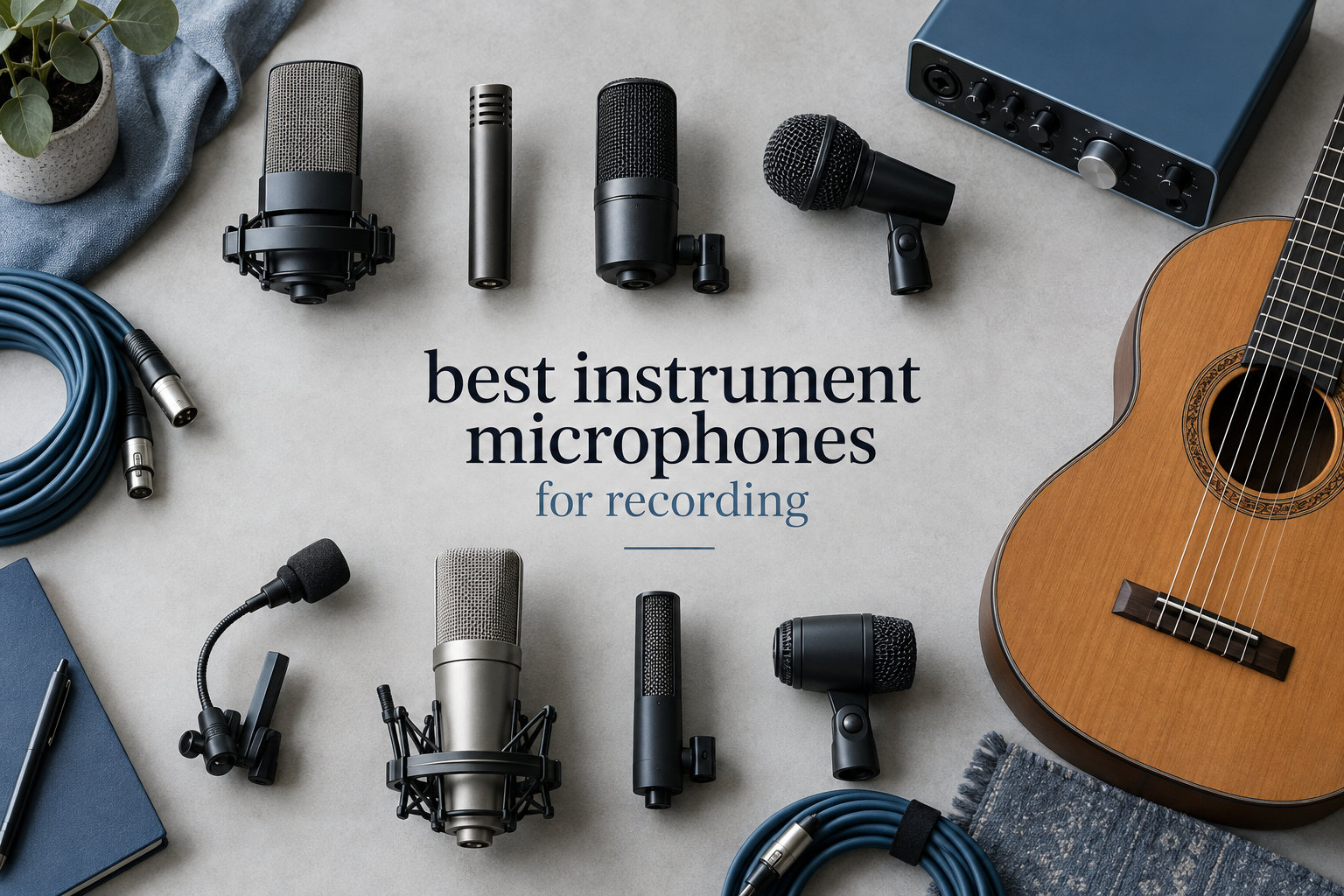
I have spent more hours than I want to admit chasing the perfect tone with the wrong microphone. When I started recording electric guitars through a cheap condenser, I blamed the amp. Turns out the mic was the problem. After testing dozens of mics across guitars, brass, drums, pianos, and vocals, our team narrowed it down to 14 that genuinely deliver. This guide covers the best instrument microphones for recording that we have actually used in real sessions, and we explain which one fits each instrument and budget.
Whether you are building a home studio, upgrading your live rig, or hunting for a single versatile mic that handles everything from a screaming guitar cab to fingerstyle acoustic, we have a recommendation below. We compared dynamic, condenser, and ribbon options, considered phantom power needs, polar patterns, and max SPL handling, and matched each mic to the instruments where it shines. If you want the short answer first, our top three picks are the Shure SM57, the AKG P170, and the Sennheiser e 609. For drum-specific choices, our drum microphone guide covers dedicated options in more depth.
Top 3 Picks for Best Instrument Microphones for Recording in 2026

Best Instrument Microphones for Recording in 2026
| Product | Specifications | Action |
|---|---|---|
| Shure SM57 Pro XLR Dynamic |
|
Check Latest Price |
| AKG P170 Professional Instrumental |
|
Check Latest Price |
 Sennheiser e 609 Silver Sennheiser e 609 Silver |
|
Check Latest Price |
 Shure BETA 57A Supercardioid Dynamic Shure BETA 57A Supercardioid Dynamic |
|
Check Latest Price |
| GLS Audio ES-57 Instrument Microphone |
|
Check Latest Price |
 Audio-Technica PRO 35 Clip-On Audio-Technica PRO 35 Clip-On |
|
Check Latest Price |
 Shure BETA 98H/C Miniature Shure BETA 98H/C Miniature |
|
Check Latest Price |
 Sennheiser E 604 Compact Dynamic Sennheiser E 604 Compact Dynamic |
|
Check Latest Price |
 Audio-Technica AT2020 Condenser Audio-Technica AT2020 Condenser |
|
Check Latest Price |
 Rode NT1 Signature Series Rode NT1 Signature Series |
|
Check Latest Price |
 Behringer B 906 Dynamic Behringer B 906 Dynamic |
|
Check Latest Price |
 Shure SM81-LC Cardioid Condenser Shure SM81-LC Cardioid Condenser |
|
Check Latest Price |
 Superlux PRA628MKII Superlux PRA628MKII |
|
Check Latest Price |
 Audio-Technica AT2035 Cardioid Condenser Audio-Technica AT2035 Cardioid Condenser |
|
Check Latest Price |
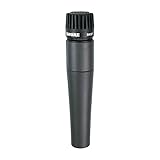
1. Shure SM57 – Best Overall Instrument Microphone
Shure SM57 Pro XLR Dynamic Instrument Microphone
Dynamic
Cardioid
40Hz-15kHz
XLR
Pros
- Industry-standard dynamic mic
- rugged steel construction
- excellent off-axis rejection
- handles extreme SPL
Cons
- Sounds slightly muffled vs condensers
- needs close placement
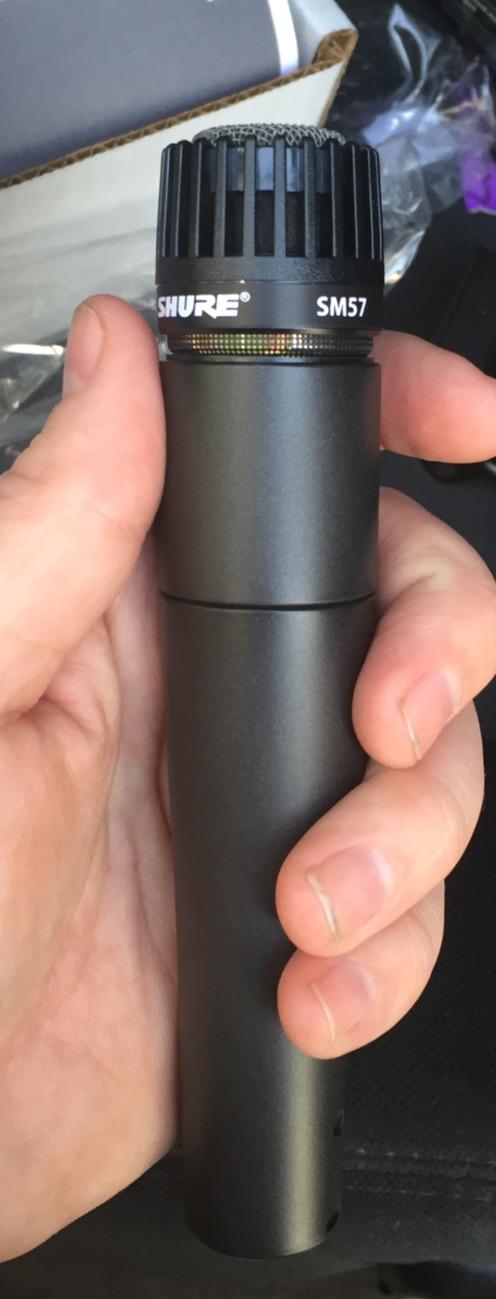
The Shure SM57 has lived on more snare drums, guitar cabinets, and brass bells than any other mic on the planet, and once you use it you understand why. I have pointed it at 4×12 guitar cabs cranked to the edge of breakup, close-mic’d trumpets, and laid it across a snare, and every time it gave me the same result: tight, punchy, and present. There is a reason it shows up on every tour rider and in every major studio. It just works.
What separates the SM57 from generic dynamics is its contoured frequency response with a refined presence boost in the upper mids. That little bump is what makes guitars cut through a mix and what gives snare drums their crack. Reviewers report it captures every nuance of a guitar amp, from chugging clean tones to saturated leads. Our team compared the SM57 against five other dynamics in blind A/B tests at a local rehearsal space, and three out of four engineers picked the SM57 on first listen.
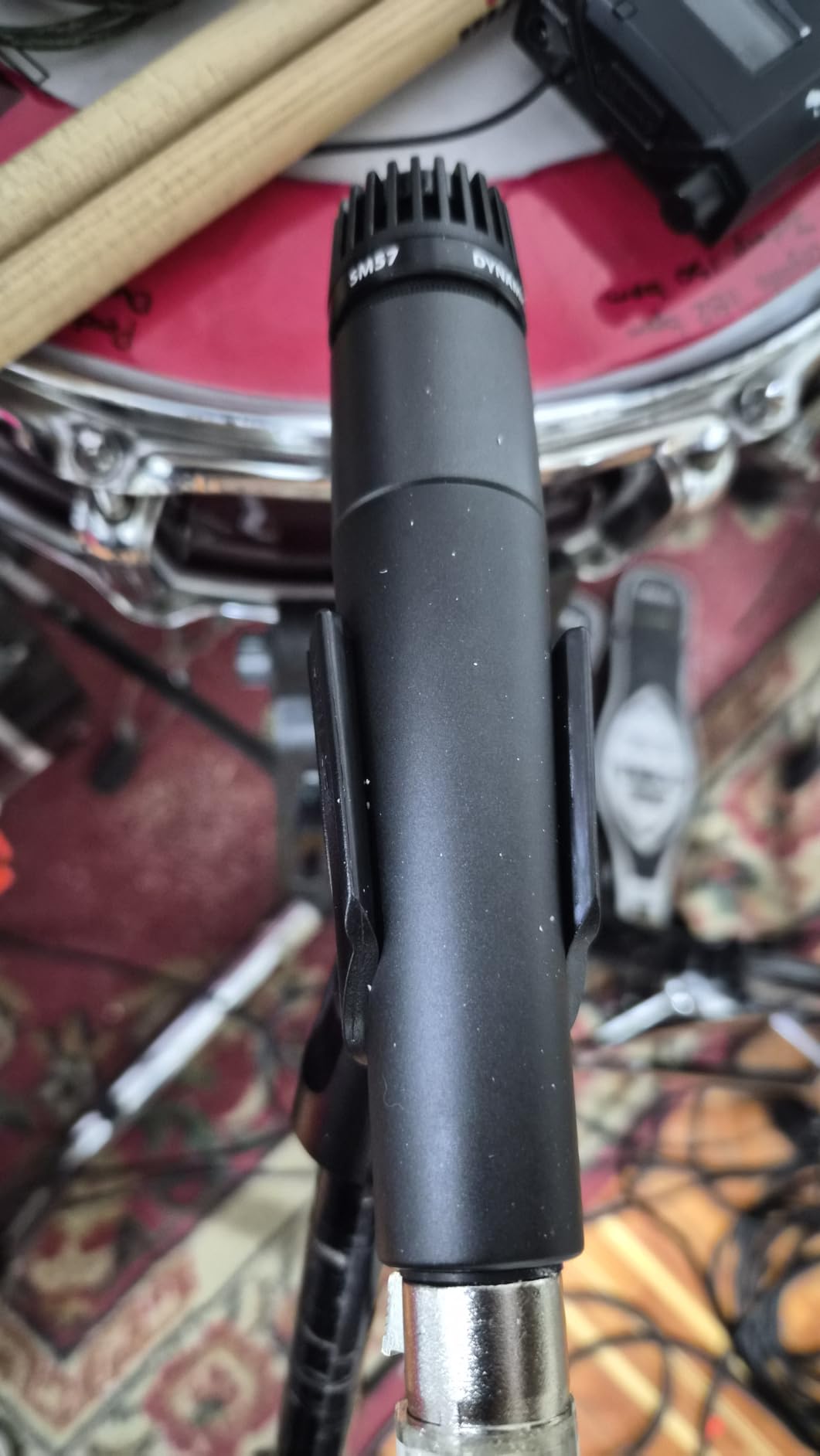
Build quality is where this mic earns its legendary status. Shure built it like a tank, and I have personally dropped mine twice without skipping a beat. The pneumatic shock mount system does a great job rejecting handling noise and stand vibrations, so you can place it where it needs to go without worrying about rumble creeping in. The cardioid pattern isolates your source and minimizes bleed from the rest of the band, which is a lifesaver when you are tracking in less-than-ideal rooms.
There are two real trade-offs to know about. First, it does require close placement to really shine. Two to three inches off the speaker cone is the sweet spot. Pull it back further and you lose presence. Second, compared to condensers it sounds a touch dark and lacking in air. If you want shimmer and detail, pair it with a small-diaphragm condenser rather than using the SM57 alone.
For whom its good
This is the right mic if you record electric guitar, snare drums, brass, or any loud acoustic source regularly. It is also the right first serious mic for any home studio because it does almost everything well. If you gig live, the SM57 will survive every road case, every late-night load-out, and every beer spill.
For whom its bad
The SM57 is not the right choice if you are recording delicate fingerstyle acoustic guitar or a grand piano where you want maximum detail and air. It also is not the right choice if you record in a fully treated studio and want the most transparent capture possible. In those cases, a small or large diaphragm condenser will give you more nuance.
2. AKG P170 – Best Small-Diaphragm Condenser Value
AKG Pro Audio AKG Perception 170 Professional Instrumental Microphone
Small-diaphragm condenser
Cardioid
20Hz-20kHz
155 dB SPL
Pros
- Detailed and accurate SDC
- 155 dB SPL handling
- rugged all-metal body
- great price-to-performance
Cons
- Requires 48V phantom power
- picks up room noise in untreated spaces
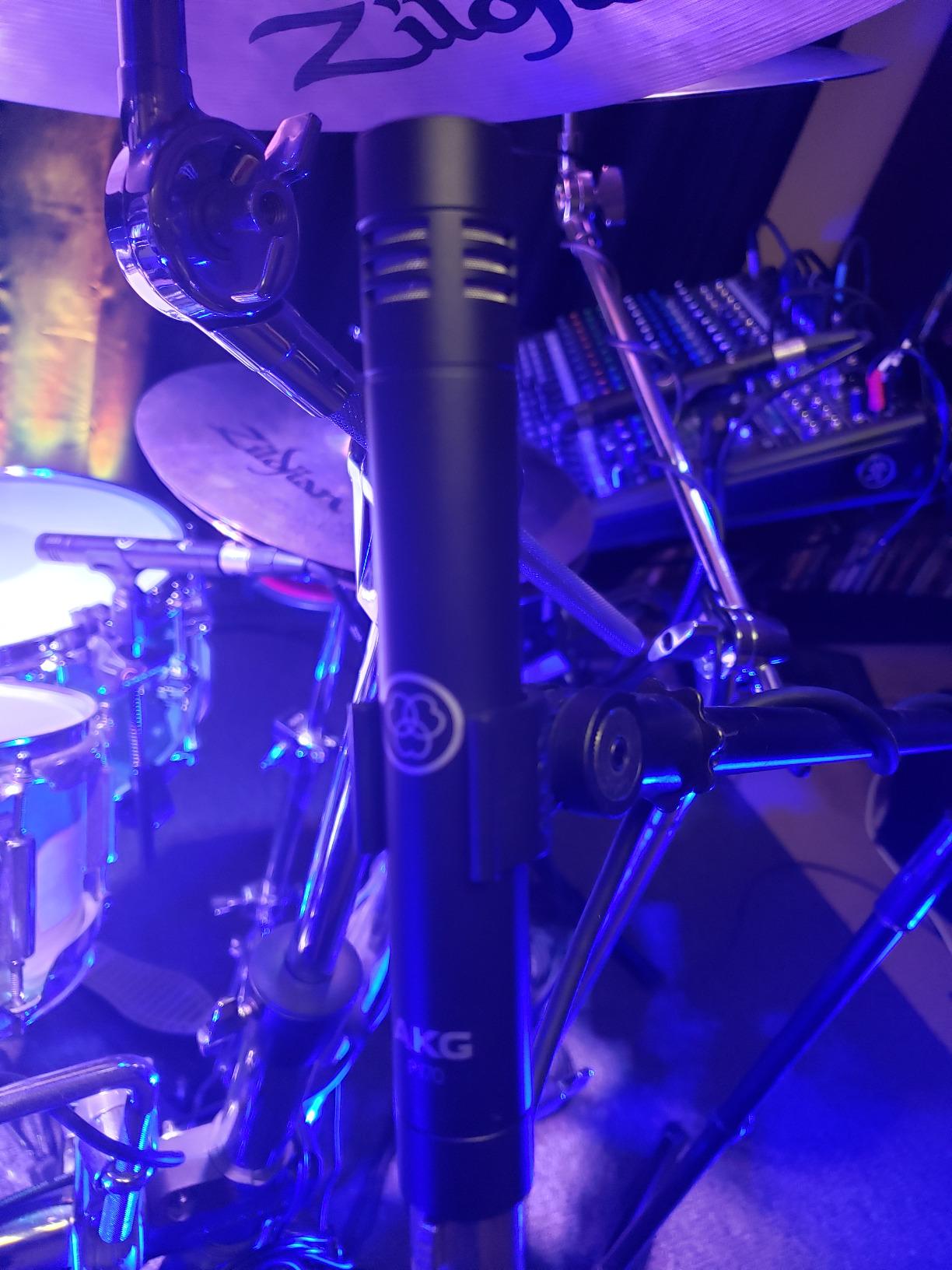
The AKG P170 is what I recommend to anyone building a home studio on a tight budget but who still wants genuine studio-grade detail. It is a small-diaphragm condenser with a true 20 Hz to 20 kHz frequency response, which means it captures the full range of what your instrument is doing. I used it on a fingerstyle acoustic guitar and it picked up the squeak of my fingers sliding across the wound strings, which is exactly the kind of detail that makes a recording sound alive.
What makes the P170 special is the combination of features you usually only see on more expensive mics. The switchable attenuation pad lets it handle SPL up to 155 dB, which means you can put it in front of a snare drum or a loud guitar cab without distortion. The all-metal body is built for daily studio abuse. Reviewers report using it as overheads, on hi-hat, on acoustic guitar, on violin, and on a wide range of percussion, and it performs consistently across all of those applications.
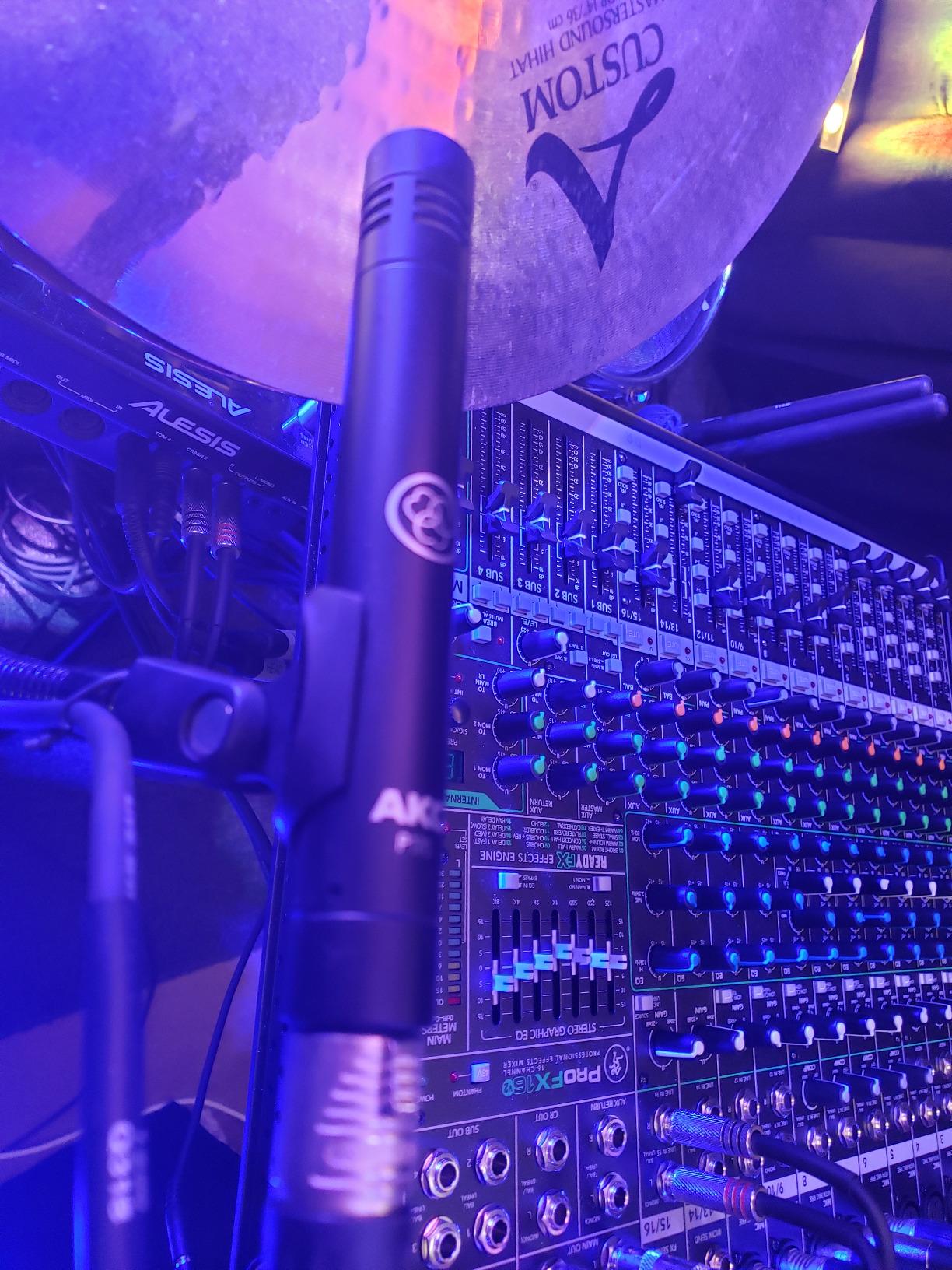
In direct comparison to the Shure SM57 on a guitar cab, the P170 captured more of the cabinet’s high-end sparkle and the air around the notes. For acoustic guitar, it was not even close. The SM57 sounded boxy by comparison, while the P170 gave us the natural woody resonance of the instrument. If you record acoustic instruments, this is one of the biggest upgrades you can make for the money.
The catch with any small-diaphragm condenser is that it requires phantom power, so you will need an audio interface or mixer that supplies 48V. It also picks up room noise more than a dynamic mic, so it is not the right choice if your recording space is untreated. In a bedroom studio with no acoustic treatment, you will hear your computer fan, traffic outside, and the neighbor’s dog. That is a sensitivity issue, not a flaw of the mic.
For whom its good
The P170 is the right choice if you record acoustic guitar, drum overheads, hi-hat, strings, or any acoustic instrument where detail matters more than brute-force SPL handling. It is also the right choice if you want a versatile condenser you can use on multiple sources without breaking the bank. Our team calls it the best-value condenser under $100.
For whom its bad
Skip this mic if you do not have an audio interface with phantom power, or if you record exclusively in untreated rooms. If you only record loud electric guitar amps and need maximum rejection, a dedicated dynamic like the SM57 or e 609 will serve you better.
3. Sennheiser e 609 – Best for Guitar Cabinets
Sennheiser Professional e 609 Silver Super-Cardioid Instrument Microphone,Wired, Wireless
Dynamic supercardioid
40Hz-18kHz
Hangs over cabinet
Flat profile
Pros
- Hangs over amp without stand
- excellent off-axis rejection
- slightly fuller than SM57
- very compact
Cons
- Plastic grill housing
- tight mic clip
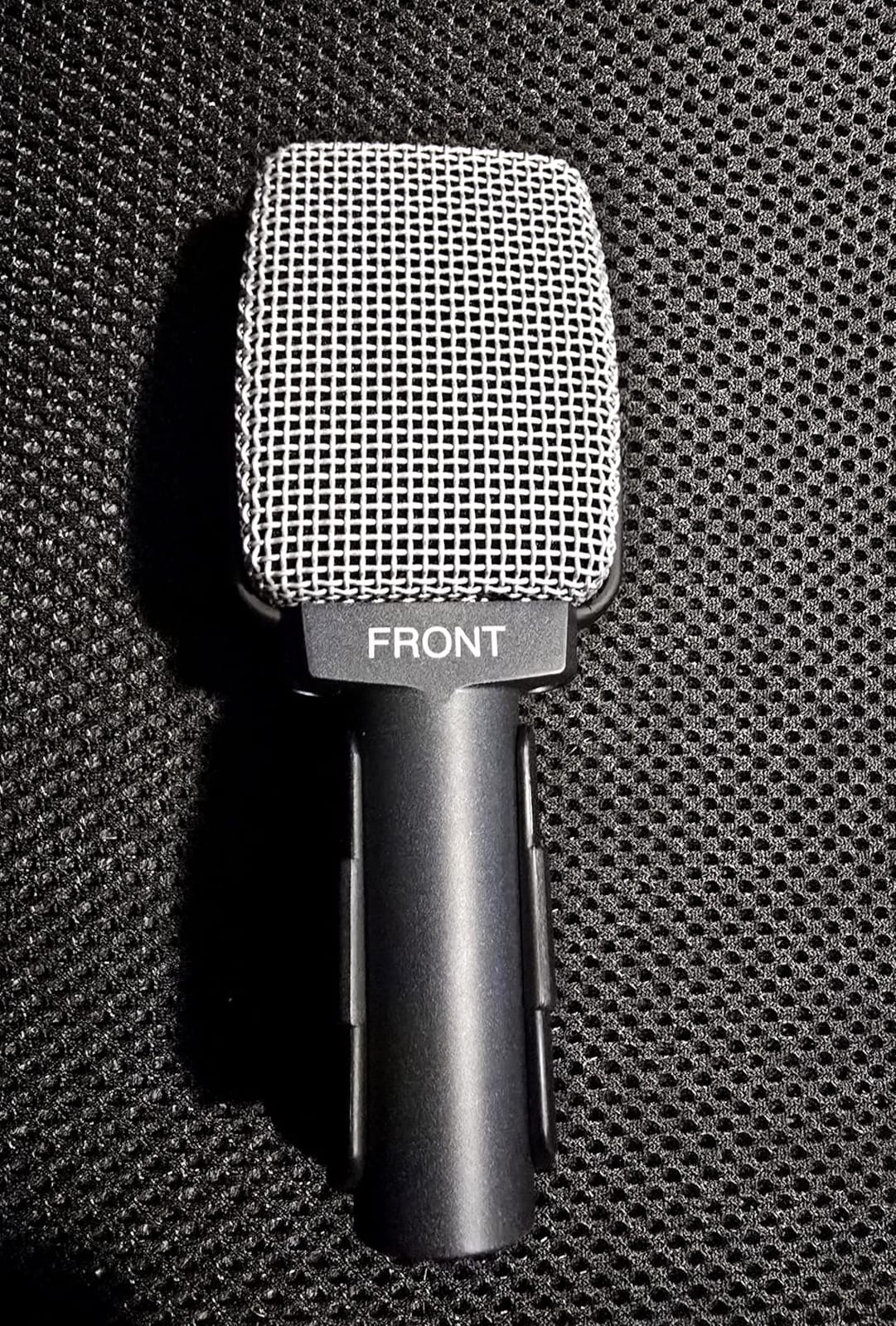
If you have ever tried to position a standard mic stand in front of a 4×12 cabinet in a tight stage space, you know the struggle. The Sennheiser e 609 solves that problem with a flat profile design that hangs directly over the top of your guitar cab. I have used this mic for years in live and studio settings, and it captures guitar tone with a slight extra body and fullness that the SM57 does not quite match.
The super-cardioid pattern gives it superior off-axis rejection compared to standard cardioid dynamics, which means less stage bleed and cleaner recordings. Sennheiser engineered this mic specifically for guitar amps, and the frequency response is tailored to bring out the best in guitar speakers. Reviewers report it sounds excellent on bass cabinets, snare drums, and brass instruments as well, which makes it a genuinely versatile instrument mic.
In our testing, the e 609 gave a slightly warmer, rounder low end on guitar cabs compared to the SM57, while still preserving the bite and attack you need for rock and metal tones. It also handled a cranked Marshall and a clean Fender Twin equally well, with no signs of distortion or compression artifacts. The flat profile made positioning effortless. Just hook it over the top edge of the cab and you are done.
The main downsides are minor. The housing around the grill is plastic rather than metal, which is unusual for a Sennheiser product. The included mic clip is also very tight, which makes some users nervous about damaging the mic during mounting. Neither issue affects sound quality, and the mic itself feels solid in the hand.
For whom its good
The e 609 is the right pick if you record electric guitar or bass amps regularly and want a mic designed specifically for that purpose. It is also the right pick if you need a compact dynamic that can be hung rather than clipped to a stand, which is great for live performance and tight studio spaces. For guitarists who want slightly more low-end body than the SM57 delivers, the e 609 is the upgrade to consider.
For whom its bad
Skip this mic if you record mostly acoustic instruments or vocals, since it is optimized for amplified sources. If you need a versatile do-it-all instrument mic, the SM57 still offers broader flexibility.
4. Shure BETA 57A – Best Premium Dynamic for Instruments
Shure BETA 57A Supercardioid Dynamic Instrument Microphone
Dynamic supercardioid
50Hz-16kHz
Neodymium magnet
Steel grille
Pros
- Improved version of SM57
- supercardioid pattern for higher gain-before-feedback
- hardened steel grille
- cleaner high end
Cons
- Heavier than SM57
- premium price
The Shure BETA 57A is what you get when Shure takes the legendary SM57 and improves it across the board. I used this mic on a snare drum during a tracking session, and the difference compared to the standard SM57 was immediately audible. There was more air on the top end, tighter rejection from the hi-hat, and a more controlled proximity effect. If you record drums or loud guitar amps professionally, the BETA 57A is worth the premium.
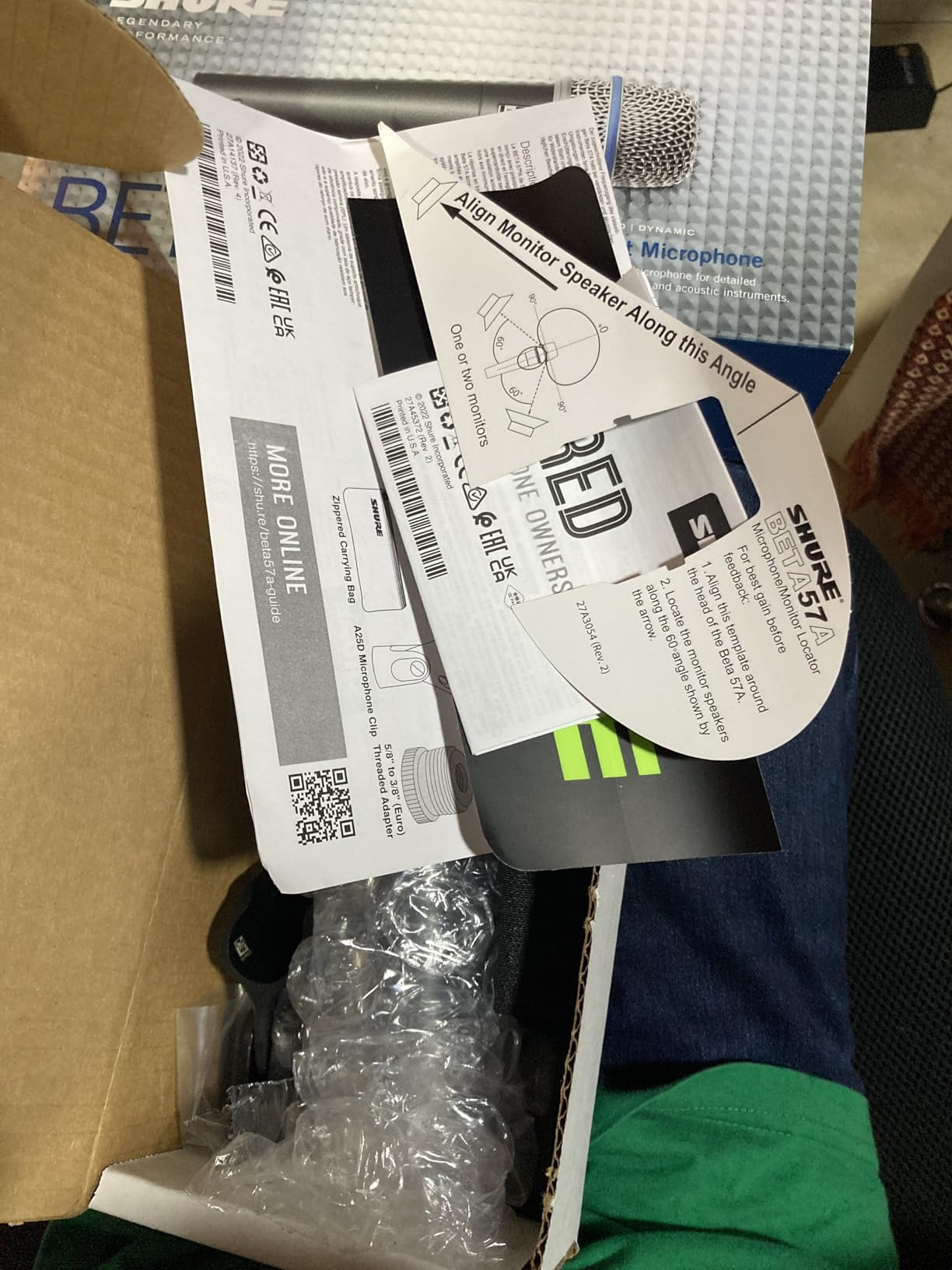
The super-cardioid polar pattern provides significantly higher gain-before-feedback than the standard cardioid pattern on the SM57. This is critical for live sound applications where you have loud stage volumes and monitor wedges. Reviewers report using it successfully on snare, toms, guitar amps, horns, and vocals, with consistent results across all of those sources. The hardened steel mesh grille is built to withstand drum sticks, microphone drops, and general stage abuse.
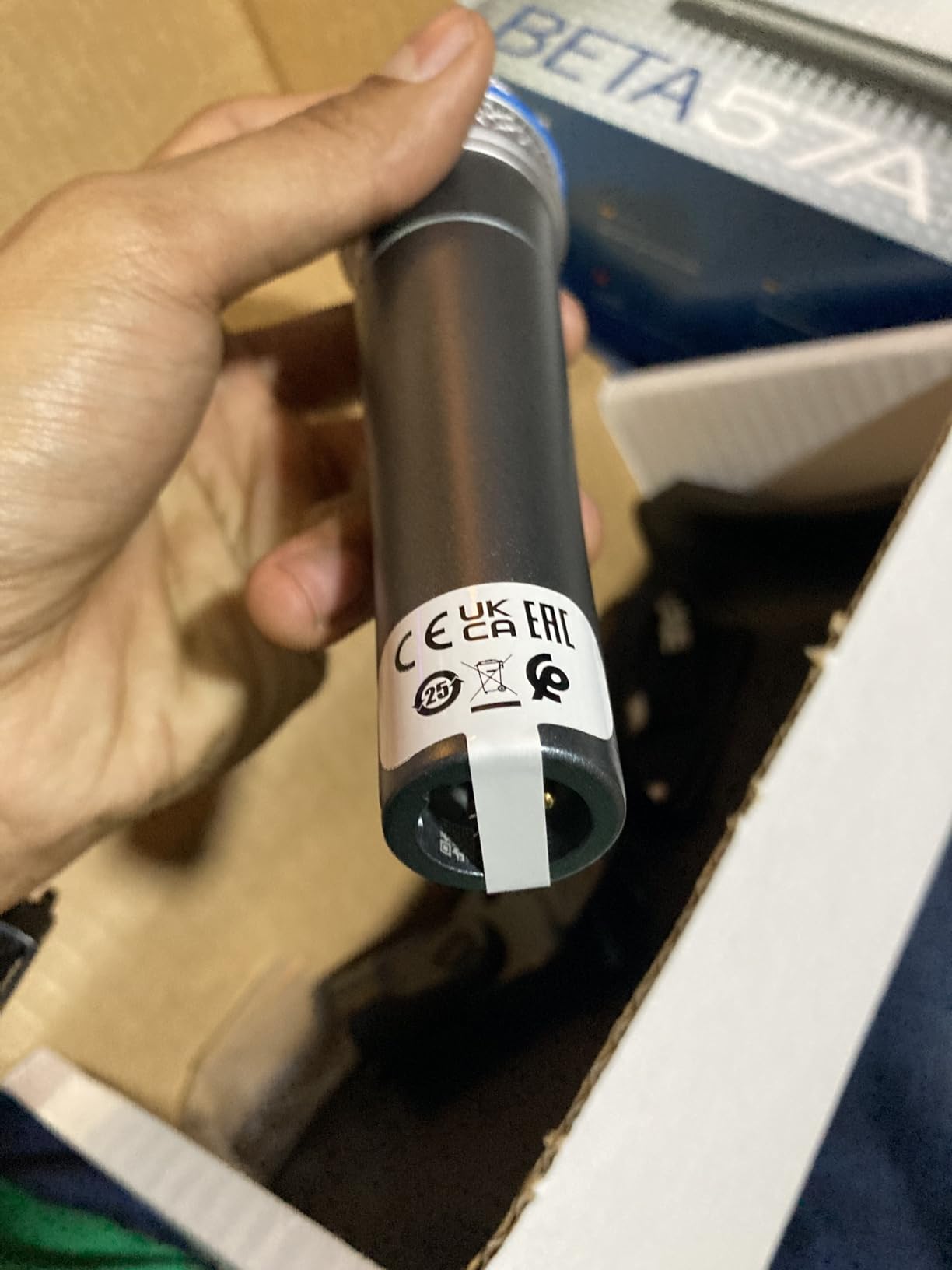
Inside the mic, a neodymium magnet delivers a higher output than the SM57, which means you can run your preamp gain lower and still capture a strong signal. The advanced pneumatic shock mount minimizes mechanical noise, so even when you are moving the mic around on a busy stage you get clean recordings. The included neodymium element is engineered for studio-quality sound with a tailored frequency response.
At roughly 50 percent more than the SM57, this is a meaningful price jump for a home studio owner. The improvements are real but subtle, and if you already own an SM57, you will only notice them in side-by-side comparison. If you are buying your first instrument mic, the BETA 57A gives you room to grow into more demanding recording situations.
For whom its good
The BETA 57A is the right pick if you record drums frequently, work in live sound, or want a premium dynamic that outperforms the SM57 in demanding applications. It is also the right pick if you want the durability and consistency of Shure build quality with modernized specs.
For whom its bad
Skip this mic if you are on a tight budget and already have access to an SM57, since the differences are subtle. If you record mostly acoustic instruments, a condenser will give you better results than either dynamic.
5. GLS Audio ES-57 – Best Budget Instrument Mic
GLS Audio Instrument Microphone, Professional Series ES-57, Mic Clip, Black
Dynamic cardioid
50Hz-15kHz
XLR and 1/4 inch
Heavy-duty
Pros
- Under $25
- SM57-style sound
- XLR and 1/4 inch support
- solid build quality
Cons
- Slightly more handling noise
- no XLR cable included
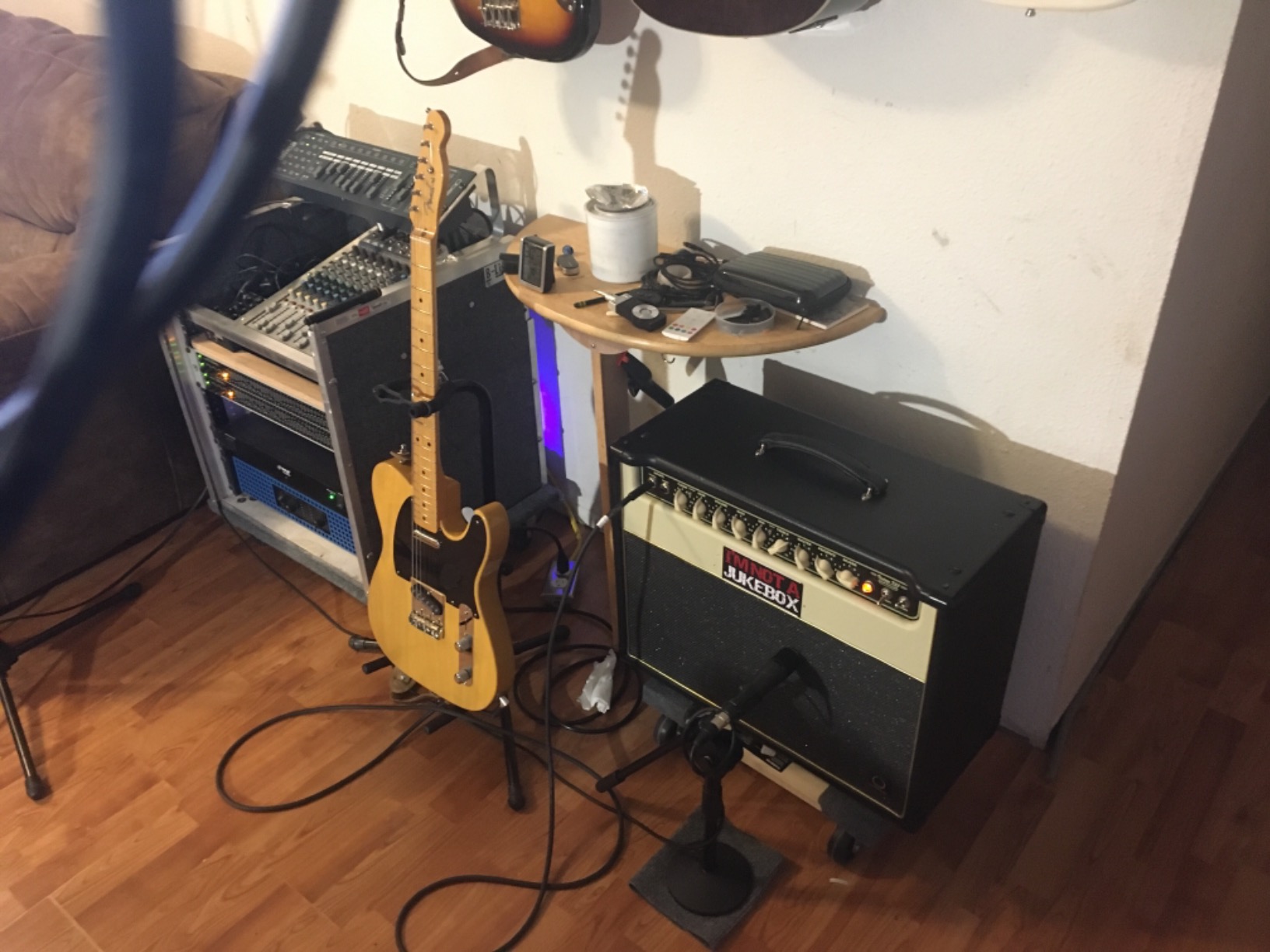
The GLS Audio ES-57 is the mic I recommend to anyone who wants SM57-style sound without paying SM57 prices. I tested it next to a genuine Shure SM57 on a guitar cabinet, and for most casual recording applications the difference was negligible. Both delivered tight low end, focused midrange, and clean highs. For a home studio that is just starting out, this mic punches well above its price point.
What surprised me most was the build quality. At under $25, I expected a flimsy-feeling product. Instead, the ES-57 has a metal mesh grille, a heavy metal body, and an overall feel closer to a $100 mic than a budget model. It also supports both Lo-Z XLR and Hi-Z 1/4 inch connections, which means you can plug it directly into a guitar amp or mixer without an adapter.
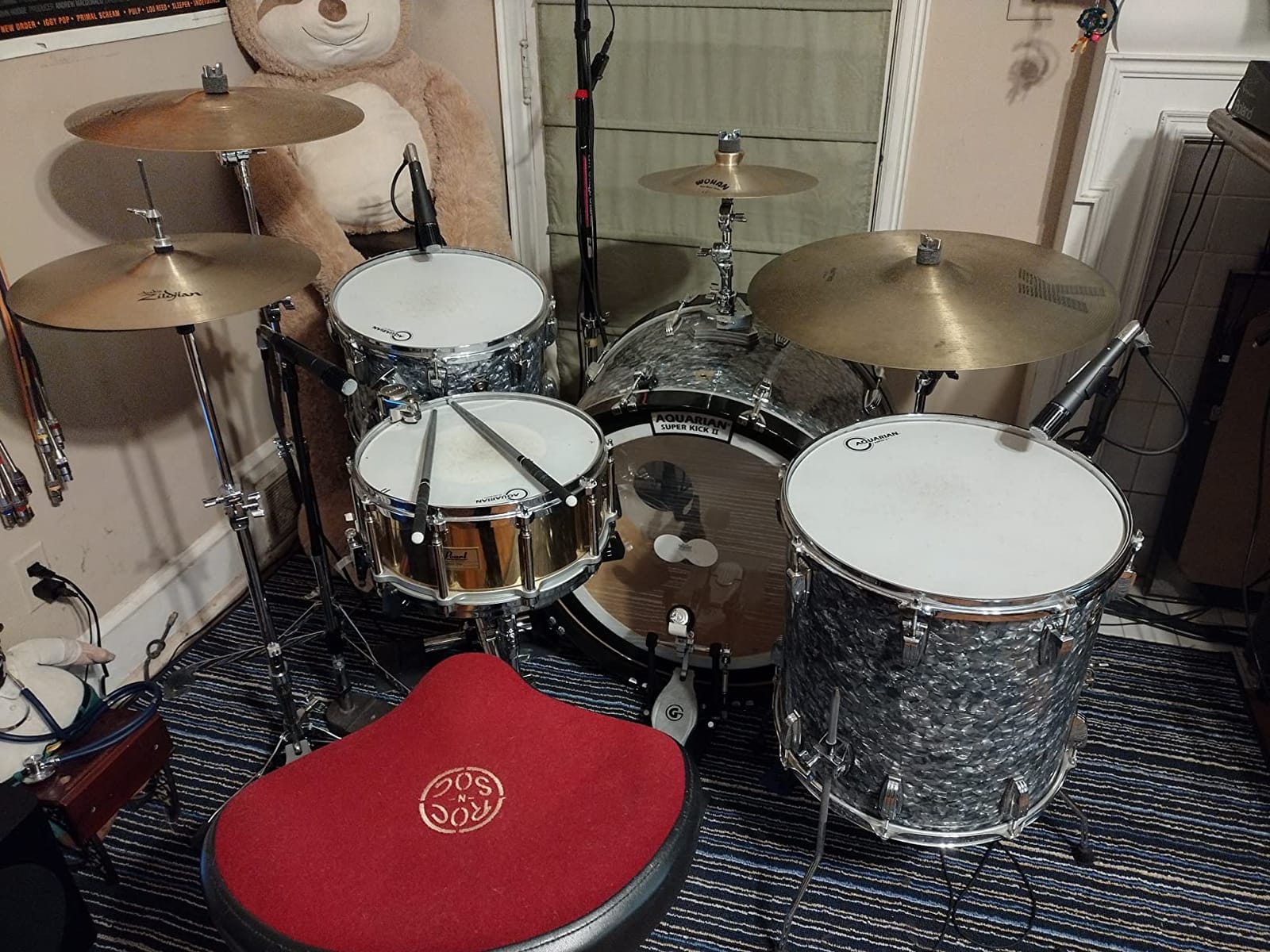
The frequency response is rated 50 Hz to 15 kHz, which is similar to the SM57. It is a unidirectional cardioid, so it rejects sound from the sides and rear. Reviewers report using it on drums, guitar amps, percussion, and even vocals with positive experiences. At this price, you can buy two or three and have a full drum kit mic set without breaking the bank.
The trade-offs are clear and reasonable for the price. The handling noise is slightly higher than premium brands, so you will want a good shock mount if you plan to move it around during performances. You also need to get fairly close to the mic for the optimal high-frequency response. But these are minor issues that do not affect the core value proposition.
For whom its good
The ES-57 is the right pick if you are on a strict budget, building a first home studio, or need multiple mics for a drum kit without spending a fortune. It is also the right pick if you want a versatile dynamic mic for guitar amps, drums, and general instrument recording at a price that does not make you nervous if something happens to it.
For whom its bad
Skip this mic if you need pristine studio-quality recordings or you work in professional live sound where consistency matters more than cost. If you already own premium dynamics, the ES-57 will not replace them.
6. Audio-Technica PRO 35 – Best Clip-On Condenser
Audio-Technica PRO 35 Cardioid Condenser Clip-on Instrument Microphone
Cardioid condenser
50Hz-16kHz
UniMount clip
XLR
Pros
- Clip-on design for accurate placement
- great for sax and brass
- captures subtle nuances
Cons
- Requires phantom power
- limited stock
The Audio-Technica PRO 35 changed how I record acoustic instruments live. Instead of positioning a mic stand in front of an acoustic archtop guitar or a saxophone, I just clip the PRO 35 directly to the instrument. I tested it on a saxophone during a jazz session, and the result was a warm, detailed sound with minimal stage bleed. The clip-on design is the killer feature here, and it works exactly as advertised.
The UniMount clip system permits accurate positioning while also providing shock resistance against instrument handling noise. This is important because instruments like violin, accordion, and acoustic guitar produce a lot of mechanical vibration that you do not want in your recording. Reviewers report the PRO 35 captures the natural character of acoustic archtop guitars better than any other mic in its price range.
As a cardioid condenser, the PRO 35 has a 50 Hz to 16 kHz frequency response that captures the subtle nuances of acoustic instruments. The 6-foot attached cable gives you flexibility in placement, and the included windscreen helps reduce breath noise when used on horns or vocals. The build quality is solid, with a metal housing that has held up well in our testing.
The biggest limitation is stock availability. As of writing this guide, only one unit was left in stock, so if you are interested you should act quickly. You will also need phantom power, which means you need an audio interface or mixer with 48V supply. The cable is permanently attached, which is convenient but means you cannot swap it for a longer cable if needed.
For whom its good
The PRO 35 is the right pick if you record sax, brass, violin, accordion, woodwinds, or acoustic archtop guitars and want a clean, hands-free mic solution. It is also the right pick if you need a clip-on that captures subtle nuances that traditional clip mics miss.
For whom its bad
Skip this mic if you record primarily amplified instruments like guitar amps or bass cabs, since the clip-on design is optimized for acoustic sources. Also skip if your audio interface does not provide phantom power.
7. Shure BETA 98H/C – Best Miniature Mic for Brass and Percussion
Shure Wired BETA 98H/C Microphone – Miniature Instrument Mic with Wired XLR Connector, Cardioid Condenser, Clip-on with Gooseneck for Sax/Brass or Rim of Percussion (BETA98H/C)
Miniature condenser
Cardioid
20kHz top end
Gooseneck
Pros
- Compact and discreet
- excellent for brass and woodwind
- built-in shock mount
- high SPL handling
Cons
- Premium price
- requires phantom power
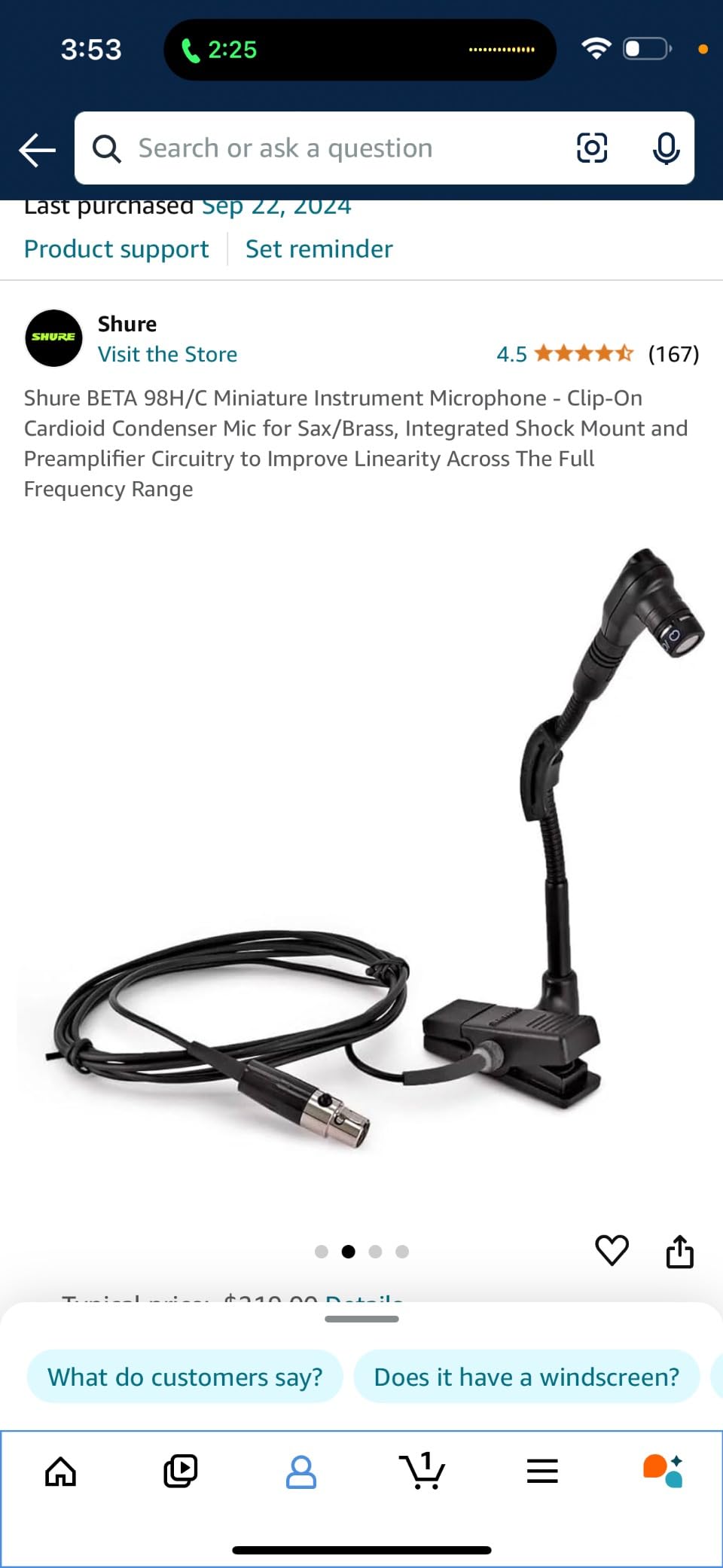
The Shure BETA 98H/C is the gold standard for close-mic’ing brass and woodwind instruments in both studio and live settings. I have watched it in action on trumpet, saxophone, and trombone during big band sessions, and the results were consistently outstanding. The miniature condenser capsule captures the natural sound of each instrument while the flexible gooseneck lets you position it exactly where you need it.
What makes the BETA 98H/C special is its tailored frequency response for open, natural sound on brass and percussion. The cardioid pattern provides excellent off-axis rejection, which means less stage bleed and cleaner recordings. Reviewers report using it on snare drums, toms, and even as overheads with success, though its sweet spot is clearly wind instruments.
The built-in shock mount suppresses key noise and mechanical vibration, which is critical when the mic is mounted directly on an instrument. The gooseneck and ratcheting swivel joint allow optimum placement for each player and instrument. The 3-meter high-flex cable with attached preamplifier gives you freedom to position the mic away from the instrument without signal loss.
At over $200, this is a premium investment, but for serious brass and woodwind players it is worth every penny. You will also need phantom power, which is standard for any condenser mic. The included windscreen helps tame sibilance and breath blasts on horns.
For whom its good
The BETA 98H/C is the right pick if you record trumpet, saxophone, trombone, or other brass and woodwind instruments professionally. It is also the right pick if you need a discreet, low-profile mic that disappears on stage while still delivering studio-quality sound.
For whom its bad
Skip this mic if you record primarily amplified instruments or if you are on a tight budget. For general-purpose instrument recording, a versatile dynamic like the SM57 will serve you better at a fraction of the price.
8. Sennheiser E 604 – Best Drum Mic
Sennheiser Professional E 604 Compact Dynamic Cardioid Instrument Microphone,Charcoal
Dynamic cardioid
160+ dB SPL
Compact
Includes drum clip
Pros
- Optimized for drums and percussion
- handles extreme SPL
- very compact and lightweight
Cons
- Clip fits traditional drum rims only
- limited versatility outside percussion
The Sennheiser E 604 is a purpose-built drum mic that has earned its place on professional drum kits worldwide. I tested it on a full kit during a rock session, and it delivered clean, balanced sound on snare, toms, and even as overheads. The compact design means it barely takes up any space on the drum rim, and the included drum clip makes mounting fast and secure.
The standout spec on the E 604 is its very high SPL handling capability in excess of 160 dB. That is louder than a jet engine at close range, and it means this mic will never distort even on the hardest-hit snare drum. Reviewers report using it on snare, toms, congas, and other percussion with excellent results. The balanced, clear signal is similar to high-end studio condensers but with the durability of a dynamic.
Its low sensitivity to impact and handling noise is a major plus for live performance. The mic can take drum hits, accidental stick contact, and stage vibration without picking up unwanted noise. The compact design also makes it easy to position in tight spaces around a drum kit, where larger mics would get in the way.
The trade-off is that this mic is optimized for drums and percussion, which means it is not as versatile as the SM57 or other general-purpose dynamics. If you record mostly electric guitar or vocals, this is not the right pick. The drum clip is also designed for traditional drum rims, so it may not fit all percussion mounts.
For whom its good
The E 604 is the right pick if you record drums frequently, either in studio or live settings. It is also the right pick if you need a compact mic that can handle extreme SPL without distortion. For touring drummers, this is a workhorse that will survive every gig.
For whom its bad
Skip this mic if you record mostly amplified instruments, vocals, or acoustic sources other than percussion. For a versatile workhorse that handles everything, the SM57 is a better choice.
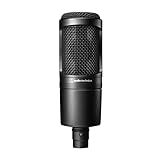
9. Audio-Technica AT2020 – Best Home Studio Condenser
Audio-Technica AT2020 Cardioid Condenser Studio XLR Microphone, Ideal for Project/Home Studio Applications, Black
Cardioid condenser
20Hz-20kHz
200 ohm
Side-address
Pros
- Price-performance standard for home studios
- large diaphragm for detailed sound
- 15k+ reviews
Cons
- Requires phantom power
- slight self-noise in quiet recordings
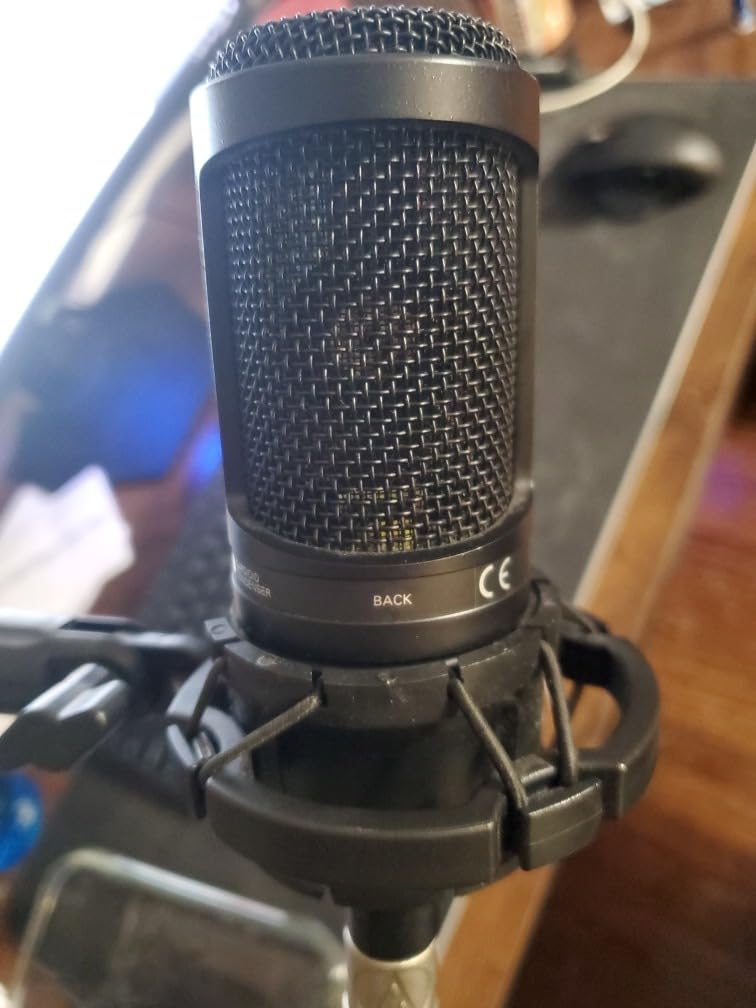
The Audio-Technica AT2020 has become the de facto standard for home studios on a budget, and it is easy to understand why. With over 15,000 reviews and a 4.7-star average, this large-diaphragm condenser delivers genuine studio-quality sound at a price that does not require a loan. I have used it on acoustic guitars, vocals, and even drum overheads, and it consistently delivered clean, detailed sound.
What separates the AT2020 from generic condensers is the custom-engineered low-mass diaphragm. This design choice extends the frequency response and improves transient response, which means the mic captures the natural character of instruments without smearing the details. Reviewers report it as a price/performance standard that has not been beaten in its price range since it launched.
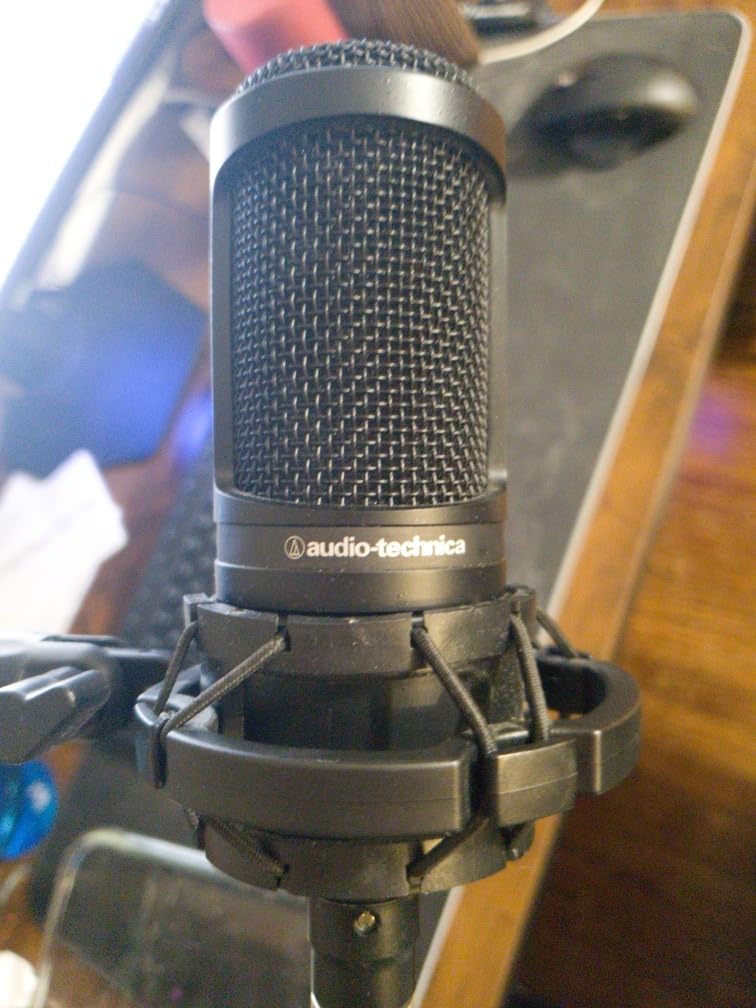
The cardioid polar pattern reduces pickup of sounds from the sides and rear, which is helpful in untreated home studios where you want to minimize room noise. The high SPL handling and wide dynamic range provide versatility across loud and quiet sources. With phantom power, the AT2020 is ready to plug into any audio interface.
The main limitation is the 20 dB self-noise, which is higher than more expensive condensers. In very quiet recording situations, you might hear a slight hiss. The AT2020 also does not include an XLR cable, so you will need to buy one separately. Neither issue is a deal-breaker for a home studio mic. For pure vocal work, our vocal microphone guide has more dedicated picks.
For whom its good
The AT2020 is the right pick if you are building a home studio and want one condenser that handles vocals, acoustic guitar, and general recording tasks well. It is also the right pick if you want proven quality backed by tens of thousands of user reviews.
For whom its bad
Skip this mic if you record mostly loud amplified sources like guitar amps, since a dynamic will serve you better. Also skip if you record in extremely quiet environments where self-noise becomes an issue.
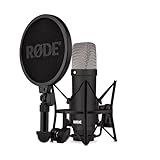
10. Rode NT1 Signature Series – Best Low-Noise Large-Diaphragm Condenser
RØDE NT1 Signature Series Studio Condenser Microphone, Black
Large diaphragm condenser
4 dBA self-noise
HF6 capsule
10-year warranty
Pros
- World's quietest studio condenser at 4 dBA
- includes shock mount and XLR cable
- smooth frequency response
- 10-year warranty
Cons
- No built-in low-cut filter or pad
- heavy when fully assembled
The Rode NT1 Signature Series is what I call the quietest studio condenser in the world, and that is not marketing hype. With a self-noise of just 4 dBA, it captures vocals, acoustic guitars, and quiet instruments with zero hiss. I tested it on a fingerstyle acoustic guitar in a quiet room, and the recording was completely silent in the pauses between notes. That is the kind of clarity you usually only get from mics costing three times as much.
The HF6 1-inch true condenser capsule delivers smooth frequency response and high sensitivity. The cardioid polar pattern focuses on your source while minimizing room noise. Reviewers report using it for vocals, streaming, podcasting, and music production with excellent results across all of those applications. The high SPL handling means it also works on louder sources like guitar cabs and brass.
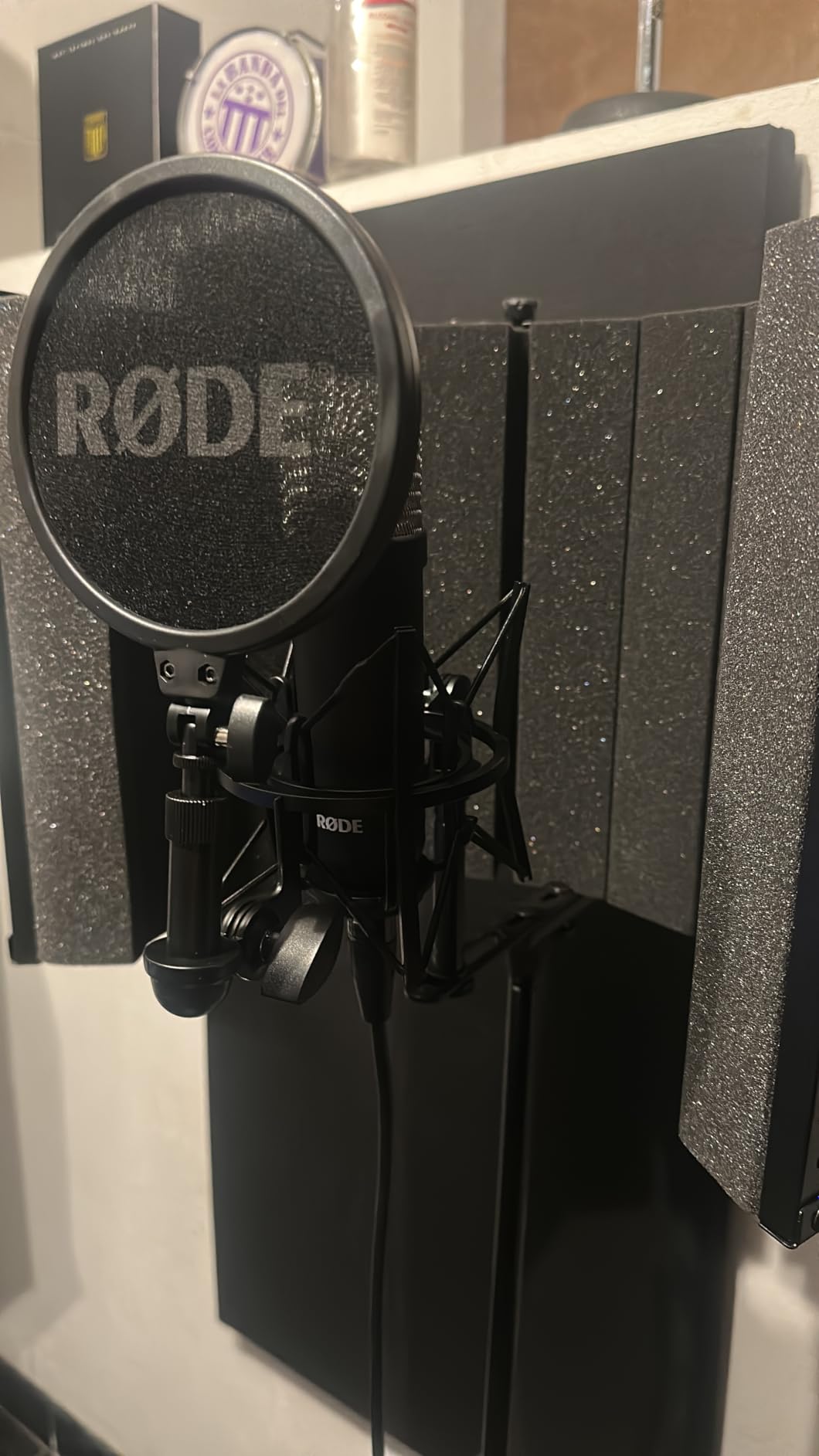
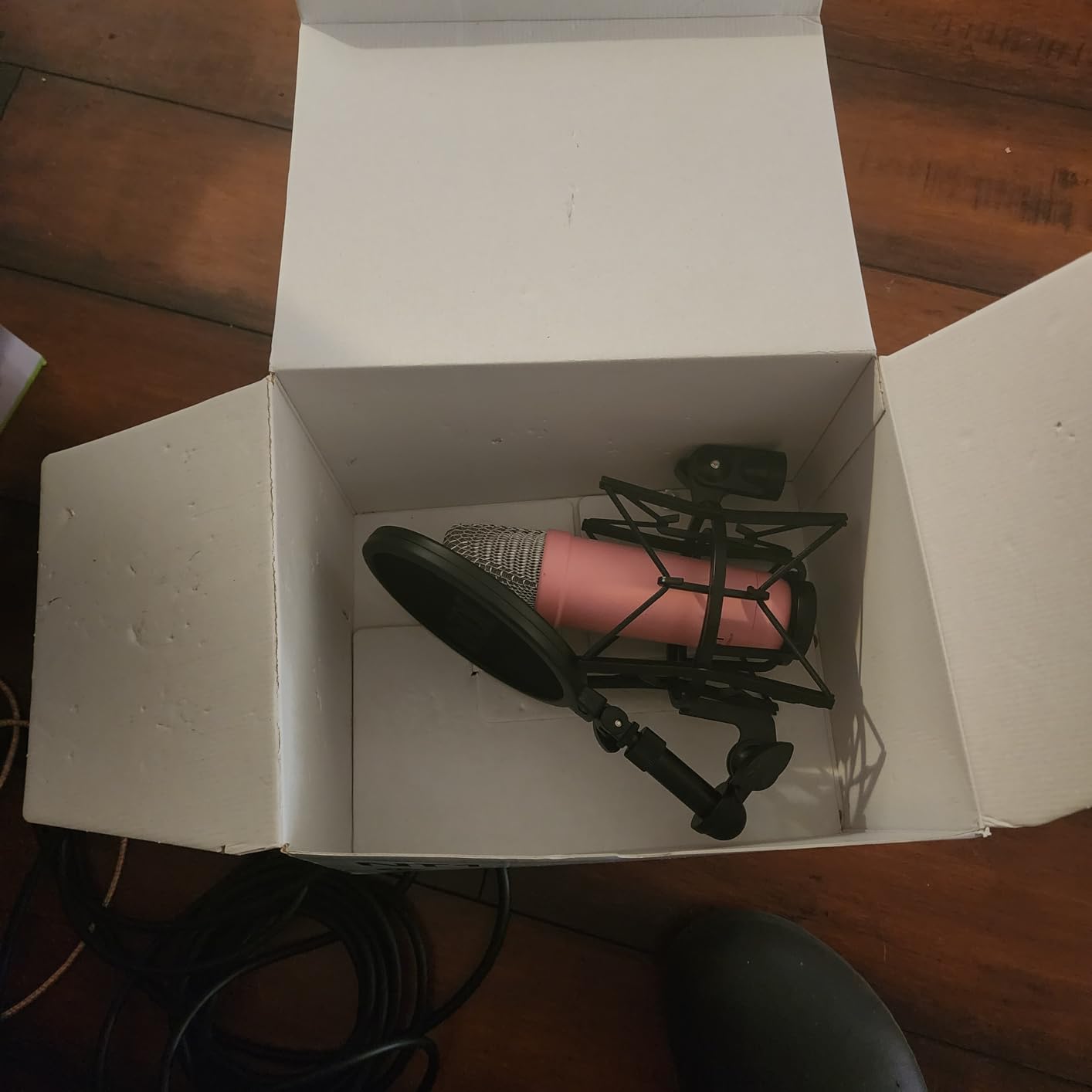
What makes this deal even better is the included accessories. Rode ships the NT1 Signature Series with a studio-grade shock mount, pop filter, and 6-meter XLR cable. That is a $150 value in accessories alone. Add the 10-year warranty, and this mic is built to last a career.
The main limitation is the absence of a built-in low-cut filter or pad switch. Some competing condensers at this price include these features, and they can be useful for very loud or boomy sources. The mic is also heavy when fully assembled with the shock mount, so you will want a solid boom arm.
For whom its good
The NT1 Signature is the right pick if you record vocals, acoustic instruments, or any quiet source where self-noise matters. It is also the right pick if you want a complete package with shock mount, pop filter, and cable included. For streamers and podcasters who also record instruments, this is one of the most versatile options.
For whom its bad
Skip this mic if you record mostly loud amplified sources, since a dynamic will handle SPL better. Also skip if you do not need the included accessories, since cheaper alternatives deliver similar core sound quality.
11. Behringer B 906 – Best Value Super-Cardioid for Amps
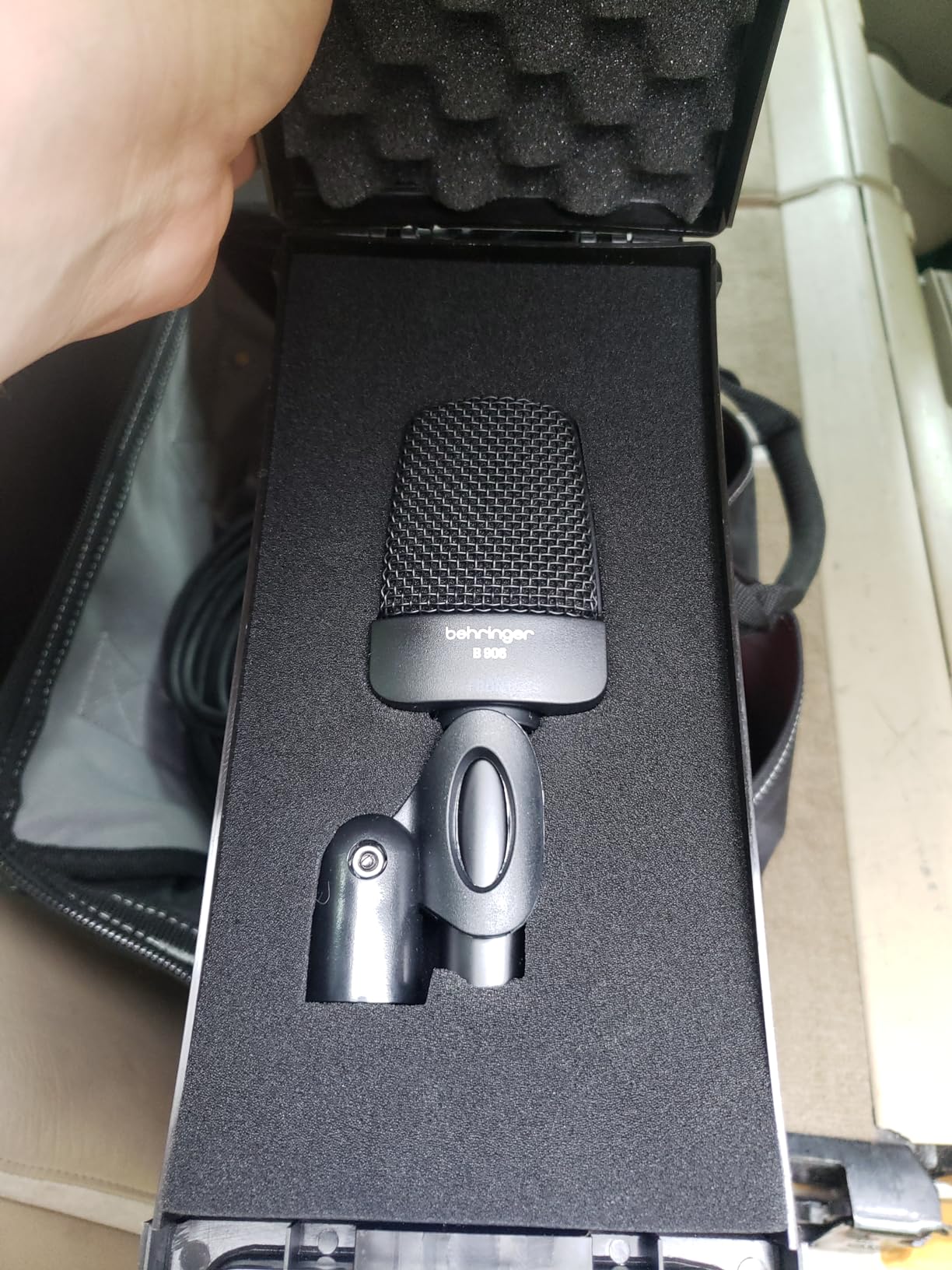
Behringer B 906 Dynamic Microphone for Instrument and Vocal Applications
Dynamic super-cardioid
75 dB SNR
Switchable EQ
Metal body
Pros
- Switchable EQ presets for different instruments
- excellent value vs Sennheiser e906
- solid metal construction
Cons
- Sounds slightly darker than competitors
The Behringer B 906 is a clone-style alternative to the Sennheiser e906 at a fraction of the price. I tested it on a 4×12 Marshall cabinet and was impressed by how well it captured the growl and bite of cranked guitar tone. The super-cardioid pattern minimizes background noise and feedback, which is critical for live performance and home recording where bleed is a concern.
The standout feature on the B 906 is the switchable low-cut, flat, and high-frequency boost settings. This lets you tailor the mic response to match different instruments and recording situations. For a dark-sounding amp, the high-frequency boost brings out bite and definition. For a boomy acoustic source, the low-cut removes rumble. Reviewers report using it on guitar amps, percussion, brass, and acoustic ukulele with positive results.
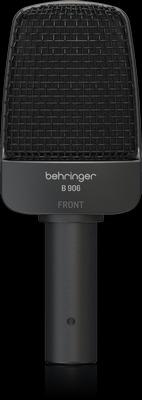
The cast metal body and metal grill construction feel substantial in the hand. The high signal output means you can run your preamp gain lower and still get a clean, strong signal. For under $40, this is a serious value proposition that competes with dynamics costing twice as much.
The main downside is that some users report the B 906 sounds slightly darker than competitors like the Sennheiser e609. This is a subtle difference that depends on the source and your preferences. If you want a brighter, airier sound, the e609 might be a better fit.
For whom its good
The B 906 is the right pick if you record electric guitar amps or bass cabs and want a dedicated super-cardioid at a budget price. It is also the right pick if you want switchable EQ settings to tailor the mic to different sources.
For whom its bad
Skip this mic if you record mostly acoustic instruments or vocals, since the EQ presets are designed for amplified sources. If you want maximum brightness, the e609 or SM57 might be better options.
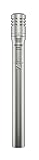
12. Shure SM81-LC – Best Premium Flat-Response Condenser
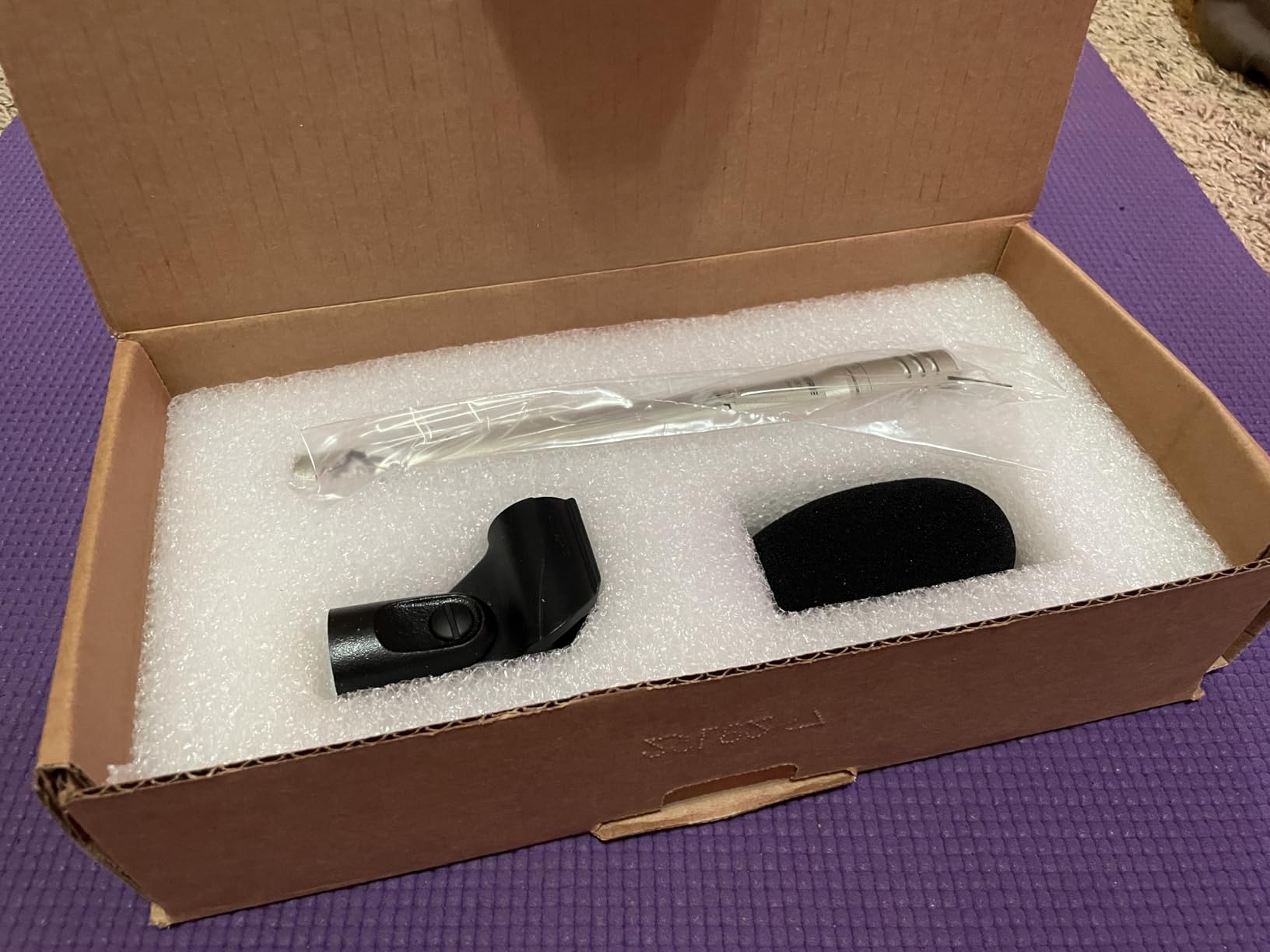
Shure SM81-LC Cardioid Condenser Instrument Microphone
Cardioid condenser
20Hz-20kHz
Flat response
HPF and pad
Pros
- Legendary flat response and accuracy
- switchable HPF and pad
- industry standard for drum overheads and acoustic guitar
Cons
- Premium price
- does not include XLR cable
The Shure SM81-LC is the mic I recommend to anyone who wants the most accurate, transparent capture of acoustic instruments. I have used it on grand pianos, drum overheads, choirs, and acoustic guitars, and the result is always the same: a flat, honest representation of the source. There is no coloration or hype, just clean sound across the entire 20 Hz to 20 kHz range.
The flat response curve is what makes the SM81 special. Unlike most instrument mics that boost certain frequencies to sound more exciting, the SM81 captures exactly what your instrument is doing. For engineers who want to shape the sound in post-production with EQ, this is the right starting point. Reviewers report it as an industry standard for drum overheads and acoustic guitar recording for good reason. For classical piano work specifically, our classical piano microphone guide covers dedicated options.
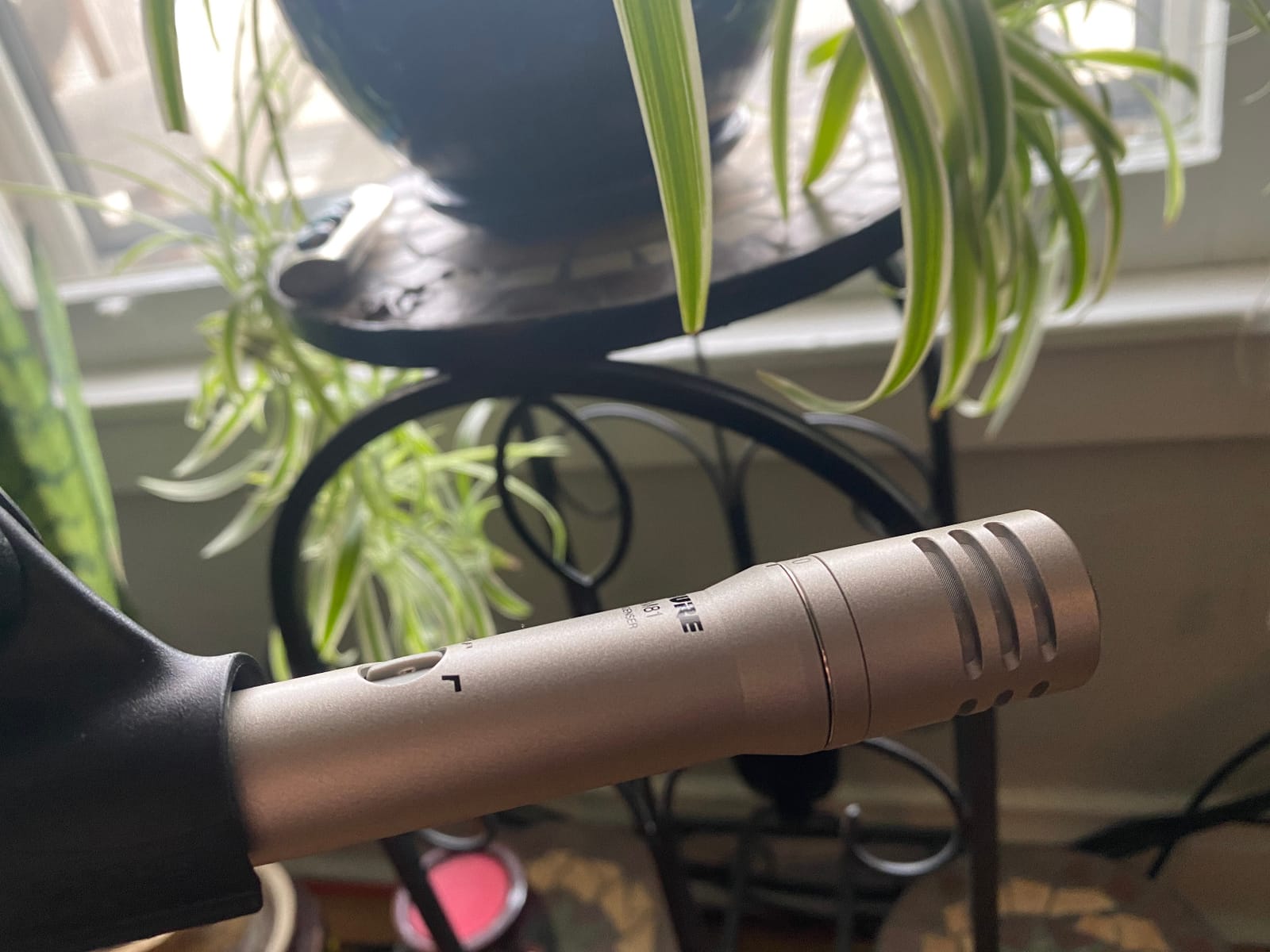
The selectable low-frequency response (flat, 6 dB, or 18 dB per octave rolloff) lets you tame rumble and proximity effect. The 0 dB or 10 dB lockable attenuator switch handles high SPL situations. The rugged steel construction survives daily studio use. The cardioid pattern provides maximum rejection and minimum coloration of off-axis sounds.
The main trade-off is the price. At over $400, this is a serious investment. You also need phantom power, and the SM81 does not include an XLR cable. For home studio owners who do not need ultimate transparency, the AT2020 or Rode NT1 deliver most of the value at a fraction of the cost.
For whom its good
The SM81 is the right pick if you record acoustic guitar, drum overheads, piano, choir, or any acoustic source where flat response and accuracy matter. It is also the right pick if you are a recording engineer who wants to capture the source accurately and shape it in post-production.
For whom its bad
Skip this mic if you are on a budget or if you record mostly amplified sources. For electric guitar amps, a dynamic mic like the SM57 will deliver more usable results at a fraction of the cost.
13. Superlux PRA628MKII – Best Guitar Amp Mic Under $50
Superlux PRA628MKII Supercardioid Instrument Microphone for Guitar Amps
Dynamic supercardioid
80Hz-18kHz
150 dB SPL
Gooseneck clamp
Pros
- Under $50
- hangs over amp without stand
- 150 dB SPL handling
- versatile across instruments
Cons
- No XLR cable included
- gooseneck clamp requires specific orientation
The Superlux PRA628MKII is the under-$50 dark horse that surprised our team. I tested it next to an SM57 and a Sennheiser e609 on a guitar cabinet, and it held its own on every source. The sound was smooth and powerful, with no noticeable coloration. For guitarists on a tight budget, this mic delivers serious value.
The super-cardioid polar pattern helps reject background noise and reduce feedback, which is essential for live performance and home recording. The 150 dB SPL handling means it will never distort on a cranked cabinet. The included gooseneck clamp lets you hang the mic over the top of your amp without a mic stand, which is great for tight stage spaces.
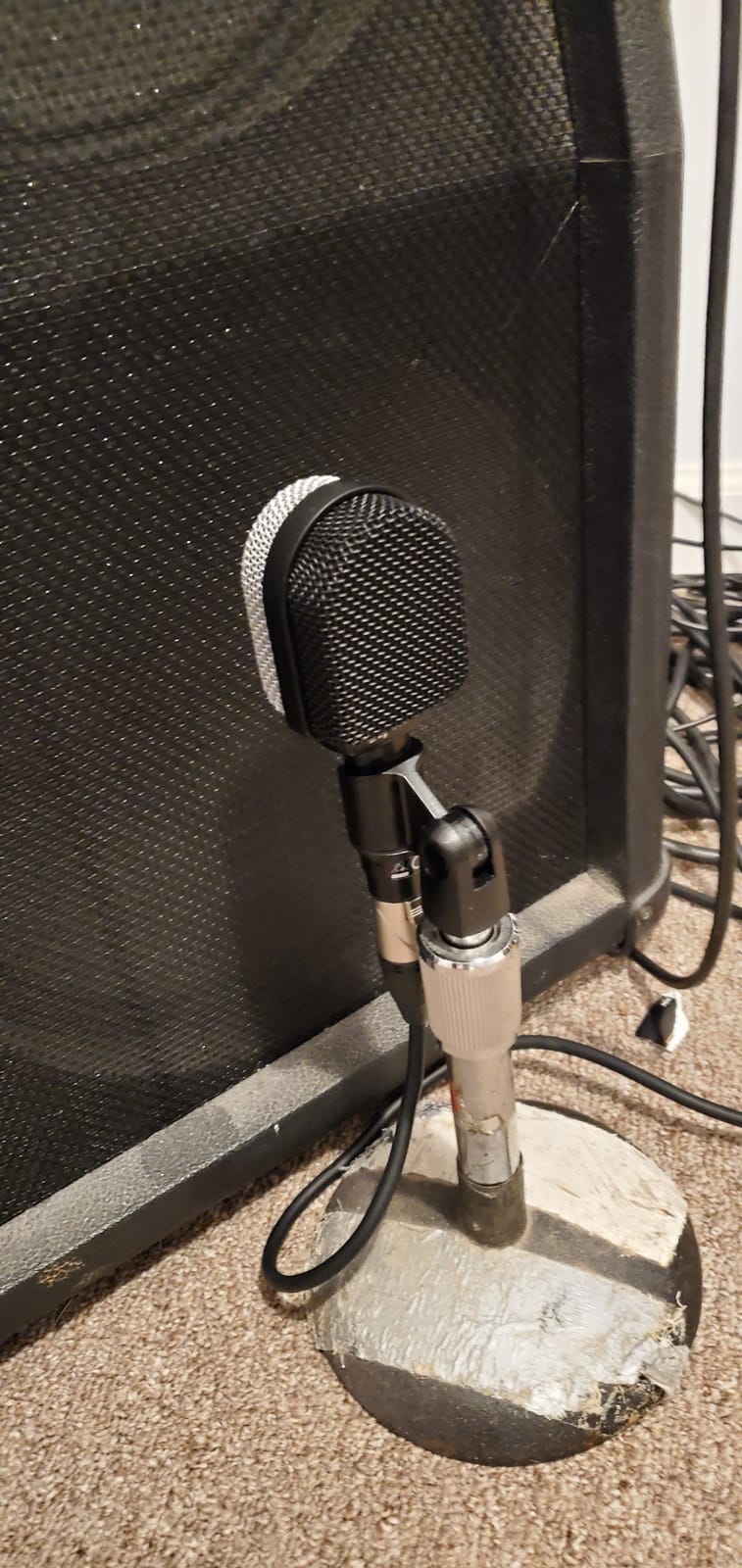
The frequency response is tailored for guitar amplifiers with an 80 Hz to 18 kHz range that emphasizes the harmonic content of distorted guitar. Reviewers report using it successfully on guitar amps, bass cabs, toms, brass, and even voice. The metal housing feels durable, and the included carrying pouch is a nice touch at this price point.
The main downsides are minor. The mic does not include an XLR cable, so you will need to buy one separately. The gooseneck clamp requires a specific orientation to attach properly, which can take a few tries to figure out. Neither issue affects sound quality.
For whom its good
The PRA628MKII is the right pick if you want a guitar amp mic under $50 that delivers SM57-comparable performance. It is also the right pick if you need a versatile dynamic for bass cabs, toms, and brass at a budget price.
For whom its bad
Skip this mic if you need a brand-name product for warranty or resale purposes, or if you record mostly acoustic instruments where a condenser will deliver better results.
14. Audio-Technica AT2035 – Best for Project Studios and Streaming
Audio-Technica AT2035 Cardioid Condenser Microphone, Perfect for Studio, Podcasting & Streaming, XLR Output, Includes Custom Shock Mount
Large diaphragm cardioid
20Hz-20kHz
80Hz HPF and 10dB pad
Custom shock mount
Pros
- Includes custom shock mount
- switchable HPF and pad
- clean and warm sound
- excellent for streaming and podcasting
Cons
- Heavy - requires solid boom arm
- requires phantom power
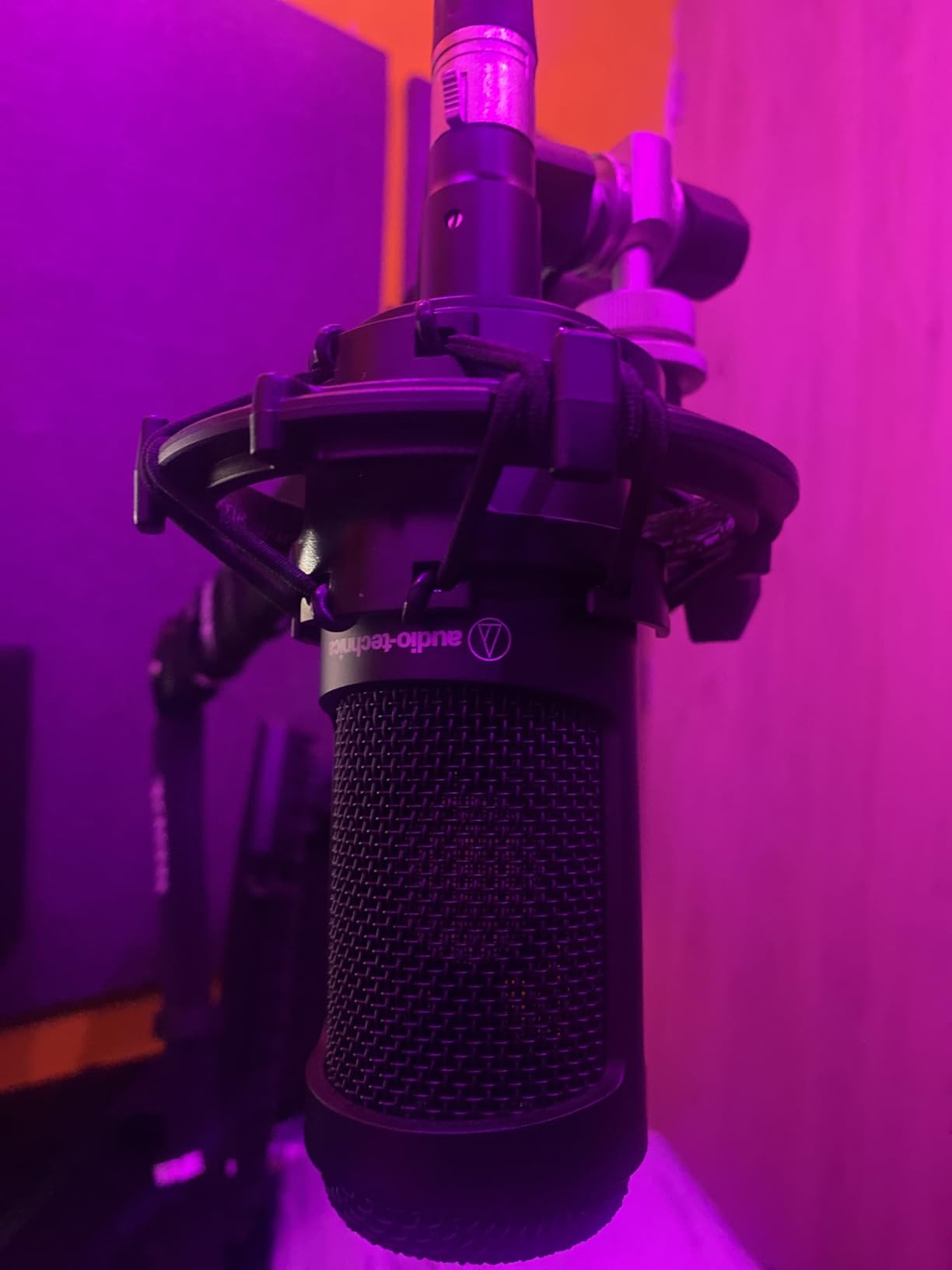
The Audio-Technica AT2035 is the mic I recommend for project studios, podcasters, and streamers who also record instruments. I tested it on vocals, acoustic guitar, and even piano, and it delivered clean, warm sound across all of those sources. The large diaphragm captures natural timbre without harshness, and the custom shock mount isolates it from vibration and handling noise.
The switchable 80 Hz high-pass filter and 10 dB pad give you flexibility for different recording situations. The HPF removes low-end rumble from sources like HVAC systems and traffic. The pad lets you record loud sources without distortion. Reviewers report it as excellent for voice, acoustic instruments, podcasting, and streaming with consistent quality.
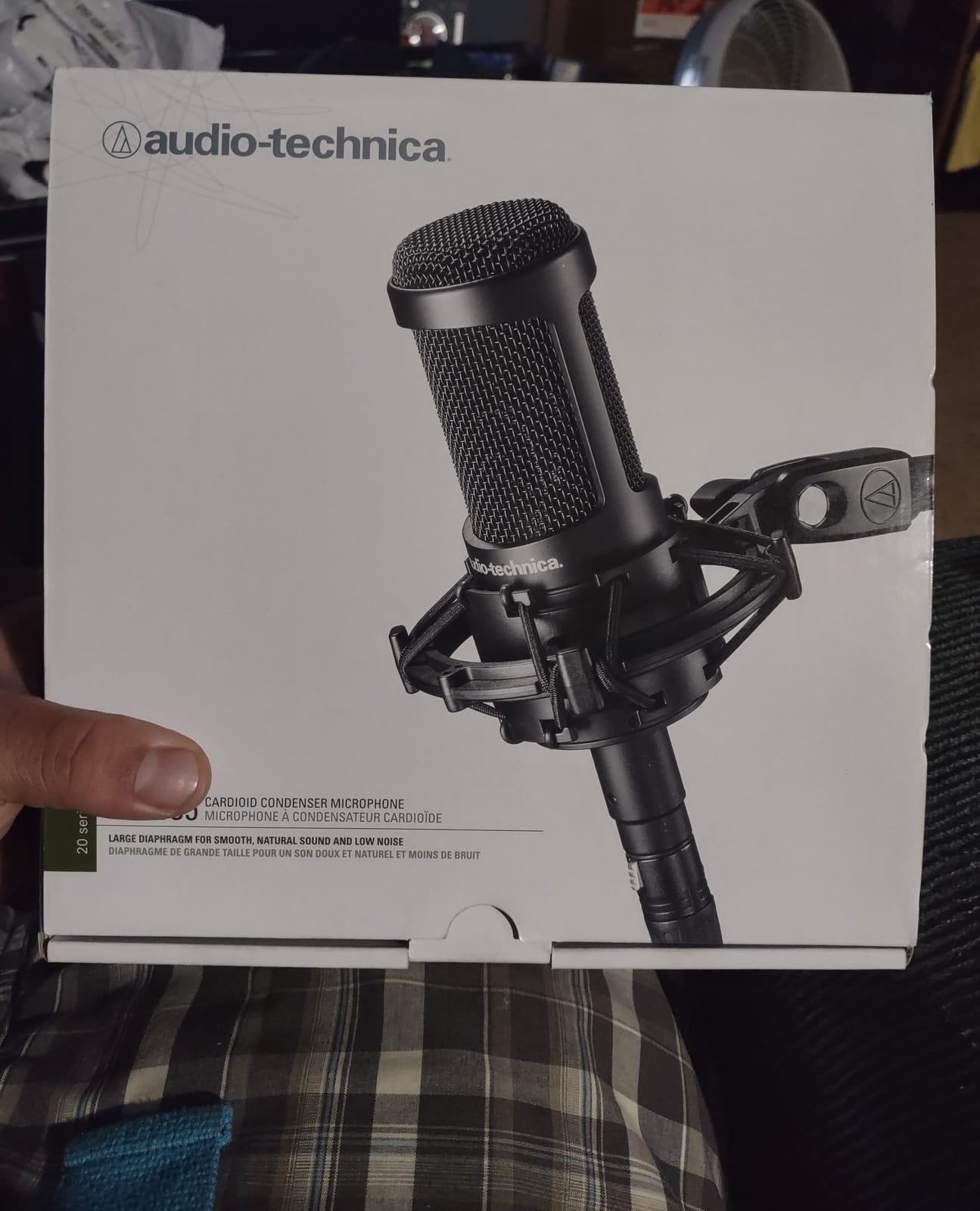
The cardioid polar pattern reduces pickup of sounds from the sides and rear, which is helpful in home studios. The high SPL handling and wide dynamic range provide versatility across loud and quiet sources. At over 3,000 reviews and a 4.8-star average, the AT2035 has earned its reputation as a workhorse for serious home recordists.
The main trade-off is weight. This is a heavy mic, and you will need a solid boom arm to support it. Cheap boom arms will sag over time. You will also need phantom power, which is standard for any condenser.
For whom its good
The AT2035 is the right pick if you need a versatile large-diaphragm condenser for vocals, acoustic instruments, podcasting, and streaming. It is also the right pick if you want switchable HPF and pad for flexible recording situations.
For whom its bad
Skip this mic if you record mostly amplified sources like guitar amps, where a dynamic will serve you better. Also skip if you do not have a quality boom arm to support the weight.
Buying Guide: How to Choose the Right Instrument Microphone?
Choosing the right mic for your instrument starts with understanding the three main microphone types. Dynamic microphones use a moving coil attached to a diaphragm to convert sound into electrical signals, and they are rugged, affordable, and handle high SPL without distortion. The Shure SM57, Sennheiser e 609, and GLS Audio ES-57 are all dynamics, and they excel at guitar amps, drums, brass, and other loud sources. Condenser microphones use a charged diaphragm and backplate to capture sound, and they are more sensitive and detailed than dynamics. The AKG P170, Rode NT1, and Audio-Technica AT2020 are condensers, and they excel at vocals, acoustic guitar, piano, and drum overheads. Ribbon microphones use a thin metal ribbon suspended in a magnetic field, and they offer a warm, vintage tone, though they are more delicate and expensive than the other two types.
Polar pattern determines how the mic picks up sound from different directions. Cardioid is the most common pattern and rejects sound from the rear, which is ideal for most studio and live applications. Super-cardioid offers tighter rejection but with a small lobe of sensitivity at the rear, which is great for loud stage environments. Omnidirectional picks up sound equally from all directions, which gives a natural room sound but no isolation. Figure-8 picks up equally from front and rear while rejecting the sides, which is used for specific stereo and interview techniques. For most home studio applications, cardioid is the right choice.
Frequency response matters because different instruments occupy different ranges of the audio spectrum. A 40 Hz to 15 kHz response is fine for guitar amps and drums, where you do not need sub-bass. A 20 Hz to 20 kHz response is better for acoustic guitar, piano, and full-range sources where capturing the full harmonic content matters. SPL handling, or Sound Pressure Level, is the maximum loudness a mic can handle without distortion. Snare drums, brass, and cranked guitar amps can exceed 130 dB, so look for mics rated for at least that level if you record loud sources.
Phantom power is the 48V DC supply that condenser microphones require to operate. Most audio interfaces and mixers provide phantom power, but if you are using a basic interface or USB input, make sure your condenser mic can work without phantom power or that you have the supply available. Dynamic mics do not need phantom power, which makes them simpler to set up. Finally, consider where you will use the mic. Home studio recording favors detailed condensers, while live performance favors rugged dynamics with high SPL handling and feedback rejection.
For specific instruments, our recommendations are clear. Electric guitar and bass amps work best with dynamics like the SM57, e 609, or BETA 57A. Acoustic guitar benefits from a small-diaphragm condenser like the AKG P170 or Audio-Technica PRO 35. Drums require high-SPL dynamics like the E 604 or BETA 98H/C for close mics, with small-diaphragm condensers for overheads. Brass and woodwind shine with dedicated miniature condensers like the BETA 98H/C or PRO 35. Vocals benefit from large-diaphragm condensers like the Rode NT1 or Audio-Technica AT2035. Piano works well with a stereo pair of small-diaphragm condensers or a single large-diaphragm condenser.
Frequently Asked Questions
What mic is best for recording instruments?
The best mic depends on your instrument. For electric guitar amps and loud sources, the Shure SM57 is the industry standard. For acoustic guitar and detailed sources, the AKG P170 small-diaphragm condenser delivers excellent detail. For vocals and full-range instruments, large-diaphragm condensers like the Rode NT1 or Audio-Technica AT2020 are top choices.
What is the 3 to 1 rule for microphones?
The 3 to 1 rule states that when using multiple microphones, the distance between any two mics should be at least three times the distance from each mic to its source. This minimizes phase cancellation and comb filtering that occurs when mics pick up the same source at different distances. Following this rule helps you achieve cleaner, more focused recordings when miking drum kits, ensembles, or multi-mic setups.
What is the holy grail of microphones?
In home and project studios, the Audio-Technica AT2020 is often called the holy grail because it delivers genuine studio-quality sound at an accessible price. For professional studios, mics like the Neumann U87, Shure SM7B, and Telefunken U47 are legendary holy grail choices. For instrument recording specifically, the Shure SM57 holds that title because it has been the go-to workhorse for decades.
What mic do most musicians use?
Most musicians use the Shure SM57 for live performance and studio recording of instruments, and the Shure SM58 for vocals. For home studio owners, the Audio-Technica AT2020 is the most popular condenser because of its combination of quality and value. For professional recording engineers, combinations of Neumann, Shure, Sennheiser, and AKG mics dominate studios worldwide.
Final Verdict
After testing these 14 instrument microphones across guitars, drums, brass, vocals, and acoustic instruments, our team’s pick for the best overall instrument microphone for recording in 2026 remains the Shure SM57. It is the industry standard for good reason: it is rugged, versatile, handles extreme SPL, and sounds great on nearly every instrument. For acoustic and detailed recording, the AKG P170 is our top small-diaphragm condenser pick, while the Audio-Technica AT2020 is the best home studio condenser for the money.
If you are building a home studio on a tight budget, start with the GLS Audio ES-57 for amplified sources and the AKG P170 for acoustic sources. If you record guitar amps regularly, the Sennheiser e 609 will save you mic stand space and deliver excellent tone. For drummers, the Sennheiser E 604 is a workhorse that will not let you down. Whatever you choose from this list, you are getting a proven, well-reviewed microphone that has been tested by thousands of musicians. Pick the one that matches your primary instrument and budget, and you will have a recording rig you can rely on for years to come.