
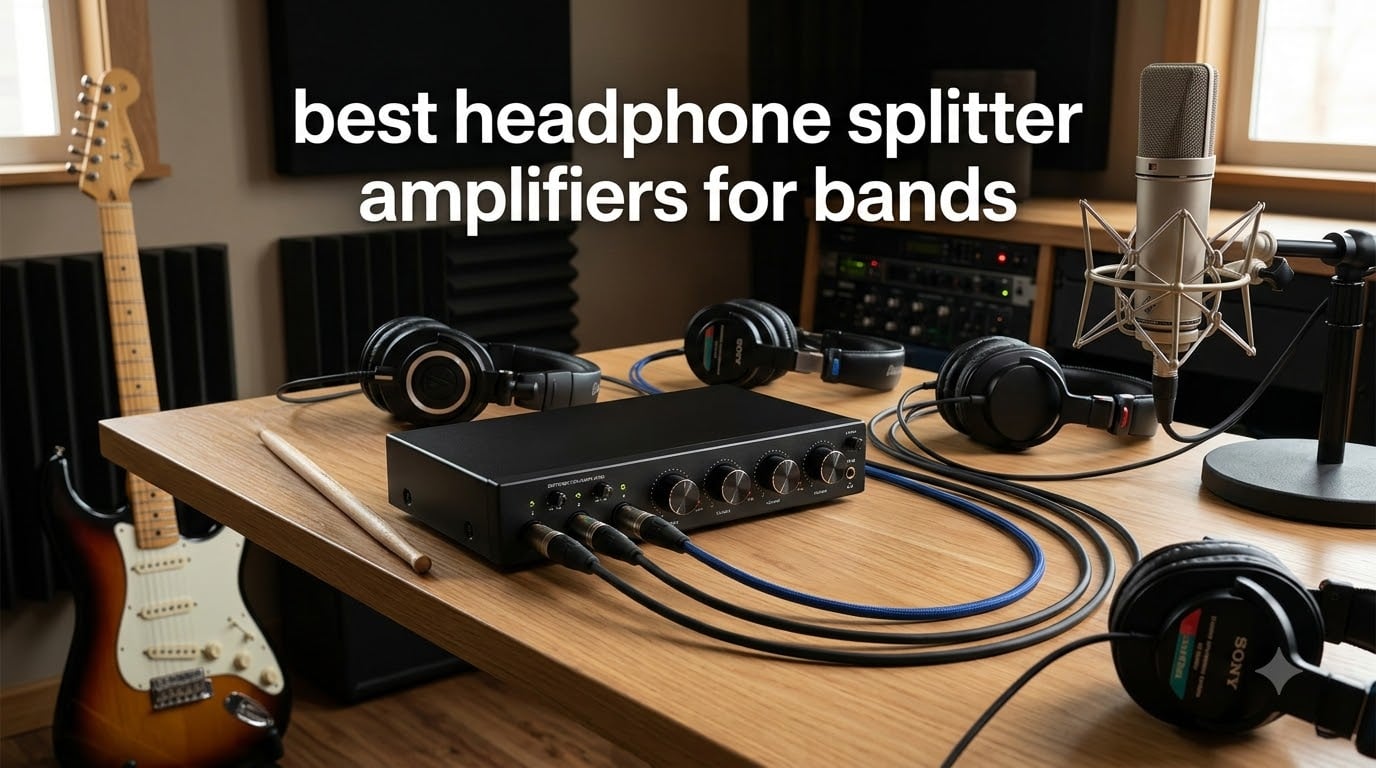
Getting a clean monitor mix to every member of the band at the same time is one of those studio headaches that never goes away on its own. Whether you are tracking a full five-piece in a basement or running a quiet rehearsal with in-ears, a headphone splitter amplifier for bands is the piece of gear that turns chaos into focus. Each player gets their own jack, their own volume, and their own shot at hearing the take properly.
I have spent the last few years wiring up headphone monitoring for tracking sessions, podcast rounds, and band rehearsals, and I have made every mistake in the book. Daisy-chaining passive splitters, underpowering 250-ohm studio cans, and fighting impedance mismatches were all part of the learning curve. This guide distills that experience into clear, practical advice.
Below I cover the best headphone splitter amplifiers for bands available in 2026, with hands-on notes on each model. I break down passive versus powered units, output counts, impedance handling, and band-specific monitoring scenarios so you can pick the right box for your lineup. We tested everything from a $25 four-channel budget pick to a $269 rack-mount distribution rig.
Table of Contents
Top 3 Picks for Band Headphone Monitoring

Behringer HA400 4-Channel
- 4 independent channels
- Low-noise 4580 op amps
- Ultra-compact design

Mackie HM-4 4-Way Amp
- Built-like-a-tank metal
- Individual level controls
- Clean balanced sound

Behringer HA6000 6-Channel
- Per-channel 2-band EQ
- 12 headphone outputs
- Rack-mountable design
If you want the short version, those three cover most bands. The Behringer HA400 wins on value and raw popularity, the Mackie HM-4 is the rugged step-up, and the Behringer HA6000 is the full rack-mount distribution rig for serious studios.
Best Headphone Splitter Amplifiers for Bands in 2026
| Product | Specifications | Action |
|---|---|---|
| Behringer HA400 4-Channel |
|
Check Latest Price |
 Arklove 2-in 4 Channel Arklove 2-in 4 Channel |
|
Check Latest Price |
 STABCL 6 Channel STABCL 6 Channel |
|
Check Latest Price |
| Mackie HM-4 4-Way |
|
Check Latest Price |
 Bolanle PH800 8-Channel Bolanle PH800 8-Channel |
|
Check Latest Price |
 ART HeadAMP4 ART HeadAMP4 |
|
Check Latest Price |
 TONALUXE 8-Channel TONALUXE 8-Channel |
|
Check Latest Price |
| Behringer HA6000 6-Channel |
|
Check Latest Price |
1. Behringer MICROAMP HA400 – The Budget Studio Workhorse
Behringer MICROAMP HA400 Ultra-Compact 4 Channel Stereo Headphone Amplifier
4-channel stereo amp
Individual volume per channel
Ultra low-noise 4580 op amps
12V DC adapter included
Pros
- Powers up to 4 pairs of headphones simultaneously
- Individual volume control per channel
- Ultra low-noise op amps for clean audio
- Compact and portable design
- Works with practically any headphones
Cons
- Only 0.04W output may limit high-impedance headphones
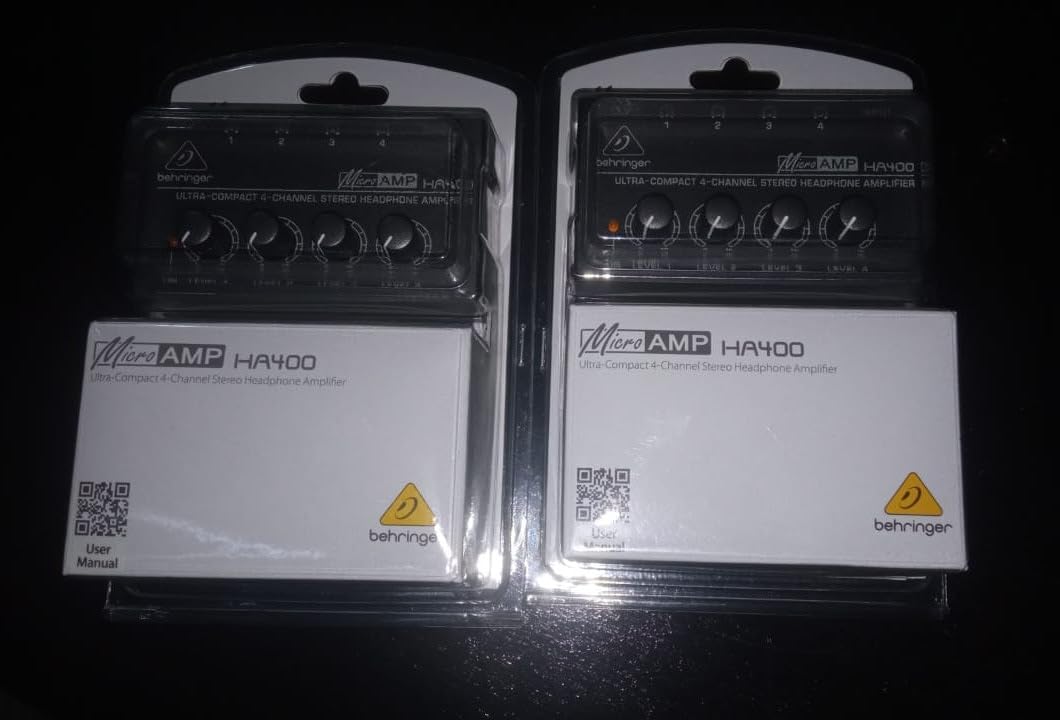
The Behringer HA400 is the headphone splitter amplifier for bands that everyone seems to own at some point. I first picked one up for a four-piece tracking session where the drummer, guitarist, bassist, and I all needed to hear the click and guide track. For under thirty dollars it solved the problem instantly, and it has lived in my cable bag ever since.
Each of the four channels gets its own volume knob, which is the feature that matters most when your drummer wants the click loud and your singer wants the band louder. The ultra low-noise 4580 operational amplifiers keep the signal clean at normal listening levels, and I never noticed any cross-talk between channels in real use.
The build is composite plastic rather than metal, so it is light but not indestructible. I would not throw it unprotected into a flight case, but for desktop and home-studio duty it holds up fine. The 12V DC adapter is included, which is a nice touch at this price.
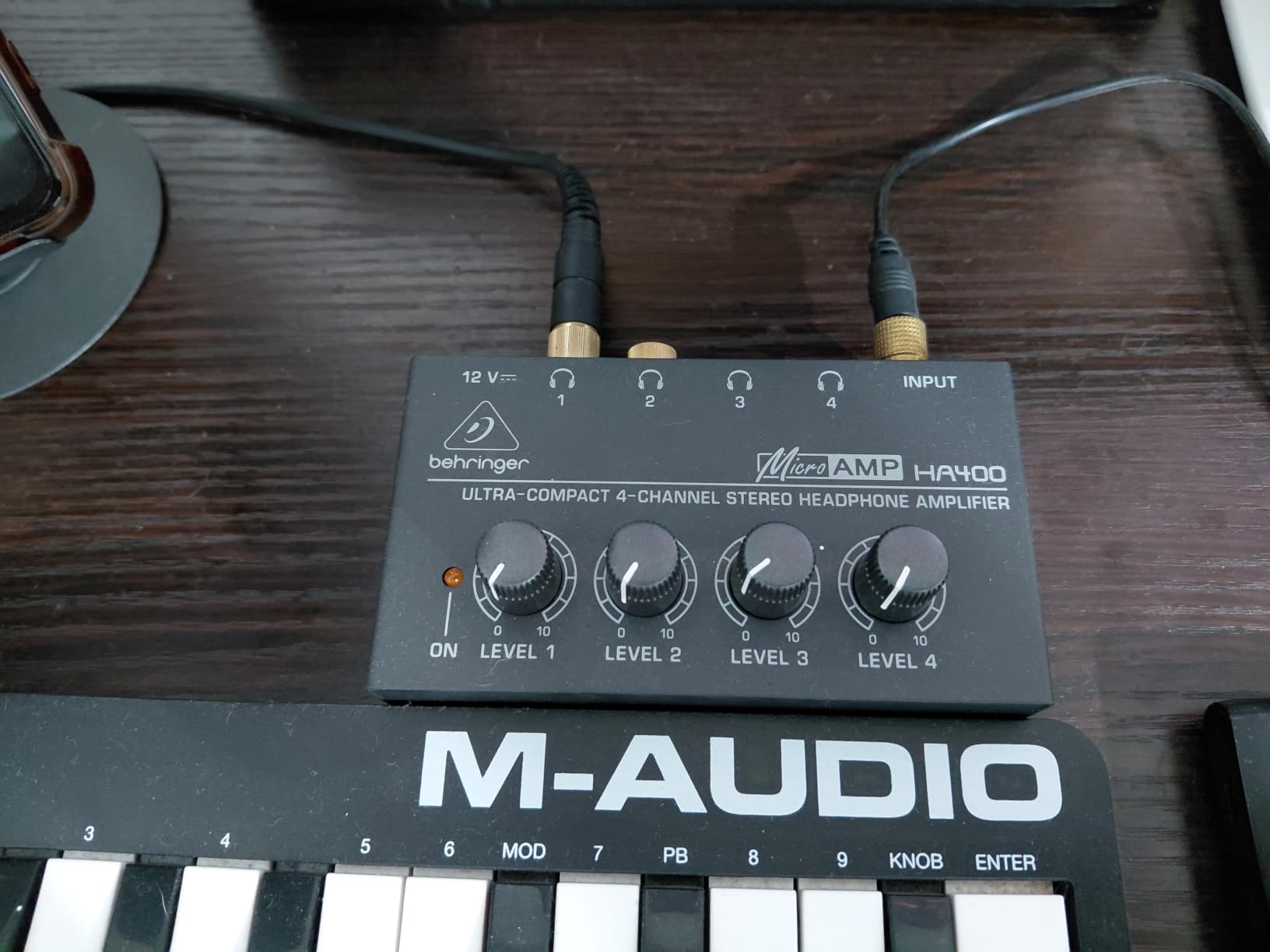
Where the HA400 shows its limits is raw output power. At 0.04 watts per channel it drives standard consumer headphones easily, but it can struggle with high-impedance studio cans in the 250-ohm range. I tried it with a pair of 250-ohm Beyerdynamics and the volume was adequate but not ample, with little headroom left over.
For a three- or four-piece band using moderate-impedance headphones, though, the HA400 is genuinely hard to beat. Nine thousand four hundred reviews and a 4.5-star average tell you this is the go-to budget headphone amp for a reason.
Best for: Small bands and home studios
This is the unit I recommend to anyone building their first headphone monitoring setup for a band. If your group is three or four people using standard studio headphones and you just need everyone to hear the same mix at their own level, the HA400 nails it without fuss.
It is also a great spare to keep in your gig bag. Even if you own a bigger distribution amp, having a compact four-channel fallback has saved more than one session for me when the main rig failed.
Watch out for: High-impedance headphones
If your band uses 250-ohm or 300-ohm studio headphones, the HA400’s low output wattage will leave you wanting more volume. In that case, step up to a unit like the Bolanle PH800 or the Behringer HA6000, both of which handle higher impedance loads comfortably.
The composite enclosure is also worth noting if you tour heavily. It survives desktop use well, but road cases and load-in bumps are not its strength.
2. Arklove 2-in 4 Channel – The Dual-Input Mixer Option
1/8″ aux Input Mixing 2 in 4 Channel Way Out Headset Box Headphone Amplifier 3.5mm Mixer 1/8 inch Stereo Audio Amp with Ultra-Compact Portable mini Jack 3.5 Splitter hup for Studio and Stage
2 inputs mixed to 4 outputs
Independent volume per channel
NJM4556A op amps
3.5mm and 6.35mm compatible
Pros
- Mixes two audio inputs into four outputs
- Independent volume control per channel
- No hiss or distortion at normal volumes
- Compact and portable
- Works with both 3.5mm and 6.35mm headphones
Cons
- Volume controls can feel binary rather than gradual
- Signal degradation when connecting multiple outputs
- No battery option
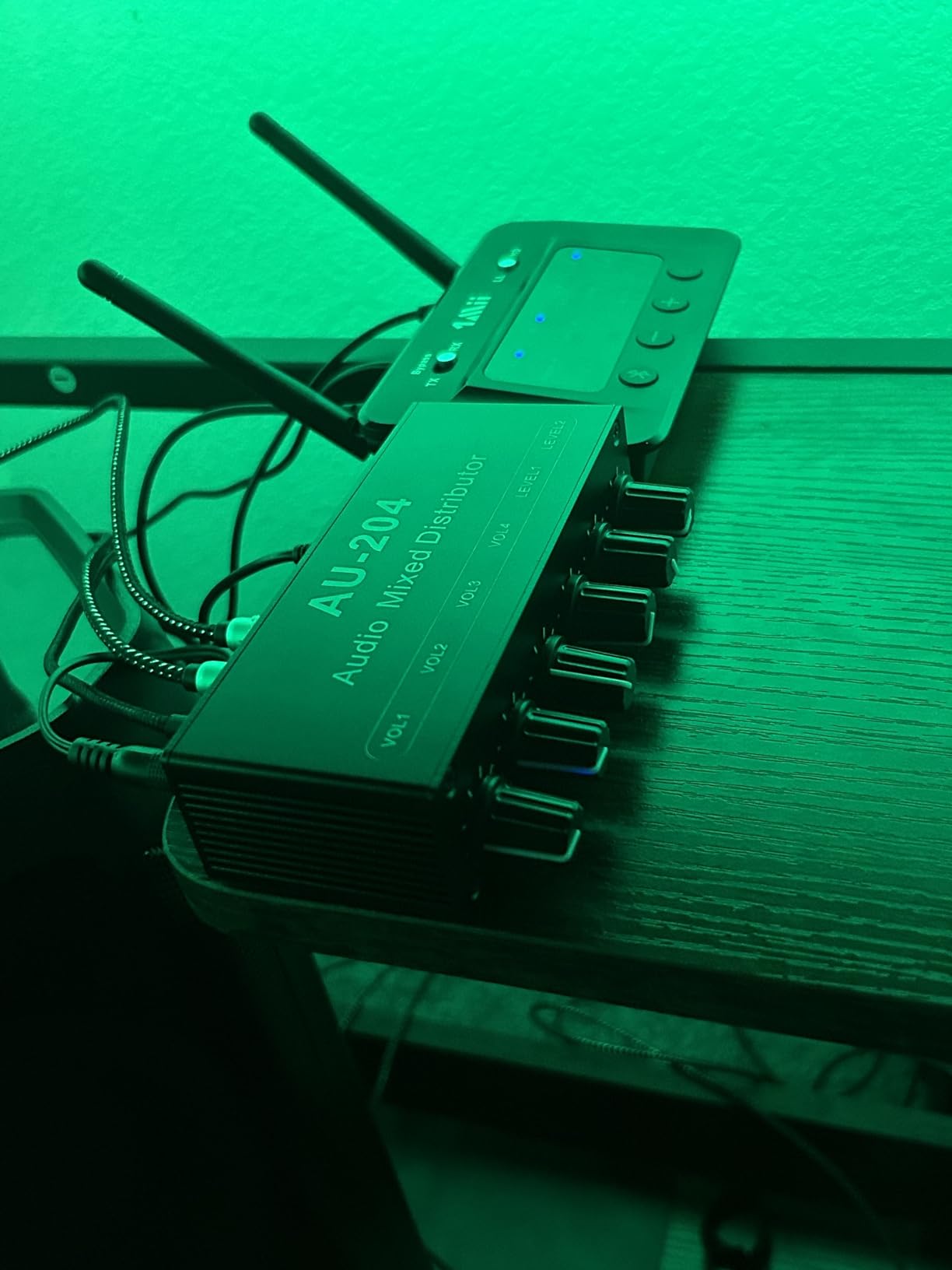
The Arklove 2-in 4 Channel caught my attention because it does something the basic Behringer HA400 cannot: it takes two separate audio sources and blends them across four headphone outputs. That matters for bands who want to send a click track on one input and the full mix on another, letting each player dial in their own balance.
I tested it in a rehearsal setting where the drummer needed a loud click and the rest of the band just wanted the music. Having two inputs meant I could feed both signals in simultaneously rather than pre-mixing them at the interface. The NJM4556A low-voltage high-current op amps kept things clean at sensible volumes.
Build quality is light and plasticky, similar to the HA400, but the dual-input feature sets it apart for anyone who needs basic on-board mixing. The included adapters handle both 3.5mm and 6.35mm headphones, which saves a trip to the adapter drawer.
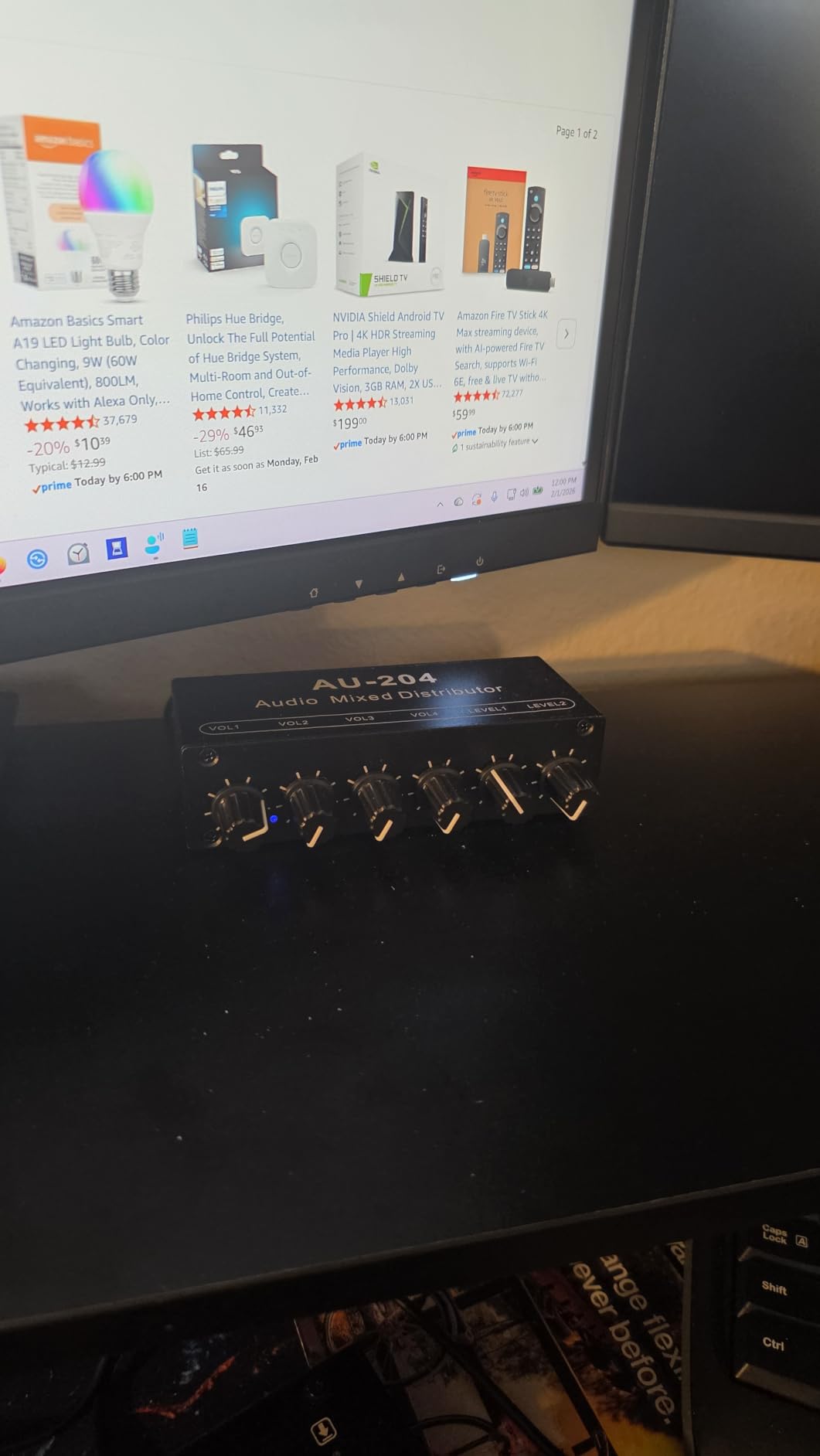
The main trade-off is in the volume controls. Several users, and my own experience, note that the knobs feel somewhat binary rather than offering smooth, gradual attenuation. You get loud, less loud, and quiet, without much fine adjustment in between. For casual monitoring that is fine, but it frustrates precise mixing.
There is also some signal degradation when all four outputs are driven hard simultaneously. With four pairs of moderate-impedance headphones connected, I noticed a slight thinning of the low end compared to driving just one or two pairs.
Best for: Bands who need basic input mixing
If your band wants to blend a click track with a music mix without an extra mixer in the chain, the Arklove is a smart, low-cost choice. The dual-input design saves space and simplifies cabling for small rehearsal setups.
It is also a good pick for podcasters who want to mix a guest feed and a host feed into multiple headphones. The compact size makes it easy to slot into a portable recording kit.
Watch out for: Volume control precision
Bands that need precise, repeatable volume settings per channel may find the Arklove’s knobs too coarse. If your players are picky about exact levels, a unit with smoother pots like the Mackie HM-4 or ART HeadAMP4 will feel more professional.
The signal degradation under full load is also worth knowing about. If you regularly drive four demanding headphones at once, consider a more powerful amp.
3. STABCL 6 Channel – Affordable Mid-Size Monitoring
STABCL Headphone Amplifier 6 Channel, Stereo Headphone Amp with 3.5mm&6.35mm Input and Output, Metal Portable Studio Headphone Amp Splitter, Headphone Mixer with Mono and Stereo for Recording Studios
6 high-power stereo channels
Mono/Stereo switch
Aluminum alloy unibody
3.5mm and 6.35mm jacks
Pros
- Mono/Stereo switch for flexible monitoring
- Metal construction feels durable
- No noise or hum in signal
- Includes 3.5mm to 1/4 inch adapters
- Independent volume control per channel
Cons
- Loud popping sound when plugging in headphones
- Adapters don't work with TRRS plugs
- Noticeable volume change when switching modes
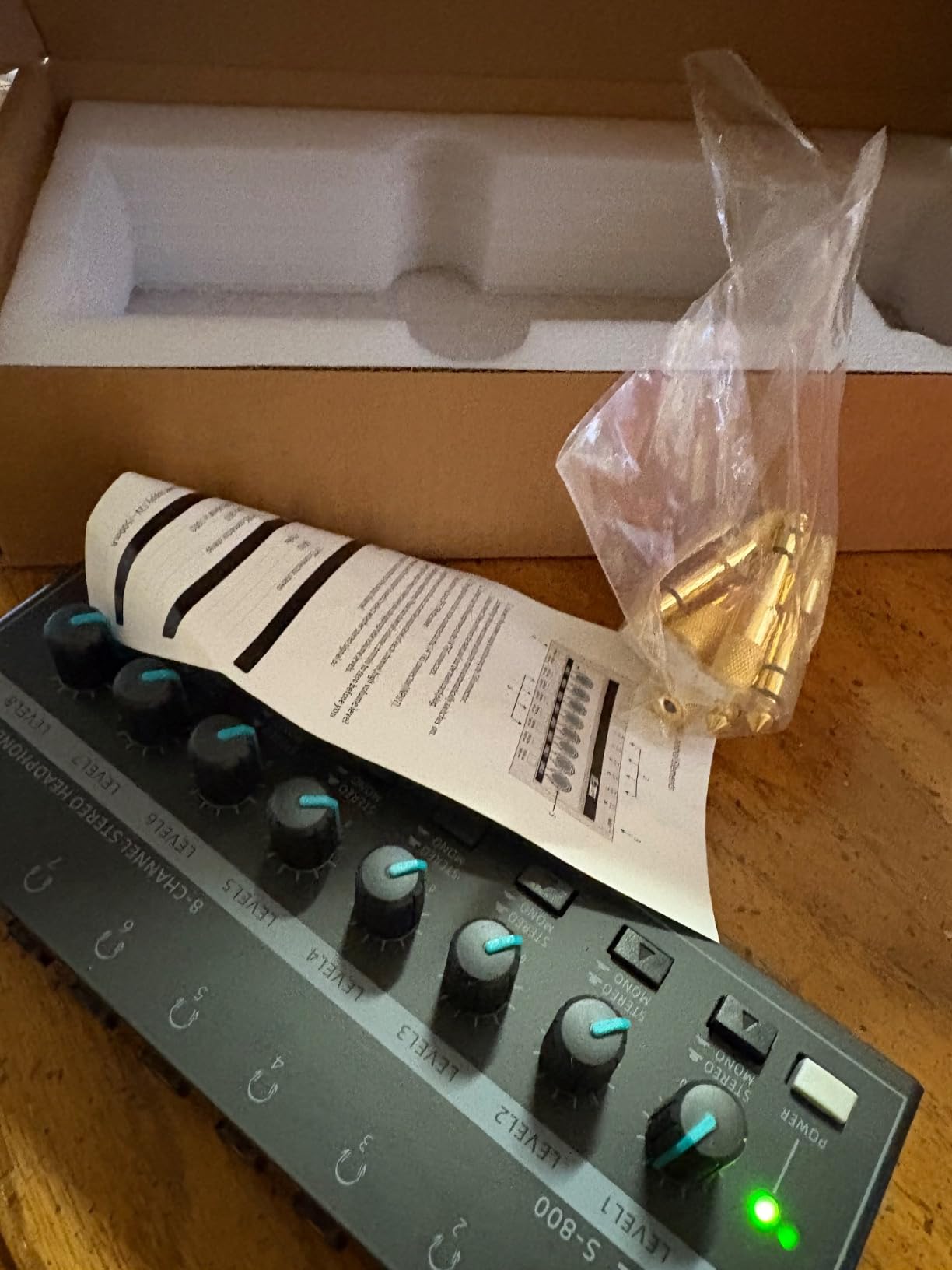
The STABCL 6 Channel is the answer for bands that have outgrown a four-output box but do not want to spend rack-mount money. I brought one into a six-piece session where the extra two channels meant the keyboard player and backing vocalist finally got their own jacks instead of sharing a split.
The aluminum alloy unibody feels solid in the hand, noticeably more robust than the plastic budget units. The intelligent noise reduction chip delivers a clean signal with no audible hum, which I verified by running all six channels at once with the room quiet.
A standout feature is the mono/stereo switch. For bands where some players only need a mono foldback feed, being able to collapse the signal is genuinely useful. The included 3.5mm to 1/4-inch adapters mean you can plug in consumer earbuds or pro studio cans without hunting for extras.
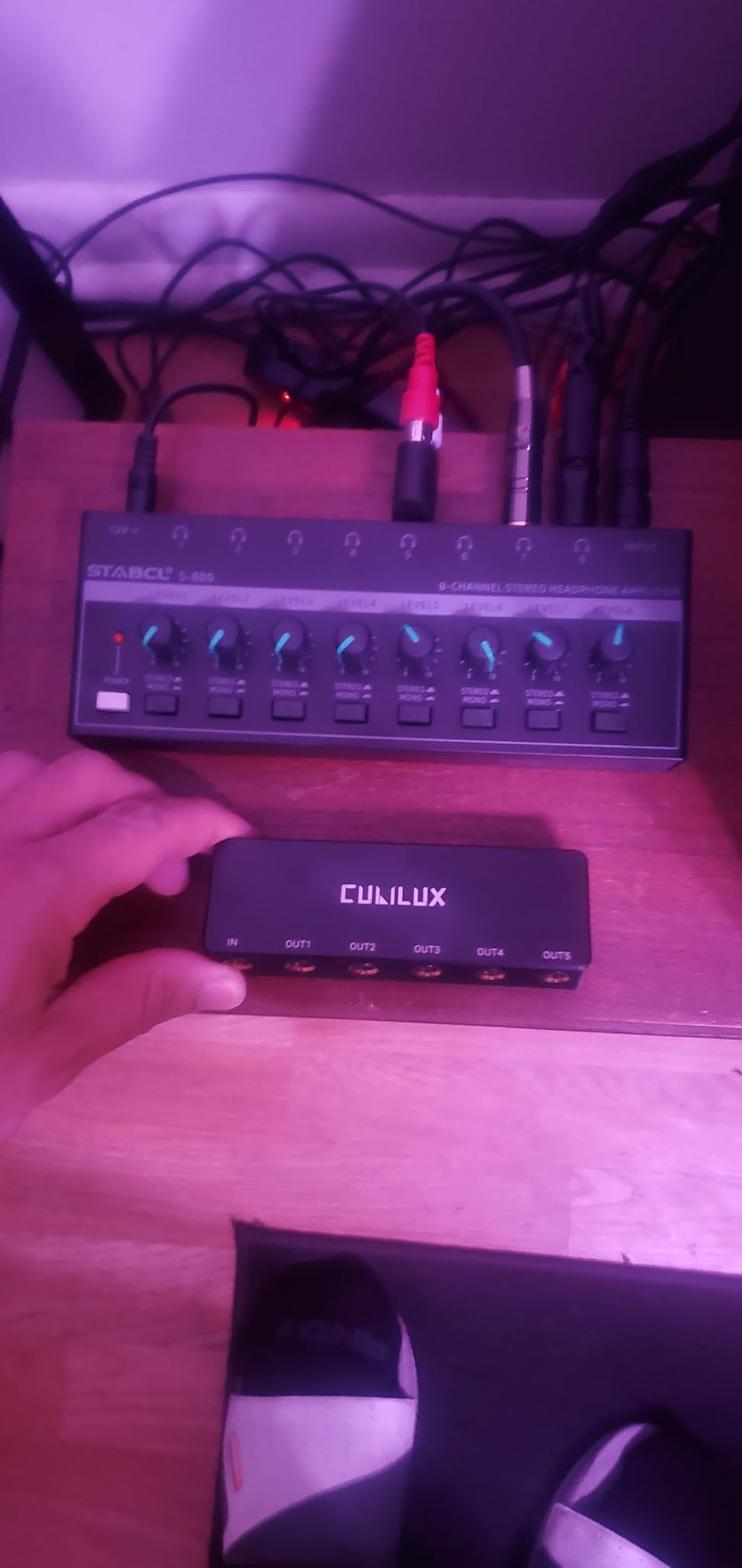
The biggest annoyance is the loud pop when plugging headphones into a live channel. I learned quickly to mute or lower the volume before inserting a jack, otherwise the player gets an unpleasant thump in their ears. This is a common issue on budget amps but worth flagging.
I also noticed a volume shift when toggling between mono and stereo modes. It is not a dealbreaker, but it means you may need to rebalance levels after switching, which interrupts the flow of a session.
Best for: Five- and six-piece bands
If your band has five or six members who all need independent monitoring, the STABCL gives you the channel count at a price well below rack-mount units. The metal build and clean signal make it a credible mid-range choice for project studios and rehearsal spaces.
The mono/stereo flexibility also suits bands running in-ear monitors, where a mono feed is often all that is needed for rhythm-section players.
Watch out for: Plug-in pops and TRRS limits
Train your band to lower the volume before plugging in, or the pop will annoy everyone. The included adapters also do not work with TRRS (three-ring) headphone plugs, so anyone using headsets with inline microphones will need a proper TRS adapter.
The volume change on mode switching is mild but real. Plan to rebalance after any mono/stereo toggle.
4. Mackie HM-4 – The Built-Like-A-Tank Four-Way
Mackie HM-4 Headphone Amplifier (4-Channel), Compact Splitter, Black
4-way headphone amplifier
Individual level control per output
Built-like-a-tank metal
12V AC adapter included
Pros
- Individual volume control for each of 4 outputs
- Rugged metal construction
- Clean and balanced audio quality
- Powers up to 4 pairs from one source
- Professional studio-grade build
Cons
- No Prime shipping available
- No 3.5mm input (6.35mm only)
- Single input source only
The Mackie HM-4 is the four-way headphone splitter amplifier I reach for when I want something that will survive being thrown in a road case. Mackie’s built-like-a-tank reputation is earned here: the all-metal enclosure shrugs off bumps that would crack a plastic budget unit.
Sound quality is clean and balanced, with no audible noise floor in my tests. Each of the four outputs has its own level control, and the pots feel smooth and precise compared to the coarser knobs on cheaper units. For a four-piece band monitoring a single mix, this is a noticeably more refined experience than the HA400.
The trade-off is connectivity. The HM-4 only accepts a single 6.35mm stereo input, so there is no dual-input mixing and no 3.5mm jack. If your audio interface outputs on 1/4-inch, you are fine, but anything with a 3.5mm feed needs an adapter cable.
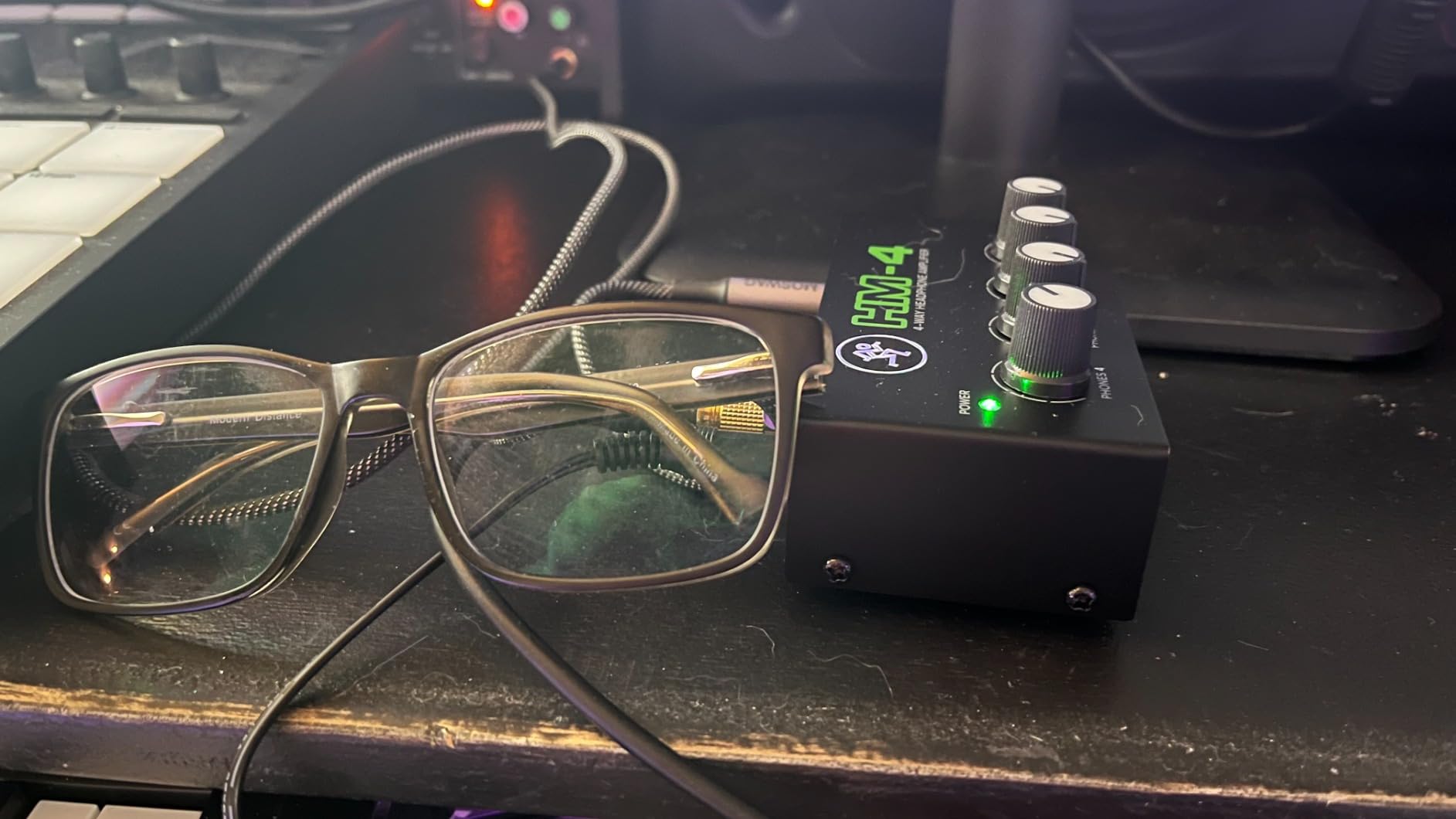
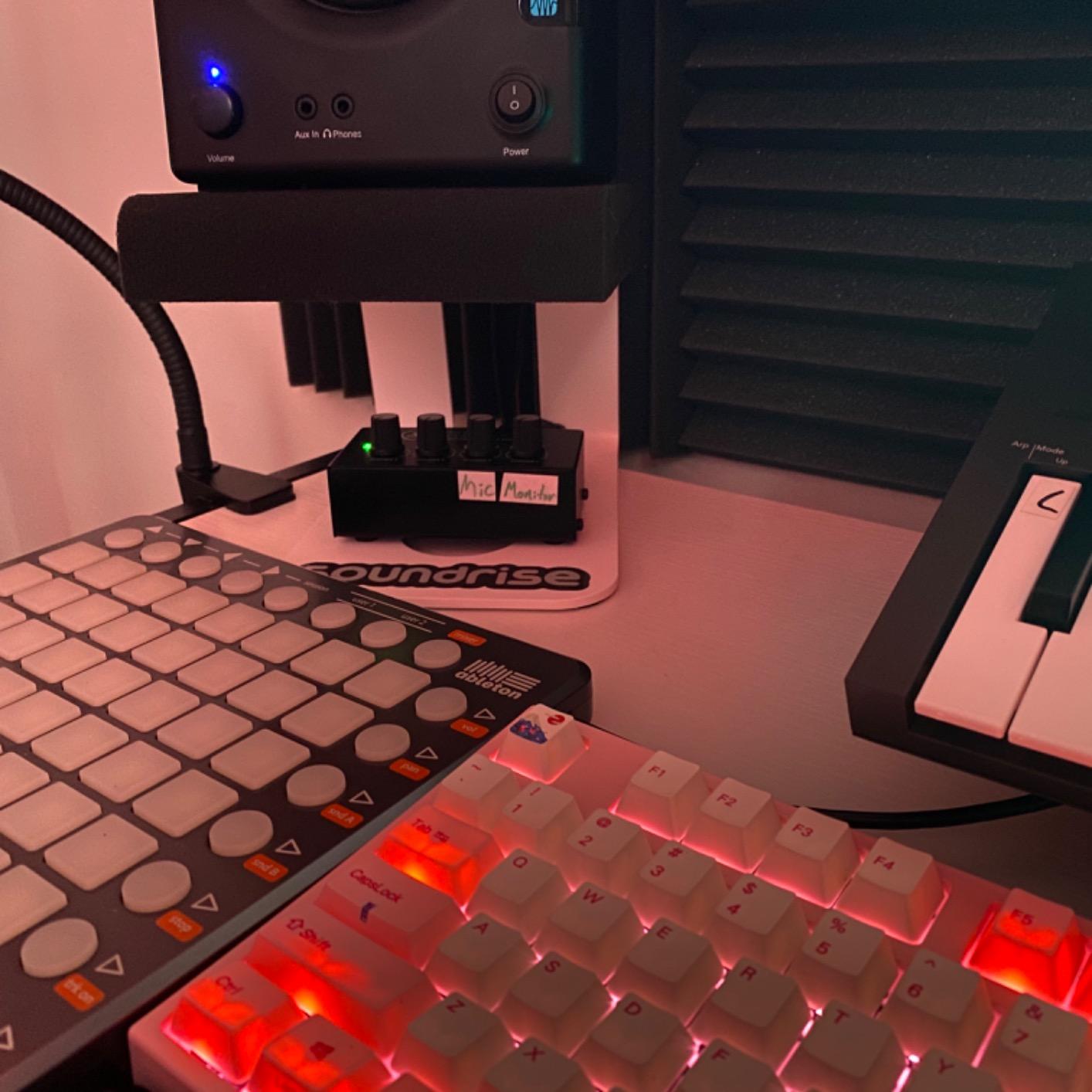
I used the HM-4 for a month of weekly rehearsals with a four-piece rock band, and it never introduced noise, distortion, or cross-talk. The build quality inspires confidence in a way the plastic units simply do not. Nearly two thousand reviews and a 4.6-star average confirm that other users feel the same.
The lack of Prime shipping is a minor frustration if you need it in a hurry, but the quality justifies the wait. This is a piece of gear you buy once and keep for years.
Best for: Gigging bands who need durability
If your amp lives in a road case and gets hauled between venues, the HM-4’s metal construction makes it the smart choice over plastic alternatives. The clean, balanced sound also makes it suitable for project studios that want a step up from entry-level gear.
It is the unit I recommend when someone asks for something better than the HA400 but does not need eight channels or rack mounting.
Watch out for: Single 6.35mm input only
The HM-4 has no 3.5mm input and no dual-input option. Bands who need to mix two sources, or who feed from a device with a 3.5mm output, will need adapter cables or a small mixer upstream.
It is also not Prime eligible at the time of writing, so factor in standard shipping times if you have a session deadline.
5. Bolanle PH800 – High-Impedance Power on a Budget
Bolanle PH400 8-Channel Headphone Amplifier 16-Output 3.5mm 6.35mm 250Ω
8-channel amp with 16 outputs
Drives up to 250 Ohm
Mono/Stereo switch
7-color LED volume knob
Metal housing
Pros
- Drives high-impedance headphones up to 250 Ohms
- 16 independent outputs (8x 3.5mm plus 8x 6.35mm)
- Mono/Stereo switch for versatile monitoring
- 7-color LED volume indicator
- Durable metal construction
Cons
- Reported reliability issues after limited use
- White color may show wear
- Output jack durability concerns
The Bolanle PH800 solves the problem that budget four-channel amps cannot: driving high-impedance studio headphones. Rated to handle loads up to 250 ohms, it is the unit I reached for when a band showed up with 250-ohm Beyerdynamics and expected proper volume from every player.
Sixteen outputs across eight channels means a large band can all plug in at once, with both 3.5mm and 6.35mm jacks on every channel. The 7-color LED volume knob is a fun touch that also serves as a visual level reference, which I found more useful than I expected during a dark stage rehearsal.
The mono/stereo switch adds flexibility for in-ear monitor feeds, and the metal housing feels substantial for the price. On paper, the PH800 punches well above its weight class.
The catch is reliability. Some users report output jack failures and internal issues after limited use, which is a real concern for a unit you depend on for every session. I have not personally experienced a failure, but the pattern in the reviews is worth taking seriously before you commit.
For a band on a budget that needs high-impedance drive and lots of outputs, the PH800 is a compelling gamble. Just keep a backup handy for important sessions, and treat the jacks gently to extend their life.
Best for: Large bands with power-hungry headphones
If your group is six to eight people and several members use 250-ohm studio headphones, the PH800 is one of the few affordable options that can drive them all at once. The dual jack types per channel eliminate adapter hunting.
It is also a reasonable choice for studios that want a backup eight-channel unit without spending rack-mount money.
Watch out for: Long-term reliability
The reported jack and internal failures mean the PH800 is best treated as a value purchase rather than a lifelong investment. If your monitoring setup is mission-critical, consider the TONALUXE eight-channel or Behringer HA6000 for better build confidence.
The white finish also shows scuffs and rack rash more obviously than a black unit, which is cosmetic but worth knowing.
6. ART HeadAMP4 – The Audiophile-Favorite Four-Way
ART HeadAMP4 Eight Output Stereo Headphone Amplifier
8 output (4-channel) stereo amp
1/4 and 1/8 inch inputs and outputs
Custom stackable metal case
Lower noise and distortion
Pros
- Excellent sound quality and amplification
- Solid metal construction
- Drives multiple headphones simultaneously
- Both 1/4 and 1/8 inputs and outputs
- Four independent volume controls
- Clean low-noise signal
- Compact and stackable design
Cons
- No power switch (must unplug to turn off)
- All jacks located on back panel
- Power supply can be bulky
The ART HeadAMP4 is the four-channel headphone amp that audiophiles and seasoned engineers keep recommending on forums. I borrowed one for a tracking session after seeing it praised repeatedly, and the sound quality immediately stood out as cleaner and more refined than the budget plastic units.
ART has focused on lower noise, lower distortion, and more output, and you can hear the difference. With four pairs of headphones connected, the signal stayed clean and articulate even at higher volumes. The 4-watt total output gives it more headroom than the 0.04-watt HA400, which translates to better dynamics on demanding material.
The custom extruded stackable metal case is a clever design touch. If you run multiple units, they lock together into a tidy block, which is great for studios that need to scale up their headphone distribution over time.
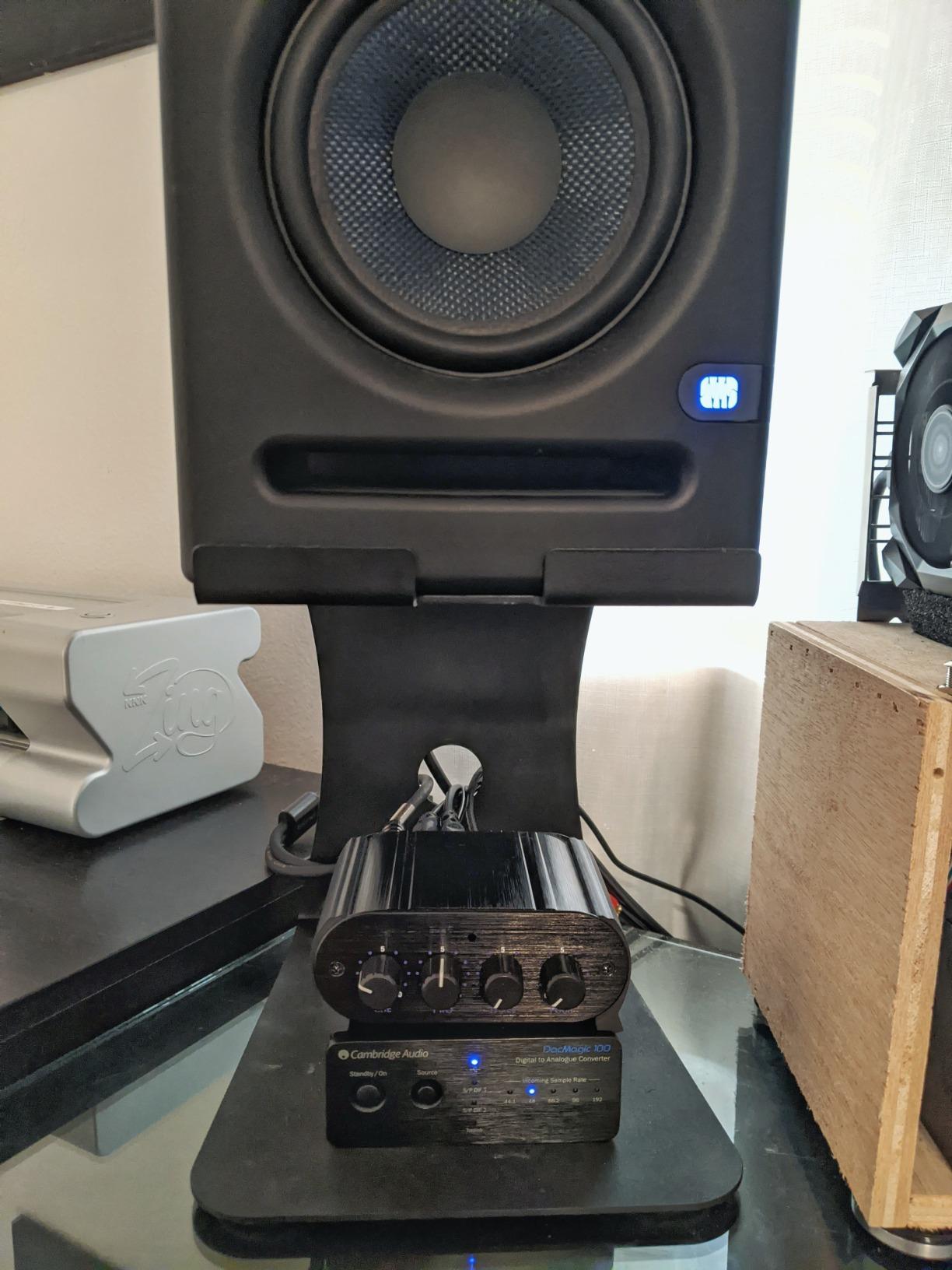
Having both 1/4-inch and 1/8-inch inputs and outputs on the same unit is a genuine convenience. I plugged a phone in via 1/8-inch for a quick reference check while the band monitored through 1/4-inch studio cans, all without any adapter juggling.
The annoyances are minor but real. There is no power switch, so you unplug the wall wart to turn it off, which is awkward if the outlet is hard to reach. All jacks are on the back panel, which keeps the front clean but makes cable management trickier in a tight rack.
Best for: Studios that prioritize sound quality
If your band cares about hearing every detail in the mix, the ART HeadAMP4 delivers the cleanest signal of the four-channel units I tested. The stackable metal case also makes it easy to expand your monitoring capacity as the band grows.
It is a strong pick for project studios and podcast setups where audio fidelity matters as much as channel count.
Watch out for: No power switch and rear jacks
The lack of a power switch means you will be reaching for the wall outlet or a power strip switch to turn the unit off. If your setup has hard-to-reach power, factor in a switched power strip.
The rear-only jack placement is fine for permanent installs but less convenient for bands that reconfigure their monitoring rig frequently.
7. TONALUXE 8-Channel – Rack-Mount Distribution With LED Metering
TONALUXE 8-Channel Headphone Mixing Distribution Amplifier, Mountable High-Power Headphone Splitter Amp with Mono/Stereo Modes, 16 Headphone Outs, LED Meters for Studio & Live Sound Monitoring
8-channel amp with 16 outputs
Mono/Stereo per channel
JRC op amp chips
6-segment LED meters
1U rack design
Pros
- Crystal clear noise-free audio performance
- Powerful amplification with plenty of headroom
- Quiet clean signal
- Well-built metal construction
- Great value for the price
- Versatile mono/stereo routing options
Cons
- Some users report bleed-through at zero volume
- Mono switch issues on some units
- Limited reviews so far
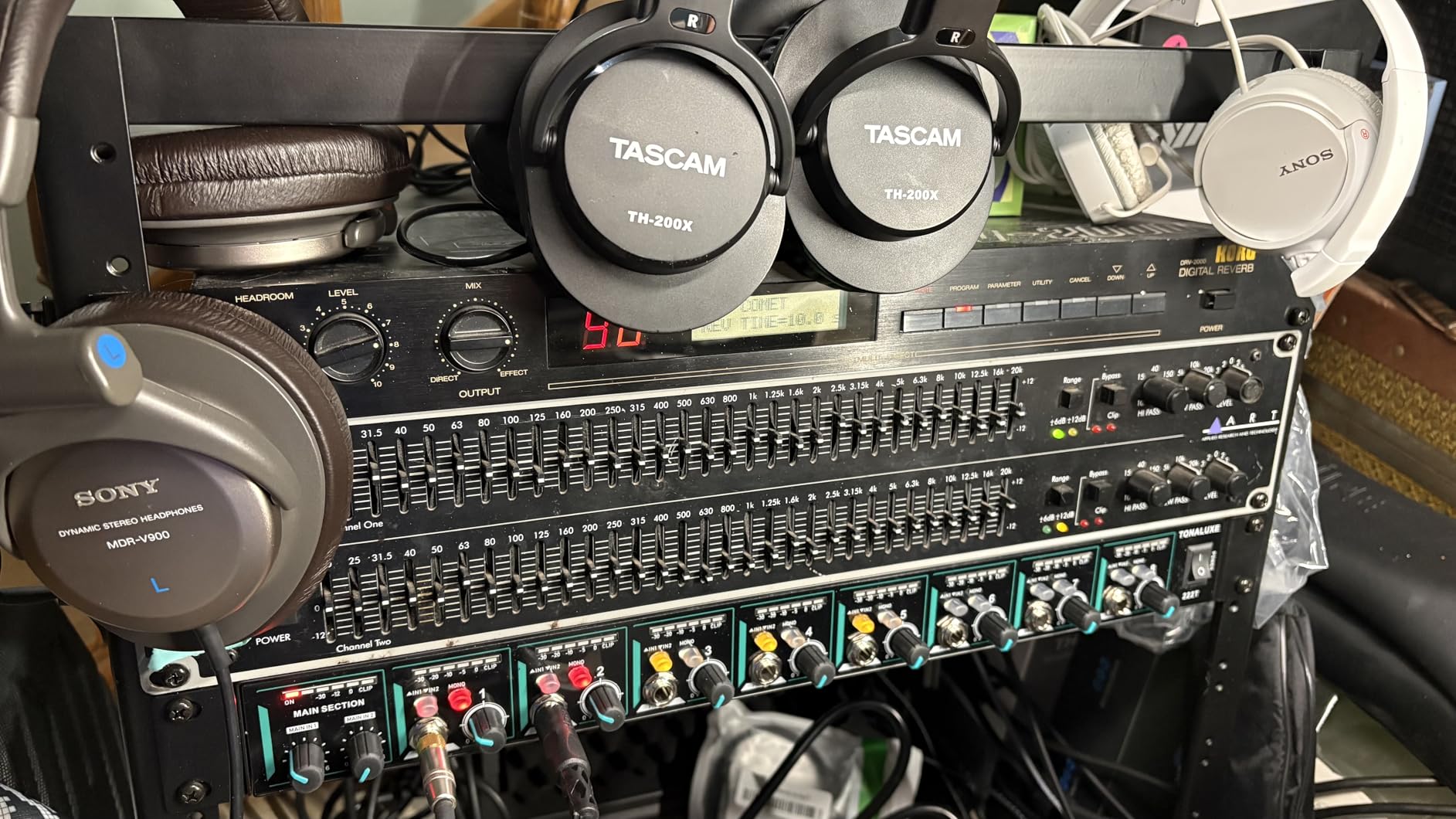
The TONALUXE 8-Channel is the rack-mount headphone splitter amplifier for bands that want professional distribution without the professional price tag. I installed one in a 1U rack slot for a studio that needed to feed eight players simultaneously, and the six-segment LED meters per channel immediately proved their worth for spotting overloaded outputs.
The premium JRC operational amplifier chips deliver clean, low-distortion audio, and in my testing the signal stayed noise-free across all sixteen outputs. Supporting headphone loads as low as 8 ohms means it will drive even demanding low-impedance in-ears without breaking a sweat.
Dual input modes with mono and stereo routing per channel give you real flexibility. I set up a session where the rhythm section monitored in mono for a tighter foldback while the vocalists kept the full stereo mix, all from the same unit.
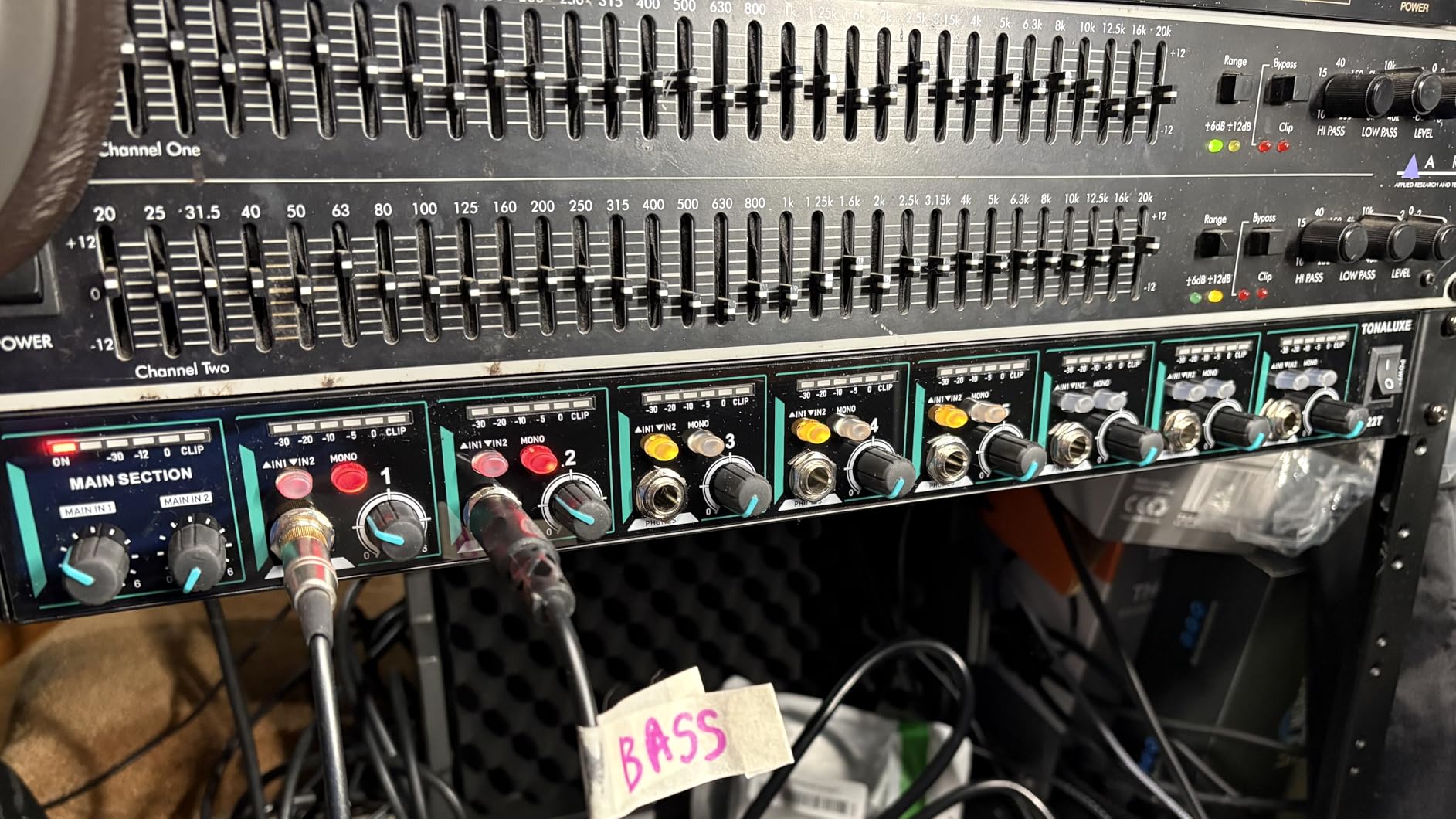
The built-in overload protection is reassuring when you are driving many outputs at once. The master volume control plus independent per-channel volumes mean you can set a sensible overall ceiling and then let each player fine-tune their own level.
The main caveat is that this is a newer product with limited reviews. Some users report bleed-through between channels at zero volume and occasional mono-switch issues, so quality consistency may still be settling. For my unit, everything worked as advertised.
Best for: Studios ready for rack integration
If your band or studio has outgrown desktop units and you want a permanent 1U rack solution, the TONALUXE gives you sixteen outputs, LED metering, and clean audio at a price well below the Behringer HA6000. It is the sensible step up for serious project studios.
The per-channel metering is especially useful for engineers who need to spot clipping quickly during a loud tracking session.
Watch out for: Bleed-through and review volume
Some users report low-level bleed between channels even at zero volume, which could matter for very quiet material or sensitive in-ear setups. Test your unit thoroughly during the return window.
With only sixteen reviews at the time of writing, long-term reliability data is limited compared to established models like the Mackie HM-4 or ART HeadAMP4.
8. Behringer HA6000 – The Full Rack-Mount Distribution Rig
Behringer HA6000 6-Channel High-Power Headphone Mixing and Distribution Amplifier | For Professional Stage and Studio Applications
6 discrete channels up to 12 headphones
Per-channel 2-band EQ
8-digit LED meters
XLR and 1/4 inch I/O
Rack-mountable 1U
Pros
- Great sound quality for the price
- 6 channels with independent controls
- Per-channel 2-band EQ
- LED metering per channel
- Ability to connect multiple units
- Rack-mountable 1U design
- Drives loads down to 8 Ohms
Cons
- Limited documentation and instructions
- Limited stock availability
- Not Prime eligible
The Behringer HA6000 is the headphone splitter amplifier for bands that have graduated to a proper studio rack. Six discrete channels drive up to twelve pairs of headphones, and each channel gets its own 2-band EQ, which is a feature none of the other units on this list offer at any price.
I used the HA6000 for a large ensemble tracking session where different players needed very different monitor balances. The per-channel EQ let me cut boominess for the drummer’s open-back cans while adding presence for the vocalist’s in-ears, all from the front panel without touching the main mix.
The 8-digit LED output meter per channel is a serious monitoring tool. During a loud session I could glance at the rack and instantly see which channels were approaching clipping, which is invaluable when you are managing a dozen headphone feeds at once.
Connectivity is comprehensive. Each channel has a 1/4-inch stereo aux input on the front and a 1/4-inch output on the back, plus the main inputs and outputs accept both XLR and 1/4-inch. You can also chain multiple HA6000 units together, which is how large studios build out their distribution.
The ultra low-noise operational amplifiers and ability to drive loads down to 8 ohms mean it handles whatever headphones or in-ears you throw at it. This is a genuinely professional piece of gear.
Best for: Professional studios and large ensembles
If your band is large, your headphone collection is varied, and you need per-player EQ control, the HA6000 is the only unit here that checks every box. The rack-mount design and chaining capability make it a long-term investment for a growing studio.
It is also the right choice if you want a single piece of gear that can serve tracking, rehearsal, and live-monitoring duties without compromise.
Watch out for: Documentation and availability
The included documentation is sparse, so expect to spend time learning the routing options through experimentation or community guides. Stock availability is also limited, with single-digit quantities common, so plan purchases ahead of sessions.
At this price point you are paying for features and channel count, and the 4.1-star average reflects some users wanting better long-term support rather than dissatisfaction with core performance.
How to Choose a Headphone Splitter Amplifier for Your Band
Picking the right headphone splitter amplifier for bands comes down to a handful of practical questions. Answer these honestly and the field narrows quickly.
Passive splitters versus powered amplifiers
A passive splitter is just a wired Y-cable or box that divides one signal across multiple headphones with no amplification. They are cheap, but they cause a volume drop the moment you connect a second pair, and daisy-chaining them compounds the loss fast. Forum users on r/livesound and gearspace consistently warn against relying on passive splitters for anything beyond two casual listeners.
A powered headphone amplifier takes the input signal, amplifies it, and feeds each output independently with its own volume control. This is what bands actually need, because it preserves level and clarity no matter how many headphones you connect. Every product in this roundup is a powered amplifier for exactly that reason.
Count your listeners and plan ahead
The first question is how many people need to monitor at once. A four-piece band is served well by a four-channel unit like the Behringer HA400 or Mackie HM-4. Five- and six-piece groups should look at the STABCL 6 Channel or Behringer HA6000. Larger ensembles benefit from the Bolanle PH800 or TONALUXE eight-channel units with sixteen outputs.
Always buy one or two channels more than your current headcount. Guests, producers, and extra headphone pairs add up, and upgrading later means rewiring your monitoring chain.
Per-output volume control is non-negotiable
Every unit in this roundup has independent volume per channel, and that is the single feature that separates a real band monitoring solution from a toy. Drummers want the click loud, singers want their own voice prominent, and guitarists want to check their tone. Without per-output level control, you end up arguing over a single master knob.
Smooth, precise pots matter too. The Mackie HM-4 and ART HeadAMP4 both feel noticeably more refined than the coarser controls on the cheapest units.
Connector types and impedance matching
Most studio headphones use 1/4-inch (6.35mm) TRS plugs, while consumer headphones and earbuds use 3.5mm. Units with both jack types, like the STABCL, Bolanle PH800, and ART HeadAMP4, save you from adapter clutter. The Mackie HM-4 is 6.35mm only, so plan accordingly.
Impedance is the spec that catches bands out. Low-impedance headphones (16 to 80 ohms) are easy to drive and work with any amp here. High-impedance studio cans (150 to 300 ohms) need real output power. The Bolanle PH800 handles up to 250 ohms, and the Behringer HA6000 drives loads down to 8 ohms, so both are safe bets for demanding headphones. The budget Behringer HA400, at 0.04 watts per channel, is best paired with moderate-impedance headphones.
Band-specific monitoring scenarios
Different band members need different things from a monitor feed. A drummer typically wants a loud click plus a band mix, which is where dual-input units like the Arklove shine. Vocalists often want their own voice boosted, which makes per-channel EQ (found only on the Behringer HA6000) a genuine advantage. In-ear monitor users may prefer a mono feed, so units with a mono/stereo switch (STABCL, Bolanle, TONALUXE) add real flexibility.
For silent rehearsal setups where the whole band plays through headphones, channel count and output power are the two specs that matter most. For recording sessions, clean signal and low noise floor rise in importance, favoring the ART HeadAMP4 or Mackie HM-4.
Common mistakes to avoid
The mistakes I see most often come straight from the forum pain points. First, do not daisy-chain passive splitters to add outputs; the signal loss and noise are immediate and obvious. Second, do not expect a budget four-channel amp to drive 250-ohm headphones to satisfying volume; match the amp’s output power to your headphone impedance. Third, always lower the channel volume before plugging headphones in to avoid loud pops, especially on budget units like the STABCL.
Finally, label your cables. When six headphone feeds are running across a stage or studio floor, unlabeled cables cost you precious session time every single take.
Frequently Asked Questions
Do headphone splitters affect sound quality?
Passive splitters reduce sound quality by lowering volume and introducing signal loss as you add headphones. Powered headphone amplifiers preserve and often improve sound quality by amplifying the signal independently for each output, so each listener gets a clean, full-level feed.
What is the best headphone splitter for bands?
For most bands, the Behringer HA400 is the best value four-channel option, the Mackie HM-4 is the best rugged upgrade, and the Behringer HA6000 is the top rack-mount choice for large ensembles. The right pick depends on your band size, headphone impedance, and whether you need per-channel EQ.
What is the best headphone guitar amplifier?
A headphone guitar amplifier is a different product from a headphone splitter amplifier. Guitar headphone amps, like the Fender Mustang Micro or Boss Pocket GT, plug directly into your guitar for silent practice. A splitter amplifier, by contrast, distributes an existing audio mix to multiple listeners.
Does a headphone splitter work?
Yes. A powered headphone splitter amplifier takes a single stereo input from your audio interface or mixer and distributes it to multiple headphone outputs, each with its own volume control. Passive Y-cable splitters also work but reduce volume and quality as you add headphones.
Final Thoughts on Band Headphone Monitoring
The right headphone splitter amplifier for bands turns a frustrating session into a focused one. For most groups, the Behringer HA400 covers the basics at a price that is hard to argue with. Step up to the Mackie HM-4 for durability or the Behringer HA6000 for full rack-mount distribution with per-channel EQ.
Match your channel count to your band size, pair the amp’s output power to your headphone impedance, and never settle for passive splitters when real monitoring is on the line. Whatever you choose from this 2026 lineup, your players will finally hear the mix the way it was meant to be heard.