
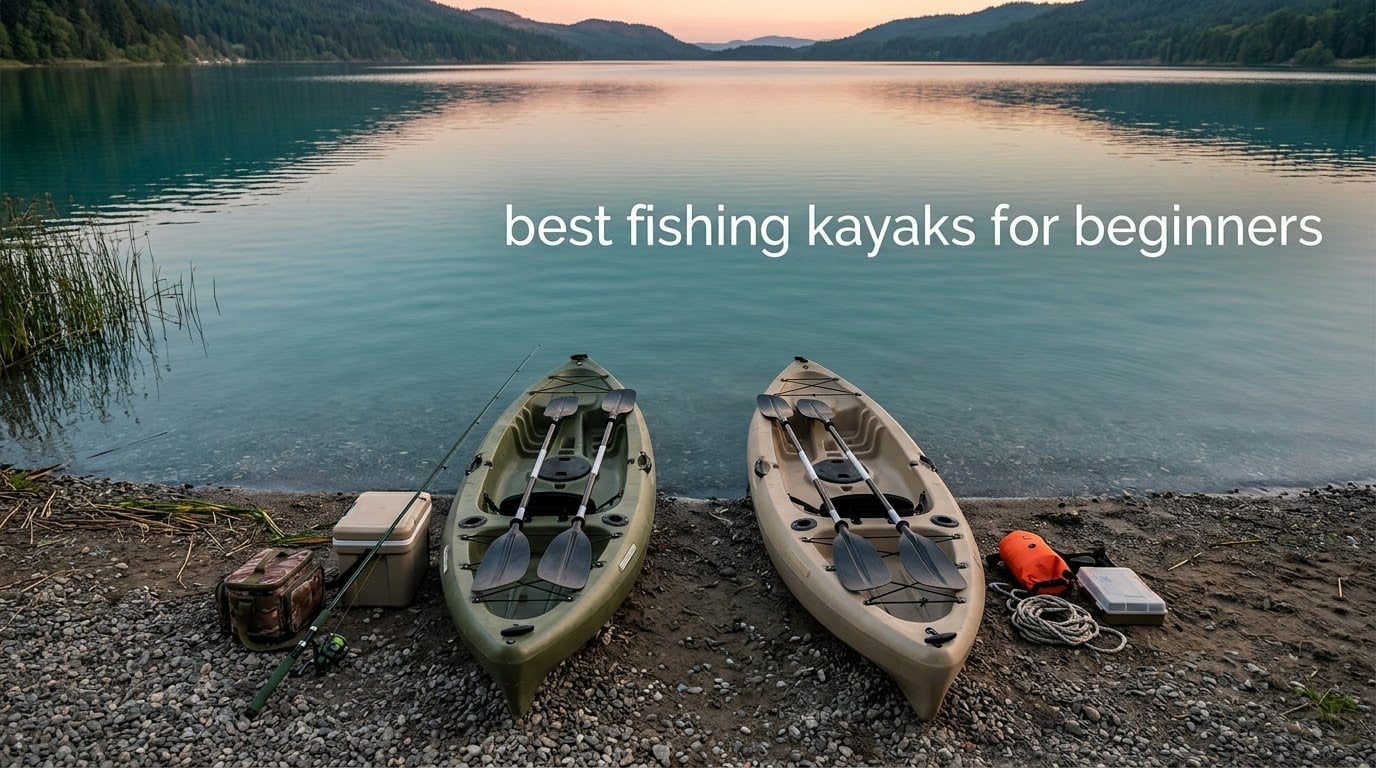
The best fishing kayaks for beginners are the Lifetime Tamarack Angler 100 and the Pelican Catch Mode 110. The Tamarack is the easiest first boat to launch, cart and store, and it ships with a paddle, three rod holders and two storage compartments already fitted. The Catch Mode 110 is the better boat the moment you want to stand up and cast, because its 34.5-inch beam and retractable skeg handle wind that would push a narrower hull sideways.
I have been putting new anglers in their first kayak for a decade, and the pattern repeats every time. Nobody gets in trouble because the boat is too small. People get frustrated because the boat is too narrow, too heavy to solo-carry, or too stripped-down to fish from without an afternoon of drilling holes in the deck first.
This roundup covers ten sit-on-top and sit-in fishing kayaks that a first-time paddler can genuinely succeed in, from an inflatable that fits in a closet to a high-capacity angler hull built for two people and a full day of gear. Every pick below lists its real length, width, weight and capacity so you can compare them without guessing.
What size kayak is best for a beginner kayaker? For most first-time buyers, a 10- to 12-foot hull with a minimum width of 32 inches, or 34 inches if you plan to stand and cast, is the sweet spot. Longer kayaks track straighter and cover water faster but are harder to control in wind and current, while shorter ones are twitchier in open water.
We keep a longer buying guide at the bottom of this page, covering width, capacity, seat type, propulsion and safety. If you want the short version first, the ten reviews run in order from the easiest boat to start in to the most capable one you will grow into.
Top 3 Picks for Beginner Fishing Kayaks (October 2026)

Lifetime Tamarack Angler 100
- 51 lb weight
- Three rod holders
- Two storage compartments
- Paddle included
Best Fishing Kayaks for Beginners in October
| Product | Specifications | Action |
|---|---|---|
| Lifetime Tamarack Angler 100 |
|
Check Latest Price |
| Pelican Catch Mode 110 |
|
Check Latest Price |
 Perception Flash 9.5 Perception Flash 9.5 |
|
Check Latest Price |
 Pelican Sentinel 100X Pelican Sentinel 100X |
|
Check Latest Price |
 Pelican Catch Classic 100 Pelican Catch Classic 100 |
|
Check Latest Price |
 Lifetime Tamarack Pro 103 Lifetime Tamarack Pro 103 |
|
Check Latest Price |
 Lifetime Kokanee Lifetime Kokanee |
|
Check Latest Price |
 Perception Outlaw 11.5 Perception Outlaw 11.5 |
|
Check Latest Price |
 Reel Yaks Raptor Reel Yaks Raptor |
|
Check Latest Price |
 INTEX Excursion Pro K1 INTEX Excursion Pro K1 |
|
Check Latest Price |
1. Lifetime Tamarack Angler 100 – The Easiest First Kayak to Own
Lifetime Muskie Angler Sit-On-Top Kayak with Paddle, Tan, 120″
10 ft long
31 in wide
51 lb
275 lb capacity
HDPE with 5-year warranty
Pros
- Light and easy to solo-handle at 51 lb
- Three rod holders and two storage compartments fit
- Paddle included so there is nothing else to buy first
Cons
- Included paddle is short and flimsy
- 275 lb capacity is low for heavier anglers
- Veers when you stop paddling
The Tamarack Angler 100 is the boat I hand to anyone who tells me they have never sat in a kayak. It weighs 51 pounds, which is light enough that a single person can lift it into a bed, carry it down a beach slope, or set it on a roof rack without a second pair of hands.
It is also already a fishing kayak on day one. You get two flush-mounted rod holders and one top-mount holder, two six-inch storage compartments at the rear and centre, a paddle with a keeper on shock cords, and a five-year limited warranty on a UV-protected high-density polyethylene hull.
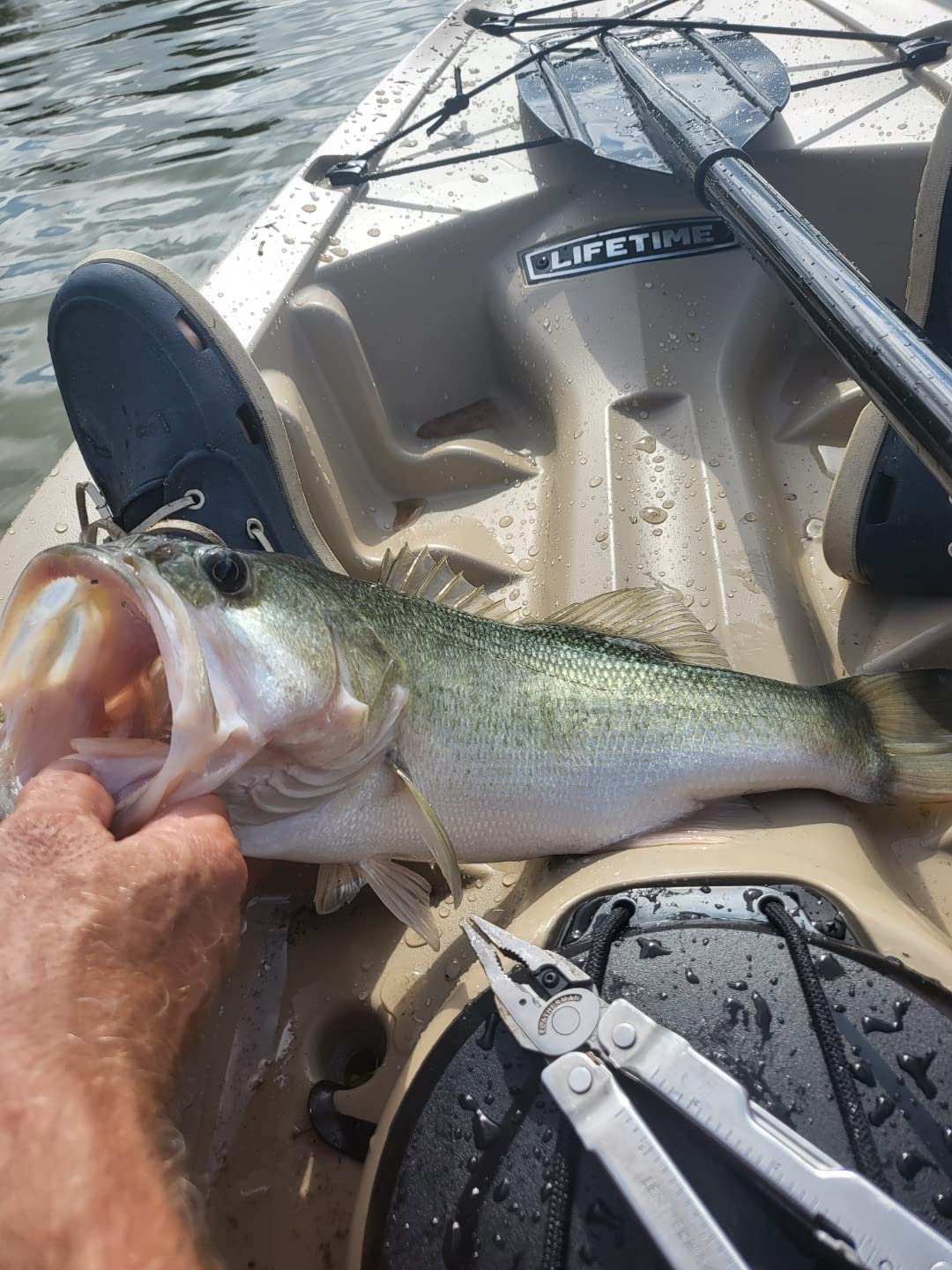
The hull is a flat-bottomed design with deep tracking channels and a skeg, and it has a sharp bow that carries speed better than you would expect from something this wide. Owners report it holding steady in chop that unsettles much lighter plastic boats.
What I like most is how forgiving the fit is. Multiple footrest positions let you set the leg length properly, and the adjustable padded seat back and seat pad take an hour out of a long day without needing a separate seat purchase.
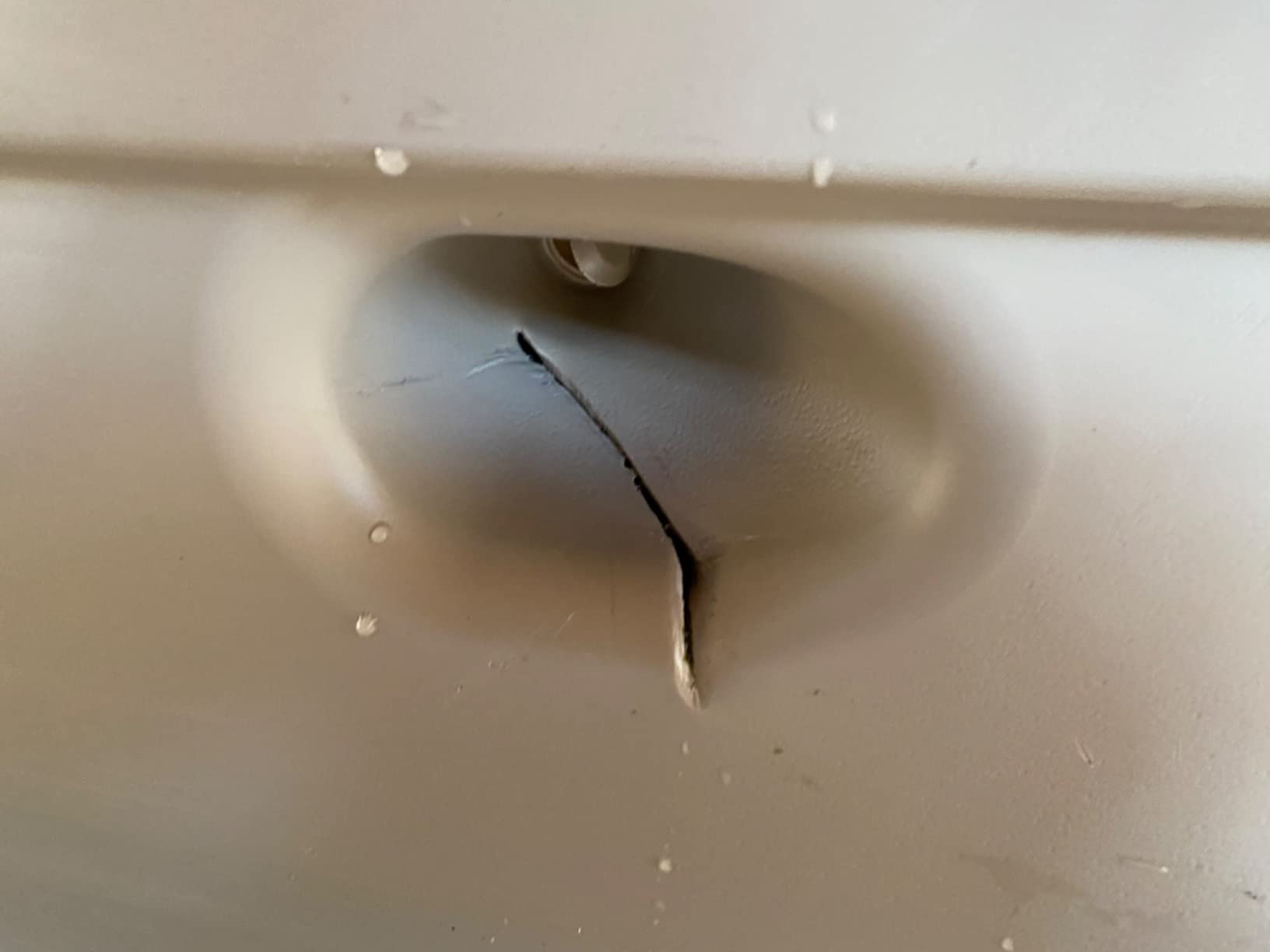
The durability record is the other reason it leads the list. Owners describe dragging it over rocks, bumping tree limbs and bouncing between truck beds, and the hull keeps not cracking. That matters more than any gadget on the deck.
Is the Tamarack wide enough to stand and cast
Honestly, no. At 31 inches of width, this is a seated-cast boat. It is stable sitting down and stable for a knee-high cast from the seat, but if your whole plan is to rise up and fish, you want to look at the Catch Mode 110 instead.
There is a second limitation worth knowing before you buy. The 275-pound capacity rating is the joint-lowest here, so if you are a larger angler or plan to carry a heavy cooler, this hull runs out of room quickly.
What to fix on day one
Budget for a proper fishing paddle. The included one is short and flexes, and a longer blade with a decent shaft makes a real difference in chop and adds the reach you want for a low-angle cast.
Also check the plastic seat connector clips on assembly. They are the one component owners flag as fragile, and a quick reinforcement before you head out prevents an annoyance mid-trip.
2. Pelican Catch Mode 110 – The Best Kayak for Standing Casts
Pelican Catch Mode 110 Fishing Kayak – Premium Angler Kayak with Lawnchair seat – 10.5 Ft., Venom
10 ft 8 in long
34.5 in wide
75 lb
375 lb capacity
Ergoboost seat and retractable skeg
Pros
- 34.5 in width
- a stable platform for standing casts
- Retractable skeg transforms wind tracking
- Ergoboost seat works over multi-hour sessions
- Huge flat cargo deck
Cons
- Heavy at 75 lb
- needs a cart for solo transport
- Paddle is not included
- No dry storage compartments
The Catch Mode 110 carries the highest customer rating in this roundup at 4.6, and it earns it on the single trait beginners care about most: stability. At 34.5 inches wide with a flat, wide hull, it holds an angler standing up with a rod in hand without the nervous wobble that makes people sit back down.
Owners report it carrying a 200-pound angler and a 100-pound dog at the same time, and the scuppers do not overflow at that combined load. That is a very different experience from the 31-inch hulls further down this list.
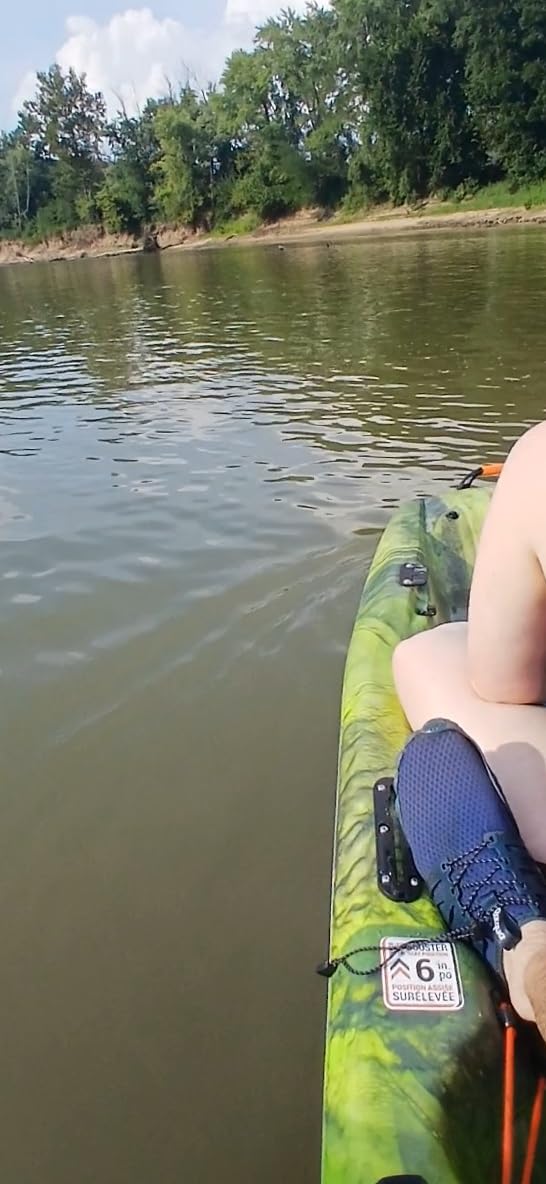
The retractable stern skeg is the feature experienced anglers mention first. With it deployed, the kayak tracks in wind and current in a way that feels closer to a 12-foot boat, and you can retract it in shallow water so you do not ground out.
The Ergoboost seating system folds down when you need a clear deck for casting, and under-seat storage keeps tackle out of the rain. Two four-inch rigging tracks mean accessory mounting is a bolt-on job rather than a drilling job.

Anti-slip traction pads with a built-in fish ruler cover the standing area, which matters more than it sounds. Grippy deck under a wet boot is the difference between a confident cast and a slip.
Who should buy this hull and who should not
Buy it if you are a beginner who fishes standing up, if you fish water with real wind, or if you carry coolers and crates. The deck space is genuinely large, and the hull is purpose-built for the job.
Skip it if you have no cart and no one to help you carry it. Seventy-five pounds is a genuine two-hand lift, and solo transport is the most common reason buyers regret a wide fishing kayak.
Handling the weight and the missing paddle
Budget for a kayak cart as a required accessory, not an optional one. Once you own a cart, the weight stops being the deciding factor and the stability takes over as the main argument.
No paddle is included, so add one to the same order. A few owners also report the strap hooks as flimsy, so a quick check of every tie-down point before launching is worth the ten seconds.
3. Perception Flash 9.5 – The Best Sit-In Kayak for Dry, Lightweight Fishing
Perception Flash 9.5 | Sit Inside Kayak for Fishing and Fun | Two Rod Holders | Multi-Function Dash | 9′ 6″ | Earth (9331900190)
9 ft 5 in long
28.5 in wide
41 lb
325 lb capacity
Sit-inside hull with rear storage
Pros
- 41 lb
- easy to carry and launch solo
- Enclosed cockpit keeps you dry
- Nimble 9 ft 5 in length turns on a dime
Cons
- Narrow at 28.5 in
- not a standing boat
- Limited deck and cargo space
- Basic rod holders
The Perception Flash 9.5 is the sit-in answer. At 41 pounds it is among the lightest rigid kayaks in this roundup, and it still carries rod holders and a rear storage compartment for actual fishing.
That combination of weight and enclosed cockpit is rare. You get a boat that fits in a short pickup bed, launches over a soft bank, and keeps spray off you on a windy lake in cold weather.
Handling is nimble. The 9-foot-5-inch length turns quickly in vegetation-heavy cover, which is exactly where new anglers tend to end up after they follow a channel edge. Adjustable foot braces let a range of paddler sizes set up properly.
The 325-pound capacity sits in the middle of this lineup, which makes it a safe choice for most body sizes without pushing you toward the very largest hulls.
Perception builds this one in the USA and backs the hull and deck with a five-year limited warranty, with one year on installed accessories. The rear storage compartment is a dry spot for a dry bag, a lunch, and extra layers.
Is a sit-in harder to get into than a sit-on-top
Yes, and this is the honest drawback. You climb over a cockpit rim, which takes balance and some leg strength, and you have to do it in water depth you can stand in. On a shallow, sandy launch the sit-in wins. On a steep bank, it does not.
The second thing to accept is width. At 28.5 inches this is a seated boat, and there is no version of this hull where you stand and cast safely. Beginners who plan to fish standing should not buy it.
Where it fits in your first rig
Pair it with a PFD, a whistle and a dry bag in the rear compartment, and it is genuinely ready to fish. The rod holders are basic, so most owners add a rail-mounted or clamp-on holder within the first season.
We cover sit-on-top versus sit-in in more detail in the buying guide below, including when a first kayak should be a sit-in at all.
4. Pelican Sentinel 100X – The Best Lightweight Fishing Kayak
Pelican Sentinel 100X – Angler Sit on top Fishing Kayak – Forest Mist – Lightweight – Ergolounge™ Seating System – 10 ft, Sentinel 100X Angler Fishing Kayak
9 ft 6 in long
30 in wide
44.6 lb
275 lb capacity
Removable ExoPak storage
Pros
- 44.6 lb is easy to carry solo
- Under 10 ft stores anywhere a paddle will fit
- Ergolounge seat is genuinely comfortable
- ExoPak lets you prep gear at home
Cons
- 275 lb capacity is the joint-lowest here
- 30 in width limits standing ability
- Light hull feels less planted than wider models
The Sentinel 100X exists to solve one problem: getting a fishing kayak to the water by yourself. At 44.6 pounds it is one of the lighter purpose-built angler kayaks you can buy, and it carries molded-in side handles so you can lift it with balanced leverage.
It is also under 10 feet at 9 feet 6 inches, which means a different storage conversation than the longer hulls here. This one lives against a garage wall, not hanging from ceiling hooks in a crowded bay.
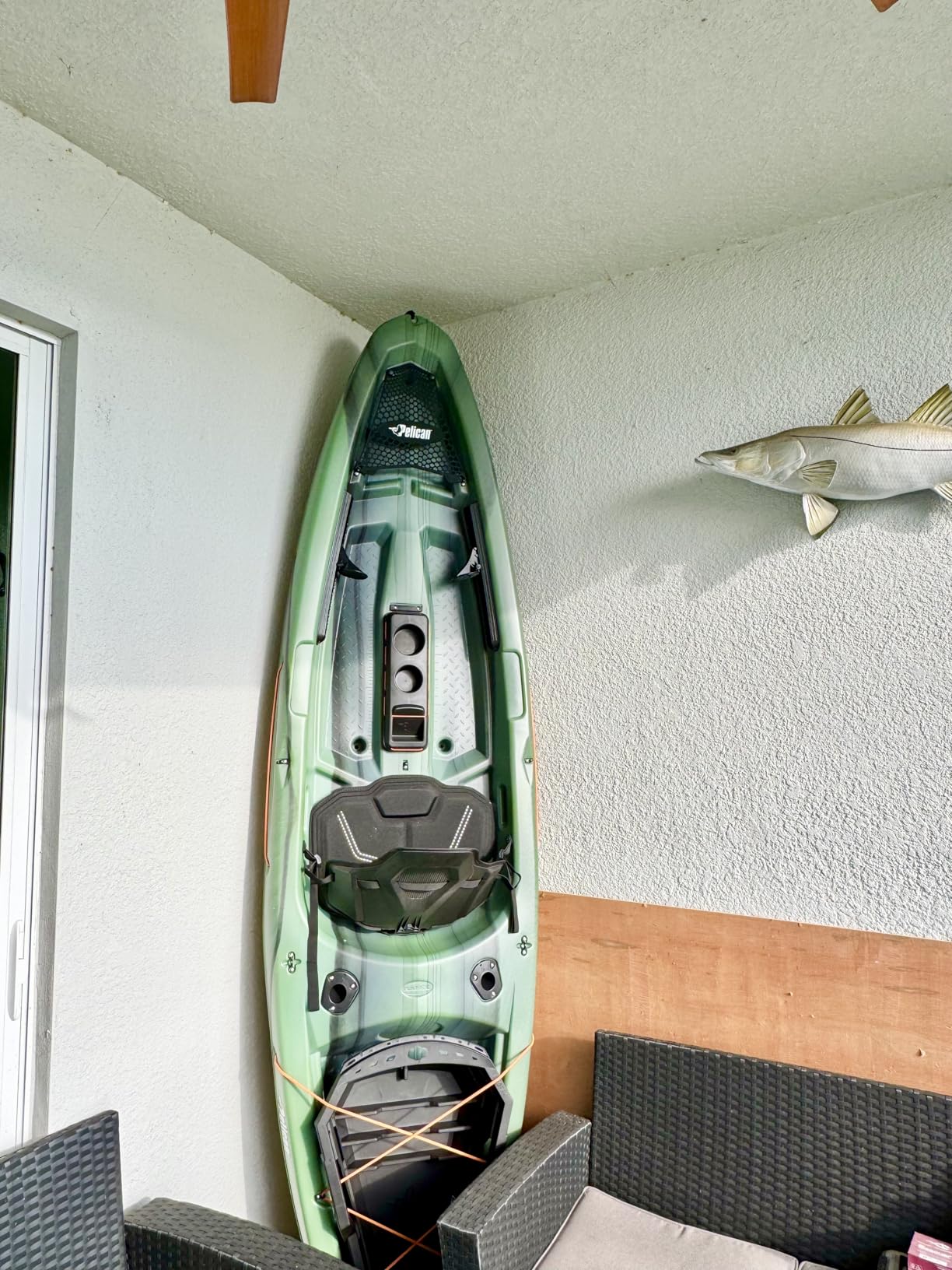
The Ergolounge seating system is the feature owners mention first. Extra-thick cushioning and a high, wide padded backrest make long sessions bearable, which matters more than any of the deck fittings on a boat this small.
Rigging is handled by the ExoPak, a removable storage module that carries two vertical rod holders. You can load it at home, clip it in at the launch, and take it out at the end of the day so it does not fill with water.
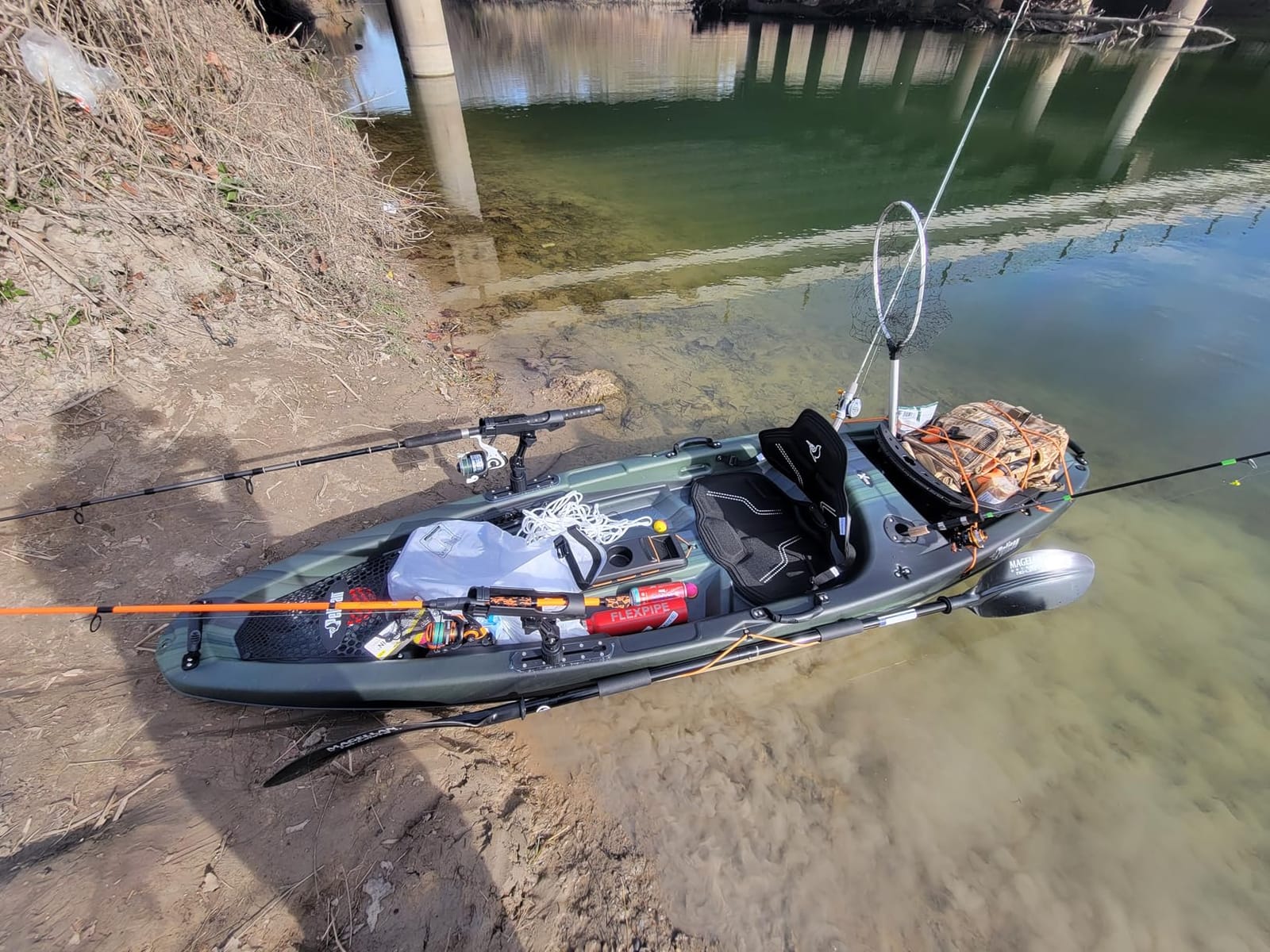
You get four rod holders in total, two flush-mounted and two vertical, and a lifetime limited warranty against manufacturer defects with one year on parts and accessories.
What you give up for the low weight
Capacity is the first cost. At 275 pounds, this sits at the bottom of the lineup and leaves little margin once you add a battery, a tackle crate and a cooler. Check your body weight against that number honestly.
Width is the second. Thirty inches is fine for seated fishing and casting from the knee, but it is a narrower platform than the 34-inch-plus boats here if you plan to work standing casts on structure.
Best use case for the Sentinel
This is the kayak to buy if you are alone, over 40, parking at a trailhead, and fishing water close to the truck. Lightweight portability beats every other feature at the start.
Our inflatable pick further down the list goes even lighter, but it trades away hull rigidity and long-session comfort to do it. The Sentinel keeps the seat and gives up a little capacity instead.
5. Pelican Catch Classic 100 – The Best Value Angler Kayak
Pelican Catch Classic 100 Angler – Sit-on-Top Fishing Kayak – Ergocast Dual Position Seating System – 10 ft – Outback
10 ft long
34 in wide
57 lb
350 lb capacity
Tunnel hull with rigging tracks
Pros
- 34 in width at 57 lb
- a rare combination
- Tunnel hull makes entry and exit easy
- Dual-position adjustable seat
Cons
- Only two rod holders
- Middling 350 lb capacity
- Parts warranty is only one year
The Catch Classic 100 is the boat that answers the question we get most often: can a beginner get a 34-inch-wide hull without carrying 75 pounds? Yes, and the answer is 57 pounds.
That combination is unusual. Most wide fishing kayaks get heavy fast, and most light ones are narrow. This one lands at 34 inches of beam, which is enough to cast from standing, while staying light enough for one person to lift onto a rack.
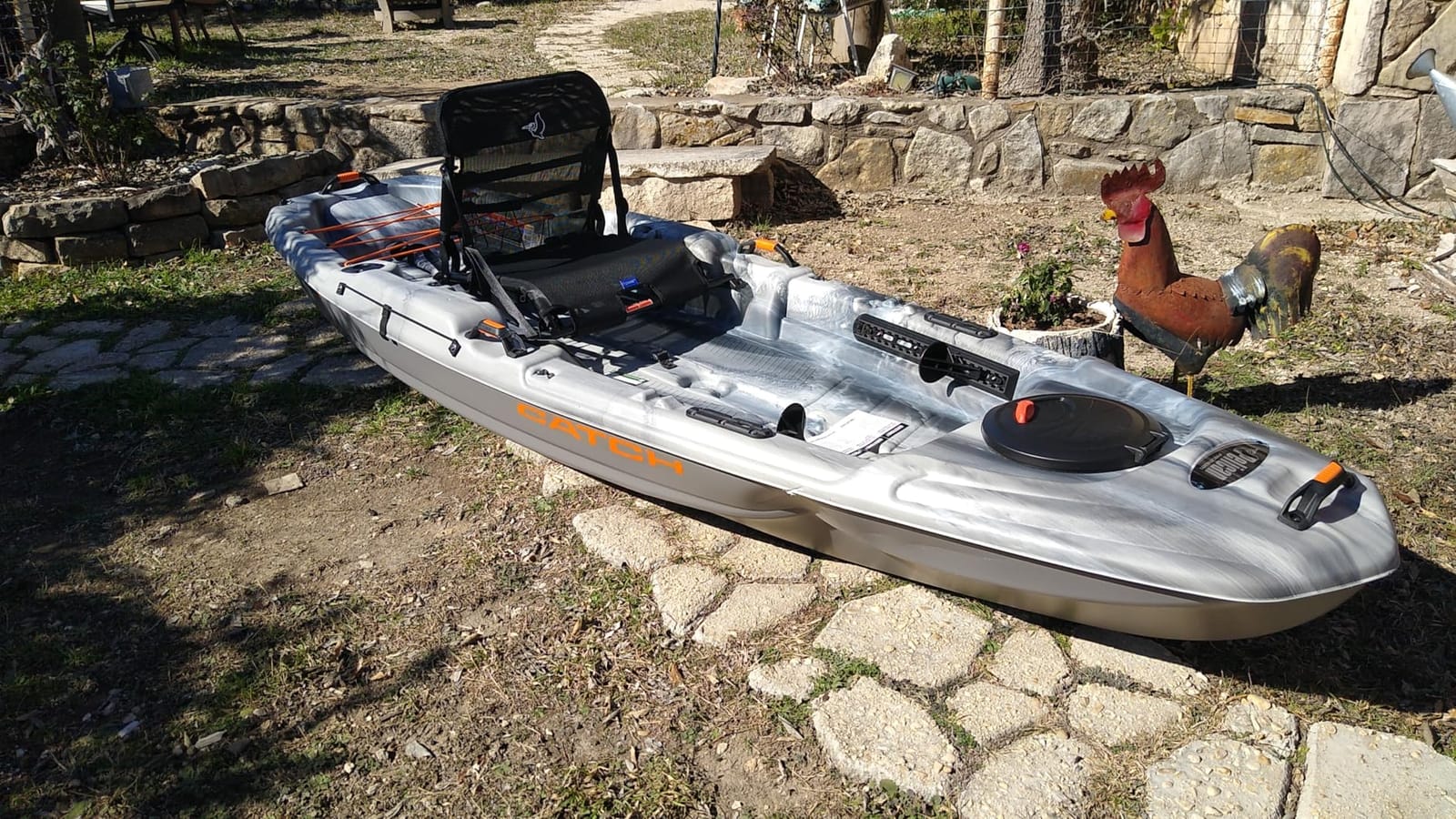
The tunnel hull is shaped for easy entry and exit, which reduces the scariest part of a first kayak trip. There is no rim to swing your legs over, and the deck edges are high enough to feel secure without feeling confined.
The ERGOCAST CLASSIC seat adjusts high or low, letting you pick the support level you want rather than living with one fixed position. On a boat this light, that adjustability is the feature owners mention most.
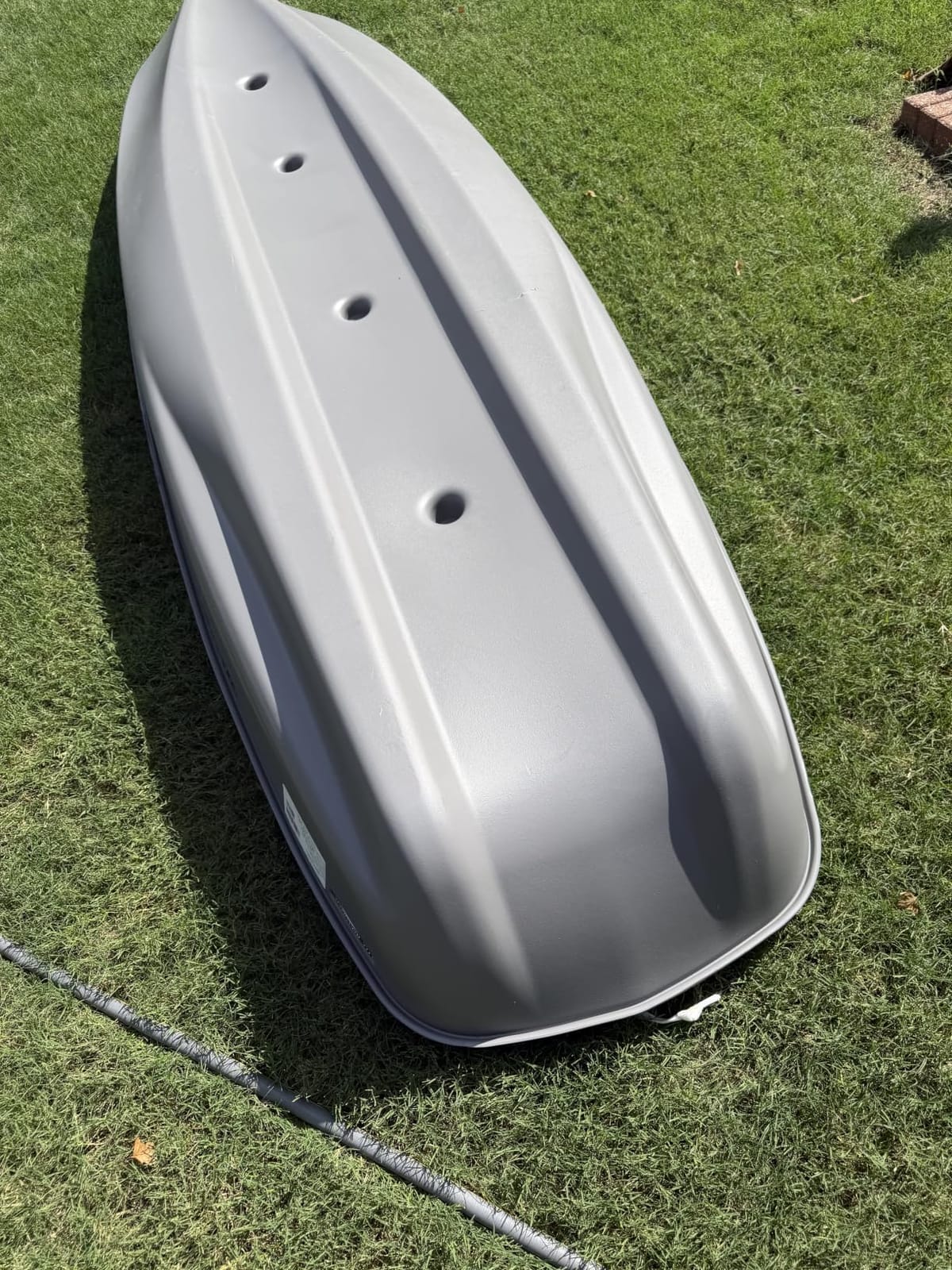
Storage is well laid out for the class. You get a front quick-lock hatch, a rear tank well with bungee cords, two four-inch rigging tracks, two accessory eyelets, adjustable footrests and a bottle holder. Internal buoyancy foam exceeds ABYC flotation standards.
What gives this boat away
The rod holder count is low at two, and if you run a multi-rod setup you will want to add rail-mounted holders early. Two four-inch tracks make that an easy bolt-on rather than a problem.
One-star feedback runs a little higher here than on the other models in this roundup, and the parts and accessories warranty is only one year against Pelican’s lifetime defect warranty on the hull. That is worth weighing if you plan to hang accessories off it.
Who this kayak suits best
It suits the angler who wants to cast standing but does not have a helper or a cart. That is the single most common beginner profile, and the Catch Classic is built for exactly it.
It also works for a beginner who intends to move up later, because the rigging tracks mean the next boat is a bolt-on accessory rather than a full repurchase.
6. Lifetime Tamarack Pro 103 – The Best Pre-Rigged Package
Lifetime Tamarack Pro 103 Sit-On-Top Kayak, Lightning Fusion, 10 ft. 3 in.
10 ft 3 in long
31 in wide
57.5 lb
300 lb capacity
Deep hull channels and chine rails
Pros
- Three rod holders plus tackle box storage from the box
- Adjustable framed seat and footrests
- Deep hull channels track well
Cons
- 300 lb capacity is modest
- 31 in width limits standing casts
- Basic cockpit space for one person
Where the Tamarack Angler 100 gets you fishing with a few add-ons, the Tamarack Pro 103 arrives rigged. You open the hatch, drop the seat in, and fish. That is the entire appeal.
It comes with one adjustable and two flush-mounted rod holders, a built-in catch-measuring ruler, a center storage hatch with a bucket, a deeper tank well, and front and rear bungee cords with a paddle keeper.
The hull shape is the differentiator. Deep hull channels handle tracking, and chine rails give lateral stability, which is the specific quality you need when you shift your weight to one side to cast toward a bank.
The adjustable framed seat and adjustable footrests let you dial the fit in, which extends how long you can stay out before the seat becomes the problem.
At 57.5 pounds and 10 feet 3 inches, it is a manageable solo boat. You can lift it into a truck bed yourself and carry it from a parking area to a launch without planning the trip around a second person.
Where the Pro falls short of the Angler
Capacity tops out at 300 pounds, which is tighter than several boats here. Add your body weight, a tackle crate, a battery and a cooler and you can run into the limit faster than you expect.
Width is 31 inches, so this is a seated-cast boat like its plainer sibling. If standing casts are the plan, the Catch Mode 110 or the Catch Classic 100 is a better shape for it.
Buy this one if you want zero assembly
If the idea of picking a rod holder, a hatch and a seat separately sounds like a project, this removes it. Everything a beginner needs on deck is already in the hull.
It is also a good second step for someone moving from a bare rental kayak, since the storage layout is already solved and the remaining upgrades are purely optional.
7. Lifetime Kokanee – The Best Solo or Tandem Fishing Kayak
Lifetime Kokanee Sit-On-Top Kayak, Lime, 10’6″
10 ft 6 in long
36 in wide
76 lb
425 lb capacity
Two quick-release seat backs
Pros
- 36 in width
- one of the widest hulls here
- Converts solo to tandem in minutes
- 425 lb capacity fits two adults
- 10 ft 6 in length stays manageable
Cons
- 76 lb is heavy for solo handling
- Hard plastic seats are unpadded
- Deck storage is largely unusable
The Kokanee is among the widest hulls in this roundup at 36 inches, and owners describe the feel as closer to a small jon boat than a kayak. If your fear is falling in, this is the boat that addresses it most directly.
It is the one boat here that converts from solo to tandem with the seats already included, so it works as a first boat for one person and a fishing kayak for two without a second purchase.
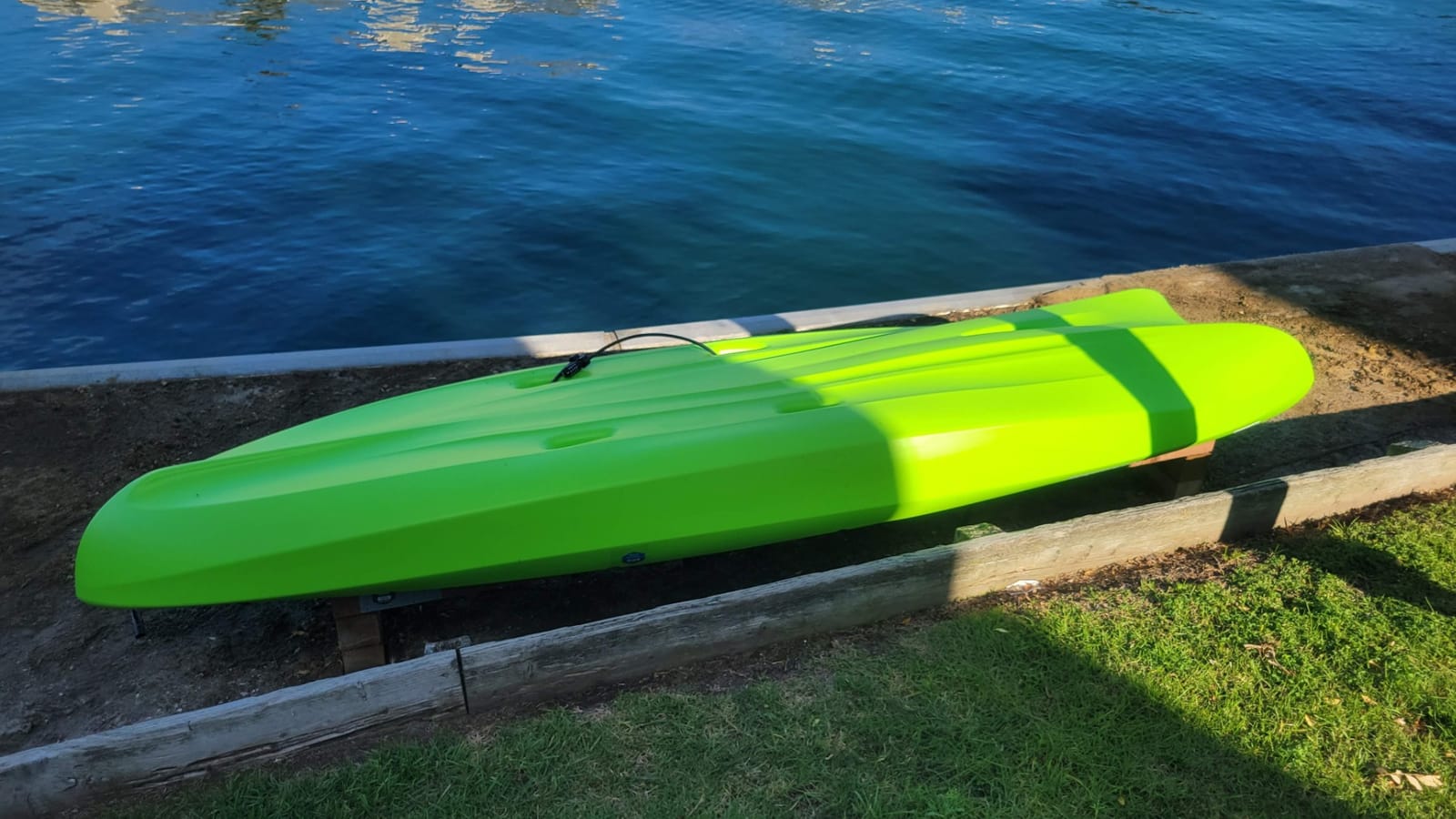
The 425-pound capacity is a real number here, not a marketing one. Two adults with gear sit inside the limit, which makes it a sensible choice for a couple learning together on the same lake.
UV-protected high-density polyethylene and multiple footrest positions round out a package that is otherwise unremarkable in the best way. It is a simple, sturdy, wide boat.
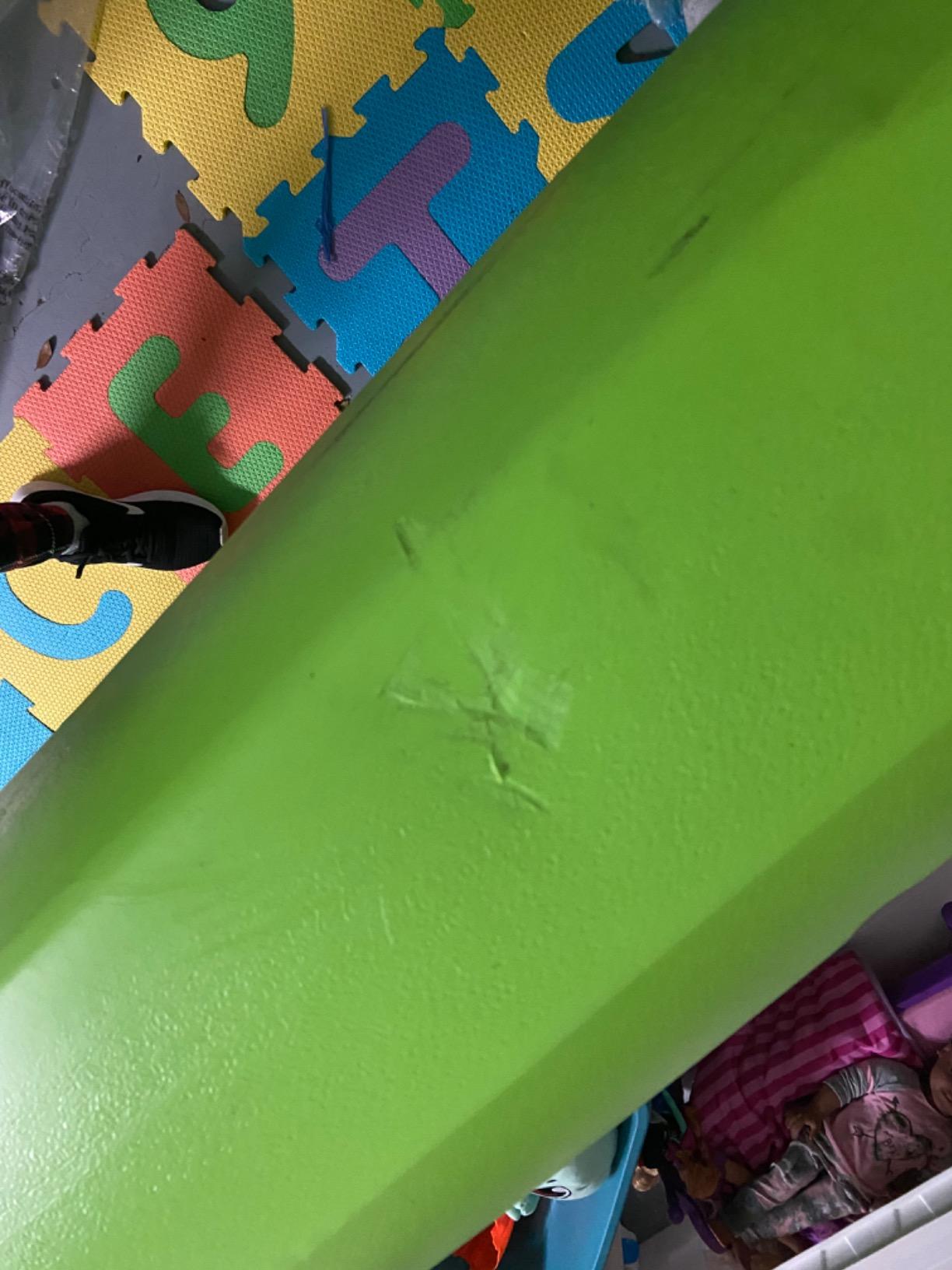
At 10 feet 6 inches it is shorter than it looks on paper, and that keeps it easier to lift, roof-rack and store than the 11-foot-plus hulls in this category.
The trade-off is weight and speed
Seventy-six pounds is heavy. Solo loading and solo carrying are real problems without a dolly, and a wide barge-like hull is slow and hard to turn once it is moving.
The unpadded hard-plastic seats also stop being comfortable after roughly forty minutes. If you plan long days from the seat, budget for a seat pad in the first week.
Why some buyers should skip it
Under-deck storage is largely unusable. Owners report gear sliding around inside and fouling the paddler, so plan on bungee cords and a dry bag rather than treating the hatch as cargo space.
There are also no installed seat eyebolts for adding alternative seats, which limits how far you can customise it later. If your weight or height falls well outside the middle of the range, look elsewhere.
8. Perception Outlaw 11.5 – The Best Fishing Kayak for Larger Anglers
Perception Kayaks – Outlaw 11.5 Fishing Kayak – Sit on Top – Fold Away Lawn Chair Seat – 4 Rod Holders – Integrated Tackle Trays – 11.5 ft – Dapper
11 ft 6 in long
35 in wide
425 lb capacity
Fold-away frame seat and tackle trays
Pros
- 425 lb capacity
- the joint-highest here with the Kokanee
- Integrated tackle trays within arm's reach
- Four rod holders support multi-rod fishing
Cons
- Longest hull here at 11 ft 6 in and awkward in tight water
- Premium price for a fishing kayak
- Solo transport needs a cart
The Outlaw 11.5 exists for anglers the category usually ignores. Its 425-pound capacity is the joint-highest in this roundup, and at 35 inches wide it stays a stable platform even when heavily loaded.
If you are over 220 pounds, this is the shortlist answer. Most entry-level hulls rate out at 275 to 300 pounds, which is uncomfortably close to the edge once tackle and a battery are aboard.
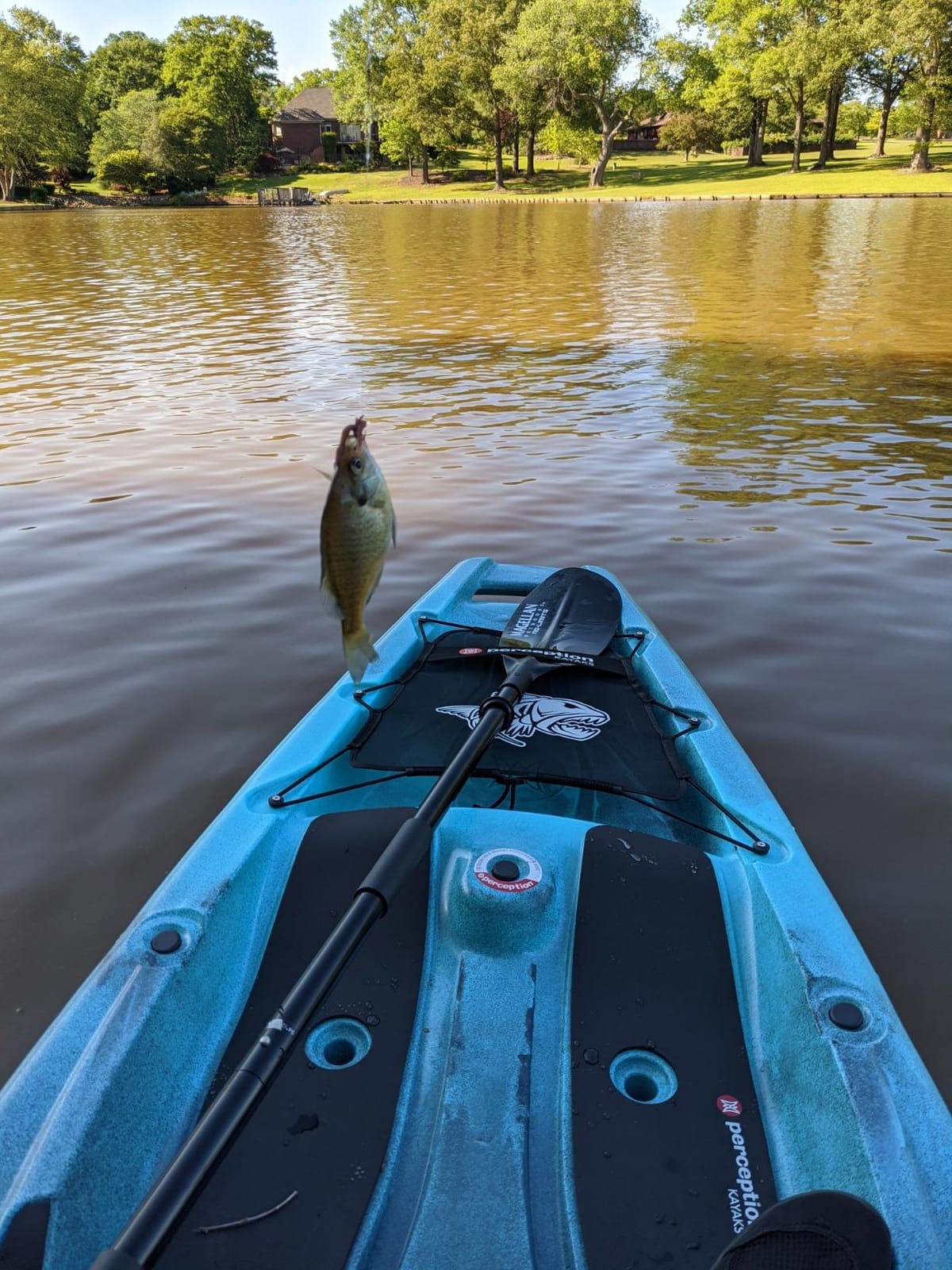
The fold-away frame seat folds down to open up deck space, so you can clear the standing area when you need it. Owners rate it as a genuine all-day platform rather than a perch.
Integrated tackle trays keep lures and terminal tackle within arm’s reach instead of in a hatch under your feet. Four rod holders support multi-rod setups straight out of the box.
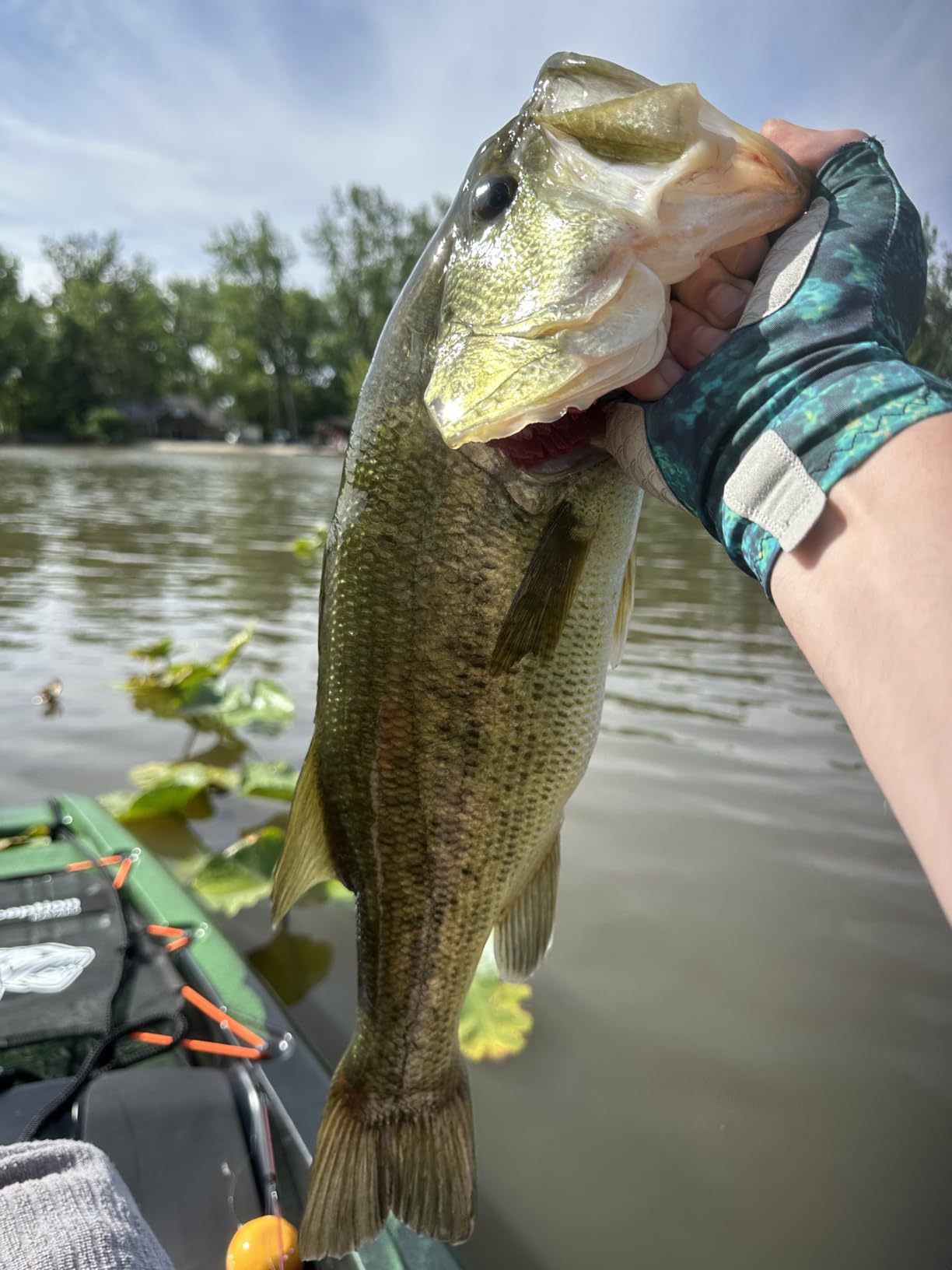
Storage is generous, with a large rear tankwell and a front storage area that take coolers, crates and dry bags. The hull and deck carry a five-year limited warranty, and the boat is made in the USA.
When this boat is too much
Size cuts both ways. At 11 feet 6 inches this is the longest hull here, and it will feel awkward in tight water, among vegetation, or on a narrow river where a 10-footer is much easier to control.
It is also one of the longer boats here to move solo. Plan on a cart as a condition of ownership rather than an upgrade.
Why larger anglers should start here
Capacity ratings are manufacturer-declared, and running a hull at or near its limit changes how it feels. A boat rated well above your actual load sits higher in the water, moves as intended, and does not flex.
Owners report a stable platform suitable for both beginners and seasoned anglers, which is the point. You are not buying a compromise hull; you are buying one sized for you.
9. Reel Yaks Raptor – The Best Pedal Drive Kayak for Beginners
Reel Yaks Raptor Modular Fishing Kayak, Fin Drive 9.5ft, 380 lbs Capacity
9 ft 6 in long
30.3 in wide
62 lb
380 lb capacity
Two-piece modular fin-drive hull
Pros
- Hands-free quiet pedal propulsion
- Two-piece hull fits in a closet or trunk
- Pedals make headway against wind and current
Cons
- Rudder hardware is a recurring weak point
- Both halves must be reassembled before use
- Seat sits low with no height-extender option
The Raptor answers the question almost every beginner eventually asks: is pedal drive worth it on a first boat? The honest answer is that it depends entirely on where you fish, and this is the affordable way to find out.
The fin pedal drive gives you hands-free, quiet movement. You cover water with a light push on the pedals while your hands stay on the rod, and the drive makes real headway into wind and current where a paddle alone would be a workout.
The two-piece modular hull is the sleeper feature. It separates for storage in a closet, a trunk or a small apartment, which removes the single biggest reason people never buy a fishing kayak. No trailer, no roof rack, no dedicated rack space.
Owners describe the hull as sturdy and tolerant of being dragged over rocks, and the W-hull design tracks well with 380 pounds of rated capacity.
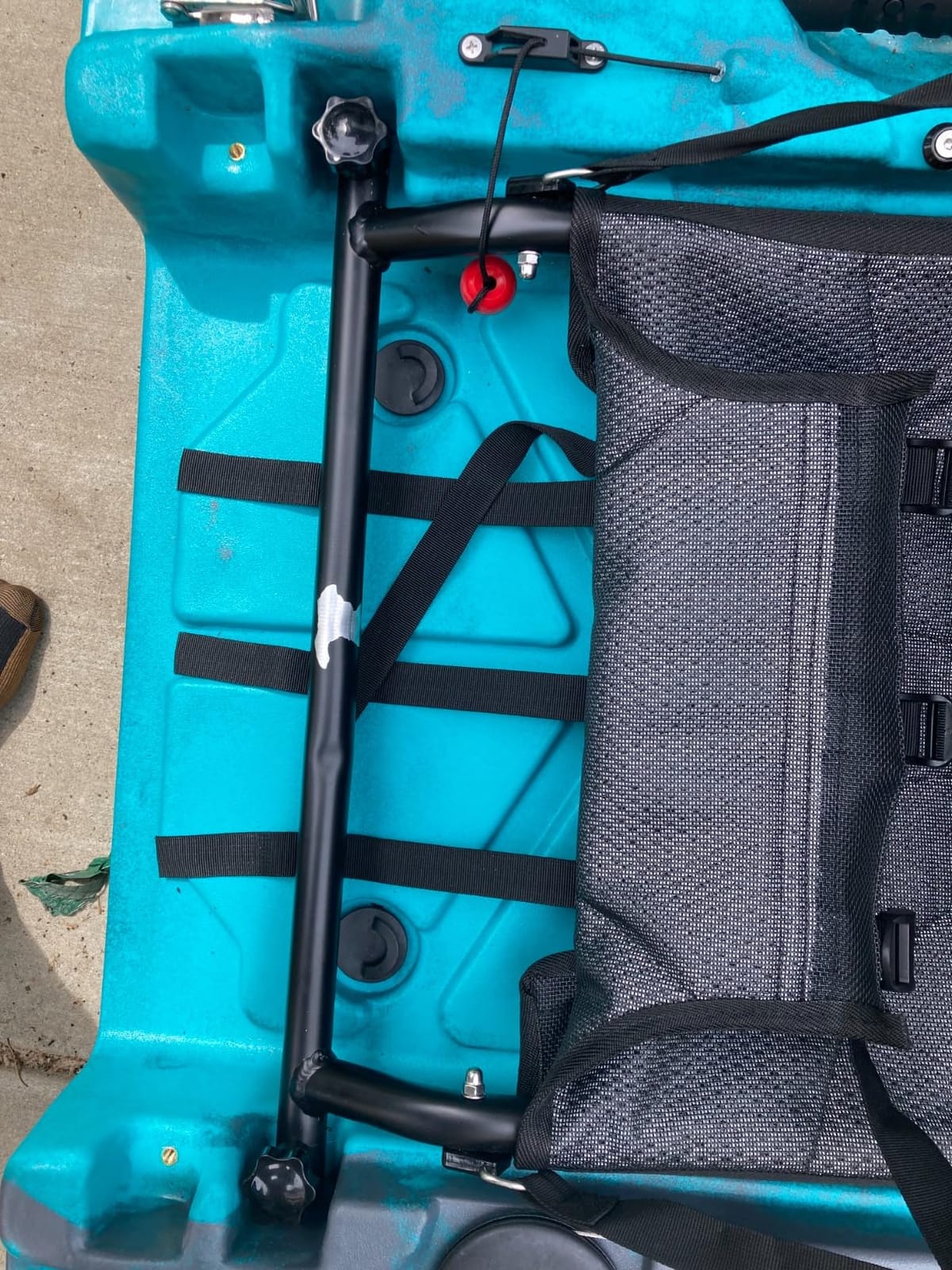
Flush-mount rod holders, T-track rails and storage hatches are all included, and the stadium seat comes in the box. An optional centre module converts it to a tandem kayak later.
The rudder problem you should know about
This is the one serious complaint in the reviews. The rudder assembly is a recurring weak point, with guide screws and control wires or ferrules breaking for several owners, and the keel has popped out of its mount for others.
Customer service is the counterweight. Multiple buyers report responses within hours and a fix, which is why the rating holds at 4.2 rather than lower. Budget for a possible hardware upgrade early.
When pedal drive is the wrong first purchase
Both halves have to be reassembled and the pedal and rudder kit installed before you can use it. That setup is a real afternoon the first time, and it is a bad surprise on a first trip.
The seat also sits low, especially in the rear position, with no height-extender option. If you have back issues or a tall frame, sit in the front position or choose a different boat. Our pedal kayak guide covers the trade-offs in more detail.
10. INTEX Excursion Pro K1 – The Best Budget Fishing Kayak
INTEX Excursion Pro K1 Inflatable Kayak 1-Person Set with Paddle & Pump
10 ft inflated
36 in wide
31.2 lb
220 lb capacity
3-ply PVC with removable skegs
Pros
- Lightest option at 31.2 lb and packs to a carry bag
- Inflates in 5 to 15 minutes
- Includes paddles rod holders pump and repair patch
- Stable in flat and light chop
Cons
- 220 lb capacity is the lowest here
- Seat and paddles are flimsy past 20 minutes
- Rod holders are shallow and angle outward
The Excursion Pro K1 is the lowest-commitment way into this sport, and at 1,228 reviews it is one of the most widely owned boats here. It also has more owners willing to tell you what is wrong with it, which is why it is worth the read.
At 31.2 pounds it is the lightest hard or soft shell in the roundup, and it folds into a carry bag. You can carry it to a lake that has no launch, store it in a studio apartment, or put it in a car boot without a roof rack.
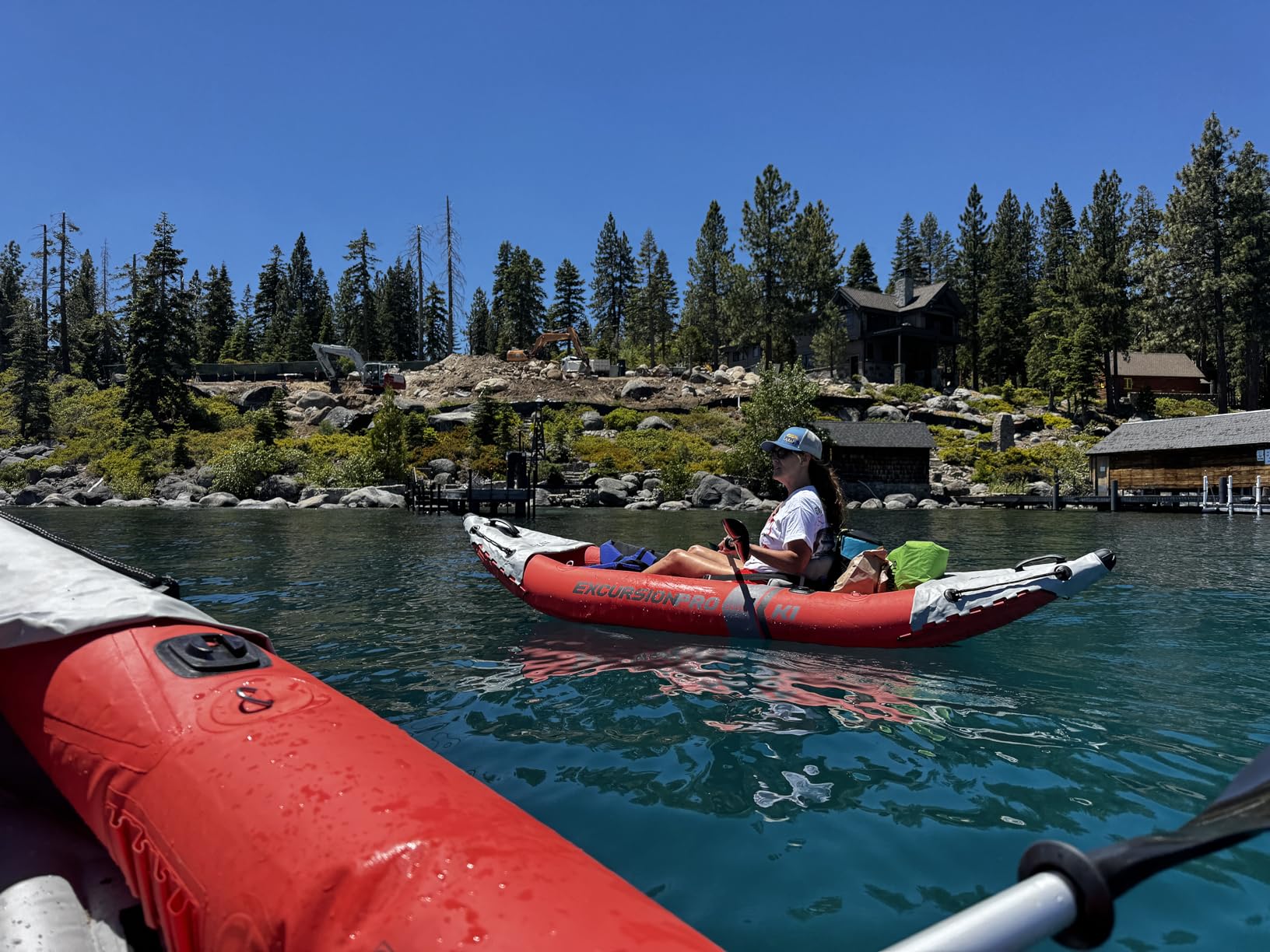
Inflated, it measures 10 feet by 36 inches, and that width makes it stable in flat and light chop. Two removable skegs handle both deep and shallow water, and stainless steel D-rings at bow and stern let you strap gear down in a way most inflatables cannot.
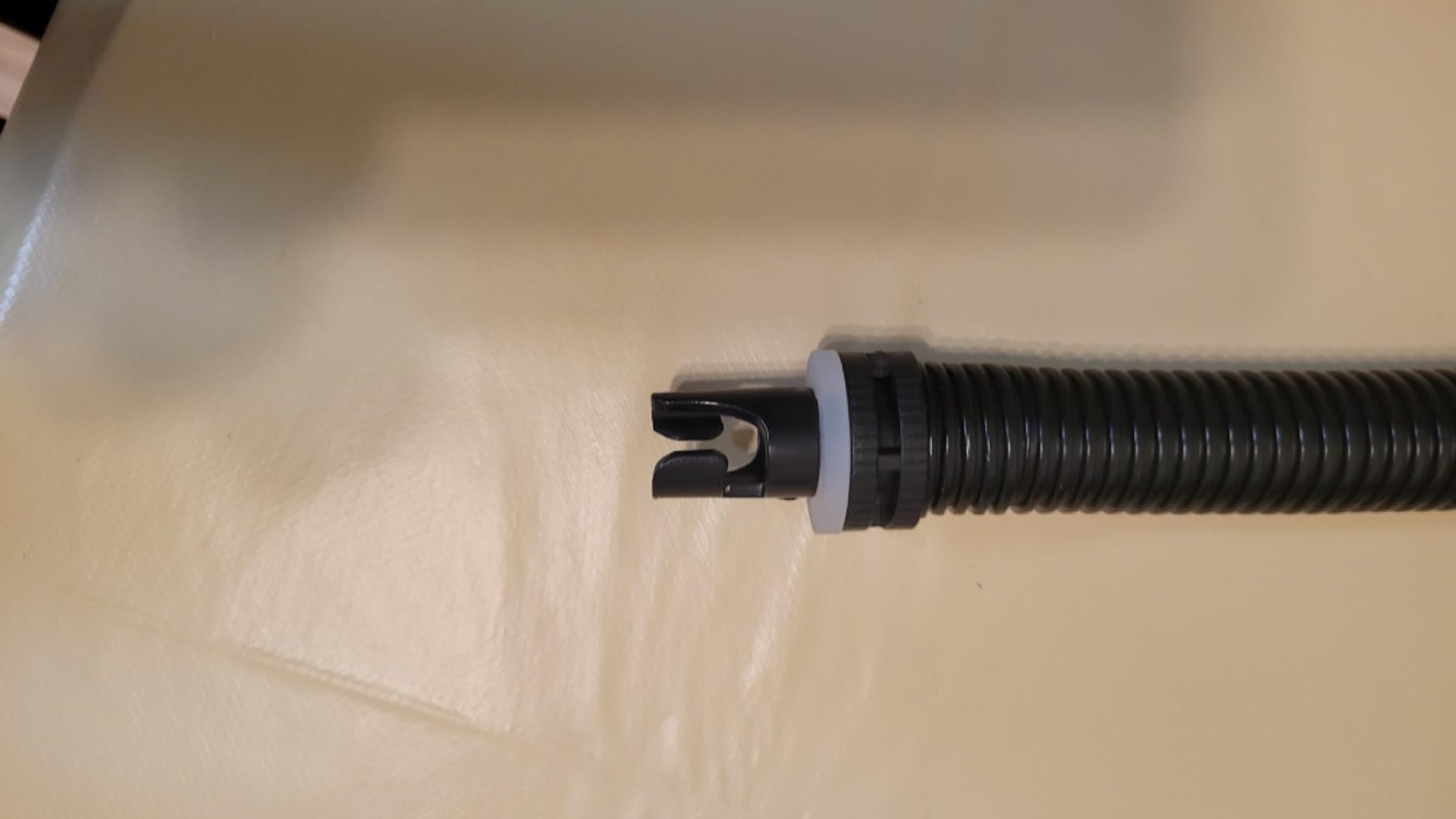
The box includes two 86-inch paddles, two detachable rod holders, a GoPro or phone mount, a high-output pump and a repair patch. That is a complete starter package.
The removable bottom booster seat is a neat solution to a common inflatable problem. It gives you hip space and keeps you out of water that collects in the cockpit.
What an inflatable will not do
Capacity is 220 pounds, the lowest here, and there is no room for a cooler or a tackle crate. You are fishing with what fits on your deck and in your hands.
There is also no momentum. The kayak stops dead the moment you stop paddling, and the built-in seat and backrest get uncomfortable past twenty or thirty minutes. The included paddles flex. This is a short-trip boat, not an all-day one.
Who should buy it, and who should not
Buy it if you are on a tight budget, you lack storage or transport, you want to fish a pond or a calm lake an hour from home, and you want to test whether you like the sport before committing to a hard shell.
Skip it if you want to stand and cast, if you plan to be on open water in wind, or if you want to keep growing into the sport. Our inflatable kayak guide covers where inflatables hold up and where they do not.
How to Choose Your First Fishing Kayak
How we evaluated these kayaks
Every boat here was scored on the same seven things, using manufacturer specifications and the pattern of what owners actually report after real trips:
1. Beam width. Measured at the widest point, because this decides whether you can cast standing and how the boat behaves when you shift weight.
2. Hull weight. The number that determines whether one person can load a roof rack, cart to a launch, and get back up a bank.
3. Weight capacity versus realistic load. Your body weight, plus a battery, tackle crate, cooler and safety kit.
4. Tracking behaviour. Whether it holds a line when you stop paddling, and whether a skeg or rudder is fitted to help.
5. Built-in rigging. Rod holders, hatches, tank wells, rigging tracks and bungee cords, because rigging is the difference between fishing on day one and fishing after an afternoon of drilling.
6. Seat comfort over a real session. A seat that works at forty minutes does not work at four hours.
7. Owner-reported durability. Cracks, warped hulls, broken hardware and seat failures are the failure modes that matter over a first season.
Which kayak is the easiest for a beginner to get into
A sit-on-top kayak is the easiest type for a beginner to get into and out of. There is no cockpit rim to climb over, you can push yourself up with your hands, and in most conditions a wide sit-on-top will right itself if you go over. Sit-in kayaks keep you drier and give easier access to gear and feet, but boarding one takes balance and leg strength, and you need water shallow enough to stand in. For a true first boat, choose a sit-on-top with a raised seat and molded-in carry handles.
Length and width: the numbers that matter
For fishing, width beats length. Community consensus across paddling forums settles on 32 inches as the practical minimum and 34 inches as the number you want if you plan to stand and cast, and that threshold is the single most useful number in this whole category.
On length, a 12-foot kayak tracks straighter, covers more water faster, holds more gear, and is the safer pick on open lakes and when trolling. A 10-foot kayak is easier to turn, easier to carry solo, and more forgiving in wind, current, and vegetation-heavy cover. Most beginners should choose 11 to 12 feet as the compromise.
Look for an upswept bow as well. It rides over waves and chop rather than catching them, which is what you want when a front comes through on a lake you thought was sheltered.
Weight capacity matched to your body size
Capacity ratings are manufacturer-declared and they vary between models, so treat the number as a ceiling rather than a target. A rough guide:
Under 150 pounds: A 275-pound rated hull is comfortable, as long as you are not loading it with a heavy battery and a full crate.
150 to 220 pounds: Aim for 300 pounds or more. Most of this roundup fits here comfortably.
Over 220 pounds: Go to the 375 to 425 pound range. The Perception Outlaw 11.5 and the Lifetime Kokanee are the two to look at in this list.
Then add your gear. A trolling motor battery, a tackle crate, a cooler and two PFDs can add 80 to 150 pounds on the deck, and that load sits higher than your body weight does.
Paddle, pedal drive or trolling motor
Start with a paddle. A properly sized fishing paddle with a longer shaft costs a fraction of any drive system, and every hull here tracks fine without help in ordinary conditions.
A pedal drive, like the fin system on the Reel Yaks Raptor, is worth it when you fish open water, cover a lot of ground, or want to keep your hands on the rod. It adds a setup step, maintenance and hardware that can fail, so it is a better second purchase than a first one unless you already know your water.
A trolling motor is a different kind of upgrade. It is the right call once you are fishing still water in wind for more than a couple of hours and your shoulder starts to complain. Budget for the motor, the battery and the mounting plate as a set, and expect the battery to be the heaviest thing on your boat.
Match the hull to your water
Ponds and small lakes: Almost anything works, including the inflatable. Short distances, flat water, and low consequences.
Large lakes and open water: Go 11 to 12 feet with a skeg or rudder. Longer hulls with tracking channels handle wind and wave that push a short boat sideways.
Rivers and creeks: Go shorter. Ten feet or less, and avoid anything that feels like a barge when you turn.
Coastal bays and saltwater: Wide sit-on-tops with sealed compartments, corrosion-resistant hardware, and a rudder are the right shape. Check your local launch and licensing rules before you plan around it.
What to buy now and what to add later
The most common beginner mistake is buying the boat first and discovering the accessory list is longer than expected. Buy in phases instead.
Before the first trip: A properly fitting PFD, a whistle attached where you can reach it, a paddle of the right length, sun protection, a waterline, and a kayak cart if the boat is over 55 pounds. None of this is optional, and it costs less than a bad afternoon.
First season: A rod holder setup that matches how you fish, a dry bag, a bailer or sponge, an anchor trolley if you fish structure, and a spare paddle blade. A fish finder is a second-season purchase for most beginners.
Later, when you know your water: A trolling motor and battery, a pedal drive, a better seat, or an electric motor mount on rigging tracks. Every boat in this roundup with rigging tracks will accept these as bolt-on additions.
Start simple, and let the boat tell you what it needs. A hull that is comfortable and stable gets used; a fully rigged boat that is uncomfortable does not.
Beginner safety checklist
1. Wear a PFD. Not in the boat, not on the dock, on the water. A sit-on-top will usually self-right, but you still need to be a floating person for it to work.
2. Carry a whistle on your PFD. A call for help is quieter and travels further than shouting, and it works when you cannot make noise.
3. Check the weather before you launch, and stay close to shore if a front is coming through. Wind is what flips wide boats that feel stable on calm water.
4. Wear a dry suit or neoprene layers in cold water. Hypothermia is a bigger threat than drowning in most capsizes, and cold water drains body heat fast.
5. Practice getting back in from shore before you need it. The first attempt should not be happening a hundred yards out.
6. Use a bow and stern line, not a hand on the bow, when launching solo into current.
7. Carry a whistle, a paddle, and a bailer, even on a pedal boat where the paddle feels optional.
8. Tell someone your route and your return time. This is free, and it is the step most beginners skip.
9. Know your local regulations. Registration, licence requirements, launch rules and closed seasons vary by water and by state.
10. Learn to read the water before you go far. Current seams, wind shadows on the far bank, and rising water are all easier to avoid than to fight.
Five mistakes first-time kayakers make
1. Buying the boat before the safety kit. The PFD, whistle, dry bag and cart are part of the purchase, not a later upgrade.
2. Going too narrow to save weight. Every ounce matters when you are solo, but a narrow hull is the reason beginners quit. Weigh portability against stability, not against each other.
3. Ignoring real capacity. Manufacturers rate the hull, not the angler plus the gear. Add your load before you trust the number.
4. Starting on the wrong water. A wide, open lake in wind is a hard place to learn. Learn on a protected pond, then move up.
5. Buying the drive system first. Pedals and motors solve problems that only exist on certain water. A paddle solves most of them for the price of a good seat.
Frequently Asked Questions
Which kayak is the easiest for a beginner to get into?
A sit-on-top fishing kayak is the easiest type for a beginner to get into and out of. There is no cockpit rim to climb over, you can push off with your hands, and a wide sit-on-top will usually self-right if you go over. Sit-in kayaks keep you drier and give better access to gear, but boarding one requires balance and leg strength plus water shallow enough to stand in. For a first boat, choose a sit-on-top with a raised seat and molded-in carry handles.
What are the top 5 fishing kayaks?
For beginners, our top five are: 1. Lifetime Tamarack Angler 100, the easiest first boat to launch and carry at 51 lb with three rod holders. 2. Pelican Catch Mode 110, the most stable hull at 34.5 in wide for standing casts and wind. 3. Perception Flash 9.5, the best sit-in at 41 lb for a dry, nimble ride. 4. Pelican Sentinel 100X, the best lightweight option at 44.6 lb for solo anglers. 5. Pelican Catch Classic 100, the best value, pairing 34 in width with a manageable 57 lb.
What size kayak is best for a beginner kayaker?
For most beginners, a 10- to 12-foot kayak with a minimum width of 32 inches, or 34 inches if you plan to stand and cast, is the sweet spot. Longer kayaks track better and cover water faster but are harder to control in wind and current, while shorter ones are twitchier. Most first-time buyers are best served by an 11 or 12 foot hull at 34 inches wide.
Which is better for fishing, a 10-foot or 12-foot kayak?
A 12-foot kayak tracks straighter, covers more water, and holds more gear, which matters on open lakes and when trolling. A 10-foot kayak is easier to turn, easier to carry solo, and more manageable in wind, current, and vegetation-heavy cover. For beginners on lakes, 12 feet is the safer recommendation. In rivers, coves, and tight water, 10 feet is more forgiving. Most beginners should choose 11 to 12 feet as the compromise.
How wide should a fishing kayak be for standing casts?
At least 32 inches, and 34 inches is the number to aim for if you plan to stand up and cast. Width determines secondary stability, which is the resistance to tipping when you lean or shift your weight sideways, and that is what governs a standing cast. The Perception Outlaw 11.5 at 35 inches and the Lifetime Kokanee at 36 inches are the widest hard hulls in our roundup, and the Pelican Catch Mode 110 at 34.5 inches is the lightest of the wide group. Below 30 inches, treat the boat as a seated-cast boat.
What safety gear do I need for kayak fishing?
At minimum you need a properly fitting PFD, a whistle attached to it, sun protection, a waterline, and a paddle of the correct length. Add a dry suit or neoprene layers in cold water, a bailer or sponge, and a kayak cart if your boat weighs more than about 55 pounds. Before you head out, tell someone your route and return time, check the weather, and know your local registration and licensing rules.
Which Beginner Fishing Kayak Should You Buy?
Start with the Lifetime Tamarack Angler 100 if you are unsure. At 51 pounds with three rod holders, two storage compartments and a paddle in the box, it is the least complicated way to get on the water, and its owner base is deep enough that parts will always be available.
If you intend to fish standing, move to the Pelican Catch Mode 110 for the stability or the Pelican Catch Classic 100 if you have no one to help you carry 75 pounds. The Pelican Sentinel 100X is the pick if you are solo and over 40 and want the lightest serious angler boat. The Perception Flash 9.5 covers the sit-in case if you want to stay dry.
Beyond that, the Perception Outlaw 11.5 covers anglers over 220 pounds, the Lifetime Kokanee covers the solo or tandem end, the Reel Yaks Raptor covers buyers who want pedal drive and modular storage, and the INTEX Excursion Pro K1 is the cheap way to find out whether you like the sport at all.
Whichever you choose, buy the PFD, the whistle and the cart on the same day. Those three items matter more to how long you stay in this sport than the hull does.
Updated for 2026. We may earn a commission when you buy through links on this page, which does not change the price you pay.
Looking for more? Our [general fishing kayak roundup](https://lockah.net/best-fishing-kayaks/) covers angler kayaks across the full price ladder, and our [tandem kayak buyer’s guide](https://lockah.net/best-tandem-kayaks/) covers boats built for two.