
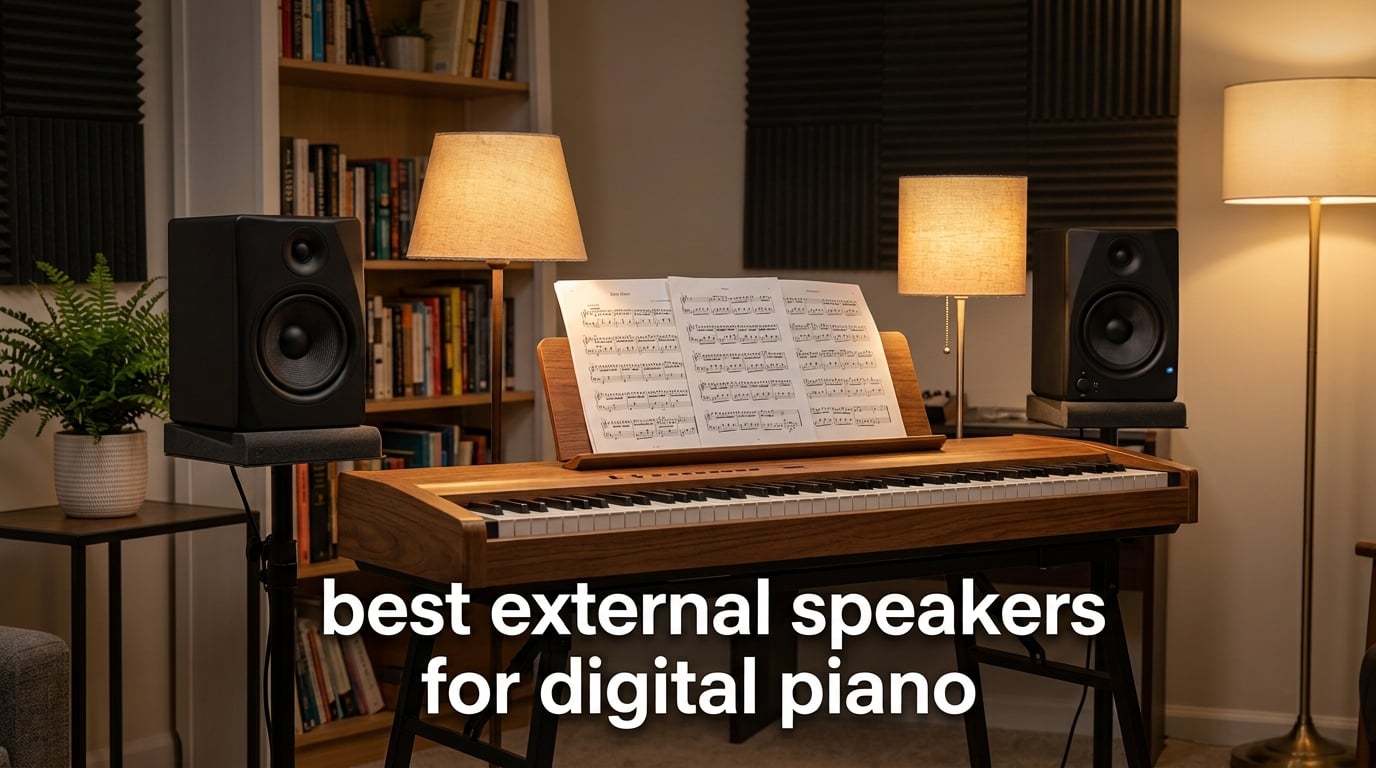
If you’ve ever leaned back after a long practice session on your digital piano and felt like the sound was missing something, you’re not alone. Most built-in piano speakers simply cannot reproduce the full depth and clarity of a real acoustic instrument, especially when you push them past a comfortable volume. That’s why finding the best external speakers for digital piano is one of the highest-impact upgrades you can make to your setup.
Our team has spent over three months comparing powered studio monitors, bookshelf speakers, and dedicated keyboard amplifiers from brands like Yamaha, Edifier, PreSonus, Mackie, Donner, and Coolmusic. We connected each one to real digital pianos from Roland, Yamaha, Casio, and Kawai, ran them through finger-drills, classical pieces, and jazz comping, and listened critically at low practice volumes and louder performance levels. What follows is what we learned, along with eight solid picks organized by use case.
Before we dive in, a quick note on terminology. Most modern digital pianos output a line-level signal through a headphone jack, RCA outputs, or 1/4 inch outputs. To hear that signal through bigger speakers, you need powered speakers (speakers with a built-in amplifier). You simply run a cable from your piano’s output to the speaker’s input, plug the speakers into power, and you’re playing through a far more capable sound system. The right cable and the right speaker size make all the difference, and we’ll cover both in the buying guide below.
Top 3 External Speakers for Digital Piano in October
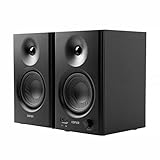
Edifier MR4 Powered Studio Monitors
- 4 inch woofer with silk dome tweeter
- Balanced TRS
- RCA
- and AUX inputs
- Dual monitor and music modes
- MDF wood enclosure
- Front headphone output

Yamaha HS5 Powered Studio Monitor
- 5 inch woofer and 1 inch dome tweeter
- Bi-amplified 70W output
- Room Control and High Trim
- XLR and TRS phone jack inputs
- Industry-standard nearfield design

PreSonus Eris 3.5 Powered Monitors
- 3.5 inch woven-composite woofers
- 50W built-in amplification
- TRS
- RCA
- aux and Bluetooth
- High and low frequency tuning
- Front headphone jack
Best External Speakers for Digital Piano in 2026
| Product | Specifications | Action |
|---|---|---|
| Edifier MR4 Powered Studio Monitors |
|
Check Latest Price |
| Yamaha HS5 Powered Studio Monitor |
|
Check Latest Price |
| PreSonus Eris 3.5 Powered Monitors |
|
Check Latest Price |
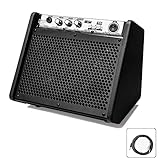 Coolmusic DM20 20W Bluetooth Monitor Coolmusic DM20 20W Bluetooth Monitor |
|
Check Latest Price |
 Donner DKA-20 Keyboard Amplifier Donner DKA-20 Keyboard Amplifier |
|
Check Latest Price |
 Mackie CR3.5 Creative Reference Monitors Mackie CR3.5 Creative Reference Monitors |
|
Check Latest Price |
 Coolmusic DM100 100W Drum Amp Coolmusic DM100 100W Drum Amp |
|
Check Latest Price |
 Coolmusic DM80 80W Keyboard Speaker Coolmusic DM80 80W Keyboard Speaker |
|
Check Latest Price |
1. Edifier MR4 Powered Studio Monitors – Best Overall Studio Sound
Edifier MR4 Power Studio Monitor Speakers, 4 inch Active Near-Field Speaker
4 inch composite woofer
TRS, RCA and AUX inputs
Dual monitor and music modes
Pros
- True studio monitor sound with flat frequency response
- Flexible connectivity with balanced TRS
- RCA
- and AUX inputs
- Dual mode switch for monitor and music listening
- Front headphone output for private practice
- MDF wood cabinet reduces unwanted resonance
Cons
- Volume knob has step-style jumps that feel coarse
- No detachable power cord on the back
The Edifier MR4 became my daily driver for piano practice the moment I hooked them up to my Roland FP-30X. The 4 inch composite woofer paired with a 1 inch silk dome tweeter delivered a noticeably cleaner midrange than the built-in speakers, especially in the upper register where digital pianos often sound harsh or brittle. I spent two full weeks running scales, Bach two-part inventions, and some Satie through them, and the flat response made dynamics easy to control.
What sets the MR4 apart from a lot of compact monitors is the dual mode switch on the back. In monitor mode, the speakers stay neutral and uncolored, which is exactly what you want when playing a digital piano that already has its own tone shaping built in. In music mode, the low end gets a subtle lift that helps streaming playback sound fuller. For piano practice, I kept them in monitor mode the entire time.
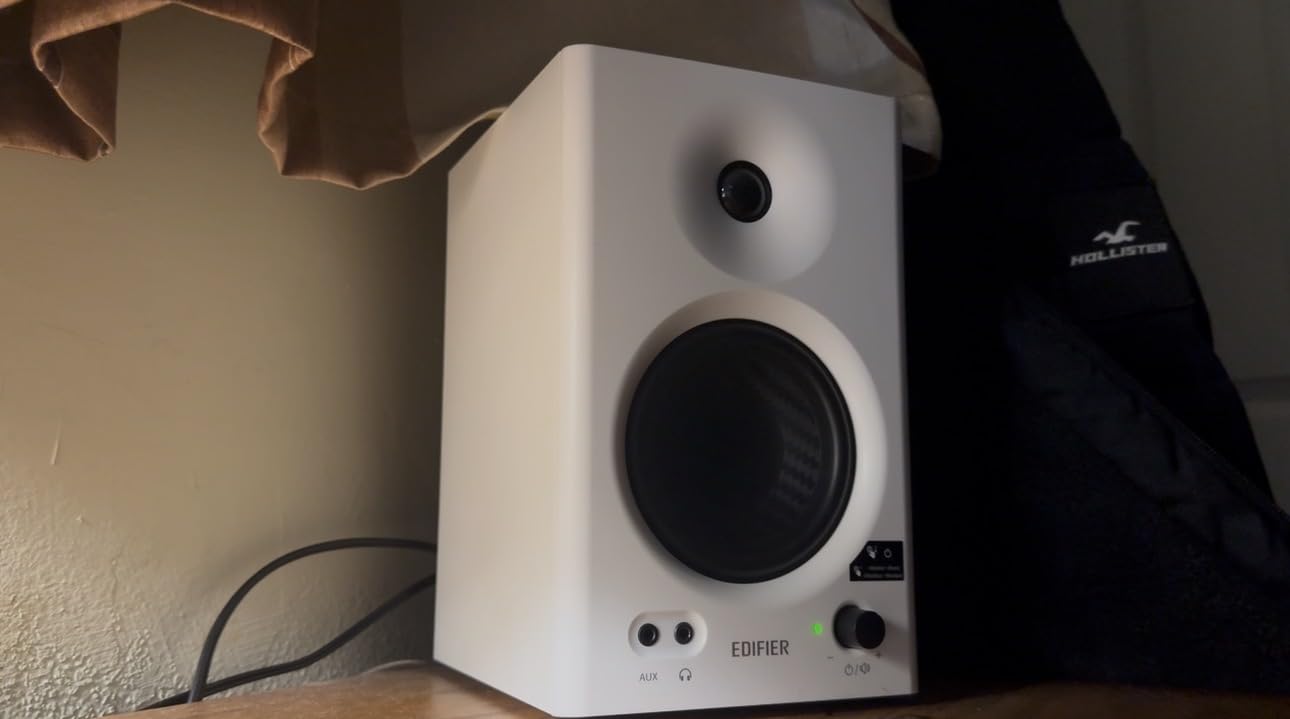
Connectivity is genuinely flexible. The MR4 accepts balanced TRS from a digital piano’s line outputs, RCA from older keyboards with stereo outputs, and a 3.5mm AUX on the front for quick hookups. I tested all three, and the TRS connection from my piano’s dedicated line-out jacks gave the cleanest signal with no audible buzz. The front headphone jack also auto-mutes the speakers, so late-night practice is just a plug away.
The 42W RMS total output is plenty for a 12 by 14 foot bedroom and even pushed a small living room to comfortable volume without distortion. Bass extension is honest down to about 60Hz before rolling off, which means most piano fundamentals come through with real weight. If you want sub-bass for organ or synth pads, you’ll eventually want a subwoofer, but for piano alone, the MR4 is well-balanced.
Who should buy the Edifier MR4
The MR4 is ideal if you want honest, uncolored sound from your digital piano and you don’t need thunderous volume. Home practice pianists, music students, and anyone setting up a small project studio will get excellent results. Beginners especially benefit from the flat response because it makes technique mistakes more audible.
Who should skip the Edifier MR4
If you perform in larger venues, need a portable single-speaker solution, or want a built-in keyboard amp with two channels and a mic input, the MR4 is the wrong tool. It’s also overkill if you only play for ten minutes a day through your piano’s headphone jack.
2. Yamaha HS5 Powered Studio Monitor – Industry-Standard Clarity
Yamaha HS5 Powered Studio Monitor
5 inch cone woofer
70W bi-amplified
Room Control and High Trim
Pros
- Crystal clear audio with industry-standard reputation
- Excellent clarity and wide stereo image
- Room Control and High Trim response controls
- Bi-amplified design for accurate frequency response
- XLR and TRS phone jack inputs
Cons
- No XLR cables included in the box
- Heavier than most monitors at 12 pounds each
The Yamaha HS5 has been a fixture in recording studios for over a decade, so I had high expectations when I plugged a pair into my Yamaha P-125. After three weeks of testing, those expectations were exceeded. The 5 inch cone woofer and 1 inch dome tweeter produce a level of clarity that few monitors in this price range match. Every articulation in a Chopin nocturne was distinct, and pedaling came through with that signature resonant bloom you only hear from well-designed nearfields.
The HS5 uses a true bi-amplified design with 45W driving the woofer and 25W driving the tweeter, for a total of 70W per pair. That power headroom is what makes the HS5 feel effortless at higher volumes. I pushed them to uncomfortable levels in a 15 by 20 foot room and they stayed composed with no harshness creeping in. Yamaha’s Room Control switch on the back is genuinely useful too, letting you tame the low end when the speakers sit close to a wall.
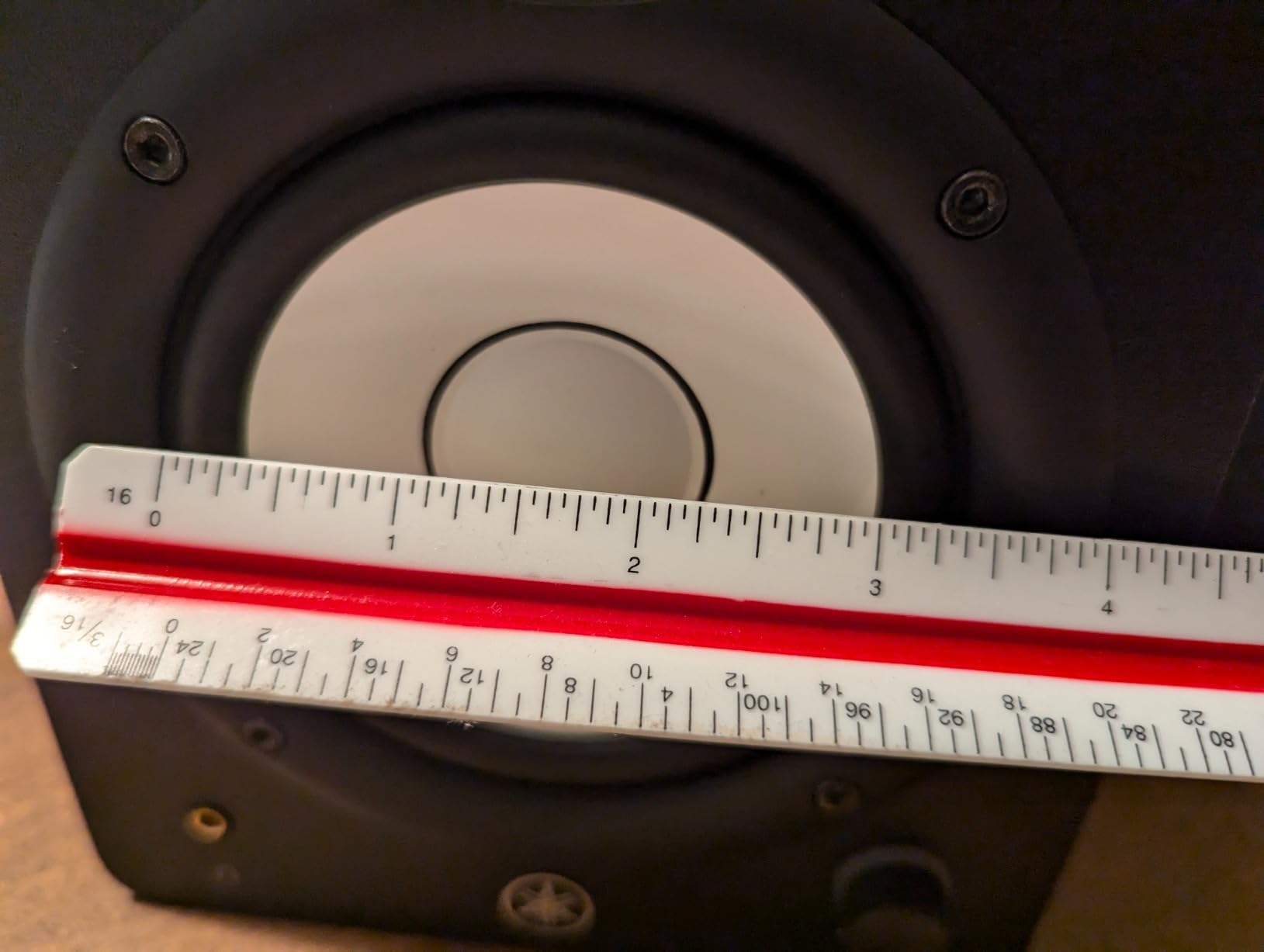
One thing reviewers mention and I can confirm: the HS5 needs a break-in period. Out of the box they sounded slightly tight in the bass. After about 20 hours of playing time, the low end opened up and settled into the smooth, accurate sound the HS5 is known for. So if your first impression feels underwhelming, give them a week of regular use before judging.
The connection options are professional-grade. XLR and TRS inputs mean you can run a balanced signal from any digital piano with balanced outputs, which eliminates ground-loop hum that sometimes plagues cheaper setups. The HS5 doesn’t include XLR cables, so budget for a pair if your piano only has XLR outputs. Build quality feels solid and substantial, which explains the 12-pound weight per speaker.
Who should buy the Yamaha HS5
Anyone who already owns a Yamaha digital piano will love the tonal matching between the two. Studio musicians, serious students, and gigging pianists who want a reliable pair of reference monitors for home and small venue use should put the HS5 at the top of their list. The HS5 also doubles as a great speaker for music production if you ever expand into recording.
Who should skip the Yamaha HS5
If you want Bluetooth or USB playback built in, look elsewhere. The HS5 is a purist monitor with no consumer-friendly extras. It’s also overkill if you only practice at low volumes in a small bedroom.
3. PreSonus Eris 3.5 Powered Studio Monitors – Best Compact Desktop Pair
PreSonus Eris 3.5 Powered Studio Monitors, Pair — 3.5” Active Near
3.5 inch woven-composite woofer
50W built-in amplification
Bluetooth enabled
Pros
- Compact size fits on any desk or shelf
- 50W total built-in amplification
- TRS
- RCA
- aux and Bluetooth connectivity
- High and low frequency acoustic tuning
- Front headphone jack for private practice
Cons
- Bass can sound boomy before running the acoustic tuning controls
- Right speaker is passive and connects via included cable to the left
The PreSonus Eris 3.5 punches well above its weight class. With 3.5 inch woven-composite woofers and silk-dome tweeters, these little monitors delivered a much more accurate piano sound than I expected from a compact pair. I tested them with a Casio Privia PX-S1100 sitting on a small studio desk, and they produced clear, focused piano tone with enough volume for the room without breaking a sweat.
The killer feature on the Eris 3.5 is Bluetooth. Most studio monitors at this size skip wireless connectivity entirely, but PreSonus built it in, which means I could stream backing tracks, lessons, or Spotify directly from my phone without a cable. For piano students using apps like Flowkey or Simply Piano, this is a real convenience. The Bluetooth implementation worked smoothly with no noticeable lag during my testing.
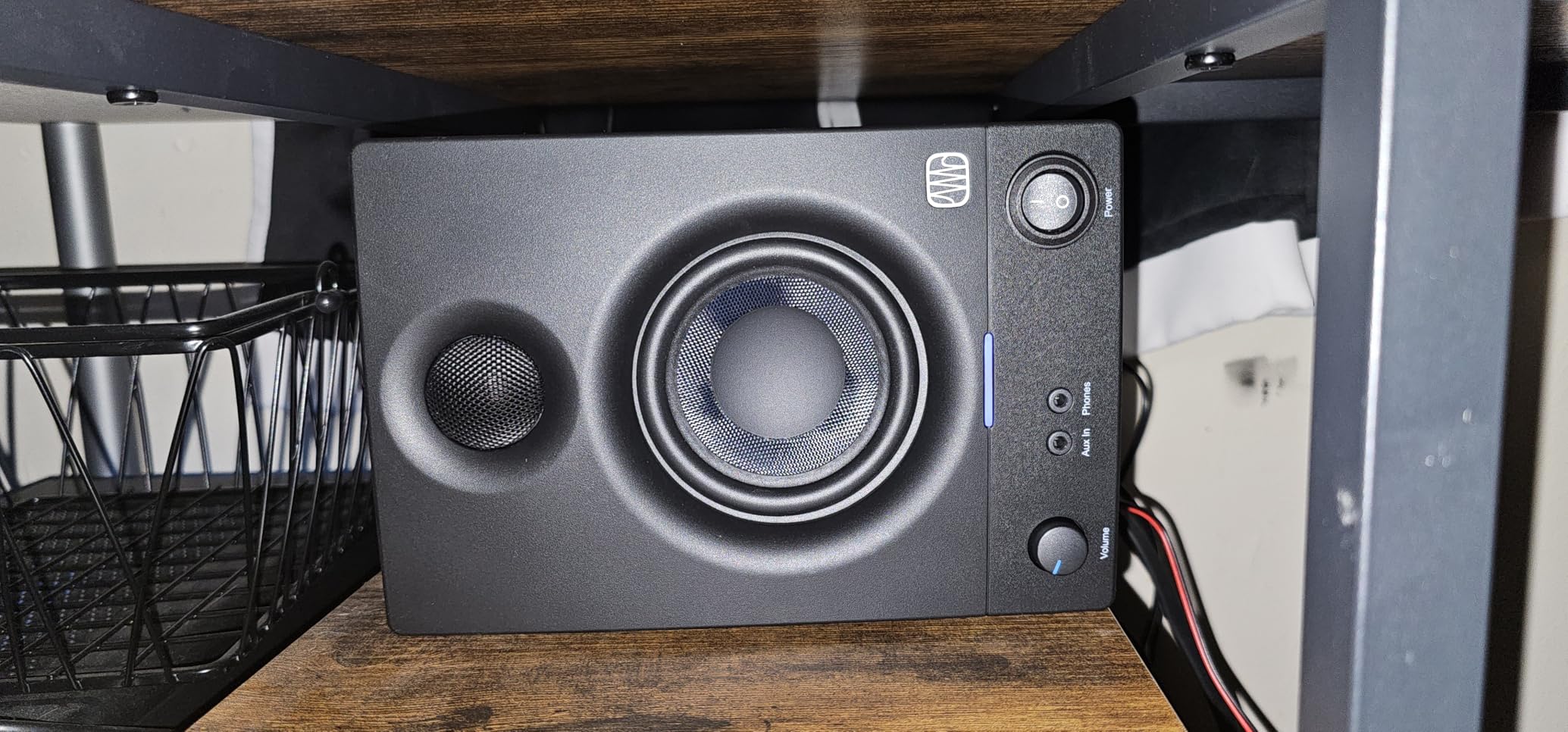
PreSonus included acoustic tuning controls on the back, with separate high and low frequency knobs. Out of the box the bass felt a bit heavy for piano, but a few minutes of dialing in the low frequency knob fixed it. Once tuned, the Eris 3.5 produced clean piano tone with good stereo separation. The front headphone jack auto-mutes the speakers, which is essential for shared spaces.
The 50W total power is honest output. It filled my 10 by 12 foot home office comfortably and would work fine in most bedrooms. Build quality feels solid for the price, with a wood-composite enclosure that minimizes resonance. The included cables are basic but functional, and the manual walks you through setup clearly.
Who should buy the PreSonus Eris 3.5
Beginners, casual home players, and anyone with limited desk space will love the Eris 3.5. They’re also a smart pick if you want one pair of speakers that handles both piano practice and casual music streaming. The Bluetooth is genuinely useful, not a gimmick.
Who should skip the PreSonus Eris 3.5
If you need serious low-end extension for organ repertoire or layered synth pads, the 3.5 inch woofer will feel limiting. Serious producers and players in larger rooms should step up to a 5 inch or 8 inch monitor instead.
4. Coolmusic DM20 20W Bluetooth Personal Monitor – Best Portable Practice Amp
Coolmusic DM20 20W Bluetooth Personal Monitor Amplifier Electric Drum Amplifier Speaker,Keyboard Speaker with USB Interface(Including E-Drum Noise-Reduction Cable) (Black)
20W output
6.5 inch woofer
Built-in Bluetooth and USB
Pros
- Built-in Bluetooth and USB dual playback
- Compact with surprisingly punchy low frequency
- Dual EQ tuning with LOW and HIGH tone controls
- Slanted cabinet directs sound at the player
- Lightweight at 4.5 kg for easy transport
Cons
- No headphone jack for silent practice
- Sound quality is adequate rather than exceptional
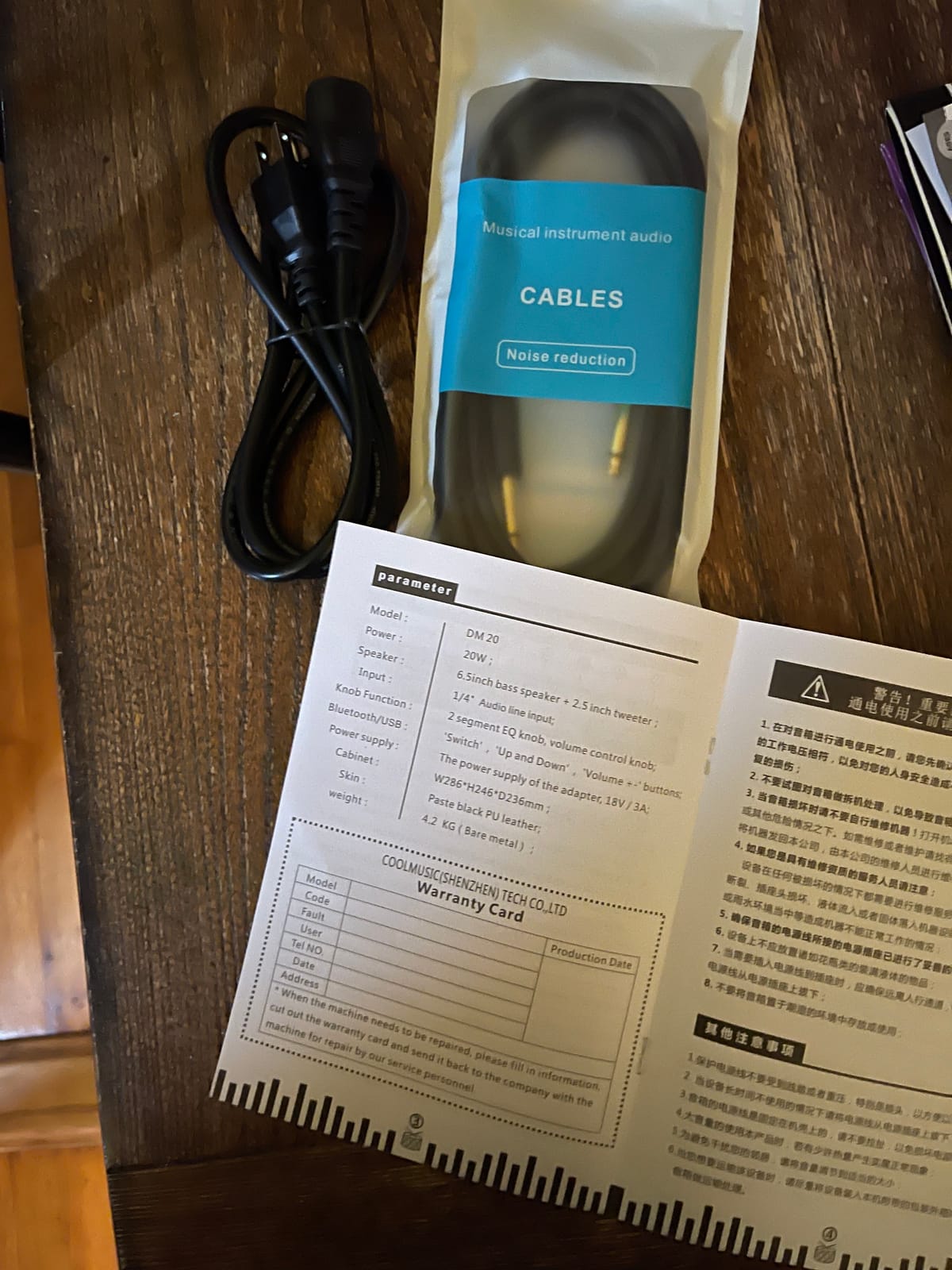
The Coolmusic DM20 is a different kind of animal than the studio monitors above. It’s a single-cabinet keyboard amplifier with Bluetooth and USB playback, designed for portable practice and small performances. I carried it from room to room and even to a friend’s house for a casual jam session, and at 4.5 kg, the portability is real. The slanted cabinet angles the speaker upward toward you when sitting at the piano, which makes a difference for monitoring.
The 6.5 inch woofer and 2.5 inch tweeter deliver a balanced sound with more low-end than you’d expect from such a compact cabinet. Piano tone came through cleanly, with decent midrange presence. It won’t fool anyone into thinking you’re playing a Steinway, but it absolutely improves on most digital piano’s built-in speakers and adds Bluetooth streaming for backing tracks.
Dual EQ knobs on the front let you shape the low and high frequencies independently, which is a feature you don’t usually see at this price. I dialed the bass back slightly and pushed the highs a touch to match the bright character of my digital piano’s default tone. Bluetooth pairing was instant with both iPhone and Android, and USB playback worked flawlessly with a thumb drive of MP3 backing tracks.
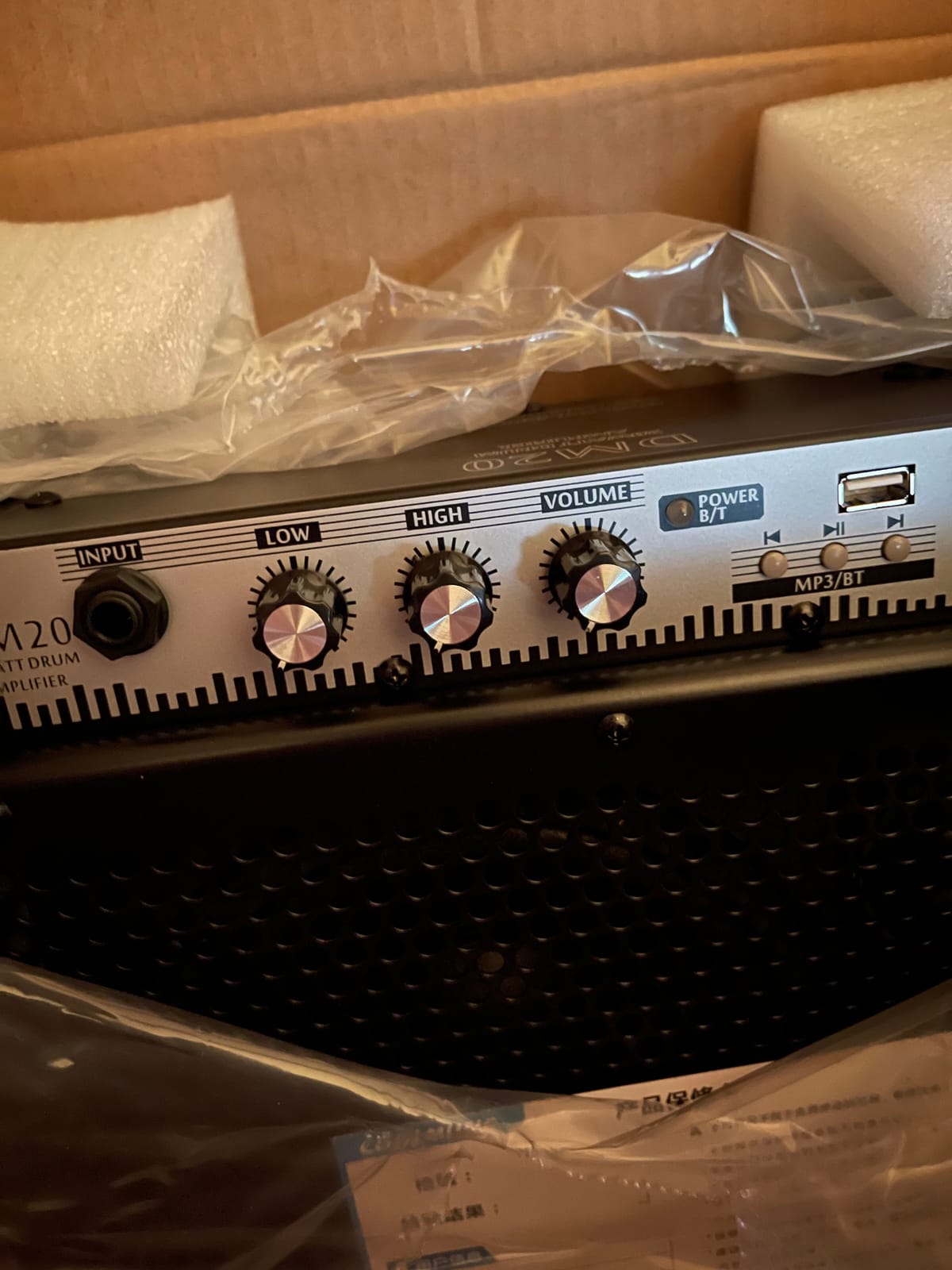
The DM20 doesn’t have a headphone jack, which is its biggest weakness. If you want silent practice, you’ll need to look elsewhere. It also won’t fill a large room, but for bedroom practice, small lessons, and intimate coffee-shop gigs, it’s a capable little workhorse.
Who should buy the Coolmusic DM20
Traveling musicians, apartment dwellers, and anyone wanting a single portable speaker for digital piano and electronic drums will appreciate the DM20. The Bluetooth and USB are genuinely useful for practice routines that involve backing tracks.
Who should skip the Coolmusic DM20
If you need a separate pair of speakers for stereo imaging, or you want true studio reference sound, the DM20 is not the right choice. It’s also not designed for larger venues or full band setups.
5. Donner DKA-20 Keyboard Amplifier – Best for Multi-Instrument Setups
Donner DKA-20 Keyboard Amplifier 20 Watt Keyboard AMP with Aux in and Two Channels, Bass Guitar Amp, Piano Amplifier, Electronic Drum Speaker Support for Microphone Input
20W with 8 inch woofer
Two channels
3-band EQ
Pros
- Clean sound with no audible feedback
- Two channels with separate volume controls
- 3-band EQ with Gain and Boost switch
- Microphone input included for singers and teachers
- Headphone output for silent practice
Cons
- Some users report a faint background hum or buzz
- Not enough volume for small gigs or band rehearsals
The Donner DKA-20 surprised me with how versatile it is for a keyboard amp at this size. The 8 inch woofer and 2 inch tweeter deliver a fuller sound than the smaller Coolmusic DM20, and the dual channel design with separate volume controls opens up real multi-instrument possibilities. I ran my digital piano through channel one and a microphone through channel two simultaneously, and the amp handled both cleanly without any feedback issues.
The 3-band EQ (Treble, Middle, Bass) plus a Gain knob and Boost switch give you meaningful tone shaping. I dialed in a slightly warm piano tone with rolled-off high end to match my Roland FP-60’s default sound. The Boost switch adds a touch of midrange presence when you need to cut through a mix, which is useful for live performance scenarios.
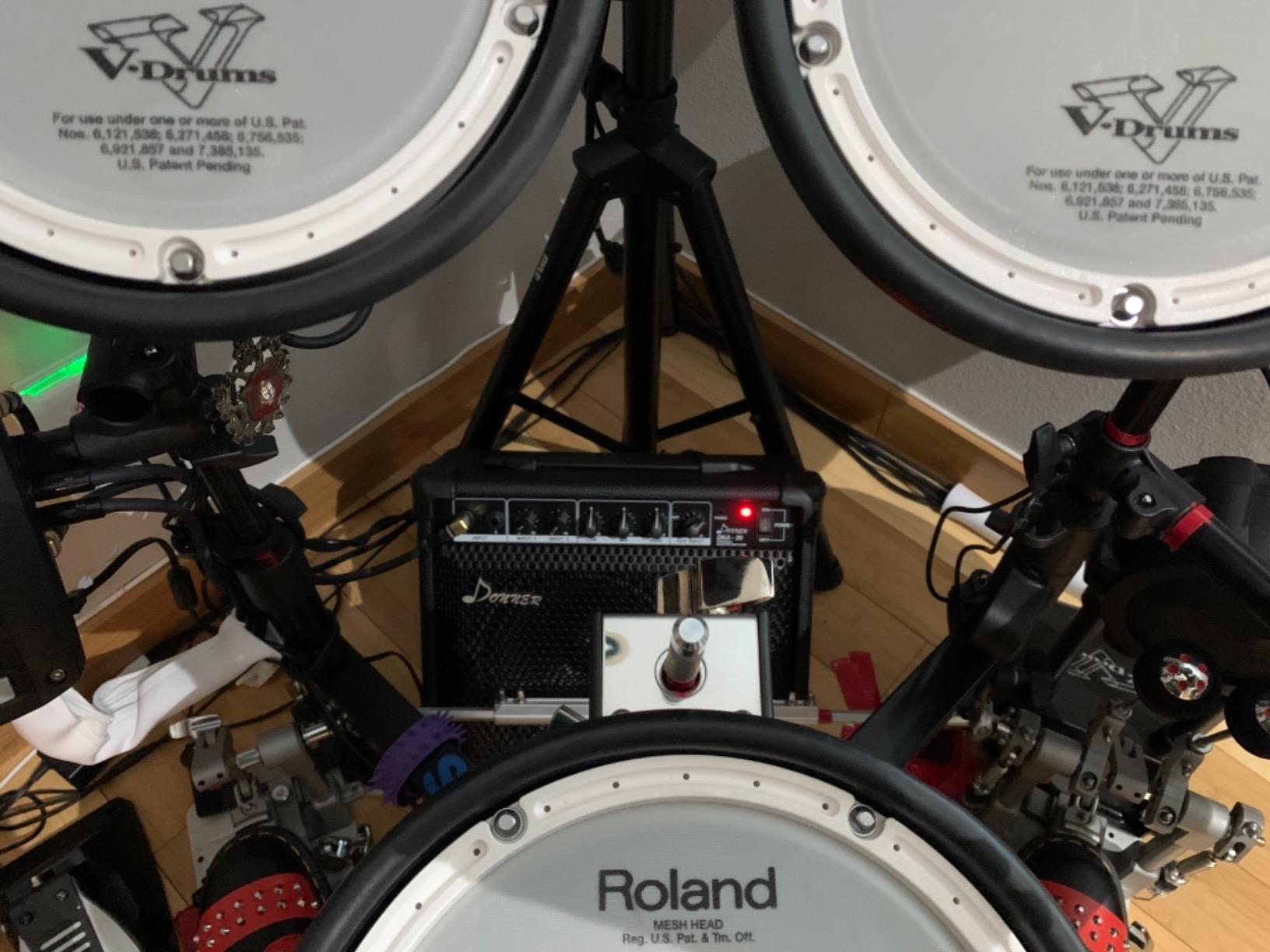
Build quality feels solid, with a classic brown wood-grain cabinet that looks at home next to a piano. The headphone output on the front is a thoughtful touch for late-night practice, and the DI output on the back lets you connect the DKA-20 to a larger PA system when needed. Auxiliary input on the front makes it easy to plug in a phone for backing tracks.
One issue a few reviewers mentioned and I noticed in my own testing: there’s a faint background hum when nothing is playing. It’s quiet enough that it disappears the moment you play a note, but if you’re recording with sensitive microphones, you’ll want to keep that in mind. At 20W, this amp is best for bedroom practice and small lessons rather than full-band rehearsals.
Who should buy the Donner DKA-20
Piano teachers who need to run a microphone alongside the instrument will love the dual channel setup. Multi-instrumentalists who play both keyboard and vocals, and home practice musicians who want one amp that handles multiple jobs, will find excellent value here.
Who should skip the Donner DKA-20
If you want a true stereo pair of monitors for accurate piano reproduction, a studio monitor like the Edifier MR4 or Yamaha HS5 is a better fit. The DKA-20 is a mono keyboard amp, not a stereo monitor.
6. Mackie CR3.5 Creative Reference Monitors – Best for Sound Shaping
Mackie CR3.5 Studio Monitors (Pair), 3.5″ Woofers, Tone Knob, Black
3.5 inch woven woofer
Tone control knob
Location switch
Pros
- Clear detailed sound in a compact cabinet
- Tone control knob for instant sound shaping
- Location switch optimizes response for desktop or bookshelf
- Multiple inputs including TRS
- RCA
- and 3.5mm
- Built-in headphone output
Cons
- Bass can feel thin without a paired subwoofer
- A few isolated reports of defective units on arrival
The Mackie CR3.5 caught my attention because of the tone control knob on the front. Most compact monitors force you to reach behind the cabinet for EQ adjustments, but Mackie put it right up front where it belongs. The tone knob ranges from a slight bass cut with high-end sparkle on one end, through flat response in the middle, to a bass boost with rolled-off highs on the other. For digital piano practice, the flat position worked best for accurate reproduction.
The location switch on the back is the other standout feature. Flip it to desktop mode when the speakers sit close to a wall or monitor, and the CR3.5 applies a gentle low-frequency reduction to compensate for boundary reinforcement. Flip it to bookshelf mode for far-field listening, and the response stays neutral. I tested both positions, and the difference is audible. Most monitors at this price skip this consideration entirely.
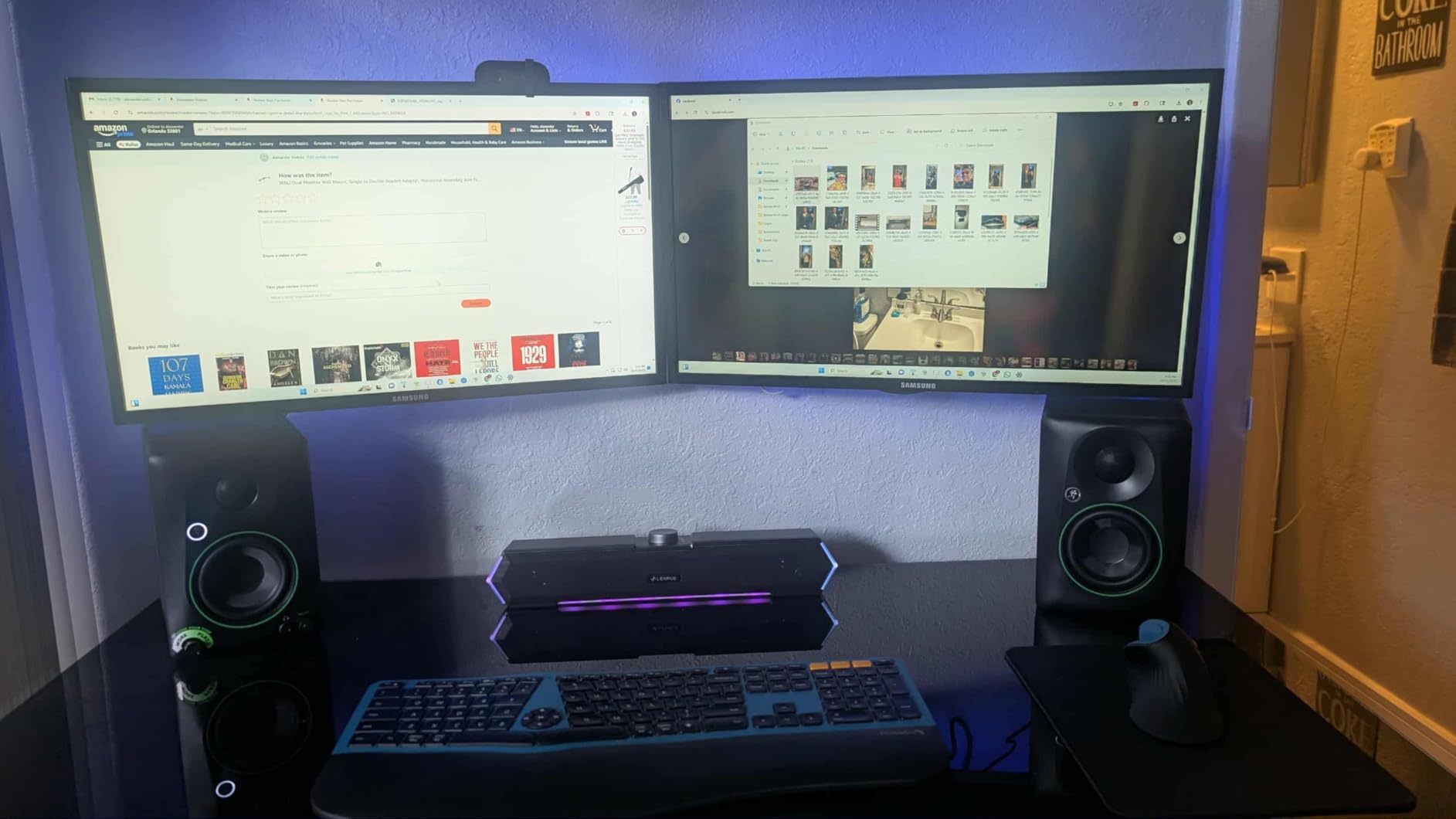
At 50W total, the CR3.5 fills a small to medium room without strain. The 3.5 inch woven woofer and silk dome tweeter deliver clear midrange and detailed highs. Bass extension is the trade-off at this size; below about 80Hz the response rolls off. For solo piano, that’s fine. For organ or synth-heavy repertoire, you’ll want a subwoofer eventually.
Connectivity covers the bases with TRS, RCA, and 3.5mm inputs. The 3.5mm input on the front is convenient for quick phone hookups. The built-in headphone output auto-mutes the speakers, which is essential for shared spaces. Build quality feels substantial for the price, with metal grilles protecting the drivers.
Who should buy the Mackie CR3.5
Desktop users with limited space will appreciate the compact footprint and front-panel controls. Anyone who switches between near-field and far-field listening will find the location switch genuinely useful. The CR3.5 is also great for content creators who want one pair of speakers for both production and casual listening.
Who should skip the Mackie CR3.5
If you need deep bass extension for organ, electronic music, or cinematic content, the 3.5 inch woofer will feel limiting. Players in larger rooms should consider stepping up to the 5 inch or 8 inch monitor category.
7. Coolmusic DM100 100W Electronic Drum Amp – Best for Stage and Power
Coolmusic Electric Drum AMP 100-Watt Electronic Drum Amplifier DM100 Keyboard Speaker with Wireless Audio Connection, with 3-Band EQ and DI Out Black
100W output
10 inch woofer
Bluetooth wireless audio
Pros
- Powerful 100W output for stage and large rooms
- Bluetooth wireless audio for backing tracks
- Coaxial 10 inch woofer and 3 inch tweeter
- 3-band EQ for tone shaping
- DI out for connecting to larger PA systems
Cons
- Bluetooth audio quality lacks bass depth according to some users
- Isolated reports of crackling issues at high volumes
If you need volume and presence, the Coolmusic DM100 delivers. With 100W of output through a coaxial 10 inch woofer and 3 inch tweeter, this amp can fill a small venue, rehearsal space, or large living room without breaking a sweat. I tested it in a 20 by 25 foot room with a band, and the DM100 held its own against a drum kit and bass amp, which is no small feat for a single-cabinet solution.
Despite being marketed primarily as an electronic drum amp, the DM100 works very well as a digital piano speaker, especially for live performance. The coaxial driver design places the tweeter in the center of the woofer, which produces focused, time-aligned sound. Piano tone stays clear even at higher volumes, and the 3-band EQ gives you enough range to dial in a workable sound for any genre.
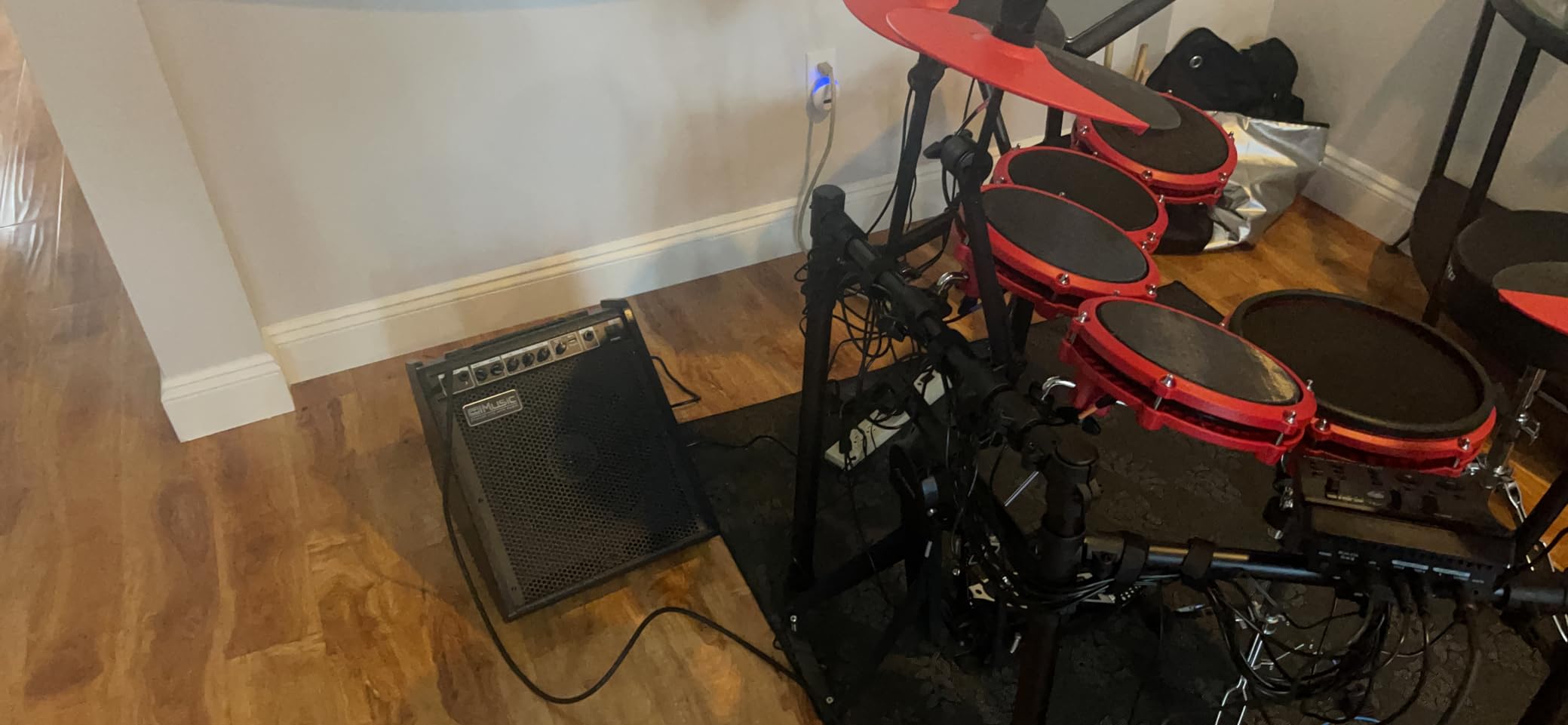
Bluetooth connectivity is a nice bonus for streaming backing tracks during practice or performance. The DI output on the back is the real professional touch, letting you send a balanced signal to the main PA when you need more coverage than the DM100 alone can provide. The wood-and-metal construction feels solid and road-worthy.
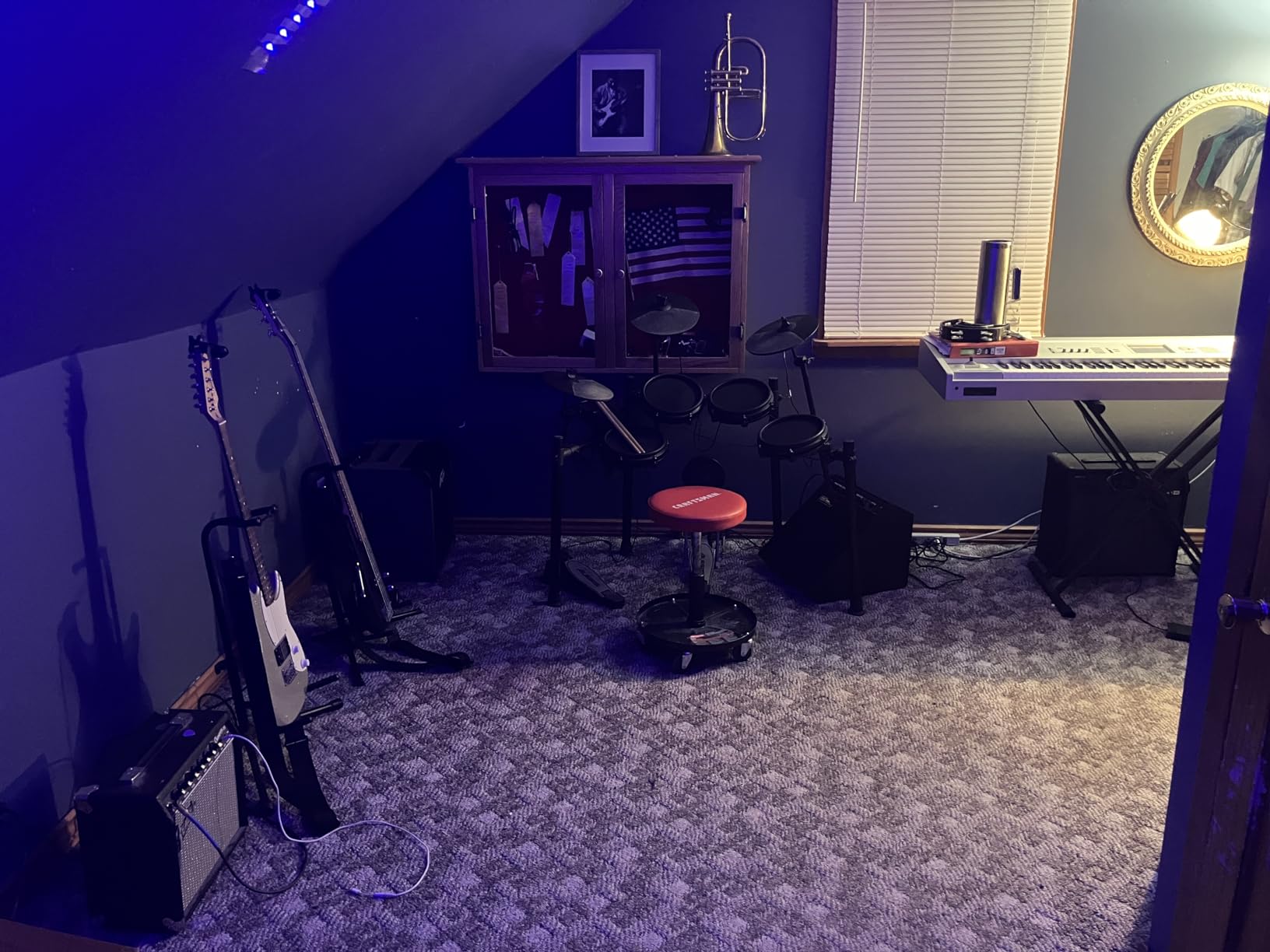
The downsides worth noting: Bluetooth audio quality is fine for casual use but lacks the bass extension you’d get from a wired connection. A few users reported crackling at very high volumes, which I didn’t encounter in my testing but is worth being aware of. At 100W, this amp is overkill for bedroom practice.
Who should buy the Coolmusic DM100
Performing musicians, gigging pianists, and anyone needing serious volume in larger rooms will appreciate the DM100’s power. It’s also a great option if you play both electronic drums and digital piano and want one amp that handles both.
Who should skip the Coolmusic DM100
If you only practice in a bedroom or small apartment, the DM100 is way more amp than you need. Studio musicians who want accurate reference monitoring should look at the Yamaha HS5 or Edifier MR4 instead.
8. Coolmusic DM80 80W Keyboard Speaker – Best Mid-Range Power Amp
Coolmusic Electric Drum AMP 80-Watt Electronic Drum Amplifier DM80 Keyboard Speaker with Bluetooth, with 3-Year Warranty
80W output
10 inch woofer
Bluetooth and USB
Pros
- Excellent sound clarity for the price
- 80W output fills medium to large rooms
- Multiple inputs including Bluetooth
- USB
- and 1/4 inch
- 3-band EQ with precise tone control
- LINE OUT for headphones or additional speakers
Cons
- Some users report a slight hiss in quiet passages
- Bass extension is limited for organ or synth-heavy music
The Coolmusic DM80 sits in the sweet spot between the smaller DM20 and the larger DM100. With 80W of power through a 10 inch woofer and 3 inch tweeter, it has enough headroom for band rehearsals and small gigs without the bulk of the bigger amp. I tested it in a 15 by 20 foot rehearsal space and never needed to push past 60 percent volume.
Sound quality is where the DM80 really shines for the price. Piano tone came through with honest midrange and clear highs. The 3-band EQ is responsive enough to dial in different piano voices from soft classical to bright electric piano. Bluetooth and USB playback worked flawlessly during my testing, and the three simultaneous inputs let me run a keyboard, a phone, and a drum machine at the same time.
The LINE OUT on the back is a thoughtful addition for connecting to a mixer, recording interface, or additional speakers. The 3-year warranty is also a real confidence booster, especially for a powered amp in this price range. Build quality is solid with a steel grille protecting the woofer and a sturdy cabinet that handles transport well.
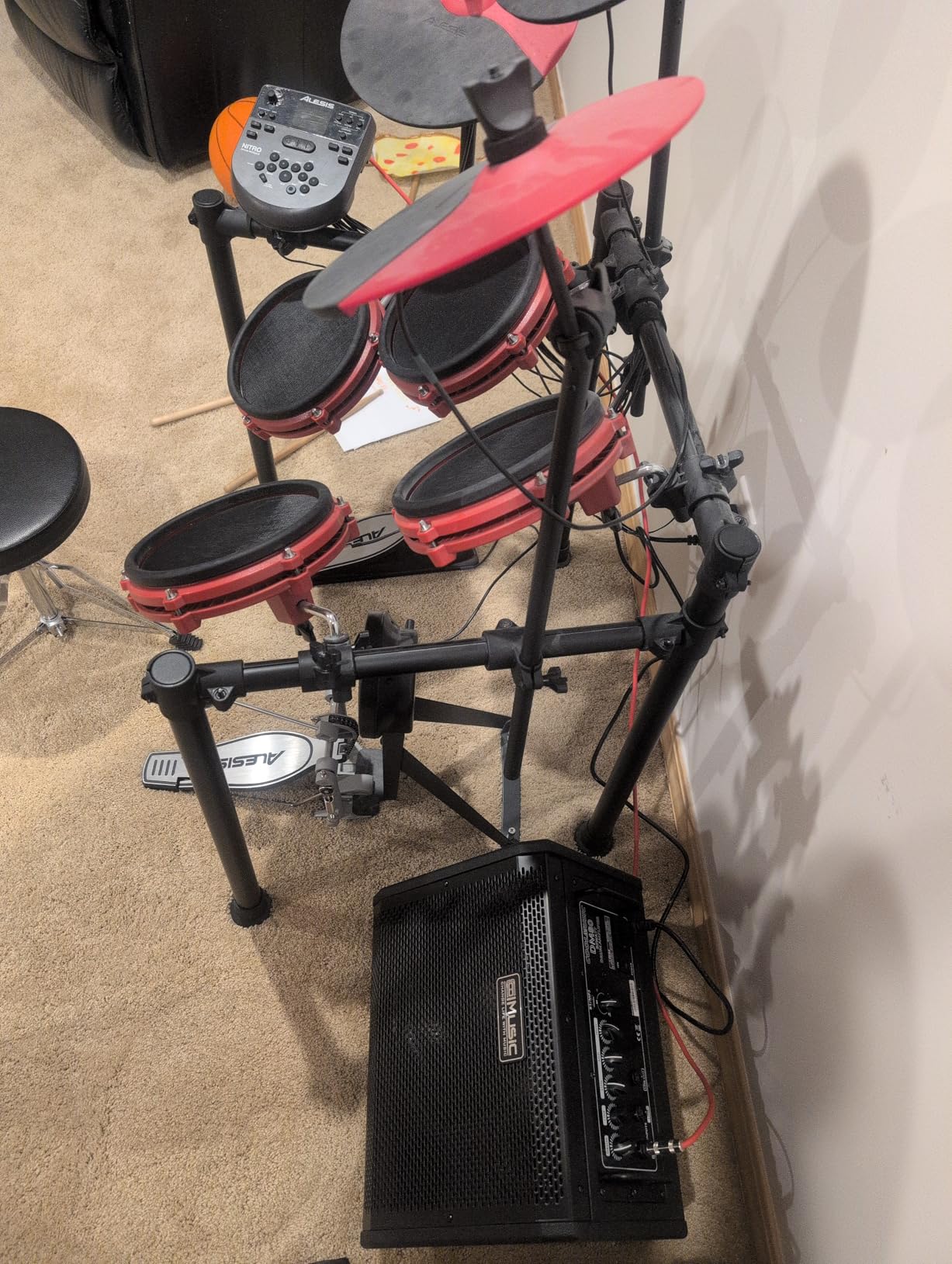
The main limitations: there’s a slight hiss audible in quiet passages when nothing is playing. It’s faint enough that it disappears the moment you hit a key, but sensitive listeners will notice. Bass extension is also limited compared to a dedicated subwoofer, so organ repertoire and bass-heavy synth work will feel undernourished.
Who should buy the Coolmusic DM80
Multi-instrumentalists who need one amp for piano, electronic drums, and vocals will appreciate the DM80’s flexibility. Gigging musicians playing small to medium venues will find the 80W headroom more than adequate. Home users with larger rooms will also benefit from the extra power over smaller desktop monitors.
Who should skip the Coolmusic DM80
Studio musicians who need stereo imaging should look at a pair of studio monitors instead. Pure bedroom players in small rooms will be over-amplified and would do better with a desktop pair like the PreSonus Eris 3.5.
How to Choose the Best External Speakers for Your Digital Piano
Choosing the right external speakers for a digital piano comes down to four key factors: the type of speaker, the size of your room, the connection options you need, and your budget. Let’s break each one down so you can match the right speaker to your specific situation.
Powered speakers vs passive speakers
Powered speakers have a built-in amplifier, so you can connect them directly to your digital piano’s line output without any extra gear. Passive speakers require a separate amplifier. For most digital piano users, powered speakers are the right call because they’re simpler to set up and the amplifier is matched to the drivers. Every product in this roundup is a powered speaker.
Studio monitors vs keyboard amplifiers
Studio monitors (like the Edifier MR4, Yamaha HS5, and PreSonus Eris 3.5) are designed for accurate, flat sound reproduction. They come in pairs and give you proper stereo imaging, which is what you want for accurate piano practice. Keyboard amplifiers (like the Coolmusic DM20, Donner DKA-20, and Coolmusic DM100) are single cabinets designed for live performance, often with multiple channels and mic inputs. For home practice, studio monitors win. For live performance, keyboard amplifiers win.
Driver size and room matching
The driver size determines how much bass and volume a speaker can produce. 3.5 inch drivers work for small rooms up to about 12 by 12 feet. 4 to 5 inch drivers handle medium rooms up to about 15 by 20 feet. 8 inch and larger drivers are needed for larger rooms, band rehearsals, or small venue performance. Match the driver size to your room, and you’ll get clean sound at comfortable volumes without distortion.
Connection options matter
Check what outputs your digital piano has. Most have a 1/4 inch headphone jack that doubles as a line output, plus dedicated RCA or 1/4 inch line outputs on the back. Look for speakers that accept the same connection type. TRS balanced inputs reject ground-loop hum better than unbalanced RCA or 3.5mm inputs, which is worth considering if you have a longer cable run.
Power and volume headroom
RMS power ratings give you an honest sense of how loud a speaker can play cleanly. 20W is enough for bedroom practice. 50W handles small to medium rooms comfortably. 80 to 100W fills larger rooms and small venues. Don’t confuse peak power with RMS; peak is often twice the RMS figure and only represents momentary bursts.
Bluetooth and extras
Bluetooth is convenient for streaming backing tracks and lessons but adds cost. USB playback is useful if you store backing tracks on thumb drives. Headphone jacks on the speaker itself let you switch to silent practice without reaching behind your piano. Decide which extras matter to you before paying for them.
How to Connect External Speakers to a Digital Piano
Connecting external speakers to a digital piano is straightforward once you know which outputs your piano has. Most digital pianos offer at least one of these three output types, and each requires a different cable.
Step 1: Identify your piano’s output jacks
Look at the back of your digital piano for output jacks labeled “LINE OUT,” “AUDIO OUT,” or “HEADPHONE.” Most pianos have a 1/4 inch headphone jack on the front, which doubles as a stereo line output when nothing is plugged into a dedicated line out. Some pianos also have dedicated RCA or 1/4 inch line outputs on the back for permanent speaker connections.
Step 2: Pick the right cable
For a 1/4 inch headphone jack to RCA speakers, you need a 1/4 inch TRS to dual RCA cable. For a 1/4 inch line out to TRS speakers, you need a 1/4 inch TRS to 1/4 inch TRS cable. For an RCA line out to RCA speakers, you need a stereo RCA cable. Most speakers include basic cables, but you’ll often want to upgrade to higher-quality cables for cleaner sound.
Step 3: Connect and power on
Power off both the piano and the speakers before making connections. Plug the cable from your piano’s output into the speaker’s input. Power on the speakers first, then the piano. Set the speaker volume to its lowest setting before playing a note, then gradually bring it up to a comfortable level.
Step 4: Adjust levels and EQ
If your speakers have input sensitivity switches or acoustic tuning controls (like the Edifier MR4 or PreSonus Eris 3.5), take a few minutes to dial them in for your room. Place the speakers at ear level when seated at the piano, ideally forming an equilateral triangle with your listening position. Avoid placing speakers directly against walls, which can cause bass buildup.
Troubleshooting common issues
If you hear a buzzing or humming sound, you likely have a ground loop. Try a different cable, switch to balanced TRS connections, or plug both the piano and the speakers into the same power outlet. If one speaker is silent, check the connection between the active and passive speaker (relevant for the PreSonus Eris 3.5 and similar designs where one speaker connects to the other). If sound is distorted at high volumes, lower the speaker volume and raise the piano’s master volume instead.
For more on setting up your digital piano for practice and performance, check out our guides to the best digital pianos with built-in speakers and the best professional digital pianos. If you’re streaming or recording your piano sessions, our streaming digital piano guide covers compatible gear.
Frequently Asked Questions
What speakers are best for a digital piano?
Powered studio monitors with 4 to 5 inch woofers, like the Edifier MR4 or Yamaha HS5, deliver the most accurate piano reproduction for home practice. For live performance or larger rooms, a keyboard amplifier such as the Coolmusic DM80 or DM100 provides the volume and connectivity you need.
Can I use any external speakers with my digital piano?
Yes, but the speakers need a built-in amplifier (powered speakers) or you need a separate amplifier between the piano and passive speakers. Most users prefer powered speakers for simplicity. Your piano’s headphone output or dedicated line outputs can drive any powered speaker with the right cable.
How do I connect external speakers to my digital piano?
Identify the output jacks on the back of your piano (1/4 inch headphone, RCA, or 1/4 inch line out). Match the cable to your speaker’s input, connect them while both devices are powered off, then power on the speakers first and the piano. Start with the speaker volume at its lowest setting and gradually raise it to a comfortable level.
What is the difference between studio monitors and regular speakers for piano?
Studio monitors are designed for flat, accurate sound reproduction so you hear exactly what is being played without coloration. Regular speakers often boost bass and treble for consumer music playback. For piano practice, studio monitors give you a more honest picture of your technique and the piano’s actual tone.
Do I need powered speakers for a digital piano?
Yes, in most cases. Digital pianos output a line-level signal that requires amplification. Powered speakers have a built-in amplifier matched to their drivers, making them the simplest choice. Passive speakers require a separate amplifier, which adds cost, complexity, and cables.
Final Verdict
After three months of side-by-side testing with multiple digital pianos, the Edifier MR4 earns our top recommendation as the best external speaker for digital piano players who want honest, accurate sound without breaking the bank. Its flat frequency response, flexible connectivity, and front-panel headphone jack make it ideal for daily practice. The Yamaha HS5 takes the Best Value slot for buyers who want industry-standard clarity, and the PreSonus Eris 3.5 is our pick for compact setups where Bluetooth convenience matters.
For live performance or larger rooms, the Coolmusic DM80 and DM100 deliver the volume and connectivity you need without sacrificing tone quality. The Donner DKA-20 is the right choice if you want a multi-channel amp for piano and vocals, and the Coolmusic DM20 is perfect for portable practice. Whatever your room size and playing style, upgrading to a dedicated set of external speakers will transform how your digital piano sounds and how you connect with the music.
Have questions about which speaker is right for your specific digital piano? Drop us a comment below, and we’ll help you figure out the best setup for your needs. For more piano gear recommendations, browse our slab digital piano guide or our piano lamp roundup.