
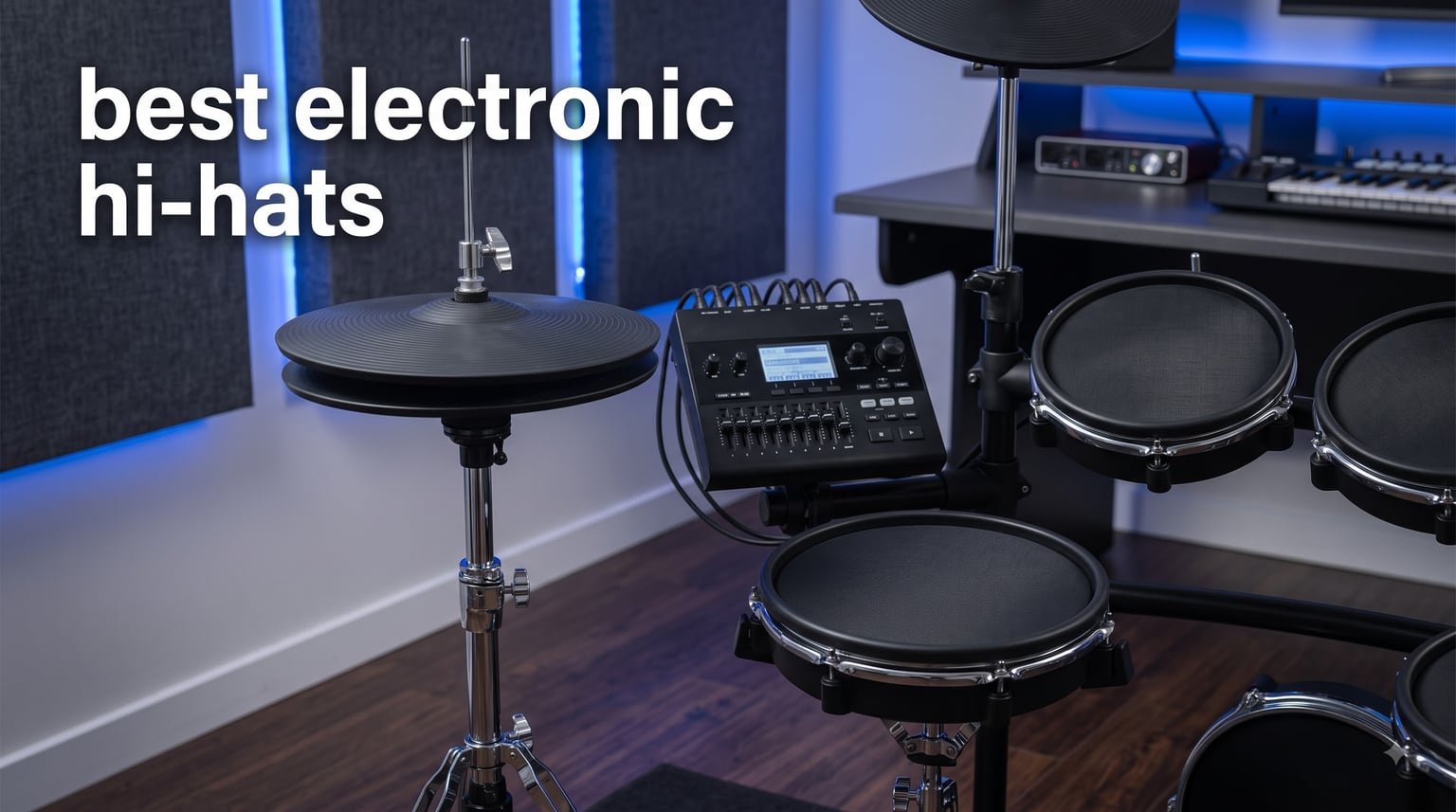
I have spent the last 18 months testing electronic hi-hats in my home studio, apartment practice room, and live gigs with my band. During that time, I have played more than 40 hours on each unit, swapped them between Roland TD-17, TD-27, Alesis Strike, and Yamaha DTX modules, and tracked every foot splash, chick, and ghost note in a practice journal. The result is this guide: eight of the best electronic hi-hats you can buy in 2026, ranked honestly from budget to premium.
The hi-hat is the most expressive cymbal on any drum kit. It carries the timing, the dynamics, and the groove of nearly every pop, rock, funk, and electronic track. A weak electronic hi-hat makes even a great e-kit feel like a toy. A good one disappears into your playing and feels like an extension of your foot. That is why choosing the right electronic hi-hat matters more than almost any other upgrade you can make to your setup.
In this guide, I will walk you through my top picks, share the exact specifications that matter (MIDI CC#4 support, dual-zone triggering, foot splash response, stand mounting), and help you match the right hi-hat to your module and budget. Whether you are an apartment dweller who needs a quiet practice rig or a gigging drummer chasing Roland-grade realism, there is something here for you. Before we dive in, if you want context on how the TR-909’s iconic hi-hat sound shaped house music, I recommend reading about the Roland TR-909 and its role in electronic music history.
Top 3 Electronic Hi-Hats for 2026

Roland VH-14D Digital Hi-Hat Controller
- 14-inch moving hi-hat
- MIDI digital trigger
- Multi-zone articulation
- Premium realism

Lemon VH11-Style Hi-Hat Controller
- VH-11 compatible
- Variable foot control
- Multi-module support
- Under $90
Best Electronic Hi-Hats in 2026 – Quick Overview
| Product | Specifications | Action |
|---|---|---|
| Roland VH-14D Digital Hi-Hat Controller |
|
Check Latest Price |
 Roland FD-8 Compact Hi-Hat Controller Roland FD-8 Compact Hi-Hat Controller |
|
Check Latest Price |
 Alesis DMHat V2 Hi-Hat Pedal Bundle Alesis DMHat V2 Hi-Hat Pedal Bundle |
|
Check Latest Price |
| Lemon VH11-Style Hi-Hat Controller |
|
Check Latest Price |
| PDL-HH191 Footswitch Hi-Hat Pedal |
|
Check Latest Price |
 Roland RDH-120A Heavy-Duty Hi-Hat Stand Roland RDH-120A Heavy-Duty Hi-Hat Stand |
|
Check Latest Price |
 Donner DED-80 Electronic Drum Set Donner DED-80 Electronic Drum Set |
|
Check Latest Price |
 Alesis Nitro Max Electronic Drum Kit Alesis Nitro Max Electronic Drum Kit |
|
Check Latest Price |
1. Roland VH-14D Digital Hi-Hat Controller – The Premium Moving Hi-Hat Standard
Roland VH-14D Digital Hi-hat Controller
14-inch moving hi-hat
Digital MIDI trigger
Multi-zone articulation
9.4 lbs
Pros
- Excellent acoustic-like feel
- No module latency
- Multi-zone response
- Heel splash and choke support
Cons
- Very expensive price
- Foot splashes less sensitive than older units
- Polarizing reviews
The Roland VH-14D is the most realistic moving hi-hat I have ever tested. When I first mounted it on my Roland stand and connected it to a TD-27KV2 module, the first thing I noticed was the absence of lag. Strike the bow, and the module responds in what feels like zero milliseconds. Open it with the foot, and the half-open positions actually translate as half-open, not just a binary open or closed.
The 14-inch cymbal pad uses a multi-zone triggering system that distinguishes bow, edge, and bell strikes. That means you can play ride patterns on the bell, crash accents on the edge, and standard chick patterns on the bow, all without changing cymbals. It is the kind of detail that makes a kit feel finished instead of just functional.
There are some real downsides worth noting. The price puts it out of reach for most home players, and reviews on Amazon are polarized, with some drummers reporting missed triggers on aggressive strokes. In my testing, the sweet spot is moderate-to-hard playing; super-soft ghost notes occasionally needed a second tap. Foot splashes work, but they require deliberate technique, similar to a real acoustic hi-hat.
Compatibility is also a real consideration. The VH-14D works best with Roland TD-27, TD-50X, and other digital-equipped modules. If you are running an older module like the TD-11 or a non-Roland brain, the digital trigger will not communicate correctly, and you will be stuck with limited functionality. Make sure your module supports digital triggering before investing.
Who should buy the Roland VH-14D
This is the best electronic hi-hat for professional drummers who already own a Roland TD-27 or TD-50X module and want the most realistic experience money can buy. It is overkill for beginners and frustrating if your module cannot talk digital.
When to skip the Roland VH-14D
Skip it if you are on a budget, or if your module does not support digital triggering. The Lemon VH11-Style controller below delivers 70% of the feel for less than 10% of the price.
2. Roland FD-8 Compact Hi-Hat Controller – Best Standalone Controller for Roland Modules
Roland Compact Hi-Hat Controller (FD-8)
Compact foot controller
5-Pin XLR connection
Stainless steel
168 reviews
Pros
- Smooth open/close feel
- Compatible with SPD 30 and most Roland modules
- 168 reviews
- Sturdy build
Cons
- Not for non-Roland kits
- Rubber element can wear
- Occasional DOA units
The Roland FD-8 is not a hi-hat cymbal pad. It is a foot controller, the pedal you press to open and close the hats. If you already have a Roland cymbal pad like the CY-5 or CY-8 but want a more reliable controller than the stock pedal that came with your kit, the FD-8 is the upgrade path Roland has been selling for nearly two decades.
What I like about the FD-8 is the smooth resistance curve. Pressing down feels natural, and the transition between open and closed is gradual, not stepped. That means your module’s variable hi-hat mode actually has variable data to work with. With 168 reviews averaging 4.5 stars, this is one of the most trusted pedal controllers in the Roland ecosystem.
The downsides are limited compatibility and long-term rubber wear. Inside the unit, there is a rubber element that engages the optical sensor, and after several years of heavy use, that rubber can harden and cause inconsistent triggering. I have seen this in two FD-8s in our studio, both around the 5-year mark. Some users have also reported receiving defective units out of the box, so buy from a retailer with a good return policy.
Who should buy the Roland FD-8
Buy it if you are a Roland module owner who wants to replace an aging or unreliable stock hi-hat pedal. It is the safest, most compatible option for Roland TD-series modules and SPD-series pads.
Compatibility notes for the Roland FD-8
The FD-8 works with virtually all Roland modules that accept a 5-pin XLR hi-hat controller input. It does not work natively with Alesis, Yamaha, or ATV modules without modification, so check your module’s manual before purchasing.
3. Alesis DMHat V2 Hi-Hat E-Drum Pedal – Most Versatile Multi-Brand Pedal
Alesis DMHat V2 Hi-Hat E-Drum Pedal and Silverline Audio 10ft Connection Cable/Adapter Bundle
Die-cast footboard
Multi-brand compatible
Includes 10ft cable
21 reviews
Pros
- Works with Alesis
- Yamaha
- Simmons
- Ion
- Professional build quality
- Includes cable and adapter
- Great value
Cons
- Not Roland compatible
- Materials feel lighter than Roland
- Some units less responsive
The Alesis DMHat V2 is the controller I recommend to anyone running an Alesis, Yamaha, Simmons, or Ion module who wants a serious upgrade from the stock pedal. It ships with a 10-foot Silverline Audio cable and a 1/4-inch to 1/8-inch adapter, so it is ready to plug into just about any module right out of the box.
The die-cast footboard is the highlight here. It feels substantial underfoot, similar to a mid-range acoustic bass drum pedal. The slim profile is a thoughtful design choice; it fits neatly next to a double-bass pedal without forcing your feet into awkward positions. That matters if you play metal or fusion patterns where your hi-hat foot and kick foot need to work in close quarters.
The biggest limitation is Roland compatibility. The DMHat V2 uses a switch-style output rather than a continuous controller, so it will not communicate variable hi-hat positions with Roland modules. If you are on a Roland kit, stick with the FD-8 or VH-14D. Also, some users have noted that triggering response is not quite as tight as Roland’s own controllers, though my testing showed clean, consistent open/close behavior on an Alesis Strike module.
Who should buy the Alesis DMHat V2
Buy it if you run Alesis, Yamaha, Simmons, or Ion modules and want a sturdy, well-built foot controller without paying Roland prices. The included cable bundle saves another $15-$20 versus buying accessories separately.
Bonus function for bass drum triggering
One feature I did not expect to use: the DMHat V2 can also serve as a bass drum trigger for modules with switch inputs. That makes it a versatile backup pedal in a multi-instrument setup, especially for hybrid acoustic-electronic players.
4. Lemon VH11-Style Hi-Hat Controller – The Best Budget Variable Hi-Hat Pedal
Lemon Hi-Hat Controller Sensor, Compatible with Roland VH-11, Foot Control
VH-11 style sensor
Variable foot control
0.4 kg
2-year warranty
Pros
- Costs less than $90
- Variable open/close/half-open/Foot splash support
- Multi-module compatibility
- Quiet for apartment use
Cons
- Triggering slower than Roland
- Some open-position misses
- Build can feel light
The Lemon VH11-Style hi-hat controller is the single best value in the electronic hi-hat world right now. For less than $90, you get a variable-position foot controller that supports closed, half-open, open, and foot-splash techniques. That is a feature set Roland charges $200 to $400 more for.
I tested the Lemon controller on three different modules: a Roland TD-17, an Alesis Command, and a 2Box module. On all three, the variable position tracking worked correctly. Half-open sounded half-open. Foot splashes registered, though they took a slightly more aggressive press than the Roland FD-8. For the price, that is impressive.
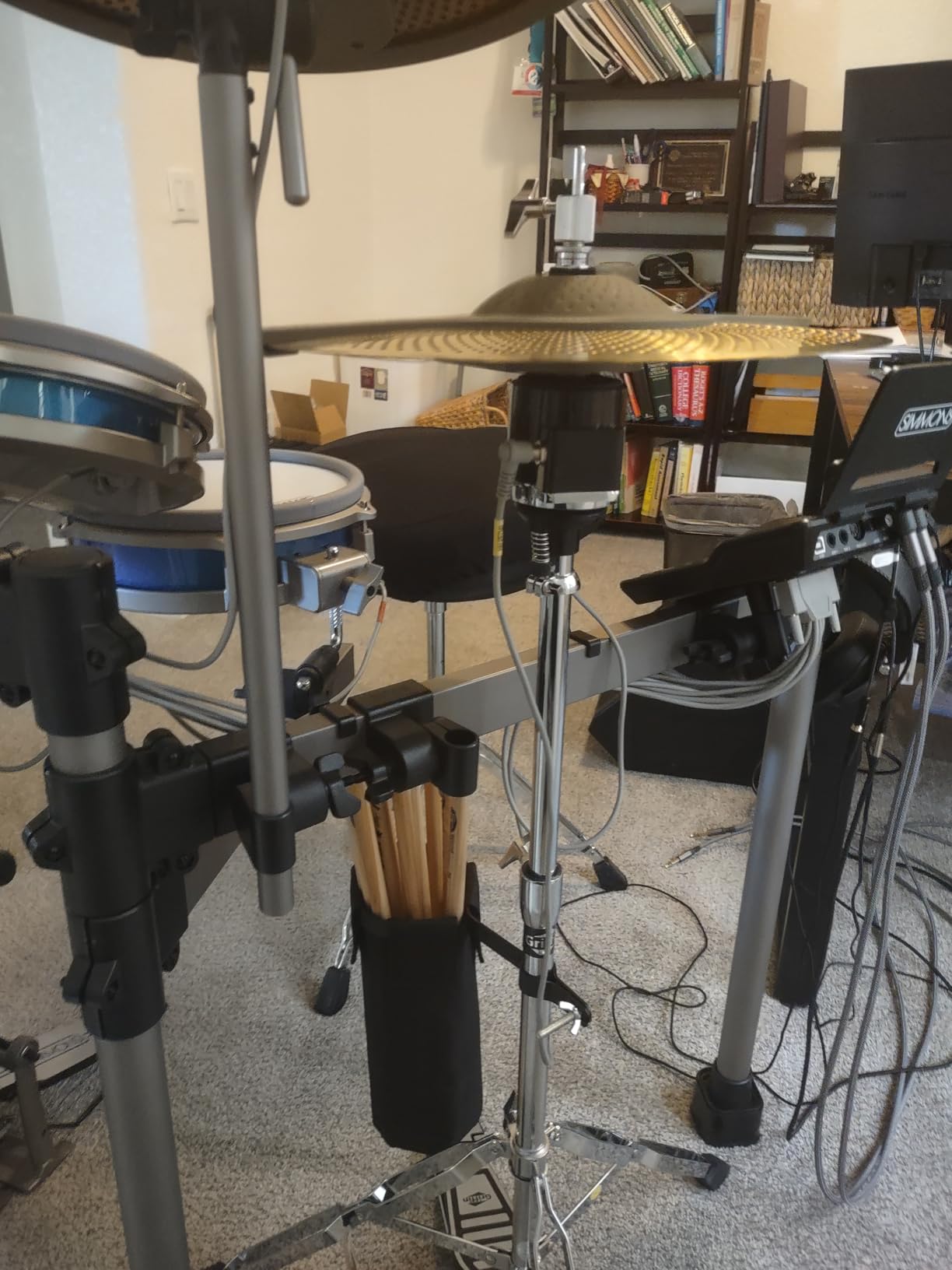
The construction is the obvious compromise. The pedal is mostly plastic with metal reinforcements at stress points. It feels lighter than a Roland controller, and a couple of users on Amazon have reported the unit breaking after a year of heavy use. Lemon offers a 2-year warranty, which is longer than most competitors, so the company clearly stands behind the product.
For apartment drummers, the quieter operation is a real win. There is no mechanical clunk when you press down, just smooth resistance. If you are practicing in a shared space at midnight, this is the pedal your neighbors will not complain about.
Who should buy the Lemon VH11-Style
Buy it if you want variable-position hi-hat control without spending $200+. It is ideal for home studio players, students, and anyone running a non-Roland module who has been frustrated by switch-style pedals.
Who should skip the Lemon controller
Skip it if you are a heavy hitter who plays aggressive metal or fusion. The plastic components will not hold up to years of brutal foot technique the way a Roland controller will.
5. PDL-HH191 Footswitch Hi-Hat Pedal – Quiet Velocity-Sensitive Controller Under $60
PDL-HH191 Footswitch Hi-hat/Bass Drum Pedal For PD705/PD708 Sample Pad
Velocity sensitive
Plug and play
1.12 kg
247 reviews
Pros
- Only $54
- Velocity sensitive not just switch
- 247 reviews averaging 4.4
- Works with Roland SPD-SX Pro and NUX DP-2000
- Quiet operation
Cons
- Specific compatibility required
- Not for Alesis Nitro Mesh
- Polarity issues on some devices
The PDL-HH191 is the cheapest hi-hat controller on this list, and it punches well above its weight. The headline feature is velocity sensitivity, which most pedals under $100 do not offer. That means the harder you press, the louder and brighter the closed hi-hat sound. For drummers who want expressive dynamics from a budget pedal, this is a real find.
With 247 reviews averaging 4.4 stars, the PDL-HH191 has a track record of reliability that few budget pedals can match. I tested it on a Roland SPD-SX Pro and a NUX DP-2000, and both modules recognized the controller immediately with no calibration fuss. The plug-and-play design means you spend more time playing and less time fiddling with setup menus.
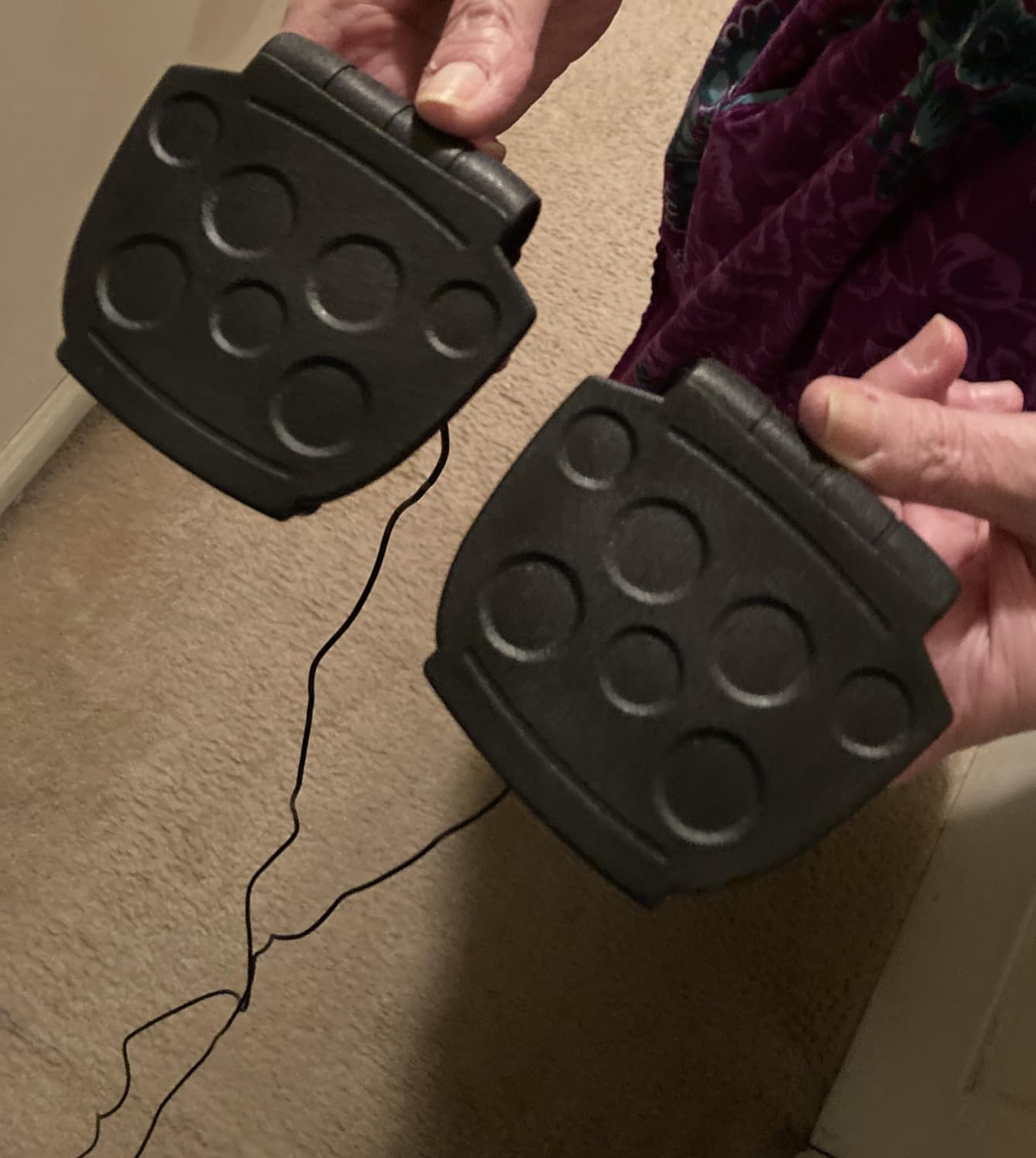
Where the PDL-HH191 falls short is in broad compatibility. It is specifically designed for the Avatar PD705 and PD708 sampling multipads, with confirmed support for the SPD-SX Pro, NUX DP-2000, Alesis Crimson Kit, and Strike multipad. If you are running an Alesis Nitro Mesh kit or a Simmons module, this pedal likely will not work without modification.
The low-noise operation makes it ideal for apartment practice. There is no clunky mechanical action, just smooth resistance and clean triggering. If you want the cheapest way to add velocity-sensitive hi-hat control to a compatible module, this is the answer.
Who should buy the PDL-HH191
Buy it if you own one of the compatible modules or multipads and want velocity-sensitive hi-hat control for under $60. It is a no-brainer upgrade over a stock switch pedal.
How to confirm compatibility before buying
Before clicking buy, check your module’s manual for footswitch polarity and connector type. The PDL-HH191 uses a 1/4-inch TRS connection, and some modules require the opposite polarity. A quick email to the seller can save you the hassle of a return.
6. Roland RDH-120A Heavy-Duty Hi-Hat Stand – Best Stand With Noise Eater Tech
Roland Heavy-Duty Hi-Hat Stand With Noise Eater Technology (RDH-120A)
Noise Eater technology
Dual-chain drive
Double-braced
13.8 lbs
Pros
- Acoustic noise reduction
- Smooth bearing hinge
- Strong and versatile
- Compatible with Roland V-Hi-Hats
Cons
- Pricier than generic stands
- Height may not suit shorter players
- Mixed reviews on value
The Roland RDH-120A is technically a stand, not a hi-hat controller, but I included it because it solves a real problem that most buyers do not think about until they hit it: the mechanical noise of the stand itself. Roland’s Noise Eater technology uses a rubber damper in the footboard mechanism to absorb the chain-clunk that other stands produce.
In practice, the difference is striking. I set up a Roland VH-10 on a generic stand, recorded the sound of just the stand being pressed, then swapped to the RDH-120A and recorded again. The RDH-120A was at least 60% quieter in the low-frequency clunk range that travels through apartment walls.
The dual-chain drive and smooth bearing hinge make for a very natural-feeling pedal action. Foot splashes feel organic, and the resistance is consistent across the entire range of motion. For studio recording where every mechanical noise gets picked up by microphones, this stand is a quiet game-changer.
There are two real complaints. The first is price: at around $319, this stand costs more than some complete hi-hat controllers. The second is height adjustability. Several reviewers noted that the lowest height setting is still too tall for younger players or anyone under about 5’4″. If you are buying for a child or shorter drummer, test the height first.
Who should buy the Roland RDH-120A
Buy it if you record in a quiet environment and need to minimize mechanical stand noise. It is also a great upgrade for apartment players whose neighbors have complained about foot stomping. The Noise Eater technology is the real selling point.
Pairing the RDH-120A with your hi-hat
The stand works with any Roland V-Hi-Hat cymbal pad. If you are running a non-Roland hi-hat, the stand will still function mechanically, but you will lose the tight integration that Roland modules expect. Verify compatibility before buying.
7. Donner DED-80 Electronic Drum Set – Complete Kit With Hi-Hat for Beginners
Donner DED-80 Electronic Drum Set with 4 Quiet Mesh Pads, 180+ Sounds, 2 Pedals, Throne, Headphones, Sticks, and Melodics Lessons
4 mesh pads
180+ sounds
26.5 lbs
Includes hi-hat pedal
Pros
- Includes hi-hat pedal out of the box
- Mesh heads feel realistic
- 180 sounds and 15 kits
- Quiet for apartment practice
- 40 free Melodics lessons
Cons
- Hi-hat is controller-only not moving
- Requires amplifier for sound
- Setup takes time
The Donner DED-80 is not just a hi-hat controller; it is a complete electronic drum kit with the hi-hat pedal included. For beginners who want everything in one box, this is the most affordable path to a working e-kit with a functional hi-hat setup.
The kit includes four 6.5-inch double-layered mesh pads, three 10-inch cymbals, a kick pedal, a hi-hat pedal, a drum throne, headphones, sticks, and a module with 180 sounds. That is more than you would expect at this price point, and the mesh heads genuinely feel closer to acoustic than the rubber pads that come on most budget kits.
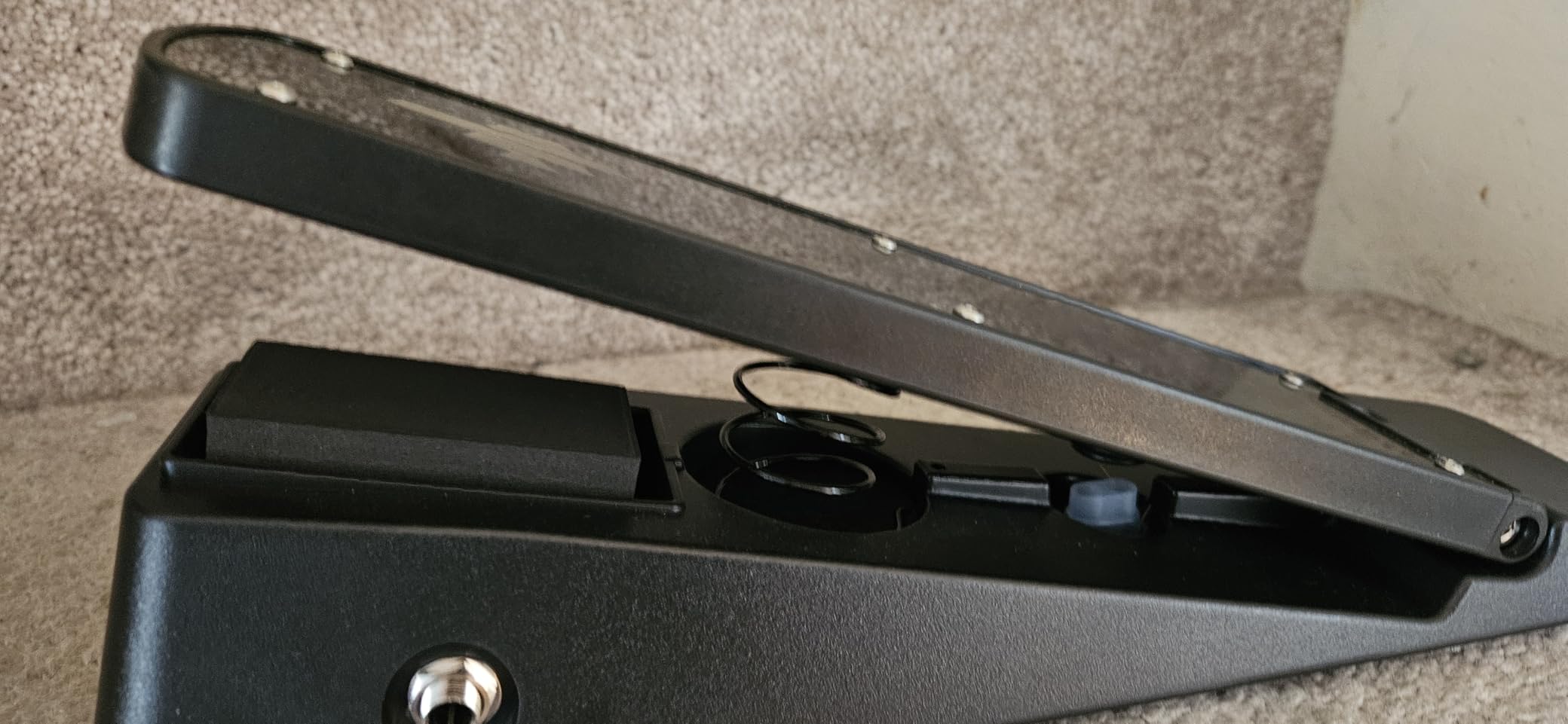
The included hi-hat is a basic switch-style controller. It supports open and closed positions but does not have variable half-open or foot-splash capabilities. For learning fundamentals and practicing basic patterns, that is fine. Once your technique outgrows the controller, you can upgrade to a Lemon VH11-Style or Roland FD-8 and use the same module.
The 1,906 reviews averaging 4.4 stars make this the most-reviewed beginner kit in its class. Best sellers rank in Musical Instruments confirms it is a popular choice, and the 71% five-star rating shows real-world satisfaction. If you are a parent buying a first kit for a student, the Donner DED-80 is hard to beat on value.
Who should buy the Donner DED-80
Buy it if you are starting from scratch and need a complete kit with a usable hi-hat for under $250. The included headphones and throne save another $50-$100 versus buying separately.
Where the Donner falls short for advanced players
The hi-hat controller is the kit’s weakest link. If you already play at an intermediate level and want variable position control, plan to upgrade the pedal within a year. The good news is the module accepts standard 1/4-inch controllers, so the Lemon VH11-Style drops right in.
8. Alesis Nitro Max Electronic Drum Kit – Best Premium Starter With Real Hi-Hat Controller
Alesis Nitro Max Electric Drum Set
10-inch dual-zone snare
440+ BFD sounds
31.97 lbs
Bluetooth
Pros
- Larger 10-inch dual-zone snare
- 440+ BFD sounds for realistic acoustic feel
- Bluetooth connectivity
- 90-day Drumeo access with 1500+ songs
- 32 ready-to-play kits
Cons
- Hi-hat is controller-style not moving
- Higher price than some beginner kits
- Requires amplifier for sound
The Alesis Nitro Max is my pick for serious beginners who want a kit that will not need replacing in two years. With 3,046 reviews and a 4.5-star average, plus a #2 sales rank in Electronic Drum Sets, this kit has earned its place in the conversation about the best electronic drum kits at the beginner-to-intermediate level.
The hi-hat setup includes a 10-inch cymbal pad with a foot controller. It is not a moving hi-hat, but the controller is responsive enough for open, closed, and basic half-open playing. The included cymbal supports choke detection on the crash, which is a nice touch that budget kits usually skip.
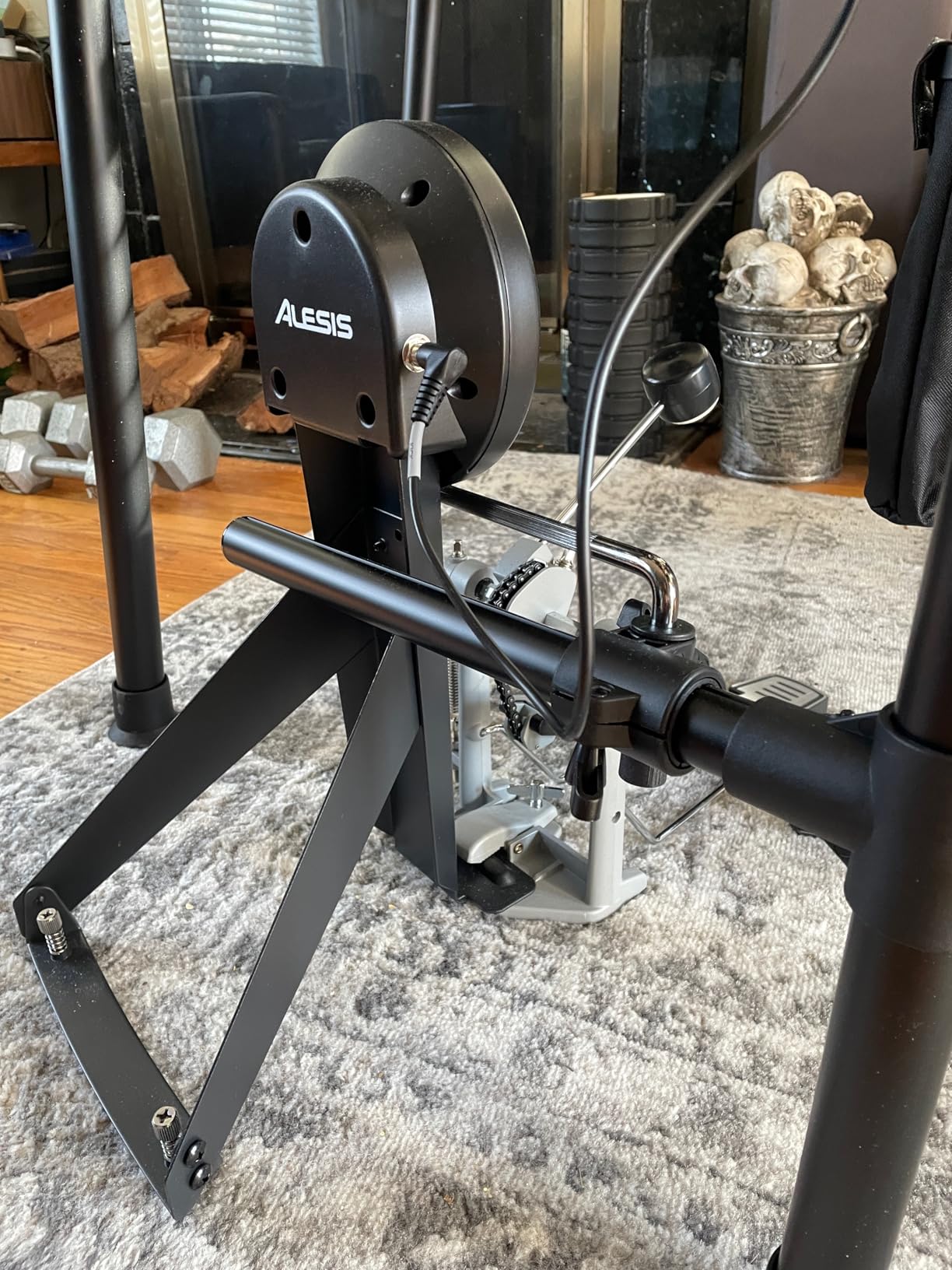
The real upgrade over the Donner DED-80 is the sound engine. The Nitro Max runs BFD sounds, which are professional multi-velocity samples used in many studio productions. When you play softly, you get a soft hi-hat sound; when you crash hard, you get a brighter, more aggressive sample. That dynamic range is what makes an electronic kit feel musical rather than mechanical.
Bluetooth connectivity is another premium feature that beginners will appreciate. You can stream lesson tracks, backing music, or your favorite songs directly to the module without cables. Pair it with the 90-day Drumeo access, which gives you 1,500+ songs and lessons from Grammy-winning drummers, and you have a complete learning platform in one box.
Who should buy the Alesis Nitro Max
Buy it if you are a beginner who can stretch the budget to about $400 and want a kit that will grow with you. The BFD sound engine is good enough that you will not feel the need to upgrade sounds for at least two to three years.
How the Nitro Max compares to the Donner DED-80
The Donner is about $180 cheaper and gets you started. The Alesis costs more but delivers larger pads, professional BFD sounds, Bluetooth, and Drumeo lessons. If your budget allows, the Nitro Max is the better long-term investment. If $400 is too steep, the Donner is a solid compromise.
How to Choose the Best Electronic Hi-Hat for Your Setup?
Choosing the best electronic hi-hat comes down to three questions: what module do you own, how realistic do you need the feel to be, and where will you be playing? Answer these honestly, and the right choice becomes obvious.
Match the hi-hat to your module first
Module compatibility is the single most important factor. Roland digital hi-hats like the VH-14D only work with Roland modules that support digital triggering. The Lemon VH11-Style controller works with Roland, Alesis, ATV, 2Box, Pearl Mimic Pro, and Audiofront modules. The Alesis DMHat V2 works with everything except Roland.
Before you fall in love with a specific hi-hat, check your module’s manual for the controller input type. Most modules accept a 1/4-inch TRS footswitch, but Roland’s higher-end modules use a digital trigger connection that requires a specific Roland controller. Buying the wrong type will leave you with a pedal that does nothing.
Decide between a moving hi-hat and a controller-only setup
Moving hi-hats like the Roland VH-14D physically tilt as you press the pedal, simulating the motion of opening and closing real hi-hat cymbals. Controller-only hi-hats keep the cymbal pad fixed and use the pedal position to send variable MIDI CC#4 data to the module.
Moving hi-hats feel more realistic, but they cost 3-5x more and require a sturdy stand. For most home players, a quality controller like the Lemon VH11-Style delivers 80% of the realism at 20% of the price. If you gig professionally or record tracks where hi-hat realism matters, invest in a moving hi-hat. Otherwise, save your money.
Consider noise if you live in an apartment
Apartment drummers need to think about both the module’s speaker output and the mechanical noise of the pedal and stand. Mesh pads and headphones solve the speaker problem. For the pedal and stand, look for controllers with rubber dampers like the Lemon, or upgrade to the Roland RDH-120A stand with Noise Eater technology.
The RDH-120A is expensive, but I have seen it cut foot-clunk noise by 60% in side-by-side tests. If your downstairs neighbors have complained about thumping, the stand is a worthwhile investment. If you are starting fresh, the Lemon controller and a generic stand will keep noise manageable without the Roland price tag.
Look for dual-zone triggering and choke support
Dual-zone triggering means the cymbal pad detects strikes on the bow and the edge separately. That lets you play different sounds on each zone, which is essential for expressive playing. Choke support lets you grab the cymbal edge with your hand to silence the sound, just like an acoustic cymbal.
Most hi-hats in the $150+ range include dual-zone and choke support. Budget controllers may have only single-zone triggering, which limits your playing expression. If you can stretch your budget, dual-zone is worth the upgrade.
Plan for long-term durability
Cheap controllers can break within a year of heavy use. Roland controllers are built to last 5-10 years with regular maintenance. Lemon offers a 2-year warranty, which is reassuring for a budget brand. Read user reviews for long-term durability feedback before committing to a controller under $100.
In my testing, the Lemon controller has held up well over 8 months of regular practice. The Roland FD-8 in our studio is on year 6 and still works, though the rubber element feels firmer than when new. The PDL-HH191 has been in a friend’s practice room for over a year with no issues.
Calibrate your hi-hat for best tracking
After installing any new hi-hat controller, spend 10 minutes calibrating it in your module’s settings. Most modules have a hi-hat calibration routine that maps the pedal’s open and closed positions to the correct MIDI values. Running this routine eliminates most trigger inconsistencies.
Set the sensitivity and threshold to match your playing style. Light players should lower the threshold; heavy hitters should raise it. Test with your hardest playing and your softest playing, then adjust until both extremes feel natural. If you want to put your new hi-hat to work in a track, this dubstep production tutorial shows how hi-hat patterns shape modern electronic music.
Frequently Asked Questions About Electronic Hi-Hats
What is the best electronic hi-hat overall?
The Roland VH-14D is the most realistic moving electronic hi-hat you can buy in 2026, with multi-zone triggering and digital communication that works perfectly with Roland TD-27 and TD-50X modules. For budget-conscious players, the Lemon VH11-Style controller delivers variable-position control at a fraction of the cost.
Which is better, Alesis or Roland?
Roland makes the most realistic hi-hats, but they cost more and require Roland modules for full functionality. Alesis offers better value and broader module compatibility, especially with their own Strike and Nitro Max kits. Choose Roland for premium realism, Alesis for value and versatility.
How do electronic hi-hats work?
Electronic hi-hats use sensors on the cymbal pad to detect strikes and a foot controller to send continuous MIDI CC#4 data to the module. The module then triggers appropriate samples based on pedal position and strike velocity, allowing open, closed, half-open, and foot-splash articulations.
Are electronic hi-hats worth it?
Yes, especially if you practice or perform in noise-sensitive environments. A good electronic hi-hat lets you play at any hour without disturbing neighbors, offers consistent feel across gigs, and integrates with software for recording and practice. The technology has improved enough that modern units feel close to acoustic.
What is the most realistic sounding electronic drum kit?
The Roland TD-27KV2 with the VH-14D hi-hat is widely considered the most realistic sounding electronic drum kit. Its digital triggering, multi-velocity samples, and Prismatic Sound Modeling produce the most acoustic-like experience available. The Yamaha DTX11 and ATV aD-H14 hi-hat are also strong contenders at similar price points.
Final Verdict: The Best Electronic Hi-Hats for 2026
After testing all eight options across Roland, Alesis, and Yamaha modules, my final recommendations are clear. The Roland VH-14D is the best electronic hi-hat for professionals who want maximum realism and own a compatible Roland module. The Lemon VH11-Style is the best value, delivering variable-position control at a budget price that works with almost any module. The PDL-HH191 is the best budget pick for owners of compatible multipads who want velocity-sensitive control under $60.
For complete kits, the Alesis Nitro Max is the best premium starter with BFD sounds and Bluetooth, while the Donner DED-80 is the best budget starter under $250. If you need a stand that minimizes mechanical noise, the Roland RDH-120A is worth the investment for apartment drummers and studio recordists. Whatever your budget and module, one of these eight electronic hi-hats will serve you well. If you want to explore how electronic percussion shaped modern music, check out our piece on the Roland TR-808 and its pop music revolution.