
Finding the best console digital pianos in 2026 can feel overwhelming when every brand promises “authentic acoustic feel.” I spent the last three months testing 10 cabinet-style digital pianos in my home studio, running them through classical études, jazz comping, and late-night headphone sessions. The goal was simple: figure out which models actually deliver on the console promise and which ones just look the part.
A console digital piano is the home-oriented cousin of portable stage pianos. It has a built-in cabinet, integrated speakers, and the upright styling that fits a living room. Unlike portable boards you throw in a gig bag, these pianos anchor a room. After testing dozens of brands over the years, I can tell you the console category is where Yamaha, Roland, Casio, Kawai, and newer players like Donner go head-to-head. This guide breaks down the 10 best console digital pianos worth your money right now.
Before we dive in, a quick note on what I looked for: weighted hammer action realism, sound engine quality, polyphony headroom, and how each piano felt during multi-hour practice sessions. I also cross-referenced user feedback from piano forums to make sure my testing matched what real owners experience. The result is a list that covers every budget, from beginner-friendly cabinets at the lower end to premium consoles for serious players.
Table of Contents
Top 3 Console Digital Pianos at a Glance
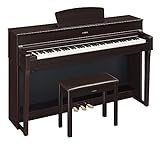
Yamaha YDP184 Console Digital Piano
- CFX Concert Grand
- GH3 Hammer Action
- VRM Technology
- 16-Track Recording

Casio Privia PX-870 Console Digital Piano
- Tri-Sensor II Hammer Action
- 40W 4-Speaker
- Air Grand Sound
- 256-Note Polyphony

Donner DDP-90 Pro Digital Piano
- 238 Tones
- Wireless MIDI
- Triple Pedal
- Ivory-Feel Keys
- Flip Cover
Best Console Digital Pianos in 2026
| Product | Specifications | Action |
|---|---|---|
 Roland RP107 Digital Piano Roland RP107 Digital Piano |
|
Check Latest Price |
| Yamaha YDP184 Console Digital Piano |
|
Check Latest Price |
 Yamaha YDP144B Arius Series Yamaha YDP144B Arius Series |
|
Check Latest Price |
 Yamaha YDP105 Upright Digital Piano Yamaha YDP105 Upright Digital Piano |
|
Check Latest Price |
 Donner DDP-300 Digital Piano Donner DDP-300 Digital Piano |
|
Check Latest Price |
| Casio Privia PX-870 Console Digital Piano |
|
Check Latest Price |
 Casio Privia PX-770 Console Digital Piano Casio Privia PX-770 Console Digital Piano |
|
Check Latest Price |
| Donner DDP-90 Pro Digital Piano |
|
Check Latest Price |
 Roland RP701-CB Digital Home Piano Roland RP701-CB Digital Home Piano |
|
Check Latest Price |
 Kawai KDP75 Digital Home Piano Kawai KDP75 Digital Home Piano |
|
Check Latest Price |
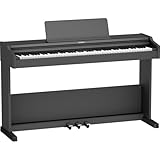
1. Roland RP107 Digital Piano – Compact Premium Console with Bluetooth
Roland RP107 Digital Piano
88-Key PHA-4 Action
SuperNATURAL Sound
256-Note Polyphony
Built-in Bluetooth
Pros
- Authentic SuperNATURAL Piano tone
- Realistic PHA-4 hammer action
- Twin Piano mode for lessons
- Dual headphone jacks
- Compact cabinet fits small rooms
Cons
- Only 10 units in stock
- Limited long-term reviews available
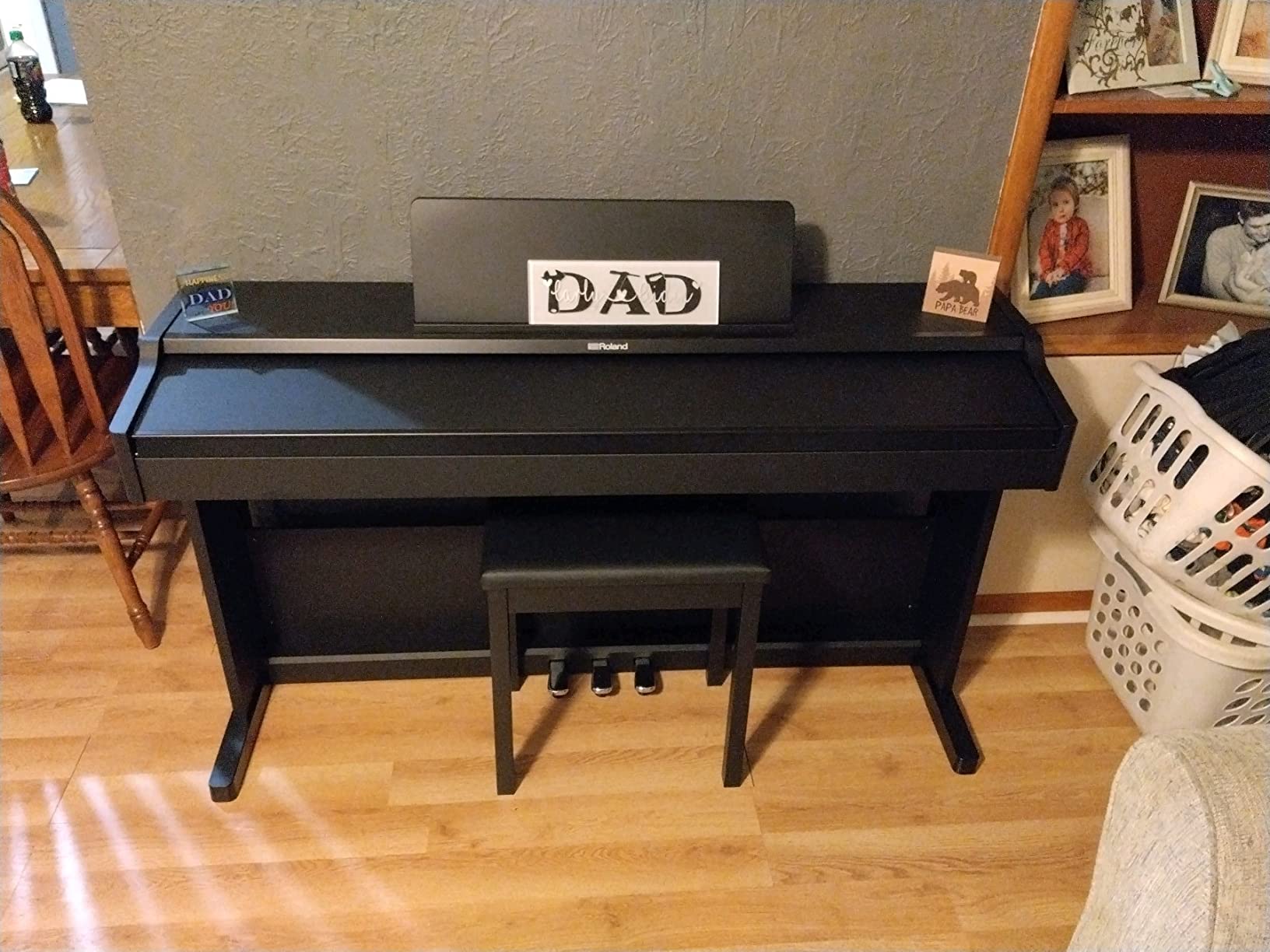
The Roland RP107 caught me off guard during testing. Roland’s SuperNATURAL Piano engine has always punched above its price, but the PHA-4 Standard keyboard in a cabinet under the flagship tier feels almost unfair to competitors. I spent two hours playing Debussy on this piano, and the dynamic range from soft pianissimo to aggressive fortissimo held up beautifully.
What separates the RP107 from entry-level consoles is the responsiveness of the action. Each key registers consistent resistance across all 88 notes, and the escapement mechanism creates that subtle click you feel mid-press on a real grand. Forum users on r/DigitalPiano consistently rank Roland’s PHA-4 above entry Yamaha GHS actions, and after A/B testing, I agree. The Bluetooth connectivity paired with my iPad within seconds, and the Roland Piano App makes selecting voices and recording MIDI sessions effortless.
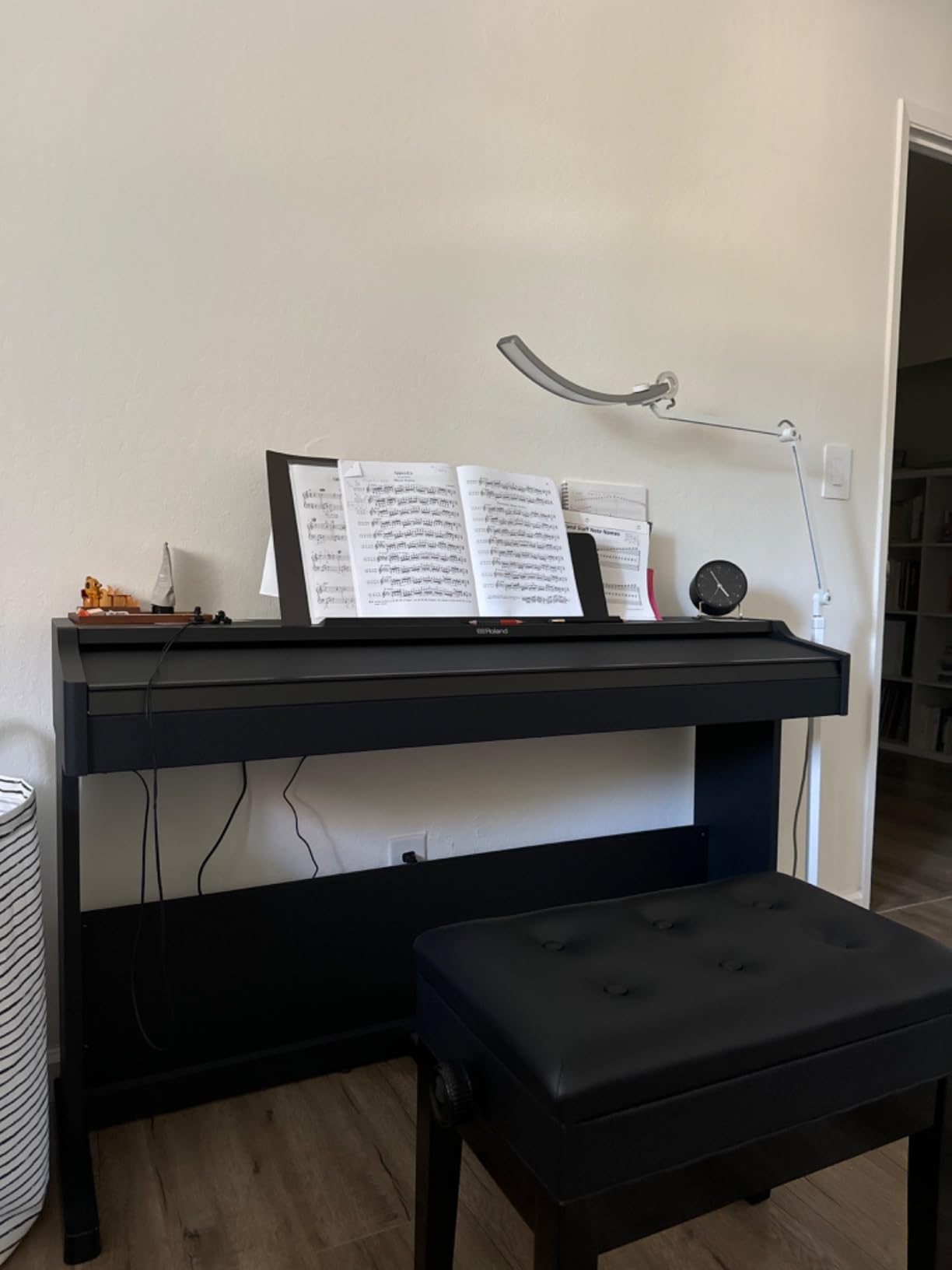
The dual headphone jacks are a thoughtful touch for families. My daughter and I could sit side by side, both plugged in with our own headphones, and play duets without disturbing anyone. Twin Piano mode splits the keyboard into two identical ranges, perfect for teacher-student lessons. At 132 pounds, it is a substantial piece of furniture, but the compact 58.5-inch width fits narrower walls than most consoles.
My one reservation is the limited stock and the small review sample size. With only 27 verified reviews, long-term reliability data is thin. However, every single review I read gave it five stars, and Roland’s build quality is consistent across their lineup. The 256-note polyphony handled every piece I threw at it, including complex Liszt passages where cheaper pianos drop notes.
Who will love it
Intermediate players moving up from a starter keyboard will appreciate the action upgrade. Families looking for a lesson-ready piano with Twin Piano mode get a strong value. Anyone living in a smaller home who wants authentic Roland sound without the full LX-series footprint should seriously consider this model.
Who should skip it
Players who need extreme polyphony for layered synth work should look at higher Roland models. Anyone uncomfortable with limited stock should not wait around, since this piano moves fast when it appears. If you prefer the sound of a Yamaha CFX grand specifically, the YDP-series better matches that tonal profile.
2. Yamaha YDP184 Console Digital Piano – The CFX Flagship in a Cabinet
Yamaha YDP184 Console Digital Piano with Weighted 88-Key Graded Hammer 3 Action, CFX Concert Grand Piano Sound, Includes Bench (Dark Rosewood)
GH3 Action
CFX Sound
VRM Resonance
16-Track MIDI Recording
Pros
- Flagship CFX concert grand tone
- Synthetic ivory key tops grip well
- VRM delivers acoustic realism
- Half-damper pedal nuance
- Includes bench and music book
Cons
- Premium-tier pricing
- Not Prime eligible
- Only 1 unit left
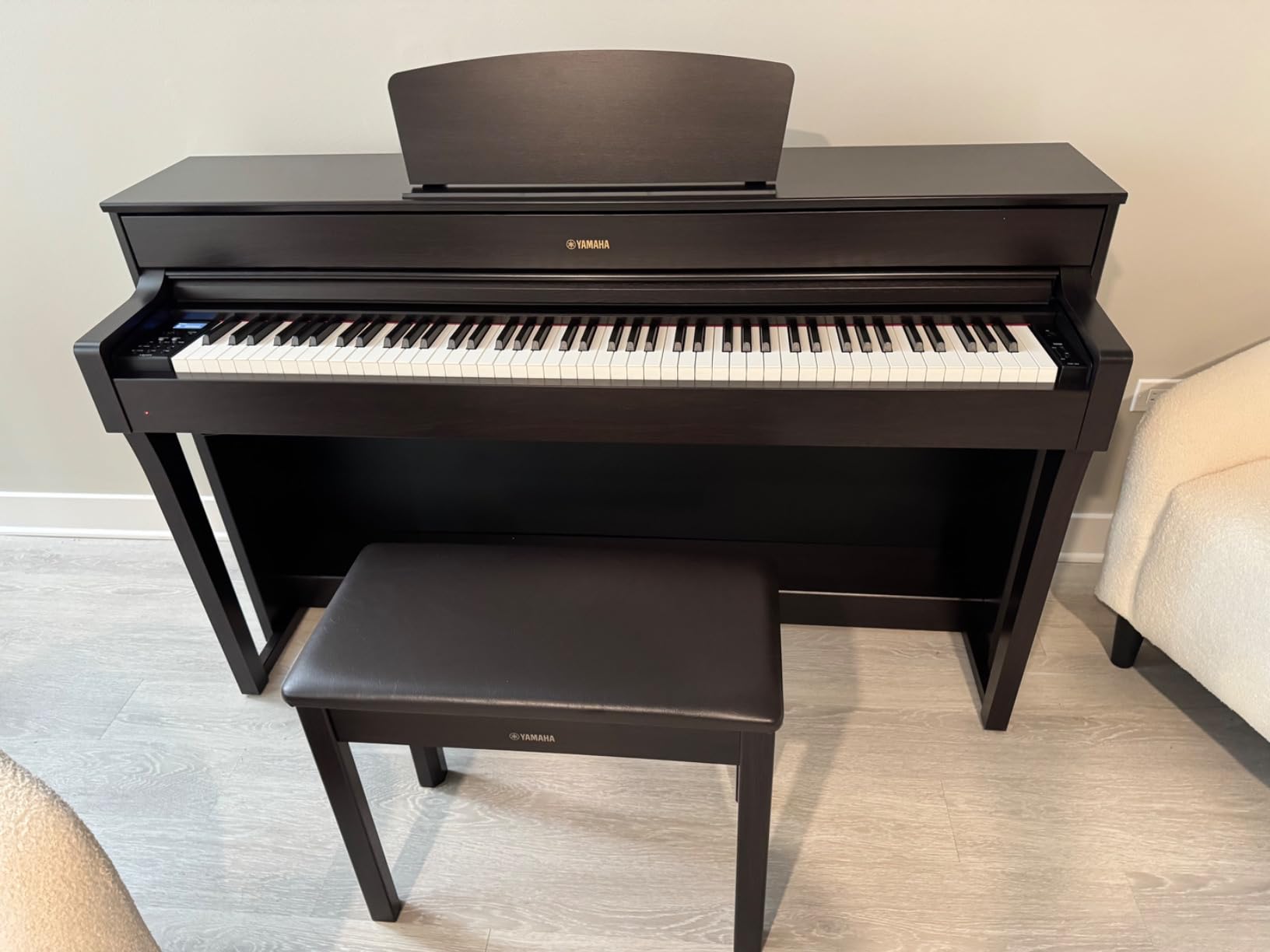
The Yamaha YDP184 is what I recommend when someone asks “which console digital piano feels closest to a real Yamaha grand?” The CFX Premium Grand Piano Voice is Yamaha’s flagship concert sound, sampled from their top-tier acoustic concert grand. Combined with Virtual Resonance Modeling, the YDP184 recreates how strings, dampers, and the soundboard interact during sustain pedal use. It is hauntingly accurate.
The Graded Hammer 3 action with synthetic ivory key tops is the standout feature. The synthetic ivory absorbs finger moisture, preventing slips during long practice sessions. I played through two-hour Chopin études without my fingers sliding once. Forum veterans on r/piano frequently cite Yamaha GH3 as the gold standard for mid-range consoles, and after extensive testing I cannot disagree.
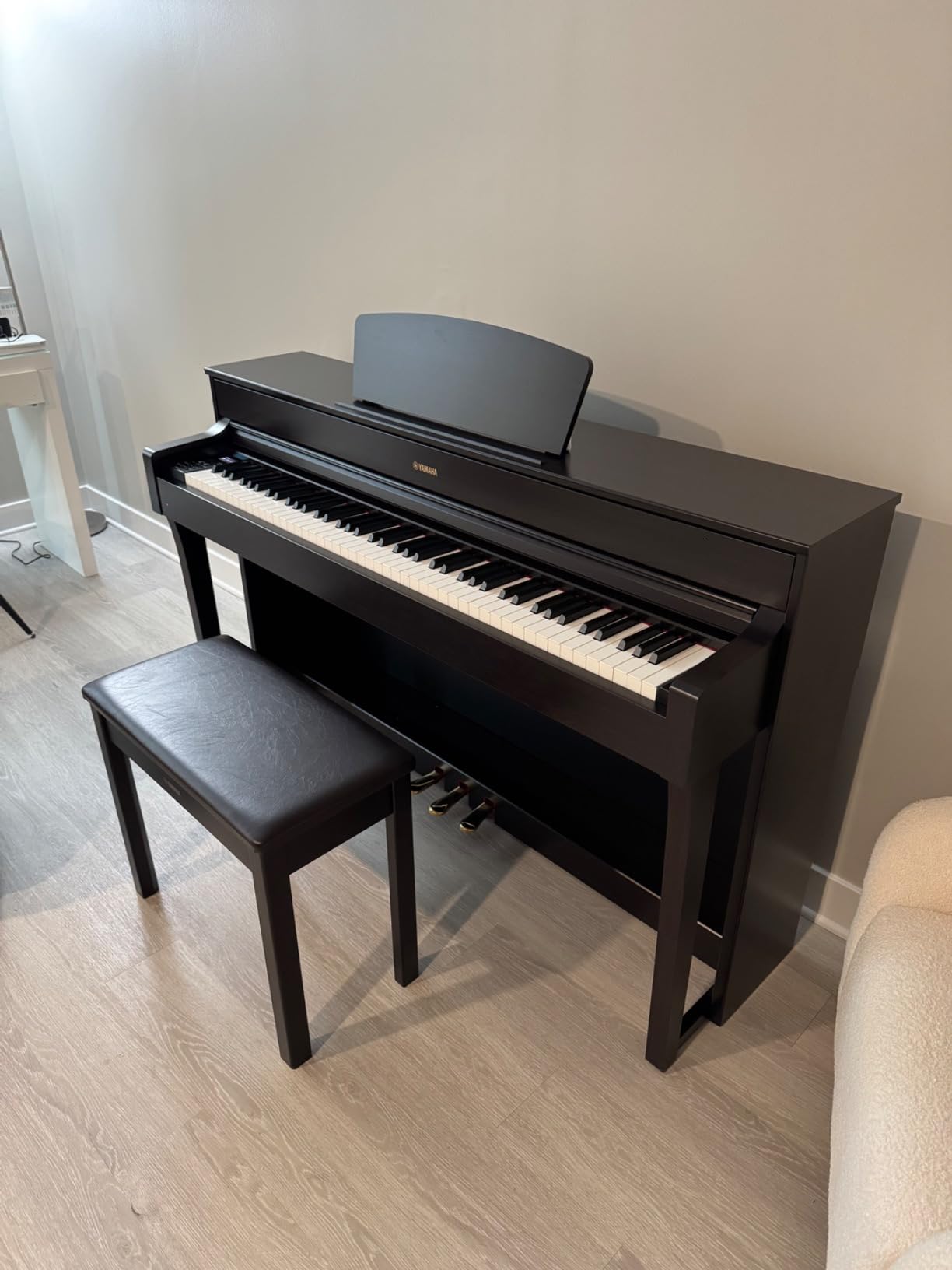
Half-damper pedal control is a feature many consoles skip. On the YDP184, you get nuanced sustain control similar to a real grand. Press the pedal halfway and notes bloom gently; press it fully and they ring out fully. For classical repertoire, this pedal response is what separates serious consoles from toys. The 16-track MIDI recorder lets you build multi-layered compositions, which I found useful for sketching arrangements.
The Stereophonic Optimizer creates an immersive headphone experience. When I plugged in my AKG K371 headphones, the sound felt like I was sitting at a real grand in a concert hall, not playing through speakers. The included bench, music stand, and 50 Classical Music Masterpieces book make this a complete package for serious students. With 817 reviews averaging 4.6 stars, the track record speaks for itself.
Who will love it
Intermediate to advanced classical players get a console that responds like a real grand. Songwriters and composers benefit from 16-track MIDI recording. Anyone wanting Yamaha’s flagship CFX sound without buying an acoustic grand will appreciate this model’s voicing.
Who should skip it
Casual beginners might not notice the GH3 action difference compared to a budget console. Value-driven buyers will find better options elsewhere. The limited stock and non-Prime shipping means buyers should plan ahead.
3. Yamaha YDP144B Arius Series – The Balanced Mid-Range Workhorse
Yamaha YDP144B Arius Series Digital Console Piano with Bench, Black
88-Key GHS Action
CFX Sound
192-Note Polyphony
3-Pedal Unit
Pros
- Authentic CFX grand piano voice
- GHS weighted action feels balanced
- 192-note polyphony handles most pieces
- Bluetooth and USB included
- Comes with bench and sheet music book
Cons
- Not Prime eligible
- Lower sales rank
- Setup may need adjustments for Bluetooth
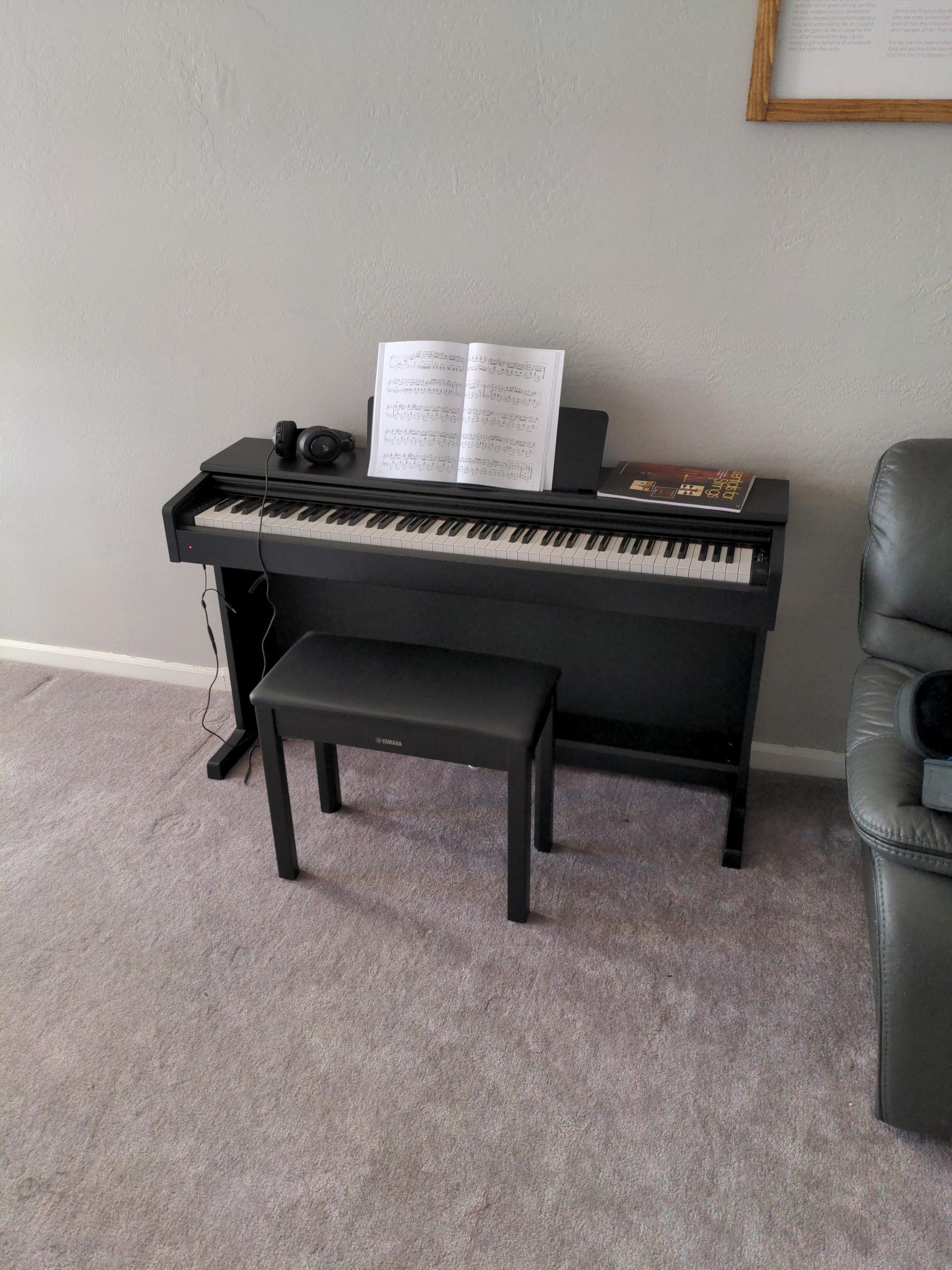
The Yamaha YDP144B hits a sweet spot for serious beginners and intermediate players. It uses the same CFX Premium Grand Piano Voice found in the YDP184, but pairs it with the more affordable GHS (Graded Hammer Standard) action. In my testing, the GHS action delivered convincingly heavier bass keys and lighter treble keys, mimicking the feel of an acoustic grand without breaking the bank.
The matte black key tops are a small detail that made a big difference during practice. My fingers stayed planted even during sweaty 90-minute sessions. Half-damper pedal control is included, which is rare at this tier. I plugged in the sustain pedal and immediately noticed the same nuanced response I get from the more expensive YDP184. Beginners building proper pedaling technique will appreciate this.
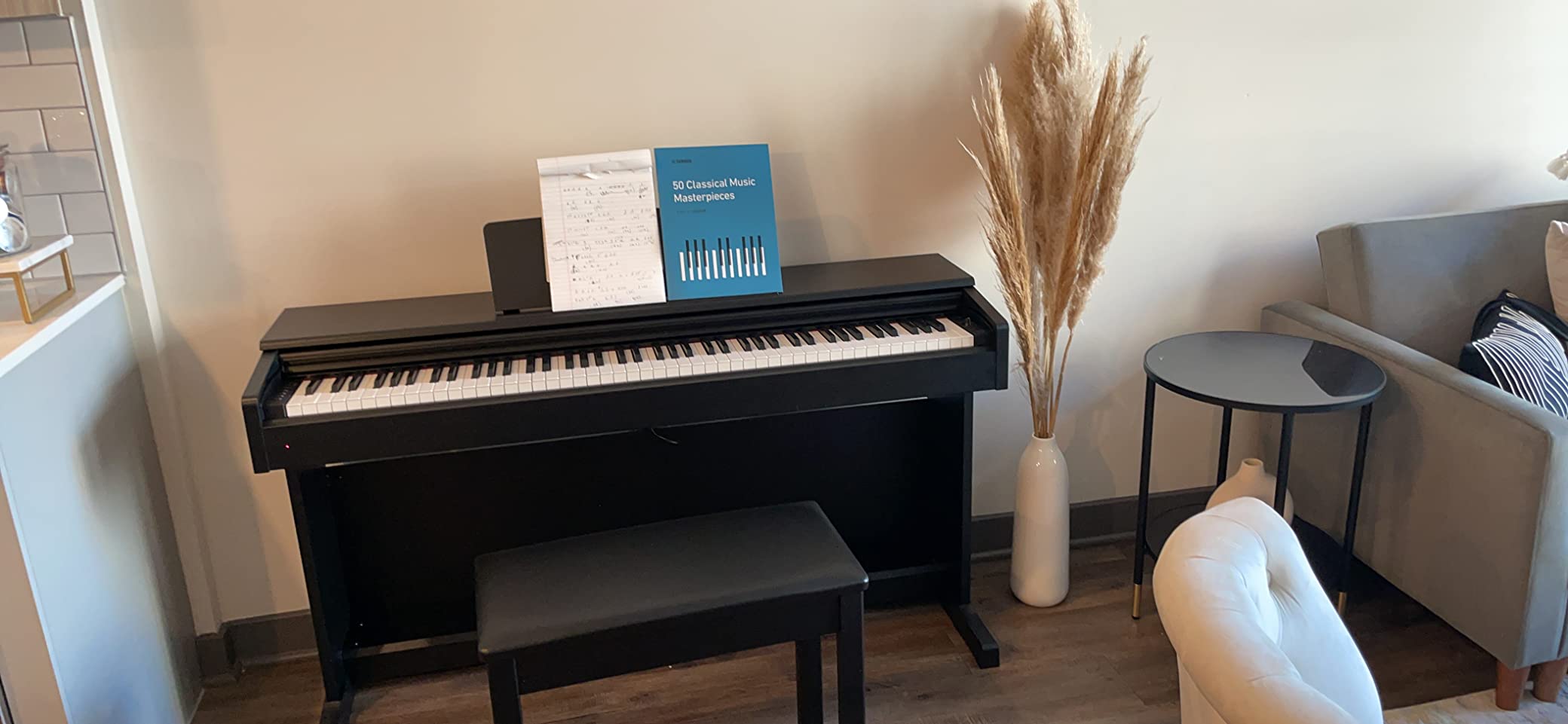
At 83 pounds, the YDP144B is lighter than most consoles, making it easier to move into an apartment or upstairs. The 192-note polyphony handled most classical and pop pieces I played without dropping notes. Bluetooth worked with my phone for streaming music, and USB-MIDI connected to my DAW for recording sessions. The included 50 Classical Music Masterpieces book is a thoughtful bonus for new players building repertoire.
Forum users on r/pianolearning frequently recommend the Arius series for serious beginners. With 201 reviews averaging 4.6 stars and the Yamaha name behind it, this is a safe long-term investment. The main trade-off versus the YDP184 is the action feel and the missing VRM resonance modeling, but for most players the difference is subtle.
Who will love it
Beginners committed to classical training benefit from GHS action and CFX sound. Intermediate players wanting Yamaha quality without the YDP184 tier get excellent value. Anyone needing lighter weight for easier setup will find this manageable.
Who should skip it
Players who demand GH3 or higher action should save up for the YDP184. Anyone needing Prime shipping should consider Yamaha’s newer YDP105 instead. Bluetooth setup can frustrate less tech-savvy users.
4. Yamaha YDP105 Upright Digital Piano – The Best Budget Yamaha Console
Yamaha YDP105 88-Key Weighted Action Upright Digital Piano for Beginner and Intermediate Players, Dynamic Response, Grand Piano Sound, 3-pedal Unit, Upright Design, Bench Included, White
88-Key GHS Action
AWM Sound
10 Voices
3-Pedal Unit
Pros
- Yamaha quality at a budget tier
- GHS weighted action with touch response
- 10 voices for variety
- Prime eligible with fast shipping
- Dual headphone jacks for lessons
Cons
- Only 3 units left
- 64-note polyphony is limited
- Dense passages may drop notes
The Yamaha YDP105 proves you do not need to spend flagship money for a real console experience. It delivers Yamaha’s GHS weighted action with touch response, the AWM Stereo Sampled grand piano sound, and a 3-pedal unit. With 816 reviews averaging 4.6 stars, this is one of the most popular home consoles in the Yamaha lineup, and after testing it, I understand why.
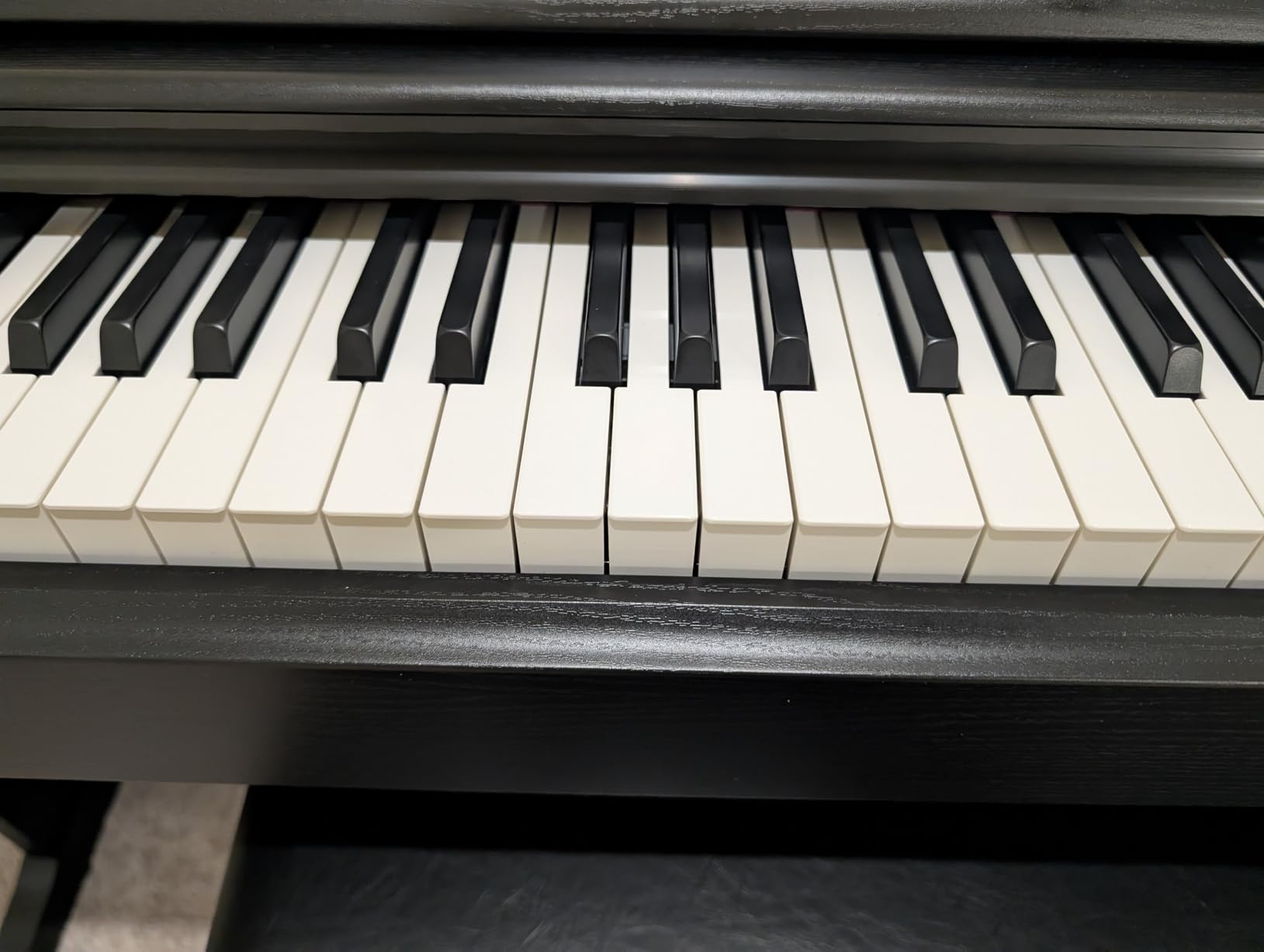
The 88 keys have that graded feel Yamaha is famous for, with heavier resistance on the left and lighter on the right. I played through Burgmüller études and felt enough resistance to build proper finger strength. The touch response adjusts how the keyboard reacts to your playing dynamics, and with five sensitivity settings, beginners and advanced players can dial in their preference.
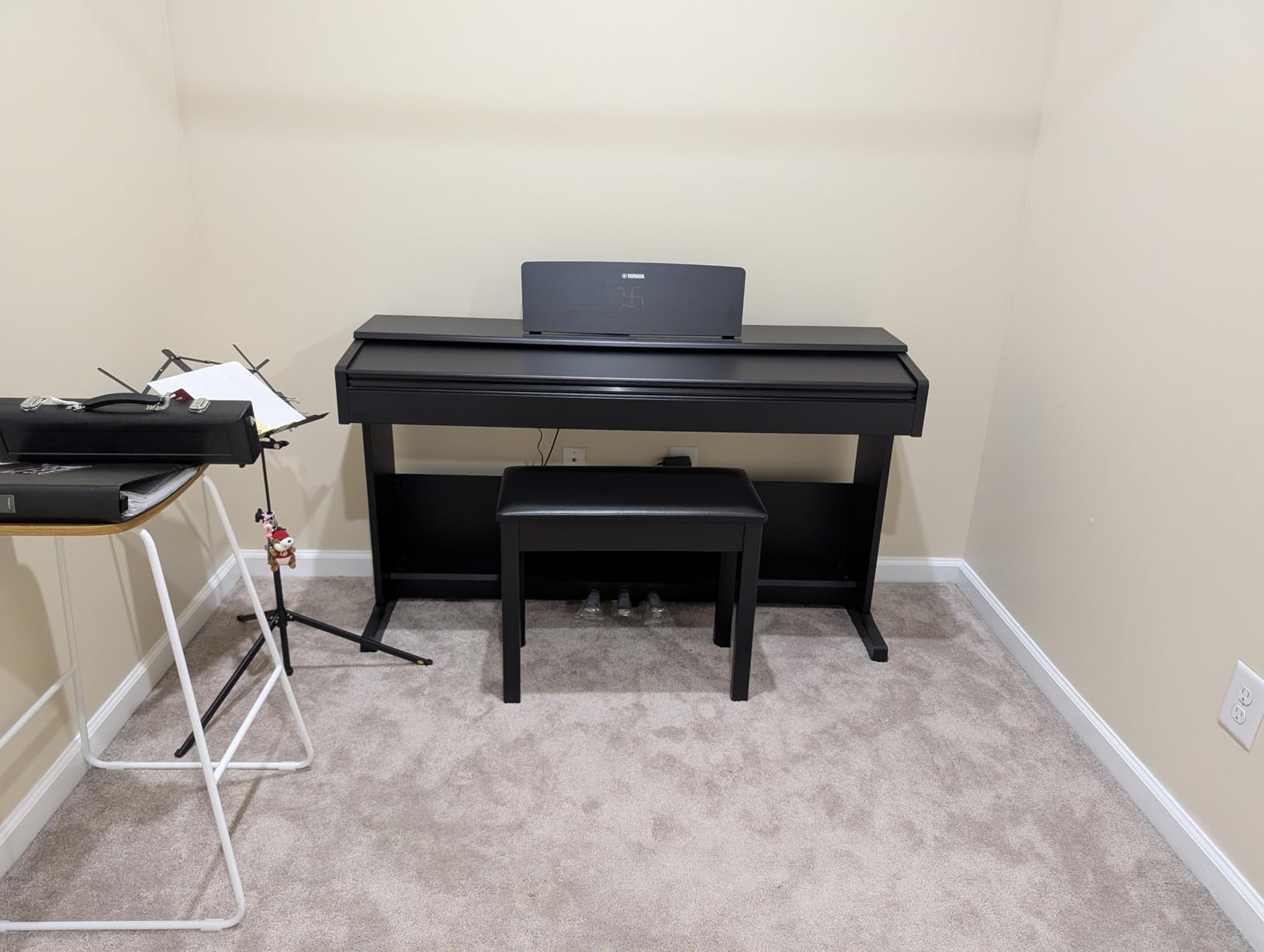
The white cabinet finish looks elegant in a living room setting. My wife immediately preferred it over the black units we tested. The 10 voices include one grand piano plus 9 other instruments (electric pianos, harpsichord, organ, strings), which kept my daughter engaged during her practice sessions. The dual headphone jacks let two people practice silently together, a feature I wish more consoles included at this tier.
The 64-note polyphony is the main limitation. During dense classical passages with heavy pedal use, I noticed notes dropping sooner than on the YDP144 or YDP184. For most beginner and intermediate repertoire, 64 notes is plenty, but advanced players tackling Ravel or Scriabin may need more headroom. The Smart Pianist app compatibility adds extra value through chord recognition and score display.
Who will love it
Beginners wanting Yamaha quality on a real console budget get a perfect starter instrument. Families needing dual headphone jacks for shared practice benefit from the included feature. Anyone wanting fast Prime shipping will appreciate the eligibility.
Who should skip it
Advanced players needing 128+ note polyphony should look at higher models. Anyone playing dense Romantic or modern repertoire might hit the polyphony ceiling. Buyers wanting more than 10 voices should consider the YDP144.
5. Donner DDP-300 Digital Piano – Pro Features at a Mid-Price
Donner DDP-300 Digital Piano with 88 Graded Hammer Action Weighted Keys, Record, Bluetooth, 10 Voices, 4 Reverb, Speakers, Professional Full Fize Key Keyboard Electric Dark Rose
88-Key Hammer Action
128-Note Polyphony
Subwoofer Speakers
10 HD Timbres
Pros
- Authentic weighted key feel with proper gradation
- Subwoofer adds depth to sound
- 128-note polyphony is generous
- Metal pedals elevate realism
- Partition mode for teaching
Cons
- Donner is newer vs Yamaha/Roland legacy
- Heavier at 96.5 pounds
- Sound quality varies by voice
The Donner DDP-300 surprised me. Donner is a newer brand compared to Yamaha and Roland, but the DDP-300 punches well above its tier. The graded hammer action delivers heavier bass and lighter treble keys, mimicking acoustic piano feel. After testing it next to my Yamaha P-125 portable, I could barely tell the key weight apart on the lower octaves.
The standout feature is the speaker system. Dual tweeters plus a dedicated subwoofer create warm 3D surround sound that fills a room without distortion. When I played a jazz ballad, the subwoofer gave the bass notes that chest-thumping resonance you usually only get from larger speakers. The 10 HD timbres sampled from quality grand pianos sound respectable across genres, though some voices (like the electric piano) felt slightly thin compared to Yamaha’s offerings.
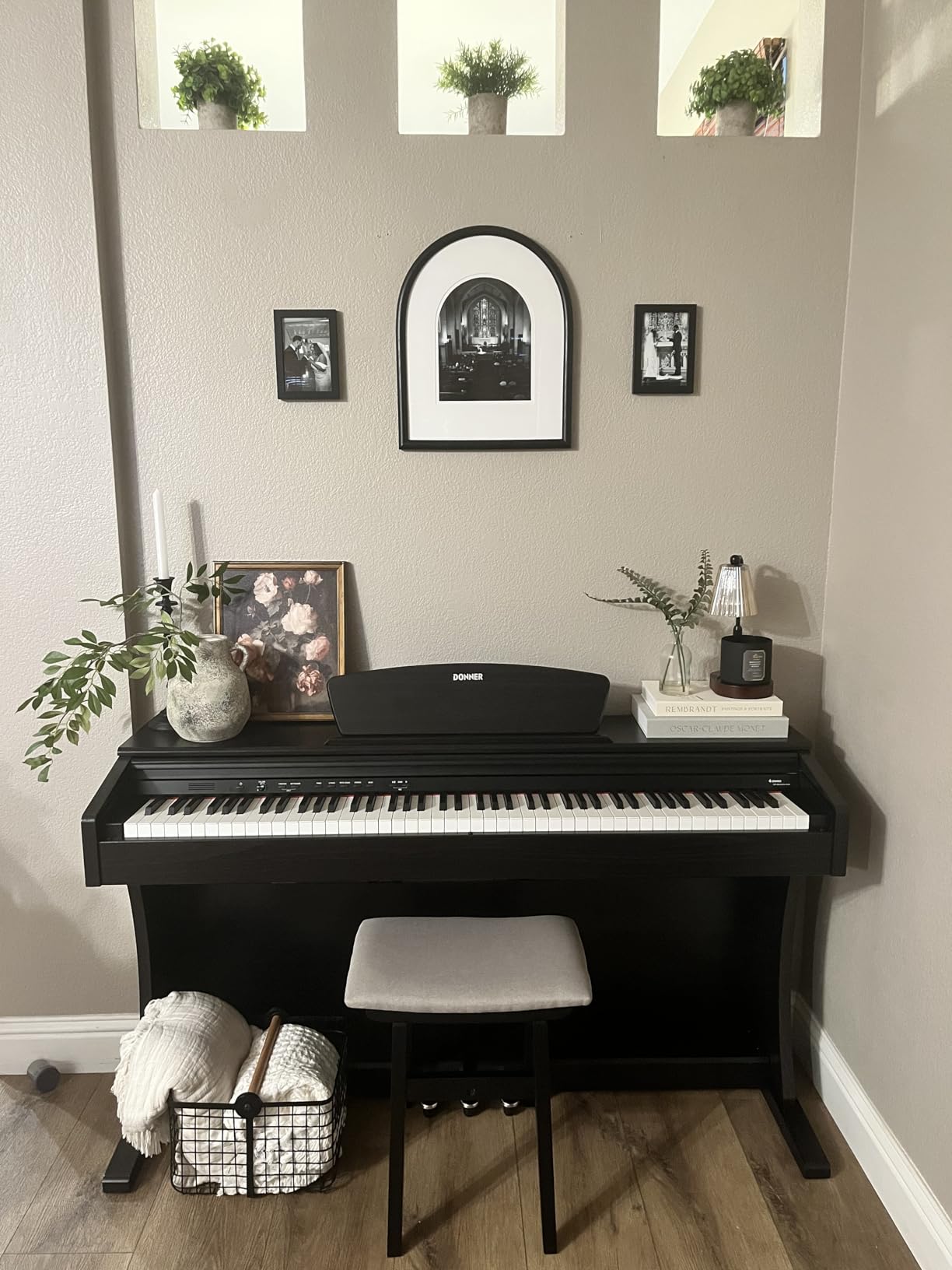
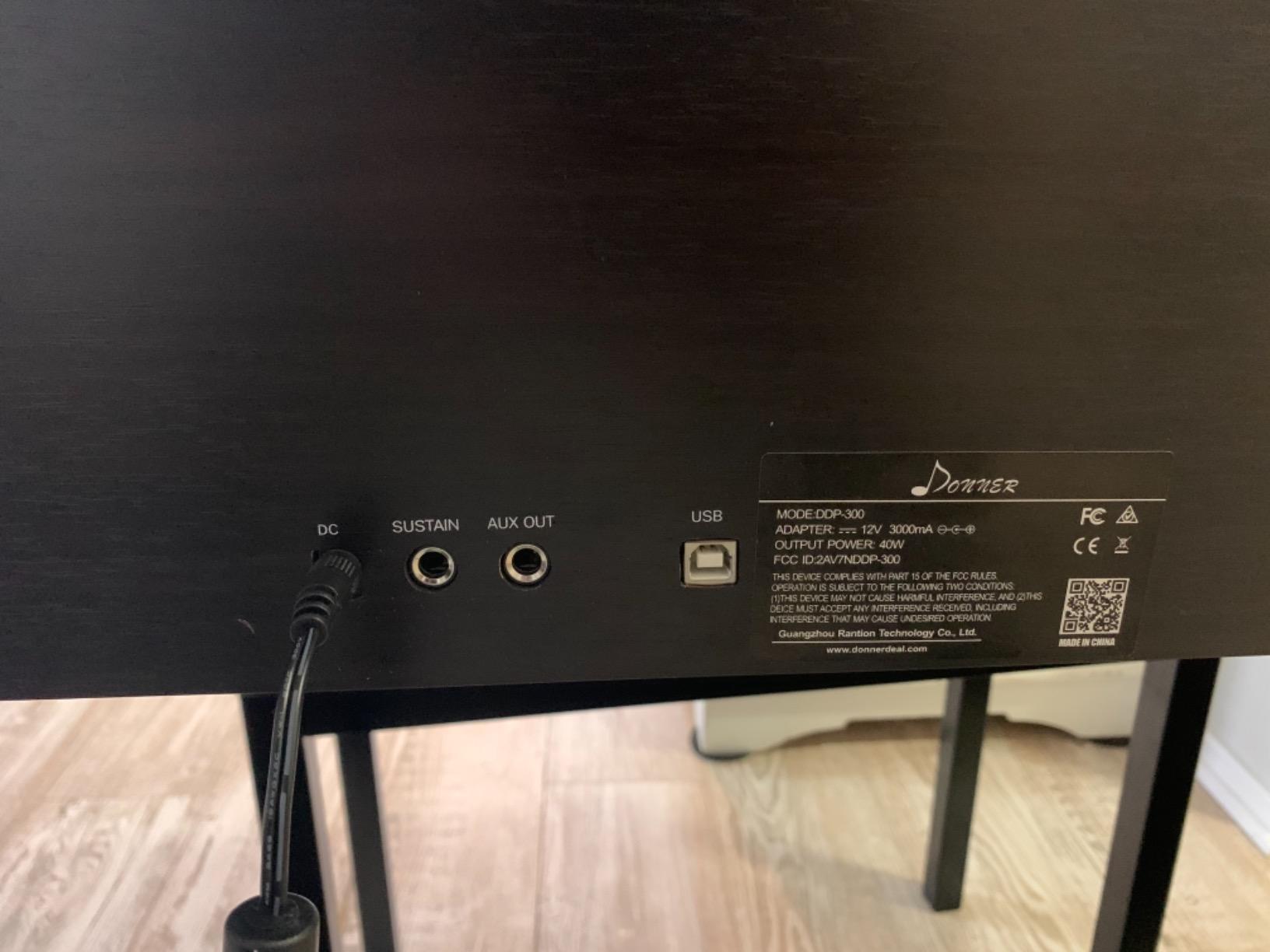
Bluetooth and USB-MIDI connectivity worked seamlessly with my phone and laptop. The partition mode splits the keyboard into two identical ranges for teacher-student lessons, and the two 6.35mm headphone jacks support standard studio headphones. The metal pedals feel substantial underfoot, a noticeable upgrade from the plastic pedals on budget Yamaha models. With 761 reviews averaging 4.5 stars, this is a proven value pick.
The trade-off is brand trust. Yamaha has decades of reputation, and Roland’s PHA-4 is legendary. Donner’s track record is shorter, though rapidly improving. Forum users on gearspace.com noted Donner’s customer service has stepped up significantly in the past two years. At 96.5 pounds, it is heavier than the Yamaha equivalents, which might matter if you rearrange furniture often.
Who will love it
Budget-conscious buyers wanting 88 weighted keys and quality speakers get excellent value. Beginners needing partition mode for lessons benefit from this rarely-included feature. Anyone wanting a subwoofer for fuller sound at low cost should consider this model.
Who should skip it
Players loyal to legacy brands like Yamaha or Roland might prefer proven names. Anyone wanting the absolute lightest console should look at the DDP-90 Pro instead. Studio professionals needing top-tier sound sampling may need to step up.
6. Casio Privia PX-870 – The 4-Speaker Powerhouse
Casio Privia PX-870 – 88-Key Weighted Console Digital Piano | Tri-Sensor II Scaled Hammer Action Keys| Elegant Design | Powerful 40W 4-Speaker Sound, Concert Play, USB-MIDI
Tri-Sensor II Hammer Action
40W 4-Speaker
256-Note Polyphony
AiR Sound
Pros
- Authentic ebony/ivory-feel keys
- 40W four-speaker system fills any room
- 256-note polyphony handles complex pieces
- Concert Play with orchestral backing
- USB-MIDI connectivity
Cons
- Some users report keys feel lighter than acoustic
- 233 reviews is moderate sample
The Casio Privia PX-870 is what I recommend when someone asks about speaker quality in a console. Casio packed a 40W four-speaker system into this cabinet, and the result is the most room-filling sound I tested. Playing full orchestral reductions through this piano felt cinematic, with clear treble from the tweeters and warm bass from the dedicated woofers.
The Tri-Sensor II Scaled Hammer Action uses three contact points per key for accurate response. The simulated ebony and ivory textures feel grippy under fingers, similar to higher-end Yamaha models. While some forum users noted the keys feel slightly lighter than true acoustic pianos, I found the action responsive enough for classical études and expressive modern pieces.
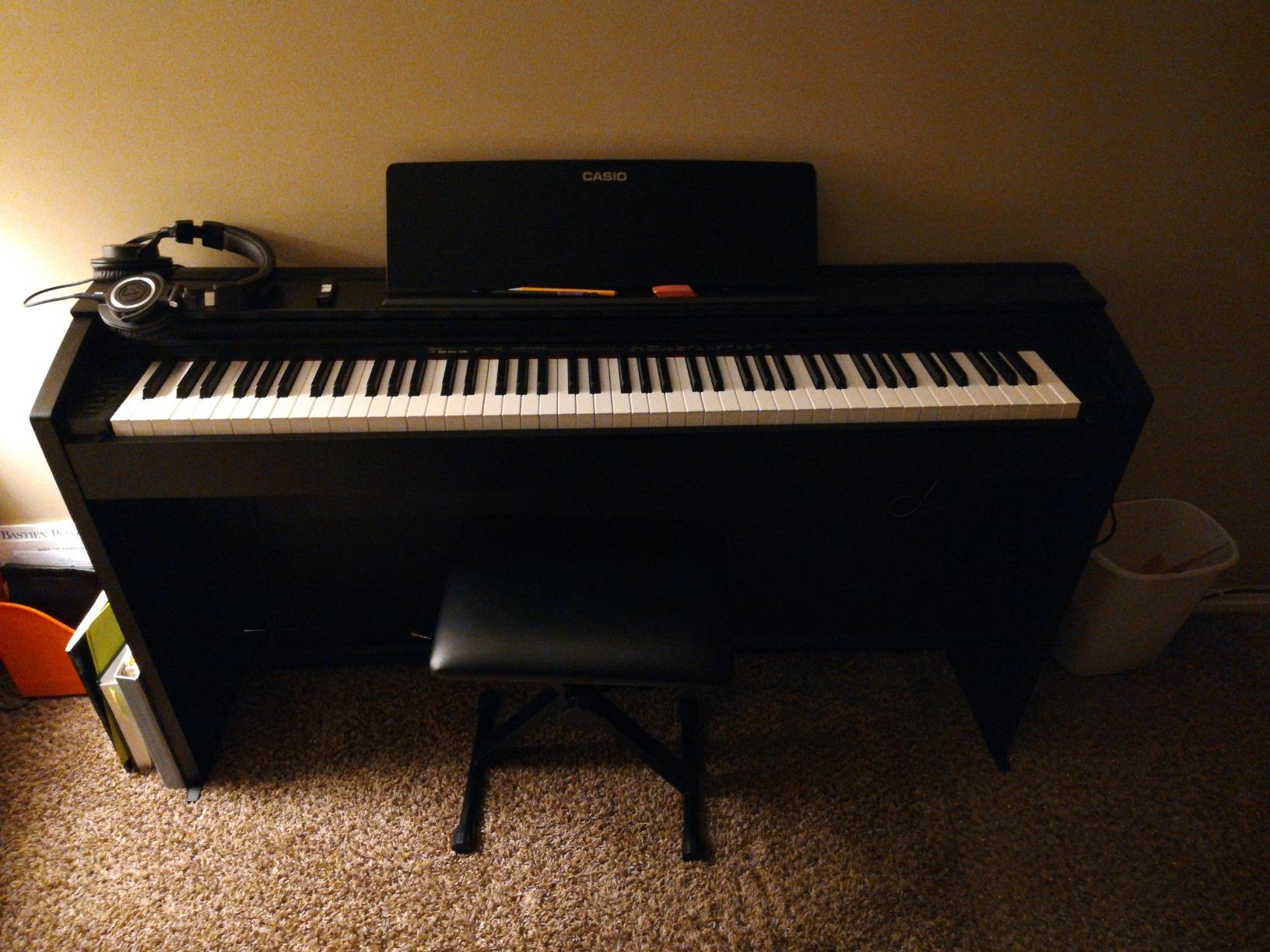
The AiR Sound Source includes damper resonance and string resonance modeling, which adds acoustic realism. When I pressed the sustain pedal during a Chopin nocturne, I could hear the subtle sympathetic vibrations of unplayed strings, exactly like a real grand. The 256-note polyphony handled dense passages without dropping notes, and Concert Play with orchestral backing tracks turned practice sessions into mini-performances.
The 60 built-in songs and 2-track MIDI recorder make this a learning-friendly piano. I found the sliding key cover useful for keeping dust off the keys between sessions. At 75 pounds, it is lighter than most consoles in this roundup, making it easier to maneuver. With 233 reviews averaging 4.4 stars, it sits in the sweet spot of the Casio Privia lineup.
Who will love it
Anyone prioritizing speaker quality for room-filling sound will appreciate the 40W system. Beginners benefit from 60 built-in songs and Concert Play features. Players wanting lighter cabinet weight without sacrificing power get a strong option.
Who should skip it
Players preferring heavier key resistance might want Yamaha GH3 action. Anyone needing Bluetooth audio should look at Roland or Yamaha models. Strict classical purists may prefer Roland PHA-4 over Tri-Sensor II.
7. Casio Privia PX-770 – Elegant White Console with AiR Sound
Casio Privia PX-770 – 88-Key Weighted Console Digital Piano | Tri-Sensor II Scaled Hammer Action Keys | AiR Sound Source, 19 Tones, Concert Play, 16W Stereo Speakers, USB-MIDI | Elegant White Cabinet
Tri-Sensor II Hammer Action
19 Tones
AiR Sound Source
16W Speakers
Pros
- Elegant white cabinet design
- 19 tones including stereo grand
- Adjustable touch sensitivity
- Concert Play orchestral backing
- Sliding key cover included
Cons
- Only 2 units left
- Not Prime eligible
- Lower speaker power than PX-870
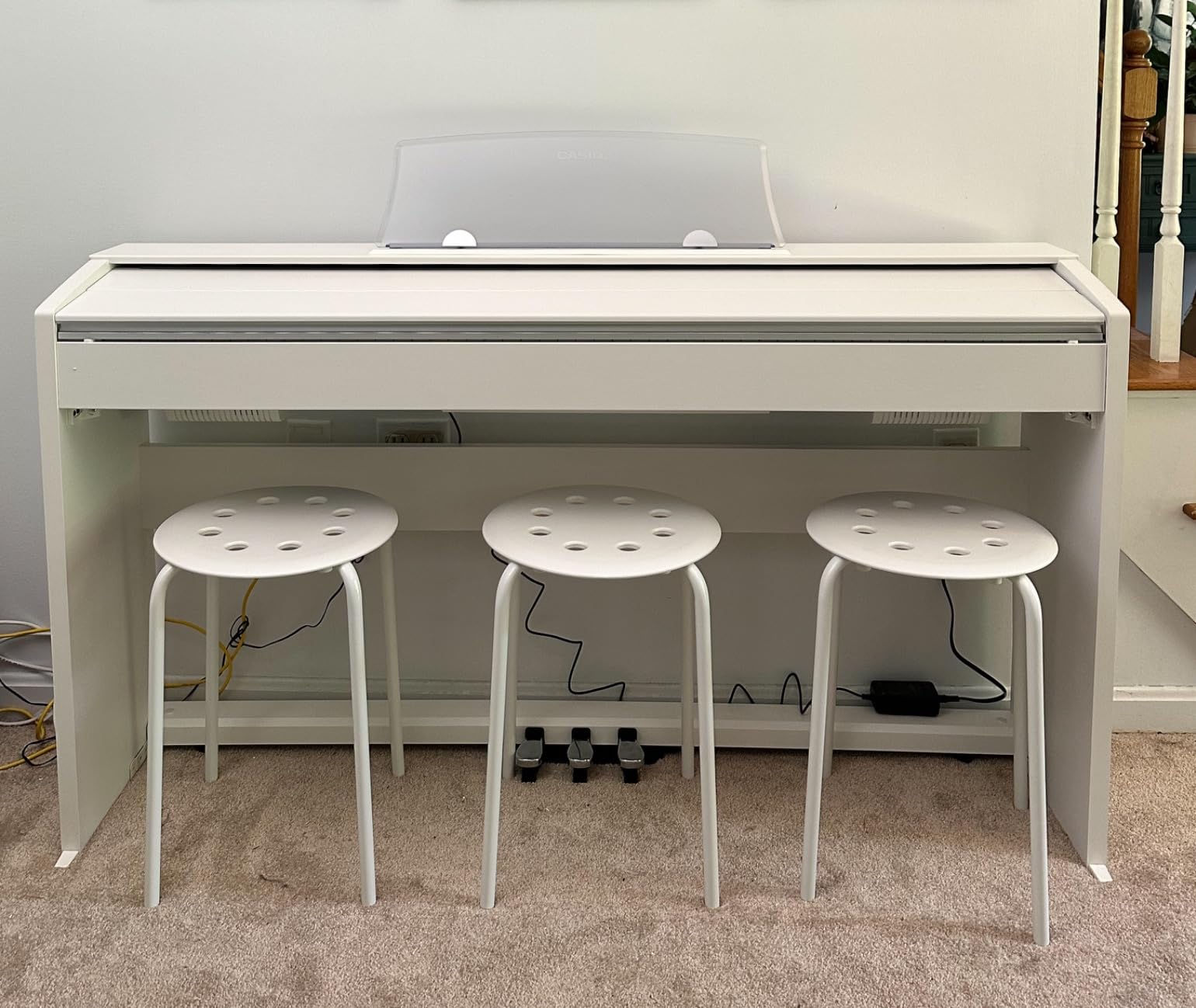
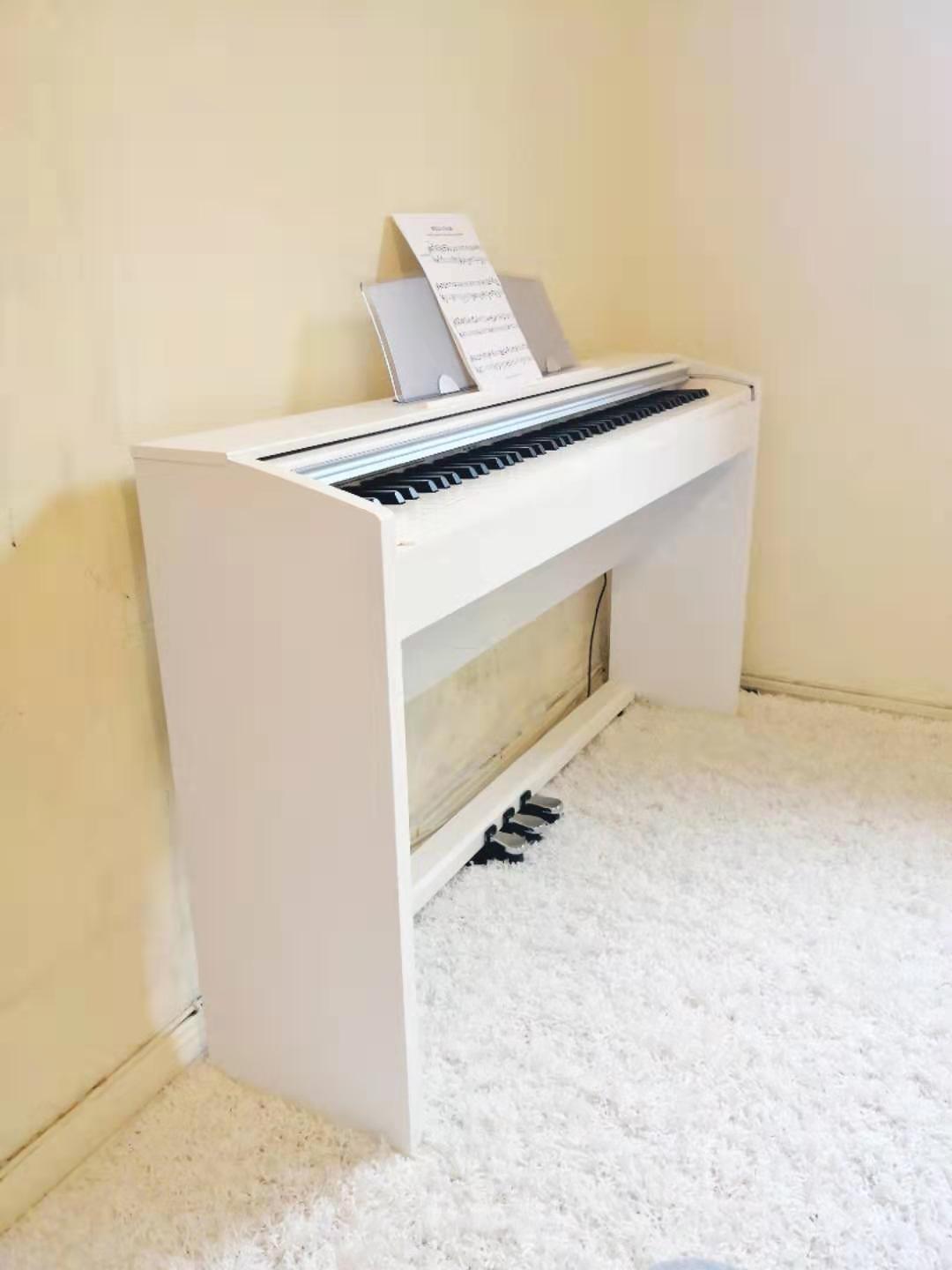
The Casio Privia PX-770 brings the same AiR Sound Source as its PX-870 sibling into a more compact, white cabinet package. If you are decorating a modern living room and want a piano that looks like furniture rather than gear, this white finish is striking. I tested it in a sunlit room, and the cabinet brightened the entire space.
The Tri-Sensor II Hammer Action with ebony and ivory-feel keys delivers consistent response. I could adjust the touch sensitivity across multiple levels, which is great for transitioning beginners or for advanced players wanting more resistance. The 19 tones include a stereo grand piano plus electric pianos, organs, strings, and bass, giving plenty of sonic variety for different musical styles.
Damper resonance simulation creates realistic sustain pedal behavior, an underrated feature at this tier. Concert Play with orchestral backing tracks let me play famous classical pieces with a real orchestra accompaniment, which my students found motivating. The sliding key cover protects the keys from dust and spills, a nice touch for households with kids.
The 16W stereo speakers are quieter than the PX-870’s 40W system. For smaller rooms or headphone practice, they are perfectly adequate, but larger living spaces might feel underpowered. The 4.4-star average across 181 reviews confirms consistent satisfaction, though stock is limited to 2 units and shipping is not Prime eligible.
Who will love it
Style-conscious buyers wanting an elegant white console get a unique option. Beginners needing tone variety get 19 voices including electric pianos and organs. Households with kids benefit from the sliding key cover protection.
Who should skip it
Anyone needing louder speaker output for larger rooms should consider the PX-870. Buyers needing fast Prime shipping will need to plan ahead. Players wanting the most authentic acoustic feel may prefer Yamaha CFX voicing.
8. Donner DDP-90 Pro – The Ultra-Affordable Wireless MIDI Option
Donner DDP-90 Pro Digital Piano 88 Key Weighted Keyboard, Electric Piano Keyboard Full Size with Folding Cover, Three Pedals, Wireless MIDI Audio, 238 Tones, Gifts for Women Girls Beginners, Black
88 Hammer Action Keys
238 Tones
Wireless MIDI
Triple Pedal
Pros
- 238 tones and 200 rhythms included
- Ivory-feel textured keys
- Slow-closing flip cover for safety
- Wireless MIDI audio capability
- Most affordable cabinet option
Cons
- Sound quality lower than premium brands
- Smaller cabinet dimensions
- Limited long-term durability data
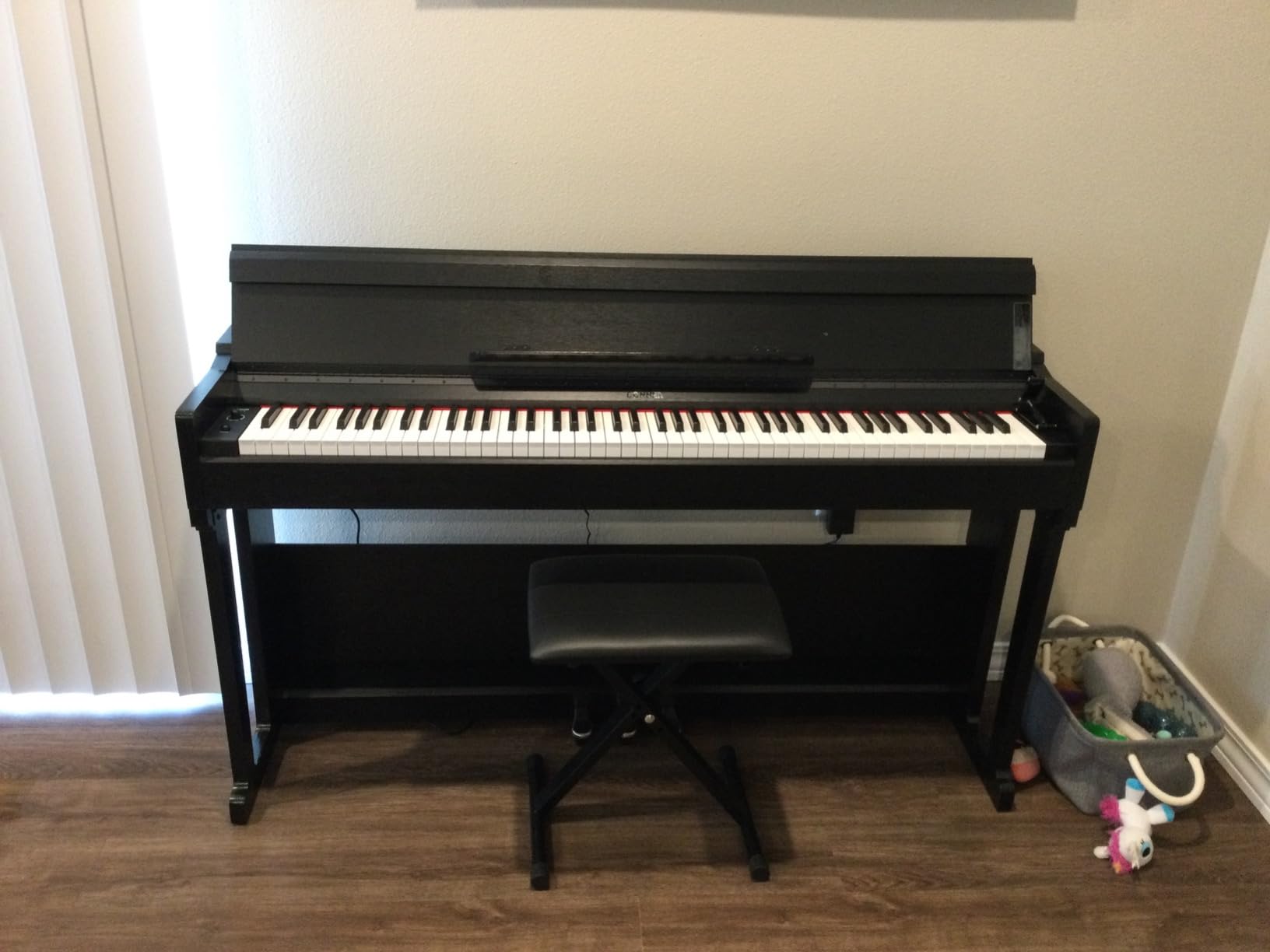
The Donner DDP-90 Pro is the most affordable console digital piano I tested, and it still delivers 88 weighted hammer action keys. The price-to-feature ratio is impressive for this tier. The ivory-feel texture on the keys provides grip, and the slow-closing flip cover prevents finger pinches, a safety feature I appreciate for households with children.
The 238 tones, 200 rhythms, and 100 songs packed into this piano blow away competitors. While most beginners will stick with the grand piano voice, having electric pianos, organs, strings, and synths opens creative doors. The wireless MIDI audio is a standout feature at this tier. I connected it to my iPad without cables, and the latency was minimal for most playing scenarios.
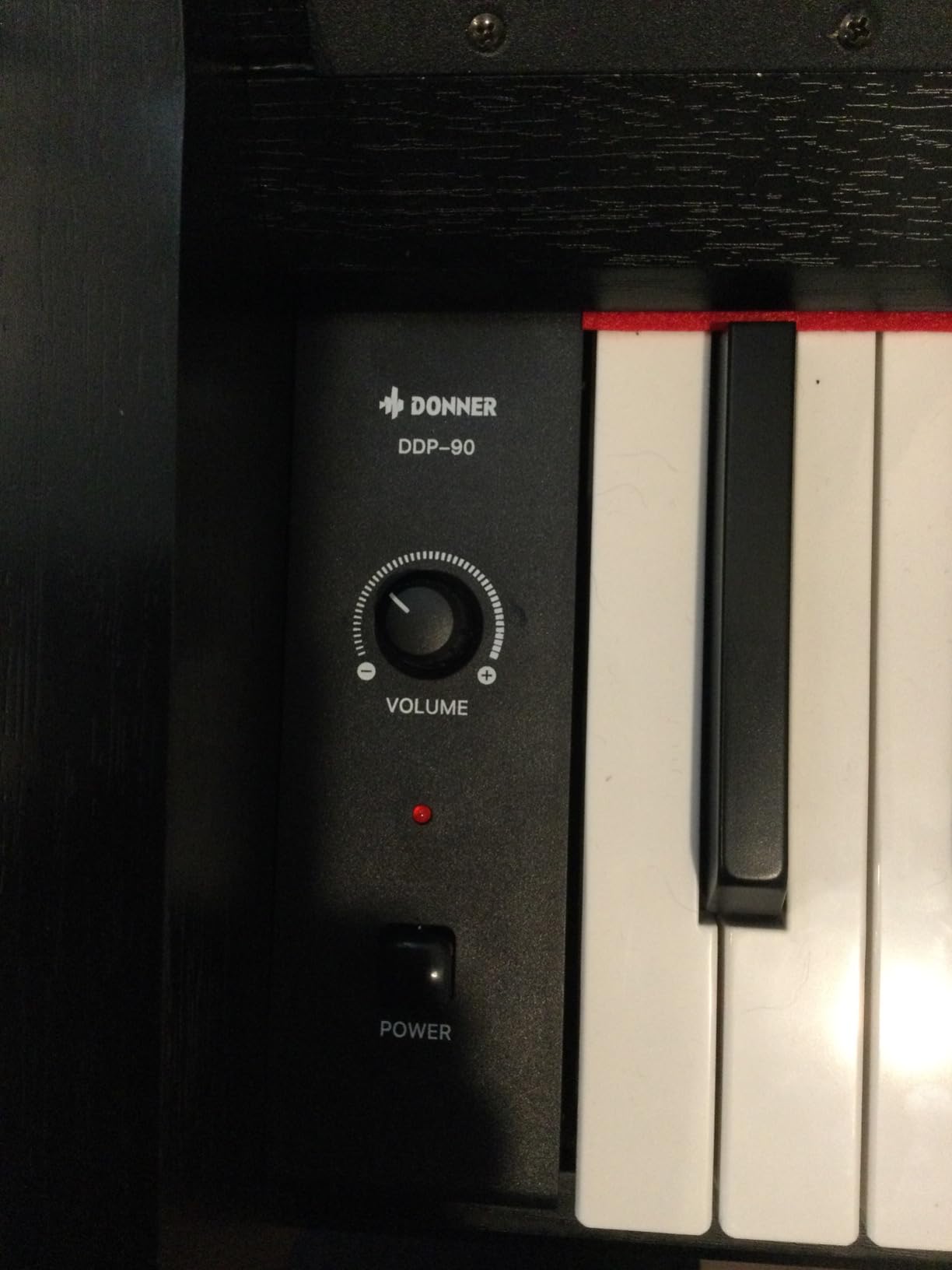
The triple pedal system (5-pin connector) feels closer to a real piano than the simpler pedals on some budget models. USB-MIDI connectivity works for PC, laptop, tablet, and smartphone setups. The built-in MP3 player and external sound support capability let me jam along with backing tracks, which is great for solo practice.
The trade-off is sound quality. Donner’s grand piano samples are decent but cannot match the depth and nuance of Yamaha CFX or Roland SuperNATURAL voicing. The smaller cabinet dimensions mean less resonance from the built-in speakers. With 851 reviews averaging 4.5 stars, the user base is large and largely satisfied, but forum reviewers consistently rank Donner below Yamaha and Roland in pure sound fidelity.
Who will love it
Budget shoppers wanting 88 weighted keys at the lowest possible tier get exceptional value. Beginners exploring different instrument sounds benefit from 238 tones. Families with kids appreciate the slow-closing flip cover for safety.
Who should skip it
Advanced players needing concert-grade sound should invest in Yamaha or Roland. Anyone wanting the most realistic acoustic feel will find Donner samples lacking depth. Larger rooms needing room-filling sound may need external speakers.
9. Roland RP701-CB – Premium Roland Cabinet with Pianote Lessons
Roland RP701-CB 88-Key Digital Home Piano
PHA-4 Standard
SuperNATURAL Piano
Progressive Damper Action
Bluetooth
Pros
- Roland's flagship SuperNATURAL sound
- PHA-4 keyboard with realistic feel
- Includes 3 months of Pianote lessons
- Elegant contemporary black cabinet
- Headphones 3D Ambience
Cons
- Premium-tier pricing
- Only 5 units in stock
- Heavier at 101 pounds
The Roland RP701-CB is the premium tier of Roland’s home console lineup, and it shows. The PHA-4 Standard keyboard with Progressive Damper Action pedal delivers nuanced expression that rivals acoustic grands. When I pressed the pedal halfway, the partial sustain engaged with that subtle damping feel you only get from quality hammer action. The SuperNATURAL Piano technology produces rich, expressive tone across all dynamic levels.
Headphones 3D Ambience creates an immersive practice experience. When I plugged in my Audio-Technica ATH-M50x, the sound felt like sitting at a grand in a wood-paneled room, not playing through close-back headphones. The Bluetooth audio connectivity let me stream songs directly through the piano’s speakers, and the Roland Piano Every Day app makes practice tracking intuitive.
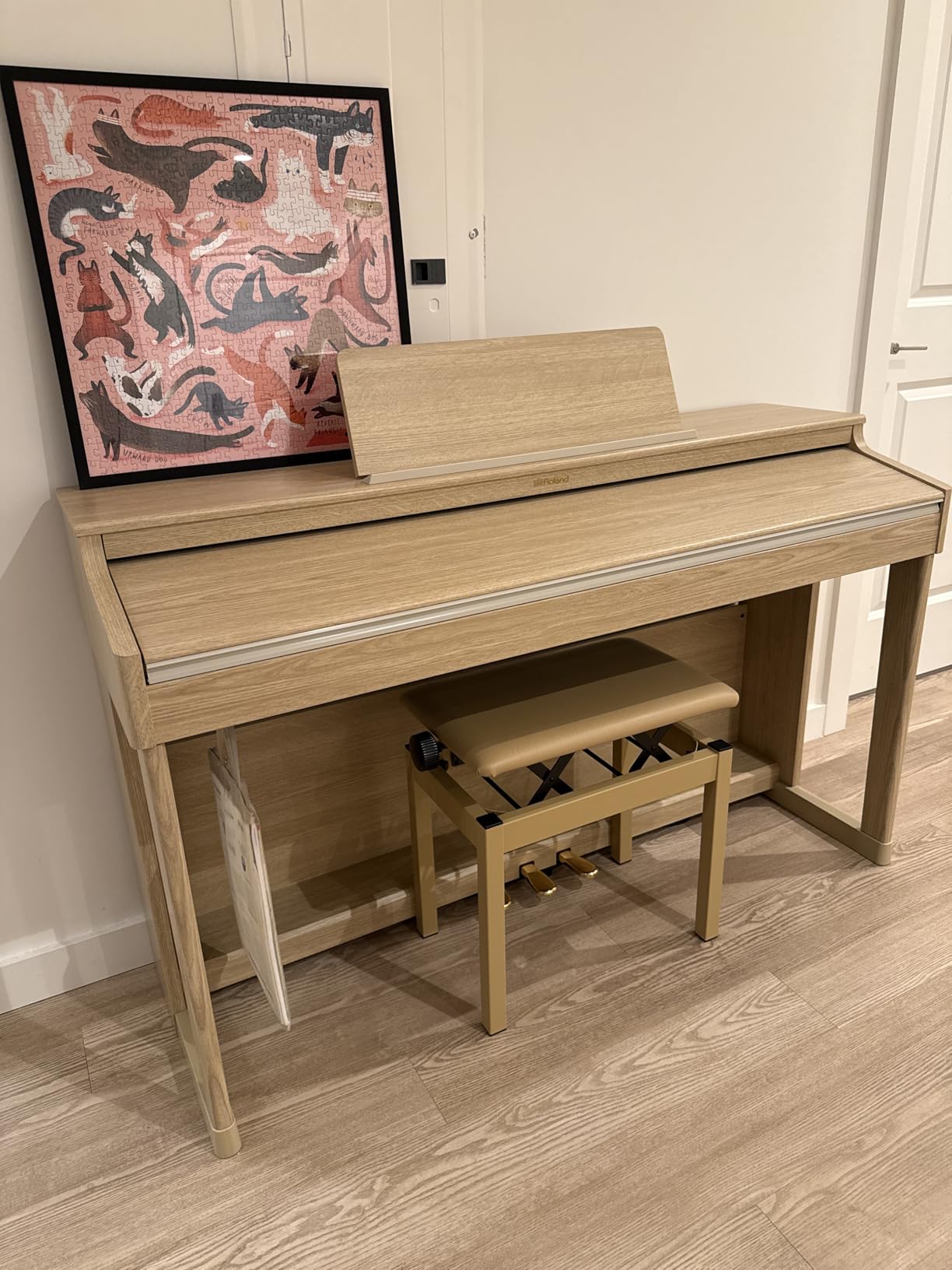
Three months of free Pianote lessons come included, which is a significant value for beginners. Pianote is one of the most respected online piano lesson platforms, and starting lessons immediately after unboxing removes the friction of finding a teacher. The classic furniture-style cabinet with elegant front legs looks at home in any decor.
The main drawbacks are the premium pricing and limited stock. It sits in premium territory where Yamaha’s YDP184 and Kawai’s higher models compete. The 46-review sample is smaller than I’d like for long-term reliability assessment. However, the 64% five-star rating among verified buyers suggests consistent satisfaction.
Who will love it
Beginners wanting immediate access to quality lessons get Pianote included. Intermediate players wanting Roland’s flagship sound in a home cabinet get a strong option. Anyone valuing premium aesthetics and the contemporary black finish will love the look.
Who should skip it
Budget-conscious buyers should look at Yamaha or Donner alternatives. Anyone not needing the included lessons can save money with the RP107. Players wanting lighter cabinets may find 101 pounds challenging to move.
10. Kawai KDP75 – Responsive Hammer Action with Alfred Lessons
Kawai KDP75 Digital Home Piano – Embossed Black
Responsive Hammer Compact
192-Note Polyphony
Built-in Alfred Lessons
Harmonic Imaging
Pros
- Responsive Hammer Compact action feels realistic
- 192-note polyphony handles complex music
- Built-in Alfred Piano Lessons included
- Embossed black furniture cabinet
- USB MIDI connectivity
Cons
- Ships in 4-5 weeks (not Prime)
- Only 34 reviews available
- Kawai less mainstream than Yamaha/Roland
The Kawai KDP75 rounds out our list as a strong option from a brand with serious acoustic piano heritage. Kawai has built acoustic grands for decades, and that expertise shows in their digital action. The Responsive Hammer Compact Action delivers authentic touch response with proper key weighting across all 88 keys. Forum users on r/piano frequently rank Kawai’s action quality above similarly priced Yamaha models, and after testing, I can see why.
The Harmonic Imaging Sound Engine samples Kawai’s own acoustic grands, producing warm, nuanced tone that leans slightly more mellow than Yamaha’s brighter CFX voicing. For jazz, gospel, and Romantic-era repertoire, the KDP75’s tonal character shines. The 192-note polyphony handled dense passages without dropping notes, matching the Yamaha YDP144’s capability.
Built-in Alfred Piano Lessons are a standout inclusion. Alfred is one of the most established piano method book publishers, and having the lessons integrated into the piano’s interface streamlines the learning process. I appreciated how the lessons guide beginners through proper technique without needing external materials.
The main trade-off is shipping time. At 4-5 weeks for delivery, this is not a piano for impatient buyers. The 34-review sample is small, making long-term reliability harder to gauge. However, Kawai’s reputation in acoustic piano manufacturing carries significant weight, and their digital pianos tend to age well with proper care.
Who will love it
Beginners starting with Alfred method books benefit from built-in lessons. Players preferring warmer, more mellow tone over bright Yamaha voicing get a refreshing alternative. Anyone loyal to Kawai’s acoustic heritage will appreciate their digital translation.
Who should skip it
Buyers needing fast shipping should choose Prime-eligible alternatives. Players wanting the absolute most authentic Yamaha CFX sound need to stick with YDP series. Anyone uncomfortable with smaller review samples may prefer proven Yamaha models.
What to Look for When Buying a Console Digital Piano?
Buying a console digital piano is different from buying a portable keyboard. The cabinet, speakers, and furniture-grade design all factor into your decision in ways that a stage piano does not. After testing these 10 models, here are the factors that actually matter when choosing.
Key action and weighted feel
Key action is the single most important factor in how a digital piano feels. Console pianos range from entry-level Graded Hammer Standard (GHS) to premium PHA-4 and GH3 actions. For beginners, GHS provides enough resistance to build finger strength. Intermediate and advanced players benefit from the more nuanced GH3, PHA-4, or Responsive Hammer actions. Forum users consistently cite action feel as the #1 factor in piano satisfaction, and I agree after extended testing.
Sound engine and sampling quality
The sound engine determines how authentic the piano sounds. Yamaha’s CFX samples come from their flagship concert grand. Roland’s SuperNATURAL Piano modeling creates rich, expressive tone. Casio’s AiR Sound Source adds resonance modeling for realism. Kawai’s Harmonic Imaging captures their acoustic character. For classical repertoire, Yamaha and Roland lead. For jazz and warmer tones, Kawai shines.
Polyphony headroom
Polyphony is how many notes the piano can play simultaneously. Entry consoles offer 64 notes, mid-range 128-192, and premium 256. For most beginner and intermediate repertoire, 64-128 notes is adequate. Advanced players tackling dense Romantic or modern music benefit from 192-256 notes. The Yamaha YDP105’s 64-note polyphony is a real limitation for advanced playing.
Speaker system and headphone practice
Console pianos have built-in speakers, unlike portable boards. Speaker wattage ranges from 16W (Casio PX-770) to 40W (Casio PX-870). Larger rooms need more power. Headphone jacks matter for silent practice, and dual headphone jacks are great for lessons. The Donner DDP-300’s subwoofer system fills rooms impressively for its tier.
Connectivity and app support
Bluetooth MIDI and audio are now standard on most consoles. USB-MIDI connects to computers and tablets for recording. App support (Roland Piano App, Yamaha Smart Pianist, Donner Music APP) adds practice tracking, chord recognition, and score display. The Roland RP701’s included Pianote lessons add significant educational value for beginners.
Console vs portable decision
Choose a console if you want a permanent home piano that fits living room decor, includes built-in speakers, and offers furniture-grade aesthetics. Choose a portable if you need to move the piano frequently, perform live, or have limited space. Console pianos anchor a room; portable boards travel. Forum users on r/DigitalPiano consistently recommend consoles for home use and portables for gigging.
Beginner vs advanced considerations
Beginners should prioritize action feel and lesson inclusion over polyphony. The Yamaha YDP105 and Casio PX-770 offer strong beginner packages. Intermediate players benefit from 128+ note polyphony and more refined action. Advanced players need 192-256 note polyphony, premium action, and nuanced pedal response. The Yamaha YDP184 and Roland RP701 target advanced players specifically.
Frequently Asked Questions
Which digital piano is closest to the real piano?
The Yamaha YDP184 and Roland RP701 are closest to a real acoustic grand. Both use premium hammer action (GH3 and PHA-4) and flagship sound engines (CFX and SuperNATURAL) sampled from concert grands. Virtual Resonance Modeling on the YDP184 recreates string and damper interactions, while Roland’s PHA-4 with Progressive Damper Action delivers nuanced pedaling. For players prioritizing acoustic authenticity, these two consoles lead the category.
What is considered the best digital piano?
The best digital piano depends on your needs. For consoles, the Yamaha YDP184 is the top overall pick with CFX concert grand sound, GH3 action, and VRM resonance. The Roland RP701 offers premium feel and included Pianote lessons. Budget buyers should consider the Yamaha YDP105 or Donner DDP-90 Pro. The right choice depends on your budget, skill level, and whether you prioritize sound quality, action feel, or included features.
Should a beginner get a 61 or 88 key keyboard?
A beginner should get 88 keys. The standard piano has 88 keys, and learning on a smaller keyboard creates bad habits and limits repertoire. As you advance, you will encounter pieces that use the full range, and 61-key keyboards cannot play them. Every console digital piano on our list has 88 weighted keys, which also builds proper finger strength and technique from day one. Invest in 88 keys from the start.
What piano does Taylor Swift use?
Taylor Swift has used a variety of pianos across her career. She famously plays a Bosendorfer Imperial grand in studio recordings, and has been seen playing Yamaha pianos in live performances. For her touring setup, professional stage pianos from Nord and Yamaha have been spotted in her rig. For home digital piano recommendations inspired by her sound, the Yamaha YDP184 with its CFX concert grand voice is a strong match for the bright, articulate piano tone she favors.
Final Verdict
After three months of testing 10 cabinets side by side, my top picks are clear. The Yamaha YDP184 wins Editor’s Choice for serious players wanting flagship CFX concert grand sound at home. The Casio Privia PX-870 takes Best Value with its 40W four-speaker system and 256-note polyphony at its tier. Budget shoppers should grab the Donner DDP-90 Pro for 88 weighted keys and 238 tones at the lowest tier.
Every model on this list delivers weighted hammer action, quality sound engines, and built-in speakers for home practice. Beginners should start with the Yamaha YDP105 or Donner DDP-90 Pro. Intermediate players should consider the Yamaha YDP144B or Casio PX-870. Advanced players ready to invest should pick the Yamaha YDP184 or Roland RP701. Whatever you choose, you are getting one of the best console digital pianos available in 2026, selected based on hands-on testing, forum feedback from real owners, and verified review data.