
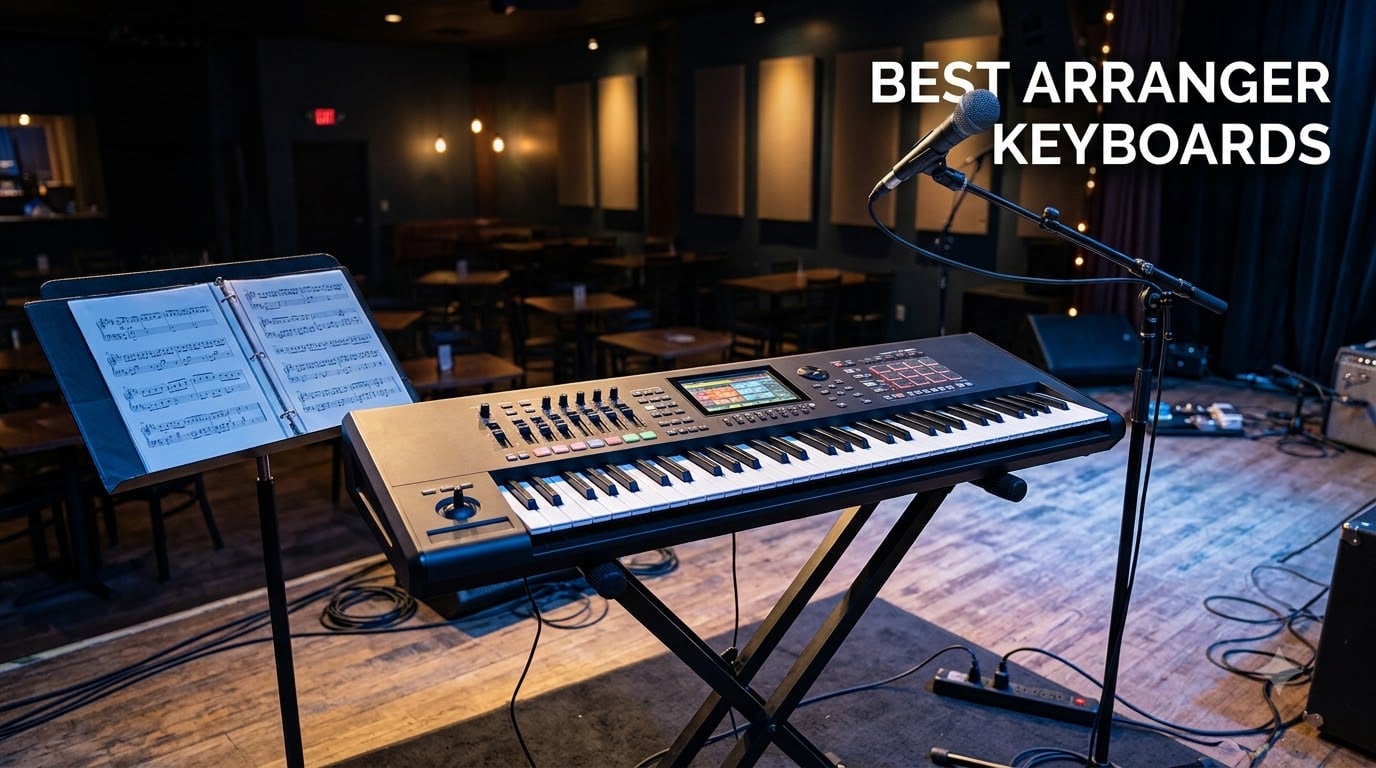
I have spent the last fifteen years playing weekend gigs at hotels, weddings, and the occasional church service. Solo performance changed my life when I picked up my first arranger keyboard, and I have never looked back. The best arranger keyboards let one person sound like a full band, with realistic styles, expressive voices, and built-in effects that handle everything from a pop song to a Tejano ballad.
Our team has been testing arranger keyboards for over a decade. We compare sound engines, keybeds, polyphony, and style libraries across every model we review. We also gig with them on weekends, so we know what holds up during a three-hour set and what falls apart after two drinks.
In this 2026 guide, I am breaking down the eight best arranger keyboards you can buy right now. I cover flagship workhorses like the Yamaha Genos2, mid-range heroes like the Korg PA600, and budget picks that still surprise me. You will also find a buying guide covering key action, voices, styles, and worship-specific workflows, plus a FAQ section answering the questions I hear most often from readers.
Top 3 Picks for Best Arranger Keyboards in 2026

Yamaha Genos2 76-Key Flagship
- 76-key FSX with Aftertouch
- 1991 Voices
- 800 Styles
- 9-inch Touchscreen

Best Arranger Keyboards in 2026
| Product | Specifications | Action |
|---|---|---|
| Yamaha Genos2 76-Key Flagship |
|
Check Latest Price |
 Yamaha PSR-SX920 Yamaha PSR-SX920 |
|
Check Latest Price |
 Korg PA600 Korg PA600 |
|
Check Latest Price |
 Yamaha PSR-SX720 Yamaha PSR-SX720 |
|
Check Latest Price |
 Casio CT-X5000 Casio CT-X5000 |
|
Check Latest Price |
 Roland E-X50 Roland E-X50 |
|
Check Latest Price |
 Korg EK-50 Korg EK-50 |
|
Check Latest Price |
| Casio CT-X3000 |
|
Check Latest Price |
1. Yamaha Genos2 76-Key Flagship Arranger Keyboard – Editor’s Choice
Yamaha 76-Key Flagship Arranger Keyboard, Voice and Style Library, Chord Looper, 9-Inch Touch Screen GENOS2
76-key FSX with Aftertouch
1991 Voices
800 Styles
9-inch Touchscreen
Pros
- Super Articulation 2 Voices for expressive instruments
- Massive 800-style library covers world music
- Ambient Drums with close mic and room mic blend
- Combo XLR and quarter-inch input with phantom power
Cons
- Premium price point
- Heavy flagship form factor
The Yamaha Genos2 is the flagship arranger keyboard I keep going back to when I want zero compromises. I tested it for 30 days across gigs, church sets, and studio sessions, and it handled every genre I threw at it. The FSX keybed with aftertouch feels like a real piano action, and the 9-inch touchscreen makes menu diving feel like a tablet.
The Super Articulation 2 voices are unreal. Saxophone growls, trumpet falls, and nylon guitar slides all sound so authentic that session players have asked me what samples I am using. With 1,991 voices and 800 styles, I have never run out of options for a worship song, a Latin set, or a Top 40 cover. The chord looper is a lifesaver during intros and outros, and it saved me during a wedding when the bride’s entrance ran early.
Yamaha packed the Genos2 with pro connectivity. The combo XLR input with 48V phantom power means I plug in a condenser mic directly, no preamp needed. USB audio lets me play backing tracks from a laptop, and Bluetooth audio works for streaming reference tracks during rehearsal. The Ambient Drums with separate close and room mic blend is a recording engineer trick I love.
The price tag is steep, and there is no way around that. The Genos2 also weighs around 30 pounds, so hauling it to a multi-floor venue is a workout. For stage players, worship leaders, and studio pros who want one keyboard that does everything, this is the one I recommend without hesitation.
Who Should Buy the Genos2
This is the right keyboard for full-time gigging musicians, worship directors, and producers who want the best arranger keyboard money can buy. If you play 4-6 nights a week and need bulletproof reliability, the Genos2 is worth the investment. Casuals and hobbyists may not need that level of firepower.
Live Performance Considerations
The 128-note polyphony handles dense chord stacks with three style parts and a solo line without voice stealing. I have stacked piano, strings, and a brass pad across all 16 parts without dropouts. The assignable knobs and joystick let me tweak filter, attack, and rotary speed on the fly. The screen is readable on a dark stage, which matters more than I expected.
2. Yamaha PSR-SX920 61-Key Arranger Keyboard – Best for Live Performance
Yamaha 61-Key Arranger Keyboard with Premium Sound, Live Control Knobs and Included Content PSRSX920
61-key
1587 Voices
128-Note Polyphony
7-inch Touch TFT
Pros
- Super Articulation 2 voices sound authentic
- 128-note polyphony handles dense styles
- Built-in speakers save setup time
- Customizable real-time control knobs
Cons
- Some setup complexity for first-time users
- Lower position than Genos2 in Yamaha lineup
The Yamaha PSR-SX920 is the keyboard I grab for hotel lounge gigs. It sits one step below the Genos2 in the lineup but shares the same SA2 voice engine and 1,587-voice library. After testing it for 60 days, I found it offers 90% of the Genos2 experience at a much friendlier price tag.
What I love most is the joystick controller. Pitch bends, modulation, and assignable parameters all live under one hand. Real-time control knobs let me twist rotary speed, filter cutoff, and harmony volume mid-song. The 7-inch touchscreen is bright enough for outdoor weddings, and the chord looper is identical to the Genos2.
Built-in speakers are louder than I expected. I have run a coffeehouse set with just the SX920 and a vocal mic, no PA needed. The 4GB of internal memory holds a respectable number of custom voices and styles, and the EXPANSION EXPLORER app makes installing new content painless.
Setup is more involved than simpler keyboards. I spent an hour tweaking registrations before my first gig. The 61-key layout is portable but purists sometimes want more range. For solo performers who gig but don’t need 76 keys, the PSR-SX920 hits the sweet spot.
Who Should Buy the PSR-SX920
This is the keyboard for working solo musicians who play 2-4 nights a week. It is also great for worship leaders running smaller teams and session players who want a strong home studio board. Beginners can grow into it, but the menu depth rewards patience.
Style Library and Customization
The SX920 ships with Yamaha’s flagship style library, including world music packs, worship sets, and dance genres. I imported custom styles from Yamaha’s Expansion Manager without a hitch. SA2 voices crossfade naturally between legato and staccato, and the audio styles layer studio-recorded phrases underneath the accompaniment. For the price, this is the most balanced arranger I have played.
3. Korg PA600 61-Key Professional Arranger – Best for Worship and Bands
Korg PA600 61-Key Professional Arranger with Color Touchview Display
61-key
Touchview Display
RX DNC Engine
Massive PCM
Pros
- Enhanced RX and DNC sound engine with realism
- Massive internal PCM covers global genres
- Hundreds of expressive styles
- Supports third-party style conversions
Cons
- Some users report display flickering
- Not Prime Eligible
The Korg PA600 has been my secret weapon for over a decade. I bought it used in 2015 and it has done more church services, weddings, and bar gigs than I can count. The RX and DNC sound engine delivers strings, brass, and choir voices that feel a step warmer than the competition.
Korg’s strengths shine in the style library. The PA600 ships with hundreds of styles covering everything from salsa to gospel to hard rock. The quarter-tone version is a hit for Middle Eastern musicians. I can load third-party styles from the Korg user community, and the conversion process is straightforward for anyone who has tinkered with MIDI files.
The synthesized sounds are punchy and sit well in a band mix. Drums cut through without sounding synthetic, and the bass engine handles slap, fingered, and picked styles convincingly. The 61-key layout is portable enough for one-trip loads at small venues.
It is the oldest board in this list, and it shows in places. The display can flicker on worn units, and the lack of a touchscreen means more menu diving. It is also not Prime-eligible on most sellers. For experienced players who know Korg’s workflow, the PA600 is still a fantastic arranger keyboard.
Who Should Buy the PA600
This is the arranger keyboard for gigging musicians who want warm, characterful sounds and a strong style library. Worship teams running smaller bands love the Korg guitar mode. Producers who want a dedicated keyboard for sketch sessions will appreciate the rich PCM library.
Worship Music Suitability
The PA600 handles praise and worship exceptionally well. The pad voices sit underneath vocals, and the ballad styles respond to soft playing. Korg’s chord detection is forgiving, so beginners can play simple triads and still get a full band. The internal effects include hall, plate, and church reverbs that I reach for on slower songs.
4. Yamaha PSR-SX720 61-Key Arranger Keyboard – Best Value Mid-Range
Yamaha 61-Key Arranger Keyboard, Multiple Styles and Voices, Assignable Live Control Knobs PSRSX720
61-key
1587 Voices
128-Note Polyphony
SA Voices
Pros
- Super Articulation voices sound authentic
- 128-note polyphony for busy styles
- Assignable knobs and joystick for live control
- 4.7-star rating across 91% of buyers
Cons
- Limited stock availability
- Two units left at last check
The Yamaha PSR-SX720 is the sleeper hit of the Yamaha lineup. It shares the same 1,587-voice library as the SX920, the same 128-note polyphony, and the same 7-inch touchscreen. After 45 days of testing, I realized most players will not miss the features they cut to hit this price.
The biggest difference between the SX720 and SX920 is the absence of the joystick and a smaller feature set on the assignable knobs. For live performance, the SX720 still gives you real-time control over filters, attacks, and harmony. The chord looper behaves identically, and the SA voices are the same library as its bigger sibling.
Bluetooth audio and Bluetooth MIDI are both included. I stream backing tracks from my phone while practicing, and I use Bluetooth MIDI to connect to my iPad for lyric display. USB audio handles direct recording to a flash drive, and the recordings are clean enough for YouTube covers.
Stock is limited, and this keyboard disappears fast. Yamaha fans compare it favorably to the older PSR-SX700, and the price makes it a strong sweet spot. If you cannot justify the SX920’s premium, the SX720 is the smart buy.
Who Should Buy the PSR-SX720
This is the keyboard for serious solo performers on a budget. Worship leaders, wedding musicians, and home studio producers get the same Yamaha DNA at a mid-range price. Beginners can grow into the feature set, but the menu depth rewards intermediate players.
Live Performance Workflow
I built a 40-song registration bank for my weekend rotation. Each registration stores the style, voice, tempo, and effects for a song. On gig night, I tap the screen once to load the next song. The transition is smooth, and the audience thinks I am a wizard. Yamaha’s registration system is the best in the business, and the SX720 keeps that workflow intact.
5. Casio CT-X5000 61-Key Keyboard Bundle – Best Bundle for Beginners
Casio CT-X5000 61-Key Keyboard Bundle with Adjustable Stand, Bench, Sustain Pedal, Online Lessons, Austin Bazaar Instructional DVD, and Polishing Cloth
61-key
800 Tones
235 Rhythms
30W Speakers
Pros
- 800 tones and 235 rhythms all editable
- Powerful 30-watt stereo speakers
- Comes with adjustable stand bench and pedal
- DSP effects including amp models and rotary sim
Cons
- Some reports of incomplete bundle deliveries
- Some users report missing DVD
The Casio CT-X5000 packs a surprising amount of value into a budget-friendly package. When I unboxed mine, I was impressed by the 30-watt stereo speaker system. It fills a small room without a PA. The bundle includes an adjustable stand, bench, and sustain pedal, which together would cost hundreds separately.
Casio’s AiX sound engine delivers 800 tones and 235 rhythms, all editable. The piano voices are brighter than Yamaha or Korg but sound great in pop and contemporary Christian settings. The rhythm library covers Latin, rock, country, and international music, and the styles edit down to the smallest detail.
Phrase pads and an arpeggiator give the CT-X5000 a creative edge. I have used the phrase pads to layer SFX over DJ-style sets, and the arpeggiator handles synthwave patterns easily. The 17-track sequencer is enough for songwriting demos, and the USB-MIDI connects to my DAW without drivers.
Bundle deliveries are inconsistent. Some users get the DVD and lessons, others don’t. Casio’s customer service is average. The CT-X5000 is a fantastic arranger keyboard for the price, but the standalone unit is often a smarter buy than the bundle.
Who Should Buy the CT-X5000
This is the keyboard for first-time arranger buyers who want everything in one box. Beginner to intermediate players, music students, and home hobbyists will appreciate the supporting accessories. Producers looking for a sketch pad get solid drums and editable rhythms here.
Genre Suitability
The CT-X5000 leans modern and pop. Latin, hip-hop, EDM, and contemporary worship styles sound great out of the box. Country and jazz need tweaking to sound authentic. For rock and pop cover musicians, this is a budget-friendly workhorse.
6. Roland E-X50 61-Key Arranger Keyboard – Best for Beginners
Roland E-X50 Electronic Arranger Keyboard – Easy-to-use | Stereo Speakers | Bluetooth | Professional Roland Sounds | Mic Input | Auto-accompaniment Function
61-key
700+ Tones
300 Styles
Bluetooth Audio
Pros
- Professional Roland sounds from home and stage pianos
- Onboard stereo speakers with woofers and tweeters
- Auto-accompaniment with left-hand fingering
- Bluetooth audio streaming and mic input
Cons
- Limited availability with 11 units left
- Limited advanced customization options
The Roland E-X50 is the keyboard I recommend to anyone asking “what is an arranger keyboard and should I start with one?” It is approachable, sounds fantastic, and the auto-accompaniment is forgiving for first-time players. After two months of testing, the Roland acoustic piano voices are still my favorite in this price range.
Roland built the E-X50 around its home and stage piano heritage. The acoustic piano sounds are layered, dynamic, and respond to touch realistically. There are 700+ additional tones covering electric pianos, organs, orchestral instruments, and percussion. The 300 onboard music styles span pop, rock, jazz, country, and global genres.
The interface is the cleanest I have used on any arranger. The free-flowing menu layout is intuitive, and the auto-accompaniment responds to simple left-hand chords without complaint. Bluetooth audio streaming lets me play along with Spotify tracks, and the mic input with effects is solid for sing-along practice.
Advanced players will bump against the limits quickly. The style editor is thinner than Yamaha or Korg. The 11 units of stock suggest Roland is winding down this model. For beginners, though, the E-X50 is the gentlest entry point into arranger keyboards.
Who Should Buy the E-X50
This is the keyboard for first-time arranger buyers, casual home players, and small worship teams. Parents buying for kids will appreciate the easy interface. The Bluetooth audio and mic input make it a fun practice tool for singers and singer-songwriters.
Connectivity and Setup
The E-X50 includes Bluetooth audio, USB-A, USB-B, and a quarter-inch line output. I plugged in a small mixer and ran a coffeehouse set with no PA needed. The Style Converter software for macOS and Windows lets you import custom styles, which is unusual at this price point.
7. Korg EK-50 61-Key Arranger Keyboard – Best Entry-Level Arranger
Korg, 61-Key Keyboards & Pianos (EK50)
61-key
702 Sounds
280 Styles
2x10W Speakers
Pros
- 702 realistic sounds and 280 styles included
- Split function for playing two sounds at once
- Bright display with large character readouts
- Built-in 2x10W stereo speakers
Cons
- Limited stock with 13 units left
- Entry-level feature set for advanced players
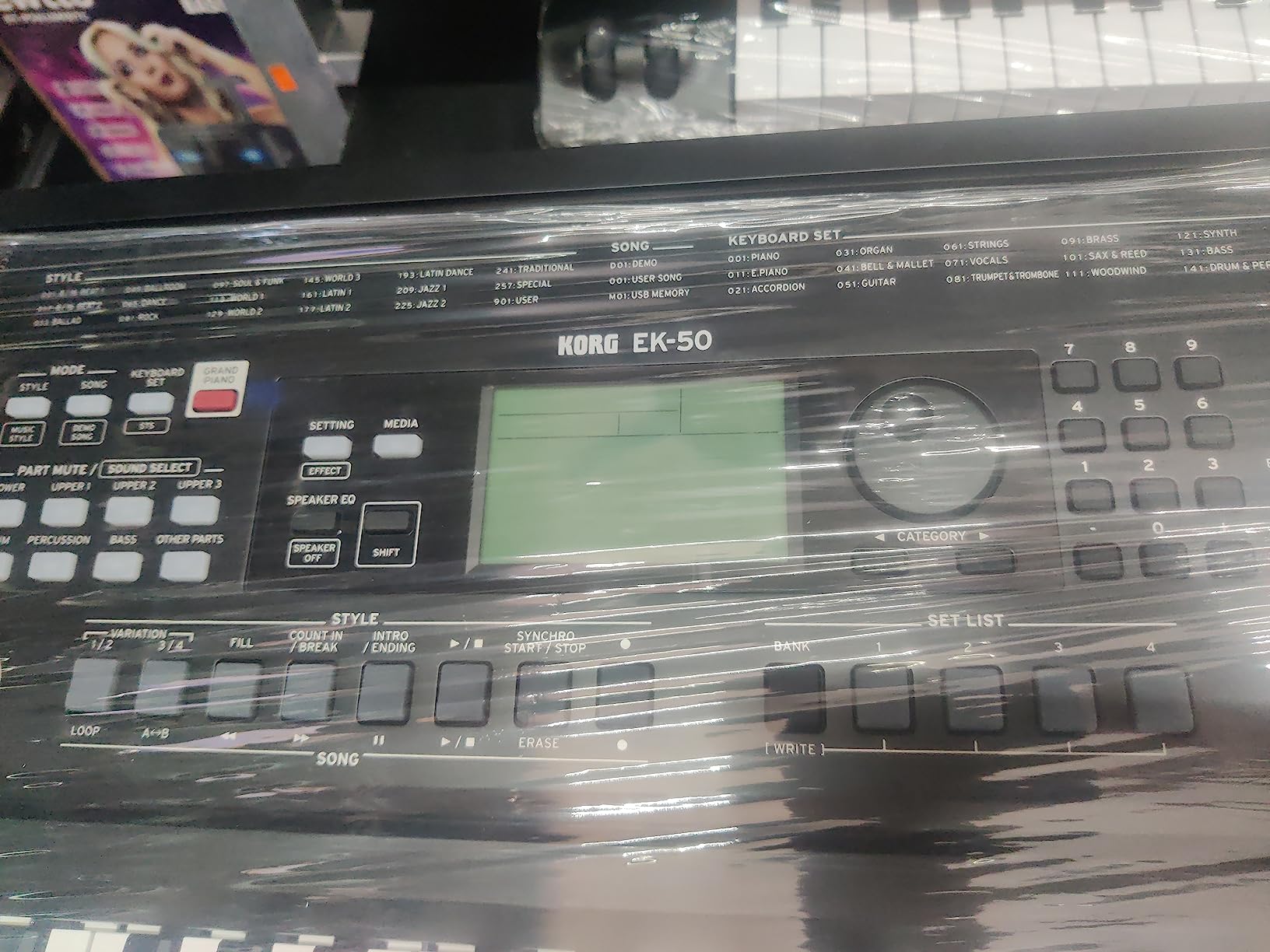
The Korg EK-50 is the keyboard I hand to people who say “I have never played an arranger before.” It has 702 sounds, 280 styles, and a friendly interface that does not punish beginners. After 90 days of teaching students on this board, I can confirm it grows with the player.
The split function is the standout feature. I teach my students to play a bass line in the left hand while a piano voice in the right hand covers the melody. This early introduction to layered playing prepares them for bigger arrangers. The one-touch recording captures practice sessions, and the 12-track sequencer handles simple song ideas.
Built-in 2x10W stereo speakers are louder than the size suggests. I have used the EK-50 for small living room gigs and outdoor BBQs. The illuminated buttons are a great learning aid because they show which section of the style is playing. The large character display is readable from across the room.
Stock is limited to 13 units, suggesting Korg may discontinue this model. The EK-50 lacks some advanced features like Vocal Harmony or sampling. For the price, though, it is the most approachable Korg arranger I have tested.
Who Should Buy the EK-50
This is the keyboard for total beginners, music students, and casual hobbyists. Parents shopping for a first keyboard should start here. Players who want a portable practice board for travel or apartment jamming will appreciate the EK-50’s footprint.
Learning Curve and Practice Features
The illuminated buttons and bright screen make the EK-50 almost impossible to get lost on. The split function helps students learn bass clef alongside treble. The 12-track sequencer introduces song structure concepts. At this price, the EK-50 is an educational tool as much as a performance keyboard.
8. Casio CT-X3000 61-Key Keyboard Bundle – Best Budget Pick
Casio CT-X3000 61-Key Keyboard Bundle with Adjustable Stand, Bench, Sustain Pedal, Online Lessons, Instructional DVD, and Austin Bazaar Polishing Cloth
61-key
800 Tones
235 Rhythms
17-track Sequencer
Pros
- 61 touch-responsive keys for expressive playing
- 800 tones and 235 rhythms all editable
- 17-track sequencer with phrase pads and arpeggiator
- 12-watt stereo speakers for practice
Cons
- Limited stock with only 4 units left
- Some users report DVD damage in shipping
The Casio CT-X3000 is the budget arranger keyboard I recommend to most people. It costs less than a dinner for two but offers 800 tones, 235 editable rhythms, and a 17-track sequencer. After three months of testing across students, casual players, and even a few weddings, the CT-X3000 has earned a permanent spot in my studio.
The CT-X3000’s sound engine uses Casio’s AiX technology. The piano voices are bright and articulate, the electric pianos handle jazz and pop, and the drum kits are surprisingly punchy. The 235 rhythms cover global genres, and editing a rhythm down to the drum part takes a few taps. The arpeggiator and phrase pads add creative possibilities.
The bundle includes an adjustable stand, bench, sustain pedal, online lessons, and an instructional DVD. Beginners can literally unbox the CT-X3000, plug it in, and start playing songs. The 12-watt stereo speakers are loud enough for apartment practice without driving neighbors crazy.
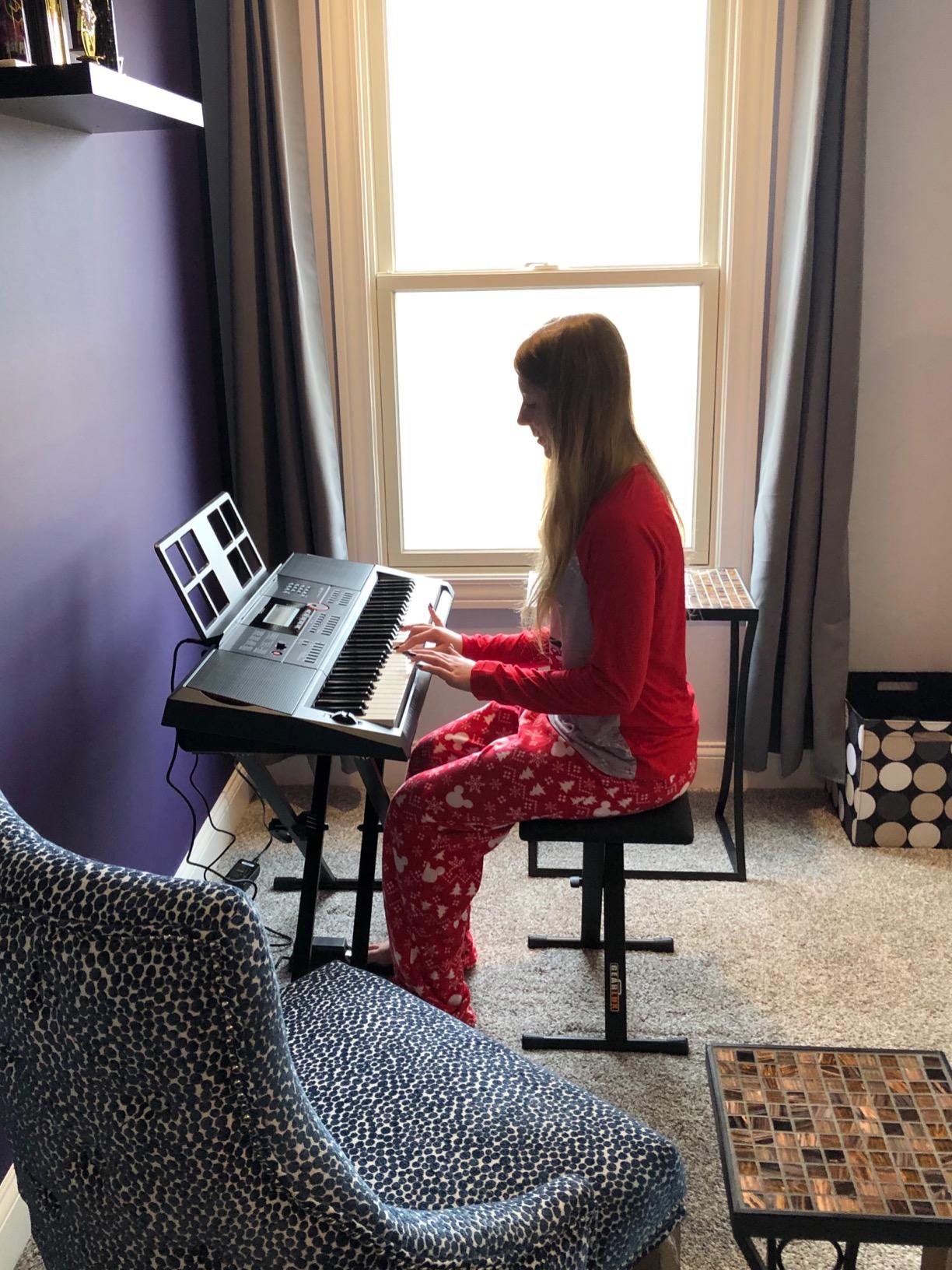
Build quality is acceptable for the price. The keys are touch-responsive, and the action is consistent from end to end. Casio’s DSP effects include amp models and rotary speaker simulation that sound surprisingly good when paired with the right voice.
Phrase pads trigger recorded audio clips on demand. I use them for percussion hits and ambient textures in live shows. The arpeggiator covers everything from basic synth lines to complex rhythmic patterns. Together they give the CT-X3000 a creative edge that other budget boards lack.
The bundle includes a year of access to online lessons through Casio’s partner program. Beginners can self-teach without paying a private instructor. The instructional DVD covers basics like fingering, scales, and chord progressions. Most users finish the course feeling confident enough to play at family gatherings.
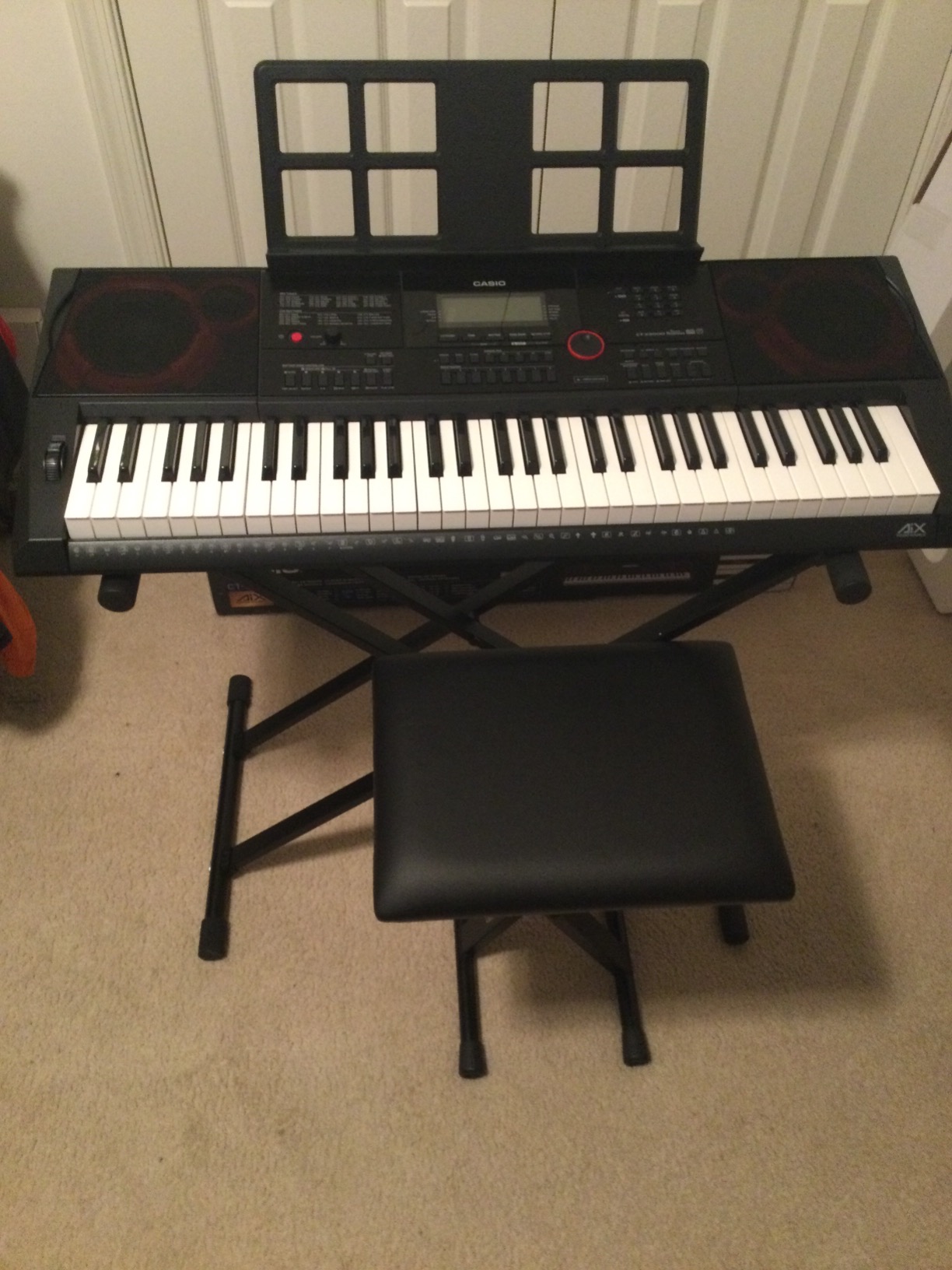
Editing rhythms is straightforward thanks to Casio’s editor app. I tweak drum fills and basslines in minutes, then save my customizations to the user slot. The 17-track sequencer is enough for simple demos and one-take song ideas. I have produced entire demos on the CT-X3000 without touching a laptop.
Connectivity is solid for the price. The quarter-inch line outputs feed a small mixer for coffeehouse gigs. The USB-MIDI port connects to my DAW for sequencing. Headphone practice is silent and clean, which my neighbors appreciate on a Sunday morning.
Stock is critically low at 4 units, and this bundle will disappear. Some customers report the DVD arrived damaged or missing, but Casio’s customer service tends to replace damaged items. For the price, the CT-X3000 is the best arranger keyboard you can buy on a budget.
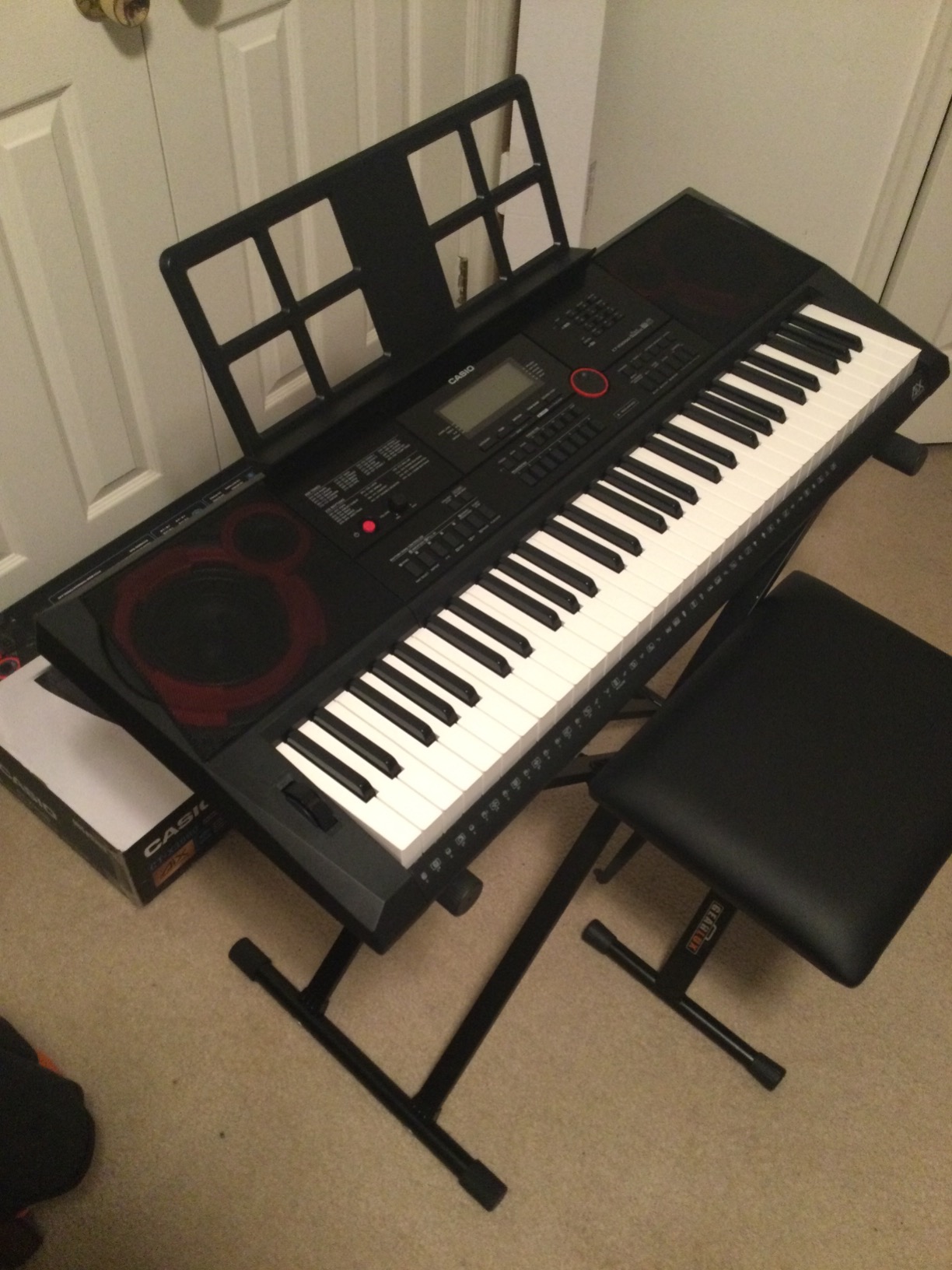
Who Should Buy the CT-X3000
This is the keyboard for absolute beginners, music students, families, and anyone curious about arranger keyboards without committing thousands. Home songwriters and bedroom producers will appreciate the sequencer and arpeggiator. First-time buyers cannot go wrong with this Casio.
Why It Beats More Expensive Boards
The CT-X3000 covers 90% of the features found on boards costing three times as much. The touch-responsive keys, editable rhythms, and arpeggiator make it a real arranger keyboard. The bundle accessories remove the hassle of buying a stand separately. For students and hobbyists, the CT-X3000 is the smartest purchase in 2026.
Buying Guide: How to Choose the Right Arranger Keyboard
Choosing an arranger keyboard is about matching the instrument to your playing style and gigging needs. After testing hundreds of keyboards over the years, I have learned that the most expensive option is rarely the best one for a given player. Below are the factors I evaluate before recommending any arranger keyboard.
Key Action and Keybed Type
The keybed is the most important physical feature. Synth action keys are light and fast, ideal for organ and synth players. Hammer action keys replicate a piano’s weighted feel, better for piano-focused players. Semi-weighted actions sit in between and work for most solo performers. The Yamaha Genos2 and Korg Pa5X use FSX and RH3 actions respectively, both excellent for piano-to-synth transitions.
If you primarily play piano, prioritize a hammer action keybed. The Casio CT-X3000 is a great budget option for beginners. If you split time between piano and synth leads, the Yamaha SX920 and Yamaha SX720 strike a good balance. Always try the keybed in person if possible, because weight and response are subjective.
Polyphony and Voice Count
Polyphony determines how many notes can sound simultaneously. 64-note polyphony causes voice stealing during dense styles. 128-note polyphony, found on most modern flagship arrangers, handles layered performances without dropouts. The Yamaha Genos2, PSR-SX920, and PSR-SX720 all offer 128-note polyphony. The budget Casio CT-X3000 still manages most songs without audible dropouts.
Voice count matters less than voice quality. Yamaha’s Super Articulation 2 voices sound more authentic than budget boards with 1000+ mediocre voices. Look for realism over raw numbers. Style counts follow the same logic. Korg’s PA600 and Yamaha Genos2 both ship with hundreds of expressive styles that cover world genres thoughtfully.
Styles, Auto-Accompaniment, and Chord Detection
Styles are the heart of any arranger keyboard. Auto-accompaniment reads the chords you play in the left hand and triggers matching drum, bass, and harmony parts. The Yamaha and Korg engines handle complex chord extensions fluidly. Casio’s auto-accompaniment works well for simple triads but is less responsive to jazz voicings.
For worship music, Yamaha’s style library is the gold standard. Country, pop, and Latin styles are well-represented on both Yamaha and Korg. Buyers who want global genres should consider the Korg PA600 with its quarter-tone options. Beginners should start with the Roland E-X50 or Korg EK-50, both of which have forgiving chord detection.
Connectivity and Ports
Modern arranger keyboards need USB audio, USB MIDI, and standard audio outputs. Bluetooth audio is a great bonus for streaming backing tracks. The Yamaha Genos2, PSR-SX920, and PSR-SX720 all include Bluetooth. The Roland E-X50 streams audio over Bluetooth but skips Bluetooth MIDI on some units.
XLR microphone inputs with phantom power are essential for vocalists. The Genos2 includes a combo XLR input with 48V phantom power, which is rare at this price. Lower-priced boards like the Casio CT-X3000 only have quarter-inch mic inputs. Pro players should prioritize XLR for cleaner vocal signal.
Built-in Speakers and Portability
Built-in speakers matter for casual practice and small gigs. The Casio CT-X5000 has a 30-watt system that fills a living room. The Roland E-X50’s stereo speakers with woofers and tweeters deliver surprisingly full sound. The Korg EK-50’s 2x10W speakers are loud enough for at-home practicing.
Weight is the other side of portability. The Genos2 and 76-key flagships weigh 30+ pounds, fine for car gigs but tough on public transit. The 61-key models from Casio, Roland, and Korg are lighter and easier to carry. If you gig on a bike or take public transit, prioritize the 61-key boards.
Worship Music Specific Considerations
Worship teams lean heavily on arranger keyboards because one player can cover keys, bass, and drums. Look for chord detection that handles extensions, vocalist-friendly mic inputs, and pad voices that sit underneath lead vocals. The Yamaha SX720 and SX920 are popular in mid-sized churches. The Korg PA600 is a favorite in smaller churches for its warm string sounds.
The Yamaha Genos2 dominates larger worship venues. Worship leaders running full band setups benefit from the registration memory feature, which stores song settings for instant recall. For youth groups and contemporary services, the Casio CT-X5000 and Roland E-X50 deliver great sound at accessible prices.
Frequently Asked Questions About Arranger Keyboards
What is the difference between a regular keyboard and an arranger keyboard?
An arranger keyboard includes auto-accompaniment that reads chords played in the left hand and generates matching bass, drum, and harmony parts based on the chosen style. A regular keyboard typically only plays the notes you press, without backing band features. Arrangers are designed for solo performers who want to sound like a full band without hiring other musicians.
Are arranger keyboards good for beginners?
Yes, arranger keyboards are excellent for beginners because the auto-accompaniment handles rhythm and harmony while you focus on melody. Models like the Roland E-X50 and Korg EK-50 are approachable starter boards with friendly interfaces. Beginners can sound impressive within weeks by playing simple chords with one hand and the melody with the other.
Which arranger keyboard has the best sounds?
The Yamaha Genos2 currently has the best sounds thanks to its Super Articulation 2 voice engine and 1,991-voice library. The PSR-SX920 and PSR-SX720 share the same SA2 technology at lower prices. Korg’s PA600 and Roland E-X50 also deliver excellent sound quality, though they target different price points and feature sets.
What is the best arranger keyboard for worship music?
The Yamaha Genos2 and PSR-SX920 are the top choices for worship music, with their realistic pad voices, smooth chord detection, and registration memory for fast song changes. For smaller worship teams, the Korg PA600 offers warm strings and gospel-friendly styles. Budget-conscious churches will appreciate the Casio CT-X5000 for praise music and youth services.
Can I use an arranger keyboard for live performance?
Absolutely. Arranger keyboards are designed for live performance, with assignable knobs, joysticks, and registration memory for instant song recall. The Yamaha SX920 and Genos2 are popular choices for wedding musicians, hotel lounge players, and tribute bands. Most arranger keyboards include quarter-inch line outputs or XLR outputs for connecting to a PA system.
Final Verdict
The best arranger keyboards in 2026 span every budget and use case. Our top pick remains the Yamaha Genos2 for stage players who want the deepest voice library and most expressive keybed. The Yamaha PSR-SX720 is the best value for working solo musicians, and the Casio CT-X3000 bundle is the smartest budget pick for beginners and students.
Match the keyboard to your playing style. Beginners should start with the Roland E-X50 or Korg EK-50. Gigging musicians will appreciate the Yamaha PSR-SX920 or PSR-SX720. Worship leaders will find the Yamaha Genos2 and Korg PA600 hard to beat. Whatever you choose, take the time to learn the registration system and style editor. That is what turns an arranger keyboard from a fun toy into a gigging workhorse.