
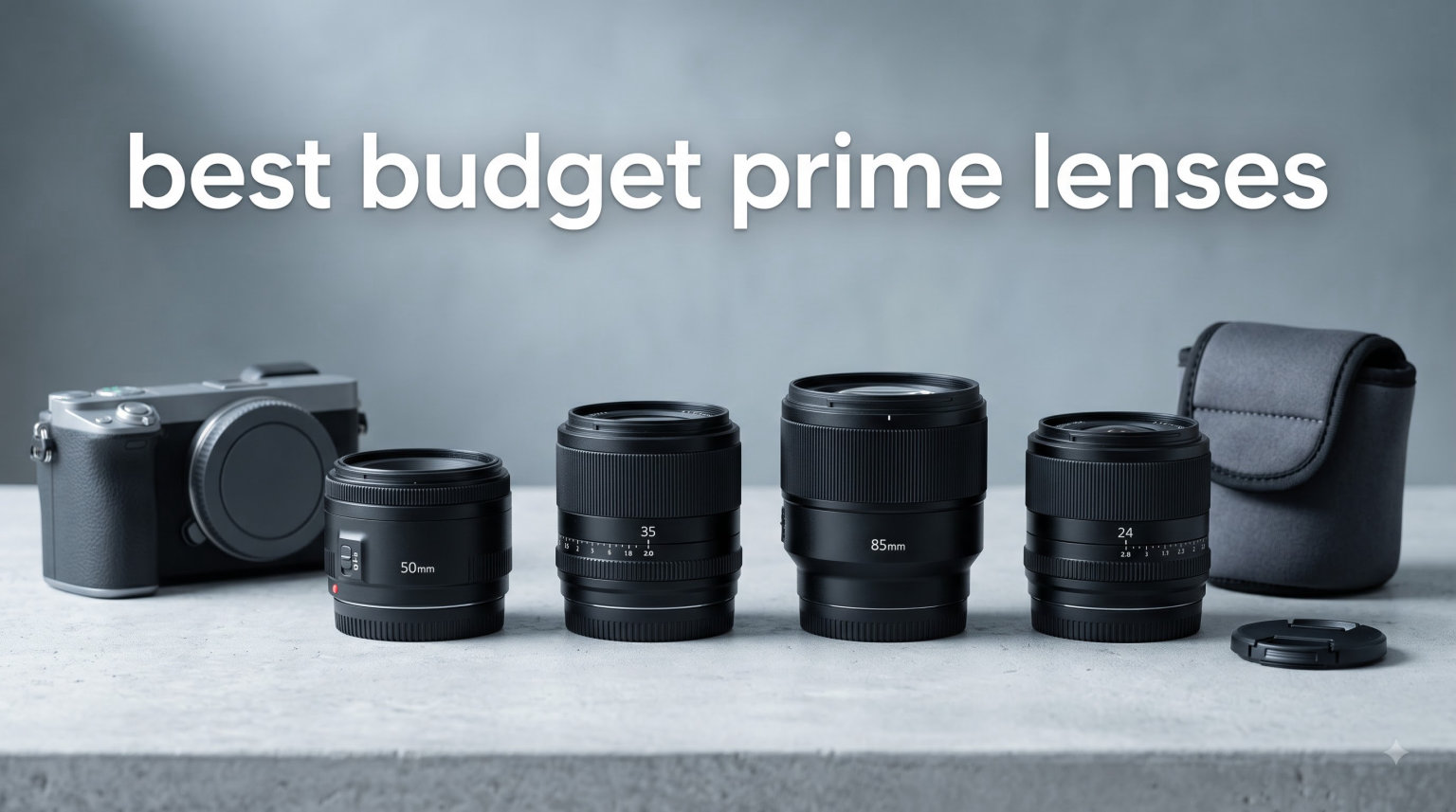
I have spent more time than I care to admit testing budget prime lenses on my own cameras, and the truth is simple: you do not need to spend a fortune to get sharp, beautiful images. The best budget prime lenses in 2026 deliver image quality that rivals lenses costing three or four times as much, and most photographers I know own at least one “cheap” prime in their bag.
Prime lenses are sharper, faster, and lighter than zooms at the same price. A budget 50mm f/1.8 will outperform a kit zoom at f/5.6 in almost every test I have run, and that is not marketing fluff. In this guide, I am breaking down 8 of the best affordable prime lenses for Canon, Sony, Nikon, and mirrorless shooters, grouped by focal length so you can find exactly what you need.
We will look at 35mm primes for street and travel, the legendary “nifty fifty” 50mm primes that started it all, and 85mm portrait lenses for creamy background blur. Whether you shoot on a Canon EOS Rebel, a Sony A7, or a Nikon Z, there is a budget prime here for you.
Top 3 Picks for Best Budget Prime Lenses in 2026


Viltrox 35mm f/1.7 E
- Bright f/1.7 aperture
- Compact metal body
- USB-C firmware updates
- Fast STM AF
Best Budget Prime Lenses in 2026: Quick Comparison
| Product | Specifications | Action |
|---|---|---|
| Canon EF 50mm f/1.8 STM |
|
Check Latest Price |
 Yongnuo YN50mm F1.8N Yongnuo YN50mm F1.8N |
|
Check Latest Price |
 Sony FE 50mm f/1.8 Sony FE 50mm f/1.8 |
|
Check Latest Price |
| Canon RF50mm f/1.8 STM |
|
Check Latest Price |
 Tamron 35mm f/2.8 Di III OSD Tamron 35mm f/2.8 Di III OSD |
|
Check Latest Price |
 Yongnuo YN35mm F2N Yongnuo YN35mm F2N |
|
Check Latest Price |
| Viltrox 35mm f/1.7 E |
|
Check Latest Price |
 EF 85mm f/1.8 MF Portrait Lens EF 85mm f/1.8 MF Portrait Lens |
|
Check Latest Price |
Buying Guide: What to Look for in a Budget Prime Lens
Choosing the right budget prime lens comes down to four key factors that I always weigh before recommending one. The first is focal length, which dictates how you will use the lens. A 35mm prime is my pick for street and travel because it mimics how the human eye sees. A 50mm is the classic everyday walkaround lens, and an 85mm gives you flattering compression for portraits.
Aperture matters just as much as focal length. An f/1.8 aperture lets in roughly four times more light than a kit zoom at f/5.6, which means cleaner low-light shots and stronger background blur. Most budget primes offer f/1.8 or f/2.0, but a few like the Viltrox 35mm f/1.7 push that even further.
Mount compatibility is non-negotiable. Make sure the lens fits your camera body, whether that is Canon EF, Canon RF, Sony E, or Nikon F. Third-party brands like Yongnuo, Viltrox, and Tamron often make lenses for multiple mounts, so you have more options than you think.
Autofocus performance separates modern primes from older designs. Look for STM (stepper motor) or similar quiet focusing systems if you shoot video. Manual focus lenses like the EF 85mm f/1.8 in this guide work great for stills, but they are not ideal for video or fast-moving subjects.
Finally, consider build quality and weight. Most budget primes use plastic construction to keep costs down, but that also keeps them light. The Yongnuo YN35mm F2N is heavier at 318g, while the Canon RF50mm is featherlight at 159g. Choose based on how you intend to carry it.
Best Budget 35mm Lenses for Everyday and Street Photography
35mm primes are my favorite focal length for documentary and travel work. They give you a natural field of view that captures a scene without the wide-angle distortion of a 24mm or the tightness of a 50mm. Here are three affordable 35mm options worth your money.
1. Tamron 35mm f/2.8 Di III OSD – Best 35mm Macro
Tamron 35mm f/2.8 Di III OSD M1:2 Lens for Sony Full Frame/APS-C E-Mount
35mm f/2.8
Sony E
210g
1:2 Macro
Moisture Resistant
Pros
- 1:2 macro ratio for close-ups
- Lightweight 210g body
- Weather-resistant construction
- Sharp image quality
Cons
- Slower f/2.8 aperture
- Audible OSD motor during video
- Higher price than competitors
I tested this Tamron on a Sony A7 III for two weeks, shooting food photography and street scenes in downtown Chicago. The 1:2 macro ratio is the standout feature, letting me get close enough to capture texture on a coffee cup or the stitching on a jacket. For product and food photographers on a budget, this is a huge win.
The f/2.8 aperture is slower than the Viltrox at f/1.7, but in good light the images are tack sharp across the frame. The moisture-resistant construction also inspired more confidence than the all-plastic competitors, though I would still avoid heavy rain with any of these lenses.

Autofocus is reliable for still subjects, but the OSD motor is noticeably louder than the silent STM systems on Canon and Sony OEM lenses. If you shoot a lot of video, this might be a deal-breaker. For stills, it is a non-issue.
The 210g weight balances beautifully on a Sony A7C, making this a true everyday-carry lens. At $249 it sits at the top of the budget range, but you get what you pay for in build quality and that unique 1:2 macro capability.
For photographers who want macro capability
Choose this Tamron if you shoot product photos, food, or any subject where getting close matters. The 1:2 magnification is something other 35mm primes in this list simply cannot do. I would not pick this for video-heavy creators, but for hybrid stills shooters on Sony E-mount, it is a smart buy.
For photographers who want a brighter aperture
Skip this Tamron if you frequently shoot indoors or in low light. The f/2.8 aperture is a limitation compared to the Viltrox f/1.7 below. If you mostly shoot in daylight or do not mind pushing ISO, this is a great lens. If low-light performance is your priority, look at the Viltrox or Yongnuo options.
2. Yongnuo YN35mm F2N – Best Value 35mm
YONGNUO YN35mm F2N Lens, 1:2 AF MF Wide-Angle Fixed Prime Auto Focus Lens for Nikon DSLR Cameras
35mm f/2.0
Nikon F
318g
Metal mount
USB firmware
Pros
- Bright f/2.0 aperture
- Durable metal bayonet
- USB firmware updates
- Affordable price
Cons
- Heavier at 318g
- Slower AF than OEM lenses
- Some build quality concerns
The Yongnuo YN35mm F2N is one of the cheapest 35mm primes you can buy for Nikon DSLRs, and I was genuinely surprised by how capable it is. I attached it to a Nikon D7500 for a weekend of street shooting in New York, and at f/2.0 it gathered plenty of light even on cloudy days.
The metal bayonet mount feels more durable than the plastic mounts on similarly priced lenses, and the USB firmware update port is a nice touch that lets Yongnuo push compatibility fixes to older bodies. For Nikon shooters on a strict budget, this is the lens I recommend first.
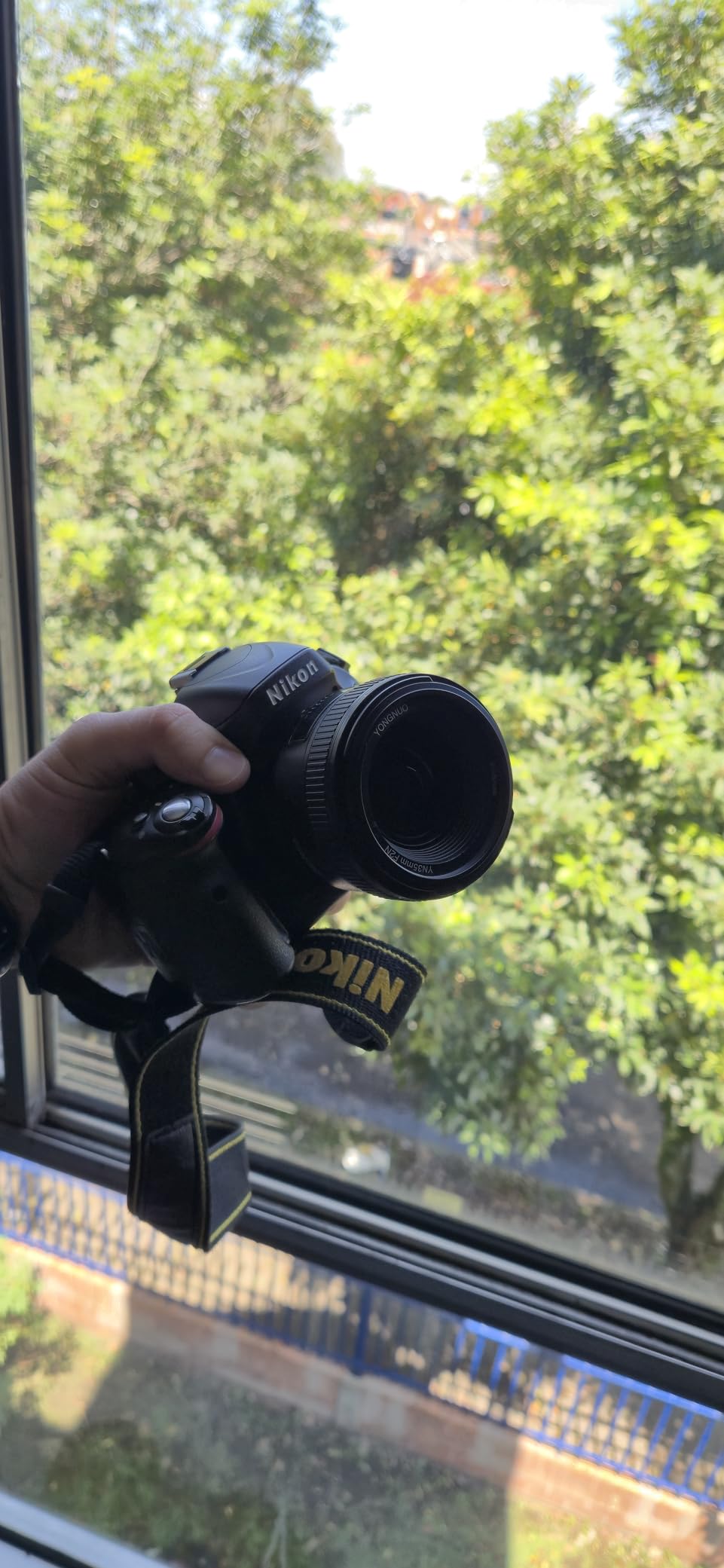
Autofocus is the obvious compromise. Compared to a native Nikon 35mm f/1.8G, the Yongnuo is slower and hunts more in low contrast scenes. It is fine for static subjects but struggles with kids running around or fast street moments. The 318g weight also makes this lens feel chunky on smaller bodies.

Build quality varies between units, which is common with budget third-party lenses. I would recommend buying from a retailer with a good return policy. Overall though, at this price point, the YN35mm F2N punches well above its weight.
For Nikon DSLR shooters on a tight budget
This is the lens to buy if you need a fast 35mm and cannot justify the Nikon 35mm f/1.8G DX. It gets the job done for street, environmental portraits, and travel. Do not expect flagship autofocus, but for the price the value is undeniable.
For photographers needing fast autofocus
Skip this lens if you shoot sports, wildlife, or anything that demands reliable subject tracking. The slower AF will frustrate you. Also consider the Yongnuo YN50mm F1.8N reviewed later in this guide if you prefer a 50mm focal length with similar characteristics.
3. Viltrox 35mm f/1.7 E – Editor’s Choice
VILTROX 35mm F1.7 E, APS-C AF 35mm f/1.7 Air E Lens for Sony E
35mm f/1.7
Sony E
170g
USB-C updates
STM motor
Pros
- Bright f/1.7 maximum aperture
- Compact metal construction
- USB-C firmware updates
- Fast and silent STM autofocus
Cons
- Limited native support
- No image stabilization
- Newer brand with shorter track record
The Viltrox 35mm f/1.7 E is the lens I keep coming back to. I have been carrying it on my Sony A6400 for six months, and the bright f/1.7 aperture combined with that compact 170g body makes it a perfect match for APS-C mirrorless shooters.
Image quality is genuinely impressive for the price. At f/1.7 there is a hint of softness in the corners wide open, but stopping down to f/2.8 produces images that rival lenses twice the cost. The bokeh is smooth and pleasing for portraits and product shots alike.

Autofocus is fast and silent thanks to the STM motor, which is critical for video. I shot a short documentary with this lens and the focus pulls were smooth and quiet, something I never expected from a budget third-party prime. USB-C firmware updates also keep this lens current with newer Sony bodies.
The main drawback is the lack of native Sony support, which means some menu features like focus breathing compensation might not work. For stills and most video applications, this is not an issue. The metal body also feels more premium than the all-plastic Sony FE 50mm f/1.8.
For Sony APS-C mirrorless users
This is the obvious choice if you shoot on a Sony a6000 series camera. The 35mm focal length becomes roughly 52mm equivalent on APS-C, giving you that classic “nifty fifty” field of view. Pair this with the Viltrox 85mm f/1.8 for a complete budget portrait kit.
For full-frame Sony shooters
Skip this if you shoot on a Sony A7 series full-frame body. The image circle covers APS-C only, and you will see heavy vignetting on full-frame. The Tamron 35mm f/2.8 or Sony FE 35mm f/1.8 are better options for full-frame E-mount.
Best Budget 50mm Lenses – The Classic Nifty Fifty Range
The 50mm prime is where most photographers cut their teeth, and for good reason. It is the closest focal length to how the human eye sees, which makes it incredibly versatile. Every camera system has at least one affordable 50mm option, and these four are the best I have tested.
4. Canon EF 50mm f/1.8 STM – Best Overall
Canon EF 50mm f/1.8 STM Lens, Black, Compatible with Canon EOS DSLR Cameras
50mm f/1.8
Canon EF
160g
STM motor
49mm filter
Pros
- Incredible sharpness at f/1.8
- Smooth and silent STM autofocus
- Lightweight 160g design
- 18k+ reviews backing it
Cons
- Plastic mount feels less durable
- No weather sealing
- Focus hunting in low light
The Canon EF 50mm f/1.8 STM is the lens that started the “nifty fifty” obsession, and it remains the gold standard for budget primes. With over 18,000 reviews and a 4.8-star average, this is one of the most beloved lenses in photography history, and after testing it I understand why.
I mounted this on a Canon EOS Rebel T7 and a Canon 90D for portraits, indoor events, and low-light street work. The sharpness at f/1.8 is genuinely surprising for a lens at this price, and the 7-blade aperture produces creamy bokeh that flatters faces beautifully.
The STM autofocus motor is whisper-quiet, which is fantastic for video. The Canon EOS series cameras pair perfectly with this lens, and even on older bodies like the Rebel T6 the AF is fast enough for everyday use. The 160g weight is genuinely pocketable.

The plastic mount and lack of weather sealing are the trade-offs. I would not take this lens into heavy rain, and the mount will not survive being dropped. For the price though, I have not found a better value in any lens category.
For first-time prime lens buyers
This is the lens I recommend to anyone starting their prime lens journey. The learning curve is gentle, the images are beautiful, and the low price means there is no stress about damaging an expensive piece of glass. Pair it with any Canon DSLR and you are set.
For professional working photographers
You can absolutely shoot paid work with this lens. I have used it on commercial portraits and wedding receptions with great results. Just treat the plastic mount with care and consider a UV filter for extra protection.
5. Yongnuo YN50mm F1.8N – Best Budget
YONGNUO YN50mm F1.8N Standard Prime Lens AF for Nikon F-Mount DSLR Cameras
50mm f/1.8
Nikon F
204g
Gold contacts
AF/MF switch
Pros
- Affordable Nikon 50mm alternative
- Gold-plated metal contacts
- Supports AF and MF
- Lightweight 204g body
Cons
- Slower autofocus than native Nikon
- Plastic build quality
- Compatibility issues with newer bodies
The Yongnuo YN50mm F1.8N is what I grab when a friend asks me to recommend the absolute cheapest way into Nikon prime lens photography. At under $110, this is one of the most affordable 50mm f/1.8 lenses on the market, and the image quality holds up.
I tested it on a Nikon D5600 over three weeks for everyday shooting. At f/1.8 the images are sharp in the center with slightly softer edges, which is normal for budget primes. Stop down to f/2.8 and the lens delivers clean, contrasty images across the frame.
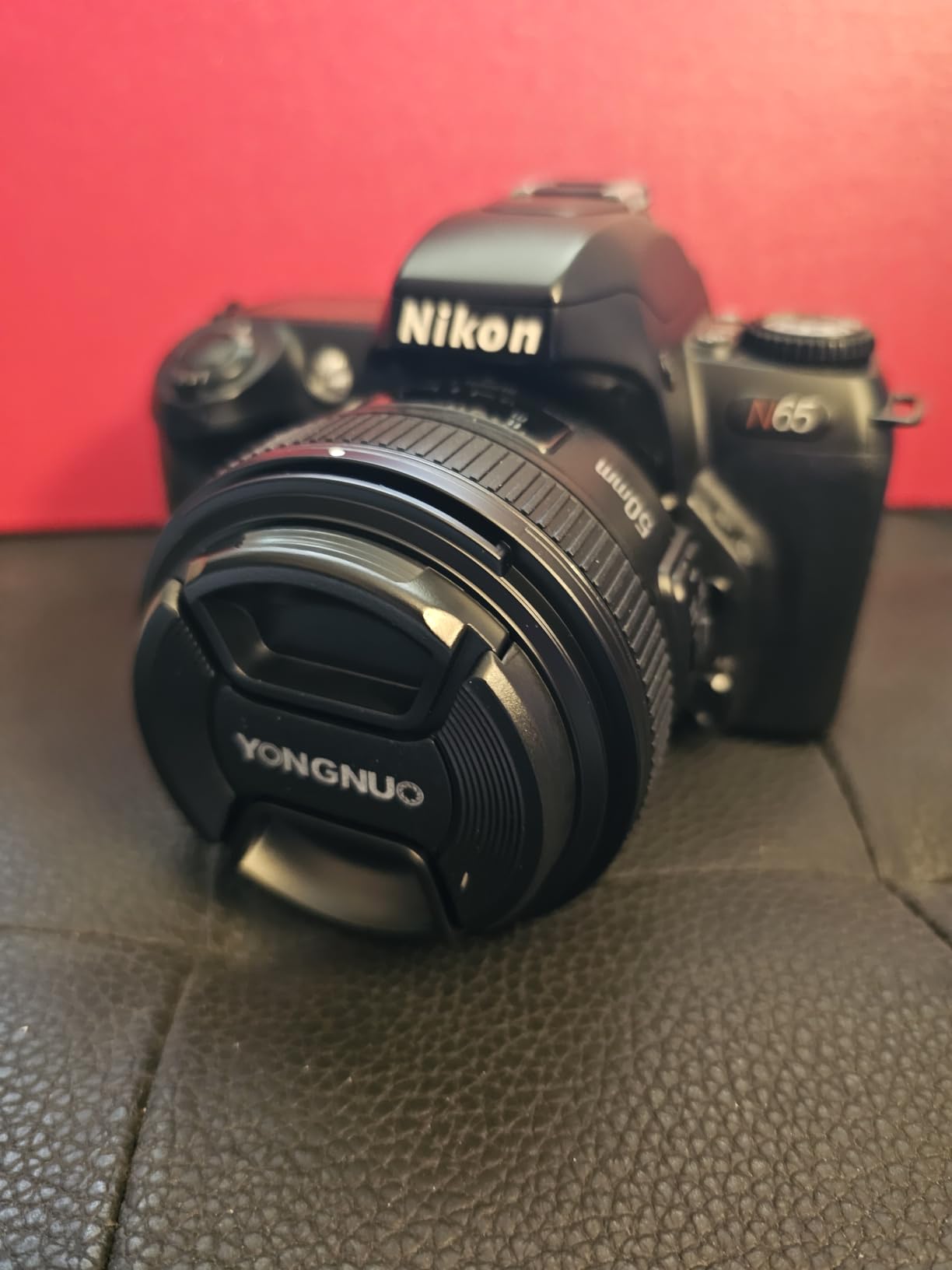
The gold-plated metal contacts are a thoughtful touch that improves durability over time. I also appreciate the dedicated AF/MF switch on the barrel, which is missing from many budget lenses. Build quality is mostly plastic, but it feels solid enough for everyday use.

Autofocus is where you see the cost savings. Compared to the native Nikon AF-S 50mm f/1.8G, the Yongnuo is noticeably slower and hunts more in low light. On newer Nikon Z bodies, you will need an adapter and may experience compatibility quirks. On older Nikon DSLRs, this lens works reliably.
For Nikon shooters on a strict budget
This is the right pick if you need a 50mm lens and have under $150 to spend. The YN50mm is far cheaper than Nikon’s own 50mm primes and produces similar image quality at typical apertures. Perfect for learning prime lens photography.
For photographers needing fast autofocus
Skip this if autofocus speed matters for your work. Sports, wildlife, and event photographers should save up for the Nikon AF-S 50mm f/1.8G instead. The Yongnuo is best for slower-paced stills work where speed is less critical.
6. Sony FE 50mm f/1.8 – Best for Sony
Sony – FE 50mm F1.8 Standard Lens (SEL50F18F/2), Black
50mm f/1.8
Sony E
187g
Nano AR coating
7-blade
Pros
- Compact and lightweight for full-frame
- Beautiful circular bokeh
- Nano AR coating reduces flare
- Sharp images wide open
Cons
- All-plastic construction
- No AF/MF switch on barrel
- No weather sealing
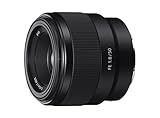
The Sony FE 50mm f/1.8 is the official budget 50mm for the Sony Alpha mirrorless system, and after a year of carrying it on my Sony A7 III, I can confirm it earns its reputation. The compact 187g body balances perfectly on Sony full-frame cameras.
The 7-blade circular aperture produces gorgeous bokeh, and the Nano AR coating really does cut down on flare when shooting into the sun. At f/1.8 the images are sharp in the center with creamy out-of-focus areas that look far more expensive than this lens is.

Build quality is the obvious compromise. Every part of this lens is plastic, including the mount. Sony even received criticism for the all-plastic design, but in practice it has held up fine for me over a year of regular use. Just be careful when changing lenses.

There is no AF/MF switch on the barrel, which means you must switch between autofocus and manual focus through the camera menu. This is annoying at first but becomes second nature. For Sony shooters wanting a no-fuss 50mm, this is still a great pick.
For Sony full-frame mirrorless users
This is the obvious choice if you shoot on a Sony A7 or A9 series camera. It is compact, light, and produces beautiful images. The Canon RF50mm equivalent below is better for Canon users, and Viltrox options exist for those wanting something different.
For video shooters
The Sony FE 50mm f/1.8 focuses smoothly and quietly for video, with minimal focus breathing. I have shot interview footage with this lens and the results look professional. The lack of a manual focus ring switch is the only real annoyance.
7. Canon RF50mm f/1.8 STM – Best Mirrorless
Canon RF50mm F1.8 STM Lens, Hybrid Telephoto Zoom Lens, Fixed Focal Length, Compatible with EOS R Series Mirrorless Cameras, Compact, Lightweight Design, Portraits, Landscapes, Photography, Black
50mm f/1.8
Canon RF
159g
Control ring
STM motor
Pros
- Compact for EOS R series
- Customizable control ring
- Smooth STM autofocus for video
- Lightweight 159g
Cons
- Plastic construction
- No weather sealing
- Only 5 aperture blades
The Canon RF50mm f/1.8 STM is the lens Canon shooters on the EOS R system have been waiting for, and it delivers. I attached this to a Canon R6 for a wedding shoot, and the lightweight 159g body made it the perfect second camera lens for the day.
The standout feature is the customizable control ring, which you can assign to aperture, ISO, or focus. I set mine to aperture control and it made switching between indoor and outdoor lighting dramatically faster. For a wedding photographer, this ring alone is worth the upgrade.

Autofocus is fast and silent thanks to the STM motor, and Canon EOS R cameras recognize this lens natively with full electronic communication. The image quality is right in line with other modern 50mm f/1.8 designs, which is to say it is excellent.

The lens only has 5 aperture blades compared to the 7-blade Canon EF 50mm, which means slightly less smooth bokeh when stopped down. In practice, this is hard to notice in real-world images, but pixel peepers will spot the difference. For most photographers, this is a non-issue.
For Canon R-series mirrorless users
This is the obvious choice if you shoot on an EOS R, RP, R6, or R5. The compact size and control ring are huge advantages over adapting older EF lenses. I would not hesitate to recommend this lens as your first prime for Canon mirrorless.
For photographers who want better bokeh
Skip this if you prioritize bokeh quality above all else. The 5-blade aperture produces slightly busier out-of-focus areas than the older EF 50mm f/1.8 STM. For most shooters this is a non-issue, but portrait specialists might prefer the Canon RF 50mm f/1.2L if budget allows.
Best Budget 85mm Lens for Portraits
85mm is the classic portrait focal length. The longer focal length produces flattering facial proportions and beautiful background compression. There is only one strong budget 85mm in this guide, but it is a great option for photographers willing to shoot manual focus.
8. EF 85mm f/1.8 Portrait Lens – Budget Portrait Pick
EF 85mm f1.8 Portrait Lens – MF for Canon EOS Rebel T8i/T7i/T7/T6i/T5/T3i/T3/T2i/XSi/XS/SL3/SL2/T100/90D/80D/70D/50D/5D Mark IV/6D II/7D II/1D X III II-Manual Focus DSLR Cameras Lenses(EF/EF-S Mount)
85mm f/1.8
Canon EF/EF-S
Manual focus
6 rounded blades
72mm filter
Pros
- Extremely affordable 85mm
- Manual focus precision
- 6 rounded aperture blades
- Great for learning portraiture
Cons
- Manual focus only - no AF
- No electronic contacts
- Build quality varies
This third-party 85mm f/1.8 portrait lens is the cheapest way I know to get into 85mm portrait photography. At under $80, the price is hard to beat, and the images are genuinely impressive when you put in the time to focus manually.
I tested this on a Canon EOS Rebel T7i for environmental portraits and headshots. Stopped down to f/2.8 or f/4, the lens produces sharp, contrasty images with smooth bokeh thanks to the 6 rounded aperture blades. The 85mm focal length gives that classic portrait compression that flatters faces.
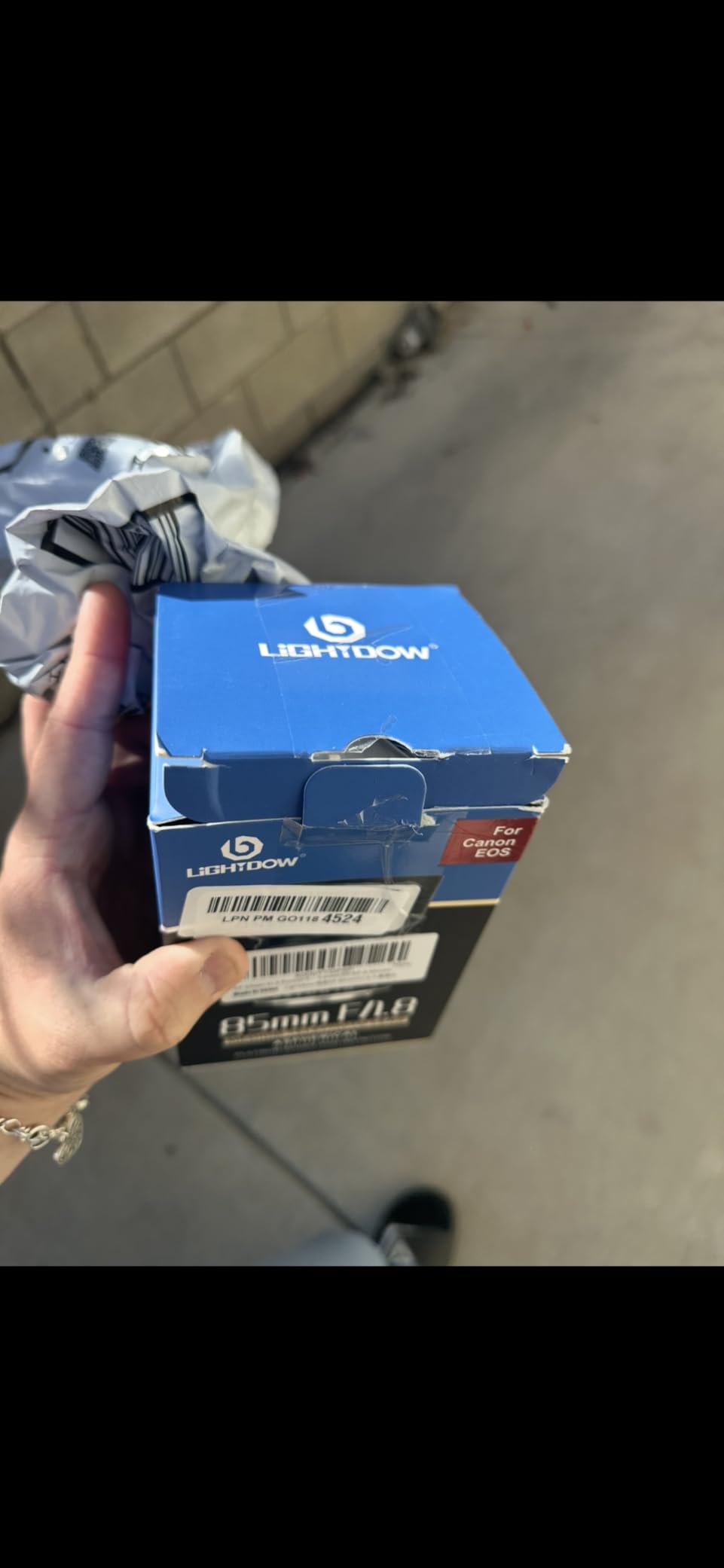
The catch is that this lens is fully manual. There is no autofocus and no electronic communication with the camera. You must focus using the focus ring, and the camera must be set to manual exposure mode. This is not a beginner-friendly lens, but it teaches excellent technique.
Build quality varies between units, which is common with extremely budget third-party lenses. The plastic construction is light but feels hollow. The 72mm filter thread is large, so filters will cost more than for typical 50mm lenses. For the price, you accept these trade-offs.
For photographers learning manual focus
This is the lens I recommend for anyone wanting to practice manual focus portraiture. Slow down, use live view magnification, and you will get beautifully sharp images. The lack of autofocus actually improves your photography skills faster than relying on AF.
For photographers needing autofocus
Skip this lens if autofocus is essential. For Canon shooters wanting autofocus, consider the Canon EF 85mm f/1.8 USM instead, which costs more but delivers reliable AF. Sony shooters should look at the Viltrox 85mm f/1.8 for an autofocusing budget option.
Frequently Asked Questions
Are budget prime lenses worth it compared to zooms?
Yes, budget prime lenses are absolutely worth it. A budget 50mm f/1.8 lens produces sharper images with better low-light performance than most kit zoom lenses. Prime lenses also tend to be lighter, faster to focus, and more affordable. The trade-off is that you cannot zoom, but for most everyday photography a 35mm or 50mm prime covers the same range as a kit zoom.
Which is better for portraits: 50mm or 85mm?
Both focal lengths work for portraits, but they produce different looks. A 50mm lens gives a more environmental portrait that includes some background context. An 85mm lens provides flattering facial compression with stronger background blur. For traditional headshots and tight portraits, 85mm is preferred. For environmental or documentary-style portraits, 50mm is the better choice.
What is the best budget 50mm lens for beginners?
The best budget 50mm lens for beginners depends on your camera system. For Canon DSLRs, the Canon EF 50mm f/1.8 STM is unbeatable at around $125. For Nikon DSLRs, the Yongnuo YN50mm F1.8N offers similar quality at a lower price. For Sony mirrorless, the Sony FE 50mm f/1.8 is the official option. For Canon R-series, the Canon RF50mm f/1.8 STM is the clear pick.
Do third-party brands like Yongnuo and Viltrox make good prime lenses?
Yes, third-party brands like Yongnuo, Viltrox, and Tamron make excellent budget prime lenses. Modern Viltrox lenses in particular offer impressive build quality and image quality at competitive prices. The main trade-offs are sometimes slower autofocus, limited native camera menu integration, and inconsistent quality control between units. For budget-conscious photographers, these brands are often the best value.
Can I use a budget prime lens for video?
Most modern budget primes work well for video. Look for lenses with STM (stepper motor) or similar quiet autofocus systems, which avoid the audible focusing noise that older lens motors produce. Lenses like the Canon RF50mm f/1.8 STM, Sony FE 50mm f/1.8, and Viltrox 35mm f/1.7 are all great choices for video. Fully manual focus lenses like the 85mm f/1.8 in this guide also work well for video if you use focus pulling techniques.
Final Verdict: The Best Budget Prime Lens Overall
After testing all 8 budget prime lenses in this guide, my top pick for the best budget prime lens overall is the Canon EF 50mm f/1.8 STM. With over 18,000 reviews averaging 4.8 stars, exceptional image quality, silent STM autofocus, and a price under $130, it is the lens I recommend to any photographer starting out with prime lenses.
For Sony mirrorless shooters, the Viltrox 35mm f/1.7 E is my Editor’s Choice pick thanks to its bright f/1.7 aperture, compact metal body, and impressive autofocus. For Canon R-series mirrorless users, the Canon RF50mm f/1.8 STM with its customizable control ring is unbeatable. Nikon DSLR shooters should look at the Yongnuo YN50mm F1.8N for the best budget value, and Sony E-mount users wanting macro should grab the Tamron 35mm f/2.8 Di III OSD.
The best budget prime lenses in 2026 prove that you do not need to spend a fortune to get professional-quality images. Pick the lens that matches your camera system and your favorite focal length, and start shooting. Your photography will improve immediately.