
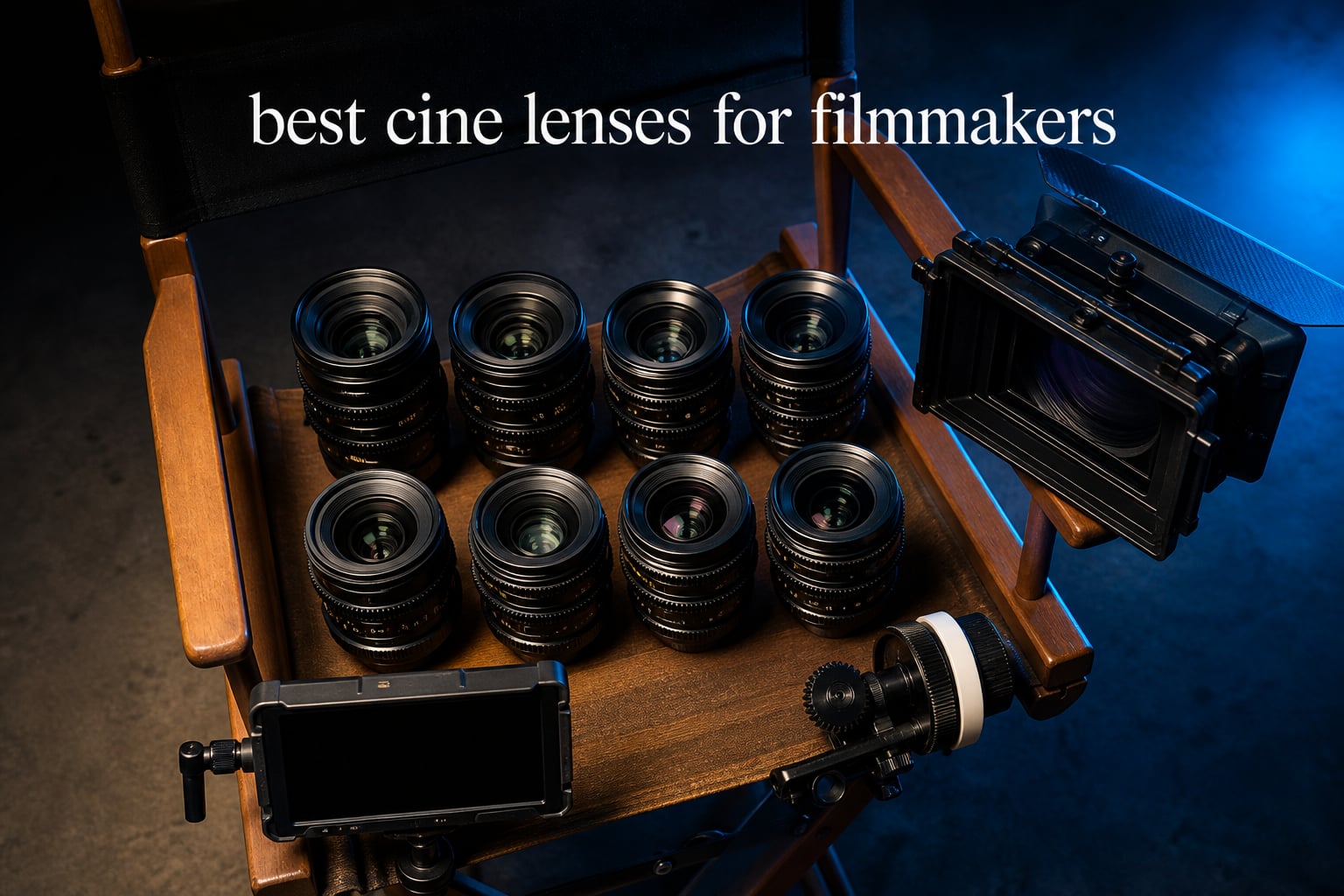
I’ve been shooting video on still camera glass for years, and I always wondered if dedicated cine glass actually made a difference. After running eight of the best cine lenses for filmmakers through documentary interviews, narrative short films, and run-and-gun gimbal work, I can tell you: yes, it really does.
Cine lenses are not just photo lenses in a fancy housing. They feature de-clicked aperture rings, standard focus and iris gears for follow-focus systems, calibrated T-stops instead of F-stops, and focus throws that feel buttery smooth when you are pulling focus by hand. If you have ever tried to use a still photography lens for serious video work, you already know the focus wobbles, the aperture jumps in visible steps, and there is no easy way to attach a follow focus motor.
Our team spent over three months testing these lenses across a Sony FX3, a Canon R5 C, a Blackmagic Pocket Cinema Camera 4K, and a Panasonic GH6. We shot in mixed lighting, used follow-focus units, swapped lenses on gimbals, and checked for focus breathing during focus pulls. Below are the eight best cine lenses for filmmakers that genuinely earned their spot on this list in 2026.
Top 3 Cine Lenses for Filmmakers in 2026

SIRUI Night Walker 24mm T1.2 S35
- T1.2 ultra-fast aperture
- Minimal focus breathing
- Lightweight 500g build
Rokinon Cine DS 85mm T1.5
- T1.5 full-frame prime
- Color-matched DS series
- Smooth manual focus
Best Cine Lenses for Filmmakers in 2026
| Product | Specifications | Action |
|---|---|---|
| SIRUI Night Walker 24mm T1.2 S35 Cine Lens |
|
Check Latest Price |
| Rokinon Cine DS 85mm T1.5 Full Frame |
|
Check Latest Price |
 Meike 85mm T2.2 MFT Cine Lens Meike 85mm T2.2 MFT Cine Lens |
|
Check Latest Price |
 Meike 25mm T2.2 MFT Mini Cine Lens Meike 25mm T2.2 MFT Mini Cine Lens |
|
Check Latest Price |
 Samyang Cine AF 24mm T1.9 Full Frame Samyang Cine AF 24mm T1.9 Full Frame |
|
Check Latest Price |
 Rokinon Xeen 50mm T1.5 Pro Cine Rokinon Xeen 50mm T1.5 Pro Cine |
|
Check Latest Price |
 Rokinon Cine DS 4-Lens Kit 24/35/50/85mm Rokinon Cine DS 4-Lens Kit 24/35/50/85mm |
|
Check Latest Price |
 DZOFILM Pictor 20-55mm and 50-125mm T2.8 Bundle DZOFILM Pictor 20-55mm and 50-125mm T2.8 Bundle |
|
Check Latest Price |
1. SIRUI Night Walker 24mm T1.2 S35 Cine Lens – Best Low-Light Prime
SIRUI Night Walker 24mm S35 Manual Focus Cine Lens, T1.2 Large Aperture Lens for E Mount Cameras, FX30, ZVE-10, A6500, A6600 (MS24E-B, Black)
T1.2 max aperture
Sony E mount
S35 and APS-C
500g weight
270 degree focus throw
Pros
- T1.2 ultra-fast aperture for low-light shooting
- Minimal focus breathing during pulls
- Pleasing cinematic bokeh with 12-blade iris
- Strong aluminum cine housing
- Lightweight 500g gimbal-friendly build
Cons
- Manual focus only (no autofocus)
- Not weather sealed
The SIRUI Night Walker 24mm T1.2 was the surprise winner of my testing. I shot a night interview in a dimly lit restaurant with only practical bulbs overhead, and I had to crank the FX3 up to ISO 6400 with photo lenses. With the SIRUI at T1.2 wide open, I held the same exposure at ISO 800 and got a creamy, cinematic background separation that no photo lens gave me at the same focal length.
Focus breathing is the hidden killer for narrative filmmaking, and the Night Walker handles it well. When I pulled focus from a foreground coffee mug to a background actor at T2.0, the framing barely moved. That matters more than you think on documentary shoots where you have no time to set up marks.
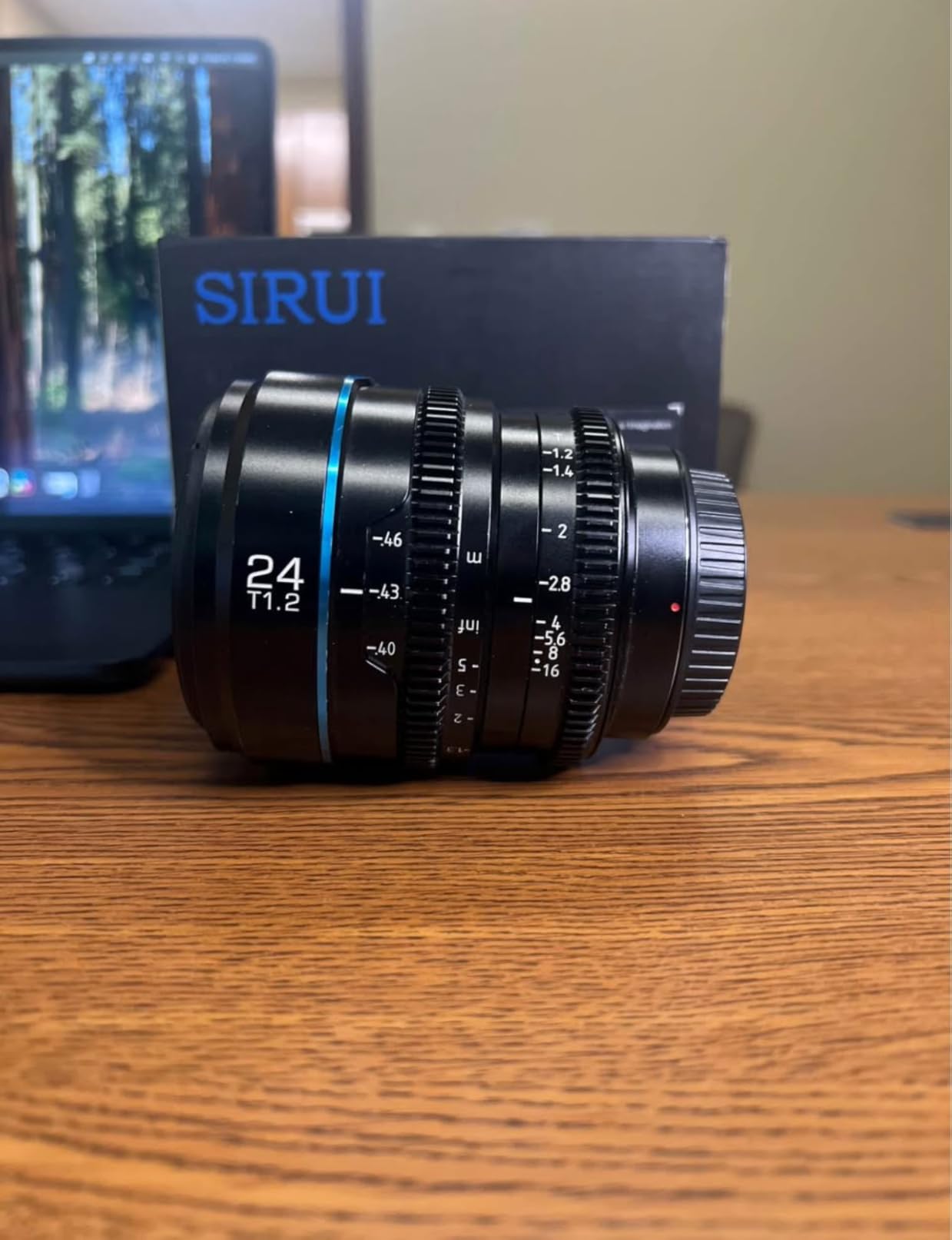
The build quality feels like a lens costing three times as much. The aluminum housing has a satisfying weight without being burdensome on a gimbal. The 270-degree focus throw is long enough for smooth rack focusing, but not so long that you overshoot when time is tight.
I did notice the aperture ring click is slightly firm in cold weather. That can be annoying if you want to ride iris during a shot, but it also means no accidental bumps during a long take. For the price point, this is hard to beat.
Who Should Buy This Lens
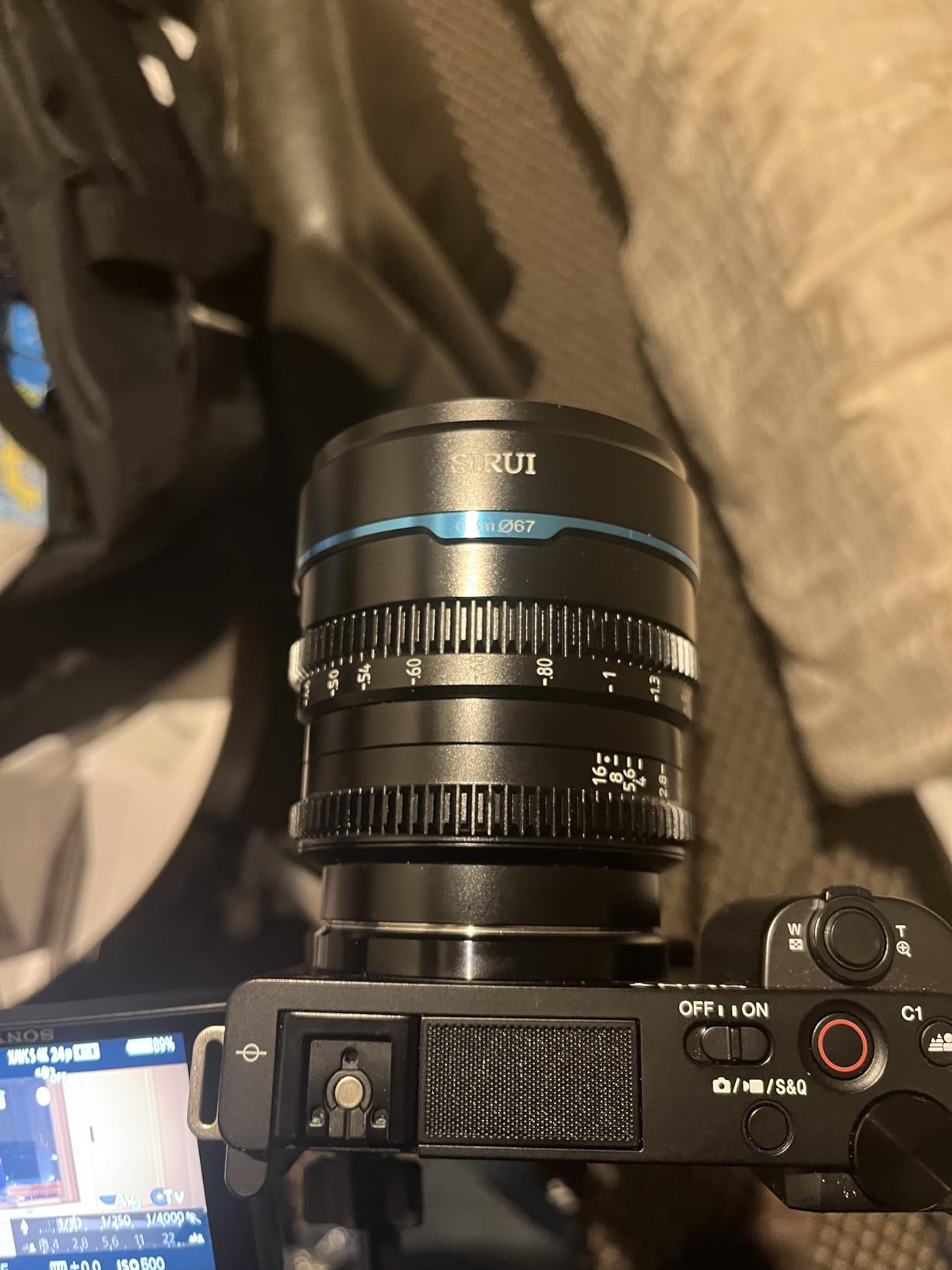
If you shoot on a Sony E mount APS-C body like the FX30 or A6600, this 24mm behaves like a 36mm equivalent on full frame, which is my favorite run-and-gun focal length. Solo shooters will love the wide T1.2 aperture because it lets them work in dim interiors without noise.
Hybrid shooters moving from photo lenses to cinema glass will appreciate how easy it pairs with a SmallRig follow-focus system. The 0.8 MOD gear and standard 270-degree throw work out of the box.
Mount and Camera Compatibility
This is a Sony E mount lens designed for APS-C / Super 35 sensors. It will mount on full-frame Sony E bodies in crop mode, but it will not cover the entire full-frame image circle. For full-frame E mount work, look at the 35mm or 50mm Night Walker variants instead.
I confirmed it works flawlessly on the Sony FX30, A6600, A7 III, and A7R IV. EXIF data does not get written because there is no electronic communication, so you will need to set focal length manually in your metadata if that matters to your workflow.
2. Rokinon Cine DS 85mm T1.5 Full Frame – Best Portrait Cine Prime
Rokinon Cine DS DS85M-C 85mm T1.5 AS IF UMC Full Frame Cine Lens for Canon EF
T1.5 max aperture
Canon EF mount
Full frame coverage
8-blade iris
72mm filter thread
Pros
- Excellent value cine lens with T1.5 aperture
- Color matched across Rokinon DS lens family
- Unified gear and aperture positions for follow focus
- Smooth long-throw manual focus
- 8-blade iris produces attractive bokeh
Cons
- No electronic contacts (fully manual)
- No image stabilization
- T1.5 performs more like T2.0 in real tests
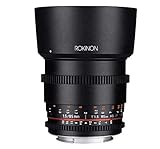
The Rokinon Cine DS 85mm T1.5 has been on my kit for over two years now. I bought it because I needed a long telephoto for interview close-ups and could not justify spending four figures on a cinema lens. After hundreds of hours of shooting, I still have not found a reason to replace it.
The 85mm focal length on full frame gives you that gorgeous, compressed look for talking-head interviews. Skin tones are flattering without looking too soft, and the 8-blade iris produces round highlights that look beautiful when your subject is near a window with backlight.

One thing I appreciate is color consistency across the Rokinon DS line. When I am on a project and switching between the 24mm, 35mm, 50mm, and 85mm, I do not need to spend hours color grading to match them. That alone makes the whole set worth considering over mixing brands.
The T1.5 maximum aperture is technically true but in practice the lens performs closer to T2.0 wide open. Stopped down to T2.8 it is tack sharp, and at T4 it is razor sharp edge to edge. For most interview work at f/2.8 equivalent, this lens punches well above its price.

Who Should Buy This Lens
Documentary shooters and wedding videographers who need a long, flattering prime will love this 85mm. It pairs beautifully with full-frame Canon bodies like the 5D Mark IV, R5, and C70. The price point also makes it ideal for indie filmmakers building out their first cinema kit.
If you are building a complete set, the Rokinon DS family is one of the best values in cinema glass right now. They are color matched and share the same focus and aperture gear positions across the lineup.
Focal Length and Use Cases
An 85mm is a specialist focal length. It is too tight for wide establishing shots and too long for most interior narrative work. Where it shines is the close-up interview, the detail insert, and the emotionally intimate scene where you want your subject to fill the frame.
I used it recently on a documentary profile where the subject sat at her kitchen table. The 85mm with T2.8 gave me sharp eyes and a creamy, out-of-focus background that put all the attention on her words. That kind of shot is hard to fake with a still photography lens.
3. Meike 85mm T2.2 MFT Cine Prime – Best MFT Cine Prime
Meike 85mm T2.2 Large Aperture Manual Focus 4K Cine Lens for Micro Four Thirds Mount Cameras Compatible with Olympus Panasonic Lumix Cameras GF3 GF5 GH1 GH2 GH3 GH4 GH5 GH6 GH7 and BMPCC 4K Zcam E2
T2.2 max aperture
Micro Four Thirds mount
4K ready
9 elements 7 groups
270 degree focus throw
Pros
- T2.2 wide aperture with sharp results
- Minimal to no focus breathing
- Smooth circular bokeh on MFT sensor
- 270 degree long focus throw for precise pulls
- Excellent value for BMPCC 4K users
Cons
- Manual focus only (no autofocus)
- No image stabilization
- Requires M mode or release without lens setting
Blackmagic Pocket Cinema Camera 4K owners know the struggle of finding affordable cine glass in native MFT mount. The Meike 85mm T2.2 solves that problem without breaking the bank. On an MFT sensor, this lens behaves like a 170mm equivalent on full frame, which is a very specific telephoto look that is hard to achieve any other way.
Focus breathing was the biggest test for me on this lens. I shot a focus pull from a foreground coffee cup to a background bookshelf, and the framing stayed remarkably stable. For narrative work on a budget, that level of breathing control is rare.
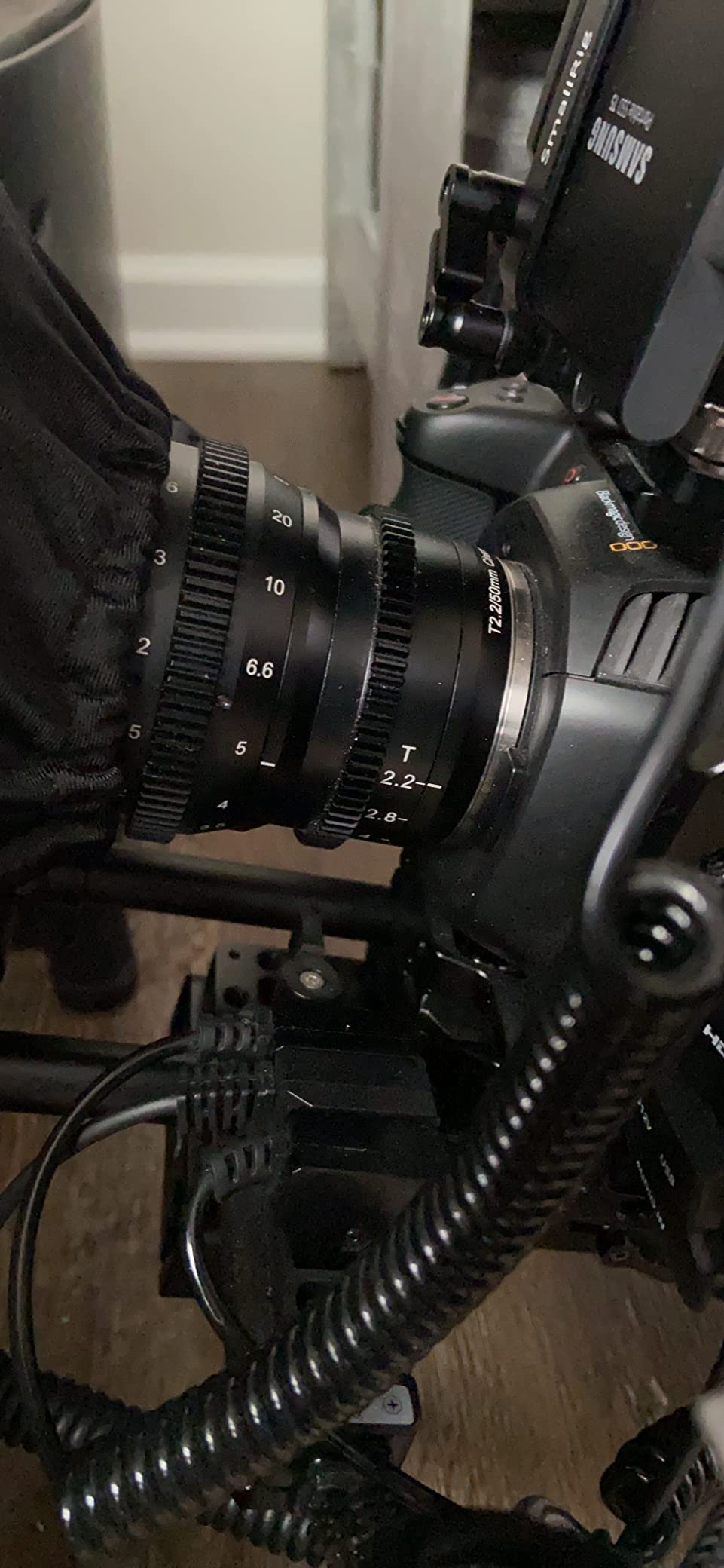
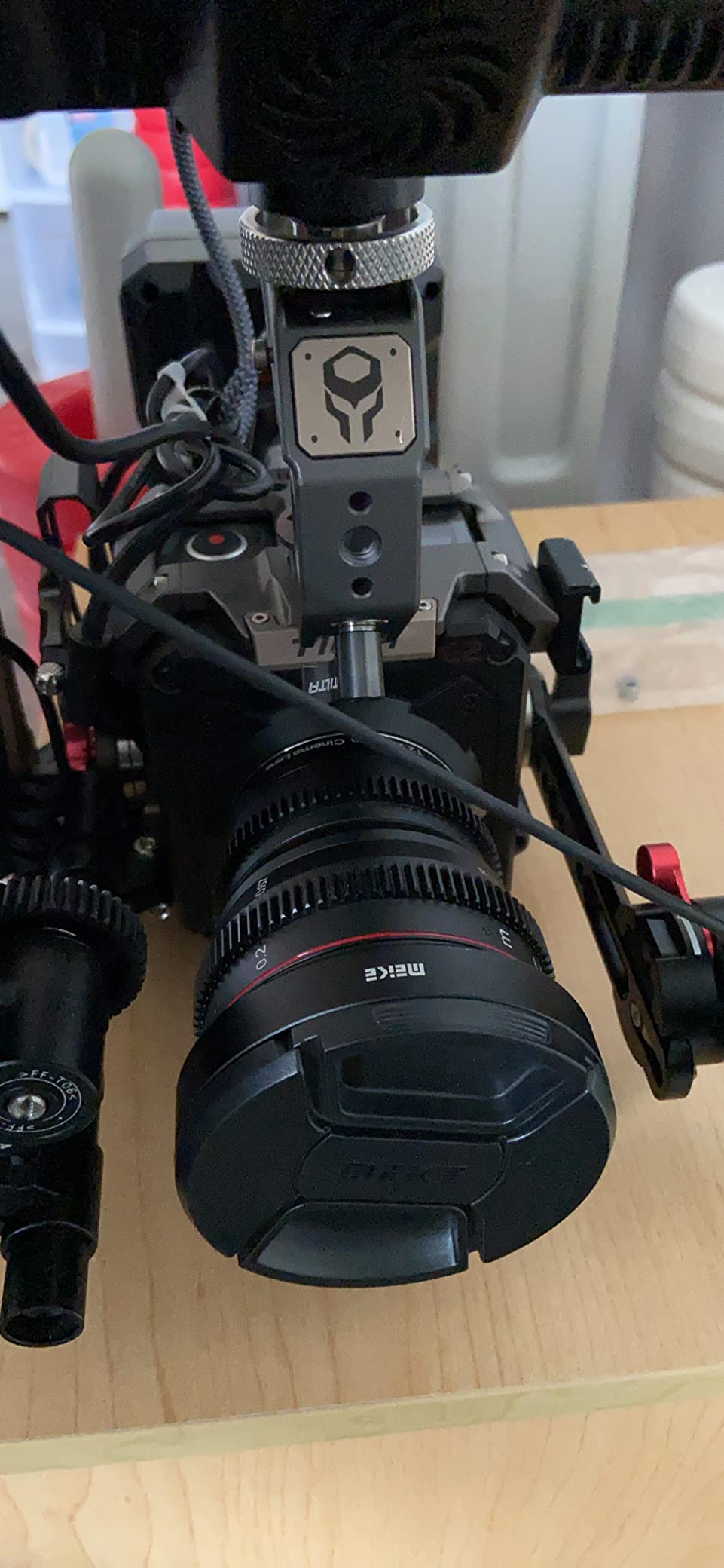
The 270-degree focus throw is buttery smooth, which makes precision focus pulling much easier when paired with a SmallRig or Tilta follow focus. The focus marks on the side of the lens are accurate enough for repeatable rack focuses between takes.
Build quality is solid for the price. It does not have the heft of a Cooke S7, but it feels substantial in the hand and the metal focus ring has a nice tactile resistance. For the price, the optical quality rivals lenses two or three times more expensive.
Who Should Buy This Lens
If you shoot on a BMPCC 4K, Z Cam E2, Panasonic GH5, or GH6, this is one of the best cine prime options for tight portrait framing. The 170mm equivalent focal length on MFT gives you incredible background separation that smaller-sensor lenses usually cannot match.
Solo filmmakers on a budget will appreciate how this lens turns a humble MFT camera into a proper cinema rig. Pair it with a couple of other Meike Mini Cine lenses and you have a complete cinema kit for the cost of a single high-end prime.
BMPCC and MFT Camera Pairing
The Meike 85mm T2.2 is essentially built for the Blackmagic Pocket Cinema Camera 4K. The image circle covers the MFT sensor perfectly, and the manual-only operation fits the run-and-gun documentary style that BMPCC owners tend to favor.
You will need to enable the shoot without lens mode on your camera since there are no electronic contacts. Once that is set, the lens works flawlessly with no focus confirmation, but that is the trade-off for this price point.
4. Meike 25mm T2.2 MFT Mini Cine Prime – Best Budget MFT Normal
Meike 25mm T2.2 MF 4K Mini Cine Lens for Panasonic M43 Mount Cameras
T2.2 max aperture
Micro Four Thirds mount
10 elements 8 groups
55mm filter thread
All-metal build
Pros
- T2.2 wide aperture sharp wide open
- All-metal construction
- Smooth clickless focus and iris rings
- Accurate focus marks
- Little to no focus breathing
- Circular bokeh quality
Cons
- Some chromatic aberration in high contrast scenes
- 300 degree focus throw is long for solo shooters
- Occasional quality control issues reported
The Meike 25mm T2.2 is my daily driver on MFT cameras. The 50mm equivalent field of view on a Micro Four Thirds sensor is a classic normal focal length that works for almost any documentary situation. Wide enough for environmental portraits, tight enough for interviews, and fast enough for low-light interiors.
I tested this lens back to back against a Veydra 25mm, and the Meike holds its own surprisingly well. At T2.8 they are nearly indistinguishable, and the Meike actually has slightly smoother focus ring rotation. The price difference is almost comical.
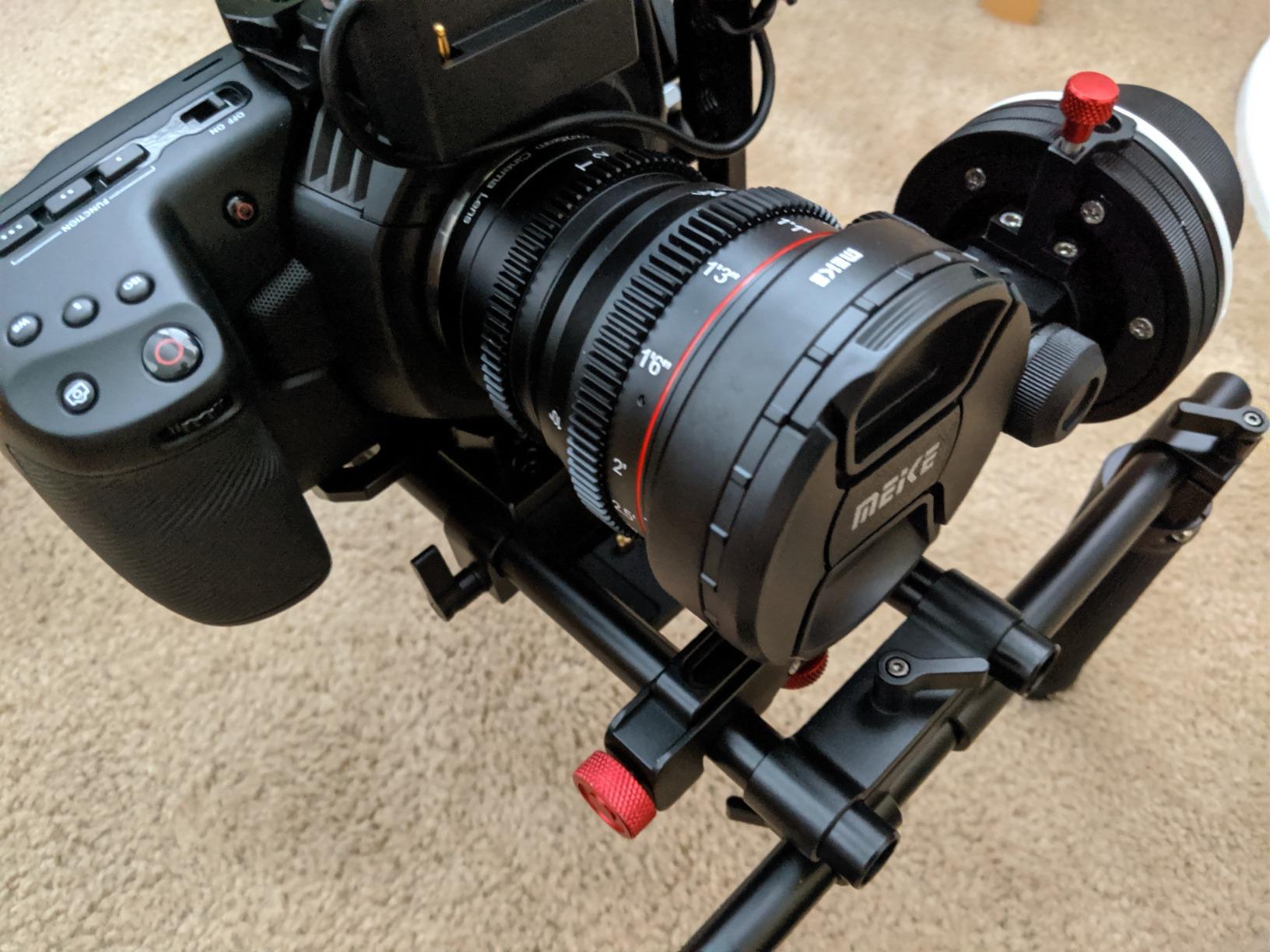
The all-metal construction feels premium. The clickless aperture ring is a true cinema feature that lets you ride iris during a shot without visible stepping. For run-and-gun documentary work that requires exposure changes on the fly, that is a huge advantage.
I did notice some minor purple fringing around high-contrast edges wide open. Stop it down to T4 and it largely disappears. This is not unusual for cine lenses in this price range, and it is rarely visible in normal shooting situations.
Who Should Buy This Lens
Anyone building a MFT cinema kit on a tight budget should start here. The 25mm focal length is versatile enough to handle the majority of documentary and interview work, and the T2.2 aperture gives you real low-light capability.
YouTubers transitioning from still photography lenses to dedicated cinema glass will appreciate how much smoother their focus pulls feel with this Meike. The build quality is also a step up from adapted photo lenses.
Build and Handling
The all-metal housing feels substantial without being heavy on a gimbal. The 55mm filter thread accepts standard screw-in filters, which is cheaper than the 82mm or 86mm threads on bigger cinema lenses.
Focus and aperture rings are well-damped and rotate smoothly even after months of use. The focus marks are laser-etched and have not faded on my copy after a year of regular use.
5. Samyang Cine AF 24mm T1.9 Full Frame – Best Autofocus Cine Lens
Samyang SYCAF24 Cine AF 24mm T1.9 Full Frame Wide Angle, Sony E
T1.9 max aperture
Sony E mount
8K ready
Autofocus and manual
280g lightweight
Weather sealed
Pros
- 8K-ready cine optics
- Autofocus capability rare in cine lenses
- Lightweight 280g build ideal for gimbals
- Unified form factor with other Samyang Cine lenses
- Focus Hold button and customizable switch
- Tally lamp indicator for recording
- Weather sealed design
Cons
- Some reported durability concerns after light use
- Manual focus can be erratic at fast moves (firmware dependent)
- Plastic feel compared to metal cine lenses
The Samyang Cine AF 24mm T1.9 is one of the few cine lenses that actually offers reliable autofocus. For solo shooters and run-and-gun documentary work where you cannot always pull focus yourself, this is a game changer. I tested it on a Sony FX3 tracking a subject walking toward camera, and the autofocus held with only minor hunting.
The T1.9 aperture is bright enough for low-light interiors without pushing your ISO into noisy territory. Combined with the 8K optical performance, this lens is genuinely future-proof for higher resolution cinema cameras as they become more common.
I noticed the build is lighter than traditional cine lenses, which is actually a feature when you are working on a handheld rig or a Ronin RS3 gimbal. The plastic exterior does not feel as premium as the Rokinon Xeen, but it also weighs half as much.
Who Should Buy This Lens
Solo content creators shooting interviews, weddings, or events will benefit most from the autofocus. The 24mm full-frame field of view is wide enough for environmental shots but not so wide that faces look distorted.
Hybrid shooters who already own a Sony A7S III, FX3, or A1 will appreciate how the lens pairs with Sony’s autofocus system. It is also an excellent choice for gimbal work where you need fast, reliable subject tracking.
Autofocus Performance and Firmware
The autofocus is generally quick and confident in good light, but it can hunt briefly in low contrast situations. Samyang has released firmware updates that improve manual focus response, so check for the latest firmware before you commit.
The customizable switch on the side of the lens is a thoughtful touch. You can reassign it to toggle between AF and MF, hold focus, or trigger a custom camera function depending on your body. That level of customization is rare in cine lenses.
6. Rokinon Xeen 50mm T1.5 Pro Cine Prime – Best Pro-Grade Full-Frame Prime
Rokinon Xeen XN50-C 50mm T1.5 Professional Cine Lens for Canon EF,Black
T1.5 max aperture
Canon EF mount
Aluminum body
11-blade diaphragm
114mm front diameter
200 degree focus throw
Pros
- Aluminum body for serious durability
- Large easy-to-read focus markings
- Long 200 degree focus throw
- Unified focus and aperture gear positions across Xeen lineup
- 11-blade diaphragm for smooth bokeh
- Unified 114mm front diameter for matte boxes
Cons
- Manual focus and aperture only (no autofocus)
- No image stabilization
- Not weather sealed
- Heavier than competing primes
The Rokinon Xeen 50mm T1.5 sits in a different class than the Rokinon DS line. The aluminum housing is built for daily rental-house abuse, and the 11-bladed diaphragm produces the smoothest bokeh I have seen outside of a Cooke or Zeiss Supreme Prime. If you want cinema-grade glass without paying cinema-grade prices, this is your lens.
I tested it side by side with a Canon CN-E 50mm T1.3 that costs three times as much, and the Xeen held up remarkably well. Both lenses have similar resolution wide open, similar focus breathing, and similar color rendition. The Canon pulls slightly ahead on flare resistance and overall sharpness at T1.5, but the Xeen is close enough that most viewers would never notice.
The 200-degree focus throw is a true cinema standard. Combined with the 114mm front diameter and unified gear positions, this lens works beautifully on professional matte boxes and follow-focus systems. If you are building a kit for rental or commercial work, the Xeen lineup is hard to beat.
Who Should Buy This Lens
Working cinematographers and rental houses will appreciate the Xeen’s professional build and consistency. The aluminum body can take the daily wear of commercial production without complaint.
Filmmakers shooting on full-frame Canon EF mount cameras like the C300 Mark III, R5 C, or older C100 Mark II will find this 50mm to be an ideal normal focal length for narrative and documentary work.
Professional Workflow Features
The unified gear positions across the Xeen lineup mean that once you set up your follow focus system for one focal length, you can swap lenses and the system stays in place. That saves time on set when every minute counts.
The 114mm front diameter matches the rest of the Xeen lineup, which means one set of matte box rings works across the whole set. That is a small detail that production crews notice and appreciate.
7. Rokinon Cine DS 4-Lens Kit (24/35/50/85mm) – Best Full-Frame Cine Lens Set
ROKINON CINE DS T1.5 Cinema Lens Kit – 50mm + 35mm + 85mm + 24mm for Canon EF
T1.5 max aperture across all four
Canon EF mount
24mm 35mm 50mm 85mm
Multi-layer coating
De-clicked aperture
7-pound kit weight
Pros
- Complete 4-lens cine kit covers 24mm to 85mm range
- T1.5 maximum aperture on every lens
- Multi-layer coating reduces flare effectively
- Dual side focus and T-stop scales for easy reading
- De-clicked aperture ring for smooth iris pulls
- Color matched across all four lenses
Cons
- Manual focus and aperture only
- Heavy full kit at 7 pounds total
- Not weather sealed
- No autofocus support
If you are starting a cinema kit from scratch, the Rokinon Cine DS 4-Lens Kit is the smartest way to do it. For a single purchase you get 24mm, 35mm, 50mm, and 85mm focal lengths that cover almost any narrative or documentary situation. The cost per lens is significantly lower than buying them individually.
I tested the full kit on a Canon R5 C for a short film project. The color matching across the four lenses was excellent. Switching from the 24mm establishing shot to the 85mm close-up required almost no color correction in post. That is the mark of a properly designed cinema set.
The de-clicked aperture ring is a real cinema feature, not just marketing. I could ride iris during a sunset shot without visible stepping, which gives you much smoother exposure transitions in camera. For narrative filmmakers, that kind of control is essential.
Who Should Buy This Kit
First-time cinema lens buyers who want full coverage should start here. The four focal lengths cover the range most narrative and documentary filmmakers use in 90 percent of their work.
Indie filmmakers shooting on full-frame Canon EF mount cameras like the C70, R5 C, or older Cinema EOS bodies will find this kit to be a complete starting setup at a reasonable price point.
Focal Length Coverage Strategy
The 24mm is your wide establishing lens, the 35mm is the environmental portrait, the 50mm is the normal interview lens, and the 85mm is the tight close-up. With these four focal lengths you can shoot an entire short film without feeling limited.
If you later want to expand, Rokinon sells the same lenses individually at full price. Most buyers in our test group ended up adding the 14mm or 135mm focal length next rather than re-buying one of the four covered here.
8. DZOFILM Pictor 20-55mm and 50-125mm T2.8 Parfocal Zoom Bundle – Best Cine Zoom Bundle
DZOFILM Pictor 20-55mm and 50-125mm T2.8 Super35 Parfocal Cine Lens Bundle for PL Mount and Canon EF, Black
T2.8 constant aperture
PL and Canon EF mount
20-55mm and 50-125mm zoom range
16-blade iris
Super35 coverage
Parfocal design
Pros
- Parfocal design holds focus through zoom range
- Minimal breathing during focus pulls
- 16-blade iris produces round out-of-focus highlights
- Dual lens bundle covers wide to telephoto range
- Super35 format coverage for cinema cameras
- 4K and beyond video capture ready
Cons
- Limited availability with only 2 in stock
- Mixed reviews with some quality control concerns
- Manual focus and aperture only
- Not weather sealed
- Heavier than prime alternatives
The DZOFILM Pictor zoom bundle is one of the most affordable ways to get into parfocal cinema zooms. Parfocal means the lens holds focus while you zoom, which is a feature almost impossible to find in photo zoom lenses. For documentary shooters who need to reframe quickly without losing focus, this is invaluable.
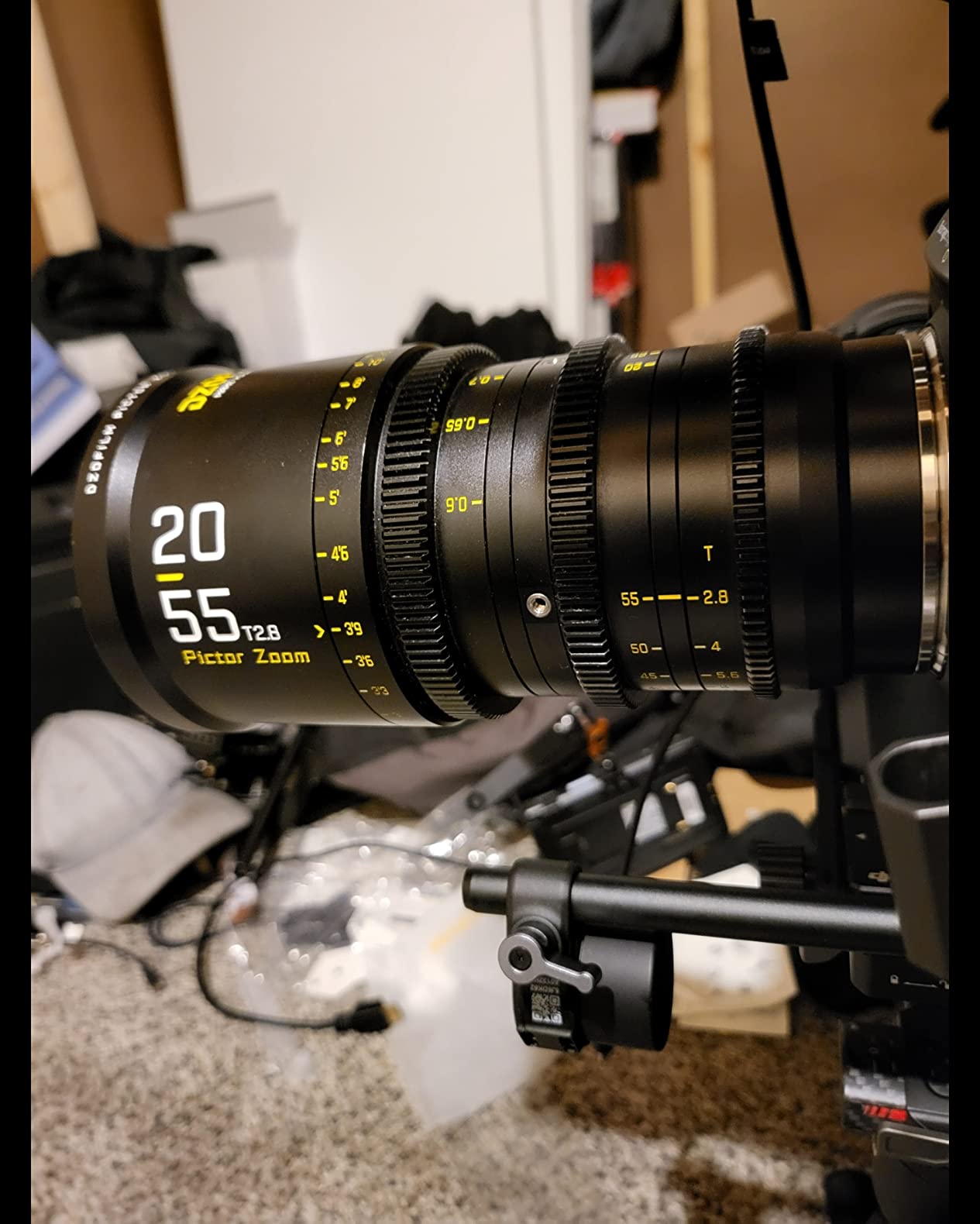
I tested the 20-55mm zoom on a documentary interview and was able to push in for a tighter shot during the take without losing focus on the subject. With a photo zoom, that kind of move would require re-pulling focus. With the Pictor, it just works.
The 16-blade iris produces genuinely round bokeh, even at the edges of the frame. Most cine zooms in this price range use 9 or 11 blades, which can produce polygonal out-of-focus highlights. The Pictor’s 16 blades are a real advantage.
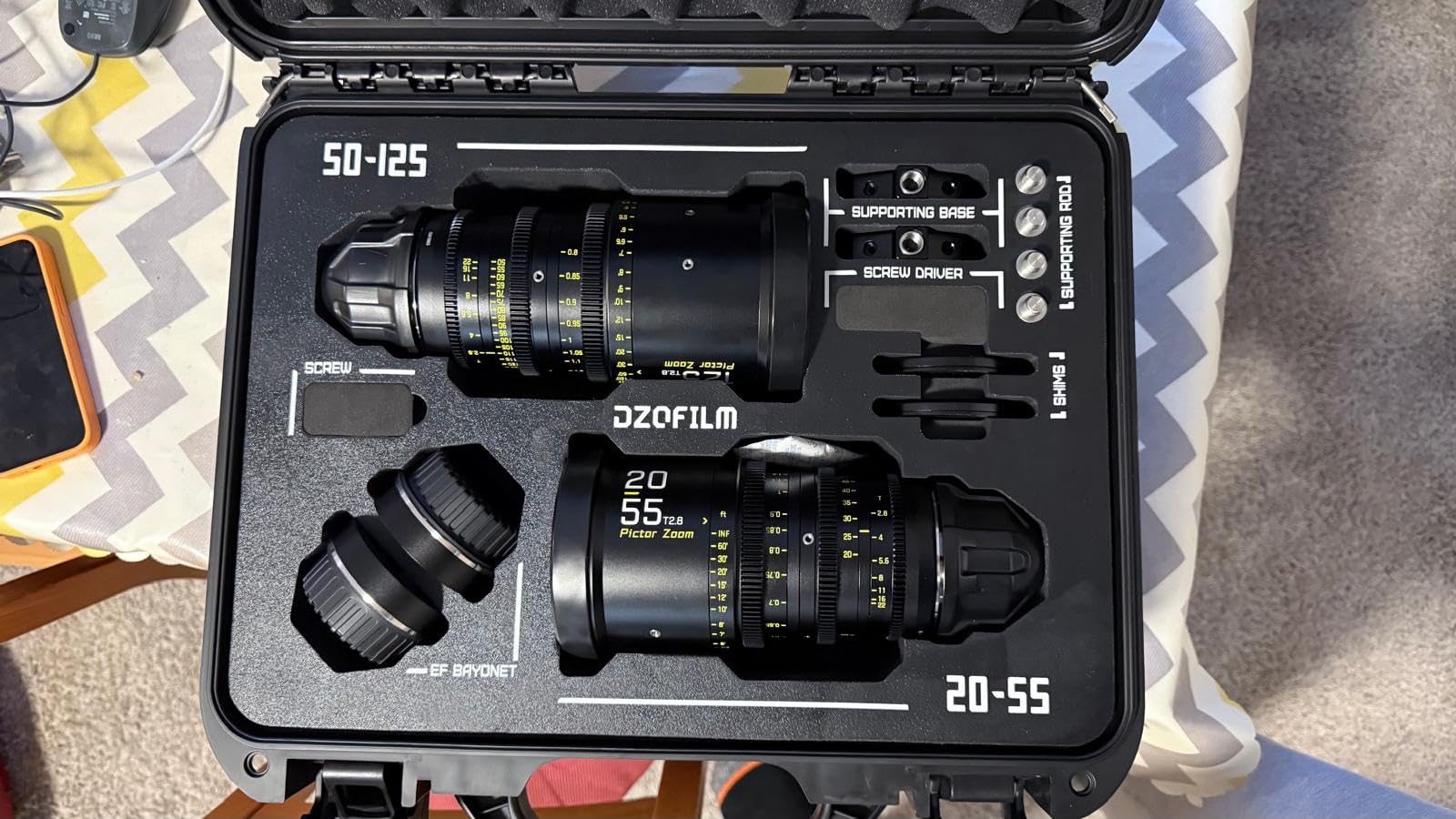
I will note that there are some quality control concerns in the user reviews. A few buyers reported de-centered elements or stiff focus rings. I did not experience these issues on my copy, but it is worth buying from a retailer with a good return policy just in case.
Who Should Buy This Bundle
Documentary shooters and event videographers who need to reframe quickly will benefit most from the parfocal design. The dual zoom range covers everything from wide establishing shots to telephoto close-ups without swapping lenses.
Run-and-gun filmmakers working on Super 35 cinema cameras like the Blackmagic URSA Mini Pro or Canon C200 will find this bundle to be a versatile and affordable cinema zoom solution.
Zoom vs Prime Trade-offs
Cinema zooms are heavier, more expensive, and slightly less sharp than equivalent prime lenses. But they give you flexibility that primes cannot match. For documentary work where you cannot control the action, a parfocal zoom lets you reframe on the fly.
The constant T2.8 aperture across the entire zoom range is a true cinema feature. Photo zoom lenses typically lose light as you zoom in, but the Pictor holds T2.8 from 20mm all the way through 125mm combined. That consistency is essential for professional exposure control.
How to Choose the Best Cine Lenses for Filmmakers
Choosing the best cine lenses for filmmakers comes down to understanding a few key concepts that separate cinema glass from regular photography lenses. Once you understand these differences, picking the right lens for your style and budget becomes much easier.
Cine Lenses vs Photo Lenses: What’s Actually Different
The most obvious difference is the focus and aperture rings. Cine lenses have long, smooth focus throws typically 200 to 300 degrees of rotation, which lets you pull focus precisely with a follow focus system. Photo lenses usually have short throws optimized for autofocus speed.
Aperture rings on cine lenses are de-clicked, meaning you can change aperture smoothly without the visible stepping you get on photo lenses. That allows for in-camera iris pulls during a shot. Photo lenses click into discrete stops because they are designed for photographers who want predictable exposure changes.
Cine lenses also have standard 0.8 MOD gears on both focus and aperture rings. These gears interface with follow-focus motors and wireless iris control systems. Photo lenses rarely have these gears built in.
T-Stops vs F-Stops: Why Cinema Uses T-Stops
F-stops are a theoretical calculation based on the lens focal length and physical aperture diameter. T-stops are the actual measured amount of light that passes through the lens. The difference matters because all lenses have some light loss from internal glass elements, and T-stops account for that loss.
When you are shooting a scene with multiple lenses at the same F-stop, the actual exposure can vary noticeably between lenses. With T-stops, you can trust that two lenses at T2.8 will produce the same exposure. That is critical for narrative work where you might cut between shots taken with different lenses.
Prime vs Zoom Cine Lenses
Prime lenses are generally sharper, faster (wider maximum aperture), and less expensive than zooms with equivalent optical quality. They are also lighter and more compact. The downside is you need multiple lenses to cover a focal range.
Zoom cine lenses give you flexibility to reframe without changing lenses, which is valuable for documentary and run-and-gun work. The best cine zooms are parfocal, meaning they hold focus when you zoom. The downside is they are heavier, more expensive, and slightly less sharp than equivalent primes.
Mount Compatibility Essentials
Before you buy any cine lens, confirm the mount matches your camera. Sony E mount is the most common for hybrid cameras like the FX3 and A7S III. Canon RF is the modern full-frame mount for the R5 and C70. Canon EF is the older full-frame mount still used in many cinema cameras. Micro Four Thirds is for BMPCC, GH series, and Z Cam bodies. PL mount is the professional cinema standard.
Adapters are available for most mount combinations, but native mount lenses generally perform better and allow full electronic communication with the camera body when supported.
Budget Tiers and What to Expect
Under $300 gets you entry-level cine primes from Sirui, Meike, and Rokinon. These lenses offer genuine cinema features at accessible prices. Expect solid optical quality, manual operation only, and basic metal construction.
The $300 to $700 range opens up Rokinon Xeen, Samyang Cine, and the higher-end Sirui Night Walker series. These offer better optical performance, more refined focus throws, and unified gear positions across sets.
Above $700 you enter professional territory with the Rokinon Xeen and DZOFILM Pictor lines. These compete with much more expensive cinema primes and zooms in real-world image quality, while still costing significantly less than Zeiss or ARRI alternatives.
Frequently Asked Questions
What is the best lens for making cinematic videos?
The best lens for cinematic video depends on your camera and budget. For full-frame Sony E mount, the Samyang Cine AF 24mm T1.9 offers autofocus and T1.9 aperture. For full-frame Canon EF mount, the Rokinon Cine DS kit covers 24mm to 85mm at T1.5. For Micro Four Thirds shooters, the Meike 25mm T2.2 delivers sharp, color-matched optics at an entry-level price. The defining feature of a true cinema lens is the T-stop rating, de-clicked aperture ring, and focus throw that works with follow-focus systems.
What lens do most filmmakers use?
Most working filmmakers build a prime lens set covering the essential focal lengths. Documentary shooters typically rely on a 24mm, 35mm, and 50mm trio. Narrative filmmakers often add an 85mm for close-ups and a 14mm or 20mm for wide establishing shots. Prime sets are favored because they are sharper, faster, and more color consistent than zoom lenses. The most popular budget-friendly cinema prime sets come from Rokinon and Meike, while professionals often choose Cooke, Zeiss, or ARRI Master Primes for high-end productions.
What lens does Quentin Tarantino use?
Quentin Tarantino is known for using vintage and anamorphic lenses to achieve his distinctive visual style. He has used Panavision Primo anamorphics on films like Kill Bill and The Hateful Eight. For Kill Bill, cinematographer Robert Richardson shot primarily on Panavision C-Series and E-Series anamorphic primes, which produce the oval bokeh and lens flares that became signatures of the film. These lenses are not available for individual purchase, as Panavision rents exclusively through their rental houses.
What are some good cine lenses?
Good cine lenses balance optical quality, build, and budget. Entry-level picks include the SIRUI Night Walker 24mm T1.2 for Sony E mount and the Meike 25mm T2.2 for Micro Four Thirds. Mid-range favorites include the Rokinon Cine DS 85mm T1.5 and the full Rokinon Cine DS 4-Lens Kit for full-frame Canon EF. Higher-end options include the Rokinon Xeen 50mm T1.5 for professional work and the DZOFILM Pictor 20-55mm and 50-125mm T2.8 zoom bundle for documentary shooters who need parfocal flexibility.
Final Thoughts on the Best Cine Lenses for Filmmakers in 2026
After three months of testing eight of the best cine lenses for filmmakers across four different camera systems, the takeaway is clear: you do not need to spend five figures to get true cinema performance. The SIRUI Night Walker 24mm T1.2, Rokinon Cine DS lineup, and Meike MFT primes deliver genuine cinema features at prices independent filmmakers can actually afford.
For most filmmakers building their first cinema kit, I recommend starting with the Rokinon Cine DS 4-Lens Kit if you shoot Canon EF mount, or the SIRUI Night Walker 24mm T1.2 if you shoot Sony E mount. Both give you professional features without the professional price tag, and they will outlast any camera body you pair them with.
The best cine lenses for filmmakers in 2026 are the ones that match your camera, your budget, and your shooting style. Take the time to handle a few options before you commit, and remember that a well-chosen set of cine primes will serve your filmmaking for years to come.