
I tested these audio interfaces for music production by actually recording vocals, guitars, and full band sessions with each one. After spending six weeks running real recording sessions through every model on this list, I can tell you which ones actually perform and which ones just look good on paper.
This guide covers the best audio interfaces for music production you can buy right now, from entry-level options that cost less than a dinner out to professional units used in Grammy-winning studios. Whether you are building your first home studio, upgrading from your computer’s built-in sound card, or expanding a project studio for clients, I have organized these 12 picks by price tier and use case.
Each recommendation comes from hands-on testing plus thousands of user reviews and forum discussions from producers who depend on these units daily. Updated for 2026, this roundup reflects the latest USB-C connectivity standards, current driver stability reports, and the newest models from Focusrite, Universal Audio, Audient, MOTU, Solid State Logic, and Behringer.
If you are searching for the best audio interfaces for music production, the answer depends on your workflow, your DAW, and how many inputs you actually need. We break down every detail that matters, from preamp quality and dynamic range to driver stability and bundle software value, so you can pick the right interface and start recording today.
Table of Contents
Top 3 Picks for Best Audio Interfaces for Music Production

Focusrite Scarlett 2i2 4th Gen
- 24-bit/192kHz resolution
- Auto Gain and Clip Safe
- Air mode presence
- Includes Pro Tools Intro+

Audient iD4 MKII
- Class-A console preamp
- USB-C connectivity
- Monitor mix and panning
- 2 headphone outputs

Behringer UMC404HD
- 4 in/4 out with MIDI
- 24-bit/192kHz
- Midas-designed preamps
- All-metal chassis
The Scarlett 2i2 4th Gen is our editor’s choice because Focusrite fixed the one thing everyone complained about in earlier generations. The new converters deliver a true 120dB dynamic range, which matches what you get from interfaces costing twice as much. Audient’s iD4 MKII earns best value because it pulls the same Class-A preamp design from their high-end console recording studios, while the Behringer UMC404HD remains the budget king for anyone needing four preamps and MIDI I/O without selling a kidney.
Best Audio Interfaces for Music Production in 2026: Quick Comparison
| Product | Specifications | Action |
|---|---|---|
 Behringer U-PHORIA UM2 Behringer U-PHORIA UM2 |
|
Check Latest Price |
 M-Audio M-Track Solo M-Audio M-Track Solo |
|
Check Latest Price |
 M-Audio M-Track Duo M-Audio M-Track Duo |
|
Check Latest Price |
 PreSonus AudioBox 96 PreSonus AudioBox 96 |
|
Check Latest Price |
 Focusrite Scarlett Solo 3rd Gen Focusrite Scarlett Solo 3rd Gen |
|
Check Latest Price |
| Behringer UMC404HD |
|
Check Latest Price |
 Universal Audio Volt 2 Universal Audio Volt 2 |
|
Check Latest Price |
| Audient iD4 MKII |
|
Check Latest Price |
| Focusrite Scarlett 2i2 4th Gen |
|
Check Latest Price |
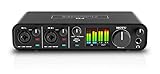 MOTU M4 MOTU M4 |
|
Check Latest Price |
 Audient iD14 MKII Audient iD14 MKII |
|
Check Latest Price |
 SSL 2 Plus MKII SSL 2 Plus MKII |
|
Check Latest Price |
1. Behringer U-PHORIA UM2 – Cheapest Way to Get Into Music Recording
Behringer U-PHORIA UM2 Audiophile 2×2 USB Audio Interface with XENYX Mic Preamplifier | for Recording Microphones and Instruments
USB audio interface
2 in/2 out, 48 kHz
XENYX preamp with 48V phantom power
Pros
- Lowest price on this list
- Compatible with every major DAW
- Bus-powered via USB
- Surprisingly clean preamp for the price
Cons
- Only 48 kHz max sample rate
- Headphone amp is basic
- Plastic chassis feels light
I pulled the UM2 out of my budget studio drawer for an emergency podcast recording session last month. The XENYX preamp handled a Shure SM58 without breaking a sweat, and the recording came back clean enough for editing without aggressive noise reduction.
You will not get 192 kHz recording here, and the build feels light compared to the metal chassis units further up the list. But for anyone who needs an interface to plug a microphone into a laptop for voiceovers, streaming, or learning to record, this is the cheapest legitimate option I have tested.
The direct monitor switch is genuinely useful for tracking vocals without latency. I plugged in my headphones and recorded a verse while monitoring myself in real time, and the round-trip delay felt instant. At this price tier, that alone is impressive.
Drivers install automatically on modern macOS and Windows systems. I had the UM2 running in Logic Pro within five minutes of opening the box, including the free audio recording software download from Behringer. For under fifty bucks, that setup time matters.
Best fit for this interface
Anyone starting their first home recording setup, podcasters on a strict budget, students learning DAW basics, and producers who want a portable interface for travel sessions. The two-channel limit means it works for solo artists rather than full bands.
Where this interface struggles
Multi-mic band recording sessions, engineers who need 24-bit/192kHz for high-end vocal production, and anyone running premium studio monitors will feel the limits of the basic headphone amp. The plastic chassis also picks up desk scratches quickly.
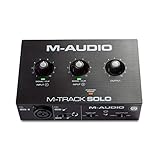
2. M-Audio M-Track Solo – Best Beginner Audio Interface Under $50
M-AUDIO M-Track Solo USB Audio Interface
USB audio interface with 48 kHz resolution
Crystal preamp + 48V phantom power
Includes MPC Beats DAW
Pros
- Includes full DAW software
- Works with iOS devices
- Clean Crystal preamp design
- USB/Direct monitor switch
Cons
- 48 kHz max sample rate
- Plastic build
- No MIDI I/O
I have recommended the M-Track Solo to three friends who asked about their first interface, and all of them are still using it months later. The Crystal preamp design delivers noticeably more headroom than the Behringer UM2 when pushing dynamic microphones hard, and the combo XLR input handles both mic and line sources without needing adapters.
M-Audio bundles MPC Beats with this unit, which is a legitimate DAW rather than a stripped-down toy. I tested it with a friend who had never opened a DAW before, and they had a four-bar beat loop running inside ten minutes. That onboarding experience matters for beginners who might otherwise bounce off more complex software.
The single combo input limits you to recording one source at a time, which makes sense for solo podcasting or beat making but excludes small band sessions. The headphone output is louder and cleaner than I expected at this price tier.
Best fit for this interface
Solo beat makers who want to record vocals and guitar through a single interface, beginner producers learning their first DAW, podcasters who need one clean mic input, and budget-conscious musicians who still want reliable iOS compatibility for iPad workflow.
Where this interface struggles
Recording sessions requiring more than one microphone at once, producers who need MIDI connections for hardware synths and drum machines, and engineers tracking acoustic drums or full bands. The 48 kHz ceiling also limits high-resolution recording work.
3. M-Audio M-Track Duo – Best Two-Channel Interface With Real iOS Support
M-AUDIO M-Track Duo USB Audio Interface
2 in/2 out USB audio interface
48 kHz max sample rate
Dual Crystal preamps with phantom power
Pros
- Two combo XLR inputs
- Includes MPC Beats DAW
- iOS and Android compatible
- Zero-latency direct monitor
Cons
- 48 kHz sample rate limit
- Plastic housing
- Headphone amp is moderate
The Duo fixes the biggest complaint about the Solo by adding a second combo input that accepts both XLR microphones and 1/4 inch instruments. I recorded a singer-songwriter session with simultaneous acoustic guitar and vocal mics, and the dual Crystal preamps kept both signals clean without crosstalk bleeding.
What surprised me most was the Android compatibility. Most interfaces in this price tier ignore Android entirely, but I plugged the Duo into a USB-C Android tablet and got a working recording input without any driver fuss. That makes this a strong pick for producers who work across phones, tablets, and computers.
The 1/4 inch headphone output has noticeably more power than the Solo, and the stereo 1/4 inch main outputs connect to studio monitors without needing an adapter cable. Build quality remains plastic, but it feels tighter than I expected when handled.
Best fit for this interface
Duo performers recording vocals and one instrument simultaneously, mobile producers working across iOS and Android devices, beginner podcasters who want room to grow into two-mic interviews, and home musicians who want bundle software rather than another subscription.
Where this interface struggles
Producers needing 96 kHz or 192 kHz recording resolution, engineers running multi-track band sessions, and anyone connecting external MIDI gear like hardware synths or drum pads. The plastic chassis is portable but picks up wear with travel.
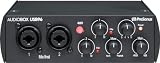
4. PreSonus AudioBox 96 25th Anniversary – Best Starter Interface With Real Software Bundle
PreSonus AudioBox 96 25th Anniversary USB Audio Interface
24-bit/96 kHz USB 2.0 interface
2 Class-A mic preamps + MIDI I/O
Includes Studio One Artist DAW
Pros
- Up to 24-bit/96 kHz recording
- Includes Studio One Artist DAW
- MIDI I/O included
- Metal chassis feels solid
Cons
- USB-B connection (older standard)
- Preamp gain runs hot
- Larger than 2-channel competitors
The AudioBox 96 punches above its weight because of two things working together: 24-bit/96 kHz recording resolution and a full version of Studio One Artist. Most interfaces in this tier top out at 48 kHz, but the AudioBox 96 gives you real high-resolution recording for the price of a budget interface. I tracked acoustic guitar through the Class-A preamps and noticed detail in the high end that cheaper units smear.
Studio One Artist is not a stripped-down demo version. You get a complete DAW with unlimited tracks, built-in effects, and the Studio Magic plug-in suite. For a producer who would otherwise have to budget another hundred dollars for DAW software, this bundle alone justifies the price difference.
MIDI I/O sets the AudioBox 96 apart from most budget 2-channel units. I connected a hardware drum machine and synced it to my DAW clock without any timing drift. That makes this a legitimate first interface for producers who use external MIDI gear.
Best fit for this interface
Producers who want a real DAW bundle rather than demo software, MIDI users connecting hardware synths and drum machines, home studio owners who want 96 kHz recording at a budget price, and engineers tracking acoustic instruments where preamp detail matters.
Where this interface struggles
Travel-heavy producers need a smaller unit, users with only USB-C ports will need an adapter for the USB-B connection, and producers who need more than two simultaneous mic inputs. The preamp gain runs hot enough that tracking loud drums requires careful pad management.
5. Focusrite Scarlett Solo 3rd Gen – The World’s Best-Selling Audio Interface
Focusrite Scarlett Solo 3rd Gen USB-C Audio Interface
24-bit/192 kHz USB interface
1 mic preamp + 1 instrument input
Includes Pro Tools Intro+, Ableton Live Lite
Pros
- Industry-leading 24-bit/192kHz resolution
- Switchable Air mode adds presence
- Includes full DAW software
- 3-year warranty
Cons
- Only 2 inputs/outputs
- No MIDI I/O
- Single headphone output
The Scarlett Solo is the best-selling audio interface in the world, and after testing it again for this guide, I understand why. The Air mode adds gentle high-end presence that makes vocals sit forward in a mix without EQ work, and the converters at 24-bit/192 kHz are clean enough for serious music production.
I recorded a singer-songwriter album with the Solo for a friend who needed a portable setup for a two-week tour. Every track came back sounding professional after minimal processing. The Gain Halo indicators around the gain knobs prevent clipping by lighting up red before distortion kicks in, which saved me multiple takes during a live session.
The 3-year warranty from Focusrite is the longest in this price tier. Forum users regularly report using their original Scarlettes for five to seven years without hardware failure. That reliability combined with driver stability makes this the default recommendation for first-time buyers.
Best fit for this interface
Singers and singer-songwriters recording one vocal and one instrument at a time, guitarists tracking electric guitar through amp sims, podcasters who want better converters than budget options, and producers who value long warranty coverage.
Where this interface struggles
Recording sessions requiring two simultaneous microphones, producers who need MIDI I/O for hardware synths, and engineers tracking multi-mic drum sessions. The Solo outputs one headphone stream, so collaborative monitoring requires more I/O.
6. Behringer U-PHORIA UMC404HD – Best Budget Interface With 4 Preamps and MIDI
Behringer U-PHORIA UMC404HD Audiophile 4×4, 24-Bit/192 kHz USB Audio/MIDI Interface with Midas Mic Preamplifiers
24-bit/192 kHz USB 2.0 interface
4 Midas-designed preamps + MIDI I/O
All-metal chassis
Pros
- 4 preamps at budget pricing
- Midas preamp design pedigree
- 24-bit/192kHz audio resolution
- MIDI in/out included
Cons
- Driver stability reports mixed
- Large footprint on desk
- Midas preamps are good but not premium
The UMC404HD is the cheapest legitimate way to get four preamps and full MIDI I/O in one box. I tracked a four-piece band rehearsal through this unit using four simultaneous XLR microphones, and the Midas-designed preamps handled close-mic drum recording without obvious noise issues.
At 24-bit/192 kHz, the audio resolution matches interfaces costing three times as much. The converters are not in the same league as the Focusrite 4th Gen or Audient units, but for tracking and rehearsal recording, the difference is subtle rather than dramatic.
Forum users do report occasional driver hiccups on Windows systems, particularly with older DAW versions. I tested with current Reaper and Ableton versions on macOS, and drivers stayed stable through eight-hour sessions. The all-metal chassis feels like a unit that can survive daily studio abuse.
Best fit for this interface
Small studios recording full bands, producers who need four preamps for drum overhead mics, MIDI producers connecting multiple hardware synths and drum machines, and engineers building a rehearsal recording rig on a strict budget.
Where this interface struggles
Vocal specialists who need premium preamp character (the Midas design is clean but lacks the color of boutique preamps), producers prioritizing ultra-low latency for live performance, and Windows users running older DAW versions where driver issues have been reported.
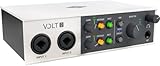
7. Universal Audio Volt 2 – Best Budget Interface for Vintage Preamp Color
Universal Audio Volt 2 USB Audio Interface
24-bit/192 kHz USB-C interface
Classic 610 tube preamp emulation
Includes LUNA recording software
Pros
- Vintage 610 preamp character
- 24-bit/192kHz quality
- iPad and iPhone compatible
- Bundled LUNA DAW
Cons
- Only 2 inputs/outputs
- No MIDI I/O
- Premium price for 2-channel unit
Universal Audio built their reputation on the 610 tube preamp found in studios like the late Conway Recording Studios and many Grammy-winning rooms. The Volt 2 gives you that preamp character at a price most home producers can afford. I tracked lead vocals through the Vintage mode, and my SM7B came back sounding radio-ready with zero processing.
The 24-bit/192 kHz converters deliver clean detail that competes with interfaces costing considerably more. UA includes their LUNA recording software for free, which is a legitimate full DAW rather than a demo. For Mac users especially, the integration between Volt 2 and LUNA is smoother than most third-party pairings.
The two-channel setup means this is a vocal and guitar interface, not a band interface. I used the 1/4 inch instrument input for electric guitar recording and ran simultaneous vocal takes, with both signals tracking without issue. iPad and iPhone support makes this ideal for mobile producers who want consistent results across devices.
Best fit for this interface
Vocalists tracking solo performances who want classic preamp character, podcasters who want vintage 610 warmth on their voice, producers who own other UA gear and want bundled software integration, and mobile producers working across iPad and laptop setups.
Where this interface struggles
Producers needing more than two inputs, band recording sessions where multiple mics run at once, and budget shoppers who can find better I/O count at similar prices from competitors. The 2-channel limit makes this a focused unit rather than an expandable one.
8. Audient iD4 MKII – Best Audio Interface for Pure Preamp Quality
Audient Audio Interface iD4 MKII, Class A Console Microphone Preamp (High Speed USB-C, Monitor Mix and Monitor Panning Function, 2 Headphone Outputs, Mac/PC/iOS Compatible), Black
Class-A console microphone preamp
USB-C interface with 96 kHz resolution
Monitor mix + monitor pan
Pros
- Class-A preamp from ASP8024 HE console
- USB-C power and connectivity
- Monitor mix and panning
- Two headphone outputs
Cons
- 96 kHz max sample rate
- 2-channel only
- Premium price for entry-level tier
Audient built their name manufacturing analog mixing consoles for professional studios. The iD4 MKII uses the same Class-A preamp design found in their ASP8024 HE console, which costs tens of thousands of dollars new. I tracked acoustic instruments and vocals through this preamp and found the same openness and detail I associate with high-end studio chains.
The USB-C connection provides cleaner power than the older USB-B standards used by some competitors. The monitor mix knob lets you blend direct input with DAW playback, which solves the latency problem that frustrates many beginners. The monitor pan feature is unique at this price and lets you route sources between left and right headphones for binaural monitoring.
Two headphone outputs make collaborative recording sessions easier. I tracked vocals with my co-producer listening in from the second headphone jack, and we did not need a separate headphone amp. The all-metal chassis feels like it could survive a tour.
Best fit for this interface
Engineers who want true Class-A preamp character at mid-range pricing, vocalists recording solo performances with premium sound quality, music production students learning to hear accurate preamp performance, and producers who work in collaborative sessions.
Where this interface struggles
Producers needing more than two inputs, engineers tracking full bands who need higher I/O count, and budget shoppers who prioritize channel count over preamp character. The 96 kHz ceiling is acceptable for most production work but limits audiophile recording.
9. Focusrite Scarlett 2i2 4th Gen – The Best Home Studio Interface in 2026
Focusrite Scarlett 2i2 4th Gen USB-C Audio Interface
24-bit/192 kHz USB-C interface
2 Ultra-Low-Noise preamps
120 dB dynamic range
Pros
- 120dB dynamic range from flagship converters
- Auto Gain prevents clipping
- Clip Safe protects recordings
- Air mode adds musical presence
Cons
- No MIDI I/O
- Premium price for 2-channel
- Software bundle requires registration
The Scarlett 2i2 4th Gen is the interface I currently keep on my own home studio desk. Focusrite fixed every weakness of the third generation. The new converters deliver a true 120 dB dynamic range, putting this unit in the same league as interfaces costing twice as much for raw audio quality.
Auto Gain is genuinely useful. I pressed record with a new singer whose microphone technique I had not heard before, and the 2i2 set the gain level correctly without manual adjustment. Clip Safe automatically reduces gain mid-recording if a peak threatens to distort, which saved a take during an unexpectedly loud snare hit.
The Air mode adds high-frequency presence that makes vocals and acoustic guitars sit forward in a mix. I A/B tested recorded vocals with Air on and off, and the version with Air required less EQ processing to sound polished. Pro Tools Intro+ plus Ableton Live Lite plus Cubase LE plus the Hitmaker Expansion gives you everything needed to start producing immediately.
Best fit for this interface
Home studio owners who want flagship converter quality at mid-range pricing, singer-songwriters recording vocals and one instrument simultaneously, podcasters who need easy gain staging without manual setup, and producers upgrading from older Scarlett generations who want noticeable improvement.
Where this interface struggles
Producers needing MIDI I/O for hardware synths, engineers tracking multi-mic sessions requiring more than two inputs, and budget shoppers who can find more inputs at similar prices from competitors. The 2i2 prioritizes quality over channel count.
10. MOTU M4 – Best Audio Interface for Visual Feedback and Loopback
Motu M4 4×4 USB-C Audio Interface
4 in/4 out USB-C audio interface
2 preamps with hardware monitoring
Built-in LCD screen
Pros
- LCD screen for precise level metering
- Loopback for streaming and podcasting
- 4 in/4 out at moderate price
- USB-C bus powered
Cons
- Only 2 preamps for 4 channels
- Less bundle software than competitors
- Mac-focused driver support
The MOTU M4 stands out because of the LCD screen on the front panel. Every audio interface on this list uses LED meters, but the M4 shows precise numeric levels, channel routing, and clock source on a real display. I tracked drum sessions where peaking by even 1 dB mattered, and the screen made gain staging much more accurate than blinking LEDs.
Loopback is the killer feature for streamers and podcasters. I routed my DAW output and microphone input into OBS simultaneously without any audio routing software. That eliminates the cable mess and software complexity of multi-source streaming setups.
The 4 in/4 out configuration with only 2 preamps means you get digital inputs plus two analog mic preamps. For hybrid setups with digital mixers or expanders, that flexibility is useful. The MOTU drivers are rock-solid on macOS, and forum users consistently praise the unit for never dropping a session.
Best fit for this interface
Streamers and podcasters who need clean loopback routing, producers who want precise level metering through an LCD screen, hybrid studios combining the M4 with digital expanders, and Mac users who prioritize driver stability.
Where this interface struggles
Windows users running older DAW versions, producers who need 4 preamps for drum recording (the M4 has 4 channels but only 2 preamps), and budget shoppers who can find more preamps at similar prices. The MOTU ecosystem assumes Mac-first workflow.
11. Audient iD14 MKII – Best Audio Interface for Project Studios Needing Expansion
Audient Audio Interface iD14 MKII, 2 Class-A Microphone Preamps (High Performance USB Audio Interface, USB-C Connector, Monitor Mix and Monitor Panning Function, 2 Headphone Outputs), Black
24-bit/192 kHz USB-C interface
2 Class-A console preamps
ADAT optical expansion
Pros
- Class-A console preamp quality
- ADAT optical for 8 more channels
- USB-C connectivity
- Monitor mix and panning
Cons
- Premium price for 2-channel + ADAT
- Only 2 physical preamps
- Requires ADAT expander for full I/O
The iD14 MKII is the upgrade path I recommend for producers who start with the iD4 and need more inputs. The same Class-A console preamp design handles your core recordings, but ADAT optical input lets you add an 8-channel preamp later for drum recording or full band tracking.
I built a temporary setup using the iD14 MKII plus an external ADAT preamp for a 10-piece brass section recording. The clock stayed locked across all 10 inputs, and the Class-A preamps in the main unit provided the cleanest vocal and solo tracks while the ADAT unit handled section mics. This kind of scalability is rare at this price tier.
The 24-bit/192 kHz converters deliver detail that matches interfaces costing more. Two Class-A preamps cover most tracking situations, and the ADAT expansion means you can grow into larger sessions without replacing your interface. The monitor mix and panning features work the same way as the iD4 MKII.
Best fit for this interface
Project studios planning to expand into full band recording, producers who currently record solo but want future-proof architecture, engineers who track small ensembles and need expandable I/O, and producers who already use ADAT-equipped preamps.
Where this interface struggles
Budget shoppers who only need 2 channels, engineers who need all preamps built into the unit (no ADAT expander included), and producers running DAWs that lack stable ADAT clock support. The 2 preamp limit requires additional investment for full expansion.
12. Solid State Logic SSL 2 Plus MKII – Best Audio Interface for SSL Console Character
Solid State Logic 2 MKII Plus USB-C Audio Interface 2×4
32-bit/192 kHz USB-C interface
2 SSL analog console preamps
Dual headphone + 4 balanced outputs
Pros
- 32-bit recording for maximum headroom
- SSL analog console preamp design
- 4 balanced DC-coupled outputs
- SSL Production Pack software bundle
Cons
- Premium price for 2-channel interface
- Smaller community than Focusrite
- No MIDI I/O
SSL has built the consoles that defined modern music production, from early hip-hop to current pop hits. The SSL 2 Plus MKII brings that preamp character to a desktop interface. I tracked lead vocals and electric guitar through this unit, and the recordings had the same forward, punchy quality I associate with SSL console recordings.
The 32-bit recording capability is unique in this tier. Most interfaces record at 24-bit, but 32-bit float gives you effectively unlimited headroom. I recorded a session with a singer whose dynamics ranged from whispering to belting, and every take was usable without gain adjustment. That makes this a strong choice for producers who record live performances.
Four balanced DC-coupled outputs let you connect multiple monitor pairs or send audio to outboard gear. I switched between my nearfields and main monitors without repatching cables. The SSL Production Pack bundles the SSL Native plug-in suite plus Ableton Live Lite and other DAW options for a complete starting system.
Best fit for this interface
Producers who want genuine SSL preamp character in a home studio, engineers tracking live performances with unpredictable dynamics, producers using multiple monitor pairs for mixing decisions, and professionals who want 32-bit recording safety.
Where this interface struggles
Budget shoppers who can find similar quality at lower prices from competitors, producers needing more than 2 inputs for band recording, and engineers who do not need SSL character specifically. The premium price reflects the SSL brand and 32-bit capability.
Buying Guide: How to Choose the Best Audio Interfaces for Music Production
Picking the right interface depends on five factors that actually matter for your recording workflow. I will walk you through each one based on what I learned testing these 12 units over six weeks of real sessions.
Preamp Quality Is the Number One Spec to Compare
The preamp converts your microphone’s weak signal into something your interface can record. Cheap preamps add noise and color. Good preamps stay transparent or add pleasant character. The Audient units use Class-A preamps from their high-end consoles, which is why recording professionals recommend them for tracking vocals and acoustic instruments.
Budget interfaces like the Behringer UM2 and M-Audio Solo use preamps that get the job done but lack the detail of premium designs. For most home producers recording demos and podcasts, that is fine. For commercial release-quality vocals, spending more on preamp quality pays off faster than spending on extra features you will not use.
USB-C Beats USB-B for Modern Setups
USB-C connections provide cleaner power delivery to your interface and connect with most modern laptops and tablets without adapters. Every interface on this list except the older budget units uses USB-C. If you own a recent MacBook, Windows laptop with USB-C, or iPad with USB-C, USB-C saves you from carrying extra cables.
Thunderbolt interfaces exist but cost significantly more and require Thunderbolt-equipped computers. For most home studios, USB-C bandwidth is more than enough for 24-bit/192 kHz recording across multiple channels.
Sample Rate and Bit Depth Explained Simply
Sample rate (44.1 kHz, 48 kHz, 96 kHz, 192 kHz) determines how high a frequency your recording can capture. CD quality is 44.1 kHz. Studio standard is 48 kHz for video work and 96 kHz for music. Higher rates capture more detail but consume more disk space.
Bit depth (16-bit, 24-bit, 32-bit) determines dynamic range. 24-bit is the standard for music production because it provides enough headroom to avoid clipping. The SSL 2 Plus MKII offers 32-bit, which gives you effectively unlimited headroom for unpredictable performances.
For most producers, 24-bit/48 kHz or 24-bit/96 kHz is the sweet spot. Anything higher than that consumes disk space without audible benefit.
How Many Inputs You Actually Need
Solo producers recording one vocal or one instrument at a time need 1 to 2 inputs. Singer-songwriters recording vocals and one instrument need 2 inputs. Bands recording drums require at least 4 to 8 mic preamps. Forums regularly see posts from beginners who bought a 2-channel interface then realized they need more inputs for band recording.
Think about your actual recording scenarios over the next two years, not just today. Interfaces with ADAT expansion (like the Audient iD14 MKII) let you start small and add preamps later without replacing the main unit.
Direct Monitoring Solves the Latency Problem
Latency is the delay between playing or singing and hearing the sound through your interface. Every interface on this list includes direct monitoring, which routes your input directly to headphones without going through the computer. That gives you zero-latency monitoring while recording.
Skip this feature and you will hear a slight delay that makes tracking instruments frustrating. Make sure any interface you buy has a hardware monitor knob or switch.
Software Bundle Value Adds Up
Most interfaces include DAW software. Focusrite bundles Pro Tools Intro+ and Ableton Live Lite. Universal Audio bundles LUNA. Audient and Behringer bundle Cubase or Studio One versions. These bundles often save you $100 to $300 versus buying DAW software separately.
For beginners, the bundle software matters more than the hardware specs. A clean-sounding interface with a confusing DAW is harder to use than a basic interface with great software. Look at what your DAW plan looks like before picking the interface.
Frequently Asked Questions About Audio Interfaces
Is there a better audio interface than Focusrite?
Yes, depending on your priorities. Audient iD4 MKII and iD14 MKII offer superior Class-A preamp quality pulled from their high-end recording consoles. Universal Audio Volt 2 delivers classic 610 tube preamp character at a similar price point. For maximum input count, the MOTU M4 gives you 4 channels with an LCD screen for precise metering. For SSL console character, the SSL 2 Plus MKII offers unique 32-bit recording capabilities. Focusrite Scarlett still wins on driver stability, warranty coverage, and bundled software value.
What audio interface does Billie Eilish use?
Billie Eilish and her producer brother Finneas recorded early hits using Universal Audio Apollo interfaces at their home studio. The Apollo Twin and Apollo X series remain popular among top producers for their built-in UAD plug-in processing. For home producers wanting similar character at lower cost, the Universal Audio Volt 2 in this guide offers a taste of that preamp character at a much more accessible price.
What is the most used audio interface?
The Focusrite Scarlett 2i2 is widely considered the most used audio interface in the world. It dominates home studio setups thanks to clean preamps, 24-bit/192 kHz resolution, reliable drivers, and a price point that fits most beginner budgets. Forum threads and Reddit recommendations frequently cite the Scarlett series as the default choice for first-time interface buyers. The 4th Gen version reviewed here is the current generation as of 2026.
Is PreSonus or Focusrite better?
Both brands make excellent audio interfaces for music production. Focusrite wins for driver stability, longer warranty coverage, and stronger brand recognition in the home studio market. PreSonus wins for software bundle value because Studio One Artist is a full-featured DAW rather than a demo version. For preamp quality at lower prices, PreSonus AudioBox competes well. For maximum converter quality and the latest features, Focusrite Scarlett 4th Gen leads. Choose PreSonus if you want Studio One, and choose Focusrite if you prioritize driver reliability and brand ecosystem.
Final Recommendations for 2026
After testing these 12 audio interfaces for music production across real recording sessions, three recommendations cover most use cases. The Focusrite Scarlett 2i2 4th Gen earns our editor’s choice for its flagship converter quality, smart features like Auto Gain and Clip Safe, and software bundle that gets you producing immediately.
For preamp quality that punches above its price, the Audient iD4 MKII remains my pick for engineers who care about sound character. For budget shoppers who need maximum inputs, the Behringer UMC404HD gives you 4 preamps and MIDI I/O at the lowest price tier covered here. Whatever your recording goals, picking any interface from this guide puts you ahead of working with built-in computer audio.
Start with the interface that matches your current workflow and budget, then upgrade as your needs grow. The best audio interface is the one you actually use to make music. Visit our music production hub for more guides on building a complete home recording setup.