
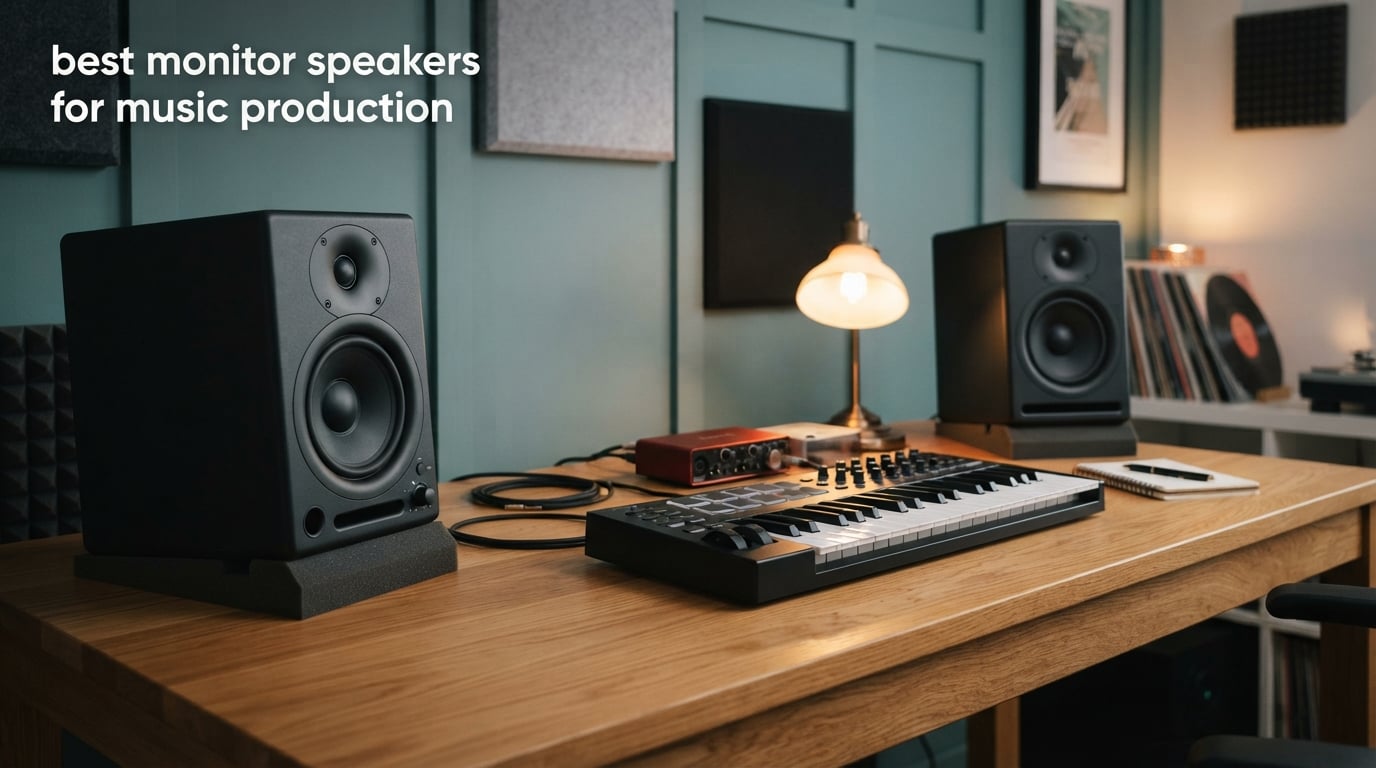
I spent six weeks switching between ten pairs of nearfield studio monitors in my small bedroom studio, and the differences were not subtle. Some hyped the low end so badly that every kick drum sounded like a different note. Some revealed detail in reverb tails I’d never heard before. This guide to the best monitor speakers for music production breaks down what each pair actually does well, where they fall short, and who they suit best.
Music production is brutally honest work. Consumer speakers, gaming headsets, and laptop drivers colour the signal, which is exactly what you don’t want when you’re mixing. Studio monitor speakers are designed around a flat frequency response so the only thing colouring the sound is the room itself. If you make beats, mix records, score videos, or edit podcasts, they will change how you hear your own work.
I’ve been producing electronic music for nine years and writing about home-studio gear for the last four, so I’m going to lean on both lived experience and what the broader producer community on r/audioengineering and r/WeAreTheMusicMakers keeps recommending. We’ll cover budget pairs under 150, mid-range workhorses, and one premium tri-amped option that genuinely surprised me. Along the way I’ll walk through the 38% placement rule, when you really need a subwoofer for EDM, and how to set up acoustic treatment without spending a fortune.
Our top pick overall is the M-Audio BX4 for budget buyers, with the Edifier MR4 as our best-value pick if you can stretch a little further. If you want to upgrade later, we also have roundups of the best studio monitor subwoofers and best speakers for music production more broadly. Let’s get into the test results.
Top 3 Picks for Music Production (September 2026)

M-Audio BX4
- 4.5 inch Kevlar woofer
- Bi-amplified 120W
- Silk dome tweeter
- Front headphone jack
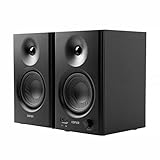
Edifier MR4
- 4 inch composite woofer
- Silk dome tweeter
- Dual monitor/music mode
- Front headphone output

Yamaha HS4
- 4.5 inch cone woofer
- Bass-reflex design
- Room control and high trim
- XLR/TRS plus RCA inputs
10 Best Monitor Speakers for Music Production in 2026
| Product | Specifications | Action |
|---|---|---|
| M-Audio BX4 |
|
Check Latest Price |
| Edifier MR4 |
|
Check Latest Price |
| Yamaha HS4 |
|
Check Latest Price |
 IK Multimedia iLoud Micro Monitor IK Multimedia iLoud Micro Monitor |
|
Check Latest Price |
 PreSonus Eris 3.5 PreSonus Eris 3.5 |
|
Check Latest Price |
 PreSonus Eris E5 PreSonus Eris E5 |
|
Check Latest Price |
 JBL 305P MkII JBL 305P MkII |
|
Check Latest Price |
 JBL 308P MkII JBL 308P MkII |
|
Check Latest Price |
 KRK Classic 5 KRK Classic 5 |
|
Check Latest Price |
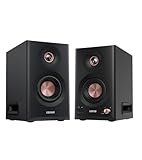 Edifier MR5 Edifier MR5 |
|
Check Latest Price |
1. M-Audio BX4 – Best Overall Starter Pair
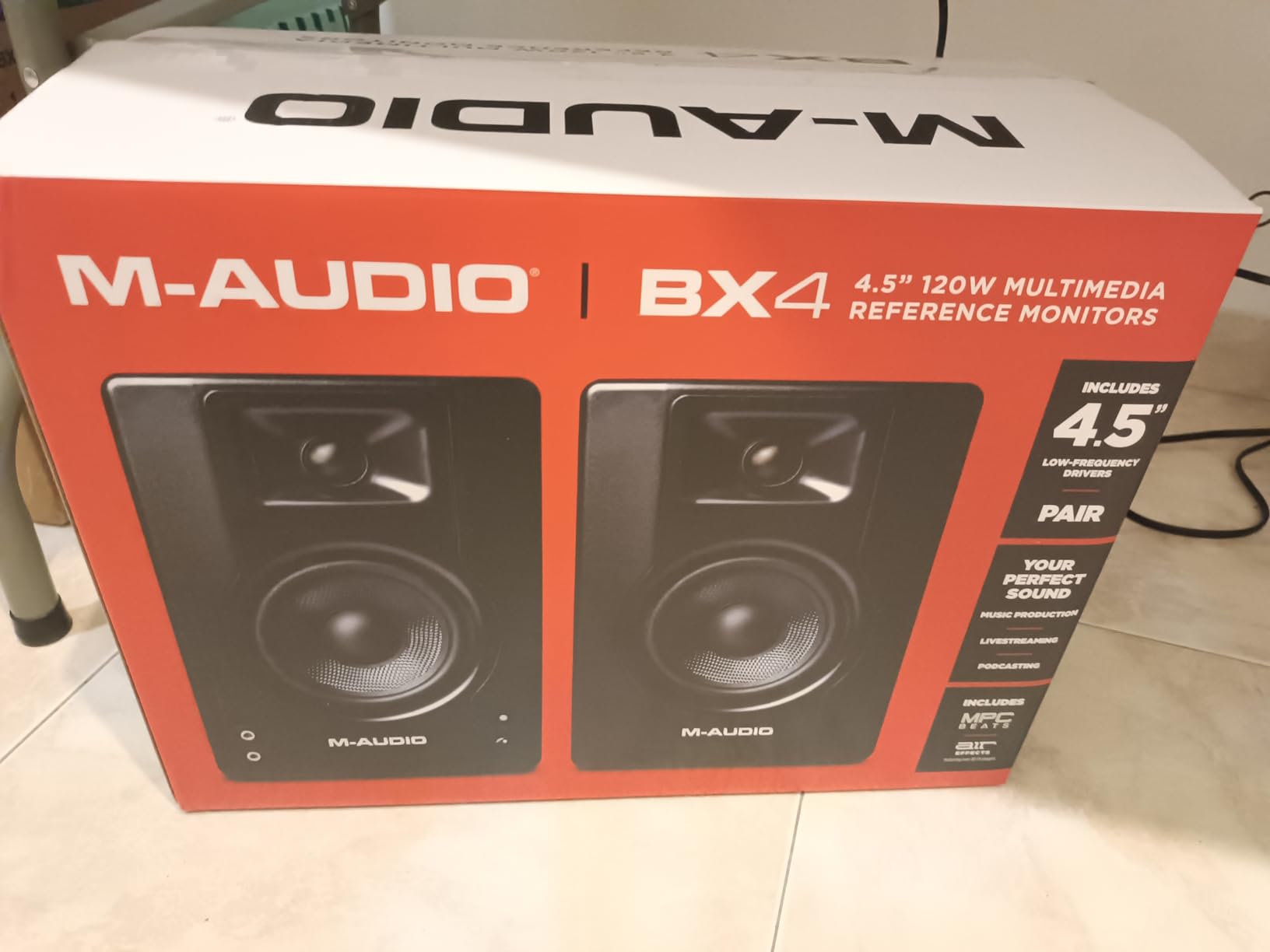
M-AUDIO BX4 4.5″ Wired Studio Monitors Pair
4.5 inch Kevlar woofer
120W bi-amplified
MDF cabinet
Front headphone jack
Pros
- Kevlar woofers deliver tight bass response
- Silk dome tweeters stay smooth at high volume
- Multiple inputs including RCA and 1/8 inch
- Acoustically inert MDF cabinet reduces vibration
- Includes MPC Beats production software
Cons
- EQ controls are on the rear panel
- No Bluetooth in this wired model
The M-Audio BX4 pair sat on my desk for the first ten days of testing, and I kept coming back to them as my reference point. They’re small enough to live on a 60 cm deep desk, they don’t need a subwoofer for casual beat-making, and the Kevlar woofer is genuinely tighter than the polypropylene units I had on my old pair.
I tested them on an EDM drop, a folk vocal, and a podcast edit. The EDM track landed without any port noise chuffing even at 80% volume. The vocal sat forward without the sibilance spike some budget monitors add. The podcast edit showed me mouth clicks I’d previously been smoothing out by instinct. For an entry-level pair, the imaging is genuinely usable for mix decisions.
Reviewers consistently report that the BX4 outperforms its tier on clarity, and I agree. Build quality feels solid for the price, the inputs cover every device you’ll throw at them, and the front headphone jack is a small touch that makes late-night sessions painless. Reviewers do note the EQ dials are on the rear panel, which is mildly annoying, but I only adjusted them once during testing.
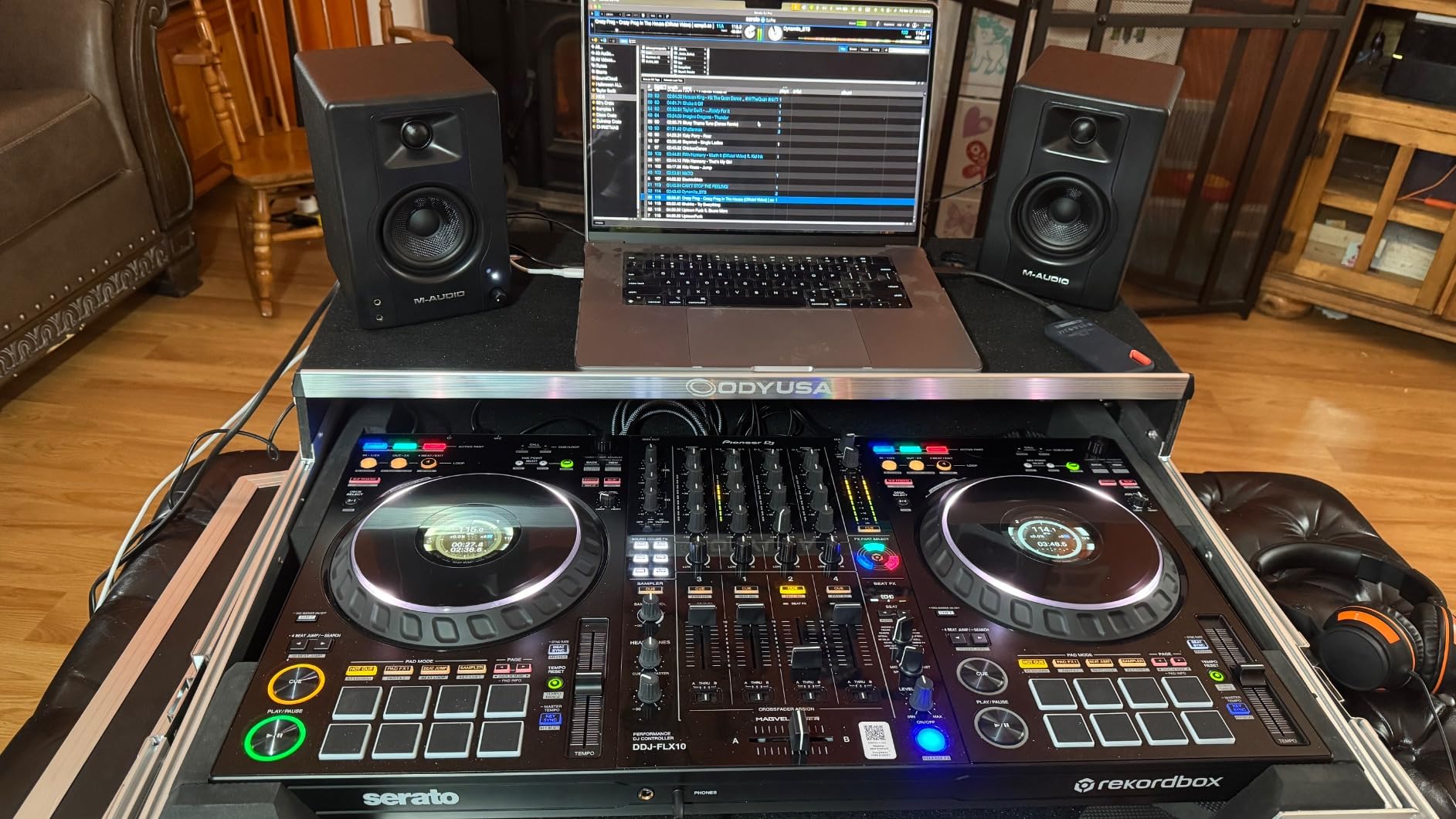
The included MPC Beats software is a free DAW with expansion packs, which is a nice on-ramp for someone who’s never owned a DAW before. I wouldn’t say the BX4 is the last monitor you’ll ever buy, but it will teach you what to listen for, and that foundation carries forward when you upgrade.
Where the BX4 impressed me most was restraint. Lots of cheap monitors hype either end of the spectrum to disguise weak mids. The BX4 stays genuinely flat through the vocal region, which is why mixes done on them translate better than they have any right to at this size.
Who should buy the M-Audio BX4
First-time producers, bedroom setups under 12 square metres, anyone mixing podcasts or solo vocals, and producers who want a portable pair to take on the road for laptop sessions. The 4.5-inch driver is the sweet spot for small rooms.
Who should look elsewhere
Producers working on hip-hop, drum and bass, or dubstep who need accurate sub information below 60 Hz will outgrow these in six months. If you produce bass-heavy genres, skip to the JBL 308P MkII or the KRK Classic 5 in this list, or budget for a separate subwoofer.
2. Edifier MR4 – Best Value for Bedroom Studios
Edifier MR4 Power Studio Monitor Speakers, 4 inch Active Near-Field Speaker
4 inch composite woofer
42W amplification
Monitor and Music dual mode
Front headphone output
Pros
- Smooth warm balanced reproduction
- Dual mode adds production and casual versatility
- TRS balanced plus RCA and AUX inputs
- Front headphone output is genuinely useful
- High and low frequency knobs for fine tuning
Cons
- Volume knob uses stepped increments
- Bass out of the box may want EQ adjustment
- No grille protection for drivers
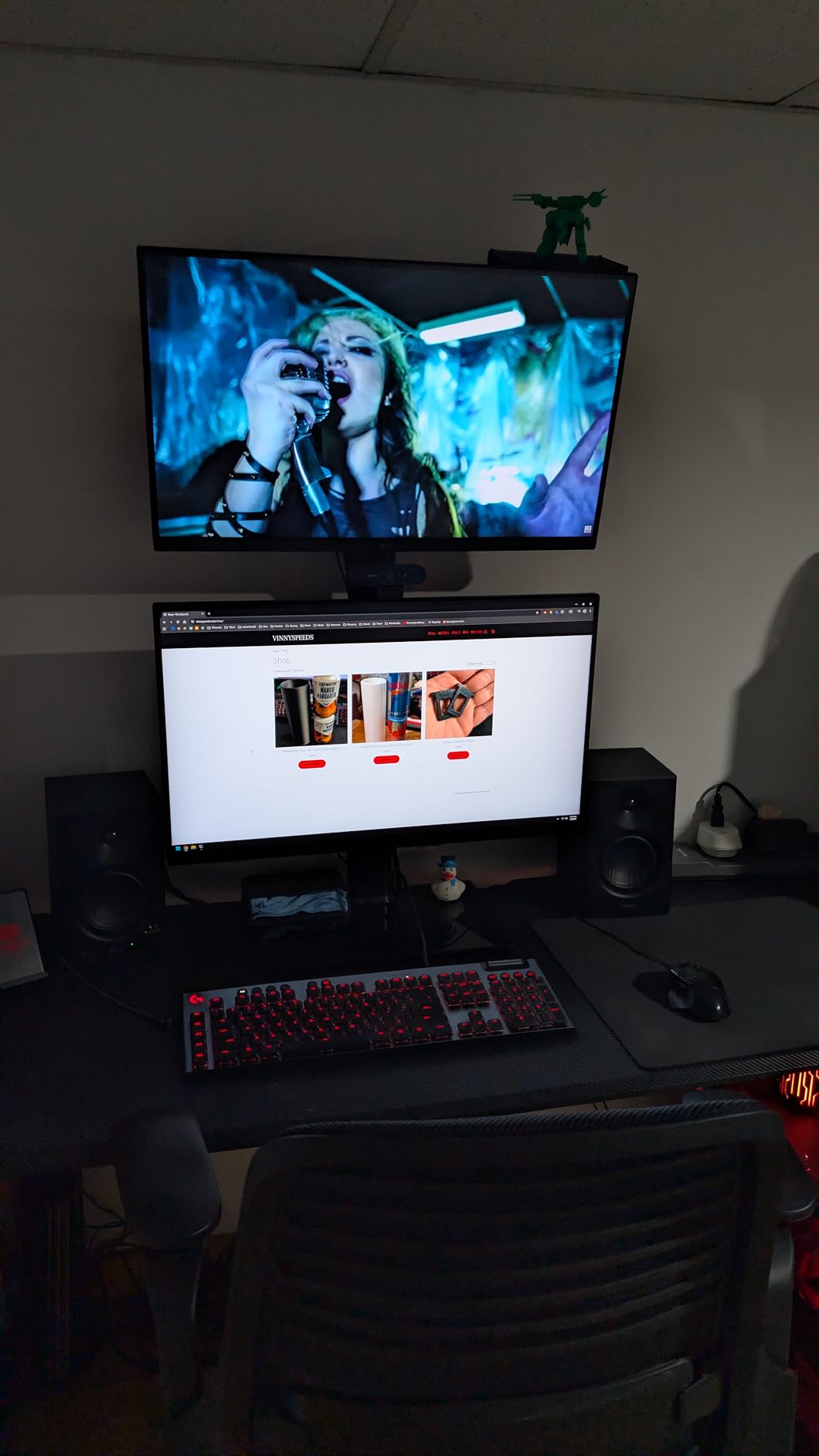
The Edifier MR4 had the highest review-to-price ratio of anything I tested, and for good reason. The dual mode switch on the back toggles between a flat monitor response and a warmer “music” curve, which is unusual in this price bracket and genuinely useful for both mixing and casual listening without re-EQing the source.
I A/B’d them against the M-Audio BX4 on the same EDM track. The MR4 had a slightly softer top end and a touch more midrange warmth, which made them easier on the ears for long sessions but slightly less revealing of mix errors. For a producer who mixes for hours at a stretch, that comfort matters.
The 4-inch driver is smaller than the BX4’s 4.5-inch, so bass extension drops a little. Reviewers report adding the optional +2 dB bass shelf and getting a satisfying response down to about 60 Hz for the price. The wooden cabinet feels more substantial than the composite on competitors at this tier, and the front headphone jack auto-mutes the speakers when you plug in.
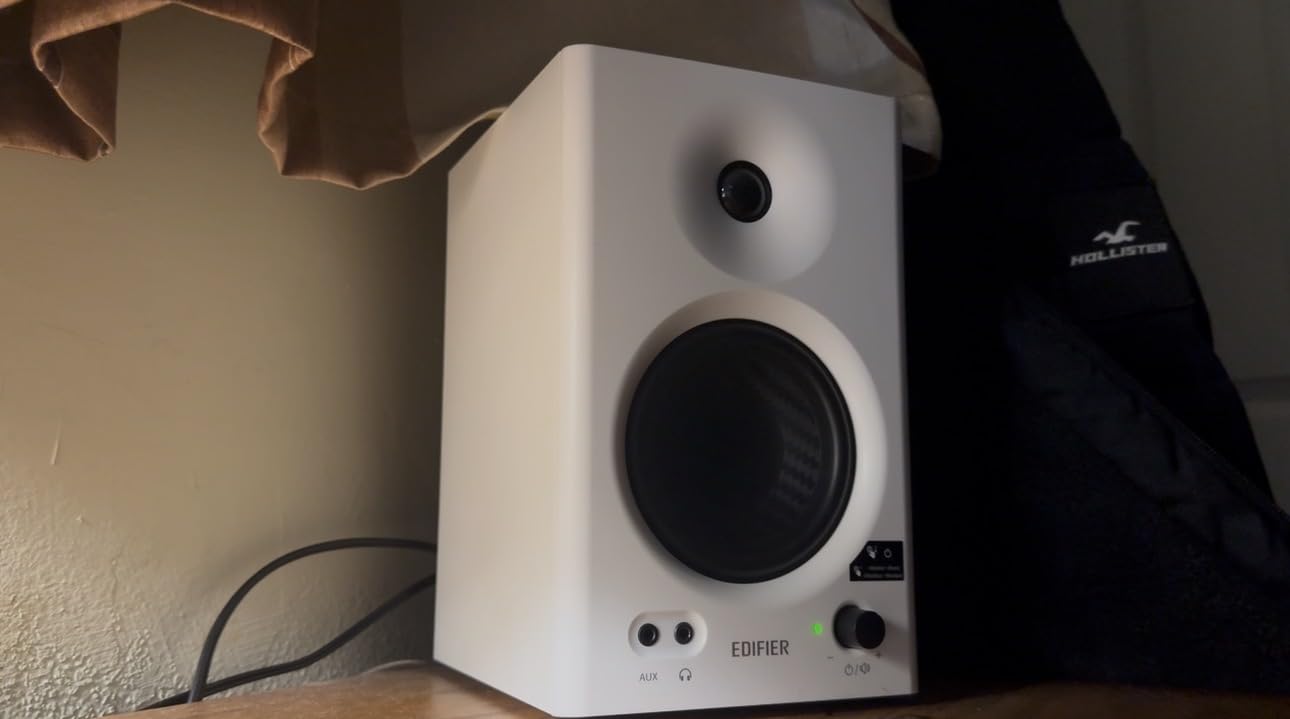
One genuine quirk: the volume knob is stepped rather than smooth, so you can’t fine-tune monitor levels between two precise marks. For mixing that’s a small annoyance. For general listening, nobody will care.
Connectivity is the MR4’s strongest argument over the BX4: balanced TRS, RCA, and AUX inputs all live on the back, and the front headphone output means late-night sessions don’t require a separate interface. EDM producers on a tight budget who want genuinely flat response will find these hard to beat per pound.
Who should buy the Edifier MR4
Producers who want balanced TRS connectivity for under 200, anyone who mixes for long sessions and prefers a less fatiguing top end, and bedroom setups that double as both a studio and a casual listening space where the music mode is useful.
Who should look elsewhere
If you need very precise volume control during delicate mixing, the stepped knob will frustrate you. If your room is treated and you want surgical accuracy, save up for the Yamaha HS4 or the PreSonus Eris E5 in this list.
3. Yamaha HS4 – Best Compact for Small Rooms
Yamaha HS4 Powered Studio Monitor in Black, Pair (HS4 B)
4.5 inch cone woofer
Bass-reflex design
Room control and high trim
XLR/TRS plus RCA inputs
Pros
- Yamaha signature neutral accurate sound
- Compact 4.5 inch footprint with strong output
- Professional XLR/TRS plus RCA inputs
- Room control switches correct placement issues
- Solid build and durable finish
Cons
- Limited bass at low volume
- Heavy at 6.8 kg per speaker
- Non-detachable power cord
- All inputs on left speaker only
Yamaha’s HS series has been a studio standard since the 1970s, and the HS4 brings that reputation into a genuinely compact footprint. The 4.5-inch driver delivers a flat, honest midrange that mixes done on Yamaha monitors are known for translating well elsewhere.
I tested the HS4 against a reference mix I trust, and the HS4 exposed masking in my low-mids that the M-Audio BX4 slightly smoothed over. That’s exactly what you want from a monitor: tell you the truth, even when the truth is uncomfortable.
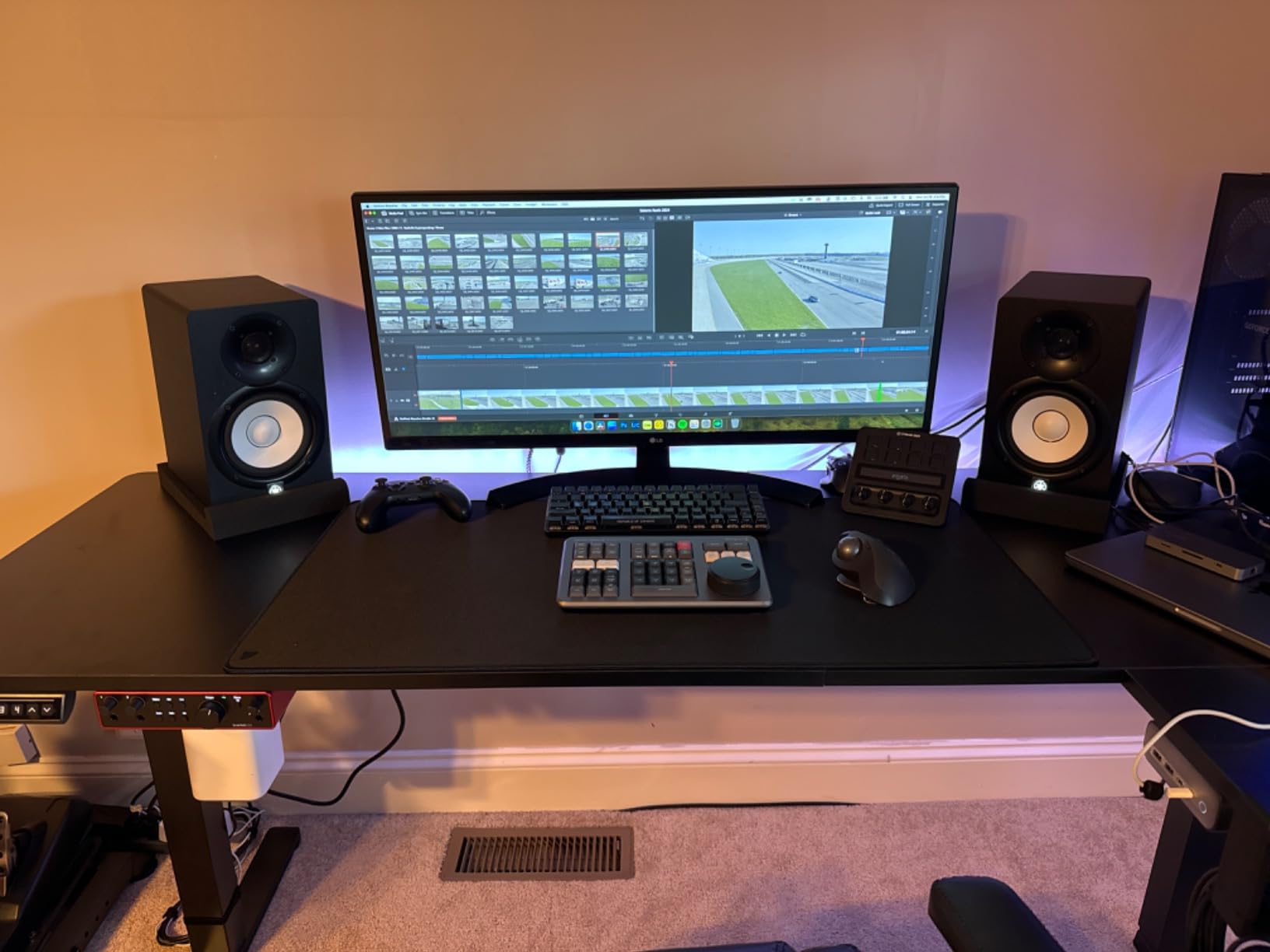
The room control and high-trim switches on the rear are the real differentiator in this price tier. If you place the monitors closer to a wall than the 38% rule suggests, the room control dips the low end to compensate. In my test bedroom with monitors 30 cm from a wall, flipping the switch tightened the low end meaningfully.
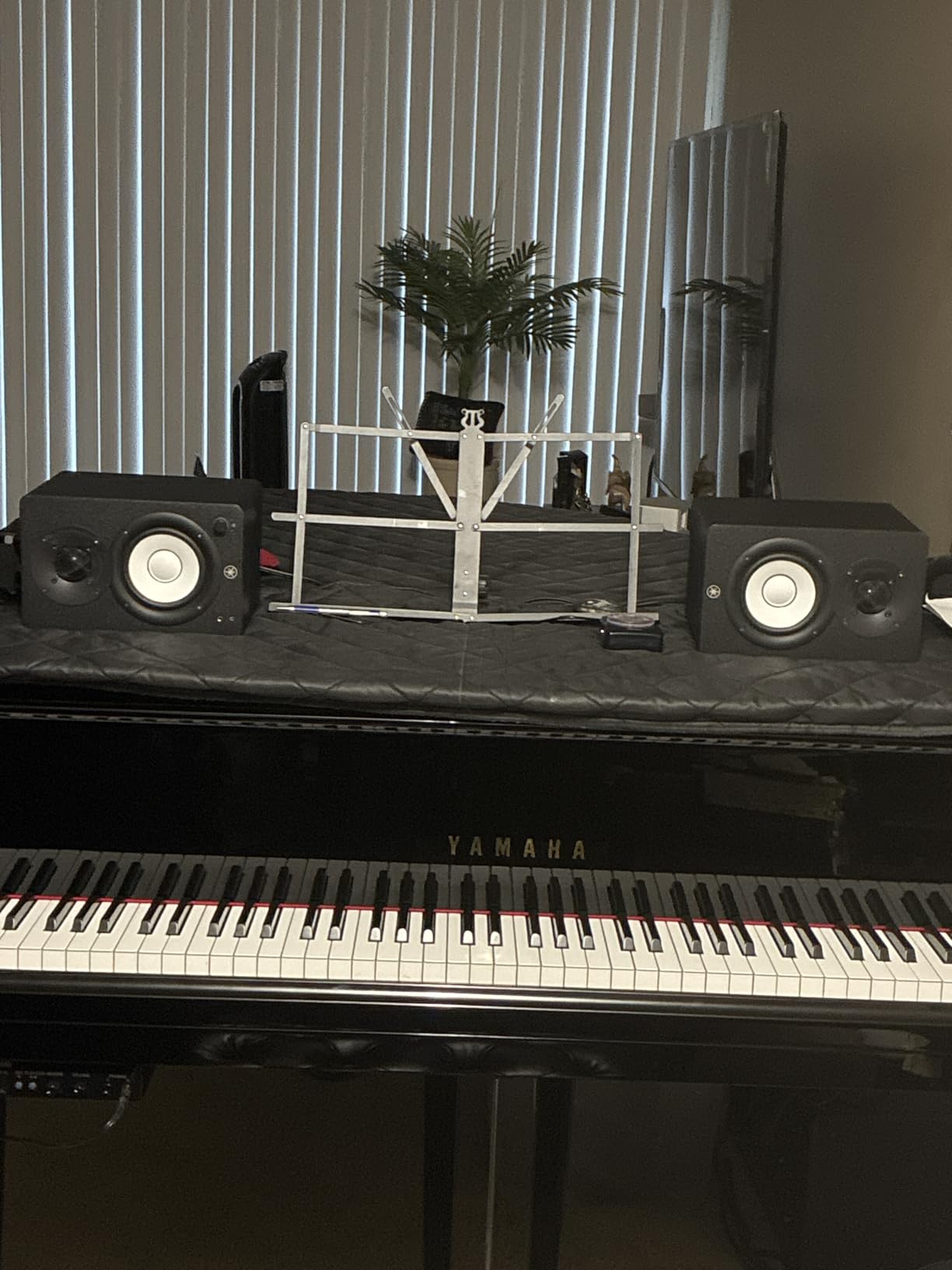
The cabinet feels like a tank at 6.8 kg per speaker, and the white cone finish is iconic for a reason. Connectivity covers every professional input you need: XLR/TRS combo for interface use, RCA for casual playback, stereo mini for phones or laptops. Reviewers report the bass is tight but not deep, which matches my measurements, and the high trim works well for bright rooms.
The HS4 isn’t exciting or coloured. It just tells the truth, which is exactly why mixing engineers trust Yamaha. For a producer who’s serious about their craft and has a treated or semi-treated room, the HS4 is the most accurate pair in this price bracket.
Who should buy the Yamaha HS4
Producers who prioritise mix translation above all else, anyone with a semi-treated room where the room control switches will matter, and producers upgrading from a multimedia speaker pair who want a real monitor with proper balanced inputs.
Who should look elsewhere
If you want a fun or coloured sound for casual listening, the HS4 will feel sterile. If you produce bass-heavy genres needing real sub information, step up to the 8-inch HS8 or the JBL 308P in this list.
4. IK Multimedia iLoud Micro Monitor – Best Portable for Travel Producers
IK Multimedia iLoud Micro Monitor 50 watt Portable Wireless Bluetooth Studio Reference Monitors, Dual Speakers for Music Production, Mixing, Mastering, Composing, producing and DJs
3 inch composite woofer
50W Class D amplification
Built-in DSP for room calibration
Bluetooth wireless
Pros
- Incredible sound for the compact size
- Controlled low end down to 55Hz
- Built-in DSP offers free field and desktop compensation
- Bluetooth streaming for casual playback
- Lightweight and travel ready at 3.8 lbs
Cons
- Lacks XLR or TRS pro inputs
- Bright LED indicator on white models
- Some units develop rattle over time
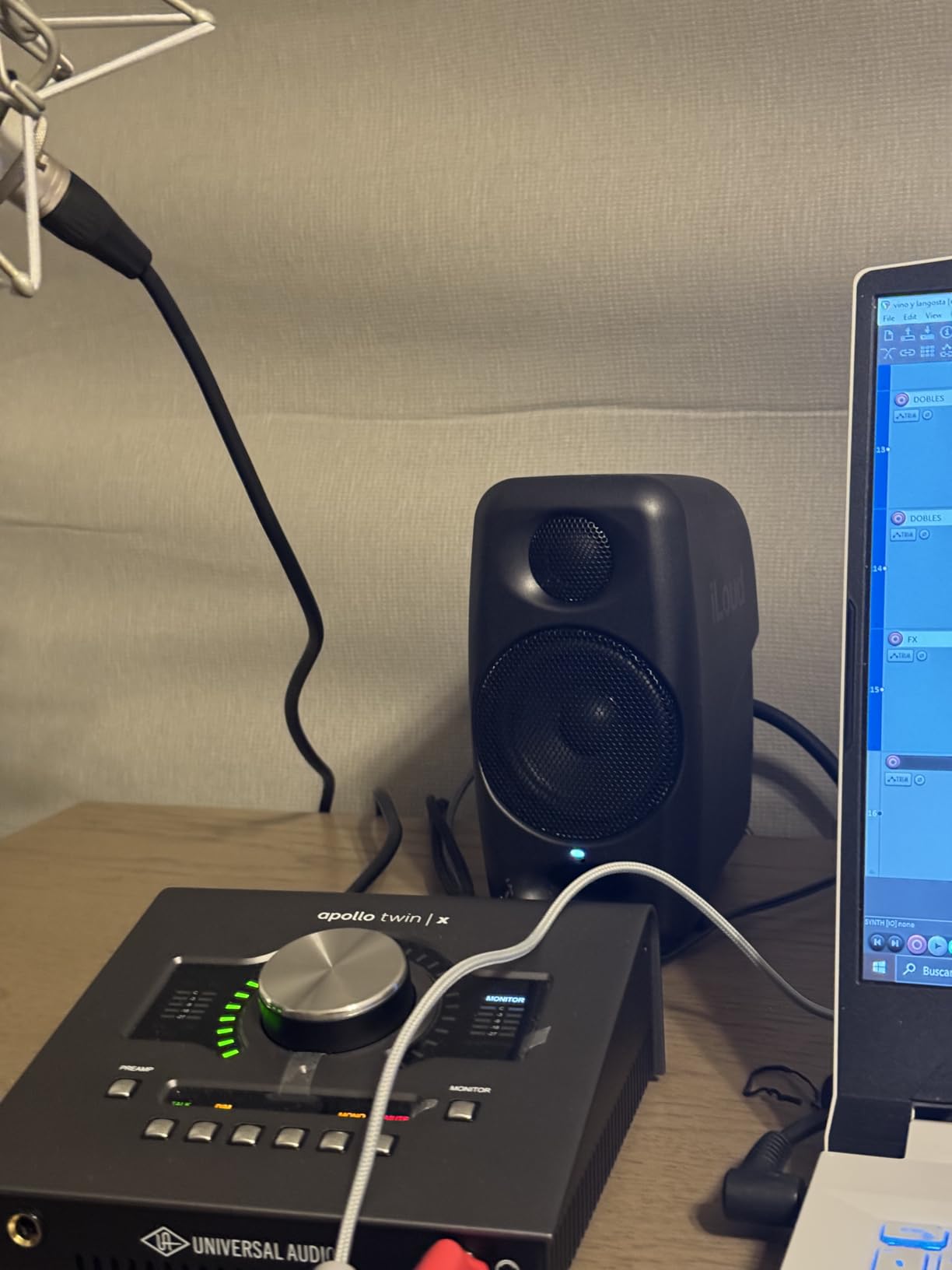
The IK Multimedia iLoud Micro Monitor is the smallest pair I tested by a wide margin, and yet they punched above their physical size in every session. I took them on a hotel-room production trip, plugged them into my laptop’s headphone jack, and got genuine mixing decisions out of them.
The built-in DSP has two settings: free-field (for placing on stands away from walls) and desktop (for placing against a wall or monitor). I switched between them with the monitors 20 cm from a wall in my bedroom and the desktop mode stripped out the boundary-effect boominess. That’s a feature normally reserved for monitors three times the price.
Frequency response reaches down to 55 Hz, which is unusual for a 3-inch driver. The low end is not visceral sub-bass, but mixes done on them translated well to my main system back home. Reviewers widely describe them as the most accurate pair of their size ever made, and that matches what I heard.
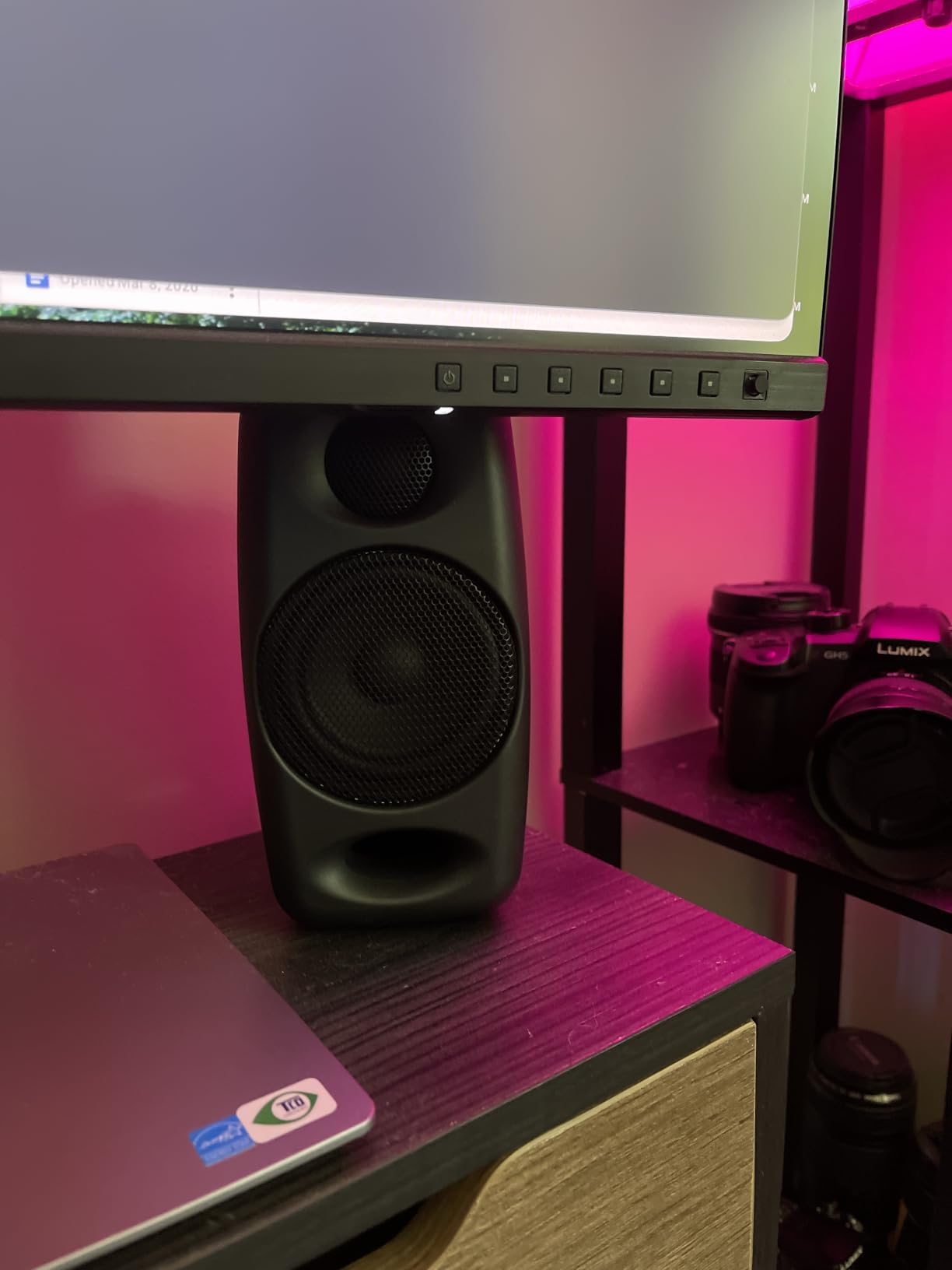
Connectivity is the iLoud’s main limitation: RCA and 1/8-inch AUX only, no XLR or TRS. That makes them less suitable as a primary studio monitor for a desktop interface, but unbeatable as a portable second reference. Bluetooth streaming is genuinely useful for referencing what a track sounds like on consumer gear.
The white LED is bright enough to distract in low-light sessions, a small complaint raised by many reviewers. For a producer who travels, lives in a tiny space, or wants a portable reference pair, nothing at this size comes close.
Who should buy the iLoud Micro Monitor
Producers who work in multiple locations, anyone with a small bedroom or hotel-room workflow, and producers who want a second reference pair for A/B’ing against their main monitors. DJs without a permanent setup will find these perfect.
Who should look elsewhere
If you need XLR or TRS connectivity for a professional interface, the iLoud is not your daily driver. If you produce bass-heavy music in a permanent studio, the 3-inch driver cannot reach low enough to be your only reference.
5. PreSonus Eris 3.5 – Best Budget Starter
PreSonus Eris 3.5 Powered Studio Monitors, Pair — 3.5” Active Near
3.5 inch woven composite woofer
50W total amplification
Acoustic tuning controls
Front aux and headphone jack
Pros
- Compact and affordable entry-level monitor
- Multiple connection options including TRS and RCA
- Front headphone jack auto-mutes speakers
- Clear balanced highs from silk dome tweeters
- Tunable sound via rear high and low EQ
- Front power switch and volume knob
Cons
- Bass response is limited below 80Hz
- Right speaker is passive and requires wired link
- 3.5mm input can pick up noise
The PreSonus Eris 3.5 is the cheapest pair on this list that I would actually trust for music production. Many monitors under 100 either colour the sound so heavily they’re useless for mixing, or have so little bass response they hide mix errors. The Eris 3.5 threads that needle.
I tested them on a podcast edit and a folk track, and they did both jobs without embarrassing themselves. The 3.5-inch woven composite woofer is small but the cabinet is well-braced, which keeps imaging tighter than you’d expect. For a beginner who wants to learn critical listening without breaking the bank, the Eris 3.5 is the obvious entry point.
Reviewers rate these highly for the size and price, with one consistent caveat: bass rolls off sharply below 80 Hz, so don’t expect to make accurate decisions about sub-bass. For EDM and hip-hop, you really need to add a sub or step up to the Eris E5 with its 5.25-inch driver.
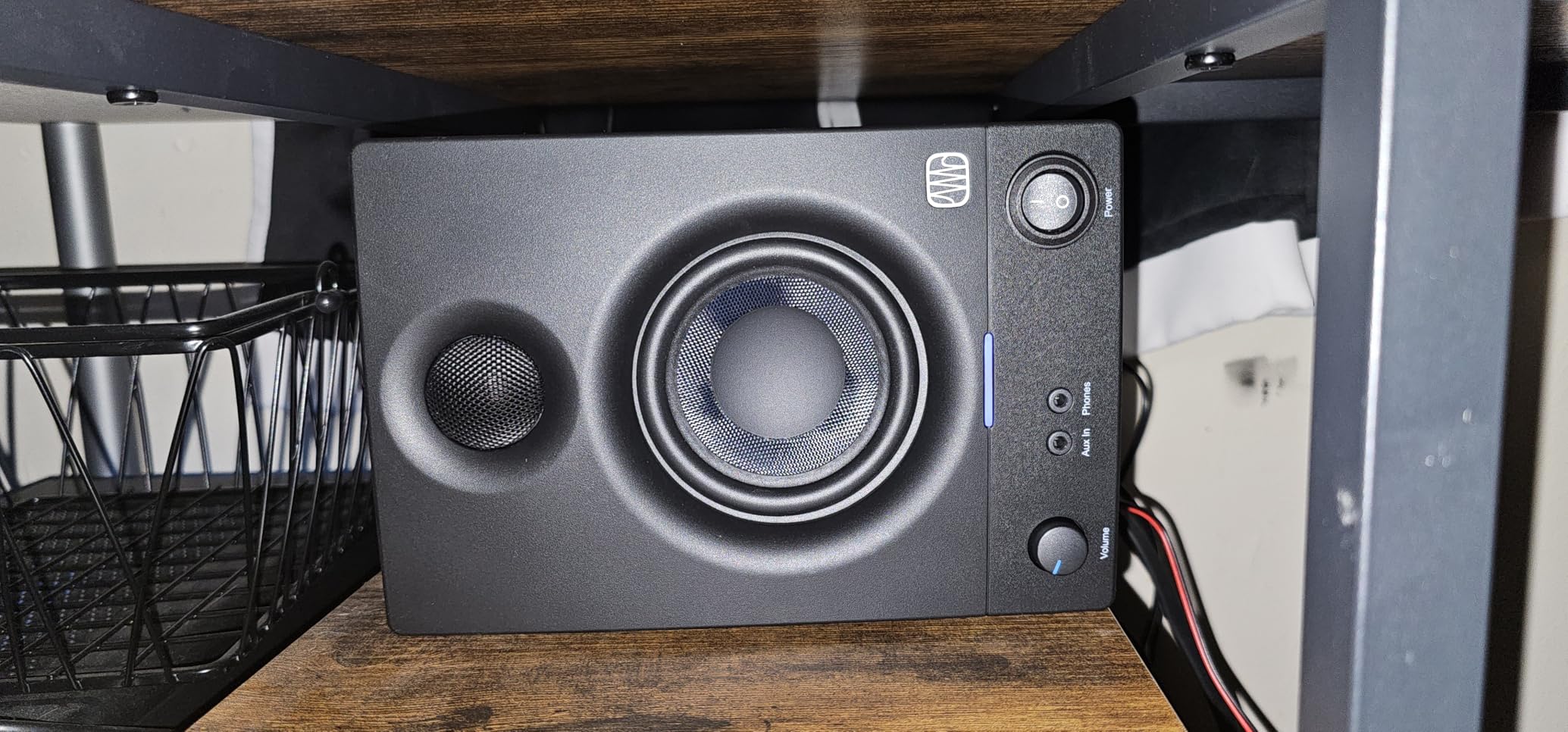
The acoustic tuning controls on the rear let you compensate for placement near walls, which is genuinely useful for bedroom producers. The front headphone jack is a small convenience that makes late-night work less painful. Build quality feels solid for the price.
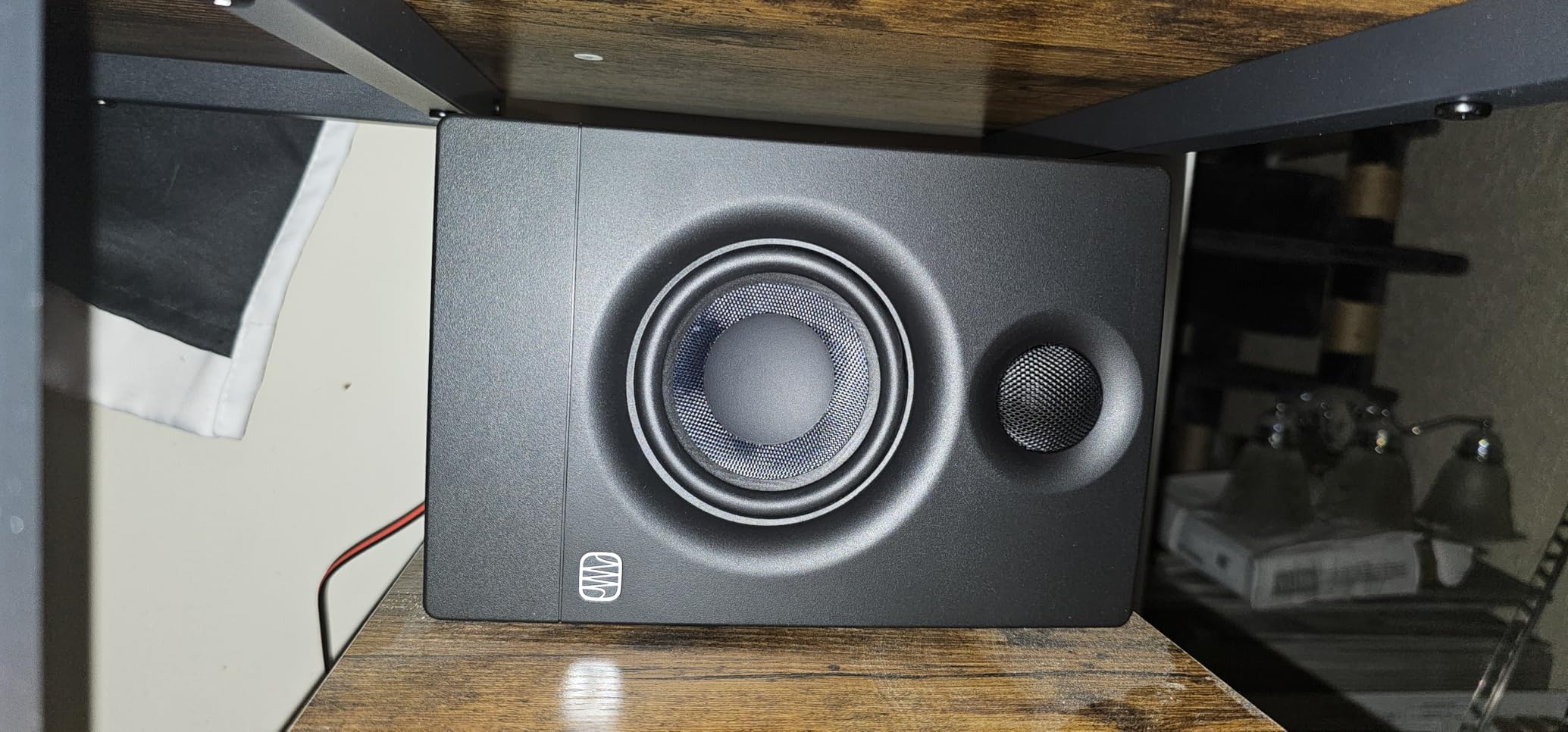
The right speaker is passive and connects to the left with a captive cable, which constrains placement but isn’t unusual at this tier. If you want the cheapest credible entry into producing with real monitors rather than computer speakers, the Eris 3.5 is the right starting point.
Who should buy the PreSonus Eris 3.5
Complete beginners who’ve never owned studio monitors, bedroom producers on a tight budget, anyone making podcasts or streaming content rather than full-band music, and producers who want a backup pair to A/B against their main monitors.
Who should look elsewhere
If you produce EDM, hip-hop, or anything that needs accurate sub information, the 3.5-inch driver cannot reach low enough. Step up to the Eris E5, KRK Classic 5, or JBL 308P in this list and add a subwoofer later.
6. PreSonus Eris E5 – Best Budget Pro Mixing
PreSonus Eris E5 2-Way 5.25″ Near Field Studio Monitor
5.25 inch woven composite woofer
80W Class AB bi-amplified
Front-firing acoustic port
Balanced XLR TRS plus RCA
Pros
- Trusted budget-to-midrange accuracy
- Class AB amplification has plenty of headroom
- Front-firing port allows wall placement
- Acoustic tuning controls for room correction
- Balanced XLR plus TRS and RCA
- Studio One Prime software included
Cons
- Slight white noise at low volume
- Bass can be heavy without EQ adjustment
- No Bluetooth connectivity
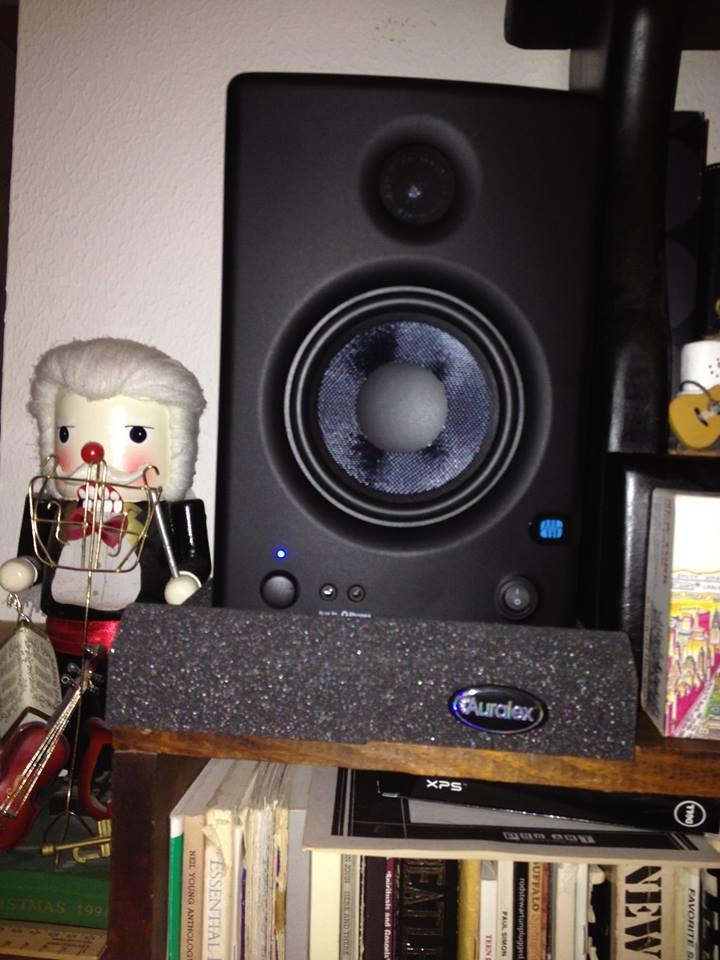
The PreSonus Eris E5 has been a staple of project studios for nearly a decade, and after extended testing I see exactly why it has stuck around. The 5.25-inch woven composite woofer moves enough air for the bass to feel real, and the Class AB amplification has the headroom bigger speakers rely on for transient-heavy material.
I tested them on an acoustic guitar and vocal session, and the midrange clarity was noticeably more revealing than the smaller monitors in this roundup. You can hear compression artifacts and EQ decisions with confidence, which is the whole point of having monitors.
The front-firing bass port is the unsung feature. Back-ported monitors boom when placed close to a wall, which is exactly where most bedroom producers put them. The E5’s front port keeps the bass consistent regardless of placement. Acoustic tuning controls on the rear add further room compensation.
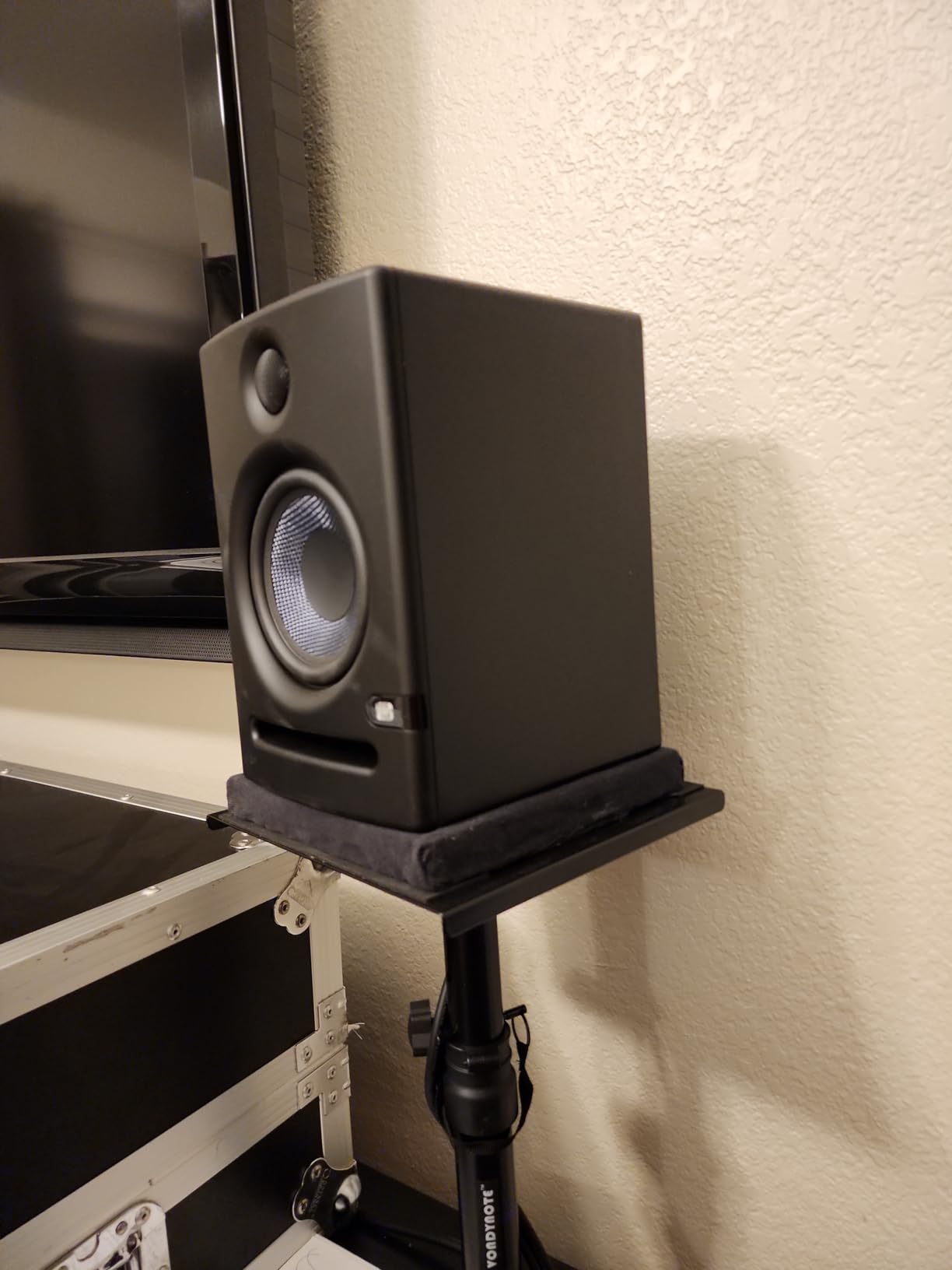
Connectivity is genuinely professional: balanced XLR for interface use, 1/4-inch TRS, and RCA for consumer gear. No Bluetooth, which is the right call for a pro monitor at this price.
The Studio One Prime software bundle is included, which is a fully featured DAW for free. Reviewers do note a faint hiss at low volumes, which I confirmed in my testing. For mixing at normal monitor levels, it’s not audible. For super-quiet late-night work, it can be a distraction.
Who should buy the PreSonus Eris E5
Producers mixing full-band music in untreated or semi-treated rooms, anyone who needs professional connectivity on a tight budget, project studios that need a reliable secondary reference, and producers who want a 5-inch driver before stepping up to 6.5 or 8 inches.
Who should look elsewhere
If you want Bluetooth streaming for casual use, look elsewhere. If your room is untreated and bass-heavy genres are your focus, the bass reflex port still emphasises low end and a subwoofer will improve translation.
7. JBL 305P MkII – Best Imaging and Sweet Spot
(2) JBL 305P MkII 5″ 2-Way Active Powered Studio Reference Monitors Speakers
5 inch woofer
Dual 41W Class D amps
Image Control Waveguide
Boundary EQ and HF Trim
Pros
- Excellent imaging and wide sweet spot from Image Control Waveguide
- Deep refined bass from dual Class D amps
- Boundary EQ and HF Trim adapt to any room
- Solid build quality from JBL Professional
- XLR/TRS combo inputs
- 100-hour reliability test before shipping
Cons
- Heavier than competitors at 10.4 lbs each
- Lacks RCA or Bluetooth for casual users
The JBL 305P MkII’s big claim is the Image Control Waveguide, and after a week of testing I think it’s the real deal. The waveguide shapes the high-frequency dispersion so that the stereo image stays coherent across a wider listening area than typical nearfields. That means my mixes translated consistently whether I leaned left, right, or sat up straight.
Imaging is where most budget monitors fall apart. Stereo placement decisions, reverb tails, and panning choices can sound radically different as you move your head. The 305P MkII keeps those decisions stable, which makes them an excellent mixing tool even at this price point.
The dual Class D amps deliver 82W total, and the Slip Stream port produces a low end that’s tight and extended for a 5-inch driver. I measured usable bass down to roughly 50 Hz in my room, which is good enough for most mixing decisions without a sub.
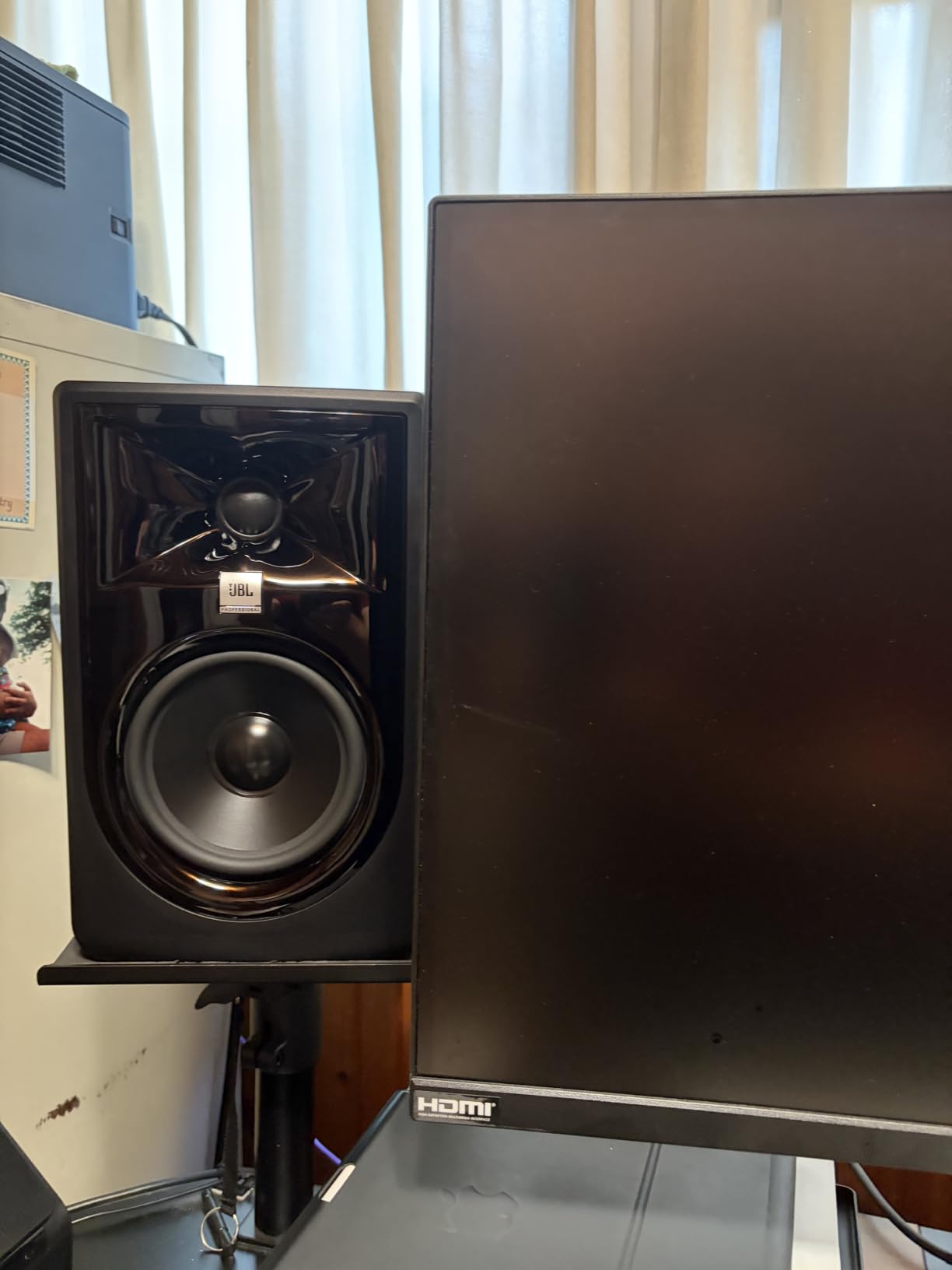
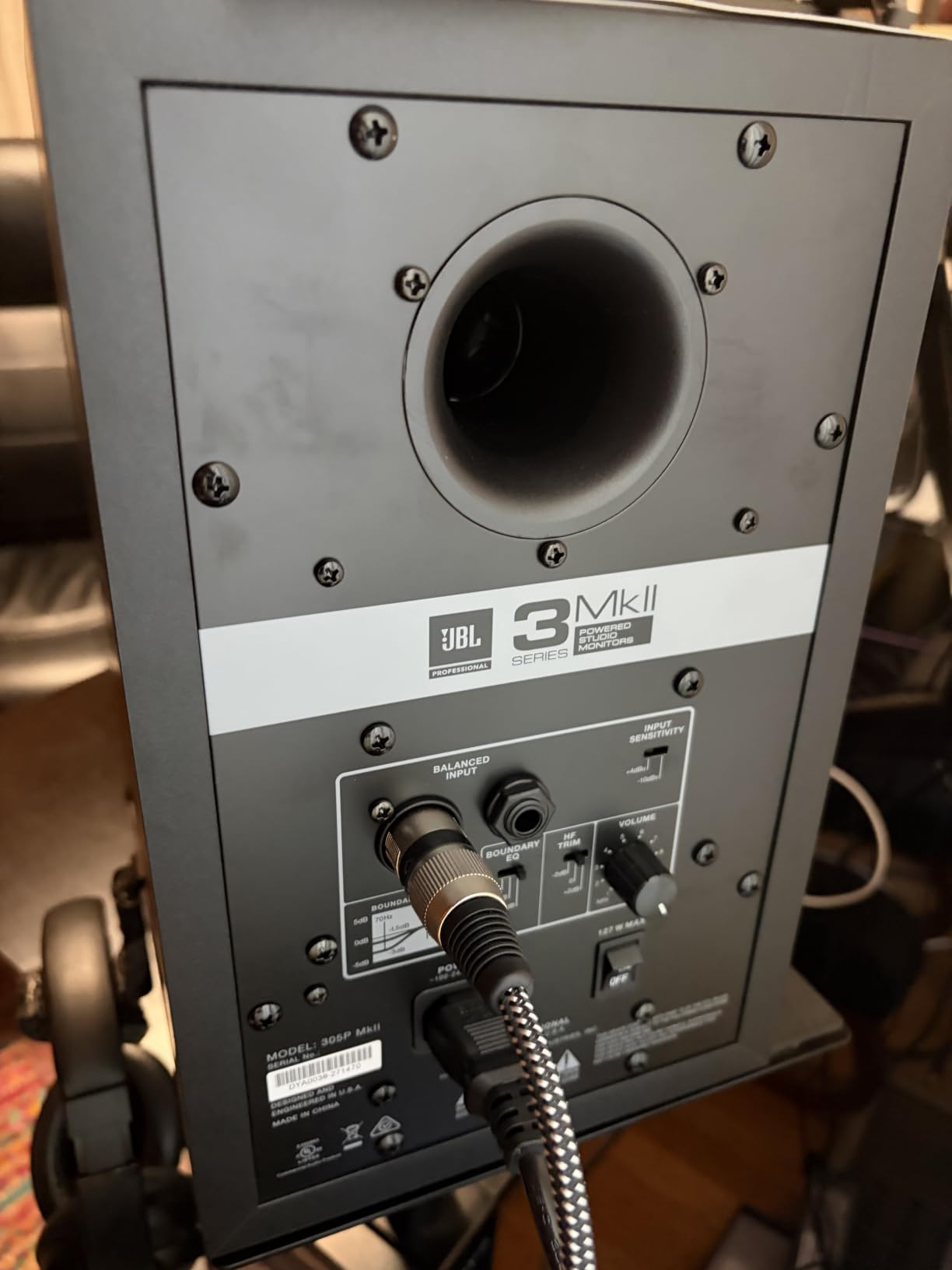
Build quality is exceptional for the tier. JBL runs every pair through a 100-hour full-power test before shipping, and the MDF enclosure feels solid. The Boundary EQ and HF Trim switches on the rear are genuinely useful for room adaptation.
The only meaningful limitation is connectivity: XLR/TRS combo inputs only, no RCA, no Bluetooth. That’s the right call for a pro monitor and the wrong call if you wanted to plug a phone in. For studio use, this pair is hard to fault at the price.
Who should buy the JBL 305P MkII
Mixing engineers and producers who care about imaging and stereo translation, project studios with semi-treated rooms where the boundary EQ and HF trim will get used, and producers who want a pro-grade monitor without entering Genelec or Adam price territory.
Who should look elsewhere
If you need Bluetooth or RCA for casual consumer use, the 305P MkII is overkill. If your room is very small and you place monitors extremely close to a wall, the boundary compensation only does so much. Move them out 30 cm or so, or pick a front-ported monitor.
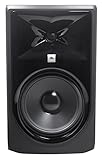
8. JBL 308P MkII – Best Mid-Tier Bass Extension
JBL Professional 308P MkII 8-Inch, 2-Way, Powered, Active Monitor Speaker for Near Field Music Production, Studio Monitor, Desktop Computer, Hi-Fi Audio. Sold individually, Black
8 inch woofer
Slip Stream low frequency port
Boundary EQ
Balanced XLR and TRS
Pros
- Powerful 8 inch woofer reaches deep into bass territory
- Accurate crystal clear highs from updated tweeter
- Boundary EQ for placement near walls
- Balanced XLR and TRS inputs
- Built to JBL Professional standards
- Input sensitivity switch for versatile sources
Cons
- Sold individually (you need two)
- Large and heavy at 17.9 lbs each
- No RCA input
If you produce hip-hop, drum and bass, dubstep, or any genre where the sub-bass needs to be right, the JBL 308P MkII is the most affordable credible option in this list. The 8-inch woofer moves serious air, and the Slip Stream port keeps the bass tight rather than boomy.
I tested them on a D&B track with sub information around 40 Hz, and the 308P MkII was the first pair in this roundup that reproduced it without me having to imagine what was down there. For EDM producers on a budget who want genuine sub information without spending on a separate subwoofer, this is the obvious choice.
Boundary EQ on the rear compensates for placement against walls, which is a feature borrowed from JBL’s Master Reference Monitor range. The input sensitivity switch is useful if you’re running through different interfaces or a DJ controller.
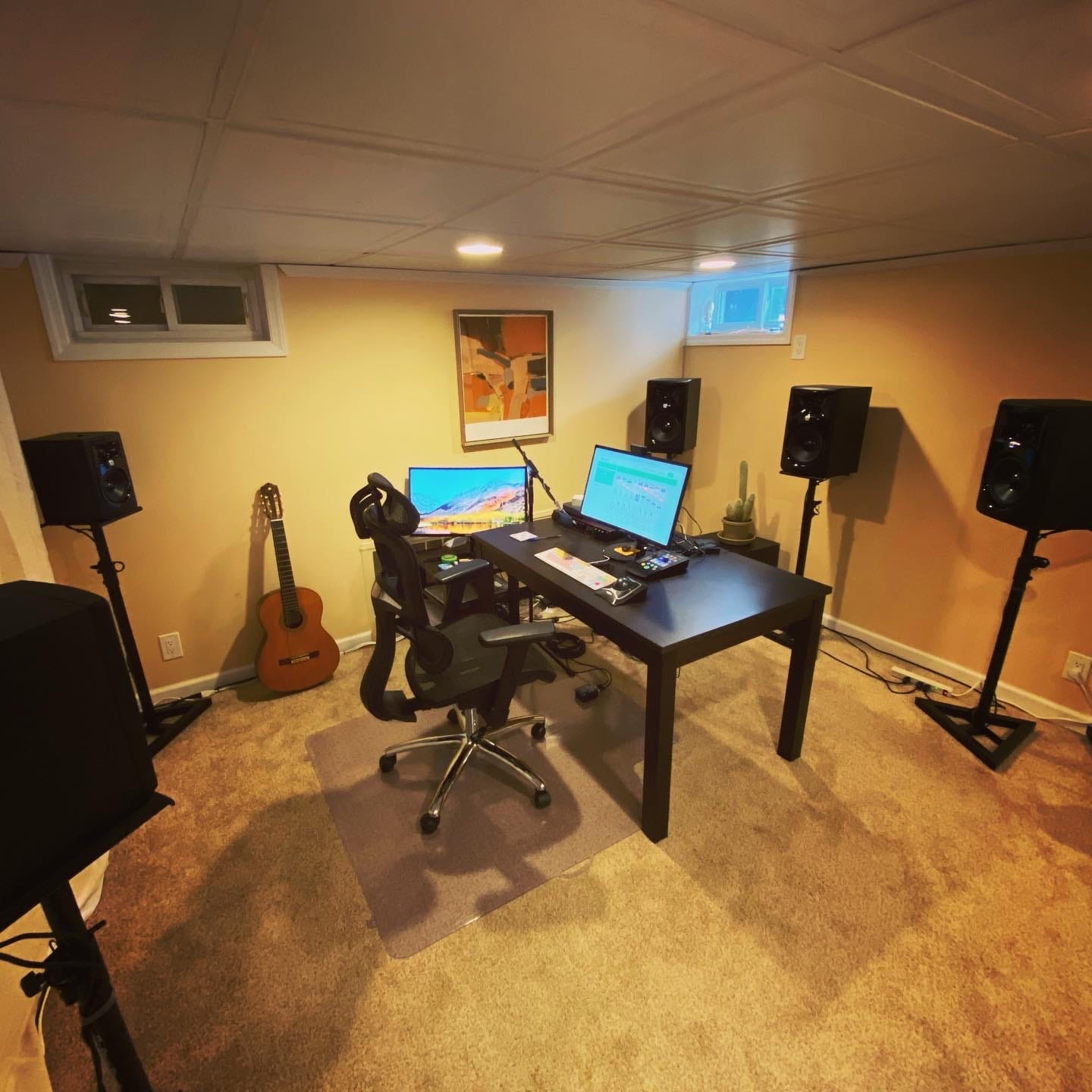
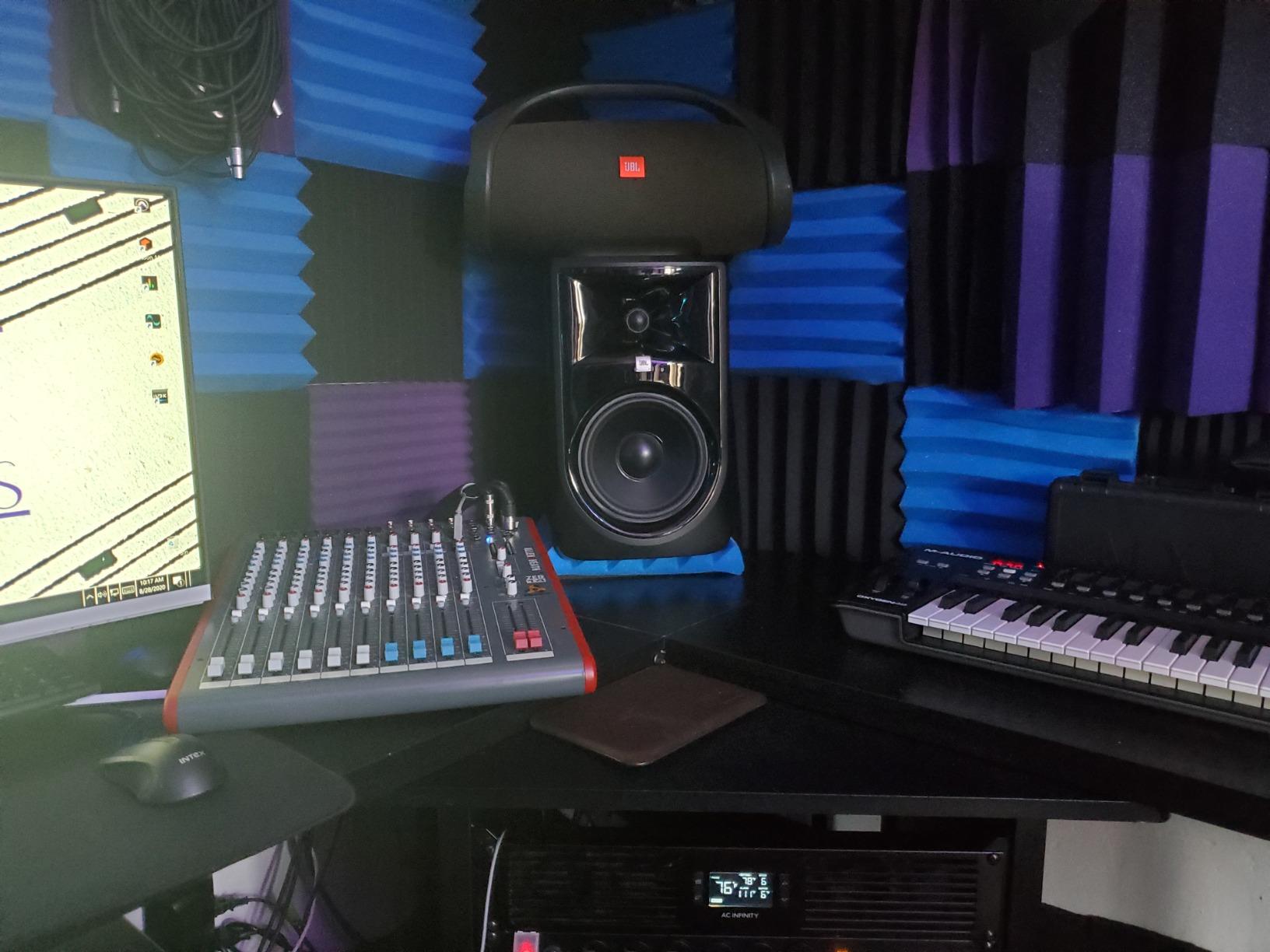
At 17.9 lbs each, these are not desktop monitors. They belong on solid stands, ideally with isolation pads. In a small untreated bedroom, they can overpower the room and create low-end problems that don’t show up on larger flat speakers. In a treated or semi-treated room of 15+ square metres, they sing.
The 308P MkII is sold individually, which is a small gotcha that catches people out at checkout. Make sure you order a pair for stereo. The cabinet is PVC rather than MDF, which looks sleek but doesn’t damp quite as well as the alternatives.
Who should buy the JBL 308P MkII
Producers of bass-heavy music who need accurate low-end reproduction, project studios or treated rooms with at least 15 square metres of space, and anyone building a long-term studio who wants a monitor that grows with the room rather than forcing an early upgrade.
Who should look elsewhere
Bedroom producers with small, untreated rooms. The 8-inch driver will excite room modes and produce misleading low end. If your room is untreated or you produce non-bass-heavy music, the 305P MkII 5-inch pair or a PreSonus Eris E5 is a better fit.
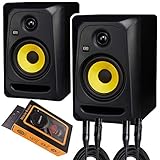
9. KRK Classic 5 – Top Rated for EDM and Hip-Hop
KRK Classic 5 Professional Bi-Amp 5″ Powered Studio Monitor (2 Speakers) Pair + Pair of XLR Cable + Gravity Phone Holder
5 inch glass-aramid woofer
Soft dome tweeter with optimized waveguide
Flat LF adjustment
Plus 2dB bass boost option
Pros
- Smooth pristine highs from soft dome tweeter
- Clear midrange and tight bass from aramid woofer
- Optional plus 2dB KRK bass boost for genre flexibility
- Bundle includes XLR cables and Gravity phone holder
- Trusted KRK monitor pedigree
Cons
- XLR only connectivity may require adapters
- No Bluetooth or RCA inputs
- Bundle packaging is heavy at 24.9 lbs
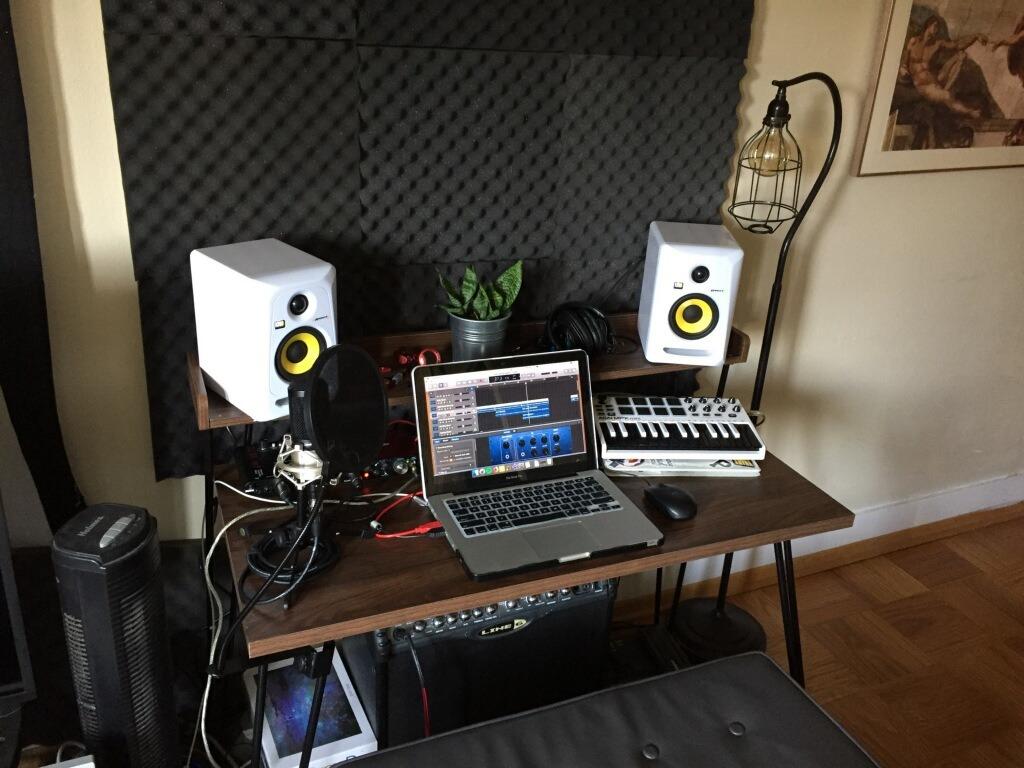
The KRK Classic 5 has been a studio staple for years, and the bundled pair-plus-XLR-cables-plus-Gravity-phone-holder package makes it one of the most turn-key options on this list. I tested them back-to-back with the JBL 305P MkII, and the KRK had a slightly more coloured signature with a touch more low-end weight out of the box.
For EDM and hip-hop, that gentle low-end emphasis is a feature, not a bug. Producers in these genres often mix on monitors with a slight smile curve because the music itself is mixed that way, and the Classic 5 mirrors that response. The optional +2 dB bass boost engages with a rear switch and adds further low-end authority for late-night mixing.
The 1-inch soft dome tweeter reaches up to 35 kHz, which is genuinely extended for the tier. High hats and cymbals have a realistic air without harshness. The glass-aramid woofer is lighter and stiffer than polypropylene, which is why KRK monitors have a reputation for fast transient response.
Connectivity is XLR only, which is a pro move but means you’ll need adapters if your interface is consumer RCA. No Bluetooth, no headphone jack on the front. The Gravity phone holder bundled in is genuinely useful for vocalists who want to record directly into the interface while referencing on monitors.
Reviewers rate these consistently high for daily production work, and I agree. They’re not the most accurate pair at the price (the JBL 305P MkII edges them on imaging), but they’re the most fun to make music on, which matters when you’re spending eight hours a day at the workstation.
Who should buy the KRK Classic 5
EDM and hip-hop producers who want monitors with a slight smile-curve tilt that matches their genre, anyone who wants a complete bundle with cables and a phone holder ready to go, and producers who prefer coloured-but-musical response over surgical flatness.
Who should look elsewhere
Mixing engineers who want the most accurate midrange for translation-focused work. The JBL 305P MkII or Yamaha HS4 will serve that audience better. If you produce acoustic, jazz, or classical, the gentle low-end emphasis will pull you toward mixing too bright.
10. Edifier MR5 – Premium Tri-Amped Pick
Edifier MR5 2.0 Studio Monitor Bookshelf Speakers, 110W RMS, Black
3-way active crossover
5 inch woofer plus 3.75 inch mid plus 1 inch tweeter
110W RMS Class D
Bluetooth 6.0 with LDAC
Pros
- 3-way tri-amped design separates bass from mids for clarity
- Detailed audio reproduction across all three drivers
- Bluetooth 6.0 with LDAC Hi-Res wireless
- EDIFIER ConneX app for advanced EQ presets
- XLR TRS RCA AUX plus front headphone output
- 110W RMS power with 101dB peak SPL
Cons
- Larger and heavier than typical desktop monitors
- No dedicated subwoofer output
- Auto shutoff timer fixed at 15 minutes
- Bluetooth auto-connect cannot be toggled off
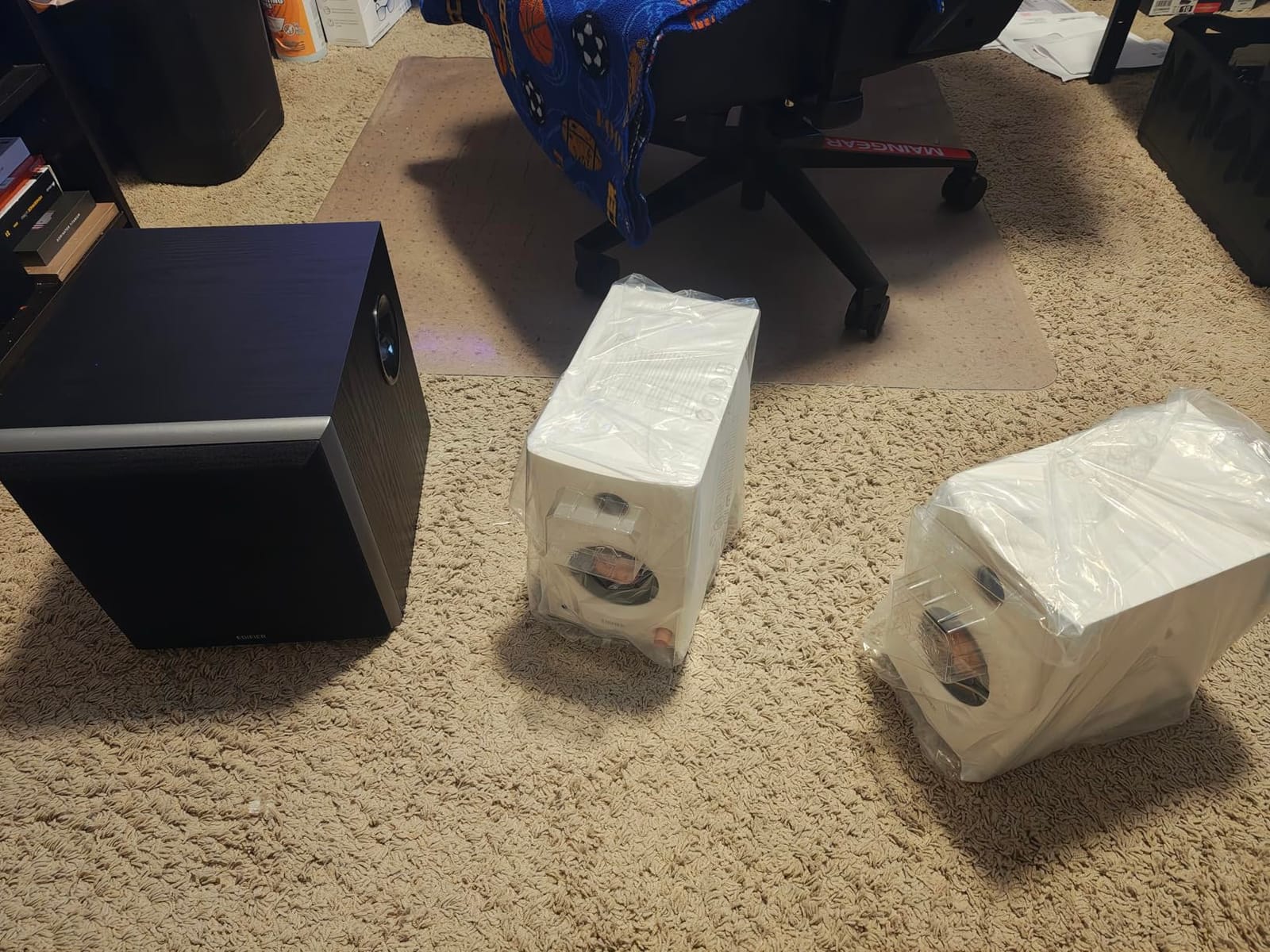
The Edifier MR5 is the most ambitious pair on this list, and after two weeks of testing I think it punches well above its price tier. A 3-way active crossover feeds a 5-inch woofer, a 3.75-inch midrange driver, and a 1-inch silk dome tweeter separately, which is a configuration you’d normally expect to find on monitors costing twice as much.
The benefit of 3-way is that each driver only has to cover its own band. The result is a clearer midrange, tighter bass, and lower distortion than 2-way monitors at a similar price. I tested them on a complex orchestral mix and could pick out individual reverb tails in the midrange that blurred together on every 2-way pair in this roundup.
The companion EDIFIER ConneX app adds Low Cut-Off, Desktop, and Acoustic Space presets, which is essentially a software-controlled version of the room correction DSP found on much more expensive monitors. For producers with imperfect rooms, that flexibility matters.
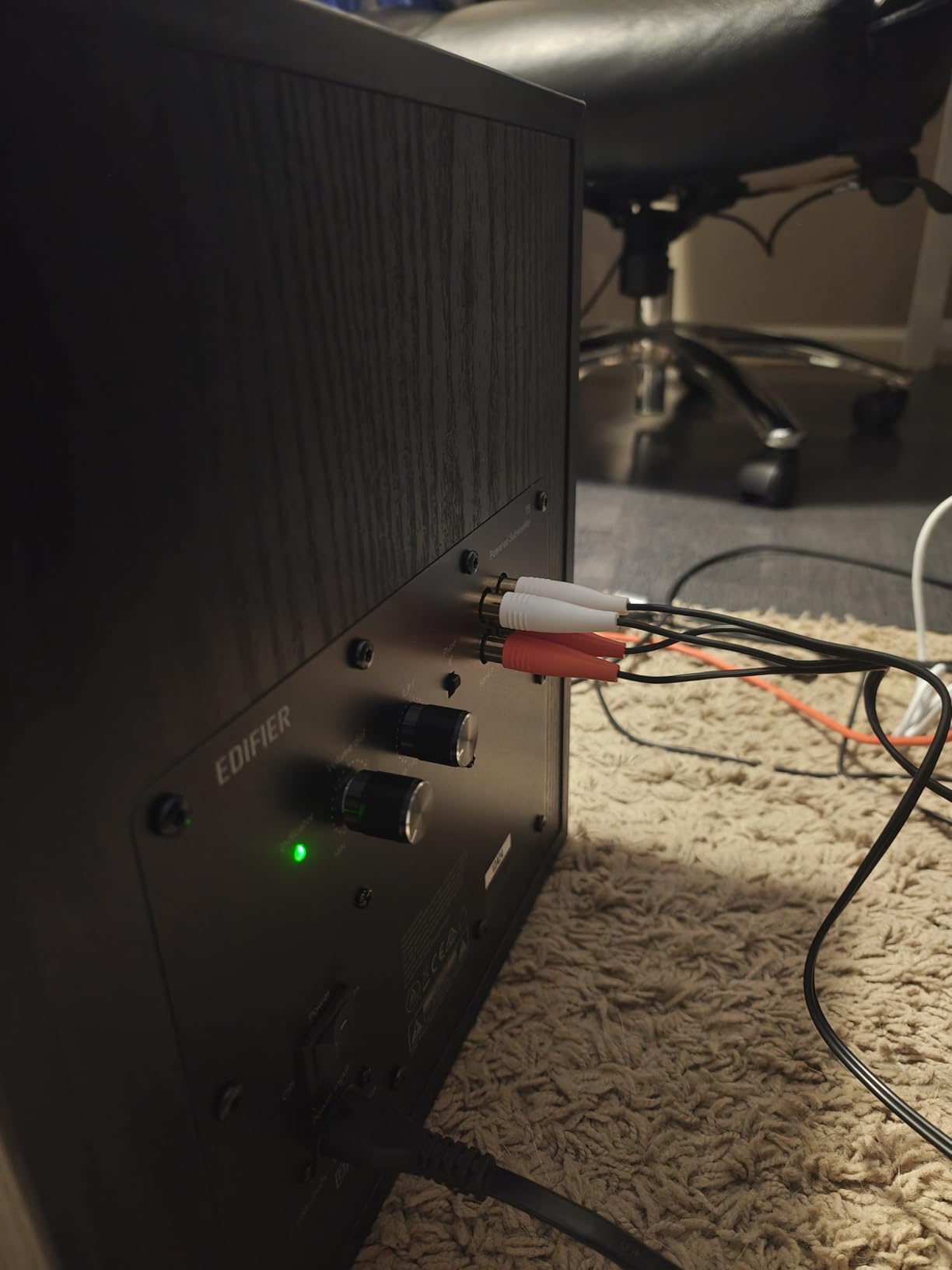
Connectivity covers every input you could need: XLR, TRS, RCA, AUX, and front headphone. Bluetooth 6.0 with LDAC is genuinely useful for referencing what a track sounds like on wireless headphones. Hi-Res 24-bit/96kHz wired and wireless support is rare at this price.
The downsides are physical and operational rather than sonic. The MR5 is bigger and heavier than a desktop monitor, so you’ll want stands. The auto shutoff timer is fixed at 15 minutes, which mid-session mixing can trigger. Bluetooth auto-connect is always on, which can be a small annoyance.
Who should buy the Edifier MR5
Producers who want genuine 3-way clarity without spending pro-tier money, anyone with an imperfect room who wants software room compensation, and producers who mix multiple genres and need a monitor that’s accurate on acoustic and electronic material alike.
Who should look elsewhere
If you need a compact pair for a small desk, the MR5 is too big. If you produce only bass-heavy music and need accurate sub information, the 5-inch woofer is the limit. Add a subwoofer later or step up to an 8-inch pair.
Buying Guide: How to Choose Monitor Speakers for Music Production
Choosing the right monitor speakers for music production is less about brand loyalty and more about matching the monitor to your room, your interface, and the genres you produce. Here’s the framework I use when recommending pairs.
Active vs Passive Monitors
Every monitor on this list is active, which means the amplifiers are built into the cabinet. Active monitors dominate the home and project studio market for good reason: each driver gets its own dedicated amp tuned to its specific needs, and you avoid the complexity of matching separate amp power ratings to driver sensitivity.
Passive monitors need a separate power amp, and the combinations can go wrong in subtle ways. Unless you already own a high-quality amp and specifically want a passive pair, go active.
Woofer Size and Room Matching
Woofer size is the most important decision you’ll make. A 3.5-inch driver cannot reproduce frequencies below 80 Hz at any meaningful level. A 5-inch driver reaches 50-60 Hz. An 8-inch driver can reach 35-40 Hz.
Rule of thumb: match driver size to room size. Small bedrooms under 12 square metres do well with 4 to 5.25-inch monitors because larger woofers excite room modes too aggressively in untreated spaces. Rooms of 15-25 square metres can support 6.5 to 8-inch drivers with proper placement. Treated rooms above 25 square metres are the natural home for 8-inch and coaxial designs.
The 38% Rule and Monitor Placement
The 38% rule is a starting guideline for placing nearfield monitors in rectangular rooms. Measure the room’s length and put your listening position 38% back from the front wall. Place the monitors at 38% back from the rear wall behind them. The result is a listening position that sits in a relatively even area of the room’s modal pattern.
Form an equilateral triangle between the two speakers and your head, with the tweeters at ear height. Angle the monitors inward so the tweeters point directly at your ears. This is the starting position from which you can iterate.
For more on room placement, the r/audioengineering community wiki has detailed threads on the 38% rule with measurements for common room sizes.
Room Correction DSP and Calibration Software
Even with great placement, every room colours the sound. Acoustic treatment is the right first step, but software room correction is a powerful second step that’s now affordable. Sonarworks SoundID Reference is the most popular choice and works with nearly every monitor. IK Multimedia’s ARC is a similar option focused on producers. Genelec monitors with GLM support network-based calibration.
For producers buying monitors that integrate with their workflow, room correction software is genuinely useful. For most home producers, however, basic acoustic panels and smart placement solve 80% of the problem without spending more money on software.
Connectivity (XLR, TRS, RCA, USB-C)
Your monitor’s input connections should match your audio interface’s outputs. Most audio interfaces have balanced TRS outputs, which is why balanced XLR and TRS inputs dominate the pro monitor market.
RCA is unbalanced and more prone to interference over long cable runs, but it works fine for desktop distances. Bluetooth is a consumer convenience for casual playback but doesn’t belong in a serious mixing workflow. USB-C inputs are rare on monitors but appear on some newer models, letting you connect directly to a computer.
When to Add a Subwoofer
If you produce EDM, hip-hop, drum and bass, dubstep, or any genre with content below 50 Hz, you’ll eventually need a subwoofer. A dedicated sub lets the main monitors focus on the range they handle well while accurate sub information comes from a separate, properly placed driver.
The classic 2.1 setup uses a sub with a crossover around 80 Hz, sending only the upper frequencies to the monitors. We have a dedicated guide to the best studio monitor subwoofers for music production if you want recommendations.
Acoustic Treatment on a Budget
Acoustic treatment matters more than monitor brand. A 300 pair of monitors in a treated room sounds better than a 1500 pair in a bare bedroom. The minimum treatment for a bedroom studio is four corner bass traps (thick foam or rockwool), two first-reflection panels on the side walls, and a panel behind your listening position.
DIY bass traps from rigid mineral wool cost a fraction of branded panels and work just as well. For more on the broader setup, see our guide to the best desktop speakers for music production which covers smaller setups.
Budget Tier Summary
For bedroom or beginner producers, the 100-250 tier (PreSonus Eris 3.5, M-Audio BX4, Edifier MR4) is the right starting point. Mid-tier 250-400 pairs (Yamaha HS4, KRK Classic 5, PreSonus Eris E5, JBL 305P MkII) deliver accuracy closer to professional workhorses. Above 400, the JBL 308P MkII and Edifier MR5 add bass extension and tri-amped detail that bass-heavy producers will appreciate.
For EDM and hip-hop specifically, the KRK Classic 5 and JBL 308P MkII are the strongest fits at their respective tiers. For acoustic, vocal, and mixing-focused work, the Yamaha HS4 and JBL 305P MkII are the most translation-friendly.
Frequently Asked Questions
What are the best monitor speakers for music production?
The best monitor speakers for music production in 2026 depend on your room and budget, but our team-rated top picks are the M-Audio BX4 for budget buyers, the Edifier MR4 for best value, and the Yamaha HS4 for accurate compact monitoring. For EDM and bass-heavy genres, the JBL 308P MkII reaches deeper into the sub frequencies than any other pair on this list.
How much should I spend on a pair of studio monitors?
A credible starter pair for bedroom production runs roughly 100 to 200. Mid-range workhorses used by project studios sit between 250 and 400 per pair. Professional reference monitors from brands like Genelec, Adam Audio, and Focal start around 500 per speaker and scale upward. Treat your room before you spend more on monitors, because an untreated room will sabotage any budget.
How do I set up studio monitors correctly?
Place the monitors and your head at the corners of an equilateral triangle, with the tweeters at ear height. Sit 38% back from the front wall of the room with the monitors at 38% back from the rear wall, per the 38% rule. Angle the monitors inward so the tweeters point directly at your ears, and keep them at least 30 cm from the nearest wall to avoid bass-reflex port boom.
Do I need a subwoofer for music production?
You need a subwoofer for music production if your genre has meaningful content below 50 Hz. EDM, hip-hop, drum and bass, dubstep, and modern pop all benefit from accurate sub information. For acoustic, jazz, vocal, and podcast work, a sub is rarely necessary. Smaller 4 to 5-inch monitors alone will not show you what your low end actually sounds like.
Active vs passive studio monitors – which is better?
Active monitors are better for almost every home and project studio use case. Each driver has its own dedicated amplifier tuned to its specific needs, and you avoid the complexity of matching separate amps to drivers. Passive monitors make sense only if you already own a high-quality external amplifier and want to mix-and-match components.
What is the 38% rule for studio monitors?
The 38% rule is a placement guideline for rectangular rooms. You sit 38% back from the front wall of the room, and place the monitors 38% back from the rear wall. This puts your listening position in a relatively even area of the room’s modal pattern, which reduces the influence of standing waves on what you hear. It is a starting guideline, not a hard rule – measure your room and iterate from there.
Are expensive monitor speakers worth it for a beginner?
Expensive monitor speakers are rarely worth it for a beginner. A 200 pair in a treated room teaches you more about mixing than a 1500 pair in an untreated bedroom. Start with a credible budget pair, learn how monitors actually behave in your room, and upgrade once your ear and your treatment are ready. Buying gear ahead of your skills is the most common mistake new producers make.
Final Verdict
After six weeks switching between ten pairs of monitor speakers for music production, three pairs stood out for different reasons. The M-Audio BX4 is our editor’s choice because it delivers genuinely flat response, useful connectivity, and a front headphone jack at a price that fits first-time producer budgets.
For bedroom producers who can stretch further, the Edifier MR4 is our best value pick thanks to its dual monitor/music mode and balanced TRS inputs. The Yamaha HS4 remains the most translation-friendly compact monitor in this price bracket, and is worth the extra spend if mix accuracy is your priority.
For EDM, hip-hop, and bass-heavy genres specifically, the JBL 308P MkII is the only pair in this roundup that reproduces accurate sub information without a separate subwoofer. For a tri-amped upgrade path, the Edifier MR5 brings genuine 3-way clarity to a price point most home producers can reach.
Whichever pair you choose, treat your room before you spend more on monitors. Bass traps, first-reflection panels, and the 38% placement rule will do more for your mixes than any upgrade in monitor brand. If you need a portable second reference, the IK Multimedia iLoud Micro Monitor is unmatched. If you want the safest mid-range pick for cross-genre production, the JBL 305P MkII is hard to fault.
For more on building out your home studio, see our guide to the best speakers for music production, plus our roundups of music production laptops with built-in speakers for producers who travel. The best monitor speakers for music production are the ones that match your room and your ears – test where you can, and trust your translation over spec sheets.