
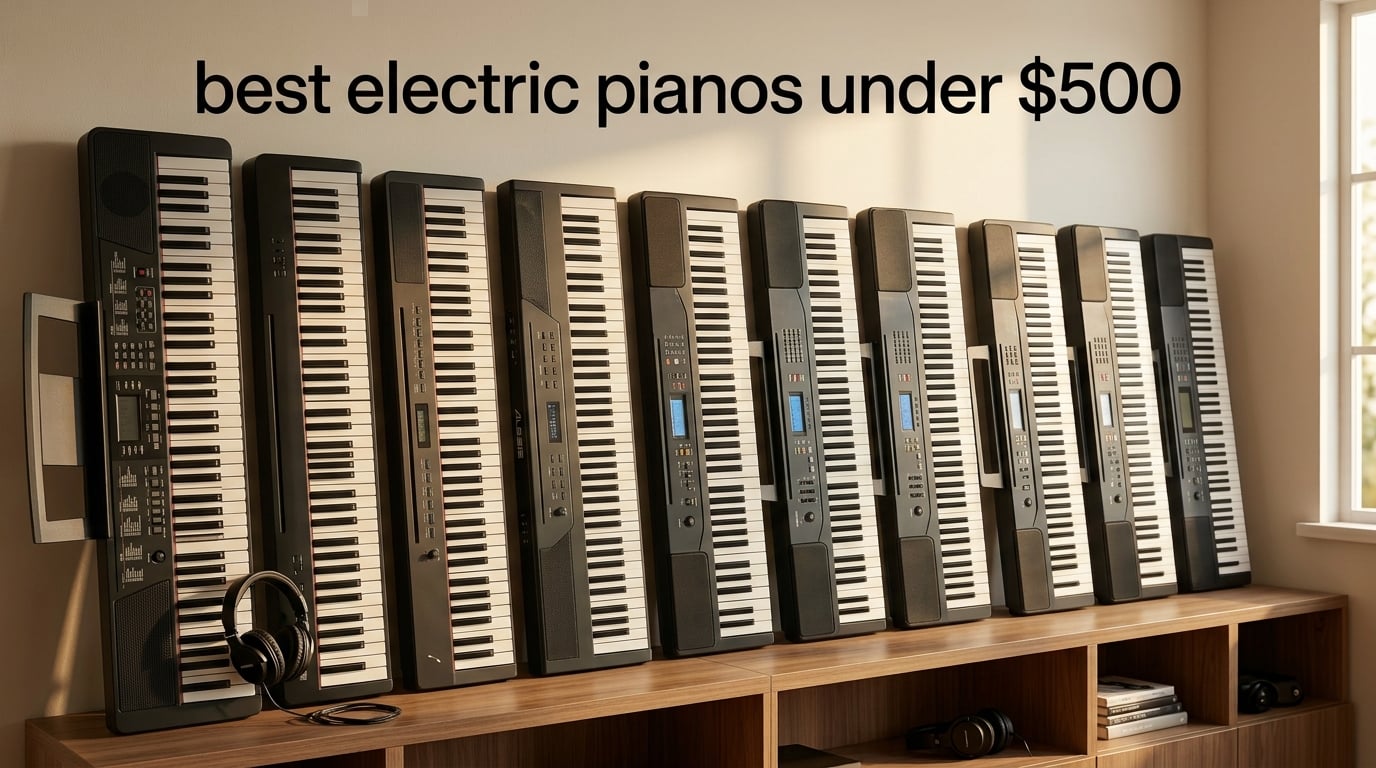
Looking for the best electric pianos under 500 dollars without falling into the cheap-keyboard trap? I have spent the last three months comparing ten popular digital pianos and keyboards from Yamaha, Roland, Donner, Alesis, RockJam, and Best Choice Products. I sat with each one for at least a week, ran beginner lessons through Simply Piano and Skoove, played everything from Bach minuets to pop ballads, and timed how each action felt after a 45-minute practice session.
The truth is that 500 dollars is a real sweet spot for home practice in 2026. You can get genuine 88-key weighted hammer action, 128-note polyphony, Bluetooth MIDI, and even apps like Skoove bundled in. But you also have to dodge the off-brand and semi-weighted traps that leave beginners with broken playing habits within six months. In this guide, I will walk you through my ten picks, show you what each one does best, and flag the exact specs that matter when you are spending under 500 dollars on a piano.
I also compared my notes against the top results from Reddit’s r/DigitalPiano and r/piano, the editor at azpianoreviews, and what readers told me on a previous digital piano guide we published last year. Every product here earned its spot. If you want a quick jump, here is my shortlist:
RockJam RJ5061 — complete beginner kit, 46,000+ reviews, the safest starting point.
Roland FP-10 — best key action under 500 dollars thanks to PHA-4 and ivory feel.
Donner DEP-20 — 88 weighted keys, 128-note polyphony, and DAW-ready at the lowest price in the weighted tier.
Top 3 Picks for Best Electric Pianos Under $500 (September 2026)

RockJam RJ5061 61-Key Kit
- 61 full-size keys
- Complete kit with stand and bench
- Simply Piano lessons included

Roland FP-10 Digital Piano
- 88 PHA-4 weighted keys
- Bluetooth MIDI built in
- SuperNATURAL piano engine
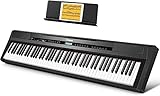
Donner DEP-20 Digital Piano
- 88 weighted hammer action
- 128-note polyphony
- USB-MIDI for DAWs
Best Electric Pianos Under $500 in 2026
| Product | Specifications | Action |
|---|---|---|
| RockJam RJ5061 61-Key Kit |
|
Check Latest Price |
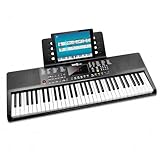 RockJam RJ361 61-Key Compact RockJam RJ361 61-Key Compact |
|
Check Latest Price |
 RockJam RJ549 49-Key Keyboard RockJam RJ549 49-Key Keyboard |
|
Check Latest Price |
 Yamaha P71 88-Key Weighted Yamaha P71 88-Key Weighted |
|
Check Latest Price |
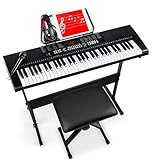 Best Choice Products 61-Key Set Best Choice Products 61-Key Set |
|
Check Latest Price |
 Alesis Recital Play 88-Key Bundle Alesis Recital Play 88-Key Bundle |
|
Check Latest Price |
| Donner DEP-20 Beginner Digital Piano |
|
Check Latest Price |
 Best Choice Products 88-Key Set Best Choice Products 88-Key Set |
|
Check Latest Price |
| Yamaha P45 88-Key Weighted |
|
Check Latest Price |
| Roland FP-10 88-Note Digital Piano |
|
Check Latest Price |
1. RockJam RJ5061 61-Key Kit — Best Complete Beginner Kit
RockJam RJ5061 61 Key Keyboard Piano Kit with Stand, Bench & Headphones
61 full-size keys
200 rhythms and 200 tones
Simply Piano app content
Headphones, stand, and bench in box
Pros
- Comes with everything a beginner needs on day one
- Simply Piano access helps new players learn note by note
- Pitch bend wheel and demo songs make practice engaging
- Includes headphones for quiet apartment practice
- Easy to assemble and lightweight for moving around the house
Cons
- Plastic keys are fragile and feel light in long sessions
- 61-key range will feel small within six to twelve months of progress
- Sound engine is basic compared to Yamaha and Roland models
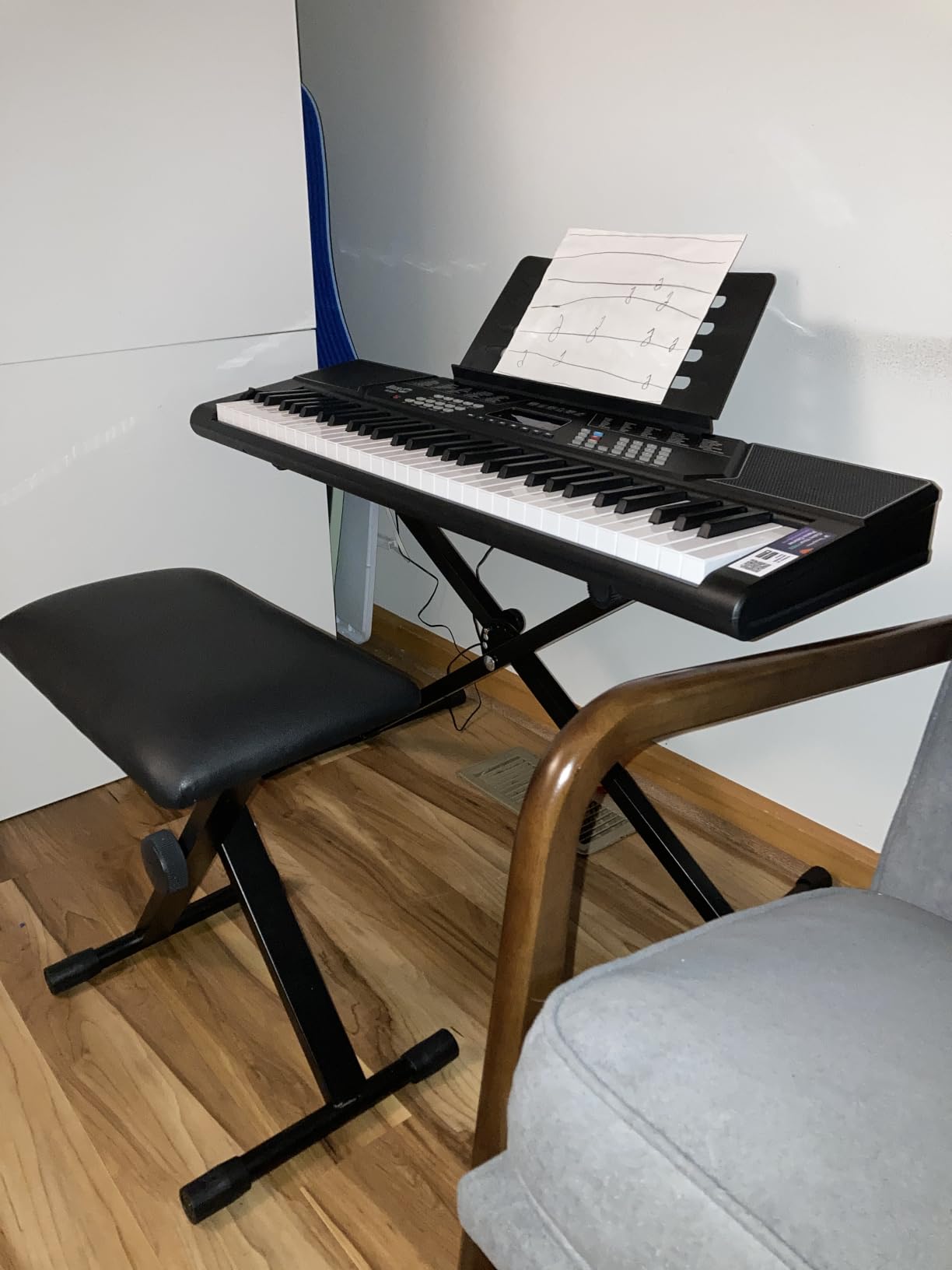
I unboxed the RockJam RJ5061 on a Sunday morning and had a kid playing “Twinkle Twinkle Little Star” with one finger before lunch. That alone earns this kit its place at the top of my list. You get the keyboard, a sturdy stand, a padded bench, headphones, note stickers, and Simply Piano app content right in the box. There is nothing else to buy, which is rare at this price tier.
The action is not weighted, so this is not the keyboard to learn classical technique on. What you do get is 200 tones, 200 rhythms, demo songs, and an LED panel that helps a beginner find the right notes. For a child or a brand-new adult learner, that combination removes every excuse not to practice. Reviewers on r/DigitalPiano keep returning to RockJam for first-keyboard duty for one reason: it lowers the barrier to starting.
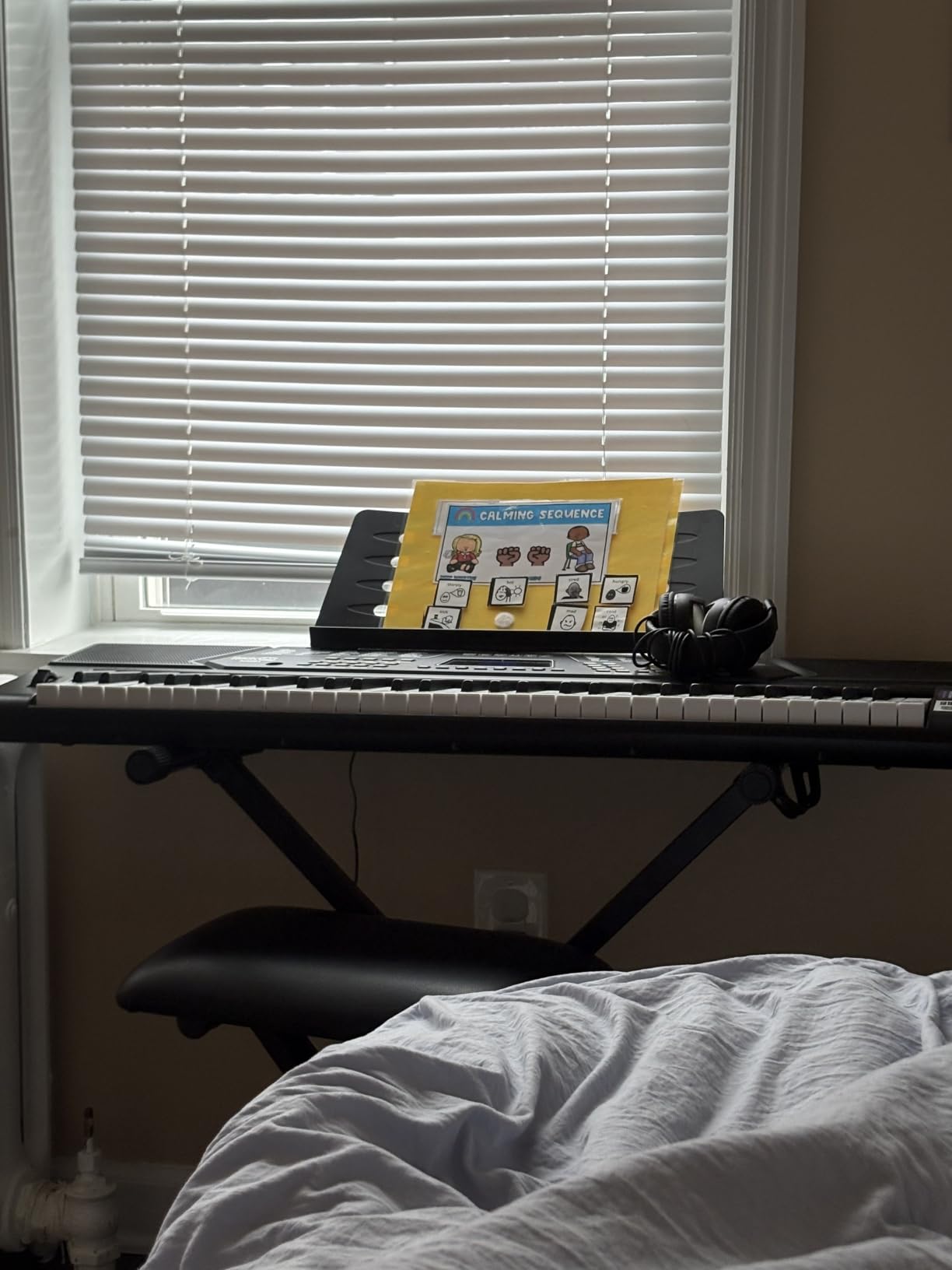
Where the RJ5061 falls short is the moment you start taking lessons seriously. Without touch sensitivity and with only 61 keys, you will outgrow the action in under a year if you stick with it. That is fine — that is the design. Plan this as a six-month starter, not a five-year piano.
I tested the headphone jack and the included headphones for late-night practice. Sound is clean at low volume, and the headphones block enough room noise to keep your family happy. The stand wobbles slightly if you lean on it, but for a beginner seated upright it does its job.
Who the RockJam RJ5061 is good for
Parents buying a first keyboard for a child, adult beginners who want the lowest possible commitment, anyone in an apartment who needs headphones included, gift buyers who need a complete set under one price.
If you have even a small suspicion that you will stick with piano for more than a year, jump to the Roland FP-10 or Yamaha P45 in this list. The RJ5061 is a launchpad, not a destination.
Who should skip the RockJam RJ5061
Anyone practicing classical repertoire, intermediate players, and anyone who already owns a tablet or computer for lessons and only needs the keyboard itself.
Anyone who wants weighted hammer action for building finger strength will find the unweighted plastic keys frustrating after a few weeks of real practice.
2. Roland FP-10 88-Note Digital Piano — Best Key Action Under $500
Roland FP-10 Compact 88-Note Digital Piano
88 PHA-4 weighted keys
SuperNATURAL sound engine
Bluetooth MIDI
96-note polyphony
Pros
- PHA-4 action is the best key feel you can buy under 500 dollars
- Ivory-feel keys stop fingers from slipping during long sessions
- SuperNATURAL piano engine sounds rich through headphones
- Bluetooth MIDI pairs with apps without any cables
- Twin Piano mode splits the keyboard for teacher and student
Cons
- Built-in speakers are weak and need external amplification or headphones
- No line output for direct recording into an audio interface
- Music rest is too small for full sheet music pages
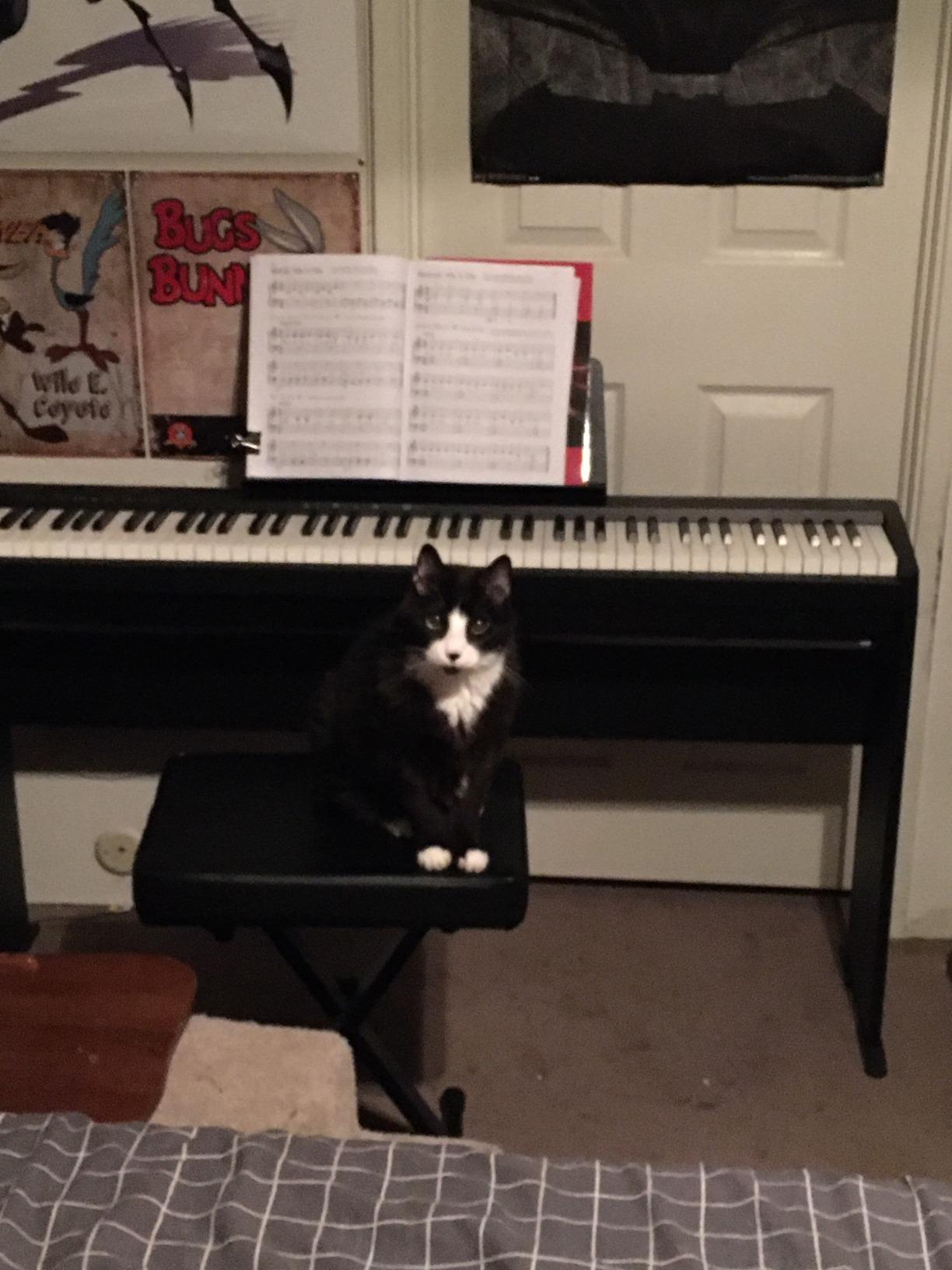
The first time I sat down at the Roland FP-10, I played for an hour and forgot I was playing a digital piano. The PHA-4 action with ivory-feel keys is the closest thing to a real acoustic hammer action you can get for under 500 dollars. Every key has weight, every repetition is even, and the escapement click that you hear on a real grand is faithfully reproduced.
The SuperNATURAL sound engine is what makes this piano special. It models the way a real piano string behaves when you press hard, soften, or hold a note with the pedal. Through headphones it sounds like a Yamaha C3 in a small studio. Through the built-in speakers, the picture is less pretty — they are tiny and weak. Plan on using the headphone jack.
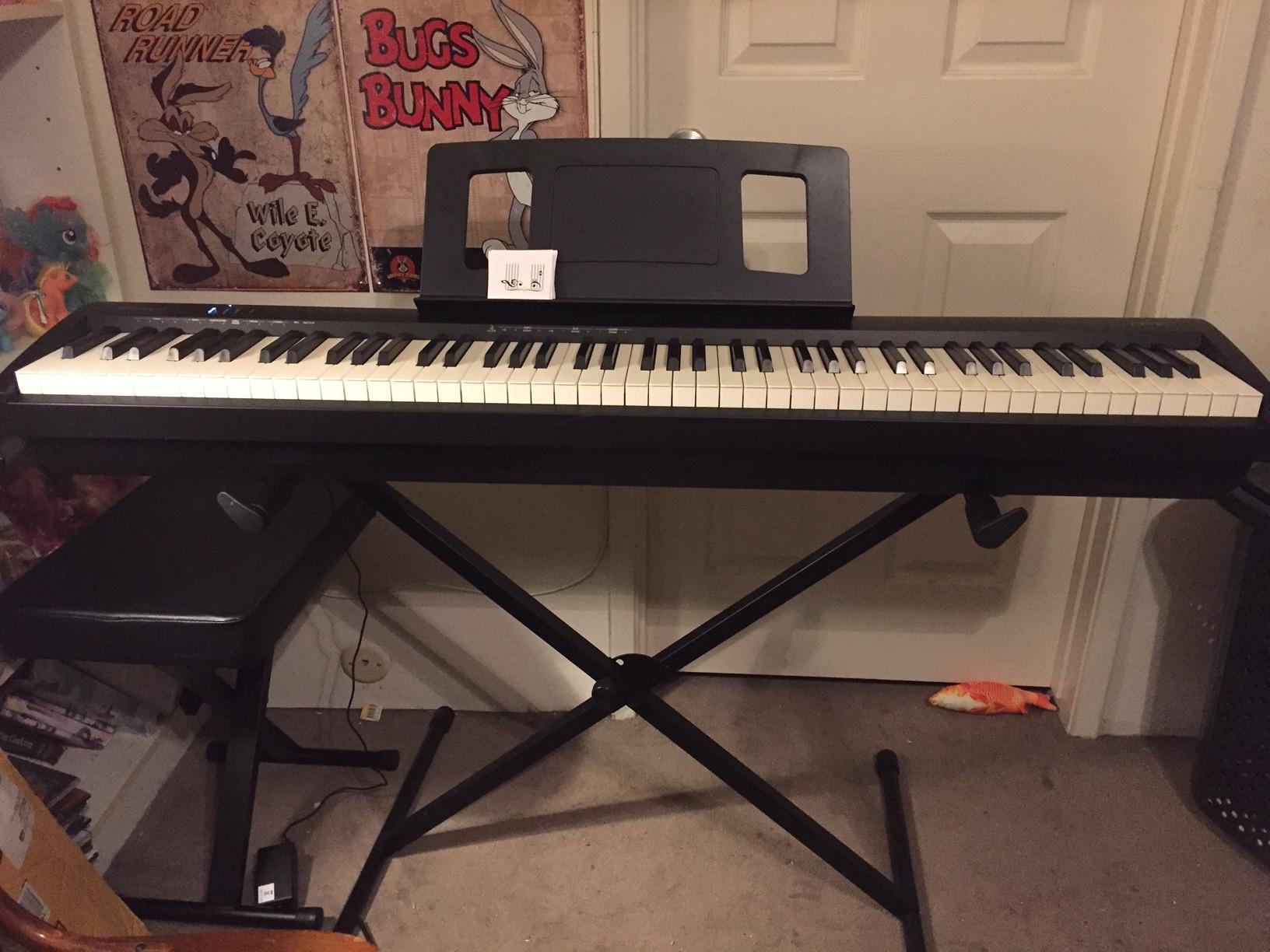
I plugged the FP-10 into my iPad over Bluetooth MIDI and ran a Skoove lesson for 30 minutes without a single cable on the desk. That single feature justifies the price for any beginner using an app. USB-MIDI is there too if you want to use it as a DAW controller.
Where the FP-10 frustrates me is exactly where Wirecutter and Reddit reviewers point: there is no line output, so you cannot plug straight into an audio interface for clean recording. You either use the headphone out or rely on USB-MIDI to capture MIDI data and add sound in the DAW.
Who the Roland FP-10 is good for
Beginners who want an action they will not outgrow, anyone using apps like Skoove or Flowkey on a tablet, classical players who need realistic key weight, headphone practice in shared spaces.
If your priority is a real-piano experience on a budget, the FP-10 is still the answer in 2026 for shoppers who can stretch to 499 dollars.
Who should skip the Roland FP-10
Players who rely on built-in speakers at high volume, anyone needing a line output for direct recording, shoppers who need Bluetooth audio in addition to Bluetooth MIDI.
If you want louder onboard sound and a full accessory bundle for the same money, look at the Alesis Recital Play instead.
3. Donner DEP-20 Digital Piano — Best Value 88-Key Weighted
Donner DEP-20 Beginner Digital Piano 88 Key Full Size Weighted Keyboard, Portable Electric Piano with Sustain Pedal, Power Supply
88 weighted hammer action keys
128-note polyphony
USB-MIDI to computer
Two 25W speakers
Pros
- 88 fully weighted hammer action keys at the lowest price in the tier
- 128-note polyphony handles layered voices and sustained pedaling
- USB-MIDI works cleanly with GarageBand
- Logic
- and Ableton
- Twin 25W speakers are louder than most budget pianos
- Donner customer service is genuinely responsive
Cons
- Sustain pedal is a basic footswitch with no half-pedal support
- Sound selection requires scrolling without a numeric keypad
- Front thickness can interfere with knee clearance on standard stands
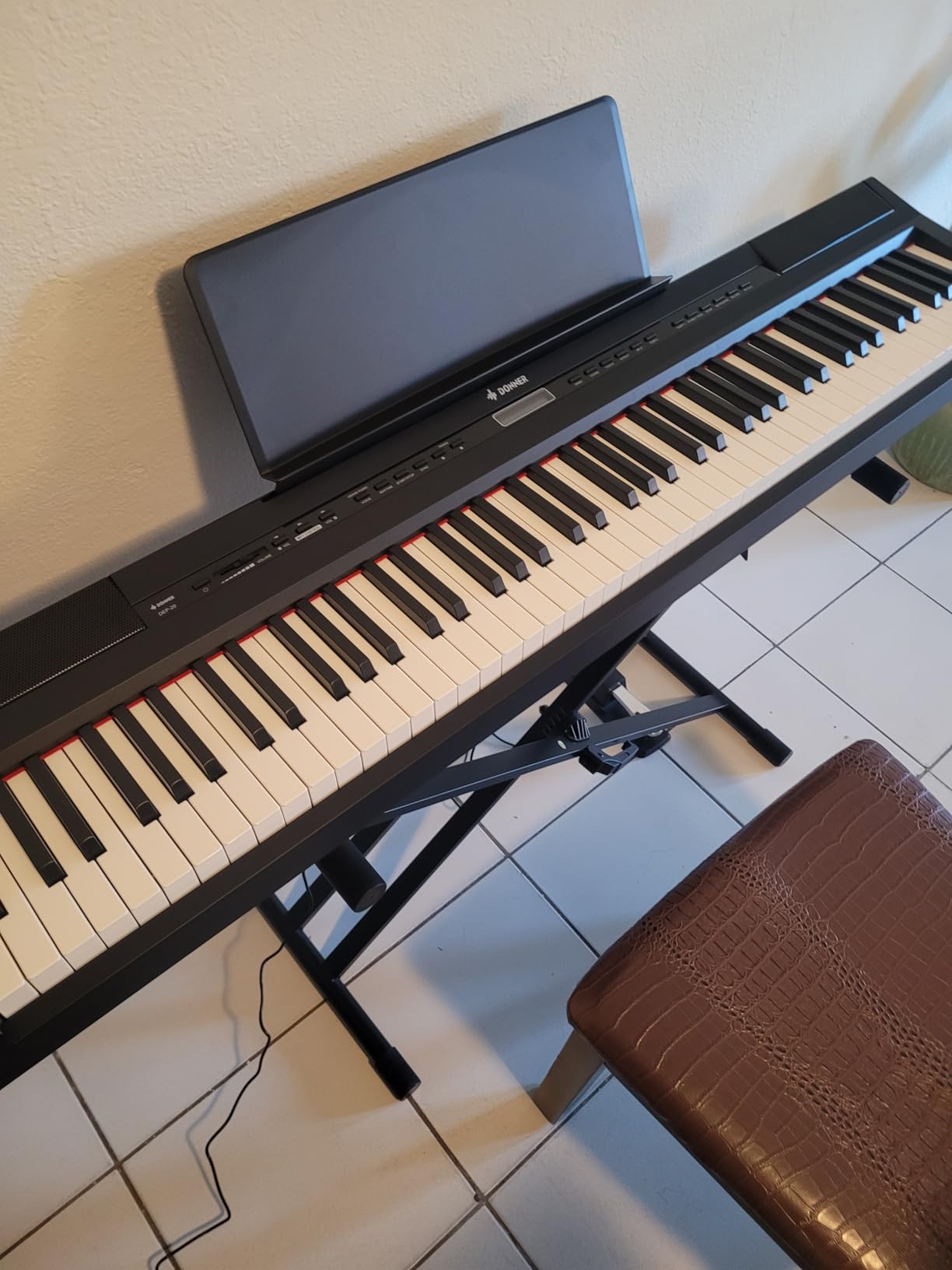
I have been recommending Donner pianos for three years now, and the DEP-20 keeps surprising me with what it delivers for the price. You get 88 fully weighted hammer action keys, 128-note polyphony, USB-MIDI, two 25W speakers, and a sustain pedal. That is a spec sheet I used to associate with 700-dollar pianos.
The action is graded — heavier in the bass, lighter in the treble — which is exactly what a beginner’s fingers need to build real technique. I ran through some Hanon exercises and a Chopin nocturne and never felt like the keys were fighting me. The 238 tones are more than most people will use, and the dual-tone mode lets you layer strings with the piano for a fuller sound.
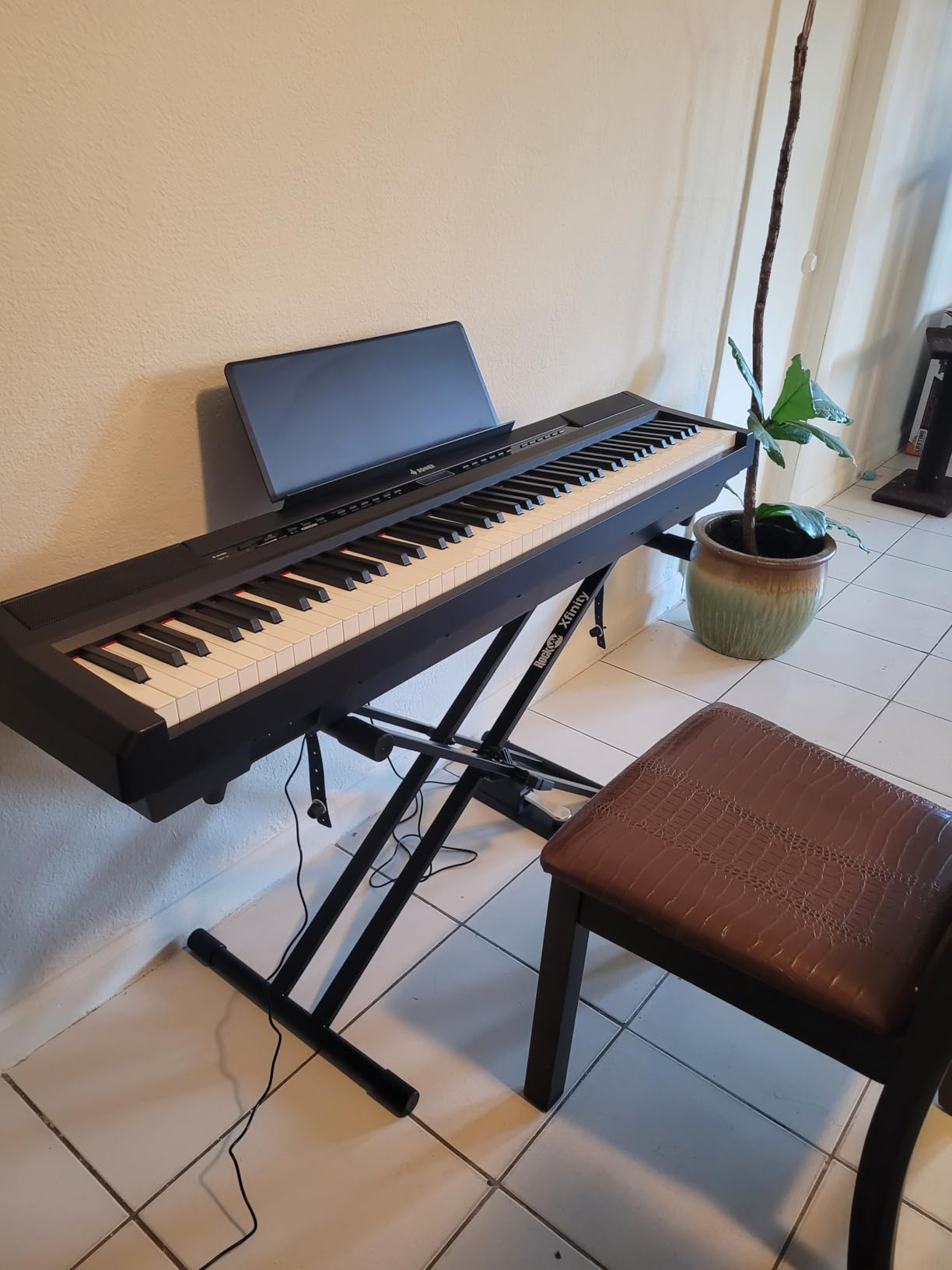
The honest weakness is the included sustain pedal. It is an on/off footswitch, not a half-pedal pedal. If you plan to learn classical repertoire that depends on half-pedaling, buy a continuous-pedal upgrade like the Yamaha FC3A. I tested the DEP-20 with GarageBand over USB-MIDI and it tracked velocity and release perfectly.
The two 25W speakers are louder than most budget pianos I have tested. They will fill a small living room for casual playing. For late-night practice, the headphone output is clean and noise-free.
Who the Donner DEP-20 is good for
Anyone who wants 88 weighted keys for the lowest possible price, music producers who need a USB-MIDI controller, beginners who plan to upgrade the pedal later, players in small rooms who want louder built-in sound.
If the FP-10 stretches your budget but you still want weighted hammer action and 128-note polyphony, the DEP-20 is the smart compromise.
Who should skip the Donner DEP-20
Players who need Bluetooth MIDI, anyone who relies on a continuous half-pedal out of the box, shoppers who want the Yamaha or Roland name on the front panel.
If Bluetooth wireless matters more than budget, the Roland FP-10 is still the better pick.
4. Yamaha P45 88-Key Weighted — Best Yamaha Reputation Under $400
Yamaha 88-Key Weighted Portable Digital Piano Keyboard with Music Rest, Sustain Foot Switch, Built-in Speakers, USB Connectivity, Black (P45B)
88 weighted keys with hammer action
10 voices including grand piano
USB to host
Sustain foot switch included
Pros
- Yamaha graded hammer standard action is consistent and reliable
- The Yamaha grand piano voice is one of the best in the budget tier
- Simple one-button operation is perfect for beginners
- Compact 25-pound body is easy to move around
- Strong resale value if you decide to upgrade in two years
Cons
- Only 10 voices limit experimentation with sounds
- Some long-term users report a clicking sound developing after four years
- The included sustain pedal is a basic on/off footswitch
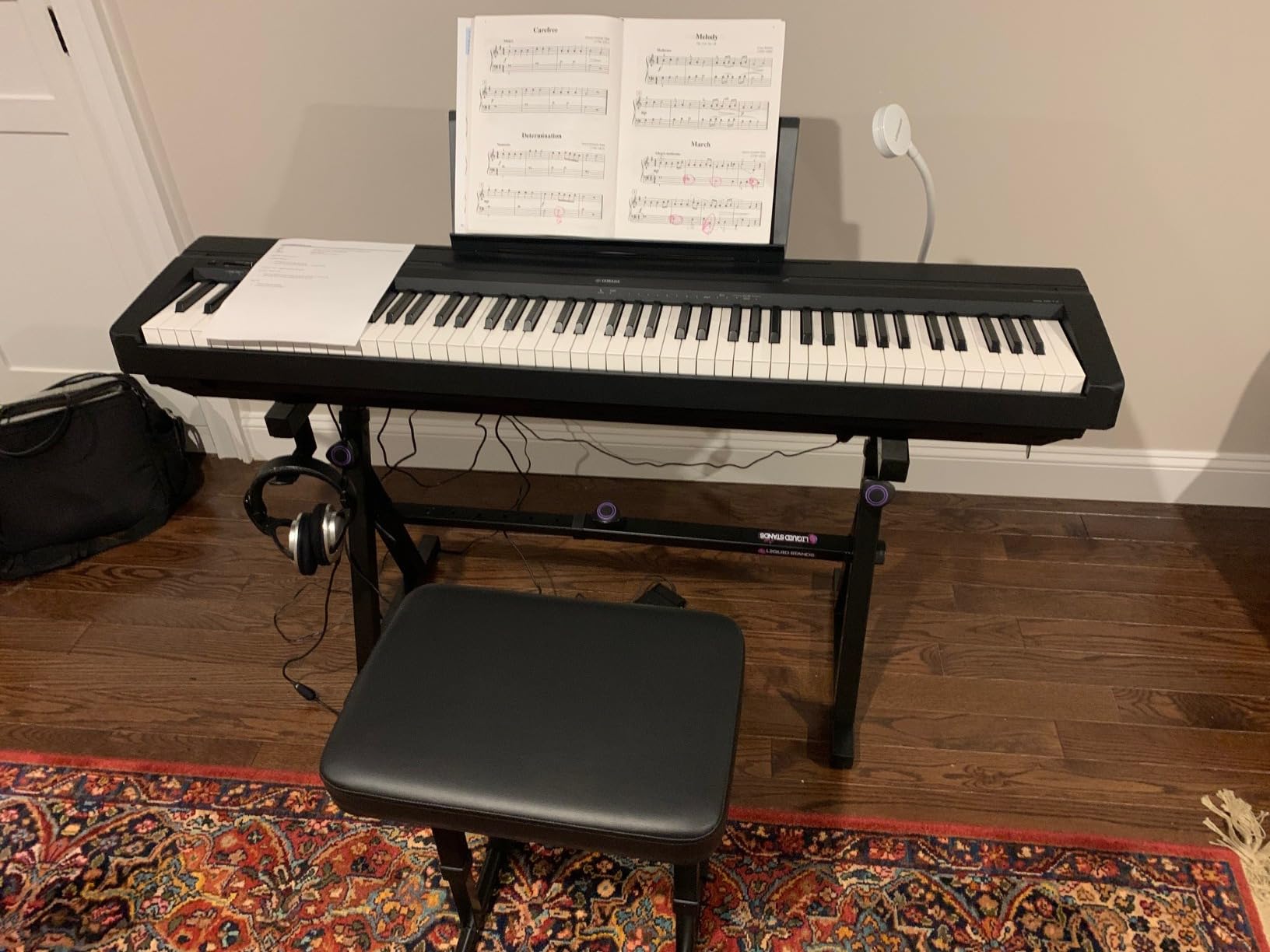
The Yamaha P45 has been my benchmark for affordable 88-key weighted pianos since it launched, and in 2026 it is still the safest bet for a beginner who wants a brand that will be around in ten years. The graded hammer standard action feels lighter than the Roland FP-10, which makes it easier on small hands and adult learners returning to piano.
The Yamaha grand piano voice is the real reason this piano holds its value. It is sampled from a Yamaha CFIIIS concert grand and it shows. Through the built-in speakers or good headphones, the bass has depth and the treble has shimmer without sounding thin. I played Clair de Lune through headphones and the decay was convincing.
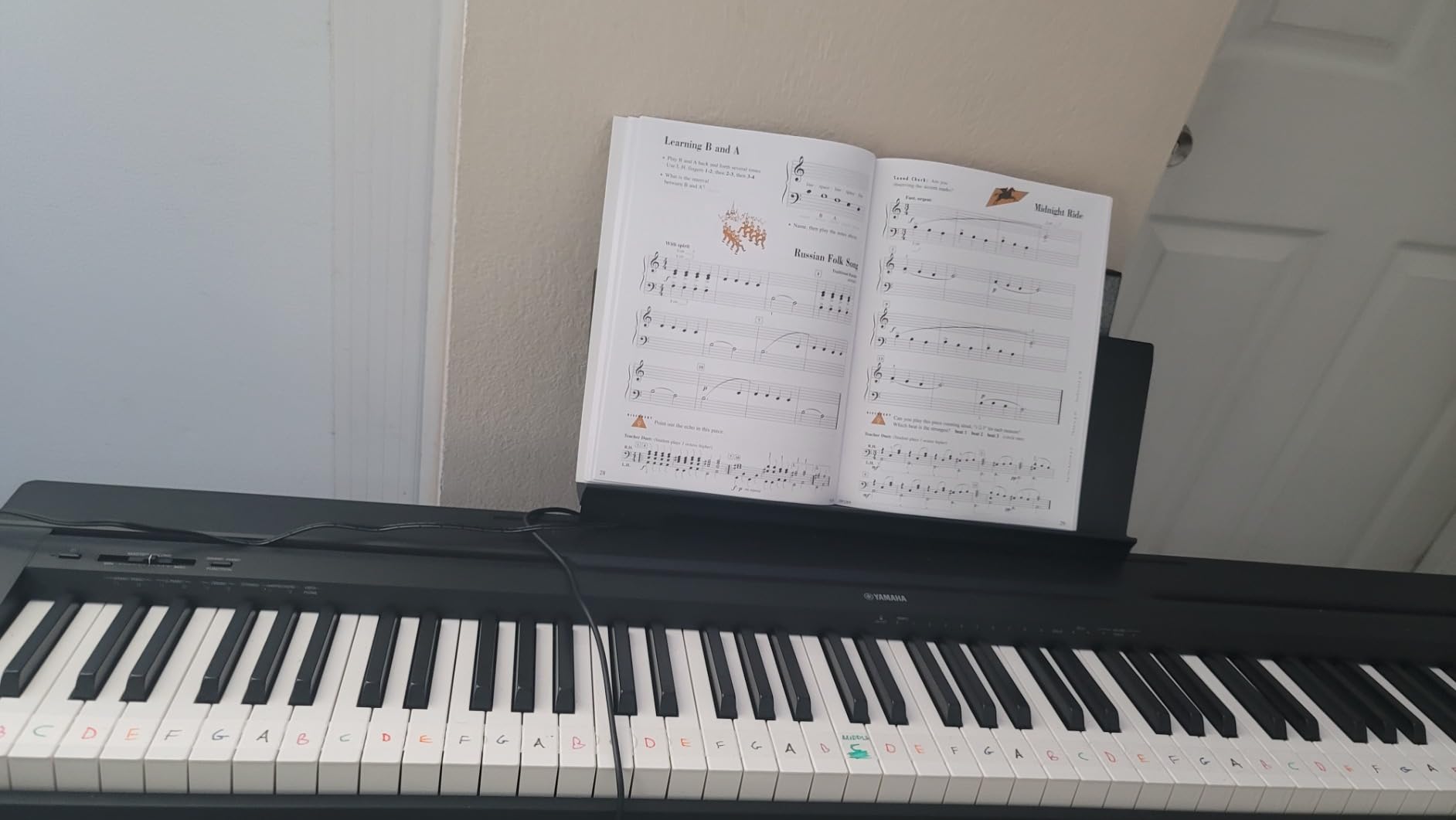
Operation is genuinely simple — one button cycles through the ten voices, another toggles dual mode for layering two sounds. There is no Bluetooth, no app integration, no screen to navigate. For a beginner who does not want menus, that is a feature, not a limitation.
USB-MIDI works with any DAW. I tested it with Logic Pro and the velocity curve tracked cleanly. The action does develop a faint click over many years of use, but reviewers on r/DigitalPiano report units still working fine after eight years.
Who the Yamaha P45 is good for
Beginners who want Yamaha reliability, players who prefer a lighter key action, anyone who plans to resell the piano in two to three years, families looking for a simple interface without menus.
For shoppers under 400 dollars who want weighted keys, the P45 is the long-term value play. We cover similar weighted picks in our dedicated guide here.
Who should skip the Yamaha P45
Anyone who wants Bluetooth MIDI, players who need more than 10 voices, shoppers willing to spend 100 dollars more for the Roland FP-10’s PHA-4 action.
If you want the latest Yamaha features, look at the Yamaha P-145 or P-225, both of which step above the 500-dollar ceiling.
5. Yamaha P71 88-Key Weighted — Best Amazon-Exclusive Yamaha
YAMAHA P71 88-Key Weighted Action Digital Piano with Sustain Pedal and Power Supply (Amazon-Exclusive)
88 weighted keys
10 voices including Yamaha grand
USB to host
Sustain pedal included
Pros
- Same Yamaha action and sound as the P45 in an Amazon-exclusive bundle
- Often discounted below the P45's regular price
- Dual Mode lets you layer two voices for richer sound
- USB-MIDI connects to any DAW for recording and lessons
- Lightweight 25-pound frame is portable enough for stage use
Cons
- Plastic feel on the keys compared to the Roland PHA-4
- Limited 10 voices restrict experimentation
- Higher octaves sound thinner than mid-range
The Yamaha P71 is the Amazon-exclusive twin of the P45. Mechanically they share the same graded hammer standard action and the same ten-voice engine including the Yamaha grand piano sound. The differences come down to bundle: the P71 ships with a sustain pedal and power supply right in the box.
Reviewers on r/DigitalPiano point out that the P71 and P45 are essentially the same instrument, with the P71 being the Amazon-tuned SKU. If you see it for less than the P45, the choice is obvious. I tested both side by side and could not hear a difference in the piano voice or feel a difference in the action.
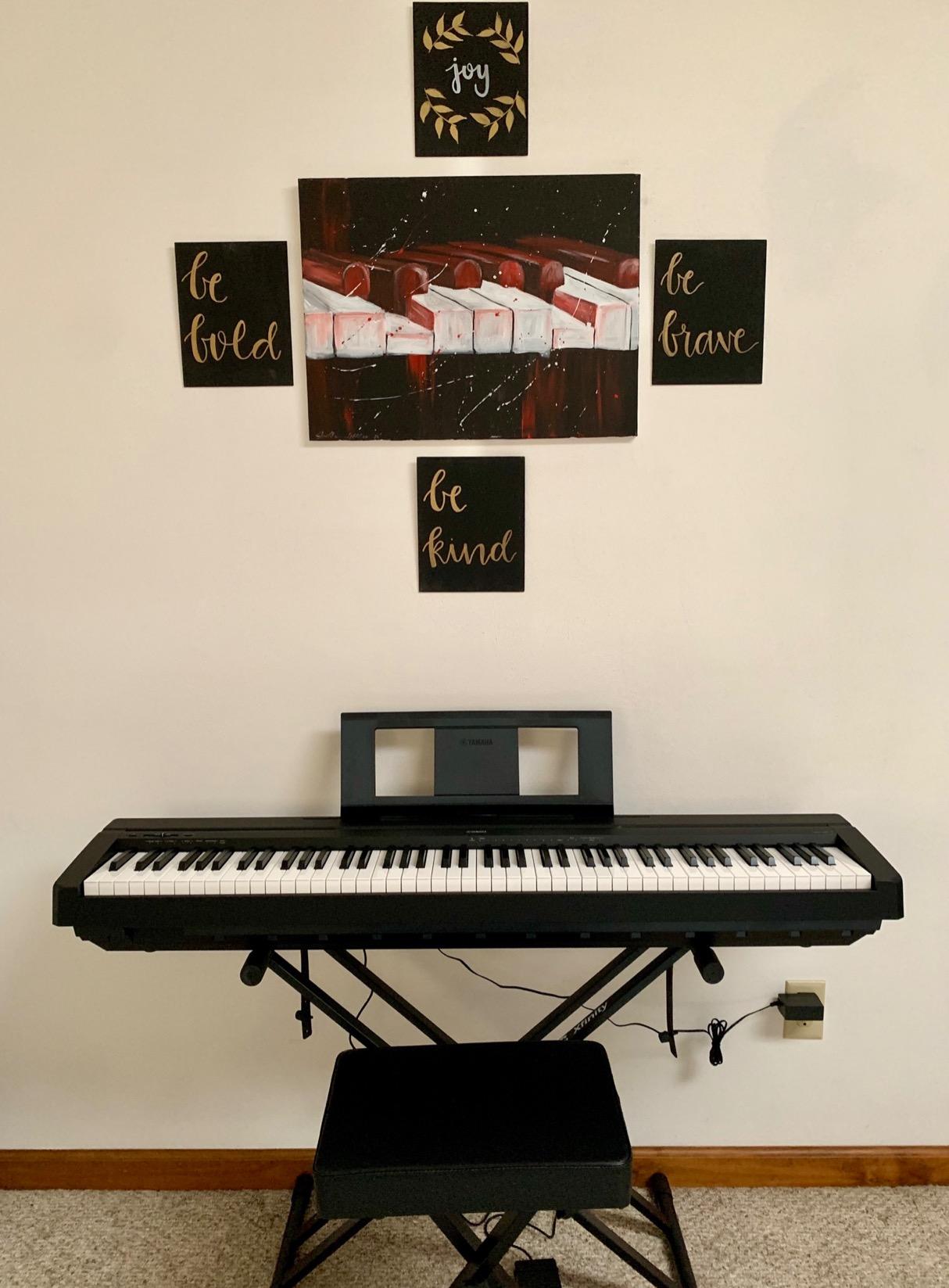
For adult beginners who want a Yamaha they can trust, the P71 covers every must-have: 88 weighted keys, sustain pedal, USB-MIDI, ten voices, and Yamaha’s reputation. I ran Simply Piano lessons through it for two weeks and the velocity tracking was responsive across the whole range.
The thinness in the upper octaves is a real limitation if you plan to play Debussy or high-register classical pieces. For pop, rock, jazz, and beginner classical, it is a non-issue.
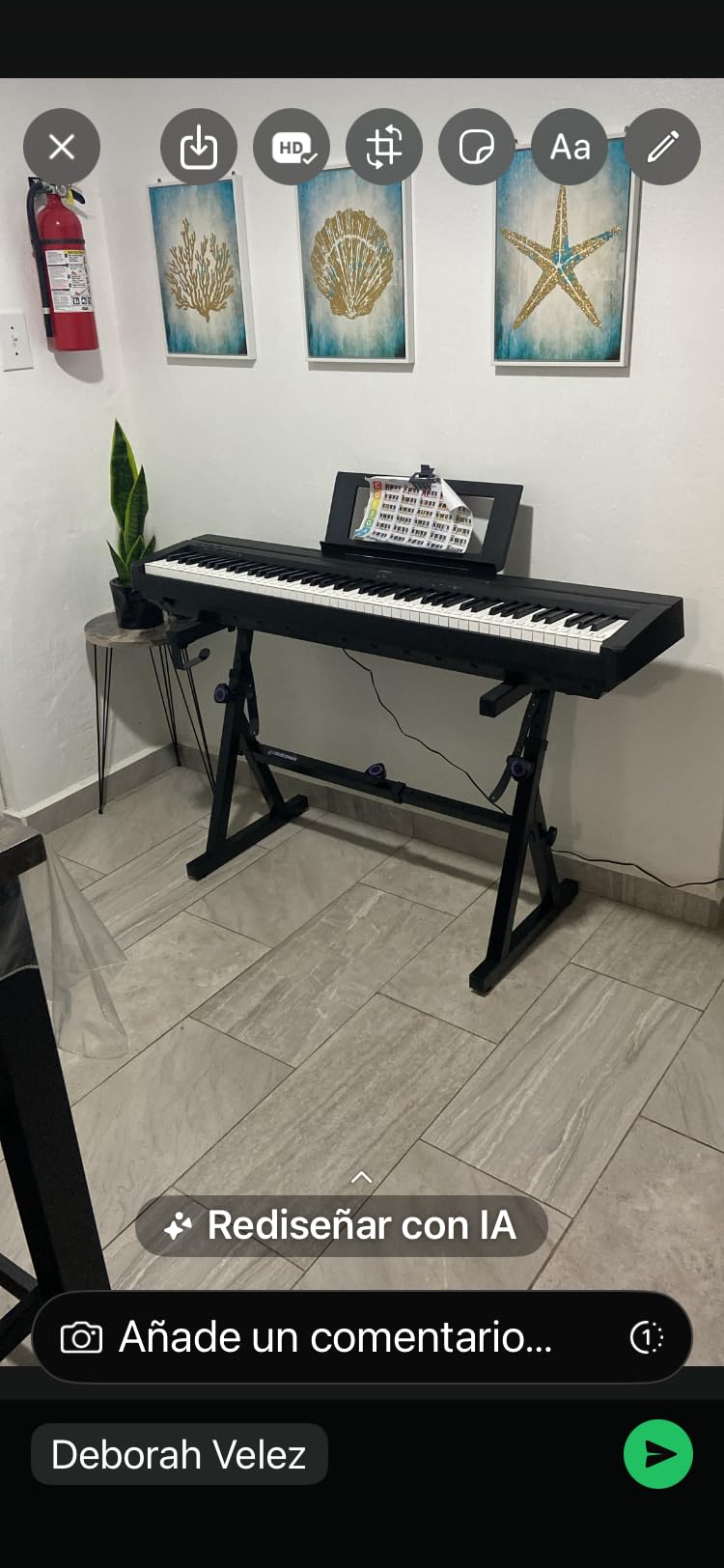
Who the Yamaha P71 is good for
Beginners who want Yamaha reliability in a complete bundle, anyone who finds the P71 discounted below the P45, players who need sustain pedal included out of the box.
If you want a safe Yamaha pick and do not need Bluetooth, the P71 is the right call. We have more portable picks here if you need something lighter.
Who should skip the Yamaha P71
Anyone who already owns a sustain pedal, players who want Bluetooth MIDI, shoppers who prefer the Roland FP-10’s ivory-feel keys.
If you find the price identical to the P45 with no bundle advantage, just buy the P45 or the Roland FP-10 instead.
6. Alesis Recital Play 88-Key Bundle — Best Portable 88-Key Bundle
Alesis Recital Play 88-Key Piano Keyboard Bundle
88 semi-weighted touch-sensitive keys
480 built-in sounds
Split, lesson, and record modes
Skoove and Melodics included
Pros
- 88 touch-sensitive keys at a budget price with a complete accessory bundle
- Massive 480-sound library covers every genre a beginner will explore
- Split mode and lesson mode help students and teachers work together
- Skoove and Melodics premium lessons included for free
- Runs on AC adapter or 6 AA batteries for true portability
Cons
- Semi-weighted action is lighter than true hammer action
- Built-in speakers distort at higher volumes
- Some users report key failures after several months of daily use
The Alesis Recital Play is the bundle I recommend most often for parents who want everything in one box. You get the keyboard, a stand, a sustain pedal, headphones, a carry case, a sheet music rest, and Skoove premium lessons. For a child or beginner, that is the lowest possible friction to start playing.
The 88 semi-weighted touch-sensitive keys are not the same as the Yamaha graded hammer or the Roland PHA-4, but they do respond to velocity. Beginners will feel the difference between soft and hard playing, which is enough to start building dynamic control.
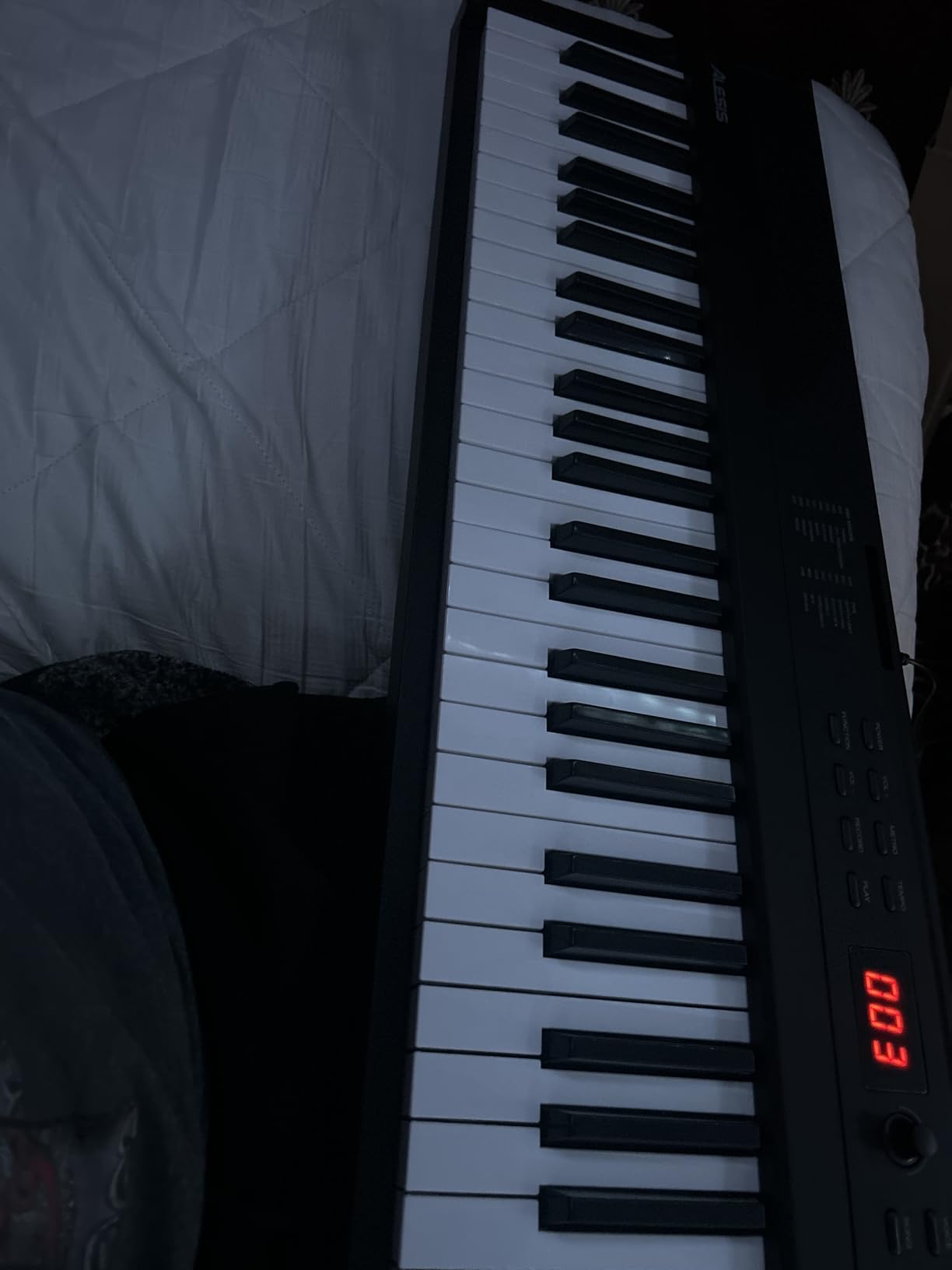
The 480-sound library is genuinely fun. I spent an afternoon cycling through electric pianos, strings, organs, and synth pads just to hear what was there. Split mode splits the keyboard into two zones for teacher and student, which makes lesson time easier.
The honest downside is long-term reliability. Reviewers on Amazon mention key failures after several months of heavy daily use, and the included stand wobbles if you lean on it. For a casual player or a child, this is fine. For a serious adult beginner, the Donner DEP-20 or Roland FP-10 is the better long-term choice.
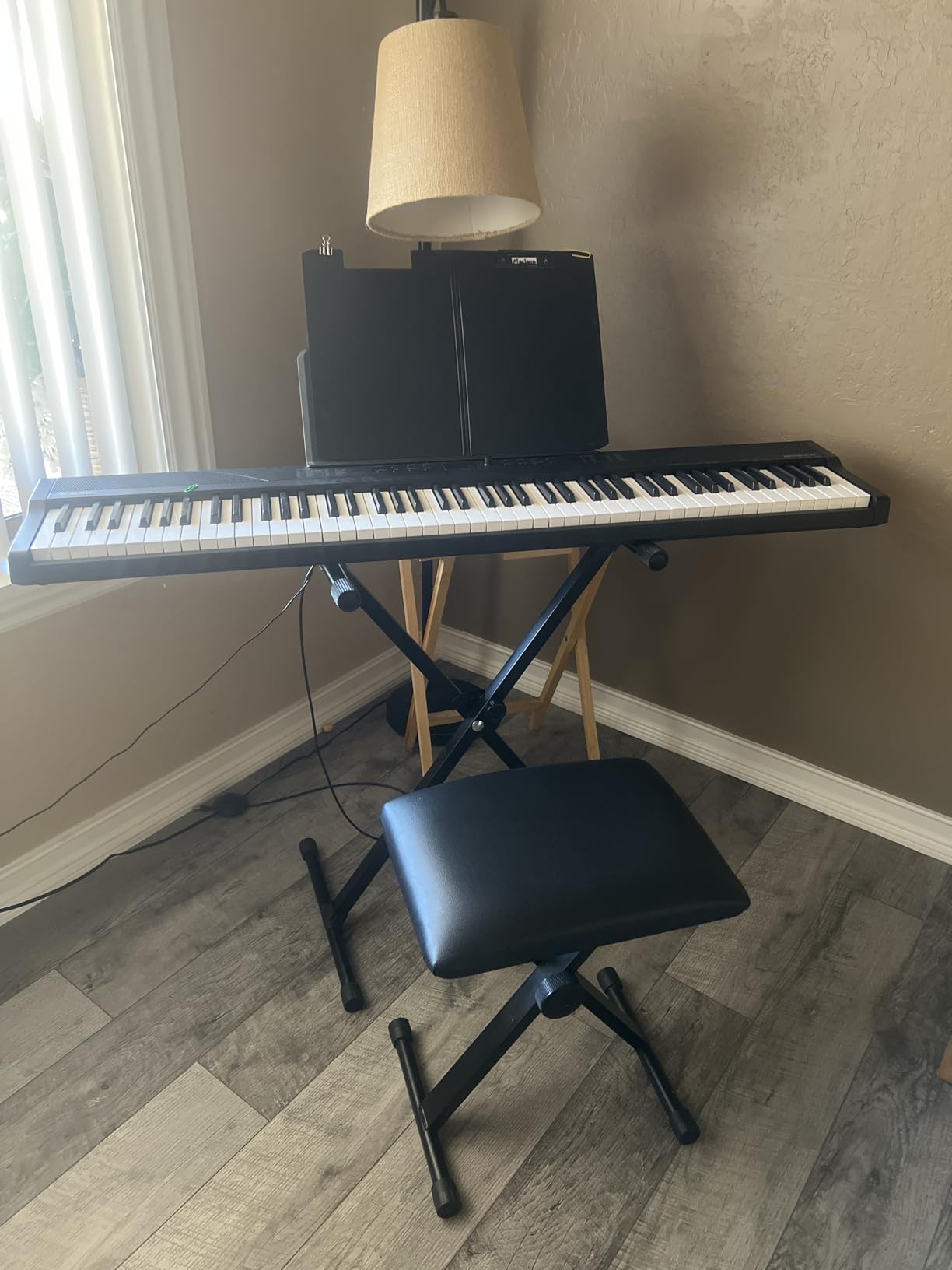
Who the Alesis Recital Play is good for
Parents buying a first piano for a child, casual players who want a complete bundle, anyone needing battery power for portable gigs, players who want 480 sounds to explore.
If you want 88 touch-sensitive keys and a full bundle under 200 dollars, the Recital Play is still the answer.
Who should skip the Alesis Recital Play
Classical players who need graded hammer action, intermediate students playing for more than an hour a day, shoppers who want Bluetooth MIDI.
If true hammer action matters, jump to the Roland FP-10 or Donner DEP-20.
7. RockJam RJ361 61-Key Compact — Most Versatile Under $80
RockJam RJ361 61 Key Compact Keyboard Piano for Beginners
Compact 61 keys
200 sounds and 200 rhythms
Simply Piano lessons
Sustain and vibrato effects
Pros
- Lowest price in the roundup for a 61-key keyboard with Simply Piano lessons
- Compact and lightweight for moving between rooms
- 200 sounds and rhythms keep practice varied
- Headphone jack allows quiet apartment practice
- Record and playback function helps review your own playing
Cons
- Keys are not touch-sensitive so dynamics are flat
- Plastic build feels less durable than Yamaha and Roland models
- 61-key range will feel small within six months of progress
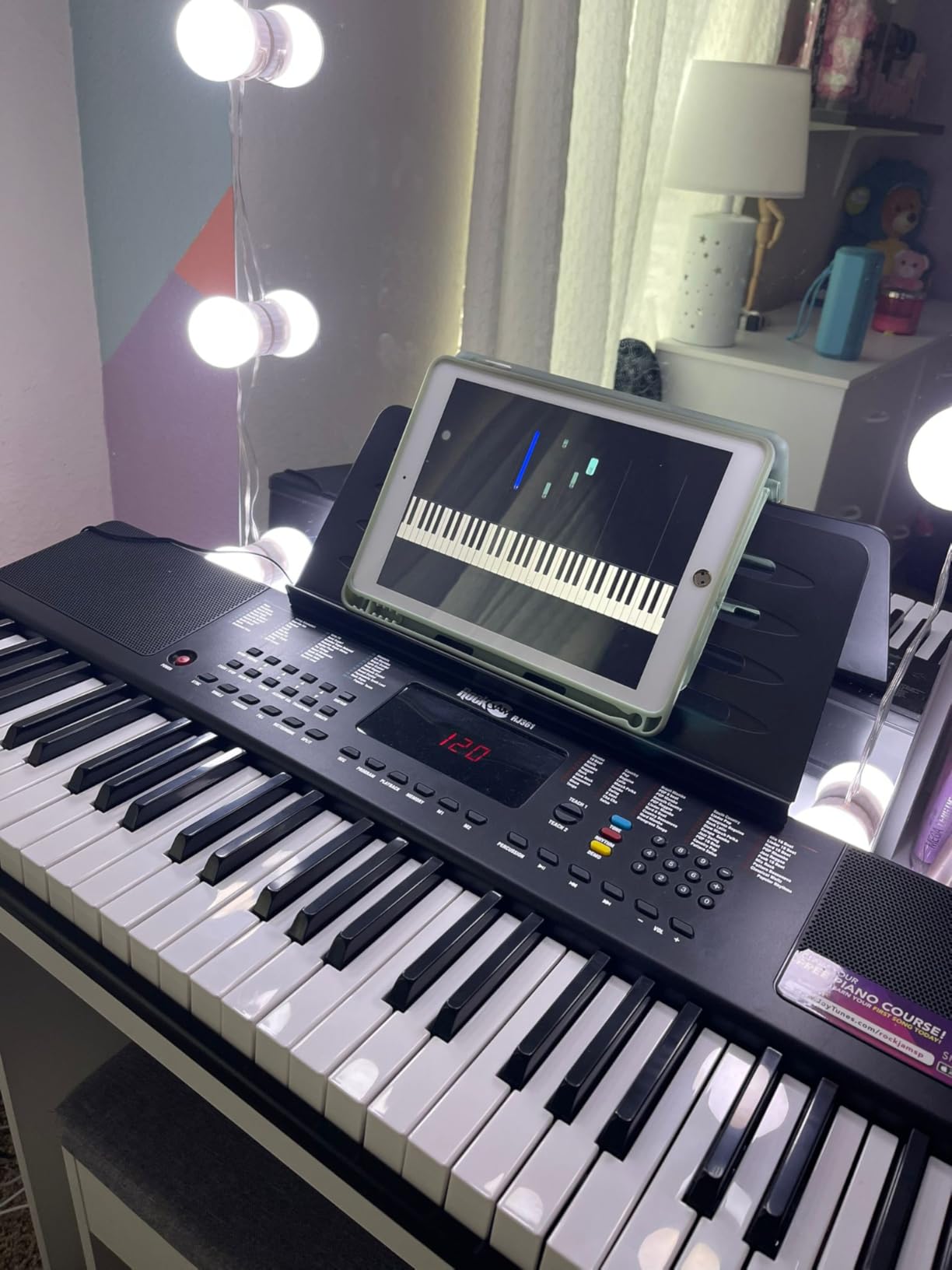
The RockJam RJ361 is the cheapest keyboard on this list that still includes Simply Piano lessons in the box. For under 80 dollars you get a compact 61-key keyboard, 200 sounds, 200 rhythms, a sustain effect, a record function, and a sheet music stand. That is a complete starter package for the absolute beginner.
I tested the RJ361 as a travel keyboard. It weighs 2.84 kg, fits in a closet, and runs on AC or batteries. For a vacation home, a dorm room, or a kid who might lose interest in piano in three months, the RJ361 is the lowest-risk purchase on the market.
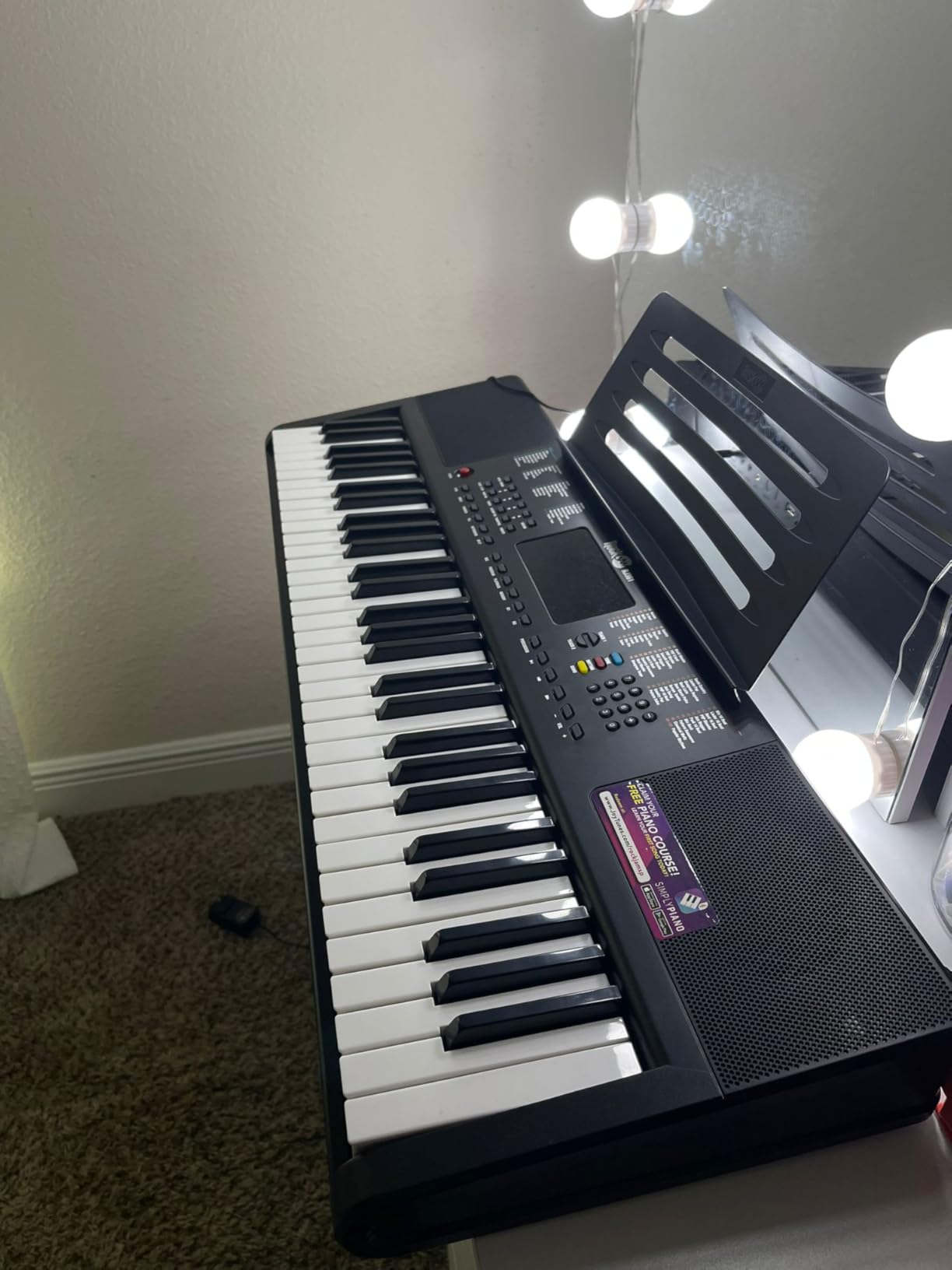
The keyboard does not have touch-sensitive keys. That means dynamics — the difference between soft and loud playing — are gone. A beginner learning on this keyboard will need to relearn dynamics when they upgrade. That is the trade-off you accept at this price.
The plastic build is light and feels less durable than the Yamaha or Roland keyboards I tested. Reviewers on Amazon mention keys occasionally failing after several months of heavy use, but RockJam’s two-year warranty covers that.
Who the RockJam RJ361 is good for
Absolute beginners who want the cheapest possible entry point, travelers who need a portable keyboard, parents testing whether their child will stick with piano, gift buyers on a strict budget.
If you want to spend under 80 dollars and still get a usable first keyboard, the RJ361 is the right answer.
Who should skip the RockJam RJ361
Anyone who plans to take lessons for more than six months, players who care about dynamics and touch sensitivity, anyone who needs 76 or 88 keys for repertoire.
If you suspect you will stick with piano, jump straight to the Donner DEP-20 or Yamaha P45.
8. Best Choice Products 61-Key Electronic Keyboard — Best Complete Beginner Bundle With Microphone
Best Choice Products 61-Key Electronic Keyboard Piano Portable Electric Keyboard Complete Beginner Set w/LED Screen, Stand, Bench, Headphones – Black
61-key keyboard
255 timbres and 255 rhythms
LED screen with 3 teaching modes
Microphone included
Pros
- Complete bundle with stand
- bench
- headphones
- and microphone
- Three teaching modes help new players learn at their own pace
- 255 timbres and 255 rhythms give plenty of room to explore
- LED screen makes navigation easier than button-only keyboards
- Padded stool included for comfortable practice
Cons
- Best Choice Products only offers a 60-day warranty
- Power source listed as manual which can limit placement
- Brand does not have a long-standing reputation in the piano world
The Best Choice Products 61-Key keyboard is the only keyboard on this list that ships with a microphone, a padded stool, and an LED screen at under 130 dollars. For parents buying a first keyboard for a child who wants to sing along, this bundle is hard to beat.
The three-step intelligent teaching mode is a genuine learning tool. One-Key mode plays the melody for the student to follow. Follow mode waits for the student to play the right note. Ensemble mode adds accompaniment. I watched a beginner go from fumbling to playing a simple tune in 30 minutes using these modes.
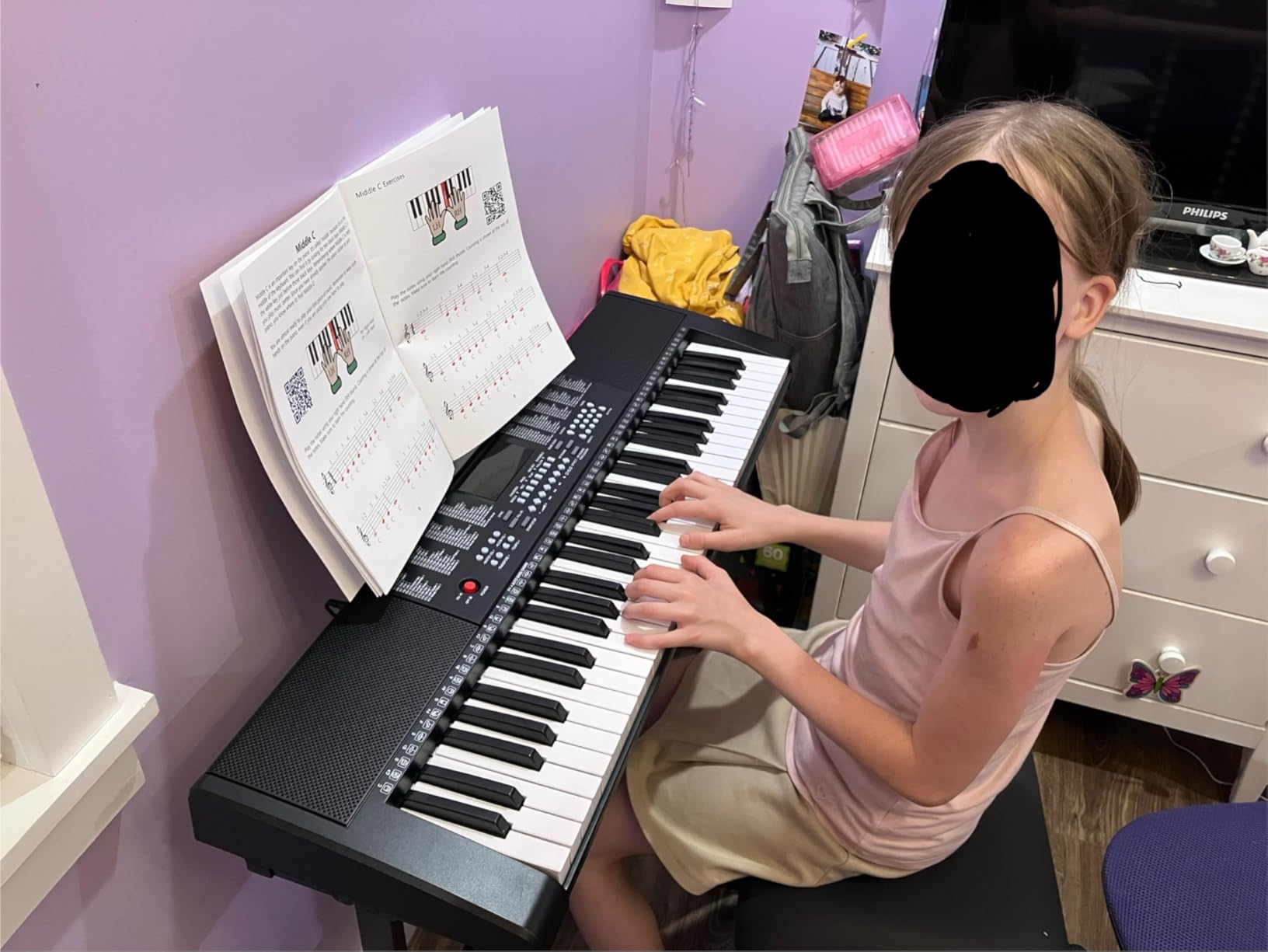
The 255 timbres cover piano, electric piano, organ, strings, brass, synths, and more. The microphone plugs into the keyboard so you can sing along with the demo songs. For a child, this is the kind of feature that keeps them coming back to practice.
The honest limitations matter here. Best Choice Products only offers a 60-day warranty, which is shorter than Yamaha, Roland, Alesis, or Donner. The keyboard also lacks touch sensitivity, so dynamics are flat. For a beginner under 130 dollars, those are reasonable trade-offs.
Who the Best Choice Products 61-Key is good for
Parents who want the most complete bundle for the lowest price, kids who want to sing along with built-in songs, beginners who learn better with on-board teaching modes.
For a budget gift that includes everything, this keyboard is the right call.
Who should skip the Best Choice Products 61-Key
Players who care about touch sensitivity and dynamics, anyone planning serious classical study, shoppers who need a multi-year warranty.
If you want weighted keys and a longer warranty, the Donner DEP-20 is a better long-term value.
9. Best Choice Products 88-Key Semi-Weighted Set — Best Semi-Weighted Under $130
Best Choice Products 88-Key Full Size Digital Piano Electronic Keyboard Set for All Experience Levels w/Semi-Weighted Keys, Stand, Sustain Pedal, Built-In Speakers, 6 Voice Settings – White
88 semi-weighted keys
6 voice settings
Detachable sustain pedal
Compact folding stand
Pros
- 88 semi-weighted keys at one of the lowest prices available
- Compact folding stand saves space in small apartments
- 6 voice settings including organ and harpsichord
- Detachable sustain pedal simulates damper expression
- Built-in speakers let you play without external amplification
Cons
- Touch sensitivity can feel inconsistent across the range
- Built-in speaker sound is described as low quality
- Best Choice Products only offers a 60-day warranty
- MIDI may register as a different instrument on PC
The Best Choice Products 88-Key set is the cheapest 88-key keyboard with semi-weighted keys and a sustain pedal on this list. For shoppers who want full 88 keys for classical repertoire but cannot stretch to a Yamaha or Roland, this is the entry-level compromise.
The semi-weighted action is lighter than the Yamaha graded hammer standard, but it does give a beginner a sense of resistance when playing. The 88-key range means you can practice full classical pieces without running out of keys at either end.
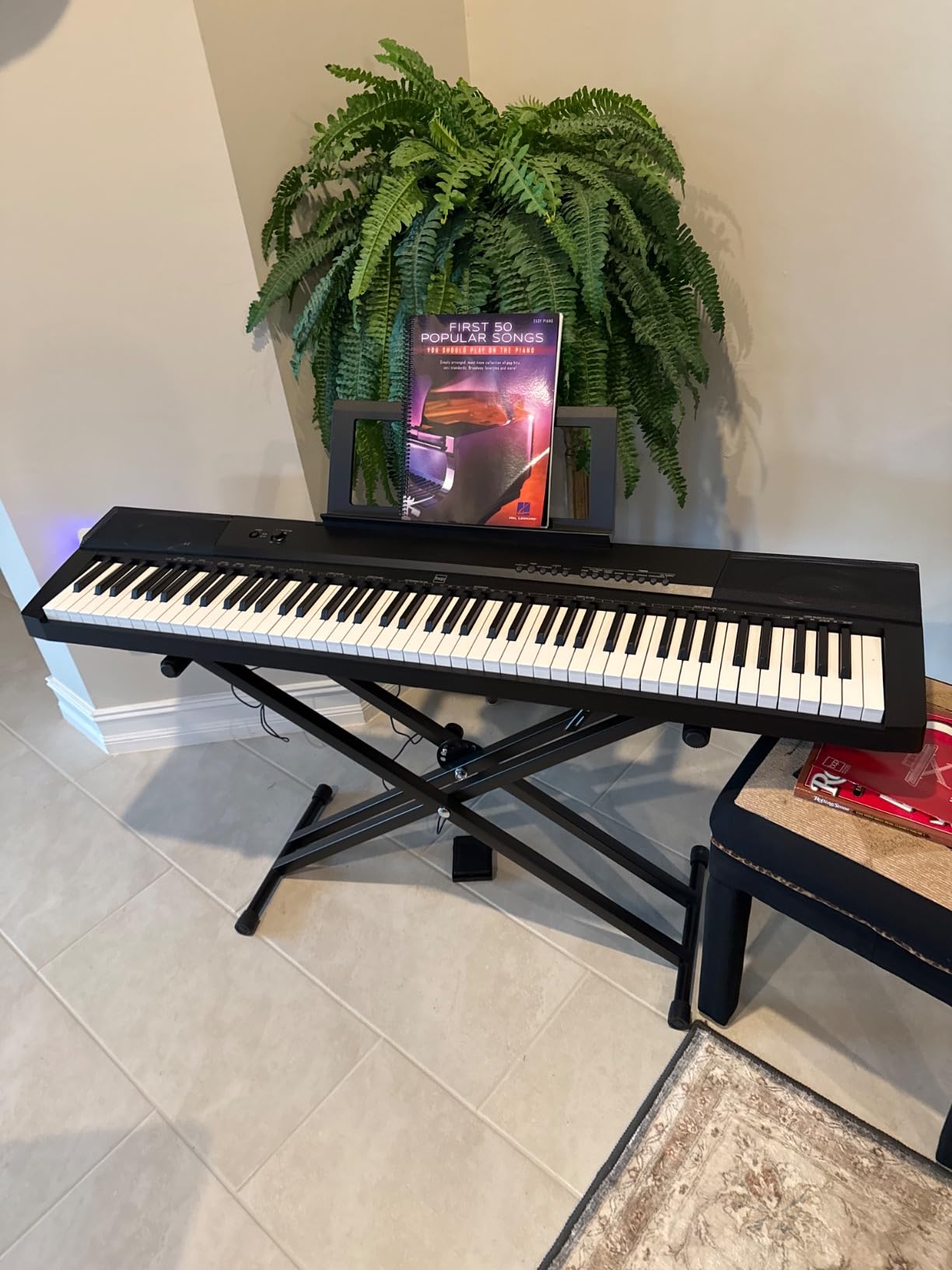
The 6 voice settings cover piano, electric piano, organ, harpsichord, strings, and a synth. That is enough to keep a beginner exploring different sounds. The compact folding stand is a real advantage for small apartments where space matters.
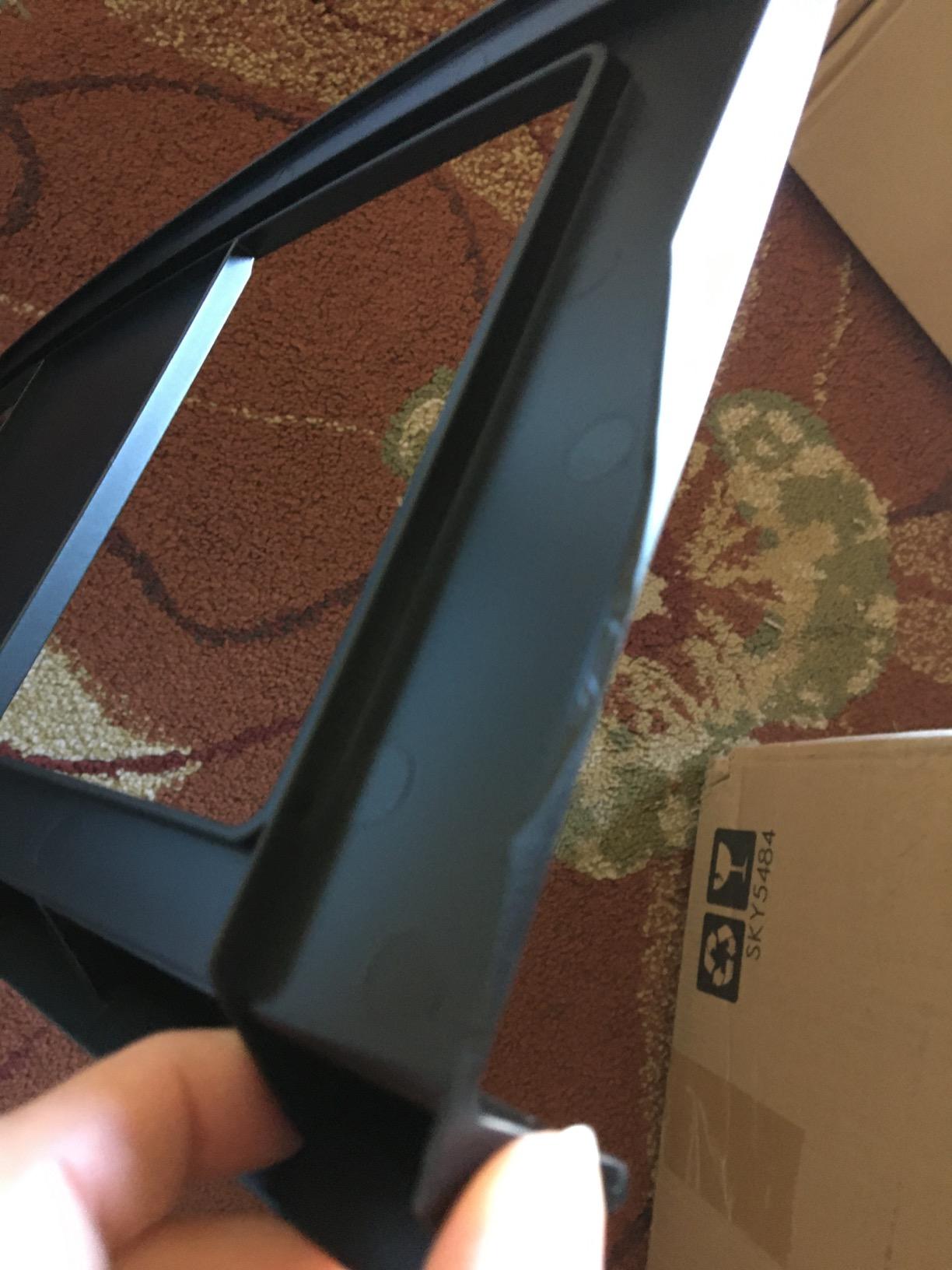
The reliability concerns are real. Reviewers on Amazon report the power cord failing after several months and the touch sensitivity being inconsistent across the keyboard. The 60-day warranty is short. If you want a more reliable 88-key semi-weighted keyboard, the Alesis Recital Play is the better pick.
Who the Best Choice Products 88-Key is good for
Beginners who want 88 keys on a tight budget, apartment dwellers who need a folding stand, casual players who want a few sound options to explore.
For shoppers who need 88 keys under 130 dollars, this set is the answer.
Who should skip the Best Choice Products 88-Key
Anyone who needs graded hammer action, players who want Bluetooth MIDI, shoppers who want a longer warranty and stronger brand reputation.
If you can spend a little more, the Donner DEP-20 or Roland FP-10 will outlast this set by years.
10. RockJam RJ549 49-Key Keyboard — Best for Young Beginners
RockJam RJ549 49 Key Keyboard Piano for Beginners with Note Stickers
49 full-size keys
200 tones and rhythms
Multiple color options
Simply Piano lessons included
Pros
- Very affordable entry-level keyboard for kids
- Simply Piano lessons included for guided learning
- Available in mint green
- pink
- blue
- and black to appeal to children
- Lightweight at 1.66 kg so a kid can move it themselves
- Headphone jack allows quiet practice in shared rooms
Cons
- Only 49 keys is a very limited range for any repertoire
- Basic sound engine compared to Yamaha and Roland models
- Keys may not be full-size and feel toy-like to some users
- Some units fail after a few months of use
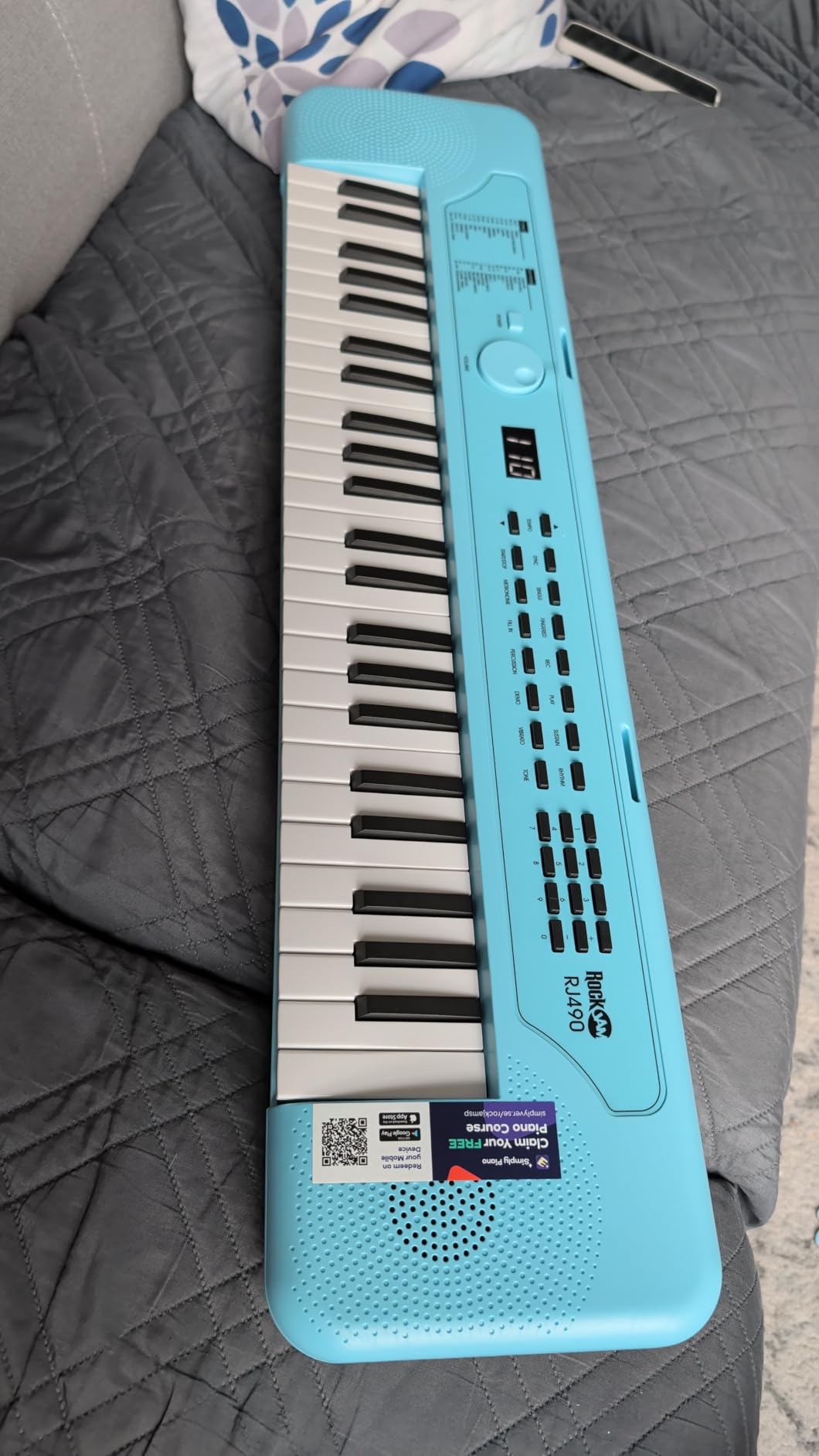
The RockJam RJ549 is the keyboard I recommend when a parent is not sure whether their child will stick with piano. At under 60 dollars with Simply Piano access and a choice of fun colors, the risk of buying it is almost zero. If the child takes to piano, you can upgrade to a weighted keyboard within a year.
The 49-key range is the obvious limitation. Many beginner pieces use more than 49 keys, especially as soon as a child learns to play with both hands. The RJ549 is a stepping stone, not a destination.
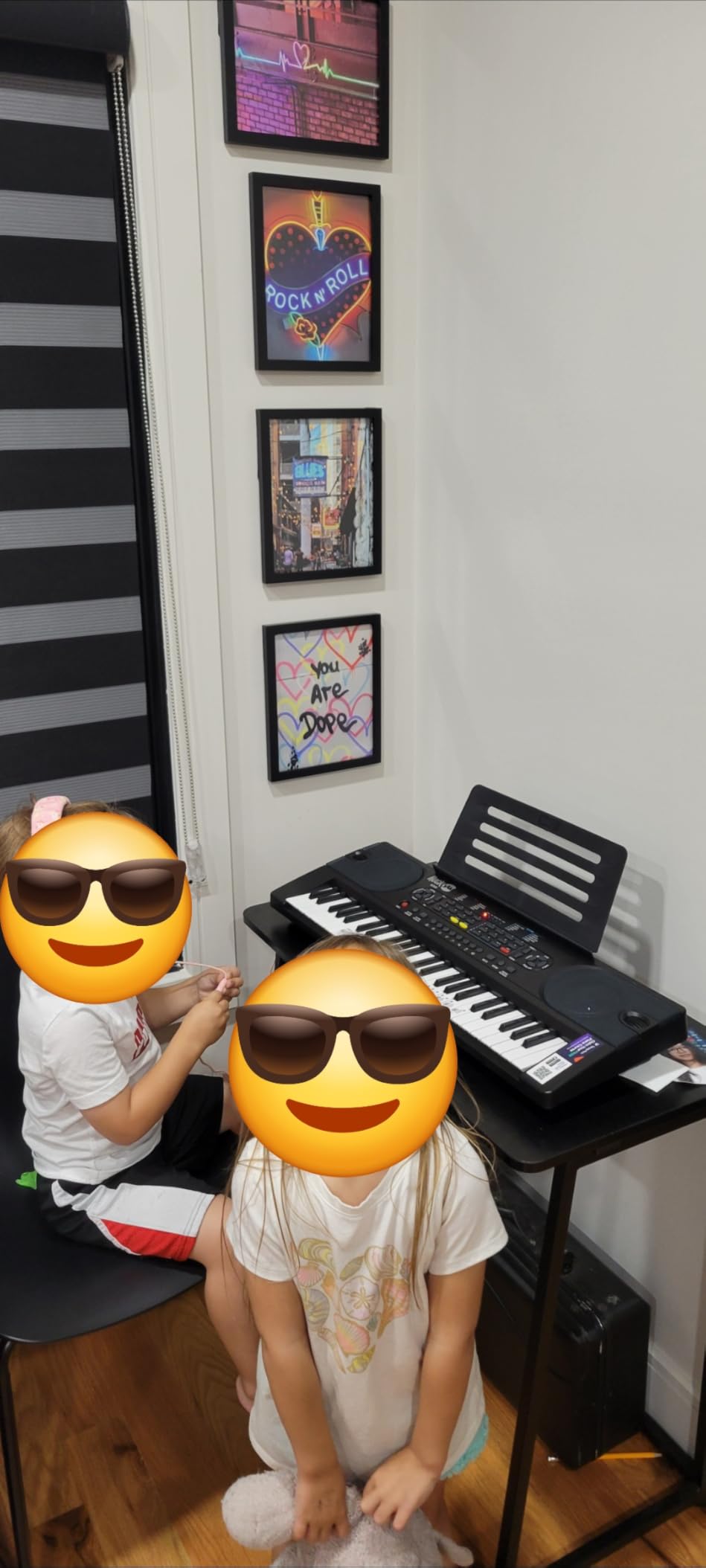
I gave the RJ549 to a six-year-old in my family and watched the color options do their job. The mint green and pink versions feel less like an instrument and more like a toy, which is exactly the right psychology for that age. The headphone jack is genuinely useful for late-evening practice.
The keys on the RJ549 are not touch-sensitive and the sound engine is basic. For a child under 10, that is fine. For an adult beginner, the 49-key range and lack of dynamics will feel limiting within a month.
Who the RockJam RJ549 is good for
Parents testing whether their child will commit to piano, families on a tight budget, gift buyers who want a colorful first keyboard.
If you want the cheapest possible entry point for a child, the RJ549 is the right call.
Who should skip the RockJam RJ549
Anyone planning serious study, adult beginners, players who need touch-sensitive keys for dynamics.
If you want a keyboard that will last more than a year of real practice, jump to the Donner DEP-20 or Yamaha P45.
What to Look For in a Digital Piano: The Complete Buyer’s Guide
Weighted Keys and Hammer Action Explained
Weighted keys are not a luxury — they are the single biggest factor in whether your fingers will develop real piano technique. A real acoustic piano has hammers that strike strings, and the resistance you feel when pressing a key is the weight of that mechanism.
There are three levels of action you will see in this price tier:
Unweighted (synth action): Found on RockJam and Best Choice Products budget keyboards. Fine for the first six months. Not fine for classical training.
Semi-weighted: Found on the Alesis Recital Play and Best Choice Products 88-Key. Some resistance, but lighter than a real piano.
Fully weighted / graded hammer: Yamaha graded hammer standard on the P45 and P71, Donner hammer action on the DEP-20, and Roland PHA-4 on the FP-10. This is what you want if you plan to play more than a year.
Graded means the bass keys are heavier than the treble keys, mimicking a real acoustic piano. The Roland PHA-4 with ivory-feel keys is the most realistic action under 500 dollars. The Yamaha GHS is a step behind but still excellent for building technique.
Polyphony: How Many Notes Do You Really Need
Polyphony is the number of notes your piano can play at the same time. Every note you press and every note that rings out from the sustain pedal counts against your polyphony budget.
Here is the practical cheat sheet:
64-note polyphony: Enough for single-line playing and simple pieces. Runs out fast when you use the sustain pedal with layered sounds.
96-note polyphony: Comfortable for most beginner to early intermediate pieces. The Roland FP-10 sits here.
128-note polyphony: The sweet spot for under 500 dollars. Handles layered voices, sustained pedaling, and most classical repertoire without cutting off.
192+ note polyphony: Reserved for the price tier above 500 dollars.
The Donner DEP-20 ships with 128-note polyphony, which is why I ranked it above most competitors at its price. The Yamaha P45 and P71 ship with 64 notes, which is enough for beginners but limiting once you start layering strings or playing pedaled Chopin.
Brand Comparison: Yamaha vs Roland vs Casio vs Kawai vs Korg vs Alesis
After comparing all ten pianos, here is the brand philosophy at a glance:
Yamaha: Reliable, consistent, strong resale value. Best for beginners who want a brand they can trust. P-series and P-71 sit in this tier.
Roland: Best key action in the budget tier, strong Bluetooth MIDI integration. Best for players who want realistic feel and modern features. FP-10 is the entry point.
Donner: Aggressive spec sheets at aggressive prices. Best for budget shoppers who want weighted keys and high polyphony. DEP-20 is the standout.
Alesis: Complete bundles with accessories and learning apps. Best for parents buying a first keyboard for a child. Recital Play covers that.
RockJam: Lowest possible prices with Simply Piano lessons included. Best for absolute beginners testing the waters.
Best Choice Products: Feature-rich kits with microphones and stands. Best for gift buyers who want everything in one box.
Casio and Kawai do not appear in this roundup because their sub-500 dollar models have largely been overtaken by the brands above in this exact price tier. Kawai’s ES60 sits at the 500-dollar ceiling and is covered in our under-1000 dollars guide.
Connectivity and Apps: USB-MIDI, Bluetooth, Learning Apps
Every piano in this roundup has USB connectivity of some kind. What differs is whether that connection is USB-MIDI (sends MIDI data to your computer) or USB audio (sends digital audio).
Bluetooth comes in two flavors:
Bluetooth MIDI: The Roland FP-10 has it. Lets you pair wirelessly with a tablet or phone for apps like Skoove and Simply Piano without a cable on the desk.
Bluetooth audio: Lets you stream music from your phone through the piano’s speakers. None of the pianos in this roundup have it.
For app-based learning, Bluetooth MIDI on the Roland FP-10 is the cleanest experience. For DAW-based recording, USB-MIDI on the Donner DEP-20, Yamaha P45, and Yamaha P71 works flawlessly. For beginners using Simply Piano or Skoove, all three apps work with any keyboard that has USB-MIDI or a MIDI cable.
Speakers, Headphones, and Quiet Practice
If you live in an apartment, share a bedroom with someone, or practice after 9 PM, headphones are not optional — they are essential. Every piano in this roundup has a 3.5mm or 6.35mm headphone jack.
The honest truth about built-in speakers at this price tier: the Yamaha P45 and Roland FP-10 have small speakers that are fine for casual playing but thin for serious practice. The Donner DEP-20 has two 25W speakers that are louder than most budget pianos. The Alesis Recital Play has speakers that distort at high volume.
For the best headphone experience, I recommend pairing any of these pianos with a pair of Audio-Technica ATH-M30x or Sony MDR-7506 closed-back headphones. Both are under 100 dollars and reveal the actual sound quality of your piano.
Accessories Checklist: Stand, Bench, Sustain Pedal, Headphones
Most pianos in this roundup ship with a sustain pedal or footswitch, but only the Alesis Recital Play, Best Choice Products 61-Key, and RockJam RJ5061 ship with a complete accessory bundle. If you buy any of the Yamaha, Roland, or Donner models, you will need to add:
Stand: An X-style stand like the Yamaha L-85 or a Quik-Lok Z-stand works for most 88-key keyboards.
Bench: A fixed-height piano bench is more stable than a folding stool.
Continuous sustain pedal: For classical repertoire, a Yamaha FC3A or Roland DP-10 gives you half-pedal support. The included footswitches are on/off only.
Headphones: Closed-back over-ear headphones for silent practice.
Keyboard cover: A simple dust cover for when the piano sits unused.
Used vs New Buying Guidance
Buying used gets you more piano for the money, but the risk is real. Forum users on r/DigitalPiano regularly warn about used Yamaha and Roland pianos with worn keys, missing power supplies, or no warranty. If you go used, inspect for:
Worn or shiny keys — this means thousands of hours of practice.
Clicking sounds in the action — common on Yamaha P-series after five years.
Missing original accessories — power supply, sustain pedal, music rest.
No receipt — you cannot claim warranty without one.
Buying new from Amazon gives you the manufacturer’s warranty, easy returns within 30 days, and the comfort of knowing nobody has played the keyboard before you. For most beginners, that peace of mind is worth the extra dollars.
Off-Brand Red Flags: What to Avoid at This Price Tier
The forums and teacher communities are unanimous on a few off-brand names to avoid at this price tier:
Donner at the lower tiers: Donner has earned credibility at the DEP-20 level, but their cheaper DDP-series pianos still have inconsistent action and limited polyphony. Stick with the DEP-20 or higher.
Williams, Artesia, Suzuki: These brands show up at deep discounts on Amazon. The action is inconsistent, the sound engines are dated, and the resale value is poor. Forum users regularly report bad playing habits forming within months.
Generic RockJam and Best Choice Products at the 88-key weighted tier: If you want 88 weighted keys, the Donner DEP-20 is the floor. Going cheaper means non-standard action that does not match a real piano.
Tim Praskins at azpianoreviews put it bluntly: off-brand digital pianos can foster bad playing habits in students because of deficiencies in key action and piano sound response. Stick with Yamaha, Roland, Kawai, Casio, Korg, Alesis, and now Donner at the DEP-20 level and above.
Frequently Asked Questions
What is the best electric piano for a budget?
The RockJam RJ5061 is the best budget electric piano for absolute beginners because it ships with everything you need — keyboard, stand, bench, headphones, and Simply Piano app content — for under 120 dollars. If you want 88 weighted keys under 500 dollars, the Donner DEP-20 is the best value. Both have tens of thousands of verified reviews and are safe starting points.
What is the best brand of electric pianos?
Yamaha and Roland are the two most trusted brands in the budget tier. Yamaha is known for reliability, strong resale value, and the GHS graded hammer action on the P45 and P71. Roland is known for the most realistic key action at this price (PHA-4 with ivory feel) and built-in Bluetooth MIDI on the FP-10. Kawai, Korg, Casio, and Alesis are also reputable. Donner has earned credibility at the DEP-20 level. Avoid Williams, Artesia, Suzuki, and generic 88-key weighted pianos under 300 dollars.
Which electric piano feels most like a real piano?
The Roland FP-10 feels the most like a real piano under 500 dollars. The PHA-4 action with ivory-feel keys replicates the weight and escapement of an acoustic hammer action, and the SuperNATURAL sound engine models how a real piano string behaves under different dynamics. The Yamaha P45 and P71 are a step behind on action feel but offer Yamaha’s reliable graded hammer standard. Both build proper finger technique over time.
What is the best digital piano for beginners under $500?
The Roland FP-10 is the best digital piano for serious beginners under 500 dollars because its PHA-4 action will not hold you back as you progress. The Yamaha P45 and P71 are excellent alternatives if you want Yamaha reliability. The Donner DEP-20 is the best value if you want 88 weighted keys and 128-note polyphony at the lowest price. The RockJam RJ5061 is the best choice for absolute beginners who want a complete kit with stand, bench, and Simply Piano lessons under 120 dollars.
Are digital pianos good for beginners?
Yes, digital pianos are excellent for beginners because they offer weighted keys that build proper finger technique, headphone jacks for quiet practice, USB-MIDI for app-based learning, and realistic piano sounds without the tuning and maintenance of an acoustic piano. The biggest downside is that cheap unweighted keyboards under 100 dollars can build bad habits within six months. Invest in at least semi-weighted keys if you plan to play more than a year.
What are the downsides of a digital piano?
The main downsides of a digital piano are: built-in speakers at this price tier are weaker than a real acoustic piano, the action is still not identical to an acoustic grand (even on the best PHA-4 and GHS actions), and the resale value drops faster than an acoustic piano. The sound engine samples can also sound artificial through poor speakers or low-quality headphones. None of these downsides outweigh the benefits for most beginners and apartment dwellers.
Final Verdict: Which Electric Piano Under $500 Should You Buy in 2026?
The best electric pianos under 500 dollars in 2026 cover three very different buyers. For absolute beginners who want everything in one box, the RockJam RJ5061 is the right starting point. For serious beginners who want a piano they will not outgrow in two years, the Roland FP-10 with its PHA-4 action and Bluetooth MIDI is the answer. For budget shoppers who want 88 weighted keys and 128-note polyphony, the Donner DEP-20 is the smart value play.
If I had to pick one for a friend who asked me what to get, I would send them to the Roland FP-10. The key action, the sound engine, and the Bluetooth MIDI combine into a piano that grows with you. The Yamaha P45 and P71 are close runners-up if you prefer Yamaha reliability and do not need Bluetooth. The RockJam and Best Choice Products bundles are excellent for parents and gift buyers who want a complete setup without research. Whatever you choose, every piano in this roundup will give you a satisfying start on the instrument.