
Have you ever wondered why some DJ transitions sound perfectly smooth while others feel jarring and dissonant? The secret often lies in something most club-goers never notice: harmonic mixing. When I started DJing 2026 years ago, I thought beatmatching was all that mattered. I was wrong. Understanding what the Camelot Wheel is and how harmonic mixing works transformed my sets from amateur to professional-sounding almost overnight.
In this guide, I will walk you through everything you need to know about the Camelot Wheel. You will learn how to read it, the four core mixing techniques every DJ should master, and when you can actually ignore the rules for creative effect. By the end, you will have the knowledge to create seamless transitions that keep dance floors locked in.
Table of Contents
What Is the Camelot Wheel?
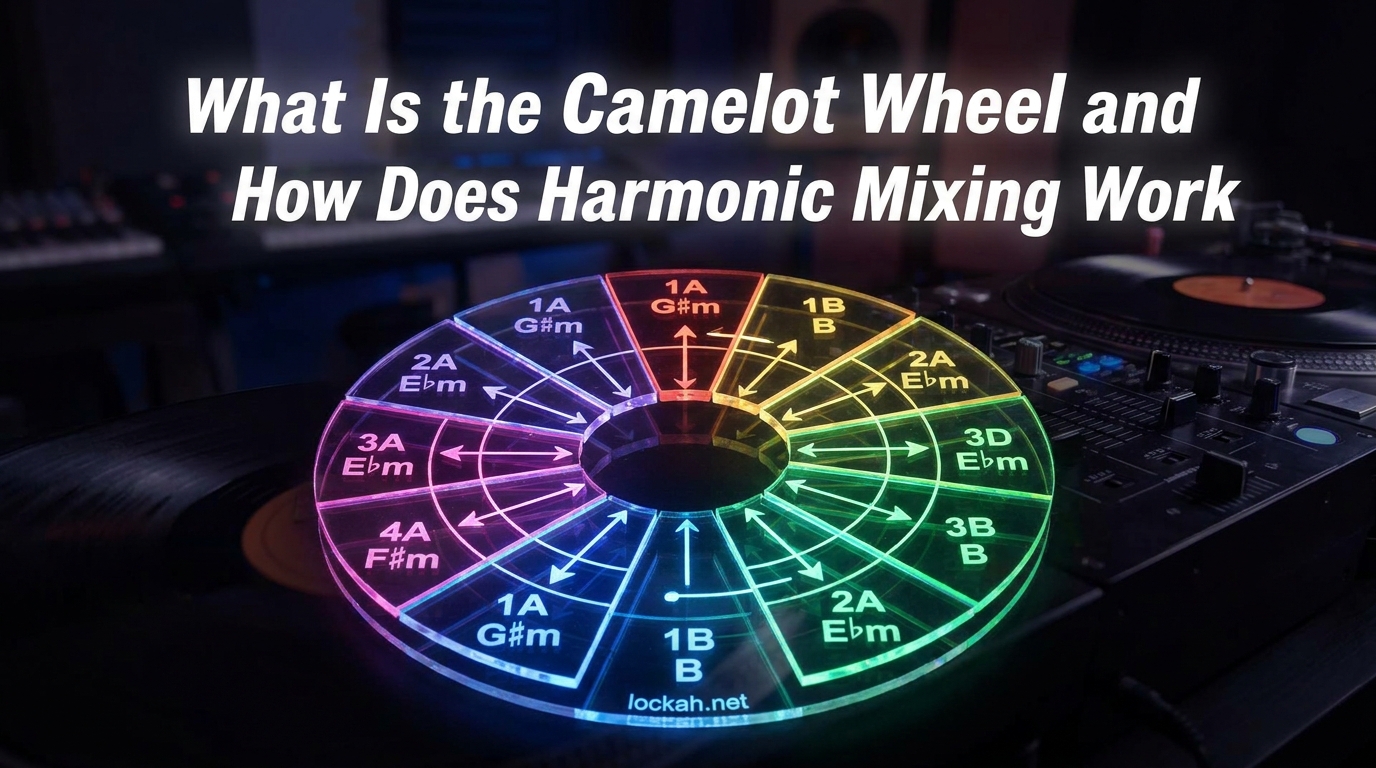
The Camelot Wheel is a visual tool that simplifies musical key compatibility into an easy-to-read circular diagram. It assigns a unique alphanumeric code to every musical key, making it simple to identify which tracks will blend together harmonically. Think of it as a cheat sheet for the circle of fifths, designed specifically for DJs who need to make quick decisions in real-time.
The system was popularized by Mixed In Key software in the mid-2000s, though the underlying music theory dates back centuries. Each key gets a code like 8A or 12B. The number represents the key’s position, while the letter indicates major (B) or minor (A). For example, 8B equals C Major, and 8A equals A Minor. This standardization means you can glance at a track’s metadata and instantly know its harmonic relationships.
The wheel arranges all 24 musical keys in a circle, with compatible keys positioned next to each other. Keys that sit side by side on the wheel share similar harmonic DNA. They contain many of the same notes, which means their chords and melodies blend naturally when mixed together. This is the foundation of why harmonic mixing works.
How to Read the Camelot Wheel?
Reading the Camelot Wheel becomes second nature once you understand its simple structure. The outer ring displays major keys labeled with B codes. The inner ring shows minor keys labeled with A codes. Each ring has 12 positions numbered clockwise from 1 to 12, corresponding to the 12 possible root notes in Western music.
The major keys on the outer ring follow the circle of fifths progression. Moving clockwise increases energy and brightness. Moving counter-clockwise creates a darker, more subdued feel. The minor keys on the inner ring mirror this pattern but maintain their distinct minor tonality.
To find your track’s Camelot key, look at the key detection data in your DJ software. Most modern platforms like Serato, Rekordbox, and Traktor can analyze tracks and display Camelot codes automatically. If your software shows traditional key notation like “C Major” or “A Minor,” you can manually map it to the wheel using a reference chart.
The Four Core Harmonic Mixing Techniques (2026)
Once you understand the wheel’s layout, you need to know how to actually use it for mixing. There are four fundamental techniques that form the backbone of harmonic DJing. Master these, and you will handle 90 percent of your transitions with confidence.
Same Key Mixing
The simplest and safest harmonic mixing technique is staying in the same key. If your current track is in 8A, mixing into another 8A track guarantees harmonic compatibility. Both tracks share identical notes and chords, creating the smoothest possible blend.
This technique works beautifully for maintaining consistent energy and mood. I often use same-key mixing when I want to extend a vibe without drawing attention to the transition itself. The audience experiences a seamless continuation of the musical landscape.
Relative Major and Minor
Every minor key has a relative major, and vice versa. On the Camelot Wheel, these sit directly across from each other between the inner and outer rings. Moving from 8A (A Minor) to 8B (C Major) keeps the same key signature while shifting the emotional tone.
This transition creates a noticeable but pleasant shift in mood. Going from minor to major typically brightens the energy. Moving from major to minor adds a more melancholic or intense feeling. I use this technique when I want to guide the emotional arc of my set without shocking the dance floor.
Adjacent Keys: Plus One and Minus One
Moving one step clockwise or counter-clockwise on the wheel represents the most common harmonic transition DJs make. If you are at 8A, mixing into 9A or 7A maintains strong harmonic compatibility while introducing subtle variation.
Moving clockwise (plus one) raises the energy slightly. The new key sits a perfect fifth above the previous one, creating an uplifting feeling. Moving counter-clockwise (minus one) lowers energy and creates a more grounded, settled mood. This technique gives you control over the emotional trajectory of your set.
Diagonal Movements
Diagonal movements combine adjacent key changes with the major-minor shift. Moving from 8A to 9B or 7B creates a more dramatic transition while remaining harmonically compatible. This technique works well for signaling larger shifts in your set’s direction.
I use diagonal transitions when switching between sections of a set. For example, moving from a deeper house section into more energetic territory. The harmonic relationship prevents the transition from sounding jarring, while the key change signals something new is coming.
Advanced Techniques: Rule of 7 and Camelot Jumps
Once you have mastered the basics, several advanced techniques expand your harmonic mixing vocabulary. These approaches give you more creative options for crafting unique transitions and managing energy in sophisticated ways.
The Rule of 7 Explained
The Rule of 7, sometimes confused with the “rule of 32” mentioned in DJ forums, refers to moving seven positions around the Camelot Wheel. This lands you on the dominant or subdominant relationship, creating a compatible but distinct harmonic shift.
Moving plus or minus 7 positions on the wheel takes you to a key that shares strong harmonic relationships with your current position. For example, moving from 8A to 3A or 1A creates a noticeable key change that still works musically. This technique helps when you need a bigger shift than adjacent keys provide.
Camelot Jumps for Energy Shifts
Camelot jumps involve moving multiple positions around the wheel intentionally. While not strictly “harmonic” in the pure sense, controlled jumps can create exciting energy shifts. The key is understanding how dramatic the change will sound.
A jump of two or three positions creates a noticeable tonal shift without clashing. Larger jumps risk disharmony unless handled carefully. I sometimes use these jumps after a breakdown or during a natural pause in the music, where the audience expects a change.
Parallel Major and Minor Transitions
Parallel major and minor keys share the same root note but different key signatures. C Major and C Minor are parallel keys. On the Camelot Wheel, these do not sit next to each other, making them more challenging to mix harmonically.
However, with careful timing and creative EQ work, parallel key transitions can create dramatic emotional shifts. I reserve these for moments when I want to completely transform the energy of the room. They require more skill but deliver powerful results.
Why Harmonic Mixing Matters for Your DJ Sets?
Understanding harmonic mixing separates good DJs from great ones. When keys clash, the result sounds muddy, dissonant, and unprofessional. Even audiences who cannot identify why a transition sounds wrong will feel the discomfort. Harmonic mixing prevents this problem entirely.
Beyond avoiding bad transitions, harmonic mixing gives you positive creative control. You can guide the emotional journey of your set intentionally. Build tension with minor keys. Release it with major transitions. Create cohesive sections that feel like unified musical statements.
From my experience playing rooms of 50 people to 500 people, harmonic consistency keeps crowds engaged longer. When the music flows naturally, people stay on the dance floor. When transitions feel jarring, you lose the room’s energy and attention.
Common Mistakes to Avoid
Many beginner DJs fall into the trap of treating the Camelot Wheel as absolute law. They become so focused on key compatibility that they forget other crucial elements like energy levels, BPM, and track selection. Harmonic mixing is a tool, not a constraint.
Another frequent error is ignoring genre-specific considerations. House and techno tracks often have simpler harmonic structures that blend easily. Complex jazz-influenced tracks or heavily melodic music may require stricter adherence to harmonic rules. Understanding your genre helps you apply the wheel appropriately.
Finally, do not forget that key clashing is sometimes intentional and effective. A jarring transition can create excitement, signal a major set shift, or wake up a tired dance floor. The wheel guides you toward compatibility, but breaking the rules creatively has its place.
Software and Tools for Key Detection
Modern DJ software has made harmonic mixing easier than ever. Most platforms now include automatic key detection that displays Camelot codes directly in your library. This technology saves hours of manual analysis and reduces errors.
Mixed In Key remains the industry standard for dedicated key detection. It analyzes tracks with high accuracy and writes Camelot codes directly to track metadata. These codes then appear in Serato, Rekordbox, Traktor, or whatever software you prefer.
Pioneer Rekordbox includes built-in key analysis with Camelot display options. Serato DJ Pro offers key detection in its latest versions. DJ.Studio provides automated harmonic mixing suggestions based on your track keys. Even free tools like KeyFinder give you basic detection capabilities.
When to Break the Rules
The DJ community remains divided on strict adherence to the Camelot Wheel. Some treat it as gospel, never deviating from adjacent key relationships. Others view it as a guideline, prioritizing creative expression over harmonic perfection. I fall somewhere in the middle.
Breaking harmonic rules makes sense in several scenarios. When mixing between genres, strict key matching may limit your options unnecessarily. During peak-time moments, energy and crowd reaction matter more than perfect harmony. When creating intentional tension, dissonance can be your friend.
The key is understanding what you are breaking and why. A skilled DJ knows when harmonic compatibility serves the set and when it restricts creative possibilities. Experience teaches you to feel the difference.
Frequently Asked Questions
How does the Camelot wheel help with mixing?
The Camelot Wheel helps by providing a visual map of which musical keys are compatible. Keys positioned next to each other on the wheel share similar notes and chords, making them blend smoothly when mixed. This prevents dissonant clashing and helps DJs create seamless transitions that keep dance floors engaged.
What is the Camelot wheel harmonic mixing system?
The Camelot Wheel harmonic mixing system assigns an alphanumeric code to every musical key. Major keys use B codes on the outer ring, while minor keys use A codes on the inner ring. Numbers 1-12 indicate the key’s position. Compatible keys sit adjacent on the wheel, making it easy to identify tracks that will blend harmonically.
What is the rule of 7 in DJing?
The Rule of 7 in DJing refers to moving seven positions around the Camelot Wheel when mixing. This creates a dominant or subdominant key relationship that maintains harmonic compatibility while providing more dramatic tonal shifts than adjacent key changes. It is useful when you need bigger energy shifts than plus-one or minus-one transitions provide.
Do I need to strictly follow the Camelot Wheel?
No, you do not need to strictly follow the Camelot Wheel. While it provides excellent guidance for harmonic compatibility, many successful DJs treat it as a tool rather than a rule. Genre mixing, creative transitions, and energy management sometimes require breaking harmonic rules. Experience teaches you when compatibility matters and when creative expression takes priority.
What software detects Camelot keys automatically?
Several software options detect Camelot keys automatically. Mixed In Key is the dedicated industry standard. Rekordbox, Serato DJ Pro, and Traktor include built-in key analysis with Camelot display. DJ.Studio offers automated harmonic mixing features. Free alternatives like KeyFinder also provide basic key detection capabilities for DJs on a budget.
Can you mix between major and minor keys?
Yes, you can mix between major and minor keys successfully. The easiest method uses relative major and minor relationships, which share the same key signature and sit at the same number on the Camelot Wheel. Moving from 8A to 8B or vice versa maintains harmonic compatibility while shifting the emotional tone between darker minor and brighter major feels.
Conclusion
The Camelot Wheel remains one of the most valuable tools for DJs who want to understand what harmonic mixing is and how to apply it effectively. By converting complex music theory into a simple visual system, it makes professional-sounding transitions accessible to everyone. Whether you are playing your first bedroom set or headlining a club, harmonic awareness elevates your mixing quality.
Start by mastering the four core techniques: same-key mixing, relative major-minor transitions, adjacent key movements, and diagonal shifts. Use software to handle key detection automatically. Most importantly, remember that the wheel serves your creative vision, not the other way around. The best DJs know the rules and know when to break them.
Practice harmonic mixing in your next practice session. Pay attention to how different transitions feel. Notice what works and what does not. Over time, reading the Camelot Wheel and selecting compatible keys will become as natural as beatmatching. That is when your sets truly start to flow.