
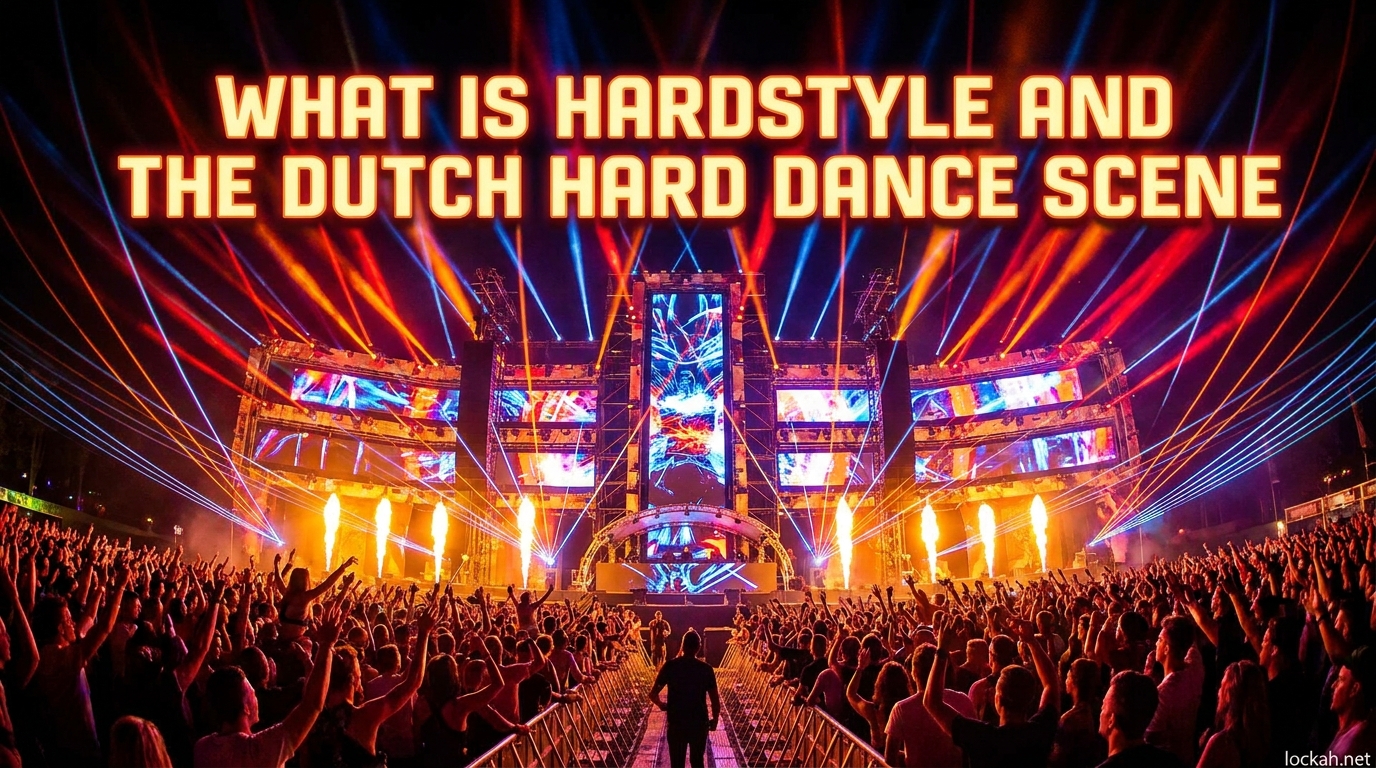
I still remember the first time I felt the kick. It was at a small warehouse party in Amsterdam, and the DJ dropped a track that made the floor vibrate through my entire body. That pounding, distorted bass drum hit my chest like a physical force. I had no idea what I was hearing, but I knew I needed more. That was my introduction to hardstyle, and it changed how I experienced electronic music forever.
If you are curious about what is hardstyle and the Dutch hard dance scene, you are in the right place. This guide will walk you through everything you need to know about this energetic electronic dance music genre. We will explore its origins in the Netherlands, break down its signature sound, and explain why it has become a global phenomenon that brings together millions of fans at massive festivals every year.
Whether you are a complete beginner wondering what those pounding kicks are all about, or someone looking to understand the cultural roots of the Dutch hard dance movement, this article covers it all. Let us dive into the world of distorted kicks, euphoric melodies, and the unique community that makes hardstyle more than just music.
Table of Contents
What Is Hardstyle?
Hardstyle is an electronic dance music genre that emerged in the late 1990s, with its strongest roots in the Netherlands. It sits at a tempo between 140 and 150 beats per minute, placing it in a sweet spot that is slower than hardcore but harder than mainstream trance or techno. The genre is instantly recognizable by its signature sound: a pounding, distorted kick drum that dominates the mix, paired with heavy basslines and euphoric melodic breakdowns that create an intense emotional contrast.
The Dutch hard dance scene gave birth to hardstyle as an experimental fusion of existing electronic genres. Pioneers combined elements from hard trance, hardcore, and gabber to create something new that retained the energy of harder styles while introducing more melodic accessibility. The result was a genre that could deliver raw power during peak moments while still offering the emotional release of beautiful, anthemic melodies.
What sets hardstyle apart from other electronic genres is its structural formula. Most tracks follow a predictable but effective pattern: an intro builds tension, followed by a breakdown where melodies and vocals take center stage, then a build-up that increases anticipation, and finally a drop where the kick drum returns with full force. This creates a rollercoaster of emotions that keeps listeners engaged and dancers moving.
The Signature Hardstyle Kick
The kick drum is the heart and soul of hardstyle. Producers spend countless hours perfecting this element, often using distortion, compression, and specific EQ techniques to achieve that signature punch. The classic hardstyle kick features a sharp attack followed by a sustained, distorted tail that creates a pumping effect. This is not just a drum hit. It is a carefully sculpted sound designed to move both bodies and emotions.
Modern hardstyle has evolved to include various kick styles. Some producers favor a more raw, aggressive sound with heavy distortion and less melodic elements. Others lean into the euphoric side, pairing powerful kicks with soaring synthesizers and emotional vocals. Both approaches share that fundamental hardstyle DNA: intensity, energy, and the power to unite a crowd in collective experience.
History and Origins of Hardstyle (2026)
The story of hardstyle begins in the Netherlands during the late 1990s, a time when the Dutch electronic music scene was already thriving. The country had established itself as a powerhouse in dance music through genres like gabber, hardcore, and trance. Dutch organizers and producers were looking for something new, a sound that could bridge the gap between the aggressive energy of hardcore and the broader appeal of trance music.
The first documented hardstyle event took place in the year 2000. Qlubtempo, organized in Zaandam near Amsterdam, is widely recognized as the birth of dedicated hardstyle events. This party brought together the key elements that would define the scene: powerful sound systems, dedicated fans, and DJs who understood how to build energy through their sets. The success of Qlubtempo proved there was an audience hungry for this specific sound.
The Pioneers Who Shaped the Sound
Several key artists were instrumental in developing and popularizing hardstyle during its early years. Dana, a Dutch DJ and producer, is often credited as one of the first to blend hard trance elements with harder kicks, creating the template that others would follow. The Prophet, another Dutch pioneer, helped define the genre through his productions and performances at early events. His tracks featured the pounding bass and melodic elements that became hallmarks of the style.
These early pioneers were not working in isolation. They were part of a broader Dutch hard dance ecosystem that included labels, event organizers, and a passionate fanbase. The Netherlands provided the perfect environment for this new genre to grow. The country had excellent infrastructure for electronic music events, a culture that embraced dance music, and a generation of young people looking for new forms of expression.
From Underground to Mainstream
The 2000s saw hardstyle transition from an underground Dutch phenomenon to an international movement. Events like Defqon.1, which launched in 2003, brought hardstyle to a global audience. The festival grew from a single-day Dutch event to a multi-day international phenomenon with editions in Australia and Chile. This expansion proved that the appeal of hardstyle transcended cultural and geographic boundaries.
By the 2010s, hardstyle had established itself as a major force in electronic dance music. Artists like Headhunterz, Wildstylez, and Noisecontrollers became household names in the EDM world. The sound influenced mainstream producers, and hardstyle elements began appearing in big room house and other popular genres. Yet despite this growth, the genre maintained its connection to its Dutch roots and underground ethos.
Musical Characteristics of Hardstyle
Understanding hardstyle requires breaking down its core musical elements. At its foundation, the genre relies on a few key components that work together to create its distinctive sound. These elements have remained consistent throughout the genre’s evolution, even as production techniques and specific sounds have evolved.
The tempo of hardstyle typically falls between 140 and 150 beats per minute. This range is crucial to the genre’s identity. It is fast enough to generate high energy and drive movement on the dance floor, but not so fast that it becomes inaccessible to casual dancers. This tempo allows for the distinctive rhythmic patterns that define hardstyle, including the off-beat bass patterns known as reverse bass.
Kicks and Basslines
The kick drum in hardstyle is not a simple drum sample. It is a complex sound design achievement that combines multiple layers. Producers typically start with a punchy transient for the initial attack, add a distorted body for the character, and sculpt a tail that carries the rhythm forward. The result is a kick that functions as both a rhythmic element and a melodic bassline.
Reverse bass is a technique where the bassline plays off the beat, creating a syncopated rhythm that interacts with the kick drum. This gives hardstyle its distinctive groove and makes it instantly recognizable. When you hear that pumping, bouncing bassline driving underneath the kick, you know you are listening to hardstyle.
Melodies and Breakdowns
What separates hardstyle from purely aggressive genres is its embrace of melody. The breakdown sections of hardstyle tracks often feature beautiful, emotional synthesizer progressions, vocals, and atmospheric elements. These moments provide contrast to the intense kicks and create the emotional journey that fans love. A well-crafted breakdown builds anticipation for the drop, making the return of the kick drum feel like a release of built-up tension.
The synthesizers used in hardstyle range from supersaws for big, anthemic chords to detuned leads for a rawer sound. Vocals play an important role too, with many tracks featuring lyrics about unity, strength, overcoming challenges, or simply celebrating life. These themes resonate with the hardstyle community and reinforce the genre’s positive, uplifting culture despite its aggressive sound.
The Dutch Connection and Hakken Dance
To understand hardstyle, you need to understand the Netherlands. This small European country has had an outsized influence on electronic dance music, and hardstyle is perhaps its most distinctive cultural export. The Dutch connection runs deeper than just geography. It is about a cultural approach to music, community, and celebration that created the perfect environment for this genre to flourish.
The Netherlands has a long history with electronic music that predates hardstyle. The gabber movement of the 1990s established the country as a hub for harder dance styles. Dutch culture has a pragmatic, egalitarian quality that fits well with the inclusive nature of rave culture. When hardstyle emerged, it inherited this cultural foundation and built upon it.
The Hakken Dance
No discussion of the Dutch hard dance scene would be complete without explaining hakken. This distinctive dance style evolved alongside hardstyle and remains an integral part of the culture. Hakken involves fast, intricate footwork performed to the pounding rhythm of hardstyle kicks. Dancers keep their upper body relatively still while their feet move in complex patterns that mirror the energy of the music.
The dance originated in the Dutch gabber scene and adapted naturally to hardstyle as the genre emerged. Watching experienced hakken dancers is mesmerizing. Their feet become a blur of motion while they maintain perfect balance and timing with the music. For many fans, learning to hakken is a rite of passage and a way to physically connect with the music they love.
Hakken is more than just dancing. It is a form of self-expression and community bonding. Dance circles form at events where people take turns showing their skills and cheering each other on. The dance embodies the hardstyle ethos: individual expression within a supportive community, high energy tempered with respect and positivity.
Rave Culture and Community
The Dutch hard dance scene created a unique rave culture that prioritizes community, respect, and shared experience. Fans often describe hardstyle as a lifestyle rather than just a music preference. This is evident in the way people dress, with distinctive styles that blend sportswear, street fashion, and personal expression. It shows in the international travel culture, where fans will fly across the world to attend major events.
The community aspect is reinforced by the music itself. Hardstyle lyrics often emphasize unity, strength, and togetherness. Event organizers cultivate this atmosphere through production choices that prioritize the collective experience. Massive stages, synchronized light shows, and powerful sound systems all serve to create moments where thousands of people feel connected through music.
Hardstyle Subgenres and Related Styles
Like any mature music genre, hardstyle has evolved into several distinct subgenres, each with its own characteristics and fanbase. Understanding these distinctions helps newcomers navigate the scene and find the specific sounds that resonate with them. The two main branches are euphoric hardstyle and rawstyle, though the lines between them often blur.
Euphoric hardstyle emphasizes melody, emotion, and accessibility. Tracks in this style feature prominent breakdowns with beautiful synthesizer progressions, vocals, and an overall uplifting atmosphere. The kicks are still powerful but often cleaner and more polished. This style appeals to fans who love the emotional journey that hardstyle provides and do not mind softer moments between the intense drops.
Rawstyle and Harder Variations
Rawstyle pushes in the opposite direction, embracing aggression and distortion. This subgenre strips away some of the melodic elements in favor of harder kicks, darker atmospheres, and more industrial sounds. The tempos might push higher, and the overall feel is more intense and less radio-friendly. Rawstyle appeals to fans who want the hardest possible sound and view the genre as a form of raw energy release.
Beyond these two main branches, the hard dance spectrum includes related genres that share DNA with hardstyle. Hardcore, also known as gabber, operates at faster tempos (typically 160-200 BPM) with even more aggressive sounds. Frenchcore and uptempo hardcore push these boundaries further. At the other end, hard trance shares some production techniques with hardstyle but generally lacks the distinctive distorted kicks.
Hardstyle vs Hard Dance
A common point of confusion is the difference between hardstyle and hard dance. Hard dance is actually an umbrella term that encompasses several related genres including hardstyle, hardcore, and hard trance. When someone refers to hard dance, they are talking about this broader family of harder electronic styles. Hardstyle is one specific genre within that family, distinguished by its tempo range, kick drum characteristics, and structural approach.
The Dutch hard dance scene includes all of these genres, with hardstyle emerging as the most commercially successful and internationally recognized. However, true fans of the scene often appreciate the full spectrum, attending events that showcase everything from melodic hardstyle to the hardest uptempo hardcore. This openness to variety is another hallmark of the culture.
Frequently Asked Questions
What is Dutch hardstyle?
Dutch hardstyle refers to the original form of hardstyle music that emerged from the Netherlands in the late 1990s. It is characterized by pounding distorted kicks, heavy basslines, and euphoric melodies at 140-150 BPM. The Dutch scene pioneered the genre through events like Qlubtempo and artists like Dana and The Prophet, establishing the cultural and musical foundation that the global hardstyle community built upon.
What is the difference between hardstyle and hard dance?
Hard dance is an umbrella term that encompasses multiple harder electronic genres including hardstyle, hardcore, and hard trance. Hardstyle is one specific genre within hard dance, distinguished by its tempo of 140-150 BPM, signature distorted kick drums, and structure that balances aggressive kicks with euphoric melodic breakdowns. Think of hard dance as the family and hardstyle as one member of that family.
What is the name of the Dutch hardstyle dance?
The Dutch hardstyle dance is called hakken. This dance style features fast, intricate footwork performed to the rhythm of hardstyle music while keeping the upper body relatively still. Hakken originated in the Dutch gabber scene and evolved alongside hardstyle. Dancers perform complex foot patterns in dance circles at events, making it both a form of individual expression and community bonding within the hard dance scene.
Did the Dutch create hardstyle?
Yes, the Dutch are credited with creating hardstyle in the late 1990s. While related electronic genres existed in other countries, hardstyle as a distinct genre emerged from the Netherlands through the fusion of hard trance, hardcore, and gabber elements. The first dedicated hardstyle event, Qlubtempo, was organized in Zaandam, Netherlands in 2000. Dutch pioneers like Dana, The Prophet, and DJ The Prophet were instrumental in developing and popularizing the sound.
Conclusion
Hardstyle is more than just a music genre with pounding kicks and distorted basslines. It is a cultural movement that emerged from the Dutch hard dance scene and grew into a global community united by shared values of respect, unity, and pure energetic expression. From its origins in late 1990s Netherlands through the pioneering work of artists like Dana and The Prophet, hardstyle has maintained its distinctive identity while evolving into various subgenres that cater to different tastes.
Understanding what is hardstyle and the Dutch hard dance scene means recognizing both the technical musical elements and the cultural context that made this genre possible. The signature sound, built around carefully crafted kick drums and euphoric melodies, provides the soundtrack to a lifestyle that millions of people around the world embrace. Whether you are drawn to the melodic appeal of euphoric hardstyle or the raw intensity of rawstyle, there is a place for you in this community.
If you have never experienced hardstyle in person, I highly recommend attending a festival or event. Feeling those kicks through a massive sound system, surrounded by thousands of people who share your passion, is something that cannot be replicated through headphones alone. The Dutch hard dance scene created something special, and it continues to welcome new members every day. Your first kick is waiting.