
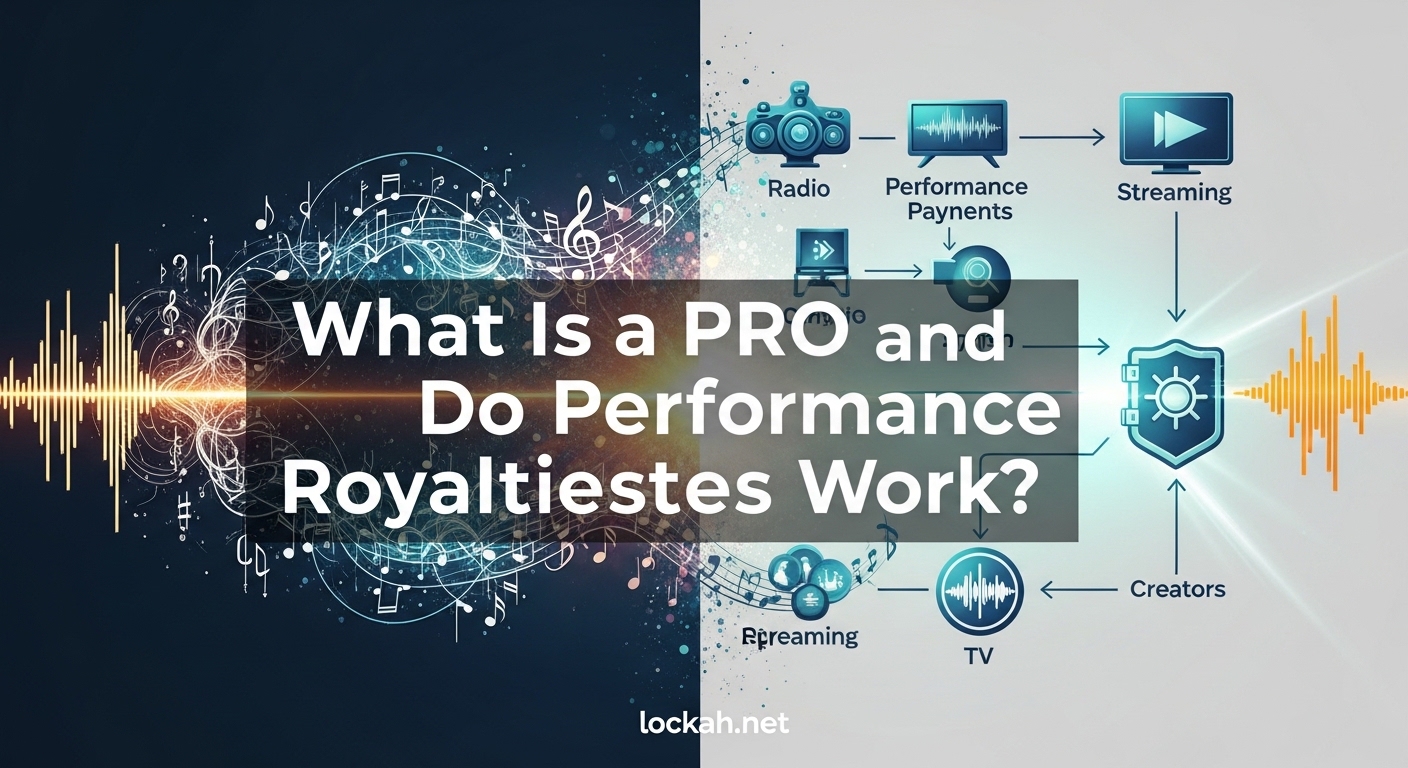
A PRO, or Performing Rights Organization, is an agency that collects and distributes royalties on behalf of songwriters and music publishers whenever their compositions are performed publicly. Think radio stations, streaming platforms, concert venues, restaurants, and even elevators playing background music. Without PROs, individual songwriters would need to track every public use of their music across thousands of locations, negotiate licenses with each business, and collect payments themselves, an impossible task for any working musician.
In this guide, I will explain what is a PRO and how do performance royalties get collected in plain terms. Our team has worked with ASCAP, BMI, and SESAC over the years, and I have seen firsthand how confusing this process can be for new songwriters. By the end of this article, you will understand exactly how these organizations work, which major PROs operate in the United States, how to register, and most importantly, how to make sure you are collecting all the royalties you are owed.
Table of Contents
What Is a PRO?
A Performing Rights Organization acts as a middleman between music creators and the businesses that use their music. When a songwriter writes a song, they automatically own the copyright to that composition. When that composition is performed publicly, the songwriter is legally entitled to payment, this is called a performance royalty.
PROs handle the licensing, tracking, and payment collection process. They issue blanket licenses to businesses that allow them to play any music from the PRO’s catalog. The businesses pay fees based on factors like venue size, audience capacity, and type of use. The PRO then distributes these collected fees to its member songwriters and publishers based on what music was actually played.
Here are the main types of public performances that generate royalties:
- Radio broadcasts – Terrestrial, satellite, and internet radio stations
- Streaming platforms – Spotify, Apple Music, Tidal, Pandora
- Live concerts – Venues, festivals, clubs
- Television – Network, cable, and streaming TV shows
- Businesses – Restaurants, bars, retail stores, gyms
- Digital media – YouTube videos, podcasts, websites
What Are Performance Royalties?
Performance royalties are payments made to songwriters and music publishers when their compositions are performed publicly. This is different from mechanical royalties, which are paid when music is reproduced, like when a song is pressed onto a CD or downloaded digitally. Performance royalties cover the public playing of the composition itself.
The distinction confuses many indie musicians. When your song streams on Spotify, two types of royalties are generated. The mechanical royalty covers the reproduction of the song file. The performance royalty covers the public transmission of that song to listeners. PROs only collect the performance portion.
Performance royalties are generated in three main scenarios. First, when your song plays on the radio, whether that is FM radio, SiriusXM, or internet stations. Second, when your song streams on platforms like Spotify or Apple Music. Third, when your song is performed live at a venue, including when you perform your own music at your own shows.
Major PROs in the United States (2026)
The United States has four major Performing Rights Organizations that handle the vast majority of performance royalty collection. Each has different membership requirements, fee structures, and payment schedules. Songwriters can only affiliate with one PRO at a time for their writer share.
ASCAP
The American Society of Composers, Authors and Publishers is the oldest and largest PRO in the United States, founded in 1914. ASCAP is a membership association owned and governed by its members, which means songwriters have voting rights and influence over the organization’s decisions.
ASCAP charges a one-time membership fee of $50 for writers. They distribute royalties quarterly in February, May, August, and November. ASCAP represents over 900,000 songwriters, composers, and publishers and claims to pay out over $1 billion annually in royalties.
BMI
Broadcast Music, Inc. was founded in 1939 as a competitor to ASCAP and remains the second largest PRO in America. Unlike ASCAP, BMI is a nonprofit corporation and does not charge writers a membership fee to join.
BMI also distributes royalties quarterly, though their payment months differ slightly from ASCAP. They represent over 1.3 million songwriters, composers, and publishers. Many songwriters choose BMI for the no-fee membership, though both organizations have strong reputations in the industry.
SESAC
SESAC is the smallest of the major US PROs and operates differently from ASCAP and BMI. SESAC is a for-profit company and maintains an invitation-only membership model. This means you cannot simply apply to join SESAC, you must be invited by the organization.
Because of their selective membership, SESAC often works with more established songwriters and catalogs. They pride themselves on personalized service and claim to offer faster royalty payments than their competitors.
AllTrack
AllTrack is the newest major PRO in the United States, launched in recent years with a focus on independent songwriters and digital-native creators. They offer free membership for writers and emphasize technology-driven royalty tracking.
AllTrack positions itself as a modern alternative, particularly attractive to producers and songwriters who release music primarily through streaming platforms rather than traditional radio and TV.
How PROs Collect Performance Royalties?
Understanding how performance royalties get collected helps songwriters maximize their earnings and spot potential issues. The collection process involves several steps and tracking methods that vary by type of use.
Blanket Licensing
PROs issue blanket licenses to businesses that play music. A blanket license gives the business permission to play any song from the PRO’s entire catalog for a set period, usually one year. This is far more practical than negotiating individual licenses for every song.
The license fee depends on the business type and size. A small coffee shop pays far less than a major concert venue. Radio stations pay based on their market size and revenue. Streaming platforms negotiate separate agreements that include per-stream rates.
Cue Sheets and Tracking
For television and film uses, PROs rely on cue sheets. These documents list every song used in a production, including timing information and ownership details. Production companies submit cue sheets to PROs, who then allocate royalties based on this data.
For radio, PROs use a combination of digital monitoring technology and manual reporting. Larger stations have monitoring systems that track exactly what plays. Smaller stations may report their playlists periodically.
Census vs Sample Surveys
For venues and businesses that cannot be monitored continuously, PROs use two survey methods. Census surveys track all performances at major venues like arenas and amphitheaters. Sample surveys estimate plays at smaller venues by sampling a percentage of locations and extrapolating the data.
This sampling approach means smaller indie songwriters sometimes feel underreported in royalty calculations. If your song plays at a small club that was not sampled that quarter, you might not receive payment for that performance. However, over time, sampling averages out across the membership.
Market Share Calculations
When exact tracking is impossible, PROs distribute royalties based on market share. They estimate how often each member’s catalog should have been played based on radio charts, streaming data, and other metrics. While not perfect, this system ensures songwriters receive some payment even when direct tracking fails.
Writer’s Share vs Publisher’s Share
Performance royalties are typically split 50/50 between the songwriter and the publisher. This split creates two distinct shares that every songwriter needs to understand.
The Writer’s Share
The writer’s share is 50% of performance royalties and belongs to the songwriter who created the composition. This share is paid directly to the songwriter by their PRO, regardless of any publishing deals. Even if you sign a publishing agreement, you always collect your writer’s share personally.
The Publisher’s Share
The publisher’s share is the other 50% of performance royalties. If you do not have a publisher, this money sits unclaimed unless you take steps to collect it. This is where many indie songwriters leave money on the table.
Here is a practical example. If your song generates $100 in performance royalties, $50 goes to you as the writer’s share. The remaining $50 is the publisher’s share. If you have no publisher and have not set up a publishing entity with your PRO, that $50 may go into a general fund or unclaimed royalties pool.
To collect the full 100%, you have three options. First, start your own publishing company through your PRO and register as both writer and publisher. Second, sign with an established music publisher who will collect the publisher’s share and pay you according to your contract. Third, use a publishing administration service that collects the publisher’s share for a percentage fee.
How to Join a PRO?
Registering with a PRO is one of the most important steps any songwriter can take. Without affiliation, you cannot collect performance royalties, even if your music is generating them.
Step 1: Choose Your PRO
Most songwriters choose between ASCAP and BMI since they are open to all applicants. Consider factors like membership fees, payment schedules, and any specific benefits that matter to you. ASCAP charges a one-time $50 writer fee, while BMI is free for writers. Both are respected organizations with long track records.
Step 2: Gather Your Information
You will need your legal name, mailing address, Social Security Number or Tax ID, and banking information for direct deposit. You will also need to provide information about any songs you have written that may be generating royalties.
Step 3: Complete the Application
Applications are completed online through the PRO’s website. The process typically takes 15 to 30 minutes. You will select your membership type, provide your information, and agree to the terms of membership.
Step 4: Register Your Works
After approval, log into your member portal and register your songs. Include accurate title information, all co-writers and their PRO affiliations, and splits if applicable. Proper registration ensures you get paid when your music is played.
Setlist Submission for Live Performance Royalties
One of the most overlooked ways to collect performance royalties is through setlist submission. Many songwriters do not realize they can get paid when they perform their own music live, but only if they submit their setlists to their PRO.
ASCAP OnStage
ASCAP offers a program called OnStage that allows members to submit setlists from their live performances. If you play at a licensed venue and submit your setlist with the venue information and date, ASCAP will pay you performance royalties for those songs.
BMI Live
BMI has a similar program called BMI Live. Members can report their live performances and receive royalty payments for playing their own compositions at licensed venues. This program has been a game-changer for touring indie artists who previously missed out on this revenue stream.
Our team discovered this opportunity after years of performing without claiming these royalties. Once we started submitting setlists regularly, we saw an additional revenue stream that was previously invisible. For working musicians playing regular shows, this can add up to meaningful income over a year.
Frequently Asked Questions
How are performance royalties collected?
Performance royalties are collected by Performing Rights Organizations through blanket licenses issued to businesses that play music. PROs receive cue sheets from television and film productions, monitor radio broadcasts, track streaming data from platforms, and survey venues to determine what music was played. They then distribute collected fees to songwriters based on reported plays, sample surveys, and market share calculations.
What is a PRO in music publishing?
A PRO, or Performing Rights Organization, is an agency that collects and distributes public performance royalties on behalf of songwriters and music publishers. Major US PROs include ASCAP, BMI, SESAC, and AllTrack. They issue licenses to radio stations, streaming platforms, venues, and businesses, then pay songwriters when their music is performed publicly.
Is DistroKid a Performing Rights Organization?
No, DistroKid is not a PRO. DistroKid is a music distributor that gets your recordings onto streaming platforms like Spotify and Apple Music. They handle the distribution of your music but do not collect performance royalties. You still need to join a PRO separately to collect performance royalties, and you will need a separate distributor to collect mechanical royalties from sales and streams.
What is the difference between writer’s share and publisher’s share?
Performance royalties are split 50/50 between the writer’s share and publisher’s share. The writer’s share belongs to the songwriter and is paid directly to them by their PRO. The publisher’s share is paid to the publisher of the song. If you do not have a publisher, you must set up a publishing entity with your PRO or use a publishing administrator to collect this portion.
How long does it take to receive PRO royalties?
PROs distribute royalties quarterly, typically with several months delay from when the performance actually occurred. ASCAP pays in February, May, August, and November. BMI pays quarterly with similar timing. The delay allows PROs to collect license fees from businesses, process play data, and calculate distributions. Your first payment may take longer as your membership is processed and your works are registered.
Can I collect PRO royalties for my own live performances?
Yes, you can collect performance royalties when you perform your own music live at licensed venues. You must submit your setlist to your PRO through programs like ASCAP OnStage or BMI Live. Include the venue name, date, and songs performed. This ensures you receive payment for the public performance of your compositions, even when you are the one performing them.
Conclusion
Understanding what is a PRO and how do performance royalties get collected is essential for any songwriter who wants to build a sustainable music career. These organizations exist to solve a problem that would otherwise be impossible for individual creators to handle: tracking and collecting payment for every public performance of your music across thousands of venues and platforms.
If you are not yet affiliated with a PRO, make that your next step. Choose between ASCAP, BMI, SESAC, or AllTrack based on your specific needs and career stage. Register your existing catalog, submit setlists from your live shows, and make sure you understand the difference between your writer’s share and the publisher’s share. The royalties you are missing could be more substantial than you think.
Remember that PROs are just one piece of the royalty puzzle. You will also need to understand mechanical royalties, neighboring rights, and sync licensing to capture your full earning potential. But start with PRO affiliation, it is the foundation that everything else builds upon.