
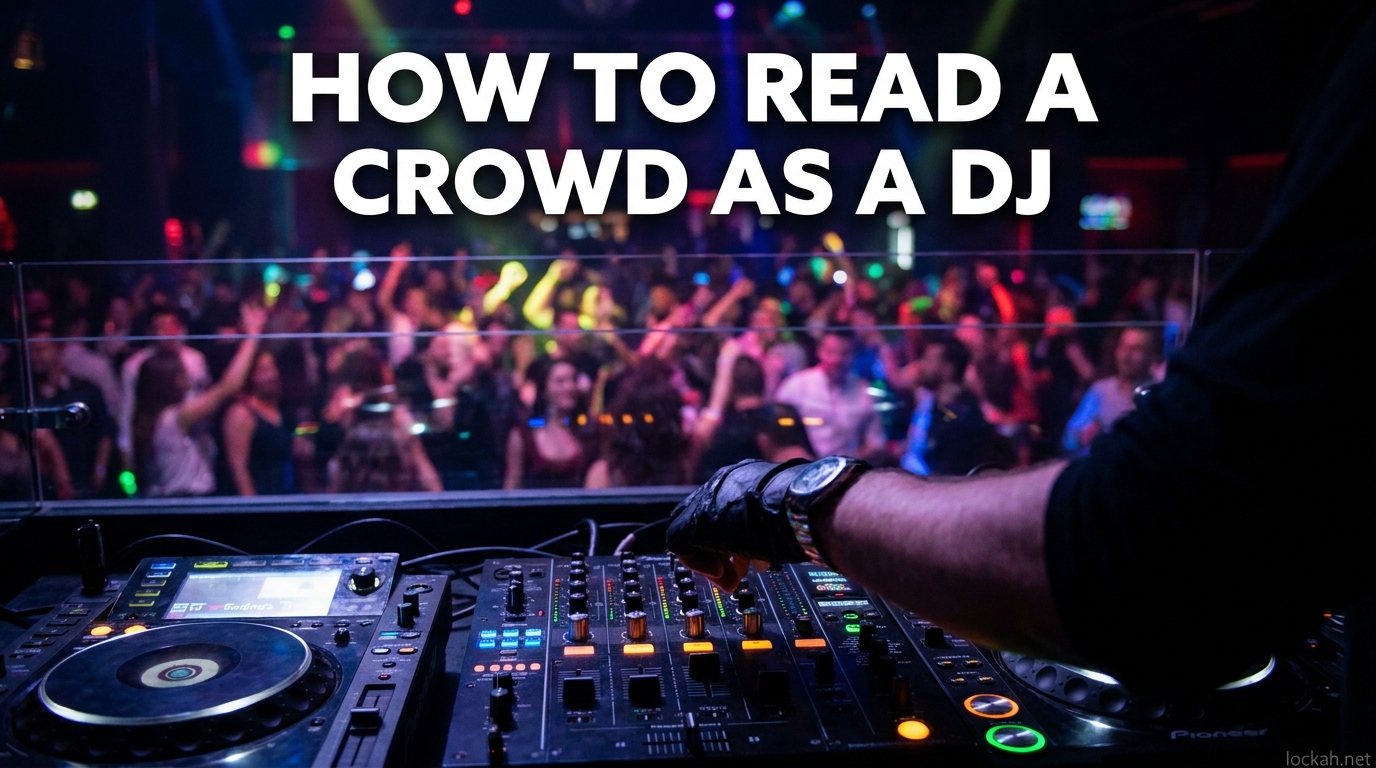
I watched a dance floor empty in less than three minutes. The DJ had spent hours crafting the perfect techno set, but the crowd wanted hip-hop. He kept checking his phone, oblivious to the mass exodus heading toward the bar. By the time he noticed, it was too late. That night cost him three future bookings.
Learning how to read a crowd as a DJ is the difference between memorable nights and empty rooms. This guide covers everything I have learned from 8 years behind the decks, playing clubs, weddings, and corporate events across 12 cities.
Table of Contents
How to Read a Crowd as a DJ: The Complete Guide
Reading a crowd means observing and interpreting audience behavior, body language, and energy levels to make real-time decisions about music selection. It is the single most important skill that separates good DJs from great ones.
Most beginners think crowd reading is mysterious or intuitive. It is not. It is a learnable skill built on observation, pattern recognition, and quick decision-making. Our team has spent months interviewing professional DJs, analyzing forum discussions, and compiling practical techniques that actually work.
What Does Reading the Crowd Actually Mean?
Reading the crowd is active observation combined with strategic response. You are not just watching people dance. You are analyzing energy levels, identifying engagement patterns, and predicting what will keep the floor moving.
Think of yourself as a pilot scanning instruments. You need constant awareness of multiple indicators: body language, facial expressions, movement patterns, and even where people position themselves in the room.
The goal is maintaining a shared connection with your audience. When you nail it, the crowd responds instantly to your selections. When you miss, you feel the energy drop like a stone.
Pre-Set Preparation: Research Before You Touch the Decks
Arriving early is non-negotiable. I typically arrive 45 minutes before my set to observe the crowd, assess the venue, and gather intelligence.
Talk to the promoter or previous DJ. They know the crowd better than anyone. Ask about the age demographic, the event type, and what has been working. One simple conversation can prevent a night of guesswork.
Scan the room for visual cues. Look at what people are wearing. Streetwear suggests hip-hop or bass music. Formal attire means weddings or corporate events requiring safer selections. Band t-shirts reveal genre preferences.
Identify the party starters. Every crowd has influencers. They are usually near the front, moving early, and setting the tone. Watch them. If they stop dancing, others will follow.
Check the bar area. A packed bar with an empty dance floor signals a problem. People drink when they are not engaged. Use this as a real-time indicator throughout your set.
Reading Body Language and Dance Floor Signals (2026)
Body language is your primary data source. Here is what to watch for:
Positive engagement signals: Heads nodding, hands in the air, people moving toward the floor, smiles, singing along, phones recording, and groups forming.
Warning signs: Crossed arms, people checking phones, conversations replacing dancing, movement toward exits, and empty space spreading on the floor.
The Party Starters vs Party Poopers framework: Identify who drives energy and who drains it. Party starters arrive early, dance aggressively, and influence others. Play for them. Party poopers stand with drinks, criticize selections, and resist participation. Ignore them.
Energy level indicators: High energy shows in full-body movement, jumping, and vocal participation. Medium energy is head-nodding and swaying. Low energy is foot-tapping and minimal movement. Match your selections to the current level, then gradually build.
Adapting Your Music Selection in Real-Time
Flexibility is everything. Pre-planned sets fail when the crowd wants something different. I learned this at a wedding where my carefully curated deep house playlist bombed. The bride wanted 90s singalongs. I pivoted in 10 minutes and saved the night.
Start with familiar territory. Play recognizable tracks early to establish trust. Once the crowd responds, you have permission to experiment.
Use the rule of three. If three tracks in a genre get weak responses, switch. Do not wait for the floor to clear.
Rotate the floor strategically. Give dancers breaks by varying intensity. High-energy tracks followed by singalongs followed by familiar classics keeps people engaged longer. The goal is keeping the floor rotating between dancing, drinking, and returning.
Tempo adjustments matter. Dropping BPM by 5-10 can re-energize a tired crowd. Jumping 10+ BPM can shock them awake. Use these tools intentionally.
Venue-Specific Crowd Reading Techniques
Different venues require completely different approaches. What works in a warehouse rave fails at a wedding.
Club DJing: Crowds come expecting specific genres. Research the venue’s typical sound. Clubs allow more experimentation because audiences trust the resident DJ. Focus on building energy waves that peak between midnight and 2 AM.
Wedding DJing: Mixed demographics demand versatility. Grandparents, parents, and young adults share the floor. Start safe with classics, read which age groups respond, then segment your set accordingly. Requests are constant and must be handled diplomatically.
Corporate Events: Conservative crowds need familiarity. Observe how formal the attire is. Tech company holiday parties differ wildly from law firm galas. Corporate crowds rarely dance early, so focus on creating comfort with recognizable hits.
Festivals: Audiences are pre-sold on the experience. They want to discover music. Take bigger risks. Festival crowds forgive genre switches and appreciate surprises. Energy management is critical because sets are shorter and crowds are larger.
Private Parties: Know the host’s preferences. Private events succeed or fail based on the host’s happiness. Their friends usually set the tone. Watch who arrives first and cater to them.
Common Mistakes Beginners Make When Reading Crowds
After reviewing hundreds of Reddit discussions and DJ forum threads, these patterns keep appearing:
Playing for yourself instead of the crowd. Your crate of vinyl favorites might impress other DJs, but they are not your audience. This is the most common beginner mistake.
Sticking to pre-planned sets. Preparation is good. Rigidity is fatal. I have seen DJs ignore a packed floor reacting poorly because their “set journey” demanded a specific track.
Ignoring the bar area. The dance floor lies. People dance out of obligation or alcohol. The bar tells the truth. If it is crowded while the floor is full, you are losing them.
Not looking up from the equipment. You cannot read a crowd while staring at your laptop. Practice your technical skills until they are automatic. Your eyes belong on the room.
Reading too slowly. By the time you notice the energy dropping, five people have already left. Watch for micro-signals: slowing movement, fewer hands raised, more phone-checking.
Practical Exercises to Improve Your Crowd Reading Skills
Crowd reading improves with deliberate practice. Here are exercises I used and still recommend:
The Observation Drill: Go to clubs without DJing. Stand where you would be behind decks. Every 30 seconds, scan the room and note energy levels, body language, and crowd movement. Do this for 30 minutes. You will start seeing patterns you never noticed.
The Prediction Game: While watching another DJ, predict what they will play next based on crowd response. Track your accuracy. This builds the mental connection between crowd signals and track selection.
The Genre Switch Challenge: During practice sessions, force yourself to switch genres every 15 minutes. Build playlists that transition smoothly between completely different sounds. This prepares you for unpredictable crowds.
The No-Playlist Set: Play a 30-minute set with no prepared track list. Choose each song based solely on crowd response. Record yourself and review what worked.
Energy Mapping: During your sets, rate crowd energy every 5 minutes on a 1-10 scale. Note what you played and what changed the score. Review after the gig to identify patterns.
How to Rescue a Set When You’ve Misread the Crowd?
Even experienced DJs misread crowds. The difference is recovery speed.
The Emergency Track: Keep three guaranteed crowd-pleasers in your back pocket. These are not your favorite tracks. They are the most universally loved songs in your library. Deploy when things go wrong.
The Genre Reset: When a genre bombs completely, do not gradually transition. Make a clean break. Announce a shift if necessary. “Let me try something different” gives permission for the change.
The Tempo Drop: If high energy is not working, drop BPM significantly and try something unexpected. A slow jam can reset expectations and bring people back.
The Request Lifeline: When desperate, take requests. It shifts responsibility to the crowd and gives you time to reassess. Plus, the requester becomes invested in your success.
The Break: Sometimes the best move is stepping back. Play a 10-minute filler while you observe and plan. Better to pause than dig deeper.
Frequently Asked Questions
How does a DJ read the crowd?
What is the rule of 32 in DJing?
How to control a crowd as a DJ?
What is the etiquette for crowd DJing?
Conclusion
Learning how to read a crowd as a DJ transforms you from a music player into a true performer. The skills in this guide work across clubs, weddings, festivals, and private events. They have saved my sets countless times and opened doors to better bookings.
Start with observation. Practice the exercises. Build your pattern recognition. Most importantly, stay flexible. The best DJs are not those with the biggest music libraries or the flashiest techniques. They are the ones who create unforgettable experiences by connecting with their audience.
Take what you have learned here and apply it at your next gig. Watch the difference it makes. Then come back and refine your approach. Crowd reading is a skill that improves with every performance.