
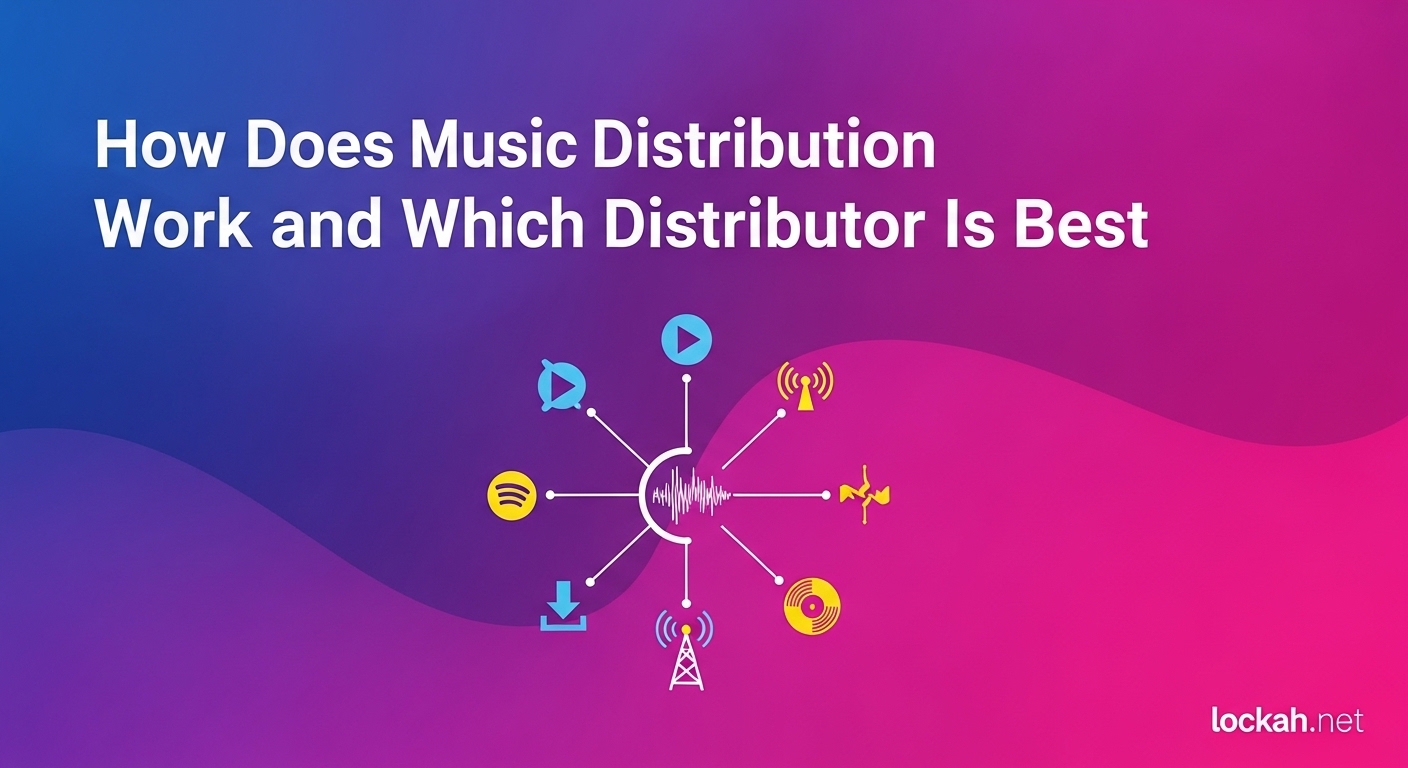
When I released my first single in 2026, I spent three days trying to upload it directly to Spotify before realizing I needed a distributor. Sound familiar? If you are wondering how does music distribution work and which distributor is best for your music, you are not alone. The process feels unnecessarily complicated, but once you understand the mechanics, choosing becomes much simpler.
Music distribution is the bridge between your finished tracks and the streaming platforms where listeners actually discover your work. Without a distributor, your music simply cannot appear on Spotify, Apple Music, Amazon Music, or any other major DSP. In this guide, I will explain exactly how digital music distribution works, break down the different types of distribution companies, and show you which distributor matches your specific needs and career stage.
Table of Contents
What Is Music Distribution?
Music distribution is the process of delivering your recorded music to digital service providers (DSPs) like Spotify, Apple Music, Tidal, and hundreds of other streaming platforms worldwide. A music distributor acts as the middleman between you and these platforms, handling the technical delivery, metadata management, rights verification, and royalty collection on your behalf.
In the physical era, distributors shipped CDs and vinyl to record stores. Today, digital music distribution works similarly but with data instead of physical products. You upload your audio files and metadata, the distributor packages everything according to each platform’s specifications, and then delivers your release across their network of DSPs. When someone streams your track, the distributor collects the revenue and pays you according to your agreement.
Why You Cannot Upload Directly to Streaming Platforms?
Many independent artists ask why they need a distributor at all. The answer is simple: major streaming platforms do not accept direct uploads from individual artists. DSPs require distributors because they handle volume at scale. A platform like Spotify deals with millions of tracks and needs standardized metadata, consistent audio formats, and verified rights information.
Distributors also handle the complex backend of rights management. They ensure your ISRC codes are properly assigned, your publishing information is correct, and your splits are documented. Without this infrastructure, DSPs would face an impossible task managing individual relationships with millions of independent artists. The distributor acts as a verified partner that platforms trust to deliver clean, properly formatted content.
How Does Digital Music Distribution Work?
Understanding the step-by-step process of digital music distribution helps you make better choices about which distributor to use. Here is exactly what happens when you release music through a distributor:
Step 1: Upload and Metadata Submission
You create an account with your chosen distributor and upload your audio files, typically in WAV or FLAC format for quality. You then enter your metadata: track titles, artist name, album artwork, release date, genre, and credits. This metadata is crucial because it determines how your music appears on streaming platforms and how royalties are tracked.
Step 2: Quality Control and Encoding
The distributor runs quality checks on your audio and artwork. They verify your files meet platform specifications, check for copyright conflicts, and encode your audio into various formats needed by different DSPs. This process usually takes 24-72 hours depending on the distributor and your release timeline.
Step 3: Delivery to DSPs
Once approved, your distributor delivers your release to their network of streaming platforms. This is where platform coverage matters. Some distributors reach 150+ platforms globally, while others focus on major platforms only. Delivery timing varies by platform, with some going live within 24 hours and others taking up to two weeks.
Step 4: Going Live and Streaming
Your music appears on streaming platforms on your scheduled release date. Listeners can now stream, save, and share your tracks. The platforms track every play and report this data back to your distributor along with the revenue generated.
Step 5: Royalty Collection and Payment
Every month or quarter, DSPs pay your distributor based on total streams. The distributor then calculates your share according to your contract terms and pays you. Payment schedules vary widely between distributors, from weekly to annual payouts depending on your tier and preferences.
The Role of Metadata in Distribution
Metadata might sound technical, but it is simply the information attached to your music. Proper metadata ensures you get credited correctly, receive royalties accurately, and appear in the right search results. Key metadata includes ISRC codes (unique identifiers for each track), UPC codes for releases, songwriter and publisher information, and split percentages if you have collaborators.
Poor metadata is one of the biggest reasons artists miss royalty payments. If your songwriter information is missing or incorrect, you might not receive publishing royalties. If your ISRC is duplicated or malformed, your stream counts might not track properly. Good distributors help you get metadata right from the start.
Types of Music Distribution Companies (2026)
Not all distributors work the same way. Understanding the five main types helps you choose one that aligns with your goals and career stage.
Major Distributors
Major distributors like The Orchard and Sony Music Distribution work primarily with established labels and major artists. They offer extensive resources, major label connections, and significant marketing budgets. However, they rarely work directly with independent artists unless you are signed to a label that uses their services.
Independent Distribution Partners
Companies like CD Baby and Symphonic Distribution fall into this category. They offer full-service distribution with additional features like publishing administration, sync licensing, and marketing support. These distributors typically take a percentage of royalties rather than charging upfront fees, making them attractive for artists who prefer revenue-sharing models.
Aggregators and DIY Platforms
DistroKid, TuneCore, and Amuse are aggregators designed for independent artists who want simple, fast distribution without extra services. These platforms typically charge annual subscription fees or per-release fees and let you keep 100% of royalties. They are popular among DIY musicians who want control and speed.
White-Label Distribution Solutions
These are backend services that labels and management companies use to power their own branded distribution platforms. As an independent artist, you will rarely interact directly with white-label providers, but you might use them unknowingly if your label subscribes to a service like FUGA or Label Engine.
Semi-Label Distribution Services
Companies like UnitedMasters and Amuse blur the line between distributor and label. They offer distribution alongside promotional support, funding opportunities, and industry connections, often in exchange for a percentage of royalties or future earnings. These can be valuable for artists seeking more than just distribution.
Key Features to Look For in a Music Distributor
Choosing a distributor means weighing several factors against your specific needs. Here is what to prioritize:
Platform Coverage
Check how many DSPs the distributor reaches. While Spotify, Apple Music, and Amazon Music are essential, international artists should look for coverage on regional platforms like Tencent in China or Melon in South Korea. Some distributors reach 200+ platforms while others focus on 40-50 major ones.
Pricing Models
Distributors use three main pricing structures. Subscription models charge an annual fee for unlimited releases. Per-release models charge per single or album. Commission models take a percentage of royalties but charge no upfront fees. Each suits different release strategies.
Royalty Splits and Payment Terms
Some distributors let you keep 100% of royalties while others take 0-30% depending on the plan. Payment frequency matters too. Weekly payments help cash flow, while quarterly payments are standard for many distributors. Check minimum payout thresholds as well.
Contract Terms
Look for non-exclusive contracts that let you leave without penalties. Avoid long-term commitments unless you are getting significant value in return. Some distributors lock you in for years, which becomes problematic if their service declines or your needs change.
Additional Services
Consider whether you need extras like YouTube Content ID (which monetizes unauthorized uses of your music), publishing administration (which collects songwriter royalties), sync licensing representation, or playlist pitching services. These can significantly impact your overall earnings.
Customer Support Quality
Based on forum discussions, support quality varies dramatically. Some distributors offer fast email support with real humans responding within hours. Others rely heavily on AI chatbots that frustrate users with complex issues. Check recent reviews specifically mentioning support experiences before committing.
Top Music Distributors Compared
Here is how the most popular distributors stack up based on my research and user experiences from music business forums.
DistroKid
DistroKid pioneered the unlimited annual subscription model and remains popular for its simplicity and speed. For a flat yearly fee, you can release unlimited music and keep 100% of royalties. They offer fast distribution, usually getting your music live within 1-2 days, and include useful features like hyperfollow links and automatic royalty splits.
However, forum discussions reveal mixed experiences. Users praise the speed and unlimited uploads but complain about upsells for basic features like custom release dates and Shazam registration. Support relies heavily on AI chatbots, which frustrates artists dealing with urgent issues. DistroKid works best for prolific artists releasing frequently who value speed over hand-holding.
CD Baby
CD Baby charges per release rather than annually, making it attractive for artists who release infrequently. They take a 9% commission on royalties but offer comprehensive services including publishing administration, sync licensing, and physical distribution. CD Baby has built strong relationships with platforms over decades and offers more personalized support than aggregator-only services.
The commission model concerns some artists, especially those with potential hit records. That 9% applies forever, which adds up over years. However, for artists wanting full-service support without annual fees, CD Baby remains a solid choice. They are particularly popular among folk, Americana, and singer-songwriter communities.
TuneCore
TuneCore started as a per-release service but now offers both subscription and commission models. Their unlimited distribution plan competes directly with DistroKid, while their newer artist services division offers label-like support for a percentage of earnings. TuneCore provides detailed analytics and has invested heavily in their platform interface.
User feedback suggests TuneCore works well for artists who want a balance between DIY control and professional support. Their analytics dashboard receives praise for detail and usability. Some users report slower distribution times compared to DistroKid, but the difference is usually only a few days.
UnitedMasters
UnitedMasters positions itself as a semi-label, offering free distribution in exchange for a percentage of royalties or paid plans that let you keep 100%. They emphasize brand partnerships, offering opportunities for placement in commercials, TV shows, and brand campaigns. Their app-focused approach appeals to younger artists comfortable managing their careers from phones.
The trade-off is less control and potentially higher long-term costs if your music performs well. UnitedMasters works best for artists seeking industry connections and sync opportunities rather than those focused purely on streaming revenue. Their curated approach means not everyone gets accepted.
Amuse
Amuse offers a unique free tier that lets you release music at no cost while keeping 100% of royalties. They make money through their premium tiers and by identifying promising artists for potential label deals. Amuse provides a clean mobile app and focuses on speed and simplicity.
The free tier has limitations, including slower distribution times and fewer platforms. Many users upgrade to paid plans once they get serious about their releases. Amuse suits beginners testing the waters and artists who want to release occasionally without commitment.
How to Choose the Right Distributor for Your Career Stage in 2026?
The best distributor depends entirely on where you are in your music career. Here is my recommended approach based on experience and forum consensus.
Beginners and Hobbyists
If you are just starting out, releasing your first few tracks, or treating music as a hobby, start with a free option like Amuse or UnitedMasters free tier. You get your music on platforms without spending money, and you can always upgrade or switch later. Focus on learning the release process rather than optimizing for features you will not use yet.
Emerging Artists
Once you are releasing regularly, perhaps 3-6 singles per year, a subscription service like DistroKid or TuneCore becomes cost-effective. The unlimited uploads justify the annual fee, and you keep 100% of royalties. Prioritize distributors with good analytics so you can track your growth and understand your audience.
Established Independent Artists
At this stage, consider what services beyond basic distribution you need. If you are writing your own songs, publishing administration becomes essential for collecting songwriter royalties. If your music gets used on YouTube, Content ID matters. If you are pursuing sync licensing, a distributor offering those services adds value. CD Baby or TuneCore artist services might suit you better than pure aggregators.
Red Flags to Avoid
Watch for hidden fees not clearly disclosed upfront. Be wary of long-term exclusive contracts that lock you in. Avoid distributors with consistently poor support reviews, especially if you anticipate needing help. Be cautious of services taking large royalty percentages without offering proportional value in return.
Switching Distributors
If you are unhappy with your current distributor, switching is possible but requires care. You cannot transfer your existing releases with their stream counts and playlist placements intact. You must remove your music from the old distributor and re-upload through the new one, which resets your stats. Plan switches around new releases rather than trying to move existing catalog.
Frequently Asked Questions
Which music distributor should I choose?
Choose based on your release frequency and career stage. For occasional releases, CD Baby’s per-release model works well. For frequent releases, DistroKid or TuneCore subscriptions save money. Consider additional services like publishing administration if you write original songs.
Which distributors allow 100% royalties?
DistroKid, TuneCore (subscription plans), Amuse (paid tiers), and UnitedMasters (paid plans) let you keep 100% of royalties. CD Baby and UnitedMasters free tier take a commission percentage. Always check the specific plan details as terms change.
What is the 70/30 distribution deal?
The 70/30 split refers to how streaming platforms share revenue with rights holders, not how distributors pay artists. DSPs typically pay 70% of their revenue to rights holders (labels, distributors, publishers) and keep 30%. Your distributor then pays you according to your contract, which might be 100% or less depending on their commission.
What’s better than DistroKid?
Better depends on your needs. CD Baby offers better support and additional services like publishing. TuneCore provides more detailed analytics. Amuse has a free tier. If you dislike DistroKid’s AI support or upsells, these alternatives might suit you better.
Can I upload directly to Spotify without a distributor?
No. Spotify does not accept direct uploads from individual artists. You must use a music distributor to deliver your music to Spotify and other streaming platforms. This applies to all major DSPs including Apple Music, Amazon Music, and Tidal.
How long does music distribution take?
Distribution times vary by platform and distributor. Most distributors deliver to major platforms within 1-3 days, but some platforms take up to two weeks to process releases. Plan your release date at least 2-3 weeks ahead to ensure your music goes live when scheduled.
What is YouTube Content ID and do I need it?
YouTube Content ID identifies your music when used in videos on YouTube and allows you to monetize those uses. If other people upload videos using your music, Content ID claims the video and you earn ad revenue. Most distributors offer this as an add-on service.
Will I lose my streams if I switch distributors?
Yes, switching distributors requires removing your music and re-uploading, which resets your stream counts and playlist placements. Your previous streams remain on the old release but do not transfer. Time switches around new releases rather than existing catalog.
What metadata do I need for music distribution?
Required metadata includes track titles, artist name, release date, genre, album artwork, and audio files. Important additional metadata includes ISRC codes (unique track identifiers), songwriter and publisher information, and split percentages for collaborators. Good distributors help you format this correctly.
How do music distributors make money?
Distributors earn through subscription fees, per-release charges, royalty commissions, and add-on services. Aggregators like DistroKid rely on annual subscriptions. Services like CD Baby take a percentage of royalties. Many offer tiered plans where higher payments unlock more features.
Conclusion
Understanding how does music distribution work empowers you to make smarter decisions about your music career. The process is straightforward once you know the steps: upload, quality control, delivery to DSPs, going live, and royalty collection. What matters most is choosing a distributor that matches your specific needs, release habits, and career stage.
If you are just starting out, try a free service like Amuse to learn the ropes. Once you are releasing regularly, upgrade to a subscription service like DistroKid or TuneCore to maximize your royalty retention. If you need additional services like publishing administration or sync licensing, consider full-service distributors like CD Baby.
The best distributor is not the one with the most features or the lowest price. It is the one that fits your workflow, provides the support you need, and helps you reach your specific goals. Take advantage of free trials, test the platforms, and read recent reviews from artists at your career stage. Your distributor becomes your long-term partner in getting your music heard, so choose wisely.