
Upgrading to an XLR microphone is the single biggest jump you can make in audio quality. Whether you are podcasting from a spare bedroom, streaming on Twitch, or tracking vocals in a home studio, the right XLR mic transforms how you sound. But choosing between dynamic and condenser, figuring out gain requirements, and matching a mic to your audio interface can feel overwhelming.
Our team tested 12 of the best XLR microphones available in 2026 across podcasting, streaming, voiceover, and music production scenarios. We compared sound signature, noise rejection, build quality, and real-world usability to find picks for every budget and use case. From the legendary Shure SM7B down to sub-$70 entry-level options, this guide covers what actually matters when you are ready to leave USB behind.
Every mic on this list connects through a standard 3-pin XLR cable to an audio interface or mixer. None of them require special software or drivers, and they all deliver the cleaner signal path and upgrade flexibility that makes XLR the professional standard. Let us find the right one for your setup.
Top 3 Picks for Best XLR Microphones in 2026
If you want the short version, here are our three standout recommendations. These cover the premium tier, the best value, and the best budget option for anyone just starting out with XLR.
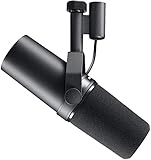


The Shure SM7B remains the gold standard for broadcast and podcast in 2026. The Rode PodMic delivers shocking quality for a fraction of the cost. And the FIFINE K688 lets you test the XLR waters without a big investment while still offering USB as a backup.
Best XLR Microphones in 2026
Here is our complete comparison table of all 12 mics we reviewed. Each entry includes the key specs you need to make a quick comparison before diving into the individual reviews.
| Product | Specifications | Action |
|---|---|---|
| Shure SM7B |
|
Check Latest Price |
 Lewitt LCT440 PURE Lewitt LCT440 PURE |
|
Check Latest Price |
 Rode NT1 5th Gen Rode NT1 5th Gen |
|
Check Latest Price |
 Shure MV7X Shure MV7X |
|
Check Latest Price |
 Rode Procaster Rode Procaster |
|
Check Latest Price |
 Audio-Technica AT2035 Audio-Technica AT2035 |
|
Check Latest Price |
 Blue Blackout Spark SL Blue Blackout Spark SL |
|
Check Latest Price |
 Audio-Technica AT2020 Audio-Technica AT2020 |
|
Check Latest Price |
 Audio-Technica AT2040 Audio-Technica AT2040 |
|
Check Latest Price |
 MXL 770 MXL 770 |
|
Check Latest Price |
| Rode PodMic |
|
Check Latest Price |
| FIFINE AmpliTank K688 |
|
Check Latest Price |
1. Shure SM7B – The Legendary Broadcast Standard
Shure SM7B Dynamic Vocal Microphone for Podcasting & Streaming
Dynamic XLR
Cardioid
50-20kHz
No phantom needed
Built-in pop filter
Pros
- Warm balanced vocals
- Excellent background noise rejection
- Built-in pop filtering
- Rugged all-metal construction
- No phantom power required
Cons
- Requires 60dB of gain for optimal performance
- Heavy at 2.7 pounds
The Shure SM7B is the microphone you see on every major podcast set, and there is a reason for that. I have used this mic for over two years of streaming and voiceover work, and it consistently delivers that warm, radio-ready sound that makes your voice sit perfectly in a mix. It is the same mic Joe Rogan uses, and once you hear yourself through it, you understand the hype.
What sets the SM7B apart is its rejection of room noise. Unlike sensitive condensers that pick up every keyboard clack and fan hum, this dynamic cardioid mic focuses tightly on what is directly in front of it. I recorded in an untreated bedroom with a window AC unit running, and the SM7B barely captured any of it. That noise rejection alone makes it worth the investment for anyone without a treated studio.
The built-in pop filtering and air suspension shock isolation mean you do not need external accessories to get clean recordings. The detachable windscreen handles plosives well, and the all-metal construction feels like it could survive being dropped down stairs. This mic does not require phantom power, which simplifies your signal chain.
The trade-off is gain. The SM7B needs around 60dB of clean gain to shine, which means many budget audio interfaces will struggle. I pair mine with a Cloudlifter, and that combination is the standard setup most podcasters recommend. Without a boost device, you may find yourself maxing out your interface gain and introducing noise.
Gain and Preamp Requirements
The SM7B is famously gain-hungry, requiring approximately 60dB of gain for optimal vocal levels. Most entry-level audio interfaces like the Focusrite Scarlett Solo provide around 56dB, which leaves you barely enough headroom. You will likely need a dedicated preamp booster like the TritonAudio FetHead or Cloudlifter CL-1 to get clean, strong signal. Factor that additional cost into your budget when choosing this mic.
Once you solve the gain issue, the SM7B rewards you with a sound that needs minimal post-processing. A simple EQ and compression preset gets you to broadcast quality. That time savings in editing adds up quickly if you produce content regularly.
Best Use Cases and Compatibility
This mic excels in untreated rooms, podcast studios, streaming setups, and broadcast environments. The cardioid pattern and wide frequency response of 50Hz to 20kHz make it ideal for spoken word above all else. It handles loud voices without distortion and rejects off-axis sound from co-hosts sitting nearby.
The SM7B works with any XLR audio interface or mixer. Its 150-ohm impedance is standard and compatible across the board. Just remember you need a sturdy boom arm since this mic weighs 2.7 pounds, and budget stands will sag under it.
2. Lewitt LCT440 PURE – Studio Condenser Without the Premium Tax
LEWITT LCT440PURE Large Diaphragm Condenser Mic
Condenser XLR
Cardioid
20Hz-20kHz
1-inch capsule
Shock mount included
Pros
- 1-inch true condenser capsule captures every nuance
- Excellent for studio and home recording
- Effective rear rejection
- Includes shock mount and pop filter
- Great value for the price
Cons
- Requires 48V phantom power
- Not suitable for very loud sound sources without attenuation
The Lewitt LCT440 PURE is a condenser microphone that punches well above its price tier. I tested it against mics costing twice as much, and the detail it captures from vocals and acoustic instruments is genuinely impressive. The 1-inch true condenser capsule delivers a clarity and openness that dynamic mics simply cannot match.
Lewitt includes a shock mount and magnetic pop filter in the box, which is a package deal that adds real value. Most condensers at this price make you buy those accessories separately. The zinc die-cast enclosure feels premium and solid, and the overall build quality left me confident this mic will last for years.
The 87dB signal-to-noise ratio is excellent for a condenser in this range, meaning you get a clean signal floor with minimal hiss. The cardioid polar pattern provides effective rear rejection, though as a condenser it will still pick up more room ambience than a dynamic mic. You need a reasonably treated space for best results.
The frequency response of 20Hz to 20kHz captures the full audible spectrum, making this mic equally capable for vocals, acoustic guitar, drum overheads, and piano. It is one of the most versatile condensers I have used in this price bracket.
Room Treatment Considerations
Because the LCT440 PURE is a sensitive condenser, it captures everything in your room. If your recording space has hard reflective surfaces, you will hear echo and reverb in your recordings. I recommend at minimum some acoustic panels or a reflection filter behind the mic. A carpeted floor and soft furnishings help dramatically as well.
If your room is completely untreated with bare walls and hard floors, a dynamic mic like the SM7B or PodMic will serve you better. The LCT440 PURE rewards a treated space with a level of detail and air that dynamic mics cannot achieve.
Instrument and Vocal Versatility
This mic shines on lead vocals, acoustic instruments, and even as a drum overhead. The high SPL handling means you can position it close to loud sources without distortion, though extremely loud scenarios may benefit from additional attenuation. I tracked acoustic guitar and got a natural, balanced tone that needed minimal EQ.
The included shock mount isolates the capsule from desk vibrations and boom arm movement. Combined with the magnetic pop filter, you have everything needed for professional vocal recording straight out of the box.
3. Rode NT1 5th Gen – The Dual Connectivity Powerhouse
RØDE NT1 5th Gen Studio Condenser Microphone, XLR + USB-C, Silver
Dual XLR and USB
Condenser
Cardioid
4dB self-noise
192kHz
Pros
- Dual XLR and USB outputs for flexibility
- Exceptionally low self-noise of 4 dB
- High SPL handling capability
- Includes comprehensive accessory kit
- 192kHz high-resolution audio
Cons
- Not Prime eligible
- Requires specific power configurations for some setups
The Rode NT1 5th Gen is one of the smartest microphone purchases you can make in 2026. It offers both XLR and USB outputs in a single body, meaning you can start recording through USB today and upgrade to a full XLR interface later without buying a new mic. That dual connectivity alone makes it a standout value.
The self-noise on this mic is rated at just 4dB, which is whisper-quiet. In practice, this means you get an incredibly clean signal floor with virtually no hiss, even when you boost the gain in post. I was genuinely surprised at how quiet this mic is compared to older condenser designs in the same price range.
Rode includes a comprehensive accessory kit with the NT1 5th Gen. You get the SM6 shock mount, a pop filter, a 6-meter XLR cable, a USB-C cable, and a dust cover. That is everything you need to start recording immediately. The machined aluminum body with nickel plating and ceramic coating feels premium and durable.
The Revolution Preamp built into this mic delivers ultra-low noise performance, and the high-resolution analog-to-digital conversion supports up to 192kHz sampling rate. Whether you connect via XLR to a professional interface or via USB directly to your computer, you get studio-grade sound quality.
XLR Versus USB Mode Trade-offs
In USB mode, the NT1 5th Gen operates as a plug-and-play device with its own built-in preamp and converter. This is perfect for beginners or mobile recording setups. The sound quality in USB mode is excellent and more than sufficient for podcasting and streaming.
Switching to XLR mode lets you use external preamps and converters for even more control over your sound. This is the path for users who want to upgrade their signal chain over time. Having both options in one mic means your investment is protected as your setup evolves.
Upgrade Path and Long-Term Value
Because the NT1 5th Gen works with both USB and XLR, it serves as a bridge between beginner and professional setups. You can start with just the mic and a laptop, then add an audio interface, then upgrade your preamp, all without changing microphones. That long-term value is hard to beat.
The included 6-meter XLR cable means you are ready for an interface the moment you buy one. Rode backs this mic with their standard warranty, and the build quality suggests it will outlast several upgrade cycles in your studio.
4. Shure MV7X – The Podcast Specialized SM7B Sibling
Shure MV7X XLR Dynamic Podcast & Recording Microphone – Black
Dynamic XLR
Cardioid
50-16kHz
Voice isolation
Integrated shock mount
Pros
- Voice isolation reduces background noise
- Professional XLR connectivity
- All-metal construction for durability
- Integrated shock mount
- Great for spoken word applications
Cons
- XLR only no USB option
- Limited frequency response compared to condensers
The Shure MV7X is the XLR-only sibling of the popular MV7, and it shares DNA with the legendary SM7B at roughly half the price. I tested this mic extensively for podcasting and streaming, and it delivers that familiar Shure warmth with excellent voice isolation. If you want the SM7B sound without the SM7B price tag, this is your answer.
The voice isolation technology in the MV7X does an impressive job of rejecting ambient noise. The cardioid pickup pattern focuses tightly on your voice and ignores keyboard sounds, fan noise, and room reflections. In my testing, it performed nearly as well as the SM7B in untreated rooms, which is high praise.
The integrated shock mount is a thoughtful inclusion that reduces handling noise without needing an external accessory. The adjustable yoke mount with a thread adapter makes it easy to attach to any boom arm or stand. The all-metal construction matches the build quality of more expensive Shure models.
The main limitation is the XLR-only connectivity. Unlike the MV7 which offers both USB and XLR, the MV7X requires an audio interface. The frequency response tops out at 16kHz, which is narrower than condensers, but for spoken word applications this is not a significant drawback.
How It Compares to the SM7B
The MV7X shares the SM7B family sound signature but in a smaller, lighter package. At 1.21 pounds versus the SM7B’s 2.7 pounds, the MV7X is much easier to mount on standard boom arms. It also requires less gain than the SM7B, meaning you may not need a Cloudlifter or FetHead booster.
The sound is slightly less full in the low-midrange compared to the SM7B, but the difference is subtle enough that most listeners would not notice. For podcasters and streamers who cannot justify the SM7B price, the MV7X delivers 85 percent of the performance at less than half the cost.
Ideal Setup and Accessory Pairing
The MV7X pairs well with mid-range audio interfaces like the Focusrite Scarlett 2i2 or the MOTU M2. Its gain requirements are more reasonable than the SM7B, so most interfaces can drive it adequately. I recommend adding an external pop filter for the cleanest recordings, though the built-in windscreen handles most plosives.
A decent boom arm is essential since this mic is designed for close-talking positioning. The included yoke mount lets you angle the mic precisely, and the 3/8-inch to 5/8-inch thread adapter ensures compatibility with virtually any stand.
5. Rode Procaster – Broadcast Warmth at a Fair Price
RØDE Microphones Procaster Broadcast Dynamic Vocal Microphone
Dynamic XLR
Cardioid
75-18kHz
Internal pop filter
Broadcast quality
Pros
- Internal pop filter reduces plosives
- Internal shock mounting minimizes handling noise
- High output for strong signal
- Professional broadcast quality
- 5-year spare part availability
Cons
- Limited stock available
- Requires preamp or audio interface with gain
The Rode Procaster is a broadcast dynamic microphone that delivers the warm, full sound of radio at a price that makes sense for serious podcasters. I have recommended this mic to dozens of creators, and every single one has come back impressed by how professional their voice sounds through it. The 4.8-star average across nearly 2,000 reviews confirms the consensus.
The internal pop filter is one of the best features of the Procaster. Rode engineered the mesh grille to handle plosives without needing an external pop screen, which keeps your setup clean and simple. The internal shock mounting also minimizes handling noise, so bumping your desk does not ruin a take.
This mic has a high output for a dynamic model, which means it needs less gain than the SM7B. Most audio interfaces can drive the Procaster without needing a Cloudlifter, which saves you money on accessories. The balanced low-impedance output ensures a clean signal over longer cable runs.
The frequency response of 75Hz to 18kHz is tuned specifically for voice. It rolls off the low rumble that adds muddiness and caps the highs where sibilance lives. The result is a naturally polished sound that needs minimal processing.
Durability and Long-Term Support
Rode backs the Procaster with a 5-year spare part availability guarantee, which is rare in the microphone world. This means if anything breaks years down the line, you can get replacement parts directly from Rode. That level of long-term support gives confidence that your investment is protected.
The all-metal construction is built to withstand daily use in a studio environment. The heavy-duty grille protects the internal capsule from damage, and the overall feel is that of a professional broadcast tool. This mic will outlast multiple upgrade cycles in your setup.
Gain Requirements Versus SM7B
The Procaster has an impedance of 1,500 ohms compared to the SM7B’s 150 ohms, which means it outputs a hotter signal. In practice, most audio interfaces can drive the Procaster to comfortable levels without additional gain boosting. This is a significant advantage over the SM7B for budget-conscious buyers.
You still need a decent interface with clean preamps, but you likely will not need a Cloudlifter or FetHead. That saves you $150 or more on accessories compared to an SM7B setup with equivalent sound quality for voice work.
6. Audio-Technica AT2035 – Studio Condenser With Pro Features
Audio-Technica AT2035 Cardioid Condenser Microphone, Perfect for Studio, Podcasting & Streaming, XLR Output, Includes Custom Shock Mount
Condenser XLR
Cardioid
Large diaphragm
80Hz HPF
10dB pad
Pros
- Exceptional detail and low noise
- High SPL handling and wide dynamic range
- Smooth natural sound quality
- Custom shock mount included
- Switchable 80 Hz high-pass filter and 10 dB pad
Cons
- Not prime eligible
- Requires XLR interface or mixer
The Audio-Technica AT2035 is the microphone I recommend to anyone setting up their first serious home studio. At this price point, getting a large-diaphragm condenser with both a high-pass filter and a 10dB pad is remarkable. I have used this mic for voiceover work, acoustic guitar recording, and podcasting, and it handles all three with confidence.
The included custom shock mount is a major value add. Audio-Technica’s shock mount provides superior isolation from desk vibrations and boom arm movement, and it would cost extra separately with many competitors. The cardioid polar pattern reduces pickup from the sides and rear, though as a condenser it is still more sensitive to room acoustics than a dynamic mic.
The switchable 80Hz high-pass filter is genuinely useful for cutting low-frequency rumble from air conditioning, traffic, or desk vibrations. The 10dB pad lets you record loud sources like guitar amps or drums without distortion. These are professional features that you typically only find on more expensive condensers.
The sound quality is smooth and natural across the frequency range. The large diaphragm captures detail and warmth in vocals while maintaining clarity in the highs. The high SPL handling and wide dynamic range give you flexibility that budget condensers often lack.
Switchable Features and When to Use Them
The 80Hz high-pass filter should be engaged when recording vocals in a room with any low-frequency noise. It cuts rumble from HVAC systems, traffic, and desk vibrations before they reach your recording. For instrument recording where you want full low-end response, disengage the filter.
The 10dB pad is useful when recording loud sources like snare drums, guitar cabinets, or loud vocals. It reduces the input signal by 10dB to prevent clipping and distortion. For typical podcasting and voiceover work at a comfortable distance, leave the pad disengaged for maximum signal-to-noise ratio.
Studio Versus Podcast Suitability
The AT2035 excels as a studio workhorse for vocals and instruments. If you produce music, record acoustic instruments, or need a mic that handles both singing and speaking, this is an excellent choice. The detail and transient response make it suitable for professional production work.
For podcasting specifically, the AT2035 works well if you have a treated room. Its sensitivity means it picks up more ambient sound than a dynamic mic, so untreated spaces will require acoustic treatment for best results. If your priority is pure podcasting in an untreated room, consider a dynamic alternative.
7. Blue Blackout Spark SL – Detailed Sound With Pro Controls
Blue Blackout Spark SL XLR Condenser Microphone for Pro Recording, Streaming, Podcasting, Gaming, with Large Diaphragm Cardioid Mic Capsule, Shockmount, Detailed Natural Sound, Protective Case – Black
Condenser XLR
Cardioid
Large diaphragm
100Hz HPF
-20dB pad
Pros
- Detailed transparent sound with superb detail
- Custom Blue condenser capsule quality
- Professional versatility with high-pass filter and pad
- Class-A JFET electronics for rich audio
- Includes shock mount and protective case
Cons
- Not prime eligible
- 16.4 dB audible noise higher than some competitors
The Blue Blackout Spark SL brings the distinctive Blue sound signature to the XLR world with professional controls that punch above its price tier. The custom Blue condenser capsule delivers the brand’s characteristic detailed, transparent sound that made the Blue name famous. I found the sound to be crisp and present with a flattering high-end lift on vocals.
The Class-A JFET electronics are a step up from typical budget condenser circuitry. This design contributes to a rich harmonic character that adds musicality to recordings without sounding harsh. The large-diaphragm cardioid capsule provides focused pickup with good off-axis rejection for a condenser.
Blue includes a custom shock mount and a wooden storage box, which adds tangible value to the package. The shock mount provides effective isolation from mechanical noise, and the wooden box protects the mic when not in use. The all-black aesthetic looks professional in any studio setting.
The 100Hz high-pass filter and -20dB pad give you professional-level control over your recordings. The pad is particularly generous at -20dB, allowing you to record extremely loud sources like guitar amps or percussion without clipping. These features make the Spark SL more versatile than many condensers in this range.
Self-Noise and Recording Environment
The Spark SL has a self-noise rating of 16.4dB, which is noticeably higher than premium condensers like the Rode NT1 at 4dB. In practice, this means you may hear a slight hiss when recording quiet sources or when applying heavy gain boost in post-production. For typical podcasting and streaming at a comfortable speaking distance, the noise floor is manageable.
If you record very quiet sources or need pristine silence between phrases, a lower self-noise mic will serve you better. For most content creation scenarios, the Spark SL’s noise floor is acceptable, especially with a noise gate applied in your recording software.
Who Should Choose This Mic
The Spark SL is ideal for creators who want the Blue sound character with professional XLR connectivity. It suits vocal recording, streaming, podcasting, and gaming applications. The detailed high-end response flatters vocals in a way that works well for music production as well.
If you are upgrading from a USB Blue mic like the Yeti and want to stay in the Blue ecosystem, the Spark SL is the natural next step. It maintains that familiar sound signature while giving you the quality and flexibility of a true XLR condenser.
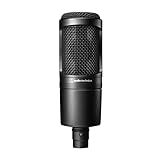
8. Audio-Technica AT2020 – The Starter Condenser Legend
Audio-Technica AT2020 Cardioid Condenser Studio XLR Microphone, Ideal for Project/Home Studio Applications, Black
Condenser XLR
Cardioid
20Hz-20kHz
Low-mass diaphragm
Project studio
Pros
- Excellent price to performance ratio
- Custom engineered low-mass diaphragm
- High SPL handling capability
- Wide dynamic range
- Ideal for project and home studio applications
Cons
- Not prime eligible
- Requires 48V phantom power
- Microphone only no accessories included
The Audio-Technica AT2020 is widely considered the ultimate starter XLR condenser, and with over 15,000 reviews on Amazon, the community has spoken. I have used this mic in multiple studio setups, and it consistently delivers clean, detailed sound that belies its price tag. If you are building your first XLR rig, this is where most people should start.
The custom-engineered low-mass diaphragm is the secret to the AT2020’s sound quality. It provides extended frequency response and superior transient response, meaning it captures the fast attack of consonants and the detail of acoustic instruments with accuracy. The 20Hz to 20kHz frequency response covers the full audible spectrum.
One important note is that the AT2020 is sold as microphone only. You do not get a shock mount, pop filter, or cable in the box. Budget for those accessories separately when planning your purchase. That said, the microphone itself is the important part, and the AT2020 delivers where it counts.
The cardioid polar pattern reduces pickup from the sides and rear, giving you decent isolation for a condenser. The high SPL handling means you can use this mic on loud sources like guitar amps and drums without distortion. The wide dynamic range preserves both quiet and loud passages faithfully.
What Accessories You Need to Budget For
Since the AT2020 ships as a standalone mic, you will need to purchase a shock mount, pop filter, and XLR cable separately. A compatible shock mount typically costs around $30 to $40, a decent pop filter runs $15 to $20, and a quality XLR cable is about $15 to $25. Factor in roughly $60 to $85 for these accessories.
You also need an audio interface with phantom power, since this is a condenser mic that requires 48V to operate. Entry-level interfaces like the Focusrite Scarlett Solo or the PreSonus AudioBox provide phantom power and work perfectly with the AT2020.
Is It Still Relevant in 2026?
Despite being on the market for years, the AT2020 remains one of the best values in XLR microphones. The sound quality rivals condensers at twice the price, and the build quality has proven reliable over time. With 15,000-plus reviews maintaining a 4.7-star average, the track record speaks for itself.
Newer competitors offer more features or lower self-noise, but few match the AT2020’s combination of sound quality, durability, and value. For a first XLR condenser that will not hold back your productions, the AT2020 is still the benchmark in 2026.
9. Audio-Technica AT2040 – Podcast Dynamic With Hypercardioid Focus
Audio-Technica AT2040 Hypercardioid Dynamic Podcast Microphone
Dynamic XLR
Hypercardioid
Broadcast sound
Internal pop filter
Shock mount
Pros
- Warm assertive broadcast sound perfect for podcasting
- Hypercardioid polar pattern provides excellent vocal isolation
- Integrated shock mount reduces noise
- Multistage foam mesh windscreen for pop filtering
- Prime eligible with in-stock availability
Cons
- Larger and heavier than condenser alternatives
- Dynamic requires more gain from interface
The Audio-Technica AT2040 is purpose-built for podcasting, and it shows in every design decision. I tested this mic in a typical home podcast setup with two people in the same room, and the hypercardioid pattern did an excellent job of isolating each voice. The warm, assertive broadcast sound makes your voice cut through a mix without harshness.
The hypercardioid polar pattern is tighter than standard cardioid, which means even better rejection of sounds from the sides and rear. This is particularly useful in multi-mic podcast setups where bleed between microphones is a concern. The narrow pickup focus also helps in untreated rooms by ignoring more ambient noise.
The multistage foam mesh windscreen provides superior internal pop filtering. I recorded aggressive plosive-heavy passages and the windscreen handled them without needing an external pop filter. The integrated shock mount attenuates noise from desk bumps and boom arm adjustments effectively.
As a dynamic mic, the AT2040 requires more gain from your audio interface than a condenser would. Most mid-range interfaces handle this fine, but budget interfaces may struggle to provide enough clean gain. The trade-off for that gain requirement is the excellent noise rejection that makes this mic so good for untreated spaces.
Hypercardioid Versus Cardioid for Your Setup
The AT2040 uses a hypercardioid pattern, which has a narrower front pickup area and a small rear pickup lobe compared to standard cardioid. This means you need to speak directly into the front of the mic for best results. Off-axis positioning results in a noticeable drop in level.
For solo podcasters and streamers who maintain consistent mic positioning, the hypercardioid pattern is ideal. It rejects more room noise and reduces bleed from nearby speakers or instruments. If you tend to move around while talking or need a wider pickup area, a standard cardioid mic may be more forgiving.
Multi-Mic Podcast Setup Considerations
The AT2040 shines in multi-mic configurations where bleed between microphones is a problem. The tight hypercardioid pattern means each mic picks up primarily its own speaker, reducing the comb-filtering and phase issues that arise when multiple mics capture the same source. This makes mixing and editing much easier.
For a roundtable podcast with 3 or 4 people, the AT2040 is one of the best values available. You get broadcast-quality sound and excellent isolation at a price that makes multi-mic setups affordable. Pair it with a multi-channel interface like the Zoom PodTrak P4 or RodeCaster Pro for a complete podcasting solution.
10. MXL 770 – Budget Condenser With Surprising Depth
MXL 770 Condenser Microphone, Cardiod – Vintage White
Condenser XLR
Cardioid
16kHz
Low-noise FET
-10dB pad
Pros
- Crystal clear audio with detailed sound reproduction
- Balanced bass response and high-end clarity
- Low-noise FET preamp
- Includes shock-mount and carrying case
- Prime eligible
Cons
- Low stock only 17 left
- Requires 48V phantom power
- Higher audible noise at 74 dB
The MXL 770 has been a budget studio favorite for years, and the Vintage White edition adds a distinctive look to a proven design. I tested this mic for podcasting, voiceover, and acoustic recording, and the balanced sound signature impressed me at this price point. The bass response is fuller than most budget condensers, giving vocals warmth and body.
The low-noise FET preamp built into the MXL 770 helps deliver clean recordings with reasonable self-noise. The cardioid polar pattern provides focused recording with good rejection of off-axis sound. The high-end clarity complements the warm bass response, creating a balanced overall sound that flatters vocals.
MXL includes both a shock mount and a carrying case with this microphone. The shock mount isolates the capsule from mechanical vibrations, and the carrying case protects the mic during transport or storage. These accessories add value that is often missing from budget condenser packages.
The low-frequency roll-off switch and -10dB pad give you control over challenging recording scenarios. The roll-off cuts low-frequency rumble from HVAC systems and vibrations, while the pad handles loud sources without distortion. These features make the MXL 770 more versatile than its price suggests.
Sound Character and Frequency Balance
The MXL 770 has a distinct sound character that differs from the more neutral Audio-Technica options. It has a warmer, slightly hyped low-midrange presence that adds body to thin voices. The high-end is clear without being harsh, making it flattering for spoken word and singing alike.
This sound signature works particularly well for voices that sound thin or harsh through more neutral mics. The added warmth fills out the lower midrange, while the high-end clarity maintains intelligibility. For music recording, this character adds a pleasing coloration to acoustic guitars and vocals.
Stock Availability and Purchase Timing
The Vintage White edition of the MXL 770 frequently runs low on stock, with only a handful of units available at times. If you are set on this specific finish, it is worth purchasing when stock is available rather than waiting. The standard black version is also available if the Vintage White is out of stock.
The limited stock reflects strong demand for this mic at its price point. With nearly 2,800 reviews maintaining a 4.6-star average, the MXL 770 has proven its worth to the budget recording community. It remains one of the best condenser values under $100.
11. Rode PodMic – Broadcast Quality Under $100
RØDE PodMic Cardioid Dynamic Broadcast Microphone, XLR
Dynamic XLR
Cardioid
20Hz-20kHz
Built-in pop filter
Swing mount
Pros
- XLR connection for professional audio quality
- Built-in pop filter eliminates need for external accessories
- Internal shock mount reduces unwanted vibrations
- Broadcast-grade build quality
- Rich balanced voice tone
Cons
- XLR connection only requires audio interface
- Not plug-and-play USB
- Heavier at 937 grams
The Rode PodMic is the best value XLR microphone on the market, full stop. At under $100, you get a broadcast-grade dynamic mic with a built-in pop filter, internal shock mount, and swing mount included. I have recommended this mic to more first-time XLR buyers than any other, and the results consistently exceed expectations.
The sound quality is where the PodMic truly punches above its weight. The rich, balanced voice tone rivals mics costing three times as much. The cardioid dynamic capsule rejects room noise effectively, making it perfect for untreated recording spaces. Over 7,100 reviews with an 88 percent five-star rate tell the story.
The integrated swing mount is a genuinely useful design choice. It allows flexible positioning without needing a separate shock mount, and the built-in pop filter eliminates plosives without an external screen. This means the PodMic works as a complete solution right out of the box with just a boom arm and XLR cable.
The frequency response of 20Hz to 20kHz is wider than many dynamic mics in this range. This gives the PodMic a fuller sound than you might expect, with solid low-end presence and clear highs. The build quality is all-metal and feels like a professional broadcast tool, not a budget compromise.
Complete Setup Cost Analysis
Building a PodMic setup from scratch is remarkably affordable. The mic itself is under $100, a decent boom arm costs $30 to $40, a quality XLR cable runs $15 to $20, and an entry-level audio interface like the Focusrite Scarlett Solo is around $120. Your total investment for a professional XLR podcasting rig comes in around $270 to $290.
Compare that to an SM7B setup which would cost $439 for the mic alone, plus a Cloudlifter at $150, plus the same accessories. The PodMic delivers roughly 80 percent of the SM7B sound quality at less than a quarter of the total setup cost. For most podcasters and streamers, that value proposition is impossible to ignore.
Boom Arm and Mounting Requirements
The PodMic weighs 937 grams, which is substantial for a budget mic. You need a boom arm rated for at least 1 kilogram to hold it steady without sagging. Budget boom arms under $25 may struggle with the weight over time, so invest in a mid-range arm for reliable positioning.
The integrated swing mount includes a standard thread that fits most boom arms directly. No additional adapters are needed for 5/8-inch mounts, which covers the majority of boom arms on the market. The swing mount allows you to angle the mic precisely for optimal positioning relative to your mouth.
12. FIFINE AmpliTank K688 – Budget Dual XLR and USB Entry
FIFINE AmpliTank K688 Dynamic Microphone, XLR/USB Podcast Recording PC Mic
Dynamic XLR and USB
Cardioid
50-16kHz
130dB SPL
Mute and gain control
Pros
- Clean sound quality with 130dB SPL without distortion
- Dual XLR and USB connectivity for versatile recording
- Built-in mute button and gain control knob
- 3.5mm headphone jack with real-time monitoring
- Metal construction for durability
Cons
- Arm stand and XLR cable not included
- Mute and gain controls only available for USB connection
- Requires close distance for optimal recording
The FIFINE AmpliTank K688 is the most affordable way to experience XLR audio quality without committing to a full interface setup. With dual XLR and USB outputs, you can start recording through USB today and transition to XLR when you are ready. I tested this mic as a first XLR step-up from a USB microphone, and the improvement in sound quality was immediately noticeable.
The 130dB SPL handling means this mic can capture loud sources without distortion, which is impressive at this price point. The cardioid polar pattern handles background noise well, rejecting sounds from the sides and rear. For a budget dynamic mic, the noise rejection is genuinely effective in typical home recording environments.
The built-in controls are a standout feature for this price tier. The tap-to-mute button and gain control knob are available when using the USB connection, giving you hardware control over your recording levels. The 3.5mm headphone jack provides real-time monitoring with zero latency, which is essential for hearing exactly what your audience will hear.
The metal construction feels durable and professional despite the budget price. FIFINE includes a shock mount and windscreen in the box, though the boom arm, mic stand, and XLR cable are not included. The included USB-C cable gets you recording immediately through USB mode.
USB Versus XLR Mode on a Budget
In USB mode, the K688 works as a plug-and-play device with the convenience of built-in controls. The mute button and gain knob only function in USB mode, which is an important limitation to understand. USB mode is perfect for getting started quickly without investing in an audio interface.
XLR mode bypasses the built-in controls and sends a clean analog signal to your audio interface. This is where you get the full benefit of XLR audio quality, with better preamps and conversion handled by your interface. Upgrading to XLR mode is as simple as connecting an XLR cable to an interface, and the sound quality improvement is worth it.
Who This Mic Is Perfect For
The K688 is ideal for creators who want to test the XLR waters without a large upfront investment. If you are currently using a USB mic and curious whether XLR is worth it, this mic lets you find out for under $70. The dual connectivity means you lose nothing by trying it through USB first.
It is also a strong choice for content creators on a tight budget who need better noise rejection than typical USB mics provide. The dynamic capsule and cardioid pattern reject room noise effectively, which is a common pain point with sensitive USB condensers. For gaming, streaming, and casual podcasting, the K688 delivers sound quality that far exceeds its price.
Buying Guide: How to Choose the Best XLR Microphone?
Choosing the right XLR microphone comes down to four key decisions: dynamic versus condenser, your recording environment, gain requirements, and your budget. Let me break down each factor so you can make an informed choice that fits your specific situation.
Dynamic Versus Condenser: Which Type Do You Need?
Dynamic microphones use a moving coil and diaphragm to capture sound. They are less sensitive than condensers, which means they pick up less room noise and are ideal for untreated spaces. Dynamic mics like the Shure SM7B, Rode PodMic, and Audio-Technica AT2040 excel at spoken word in challenging acoustic environments.
Condenser microphones use a charged diaphragm capsule that is far more sensitive to sound detail. They capture more nuance and air in vocals and instruments, but they also pick up more ambient noise. Condensers like the Audio-Technica AT2020 and Rode NT1 require phantom power and benefit from treated recording spaces. Choose condenser if you record music or have acoustic treatment, and choose dynamic if you podcast or stream in an untreated room.
Gain Staging and Preamp Requirements
Gain staging is the process of setting the right input level on your audio interface to get a strong, clean signal from your microphone. Dynamic microphones typically output a weaker signal than condensers, requiring more gain from your interface or preamp. Some dynamic mics like the SM7B need 60dB of gain, which exceeds what many budget interfaces can provide cleanly.
If you choose a gain-hungry mic, you may need a preamp booster like the Cloudlifter CL-1 or TritonAudio FetHead. These devices add 20 to 25dB of clean gain before the signal reaches your interface, ensuring you get a strong signal without introducing noise. Factor this cost into your budget when considering mics like the SM7B.
Condenser microphones generally need less gain since their capsules are more sensitive. Most interfaces can drive condensers without additional boosting. The trade-off is that condensers require 48V phantom power, which virtually all modern interfaces provide as a standard feature.
Polar Patterns and Room Considerations
The polar pattern of a microphone determines where it picks up sound. Cardioid is the most common pattern for podcasting and streaming, capturing sound from the front while rejecting it from the rear. Hypercardioid is even tighter, offering better side rejection at the cost of a smaller sweet spot for positioning.
Your recording environment should heavily influence your mic choice. Untreated rooms with hard surfaces, open windows, or background noise benefit from dynamic mics with tight polar patterns. Treated rooms with acoustic panels and carpeting can take advantage of condenser mics for their superior detail and frequency response.
Phantom Power and Audio Interface Basics
Every XLR microphone needs an audio interface or mixer to convert the analog signal to digital for your computer. Condenser mics additionally require 48V phantom power, which is supplied by the interface through the XLR cable. Dynamic mics do not need phantom power, though most can tolerate it without damage.
When choosing an interface, look for one with clean preamps that match your mic’s gain requirements. Entry-level interfaces like the Focusrite Scarlett Solo work well for condensers and moderate-gain dynamics. For gain-hungry mics, consider interfaces with higher gain preamps or add a booster device to your chain.
Budget Tiers and Value Expectations
Under $100, the Rode PodMic and FIFINE K688 offer exceptional value for podcasting and streaming. The AT2020 is the standout condenser in this range for studio work. Between $100 and $200, the AT2035, AT2040, MV7X, and Procaster deliver professional features and sound quality suitable for serious content production.
Above $200, the Rode NT1 5th Gen offers unmatched flexibility with dual connectivity, while the Lewitt LCT440 PURE provides premium condenser sound. The Shure SM7B at $439 remains the premium benchmark for broadcast and podcast. Match your budget to your use case rather than overspending on features you will not use.
Frequently Asked Questions
What mic does Joe Rogan use for his podcast?
Joe Rogan uses the Shure SM7B dynamic microphone for his podcast. This broadcast-standard mic is known for its warm sound, excellent background noise rejection, and professional build quality. Most serious podcast setups pair it with a Cloudlifter preamp booster since the SM7B requires approximately 60dB of gain.
Is USB or XLR mic better for podcasting?
XLR microphones are better for podcasting when you want professional audio quality, multi-mic setups, and the ability to upgrade individual components over time. USB mics are simpler and more affordable for beginners, but XLR offers superior sound quality, better noise rejection with dynamic mics, and flexibility to upgrade your interface and preamps separately. Most professional podcasters use XLR setups.
What microphone do most podcasters use?
The most popular podcast microphones are the Shure SM7B for professional setups, the Rode PodMic for budget-conscious podcasters, and the Audio-Technica AT2020 for home studio recording. The Shure SM7B is the industry standard seen on most major podcast sets, while the Rode PodMic is the top recommendation under $100 for its broadcast-quality sound and built-in pop filter.
What is the 3 to 1 rule in micing?
The 3 to 1 rule states that when using multiple microphones, each mic should be placed at least three times the distance from the sound source as it is from the nearest other microphone. This spacing reduces phase cancellation and bleed between microphones, resulting in clearer recordings. The rule is especially important in multi-mic podcast setups and studio recording sessions.
Do I need an audio interface for an XLR microphone?
Yes, every XLR microphone requires an audio interface or mixer to convert the analog signal into a digital format your computer can process. The interface also provides phantom power for condenser mics and preamps to boost the microphone signal. Entry-level interfaces like the Focusrite Scarlett Solo cost around $120 and provide everything needed for most XLR microphone setups.
Final Thoughts on the Best XLR Microphones
Finding the best XLR microphones for your setup comes down to matching the mic to your room, your use case, and your budget. The Shure SM7B remains the professional standard for broadcast and podcast, delivering unmatched warmth and noise rejection. The Rode PodMic offers the best value in XLR audio under $100, and the FIFINE K688 gets you into XLR territory for the lowest possible investment.
For studio recording and music production, the Rode NT1 5th Gen and Audio-Technica AT2020 are standout condensers that deliver detail and clarity. Whatever you choose, investing in an XLR microphone is the decision that separates hobbyist sound from professional audio. Your audience will hear the difference, and once you go XLR, you will not go back to USB.