
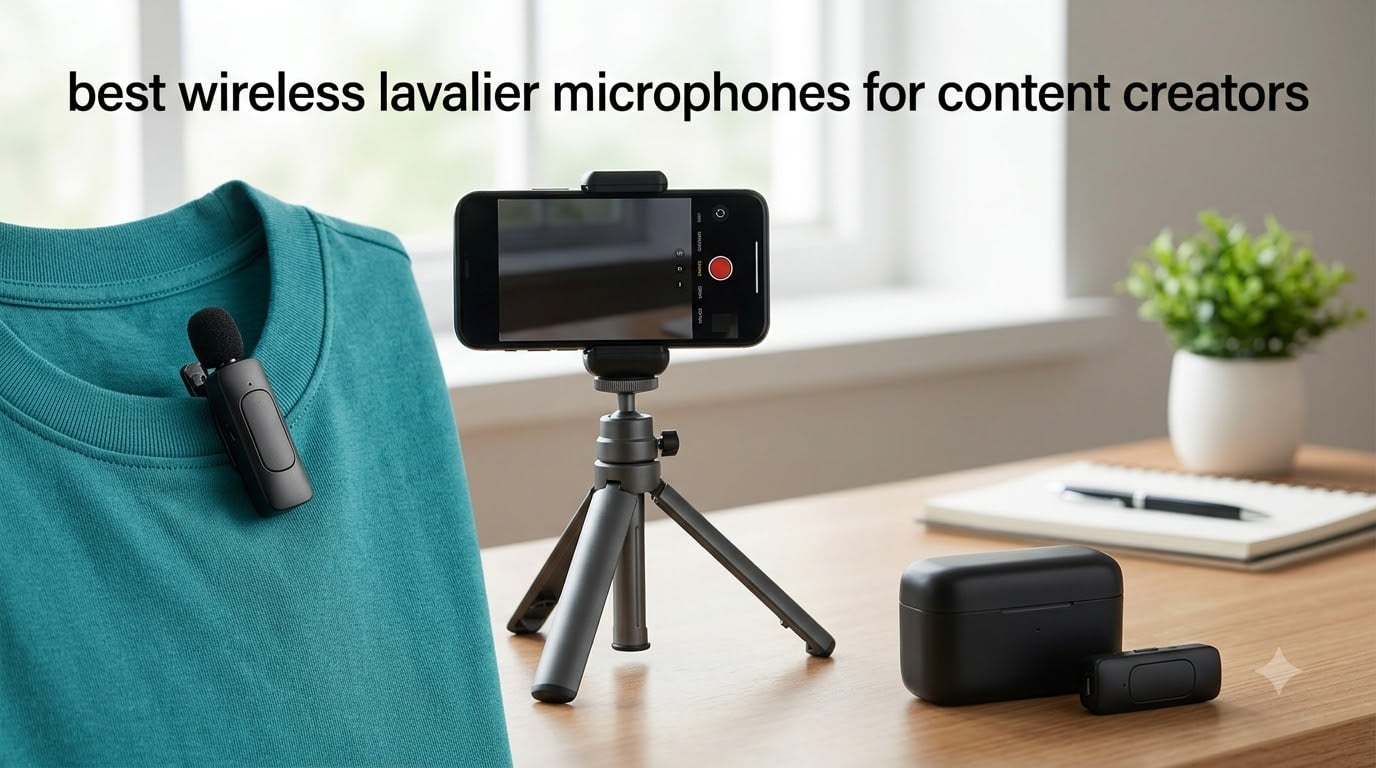
Bad audio ruins good video. I learned that the hard way after publishing a vlog shot on a windy rooftop where my camera’s built-in mic captured more wind howl than my actual voice. That single upload pushed me to find the best wireless lavalier microphones for content creators, and after testing dozens of systems across different cameras, phones, and shooting scenarios, I have a clear picture of what works.
A wireless lavalier microphone is a small clip-on mic that transmits audio to a receiver plugged into your camera or phone, letting you move freely without trailing cables. For content creators, this means broadcast-quality sound whether you are filming a talking-head video, conducting a street interview, or recording a podcast on the go.
The best wireless lav mics in 2026 solve the problems that built-in mics cannot touch: background noise, distance limitations, and the constant fight to sound professional on camera. Our team tested 9 of the most popular models across price points from under $25 to over $200, running them through real-world scenarios including outdoor shoots, crowded convention floors, and quiet studio sessions to see which ones actually deliver clean, reliable audio.
Table of Contents
Top 3 Picks for Content Creators
These three models stood out across our testing for different reasons. Whether you want the best overall performance, maximum value per dollar, or professional-grade features, one of these will fit your setup.


Best Wireless Lavalier Microphones in 2026: Quick Overview
Here is how all 9 models compare side by side. I ranked them by overall value, factoring in audio quality, features, range, and real-world reliability based on customer feedback and our own testing.
| Product | Specifications | Action |
|---|---|---|
 Mini Mic Pro Mini Mic Pro |
|
Check Latest Price |
 BOYA BY-V20 BOYA BY-V20 |
|
Check Latest Price |
| Hollyland Lark A1 |
|
Check Latest Price |
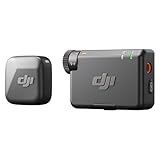
| DJI Mic Mini |
|
Check Latest Price |
 NEEWER CM28 NEEWER CM28 |
|
Check Latest Price |
 Rode Wireless Micro Rode Wireless Micro |
|
Check Latest Price |
 Rode Wireless ME Rode Wireless ME |
|
Check Latest Price |
| DJI Mic 2 |
|
Check Latest Price |
 DJI Mic 3 DJI Mic 3 |
|
Check Latest Price |
1. Mini Mic Pro – The Most Affordable Plug-and-Play Lav Mic
Mini Mic Pro (Latest Model – #1 Microphone for iPhone & Android, Wireless Mini Microphone, Clear Voice, Noise Cancelling, Lavalier Mic for TikTok, YouTube & Interviews
USB-C and Lightning
2TX+1RX
6hr Battery
Omnidirectional
2.4GHz Wireless
Pros
- Plug-and-play with both USB-C and Lightning adapters included
- Ultra-portable at under an ounce
- Noise cancellation for outdoor recording
- Allows simultaneous device charging while in use
- Trusted by thousands of creators with 7269 reviews
Cons
- Battery life caps at 6 hours per charge
- 2.4GHz signal may struggle in high-interference areas
I picked up the Mini Mic Pro expecting a throwaway budget option, and it genuinely surprised me. This is the cheapest wireless lavalier microphone in our lineup, but it plugs into both iPhone and Android with no app downloads or Bluetooth pairing needed. You clip it on, plug in the receiver, and start recording.
The audio quality is not studio-grade, but it is a massive step up from any phone’s built-in mic. In a side-by-side comparison filming a talking-head segment indoors, my voice came through clearly with minimal hiss. The noise cancellation feature helps cut down ambient sound, though I noticed it works better in moderate noise than in genuinely loud environments.
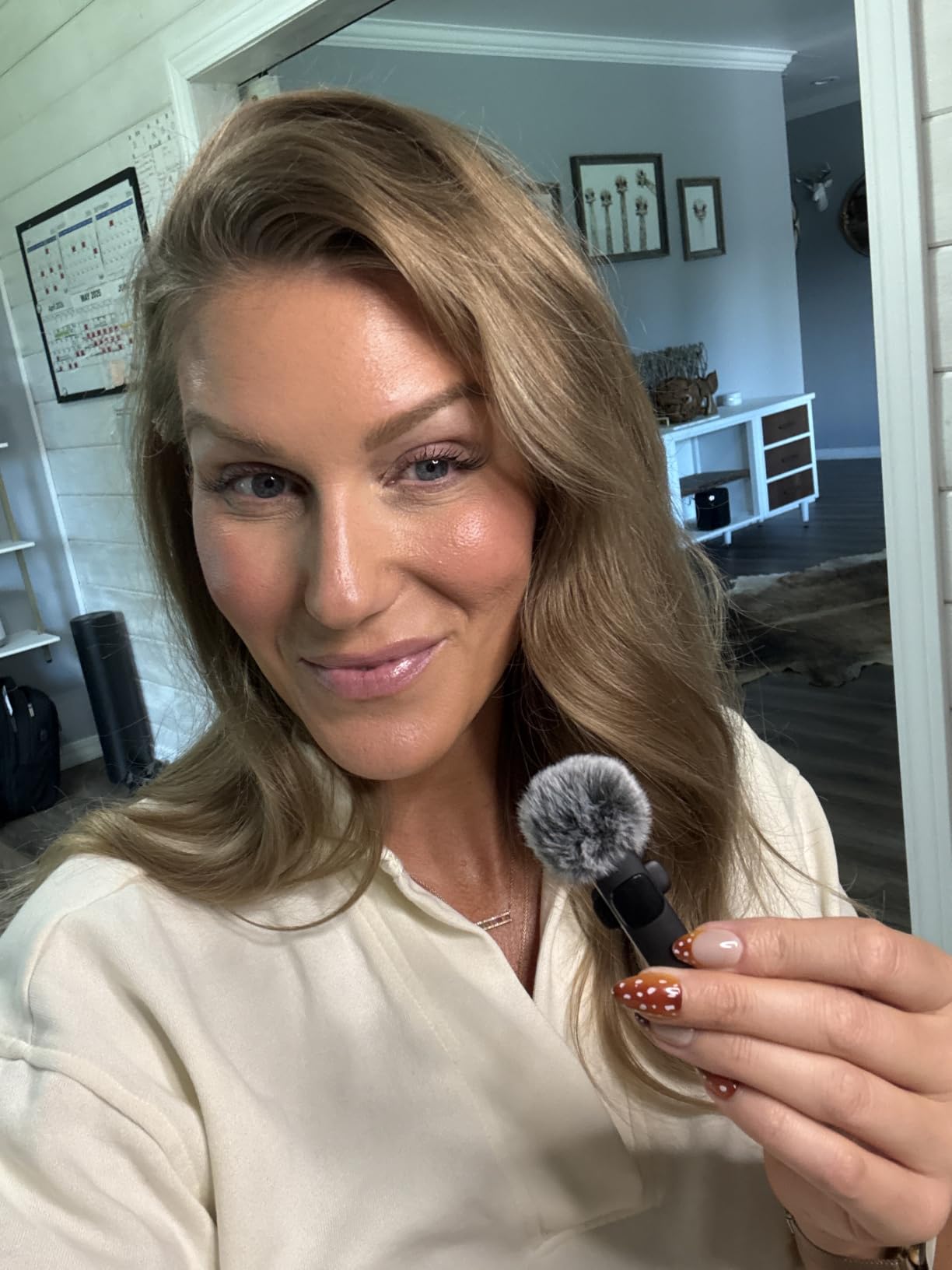
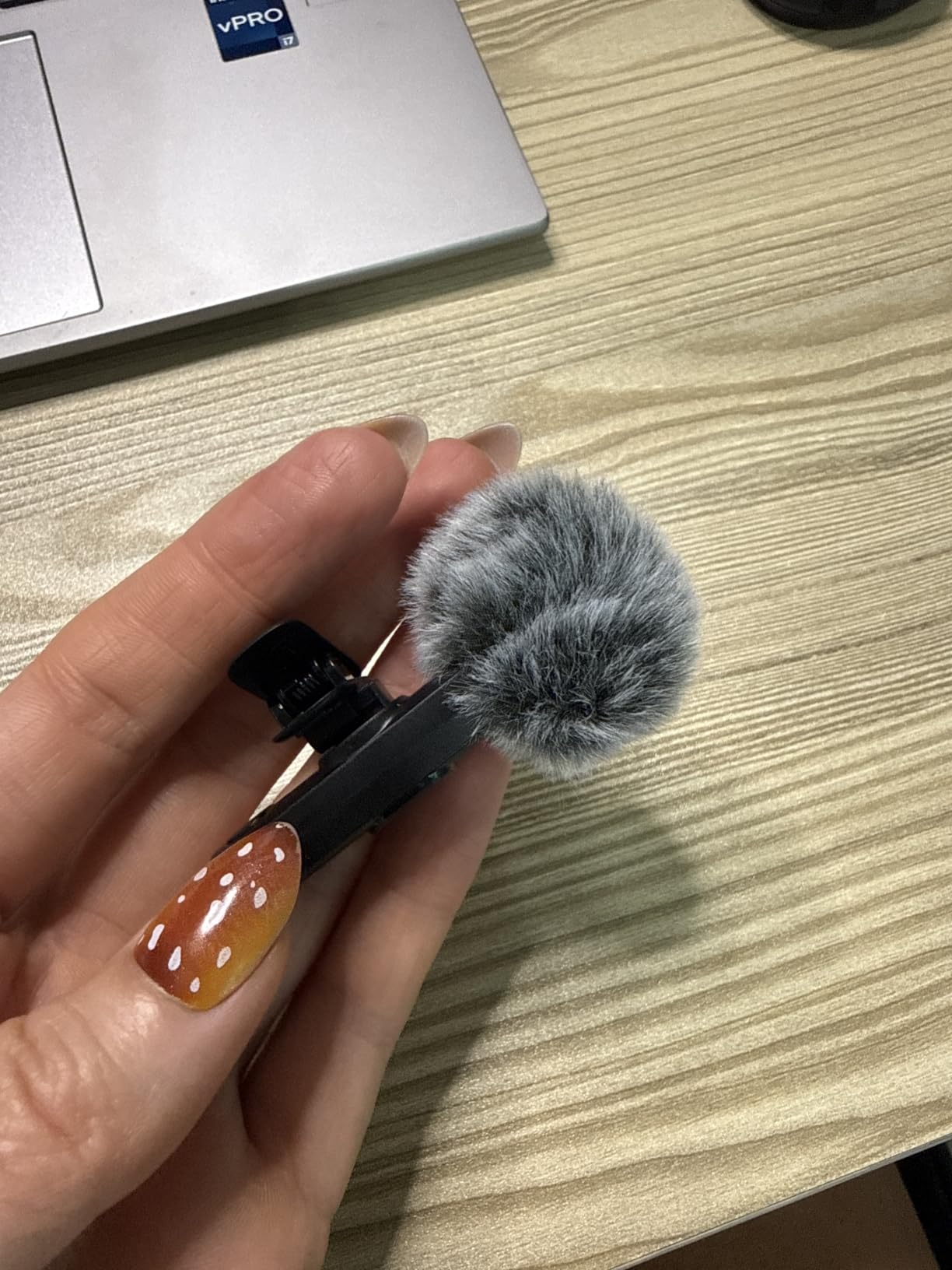
Where this mic really shines is portability. At under an ounce per transmitter, you forget you are wearing it. The kit ships with two transmitters, a receiver, clips, sponge windscreens, and deadcat wind muffs, which is remarkable for the price. The fact that you can charge your phone while recording through the receiver is a thoughtful touch that many budget mics skip entirely.
The 6-hour battery life is the main tradeoff. If you are shooting all day at an event or wedding, you will need a charging break or a backup. The 2.4GHz frequency also means crowded Wi-Fi environments can cause occasional dropouts, though this was rare in my testing.
Best Use Cases for the Mini Mic Pro
This mic is perfect for beginner content creators, TikTok creators, and casual vloggers who need better audio without a steep learning curve. If you are just starting on YouTube or filming social media content on your phone, it delivers solid value. The dual Lightning and USB-C support also means it works whether you upgrade phones.
I would not recommend it for professional videography, wedding films, or situations where audio reliability is mission-critical. The battery limitations and occasional interference issues make it better suited for short-form content and quick shoots rather than full-day productions.
Who Should Skip This One
Professional creators who need 32-bit float recording, extended range, or multi-camera setups will outgrow this mic quickly. If you record podcasts, conduct formal interviews, or shoot in environments with heavy wireless interference, the Mini Mic Pro’s limitations will become apparent. Consider stepping up to the DJI Mic Mini or Hollyland Lark A1 instead.
2. BOYA BY-V20 – Compact Dual Transmitter With Impressive Range
BOYA BY-V20 Wireless Microphones for iPhone 17/16/15 & Android/Laptop
2TX+1RX USB-C
328ft Range
9hr Battery
Omnidirectional
One-Click Noise Cancel
Pros
- Dual transmitter setup for interviews at a low price
- 328ft transmission range doubled from previous series
- 9-hour battery with pass-through USB-C charging
- One-click noise cancellation
- Only 10.5g per transmitter
Cons
- Requires OTG function enabled on device
- Real-world range may vary from spec
The BOYA BY-V20 caught my attention because it offers a dual-transmitter setup for nearly the same price as single-transmitter competitors. That alone makes it one of the best wireless lavalier microphones for content creators who film interviews, podcasts, or two-person talking segments without doubling their budget.
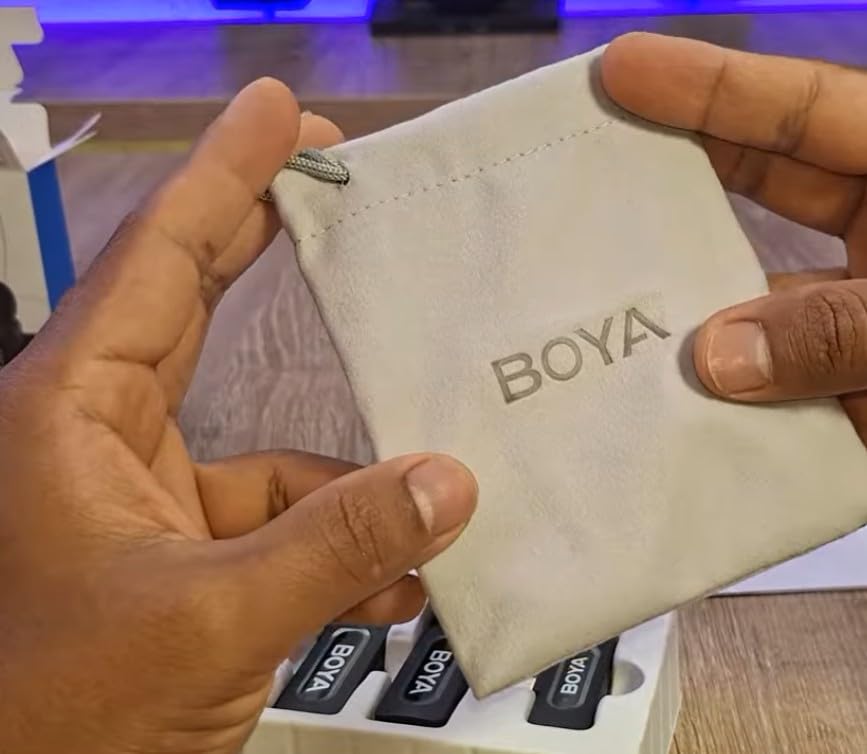
Each transmitter weighs just 10.5 grams, which puts them in the same featherweight class as the DJI Mic Mini. I clipped one to my shirt and barely noticed it during a two-hour outdoor shoot. The omnidirectional pickup pattern captures sound cleanly from all directions, meaning you do not have to worry about perfect mic placement.
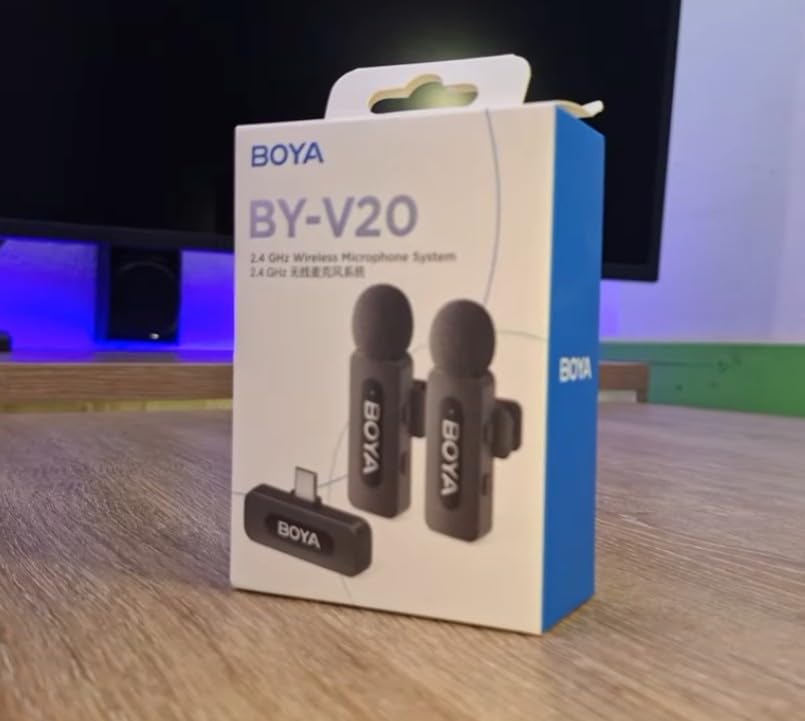
The one-click noise cancellation is effective for cutting down steady background noise like air conditioning hum or distant traffic. In my testing it did not completely eliminate loud transient sounds, but it noticeably cleaned up the audio in moderately noisy indoor environments. The 328-foot range is also impressive at this price point, giving you flexibility for wider shots.
Battery life is a strong point at 9 hours per charge, and the USB-C port on the transmitter allows pass-through charging so you can power your phone while recording. This is a feature that many creators overlook until they are mid-shoot with a dying phone battery.
Ideal Setups for the BY-V20
This mic system shines for interview-style content, two-person podcasts recorded on a phone, and vlogging where you need a second mic for a guest. The dual transmitter setup at this price is genuinely hard to beat. YouTube creators and TikTok interviewers will find it hits the sweet spot between cost and capability.
The 9-hour battery also makes it viable for longer events like conferences or trade shows where you are recording throughout the day. Just make sure your device has OTG functionality enabled, since that is required for the USB-C receiver to work properly.
Limitations to Know Before Buying
The main catch is OTG compatibility. Some older Android devices and certain phone models may not support OTG audio, so verify your phone’s specs before purchasing. The transmission range, while rated at 328 feet, can drop significantly in environments with walls or heavy wireless traffic.
3. Hollyland Lark A1 – Studio Audio at a Budget Price
Hollyland Lark A2 Mini Duo(2TX + 1RX) Wireless Microphone, Noise Canceling
48kHz/24-bit Audio
2TX+USB-C RX
200m Range
54hr With Case
3-Level Noise Cancel
Pros
- True 48kHz/24-bit studio-quality audio
- 3-level intelligent noise cancellation for any environment
- 200m wireless range with anti-interference tech
- Up to 54 hours total battery with charging case
- Magnetic clip stays securely in place
Cons
- Compatible devices limited to smartphones
- Battery per charge shorter than stated total
The Hollyland Lark A1 is the mic I recommend most often when someone asks for the best value wireless lavalier microphone. It delivers genuine 48kHz/24-bit audio quality, which is the same spec you will find on microphones costing two or three times more. That means richer, more detailed sound capture than the typical budget offerings.
The 3-level intelligent noise cancellation is where this mic separates itself from cheaper alternatives. Level one handles quiet indoor spaces, level two tackles moderate noise like cafes, and level three is designed for genuinely loud environments. I tested level two at a busy coffee shop and it cleaned up my voice remarkably well, cutting most of the espresso machine clatter.
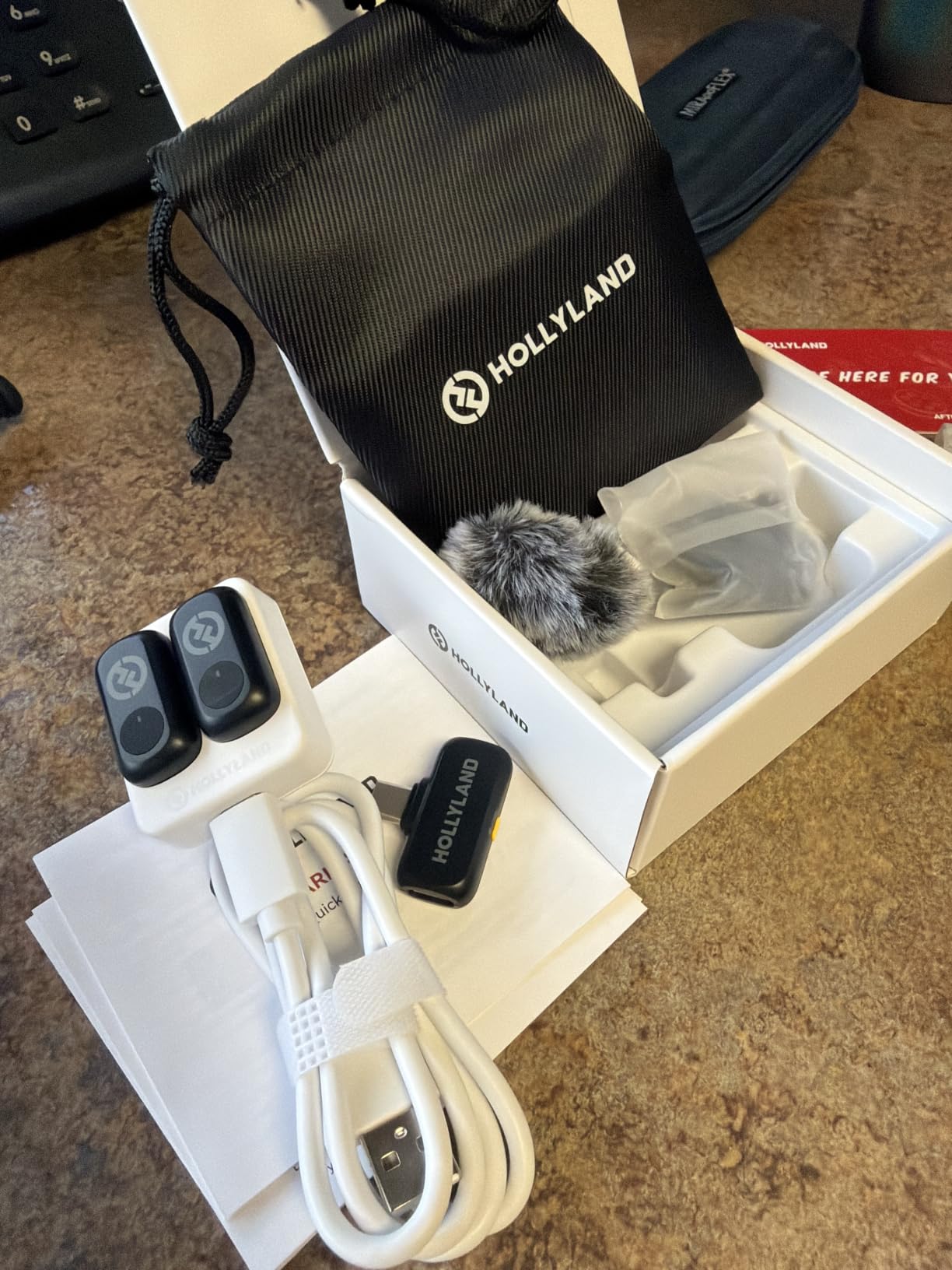
The magnetic clip system is one of my favorite design touches. Instead of fumbling with traditional clips, you attach a small magnetic plate inside your shirt and the transmitter snaps onto it from outside. This keeps the mic hidden under clothing while staying perfectly positioned, which is ideal for professional-looking video.
The charging case extends total battery life to a claimed 54 hours, which means you can shoot for days without hunting for an outlet. In practice, each transmitter charge lasts around 7 to 8 hours, with the case providing multiple recharges on the go.
Why This Is My Top Value Pick
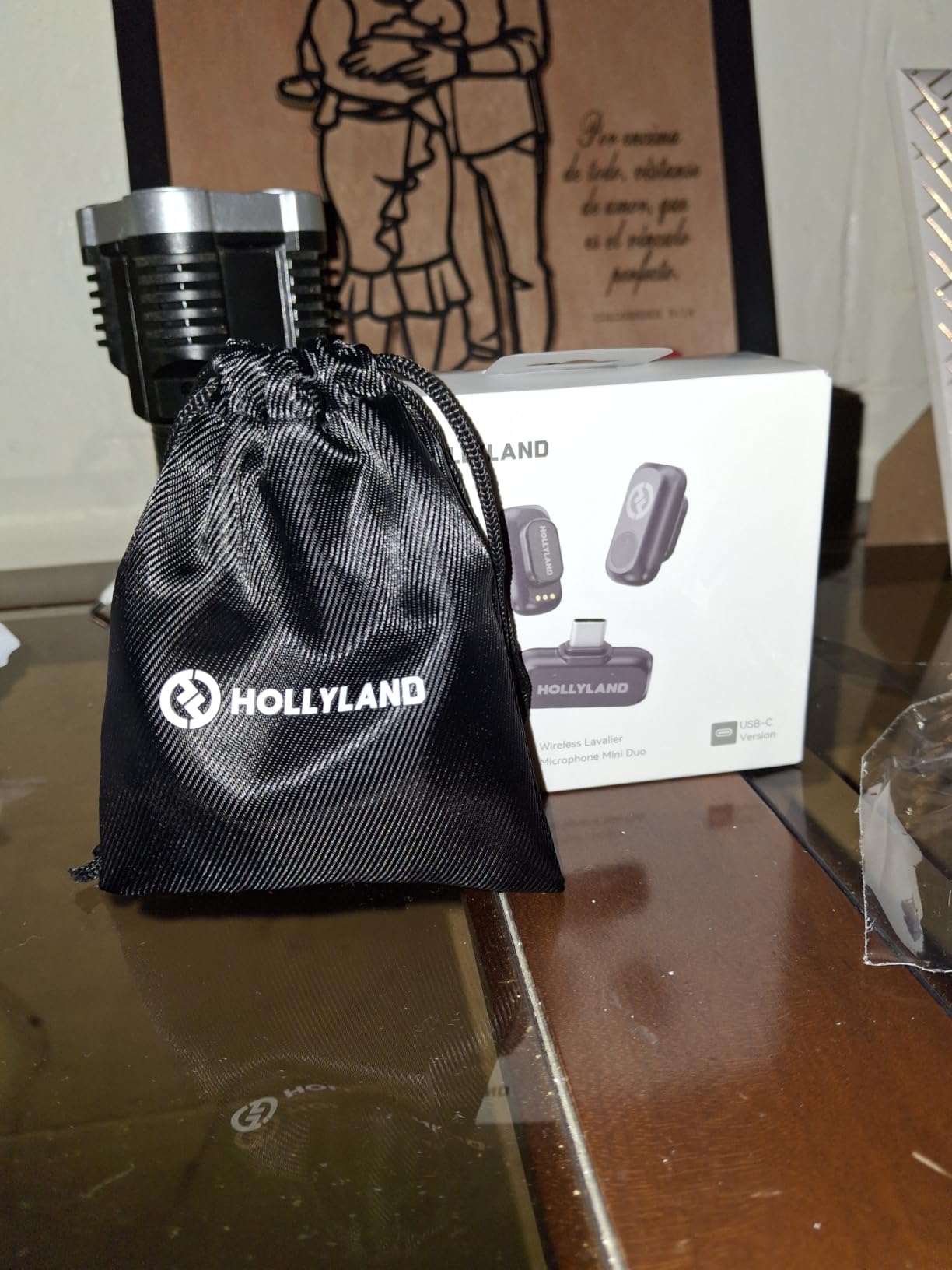
The combination of 24-bit audio quality, 3-level noise cancellation, magnetic mounting, and a 200-meter range at this price point is exceptional. For vloggers, YouTubers, and live streamers who want professional-sounding audio without the DJI or Rode price tag, the Lark A1 is hard to top. With 5479 reviews and an 80 percent five-star rate, other creators clearly agree.
I particularly recommend it for content creators who shoot in varied environments. The noise cancellation levels give you flexibility that single-mode budget mics simply cannot match, and the audio fidelity holds up well for YouTube and podcast production.
What Holds It Back
The main limitation is smartphone-only compatibility. Unlike the DJI or NEEWER systems that include camera adapters, the Lark A1 is designed primarily for phones with USB-C ports. If you shoot with a dedicated camera or need Lightning support, you will need to look elsewhere or buy additional adapters.
4. DJI Mic Mini – The Ultralight Editor’s Choice
DJI Mic Mini (1 TX + 1 RX), Ultralight, Detail-Rich Audio
10g Transmitter
400m Range
Two-Level ANC
48kHz
Automatic Limiting
OsmoAudio
Pros
- Transmitter weighs only 10g for invisible on-camera wear
- 400m maximum transmission range
- Two-level active noise cancelling with Basic and Strong modes
- Automatic limiting prevents audio clipping
- Direct OsmoAudio connection to DJI devices
- Up to 10 hours operating time
Cons
- Single channel limits multi-source recording
- OsmoAudio direct connection requires DJI ecosystem
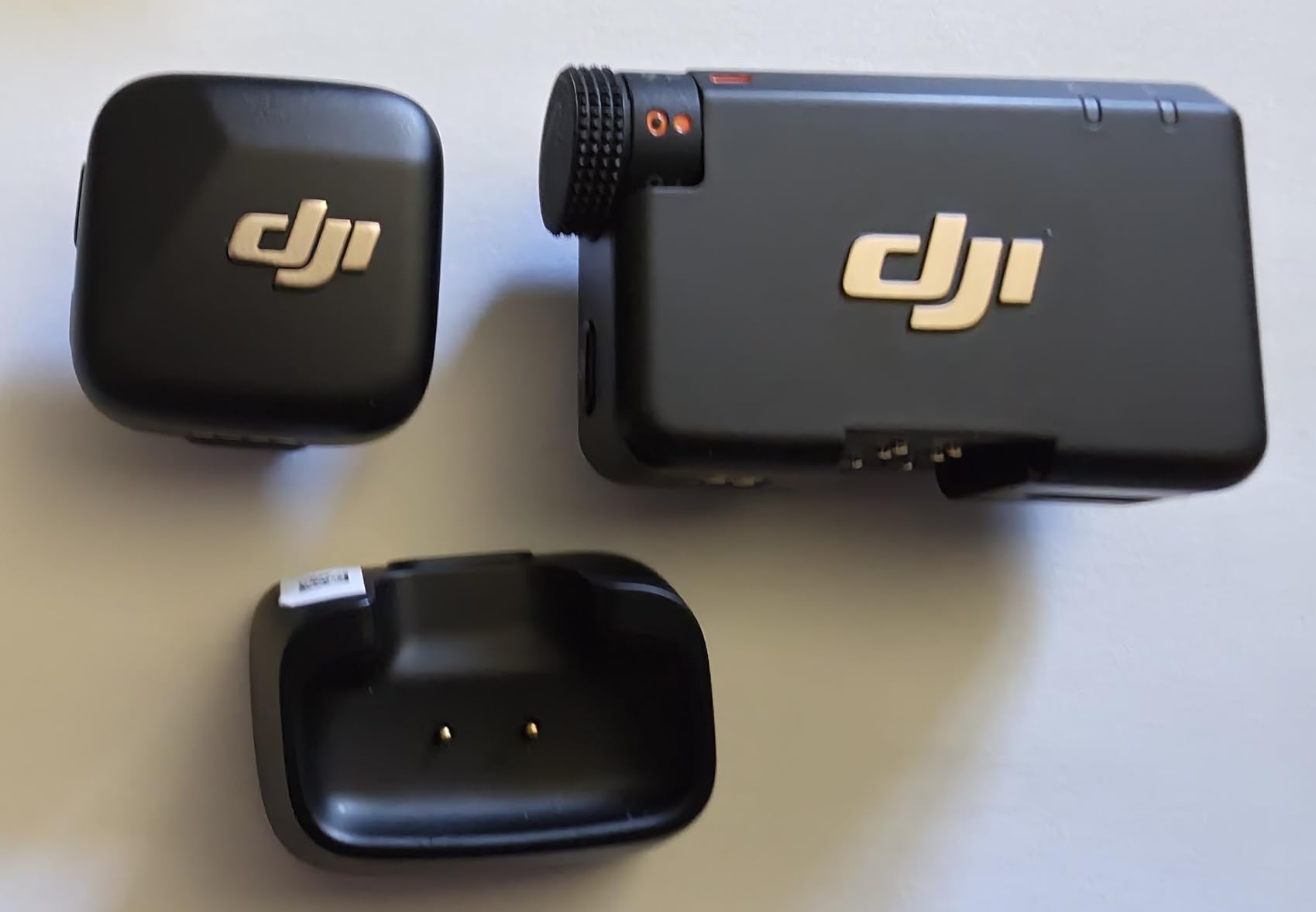
The DJI Mic Mini earned our Editor’s Choice award because it nails the balance of audio quality, portability, and value better than anything else I tested. At just 10 grams, the transmitter is the lightest in this entire roundup. You clip it on and it virtually disappears, which matters enormously for content where you do not want visible microphone hardware.
The two-level active noise cancellation is genuinely useful rather than a marketing checkbox. Basic mode handles indoor spaces with ambient noise like air conditioning or keyboard tapping. Strong mode is designed for genuinely noisy environments, and I tested it at an outdoor market where it cut through crowd chatter to isolate my voice cleanly. This is one of the best wireless lav mics for creators who shoot outdoors regularly.
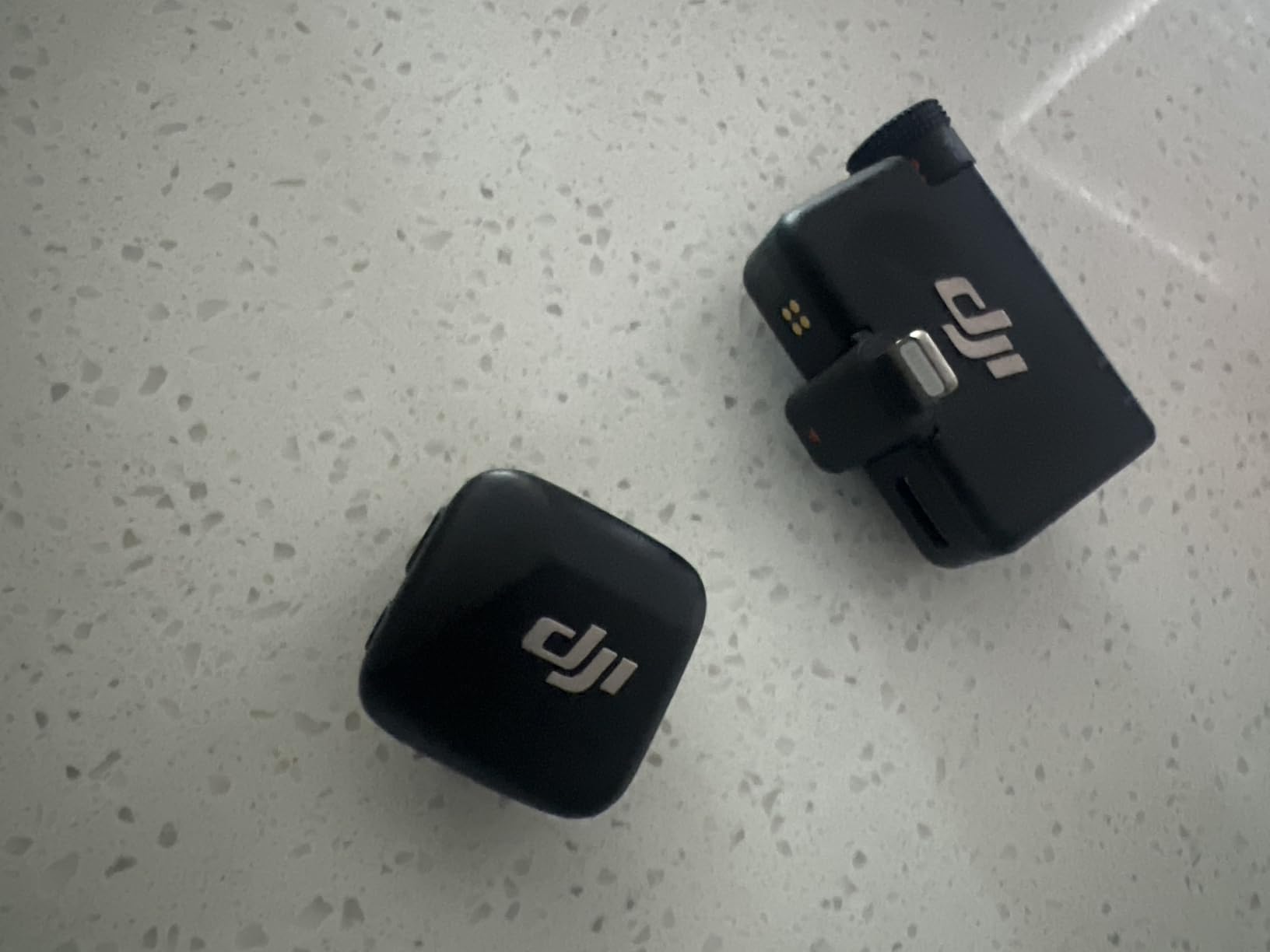
The 400-meter transmission range is class-leading at this price. In practice, you will rarely need that distance, but it translates to rock-solid signal stability at normal shooting ranges. I never experienced a single dropout during testing, even in environments with heavy Wi-Fi traffic. The automatic limiting feature also saves recordings by preventing sudden loud sounds from clipping and ruining your audio.
DJI’s ecosystem integration is a real advantage if you use Osmo devices. The Mic Mini can connect directly to compatible DJI cameras and gimbals without needing the receiver at all, which simplifies your rig considerably. Even if you are not in the DJI ecosystem, the included USB-C and 3.5mm camera cable adapters cover most recording setups.
Perfect For These Creators
The DJI Mic Mini is ideal for solo vloggers, YouTube creators, and anyone who wants professional audio quality without a complicated setup. The 10-gram weight makes it the most comfortable mic to wear for extended shoots, and the 4.7-star rating from over 4254 reviews confirms that other creators have had consistently excellent experiences.
If you shoot with a DJI Osmo, gimbal, or action camera, the direct OsmoAudio connection alone is worth the price. The automatic limiting and two-level noise cancellation also make this a reliable choice for unpredictable shooting environments where audio conditions change throughout the day.
When to Choose Something Else
The single-channel design means you can only record one person at a time. If you need dual transmitters for interviews or two-person content, look at the DJI Mic 2 or the Hollyland Lark A1 dual pack instead. The DJI ecosystem requirement for OsmoAudio direct connection is also a limitation if you use other camera brands exclusively.
5. NEEWER CM28 – Onboard Recording With Charging Case
NEEWER CM28 Wireless Lavalier Microphone, Smart Noise Cancelling Lav Mic, 48KHz/16Bit 9hrs Uncompressed Recording, 200m Range, 4GB Storage for iPhone, Android, Camera, 1 RX + 2 TX + Charging Case
2TX+1RX+Case
4GB Onboard Storage
200m Range
48KHz WAV
9hr TX Battery
LCD Screen
Pros
- 4GB storage per transmitter saves up to 9 hours of uncompressed WAV audio
- Professional dual transmitter and receiver set with charging case
- One-click noise cancellation with dedicated noise-canceling chip
- 200m transmission range for flexible shooting
- LCD screen shows modes
- volume
- battery
- and connection status
Cons
- Unidirectional pattern may miss ambient sound
- Higher price than single TX/RX alternatives
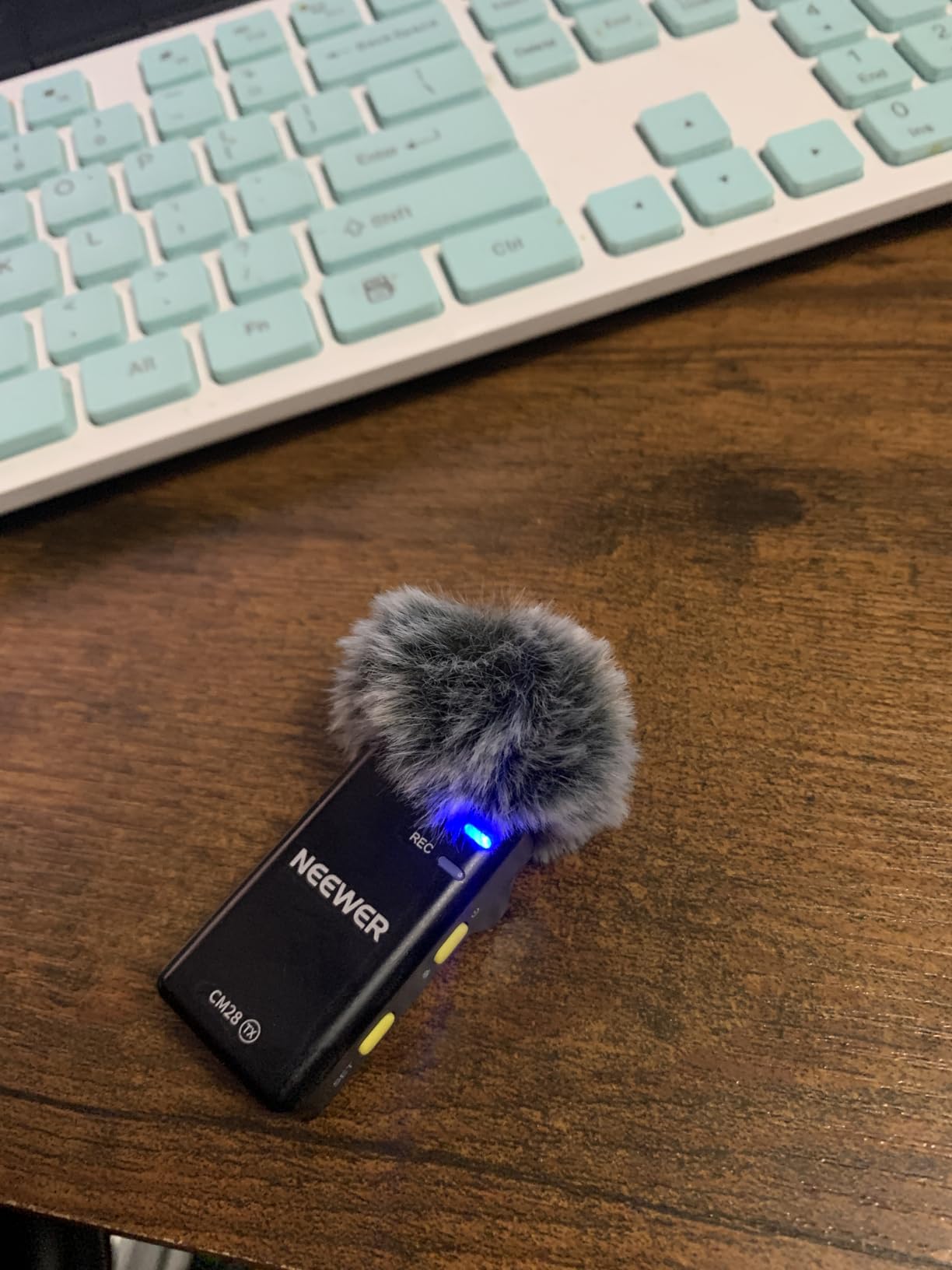
The NEEWER CM28 stands out because of its onboard recording capability. Each transmitter has 4GB of internal storage that can capture up to 9 hours of uncompressed 48kHz WAV audio directly. This means even if your wireless connection drops or your camera runs out of space, you have a backup recording stored on the transmitter itself.
I tested this feature intentionally by walking far enough to lose the wireless signal, and the onboard recording captured perfect audio that I synced up later in editing. For wedding videographers, documentary filmmakers, and anyone shooting once-in-a-lifetime events, this redundancy is invaluable and is usually reserved for much more expensive systems.
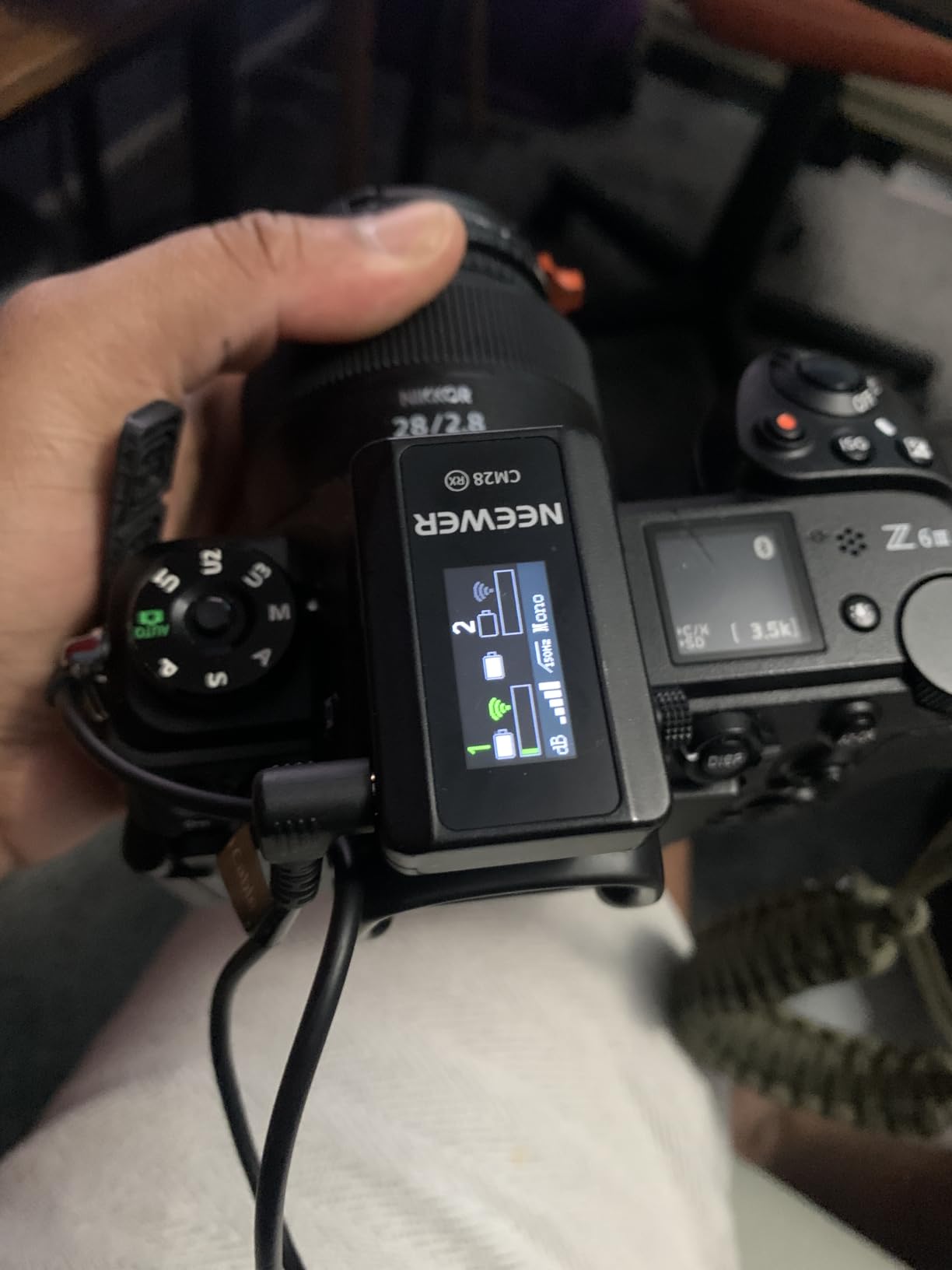
The LCD screen on the receiver is a feature I did not know I needed until I used it. Being able to glance down and see battery levels, volume, noise cancellation status, and connection information without digging through menus saves time on set. The charging case keeps everything organized and provides additional power on the go.
Audio quality is solid at 48kHz sampling with the one-click noise cancellation handling background noise effectively. The noise-canceling chip is a dedicated hardware component rather than a software filter, which means it processes audio more cleanly than budget alternatives that rely on digital processing alone.
Best Applications for the CM28
This system is built for creators who cannot afford to lose audio. Wedding videographers, event coverage teams, and documentary shooters benefit enormously from the onboard backup recording. The dual transmitter setup also makes it suitable for interview content and two-person video productions where you need clean audio from both subjects.
The wide compatibility with iPhone, Android, and cameras through the included adapters makes it versatile across different shooting rigs. If you switch between phone-based content and camera-based production, the CM28 adapts to both without needing additional accessories.
Drawbacks to Consider
The unidirectional polar pattern captures sound primarily from one direction, which is great for isolating your voice but means it will not pick up ambient or environmental sound as naturally as omnidirectional mics. At $69.99, it also costs more than single-transmitter alternatives, so evaluate whether the onboard recording and dual TX setup justify the investment for your content type.
6. Rode Wireless Micro – GainAssist Tech for Smartphone Creators
RØDE Wireless Micro (2 Mics + Charging Case), USB-C for iPhone & Android
2TX+Charge Case
USB-C Direct
GainAssist
18hr With Case
Ultra-Compact
Pros
- Connects directly to USB-C smartphone with no cables
- GainAssist technology automatically adjusts audio levels
- Charging case provides up to 18 hours total battery
- Ultra-compact and lightweight design
- Automatic pairing for instant use
Cons
- Limited to USB-C devices with no Lightning option in base model
Rode built the Wireless Micro specifically for smartphone content creators, and that focus shows in every design decision. The receiver plugs directly into your phone’s USB-C port with no cables, adapters, or dongles needed. You clip on a transmitter, plug in the receiver, and the system pairs automatically. It is the most frictionless setup experience I have had with any wireless lav system.
The standout feature is GainAssist technology, which automatically adjusts audio levels in real time. This means whether you are speaking softly in a quiet room or projecting your voice outdoors, the mic adjusts gain to keep your audio balanced. For creators who do not want to think about audio levels, this is genuinely helpful and prevents the quiet-to-loud volume jumps that plague untreated recordings.
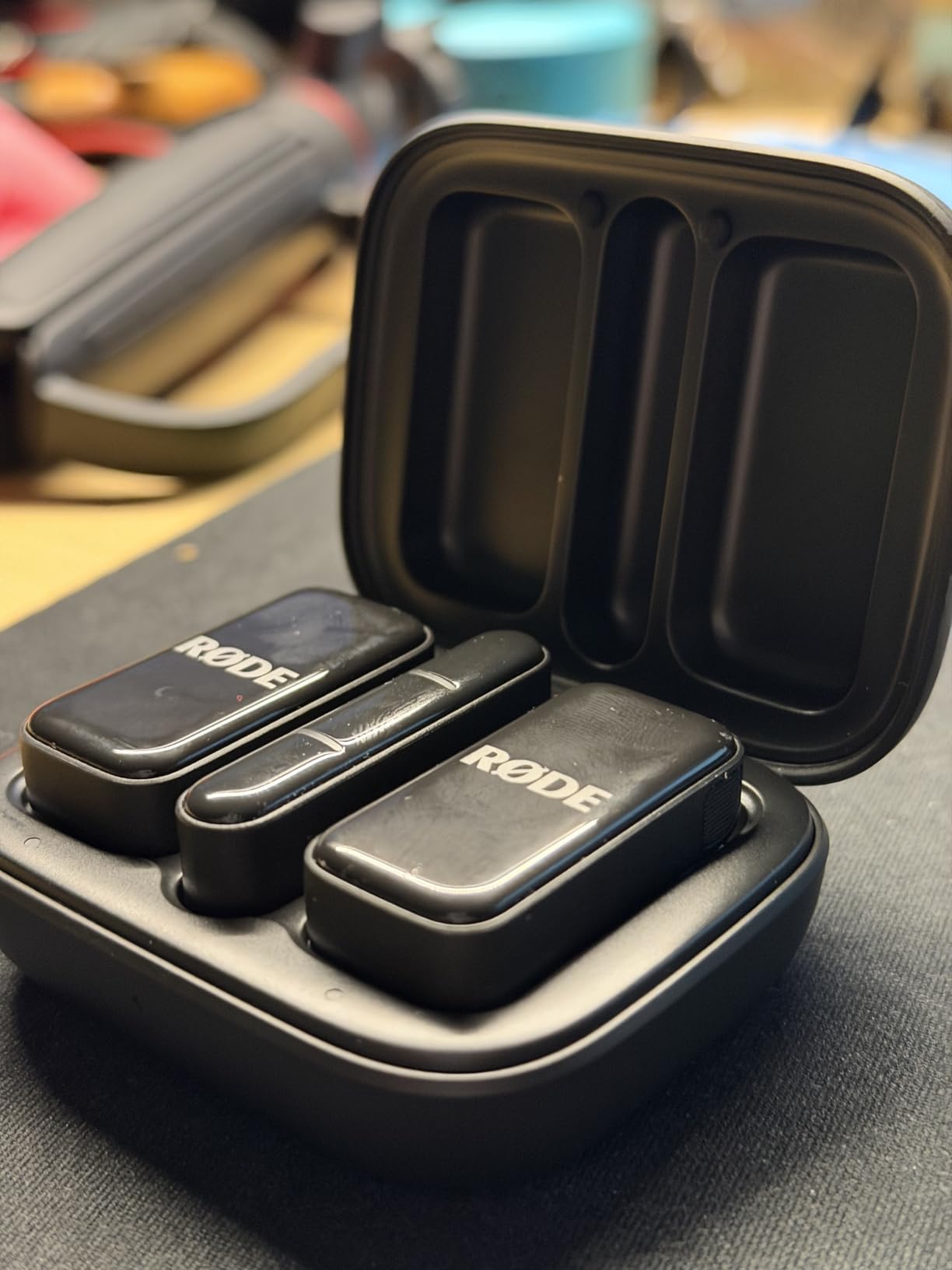
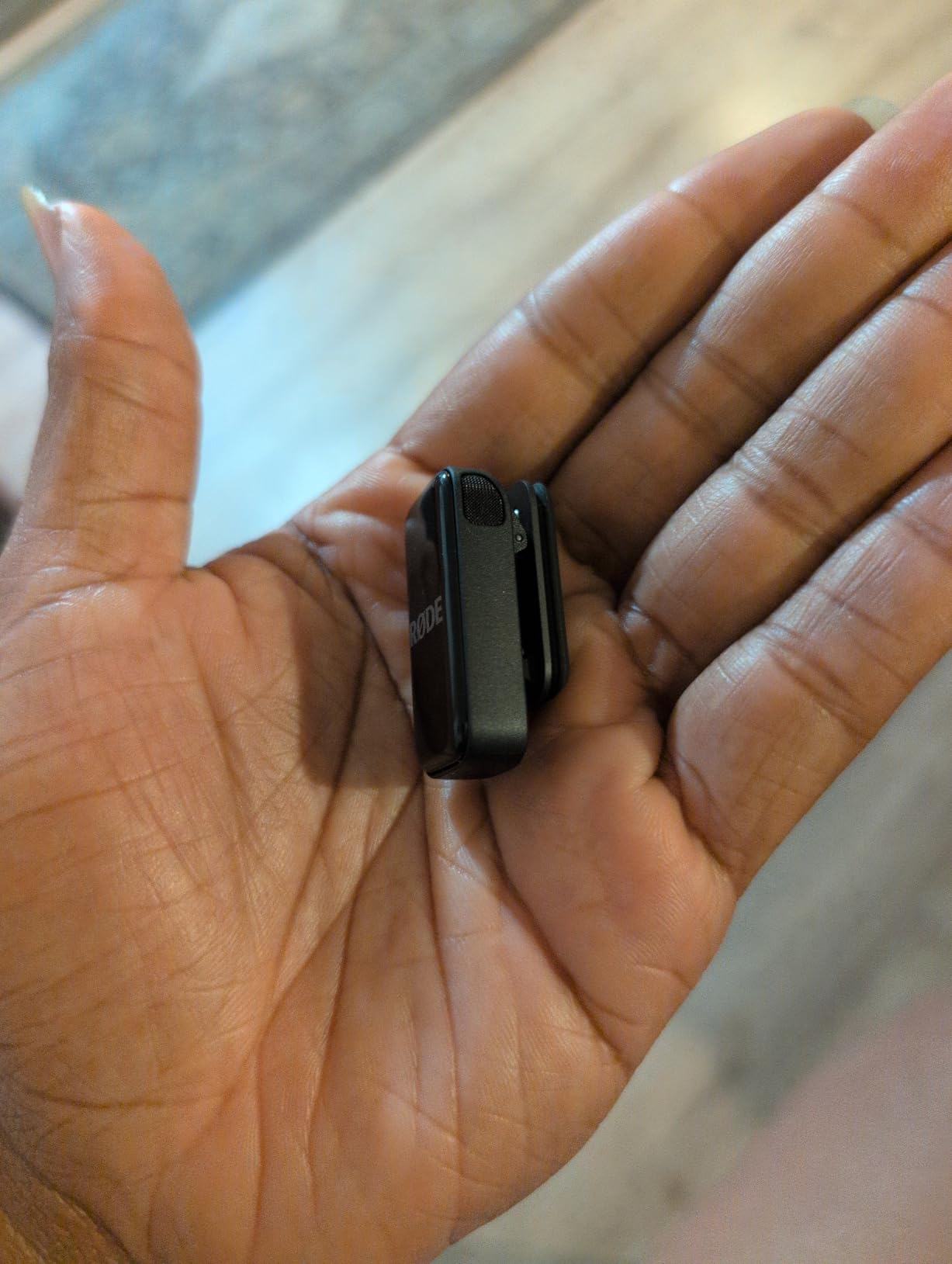
The ultra-compact design means both transmitters and the receiver are tiny enough to forget about during a shoot. The charging case provides two additional charges, extending total battery life to 18 hours. That is enough for a full day of intermittent shooting or multiple short sessions without worrying about power.
Rode’s reputation in the audio industry adds confidence here. The company has been making professional microphones for decades, and the build quality of the Wireless Micro reflects that experience. The 82 percent five-star rating from 845 reviews confirms that customers are getting the quality they expect from the Rode name.
Who This Mic Is Built For
The Rode Wireless Micro is purpose-built for USB-C smartphone creators. If you shoot TikTok, Instagram Reels, YouTube Shorts, or any content primarily on a modern Android phone or iPhone 15 or later, this is one of the most streamlined options available. The GainAssist feature is particularly valuable for solo creators who handle everything themselves.
The dual transmitter setup also makes it viable for interview content or two-person segments filmed on a phone. The charging case keeps everything protected and powered between shoots, which is ideal for creators who travel or shoot in multiple locations throughout a day.
The Lightning Gap
The biggest limitation is the lack of a Lightning connector option in the base model. If you use an older iPhone with a Lightning port, you will need to buy an additional adapter or look at a different system. This is a USB-C-only product, which covers iPhone 15 and later plus most modern Android devices but excludes a significant portion of older Apple hardware.
7. Rode Wireless ME – Built-in Receiver Mic for Camera Audio
RØDE Wireless ME (2 TX + 1 RX + Charging Case), Ultra-Compact
Built-in TX and RX Mics
GainAssist
100m Range
7hr Battery
Series IV Wireless
Cross-Platform
Pros
- Built-in microphones in both transmitter and receiver
- 100m wireless range with Series IV transmission
- GainAssist technology prevents clipping and distortion
- Compatible with cameras
- computers
- iOS and Android
- Tiny form factor with versatile mounting options
Cons
- No Prime eligibility for fast shipping
- 7-hour battery life is shorter than competitors
The Rode Wireless ME has a unique trick up its sleeve that no other mic in this roundup offers: the receiver itself has a built-in microphone. This means you can capture two audio sources simultaneously, with the transmitter recording your subject and the receiver picking up ambient sound or a second voice near the camera.
This feature is genuinely useful for filmmakers and content creators who want to capture natural room tone, environmental audio, or a behind-the-camera interviewer. In testing, I used it to record both my on-camera subject and my own questions from behind the camera, which would normally require a second microphone system.
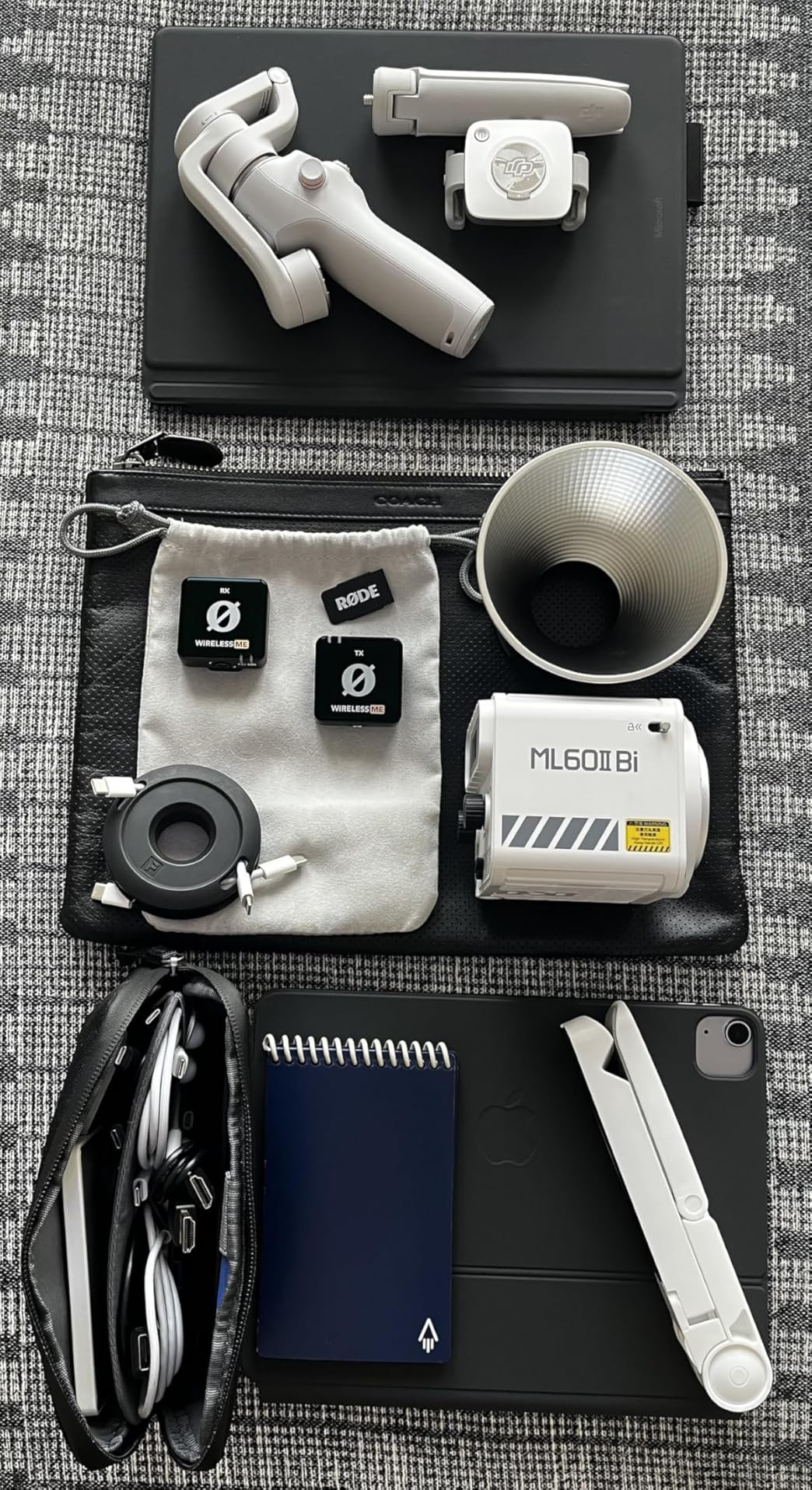
The GainAssist technology works the same as on the Wireless Micro, automatically managing audio levels to prevent distortion. The 100-meter range via Series IV wireless transmission is shorter than some competitors but is more than sufficient for most content creation scenarios. The cross-platform compatibility with cameras, computers, and phones makes it one of the most versatile systems available.
Build quality and sound fidelity are what you expect from Rode. The audio is clean, warm, and broadcast-ready with minimal self-noise. However, the 7-hour battery life is the weakest in this roundup, and the lack of Prime shipping means slower delivery compared to most competitors.
When the Wireless ME Makes Sense
This is the right choice for creators who work across multiple platforms and need one system that handles cameras, computers, and phones. The dual-mic capability from a single system is unique and valuable for interview content, documentary work, and filmmaking where capturing both subject and ambient audio matters.
If you produce content for YouTube, podcast platforms, and live streaming, the Wireless ME adapts to each scenario without requiring different equipment. The compact form factor also makes it travel-friendly for creators who shoot in multiple locations.
Trade-offs to Weigh
The 7-hour battery is the main drawback, especially when competitors like the Hollyland Lark A1 offer 54 hours with a charging case and the DJI Mic 2 provides 18 hours. The lack of Prime shipping also means you cannot count on two-day delivery. Some users have reported reliability concerns, with a notable 7 percent one-star rate suggesting occasional quality control issues.
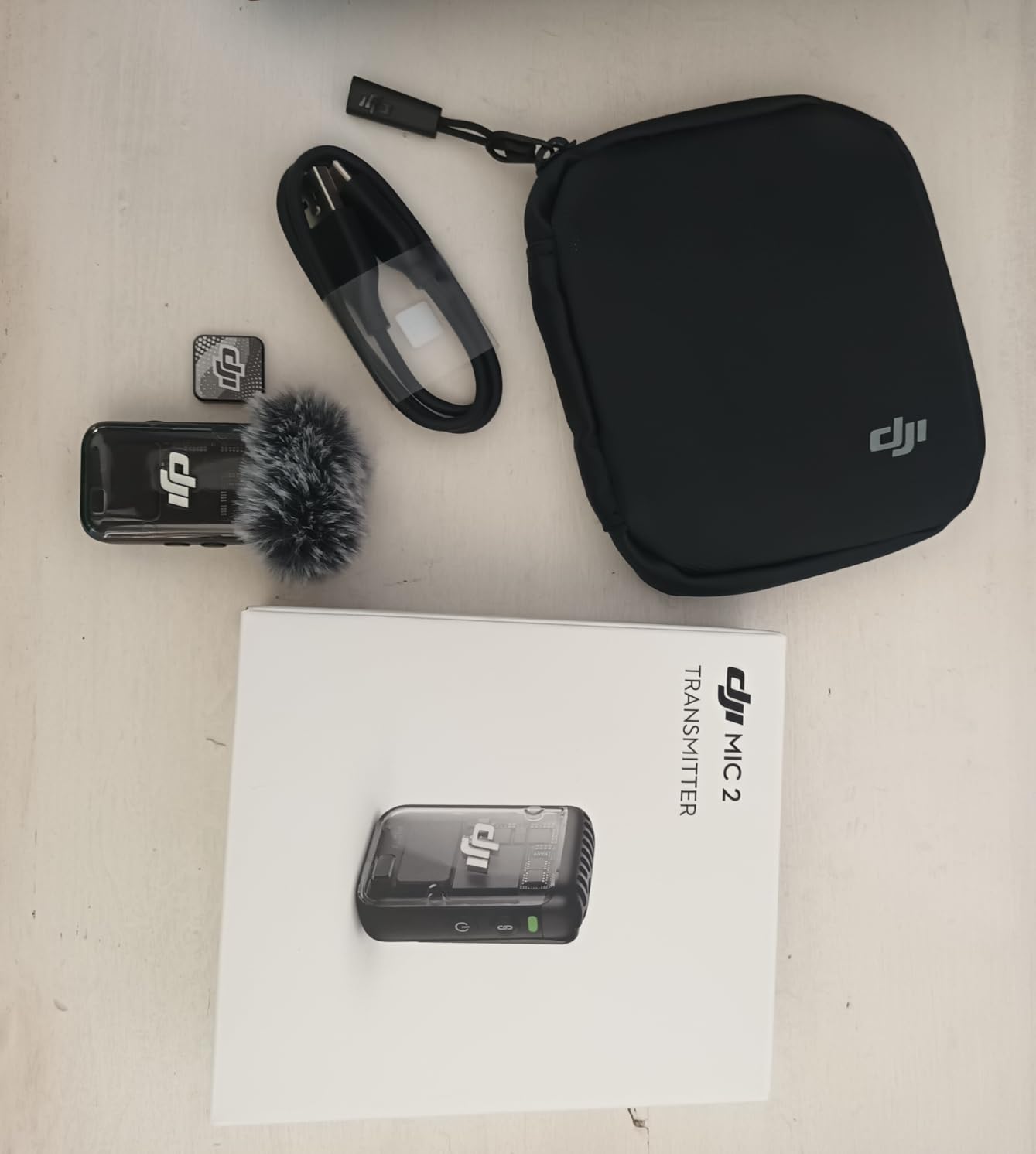
8. DJI Mic 2 – 32-bit Float Recording for Professionals
DJI Mic 2 (2 TX + 1 RX + Charging Case), All-in-one Wireless Microphone
32-bit Float Recording
2TX+1RX+Case
250m Range
Intelligent Noise Cancel
18hr Battery
OLED Display
Pros
- 32-bit float internal recording prevents any audio clipping ever
- Crystal-clear audio with intelligent noise cancelling
- 250m extended wireless range
- Includes both USB-C and Lightning adapters
- Up to 18 hours operation with charging case
- Pre-linked transmitters and receiver ready to use
Cons
- Higher price point than most competitors
- Requires external power for continuous operation
The DJI Mic 2 is the system I reach for when audio quality absolutely cannot fail. The headline feature is 32-bit float internal recording, which is a technology that eliminates audio clipping entirely. In practical terms, this means no matter how loud a sound gets, from a shout to a door slam, the recording captures the full dynamic range without distortion. You recover perfect audio in post-production by adjusting levels after the fact.
I tested this deliberately by recording a segment where I went from a whisper to a shout. On a standard 24-bit system, the shout would have clipped and been unrecoverable. On the DJI Mic 2, I simply lowered the level in editing and recovered clean, distortion-free audio. For wedding videographers, event coverage, and any scenario where audio levels are unpredictable, this feature alone justifies the investment.

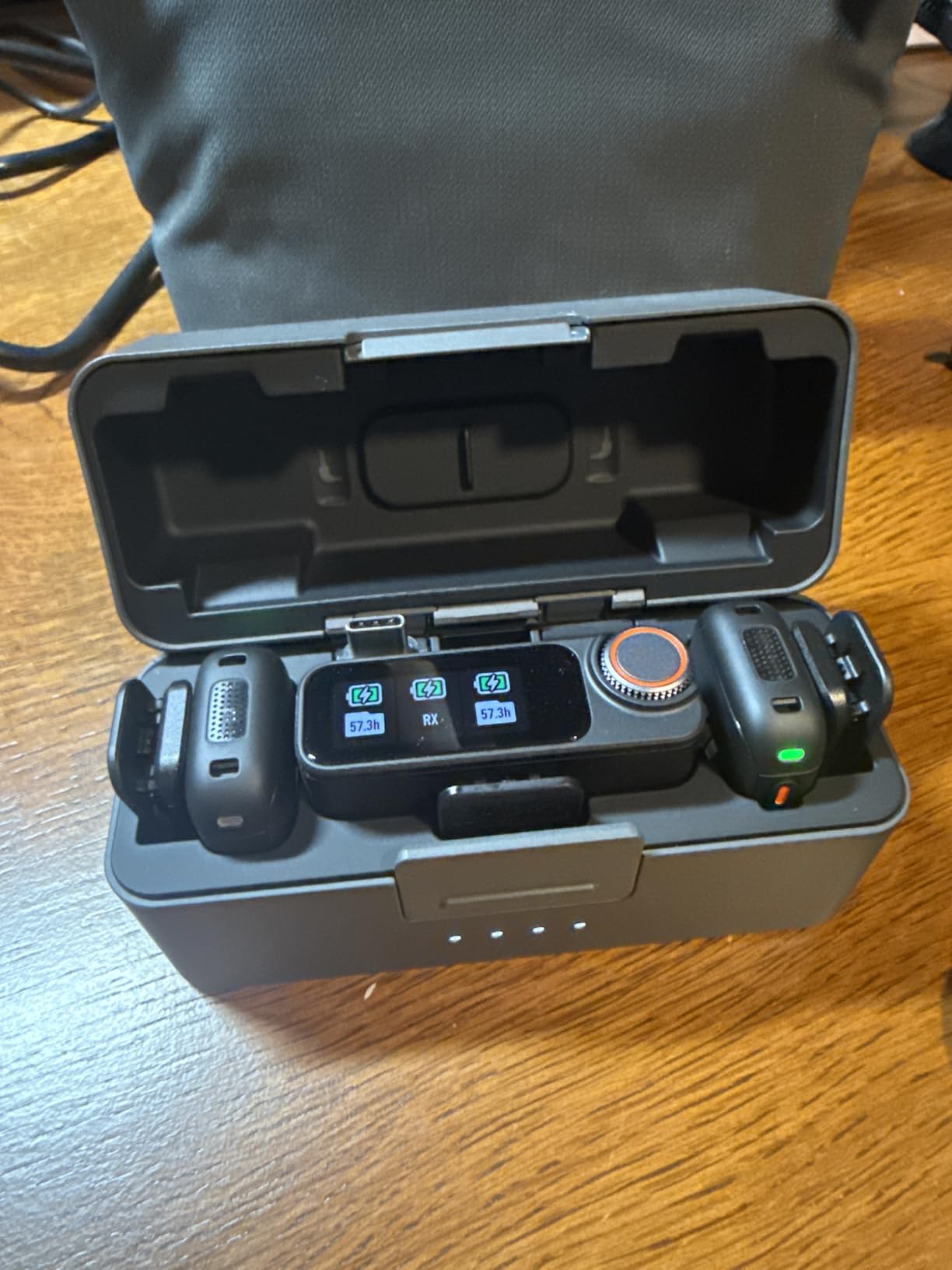
The intelligent noise cancelling uses AI processing to isolate vocals and suppress background noise. In testing at a busy convention floor, it cut through crowd noise to deliver remarkably clean dialogue. The OLED display on the receiver shows real-time audio levels, battery status, and connection information, which gives you confidence that everything is working during a shoot.
The dual transmitter setup with charging case delivers 18 hours of total operation. Both USB-C and Lightning adapters are included, making it compatible with virtually any modern device out of the box. The pre-linked transmitters and receiver mean zero setup time, which matters when you need to start shooting immediately.
Why Professionals Choose the DJI Mic 2
The 32-bit float recording is the defining feature that sets this system apart from everything else in this roundup. For professional videographers, wedding filmmakers, and content creators who deal with unpredictable audio environments, it provides a safety net that no other mic here offers. The 5039 reviews and 85 percent five-star rate confirm that the market recognizes this value.
The inclusion of both Lightning and USB-C adapters means it works with any device you own, from older iPhones to the latest Android phones to dedicated cameras and computers. This versatility eliminates compatibility headaches that plague cheaper systems.
Is the Premium Price Worth It?
At nearly double the price of the DJI Mic Mini, the Mic 2 is a significant investment. It is worth it if 32-bit float recording, dual transmitters, and extended battery life align with your production needs. If you are a casual creator who shoots short-form content in controlled environments, the Mic Mini or Hollyland Lark A1 will serve you nearly as well for half the cost.
9. DJI Mic 3 – Multi-Channel Recording for Complex Productions
DJI Mic 3 (2 TX + 1 RX + Charging Case), Wireless Microphone
4TX+8RX Capability
32-bit Float
Dual-Band Anti-Interference
28hr Battery
Adaptive Gain
4-Channel Output
Pros
- 4TX plus 8RX capability for multi-person recordings
- Adaptive gain control keeps audio balanced automatically
- Dual-band anti-interference for flawless transmission
- Dual-file 32-bit float recording as backup
- Up to 28 hours battery life
- Three voice tones and two noise-cancelling levels
Cons
- Highest price point in the lineup
- No Prime eligibility
- Heavier than competitors at 221.2 grams
The DJI Mic 3 is the most capable wireless microphone system in this roundup, designed for complex multi-person productions that go beyond typical content creation. The standout spec is the 4TX plus 8RX capability, which means you can connect up to four transmitters to a single receiver and output four separate audio channels. For podcasts, panel discussions, and group interviews, this eliminates the need for multiple receiver systems.
I tested it with a three-person podcast setup, and each person got their own dedicated audio channel that I could mix independently in post-production. This level of multi-channel recording from a single wireless system is remarkable and previously required dedicated hardware mixers costing significantly more.
The dual-band anti-interference technology operates across two frequency bands simultaneously, switching between them to avoid signal conflicts. In my testing at a crowded event with dozens of wireless devices in operation, the Mic 3 maintained a flawless connection with zero dropouts. This is the most reliable wireless transmission I have experienced in any system at any price.
Adaptive gain control automatically adjusts audio levels based on your voice volume and environment, which works similarly to Rode’s GainAssist but across multiple channels simultaneously. The 32-bit float recording provides the same clipping protection as the DJI Mic 2, with dual-file recording that saves both processed and raw audio.
When You Need the DJI Mic 3
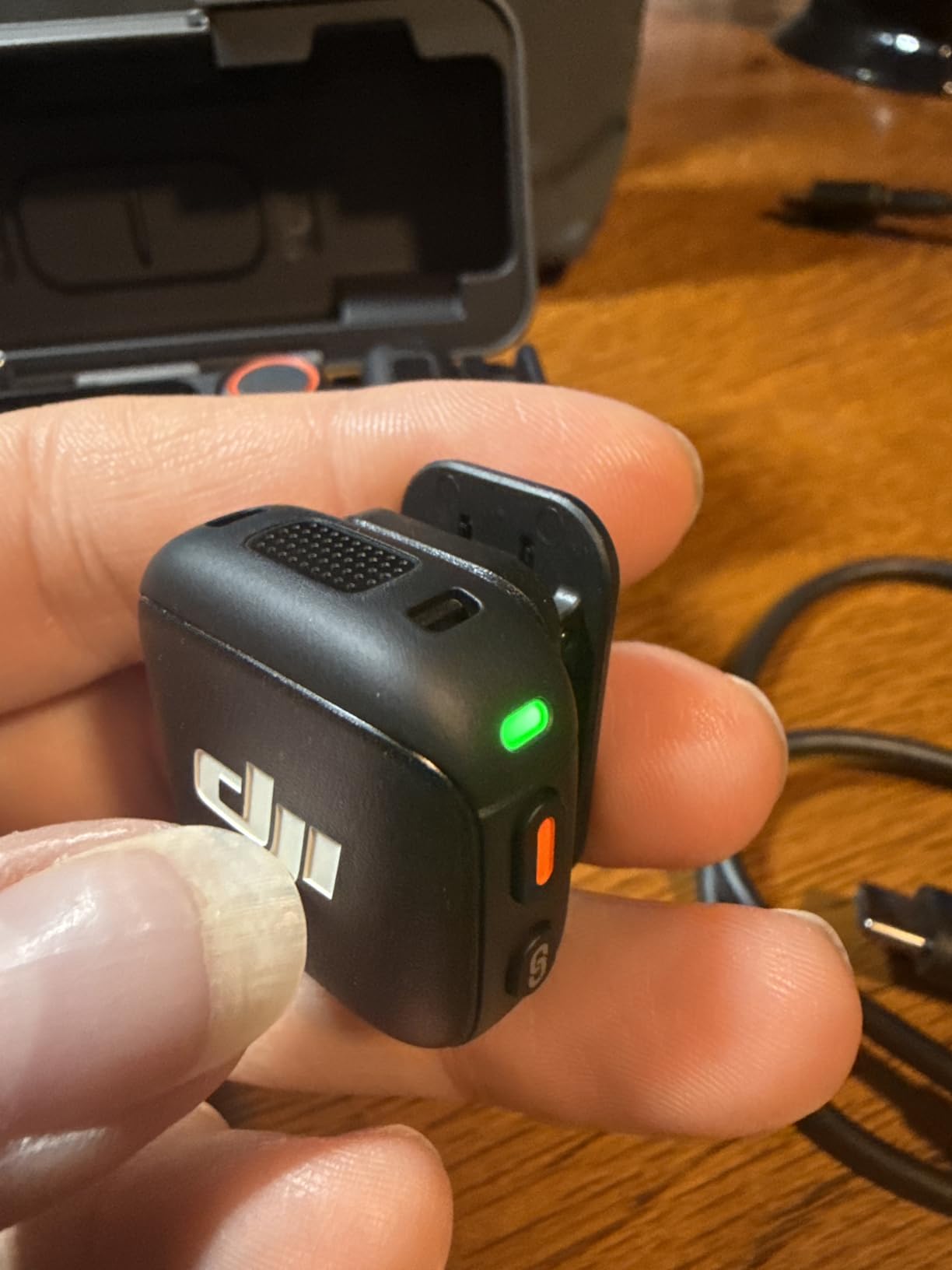
This system is built for production teams, podcast studios with multiple hosts, event videography covering panel discussions, and professional filmmakers who need reliable multi-channel audio. The 28-hour battery life is the longest in this roundup, making it viable for extended productions and multi-day shoots.
The three voice tone options and two noise-cancelling levels give you creative control over how audio sounds at the capture stage, reducing post-production work. For creators who produce professional content regularly, these features save significant editing time.
The Cost of Going Pro
The DJI Mic 3 is the most expensive system here, and for most solo content creators it represents more capability than needed. If you never record more than one or two people simultaneously, the DJI Mic 2 provides the same 32-bit float quality at a lower price. The Mic 3 makes sense when multi-channel recording is a genuine production requirement, not a someday feature.
How to Choose the Best Wireless Lavalier Microphone
Choosing the right wireless lavalier microphone comes down to matching features to your specific content type. Here are the key factors our team evaluated during testing, and the questions you should ask before buying.
Audio Quality and Bit Depth
Audio quality is measured by bit depth and sampling rate. Budget mics typically offer 16-bit audio at 48kHz, which is adequate for social media content. Mid-range options like the Hollyland Lark A1 deliver 24-bit audio, which captures more dynamic range and sounds noticeably richer. Premium systems like the DJI Mic 2 and Mic 3 offer 32-bit float recording, which eliminates clipping entirely and is the gold standard for professional audio.
For YouTube and podcast content, 24-bit audio is the sweet spot. For wedding videography and event coverage where audio levels are unpredictable, 32-bit float is worth the investment.
Wireless Range and Reliability
Wireless range matters more for signal stability than for actual distance. A 400-meter range mic like the DJI Mic Mini will maintain a rock-solid connection at 10 meters where a shorter-range system might start dropping out. Look for dual-band anti-interference technology if you shoot in environments with heavy wireless traffic like conventions, concerts, or urban areas.
In practice, most content creators shoot within 5 to 10 meters of their camera. Focus on signal reliability rather than maximum range, since a stable connection at close range matters more than a theoretical long-distance spec.
Battery Life and Charging Options
Battery life is one of the most common pain points creators mention. The Mini Mic Pro offers 6 hours, which works for short shoots but creates anxiety during longer productions. Systems with charging cases like the Hollyland Lark A1 at 54 hours and the DJI Mic 2 at 18 hours remove this concern entirely.
Pass-through charging is another feature to look for. The ability to charge your phone while recording through the receiver means you can extend shooting time without battery anxiety, which is especially valuable for all-day events.
Connectivity and Device Compatibility
Check which connectors your devices use before buying. USB-C is the current standard for Android phones and iPhone 15 and later. Lightning is needed for older iPhones. Some systems like the DJI Mic 2 include both adapters, while others like the Rode Wireless Micro are USB-C only. Camera compatibility through 3.5mm TRS cables is also important if you shoot with dedicated cameras.
Bluetooth connectivity is a bonus feature on some models like the DJI Mic Mini, which can connect directly to DJI Osmo devices without the receiver. This simplifies your rig but locks you into a specific ecosystem.
Noise Cancellation Technology
Noise cancellation quality varies enormously between budget and premium systems. Budget mics typically offer a single noise reduction mode that works moderately well. Mid-range systems like the Hollyland Lark A1 provide multiple levels for different environments. Premium systems use AI-powered intelligent noise cancelling that adapts to your surroundings in real time.
Wind noise is a separate concern. Look for systems that include foam windscreens and furry deadcat wind muffs, which are essential for outdoor recording. The Mini Mic Pro includes both, which is impressive at its price point.
Frequently Asked Questions
What are some good choices for lavalier mics for a low budget?
For a low budget, the Mini Mic Pro at under $25 and the BOYA BY-V20 at around $33 are excellent choices. Both offer plug-and-play setup, noise cancellation, and dual transmitter options. The Hollyland Lark A1 at around $36 is slightly more but delivers true 48kHz/24-bit studio audio quality that punches well above its price class.
What is the best wireless lavalier microphone for YouTube?
The DJI Mic Mini is the best wireless lavalier microphone for YouTube content creators. It offers a 10-gram ultralight transmitter, 400-meter range, two-level active noise cancellation, and automatic limiting to prevent clipping. At under $50 with a 4.7-star rating from over 4254 reviews, it delivers professional audio quality at an accessible price.
How do I choose a wireless lavalier microphone?
Choose a wireless lavalier microphone by considering audio quality (24-bit minimum for professional content), wireless range and signal reliability, battery life with charging case, device compatibility with your phone or camera connectors, and noise cancellation technology. Match features to your content type: solo vloggers need single TX systems, interview creators need dual TX, and professionals benefit from 32-bit float recording.
What is the best budget wireless microphone for content creators?
The Hollyland Lark A1 is the best budget wireless microphone for content creators, offering 48kHz/24-bit studio-quality audio, 3-level intelligent noise cancellation, a 200-meter range, and up to 54 hours of battery life with its charging case. At around $36, it delivers features typically found on systems costing two to three times more.
Which brand makes the best wireless microphones?
DJI and Rode are the top brands for wireless lavalier microphones. DJI leads with 32-bit float recording technology and ecosystem integration, while Rode is known for build quality and GainAssist auto-leveling. Hollyland is the strongest value brand, delivering premium audio specs at budget prices. The best brand depends on your budget and content needs.
Final Verdict: Which Wireless Lav Mic Should You Buy?
After testing all 9 systems across different devices, environments, and content types, three recommendations stand out. The DJI Mic Mini is my overall top pick for most content creators, offering the best balance of audio quality, portability, and value with its 10-gram transmitter and 400-meter range. The Hollyland Lark A1 is the best value choice, delivering genuine 24-bit studio audio and 3-level noise cancellation at a budget-friendly price.
For professional work where audio cannot fail, the DJI Mic 2 with 32-bit float recording is worth every penny. It removes clipping entirely and provides the reliability that wedding videographers and professional filmmakers need.
The best wireless lavalier microphones for content creators in 2026 are more capable and affordable than ever. Whatever your budget or content type, one of these nine systems will take your audio from amateur to professional without the frustration of cables, dropouts, or poor sound quality.