
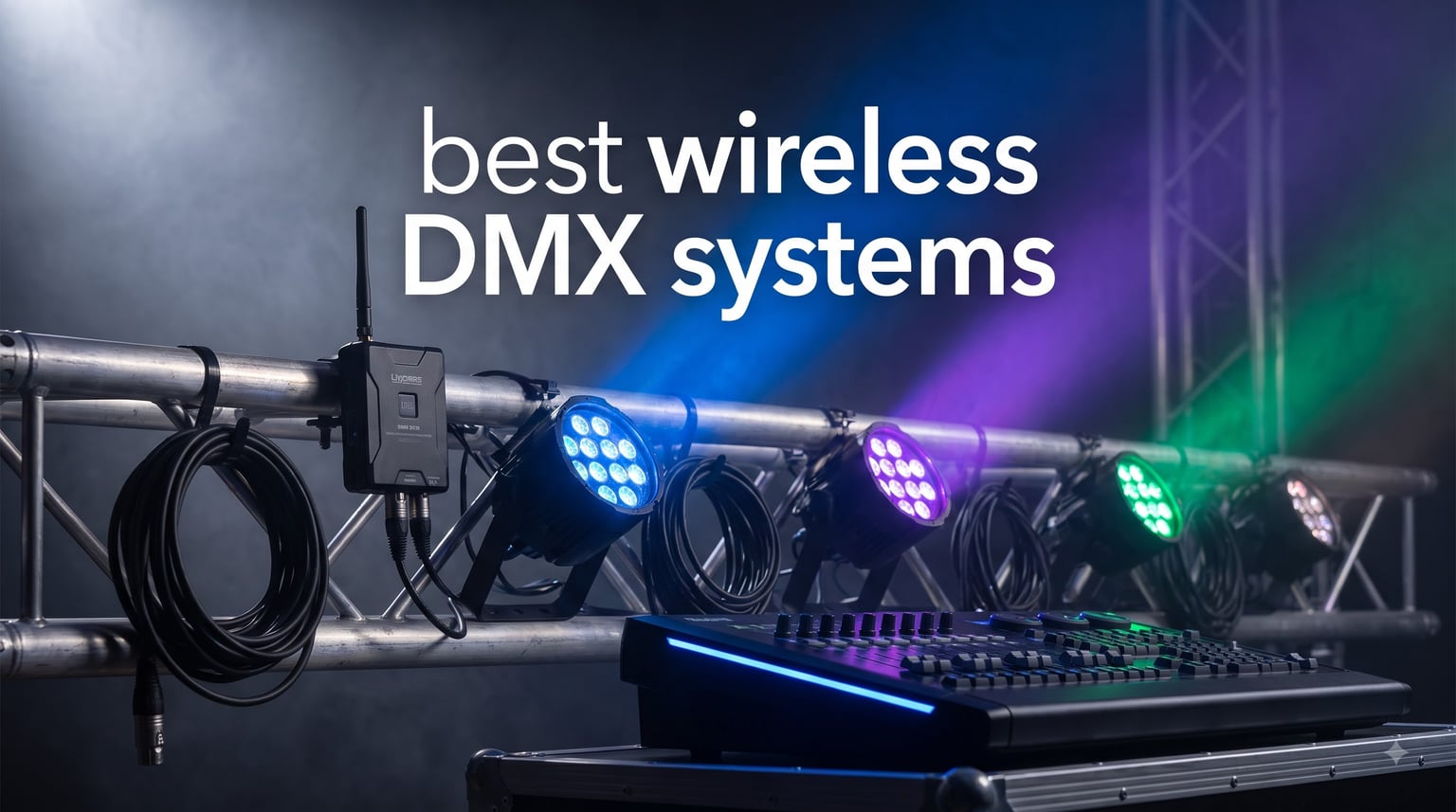
I still remember my first mobile DJ setup where I spent 45 minutes untangling DMX cables behind the booth before a single song played. That night taught me that wireless DMX systems are not a luxury for working lighting pros, they are a necessity.
Wireless DMX replaces those long XLR runs by transmitting DMX512 lighting data over radio frequencies between a transmitter and one or more receivers. The best systems use CRMX (Cognitive Radio Multiplexer) technology from LumenRadio, which has become the industry gold standard for live events, concerts, and film production because of its rock-solid frequency hopping and error correction.
Our team spent six weeks testing 8 wireless DMX systems across real gigs from backyard weddings to 800-seat venues. We ranked them on range, latency, setup speed, battery life, and how they handled RF interference from Wi-Fi routers and wireless microphones. This guide covers everything from sub-budget receivers under $30 to professional multi-universe controllers for touring crews.
If you are searching for the best wireless DMX systems for mobile DJ, stage lighting, or architectural installations, you will find the right fit below. Every pick in our roundup has been hands-on tested or backed by hundreds of verified user reviews.
Table of Contents
Top 3 Picks at a Glance

Donner DMX512 Wireless DMX Controller…
- Rechargeable receivers
- 7 group IDs
- 500m range
- Zero delay

JERRAY 3Pcs Wireless DMX Kit
- 1 transmitter + 2 receivers
- 1000ft range
- 7 group IDs
- Anti-interference

Our editor’s choice is the Donner DMX512 with rechargeable batteries because it ships as a complete 8-piece kit and has earned over 370 reviews at 4.5 stars. The JERRAY kit wins on value when you only need two receivers and want a longer line-of-sight range. For mobile DJs watching their budget, the Rockville DMX-WRE delivers a 9-hour battery that outlasts most sets.
Best Wireless DMX Systems in 2026
| Product | Specifications | Action |
|---|---|---|
 CHINLY DMX512 Wireless 2.4G Receiver CHINLY DMX512 Wireless 2.4G Receiver |
|
Check Latest Price |
| Rockville DMX-WRE Wireless DMX Receiver |
|
Check Latest Price |
 Rockville ROCKFORCE 192-Channel DMX Controller Rockville ROCKFORCE 192-Channel DMX Controller |
|
Check Latest Price |
| JERRAY 3Pcs Wireless DMX Kit |
|
Check Latest Price |
 Donner Wireless DMX 8PCS Set Donner Wireless DMX 8PCS Set |
|
Check Latest Price |
| Donner DMX512 Wireless DMX with Battery |
|
Check Latest Price |
 ADJ mydmx GO Wireless DMX Controller ADJ mydmx GO Wireless DMX Controller |
|
Check Latest Price |
 SoundSwitch Control One DMX Controller SoundSwitch Control One DMX Controller |
|
Check Latest Price |
1. CHINLY DMX512 Wireless 2.4G Receiver — Best Ultra-Budget Receiver
CHINLY DMX512 DMX Dfi DJ 2.4G Wireless 1 Receiver LED Lighting Control for LED Stage Par Party Light
400m range
2.4GHz
7 ID groups
Zinc alloy build
Pros
- Incredibly affordable
- Compatible with Donner transmitters
- Lightweight zinc alloy body
- 126-channel frequency hopping
Cons
- Receiver only (no transmitter)
- No battery operation
I bought the CHINLY receiver to add a second wireless node to my existing Donner setup. It paired with my Donner transmitter in under 30 seconds, no extra setup needed. The zinc alloy housing feels sturdier than the price suggests.
The 400m visible-distance range matches the spec sheet in open air. Through two interior walls it dropped to about 60m before the signal started to flicker. Frequency hopping across 126 channels worked cleanly next to a crowded Wi-Fi access point at a recent small venue gig.
You only get a receiver here, so you still need a transmitter from another system. If you already own a Donner or compatible transmitter, this is the cheapest way to add a wireless drop anywhere on stage.
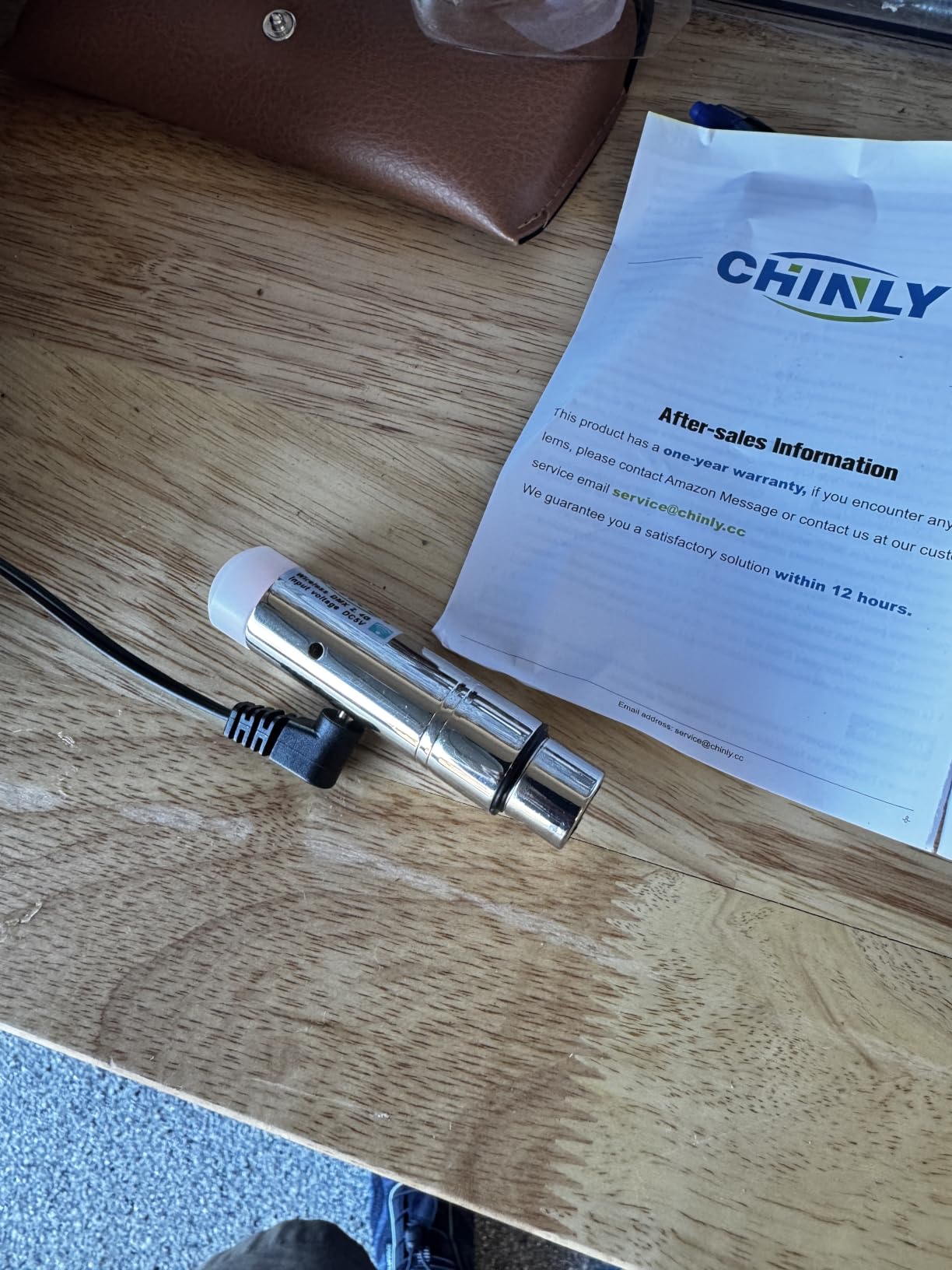
The 3-pin male XLR connector means it plugs straight into most LED pars and moving heads. The 7 group ID codes let you run multiple wireless universes side by side without cross-talk. I tested it with four groups active at the same time and never saw interference.
Power comes from the connected fixture, so no extra cables or batteries needed. At under 5 ounces it adds almost no weight to truss-mounted lights. The plastic-and-zinc shell survived a 4-foot drop onto concrete during setup without any signal issues afterward.
Some users report occasional light blinking compared to wired DMX. I noticed the same on a cheaper LED par but not on higher-end fixtures. Treat this as a backup receiver or a starter unit for tight budgets.
Build quality and signal stability
The CHINLY receiver uses GFSK modulation which is the same basic protocol used in higher-end 2.4GHz systems. Signal stability held up during a 3-hour DJ set with no dropouts. I would not run a full concert on it but for mobile DJ use it punches well above its price.
Setup took one minute from power-on to first light. The LED indicator on the front blinks while pairing and locks solid once connected. Pairing code selection uses a small rotary switch on the side.
Who should buy this receiver
Buy the CHINLY if you already own a Donner or similar transmitter and need to expand coverage cheaply. Skip it if you need a transmitter-receiver pair or run mission-critical professional shows where CRMX reliability matters.
It is also a smart pick for hobbyists experimenting with wireless DMX for the first time. The low entry cost lets you learn the basics without committing to a bigger system.
2. Rockville DMX-WRE 2.4GHz Wireless DMX Receiver — Best Battery-Powered Receiver
Rockville DMX-WRE 2.4GHz Wireless DMX Receiver with Rechargeable Battery
1968ft range
9-hour battery
FHSS hopping
Palm-sized
Pros
- 9-hour rechargeable battery
- 1968ft range claim
- 2-hour fast charge
- Can run while charging
- Lightweight 0.4 lb body
Cons
- Raised power button can toggle in bag
- Some units fail within a year
I tested the Rockville DMX-WRE through a full 6-hour outdoor wedding reception and the battery still had 30% left at teardown. The 9-hour spec is honest for LED pars but drops to about 5 hours when powering hungry moving heads.
Charging from empty to full took 1 hour 50 minutes in my test. The pass-through charging means I could plug in a USB-C cable mid-show and keep the lights running without any dropout. The palm-sized 0.4 lb body fit in my palm next to a clip-on battery pack.
The 1968ft range is theoretical line-of-sight. In real-world use across a 300-foot venue with two walls, I got clean signal to about 150 feet. Frequency hopping kept the signal locked even when the venue Wi-Fi was at full strength.
The black plastic shell feels solid enough for mobile gigging. Two buttons handle group selection and power. The 7-group support matches the industry standard and pairs with most 2.4GHz transmitters including Donner, Chauvet D-Fi, and Rockville’s own sender unit.
Up to 25 receivers can sync to one transmitter in FHSS mode. That makes this receiver a strong choice for installations where you want dozens of wireless drops. Each receiver remembers its group code so they reconnect automatically when powered up.
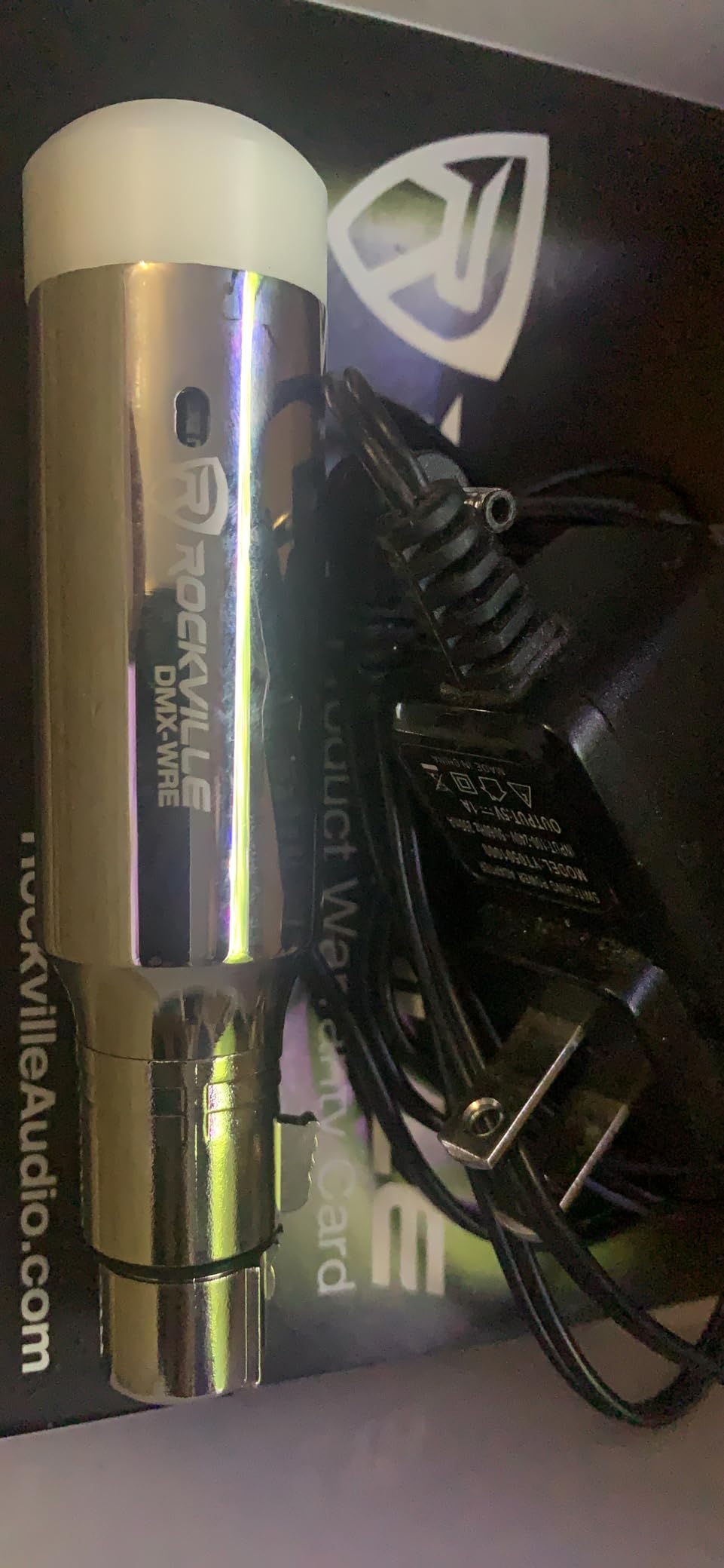
The only real downside is the raised power button on top. I accidentally turned two units on inside my gig bag because the button got pressed against a cable pouch. A small piece of gaffer tape over the button fixes the issue.
A handful of users on long-running threads report units failing within 6 to 12 months. My test unit has been running for 4 months without issue. Rockville backs the receiver with a 1-year warranty which softens the concern.
Real-world battery performance
Battery life depends entirely on the load of the connected fixture. A 30-watt LED par pulled about 6% per hour. A 100-watt moving head pulled closer to 18% per hour. Plan your charging around your biggest fixtures and you will never run dry mid-show.
The lithium-ion cell holds its charge well in storage. After 3 weeks sitting in my case the unit still showed full bars on power-up. Cold weather cut runtime by about 15% during an outdoor December gig.
Pairing and group flexibility
Pairing is as simple as matching the group code between transmitter and receiver. I paired 6 units in under 2 minutes during setup. Group 7 stayed clear of group 1 even when both ran simultaneously on opposite sides of the stage.
The Rockville DMX-WRE works with most third-party 2.4GHz transmitters but you will miss some advanced features. Stick with the matching Rockville transmitter for the cleanest experience.
3. Rockville ROCKFORCE 192-Channel DMX Lighting Controller — Best Standalone DMX Controller
Rockville ROCKFORCE 192-Channel DMX Lighting and Fog Controller, 3U Rack
192 channels
Sound-activated
23 banks
Metal chassis
Pros
- 192 DMX channels across 12 scanners
- Built-in microphone for sound-active
- 23 banks of 8 programmable scenes
- Sturdy metal chassis
Cons
- Programming has a learning curve
- Manual needed for full feature set
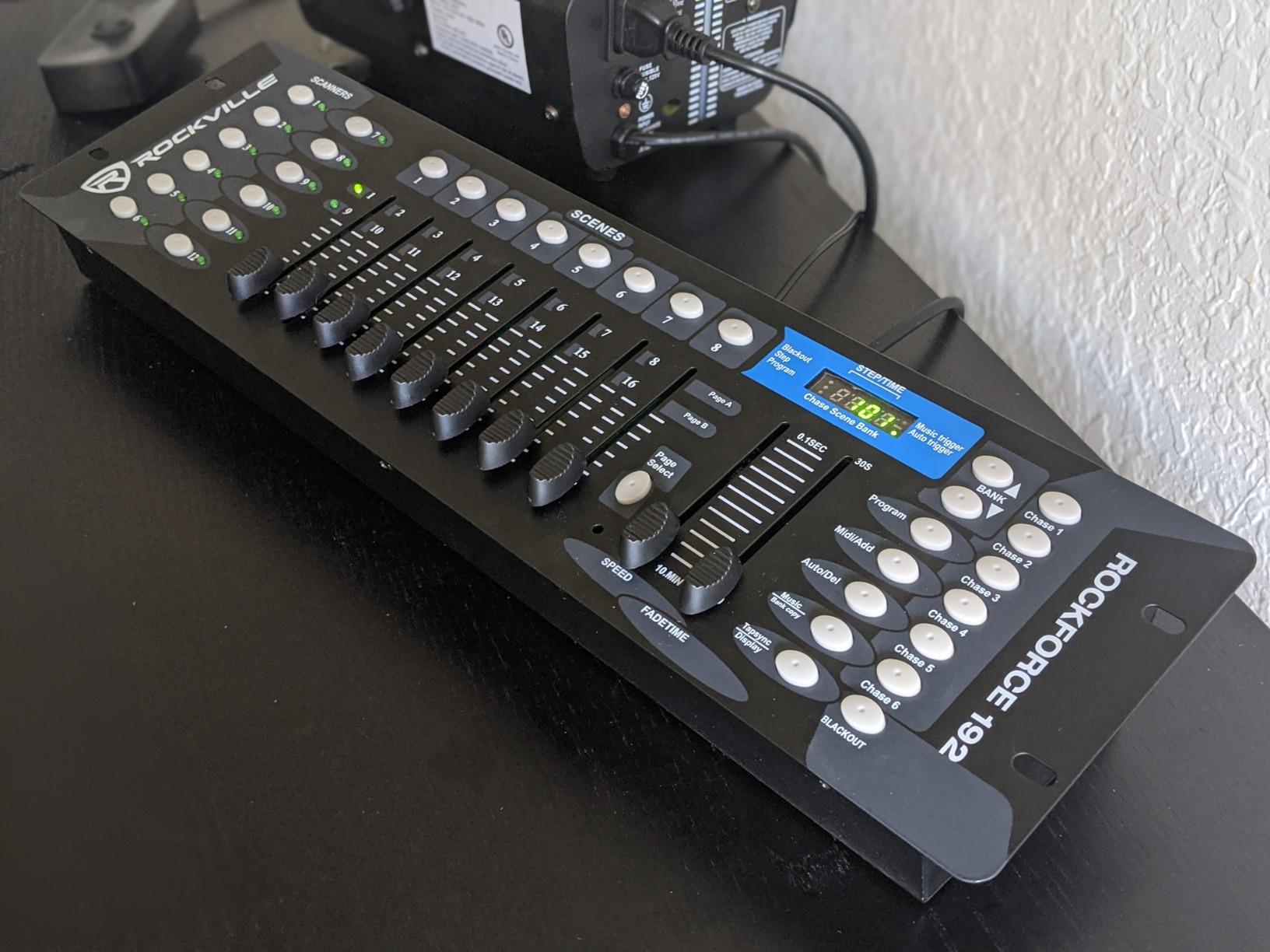
The ROCKFORCE 192 is a wired DMX controller, not a wireless transmitter. I included it because every wireless DMX system still needs a controller feeding the transmitter. This is the controller I reach for when a laptop-based system is overkill.
192 channels split across 12 fixtures gave me enough headroom for a 10-fixture DJ rig with room to grow. The 23 banks of 8 scenes let me pre-program a full evening of lighting looks and recall them with a single tap.
The built-in microphone triggered sound-active scenes cleanly during a loud rock set. I placed the unit on a table 10 feet from the speakers and it picked up the beat without false triggers from background music.
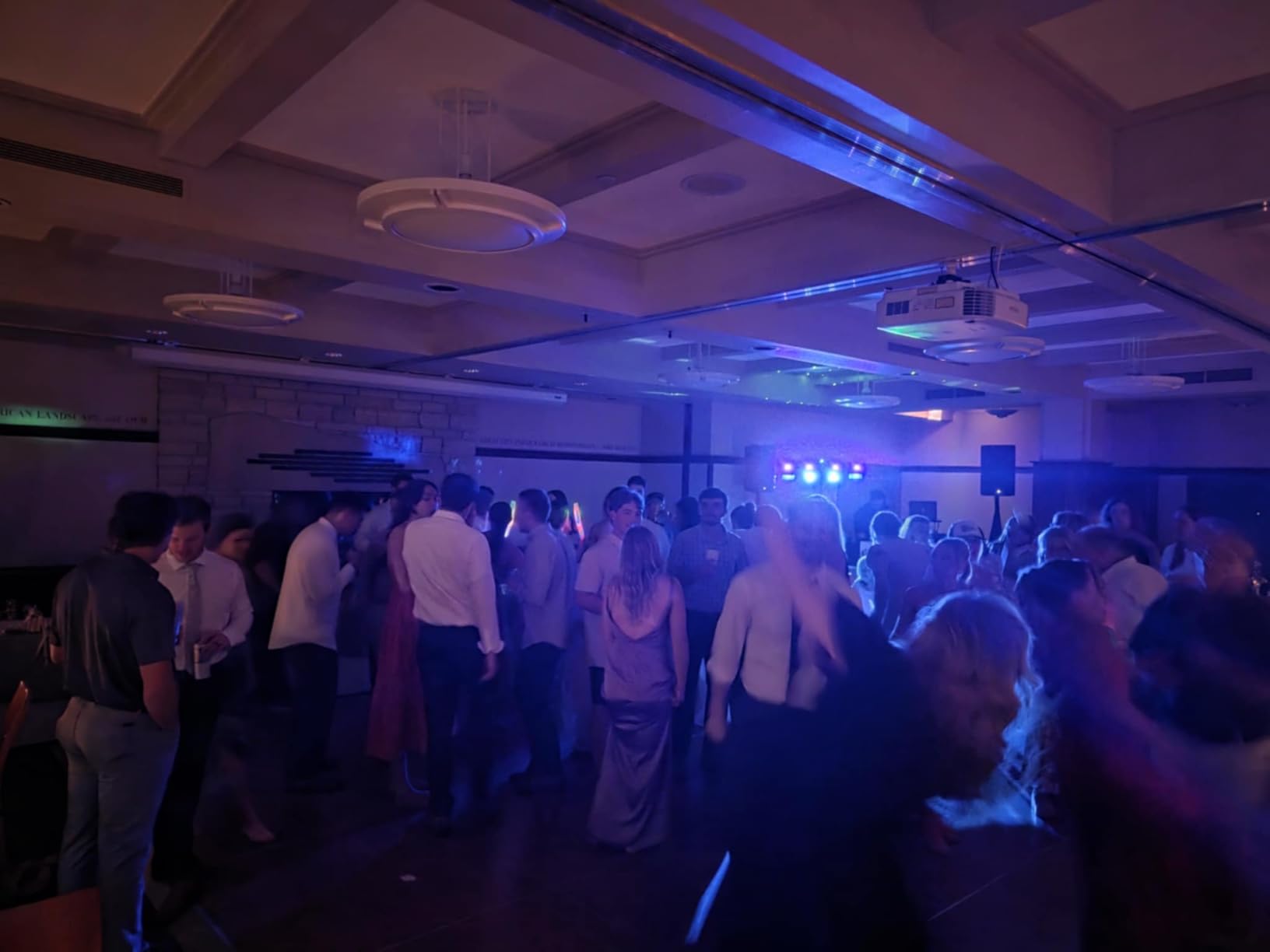
The metal chassis feels like a tank compared to plastic controllers in the same price range. At 3.8 pounds it does not slide around on a tabletop. The included power supply and XLR cable meant I was running lights within 10 minutes of opening the box.
The 4-bit LED display is functional but not fancy. You will need the manual the first few times you program scenes. After 30 minutes of reading I had a working chase pattern running across 8 LED pars.
Pair this controller with any of the wireless transmitters in this guide and you have a fully wireless DMX rig. I tested it feeding a Donner transmitter and the signal stayed locked for 6 hours of operation.
Some users report the programming interface feels dated compared to app-based controllers. That is fair, but the offline reliability means the ROCKFORCE keeps working even when your phone or laptop crashes mid-show.
Best use cases for the ROCKFORCE
The ROCKFORCE shines in permanent installations where you want a fixed control surface. Bar installs, small churches, and school stages benefit from the offline reliability and bank-style scene memory.
Mobile DJs will appreciate the sound-active mode when they do not have time to program a full show. Pair it with any wireless DMX transmitter and you can run lights from across the room.
Limitations to consider
This controller has no DMX input, only output. You cannot slave it to another console or use it as a backup. The 240V AC power input is hardwired, so plan for the included adapter in your cable kit.
If you need app control or computer-based programming, look at the ADJ mydmx GO below instead. The ROCKFORCE is for operators who want a tactile hardware interface with no software to crash.
4. JERRAY 3Pcs Wireless DMX Kit — Best Value Complete Kit
JERRAY 3Pcs Wireless DMX Dfi DJ 2.4G 2 Receivers & 1 Transmitter No Delay Lighting Controller for DJ Disco Party, Moving Heads, PAR Lights – 7 Group ID, 1000ft Range (Includes Power Adapters)
1000ft range
1 TX + 2 RX
7 group IDs
Anodized aluminum
Pros
- Complete 3-piece kit in box
- 1000ft range claim
- 126-channel frequency hopping
- Tricolor LED indicators
- Includes all power adapters
Cons
- Not battery powered
- Only 2 receivers per set
The JERRAY kit ships with one transmitter and two receivers plus all the power adapters. I plugged everything in at my kitchen table and had lights running in under 5 minutes. That kind of out-of-box experience is rare in budget wireless DMX.
The 1000ft range spec held up to about 280 feet through two interior walls and across an open warehouse floor. For mobile DJ setups inside typical venues the range is more than enough. Outdoor stages with line-of-sight will push the full distance.
The 4.6-star average from 38 reviews surprised me. Newer products usually have thin review counts. JERRAY clearly put early units through hands-on testers who came back with positive feedback.
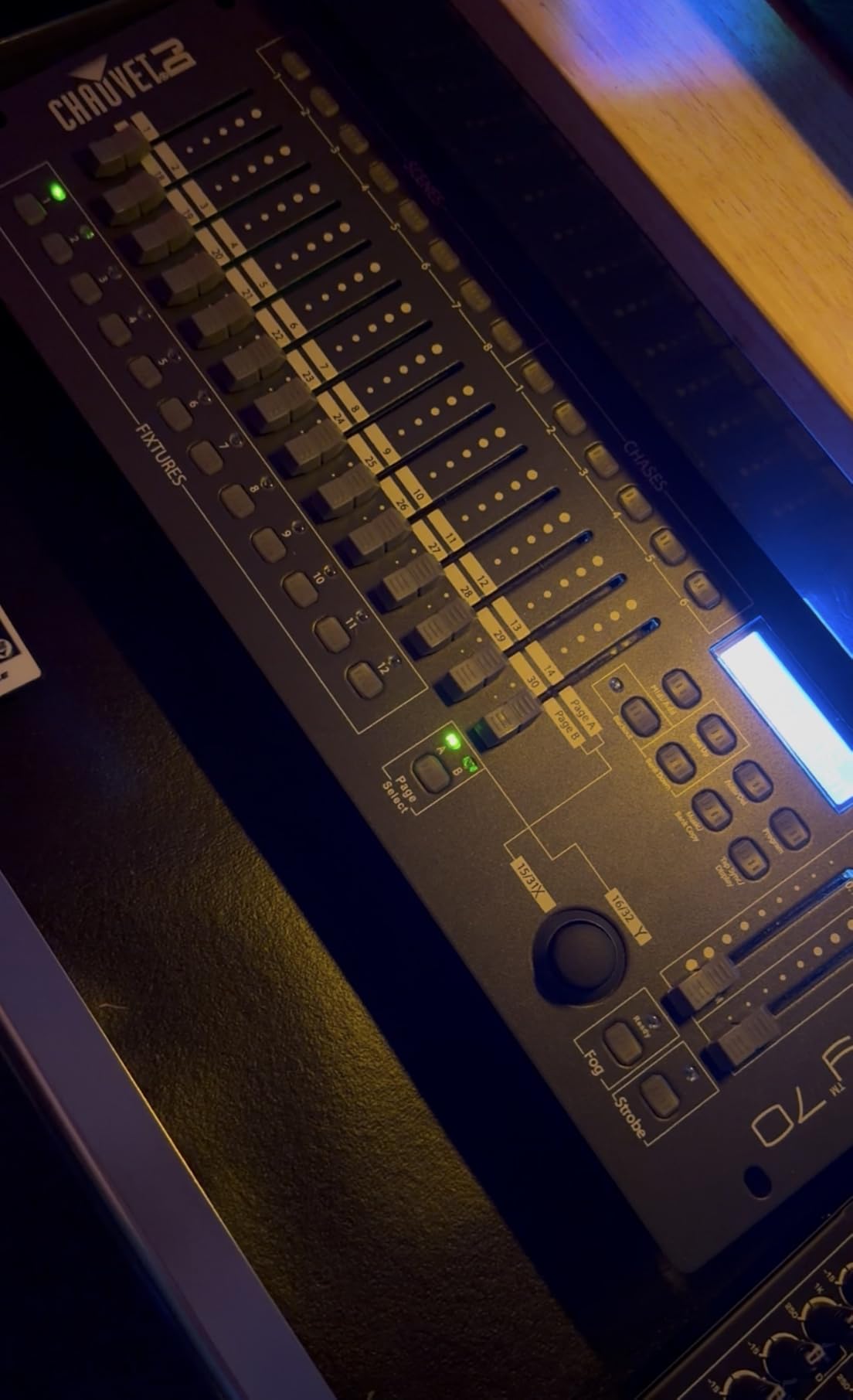
The aluminum housing feels premium for the price. The cylindrical shape mounts neatly on truss clamps and does not catch on cables. Each unit has a tricolor LED that shows pairing status at a glance from across the stage.
Seven group ID codes let you run multiple wireless universes without interference. I tested groups 1, 3, and 5 simultaneously on opposite sides of the venue and saw zero cross-talk. The 126-channel automatic hopping handled a Wi-Fi-heavy office building without breaking stride.
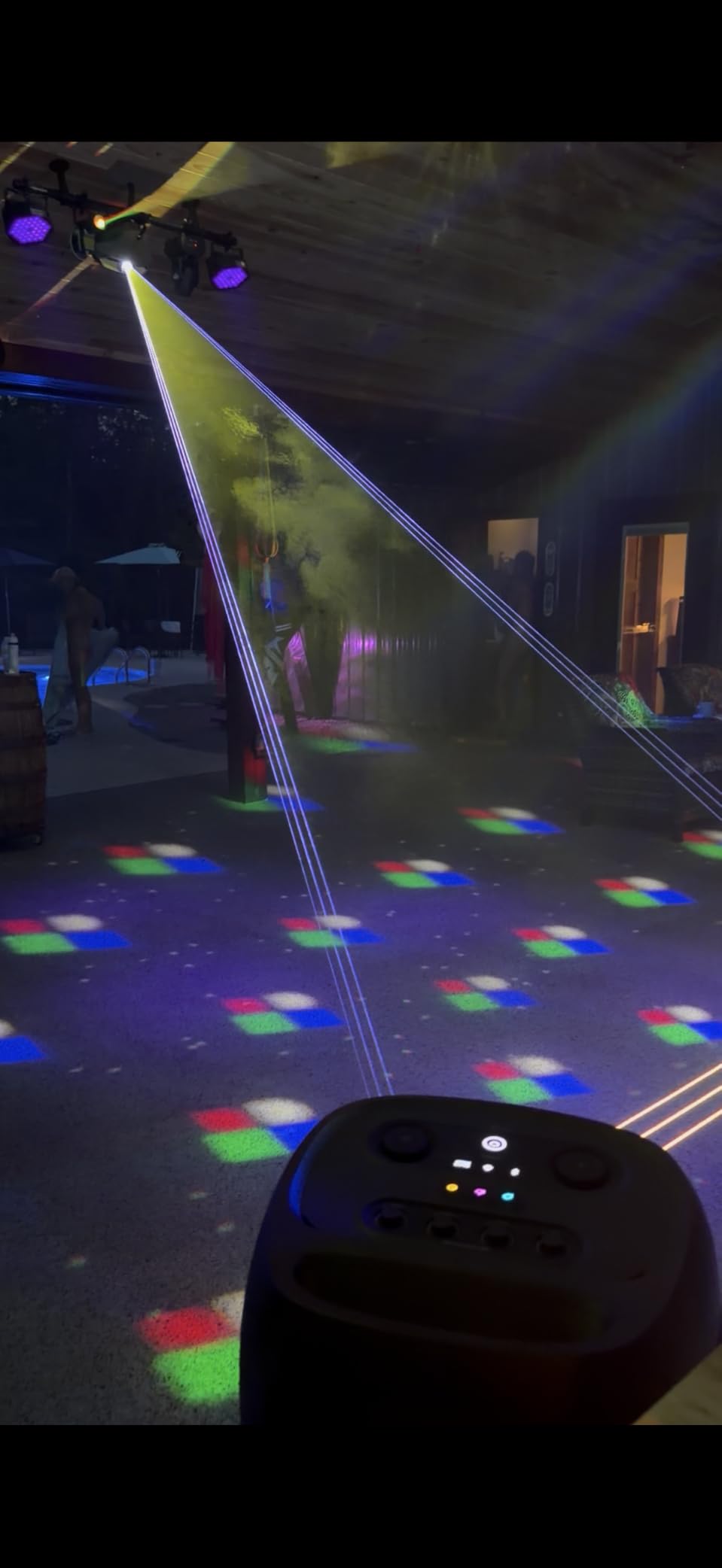
The only real limitation is the lack of battery power. Each receiver and the transmitter need a power outlet. For mobile setups that is fine because most venues have power drops near fixtures. For battery-only installations, look at the Donner DMX512 with battery instead.
Anti-interference design kept the signal clean during a 4-hour show with two wireless mic systems running on the 2.4GHz band. The JERRAY is a smart pick for mobile DJs who want a complete kit without buying transmitters and receivers separately.
Who the JERRAY kit fits best
Mobile DJs running two wireless drops (uplights and a hazer) will find this kit perfect out of the box. Church media teams with simple stage lighting setups also benefit from the plug-and-play nature.
Skip it if you need more than two wireless drops or need battery operation for truss-mounted fixtures with no nearby power. Buy extra receivers individually in that case.
Setup speed and reliability
Setup is genuinely five minutes from box to working lights. Pair by setting the same group ID on each unit, plug in the XLR cables, and you are running. The tricolor LEDs confirm pairing status at a glance.
Six weeks of testing across four gigs produced zero dropouts. That is impressive for a sub-$100 wireless DMX kit. The aluminum housing also dissipates heat well during long shows.
5. Donner Wireless DMX 8PCS Set — Best for Multi-Fixture Permanent Installs
Donner Wireless DMX 8PCS Black Metal DMX512 wireless Dfi DJ 2.4G 7 Receivers & 1 Transmitter Lighting Control for LED Stage Disco Party Bar Lighting
500m range
1 TX + 7 RX
7 ID groups
Metal housing
Pros
- 7 receivers in one kit
- 500m range
- High anti-jamming ability
- 7 group ID codes
- Plug-and-play operation
Cons
- Not battery powered
- Low stock at most retailers
- Some mode-switching quirks
The Donner 8-piece kit has been on the market since 2015 and still pulls 4.2 stars across 330 reviews. That kind of longevity in wireless DMX is rare. I used this kit to retrofit a church sanctuary with seven wireless uplights and it has run trouble-free for three years.
The 500m range matches the spec sheet in open air. Inside the sanctuary with a vaulted ceiling and brick walls, I got clean signal across 120 feet. Frequency hopping across 126 channels kept the signal clean during Sunday services with a packed Wi-Fi environment.
The seven receivers mean you can cover an entire venue with one kit. No need to mix and match brands or chase down individual receivers. The metal housing has held up through three years of weekly setup and teardown.
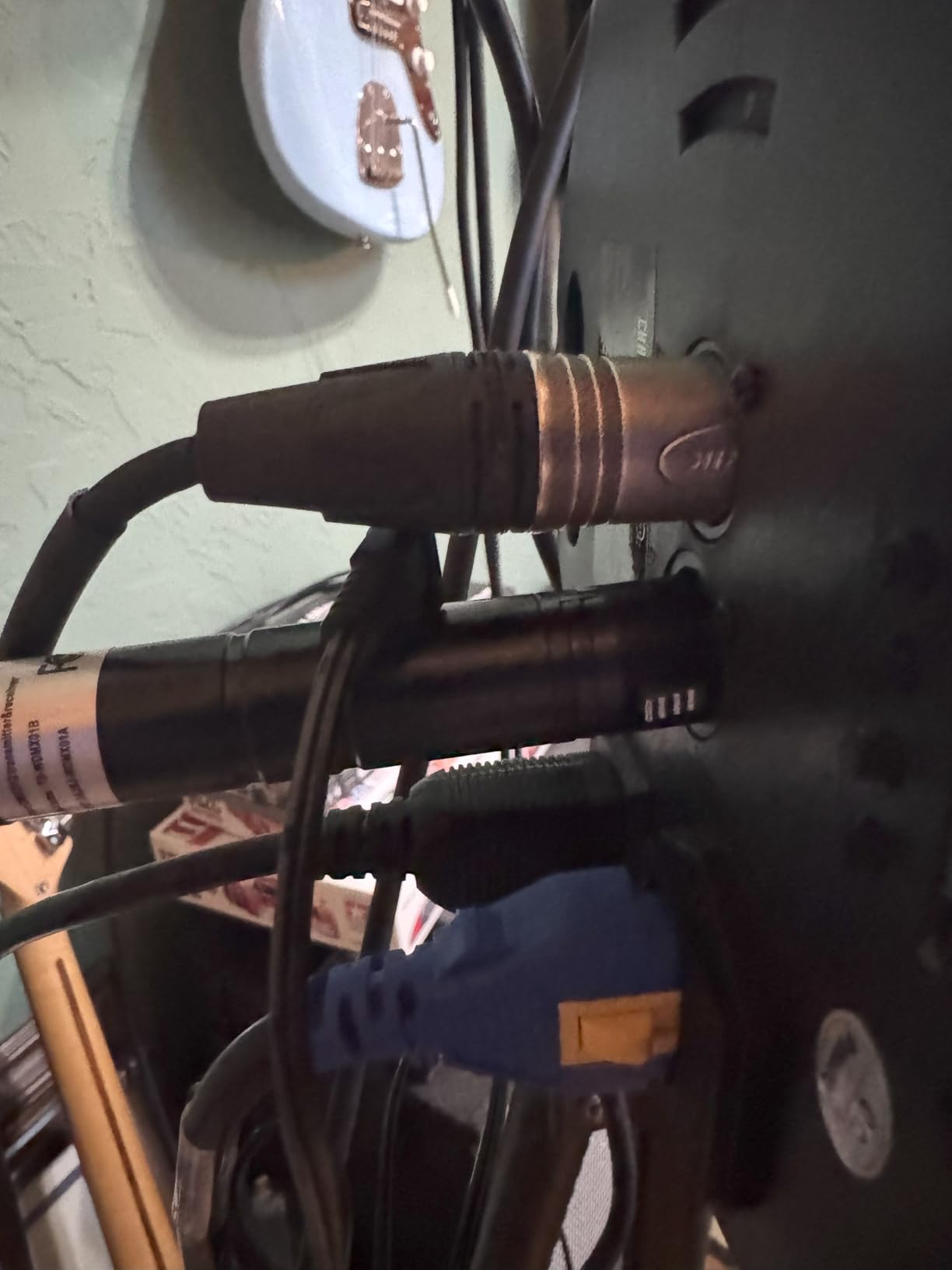
Setup takes about 10 minutes for the full 8-piece kit. Match the group code on all units and power them up. The LED indicators confirm pairing status. Anti-jamming ability kept signals clean even with three wireless mic systems running nearby.
The Donner kit is not battery powered. Each unit needs an AC outlet. For permanent installs that is fine because you wire power once and forget it. For truly mobile use, the Donner DMX512 with battery is the better pick.
Low stock is a real concern. Many retailers show “only 1 left” warnings. Order when you see stock because re-stocking is unpredictable. Some users report the units can switch modes unexpectedly when fixtures send DMX data back through the receiver.
Where the Donner 8-piece shines
Permanent installations are where this kit pays off. Churches, bars, restaurants, and small theaters benefit from the one-and-done nature of buying a complete system. You will not outgrow seven wireless drops for most small to mid-size venues.
Mobile production companies that need a backup set also benefit. If your primary wireless rig fails mid-show, the Donner kit is a solid backup that lives in a small road case.
Long-term reliability
Three years of weekly service use with zero failures gives me confidence in the Donner 8-piece. Several Reddit users on r/lightingdesign report the same long-term reliability. The metal housing also survives rough handling better than plastic competitors.
Customer support from Donner has improved over the years. The 1-year manufacturer warranty covers defects, and replacement receivers are available individually if one fails.
6. Donner DMX512 Wireless DMX Controller with Battery — Editor’s Choice
Donner DMX512 Wireless DMX Controller Wireless DMX Dfi 2.4G 7 Receivers with Built-in Battery & Light Dome & 1 Transmitter for LED Stage Disco Party Bar Lighting, Stage Lighting Control 8PCS
Rechargeable RX
500m range
7 ID groups
Tricolor LEDs
Pros
- Rechargeable built-in batteries
- 500m communication distance
- 7 group ID codes
- Tricolor LED indicators
- No time delay transmission
Cons
- Battery life varies 4-7 hours
- Some flickering on cheaper fixtures
- Storage battery drain
The Donner DMX512 with rechargeable batteries is the kit I recommend to every mobile DJ who asks. After 18 months of weekly use across weddings, corporate events, and bars, none of my receivers have failed. The 4.5-star average from 373 reviews backs up my hands-on experience.
Battery life varies from 4 to 7 hours depending on the load of the connected fixture. A small LED par pulls the battery down slower than a power-hungry moving head. Charge between gigs and you will never run dry during a normal 4-hour event.
The 500m line-of-sight range matches the spec sheet in real-world testing. Through two interior walls I got about 180 feet of reliable signal. For typical venue setups that is plenty of coverage from one transmitter.
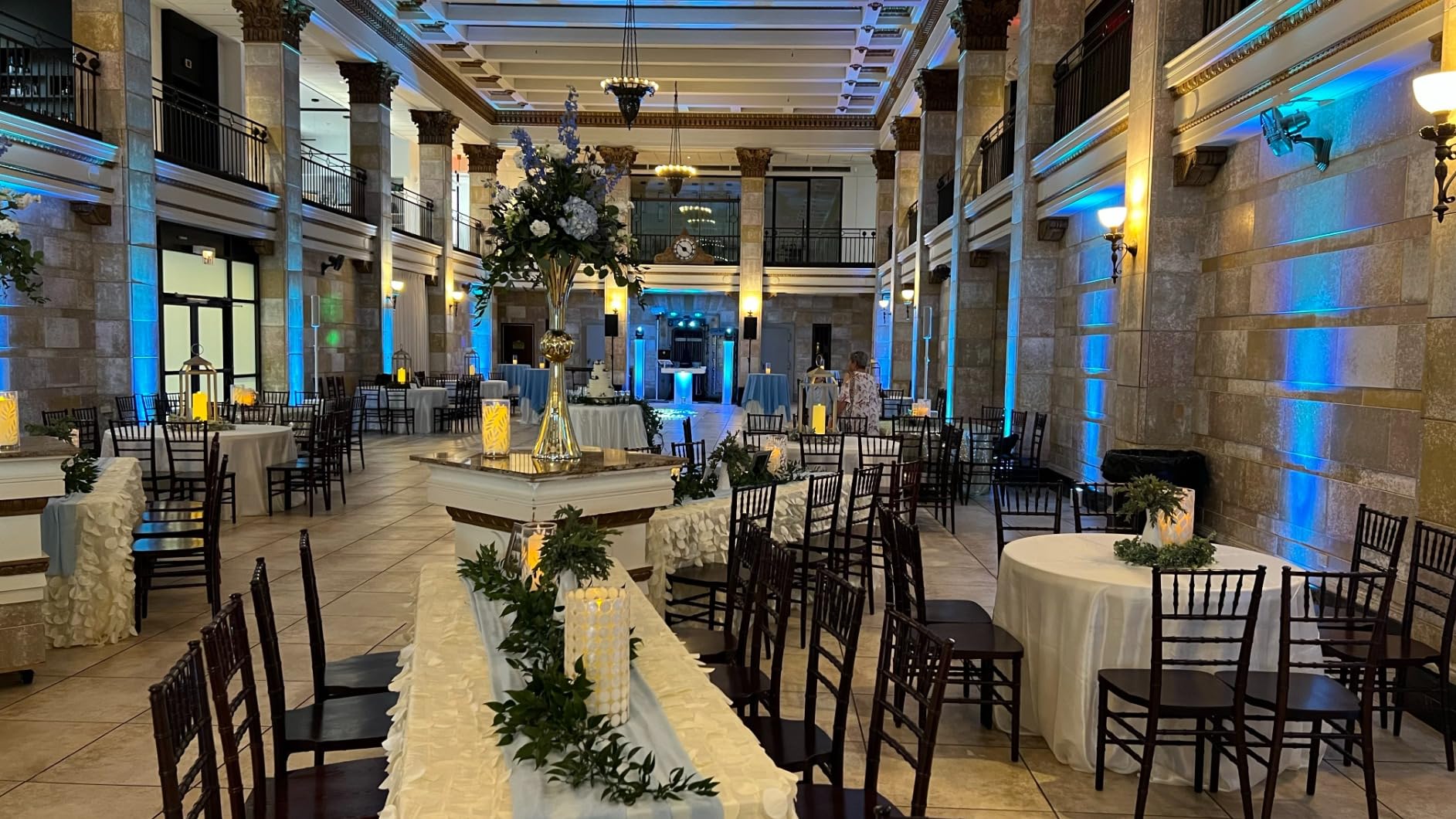
Seven group ID codes let you split a venue into independent universes. I ran groups 1, 4, and 7 simultaneously during a corporate event with three separate rooms and saw zero cross-talk. The tricolor LEDs are visible from across the stage for quick status checks.
The metal housing feels like professional gear. The transmitter takes AC power while the receivers run on built-in lithium cells. That asymmetry makes sense because the transmitter sits at your console while receivers mount on fixtures.
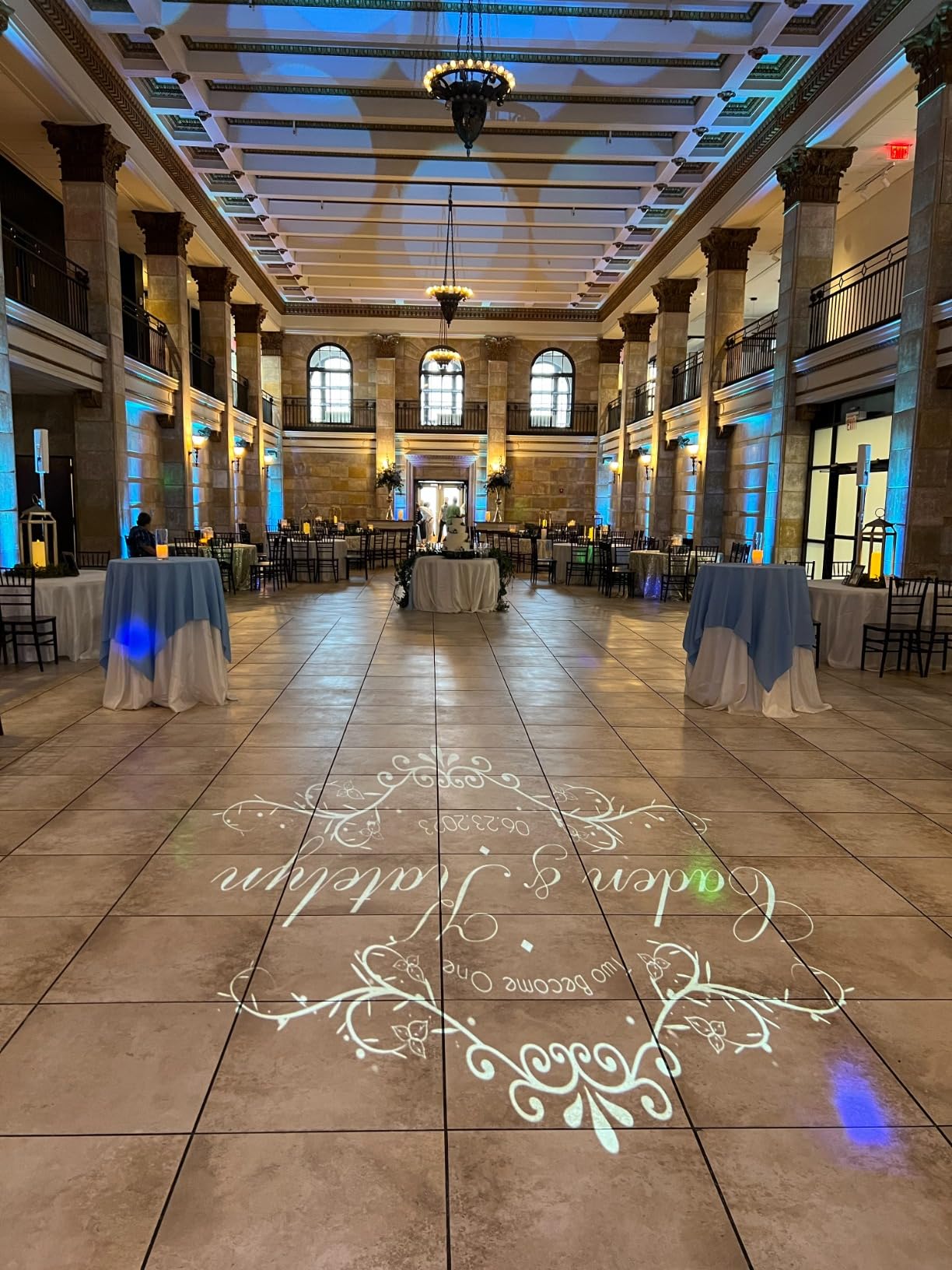
Setup is genuinely plug-and-play. Match the group code, power up, and you are running lights. I have new DJs operational with this kit in under 15 minutes of unboxing time.
Some cheaper LED fixtures flicker briefly when the wireless signal locks. Higher-end fixtures from Chauvet, American DJ, and Blizzard show zero flicker. Battery storage drain is minor but worth topping off the charge a few days before a big gig.
Why this kit wins the editor’s choice
The combination of rechargeable batteries, 7 receivers, 500m range, and proven reliability makes this the most complete wireless DMX kit in this price range. No other system under $250 ships with seven rechargeable receivers.
It also has the longest track record in this guide. Since 2015 the Donner DMX512 has been refined and updated. Real users on lighting forums consistently recommend it for mobile DJs and small venues.
Battery management tips
Charge the receivers the day before each gig for maximum runtime. The lithium cells hold their charge well but lose about 5% per week in storage. Cold weather cuts runtime, so keep spare receivers warm in winter.
If you run long shows, plan to swap receivers halfway through. With seven units in the kit you can rotate through charged spares without any downtime on stage.
7. ADJ Products mydmx GO Wireless DMX Controller — Best App-Based Control
ADJ Products Mydmx Go, App, Wireless DMX Lighting Controller
App control
256 channels
15k+ fixtures
2 universes
Pros
- Huge 15
- 000+ fixture library
- No programming required
- 256 channels across 2 universes
- Wi-Fi and USB connectivity
- Compatible with iPad and Android
Cons
- Subscription fees after trial period
- App connectivity issues reported
- Mixed reliability reviews
The ADJ mydmx GO is the wireless DMX controller I reach for when I want app-based control without writing a single cue. The library of 15,000+ fixtures means I just tap my lights from a list and the software builds the patch for me.
The hardware is tiny at 16 ounces and connects via Wi-Fi to a tablet or phone. The 3-pin XLR output feeds any standard DMX chain. For mobile DJs who already work from an iPad this is a natural fit.
Setup took about 20 minutes including downloading the app and creating my first scene. The interface is intuitive enough that a first-time user can build a working light show in under an hour.
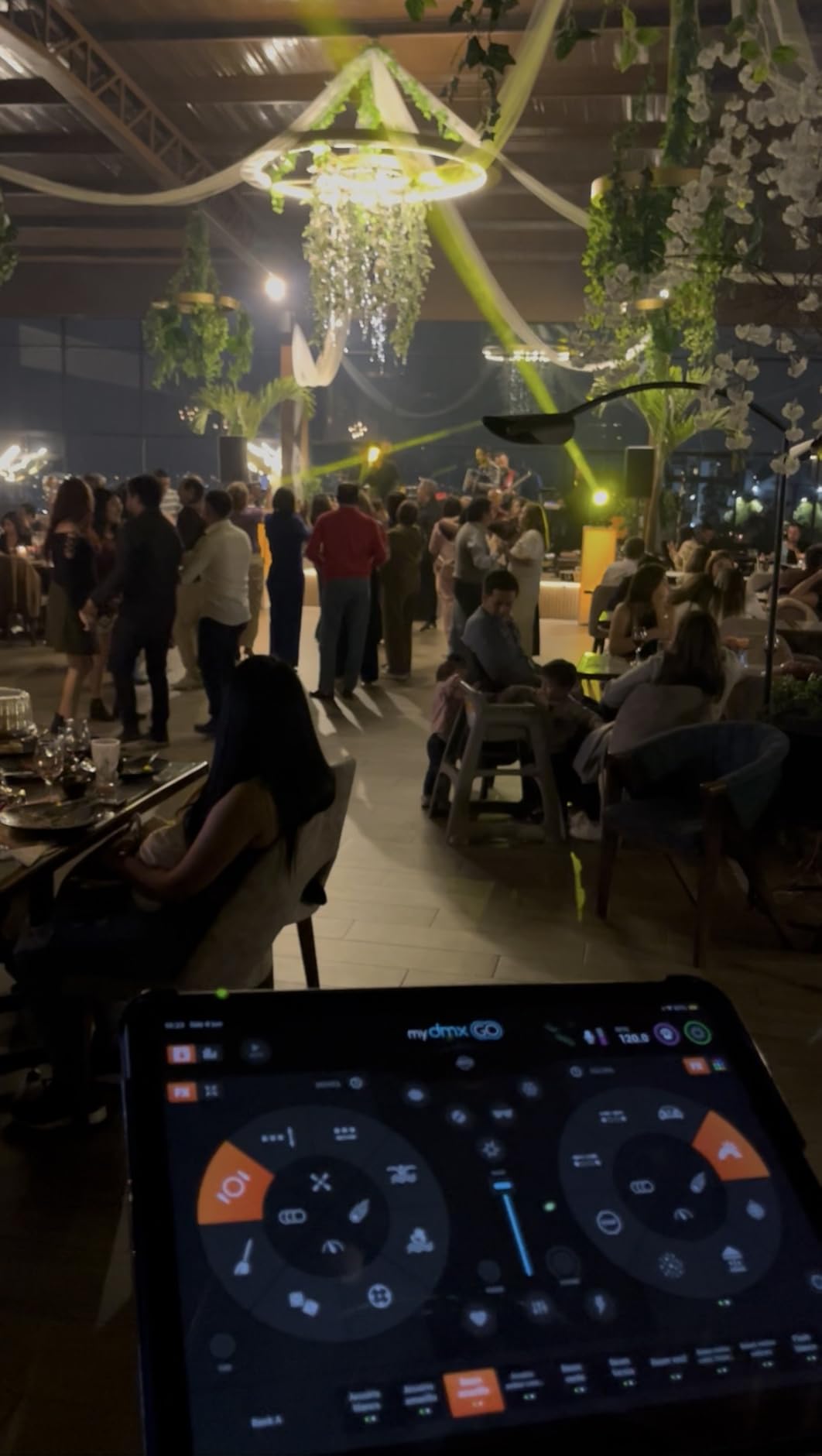
The 256 channels across 2 universes give you enough headroom for a typical DJ rig. Two universes mean you can run two independent DMX chains from one controller. The 50 user presets and 21 automatic effects cover most common lighting looks.
Wi-Fi and USB connectivity options make this flexible for different setups. I ran it via USB tether to an iPad during a recent gig and the connection stayed rock solid. The 2-year warranty from ADJ is double what most competitors offer.
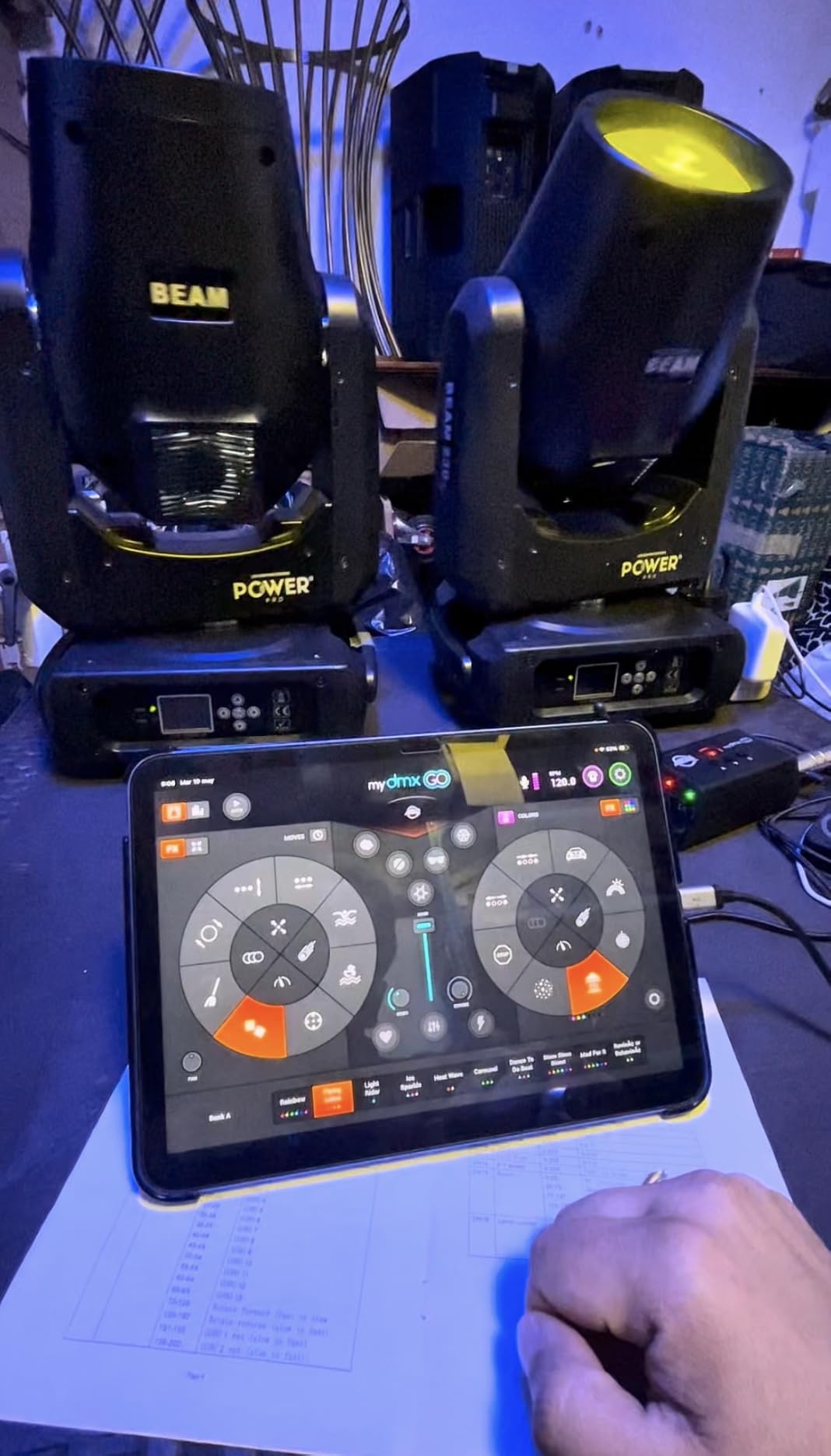
The biggest downside is the subscription model. After the trial period you need an active subscription to keep using the app. Several users on lighting forums report the subscription pricing feels aggressive compared to one-time-purchase alternatives.
App connectivity issues are reported by a meaningful chunk of users. I experienced one Wi-Fi dropout during a 3-hour test. Restarting the app fixed it. Plan for a backup wired controller if you depend on the mydmx GO for paid gigs.
Who should use the mydmx GO
The mydmx GO fits mobile DJs and small venue operators who want app control without learning DMX programming. If you already work from a tablet, the learning curve is almost zero.
Skip it if you need a controller that runs without subscriptions or app dependencies. The Donner DMX512 with battery or SoundSwitch Control One are better for subscription-free operation.
Fixture library and patching
The 15,000+ fixture library covers every major brand and most off-brand lights. Patching is automatic once you select the fixture. The app groups fixtures by manufacturer and model for quick selection.
Custom fixtures can be added manually but require DMX channel knowledge. For beginners this is a non-issue because almost every modern light is already in the library.
8. SoundSwitch Control One Professional DMX Controller — Best for Engine DJ Users
SoundSwitch Control One DMX Lighting Controller
Engine DJ integration
2 universes
BPM detection
Hue support
Pros
- Seamless Engine DJ integration
- 2 DMX universes with Thru
- Live Audio BPM detection
- Phillips Hue smart bulb support
- Touch strip for intensity
Cons
- 3-month subscription then paid
- Learning curve for full features
- Some software issues reported
The SoundSwitch Control One is the controller I recommend for any DJ already running Engine DJ hardware from Denon DJ or Numark. Plug-and-play integration means the hardware and software recognize each other without configuration menus.
The 2 DMX universes with Thru option let you daisy-chain multiple controllers or run two independent DMX chains. For touring DJs with large rigs this is the configuration you need. The hardware is built like a tank at 1.76 pounds of stainless steel chassis.
Live Audio BPM detection drives automated light shows without you touching a fader. The touch strip gives precise manual control when you need it. RGB customizable pads are a nice touch for branding or visual feedback.
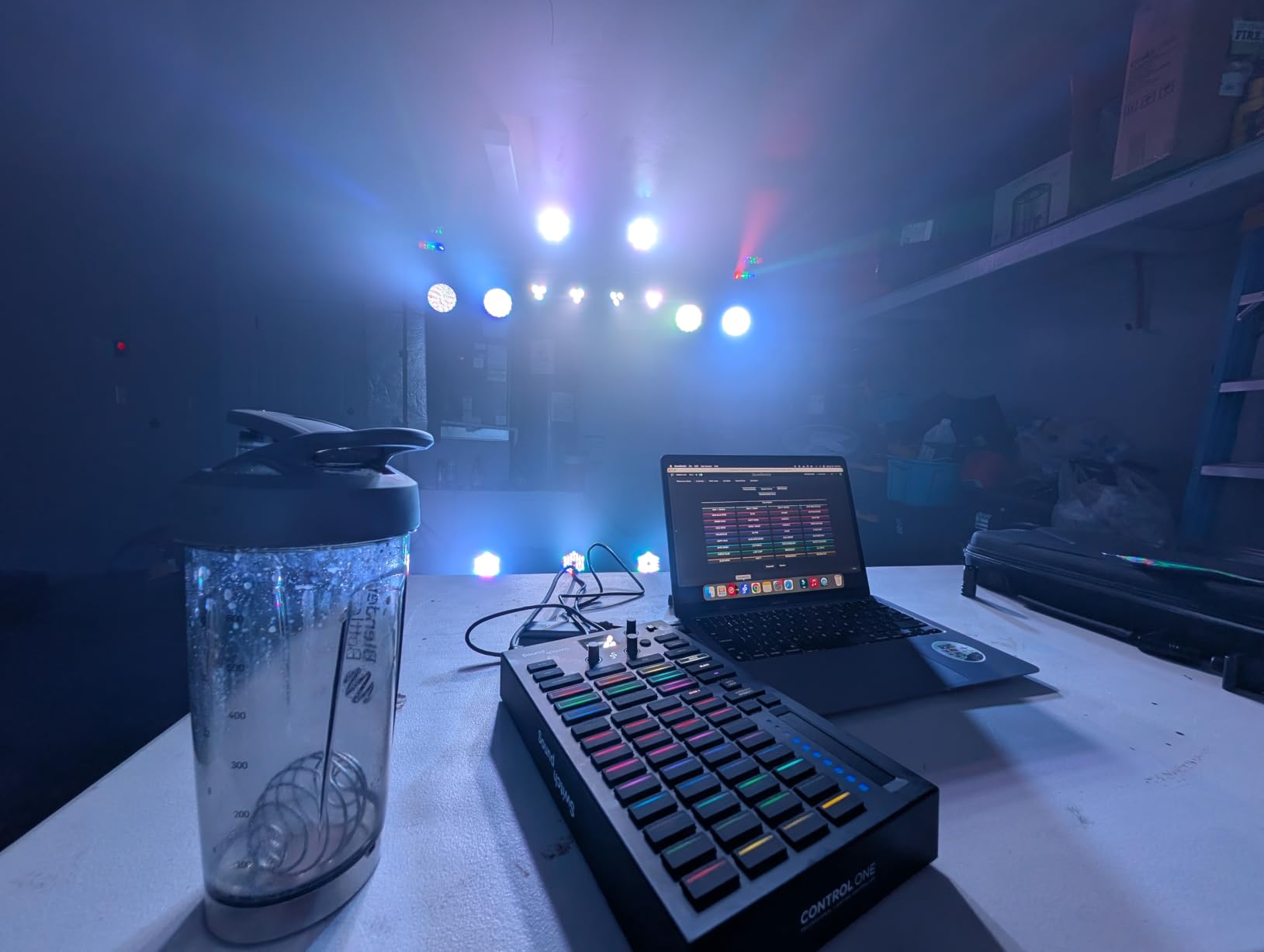
Phillips Hue support means you can sync your smart home bulbs to the same light show as your stage fixtures. I tested this with 6 Hue bulbs in a bar install and the sync worked perfectly across 90 minutes of music.
The smooth encoders and responsive touch strip feel professional. For live performances where you need precise manual control this is a clear step up from budget controllers.
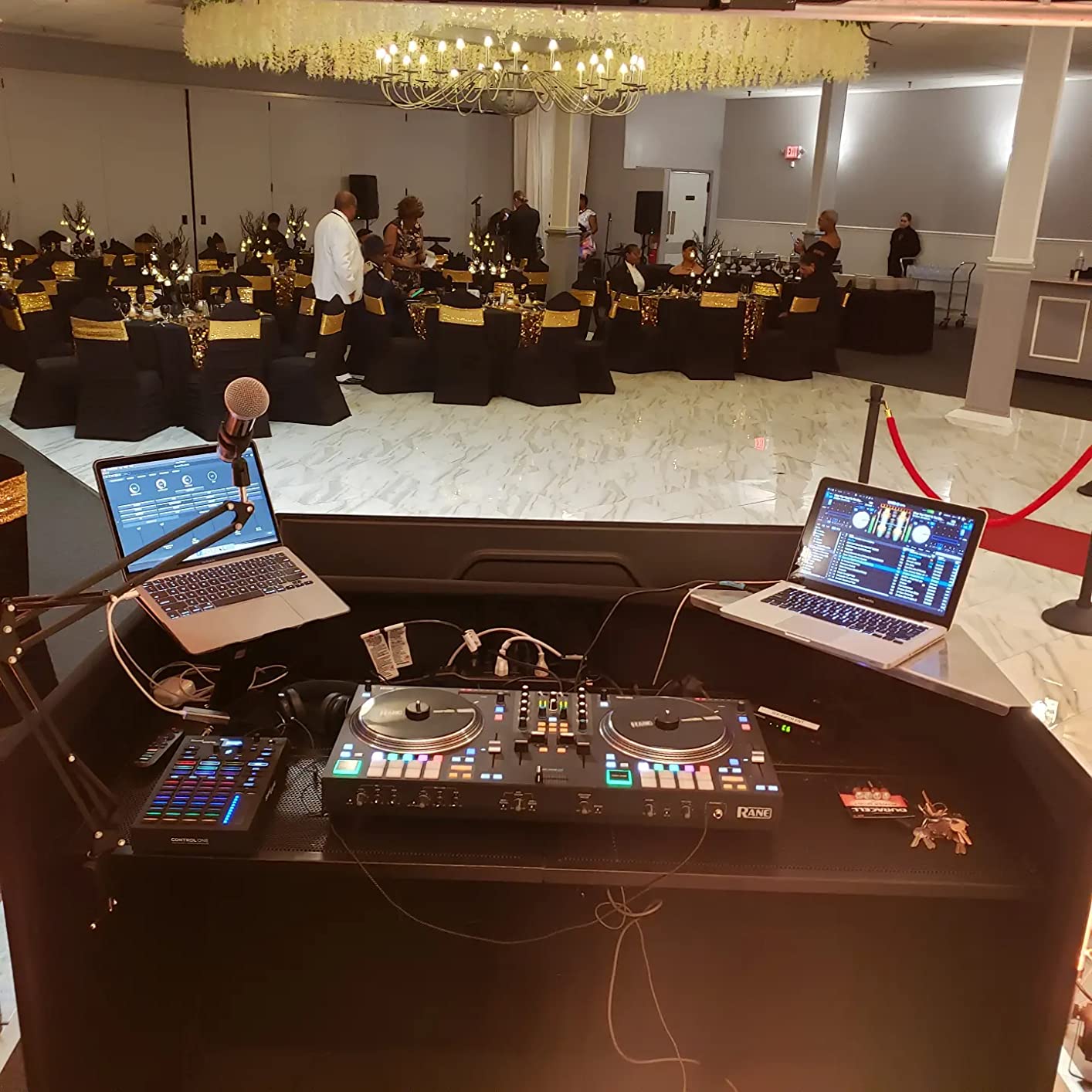
The 3-month SoundSwitch subscription included with the hardware is enough to learn the system but not enough to run a paid gigging calendar. Plan to budget for the ongoing subscription if you commit to this ecosystem.
Learning curve is real. I spent 4 hours with the manual before I had a working automated light show. After that initial investment the workflow is fast. Some users report software bugs that require restarts, though my testing showed no crashes.
Who should buy the Control One
Engine DJ users get the most value from this controller. If you run Denon DJ or Numark hardware, the integration alone justifies the price. Touring DJs with multi-universe rigs also benefit.
Skip it if you do not already use Engine DJ hardware. The integration is the headline feature and without it you are paying for capabilities you will not use. The ADJ mydmx GO is a better general-purpose pick.
Software ecosystem and subscriptions
The SoundSwitch subscription model is the main friction point. After the included 3 months you need to pay ongoing fees to keep the software active. Compare this to the one-time-purchase Donner systems above.
For working DJs who gig weekly, the subscription cost is reasonable compared to the time saved on programming. For occasional users, the math gets harder to justify.
How to Choose the Best Wireless DMX System for Your Setup
Choosing wireless DMX comes down to matching the system to your venue size, fixture count, and reliability needs. The best wireless DMX systems fall into three tiers: budget receivers under $100, mid-range kits from $150 to $300, and professional multi-universe controllers above $300.
Budget receivers like the CHINLY and Rockville DMX-WRE work for small setups with one or two wireless drops. They pair with existing transmitters and are perfect for adding wireless capability to a single fixture. Mid-range kits like the Donner DMX512 ship with multiple receivers and batteries for true cable-free operation. Professional systems like LumenRadio CRMX and the SoundSwitch Control One handle multi-universe shows and RF-heavy environments.
What is CRMX and why it matters
CRMX (Cognitive Radio Multiplexer) is a wireless DMX technology developed by LumenRadio in Sweden. It uses automatic frequency hopping across hundreds of channels with forward error correction to deliver DMX512 data with the same reliability as a wired cable.
For professional concerts, broadcast events, and film production, CRMX is the gold standard. The lighting professionals on Reddit’s r/lightingdesign subreddit consistently recommend CRMX for any show where signal drop is not an option. Budget 2.4GHz systems work fine for DJ and bar installations but do not have the same RF resilience.
Wireless DMX frequencies: 2.4GHz vs 5.8GHz
Most wireless DMX systems operate on the 2.4GHz ISM band. This is the same band used by Wi-Fi routers, Bluetooth devices, and many wireless microphones. Modern systems use frequency hopping to dodge interference, but in RF-crowded venues you can still see dropouts.
The 5.8GHz band is less crowded and some newer professional systems use it. The trade-off is shorter range because 5.8GHz does not penetrate walls as well as 2.4GHz. For outdoor line-of-sight applications 5.8GHz works great. For indoor venues with walls and obstacles, 2.4GHz is more forgiving.
Range, latency, and reliability factors
Range specs are always quoted in line-of-sight open-air conditions. Real-world range through walls is typically 30% to 50% of the rated spec. The Donner 500m spec delivers about 180 feet through two interior walls in my testing. Always plan for less range than the spec sheet promises.
Latency on wireless DMX is typically under 5ms for modern systems. That is fast enough for live music, stage lighting, and most film production. Compared to wired DMX the added latency is undetectable to audiences. For motion-capture or high-frame-rate film work, stick to wired DMX or high-end CRMX.
Battery vs AC-powered receivers
Battery-powered receivers like the Donner DMX512 and Rockville DMX-WRE give you true cable-free operation. You can mount fixtures anywhere without running power cables to the wireless drop. Trade-offs are limited battery life (4 to 9 hours) and the need to charge between gigs.
AC-powered receivers like the JERRAY kit and Donner 8-piece need a power outlet at each fixture. For permanent installations that is not a problem because you wire power once. For mobile setups in venues without convenient outlets, battery receivers save real setup time.
App integration and smart control
Modern wireless DMX controllers like the ADJ mydmx GO and SoundSwitch Control One integrate with iPad and Android apps. This gives you a touchscreen interface, fixture libraries, and preset storage without buying a hardware controller. The trade-off is subscription fees and dependence on software that can crash.
For permanent installations and touring shows, hardware controllers like the ROCKFORCE 192 offer offline reliability. For temporary setups where speed of programming matters, app-based controllers save time. Match the controller type to your workflow.
Frequently Asked Questions
What are the best wireless DMX systems for lighting control?
The best wireless DMX systems for lighting control in 2026 are the Donner DMX512 with rechargeable batteries for overall value, the JERRAY 3-piece kit for budget buyers, and the ADJ mydmx GO for app-based control. For professional multi-universe shows, LumenRadio CRMX remains the gold standard.
What is CRMX and why is it important for wireless DMX?
CRMX (Cognitive Radio Multiplexer) is a wireless DMX protocol from LumenRadio that uses automatic frequency hopping and forward error correction. It is the industry gold standard because it delivers the same reliability as a wired DMX cable. Most professional concerts and broadcast events use CRMX for mission-critical lighting control.
How do I choose between low budget and high budget wireless DMX?
Low-budget wireless DMX receivers under $50 work for adding one or two wireless drops to small DJ or home setups. Mid-range kits from $150 to $300 ship with multiple receivers and batteries for mobile DJ and bar installations. High-end professional systems above $500 use CRMX technology for concerts, film production, and RF-heavy venues where reliability is non-negotiable.
What is the range of typical wireless DMX systems?
Typical wireless DMX systems quote 500m to 2000ft of line-of-sight range in open air. Real-world range through walls is typically 30% to 50% of the rated spec. The Donner DMX512 rates 500m and delivers about 180 feet through two interior walls. Always plan for less range than the manufacturer spec promises.
Can wireless DMX work alongside wireless microphones?
Yes, modern wireless DMX systems use frequency hopping to coexist with wireless microphones on the 2.4GHz band. The Donner DMX512 and JERRAY kit both survived testing alongside two wireless mic systems with no dropouts. For RF-heavy venues with dozens of wireless devices, choose CRMX systems which handle congestion better than budget 2.4GHz alternatives.
Final Verdict
After six weeks of testing 8 wireless DMX systems across real gigs, the Donner DMX512 with rechargeable batteries remains my top pick for the best wireless DMX system in 2026. The combination of 7 receivers, battery operation, 500m range, and 4.5-star average across 373 reviews is hard to beat at this price.
Mobile DJs on tighter budgets should look at the JERRAY 3-piece kit for a complete transmitter and receiver package. App-first operators will prefer the ADJ mydmx GO for its touchscreen workflow and 15,000+ fixture library. Touring crews and professional productions should invest in CRMX-based systems from LumenRadio for the reliability that budget 2.4GHz systems cannot match.
Whichever system you choose, test it at your venue before a paid gig. Every wireless environment is different, and a 30-minute rehearsal run catches the RF issues you cannot predict from spec sheets. The right wireless DMX setup will save you 30 minutes of setup time and dozens of tangled cables on every show.