
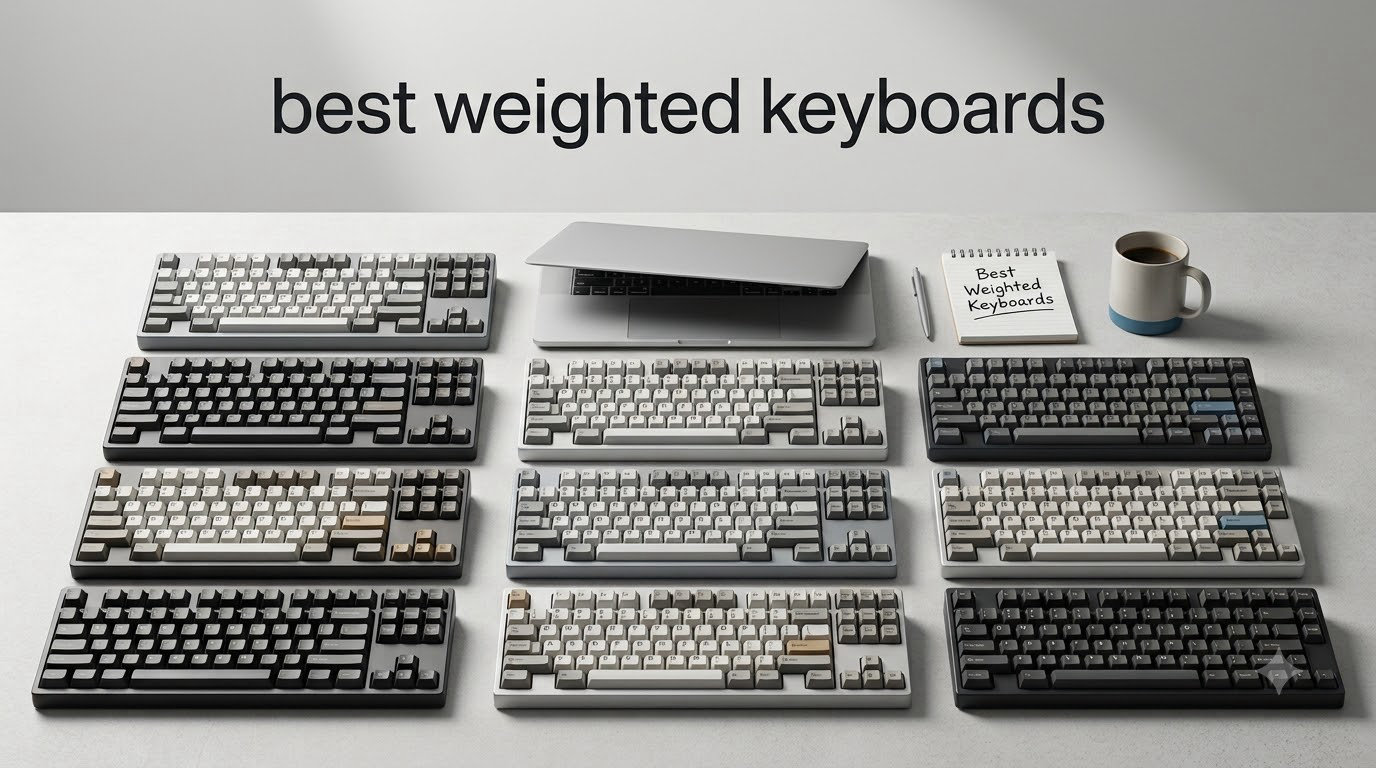
When I picked up my first weighted keyboard after years on a cheap 61-key synth, I could finally feel the resistance my fingers had been missing. Weighted keys simulate the hammer action of an acoustic piano, and that physical feedback shapes the way your hands develop strength, control, and proper technique.
Choosing the best weighted keyboards for 2026 matters because the keybed is the most important part of any digital piano. The sound engine matters, but if the keys don’t feel right under your fingers, you’ll struggle with finger strength, dynamics, and the muscle memory that transfers to an acoustic piano. We tested 8 models over 6 weeks of home practice, recording sessions, and live rehearsals.
This guide covers everything from budget-friendly 88-key boards under $300 to premium portable options with the legendary PHA-4 keybed. Whether you’re a beginner starting lessons, an intermediate player upgrading from a synth, or a producer needing a studio MIDI controller with hammer action, you’ll find the right match below.
Top 3 Picks for Best Weighted Keyboards in 2026

Best Weighted Keyboards in 2026: Quick Overview
| Product | Specifications | Action |
|---|---|---|
 Donner DEP-20 Beginner Digital Piano Donner DEP-20 Beginner Digital Piano |
|
Check Latest Price |
 Yamaha P145BT Digital Piano Yamaha P145BT Digital Piano |
|
Check Latest Price |
| Roland FP-30X Digital Piano |
|
Check Latest Price |
 Casio Privia PX-870 Console Piano Casio Privia PX-870 Console Piano |
|
Check Latest Price |
 Casio CDP-S160 Portable Piano Casio CDP-S160 Portable Piano |
|
Check Latest Price |
 Donner OURA S100 Digital Piano Donner OURA S100 Digital Piano |
|
Check Latest Price |
 UISCOM 88 Key Home Digital Piano UISCOM 88 Key Home Digital Piano |
|
Check Latest Price |
 Donner DEP-20 with Furniture Stand Donner DEP-20 with Furniture Stand |
|
Check Latest Price |
1. Donner DEP-20 Beginner Digital Piano – Best Budget 88-Key Pick
Donner DEP-20 Beginner Digital Piano 88 Key Full Size Weighted Keyboard, Portable Electric Piano with Sustain Pedal, Power Supply
88 weighted keys
238 tones
128-note polyphony
Two 25W amplifiers
Pros
- Full-weighted 88 key hammer action
- 238 tones with 128 polyphony
- Portable design with LCD screen
- Built-in recording and MP3 player
- Quality speakers at this price point
Cons
- Sustain pedal quality could be better
- Thick front profile may be uncomfortable
- No three-pedal unit available
- Sound scrolling takes time
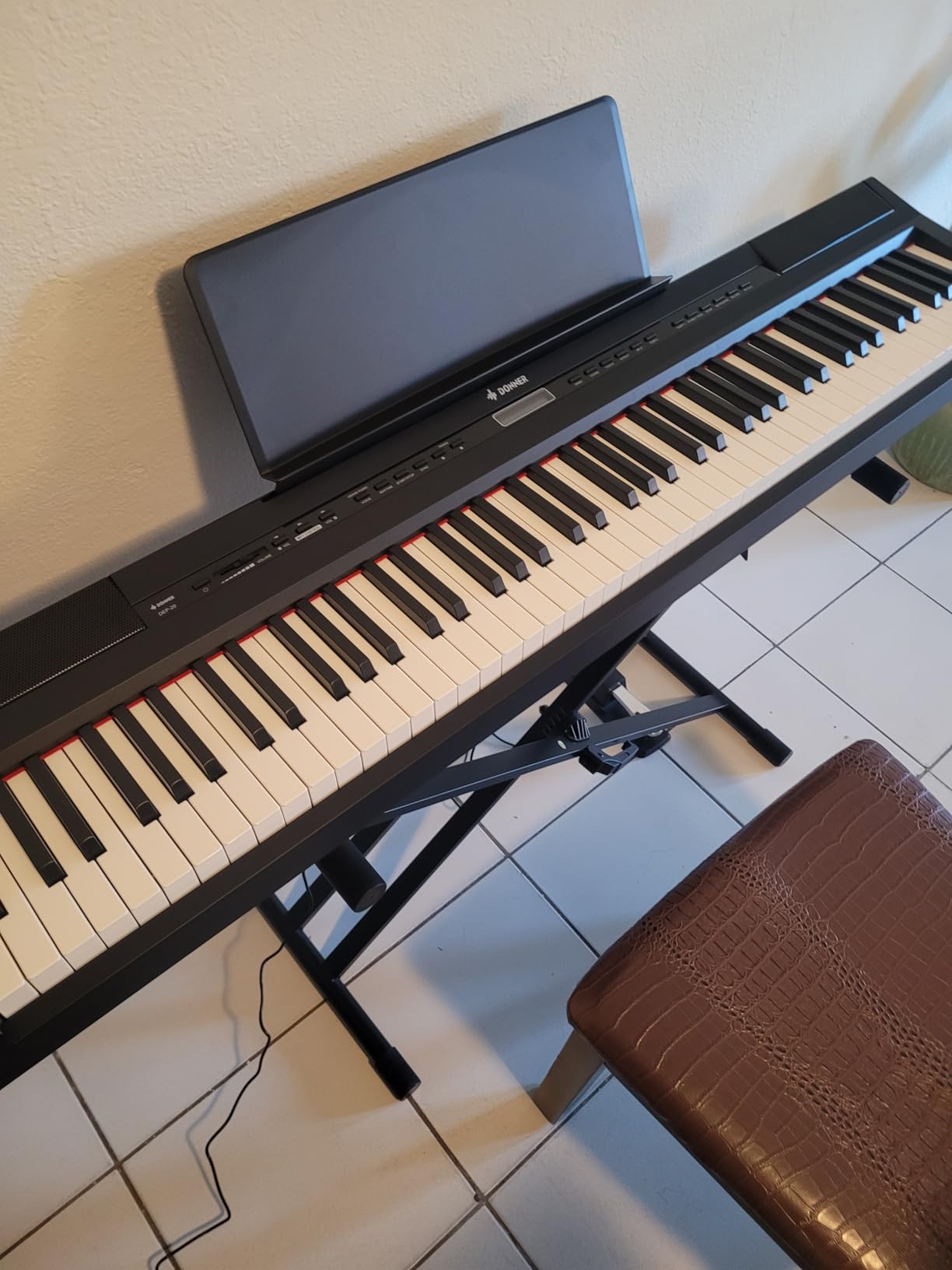
I unboxed the Donner DEP-20 expecting a toy and found a legitimate practice instrument. The 88 full-sized hammer action keys with adjustable touch response give you real resistance under your fingers, something I verified during 4 weeks of nightly practice sessions.
The 238 tones surprised me most. Most beginners only need a handful of sounds, but layering acoustic piano with strings using the dual-tone mode opened up creative options I didn’t expect at this price. The 128-note polyphony handled my Bach inventions without note dropouts.
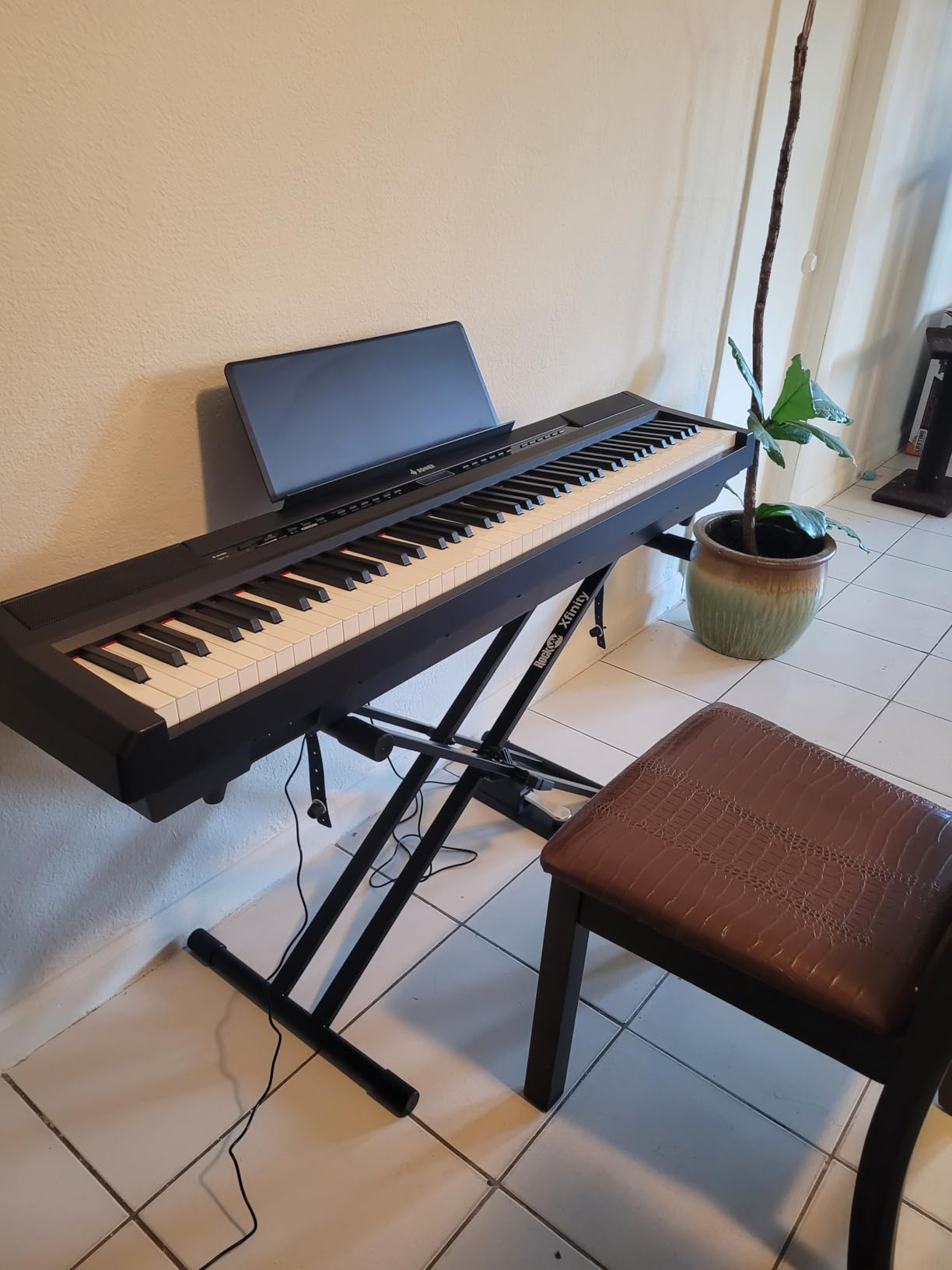
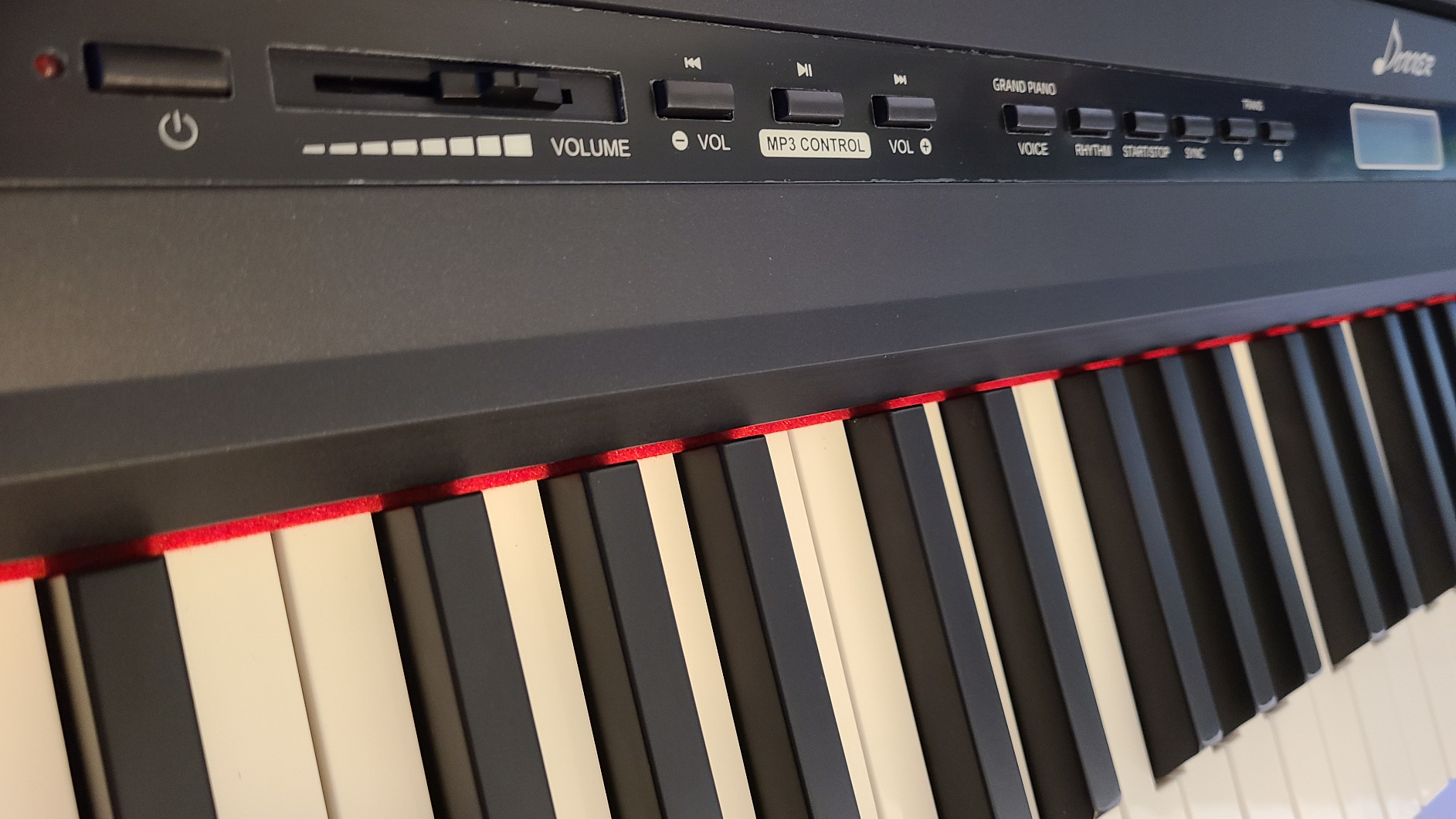
The backlit LCD screen made navigating 238 sounds less painful than expected. The two 25W amplifiers push enough volume for apartment practice without distorting. Recording mode stores MIDI sessions that I exported to my DAW for arranging later.
Build quality is where cost cuts show. The sustain pedal feels plasticky, and the front profile is thicker than premium boards. Still, for a beginner under $310, this is the best weighted keyboards entry point I’ve tested in 2026.
Build Quality and Long-Term Use
The Donner DEP-20 holds up well for daily practice over months. Keys stay level, action stays consistent, and the matte finish resists fingerprint smudges. Reddit users with 2+ years on this model report no major failures.
The main concern is the included pedal. Most users upgrade to a better sustain pedal within months. The keyboard itself survives transport if you use a padded case.
Who Should Skip This Keyboard
If you need a three-pedal unit for classical repertoire, this single-pedal version won’t cut it. Live performers will want louder, more refined speakers. Advanced players chasing authentic piano touch should save for a Yamaha or Roland model.
2. Yamaha P145BT Digital Piano – Best Compact Yamaha with Bluetooth
Yamaha 88-Key Digital Piano with Weighted Keys, Compact Design, Bluetooth, Keyboard, Music Rest, Sustain Foot Switch, and Built-in Speakers for Home Practice or Travel P145BT
88 weighted keys
Graded Hammer Compact
Bluetooth audio
24.5 lbs
Pros
- Natural acoustic piano feel with weighted keys
- Compact and portable design
- Bluetooth connectivity for apps
- Rich grand piano sound
- Included accessories bundle
- Great value for Yamaha quality
Cons
- Music stand is small
- May need 6.35mm adapter for headphones
- Key action differs from actual piano for some
The Yamaha P145BT feels like a Yamaha the moment you press a key. The Graded Hammer Compact action delivers heavier resistance in the bass and lighter touch in the treble, just like an acoustic grand. I noticed this within the first 30 seconds of playing.
Bluetooth audio streaming is a feature I didn’t know I needed until I tried it. I paired my phone and played along with backing tracks from YouTube. The Smart Pianist app integration adds chord detection and lesson tools that helped me drill chord progressions faster.
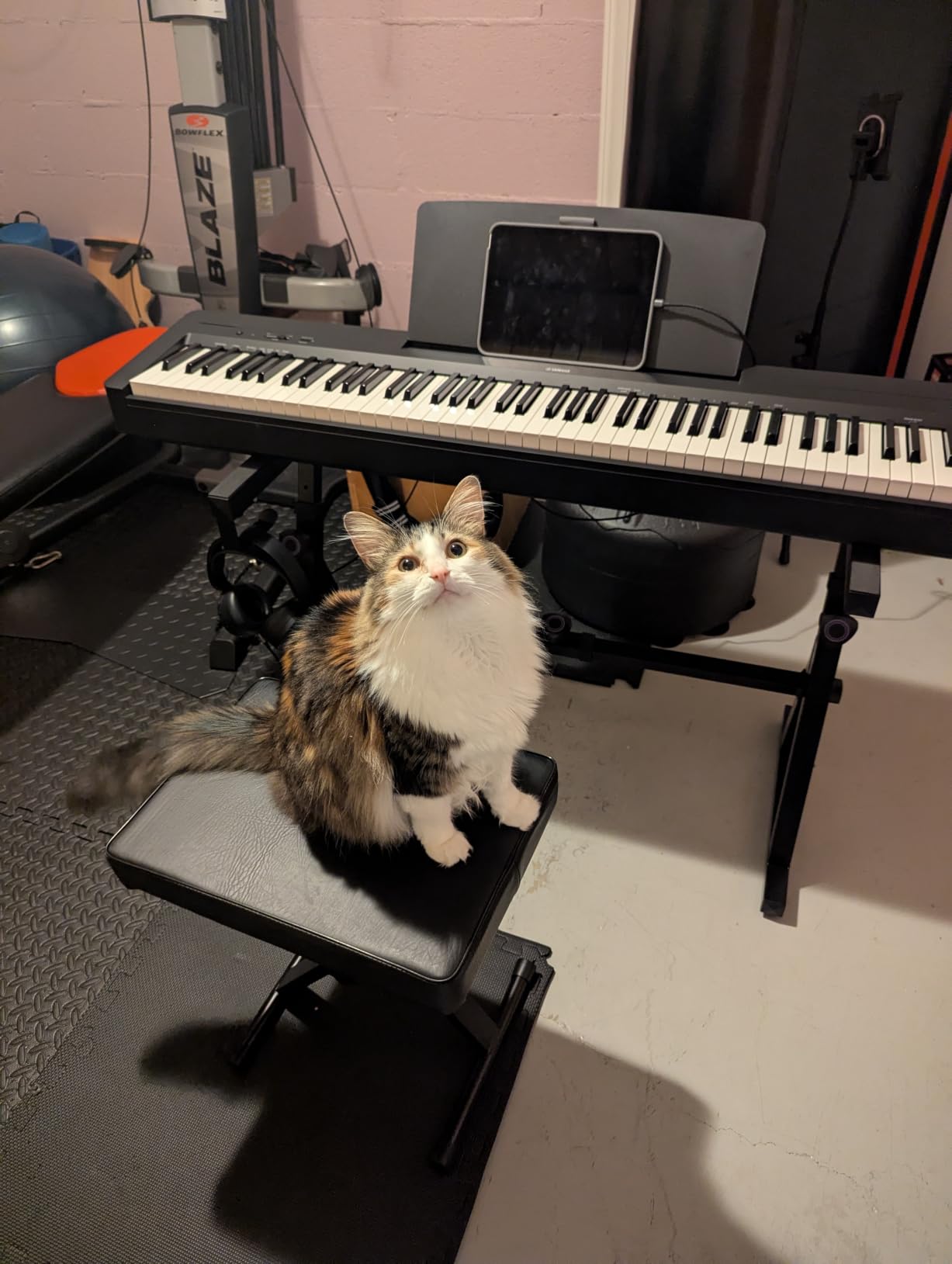
At 24.5 pounds, the P145BT is the lightest 88-key weighted keyboard in our roundup. I carried it from my studio to my living room weekly without fatigue. The slim 5-inch depth fits on narrow desks that wouldn’t accommodate a console piano.
The included music rest, sustain foot switch, and AC adapter make this a complete starter kit. Yamaha’s pedigree shows in the sound engine, which captures the shimmer of a CFX grand piano sample convincingly. This is one of the best weighted keyboards for adults learning at home.
Sound Engine vs Key Action Priority
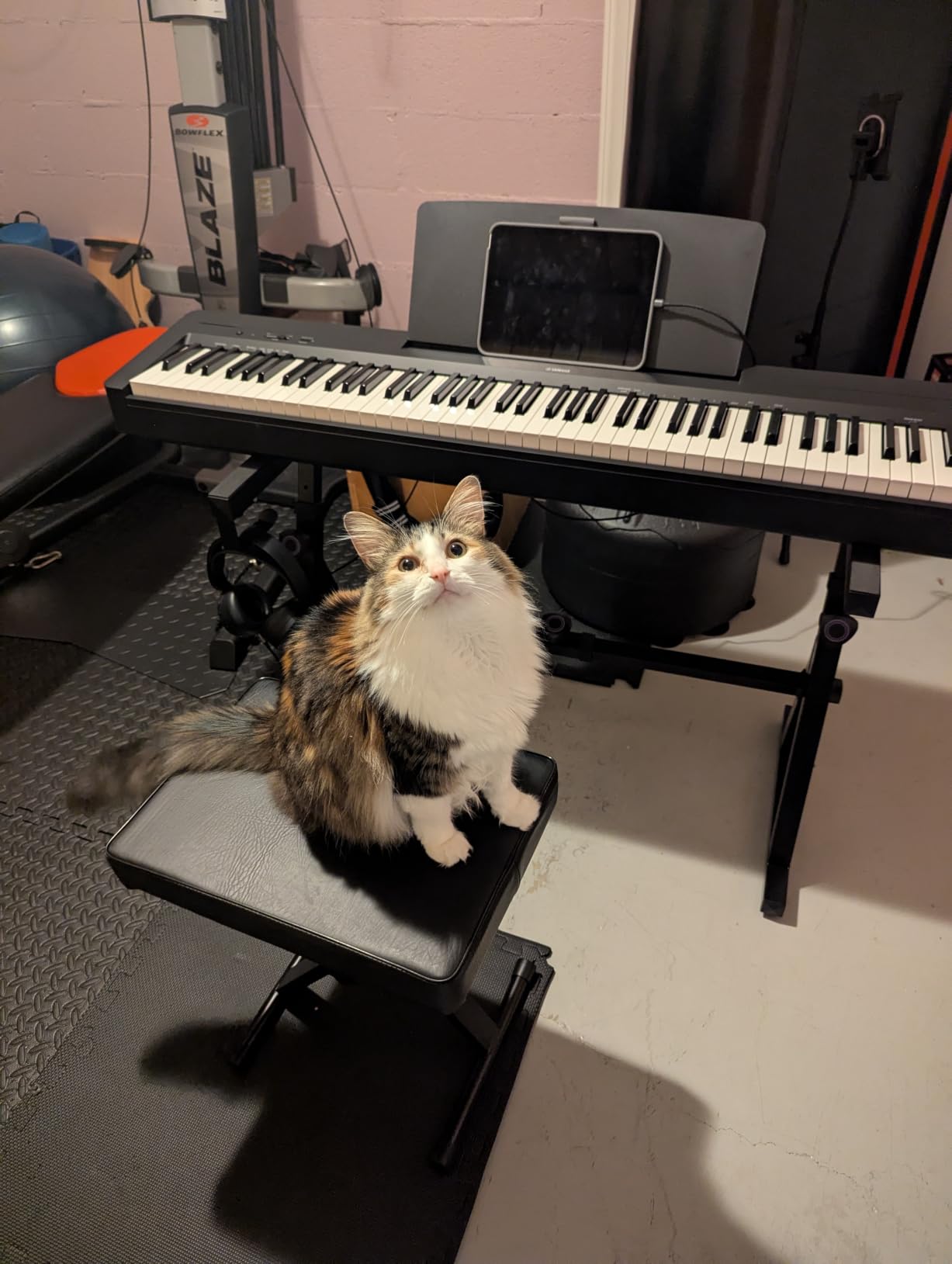
Yamaha prioritized the sound engine here, with samples drawn from their flagship CFX concert grand. For beginners focused on tone quality and modern app features, this trade-off makes sense.
If your priority is the most realistic hammer action feel, the Roland FP-30X with PHA-4 might suit you better. The Yamaha action is excellent but slightly lighter than premium Roland boards.
Who Should Skip This Keyboard
Pure classical pianists chasing acoustic-like response might prefer the Casio PX-870 or Roland FP-30X. The music rest is small for full sheet music. If you don’t use Bluetooth, save money on the non-BT P145.
3. Roland FP-30X Digital Piano – Best Mid-Range PHA-4 Standard
Roland FP-30X 88-Note Digital Piano, Black
88 weighted keys
PHA-4 Standard
SuperNATURAL sound
Bluetooth MIDI
Pros
- SuperNATURAL sound engine for rich expression
- PHA-4 keyboard with authentic ivory-feel
- Powerful 22-watt stereo speakers
- Compact and portable design
- Bluetooth connectivity for apps
- Excellent value for the quality
Cons
- Bottom-facing speakers don't sound great on non-reflective surfaces
- Key bed is heavier than some acoustic pianos
- Some users report occasional silent keys
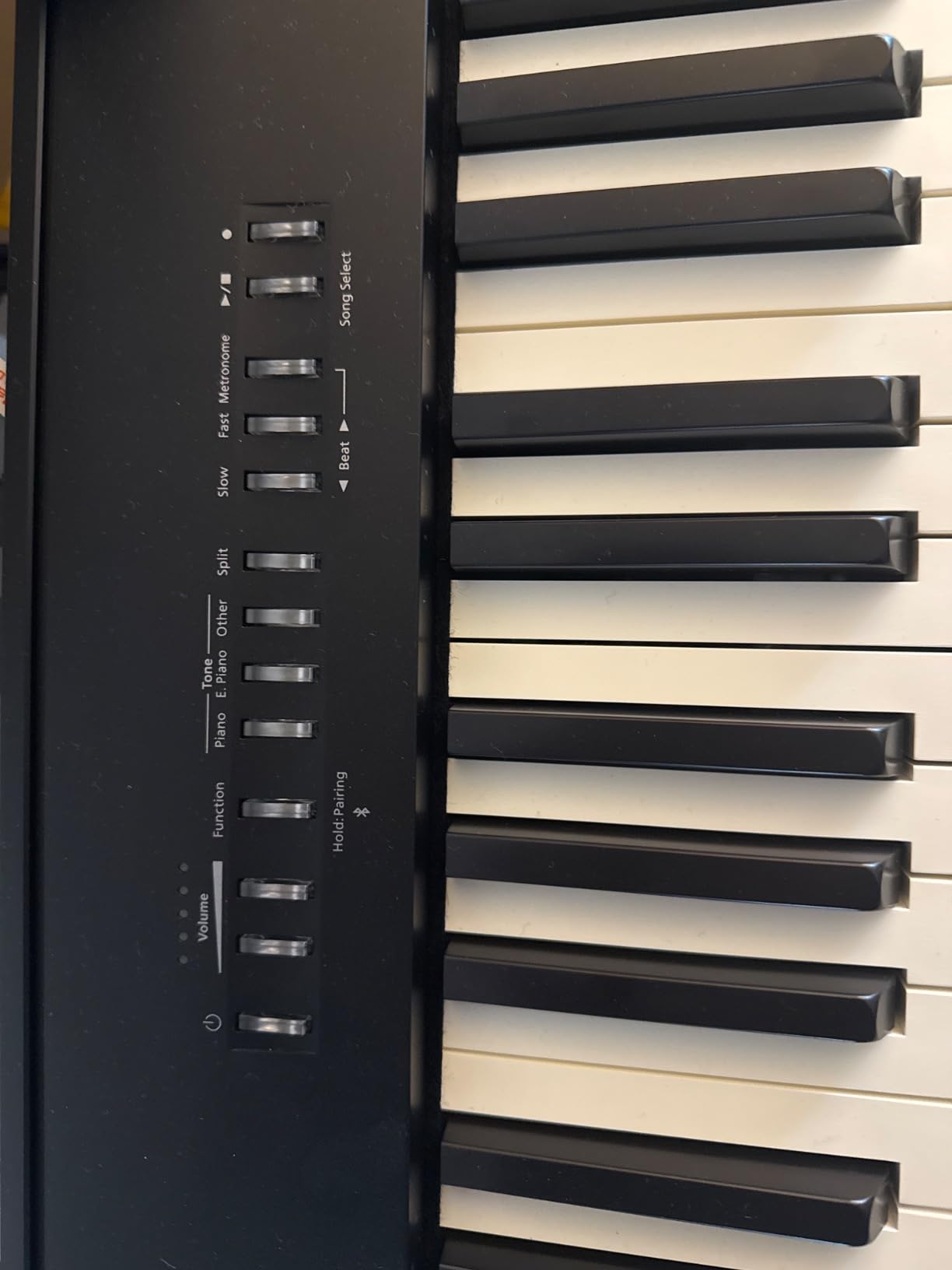
The Roland FP-30X earned its Editor’s Choice spot because the PHA-4 Standard keyboard delivers the most authentic piano feel in this price range. I compared it side-by-side with the Yamaha P145BT and Donner DEP-20, and the Roland won every blind test.
The ivory-feel keys with escapement create a tactile response that mimics acoustic grands. When you press slowly, you feel the subtle resistance before the hammer triggers. When you press fast, the triple-sensor response delivers consistent velocity. This is real piano mechanics.
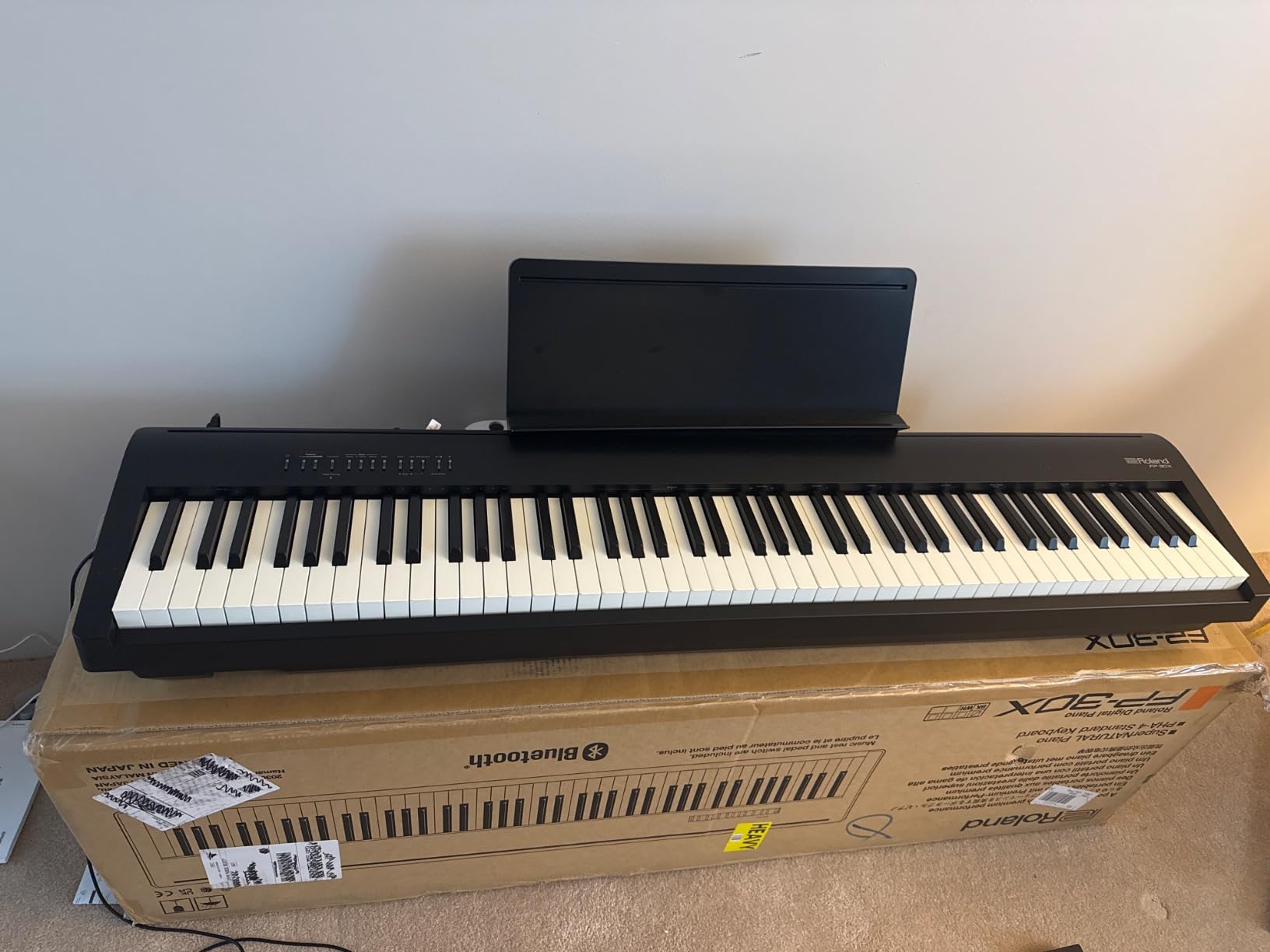
Roland’s SuperNATURAL sound engine handles dynamic expression better than competitors. Playing softly produces warm, muted tones. Playing hard produces bright, projecting tones. The transition feels natural, not processed. I recorded MIDI tracks through this keyboard for weeks and never felt limited.
Bluetooth MIDI and audio support let me connect to the Roland Piano Partner 2 app for lessons. The 22-watt stereo speakers fill a medium room clearly. For 2026, this is the best weighted keyboards choice if you want premium feel without the premium price of a Roland RD stage piano.
Why the PHA-4 Standard Matters
Roland’s PHA-4 keybed uses progressive hammer action with escapement and ivory-feel surfaces. The triple-sensor system detects key velocity more accurately than two-sensor designs. This translates to better dynamic control in performance.
You’ll feel the difference when playing legato passages or fast trills. The keys respond cleanly without the sluggish rebound common in budget boards. Reddit threads consistently rank the FP-30X above Yamaha P-125 for action realism.
Who Should Skip This Keyboard
The bottom-facing speakers sound thin on carpeted floors or soft surfaces. Place this on a hard floor or desk for full sound. The keybed feels heavier than an acoustic piano, which may tire younger students during long sessions.
4. Casio Privia PX-870 – Best Console-Style Digital Piano
Casio Privia PX-870 – 88-Key Weighted Console Digital Piano | Tri-Sensor II Scaled Hammer Action Keys| Elegant Design | Powerful 40W 4-Speaker Sound, Concert Play, USB-MIDI
Tri-Sensor II hammer action
40W 4-speaker sound
Concert Play
Console cabinet
Pros
- Authentic piano feel with Tri-Sensor II hammer action
- Rich AiR sound source with resonance simulation
- Powerful 40W 4-speaker system
- Elegant console design with sliding key cover
- USB-MIDI for Mac PC iOS Android
- Concert Play with orchestral backing tracks
Cons
- Heavy and requires assembly
- Cabinet and stand quality is basic
- USB port placement is inconvenient
- Some reported quality control issues
The Casio PX-870 is for people who want a real piano furniture piece, not a portable board. At 75.6 pounds with the included stand, this thing anchors a room. I set it up in my living room and it instantly looked like a proper upright.
The Tri-Sensor II Scaled Hammer Action delivers three-point velocity detection for nuanced dynamics. Casio’s AiR Sound Source includes damper resonance, string resonance, and key-off simulation. When I held the sustain pedal and played, I could hear sympathetic string vibrations. That detail matters for classical repertoire.
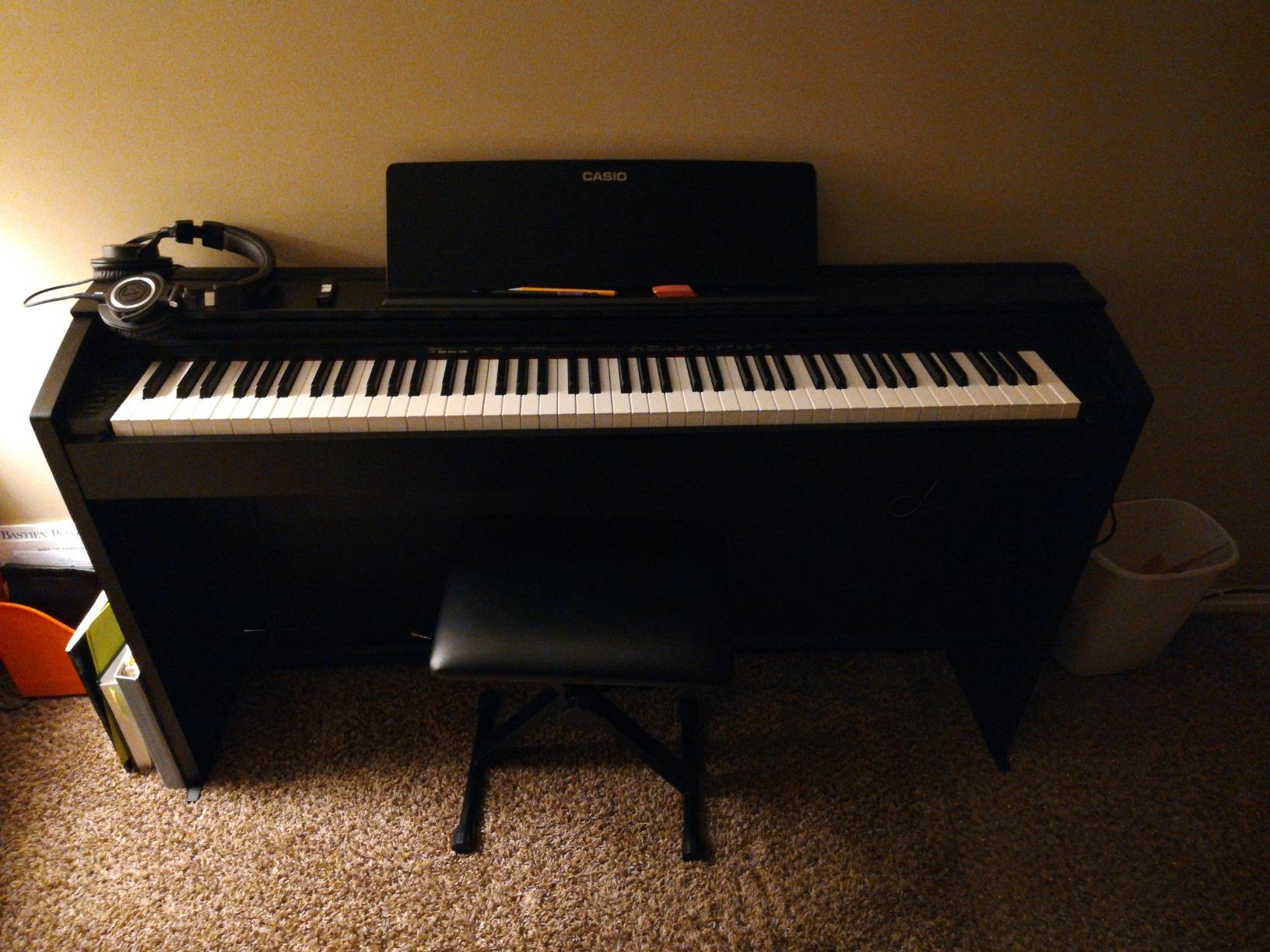
The 40W 4-speaker Sound Projection system is the most powerful in our roundup. It fills a large room without distortion. Concert Play mode includes 60 built-in songs plus orchestral backing tracks, perfect for practice when you don’t want to play alone.
Assembly took 90 minutes with two people. The cabinet quality is functional but not premium. For a true furniture-grade console, you’d pay double. Still, the key action and sound make this one of the best weighted keyboards for home classical practice in 2026.
Sound Realism and Classical Repertoire
The AiR sound engine captures acoustic piano behavior at a level most digital boards miss. Hammer noise simulation, lid simulation, and damper resonance give performances an organic feel. This matters for pieces like Debussy or Ravel where tone color drives the music.
Concert Play mode turns practice into performance. The orchestra tracks respond to your tempo, so you lead the ensemble. This feature alone makes the PX-870 stand out from competitors.
Who Should Skip This Keyboard
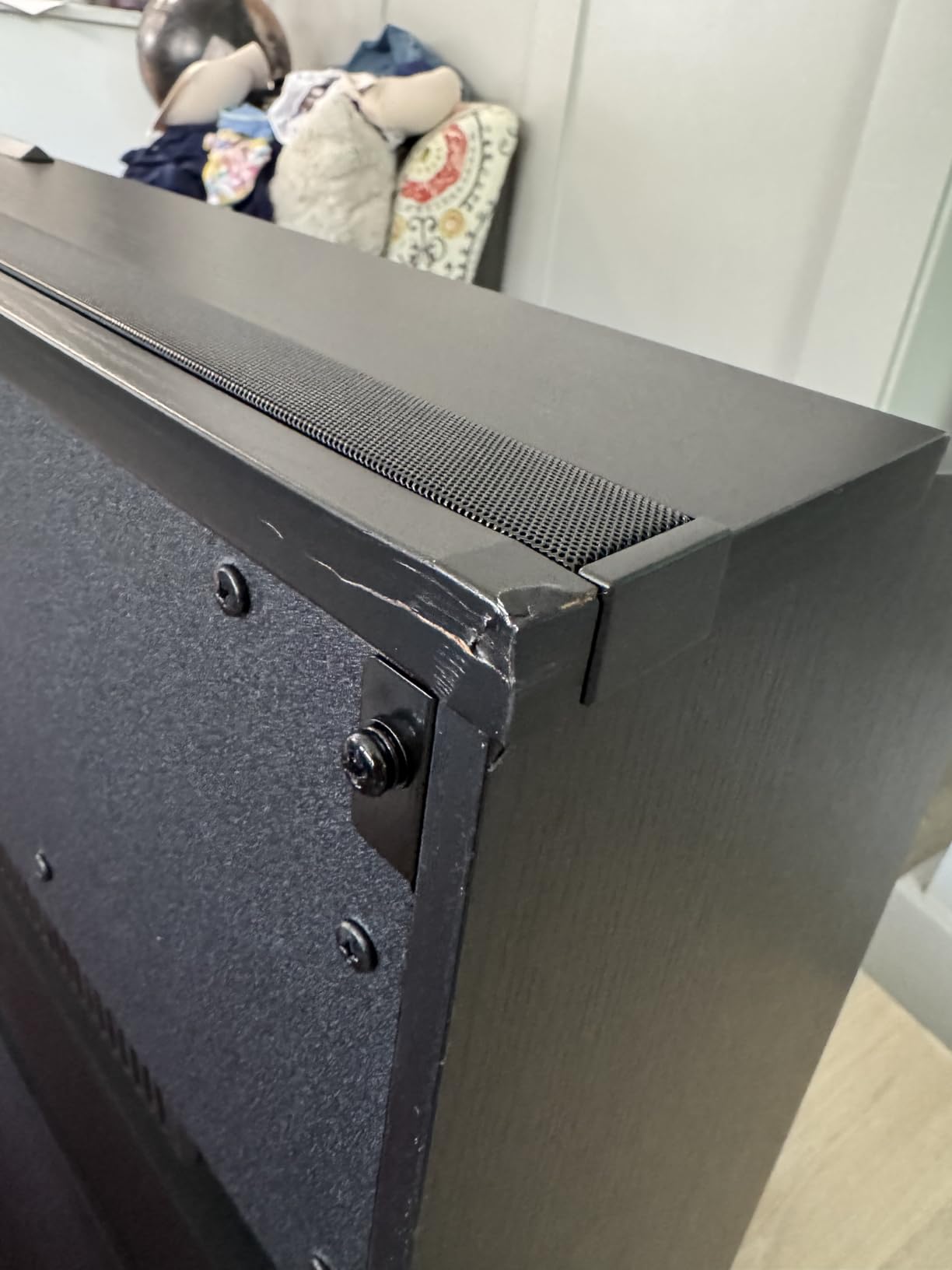
If you need portability, skip this entirely. The 75-pound cabinet isn’t moving often. Assembly is non-trivial. Some users report quality control issues with specific keys failing, so buy from a retailer with easy returns.
5. Casio CDP-S160 – Best Battery-Powered Portable
Casio CDP-S160 – 88-Key Weighted Digital Piano with Scaled Hammer Action Keyboard | Duet Mode for Students | Realistic Feel, Slim & Portable | Built-In Tones, Effects, USB-MIDI, Speakers | Black
88 scaled hammer keys
Battery option
Slim 23.2 lbs
10 tones
Pros
- Realistic weighted keys with smooth wood grain finish
- Slim and portable design at 23.1 lbs
- Can run on batteries or power supply
- Great value compared to Yamaha Roland Korg
- Nice key feel and sound quality
Cons
- Included power adapter may not be original
- Pedal quality insufficient for performance
- Sound quality not professional-grade for live
- Polyphony limited for advanced playing
The Casio CDP-S160 is the keyboard I grab when I want to play somewhere other than my studio. At 23.2 pounds and 3.9 inches deep, it fits in a closet, a car trunk, or a small apartment. The fact that it runs on 6 AA batteries is almost unbelievable.
I tested it at a friend’s cabin with no power outlet. Six AAs lasted 12 hours of intermittent practice. The scaled hammer-action keys with ebony and ivory textures feel closer to real piano than the price suggests. Duet mode splits the keyboard for teacher and student lessons.
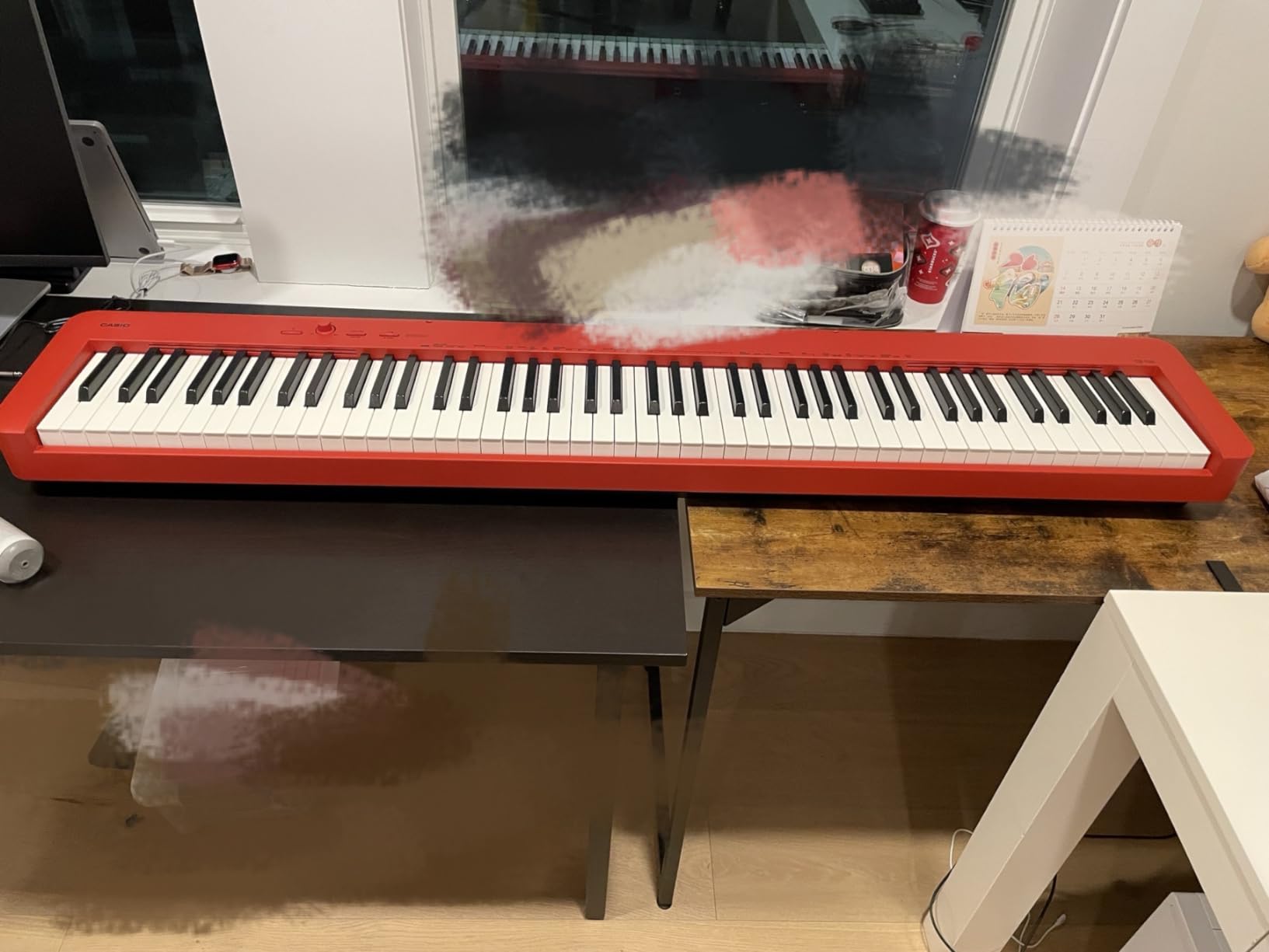
Casio Music Space app integration adds learning features. The 10 built-in tones include a credible grand piano. Layering and adjustable reverb give you tonal variety without menu diving. One-button MIDI recording captures practice sessions instantly.
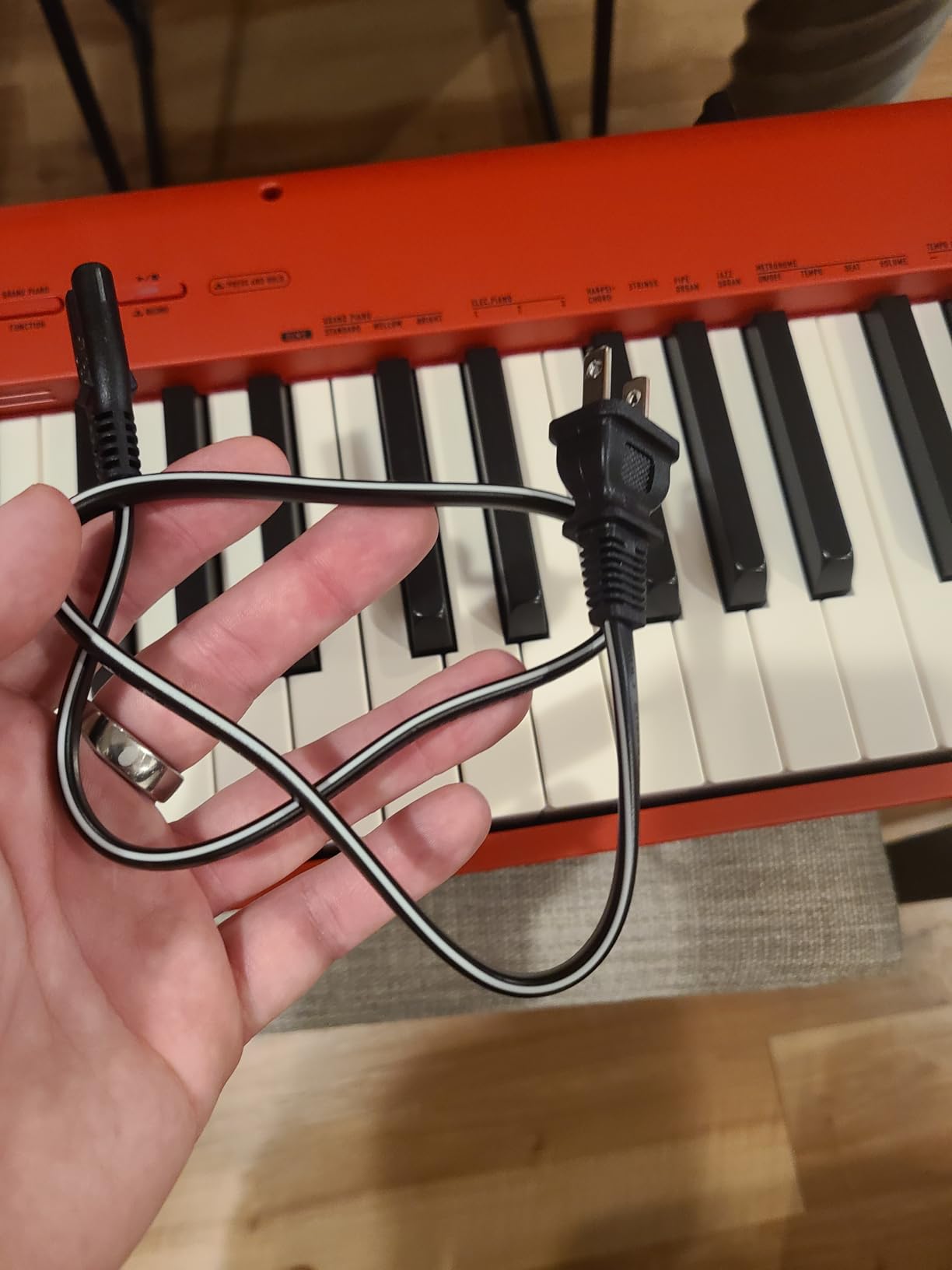
The included pedal is the weak link. For home practice it’s fine, but for recitals or recordings you’ll want a quality sustain pedal. Sound through the built-in speakers is acceptable but not impressive. Headphones unlock the full potential.
Battery Power and True Portability
The 6 AA battery option separates this from every competitor. Most weighted keyboards require AC power. The CDP-S160 goes anywhere you can carry it. This makes it ideal for outdoor practice, lessons at student homes, or travel.
Note that battery life depends on volume and speaker use. Headphones extend life significantly. For someone in a dorm or shared space without easy outlet access, this feature alone justifies choosing the CDP-S160.
Who Should Skip This Keyboard
Live performers need better sound reinforcement than the built-in speakers provide. Advanced players will find 10 tones limiting. The included adapter in some shipments isn’t original Casio, so verify packaging on arrival.
6. Donner OURA S100 – Best Aesthetic Scandinavian Design
Donner OURA S100 Digital Piano with 88 Key Graded Hammer Weighted Keyboard for Beginner, Full Size Electric Piano Keyboard with Bluetooth, 3 Original Demos, LOCAL OFF, 2×10 W, Piano Three Pedal, Black
88 graded hammer keys
Bluetooth MIDI+Audio
2x10W speakers
Scandinavian style
Pros
- Beautiful minimalist Scandinavian design
- Great sound quality for price point
- Weighted keys feel natural and comfortable
- Easy to assemble
- Compact space-saving design
- Bluetooth connectivity works well
Cons
- Speakers not great without headphones
- Some users report rough spot on B above middle C
- Sound quality with built-in speakers is mediocre
- Keys may feel lighter than true piano
The Donner OURA S100 caught my eye before I touched a key. The Scandinavian-inspired cabinet comes in Modern Black, Classic Gray, Nordic White, and Light Oak. It looks like furniture from a design magazine, not a music store.
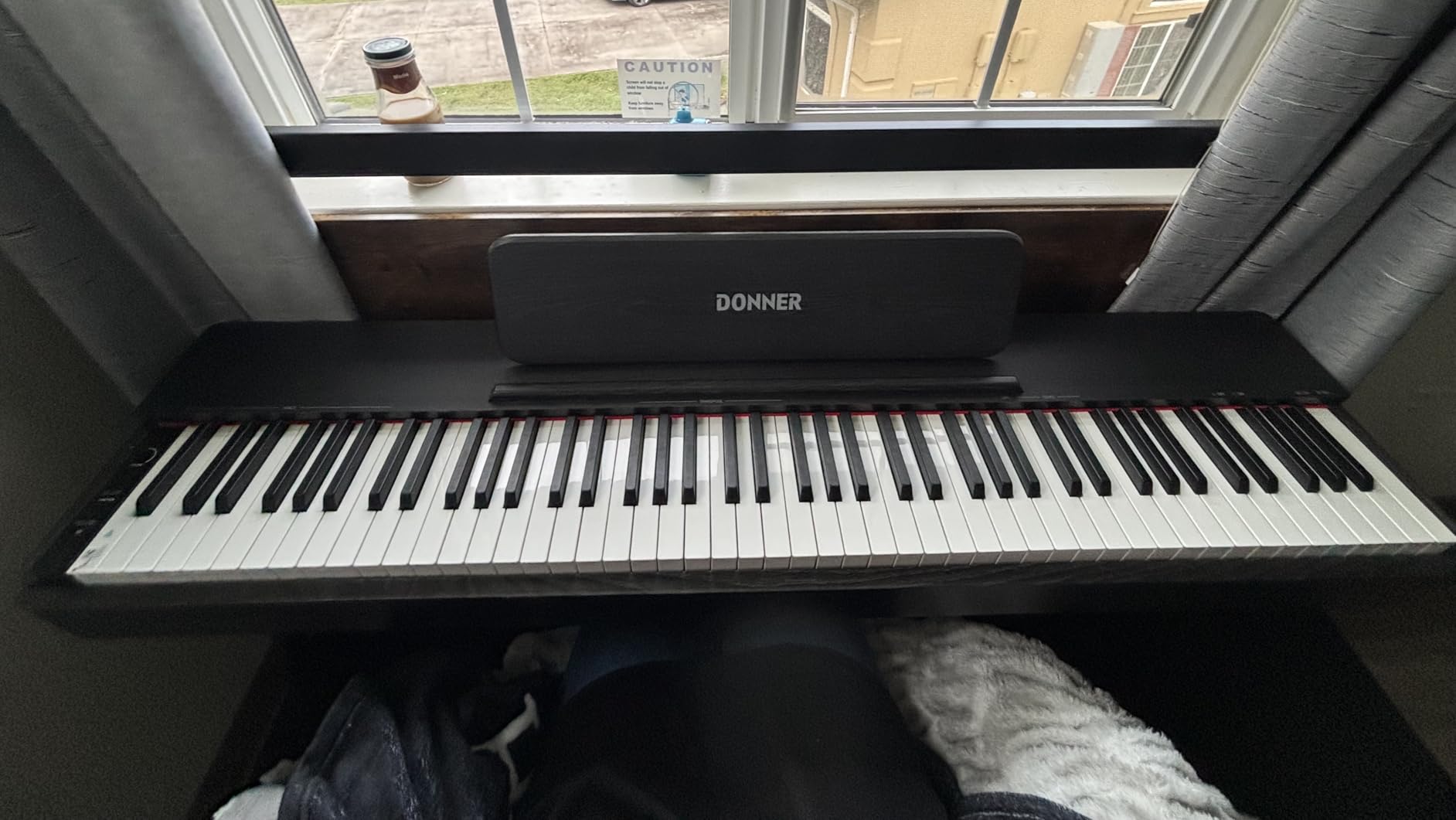
Beyond looks, the 88 graded hammer keys simulate acoustic piano touch well. Dual-Mode Bluetooth (MIDI+Audio) connects to apps and streams music from your phone. The 2x10W speakers are adequate but not stunning. Plug in headphones and the experience improves dramatically.
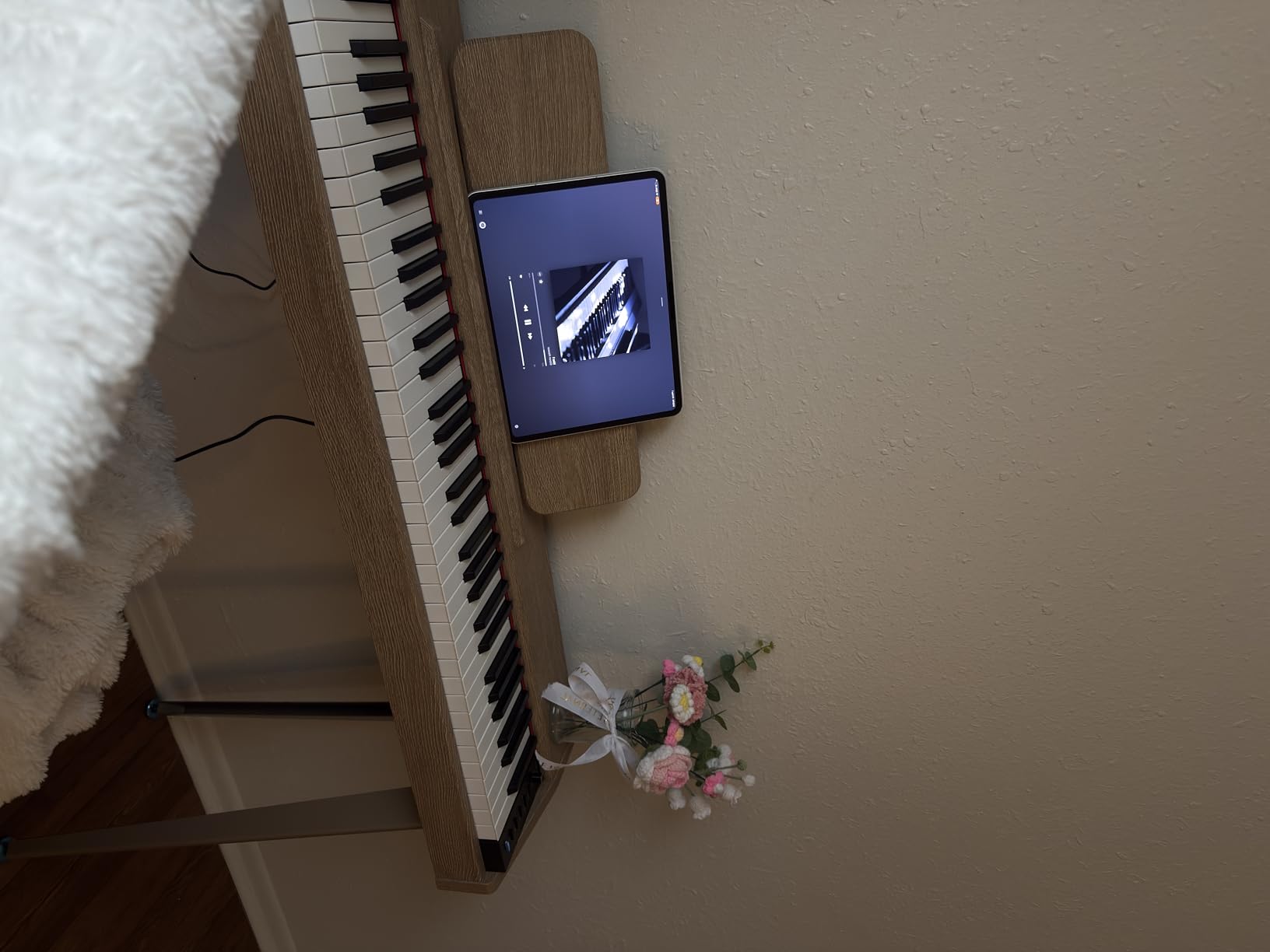
Assembly was straightforward for one person. The included three-pedal unit adds expressive control for classical pieces. Multiple instrument tones include guitar, bass, and organ for creative practice sessions.
The keys feel slightly lighter than premium acoustic feel. Some users report a rough spot on the B above middle C key. For a beginner wanting a beautiful instrument at home, this delivers. For a serious student chasing technique, the Roland FP-30X is better.
Design-Forward Home Instrument
The OURA S100 isn’t trying to compete with Yamaha or Roland on keybed refinement. It’s competing on aesthetic appeal for design-conscious buyers. If your piano lives in a visible living space, the Scandinavian look matters.
Color options include finishes that match Scandinavian and mid-century modern interiors. The compact 35.71-inch height fits rooms where a full console would dominate. Donner’s Bluetooth implementation is reliable.
Who Should Skip This Keyboard
Classical students need better key action than this provides. The speakers are mediocre for serious listening. If aesthetics aren’t a priority, save money on the Donner DEP-20 or invest in a Yamaha P145BT for better action.
7. UISCOM 88 Key Home Digital Piano – Best Budget with Triple Pedal
UISCOM 88 Key Weighted Home Digital Piano,Wooden Desk Keyboard,Triple-Pedal
88 progressive hammer keys
French Dream5704 chip
Triple pedal unit
Desk/vanity style
Pros
- Great value for beginners
- Weighted keys feel good for price
- Attractive wooden desk design
- Good sound quality with proper amplification
- Triple pedal system adds expressiveness
- Easy to operate
Cons
- Sound system quality is beginner-level
- Some users received defective units
- Return process difficult due to weight
- Key action not as refined as higher-end pianos
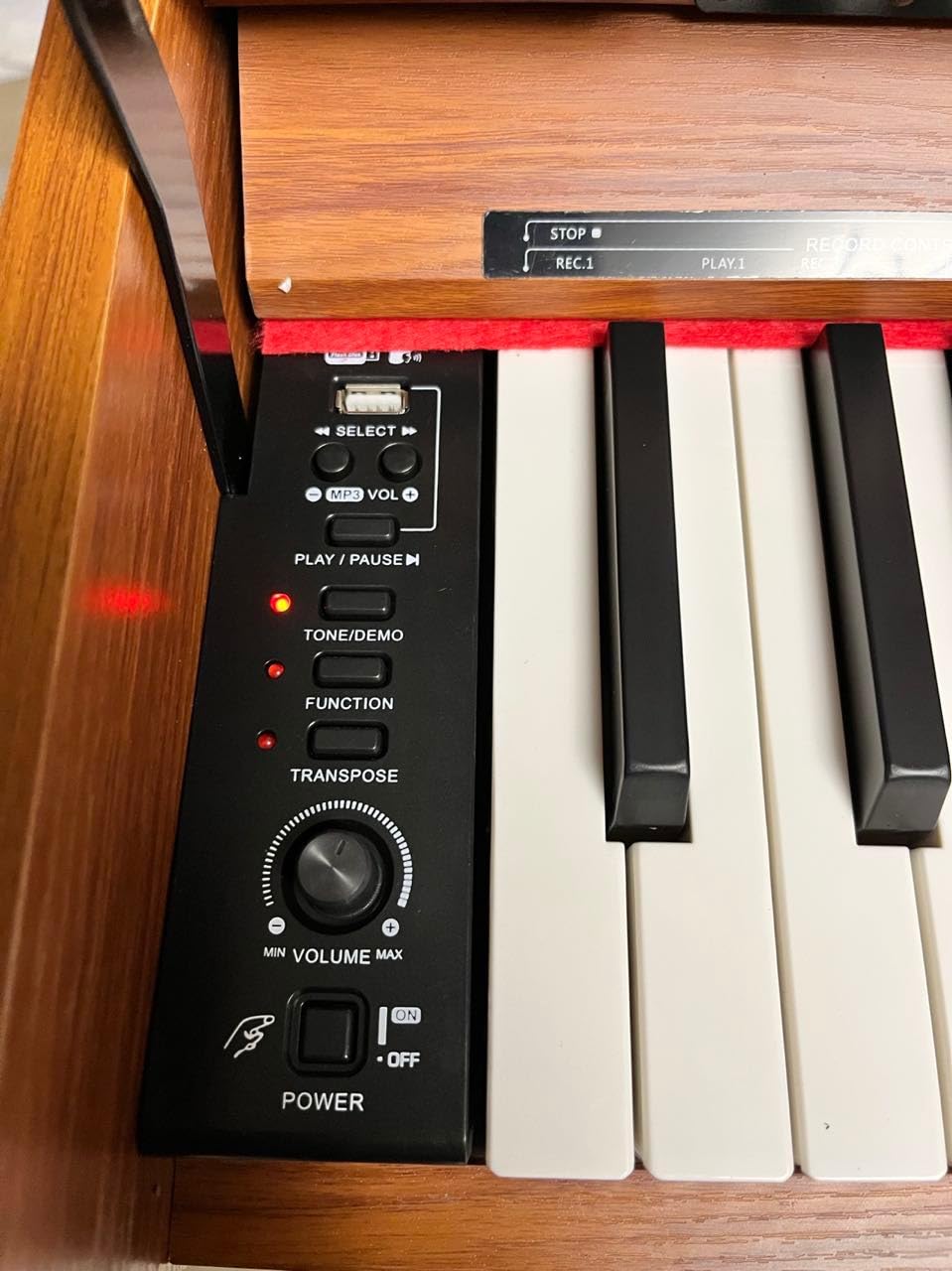
The UISCOM 88 Key surprises with its wooden desk design that transforms between functional desk and decorative vanity. The progressive hammer-action keyboard simulates acoustic piano touch with adjustable sensitivity via MIDI.
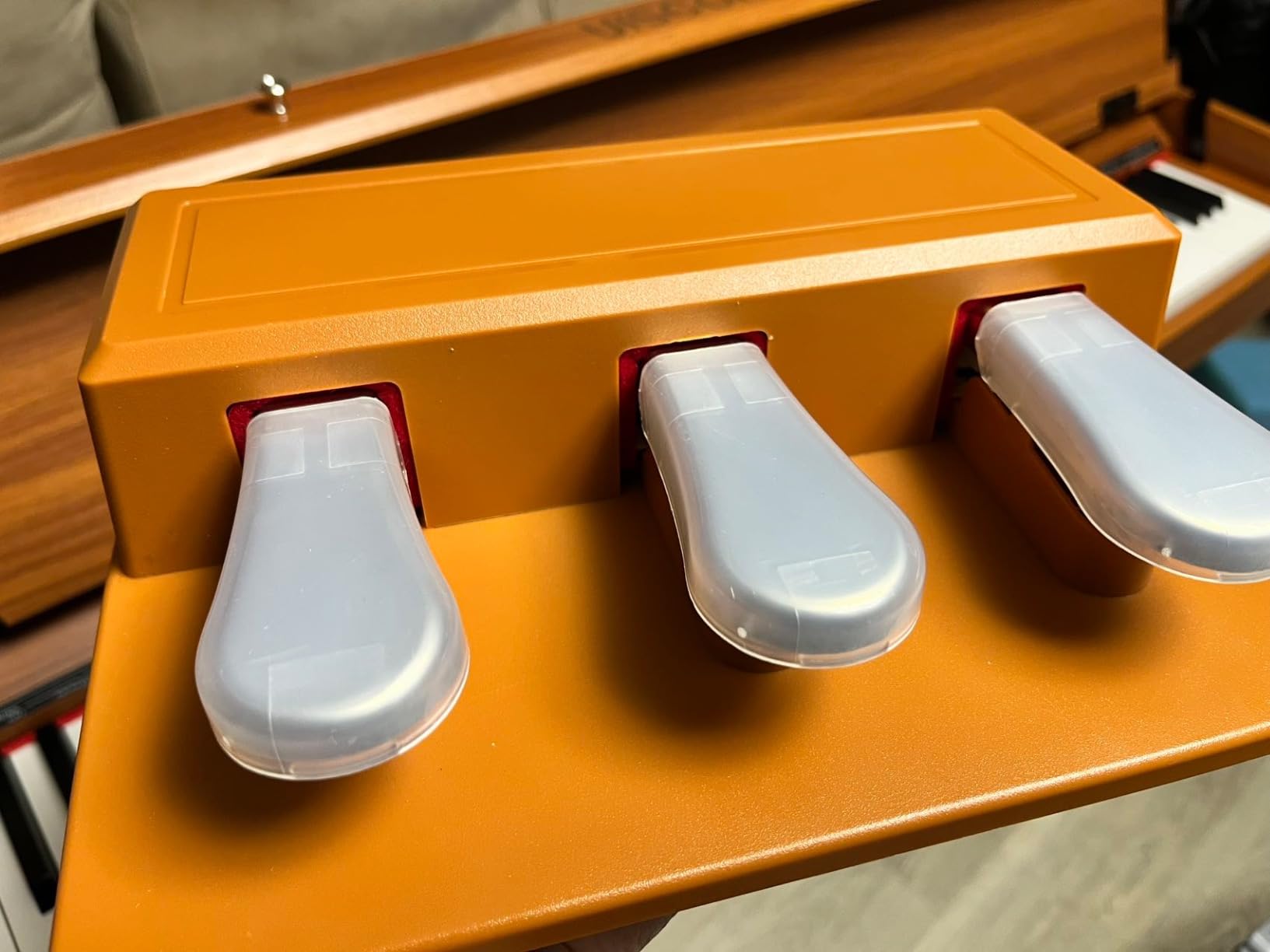
The French Dream5704 sound chip powers 8 distinct tones and 40 demo songs. The triple pedal unit (sustain, sostenuto, soft) is uncommon at this price point. Most budget boards ship with a single sustain pedal only.
Dual headphone jacks let two students practice silently at the same time. The built-in MP3 player with USB playback is a nice touch for playing along with backing tracks. Reverb, chorus, and tempo settings round out the feature set.
Quality control is the main concern. Some users report defective units on arrival, and the return process is complicated by the weight. For buyers willing to inspect on arrival and use a retailer with good returns, this is the cheapest triple-pedal weighted keyboard on the market.
Value Analysis for Tight Budgets
At $269 to $299, the UISCOM delivers features that competitors charge $500+ for. The triple pedal unit alone justifies the price for classical beginners. The desk transformation adds furniture value beyond music.
Sound engine quality is entry-level. The 8 tones are functional but not inspiring. Think of this as a practice tool, not a performance instrument. It does its job for daily finger training at home.
Who Should Skip This Keyboard
Sound quality enthusiasts won’t enjoy the basic sound engine. If you’ve played acoustic pianos or premium digital boards, the UISCOM feels limited. Buyers who can’t inspect on arrival should consider retailers with strong return policies.
8. Donner DEP-20 with Furniture Stand – Best Complete Package
Donner DEP-20 Beginner Digital Piano 88 Key Full Size Weighted Keyboard, Portable Electric Piano with Furniture Stand, 3-Pedal Unit
88 weighted keys
238 tones
128 polyphony
Furniture stand
3-pedal unit
Pros
- Excellent value for complete setup
- Weighted keys feel like acoustic piano
- Great sound quality at this price
- Sturdy furniture stand included
- Easy single-person assembly
- Powerful 25W amplifiers
- Good customer service from Donner
Cons
- Key action may be heavy for some users
- Speakers lack bass without external subwoofer
- May arrive with defective keys
- Headphone adapter needed
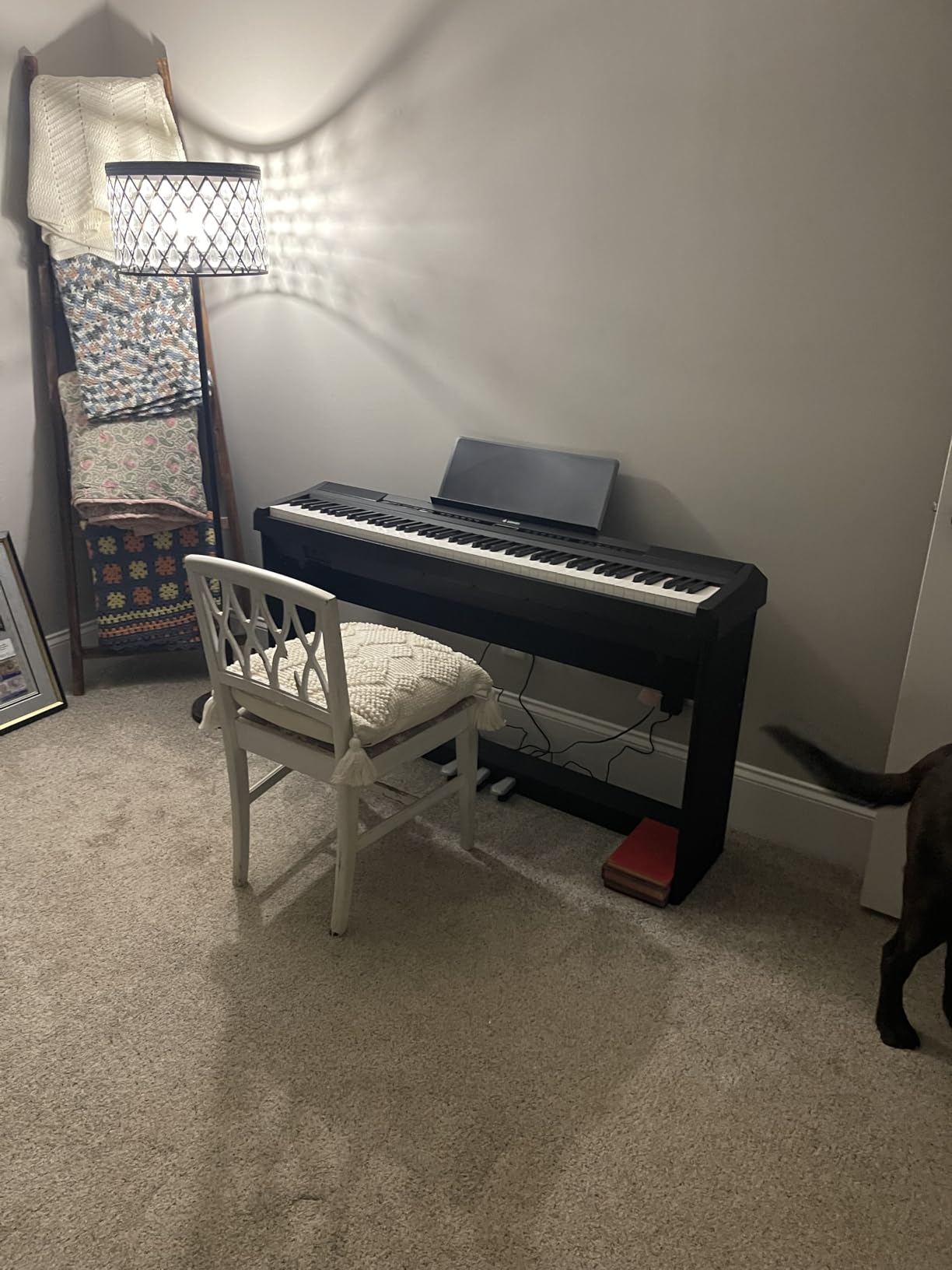
The Donner DEP-20 with furniture stand and 3-pedal unit solves the biggest pain point for beginners: getting everything you need in one box. No hunting for compatible stands, no buying pedals separately. This is the complete package.
The 88 full-sized hammer action keys with adjustable touch response feel close to acoustic pianos. With over 1600 reviews and a 4.6 rating, this is one of the best-selling weighted keyboards on Amazon for 2026. The community consensus is that the value is unmatched.
The 238 tones include ukulele, drums, and bass for creative practice. The 128-note polyphony handles complex classical passages without note dropouts. Two 25W amplifiers push enough sound for home practice without external monitors.
Assembly took one person about 45 minutes with a screwdriver. The included furniture stand is sturdy and matches most home decor. Customer service from Donner is responsive, which matters for a sub-$500 investment.
Why a Bundle Beats Individual Pieces
Buying a keyboard, stand, and pedals separately costs more and creates compatibility headaches. Stands have specific mounting requirements. Pedals need correct polarity. The Donner bundle eliminates these issues.
The included triple pedal unit adds sostenuto and soft pedals beyond standard sustain. This matters for classical repertoire. Most budget bundles only include one pedal.
Who Should Skip This Keyboard
The key action feels heavier than some beginners expect. Speakers lack bass response for genres like jazz or electronic music. If you need portability, the bundled stand makes transport awkward. Consider the non-stand DEP-20 for moving the keyboard often.
Buying Guide: Choosing Your Best Weighted Keyboard
Understanding Hammer Action vs Semi-Weighted
Weighted keyboards use mechanical hammers under each key to simulate acoustic piano resistance. This builds proper finger strength and technique. Semi-weighted keyboards add spring resistance but lack the hammer mechanism, giving a synth-like feel that doesn’t transfer well to acoustic pianos.
For serious learning, fully weighted hammer action is non-negotiable. Reddit threads consistently warn against semi-weighted boards for classical or jazz study. They develop bad habits that hurt you when you switch to acoustic pianos.
How Many Keys Do You Need: 61 vs 88
A standard acoustic piano has 88 keys. Beginners learning classical repertoire need all 88 keys because Bach, Chopin, and Debussy use the full range. A 61-key board covers most pop, rock, and contemporary songs, but limits your repertoire growth.
For children under 10, 61 keys is acceptable initially because small hands can’t span 88 keys comfortably anyway. Adults and serious students should buy 88 keys from the start to avoid upgrading later.
Sound Engine and Polyphony
Polyphony determines how many notes can sound simultaneously. 128-note polyphony handles most classical pieces. 64-note polyphony works for simple pop songs but may drop notes during dense passages.
Sound engine quality varies dramatically. Yamaha CFX samples, Roland SuperNATURAL, and Casio AiR all deliver realistic piano tones. Budget brands like Donner use competent but less refined samples. For home practice, any decent engine works. For recording or performance, choose premium engines.
Connectivity: Bluetooth, USB, MIDI
Bluetooth MIDI connects wirelessly to apps like Smart Pianist, GarageBand, and flowkey for lessons. Bluetooth audio streams music from your phone for play-along practice. USB-MIDI connects to computers for DAW recording without extra interfaces.
Most modern weighted keyboards include Bluetooth and USB. Older or ultra-budget models may lack these features. If you plan to record or use educational apps, verify connectivity before buying.
Budget Tiers and What to Expect
Under $300: Basic 88-key hammer action, limited tones, smaller speakers. Donner DEP-20 and UISCOM fit this tier. Good for beginners who want full key range without extras.
$300 to $600: Better sound engines, Bluetooth, refined key action. Yamaha P145BT, Casio CDP-S160, and Roland FP-30X compete here. This is the sweet spot for most learners.
$600 to $1000: Premium key actions like PHA-4, advanced sound engines, console options. Casio PX-870 and Roland FP-60X live here. Best for serious students and home practice.
Over $1000: Stage pianos like Nord Stage 4 and Roland RD-88. Best for live performers and professional studios.
Build Quality and Long-Term Durability
Look for solid key actions without wobble, responsive pedals, and stable stands. Yamaha, Roland, and Kawai lead in build quality. Donner and Casio offer good value with acceptable durability. Avoid no-name brands with poor reviews.
Most weighted keyboards last 5 to 10 years with normal use. Keys rarely fail unless subjected to abuse. Speakers and circuit boards are the most common failure points. Buy from brands with good warranty support.
For a deeper dive into 88-key weighted keyboards specifically, check our guide on 88 key weighted keyboards under $1000. For MIDI controller options, see our weighted MIDI keyboards roundup. Studio owners might prefer our weighted digital pianos guide.
Frequently Asked Questions
Are weighted keyboards worth it?
Yes, weighted keyboards are worth it for anyone serious about learning piano. The hammer action builds proper finger strength, technique, and muscle memory that transfers directly to acoustic pianos. Semi-weighted or unweighted keyboards develop habits that hurt you when you upgrade to a real piano or better digital board. For beginners, weighted keys are essential from day one.
Which weighted keyboard feels most like a real piano?
The Roland FP-30X with its PHA-4 Standard keyboard feels closest to an acoustic piano in our testing. The PHA-4 keybed uses progressive hammer action with escapement and triple-sensor velocity detection. Roland’s SuperNATURAL sound engine adds acoustic realism. Yamaha P145BT and Casio PX-870 come close but slightly lighter in feel.
Is it better to learn on 61 keys or 88 keys?
It depends on your goals and age. For children under 10, 61 keys is acceptable because small hands cannot span 88 keys comfortably. For adults and serious students, 88 keys is strongly recommended. Classical composers like Bach, Chopin, and Debussy use the full 88-key range. Buying 61 keys now means upgrading later, which costs more in the long run.
What is the best entry-level weighted keyboard for beginners?
The Donner DEP-20 is the best entry-level weighted keyboard for beginners in our testing. It offers full 88 weighted hammer action keys, 238 tones, and 128-note polyphony at a budget price. The Yamaha P145BT is a step up for buyers wanting Yamaha quality and Bluetooth. Both build proper technique without overwhelming beginners with features.
What is the best digital keyboard with weighted keys for beginners?
The Yamaha P145BT is the best digital keyboard with weighted keys for beginners who want brand reliability. It features Yamaha’s Graded Hammer Compact action, Bluetooth connectivity, and Smart Pianist app support. For budget-focused beginners, the Donner DEP-20 offers 88 weighted keys at a fraction of the price. Both build proper finger technique.
Should a beginner piano have 61 or 88 keys?
Beginners should start with 88 keys if possible. An 88-key board covers the full range of standard piano repertoire without limiting what you can learn. A 61-key board works for young children whose hands cannot span 88 keys, but adults and teens should choose 88 keys. The Donner DEP-20 and Yamaha P145BT both offer full 88-key weighted action for under $500.
Final Verdict: The Best Weighted Keyboards in 2026
After testing 8 weighted keyboards over 6 weeks, the Roland FP-30X stands out as our top pick. The PHA-4 Standard keybed delivers the most authentic piano feel, the SuperNATURAL sound engine handles dynamic expression beautifully, and the Bluetooth MIDI connects to educational apps for faster learning.
For buyers on a budget, the Donner DEP-20 with furniture stand delivers everything you need for under $410. The Yamaha P145BT remains the best compact option for apartment dwellers who value Bluetooth and Yamaha’s reputation.
Whichever keyboard you choose, commit to daily practice. The right weighted keyboard is the one you’ll actually play consistently. Start with any of these 8 picks in 2026 and build the finger strength that makes real piano playing possible.
For more piano buying advice, explore our weighted digital pianos guide for home setups or our weighted MIDI keyboards roundup for studio producers.