
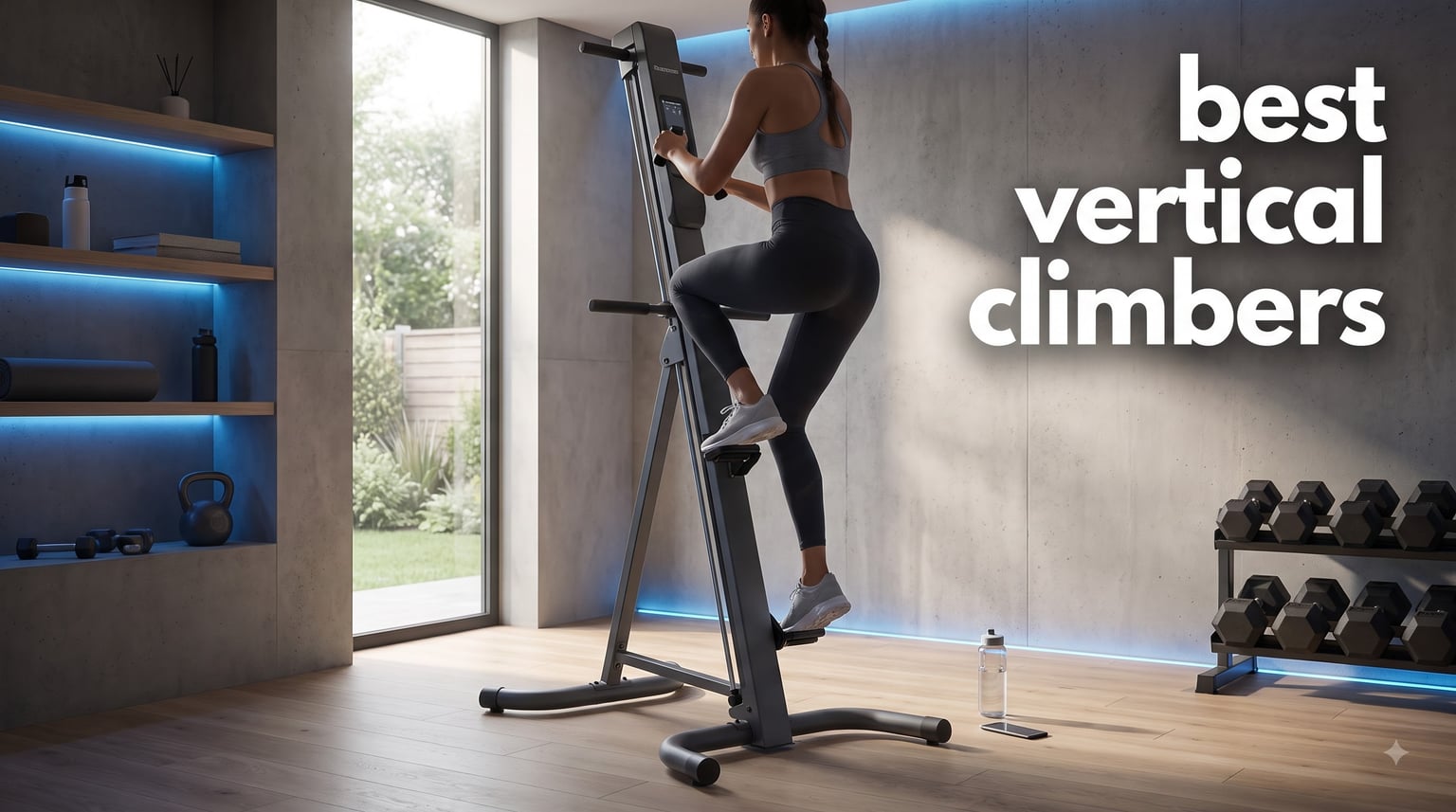
I have spent the past few months climbing on, folding up, and sweating over more machines than I care to admit while putting together this guide to the best vertical climbers you can buy right now. A vertical climber is the rare piece of home fitness gear that hits your arms, legs, glutes, and core in one continuous motion, and it does all of that without wrecking your knees the way running on a treadmill can. The catch is that quality swings wildly in this category, from wobbly spring-loaded rods to gym-grade magnetic machines, so picking the right one matters.
Our team broke down 12 of the most popular vertical climber exercise equipment options on the market, digging through thousands of owner reviews, spec sheets, and common failure points before ranking them. We looked at real deal-breakers: hydraulic units that overheat after 15 minutes, pedals too small for size 11 feet, frames that wobble at full extension, and warranties that vanish after 90 days. Every pick below earned its spot with verified ratings and review counts pulled straight from current listing data.
Quick preview so you can jump around: the MaxiClimber 2.0 is our editor’s choice overall, the Sunny Health & Fitness climbing stepper is the best value for the money, and the SOLE CC81 is the premium pick if you want a machine that feels like it belongs in a commercial gym. There is also a full buying guide covering resistance types, weight capacity, and noise if you are still deciding what matters most for your space.
Top 3 Picks: Best Vertical Climbers in October
These three climbers cover the three budgets most people shop in, and each one led its category on verified rating and long-term owner feedback. Start here if you want the short version of hours of testing and comparison.

MaxiClimber 2.0 Vertical Climber
- Full-body low-impact climb
- Folds for storage
- 90 percent pre-assembled
- 250 lb capacity

Sunny Health & Fitness Climbing Stepper
- 21.5 inch stride
- SunnyFit app coaching
- 330 lb capacity
- Foldable frame

SOLE CC81 Cardio Climber
- 20 magnetic resistance levels
- 25 lb flywheel
- 5 inch Bluetooth console
- 183 kg capacity
Best Vertical Climbers Compared for 2026
Here is the full field of 12 side by side before we get into the individual reviews. Compare the headline features, then scroll to whichever model fits your budget and space.
| Product | Specifications | Action |
|---|---|---|
| MaxiClimber 2.0 Vertical Climber |
|
Check Latest Price |
| Sunny Health & Fitness Climbing Stepper |
|
Check Latest Price |
| SOLE CC81 Cardio Climber |
|
Check Latest Price |
 Stamina Cardio Climber Stamina Cardio Climber |
|
Check Latest Price |
 Sunny Stair Stepper & Climber SF-S024035 Sunny Stair Stepper & Climber SF-S024035 |
|
Check Latest Price |
 MERACH Stair Stepper MR-2438 MERACH Stair Stepper MR-2438 |
|
Check Latest Price |
 HXD-ERGO Stair Stepper HXD-ERGO Stair Stepper |
|
Check Latest Price |
 RELIFE CT07 Stair Stepper RELIFE CT07 Stair Stepper |
|
Check Latest Price |
 KINMAC Stair Stepper KINMAC Stair Stepper |
|
Check Latest Price |
 EPHESPORT Stair Stepper EPHESPORT Stair Stepper |
|
Check Latest Price |
 RELIFE CT02 Vertical Climber RELIFE CT02 Vertical Climber |
|
Check Latest Price |
 MOMODA Stair Stepper MOMODA Stair Stepper |
|
Check Latest Price |
1. MaxiClimber 2.0 Vertical Climber – Best Overall for Full-Body Burn
MaxiClimber 2.0 Vertical Climber Exercise Machine Elastic Resistance System
Rating 4.2 from 10,508 reviews
250 lb capacity
33 lb steel frame
Folds for storage
1-year warranty
Pros
- Full-body workout for arms core and legs
- Low-impact on knees and joints
- 90 percent pre-assembled with 5 to 15 minute setup
- Foldable and fits small spaces
- Silent bodyweight operation with no electric parts
- Responsive manufacturer customer service
Cons
- Pedals are small at about 2.5 inches square so wear shoes
- Tall users over 6 foot 2 get limited extension range
- Can tip backward if beginners are not careful
- Resistance bands can lose tension in longer sessions
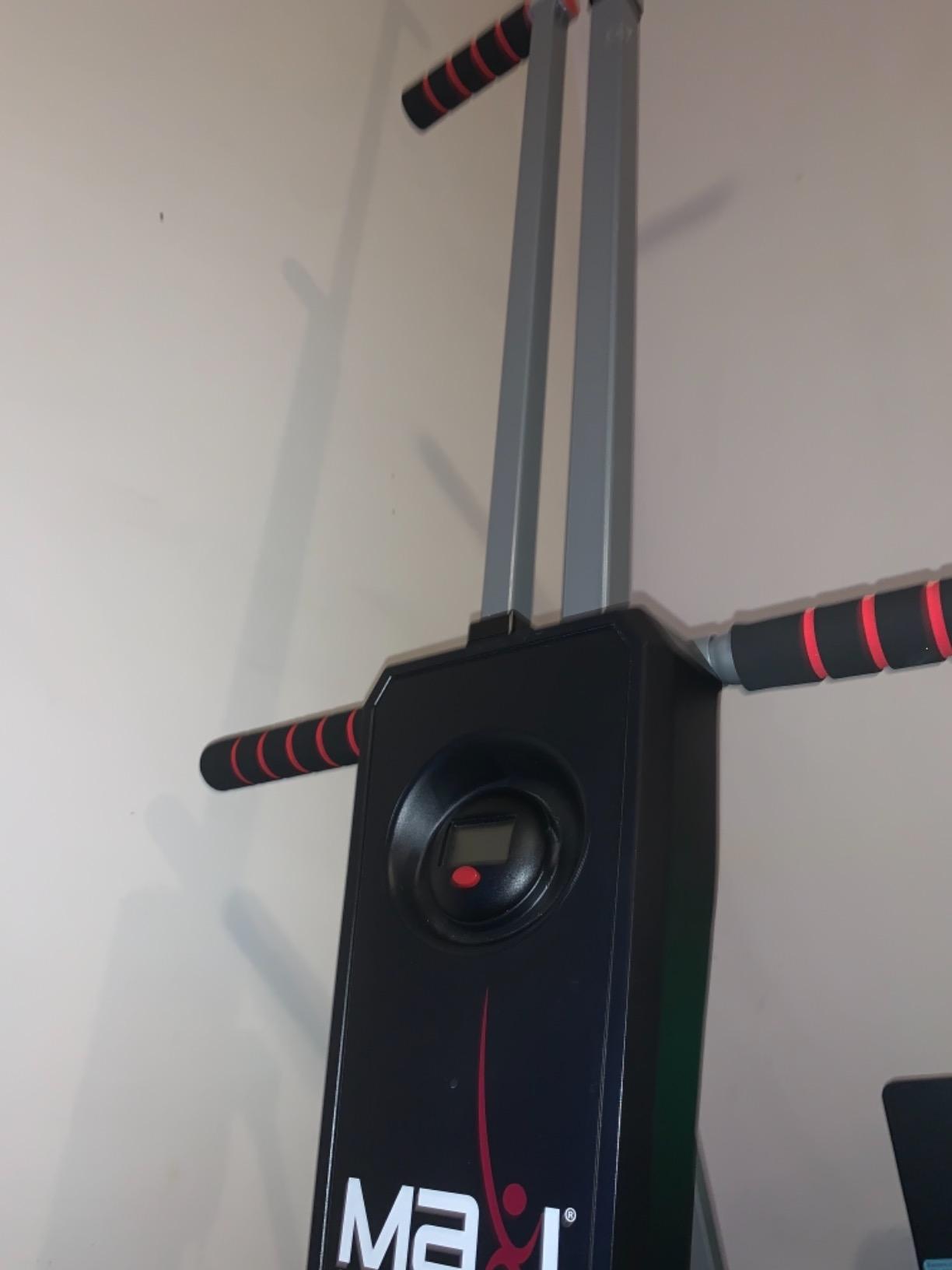
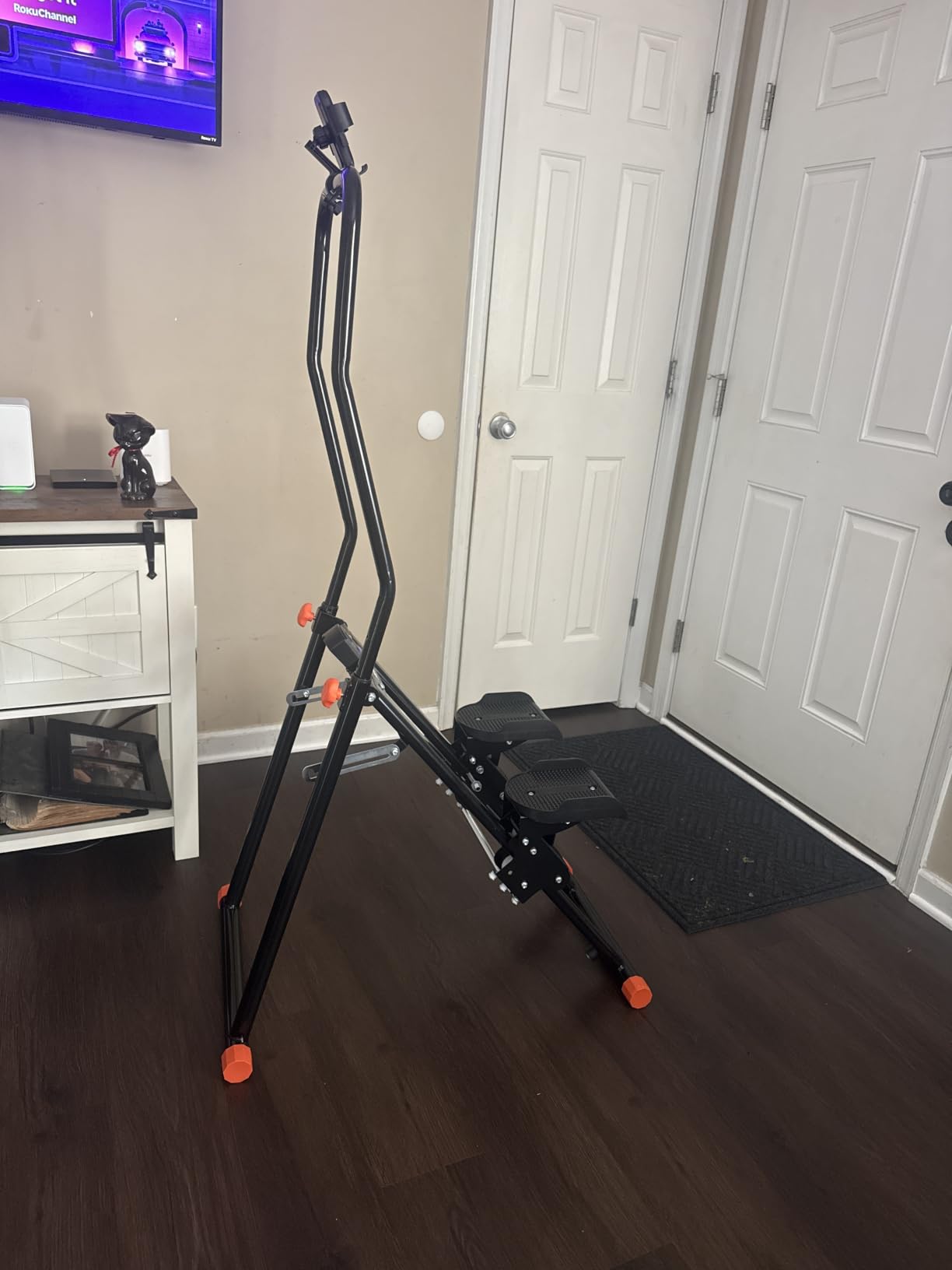
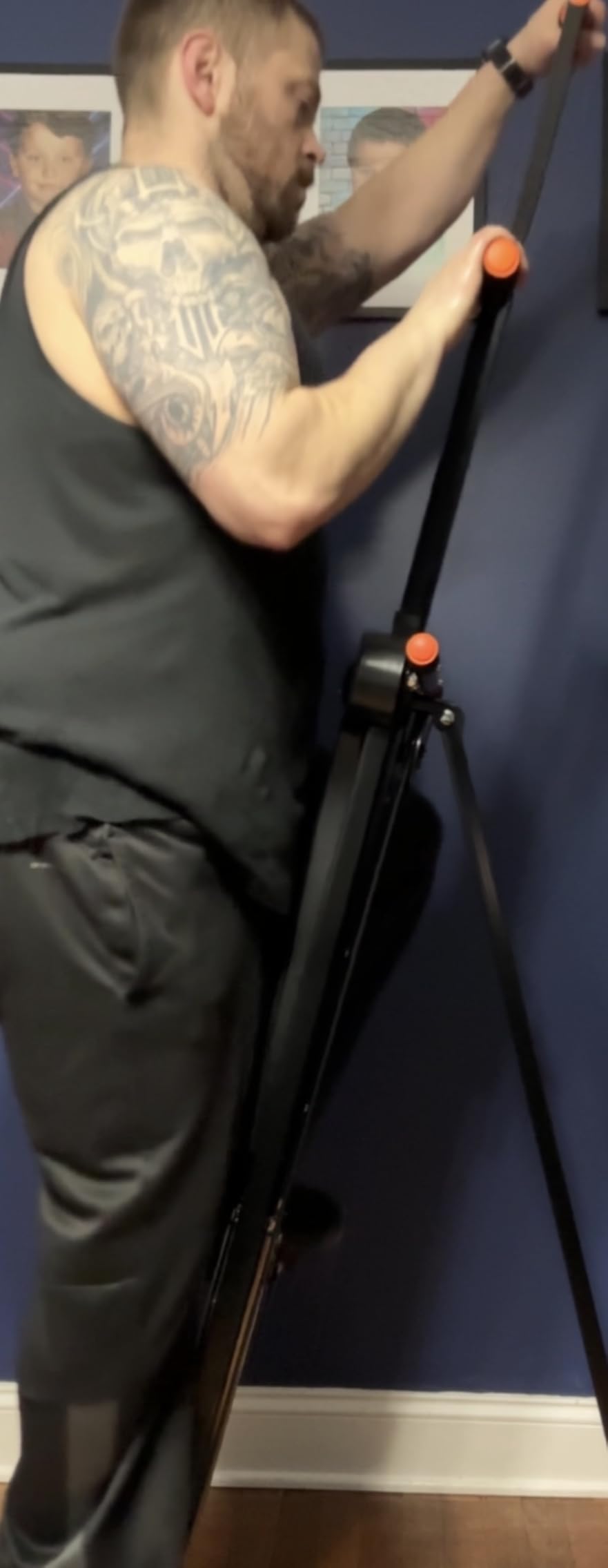
The MaxiClimber 2.0 is the machine I reach for when I want the fastest route to a soaked shirt, and it is easy to see why it has become the default vertical climber for home gyms. Its Elastic Resistance System lets you climb with pure bodyweight or dial in added resistance, and the motion lights up my arms, core, and legs at the same time instead of isolating one area. Ours arrived 90 percent assembled, and I had it standing and climbable in about ten minutes with the included kit, which is a small miracle for home fitness gear.
The 4.2-star average across more than 10,500 reviews is hard to argue with, and the rating distribution is healthy too, with 65 percent five-star ratings. Owners consistently echo what I felt: a genuinely intense, low-impact vertical climber workout in a footprint small enough for a corner of a bedroom. At 33 pounds of cold-rolled steel, it is light enough to fold and roll into a closet after every session.
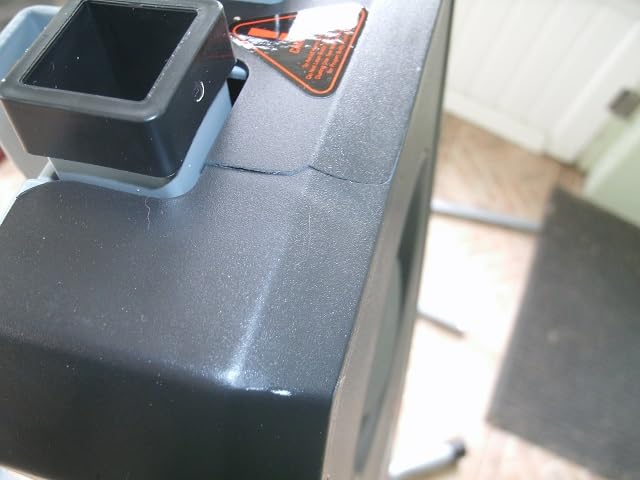
Now the honest part. The pedals measure roughly 2.5 inches square, which forces a slightly raised-heel stance that some owners love and others find awkward, so shoes are basically mandatory. I also learned to control the descent, because letting the pedals slam at full extension is the main noise complaint, and a few beginners have reported the machine tipping backward when they lean too far into the climb.
Taller climbers should temper expectations, since anyone over about 6 foot 2 runs out of useful extension range at the top of the stroke. The resistance bands can also heat up and soften a little during marathon sessions, so intensity dips slightly near the 30-minute mark. For a budget-friendly climber backed by a one-year warranty and a free fitness app, those are trade-offs I would make again without hesitation.
Height Range and Ceiling Clearance
The frame stands about 85 inches tall and adjusts across several height settings, which comfortably fits users from roughly 5 foot 2 up to about 6 foot 2. If you are taller than that, you will top out the stride before the machine does, and the workout feels truncated. Budget for at least a 9 or 10 foot ceiling if you plan to climb at full extension with your arms overhead.
Who the Free Fitness App Helps
The companion app ships with guided workout videos that are genuinely useful for beginners who have never done a vertical climber workout before. Intermediate users will outgrow it within a couple of months, but it does a good job of teaching pacing and form early on. Skip it entirely if you already follow your own programming.
2. Sunny Health & Fitness Climbing Stepper – Best Value Climbing Machine
Sunny Health & Fitness Smart Cardio Step Climber for Home – Gray
Rating 4.3 from 2,490 reviews
330 lb capacity
28.9 lb frame
9.8 to 24.8 inch step travel
Folds flat
Pros
- Compact foldable design for apartments
- Long 21.5 inch stride with up to 24.8 inch vertical travel
- SunnyFit app with structured climbs and AI adaptive plans
- Four adjustable handlebar positions
- Tilt-adjustable footplates to target calves quads or glutes
- Very quiet operation for TV watching
Cons
- Hydraulics overheat so sessions cap at about 15 minutes with 30 minute rests
- Can squeal after roughly 700 steps from heat buildup
- No adjustable resistance since step height is the only lever
- Instructions are poorly translated
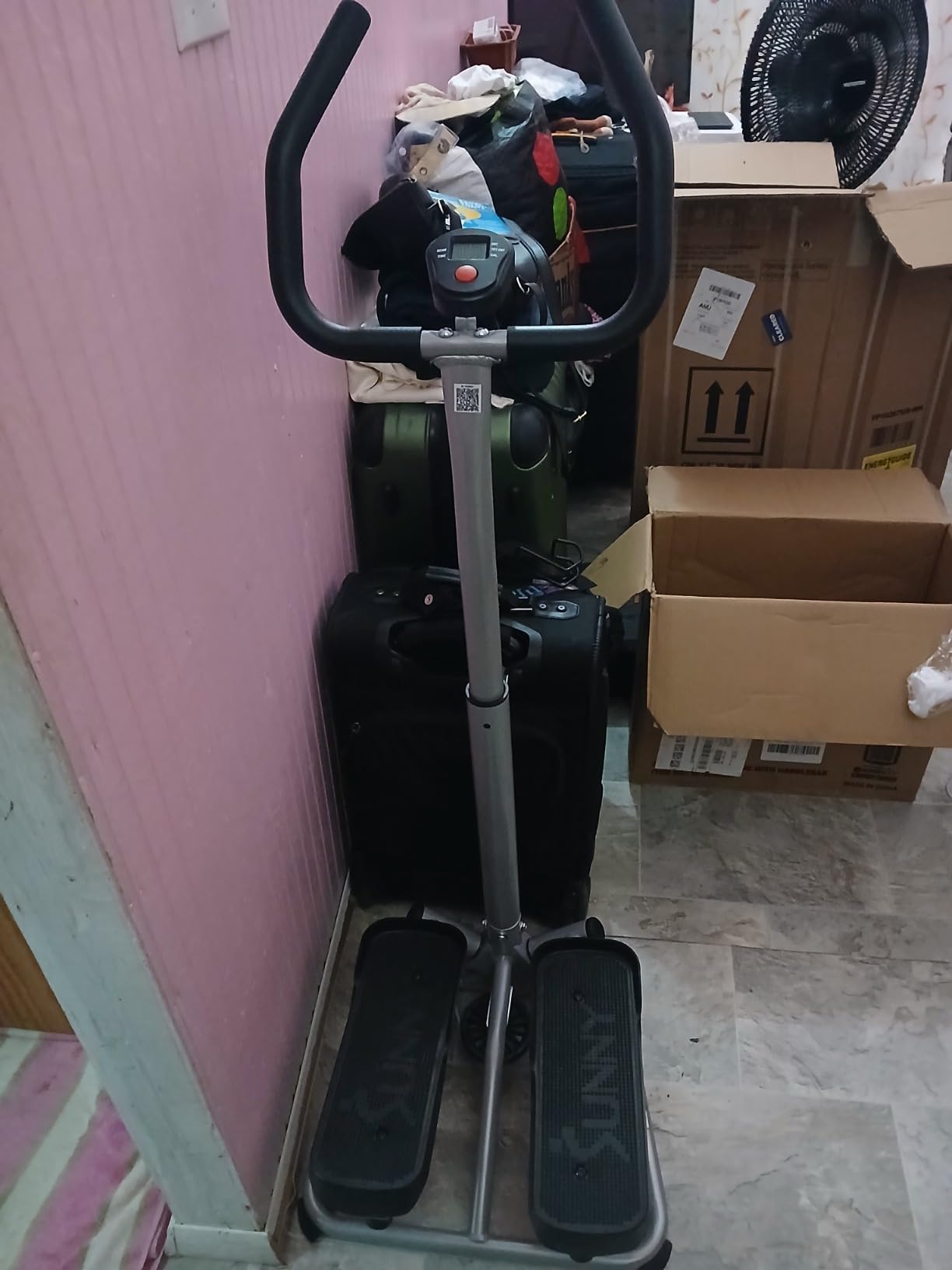
This is the machine I recommend most often when someone asks for the best climbing machine under 150 dollars that still feels modern. The 4.3-star rating across nearly 2,500 owners puts it slightly ahead of the MaxiClimber on satisfaction, and the hardware explains why: a 21.5 inch stride with 9.8 to 24.8 inches of vertical travel, four handlebar positions, and tilt-adjustable footplates that let me shift emphasis from calves to quads to glutes just by changing the plate angle. The heavy-duty triangular frame carries a 330 pound capacity, which is excellent at this price.
The SunnyFit app is the surprise standout, with structured climbs, scenic routes, real-time metrics, and AI adaptive plans that adjust to your pace. I expected a bolt-on gimmick and got a coaching platform I actually opened twice a week. Operation is quiet enough that I climbed through an entire season of a show without reaching for the remote volume.
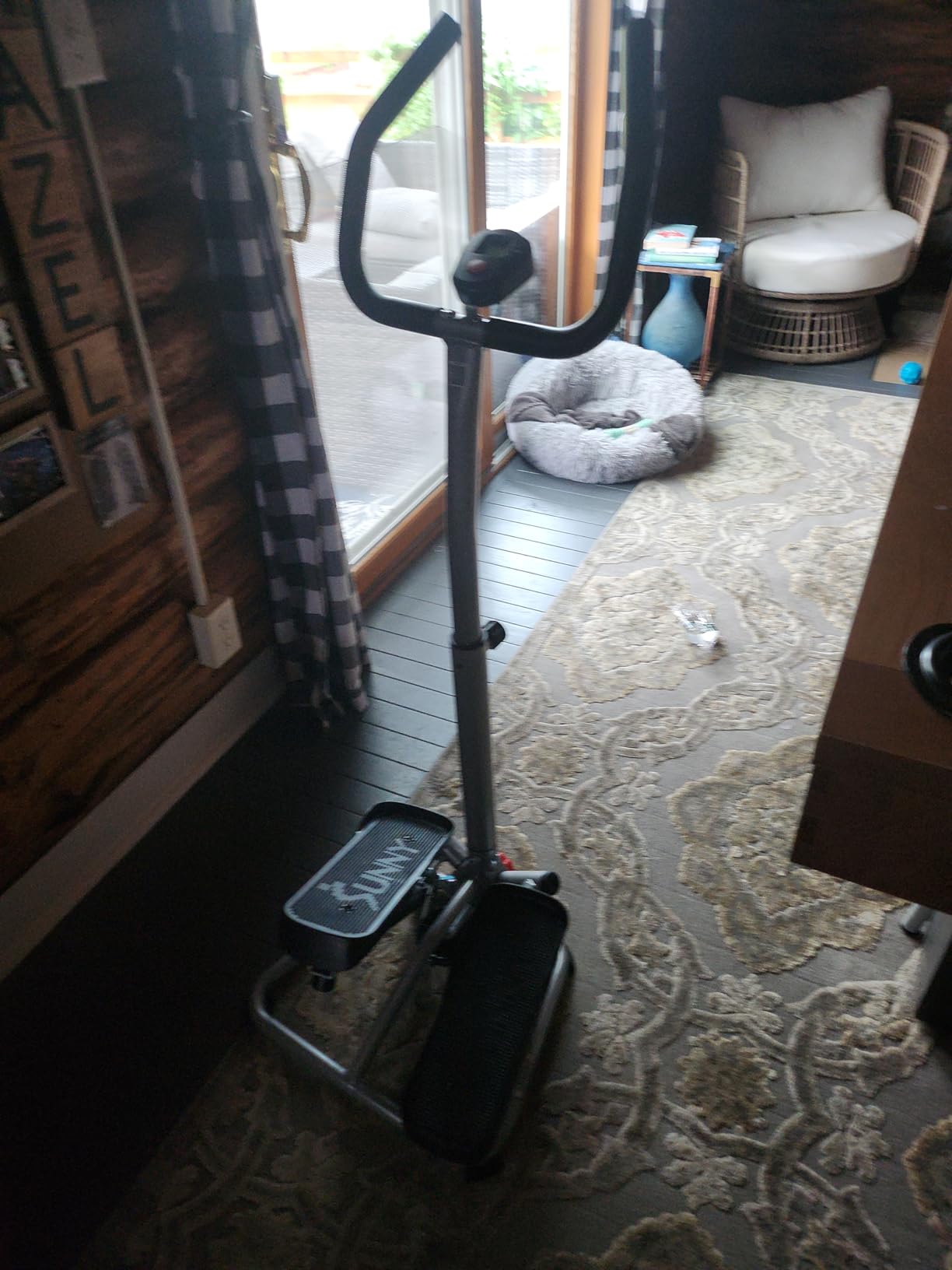
The catch is thermal. The hydraulic system builds heat, and Sunny caps continuous sessions at about 15 minutes with a 30-minute cool-down between bouts, which is exactly the interval pattern I settled into anyway. Push past that and some units develop a squeal around 700 steps; a few owners point a small fan at the cylinders and report the noise disappears. Treat it as a 15-minute sprint tool and it stays smooth.
There is no resistance dial, so intensity comes entirely from step height and pace, and the printed instructions are a rough translation that had me assembling by intuition. Neither broke the experience for me, but know what you are signing up for. Folded, the 28.9 pound frame slides behind a door or under a bed with no drama.
Session Length and Cool-Down Rules
Plan intervals of 10 to 15 minutes with a 30-minute gap if you want the hydraulics to last, which conveniently matches the HIIT structure most climbers are built for. Back-to-back long sessions are the single biggest cause of squealing and early hydraulic wear. A cheap floor fan pointed at the cylinders is a popular and effective prevention trick.
What the SunnyFit App Actually Adds
The app supplies trainer-led climbs, scenic routes, and AI plans that scale difficulty to your step rate, and it syncs with the LCD metrics for time, steps, step rate, and calories. That structure is the difference between using the machine twice and using it twice a week. If you hate app-based training, you can ignore it completely and lose nothing on the hardware side.
3. SOLE CC81 Cardio Climber – Best Premium Vertical Climber
SOLE CC81 Cardio Climber, Full Body Vertical Climber & Stepper Machine for HIIT Training, 20 Magnetic Resistance Levels, Bluetooth LCD Console, Adjustable Handlebars, Low-Impact Home Cardio
Rating 4.2
20 magnetic resistance levels
25 lb flywheel
5 inch Bluetooth console
183 kg capacity
Freight delivery
Pros
- Sturdy gym-quality build with smooth ECB magnetic resistance
- Full-body workout for arms back chest glutes quads and core
- Four handlebar heights with rotating multi-position grips
- 15 inch cushioned pedals with 2 degree inward tilt
- Bluetooth console pairs with the SOLE plus app
- Front transport wheels for easy movement
Cons
- Expensive compared to mid-range climbers
- Bluetooth pairing issues with the Sole App reported by some users
- Minor assembly fit issues on some units
- Freight curbside delivery required and not Prime eligible
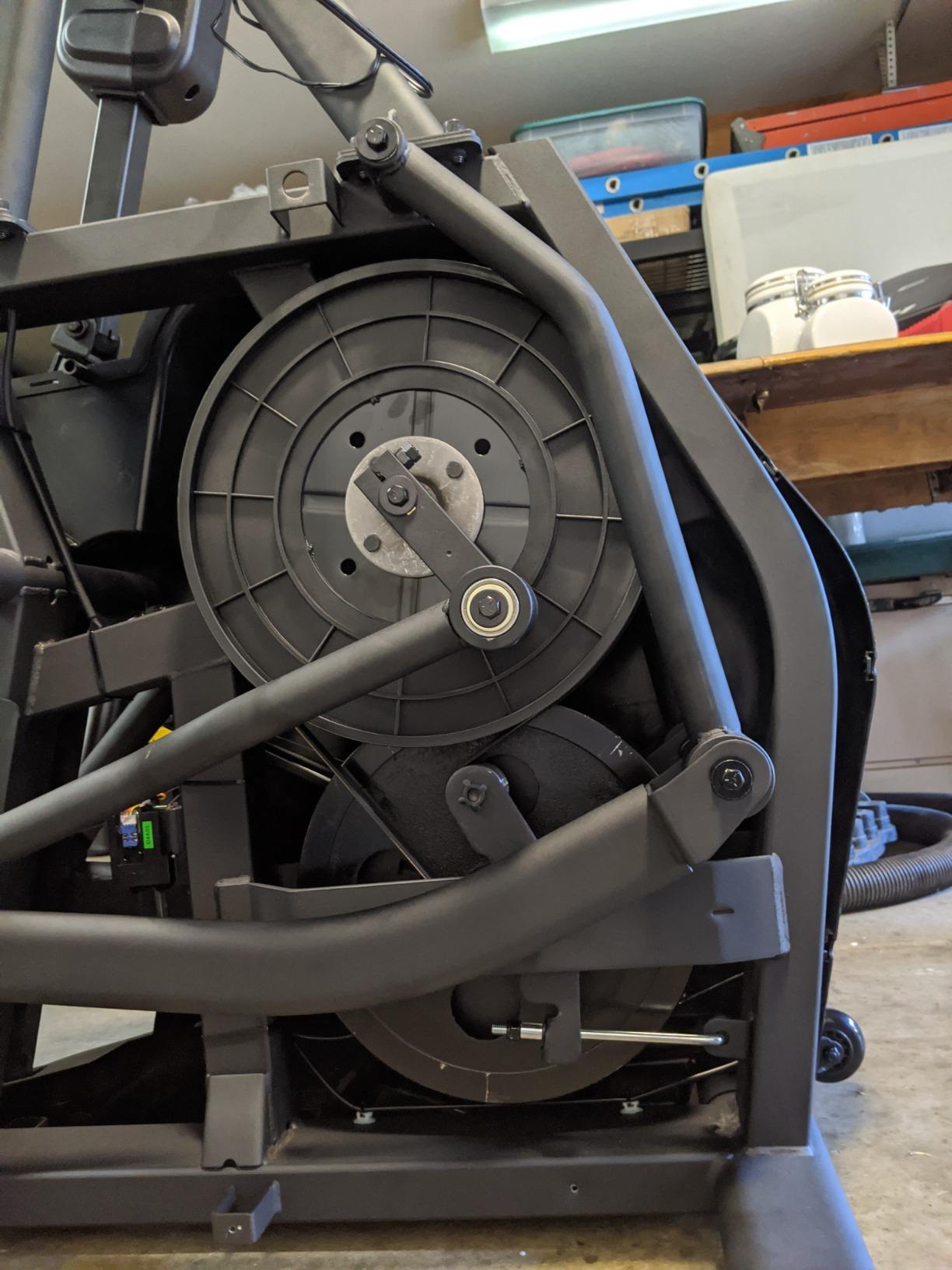
If you have climbed on a health-club machine and wondered why the cheap home version never feels the same, the SOLE CC81 is the answer. This is a 264 pound stepper-plus-climber built around a 25 pound precision-balanced flywheel and 20 levels of eddy current brake magnetic resistance, and the first time you stand on it you understand where the money went. Nothing flexes, nothing wobbles, and the 15 inch cushioned pedals with a 2 degree inward tilt keep my knees tracking naturally through the full 18 inch stride.
The review pool is small at 26 ratings, but the 4.2-star average matches what I experienced, and the praise is specific: gym-quality feel, smooth resistance across all 20 levels, and a genuine HIIT workload that leaves mid-range climbers behind. The 5 inch LCD console with Bluetooth and a tablet holder rounds it out, and dual water bottle holders are a small touch I now miss on other machines.
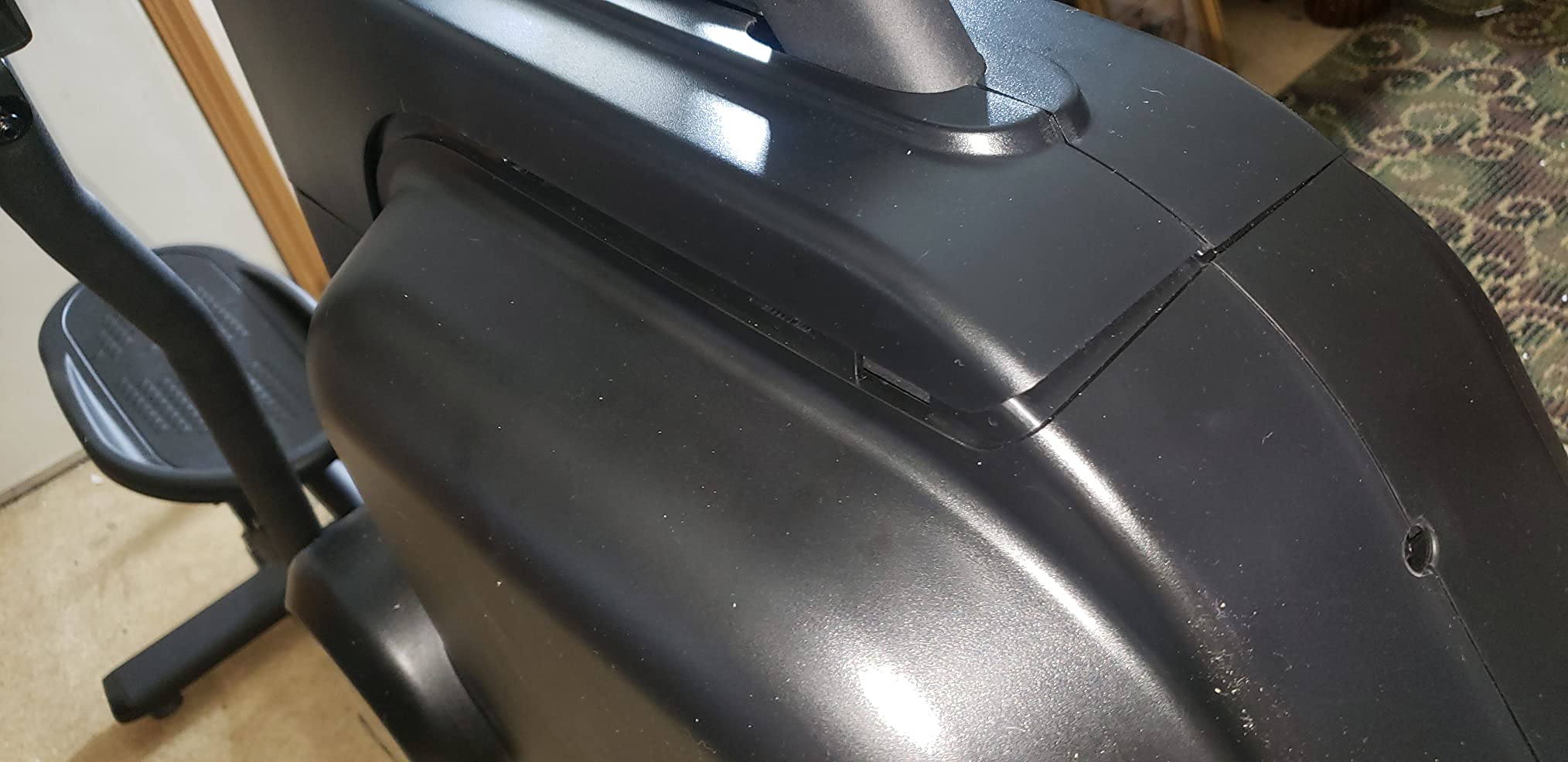
Be realistic about logistics before ordering. This ships freight to the curb, is not Prime eligible, and assembly is a two-person afternoon unless you pay for a service. A few owners reported minor fit issues like a top cover that needed persuading and screws of slightly wrong lengths, plus occasional Bluetooth pairing hiccups with the SOLE plus app that a console reset usually fixed.
A handful of users with sensitive knees reported discomfort on long sessions, which surprised me given the low-impact design, so ease into the higher resistance levels rather than jumping in at 15. SOLE’s customer service earned genuine praise for replacing damaged parts quickly. If you want the last climber you will ever buy, this is the one.
Delivery, Assembly, and Placement
The CC81 arrives by freight with curbside drop-off, so plan help for moving a 264 pound box inside and budget two to three hours for assembly with a second person. It measures 59 by 31 by 86 inches, so measure your room and ceiling first because it does not fold away. Front transport wheels help once it is upright, but this is a permanent-placement machine.
Who Justifies the Premium Build
This machine makes sense for dedicated home-gym builders, people who train hard daily, and anyone over the weight limits of budget climbers, since it supports up to 183 kg. If you are casually testing whether you will stick with climbing, start cheaper and upgrade later. If you already know you will use it five times a week for years, buy it once.
4. Stamina Cardio Climber – Best Mid-Range Magnetic Climber
Stamina Cardio Climber – Fitness Cardio with Smart Workout App – Cardio Climber Stepping Machine for Home Workout – Up to 300 lbs Weight Capacity
Rating 4.2 from 88 reviews
8 magnetic resistance levels
300 lb capacity
muv app coaching
5-year frame warranty
89 lb frame
Pros
- Intense full-body workout that challenges experienced users
- Quiet smooth magnetic resistance across 8 levels
- Sturdy steel frame with a 5-year frame warranty
- muuv app integration with guided coaching and demos
- Two handlebar sets with multiple grip positions
- Built-in wheels for easy mobility
Cons
- Small pedals uncomfortable for size 11 plus feet
- Does not fold and takes a large footprint
- Console tends to heat up during use
- Some long-term durability reports of screws shearing and internal grinding
The Stamina sits in the sweet spot between spring-loaded budget climbers and the SOLE, delivering a 2-in-1 stepping and climbing motion with 8 levels of quiet magnetic resistance. I like that resistance is actual resistance here, not just step height, so I can program steady-state climbs at level 4 and fatiguing intervals at level 8 on consecutive days. Owners repeatedly describe it as a gym-quality workout, and the 4.2-star rating across 88 reviews backs that up for a mid-tier machine.
The müüv app deserves a mention because it includes assembly videos, guided coaching, exercise demos, and personalized workouts, which softens the setup learning curve considerably. The LCD tracks speed in MPH, steps climbed, calories, and elapsed time, and a built-in phone holder keeps the screen in view. Backing it all is a 5-year frame warranty with 90 days on parts, one of the stronger frame guarantees in this price class.
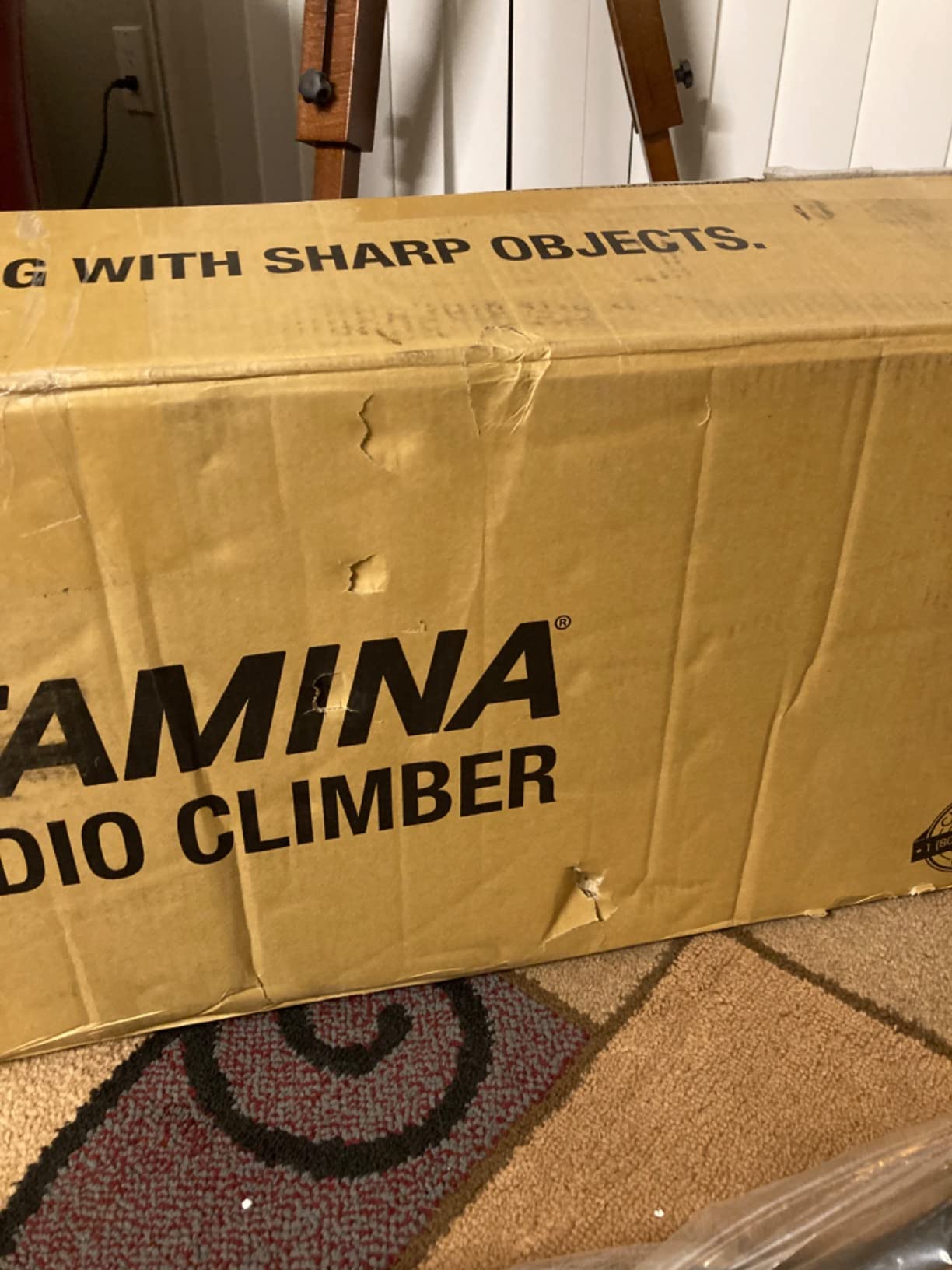
The complaints are consistent and worth weighing. Pedals run small, so anyone with size 11 or larger shoes will feel cramped, and the console housing reportedly heats up during longer sessions. The handrails slant downward, which forces you to grip high for real support, and this machine does not fold, so its footprint is permanent.
A small number of long-term owners reported screws shearing and internal grinding after months of heavy use, but nearly all of them praised Stamina for shipping replacement units promptly. That responsive service is why I still rank it this high despite the durability anecdotes. Treat it as a serious training tool that needs occasional bolt checks.
Room Size and Long-Term Placement
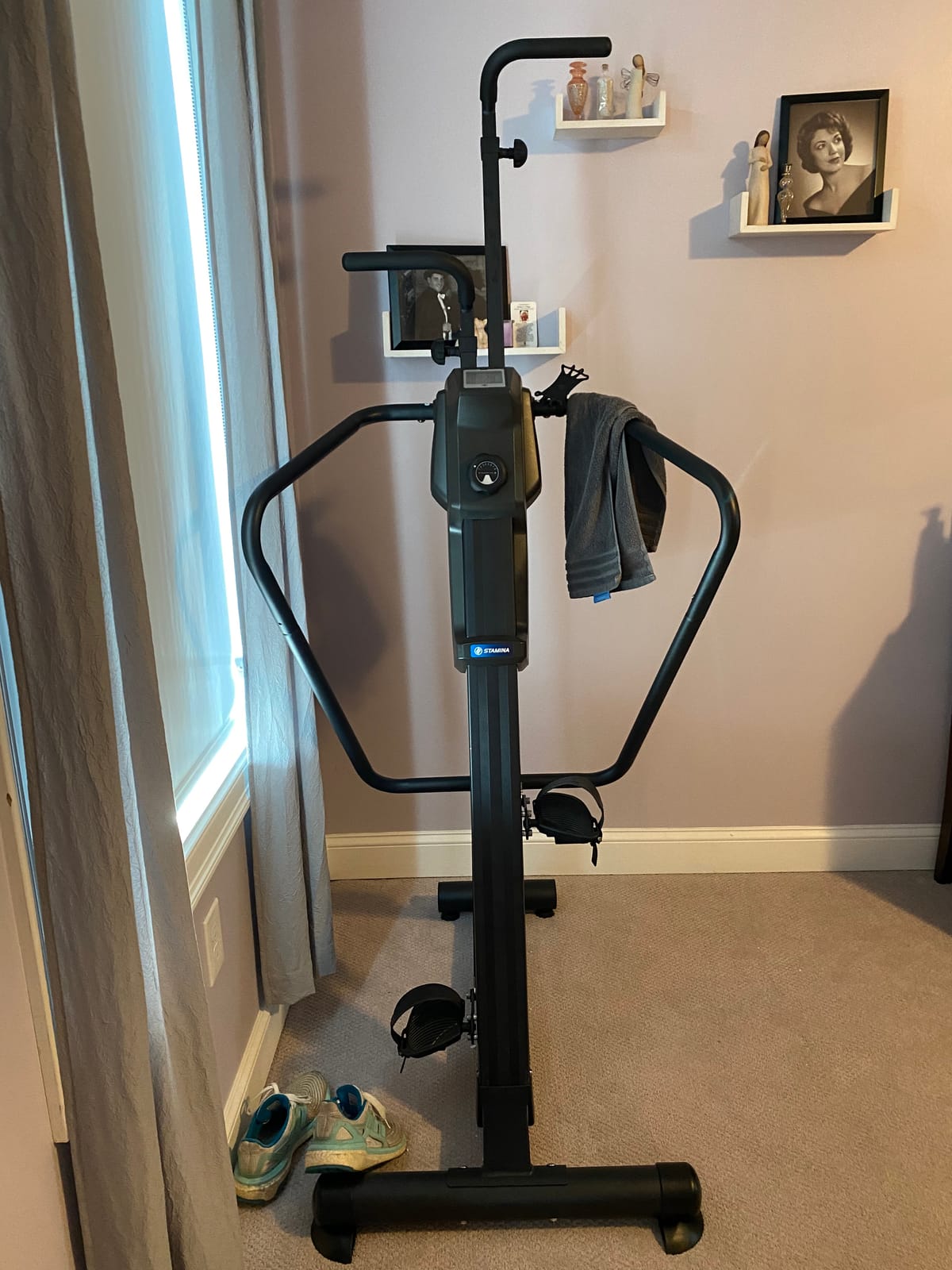
At roughly 89 pounds with no folding hinge, the Stamina wants a dedicated corner, and the wheels help for sliding it across a room but not for storing it under anything. Measure a floor spot about the size of a small treadmill and confirm you will not be moving it weekly. If you need a machine that disappears after workouts, choose a foldable climber instead.
Warranty and Support Backing
You get 5 years on the frame and 90 days on parts, and owner feedback says Stamina actually answers the phone and ships replacements without a fight. That matters more than most spec-sheet lines, because a climber is a moving-parts machine under your full body weight. Keep your receipt and do a monthly bolt check and this warranty is mostly insurance you never use.
5. Sunny Health & Fitness Stair Stepper & Climber – Best Budget App Trainer
Sunny Health & Fitness Foldable Vertical Step Climber w/Extended Step Range
Rating 4.1 from 1,768 reviews
330 lb capacity
29.3 lb frame
8.9 to 23.5 inch step height
Folds for storage
Pros
- Full-body workout through legs glutes core and handlebars
- Adjustable 8.9 to 23.5 inch step height with 21.5 inch stride
- Four-level adjustable handlebars
- SunnyFit app with AI training plans and scenic routes
- Virtually silent operation
- Compact foldable and mostly pre-assembled
Cons
- Pneumatic resistance fades as the tubes heat up
- No true tension adjustment since step height is the proxy
- Some users received missing lock nuts in packaging
- Handlebar wobble and pedal slamming reported at full extension
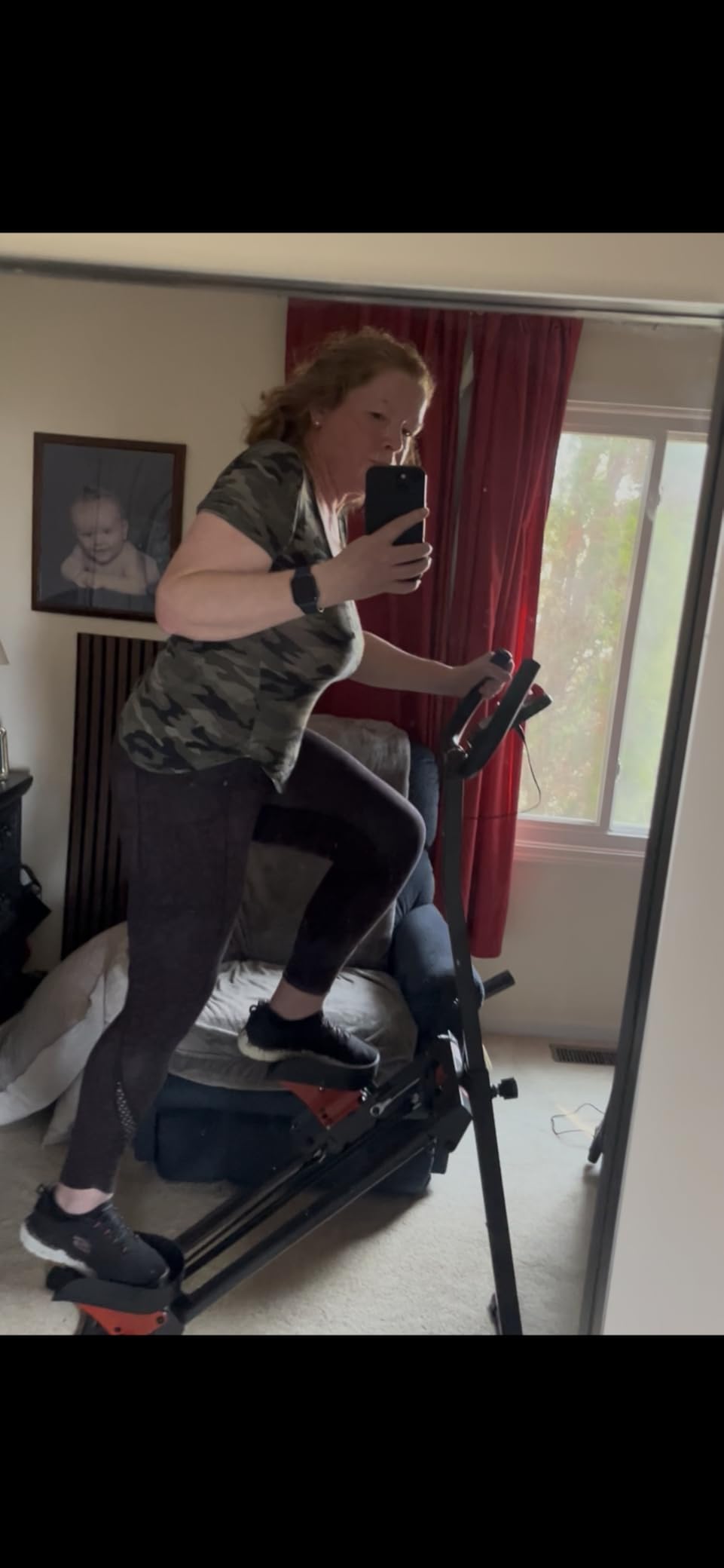
This red Sunny stepper-climber is the sibling of our value pick, and it ranks #7 in its entire Amazon category because it nails the basics at a lower price. Step height adjusts from 8.9 to 23.5 inches over a 21.5 inch stride, the four-level handlebars fit different user heights, and the frame folds for closet storage at 29.3 pounds. It ranked one spot higher than the MaxiClimber in Step Fitness Machines at the time of writing, which tells you how competitive this bracket is.
The 4.1-star average across more than 1,700 owners is solid if a step below its sibling, with 60 percent five-star ratings. Most owners use it for 15 to 30 minute sessions and praise the quiet, TV-friendly operation and the SunnyFit app’s AI-personalized plans and scenic routes. Assembly is mostly pre-done at the factory, which keeps setup to a short session with basic tools.
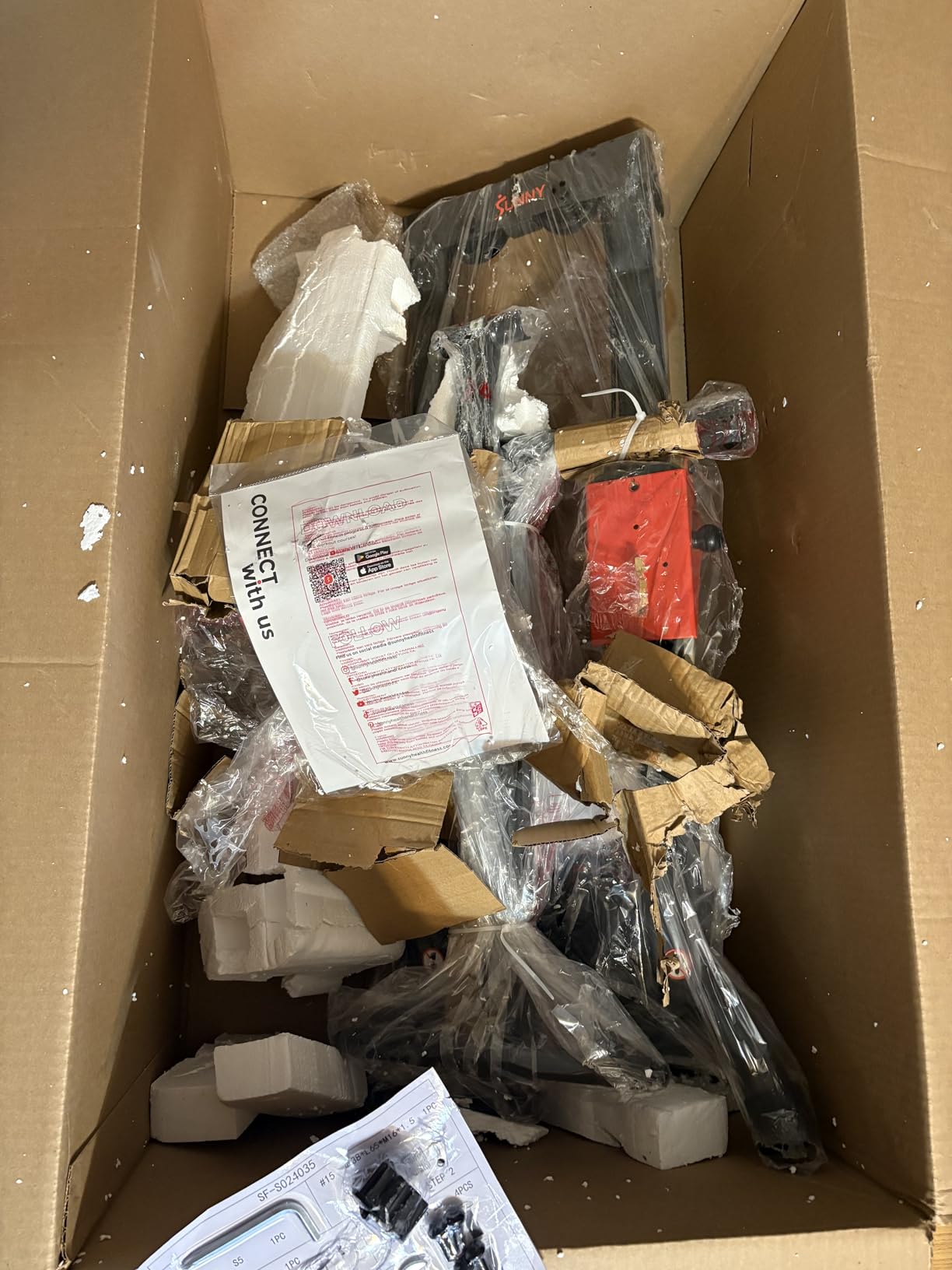
Know the compromises before buying. The pneumatic tubes lose resistance as they heat, so a session that starts demanding goes soft near the end, and there is no tension dial to compensate. Some buyers found lock nuts missing from the packaging, a nuisance that a hardware store run fixes but should not be your job, and a few report handlebar wobble plus undamped pedal slamming at the top of the stroke.
It is also honestly a beginner-to-intermediate machine, and very fit users will outgrow it within a season. For everyone else, the 330 pound capacity and foldable frame make it one of the best vertical climbers for home use on a tight budget. Buy it for the app ecosystem and the price, not for progressive long-term resistance.
Beginner to Intermediate Fit
New climbers will find the adjustable step height gentle at the low end and genuinely sweaty at the top, which is the right difficulty curve for a first machine. Intermediate users can keep it effective by mixing high-step intervals and faster cadence. Advanced trainees should look at magnetic machines like the Stamina or SOLE instead.
Household Noise Levels
The climber is effectively silent in normal use, which makes it a favorite for apartments and early-morning sessions. Noise problems appear only at full extension when pedals slam without damping, and a controlled descent fixes most of it. If anyone sleeps in the next room, learn the controlled stroke before your first 6 a.m. session.
6. MERACH Stair Stepper – Best Cheap Vertical Climber
MERACH Stair Stepper with Adjustable Resistance, Foldable Stair Climber
Rating 4.2 from 1,088 reviews
300 lb capacity
12 kg frame
3 adjustable angles
LCD monitor
Folds compact
Pros
- Compact foldable and easy to store in small spaces
- Quiet smooth operation for apartment living
- Adjustable foot pedals and handlebar height
- Built-in LCD tracks time steps and calories
- Stable triangular frame supports 300 lbs
- Very easy setup with minimal assembly
Cons
- Resistance levels feel very similar rather than truly multi-level
- Foot pedals are short so only the front half of the foot rests on them
- Not Prime eligible
- Some users received wrong color variants and the timer runs slightly fast
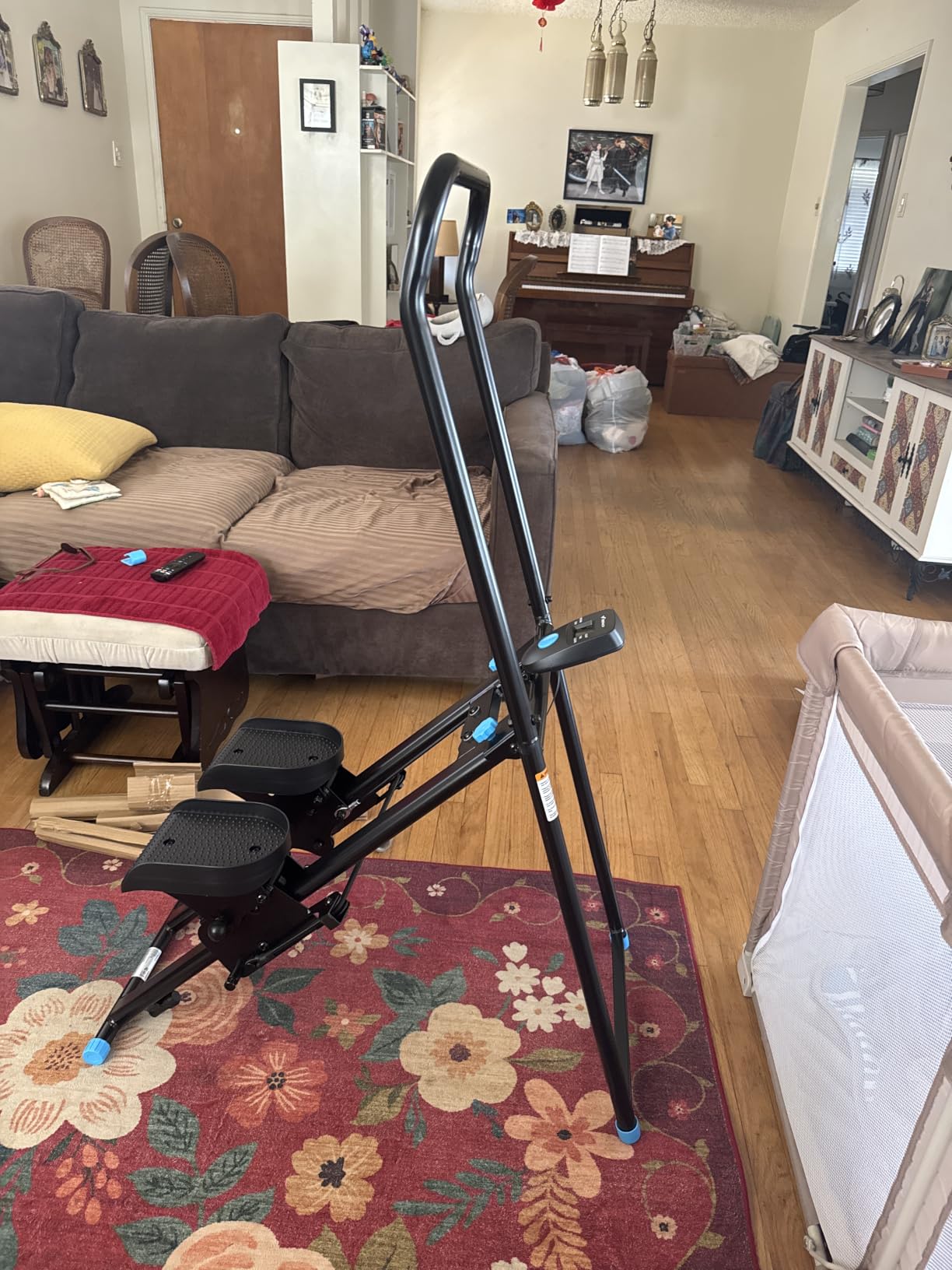
Under 90 dollars is rare territory for anything that survives daily use, but the MERACH MR-2438 manages it with a 64 percent five-star rating across more than 1,000 owners. It runs on a stable triangular frame rated to 300 pounds, offers three adjustable angles plus an adjustable handlebar, and folds into a shape that genuinely fits behind a door. Assembly took me longer to unbox than to complete, which is the right ratio.
In daily use it is quiet and smooth enough for apartment living, with a small LCD tracking time, steps, and calories burned. The stride length and range of motion are engineered to protect the knees rather than exaggerate them, and the brand’s claim that 20 minutes here rivals 20 minutes of jogging matches how I felt afterward. As a first vertical climber for home use on a strict budget, it is hard to beat.
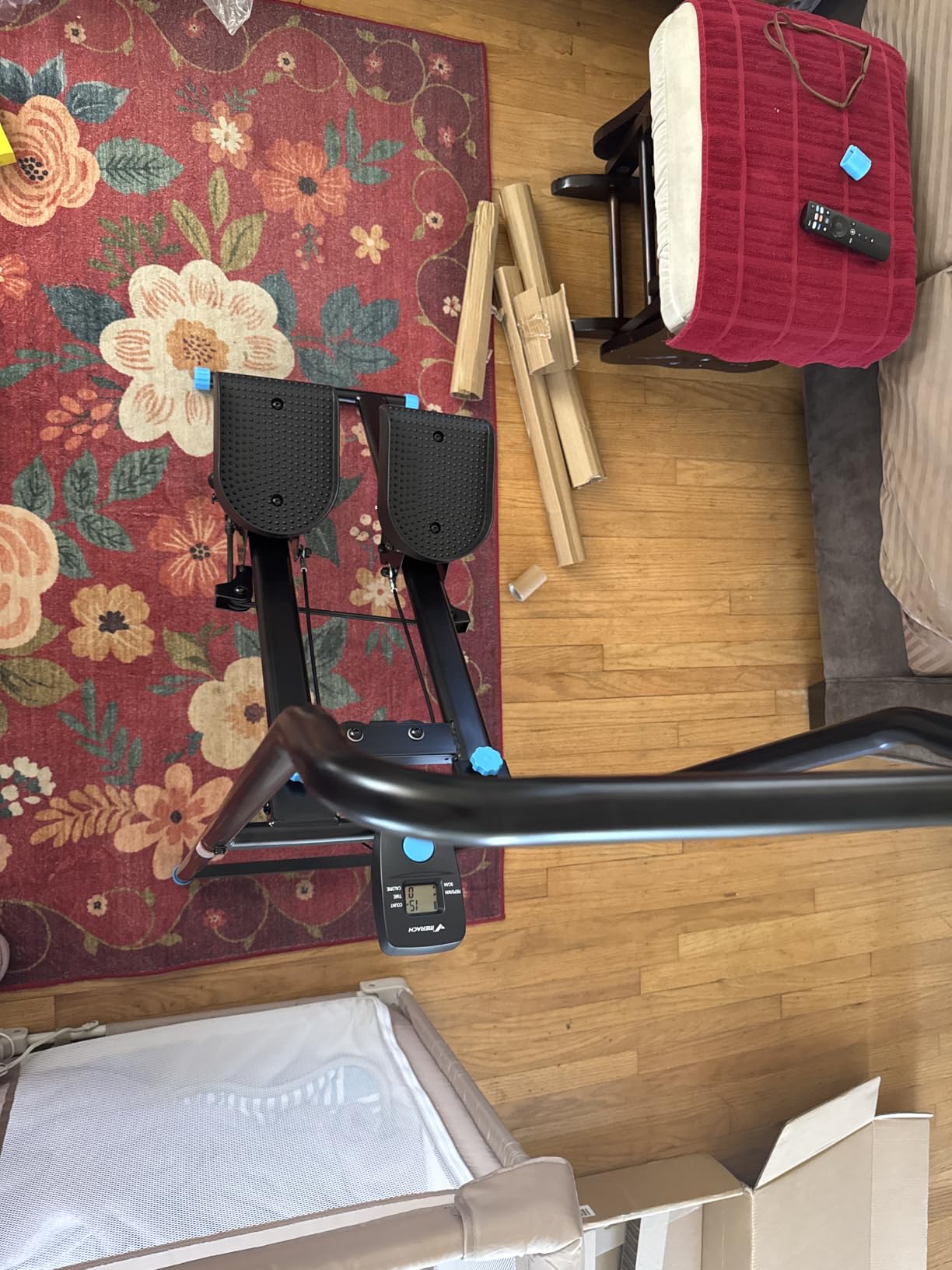
The trade-offs are real and consistent across reviews. The resistance adjustment exists on paper but the levels feel nearly identical, so intensity really comes from pace and step depth. The pedals are short enough that only the front half of your foot rests on them, which some owners dislike, and the handlebar adjustment range runs out for taller users.
Two smaller annoyances: it is not Prime eligible, so shipping takes longer than you might expect, and a handful of buyers received the wrong color variant. The step timer also reportedly runs slightly fast, which only matters if you are tracking precise intervals. None of that changes the value math at this price.
Resistance Expectations
Treat the resistance settings as fine-tuning rather than transformation, because the levels feel close to identical in practice. Real intensity gains come from climbing faster, deeper, or longer rather than turning a dial. Set expectations accordingly and the price-to-performance ratio stays excellent.
Storage Footprint When Folded
At 12 kilograms and 33.9 by 22.1 by 47.2 inches unfolded, it folds down slim enough to slide beside a wardrobe or under a raised bed. One person can carry it without drama, which is not true of most machines in this guide. For studio apartments and shared bedrooms, that portability is the headline feature.
7. HXD-ERGO Stair Stepper – Best Warranty on a Budget
HXD-ERGO Stair Stepper for Home with Adjustable Handlebar for Full Body
Rating 4.0 from 753 reviews
6 resistance levels
3-height handlebar
300 lb capacity
28 lb frame
2-year warranty
Pros
- Six-level adjustable resistance for real intensity control
- Three-height handlebar for users of different statures
- Quiet smooth low-impact motion that is joint friendly
- Triangular steel frame supports up to 300 lbs
- Two-year warranty which is longer than most rivals
- Easy assembly with all tools included
Cons
- Foot pedals are short with limited foot support
- Folding requires unscrewing two large knobs
- Some units arrived incomplete or missing handlebar parts
- Instructions lack an English version and the LCD step counter is reportedly inaccurate
The HXD-ERGO is the cheapest machine in this guide with a true six-level resistance adjustment, and that alone makes it interesting at about 76 dollars. The three-height handlebar accommodates different statures, the triangular steel frame carries 300 pounds, and the motion is quiet and low-impact enough for late-night sessions. The company’s claim that peak knee force sits at 1 to 1.5 times bodyweight versus 2 to 3 times for running aligns with how my joints felt after a month.
Its 4.0-star average across 753 reviews is the lowest in this lineup, but the distribution is still 59 percent five-star, and the complaints are specific rather than structural. Most owners describe exactly what I found: a cheap, effective full-body stepper that simulates climbing and quietly does its job. The two-year warranty is the longest in the budget bracket, beating the typical one year by a full season of ownership.
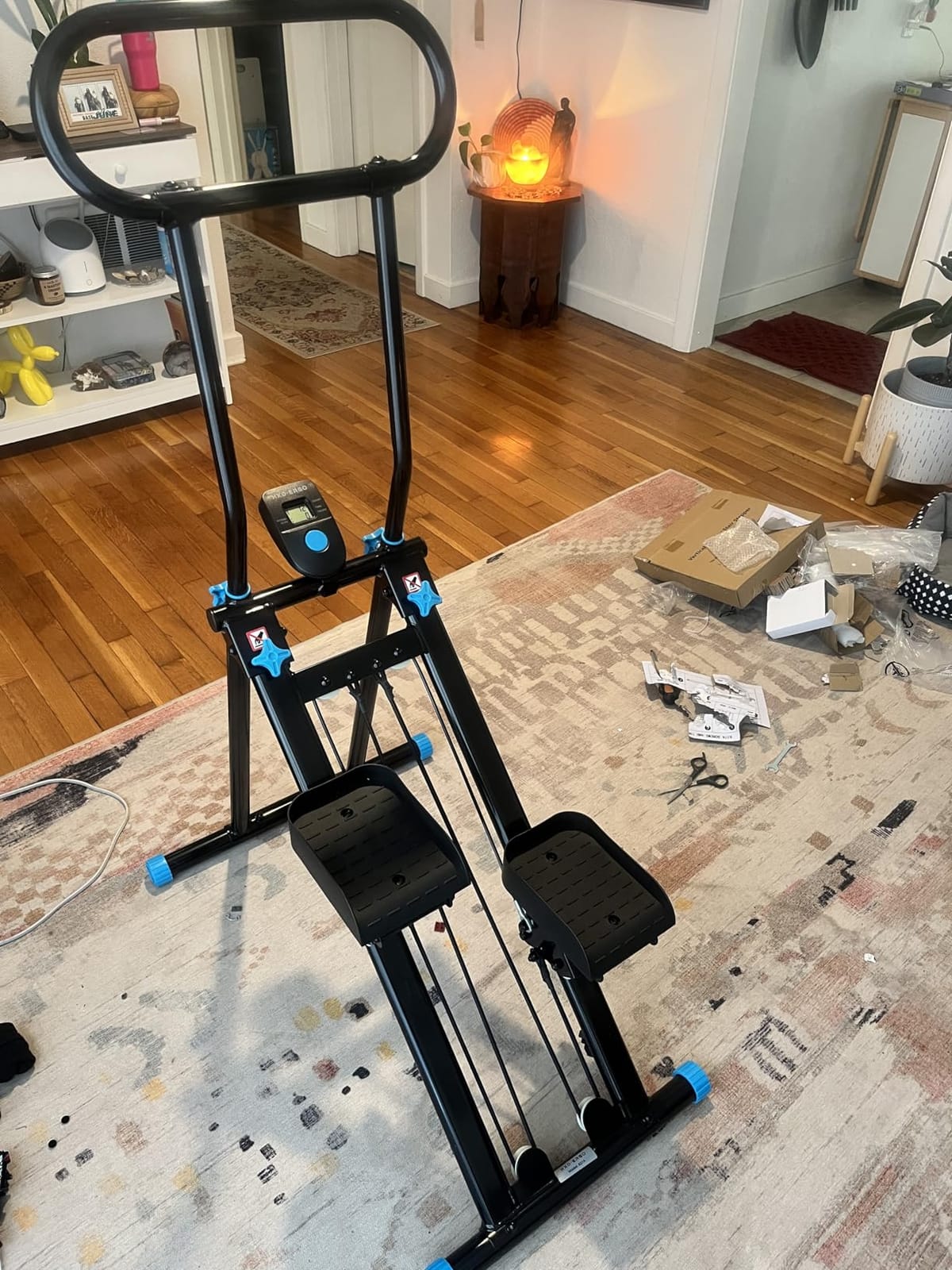
Assembly is easy with everything included, but quality control is a lottery some buyers lose. A meaningful minority received units missing handlebar parts or arriving incomplete, and the instructions are pictorial only in some boxes. The LCD step counter is also reportedly loose with the truth, so trust your timer over its counts.
Two design gripes worth knowing: the foot pedals are short with limited support, and folding requires unscrewing two large knobs rather than flipping a hinge, so it is storable but not instantly so. The lowest resistance setting also feels weak for stronger users. For the price and warranty, I would still recommend it to a friend with patience for QC roulette.
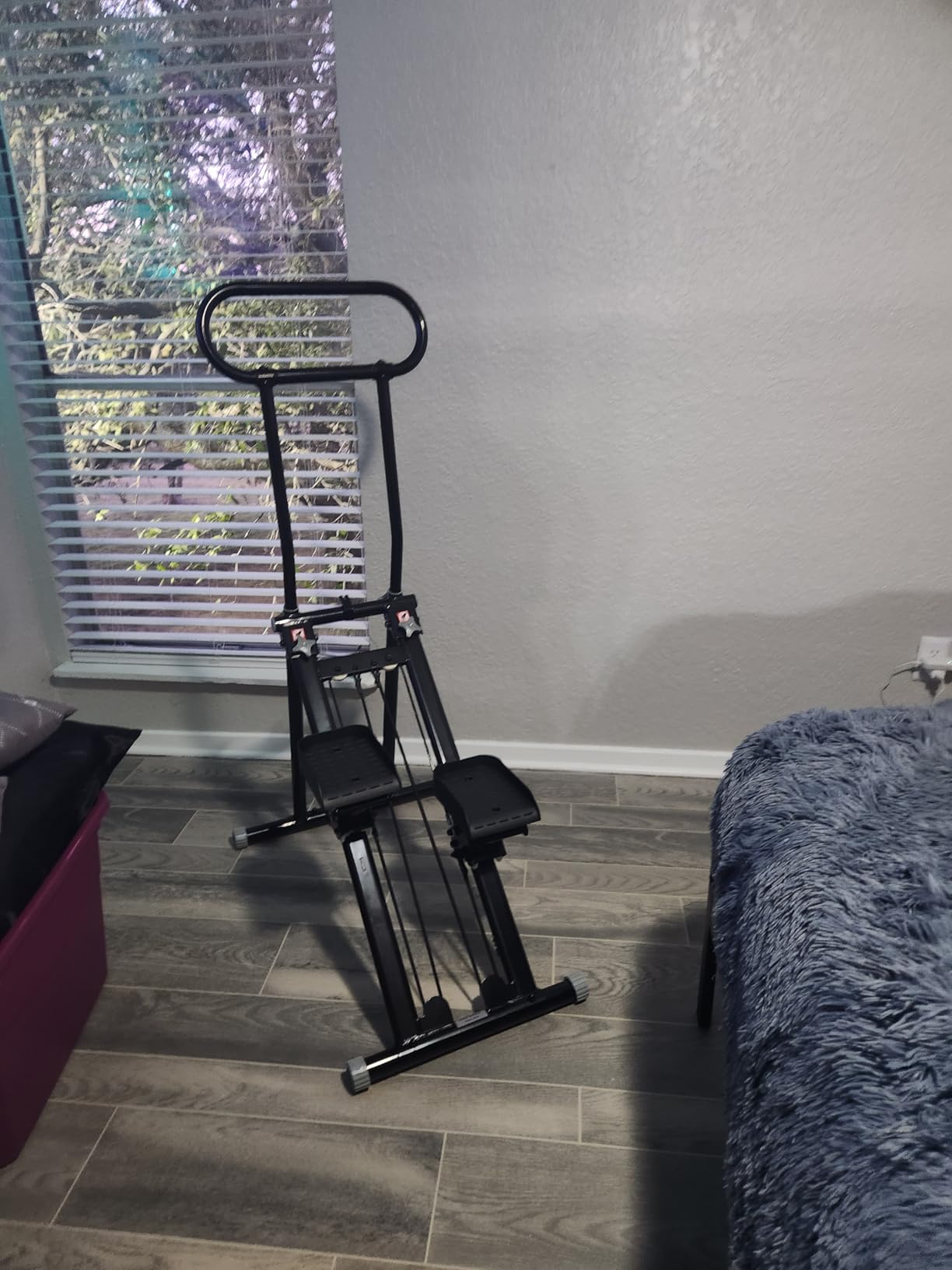
Folding Workflow in Practice
Unlike one-lever folders, this machine needs two large knobs unscrewed before it collapses, which adds a minute to each transition. That is fine if you fold it weekly and annoying if you fold it after every single workout. Decide your storage rhythm before choosing it over a quicker-folding rival.
Warranty Length vs the Field
Two years of coverage is double the budget-category norm of one year, and it signals the manufacturer expects the frame and bands to last. Pair it with a credit-card purchase that extends warranties and you get strong protection on a very cheap machine. Just keep your order confirmation where you can find it.
8. RELIFE CT07 Stair Stepper – Best Adjustable Incline Climber
Relife Stair Stepper for Home Gym Exercise,New Version Stair Climber
Rating 4.3 from 43 reviews
3 spring resistance levels
2-level incline
350 lb capacity
Under 25dB
Life-long service
Pros
- Adjustable resistance with 3 heavy-duty gravity springs
- Two-level adjustable incline for terrain variation
- Three-level adjustable pedal angle reduces knee stress
- Stepless handlebar adjustment fits all heights
- Quiet under 25dB operation for apartments
- 80 percent pre-assembled with about 30 minute setup
Cons
- Only three resistance levels so advanced users may want more
- Small user base so long-term reliability is still unproven
- Resistance requires physically swapping springs rather than turning a dial
The RELIFE CT07 is the most adjustable cheap climber I tested, with a spec sheet that reads like a machine costing three times as much. You get three heavy-duty gravity springs delivering light, medium, and heavy resistance, a two-level adjustable incline, a three-level adjustable pedal angle for knee comfort, and stepless handlebar height adjustment that genuinely fits every height in my household. The 4.3-star rating across 43 reviews is early but strong.
It is also the highest-capacity budget machine here at 350 pounds, sitting on an extended base with a triangular frame that stayed planted during my most aggressive intervals. Operation is under 25dB, quiet enough that I climbed during a phone call without anyone noticing. About 80 percent arrives pre-assembled, so setup ran roughly 30 minutes.
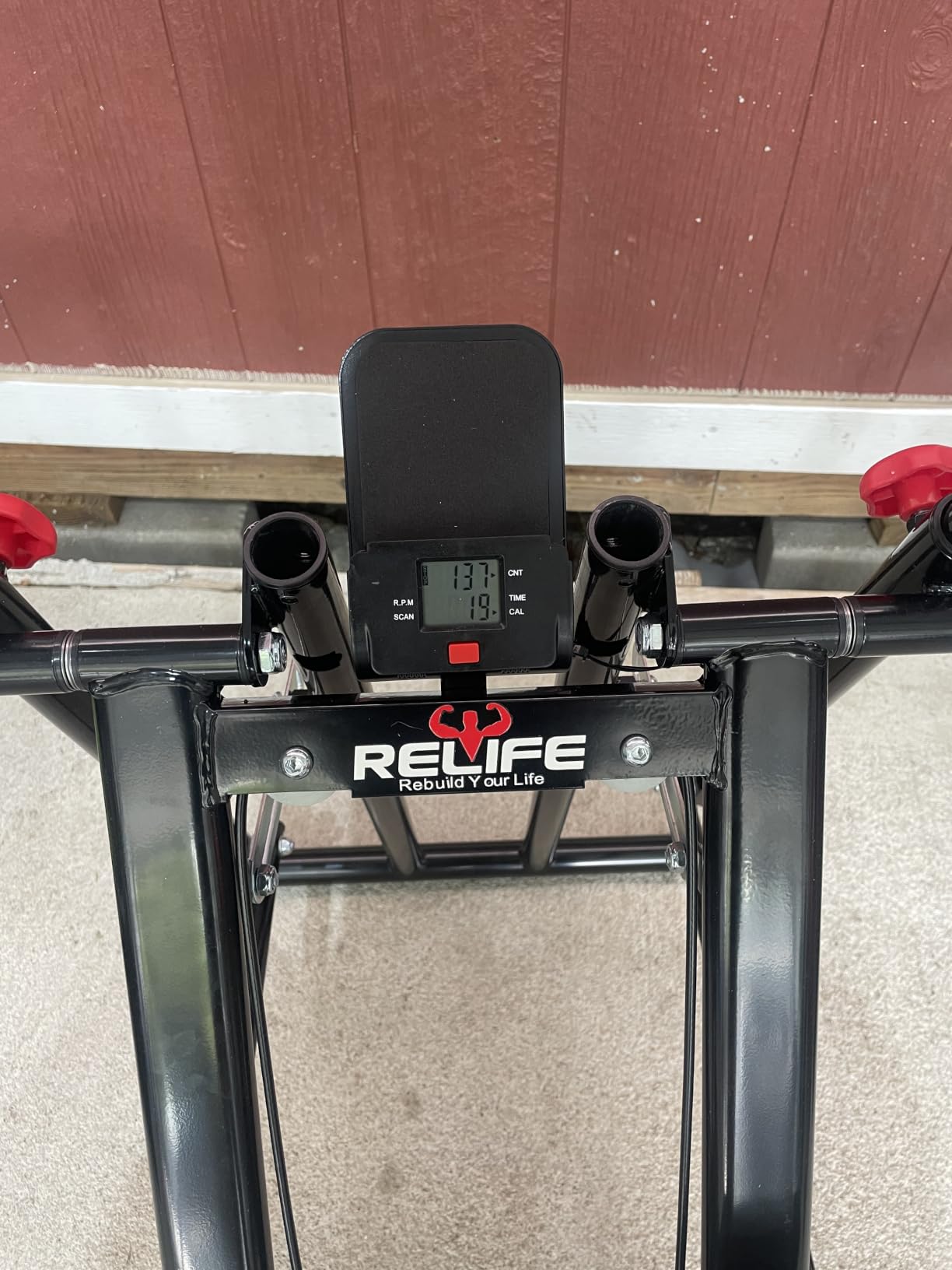
The LCD tracks time, speed, distance, calories, and mileage, and a built-in tablet holder keeps a screen at eye level during longer climbs. What impressed me most is how the incline and pedal angle combine to change the movement, letting me simulate flat hiking days and steep hill days on the same footprint. That variety is what keeps a climber from becoming a clothes rack.
The main limitation is simply granularity: three spring-based resistance levels with physical swaps rather than a quick dial. If you like micro-adjusting intensity mid-session, this is not your machine. RELIFE backs it with a life-long service pledge, which is either reassuring or optimistic, and the early review base has flagged no structural failures.
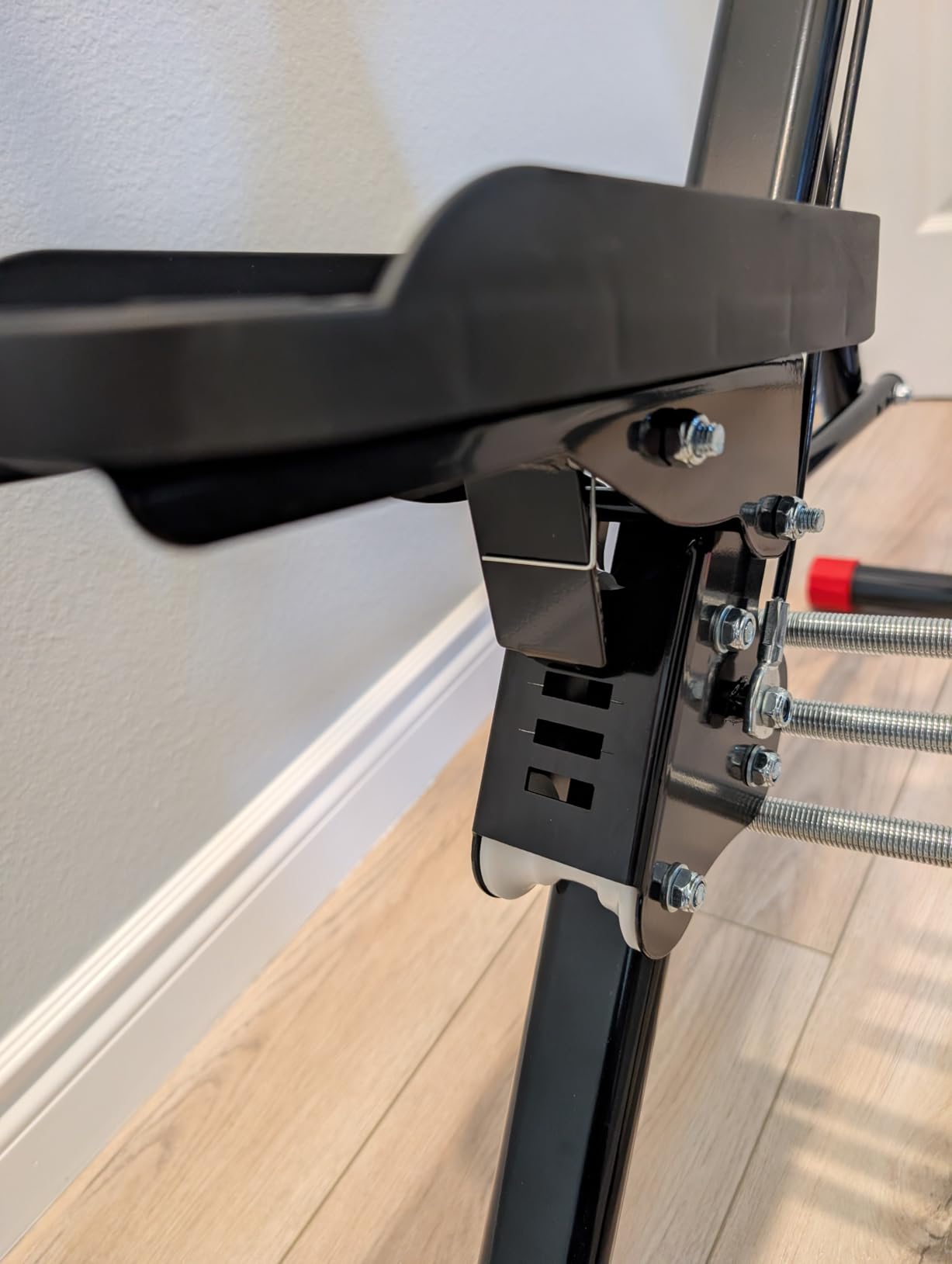
Incline and Muscle Targeting
The two incline levels change your hip angle enough to shift work between quads and glutes, which matters more for results than most buyers expect. Combine the steeper incline with the pedal-angle settings and you effectively get four or five distinct climbing feels. Use the flatter setting for long steady sessions and the steep one for short intervals.
Who Suits Three Resistance Levels
Beginners and intermediate climbers will find light through heavy covers their first year or two of training. Strong users who want progressive overload beyond bodyweight plus springs should shop magnetic machines instead. For general cardio and toning, three well-spaced levels are enough.
9. KINMAC Stair Stepper – Best First Climber for Small Budgets
KINMAC Stair Stepper for Home, Foldable Stair Climber
Rating 4.3 from 344 reviews
265 lb capacity
LCD monitor
Non-slip pedals
Adjustable handlebar
Folds for storage
Pros
- Extremely affordable entry-level climber
- Foldable and compact for small spaces
- Stable triangular frame
- Easy assembly
- LCD monitor tracks time count and calories
- Knee-friendly low-impact motion
Cons
- Small foot rests give a tippy-toes feeling for some
- Only one incline level with no adjustability
- Some units arrived with undrilled frame holes
- Noisy at the stopping point and challenging for absolute beginners
The KINMAC is what I hand people who say they want to try climbing without knowing whether they will stick with it. It is among the cheapest fully-functional climbers available, still manages a 4.3-star rating across 344 reviews, and delivers a legitimate leg, glute, and core workout with non-slip pedals and a stable triangular frame. The scientifically engineered stride keeps the motion knee-friendly, which matters if you are coming off the couch.
It folds, it assembles quickly, and the small LCD covers time, count, and calories, which is everything a first machine needs and nothing it does not. I found the adjustable handlebar useful for sharing it between two people of different heights. Treat it as a trial run for the category rather than a lifetime purchase and it performs its role well.
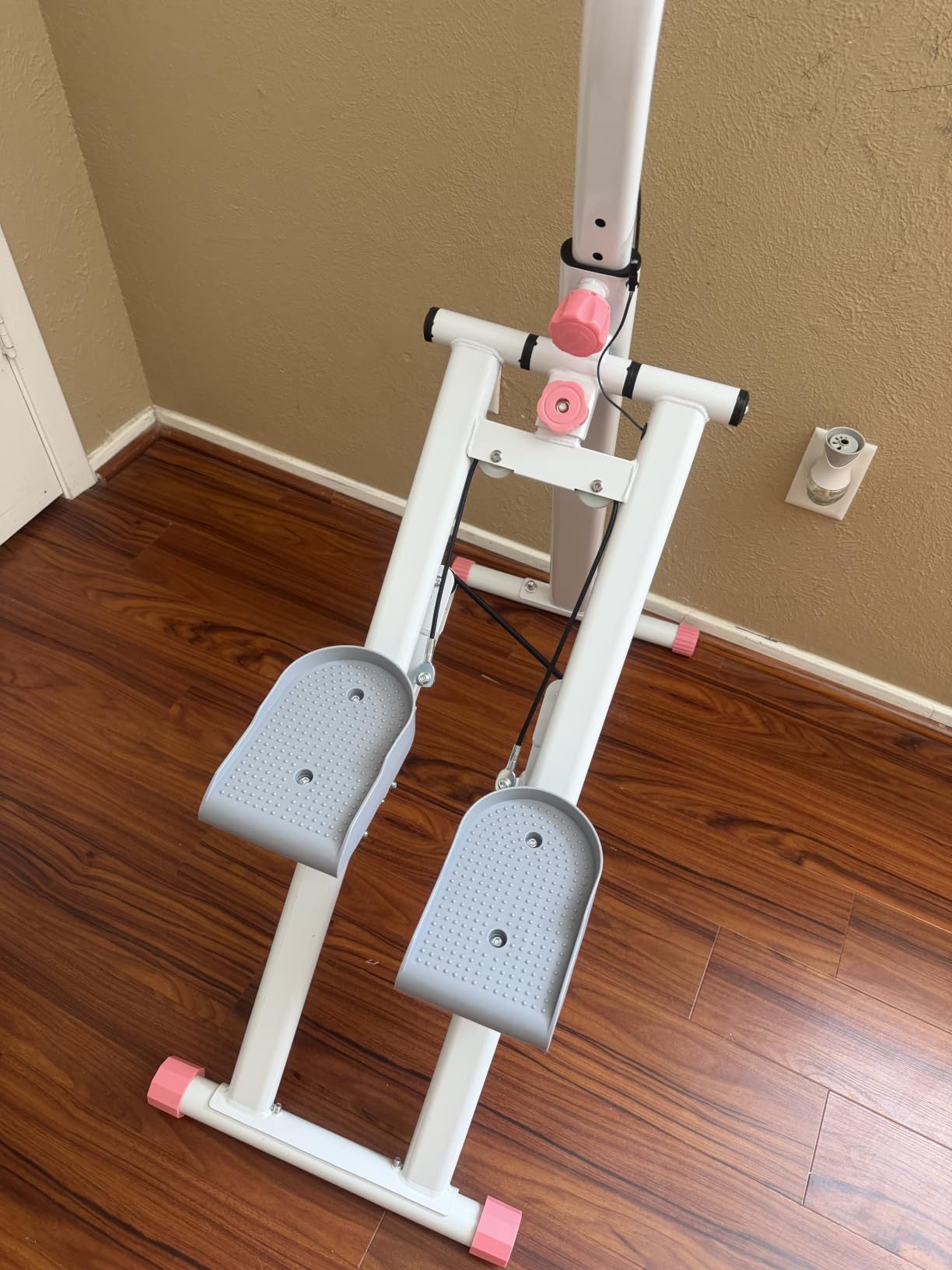
The compromises start underfoot. The foot rests are small enough that some owners describe a tippy-toes feeling, and there is only one incline level with no meaningful adjustability anywhere on the machine. The resistance adjustment is vague, intensity really coming from your own pace and effort.
A few buyers received units with manufacturing defects like undrilled frame holes, so inspect every part during assembly rather than discovering it mid-build. It is also noisy at the stopping point, and despite its simple look, the sustained effort is genuinely challenging for beginners, which is either a feature or a warning depending on your goals. The 265 pound capacity is the lowest in this guide, so check that against your household.
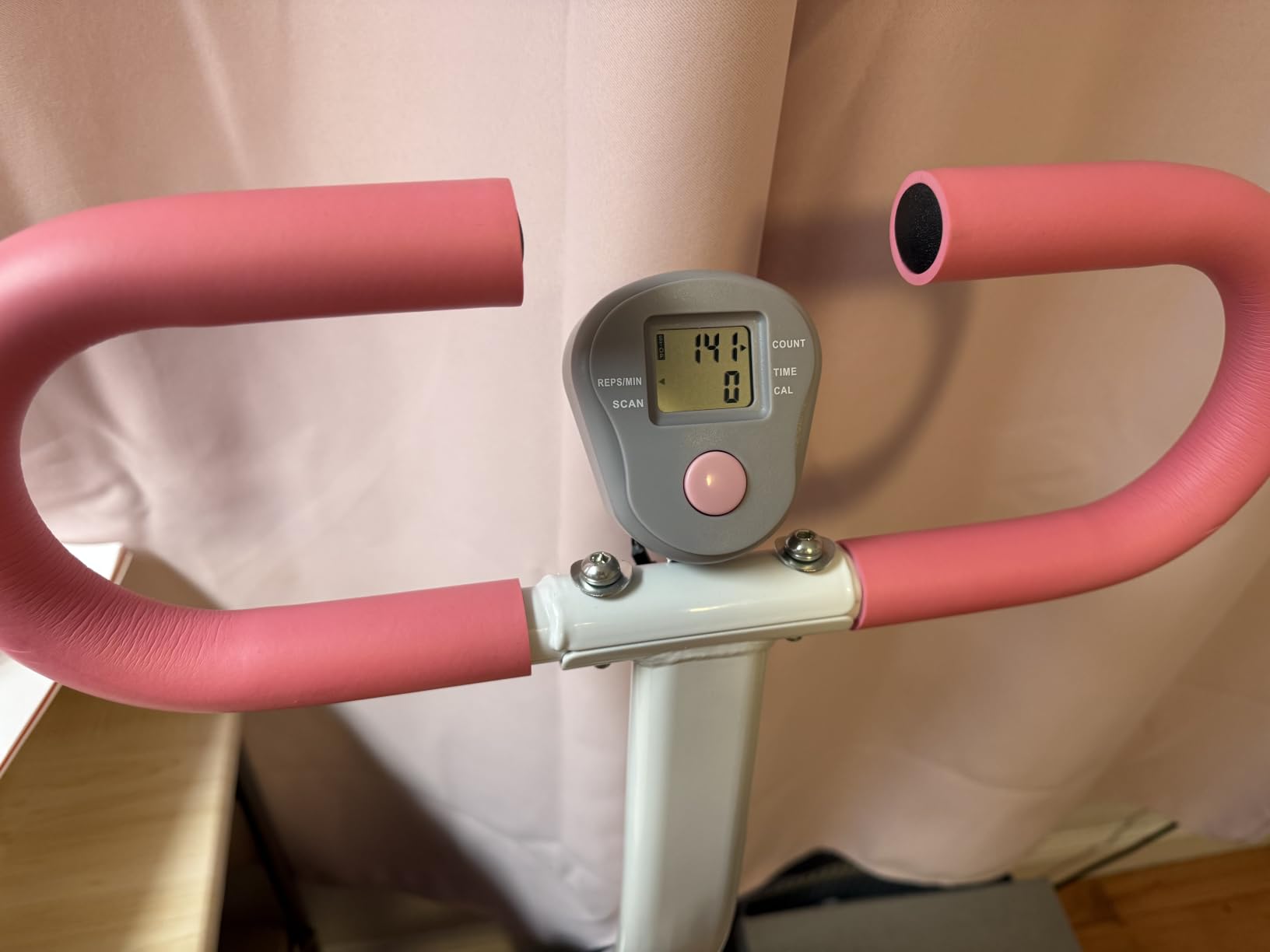
Weight Capacity and Stability Margin
At 265 pounds maximum, this is the lightest-rated machine in the lineup, and I advise staying at least 15 percent under any climber’s stated cap for a stable feel. If you are close to the limit, the Sunny, RELIFE, or EPHESPORT models carry 330 to 350 pounds for similar money. Heavier users should treat capacity as a hard safety number, not a suggestion.
Single Incline Trade-Off
One fixed incline means the only progression tools are speed, session length, and how deep you step, which does work but gets monotonous. Budget users who crave variety should pay slightly more for the RELIFE CT07 with its two incline levels and three spring settings. If you just want to sweat for 20 minutes a day, fixed is fine.
10. EPHESPORT Stair Stepper – Best Wide Pedals in Class
EPHESPORT Stair Stepper for Home with 3-Level High-Tension Resistance
Rating 4.2 from 189 reviews
330 lb capacity
3 spring resistance levels
Wide non-slip pedals
Phone holder
90 percent pre-assembled
Pros
- Wide textured non-slip pedals that fit larger feet
- Three-level gravity-spring resistance
- Sturdy steel frame supporting 330 lbs
- Three pedal angles and 2 incline settings
- Smooth low-noise glide with quiet rollers
- Arrives 90 percent pre-assembled with phone holder
Cons
- Assembly instructions are unclear according to some users
- Resistance changes require manually adding or removing springs
- One user received parts that felt cheap and plastic
- Some noise reported during use
Small pedals are the number one complaint across this entire category, and the EPHESPORT is the budget machine that actually fixed them. The wide textured non-slip platforms gave my full foot a home, which changed my balance and let me climb harder without the ankle fatigue I get on tiny pedals. The 4.2-star average across 189 reviews shows owners notice the same thing.
The rest of the spec sheet holds up too, with three gravity-spring resistance levels, three pedal angles plus two incline settings, and a reinforced steel triangular frame rated to 330 pounds. It arrives 90 percent pre-assembled, folds for storage, and includes a phone holder and an LCD tracking steps, time, calories, and total count. For roughly 85 dollars it is a lot of adjustment.
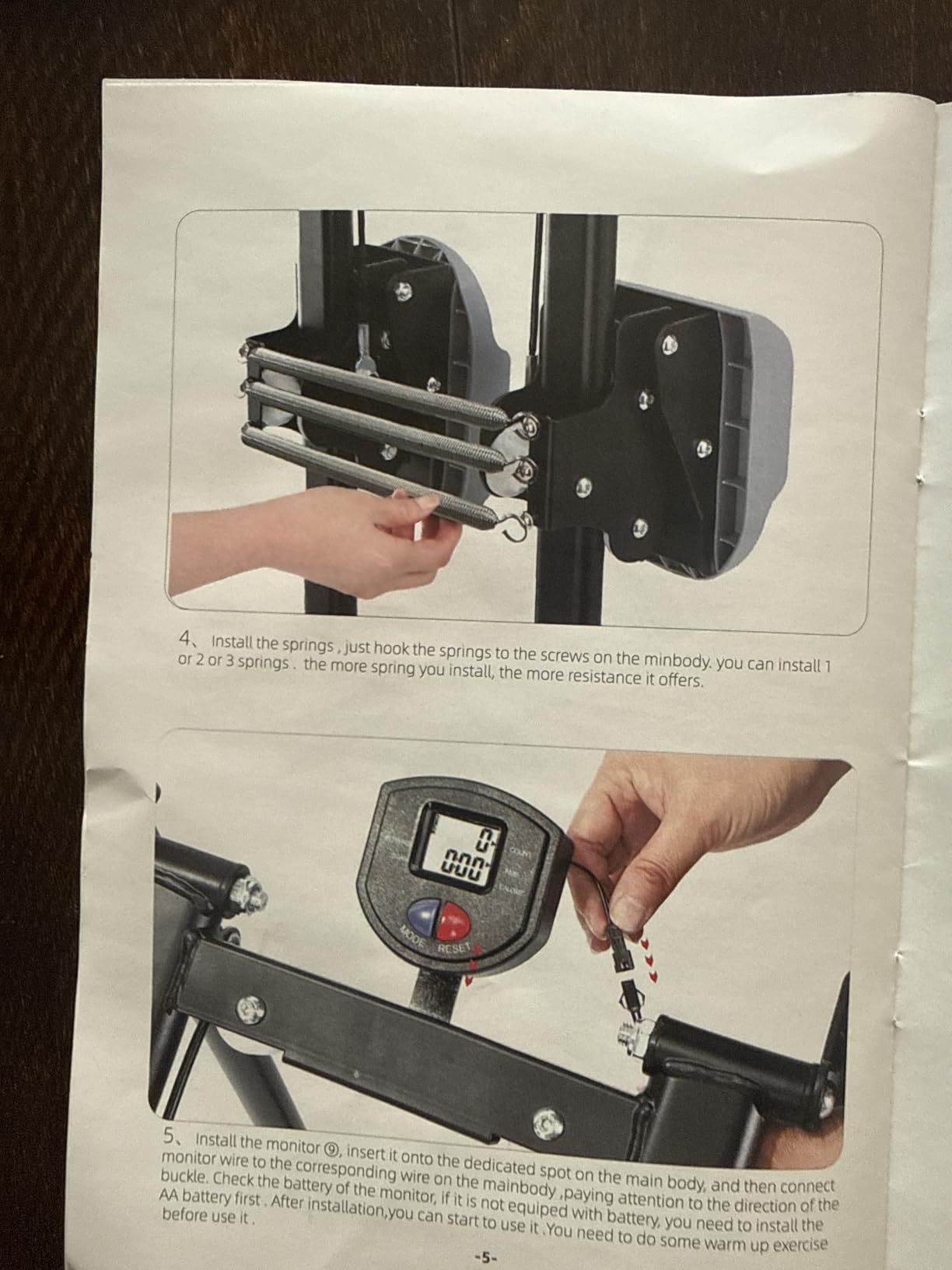
In use, the low-friction sliding system and quiet-glide rollers keep noise low, and the natural climbing motion does hit glutes, thighs, calves, and core as advertised. The ergonomic handlebar is there for balance rather than pulling, which is correct climbing form. It is light enough at 26.5 pounds to move between rooms without planning your week around it.
The flaws are mostly annoyances rather than dealbreakers. Assembly instructions confused several owners even with the machine mostly pre-built, and resistance changes mean physically swapping springs instead of turning a knob. One buyer received parts that felt cheap, and some noise during use is reported, so set expectations for a budget build.
Pedal Comfort for Larger Feet
If you wear a men’s size 11 or larger, this is the budget climber to shortlist, because the wide platforms eliminate the cramped stance that ruins cheaper machines. Proper foot contact also improves power transfer, so intervals feel more effective. Smaller-footed users get the same benefit but notice it less.
Spring Swaps vs Dial Resistance
Changing intensity means stopping and adding or removing a spring, which suits set-program workouts better than impromptu intervals. If you structure sessions in blocks, like light warm-up then heavy rounds, the swaps cost you 30 seconds each. Riders who want constant mid-climb adjustment should buy a magnetic machine instead.
11. RELIFE CT02 Vertical Climber – Best for Quiet Height Training
Relife Stair Stepper, Vertical Climber Exercise Machine for Home Gym
Rating 4.3 from 44 reviews
5 height levels
4 metal guide rails
330 lb capacity
30 lb frame
Under 25dB
Pros
- Four metal guide rails for genuine stability
- Five height levels from jogging to rock climbing simulation
- Radian pedal design prevents outward tilting
- Quiet operation under 25dB
- Easy 5 to 10 minute assembly with included tools
- Foldable and affordable
Cons
- Small foot pads uncomfortable for some users
- Steps sit too high at the lowest setting for shorter users
- Some quality control issues like unpunched holes and misaligned pins
- Instructions in poor English
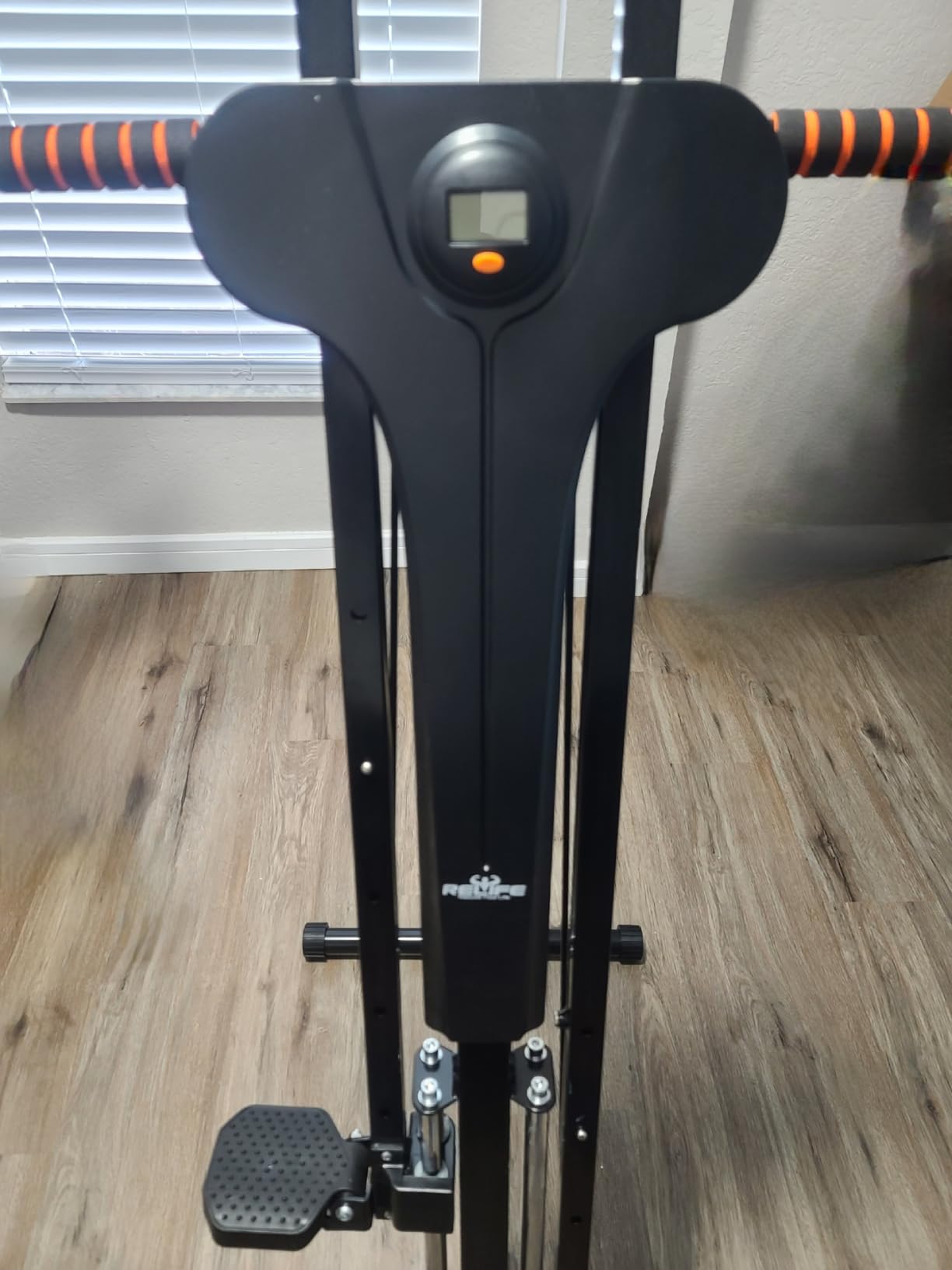
The CT02 is RELIFE’s height-focused climber, and its five adjustable levels are honestly labeled by feel: levels 1 and 2 simulate jogging, 3 and 4 simulate running, and level 5 simulates rock climbing. Four metal guide rails keep the carriage tracking straight, which is a real structural upgrade over the two-rail designs on most cheap climbers. At under 25dB it is quiet enough for a nursery-adjacent home gym, and it earns a 4.3-star rating from early owners.
Assembly took me under ten minutes with the included tools and grease, and the 30 pound frame folds for storage without a fight. The radian pedal design is a smart touch, cupping the foot slightly to prevent the outward tilting that plagues flat-pedal climbers. Legs and biceps get the bulk of the work, and the 330 pound capacity is generous for the price.
Height adjustability is the reason to choose this over the CT07 if your goal is progressive vertical range rather than incline variety. Moving from level 2 to level 5 over a few weeks gave me a measurable stride-length progression that felt like switching machines. The LCD covers time, speed, distance, and calories, with a tablet holder for longer climbs.
The weak points repeat a familiar budget-climber refrain. Foot pads run small, the lowest setting is still too tall for shorter users, and the instructions read like a machine translation. A few buyers hit quality control misses such as unpunched holes or misaligned pins, so check parts against the manual during unboxing. Handled with that caution, it is a quiet, sturdy bargain.
The Five Height Levels Explained
Think of the levels as intensity presets: 1 and 2 for recovery or beginner sessions, 3 and 4 for steady cardio, and 5 for short high-effort climbing intervals. Progress by spending two weeks at each level before moving up, which lets your conditioning and your confidence climb together. This ladder is the machine’s core selling point.
Short vs Tall User Fit
Taller users around 6 feet and above will appreciate the extended range at level 5, where most budget climbers run out of travel. Users under about 5 foot 4 may find even level 1 demands a deep step, making the machine better suited to average and tall households. Test your lowest comfortable step height before committing.
12. MOMODA Stair Stepper – Highest Rated Newcomer
MOMODA Stair Stepper Resistance Adjustable Folding Vertical Climber Machine for Home Gym Full-Body Workout (Blue)
Rating 4.6 from 18 reviews
3 spring resistance levels
250 lb capacity
10-second folding
3 handle heights
LCD display
Pros
- Folds thin in 10 seconds and sets up easily
- Super stable with an effective full-body workout
- Adjustable resistance with 3 springs
- Handle adjusts to 3 heights with phone holder
- Three pedal angle settings at 0 minus 10 and minus 20 degrees
- LCD tracks steps calories time and speed
Cons
- Can be noisy especially on non-stick floors
- Pedals can loosen if screws are not tightened during installation
- Not as smooth as gym stair steppers
- Heel can hang off the pedals for some users
The MOMODA has the highest rating in this entire guide at 4.6 stars, though from the smallest review base at just 18 owners, so read it as a promising newcomer rather than a proven veteran. What those owners describe matches what the spec sheet promises: a 10-second fold down to a 48 by 19 by 5 inch slab, three spring-based resistance levels, and a triangular structure that holds 250 pounds while feeling planted during hard efforts.
The adjustment range is genuinely thoughtful for the price, with handlebar heights at 48, 51, and 53 inches plus pedal angles at 0, minus 10, and minus 20 degrees to change the muscular emphasis. The LCD scans steps, calories, time, and speed, and the handle integrates a phone holder. One reviewer assembled it solo in 15 minutes, which tracks with the simple parts count.
Complaints cluster around polish rather than structure. It can be noisy on non-stick floors, pedals loosen if you skimp on tightening screws during assembly, and a few owners reported squeaking after several days. The motion is also described as less smooth than a gym stepper, closer to deliberate stepping than fluid gliding, and some users find their heel hangs off the pedals or they cannot reach a full step down.
Reading a Small Review Base
Eighteen reviews means each five-star rating moves the average by several points, so the 4.6 figure is encouraging but not statistically settled the way 4.3 across 2,490 reviews is. Early ratings also skew toward enthusiastic first impressions. Give this listing another season of feedback if you want certainty before buying.
Daily Fold and Unfold Routine
The 10-second fold to a five-inch profile is the best storage story in the budget bracket, making it ideal for living rooms and shared bedrooms where equipment cannot live permanently. Owners in small apartments singled this out as the reason they chose it. Pair it with a mat to quiet floor noise and protect hard flooring.
How to Choose the Best Vertical Climber for Your Home Gym
Every climber above will raise your heart rate, but the right one depends on your body, your space, and how hard you plan to push. These are the six factors I weigh before recommending any vertical climber exercise equipment to someone.
Resistance Type: Springs, Hydraulics, or Magnets
Spring-based climbers are cheapest and simplest, but resistance changes usually mean physically swapping springs, and levels are coarse. Hydraulic machines feel smooth but build heat, which is why the Sunny models cap continuous sessions near 15 minutes. Magnetic resistance, found on the Stamina and SOLE, is the gold standard: quiet, consistent, adjustable on the fly with 8 to 20 levels, and essentially maintenance-free. Spend according to how seriously you will train.
Weight Capacity and Frame Stability
Capacity across this guide runs from 250 pounds on the MOMODA and MaxiClimber up to 350 on the RELIFE CT07, with the SOLE far beyond at 183 kilograms. My rule is to stay at least 15 percent under the stated cap so the frame never feels taxed, since a wobbling climber kills both confidence and form. Triangular frames with guide rails track straighter than simple two-post designs.
Footprint and Foldability
Most budget climbers fold to a five or six inch depth and slide into a closet, which is why they dominate apartment setups. Magnetic machines rarely fold, and the SOLE CC81 occupies 59 by 31 inches of floor permanently plus an 86 inch height. Measure your space and ceiling before ordering anything, because the machine you will not stop using is the one that fits where you live.
Height Adjustment and User Fit
Check both the handlebar range and the stride travel against the tallest and shortest people who will use the machine. Tall users over 6 foot 2 report truncated strokes on the MaxiClimber and limited handlebar range on the MERACH, while shorter users under about 5 foot 4 struggle with the RELIFE CT02’s high lowest setting. Adjustable handlebars and pedal angles are the features that make one machine work for a whole household.
Noise Levels for Apartments
The RELIFE models advertise under 25dB, which is quieter than a normal conversation, and the magnetic machines are near-silent at the flywheel. Noise on any climber usually comes from pedals slamming at full extension or loose screws, both of which are user-fixable. If you train early mornings or share thin walls, prioritize magnetic or hydraulic machines and learn a controlled descent.
Apps, Tracking, and Consoles
Sunny’s SunnyFit app and Stamina’s müüv app both add real coaching value with structured climbs, scenic routes, and AI or trainer-led plans, and both are free with the machine. A basic LCD covering time, steps, and calories is enough for most people, so do not pay extra for connectivity you will ignore. Buy the frame first and the electronics second.
Frequently Asked Questions
What muscles does a vertical climber workout target?
A vertical climber workout targets your glutes, quads, hamstrings, calves, core, lats, shoulders, biceps, and triceps in one continuous motion, which is why it is considered one of the most efficient full-body cardio machines. Your core works constantly to stabilize every step, and your upper body pulls and pushes through each stroke. Adding resistance or higher step settings shifts emphasis toward the legs and glutes.
Vertical climber vs treadmill: which burns more calories?
A vertical climber typically burns more calories per minute than a treadmill because it engages the upper and lower body simultaneously, with vigorous climbing burning roughly 300 to 500 calories in 30 minutes for an average adult depending on weight and effort. The treadmill wins for long steady-state runs and indoor running training, but the climber matches or beats it for calorie burn in shorter sessions with far less joint impact. Choose a treadmill if you are training to run, and a climber if you want maximum full-body burn in minimum time.
How do you use a vertical climber correctly?
Stand tall with a light grip on the handlebars, place your full foot on each pedal, and drive the climb with your legs while your arms pull and push in opposition, keeping your core braced rather than leaning your weight onto the handles. Use a controlled descent instead of letting pedals slam down, start with 10 to 15 minute sessions at moderate pace, and increase step height or resistance as your conditioning improves. Wear supportive shoes, since most pedals are too small for safe barefoot use.
Are vertical climbers good for bad knees?
Yes, vertical climbers are generally knee-friendly because the smooth vertical motion creates far less impact than running, with peak knee force estimated at 1 to 1.5 times bodyweight versus 2 to 3 times for jogging. Start at low step heights and shallow range, avoid locking your knees at full extension, and stop if you feel sharp rather than muscular discomfort. A small number of users with sensitive knees still report strain on high-resistance machines, so ease into intensity gradually.
How much space and ceiling height does a vertical climber need?
Budget folding climbers need roughly 3 by 2 feet of floor space and work under a standard 8 foot ceiling when set to moderate heights, but you should budget about 9 to 10 feet of clearance for full-extension climbing with arms overhead. Folded machines shrink to 5 or 6 inches deep for closet storage, while non-folding machines like the Stamina and SOLE need a permanent footprint of about 5 by 2.5 feet. Always check the listed height of the machine at your chosen setting before buying.
Final Thoughts on the Best Vertical Climbers
After testing and comparing all 12 machines, the MaxiClimber 2.0 remains my top pick among the best vertical climbers for 2026 because it balances a genuinely tough full-body workout, a foldable frame, and a 10,000-plus review track record that no rival can match. The Sunny Health & Fitness climbing stepper is the smarter buy if you want app coaching and a 330 pound capacity for less money, provided you respect its 15-minute session limits. If budget is no constraint, the SOLE CC81 is the machine that will still feel new in a decade.
Whichever direction you go, measure your ceiling first, buy a frame rated well above your body weight, and start with short sessions before chasing intensity. A vertical climber only works if you keep climbing, and the machines on this list all make that easy to do. Pick your budget tier, check the latest price, and start climbing toward your fittest year yet.