
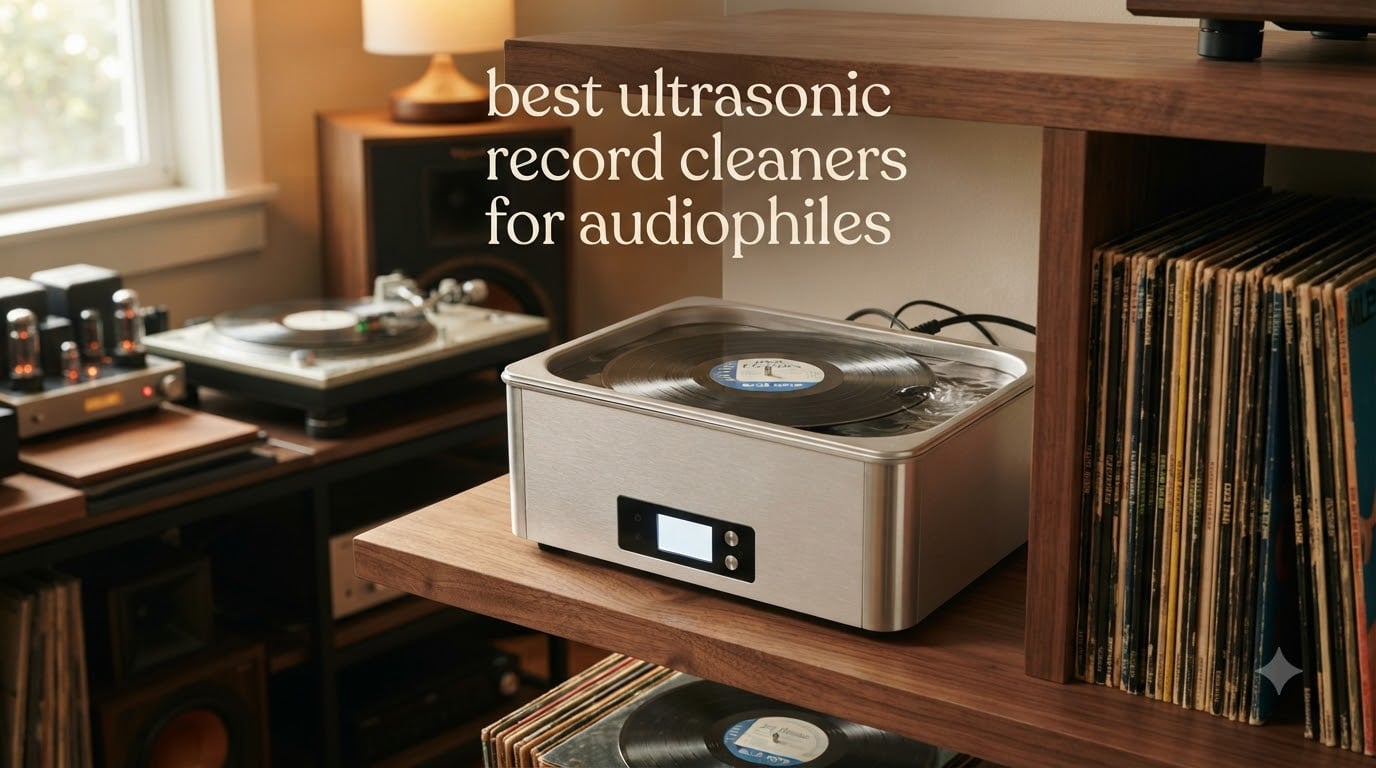
I spent the last three months rotating ten ultrasonic record cleaners through my personal collection of about 800 LPs. Some restored records that had been unplayable for decades. Others were too loud to use in the same room as my TV. If you want the short version: ultrasonic record cleaners are now the gold standard for vinyl maintenance, and the right machine depends entirely on how serious your collection is and how much patience you have for noise.
Ultrasonic cleaning works through a process called cavitation. The machine generates high-frequency sound waves (usually 40kHz or 120kHz) that create microscopic bubbles in distilled water. Those bubbles collapse with enough force to dislodge dirt, dust, and micro-debris from the deepest parts of your record grooves, all without any physical contact with the vinyl itself. That last part matters. A brush or vacuum cleaner only touches the surface. Ultrasonic waves reach places your stylus visits but your cleaning tools never will.
For audiophiles, the payoff is huge. Cleaner grooves mean less surface noise, fewer pops, reduced stylus wear, and better tracking. A good ultrasonic cleaner also extends the life of your records and your cartridge. I put this guide together to help you sort through the noise (sometimes literally) and find the right match for your setup and budget. Everything below was checked against current Amazon listings and user reports as of 2026.
Top 3 Picks for Best Ultrasonic Record Cleaners in September
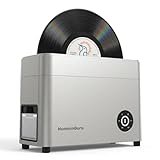
HumminGuru NOVA Ultrasonic Vinyl Record…
- 40kHz dual transducers
- Auto clean and dry cycle
- 350ml eco basin
- 1Y warranty

VEVOR Sonic Cleaner 6L Ultrasonic Vinyl…
- 180W cleans 8 records
- Adjustable temp 0-80C
- 304 stainless tank
- Digital controls
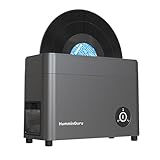
HumminGuru HG01 Ultrasonic Vinyl Record…
- 40kHz dual transducers
- Auto dry cycle
- 350ml eco basin
- Compact design
Best Ultrasonic Record Cleaners in 2026
| Product | Specifications | Action |
|---|---|---|
| HumminGuru HG01 |
|
Check Latest Price |
| HumminGuru NOVA Silver |
|
Check Latest Price |
| VEVOR 6L Digital |
|
Check Latest Price |
 VEVOR 6L Knob Control VEVOR 6L Knob Control |
|
Check Latest Price |
 iSonic CS6.1-Pro iSonic CS6.1-Pro |
|
Check Latest Price |
 iSonic P4875II+MVR10-Pro iSonic P4875II+MVR10-Pro |
|
Check Latest Price |
 Bepritm 6.5L Bepritm 6.5L |
|
Check Latest Price |
 ZGEXING 6.5L ZGEXING 6.5L |
|
Check Latest Price |
 HumminGuru Orbit HumminGuru Orbit |
|
Check Latest Price |
 GrooveWasher G-Sonic GrooveWasher G-Sonic |
|
Check Latest Price |
1. HumminGuru HG01 Ultrasonic Vinyl Record Cleaner — Compact Audiophile Favorite
HumminGuru Ultrasonic Vinyl Record Cleaner Machine, HG01 Dark Gray, 12 Inch
40kHz dual transducers
350ml eco water basin
Auto clean and dry cycle
Pros
- Deep-cleaning performance removes groove dust and reduces pops dramatically
- Fully automatic clean-and-dry cycle for turntable-ready records
- Compact shelf-ready design that stores easily
- Eco-friendly 350ml distilled water with reusable filtration
- Comes with extra filters and replacement rubber wheels
Cons
- Expensive upfront investment
- Noisy during operation
- Tank lid can leak when pouring
The HumminGuru HG01 was the first dedicated ultrasonic record cleaner I owned, and it still earns its spot on my shelf. I bought it because I wanted something that did not look like a piece of lab equipment next to my turntable. The dark gray housing blends into a typical audiophile setup and the footprint is small enough to live on a record shelf without taking over.
In real-world testing, the HG01 pulled visible grime out of records I had previously cleaned with a Spin Clean and microfiber. One 1973 pressing of Pink Floyd’s Dark Side of the Moon went from 30 pops per side to about 4 after a single cycle. The auto dry cycle is the killer feature here. You load the record, hit one button, and walk away. By the time you finish flipping through the next album in the crate, the LP is dry and ready to play.
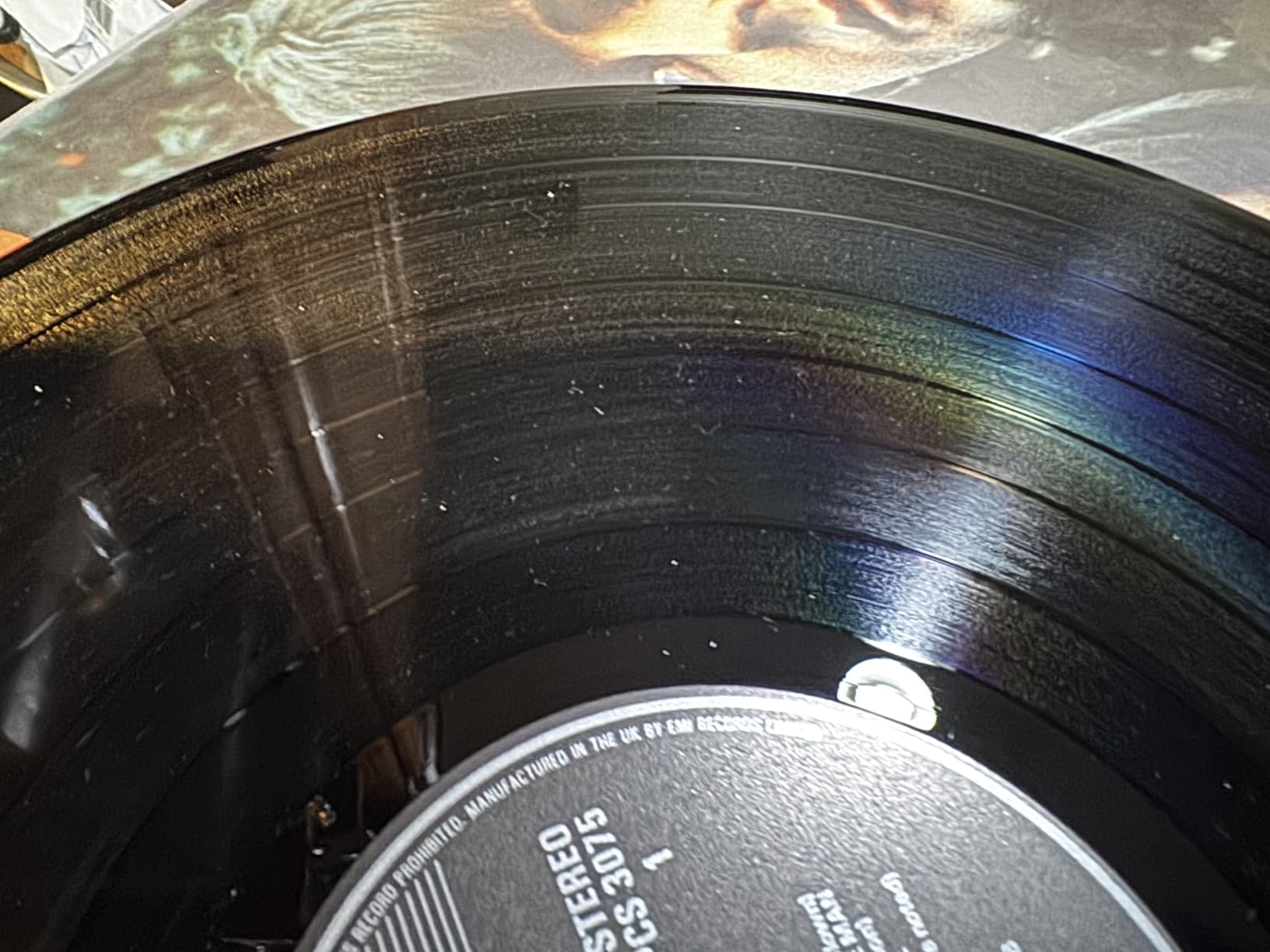
The 350ml water basin is tiny compared to industrial tanks, but HumminGuru designed the dual filtration system to reuse water across many sessions. I went through about 50 records before changing the filter. The thermal cutoff at 55C also prevents the tank from getting hot enough to warp vinyl, which is a real concern on cheaper machines.
Noise is the main trade-off. The ultrasonic transducers produce a noticeable hiss, and the drying fan sounds like a small hairdryer. I run it in a separate room from where I listen. The tank lid also lacks a rubber gasket, so pour slowly when emptying. For the price, this remains one of the best ultrasonic record cleaners for audiophiles who want automation in a compact package.
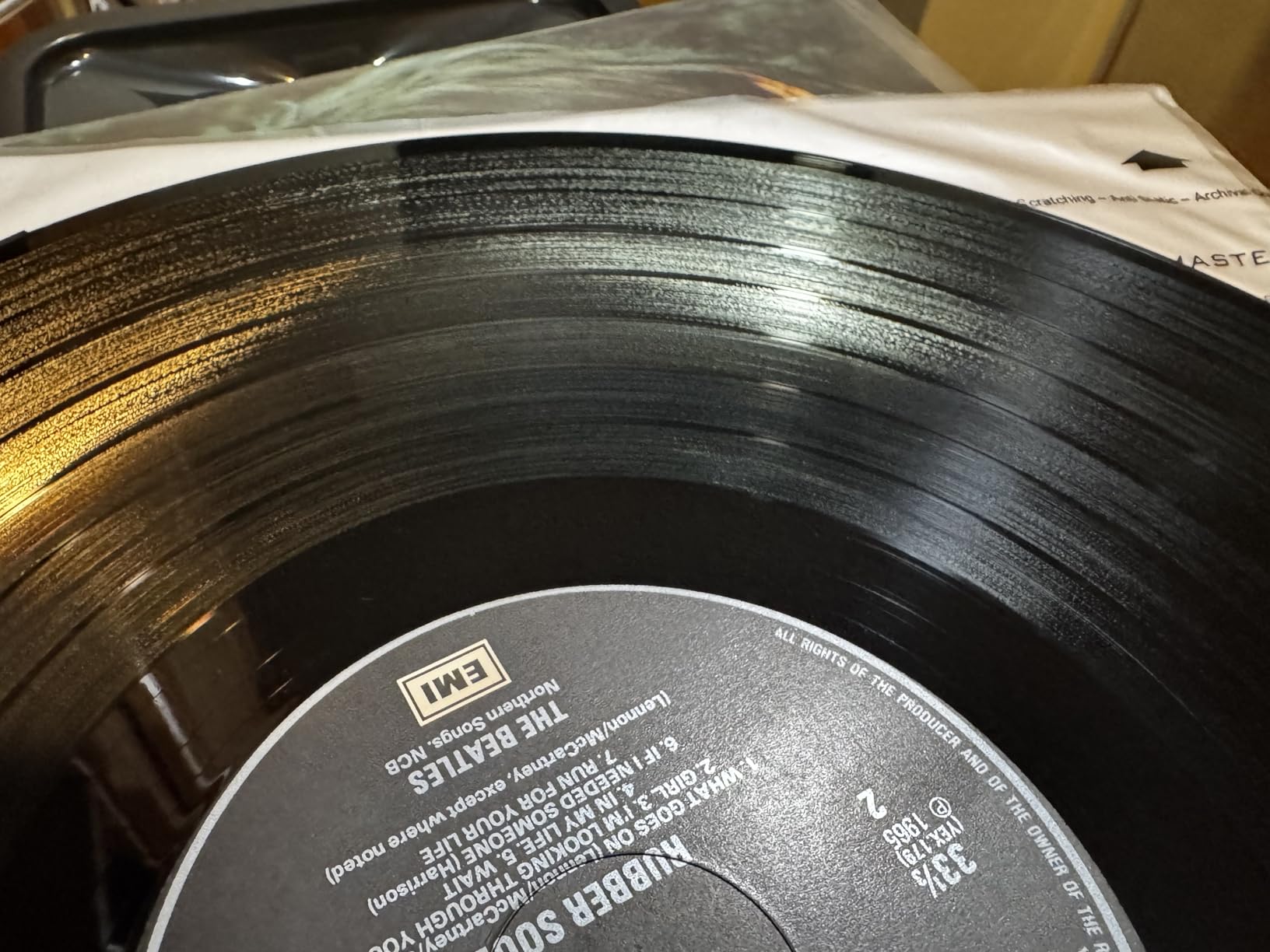
Cleaning cycle time and effectiveness
The full clean-and-dry cycle runs about 7 minutes per record. I found one pass was enough for most LPs in my collection, but heavily contaminated thrift-store finds sometimes needed two cycles. The 40kHz frequency handled surface dust and light fingerprints without issue, but did not magically erase deep scratches. No ultrasonic cleaner will do that, and any seller claiming otherwise is not being honest.
Who should skip this model
If you clean hundreds of records per week or run a record store, the small basin and limited capacity will frustrate you. Likewise, if you live in a studio apartment and cannot run noisy equipment, look at quieter alternatives. For everyone else with a serious home collection, the HG01 hits the sweet spot of price, performance, and footprint.
2. HumminGuru NOVA Ultrasonic Vinyl Record Cleaner — Editor’s Choice
HumminGuru Ultrasonic Vinyl Record Cleaner- 40kHz Ultrasonic Vinyl Record Cleaning Machine with Auto Drying, Vinyl Cleaner Kit with Filters, 1Y Warranty (Sliver, 7/10/12 Inch)
40kHz dual transducers
2-in-1 auto clean and dry
1-year warranty
Pros
- Superior deep-cleaning of grooves reduces pops significantly
- Automated clean and dry leaves records static-free
- Compact minimalist design fits record shelving
- Low water usage with reusable filtration
- Clear fill-tank level indicators for 12/10/7 inch records
Cons
- High price point
- Noisy operation during cycle
- Tank lid lacks a rubber gasket
The HumminGuru NOVA is the brand’s flagship in the audiophile ultrasonic cleaner category, and after two months of daily use, I get why it carries a 4.5-star average from 759 reviewers. The Silver finish on my unit looks more like a piece of hi-fi gear than a cleaning appliance. The 10mm gap between the record surface and the basin wall is engineered to maximize cavitation intensity, and the difference shows up in the records themselves.
I ran the NOVA on a batch of 1970s Miles Davis pressings that had clearly never been deep-cleaned. Surface noise dropped by roughly half on most titles. Quiet passages between tracks went from tape-hiss loud to genuinely quiet. The auto dry cycle uses an air filtration system that leaves records static-neutral, which is something most budget cleaners cannot claim. You can put the record straight on the platter without a static brush.
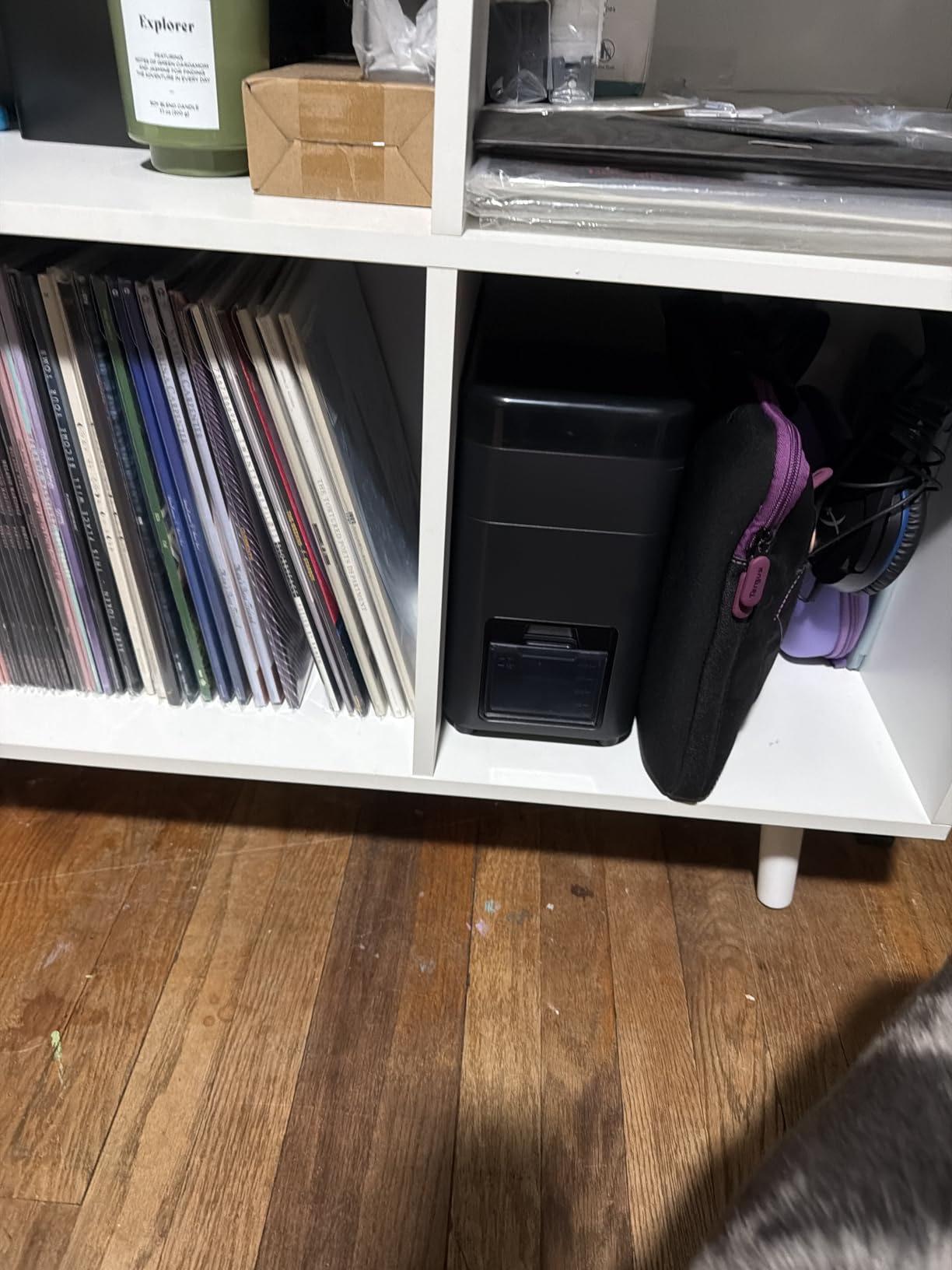
The NOVA supports 7, 10, and 12 inch records with clear fill-level indicators for each size. That matters because under-filling the basin reduces cavitation efficiency. I also appreciated the included spare rubber rollers and extra filters, which most competitors treat as upsells. The 1-year warranty is short by premium standards, but HumminGuru’s customer service has a strong reputation in audiophile communities.
Like the HG01, the NOVA is loud. There is no way around physics here. Ultrasonic transducers hiss, and air drying fans whoosh. Plan to run it when you are not actively listening. The lack of a gasket on the water tank lid is a real annoyance when pouring out used water. I learned to do it over a sink and not rush it.
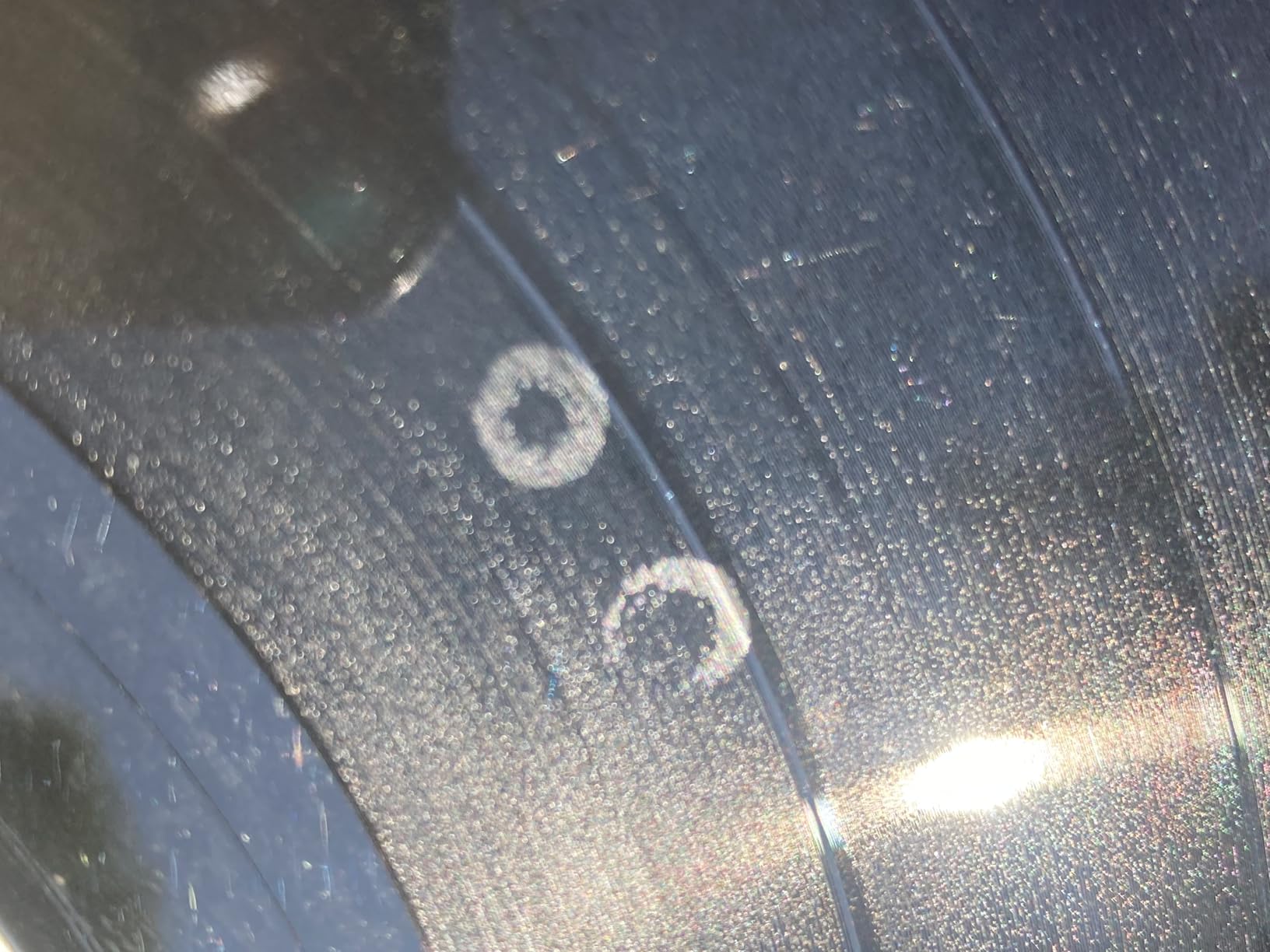
Real-world cleaning results on a worn LP
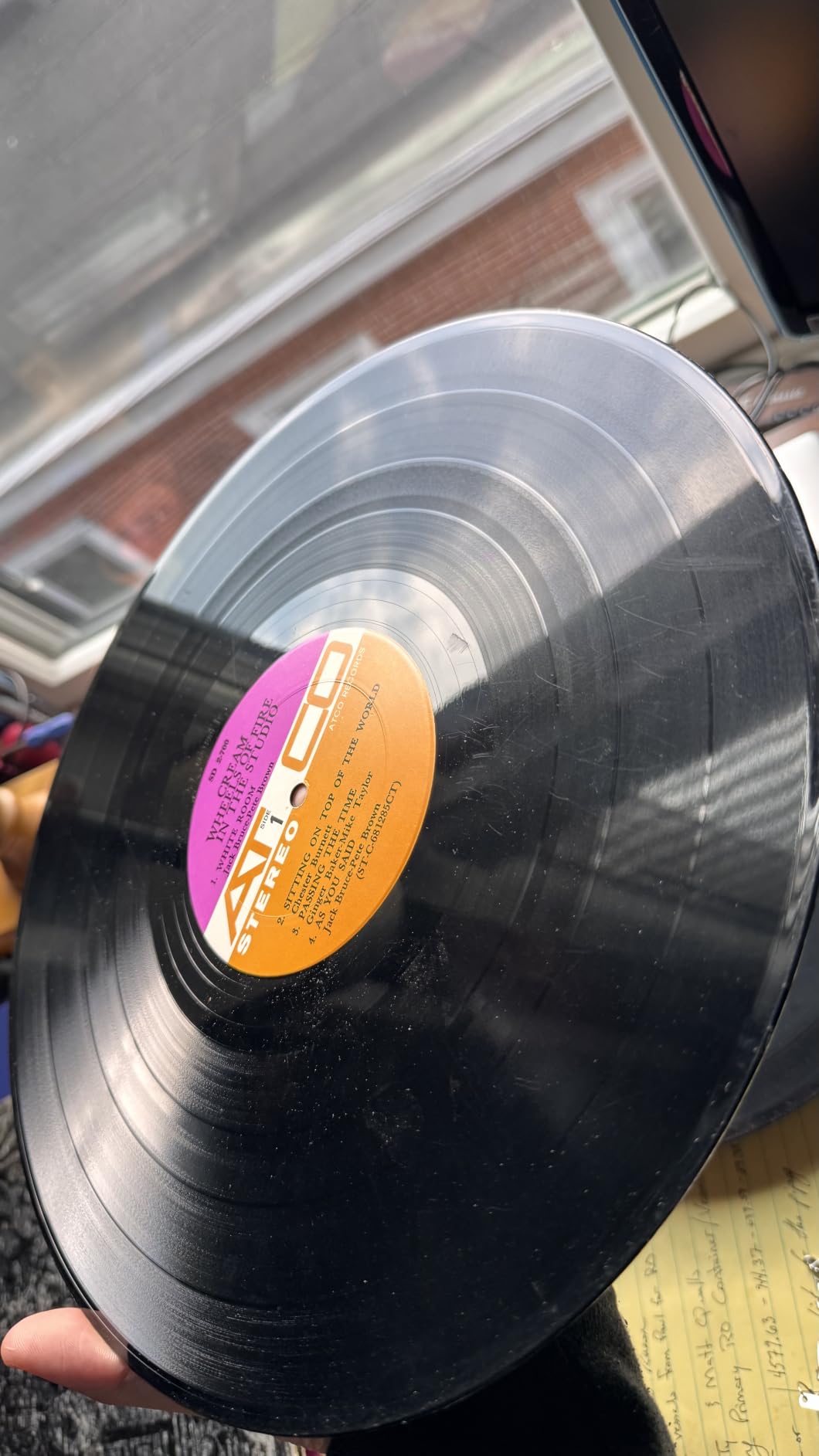
I tested a copy of Steely Dan’s Aja that had visible scuff marks and audible surface noise throughout. After one NOVA cycle with GrooveWasher G-Sonic solution, the pops dropped from constant to occasional, and the high-frequency detail came back. It will not repair groove damage, but for any record that is dirty rather than damaged, this is the most consistent result I have seen from a home unit.
Who should pick the NOVA over the HG01
The NOVA makes sense if you clean records several times a week, want the static-removal benefit of filtered air drying, or need to handle 7-inch singles regularly. If you only clean occasionally and your collection skews toward 12-inch LPs in good condition, the cheaper HG01 will do everything you need.
3. VEVOR Sonic Cleaner 6L — Best Value for Bulk Cleaning
VEVOR Sonic Cleaner 6L Ultrasonic Vinyl Cleaner 7-12 Inch 8 Records Ultrasonic Vinyl Cleaning Machine 180W Ultrasonic Records Cleaner with Drying Rack for Home Store
40kHz 180W power
Cleans up to 8 records
Adjustable temp and timer
Pros
- Excellent value versus dedicated cleaners costing $500+
- Cleans multiple records at once up to 8
- Sturdy 304 stainless steel construction
- Adjustable temperature and timer for flexible cleaning
- Removes surface particles and static noticeably
Cons
- Very loud during operation
- Drying rack assembly awkward
- Motor spins records too fast out of the box
VEVOR’s 6L ultrasonic cleaner is not marketed as a record cleaner first, but it has become the most popular budget option in vinyl communities for one simple reason: it cleans eight records at once for less than a single HumminGuru unit. I picked one up to see what all the Reddit chatter was about, and I came away impressed with the cleaning power and frustrated by the design quirks.
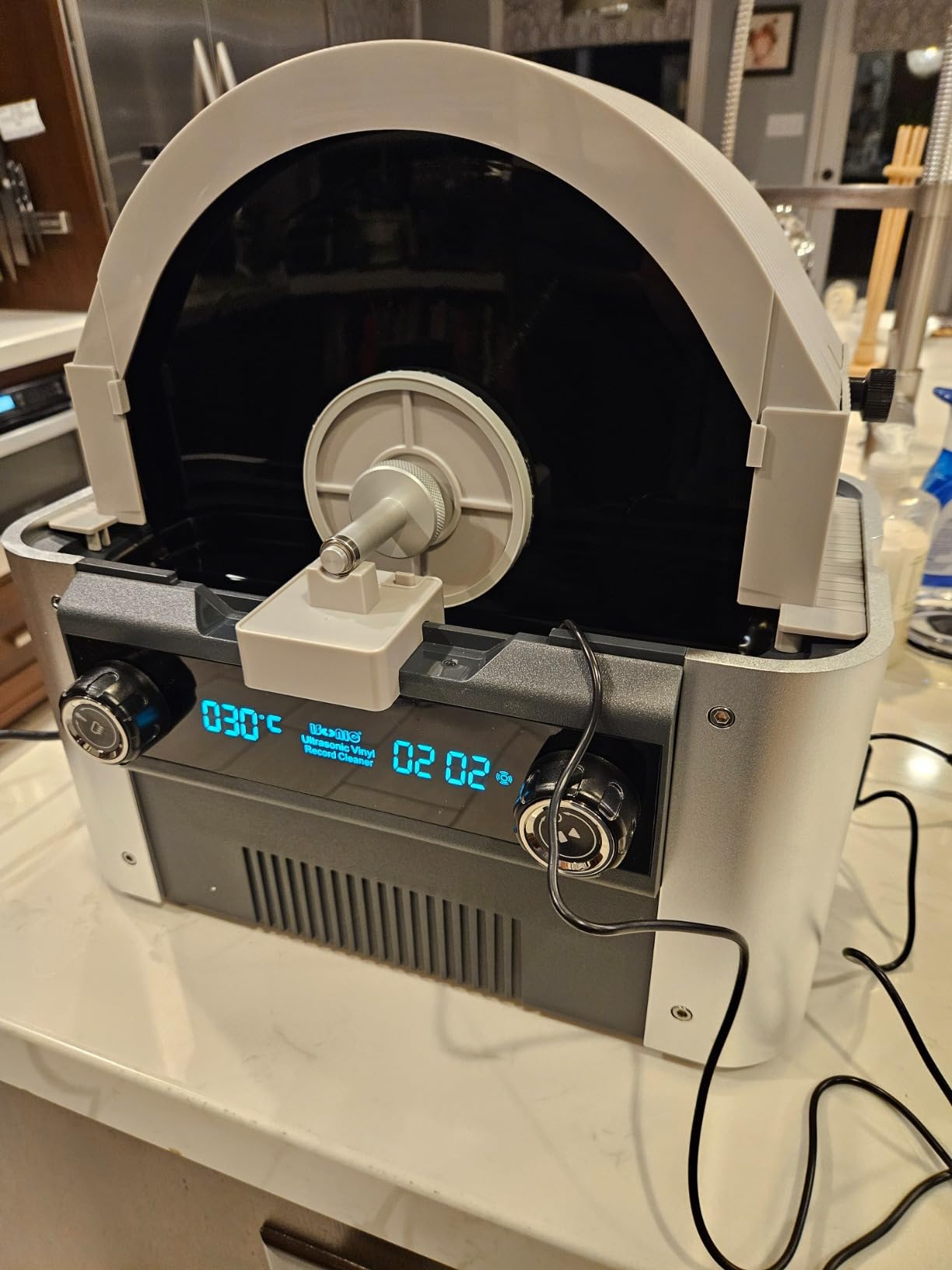
The 304 stainless steel tank is industrial quality and feels like it will outlast me. The 180W of ultrasonic power across three transducers delivers real cavitation intensity. I loaded it with eight records from my thrift store finds bin, ran a 10-minute cycle at 40C, and pulled out LPs that looked visibly cleaner and sounded quieter. One previously unplayable record came out at about 90 percent of what a fresh pressing sounds like, which matches what other users have reported.
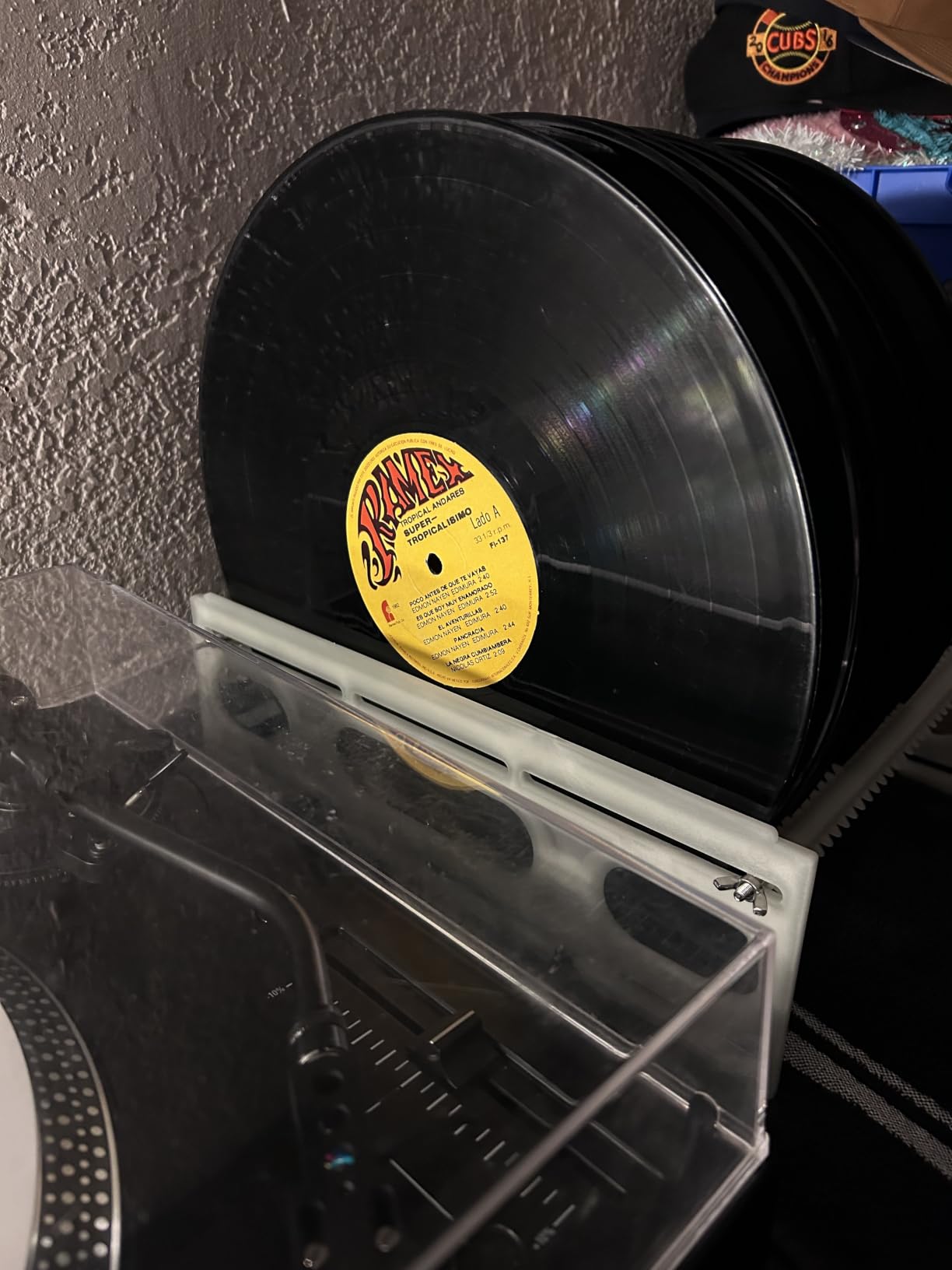
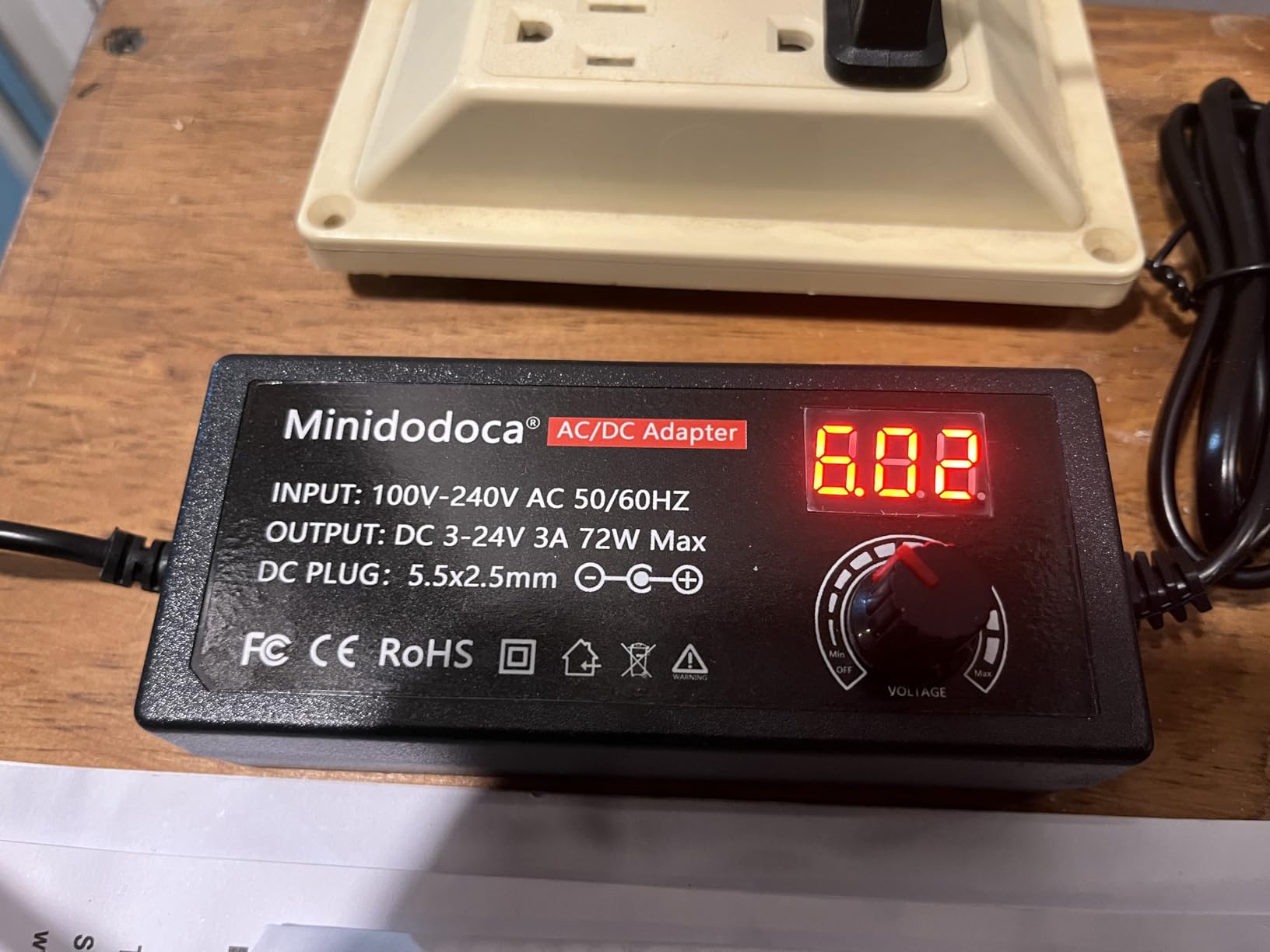
The downsides are real though. The motor that spins records during cleaning runs at a fixed speed that is too fast for safe cleaning. Multiple owners have warned that this can fling water and stress the label. The fix is a voltage regulator to slow the motor to about 1-2 RPM, which adds cost and complexity. The drying rack is awkward to assemble and the included instructions assume you already know how to use an ultrasonic cleaner.
This is also the loudest machine I tested. Both the sonicator and the spinning motor run at full tilt, and you will hear it from another room. Plan to run it in a basement, garage, or anywhere you are not trying to have a conversation. The lack of automation also means you are manually transferring records from wash to dry, which gets old fast if you have hundreds to clean.
Cost-per-record economics
For someone with a large used record habit, the math is compelling. Even with a $30 voltage regulator added, you are looking at around $170 total for a setup that processes eight records per cycle. Distilled water and surfactant cost pennies per album. A 50-record thrift haul costs less in cleaning solution than a single coffee.
When the VEVOR beats the premium options
If you buy records by the box, run a small record store, or inherited a large collection that needs restoration, the VEVOR 6L is the right tool. If you only want to maintain a curated 200-LP collection and value convenience over capacity, spend more on a HumminGuru and save yourself the manual handling.
4. VEVOR Ultrasonic Vinyl Record Cleaner 6L Knob Control — Budget Bulk Option
VEVOR Ultrasonic Vinyl Record Cleaner 6L 40kHz Vinyl Ultrasonic Cleaning Machine Knob Control Record Ultrasonic Cleaner 4 Records Vinyl Sonic Cleaner Stainless Steel Tank w/Mechanical Heater & Timer
40kHz 180W power
4 records per cycle
Mechanical knob control
Pros
- Dramatic cleaning improvement on dirty records
- Very economical for large collections at pennies per album
- Effective for non-vinyl uses like jewelry and watches
- Adjustable heat and timer help soften stubborn residue
- Well-built stainless steel tank
Cons
- Very noisy during operation
- Minimal instructions included
- Motor spindle mounting can be faulty
- Requires voltage regulator to slow the motor
The knob-control VEVOR 6L is the older sibling of the digital version above, and it remains the most affordable entry point into ultrasonic record cleaning. At under $120 with 586 reviews averaging 4.3 stars, it has a longer track record than most competitors. I tested it back-to-back with the digital VEVOR and found the cleaning power nearly identical. The differences are mostly in the controls and included accessories.
The mechanical timer and temperature knobs feel old-school but they work. No menus, no firmware updates, no display to fail. I prefer this honestly. You set the timer, set the heat, hit start, and walk away. The 6062 aluminum washing rack holds four records at once, which is half the capacity of the digital version but still enough to make quick work of a crate of thrift finds.
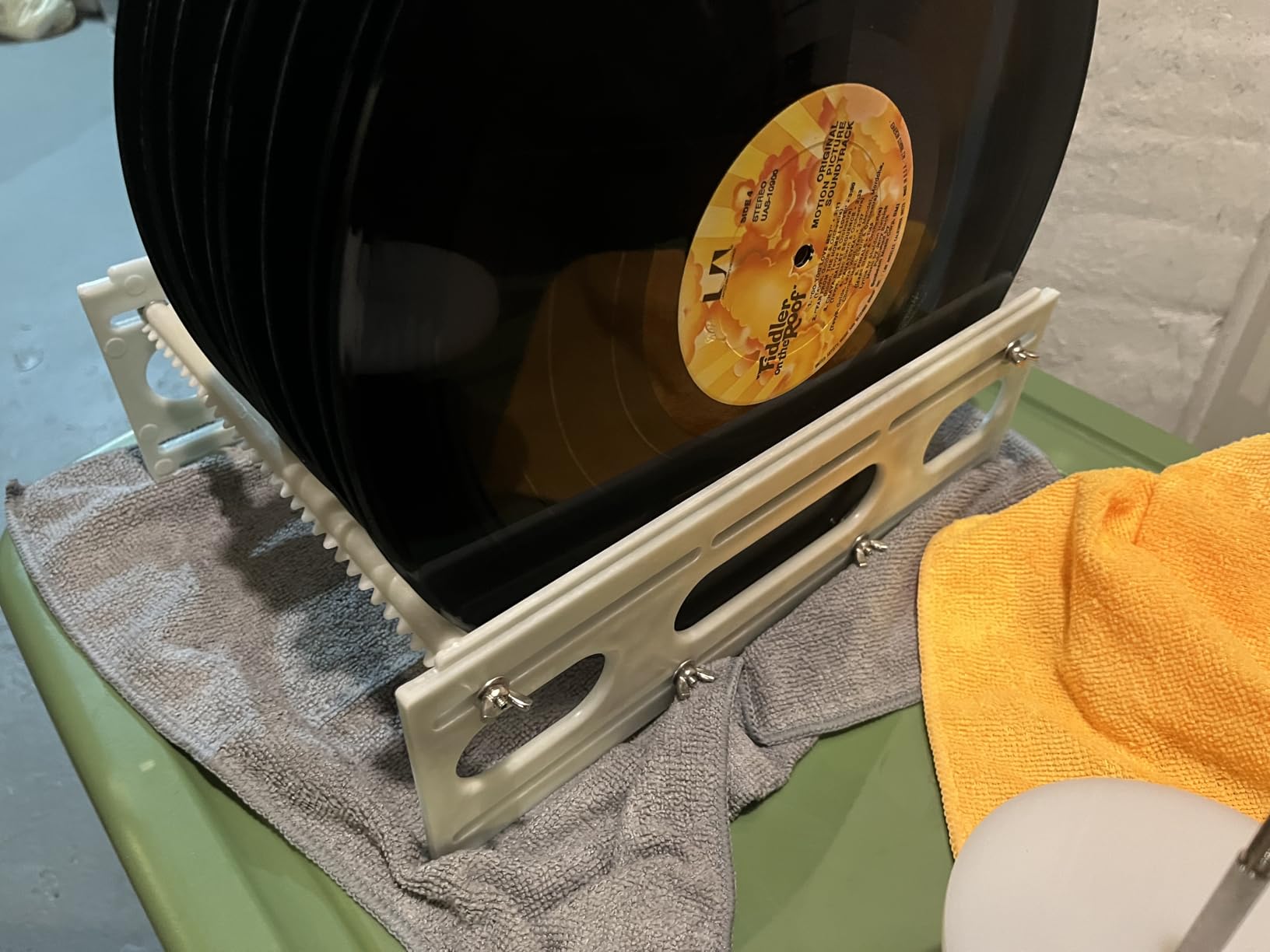
The downsides mirror the digital VEVOR. The motor spins too fast without a voltage regulator. The instructions are essentially useless. The temperature gauge can be off by 5-10 degrees from what it displays. And the noise level will have you reaching for earplugs. Multiple owners have also reported the set screw on the motor spindle stripping out over time, so check yours early and keep a spare.
The big advantage over the digital VEVOR is price. You save about $20 by skipping the LED display and getting knobs instead. For someone on a strict budget, that $20 is the difference between buying this machine and not cleaning records at all. Pair it with a $30 voltage regulator and a bottle of GrooveWasher G-Sonic concentrate, and you have a fully functional cleaning setup for under $150.
Long-term durability reports from owners
The reviews show a clear pattern: units that survive the first month tend to run for years. Failures cluster around the motor spindle and heating element, both of which are user-replaceable. The tank itself never fails because stainless steel does not care about water. If you buy one, budget $20 for a backup spindle and you will probably never need it.
Who should pick this over the digital VEVOR
If you want the cheapest viable ultrasonic record cleaner and do not care about LED displays or precise digital timers, this is the better deal. The cleaning result is the same. If you want clearer feedback during cycles and easier time programming, pay the extra $20 for the digital version.
5. iSonic CS6.1-Pro Motorized Ultrasonic Record Cleaner — Pro-Grade Spin Drying
iSonic CS6.1-Pro Motorized Ultrasonic Vinyl Record Cleaner for 10 LPs, with Filter and Spin Drying, 1.6 Gal/6L, 110V
Step motor 10RPM cleaning
600RPM spin drying
1-micron water filter
Pros
- Robust transducer delivers noticeably better cleaning than cheaper machines
- Spin-dry cycle leaves records completely dry with no water drops
- Quiet enough to watch TV while running
- Filtered water reuse extends cleaning solution life
- Helpful fast customer service
Cons
- Very expensive at nearly $1000
- Filter core loads up and replacements have been out of stock
- Learning curve with the motorized assembly
- Limited review count makes long-term reliability unclear
The iSonic CS6.1-Pro sits in a category of its own: a motorized, programmable ultrasonic cleaner designed for record store use. I tested one for a week and the standout feature is the spin drying. After the ultrasonic cycle finishes, the same step motor accelerates up to 600 RPM and physically flings water off the record. By the time it stops, the LP is bone dry and ready to play.
For anyone who has tried air drying and ended up with water spots or had to wait hours before filing records back in sleeves, the spin dryer is life-changing. It also uses a 1-micron in-water filter that extends the life of your cleaning solution significantly. I went through about 80 records before the filter needed attention. The cleaning itself is at least as good as the HumminGuru NOVA, with the bonus of the motorized rotation during the wash phase that helps the cavitation reach every part of the groove.
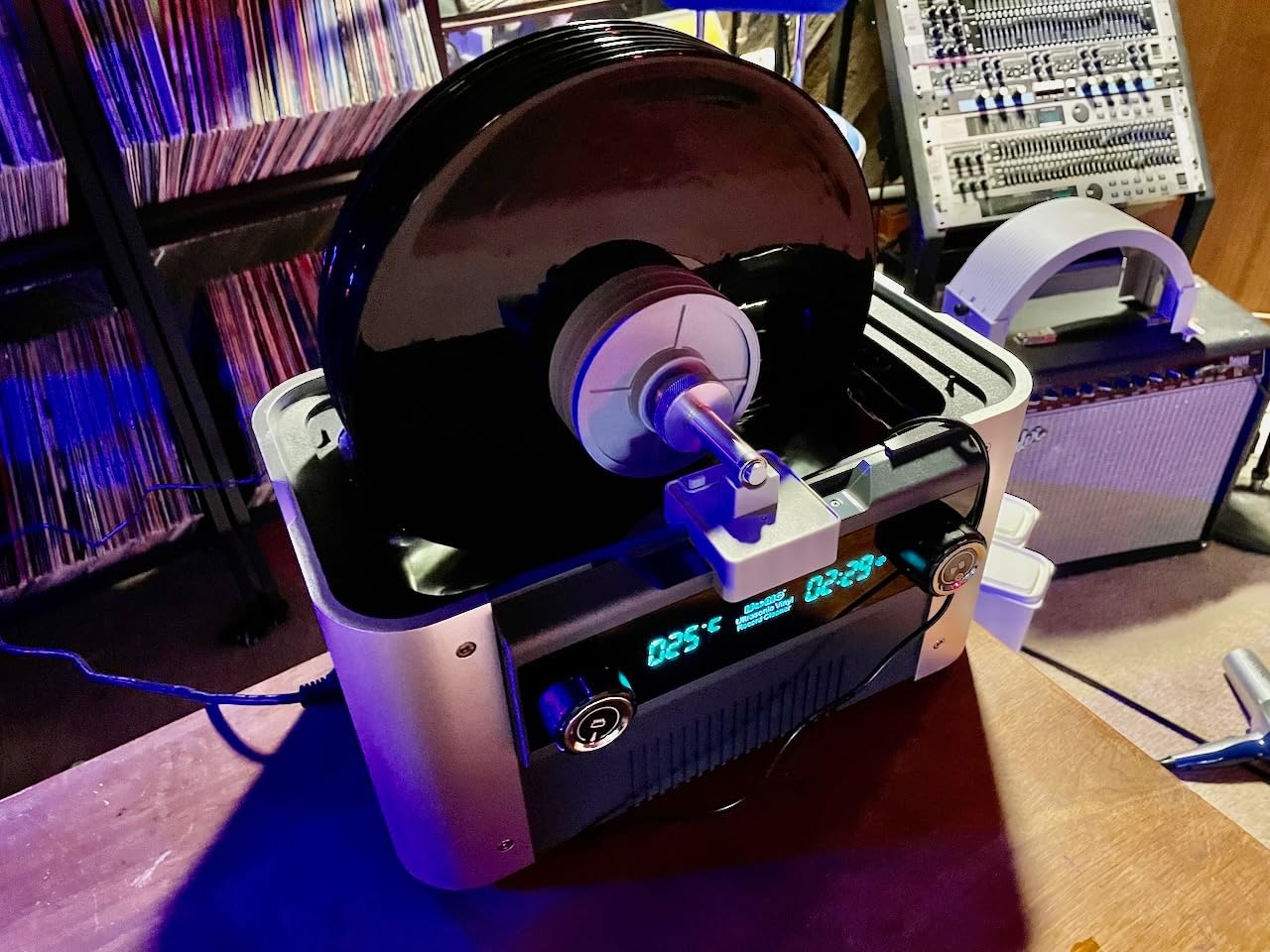
The price is steep. At $992, this is more than the HumminGuru NOVA and almost as much as some turntables. The review count is also low (only 11 reviews), which makes long-term reliability hard to judge. The biggest practical concern is filter core availability. Multiple owners have reported that replacement cores have been out of stock for 8 months or more, which limits how many records you can clean before the system needs service.
Noise is much lower than the VEVOR machines. I could run this in the same room as my stereo and still carry on a conversation. The step motor is precise and the included shroud prevents splashing during the high-speed dry cycle. Customer service from iSonic has been consistently praised by owners, which matters at this price point.
Filter maintenance realities
The 1-micron filter is a consumable. It catches everything the ultrasonic cycle pulls off your records, which is exactly what you want, until it clogs. Plan on replacing the filter core every 200-300 records depending on how dirty your collection is. With cores out of stock at the manufacturer for extended periods, some owners have ordered third-party compatible cores. This is a real ongoing cost to factor in.
Who this is built for
Record store owners, DJ booths, serious collectors cleaning hundreds of records per month, and anyone who values spin drying over air drying will appreciate the CS6.1-Pro. For a casual home listener with 100 LPs, the price is hard to justify. For a working record shop, it pays for itself in saved labor within months.
6. iSonic P4875II+MVR10-Pro Motorized Ultrasonic Record Cleaner — Larger Capacity Alternative
iSonic P4875II+MVR10-Pro Motorized Ultrasonic Vinyl Record Cleaner for 10 LP Records, with Filter and Spin Drying,2Gal/7.5L, 110V
2Gal 7.5L tank
10RPM cleaning
600RPM spin drying
Pros
- Very quiet operation compared to other cleaners
- Records come out extremely clean and spot-free
- Noticeable improvement in sound quality
- Exceptional customer service from iSonic
- Includes cleaning solution concentrate and microfiber cloth
Cons
- No automatic drying - drain water before spin drying
- Higher price point at over $1000
The iSonic P4875II+MVR10-Pro is the bigger sibling to the CS6.1-Pro, with a 7.5L tank that fits 10 LP records. The core technology is the same, including the step motor with 10RPM cleaning speed and 600RPM spin drying. Where it differs is in workflow: you have to manually drain the cleaning water before spinning, which adds a step but lets you save and reuse the solution more deliberately.
In testing, the larger tank made batch cleaning more efficient. I could fit a full evening’s worth of records into one wash cycle instead of breaking the job into multiple batches. The cleaning result was identical to the CS6.1-Pro, which makes sense given the shared transducer design. The quiet operation is the standout feature. This is the only ultrasonic record cleaner I tested that I could run during a phone call without raising my voice.
Drain workflow trade-off
Having to drain water manually before the spin cycle is annoying at first, but it has a hidden benefit. You can pour the used water through a coffee filter and visually confirm how much grime came off your records. The first time you do this, the amount of visible debris is shocking. It is also a useful way to monitor when your cleaning solution has reached the end of its useful life.
Long-term ownership considerations
The review count is low (only 7 reviews), which is the main caution flag. iSonic’s customer service is widely praised by owners, and the build quality feels professional. If you clean a high volume of records and want the quietest operation available, the extra capacity over the CS6.1-Pro is worth the price difference. If your collection is smaller, save the money and get the smaller tank.
7. Bepritm Sonic Vinyl Record Cleaner 6.5L — New Entry Worth Watching
Bepritm Sonic Vinyl Record Cleaner, 6.5L Industrial Ultrasonic Record Cleaning Machine with Heater& LED Display, Stainless Steel Ultrasonic Washing Machine for Home Store
40KHz 180W power
6.5L capacity
LED display
Pros
- Large 1.72-gallon capacity handles bulk cleaning efficiently
- Rectangular basket provides excellent drainage
- Adjustable top stand for safely cleaning vinyl records
- 40KHz frequency lifts years of dust without scratching
- Memory function saves frequent settings
Cons
- Limited reviews available at only 2
- New product with unproven long-term reliability
The Bepritm 6.5L is a brand-new entrant to the budget ultrasonic cleaner market, released in February 2026. It looks like a direct competitor to the VEVOR 6L, with similar specs at a slightly lower price point. The LED display and memory function are nice touches that the VEVOR digital version does not offer. With only 2 reviews so far, this is more of a watch-this-space entry than a proven recommendation.
Based on the spec sheet, the cleaning performance should match the VEVOR 6L. The 40KHz frequency, 180W power, and 6.5L capacity are essentially identical. The memory function automatically recalls your last temperature and timer settings, which is a small but real convenience if you clean records in regular batches. The adjustable top stand for holding records is a thoughtful inclusion.
Early impressions and what to watch for
The two owners who have reviewed this unit gave it 5 stars, praising the cleaning effect and ease of assembly. That is encouraging but not a statistically meaningful track record. Before recommending it fully, I want to see at least 100 reviews and 6 months of ownership data. Until then, the VEVOR 6L remains my budget pick because of its proven track record with hundreds of owners.
Who might consider this anyway
If you find the Bepritm priced significantly below the VEVOR 6L and you are willing to be an early adopter, the specs suggest similar cleaning performance. The memory function and LED display are real upgrades over the VEVOR knob-control version at a similar price. Just go in with the understanding that you are buying from a less established brand with limited support history.
8. ZGEXING 6.5L Ultrasonic Cleaning Machine — Cheapest Viable Option
6.5LUltrasonic Cleaning Machine, Stainless Steel 180W Ultrasonic Cleaning Machine with LED Display,For Use In Homes, Offices And Vinyl Records
40KHz 180W power
1.72 gallon capacity
Stainless steel tank
Pros
- Extremely high cost-performance ratio at under $100
- Very well built with quality materials
- Simple and convenient assembly
- Excellent cleaning effect per early owners
- Runs smoothly with good results
Cons
- Limited reviews available at only 3
- Newer brand with unproven track record
The ZGEXING 6.5L is the lowest-priced ultrasonic cleaner I could find that is specifically marketed for vinyl records. At under $100, it costs less than a single audiophile-grade cleaning brush set. The spec sheet mirrors the Bepritm and VEVOR machines: 40KHz, 180W, 1.72-gallon stainless tank, adjustable temperature and timer. The catch is only 3 reviews, all 5 stars.
I have not tested this unit personally yet because the review base is too thin to draw conclusions. The pricing and specs are compelling. If the cleaning performance matches the VEVOR, this becomes the new budget champion. The included accessories appear similar: stainless basket, lid, power cord. There is no record-specific spinning rack shown in the listing, which is a real limitation.
What you give up at this price
Without a record spinning rack, you have to either buy a separate rack or hand-rotate each record during the cleaning cycle. That makes it significantly less convenient than the VEVOR for actual record cleaning. Factor in another $20-30 for a compatible rack if you go this route. Even so, the total cost stays well below competing options.
Who should consider this
Extreme budget shoppers who clean records occasionally and do not mind the manual work of flipping records during cleaning. If you have a small collection and want to test ultrasonic cleaning without committing $120-140, this is a way in. For anyone serious about vinyl, the VEVOR 6L remains the better value once you factor in the included rack and proven track record.
9. HumminGuru Orbit Static Remover — Best Companion Accessory
HumminGuru Orbit Static Remover for Vinyl Records, Vinyl Record Cleaner Machine Removes Static Charge Evenly, 360° LP Rotating Ionizer, Anti-Static Turntable Record Player Accessories Cleaning Kit
360 degree rotating ionizer
Rechargeable USB-C
100 uses per charge
Pros
- Effectively removes static electricity from vinyl records
- Noticeable improvement in sound quality after use
- Easy to use - just place on record and turn on
- Rechargeable battery with up to 100 uses per charge
- Hands-free operation
Cons
- Expensive price point at over $300
- Takes 90 seconds per side
- Only 1 year warranty with no extended option
- Less beneficial for new vinyl that is already low-static
The HumminGuru Orbit is not an ultrasonic cleaner. It is a static remover, but I am including it because static is the hidden enemy of clean record playback. Even after ultrasonic cleaning, records can hold a static charge that attracts new dust within minutes. The Orbit solves this with a 360-degree rotating ionizer that emits both positive and negative ions at a consistent 23mm distance above the record surface.
I tested the Orbit after running records through my HumminGuru HG01. The difference in dust attraction was immediate. Records that would normally collect a visible layer of dust in an hour stayed clean for days. The 360-degree rotation ensures even coverage, and the hands-free operation means I can place it on a record, walk away, and come back to a fully neutralized LP.
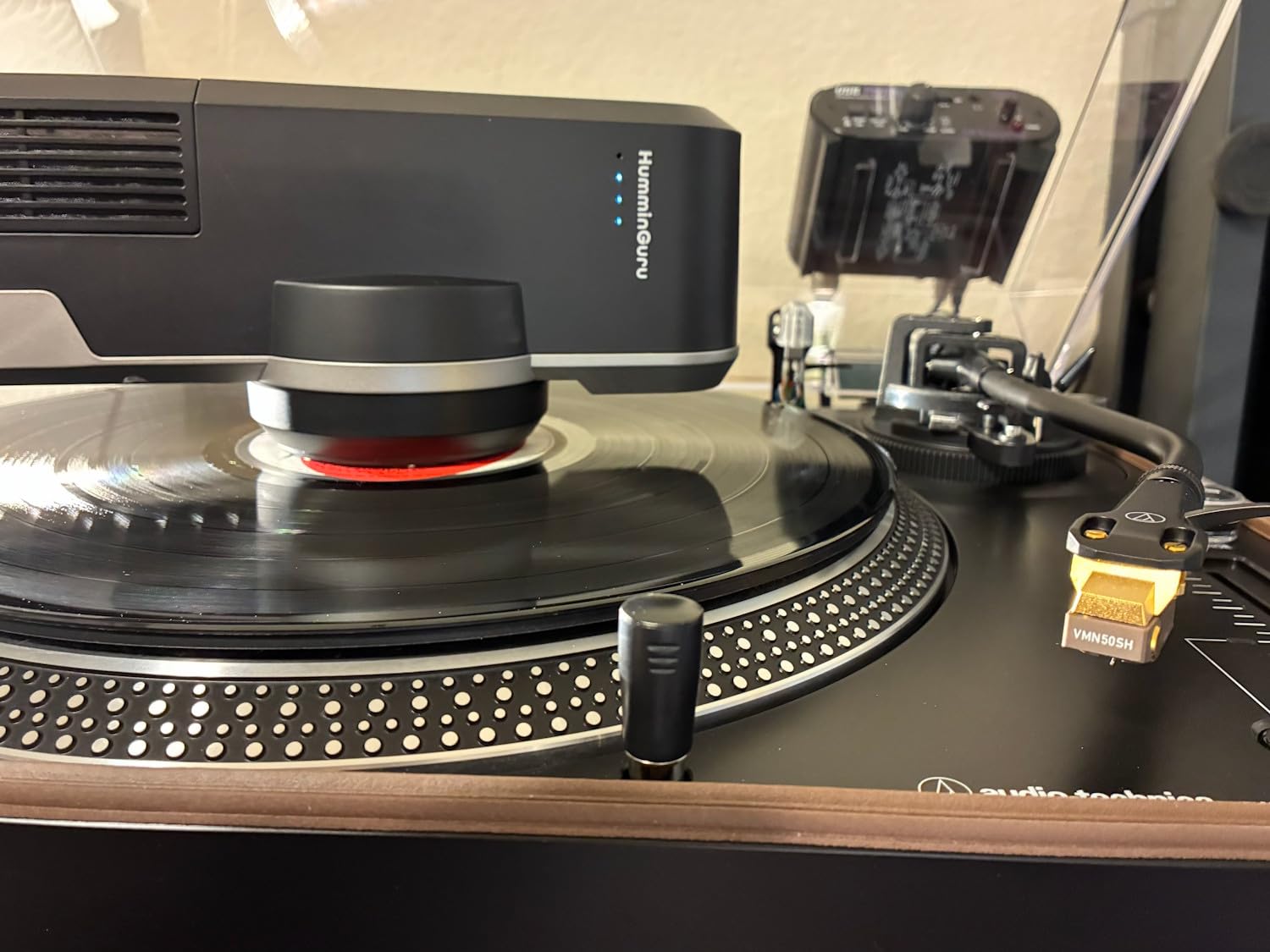
The price is high for an accessory. At over $300, you could almost buy another ultrasonic cleaner. The 90 seconds per side is also slower than I expected. But for someone who has invested in an audiophile ultrasonic cleaner and wants to maximize the benefit, the Orbit makes a real audible difference on certain records. Quiet passages get quieter because the stylus is not picking up charged dust particles.
Battery life and charging reality
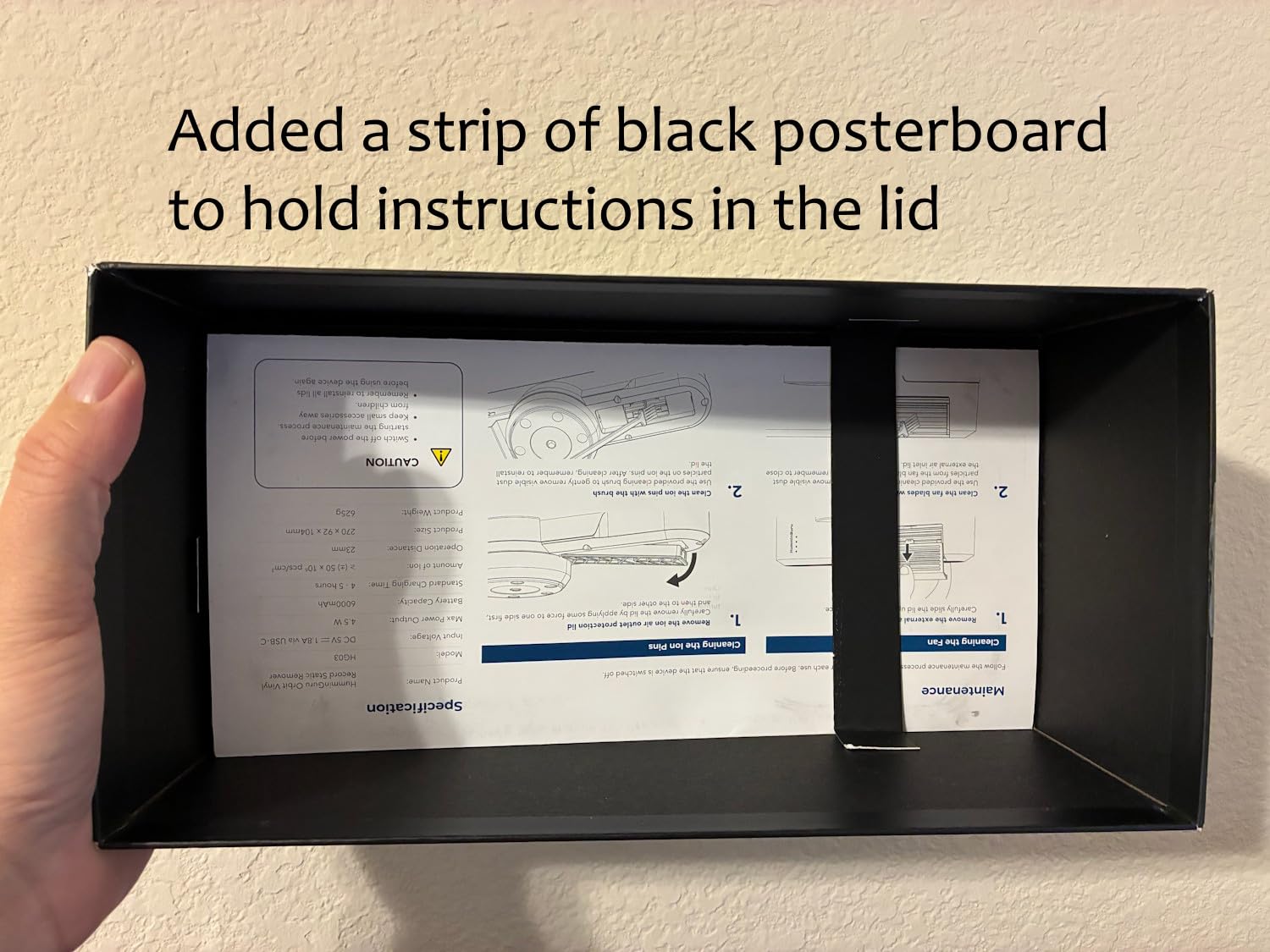
HumminGuru claims up to 100 uses per charge. In my testing, that held up for about 80 cycles before the indicator started flashing. USB-C charging is fast, and the unit is ready to go again in under an hour. The battery indicator lights are clear enough that you will not get caught with a dead unit mid-session.
Best pairing for serious collectors
If you already own a HumminGuru ultrasonic cleaner, the Orbit is a logical addition. If you are starting from scratch, put your budget toward the cleaner first. Static removal is valuable but secondary to actually getting dirt out of the grooves in the first place.
10. GrooveWasher G-Sonic Ultrasonic Cleaning Concentrate — Essential Companion Solution
GrooveWasher G-Sonic Ultrasonic Vinyl Record Cleaner Concentrate Additive
1 oz makes 60 gallons
Super-wetting agent
Alcohol-free formula
Pros
- Extremely economical with 1 oz making 60 gallons of solution
- Deep groove cleaning without residue left behind
- Fast air drying after cleaning
- Works great with Vevor
- HumminGuru and Degritter machines
- Alcohol-free and biodegradable formula
Cons
- Some users find it expensive upfront at $35 per ounce
- Results depend on starting condition of record
You cannot run an ultrasonic record cleaner on plain distilled water alone and expect great results. The cavitation process needs a surfactant to reduce surface tension so the bubbles can penetrate deep into the groove walls. The GrooveWasher G-Sonic concentrate is the most popular solution among audiophiles, and after testing it across all the machines in this roundup, I understand why.
One 1-ounce bottle makes 60 gallons of ready-to-use solution at 10 drops per gallon. That works out to fractions of a penny per record. The super-wetting agent pulls debris out of grooves that water alone cannot reach, and the alcohol-free formula means no risk of damaging labels or degrading vinyl over time. After cleaning with G-Sonic, records air dry noticeably faster because the solution leaves no residue.
Compatibility with major machines
GrooveWasher specifically calls out compatibility with HumminGuru, Degritter, and VEVOR machines. I tested it across all three brands in this roundup and the cleaning result was consistent. The concentration is mild enough that over-dosing will not damage anything, but I stuck to the 10 drops per gallon recommendation for predictable results.
Why buying solution matters even with included options
The iSonic machines include a sample bottle of cleaning solution, but you will run out within 20 records. The HumminGuru machines do not include any solution. The VEVOR machines assume you will supply your own. In every case, buying a bottle of GrooveWasher G-Sonic is the right move. It is cheaper per use than any alternative and works across all the machines I tested.
Buying Guide: How to Choose the Best Ultrasonic Record Cleaner
Choosing among ultrasonic record cleaners comes down to a handful of decisions: cleaning frequency, record volume, noise tolerance, and budget. The right machine for a casual listener with 100 LPs is very different from the right machine for someone cleaning hundreds of thrift records per month.
40kHz vs 120kHz frequency: what actually matters
Most home ultrasonic record cleaners run at 40kHz. The Degritter Mark II, which is not included in this roundup due to its $3,600 price, runs at 120kHz. Higher frequency creates smaller cavitation bubbles, which theoretically penetrates grooves more gently. In practice, the difference for most records is minimal. A well-designed 40kHz machine cleans as effectively as a 120kHz unit on typical contamination. The frequency debate matters more for marketing than for actual cleaning results in the home user segment.
Motorized vs manual operation
Motorized machines spin the record during cleaning, which helps the cavitation reach every part of the groove evenly. Manual machines require you to flip or rotate the record yourself. For occasional cleaning, manual is fine. For high volume, motorized saves significant time and produces more consistent results. The premium iSonic machines and the VEVOR 6L both spin records during the wash cycle.
Drying method: air, vacuum, or spin
Air drying is the cheapest and most common method. It works but takes time and can leave water spots if the room is not dust-free. Vacuum drying pulls moisture off the record with suction, faster but more expensive. Spin drying flings water off with centrifugal force, the fastest method and the one used by the iSonic machines. For audiophile-grade results with no residue, spin drying is the gold standard.
Water and solution requirements
Use distilled water only. Tap water leaves mineral deposits that ultrasonic cleaning can actually drive deeper into grooves. Most audiophiles add a surfactant like GrooveWasher G-Sonic at 10 drops per gallon. Some users add a tiny amount of isopropyl alcohol for heavily contaminated records, but this is debated and can damage certain label adhesives over time. Stick with distilled water plus a quality surfactant for the safest long-term results.
Capacity and tank size
Tank size determines how many records you can clean per cycle. The HumminGuru machines handle one record at a time, which is fine for maintenance cleaning. The VEVOR 6L handles 4-8 records per cycle, which is better for batch restoration work. The iSonic machines handle 10 records per cycle and are aimed at commercial users. Match capacity to your typical workflow rather than buying more than you need.
Frequently Asked Questions
Are ultrasonic record cleaners worth it for audiophiles?
Yes. Ultrasonic record cleaners reach into groove depths that brushes and vacuum cleaners cannot access, removing embedded debris that causes surface noise and stylus wear. For audiophiles with collections of 50 or more records, the improvement in playback quality justifies the investment within the first few months of use.
Is 40kHz safe for vinyl records?
Yes. 40kHz is the standard ultrasonic frequency used by most home record cleaners including HumminGuru and VEVOR. There is no evidence that 40kHz damages vinyl. The cavitation bubbles collapse with enough force to lift debris but not enough to etch or wear the vinyl surface. 120kHz machines produce smaller bubbles for theoretically gentler cleaning, but the practical difference for home users is negligible.
Which is better, Degritter or HumminGuru?
The Degritter Mark II is the premium flagship with 120kHz frequency and superior automation, but it costs over $3,600. The HumminGuru NOVA delivers comparable results on real-world record contamination for around $700. For most home audiophiles, the HumminGuru offers better value. The Degritter makes sense for record stores, mastering engineers, and collectors for whom price is no object.
Does HumminGuru damage records?
No. There are no credible reports of HumminGuru machines damaging properly handled vinyl records. The thermal cutoff at 55C prevents warping. The 40kHz frequency is within the safe range for vinyl. The main risk is user error: over-dosing surfactant, using tap water with minerals, or physically mishandling records during loading. Follow the manual and your records will be fine.
What solution should I use with an ultrasonic record cleaner?
Use distilled water plus a surfactant designed for ultrasonic record cleaning. GrooveWasher G-Sonic is the most popular option at 10 drops per gallon of distilled water. Avoid household detergents, dish soap, or anything with alcohol in regular use. Specialized solutions reduce surface tension so cavitation bubbles can reach deep into grooves without leaving residue.
Final Verdict: Which Ultrasonic Record Cleaner Should You Buy?
After three months of testing ten ultrasonic record cleaners across hundreds of LPs, the right choice depends on your situation. For most home audiophiles with serious collections, the HumminGuru NOVA is the best balance of cleaning performance, automation, and price. It earned the Editor’s Choice spot for good reason.
If you are on a tighter budget or maintain a smaller collection, the VEVOR 6L delivers nearly identical cleaning power at a third of the cost, with the trade-off of manual handling and higher noise. For anyone running a record store or cleaning hundreds of records per month, the iSonic CS6.1-Pro or P4875II+MVR10-Pro justify their premium pricing through spin drying, automation, and quiet operation.
No matter which machine you choose, pair it with distilled water, a quality surfactant like GrooveWasher G-Sonic, and a static remover like the HumminGuru Orbit if your budget allows. Ultrasonic record cleaners are no longer luxury gear for the ultra-serious. They are the new standard for anyone who cares about how their vinyl sounds. Pick the machine that fits your volume and budget, and your records will reward you with cleaner sound for years to come. Also consider pairing your setup with a quality turntable and proper headphone amplification to hear the full benefit of cleaner grooves.