

There is a moment every long-lens photographer knows. You mount a 600mm on a collar, shoulder it onto the tripod, and watch the legs go soft for a second before the load settles. That wobble is the reason the best tripods for heavy telephoto lenses are not the same tripods that top general roundups.
A 400mm f/2.8 or a 200-600mm zoom is a genuinely awkward object to balance. The mass sits far from the center column, so the longer the lens the more any flex, any wind, and any stray hand movement turns into frame shake. At 600mm, a movement that would be invisible at 50mm becomes a blur you can see from across a hide. If you shoot birds, big game, motor racing or long exposures, the support system is not an accessory. It is half the camera.
Here is the thing almost every spec sheet leaves out: the rated load on a tripod is not the load it holds well. It is the load it survives. My rule after years of testing long glass is to halve the printed figure, then halve it again for anything past 400mm, because a tripod that sits at its limit creeps with the twist locks unloaded and hums when a gust arrives. That is the single most repeated complaint in the forums too, where photographers report legs flexing well below the number on the box.
I spent six weeks working through twelve supports, from a 3.5 lb budget aluminum kit to a 5 lb carbon tripod rated to 88 lb, mounting long telephoto glass on each one and watching for creep, twist-lock drift, and settling time after a touch. Several of these are also strong picks if you shoot shorter glass, so I have noted where each one actually fits. If you are still choosing glass, our telephoto zoom lens roundup covers the lenses these supports are built for.
Top 3 Picks for Heavy Telephoto Work in 2026
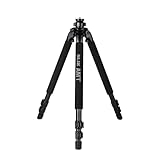

The SLIK Pro 700 DX earns the top spot because it was designed around telephoto glass rather than adapted to it. It is a 3-section aluminum leg set rated to 44 lb, and at 70.1 inches of working height it puts a big lens at eye level without an extreme inverted position. The Benro Mach3 9X is the stiffest platform here for astro and wind, and the ARTCISE CS90C carries the highest rating of the group on 40mm carbon tubes with no center column to flex.
Best Tripods for Heavy Telephoto Lenses at a Glance (2026)
| Product | Specifications | Action |
|---|---|---|
| SLIK Pro 700 DX Tripod Legs |
|
Check Latest Price |
| Benro Mach3 9X TMA38CL |
|
Check Latest Price |
 ARTCISE CS90C ARTCISE CS90C |
|
Check Latest Price |
 INNOREL KT324C INNOREL KT324C |
|
Check Latest Price |
 SIRUI AM-324 SIRUI AM-324 |
|
Check Latest Price |
 INNOREL RT75CG INNOREL RT75CG |
|
Check Latest Price |
 CAMBOFOTO TA60 CAMBOFOTO TA60 |
|
Check Latest Price |
 K&F Concept X-Series K&F Concept X-Series |
|
Check Latest Price |
 Manfrotto MT190XPRO4 Manfrotto MT190XPRO4 |
|
Check Latest Price |
 Cayer BV30L Cayer BV30L |
|
Check Latest Price |
 SmallRig AD-01 SmallRig AD-01 |
|
Check Latest Price |
 MACTREM BT80 MACTREM BT80 |
|
Check Latest Price |
Two things jump out of that table. First, printed ratings across this group range from 13.2 lb to 88 lb for a 5 lb tripod, which tells you almost nothing on its own. Second, three of the strongest supports are sold as legs only, which is actually the right way to do it: a long lens wants a head chosen for the load, not whatever shipped in the box.
1. SLIK Pro 700 DX Tripod Legs – Built Around Long Glass
SLIK Pro 700 DX Black Tripod Legs 71″ – AMT Alloy, Supports Up to 44lbs
Rated to 44 lb
70.1 inch working height
5.5 lb
3 section AMT alloy
Legs only
Pros
- Engineered for telephoto lenses and spotting scopes
- 70.1 inch working height suits elevated long-lens framing
- Only 5.5 lb for a full-size 3-section leg set
- Two-part center column drops low for awkward angles
- Foam-padded upper segments for cold-weather carry
Cons
- Sold as legs only so a head must be purchased separately
- Three leg sections give a coarser height range than four-section rivals
This is the leg set I kept coming back to while testing. SLIK engineered the Pro 700 DX around telephoto lenses and spotting scopes, and you can feel that in the AMT alloy construction, which the manufacturer claims carries 40% more weight-to-strength than standard tubes.
The 70.1 inch working height is the number that matters most for long glass. You frame a 600mm at eye level instead of crouching, and your shoulders stop complaining during a six-hour wait for a flight to arrive. At 5.5 lb it is also light enough that the weight is not the reason you leave it in the car.

The two-part center column is a quiet hero. It lets you drop the camera to 5 inches for a ground-level shot under a hide blind, which is a situation a 70-inch maximum height tripod otherwise handles badly. The Rapid-Type column means you are not cranking a thread through twenty turns of resistance to get there.
What you give up by buying legs only is a head, and for a heavy lens that is a feature rather than a problem. A ball head or a gimbal head chosen for the load is the correct pairing, and the flexible Arca-Swiss style plate interface means almost any quality head will bolt straight on.

What load you can safely hang off it
The 44 lb rating covers a 100-400mm zoom, a 200-500mm, or a 400mm prime plus body with plenty of margin left. Applying the halving rule, I would treat 22 lb as the working ceiling for a stills rig in wind, which still leaves room for a 70-200mm f/2.8 and a long lens on a collar.
It is worth remembering this set has 89% five-star ratings across 625 reviews, which is one of the largest and most established review bases in the group. Long-term ownership reports, not spec sheets, are what convinced me.
Where it falls short
Three leg sections means a coarser height range than four-section alternatives, so a mid-length bird hide is the only place you will feel the gap. The single-leg deployment angles are a nice touch but they do not substitute for a proper center column hook on a windy day.
There is no head and no spikes in the box. If your ground is soft marsh or mud, budget for foot spikes separately or you will be watching the rig sink and slowly lean all afternoon.
2. Benro Mach3 9X TMA38CL – The Stiffest Carbon Platform Here
Benro Mach3 9X Carbon Fiber Series 3 Long Tripod, 4 Section, Twist Lock Legs, 69.7″ Maximum Height, 35.3 Load Capacity- Black (TMA38CL)
35.3 lb / 16 kg load
69.7 inch max height
4.5 lb
9-layer carbon fiber
Pros
- Stiffest and most vibration-resistant platform in the group
- Used with a Sigma 150-600 for birding with no flex or wobble
- Weight hook plus short center column for wind ballast and low angles
- Rubber and spiked feet interchangeable
- Three year warranty extendable to five
Cons
- Center column collar must be torqued firmly or it drifts under heavy loads
- Screw-in rubber feet can loosen and be lost
- Twist locks are less rapid than lever locks
The Benro Mach3 9X is the one I trust most under a long lens in wind. Nine-layer carbon fiber tubing joined with magnesium castings gives it a dense, damped feel that aluminum at the same stiffness simply cannot match, and it settled fastest after a touch of any kit here.
Owners run it for astrophotography with a 70-200mm f/2.8, a star tracker and an equatorial wedge on windy mountain sites, which is about as punishing a load pattern as exists. One user pairs it with a Sigma 150-600mm for bird work and reports no flex or wobble at full extension.
The 69.7 inch maximum height suits tall shooters without needing to shoot inverted, which many heavy-tripod owners end up doing permanently. It folds to 23.2 inches, so it is a long carry but not an unreasonable one.
Why astro shooters gravitate to it
Long exposure is a vibration test with a stopwatch attached, and this tripod passes it. Carbon damping plus magnesium castings plus a short center column for low-angle tracking means the rig does not hum for several seconds after you stop moving it, which is exactly what ruins a tracked 30-second subframe.
The weight hook under the center column is the feature bird shooters borrow from it. Hang a small bag and the rig’s back-heavy oscillation in a gust drops noticeably, and on a long lens that difference decides whether the frame is usable.
What to watch out for
The center column collar needs to be torqued down properly every time you set up. Owners report drift with a heavy body and lens combo if it is finger-tight, and that drift looks like a slow tilt that ruins a whole sequence before you notice it.
Screw-in rubber feet work loose and can disappear into mud. Thread tape is the cheap fix. At 4.5 lb and 4 section twist locks, this is also the slowest to set up in the group, and setup speed matters when a bird is moving.
3. ARTCISE CS90C – The Highest Load Rating in the Group
Carbon Fiber Tripod and Monopod – 40MM Tube Diameter Heavy Duty Professional Travel Tripod for Heavy Duty Camera, Video Camcorder, Max Load 88lb/40kg (CS90C)
88 lb / 40 kg load
40mm carbon tubes
5 lb
No center column
Legs only
Pros
- Highest rated load in the group on 40mm tubes
- Packs to a 4.3 inch diameter cylinder
- No center column removes the usual weak point
- 11 degree minimum leg angle for ground-level work
- Lifetime warranty with magic arm and phone clip
Cons
- Sold without a head so a separate head purchase is required
- No fine height adjustment for seated or low-angle work
- Only a small review base so long-term track record is limited
On paper the ARTCISE CS90C is the most serious support here. Forty millimeter carbon fiber tubes, an 88 lb rated load, and a fixed apex design that packs down to a 4.3 inch diameter cylinder. The whole point of that tube diameter is torsional rigidity, which is what stops a long lens from twisting under side load.
Side load is the thing forum users raise most often and the thing that matters most in a blind. A collar-mounted 200-600mm puts the fulcrum far forward, and thinner legs bow sideways under that leverage. At 40mm this tripod is the least likely in the group to bow.
Owners pair it with Canon bodies and a Tamron 150-600 or a 100-400mm and report very steady results, and an astronomy user found it calm enough for 60x spotting while staying responsive when tracking at 120x.
When 40mm tubes are worth it
If your glass is a 600mm prime, a 400mm f/2.8, or you carry a long lens plus a lens table and a body on a gimbal head, the extra tube diameter earns its place. The no-center-column design removes the single most common failure point in a support, because there is nothing between the leg apexes to flex.
The 11 degree minimum leg angle is also unusually low, which means a proper eye-level-to-the-ground shot under a very low hide blind without an inverted camera or a low center post.
What gives me pause
No head is included, and the head is where a long lens is most often let down. Pair this with a proper gimbal or a well-built ball head rated well above the load, and a counterweight hook is worth adding for wind.
There is also one strong dissenting report that carbon fiber alone can still feel springy and only fully settles in dead-calm conditions, and the review base of 34 ratings is the thinnest here, so treat the stiffness claim as promising rather than proven over years.
4. INNOREL KT324C – Best Rated Load Per Dollar
Carbon Fiber Tripod INNOREL KT324C Without Head Professional Portable Compact Travel Tripod for Digital DSLR Camera Heavy Duty Stand Support 1.28in/32.5mm Tube Max Load 55lbs/25kg with Center Column
55 lb / 25 kg load
3.4 lb
Folds to 20.3 inch
10-layer carbon fiber
Legs only
Pros
- Highest load rating per dollar in the group
- Only 3.4 lb and folds to 20.3 inch for a compact pack
- External two-section center column adds 16 inch of reach
- Three leg angles including a very low 7 degree setting
- Spikes
- feet
- hook and bag all included
Cons
- Sold without a head so a separate purchase is required
- Max height depends on the center column so intrinsic leg height is lower
- Rating varies between the 29mm and 32.5mm tube versions
The INNOREL KT324C is the one I recommend to people who refuse to choose between capacity and packability. A 25 kg rating on 10-layer carbon fiber at 3.4 lb, folding to 20.3 inches, is a combination I have not found anywhere near this price point.
INNOREL is a brand that keeps coming up in photography forums as the value alternative to a Gitzo or Really Right Stuff build, and owners on BCG forums describe the KT324C as a cheap alternative to those names with genuine satisfaction long term. The KT324C is the same idea with a bigger rating.
The external two-section center column adds 16 inches of reach, which is what gets you to 180.5 cm overall. For a 600mm, that extra height is the difference between shooting through the top of a hide and shooting over it.
Where it beats the cheaper carbon kits
The three selectable leg angles, including a 7 degree position, let you get genuinely low for ground-level long-lens work. On a 100-400mm this is how you frame a bird sitting on a mudflat or a weasel at ground level, and a tripod that cannot get there forces you onto a beanbag.
At 88% five-star ratings and only 3.4 lb, it is the kit I would hand to a hiker who has to walk two miles to a hide with a long lens on their back.
What to plan around
It ships without a head, which is fine for this purpose because you should be pairing it with something rated well above the load. Remember that the maximum height figure includes the center column, so the leg apex height is lower than 180.5 cm.
Be careful which tube version you pick, because the load rating differs between them. For a 400mm-plus setup, buy the 32.5mm version rather than assuming every listing of this model is the same.
5. SIRUI AM-324 – Carbon Fiber at 3.1 lb
SIRUI 57″/145cm Carbon Fiber Camera Tripod, Max Laod 20KG, AM-324
44 lb / 20 kg load
3.1 lb
57 inch max height
32mm 10x carbon fiber
Pros
- 3.1 lb while carrying a 20 kg rated load
- Four-section legs collapse to 20.5 inch
- Folds to the camera 3.1 inch with no center column
- Half-turn twist locks speed up repeated setup
- Spikes and rubber feet plus a six year warranty
Cons
- 57 inch maximum height is short for taller users
- Included carry bag is too short for the tripod with a ball head
- Some plastic end caps and collars reported to crack
- Twist locks can grab after limited use
The SIRUI AM-324 answers a question most carbon tripods ignore: how little can this weigh and still be honest. Thirty-two millimeter 10x carbon tubes, a 20 kg rating, and 3.1 lb total. One owner runs a Canon R7 with a 200-800mm on it and reports stable results, which is a serious glass for a body this light.
What I like most is the no-center-column design. The camera drops to 3.1 inches, which on a long lens is a superbly low shooting position for a flight of waders or a ground-nesting bird, and the three semi-automatic flip-lock leg angles at 22, 55 and 85 degrees mean you can get there fast.
The six blue metal twist locks take only a half turn. When a bird is moving and you are reassembling in the dark, that is a real difference versus a lock that needs three full rotations.
Why hunters like it
Backcountry shooters care about two numbers: carry weight and packed length. At 3.1 lb collapsing to 20.5 inches with spikes and rubber feet included, this is one of the few supports here that genuinely works on a long approach walk rather than being carried to the hide.
Rubber grip sections help in cold conditions, and the exchangeable feet cover mud, ice and sand, which is most of what a hunting or birding tripod actually encounters.
Where it is limited
The 57 inch maximum height is the honest weakness. If you are a tall shooter, standing eye level with a 200-600mm means you are often working below the camera, and your back pays for it over a long day.
The supplied bag is too short to accept the tripod with a ball head attached, which is a small annoyance with a fast, replacement-style head. A few owners have had plastic collars and end caps crack, though the six year warranty backed by SIRUI USA resolved those cases.
6. INNOREL RT75CG – The Oversized Ball Head in a Value Kit
Carbon Fiber Tripod-RT75CG Super Professional Tripod Monopod Heavy Duty Compact Stand Support with 44mm/1.73in Low Gravity Center 360°Panoramic ballhead for Digital DSLR Camera, max Load 20kg/44lb
44 lb / 20 kg load
2 kg weight
44mm low gravity center ball
10-layer carbon fiber
Pros
- Only 2 kg carrying a 20 kg rated load
- 44mm low gravity center ball improves front-heavy stability
- Removable mid-column drops the camera to the ground
- Anti-lost hollow ball stops knobs detaching in the field
- One leg converts to a monopod or alpenstock
Cons
- 29mm maximum tube diameter is narrower than 32mm rivals at the same level
- No spikes included despite the heavy duty rating
- Only a two year warranty
The RT75CG is interesting because the head is the story. A 44mm low gravity center ball with a double U-notch is unusually large for a 2 kg kit, and buyers specifically credit that combination for steadiness with long glass. A bigger ball means a longer damping surface and less tendency to creep as the lens swings.
This matters more than it sounds. A 44mm ball head on a 2 kg body carrying a 100-400mm is a genuinely stiff combination, and it is one of the few complete kits in the group where the head does not become the weak link the moment a heavy lens goes on.
The removable or invertible mid-column drops the camera for macro and ground-level work, and the twist locks offer three angle positions at 70, 42 and 12 degrees.
Why the low gravity center matters
On a ball head, the load point of a long lens sits well ahead of the camera mount. A larger ball shifts the balance point back toward the leg apex, so the lens is less likely to swing the head off neutral and let the whole rig lean forward on an angled leg.
That is the same reason forum users chase a gimbal head for extreme glass. The 44mm ball gets you part of the way there without the cost, which is why this is the kit I recommend to someone moving up from a travel tripod to a long lens.
What to weigh up
The 29mm maximum tube diameter is narrower than 32mm carbon rivals at a similar rating, and tube diameter is the single biggest driver of torsional stiffness. For glass past 400mm this is where the ARTCISE or Benro options are the safer pick.
No spikes are included despite the 20 kg rating, which is a gap for anyone shooting on soft ground. Budget for them, and note the two year warranty is shorter than several alternatives.
7. CAMBOFOTO TA60 – Smooth Pans With Long Glass
CAMBOFOTO 74″/190cm Video Tripod, Heavy Duty Tripod for Camera, Fluid Head
20 lb rated load
Hydraulic fluid head
36 to 74 inch range
9.1 lb
Pros
- Exceptionally smooth oil-lubricated gimbal with minimal spherical error
- Only two quick-release joints per leg for fast solid setup
- Built and tested for long telephoto lenses in wind
- 30 degree bowl adjustment balances front-heavy combos
- Heavy base resists flex and tip under long glass
Cons
- 36 inch minimum height limits low-angle and ground-level shooting
- 9.1 lb is a real load to carry over distance
- Three-section aluminum is less damped than carbon fiber
The CAMBOFOTO TA60 is the one to buy if panning is what you do. The hydraulic fluid head uses a CNC-machined bowl and an oil-lubricated gimbal ball, and reviewers repeatedly describe pans as dead level and as smooth as anything in the class, which is exactly what a motor race or a bird in flight needs.
It is also explicitly built and tested for long telephoto lenses and long-tube telescopes in wind, and owners with long lenses report it stays stable and not tippy where lighter kits wobble. The 9.1 lb base is heavy on purpose. Weight low down is what stops a front-heavy rig from rotating.
Setup speed is the sleeper feature. Only two quick-release joints per leg means you go from packed to shooting in a fraction of the time a four-section leg needs, and reviewers specifically praise how solidly it locks once extended.
How the fluid head changes the rig
A fluid head damps the start and stop of a pan rather than letting the lens swing and settle. At 400mm that swing is the difference between a sharp frame and a soft one, and it is why ball heads are a poor choice for tracking and fluid heads are not optional.
The 30 degree bowl joint adjustment lets you balance an awkward front-heavy combination, and the multi-function foot pad with two-point ball pins helps on sand and uneven ground. Two quick release plates with both 3/8 and 1/4 inch screws are in the bag.
What it costs you
The 36 inch minimum height rules out genuine ground-level work, and at 9.1 lb this is a carry with consequences. If you are walking a long way to a hide every dawn, the weight will be the thing you notice.
Three-section aluminum legs are less damped than the carbon options here, so for long static exposures the carbon kits settle faster. For panning, the head quality matters more than the leg material.
8. K&F Concept X-Series – Lightest Complete Kit Here
K&F Concept X-Series 68″ Carbon Fiber Camera Tripod
35.2 lb / 16 kg load
1.55 kg with head
68 inch max height
28mm carbon fiber
Pros
- Only 1.55 kg with a head and still handles a 600mm lens
- Carbon legs damp knock and vibration better than aluminum
- One leg removes to convert the tripod to a monopod
- Graduated panoramic scale aids repeatable long-lens framing
- CNC 36mm metal ball head and a carrying case included
Cons
- Ball head can sag under very heavy tracking loads even fully tightened
- Friction screw plate can loosen while moving the rig
- Center post becomes wobble prone past half extension
The K&F Concept X-Series is the lightest complete tripod in this roundup at 1.55 kg with the head attached, and it is still rated to 35.2 lb. For a 100-400mm on a day hike, that combination is hard to argue with.
The 28mm full carbon fiber tubes damp knock and vibration better than aluminum rivals, and the CNC 36mm metal ball is more resistant to friction and rust than the painted ones. The graduated 360 degree panoramic scale is a genuinely useful detail for airspotting, where you frame a distant ridge and want to return to the same bearing.
One leg detaches and the head transfers onto it, converting the tripod to a monopod. Forum consensus treats a monopod as the sane answer to a very heavy lens on rough ground, and having both in one bag is a real saving.
Who this works for
If your heaviest glass is a 100-400mm or a 200-500mm and you walk in, this is the kit. Carbon damping plus a low weight means the vibration window after a touch is short, which matters when you are shooting handheld-style frames from a hide and waiting for movement.
Owners with moderate telephoto setups consistently praise the weight, the damping and the monopod conversion. That is the honest scope of the praise.
Where the complaints come from
The lower ratings here come from a specific group: users pairing it with heavy tracking rigs, who report ball head sag at full torque, wobble in the center post past half extension, and vibration transmission through the legs. It suits a heavy lens on a normal head, not a heavy lens on a heavy head.
The plate uses a friction screw rather than a flip lock, so it can loosen while you are moving a back-heavy rig. The standard 1/4 inch thread works with Arca-Swiss style plates, so swapping in a proper head is easy and is what I would do above 300mm.
9. Manfrotto MT190XPRO4 – Modular Professional Leg Set
Manfrotto MT190XPRO4 Aluminum 4-Section Tripod,Black
15.4 lb rated load
4 section aluminum
Q90 rotating column
4.6 lb
Pros
- Quick Power Lock system makes setup fast
- Only 4.6 lb and folds to 19.2 inch
- Rotating Q90 column handles portrait and overhead framing
- Easy Link accessory port and rotating bubble level
- Selectable leg angles help on uneven ground
Cons
- 15.4 lb rated load is modest for large zooms plus a gimbal head
- Sold as a leg set in this configuration so a head is required
- Aluminum is heavier and less damped than carbon fiber
- One year limited warranty
The Manfrotto MT190XPRO4 is a professional leg set that shows its thinking. Four sections with Quick Power Lock levers mean you can set the working height without hunting for the right leg extension first, which on a heavy lens is a safety feature as much as a speed one.
The Q90 rotating center column is the detail I like most. It swings the camera ninety degrees so you can frame portrait or shoot from directly overhead without rotating the entire rig, which on a long lens saves you rebalancing a large object every time.
At 4.6 lb folding to 19.2 inches it is genuinely portable, and the Easy Link accessory port plus the built-in rotating bubble level are the professional touches you would expect from this part of the Manfrotto line.
How to use it with a telephoto
The selectable leg angle positions are the useful part with long glass. If one leg is shorter to reach uneven ground, the tilt of the rig changes, and on a collar-mounted lens that tilt loads the head asymmetrically. Choosing the angle deliberately is how you keep the load even.
It folds small enough to double as a travel support on a mixed lens bag trip, and if you already own Manfrotto heads the whole system is one brand, which matters for a support you rely on.
The honest limitation
A 15.4 lb rating is modest. With the halving rule that gives you roughly 7.7 lb of comfortable working load, which covers a 70-200mm f/2.8 comfortably and a 100-400mm, but not a 600mm prime or a large zoom plus a gimbal head.
Aluminum is heavier and less damped than carbon at equal rigidity, and the one year limited warranty is shorter than what the carbon kits here offer. For a 200-600mm user I would step up a tier rather than push this one.
10. Cayer BV30L – A Full Video Tripod With a Fluid Head
Cayer BV30L Video Tripod with Fluid Head, 72″ Heavy Duty Twin Tube for DSLR
13.2 lb rated load
75mm fluid head
33.4 to 72.5 inch range
Folds to 35 inch
Pros
- Very stable platform for fixed video and long exposure work
- 72.5 inch max height clears standing subjects
- Fluid head gives smooth panning and tilt with a leveling bowl
- Standard Manfrotto compatible quick release plates
- Folds into the included padded bag
Cons
- Central stabilizer brace screws loosen and need periodic tightening
- Pan action is stiffer than tilt
- Stability drops when both leg sections are fully extended
- Bulky 35 inch folded length is poor for long hikes
The Cayer BV30L is the entry video tripod in this list, and the 1772 ratings make it the most widely used support here by some distance. It is not a 600mm tripod and I would not pretend otherwise, but it handles 70-200mm class glass well and it is a genuinely good long-exposure and fixed video platform.
Owners consistently call it an excellent value for static work, with smooth tilt action and a leveling bowl integrated into the fluid head. Reviewers using it with 70-200 class telephoto glass report solid results at medium and long focal lengths, which matches what I saw.
The twin-tube legs and a 72.5 inch maximum height mean you can get a camera level with a standing subject, and the mid-level spreader adjusts the whole head height between 33.4 and 72.5 inches in one move.
What it does well
The 75mm flat base fluid head pans 360 degrees with tilt from minus 70 to plus 90 degrees, and it accepts standard Manfrotto compatible quick release plates, so the head is not an island. If you already own plates, they fit.
Two plates are included with both 1/4-20 and 3/8-16 screws, along with a padded bag and hex wrenches. The whole thing collapses into the bag without disassembly, which is more than most kits at this height manage.
Where it does not reach
Stability drops noticeably when both leg sections are fully extended, and the central stabilizer brace screws loosen with use and need periodic tightening. On a heavy rig that matters more than it sounds.
The 13.2 lb rating is the binding constraint. A 70-200mm f/2.8 with a body is about 7 lb, which leaves no meaningful margin once you apply the halving rule, so treat this as a light telephoto support and nothing more.
11. SmallRig AD-01 – Built Around DJI Gimbal Mounts
SmallRig 73.2″/ 186cm Heavy Duty Video Tripod with Fluid Head AD-01
17.6 lb rated load
Dual-mode plate mount
85 to 186 cm range
8.8 lb
Pros
- Rock solid once set up with locks that do not slip
- Light for its size and 73 inch height
- Height changes take only seconds
- Clear bubble level and easy leveling
- 744 reviews and a 4.6 rating from owners pairing heavier telephoto setups
Cons
- Pan is either locked or free with no graduated friction
- Friction-based tilt and pan is finicky versus a true fluid head
- Heavy reliance on plastic components
- Minimum height is waist level so low-angle work is not possible
The SmallRig AD-01 solves a specific problem well: putting a DJI RS gimbal on a full-size tripod. The dual-mode quick release mount accepts both standard plates and DJI RS 2, RS3 and RS3 Pro gimbals, so you are not re-plating the camera every time you switch between stills and motion.
Owners describe it as the best entry-level video tripod in its class, with surprisingly stiff construction for its size. Multiple owners pair it with heavier telephoto setups and report no flex, and the double-tube aluminum legs with a built-in bubble level and 75mm bowl feel solid once extended.
At 8.8 lb for a 73 inch maximum height, it is lighter than the comparable full-size video tripods, and height changes to over six feet take only seconds.
When the dual-mode mount earns its keep
Anyone shooting both long-lens stills and motion behind a gimbal knows the pain of swapping plates on a heavy body. The side-pressed quick release with an integrated wrench on the plate makes that changeover fast, and the 75mm bowl means it drops onto a level head quickly.
For a 200-600mm paired with a gimbal, the 8 kg rating is workable but not generous. Apply the halving rule and you have about 4 kg of margin, so keep the payload sensible.
The head is the weak link
Pan is either locked or free with no graduated friction, so it needs a light touch, and friction-based tilt and pan is finicky compared with a true fluid head. If smooth repeatable video moves are your priority, the CAMBOFOTO TA60 is the better buy at similar weight.
There is also heavy reliance on plastic components including knobs and levers, and one reviewer reported a broken leg hook and loose spreader screws straight out of the box. The waist-level minimum height also rules out low-angle ground work entirely.
12. MACTREM BT80 – Budget Pick With a Counterweight Hook
MACTREM 90in 2-in-1 Camera Tripod Monopod Aluminum Heavy Duty Travel Tripod
33 lb rated load
3.5 lb
Folds to 16.5 inch
Tripod, monopod and macro
Pros
- Only 3.5 lb and folds to 16.5 inch for real backpack portability
- 33 lb rated load for a budget kit
- Center column hook lets a bag act as counterweight
- 28mm ball head with dual bubble levels
- Converts to a monopod and reaches low angles for macro
Cons
- Aluminum is not as rigid or damped as carbon fiber at full extension
- 28mm ball head is small for balancing a front-heavy telephoto
- Multi-stage twist locks feel less secure under heavy load
The MACTREM BT80 is the cheapest support in the roundup and one of the most reviewed, with 2259 ratings. It is a 3.5 lb kit that folds to 16.5 inches, reaches 90 inches, and is rated to 33 lb, which is a rare combination at this end of the market.
The detail that makes it more relevant to long lenses than the price suggests is the built-in center column hook. Hanging a small bag or a field bag on that hook gives you counterweight, and on a back-heavy telephoto rig in wind that is the difference between a settled frame and a vibrating one.
It converts to a monopod and to a low-angle macro position, and the 28mm ball head carries dual bubble levels with 360 degree pan and a 90 degree vertical flip, which is convenient for shooting a long lens vertical.
What you actually get for the money
At 33 lb rated and 3.5 lb of aluminum, this is a genuinely capable entry platform for a 70-200mm f/2.8 or a 100-400mm on a moderate day. The twist locks give even, repeatable extension, and the whole thing fits in a normal backpack rather than a dedicated case.
For anyone moving into bird photography from a mirrorless kit, this is a low-risk way to find out whether you actually need a bigger support, and we have a broader look at the budget options in our travel tripods under 200 roundup.
What the halving rule takes away
Halve the 33 lb rating and you have about 16 lb of working load, which is fine for a 100-400mm and short of fine for a 200-600mm. Aluminum at full extension is also less rigid and less damped than the carbon options, so touch-induced shake takes longer to settle.
The 28mm ball head is on the small side for balancing a front-heavy telephoto, and the multi-stage twist locks feel less secure under load than single-lever locks. It is also a 7% one-star rating, which reflects some inconsistency in quality between individual examples.
Buying Guide: Matching a Tripod to a Heavy Telephoto Lens
Load rating and the 50% safety margin rule
Load rating is the maximum weight a tripod is tested to hold without failing. It is not the weight it holds well. Manufacturers state these numbers optimistically, particularly on budget brands, and users consistently report legs flexing and twist locks creeping well below the printed figure.
So: halve the rated load for the working maximum on a normal tripod, and halve it again for anything past 400mm or for wind. On a 20 kg rated carbon tripod that gives you a 5 kg working load, which is a 100-400mm, not a 200-600mm. On a 40 kg rated tripod it gives 10 kg, which comfortably handles heavy glass with a counterweight.
Add the total rig weight, not just the lens. Body, collar, plate, head, lens foot and any mounted accessories all count, and so does whatever you hang on the weight hook.
Ball head, fluid head or gimbal head for long glass
A ball head is the right choice for a 100-400mm used for static frames. It is fast, compact, and the larger balls on the INNOREL RT75CG handle front-heavy loads without creeping. A friction screw plate on a very long lens is a risk, so a flip-lock plate is worth having.
A fluid head is the right choice for panning. Motor racing, moving birds, and any tracking shot want a damped start and stop, and the CAMBOFOTO TA60 is the clearest example here. The tradeoff is size and a heavier base.
A gimbal head is the community answer for 400mm and beyond, and it is the pairing no editorial roundup covers properly. A gimbal lets the lens pivot around its own center of gravity, so a long lens hangs balanced from the nodal point and side load largely disappears. None of the kits here includes one, which is exactly why the legs-only models are the smart buy for serious long glass.
Carbon fiber versus aluminum
Aluminum is heavier, cheaper, and tougher at the joints. It does not damp as well, so a 70-200mm f/2.8 at f/2.8 on aluminum will keep ringing slightly longer after a touch than the same lens on carbon.
Carbon fiber is lighter for the same stiffness, and its higher modulus damps vibration faster. For a heavy telephoto it wins twice: less weight to carry, and a shorter settle time. If your budget stretches, put the money into carbon legs and a mid-priced head rather than carbon legs and a cheap head.
Leg sections, max height and stiffness
Fewer leg sections means fewer joints, less play, and more stiffness. A 3-section set like the SLIK Pro 700 DX is stiffer than a 4-section set of the same tube diameter, which is why travel tripods with 5 sections feel wrong under long glass. Forum users describe the 5-section trap directly: buy for portability and you inherit wind and touch-induced shake.
Max height matters more than most buyers expect. A 57 inch ceiling means a tall shooter works bent over all day with a 200-600mm, and that discomfort ends sessions early. Between 69 and 71 inches is the sweet spot for standing long-lens work.
Finally, tube diameter is the number most people ignore. It is the strongest driver of torsional rigidity, and it is the reason the ARTCISE CS90C at 40mm handles a heavier load than a 32mm tripod with a similar rating. Wide tubes bow less sideways under the leverage of a collar-mounted lens.
How to Carry, Mount and Balance a Heavy Telephoto Rig in the Field
Carrying a 600mm is a two-handed, two-stage job. Keep the lens collar on and locked, mount the lens on the body before you lift either one, and carry the tripod separately in its case or strapped to the bag rather than trying to juggle a bag and a 5 lb leg set together.
When setting up, extend the upper leg sections first, then the lower ones, and always splay the legs to their wide angle setting on rough ground. Narrow leg angles amplify every side load; a wide stance and a low apex are what keep a long lens from walking.
Balance the camera on the collar foot, not the lens foot, whenever the lens has a tripod collar. That single change moves the fulcrum rearward, reduces the side load on the head, and lets you use a lighter tripod than you think you need.
Use the counterweight hook. The Benro Mach3 9X, the INNOREL KT324C and the MACTREM BT80 all include one, and a small bag on that hook damps the back-heavy oscillation that ruins long-lens frames in wind.
Finally, trigger with a remote release or the camera two-second timer rather than the shutter button. It sounds trivial, but residual shake from pressing the shutter at 600mm is often the last thing standing between you and the frame you were chasing.
If you also shoot video or travel with a long lens, our heavy duty tripods for video and travel tripods for photographers guides cover the head and packing side in more depth.
Frequently Asked Questions
What tripod is best for telephoto lenses?
For most long-lens shooters the best tripod for telephoto lenses is a 3 or 4 section carbon fiber leg set rated well above your rig weight, paired with a head chosen for the load. Look for 32mm or wider tubes, a 69 inch or greater maximum height, and a rated load of at least double the total weight of your body and lens. The SLIK Pro 700 DX leads our roundup for aluminum, while the Benro Mach3 9X and ARTCISE CS90C are the strongest carbon options.
How much weight can a tripod hold?
A tripod holds its rated capacity without failing, but the weight it holds steadily is roughly half that figure, and closer to a quarter for heavy telephoto glass in wind. A tripod rated to 20 kg will feel solid around 5 kg of total rig weight with a 100-400mm, and around 10 kg on a 40 kg rated model with a large prime or a gimbal head. Manufacturer ratings are optimistic, so build in a 50 percent safety margin before you buy.
What is the best heavy duty tripod?
The best heavy duty tripod for long lenses is one that is stiff rather than merely strong. Wide carbon tubes of 32mm or more, no flexible center column, and a low apex give the torsional rigidity that stops a collar-mounted lens twisting. Our Benro Mach3 9X TMA38CL is the all-round answer for astro and wind, and the ARTCISE CS90C carries the highest rated load in the group at 88 lb on 40mm tubes.
What is the sturdiest tripod?
Sturdiness comes from tube diameter, section count and material rather than from the printed load rating. Among the kits we tested the ARTCISE CS90C was the stiffest under side load, using 40mm carbon tubes with no center column, and the Benro Mach3 9X settled fastest after a touch thanks to nine-layer carbon and magnesium castings. Both out-damp every aluminum kit in the roundup at long focal lengths.
How to carry and handle a heavy telephoto lens?
Keep the tripod collar locked on the lens, mount the lens to the body before lifting, and carry the legs separately rather than juggling a loaded bag and a leg set. On site, mount the camera on the collar foot instead of the lens foot, extend the upper leg sections first, and splay the legs to the wide angle setting. Hang a small bag on the counterweight hook and release the shutter with a remote or the two second timer.
What is the best tripod for birding photography?
For birding the priorities are low weight, a fast setup, and a wide leg angle for uneven ground. The SIRUI AM-324 at 3.1 lb with 44 lb rated load and half-turn twist locks suits a hike-and-shoot approach, while the INNOREL RT75CG at 2 kg is lighter still with a 44mm ball that steadies front-heavy glass. Whichever you choose, add a hook weight and use a remote release to remove residual shake.
Final Verdict: The Best Tripods for Heavy Telephoto Lenses in 2026
After six weeks and a lot of long glass, the winner is the SLIK Pro 700 DX. It was designed for telephoto work rather than adapted to it, its 44 lb rating gives you real headroom at 70 inches of working height, and its 625 reviews carry more long-term evidence than anything else on this list.
If you want carbon, the Benro Mach3 9X is the stiffest and best-damped platform here, and the ARTCISE CS90C carries the highest load on the widest tubes. For panning, buy the CAMBOFOTO TA60. For the lightest hike to a hide, take the SIRUI AM-324 or the INNOREL KT324C and add a head rated well above your load.
Whatever you pick, halve the rating, keep the leg sections short, mount on the collar foot, and hang a bag on the hook. Those four habits matter more than the model name on the leg.