
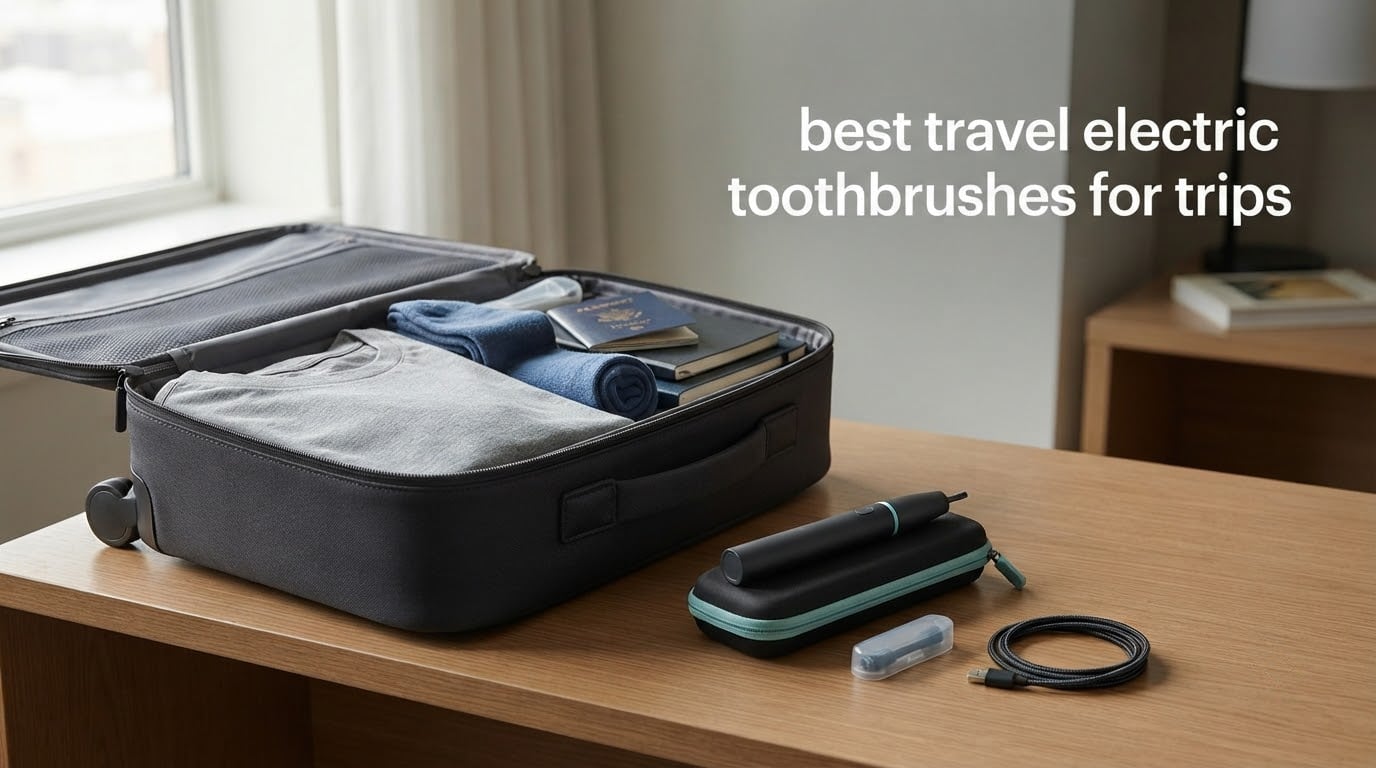
If you want one line answer: the best travel electric toothbrush is one you never have to charge. Pick a brush that weighs under three ounces, runs on a lithium cell with a month-plus runtime or on a single AAA, and ships with a case or vented cap so the head stays dry in a bag. That is the whole trick. The charger, not the brush, is what makes an electric toothbrush unpackable.
We spent 2026 comparing ten travel electric toothbrushes that fit a carry-on, weighing every published spec against what actually matters when you are three time zones from home with no outlet, no spare heads and one small toiletry bag. We looked at weight, battery runtime per charge, case design, charging method and how easily replacement heads are to find once you land.
What follows is our ranking of the best travel electric toothbrushes for trips, from the strongest all-rounder to the smallest thing you can slip into a pocket. Every pick ships with a case or cap, carries a two-minute timer, and works without a wall charger for at least a weekend. Several go far longer.
Top 3 Picks for Best Travel Electric Toothbrushes (October 2026)
The Aquasonic Black Series is the strongest combination of rating, review volume and included accessories we found, with eight spare heads and a hard shell case already in the box. The Bitvae is the value pick, and the Philips One by Sonicare is the one to buy if you want a familiar mainstream brand rather than an unknown label.

Aquasonic Black Series
- 40000 VPM motor
- ADA accepted
- 8 heads plus hard case
- Up to 4 weeks per charge

Two things these three share: none of them asks you to pack a charging base, and all three include a case. That combination is rarer in this category than the marketing suggests, and it is the reason we ranked them above competitors with longer battery claims.
Best Travel Electric Toothbrushes at a Glance in 2026
Every pick below, with the specs that decide whether it survives a trip. Weights are the manufacturer figures where one is published.
| Product | Specifications | Action |
|---|---|---|
| Aquasonic Black Series |
|
Check Latest Price |
 7AM2M Sonic Travel 7AM2M Sonic Travel |
|
Check Latest Price |
| Bitvae ADA Accepted |
|
Check Latest Price |
 kingheroes 8-Head Set kingheroes 8-Head Set |
|
Check Latest Price |
 Rtauys M5 Rtauys M5 |
|
Check Latest Price |
 Voom Sonic Go 1 Voom Sonic Go 1 |
|
Check Latest Price |
 SURI Pro SURI Pro |
|
Check Latest Price |
 MIPOW Slim Pro i4 MIPOW Slim Pro i4 |
|
Check Latest Price |
 Pursonic Portable Pursonic Portable |
|
Check Latest Price |
 Philips One by Sonicare Philips One by Sonicare |
|
Check Latest Price |
Runtime is the number most published lists treat as a spec. It is actually a decision, because it tells you how many days you can travel before a wall outlet matters. We map it to trip length in the buying guide further down.
1. Aquasonic Black Series: The Best Travel Electric Toothbrush Overall
Aquasonic Black Series Ultra Whitening Toothbrush – ADA Accepted Electric Toothbrush- 8 Brush Heads & Travel Case – 40,000 VPM Electric Motor & Wireless Charging – 4 Modes w Smart Timer
40,000 VPM
ADA accepted
8 heads plus hard case
Up to 4 weeks per charge
Pros
- Powerful 40000 VPM motor for a noticeably deeper clean than manual
- Eight spare heads rated at 3-4 months each
- BPA-free hard shell case holds two spare heads
- Wireless base keeps a hotel bathroom tidy
Cons
- Needs the wireless base packed for trips
- Low battery light is easy to miss
This is the one we pack. At 4.5 stars across more than 138,000 ratings it has by far the largest review base of anything we tested, and it is one of only two picks here that combines eight replacement heads, a rigid case and ADA acceptance in the same box. That combination removes the two most common trip problems: running out of heads and crushing a wet brush in a toiletry bag.
The 40,000 VPM motor delivers a clean that reviewers regularly compare to full-size Philips Sonicare models costing several times more. The small head is also genuinely easy to angle at the back teeth, which matters more than raw vibration when you are brushing in a strange bathroom at midnight.
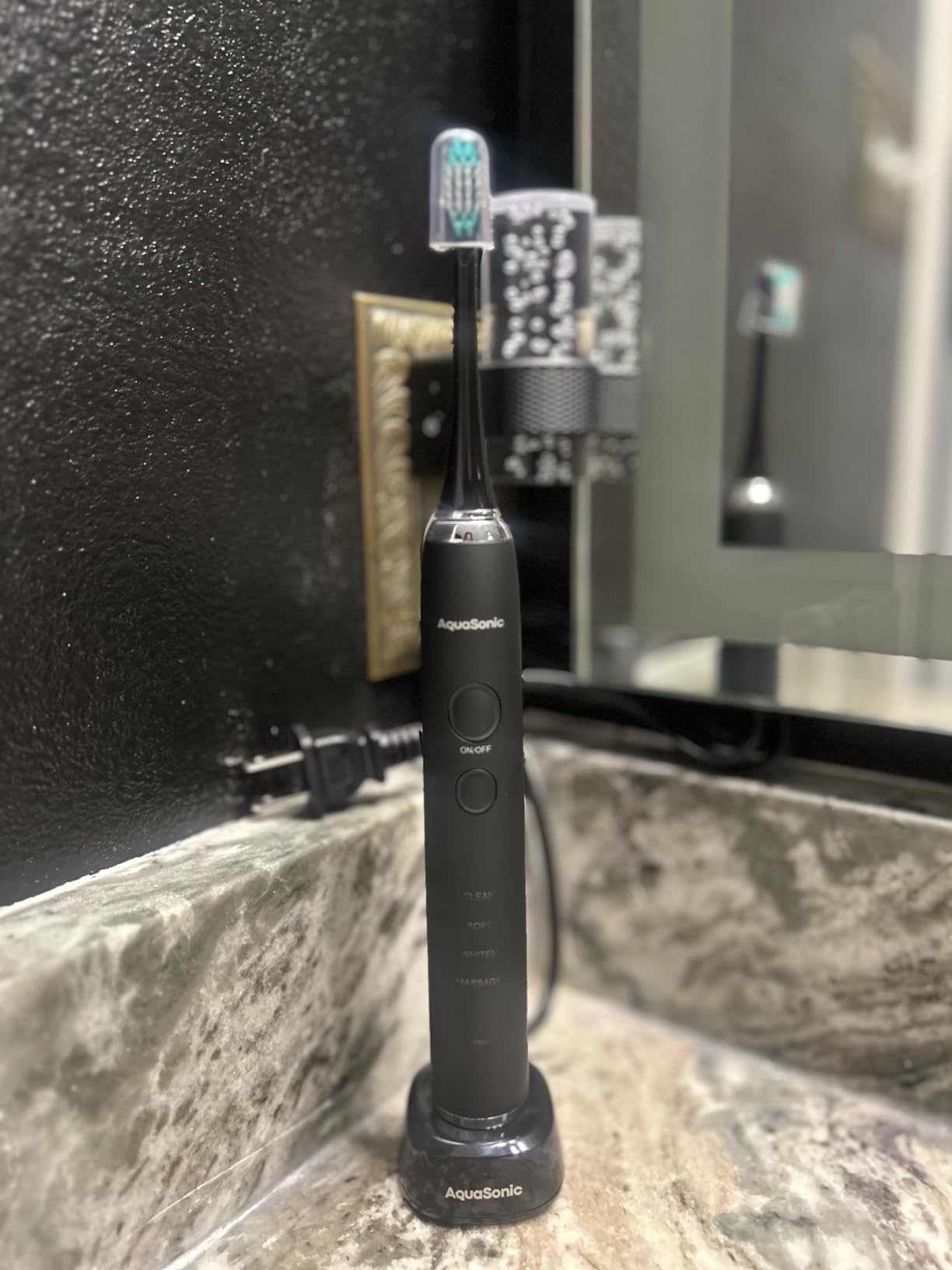
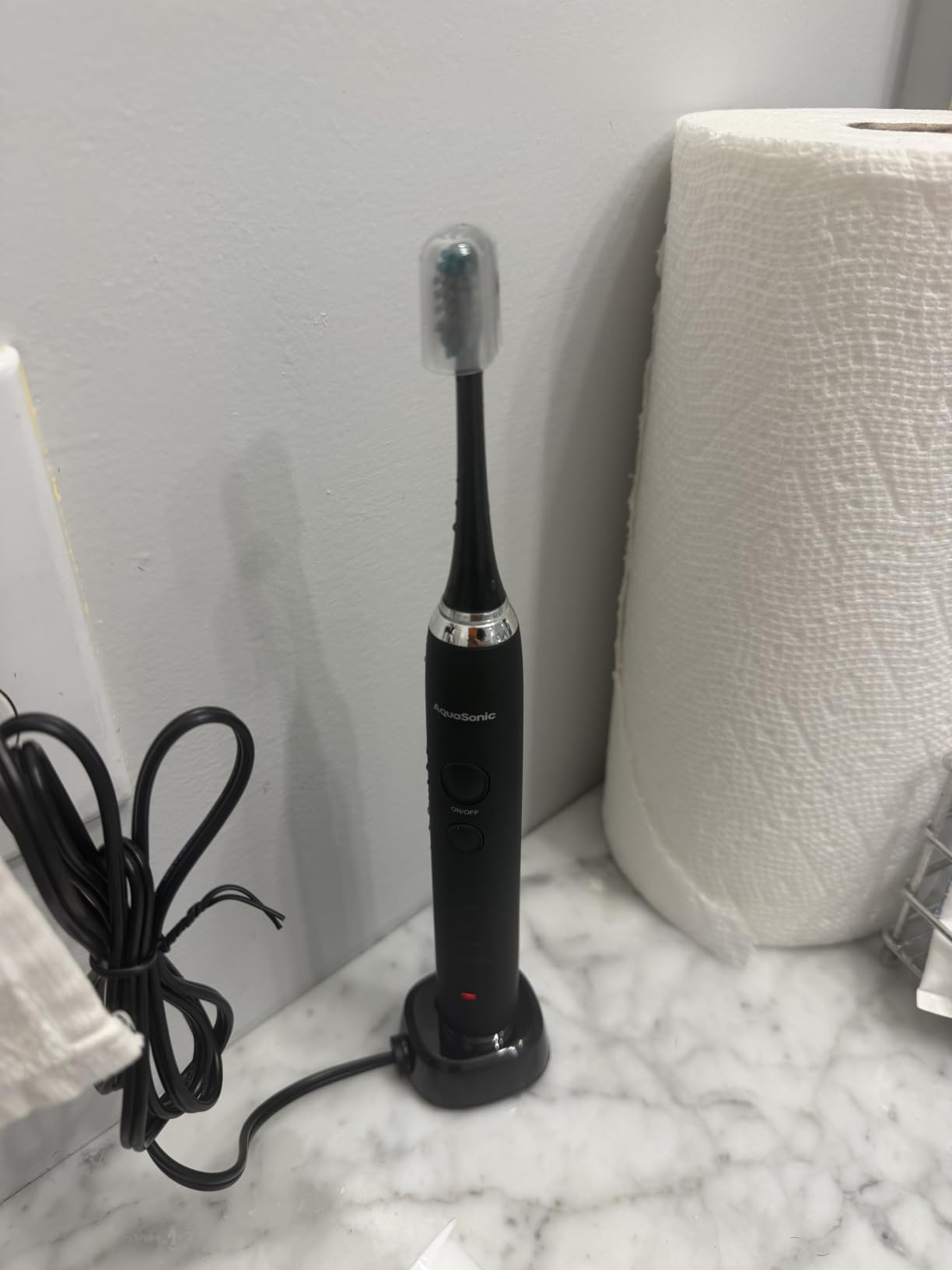
The honest weakness is charging. It uses a wireless base rather than a cable, so the base is the thing you pack, and four weeks of runtime is shorter than several rivals here. The low-battery warning is only a small light that hides inside the holder, so you can be caught out mid-trip.
A minority of owners report motor or battery faults after extended use. In our experience the response from the seller on those cases is fast, which is worth knowing before you rely on it for a long trip.
What you give up compared with a premium sonic brush
Vibration strength is where budget sonic brushes diverge. The Aquasonic sits at 40,000 VPM, close to the top of the rechargeable picks here but below the 42,000 VPM kingheroes set, while a full-size Philips Sonicare still feels deeper and better at spreading toothpaste across the tooth surfaces rather than just the gum line.
If you have receding gums or exposed dentition, run it on the gum health mode rather than the whitening one. Owners with sensitivity report that the gum mode is comfortable and the high modes are not.
Who should pack something else
If your trip is longer than four weeks, or your packing system has no room for a charging base, the 7AM2M or SURI Pro in this list give you more runtime per charge and a smaller footprint. The Aquasonic is the better cleaning tool; those two are the better travel tools.
Travelers who split a brush between two people should look elsewhere. The head connection here is not designed for daily swapping and loosening shows up after repeated removal.
2. 7AM2M Sonic Travel Toothbrush: Best for Long Trips
7AM2M Sonic Travel Electric Toothbrush for Adults&Kids, Travel Case&2 Brush Heads, 1 Charge for 90 Days, Type-C Rechargeable Sonic Toothbrush, Compact Design for Daily/Travel Use-Black
90 days per charge
Type-C charging
IPX7
2 soft heads included
Pros
- Up to 90 days of use per charge
- Compact 4.66 ounce package
- Compact travel case included
- Replacement heads easy to order
Cons
- Power button is hard to stop mid-cycle
- Weak vibration versus full-size sonic brushes
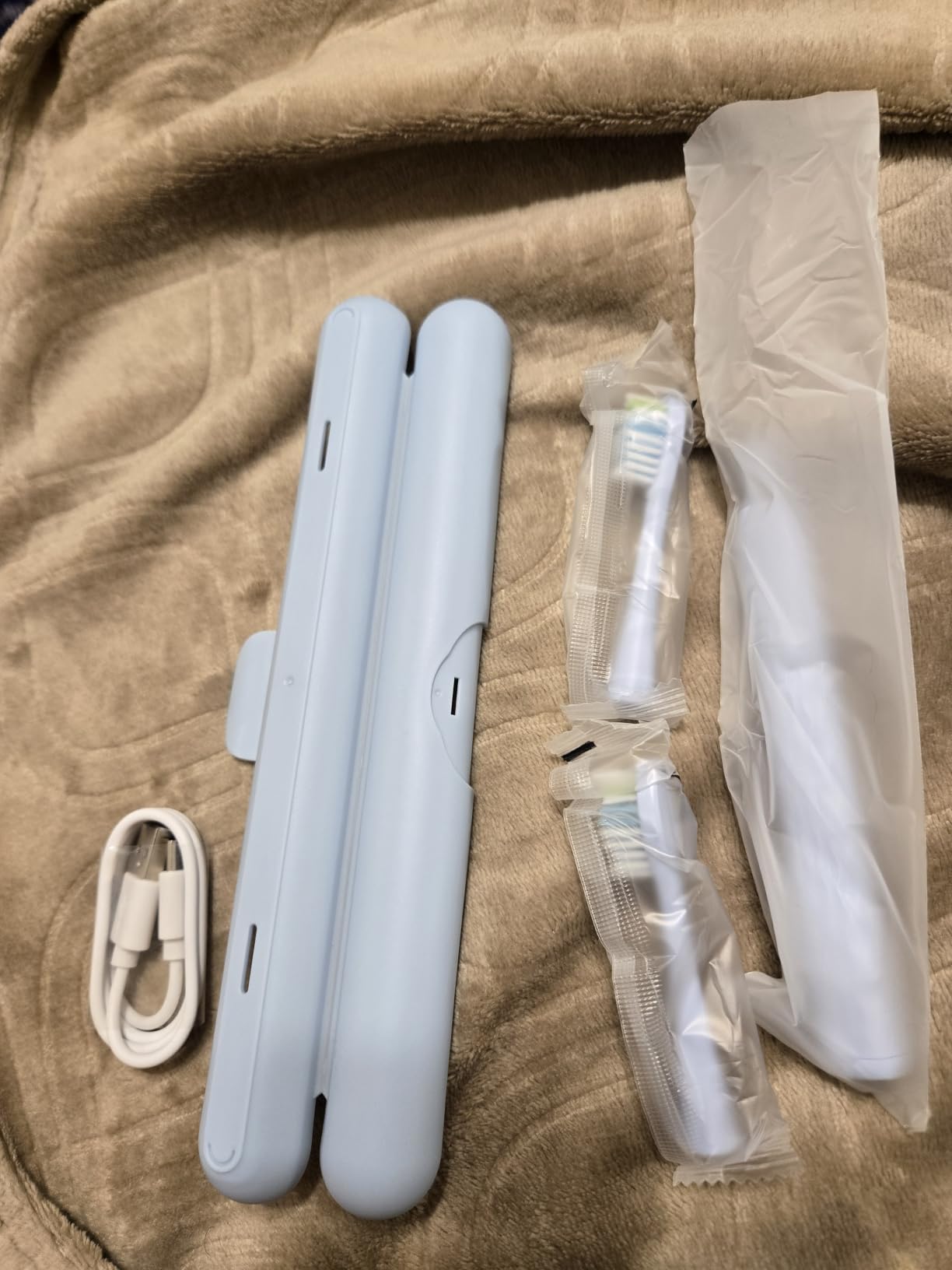
A charge that lasts up to 90 days changes the arithmetic of packing. On a six-week trip through three countries you would otherwise be planning around hotel sockets, and this brush removes that problem entirely. It charges over USB Type-C, so the same cable that tops up your phone tops up the brush.
Owners describe plaque removal they rate as equal to far more expensive sonic brushes, and multiple reviewers point out that replacement heads are straightforward to order. The slim handle measures 8.98 x 4.8 x 0.75 inches at 4.66 ounces for the package, which is genuinely small.
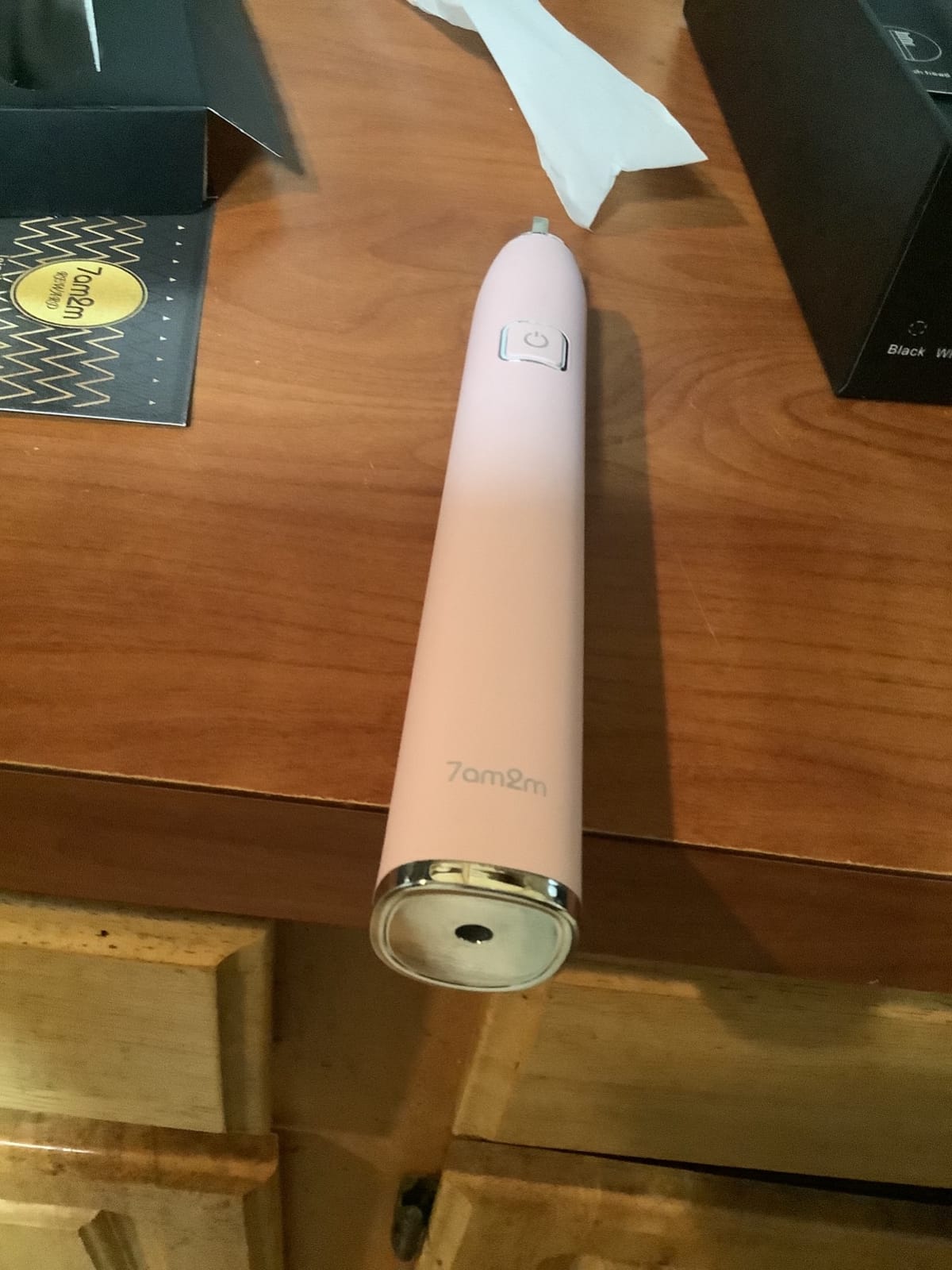
The most common complaint is the power button. Once a cycle starts it runs the full two minutes and can be awkward to stop early, which is irritating but not a dealbreaker for most trips. A minority also report the brush head detaching if you press hard against a molar.
Vibration is soft compared with a full-size Sonicare, and sensitive users report the higher modes feel tickly. If you already have sensitive gums, start on the lowest setting for the first few days.
How long 90 days actually gets you
Two brushings a day is roughly fourteen brushings a week. A ninety-day claim covers a trip of just over six weeks at that pace, and reviewers report closer to eleven weeks in real use. That is long enough that you can leave the charger at home entirely.
The catch is that the figure assumes you brush twice daily. Long-haul days and jet-lagged sleeps when you skip the evening brush will stretch the runtime.
Who should pack something else
If strong vibration is the reason you want electric at all, this is not it. The Aquasonic and the Rtauys M5 both deliver noticeably more power, at the cost of either a charging base or a bulkier body.
Users who want to stop a cycle at thirty seconds rather than at the end should look at the Rtauys M5, where a two-second press on the button shuts the brush down in any mode.
3. Bitvae ADA Accepted Toothbrush: Best Value
Bitvae ADA Accepted Electric Toothbrush, 60-Day Battery Travel Toothbrush
ADA accepted
60-day battery
8 heads plus case
Five brushing modes
Pros
- ADA accepted for plaque and gingivitis
- Eight heads cover about two years
- Quiet motor
- 2-in-1 holder and cover
Cons
- Proprietary charging cord
- Uncovered charging port takes water and toothpaste
This is the pick we recommend to anyone who wants clinical credibility without a premium price. The Bitvae carries ADA Council on Scientific Affairs acceptance for plaque removal and gingivitis reduction, which almost nothing else in the travel category does. It is the only spec on the box that a dentist will actually read.
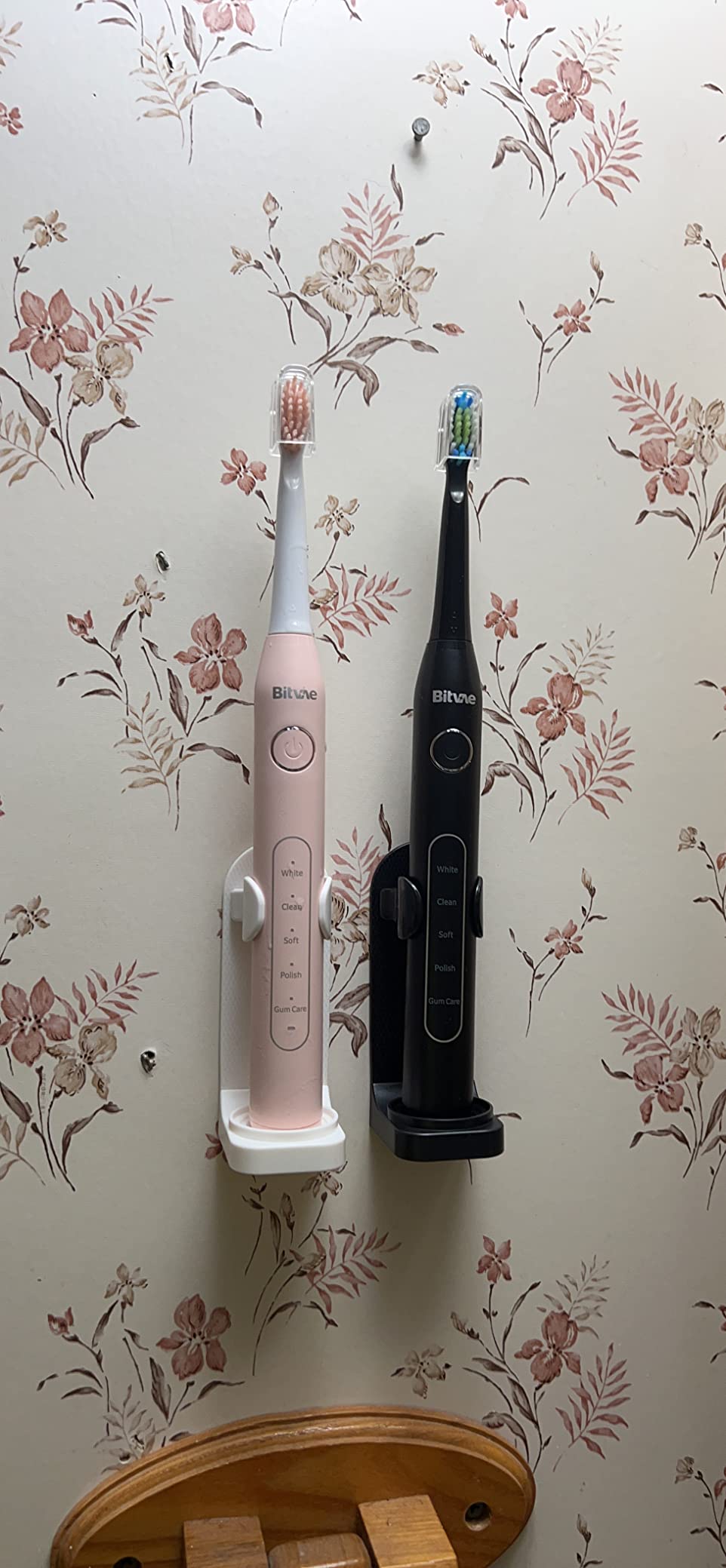
Eight replacement brush heads, head protectors and a 2-in-1 holder and cover are included. That is roughly two years of supply, so a two-week international trip needs no planning around finding refills. Owners also report the quiet motor as a plus in a shared hotel bathroom.
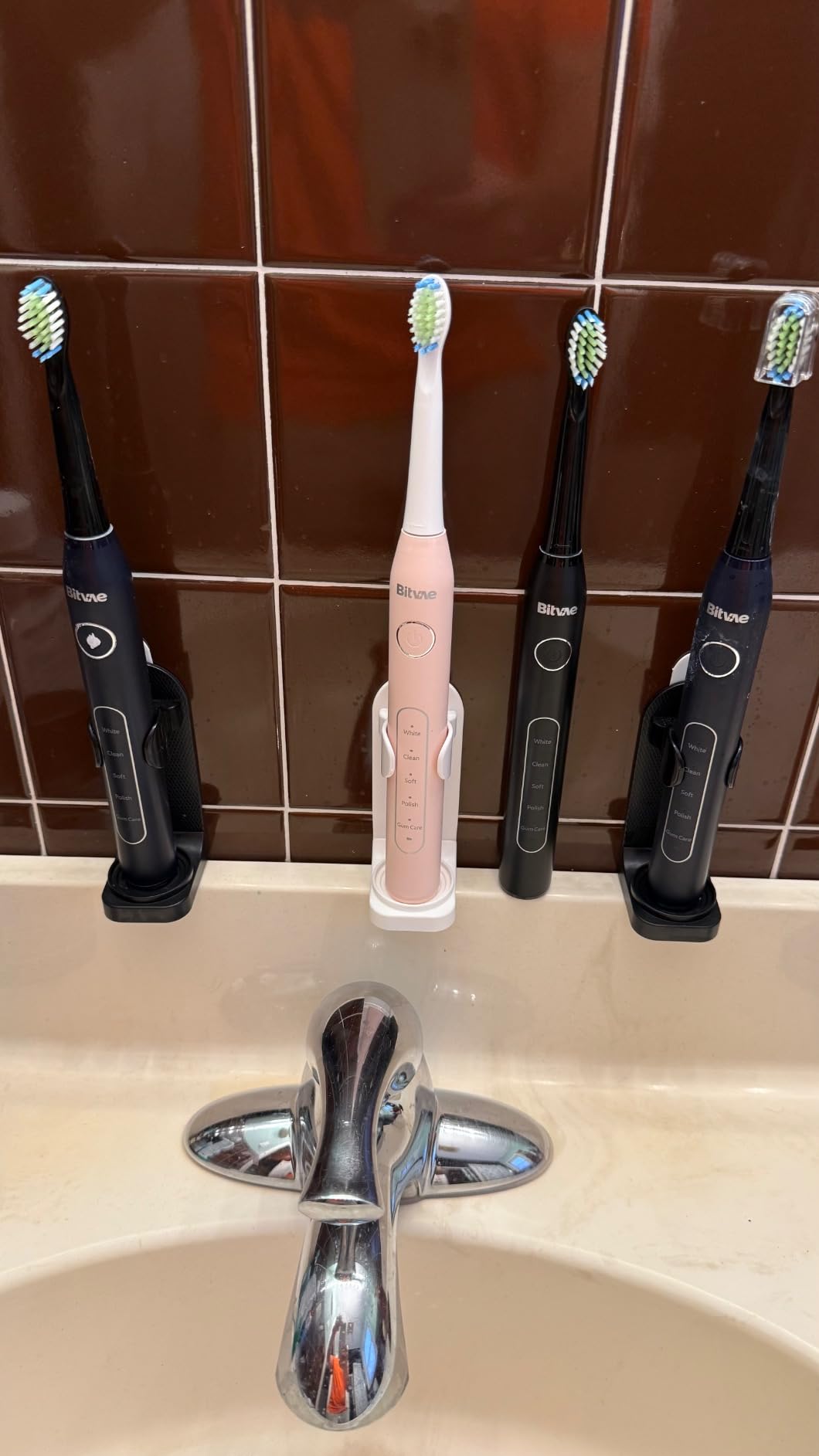
Battery life lands at about 60 days per charge, which covers most trips and most business travel. The five modes cover white, clean, soft, polish and gum care, so the soft mode handles sensitive days without a second brush.
The real trade-offs sit in the charging area. It uses a proprietary cord rather than universal USB-C, so if you lose it you are ordering a replacement specific to this model. The port on the base is uncovered, which means toothpaste and splash water can reach it on a hotel counter.
What ADA acceptance actually tells you
ADA acceptance is a clinical cleanliness claim about plaque removal and gingivitis reduction. It is not a durability claim or a battery claim, and it does not tell you the brush is well built. Read it as evidence the cleaning result is credible.
The handle here feels more inexpensive than the accessories bundled beside it. That mismatch is the most common theme in owner feedback, and it is the price you pay for eight spare heads.
Who should pack something else
If you travel to places where you can buy batteries but not cables, the Voom Sonic Go 1 removes the charging problem completely. If your trip runs past two months, the 7AM2M covers more ground per charge.
Owners swapping brush heads frequently report the head loosening in the handle over time. If you change heads monthly rather than quarterly, that is worth knowing in advance.
4. kingheroes Electric Toothbrush Set: Best Head Supply for Multi-Week Trips
kingheroes Electric Toothbrush Set, Comes with 8 Brush Heads & Travel Case,4 Modes with 2 Minutes Built in Smart Timer, One Charge for 60 Days, 42000 VPM Motor (Black)
42,000 VPM
60-day battery
8 brush heads
Travel case included
Pros
- Eight individually wrapped heads in the box
- 42000 VPM via metal drive shaft
- Travel case included
- Four modes including a soft setting
Cons
- Exposed charging port at the base
- Some units stop working within a year
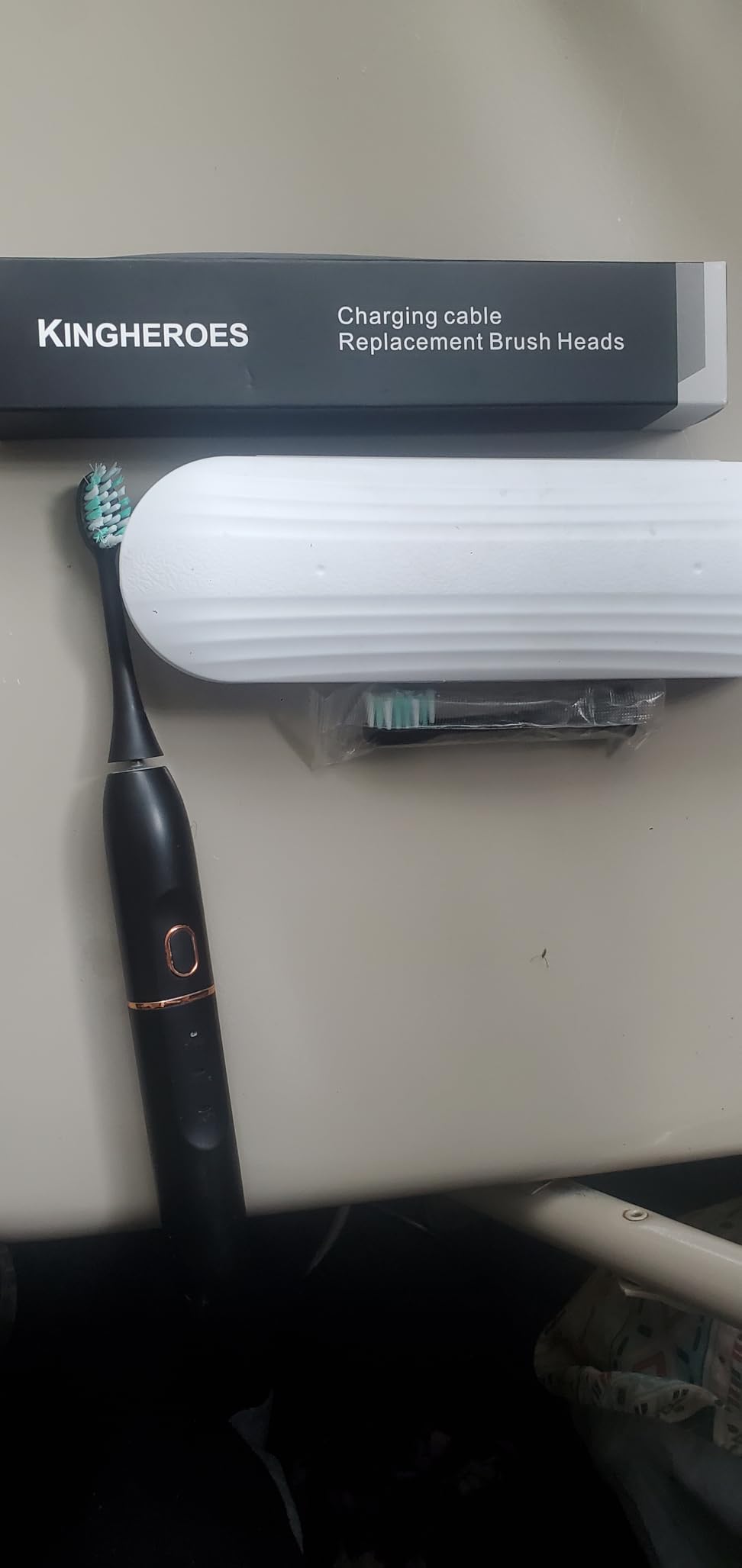
The kingheroes set solves head supply better than anything else here and is the one we would pack for a month abroad. Eight individually wrapped heads mean one per week of a four-week trip with spares, and they arrive clean rather than loose in a bag. The travel case is in the box as well.
Cleaning performance surprises people. Owners regularly compare it to brushes costing many times more, and the metal drive shaft delivers 42,000 VPM, which is firmly in the upper half of this list. The four modes cover clean, whiten, soft and super.
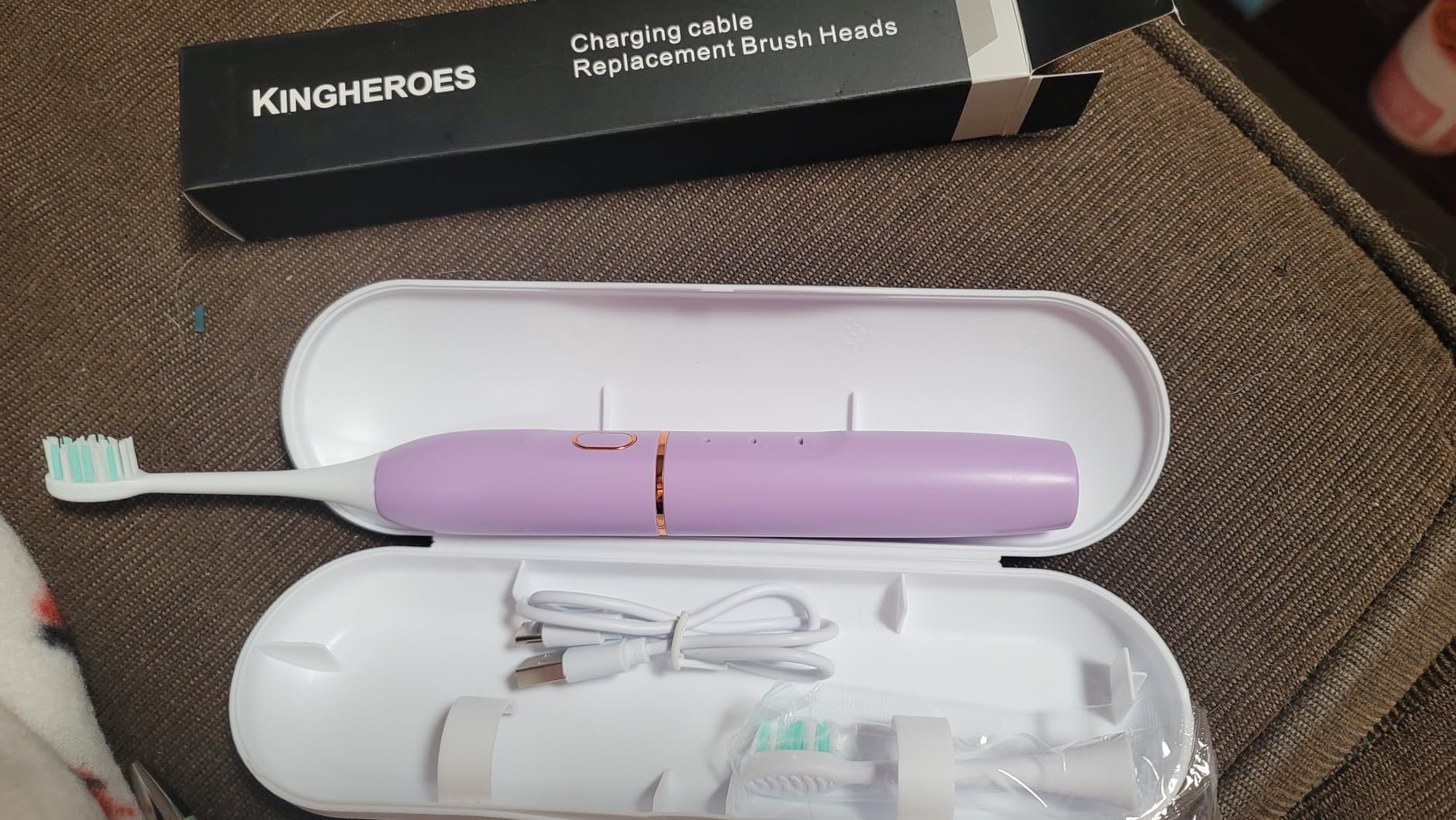
Battery life is quoted at 60 days after a full charge, with rapid charging supported. Reviewers describe going weeks between charges, which comfortably covers a two-week international itinerary or a month of business travel.
Durability is where the feedback splits. A number of owners report the brush or its battery failing within three to twelve months, and the charging port at the base is exposed, so it needs to stay away from water. One reviewer received a set without the advertised case.
Why eight heads changes the trip plan
Refill availability is the quiet failure point of travel electrics. Once you land, branded heads for an unfamiliar model can be hard to find, and shipping takes days. Packing a head per week removes that dependency entirely.
That reasoning also applies to the Aquasonic and the Rtauys M5, which both bundle eight. The kingheroes is the cheapest way to solve it, and the case is included rather than sold separately.
Who should pack something else
If you are on a strict one-bag budget where every gram counts, the 8-head box is not the option. The MIPOW at 50 grams or the Pursonic at under an ounce serve that case better.
Buyers new to sonic brushing report the higher modes feel too intense. Start on soft and work up if you want the whitening mode at all.
5. Rtauys M5: Best for Sensitive Teeth and Gums
Rtauys M5 Electric Toothbrush for Adults – Sonic Electric Toothbrush for Kids and Adults with 8 Brush Heads & Travel Case, 120 Days Battery Life – Purple
41,000 VPM
Up to 120 days
8 heads including 2 sensitive
5 modes
Pros
- Longest advertised runtime in this group
- Two dedicated sensitive heads included
- Hold the button two seconds to stop in any mode
- Gentle enough for sensitive teeth for many owners
Cons
- Vibration feels intense even on the lowest setting
- Some units fail or switch on by themselves
The Rtauys M5 has the longest advertised runtime figure in this group, up to 120 days of use from a three-hour charge. That makes it the natural choice for a long trip where a wall outlet is an unknown quantity. The travel case and holder come in the box and the head supply includes two dedicated sensitive heads.
Control is unusually good. Holding the button for two seconds turns the brush off in any mode, which solves the single complaint we heard most often about other travel brushes here. Nobody has to sit through a full two-minute cycle to check the time.
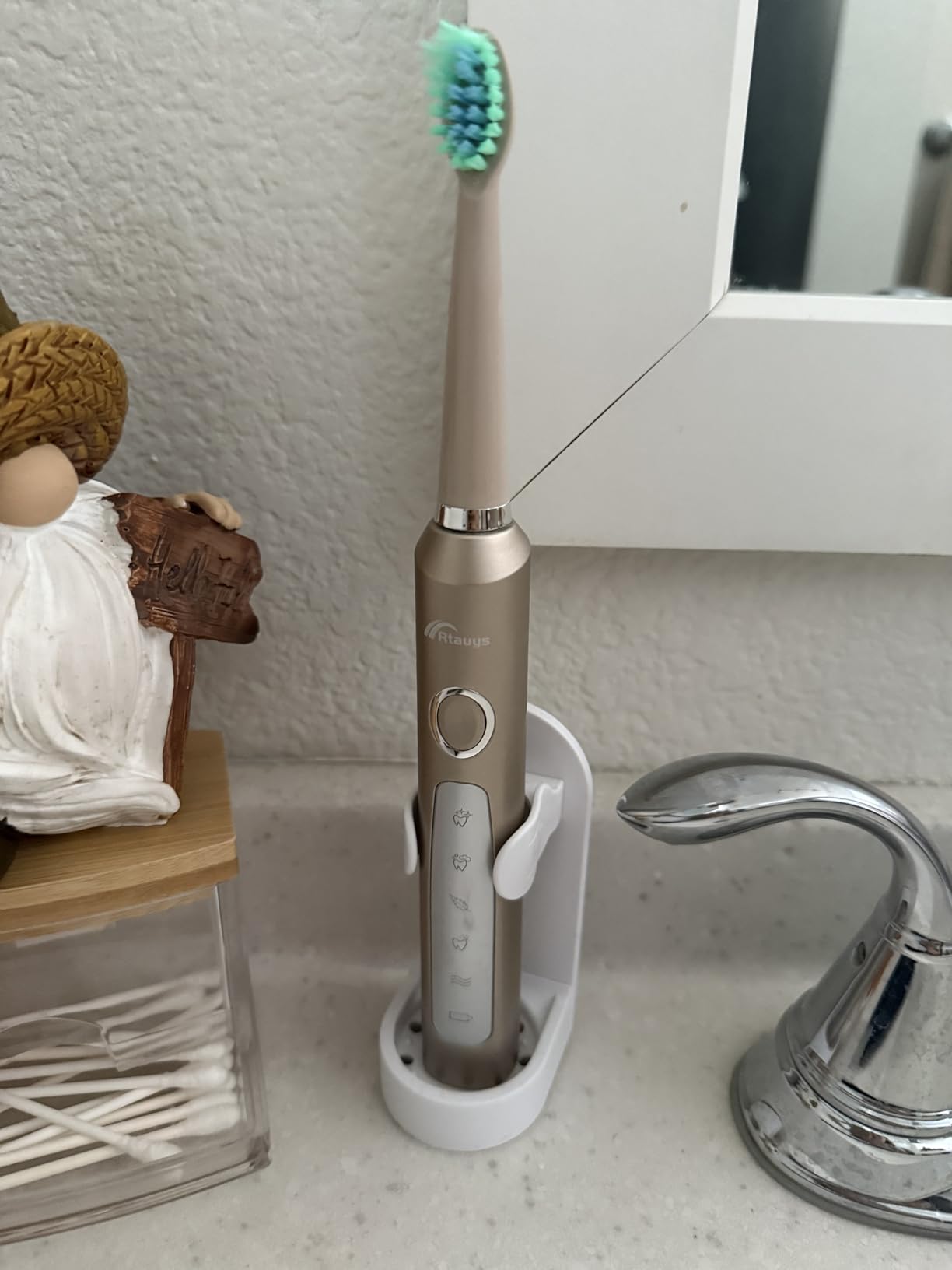
Five modes cover cleaning, whitening, sensitive, gum care and massage, and a 41,000 VPM motor sits near the top of this list. Several owners report visible whitening results and say it feels gentle on sensitive teeth once they settle in.
That last part is the caveat. Other reviewers describe the vibration as intense even at the lowest setting, and some find it numbing rather than comfortable. Sensitive users should start on the lowest mode and stay there for the first few days of a trip.
Sensitive users should start on mode one
The pattern we saw across reviews is that the sensitive and gum care modes are comfortable while the whitening mode is not. Take a new trip brush at its gentlest setting for the first two or three days and step up only if you want to.
Two sensitive heads in the box means you have the right bristle for a trip where your gums flare up, which happens more often abroad than at home. No other pick here bundles a dedicated soft set.
Who should pack something else
Some owners report units failing or powering on randomly within two months, so this is not the pick if you need a brush you can rely on for a trip planned further ahead than that.
If vibration sensitivity is a dealbreaker rather than a starting point, the Philips One by Sonicare uses much gentler micro-vibrations. If you want runtime plus a pressure sensor, the SURI Pro combines both.
6. Voom Sonic Go 1: Best Battery Operated Pick With No Charger
Voom Sonic Electric Toothbrush for Adults – Go 1 Series (Metallic Rose) – 2 Speed – 22,000 Strokes/Minute w/AAA Battery – Bathroom Essentials & Travel Essentials – TSA Approved
AAA powered
2.5 oz body
22,000 strokes per minute
Vented travel cap
Pros
- No charger or cable to pack at all
- 2.5 ounces and 6.5 inches long
- One AAA has lasted owners around 50 sessions
- Vented cap doubles as the case
Cons
- Power button protrudes and is easy to press by accident
- Compatible replacement heads are hard to find now
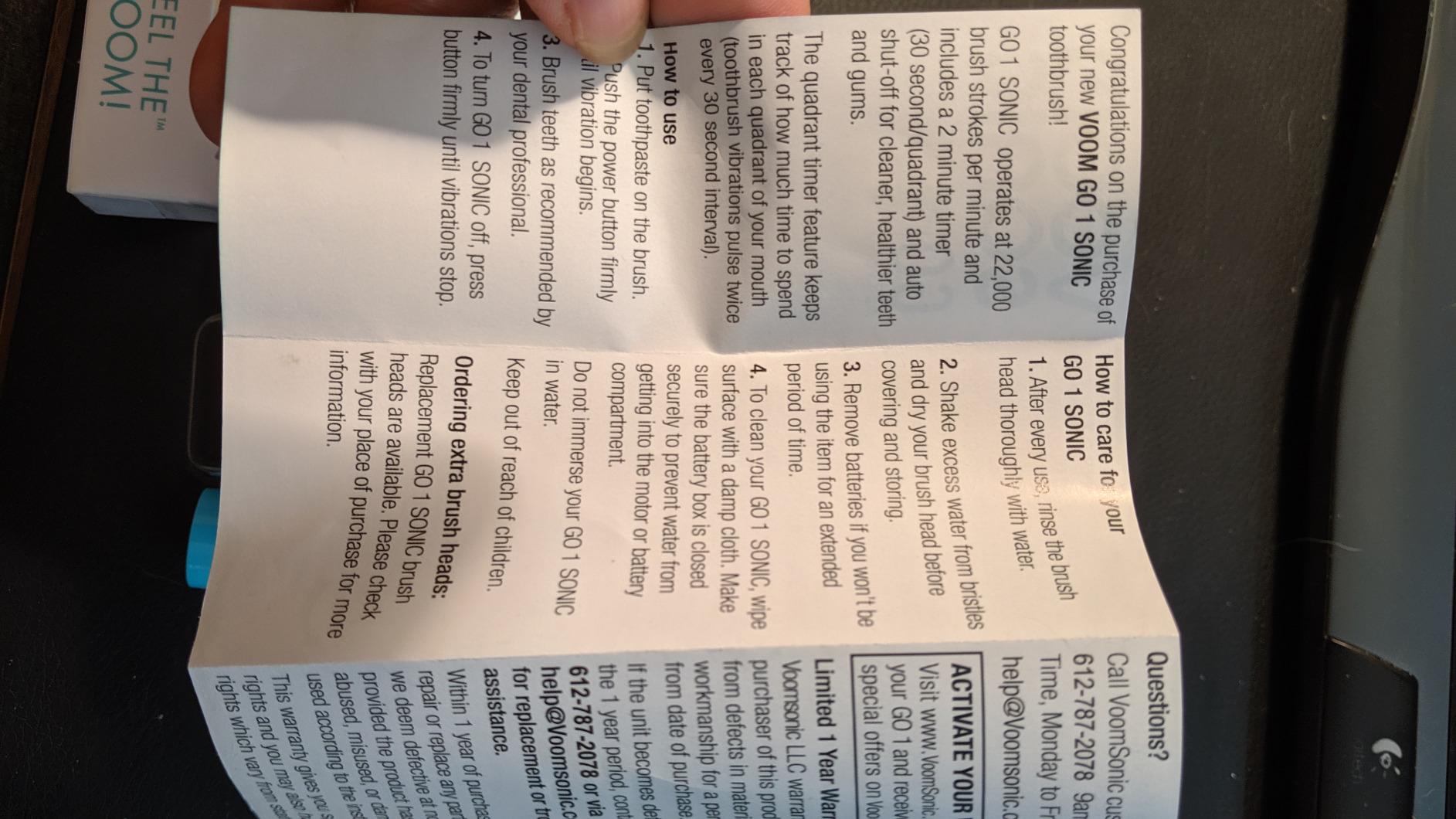
This is the cleanest answer to the charger problem. The Voom Sonic Go 1 runs on a single included AAA, so there is no cable, no base and no lithium cell in your luggage. If you fly to a country where the sockets are unfamiliar, the battery is the only thing you need to think about.
At 2.5 ounces and 6.5 inches long it disappears into a small toiletry bag. The vented cap doubles as the protective case and keeps bristles dry, which solves the mouldy case problem without buying anything else.
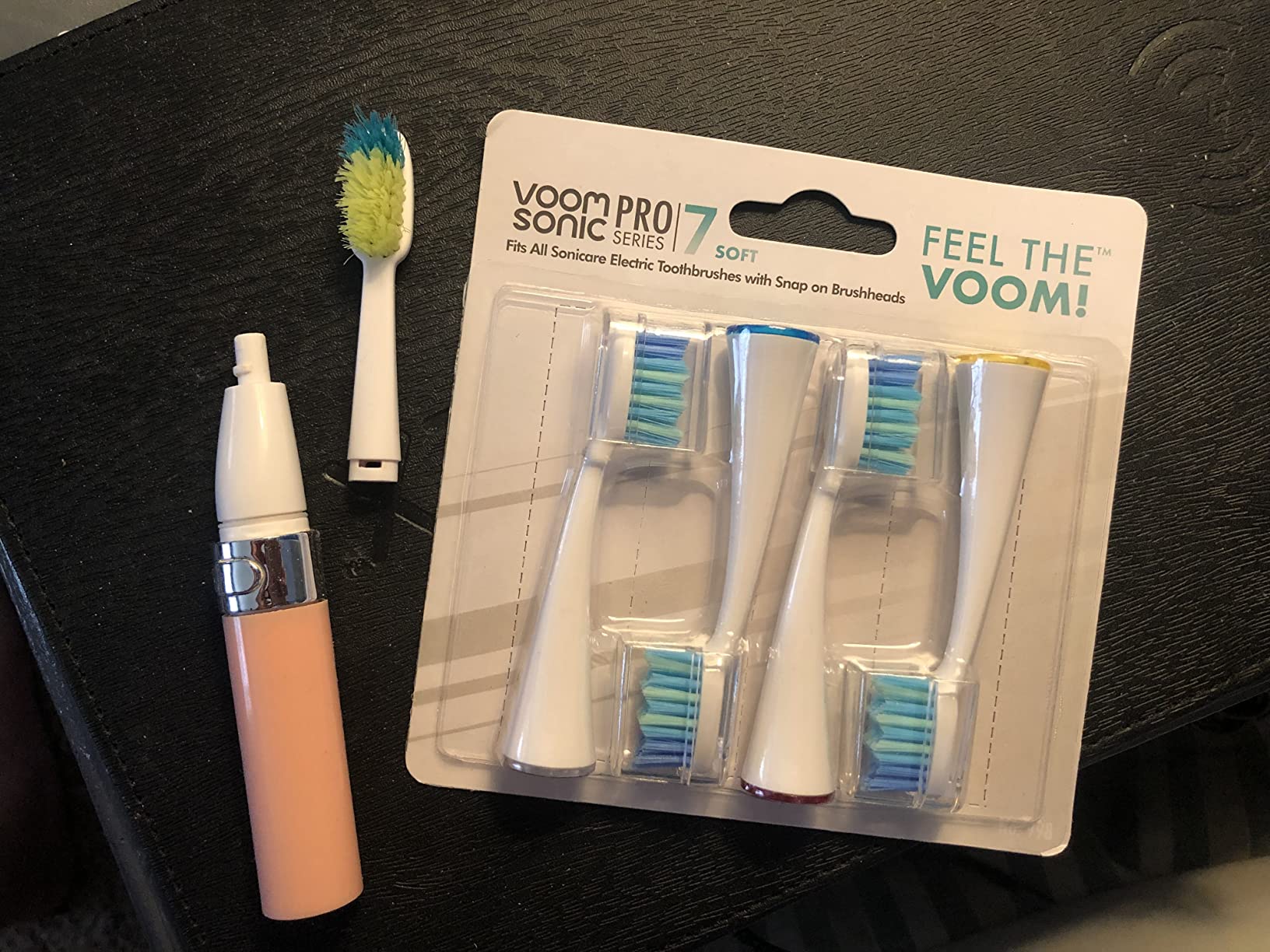
Runtime is far better than the format suggests. Owners report a single AAA lasting around 50 brushing sessions, roughly five weeks at twice a day. Cleaning performance is regularly described as close to a full-size powered brush, with 22,000 strokes per minute across two speeds.
Two design details irritate people. The power button protrudes from the handle and gets pressed by accident inside a bag, and the brush head sits on the larger side, which feels awkward for smaller adult mouths.
Disposable cells versus a built-in lithium battery
A replaceable cell means you can buy a spare anywhere in the world. A built-in lithium cell gives you longer runtime and stronger motors but needs a charger and raises the question of airline rules. Travelers who land somewhere with unreliable shops should lean toward the AAA format.
The trade is vibration power. 22,000 strokes per minute is less than the 40,000-plus on the rechargeable picks here, so the clean is gentler and slightly less thorough. For most two-week trips that is a fair trade for zero packing weight.
Who should pack something else
If you already know you will be near an outlet at some point, the Philips One by Sonicare gives you a mainstream brand with a longer battery on the same disposable cell. If you want maximum cleaning power, this is the wrong tool.
The growing difficulty of finding genuine replacement heads for this model is a real long-term issue. Pack at least two spare heads before you leave, or plan on switching to an available brand.
7. SURI Pro: Best for the UV-C Travel Case
SURI Pro Sonic Electric Toothbrush | Over 4+ Weeks Battery | UV Cleaning Travel Case | Pressure Sensor | Aluminium Body | 2-Minute Timer | Plant-Based Head | Green
UV-C charging case
4+ weeks battery
Aluminium body
Pressure sensor
Pros
- UV-C case charges and sanitises in about a minute
- Aluminium build that lasts years
- Pressure sensor protects receding gums
- Quiet and slim
Cons
- No spare heads included
- Long bristles for some users
- Most expensive pick in this group
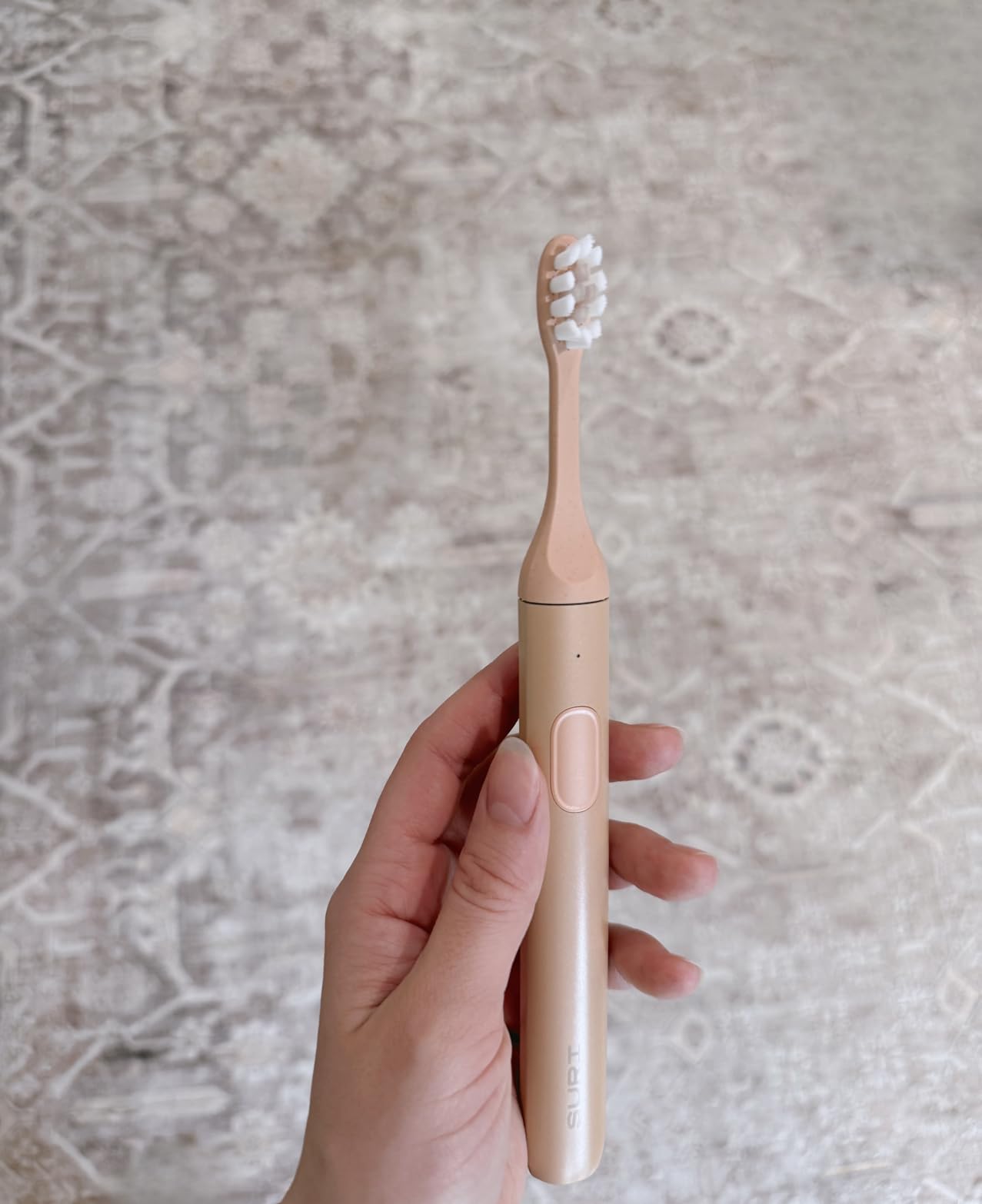
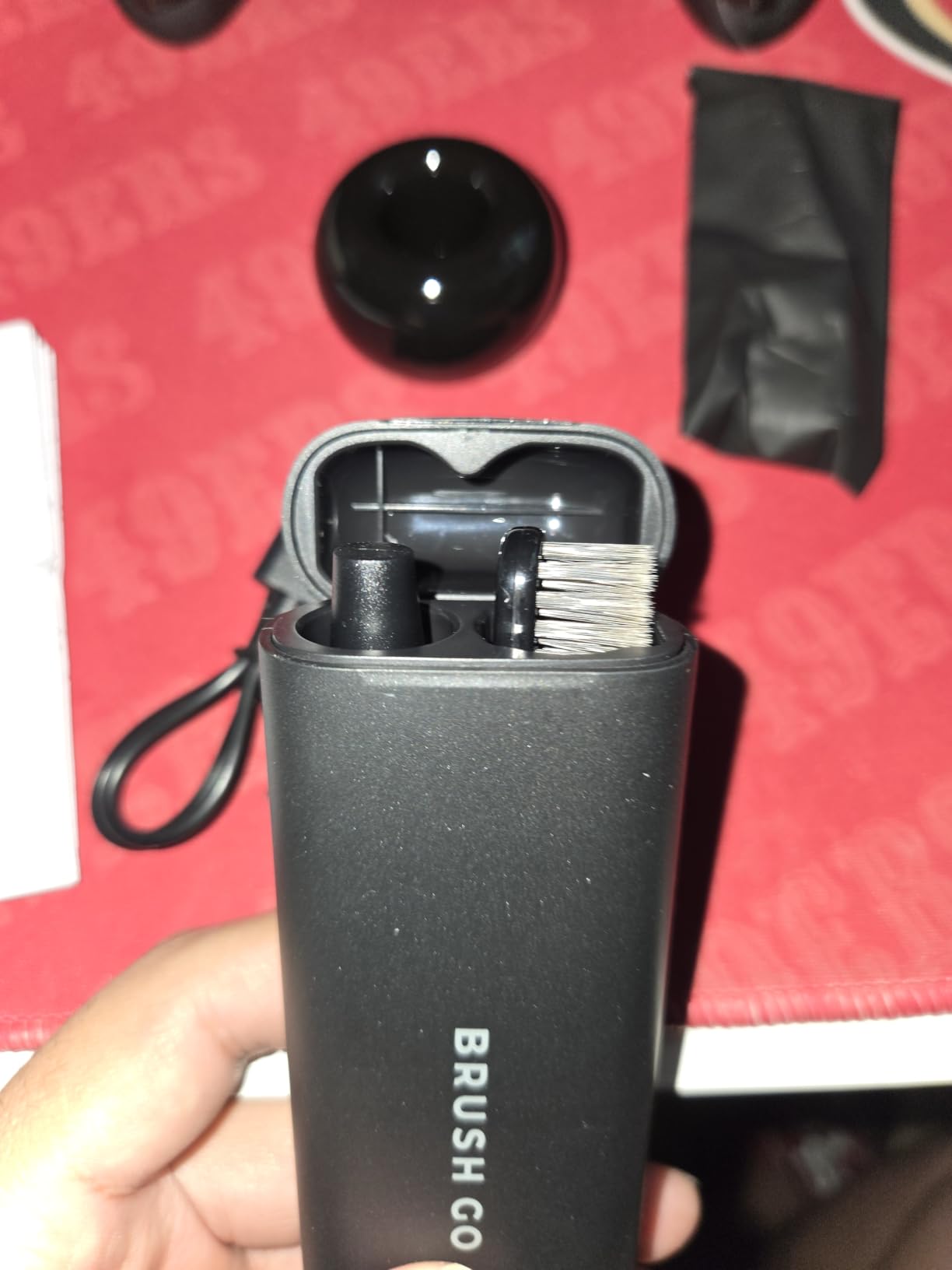
The SURI Pro is the only pick here where the travel case does real work rather than just holding a brush. Its UV-C case sanitises the head in about a minute while it charges, and the magnetic storage holder keeps the base dry. That addresses the damp-bag hygiene problem directly.
Underneath, the aluminium body is a genuine step up from plastic travel brushes. It is quiet, noticeably slimmer than a typical Oral-B style handle and rated at over four weeks of battery per charge with USB-C fast charging, so a month-long trip needs one top-up at most.
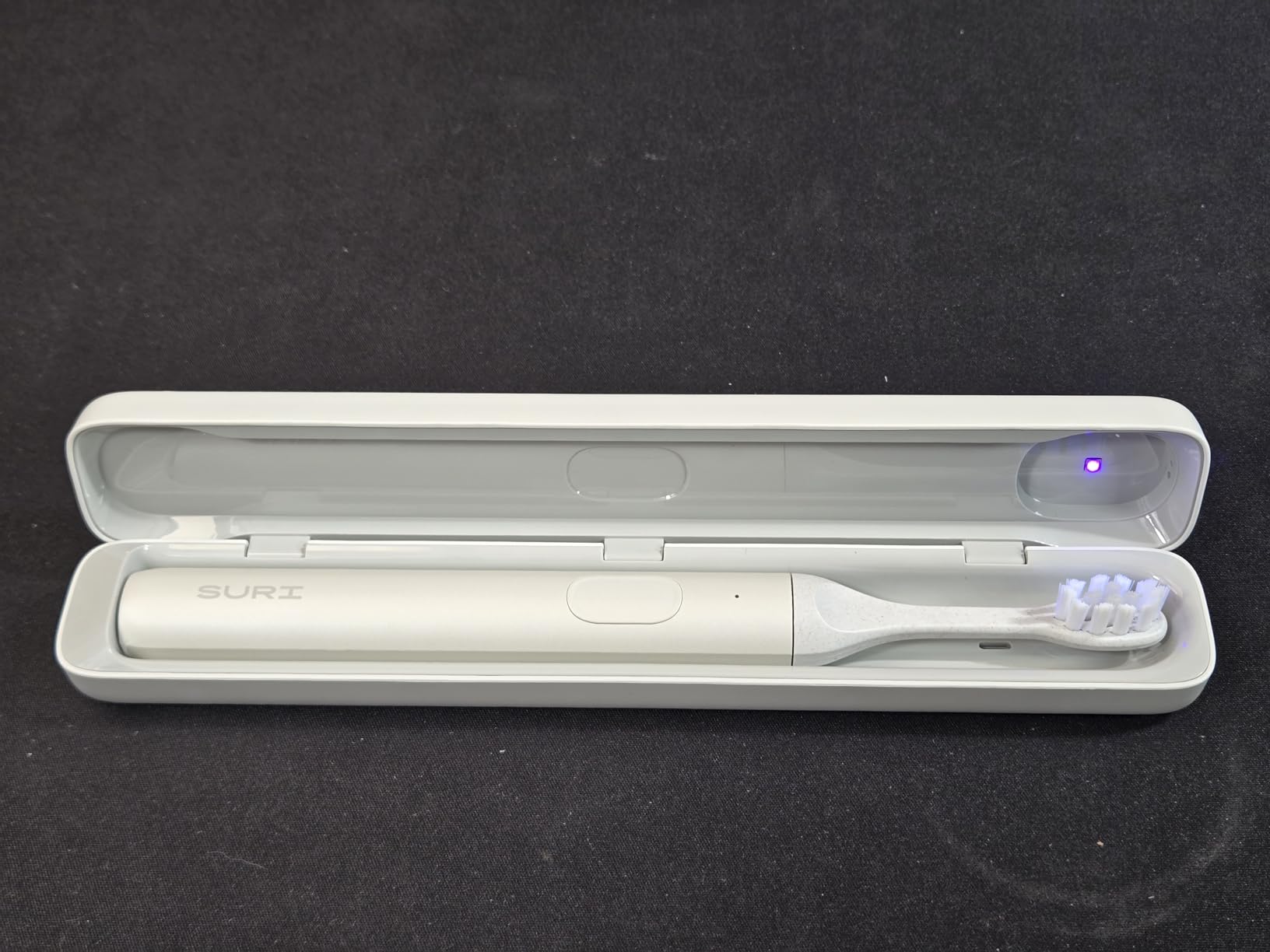
The pressure sensor is dentist approved and stops you grinding away enamel at the gum line, which makes this the pick for anyone with receding gums or recent dental work. A two-minute timer with 30-second quadrant pacing keeps the routine even in an unfamiliar bathroom.
Brush heads are plant based and recyclable, and used heads can be returned for recycling. Heads are easy to order online, which matters less here because the case keeps the head sanitised between uses.
What the UV-C case does and does not do
The UV function runs a short cycle that sanitises the brush head, so a brush that has been in a closed bag for a week arrives ready to use. Some owners are sceptical the light does much, and we would treat it as a nice extra rather than a replacement for rinsing the head.
The practical value is the drying. A ventilated holder and a magnetic base keep water off the charging contacts, which is the failure that kills cheap travel brushes over a long trip.
Who should pack something else
Cost is the deciding factor for most people. This is the most expensive option here, and no spare heads come in the box, so the true cost per trip is higher than the headline suggests.
Some users also find the bristles longer than they prefer for angling at the gum line. If you like a short head, try one in a shop first or choose a pick with tapered nylon bristles.
8. MIPOW Slim Pro i4: Smallest Rechargeable Pick
MIPOW Slim Pro i4 Electric Toothbrush Rechargeable Smart Ultra Sonic 3 Modes Magnetic Travel Case &Ceramic Dock, 60Day Long Battery Soft Bristles 2Heads IPX7 Waterproof,Color-(Gray)
50 g body
1.4 cm thick
45-day battery
Magnetic case and ceramic dock
Pros
- Only 50 grams at 1.4 cm thick
- Magnetic case about four times smaller than a standard case
- Battery indicator light
- Ceramic dock dries the brush
Cons
- Lower 20000 VPM output than several rivals
- Only two heads included
- Small review base
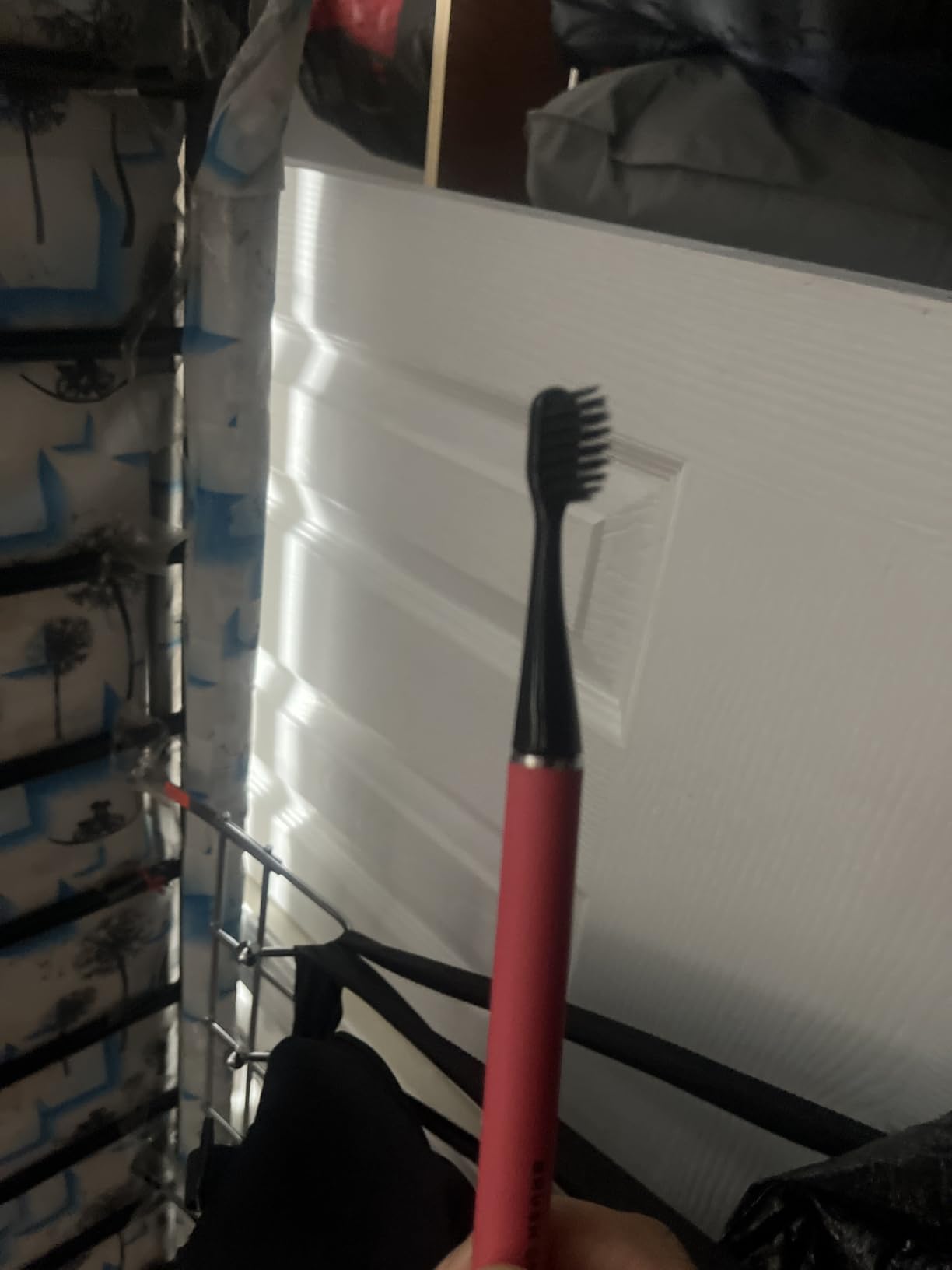
At 50 grams and 1.4 cm thick, the MIPOW Slim Pro i4 is the smallest rechargeable brush we found. For anyone packing a one-bag trip where volume is the constraint rather than weight, that thin profile does more good than a long battery claim.
The magnetic open and close case is roughly four times smaller than a standard electric brush case, which is where most travel brushes waste space. It also holds the brush securely, so nothing rattles loose in a bag on a bumpy road.
Battery life is up to 45 days per charge with a battery indicator light, which is unusual at this size and removes most of the anxiety on a two-week trip. Three modes cover clean, white and gum care, and the bristles are soft enough for sensitive gums.
The ventilated ceramic dock is a nice drying solution between uses, though it adds weight and is less practical to pack than the case alone. Output is 20,000 VPM, which is lower than several competitors here, and only two heads come in the box.
Size versus vibration output
This is the trade the whole category faces. A thinner body means a smaller motor, and a smaller motor means less vibration. At 20,000 VPM you get a consistent, gentle clean that many users find perfectly adequate and some find too weak.
If you are sensitive or have recently had dental work, the softer output works in your favour. If you are upgrading from a full-size sonic brush and want a similar result, the Aquasonic at 40,000 VPM is the better comparison.
Who should pack something else
Only two brush heads are included, so a trip longer than three months needs refills planned. Owners also report the lowest rating of the slim models we compared, on a small sample size.
The ceramic dock is a bathroom accessory more than a travel one. If you are packing strictly carry-on minimal, leave it at home and rely on the magnetic case.
9. Pursonic Portable Sonic Toothbrush: The Lightest Option
Pursonic Portable Sonic Toothbrush Battery Operated, Battery Included, 3 Brush Heads Included, 22,000 Strokes Per Minute, Brush On The Go (Blue)
AAA powered
0.63 oz
22,000 strokes per minute
3 heads included
Pros
- Under an ounce and pocket sized
- AAA battery included so nothing needs charging
- Three heads give about three months of supply
- Quiet and gentle
Cons
- Travel cap only fits with no head attached
- Head connection is fiddly and can pop off
- Lowest rating in this group
The Pursonic Portable is the lightest thing here at 0.63 ounces and small enough for a jacket pocket. It runs on an included AAA, so like the Voom Sonic it asks for zero charging attention before you fly. If the only rule is that it must not take up space, it wins.
Three brush heads give roughly a three-month supply, which is more than enough for a two-week trip, and the vibration is gentle and quiet. Some owners who expected a strong clean describe it as almost too mild.
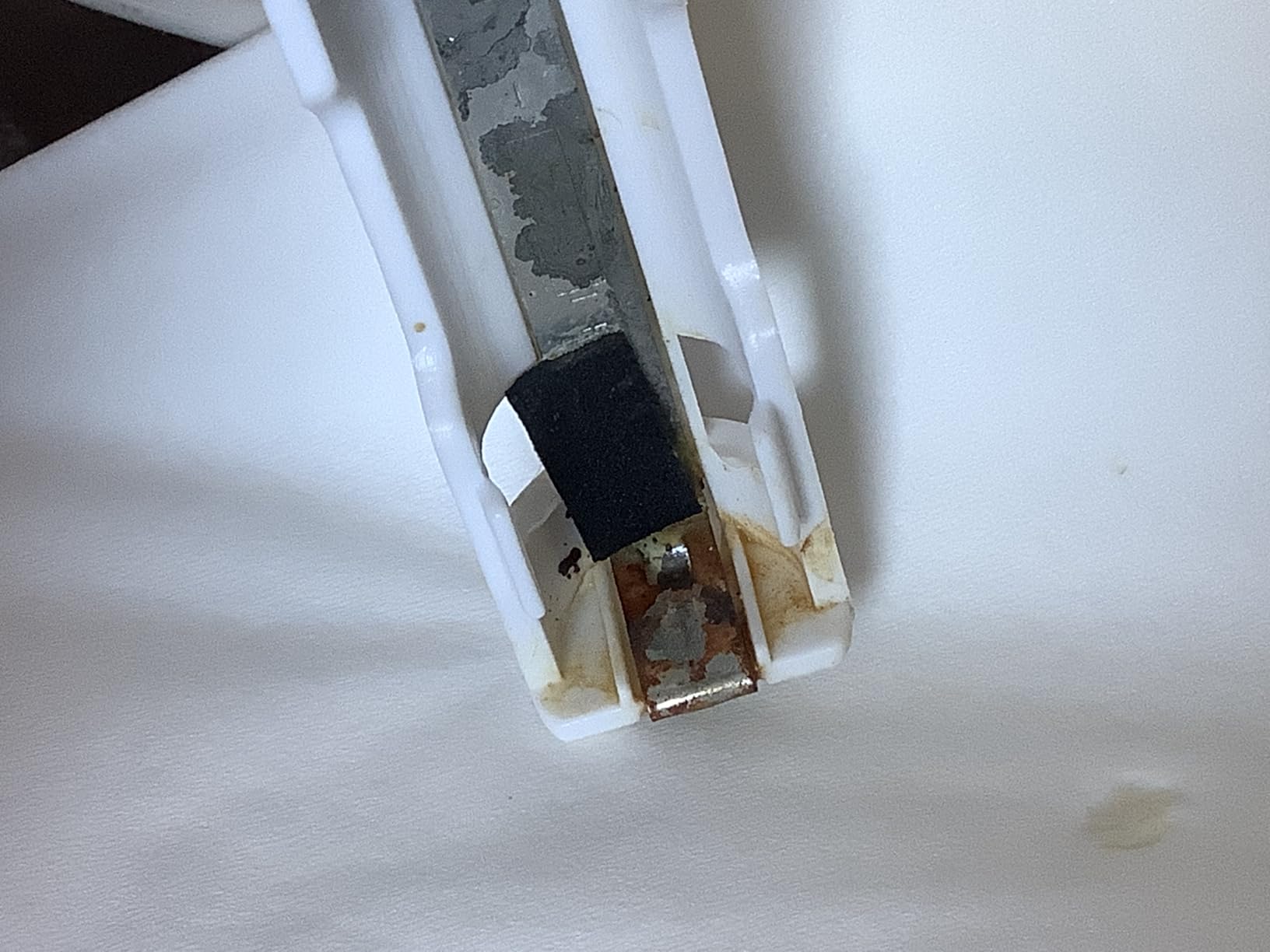
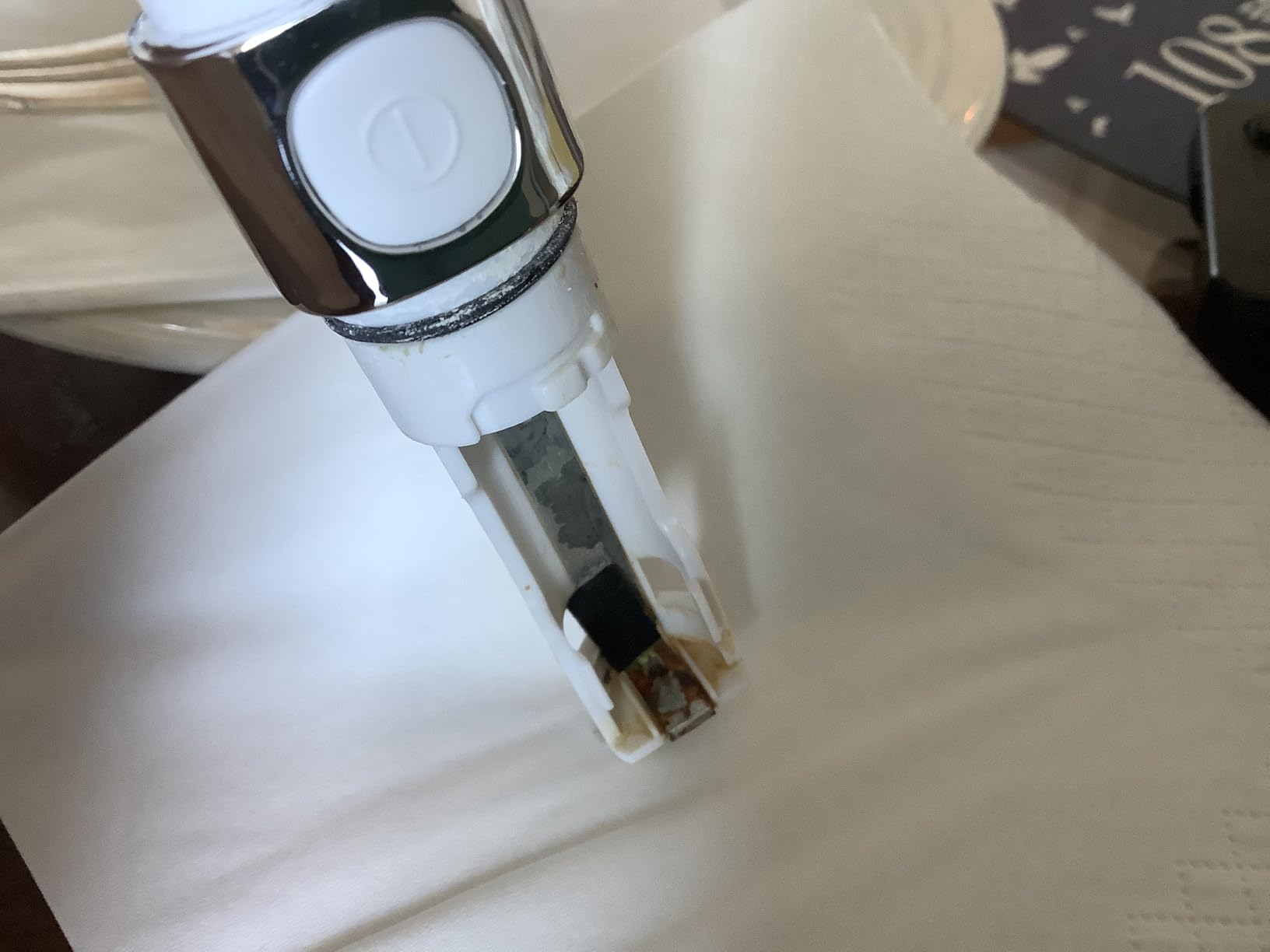
The travel cap has a real design problem: it only fits when no brush head is attached, so the head you actually brush with is left exposed. The head connection is also fiddly and can pop off mid-use. Both are irritating rather than disqualifying, but you should know them before packing it.
It carries the lowest average rating of our picks, with 12 percent of ratings at one star against 60 percent at five. Bristles are very soft and the head reads as closer to child sized.
Who needs something this small
Anyone packing for two people into one bag, or carrying a brush in a laptop sleeve rather than a toiletry bag, benefits from the pocket format. It also suits a hotel sink where counter space is genuinely zero.
If you are travelling with a child, the soft bristles and gentle 22,000 strokes per minute make this a reasonable second brush for the family bag.
Who should pack something else
If the clean matters more than the size, the other AAA pick here with the same stroke rate, the Voom Sonic Go 1, has a better head connection and a cap that fits over the brush.
Users who find the vibration too weak to feel a proper clean should step up to a rechargeable pick. The extra weight buys a noticeably deeper clean.
10. Philips One by Sonicare Battery Toothbrush: Best Known Brand
Philips One by Sonicare Battery Toothbrush, 1 Brush Head, Midnight Blue
3-month AAA battery
Slim handle with travel case
2-minute timer
Micro-vibrations
Pros
- Mainstream Philips Sonicare build people recognise
- Three-month AAA battery means no charger for most trips
- Slim handle with a compact travel case
- Matching heads sold in the handle colour
Cons
- Only one head included
- Handles take Philips One heads only
- Less power than full-size Sonicare models
The Philips One by Sonicare is the pick for anyone who would rather not explain what they are carrying to a hotel receptionist or swap an unfamiliar spare head in a shop abroad. It is a recognised brand with a familiar build, and it carries a 4.4 rating across more than 5000 ratings.
Travel logistics are handled well. The battery runs three months on an included AAA, which covers essentially every trip without a charger, and a compact travel case is in the box. A two-minute timer with 30-second notifications helps you keep the routine even when the day is disorganised.
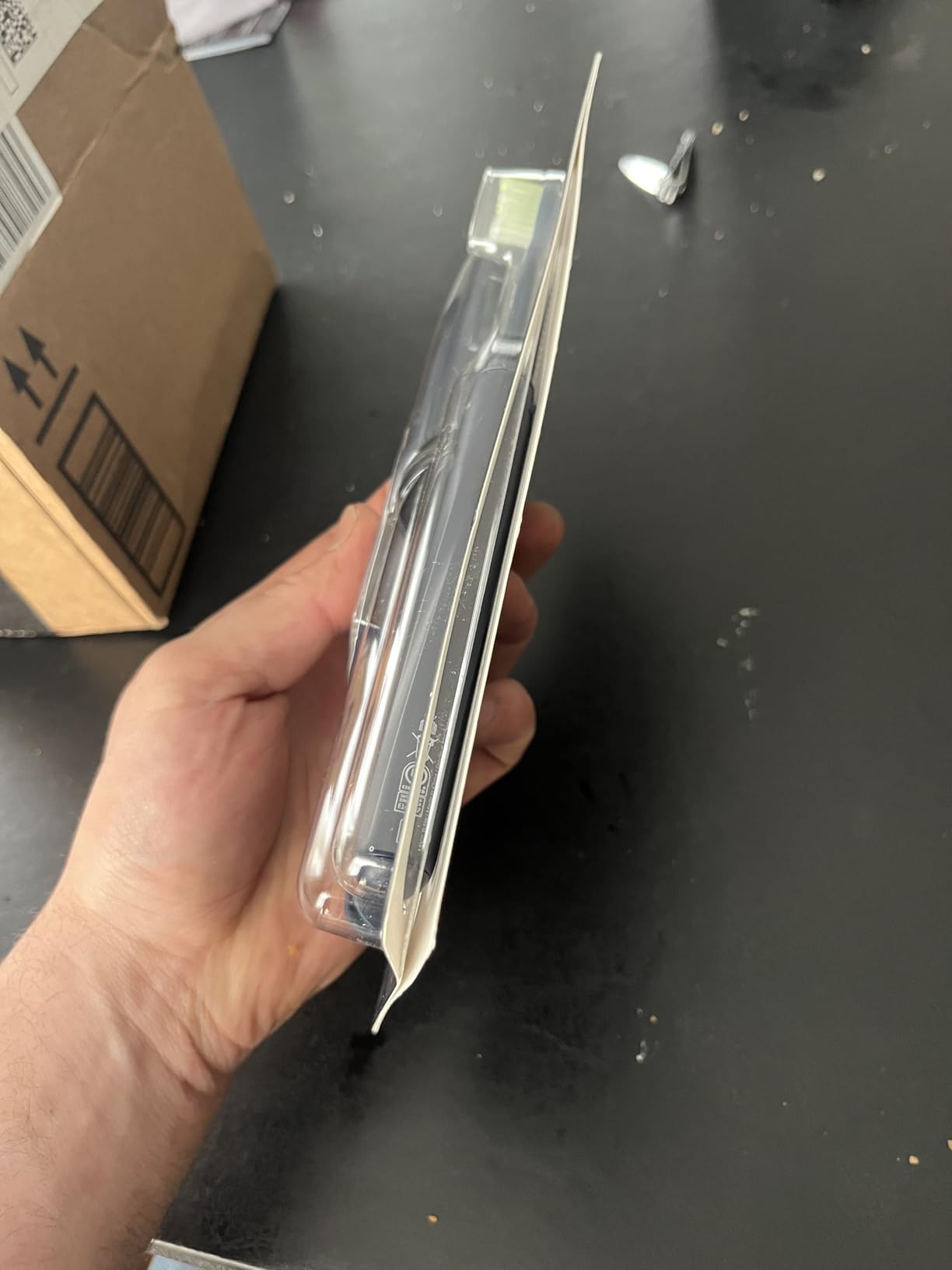
The cleaning action is micro-vibration with tapered soft nylon bristles, which is a gentle upgrade from a manual brush rather than a dramatic change. Owners describe it that way, and they are right to. If you want the full Sonicare experience, this is not that.
Two limitations matter for trips. Only one head is included, so a longer trip needs a spare bought in advance, and the handle takes Philips One heads only, which narrows your options if a matching head is not available where you are.
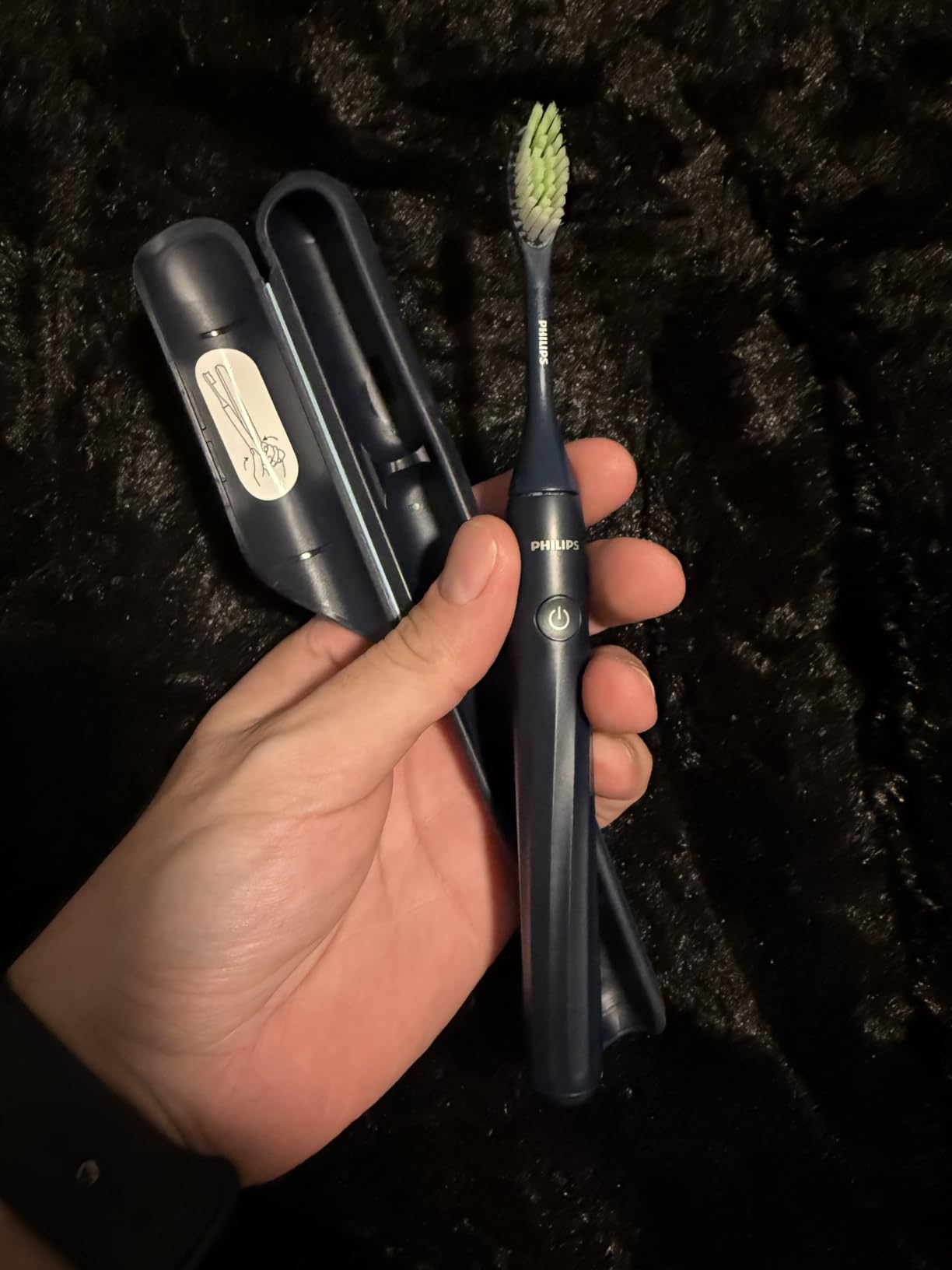
What three months of battery means in practice
Three months covers a full season of travel without a charger. That is the same category of freedom as the 60 and 90-day rechargeable picks here, reached with a replaceable cell instead of a charger.
For a business traveller who flies weekly and never unpacks, that combination of brand recognition and disposable power is genuinely the lowest-friction option in this list.
Who should pack something else
If you want a stronger clean, the Aquasonic delivers 40,000 VPM against gentle micro-vibrations. If your gums are sensitive, the dedicated soft heads in the Rtauys M5 are built for exactly that.
Buy a spare head before you go. Single-head packaging is the most common complaint across otherwise positive reviews, and it takes five seconds to fix.
Can You Bring an Electric Toothbrush in Your Carry-On?
Yes. Electric toothbrushes are allowed in both carry-on and checked baggage, and security does not confiscate them. The rule that catches people is not about the brush. It is about the battery inside it.
Built-in rechargeable batteries such as the ones in the Aquasonic, 7AM2M, Bitvae, Rtauys M5, SURI Pro and MIPOW are permitted in carry-on bags. Spare lithium batteries and power banks must also travel in the cabin, not in checked luggage.
Disposable AA and AAA cells such as those in the Voom Sonic Go 1 and the Pursonic Portable cause no lithium restrictions at all. Keep the cells in the device or in your hand luggage rather than loose in a checked bag.
Charging bases count as devices. The Aquasonic wireless base travels with the brush and is permitted in either bag.
Toothpaste counts as a liquid and needs to sit in a 100 ml container inside a clear bag. A brush is not a liquid, which is why the brush itself never causes a problem.
Airlines can be stricter than security rules on checked items with batteries. If you would rather not test it, keep the brush in your cabin bag where nothing is inspected twice.
Practically speaking, we pack every travel brush in the cabin bag. A checked bag spends days in a hold, and a damp brush in a sealed case for 48 hours is exactly the scenario that produces an odour you notice at your destination.
For anyone building a full kit, our guide to travel tripods for videographers covers the same carry-on logic for another device you would rather not check.
How to Pack a Travel Electric Toothbrush Without a Bulky Charger
The charging base is what pushes people back to manual brushing. These five steps remove it from the equation entirely.
Count the days before you buy. Two brushings a day is about 14 brushings a week. A weekend needs roughly six brushings; a two-week trip needs about 28. Any pick here covers all of that on one charge.
Pick a brush whose case is the charger or pick a disposable battery format. The SURI Pro case charges and sanitises. The Voom Sonic and Philips One need no charger at all.
Pack one head per week plus one spare in a sealed pouch. Heads for unfamiliar models are hard to find once you land, so treat this as the real consumable you are packing.
Rinse and air dry the head fully before closing the case. Never close a wet brush into a sealed travel case.
Store the case open or vented when you reach the hotel. A case that stays wet between uses is how cases start smelling.
That fourth step deserves emphasis because it comes up constantly in traveller reports. Forum discussion about toothbrush holders is dominated by complaints about mould forming within weeks even in holders sold as easy clean. The fix is not a better case brand. It is drying the head before you close it and leaving the case open overnight.
The MIPOW ceramic dock and the SURI magnetic holder both solve this passively by letting moisture escape. If your pick does not have one, propping the case against a wall on a hotel desk does the same job for free.
For longer trips by road rather than air, your charging options are looser. Our picks on USB car chargers for road trips and rooftop cargo bags for road trips cover the rest of the loadout once the brush is sorted.
What to Look for When Buying a Travel Electric Toothbrush
Here is the order we would check things in, based on how often each one changes the outcome of a trip.
1. Runtime matched to trip length
Multiply your trip length in days by two. A weekend needs six brushings. A week needs 14. Two weeks needs 28. A month needs about 60. Anything below those figures means you are planning around outlets, which is the problem you were trying to escape.
On this measure the Rtauys M5 at up to 120 days and the 7AM2M at up to 90 days lead the list, followed by the Bitvae and kingheroes at 60 days. The Aquasonic at four weeks is fine for most trips but will need a top-up on a month-long one. The AAA-powered picks run around three months per cell, which deceptively looks long but is capped by cell capacity rather than design.
2. Weight and pack volume
Minimal packers check the numbers. The battery-operated picks in this group are the exception. The Pursonic is under an ounce, the Voom Sonic is 2.5 ounces, and the MIPOW is 50 grams at 1.4 cm thick. The remaining rechargeable models run from about 3 ounces for the kingheroes set to over a pound for the SURI Pro with its aluminium body and case.
Volume matters more than weight in a carry-on. A magnetic case like the MIPOW or a vented cap like the Voom occupies a fraction of the space of a hard shell case, and that is the difference between fitting your brush and leaving it behind.
3. The case, and whether it is actually included
This is the spec most listings get wrong in practice. Confirm the case is in the box rather than sold separately, and check whether it fits over an attached brush head. Some caps only fit when the head is removed, which means your bristles travel unprotected.
A case that also charges, like the SURI Pro, solves the packing problem as well as the hygiene one. A hard shell case like the Aquasonic, which holds two spare heads, solves organisation.
4. IPX7 and what it actually means
IPX7 means the brush survives immersion in water to a stated depth for a stated time. In practice it means you can rinse it under a tap and drop it in a sink without drama. It does not mean you can leave it submerged in a hotel sink overnight, which is how several brushes in this category get damaged.
Four of our picks carry an IPX7 rating. The battery-operated models here are simpler by design, which is also why they are the easiest to throw in a bag without thinking.
5. Refill head availability, especially abroad
Any brush with eight heads in the box solves the refill problem for two years. That applies to the Aquasonic, Bitvae, kingheroes and Rtauys M5. If your pick ships with one or two heads, buy spares before you leave, because branded heads for unfamiliar models are hard to source in another country.
Two picks here carry a specific warning. The Voom Sonic Go 1’s compatible heads are increasingly hard to find, and the Philips One handle accepts Philips One heads only. Both are fine choices, provided you pack a spare.
6. Charging method and voltage abroad
A Type-C or USB-C cable works with adapters almost anywhere. A proprietary cord is a liability outside the country where you bought it. The Bitvae uses a proprietary cord, and the Aquasonic uses a wireless base, so both deserve a check of what a replacement would cost before you commit.
Three picks here need no charger at all, which makes foreign voltage a non-issue for them. The remaining picks all charge from a standard low-voltage source rather than a mains adapter, so a plug adapter is enough.
For the full-size category rather than the travel one, our guide to the best electric toothbrushes covers oscillation against sonic action in more depth, which matters if you are deciding whether a travel brush is a downgrade you will tolerate.
When a Manual Brush Is the Better Travel Choice
Sometimes it is. A manual brush weighs nothing, needs no charging, cannot fail and is available at any shop you land near. Travellers packing for weeks with no access to spares should weigh the convenience of a five gram stick against a battery you cannot replace.
What you give up is the two-minute timer. That is the real value of an electric brush on a trip, because the timer removes the decision from a tired routine. A dentist quoted in traveller discussions puts it plainly: the brush does two minutes, and you move it around rather than scrub.
So the honest framing is that an electric travel brush is a consistency tool, not a cleaning upgrade. If you know you brush for two minutes when tired, take the manual one. If you know you do not, the timer is worth carrying.
Frequently Asked Questions
Does TSA allow electric toothbrushes?
Yes. Electric toothbrushes are permitted in both carry-on bags and checked luggage. Security does not confiscate them. Spare lithium batteries must travel in your cabin bag rather than your checked bag, and that rule applies to the spare batteries for any built-in rechargeable travel brush.
Can I bring an electric toothbrush in my hand baggage on a plane?
You can bring an electric toothbrush in hand baggage without any special arrangement. Treat the battery according to its type. A brush with a built-in lithium cell travels in the cabin, and a brush running on AA or AAA cells raises no lithium question at all.
Does Sonicare make a travel toothbrush?
Philips Sonicare makes the One by Sonicare battery toothbrush, a slim handle that runs three months on an included AAA battery and comes with a compact travel case. It uses micro-vibrations rather than the full Sonicare power, and the handle accepts Philips One brush heads only.
What is the best electric toothbrush to use while traveling?
The best travel electric toothbrush is one you never have to charge. Our top pick is the Aquasonic Black Series, rated 4.5 across more than 138000 ratings, with eight spare heads, a hard shell travel case and up to four weeks of runtime per charge. For the absolute lightest option, the Pursonic Portable weighs under an ounce and runs on an included AAA.
How long should a travel toothbrush battery last?
For a weekend you need about six brushings. A week needs 14, two weeks needs 28, and a month needs around 60. Any pick in our list covers those figures on a single charge, so choose the runtime that matches your longest trip rather than your average one.
Is a travel electric toothbrush actually better than a manual brush?
The main benefit is the two-minute timer, which keeps brushing duration consistent when you are tired or sharing an unfamiliar bathroom. Cleaning power at the top of this range is genuinely deeper than a manual brush, while the gentler picks are roughly equivalent. It is a consistency tool more than a cleaning upgrade.
How do I stop a travel toothbrush case from going mouldy?
Rinse the brush head fully and let it air dry before closing the case, then leave the case open or propped against a wall overnight so moisture escapes. Vented caps and ventilated docks, such as the ones on the MIPOW and SURI picks, handle this passively. A permanently closed wet case is what causes the problem.
Which travel toothbrush is best for sensitive teeth and gums?
The Rtauys M5 is built for it, with two dedicated sensitive heads in the box, five modes including sensitive and gum care, and a hold-to-stop button that ends a cycle early. The SURI Pro is the alternative for longer trips, because its dentist-approved pressure sensor stops you brushing too hard on receding gums.
The Bottom Line on Travel Electric Toothbrushes for 2026
The Aquasonic Black Series is the best travel electric toothbrush overall: the highest rating in the group, the largest review base, eight spare heads and a hard shell case in the box. If you want the longest possible runtime per charge, the 7AM2M gives you up to 90 days and the Rtauys M5 up to 120. If you want no charger in any form, the Voom Sonic Go 1 and the Philips One by Sonicare both run on a single AAA.
Whichever you choose, match it to your longest trip rather than your average one, pack a spare head per week, and let the head dry before you close the case. That is the whole difference between an electric brush that stays in the bag and one you actually use.