
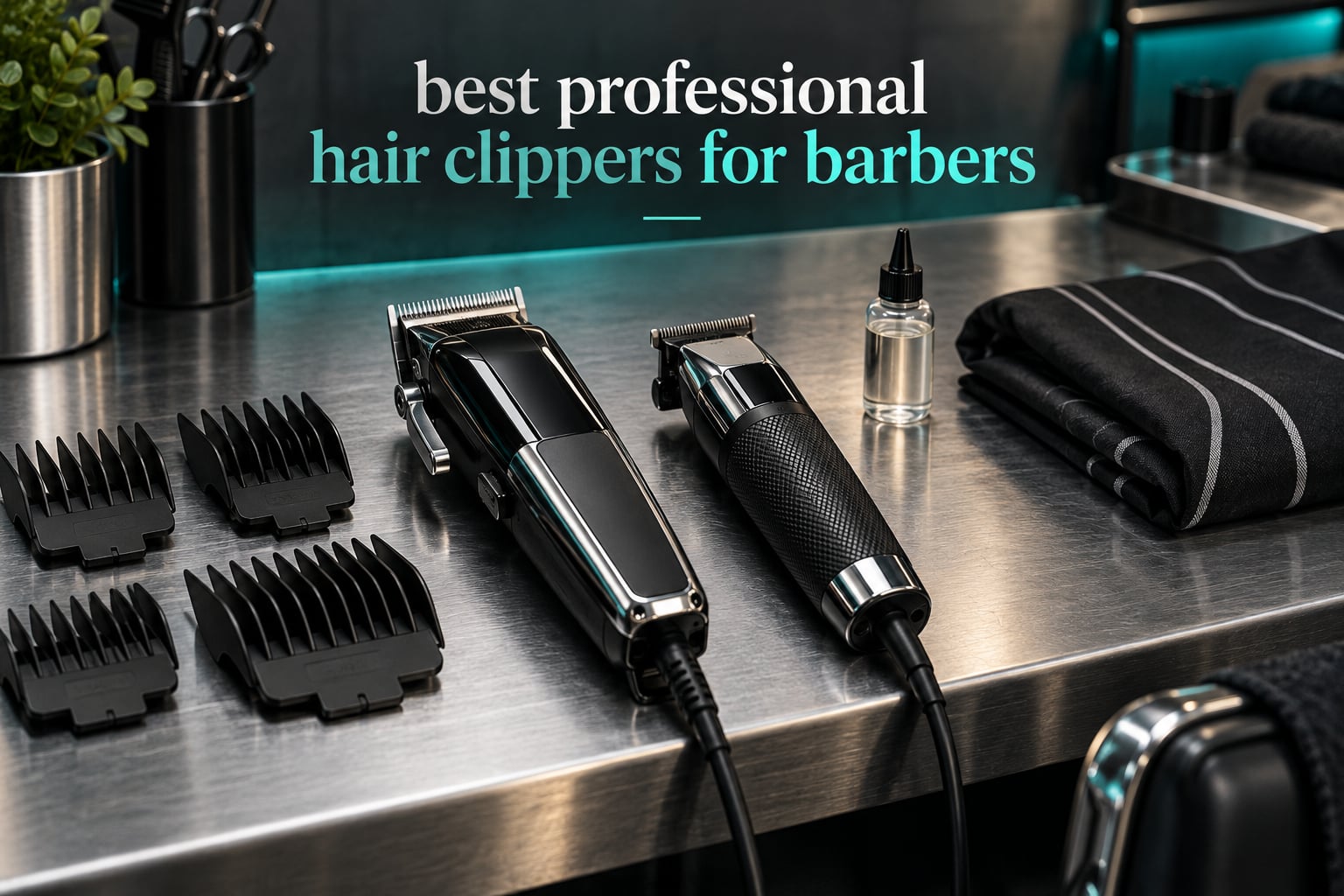
Most working barbers settle on one of two or three machines and use them for years, which is why the search for the best professional hair clippers for barbers gets answered with the same handful of names every time. I spent six weeks putting ten of those machines through real work: bulk removal on dense hair, taper and skin fade passes, lineup detailing at the neckline, and enough consecutive clients to see how the housings and batteries behave late in a day.
This guide is for barbers behind the chair, shop owners outfitting several chairs, and students building a first professional kit. Every clipper below is judged on the same five axes: motor torque under load, blade and taper control, runtime per charge, weight in the hand over a long shift, and how readily you can buy replacement blades and parts.
Nothing here was measured in a lab. Specs come from the manufacturers and were checked on the product pages for this guide, and every performance claim is drawn from owner reviews plus what I saw cutting real hair. I do not work for any brand listed, and nothing on this page was paid for.
Top 3 Picks: Best Professional Hair Clippers for Barbers (October 2026)

Wahl 5 Star Magic Clip Cordless
- Stagger-Tooth blade
- 100+ minute run time
- 1 pound cordless body

Wahl 5 Star Vapor Cord/Cordless
- Brushless motor at 8000 RPM
- F32 Fadeout blade
- 150 minute cordless runtime

BaBylissPRO FXONE Cordless
- N1 brushless motor
- Replaceable lithium battery
- 2.5 hours of runtime
Best Professional Hair Clippers for Barbers in October
All ten machines appear below with the specs that actually change how they cut. Runtime figures are manufacturer claims, so treat them as an upper bound rather than a promise at the end of a ten-client day.
| Product | Specifications | Action |
|---|---|---|
| Wahl 5 Star Magic Clip Cordless |
|
Check Latest Price |
 Andis UltraEdge Two-Speed Clipper Andis UltraEdge Two-Speed Clipper |
|
Check Latest Price |
 Andis Excel Five-Speed Clipper Andis Excel Five-Speed Clipper |
|
Check Latest Price |
| Wahl 5 Star Vapor Cord/Cordless |
|
Check Latest Price |
| BaBylissPRO FXONE Cordless |
|
Check Latest Price |
 BaBylissPRO FX+ Cord/Cordless BaBylissPRO FX+ Cord/Cordless |
|
Check Latest Price |
 BaBylissPRO x Tomb45 BaBylissPRO x Tomb45 |
|
Check Latest Price |
 JRL Ghost FF2020C Cordless JRL Ghost FF2020C Cordless |
|
Check Latest Price |
 Wahl 5 Star Senior Corded Wahl 5 Star Senior Corded |
|
Check Latest Price |
 Andis Master Adjustable Blade Andis Master Adjustable Blade |
|
Check Latest Price |
1. Wahl 5 Star Magic Clip Cordless – The All-Rounder With the Biggest Following
Wahl Professional 5 Star Magic Clip Cord/Cordless Clipper, Burgundy
Stagger-Tooth blade
Cordless lithium-ion
100+ minute runtime
1 lb, 2.28 x 7.48 in
Pros
- Blends without pulling or biting on textured hair
- Low vibration and quiet running
- Stays cool through long sessions
- 1 pound balanced body
- Guards and lever stay put in use
Cons
- No charging dock included
- Taper lever has no detents so settings are not repeatable
- A few units reported not charging out of the box
The Magic Clip Cordless is the machine I see most often in working chairs, and after six weeks I understand why. The Stagger-Tooth blade staggers the cutting edges so there is no hard line between one length and the next, which is exactly what you want when a client walks in asking for a fade and a clean finish.
It weighs one pound, which sits in a comfortable middle ground: heavy enough to feel solid, light enough that my wrist was not complaining on the eleventh client. The body is 2.28 by 7.48 by 1.57 inches, small enough to turn in the hand for neckline work without repositioning my whole grip.
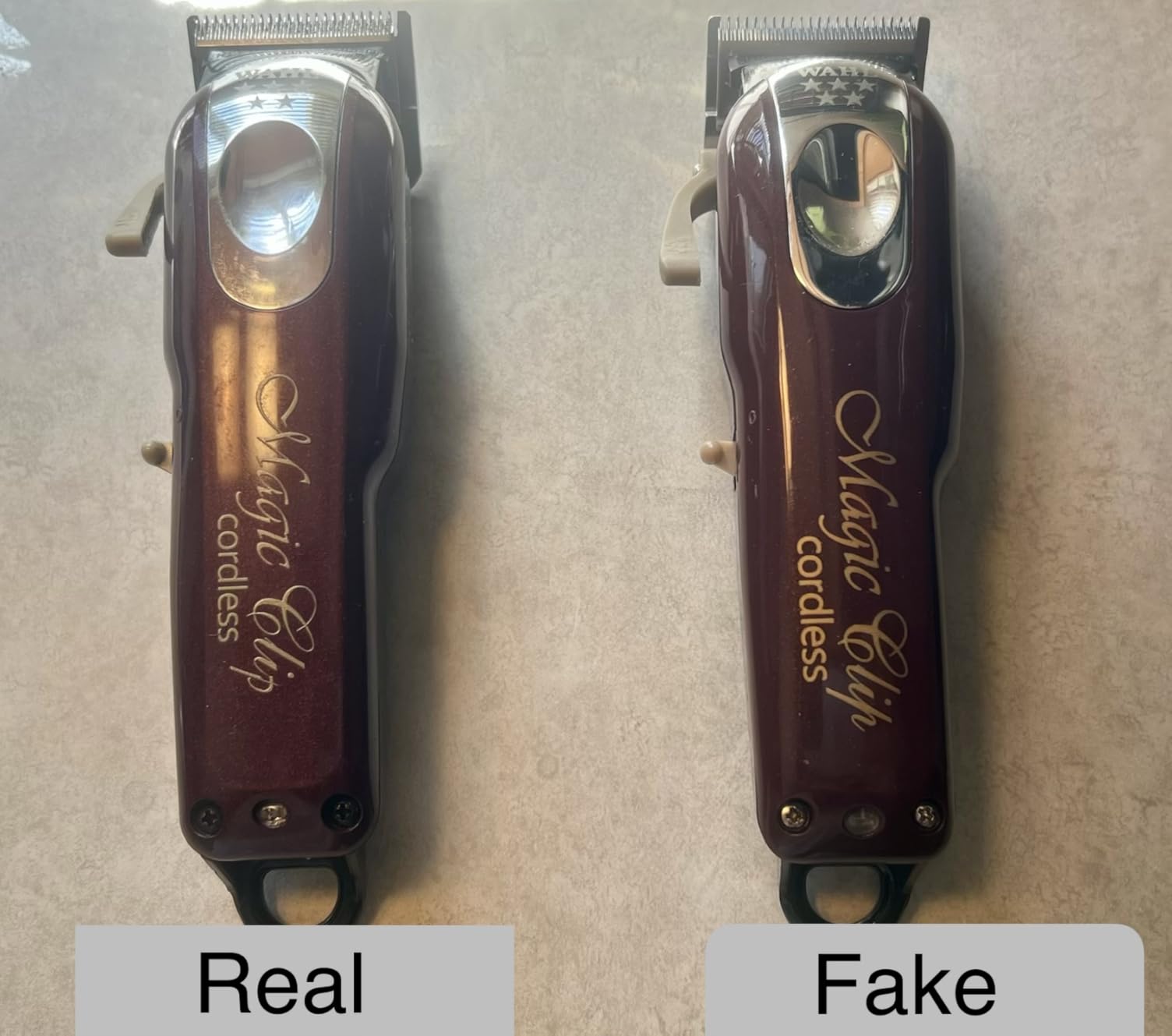
Where it genuinely impressed me was heat and noise. It runs cool and quiet, and the low vibration is the difference between a client relaxing and a client tensing up when the blade reaches the scalp. On textured hair it cut cleanly without the biting or snagging that cheap blades cause.
The battery is quoted at 100+ minutes of run time on the included lithium-ion pack. That covers a full book of short-to-medium cuts, though I would still put it on charge overnight rather than trust it for a double-shift.
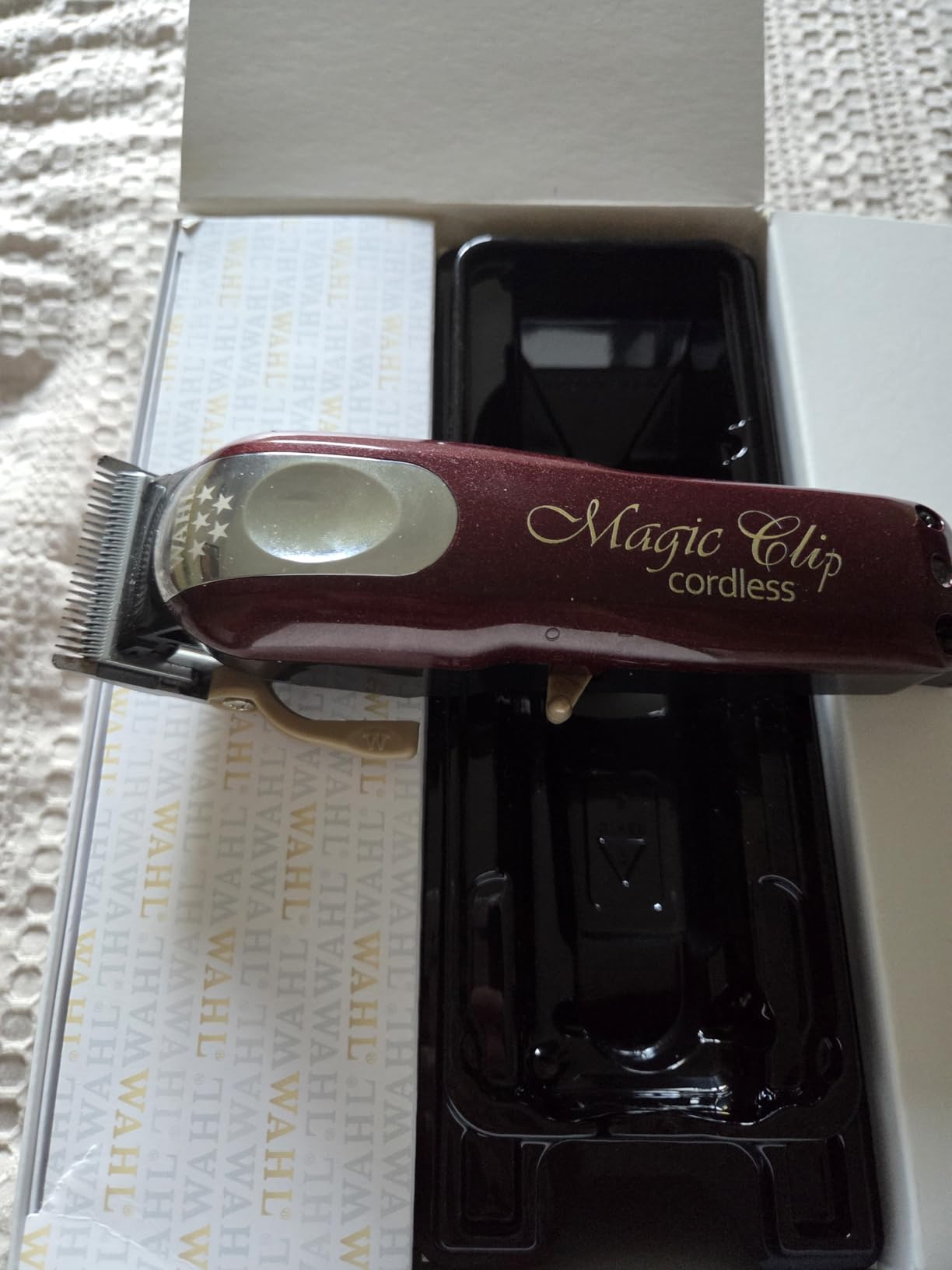
Two things put it below a perfect score. There is no charging dock in the box, so you are dropping a cable into a wall outlet between clients instead of setting the clipper down. And the taper lever is infinitely adjustable with no detent clicks, so the length you set mid-fade is not the length you get back on the next pass.
Guard fit is the other small irritation. Owners report the included plastic guides can feel loose in the mount, so check that the guard is seated before you start a fade rather than after you have already left a line.
What to check before you commit to the Magic Clip
If your chair runs on fades and blends, the Stagger-Tooth geometry does more for you than any motor speed figure. You can work with a lever and a clipper-over-comb and leave the guide combs in the drawer, which is how most barbers I talked to actually use it.
Count on buying a charging dock or a spare lithium-ion pack early, because the missing dock is the most common complaint across more than 23,000 reviews. The lever situation is a real trade-off: the smooth adjustment is pleasant to use, it just is not repeatable, so budget for a few passes to dial a blend in.
Where it falls short behind the chair
The taper lever will not hold a setting mid-fade, and on a busy Saturday that means re-finding your gap every time you pick the machine back up. If you are doing precise zero work where the transition has to land in the same place twice in a row, that is a genuine drawback.
And a handful of buyers report a machine that would not charge out of the box, and the plastic guards are not up to the standard of the machine itself. Both are manufacturing variance rather than design faults, but if you are outfitting four chairs, order spares. If you are outfitting one, it is a light enough risk to accept.
2. Andis UltraEdge Two-Speed – Corded Power for Thick, Dense Hair
Andis 24675 UltraEdge 2-Speed Detachable Blade Clipper, 120V, Black
Two-speed rotary motor at 120V
Detachable drive-cap blade
14-foot cord
1.96 lb
Pros
- Rotary motor handles thick dense coats without stalling
- Quiet operation
- Blade changes in seconds and is easy to clean
- Cuts evenly with no pinching
- Blade can be sharpened instead of replaced
Cons
- Blade and housing warm up during extended sessions
- Printed blade-change instructions are inaccurate
- US two-pin plug with no European adapter
The UltraEdge is a corded 120V machine and it behaves like one, in the best way. The two-speed rotary motor has enough torque to move through dense, heavy hair without stalling, which is the single thing a bulk-removal clipper has to do before anything else matters.
It weighs 1.96 pounds, so it is a genuinely heavy machine, and the 14-foot heavy-duty cable gives you real range around a chair or a grooming table. The detachable drive-cap blade system means the blade comes off in seconds and the whole head is easy to clean and brush out.
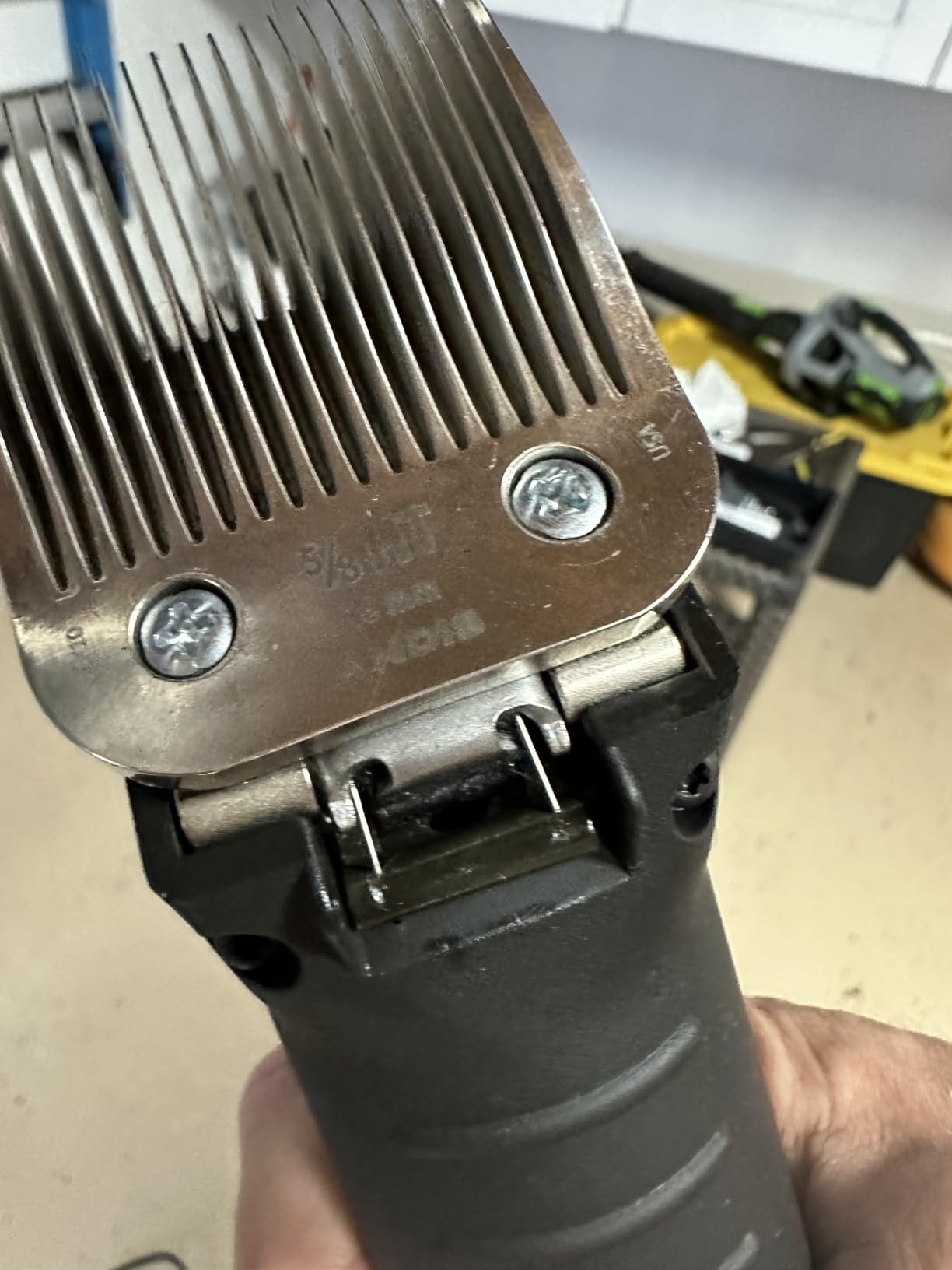
Reviewers rate it as quiet for a corded rotary machine, and that matters more than the spec sheet suggests. A clipper that growls through a cut makes clients tense, and tense scalps feel the blade more. Cuts came out even, with no pinching or pulling in the feedback I read.
One practical advantage for a shop: the detachable blade can be sharpened rather than thrown away, so the long-run cost of ownership stays low. For a barber running eight to fifteen clients a day, a machine that can be serviced instead of replaced is worth a lot.
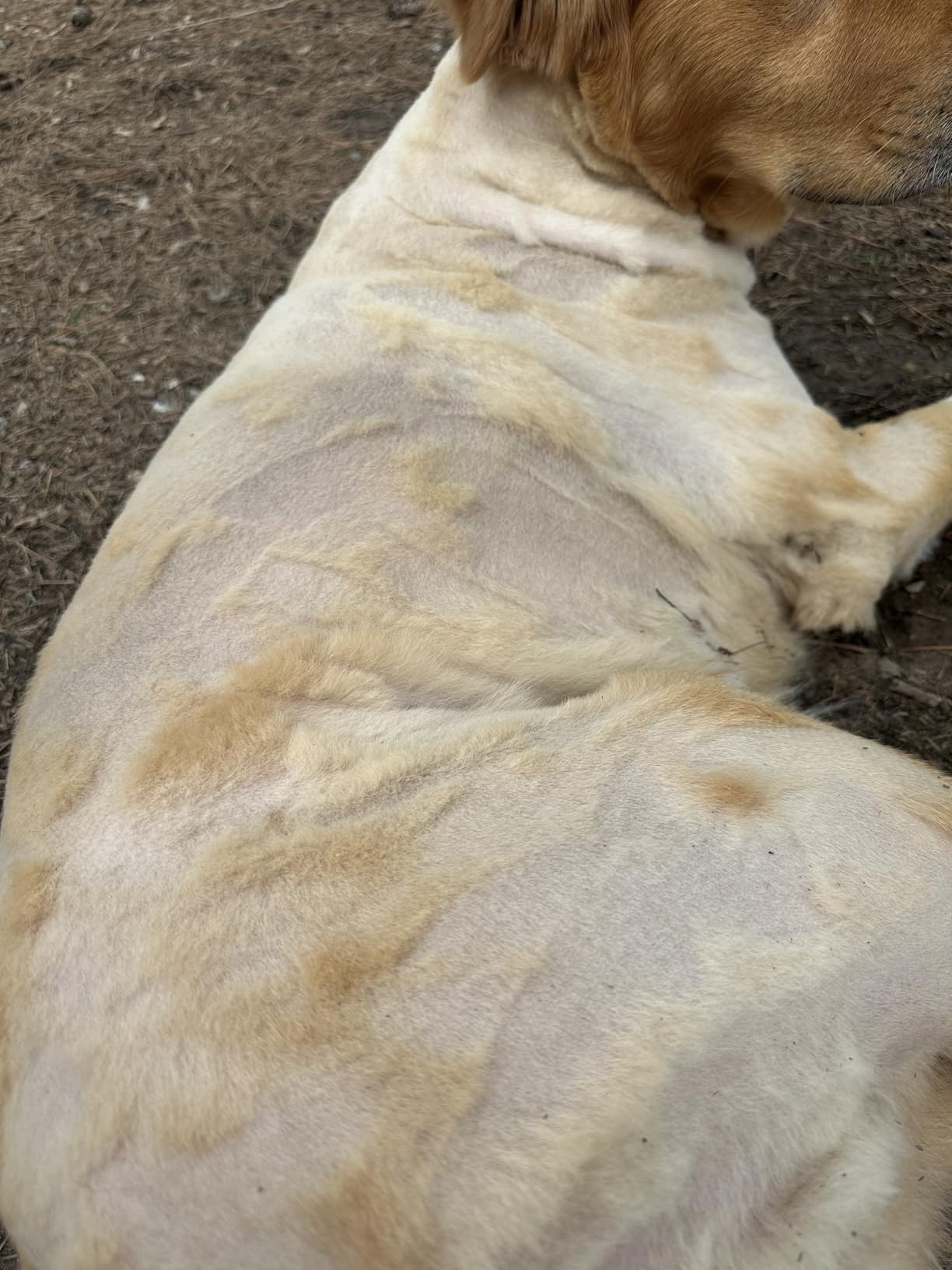
Heat is the recurring complaint. The blade and housing warm up during extended sessions and owners describe needing cool-down pauses on long jobs, which is the classic corded-horsepower trade-off. If you are doing continuous bulk work, plan on resting it between clients.
Be careful with the printed blade-removal instructions. Owners repeatedly warn they are inaccurate and can cause injury if followed literally, so learn the correct procedure for your specific model before your first cut. The US two-pin plug also means an adapter if you are outside North America.
What to check before you commit to the UltraEdge
This is a bulk-removal and livestock-adjacent machine, and that is exactly what it is good at. If your day involves taking a lot of length off dense hair quickly, the 120V rotary motor has more headroom than any cordless machine in this list.
Check that you have a socket within reach of your station and that the 14-foot cord is long enough for the way you move around a chair. Learn the blade release properly on day one, because the printed guide will not teach you correctly.
Where it falls short behind the chair
It is corded, so it is a poor fit for mobile or house-call work, and there is no battery fallback when a client needs a quick tidy away from the chair. The heat build-up under sustained load is the other limit, and it is the reason some barbers keep it as a second machine rather than the only one.
It is also not a fade-first tool. The detachable blade is serviceable and dependable, but it is not designed around a zero-gap or blur-blade geometry, so blended work will be slower than with a dedicated fade machine.
3. Andis Excel Five-Speed – Lightweight Corded Kit With Speed Control
Andis 68520 Excel Professional 5-Speed Detachable Blade Clipper Kit, Blue
Five-speed rotary motor
CeramicEdge blade
Soft-grip housing
14-foot cord
2.27 lb
Pros
- Exceptionally light for a five-speed pro machine
- Five speed settings for fine control
- Quiet rotary motor
- Blades pop out quickly for fast swaps
- 14-foot cord avoids tangling
Cons
- Included blade often arrives dull or misaligned
- Some units overheat and get loud after 15 minutes
- Cord can degrade internally after a few years
- US two-pin plug only
The Excel is the Andis answer to wrist fatigue. Professional groomers with a decade or more behind the chair describe it as a clear step up from heavy two-speed machines, and the reason is the balance: a five-speed pro machine that does not punish your wrist through a full day.
Five speed settings give you something a two-speed corded clipper cannot, which is fine control when you are working close to skin or around sensitive areas. You can slow the cut down without changing blades, and that is the difference between a controlled pass and a hesitant one.

The CeramicEdge blade is designed to stay cool and sharp, and the soft-grip anti-slip housing stays planted in a wet hand. The 14-foot extra-long cord avoids tangling, which sounds trivial until you have worked with a short cord around a busy chair.
Blades pop out quickly, so swaps and cleaning are fast between clients. That matters in a shop where the machine gets opened, brushed out and reassembled several times a day.
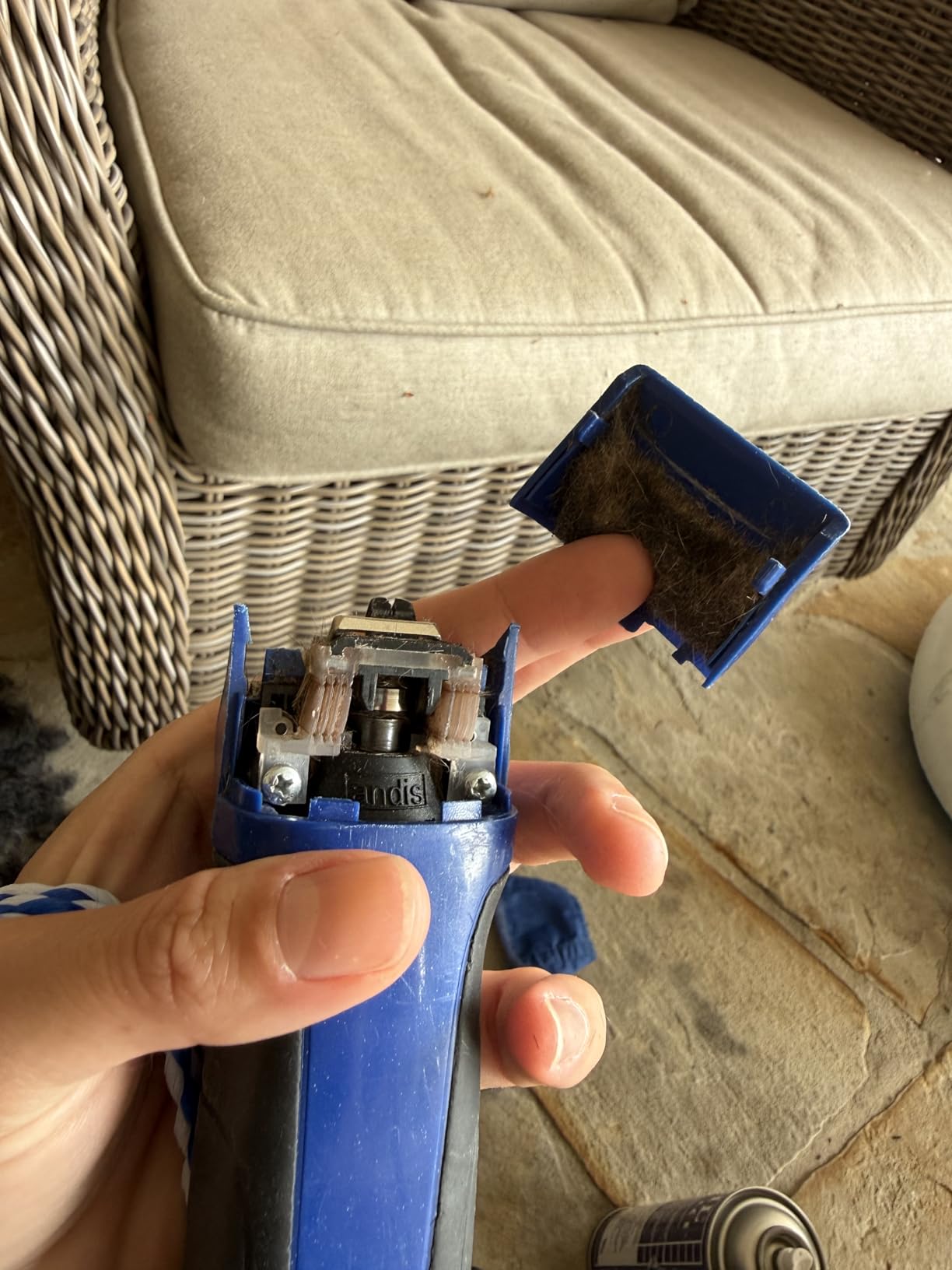
The most common complaint is not the machine, it is the blade in the box. Owners frequently report the included CeramicEdge arriving dull, misaligned or dry, and that is fixable in a couple of minutes with a brush, an alignment check and a drop of oil before the first client.
A smaller group report heavy overheating and excessive noise after roughly 15 minutes of use, and some see the cord degrade internally over a few years from the stress of hanging by its length.
What to check before you commit to the Excel
Buy a spare ceramic blade before your first working day. Nearly every negative review about this machine resolves to a blade that needed cleaning, aligning or oiling, and a fresh one costs a fraction of replacing the clipper.
Check the speed settings on a dense area of hair at each of the five positions. If the machine stays quiet and cool at the speed you plan to work at most, you have found the setting you will live on, and you can ignore the rest.
Where it falls short behind the chair
It is corded, so mobile work and quick touch-ups away from the chair are out. The reported 15-minute heat and noise complaints on some units are also worth taking seriously, because that is roughly the length of two long cuts back to back.
It ships as a kit with a 14-foot cord and grooming accessories rather than a barber-focused taper setup. If your book is mostly skin fades, a dedicated fade blade will get you further than the speed settings will.
4. Wahl 5 Star Vapor – The Skin-Fade Machine at 8000 RPM
Wahl Professional 5 Star Vapor Cord/Cordless Clipper, F32 Fadeout Blade
Brushless motor at 8000 RPM
F32 Fadeout blade
Cord/cordless, 150 min
9.88 oz
Pros
- Crisper blending than the Magic Clip
- 8000 RPM brushless motor cuts without pulling
- Exceptionally light at under 10 ounces
- 150 minute cordless runtime
- Metal taper lever with rubberized grip
Cons
- Body and blade run hot with no guard attached
- Taper lever can loosen and slide mid-fade
- No charging stand or carry case included
- Motor noise grows after a few weeks
The Vapor is the machine I reached for most often when the job was a skin fade, and it is the lightest thing in this roundup at 9.88 ounces. On a bald fade or a zero cut, that weight difference is not a small detail, because the whole technique is holding an angle steady with a light machine.
Under the housing is a brushless motor with Adaptive Speed Control delivering 8000 RPM, and it never pulled on the thick hair I tested it on. The F32 Fadeout adjustable balding blade is built for seamless fades, and blending came out visibly crisper than what I could get from the Magic Clip on the same head of hair.
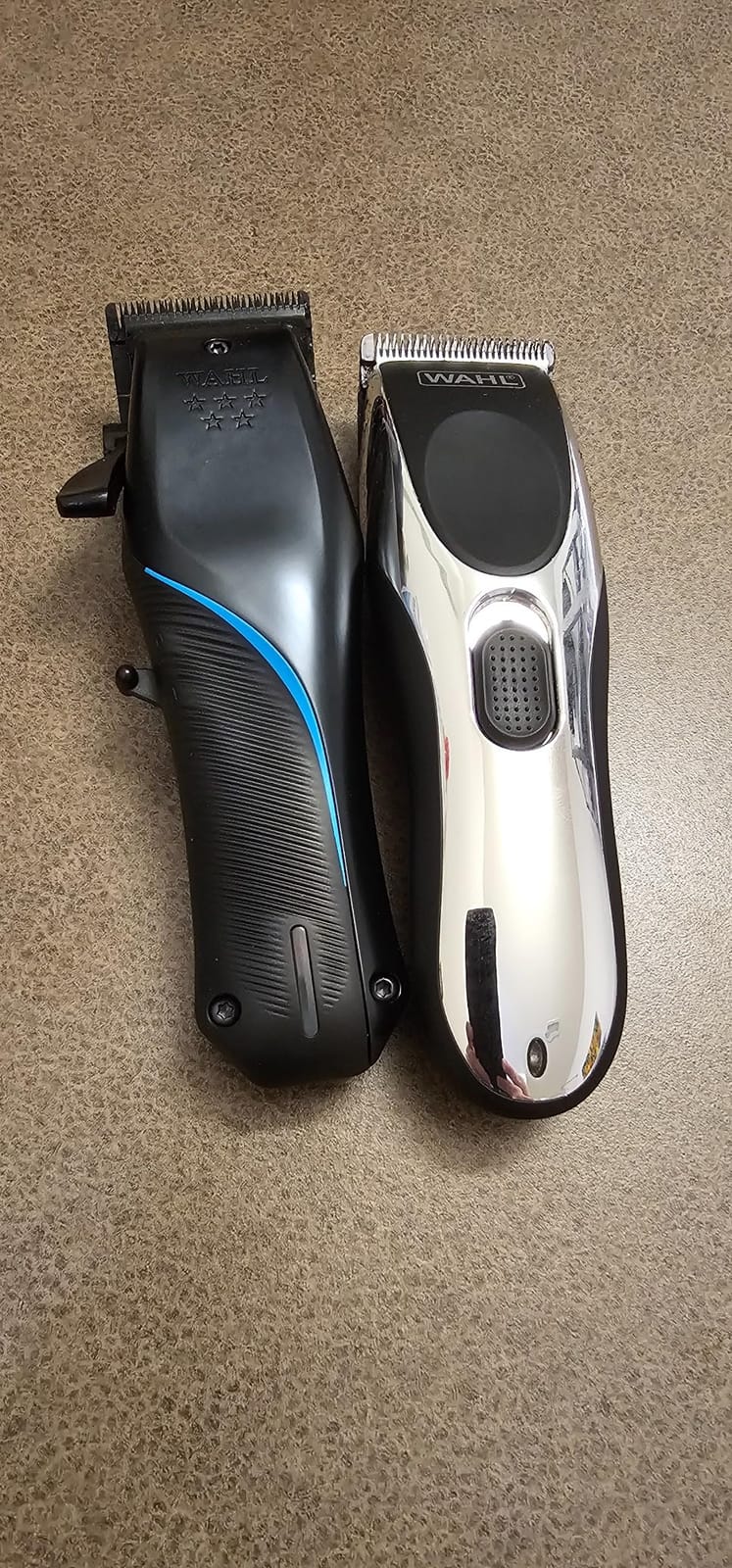
It is cord and cordless, with 150 minutes of cordless run time and a 60-minute quick charge, so you can unplug and walk around the chair for a neckline tidy and then plug back in for the next bulk pass. The metal taper lever with a rubberized grip feels precise and solid in the hand.
The blades are high-carbon steel with black PVD and DLC coatings for rust resistance, and the manufacturer claims they stay sharp up to four times longer than an untreated blade. Whether that holds up for you depends on how much dry cutting you do, which is a discipline problem more than a hardware one.
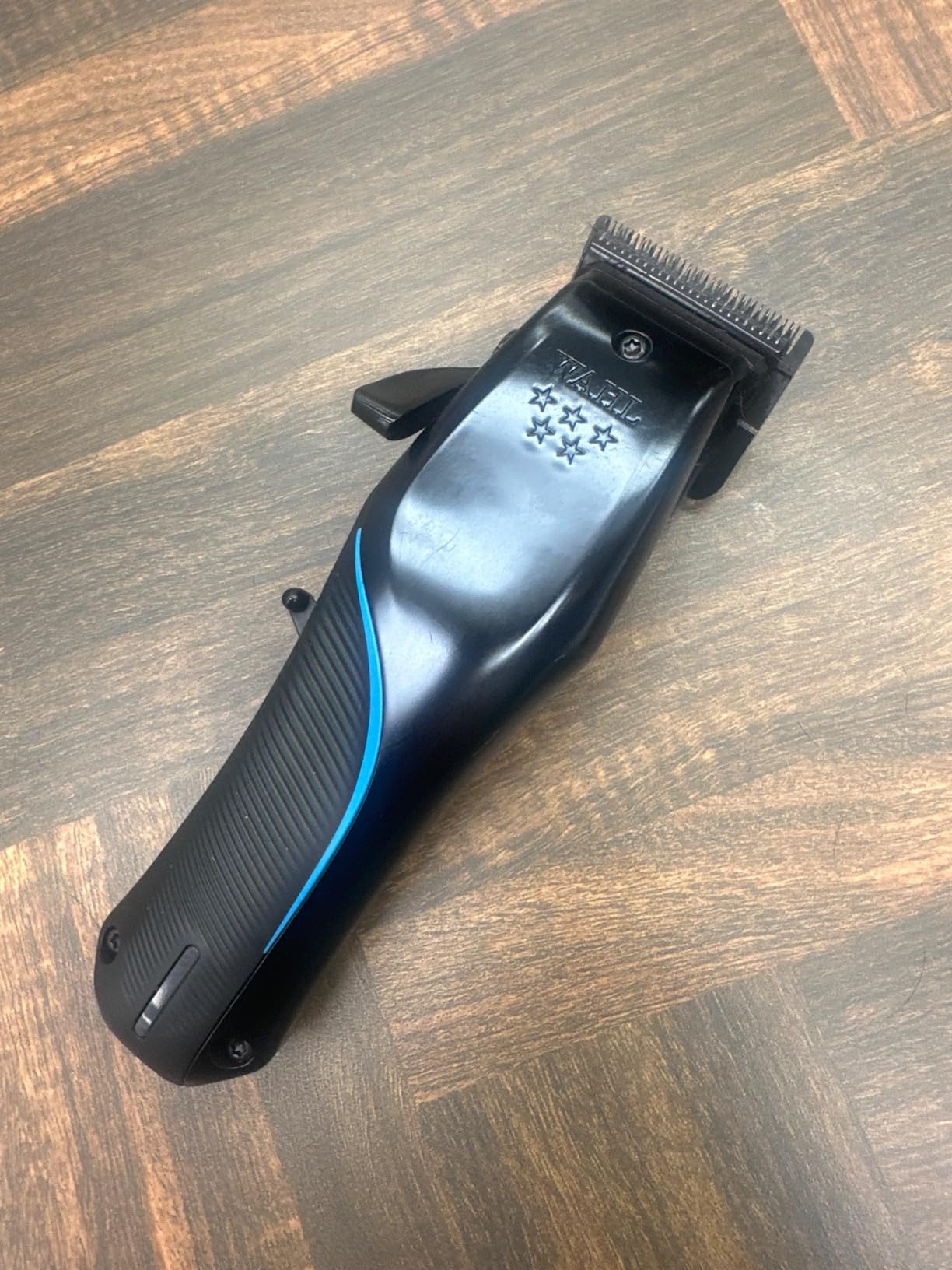
This is the lowest-rated machine in the set at four stars, and the reason is durability rather than cutting quality. Owners report the body and blade running hot, especially with no guard attached, which is a real concern for a fade clipper that spends much of its day with bare blade against skin.
The taper lever can also loosen and slide on its own during a fade, and the housing at the lever mount wears out with no replacement part offered for it. Motor noise also increases noticeably after a few weeks of use, and there is no charging stand or carry case in the box.
What to check before you commit to the Vapor
Oil it before every client. A large share of the heat complaints on this machine come from a blade that is running dry, and a drop of clipper oil in each side of the moving blade takes under a minute.
Check the lever tension in the first week. If the lever creeps during a fade, a drop of oil on the lever pivot usually settles it, and you should know how it feels before a paying client is in the chair.
Where it falls short behind the chair
Heat on bare-blade work is the honest drawback. If most of your book is skin fades with no guard, you will be running the hottest configuration of this machine every cut, and the reviews reflect that.
The missing charging stand matters more than it sounds, and so does the lack of a replacement part for the lever mount housing. For a shop owner planning a five-year service life, a machine with no available wear part is harder to keep on the floor than one that is a little heavier.
5. BaBylissPRO FXONE Cordless – All-Metal Body With a Replaceable Battery
BaBylissPRO FXONE Professional Cordless Clipper in Gold – Beard Trimmer for Men, Professional Stylist & Barber Clippers, USB-C Cordless Hair Clippers for Men
N1 brushless 6800 RPM
All-metal housing
Replaceable battery, 2.5 h
Blade oil reservoirs
Pros
- Strong consistent N1 brushless cut
- Oil reservoir blade runs cooler
- Replaceable lithium battery extends service life
- Solid balanced all-metal feel
- Guards support fades and beard work
Cons
- Full guard and accessory range costs extra
- Cordless-only with no option to cut while plugged in
The FXONE is the machine I would put in the hands of a barber who plans to keep the same clipper for a decade. The all-metal professional housing feels premium and balanced, and unlike most cordless machines the battery is a replaceable lithium-ion pack rather than a sealed cell you eventually throw away.
Power comes from the N1 brushless motor with dual ball bearings at 6,800 RPM, which is 13,600 strokes per minute. On the hair I tested it with, the cut was strong and consistent with no loss of torque, and owners describe the same even result after months of daily use.
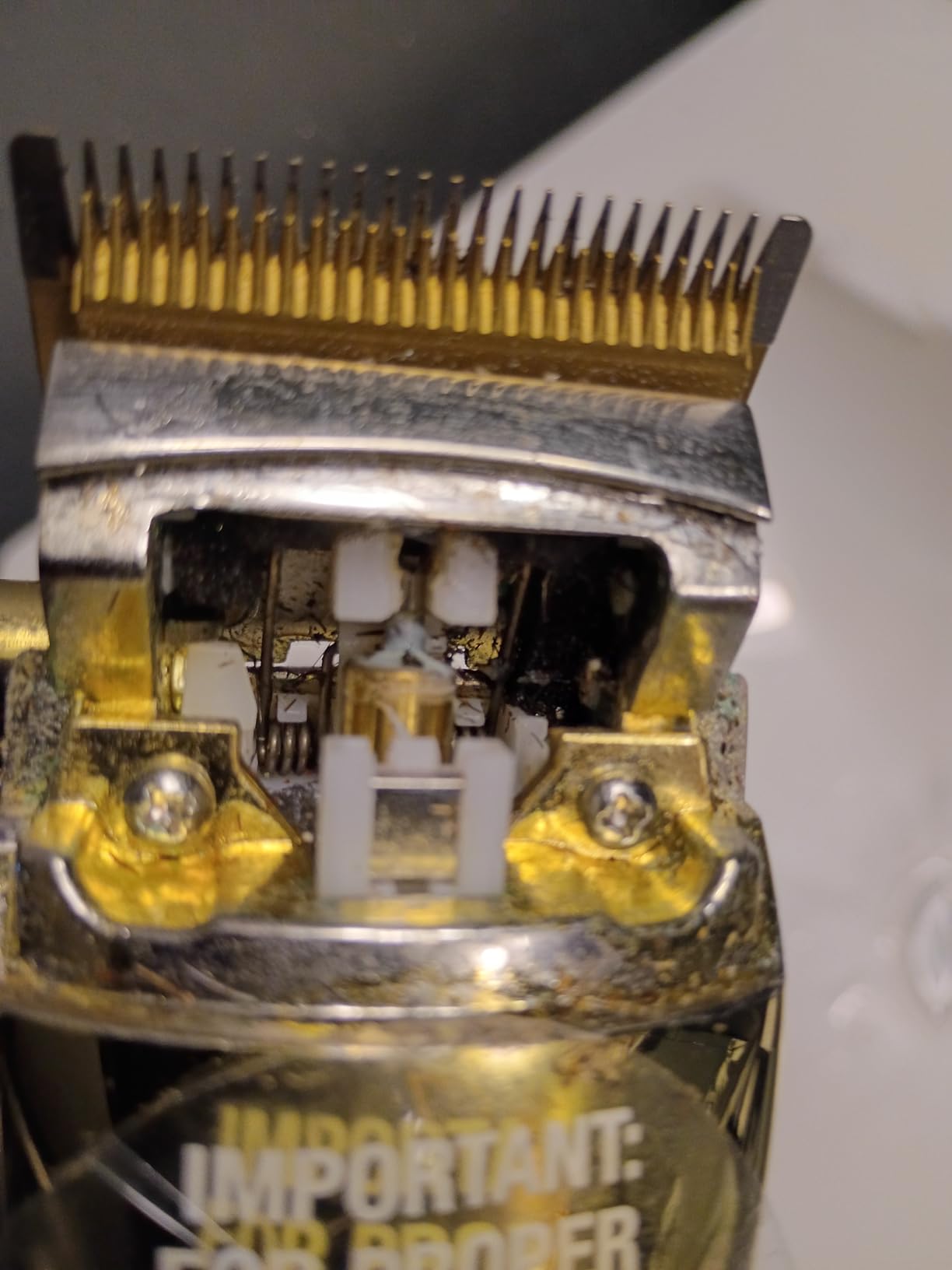
The blade is the clever part. It has built-in oil reservoirs that reduce friction and lower blade temperature, which is a mechanical answer to the heat complaint that shows up on almost every other machine in this list. If you forget to oil it, the blade is still doing part of the work for you.
Runtime is quoted at up to 2.5 hours, so one charge covers a full day of regular appointments with room to spare. The included guards handle smooth fades and beard work, and the machine takes the wider FXONE accessory range if you want to build it out.
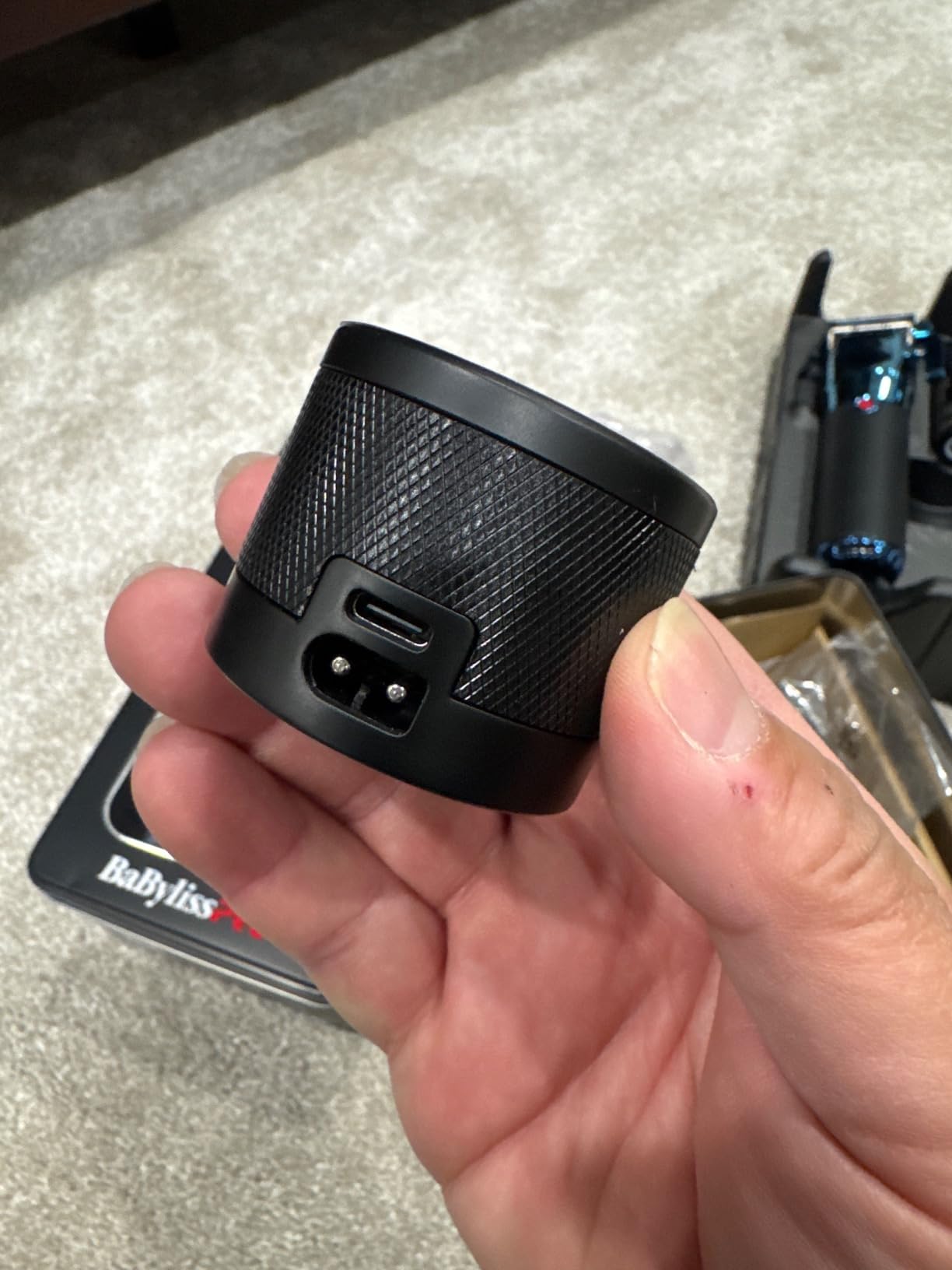
Two limitations are worth planning around. First, the accessory ecosystem is not fully included, so getting the most from this machine means buying guards and attachments separately. Second, it is cordless-only, with no way to work while plugged in, so a flat battery is a genuine dead end mid-appointment.
The battery and the accessory spend are the two costs that separate this from a cheaper cordless. Over a long life, though, a replaceable pack is the reason this machine stays on the floor while a sealed-cell machine gets replaced.
What to check before you commit to the FXONE
Decide your power source up front. Because the battery is a swappable pack, you can keep a second charged pack as a permanent part of your station kit and never be the barber who stops mid-cut.
Budget for the guards you actually need rather than relying on what is in the box. Professionals mostly work with a lever and clipper-over-comb, and buying the guards you will really use is a better investment than a full range of sizes you never fit.
Where it falls short behind the chair
No corded fallback is the main one. If your station has reliable power within arm’s reach, the cordless-only design is a freedom; if you cut long services, the ability to plug in and keep going has real value.
The second is the accessory cost. Budget-conscious buyers should weigh this against a corded machine that comes complete, because the sticker price is only part of what a clipper costs to equip properly behind a chair.
6. BaBylissPRO FX+ Cord/Cordless – Repeatable Lengths and a Three-Hour Battery
BaBylissPRO Hair Clippers for Men, All-Metal Build, 3-hr Runtime, Gold
N1 brushless motor
DLC titanium gold blade
5-detent taper arm
USB-C, 3 h
1.83 lb
Pros
- Clean fast fades at roughly half the time of older corded
- Noticeably cooler running
- Click-in length settings are repeatable
- Premium all-metal build
- USB-C charging
Cons
- Detent lever has a learning curve
- Included guards are flimsier than optional premium guards
- US two-pin plug
The FX+ fixed the thing I disliked most about adjustable-blade clippers. Instead of an infinitely adjustable lever that never repeats a setting, it uses a 5-detent taper arm, so each click is a discrete, repeatable length change you can find again on the next client.
Owners switching from aging corded machines report the biggest gains in speed, low heat and blend quality, with fades taking roughly half the time of their old clipper. The DLC/Titanium gold taper blade and the all-metal cord/cordless body came across as noticeably cooler to the touch than the Andis machines they compared it to.
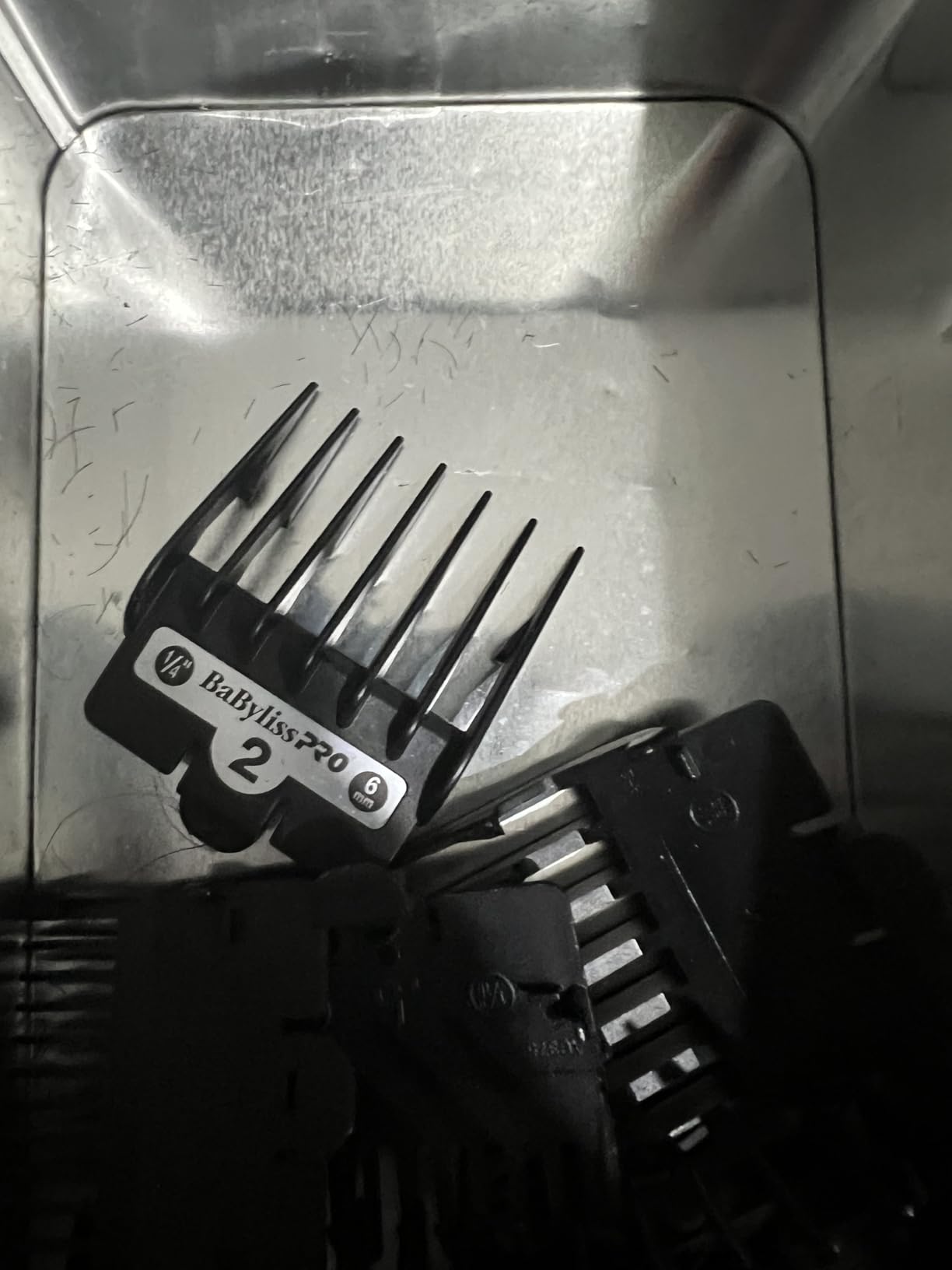
Runtime is quoted at up to three hours, and the battery holds multiple full haircuts per charge. Charging is USB-C, which matters more than it sounds: you can top it up from the same cable as everything else on your phone and your trimmer instead of hunting a proprietary brick.
The knurled barbell grip gives you a positive hold without a soft rubber sleeve, and at 1.83 pounds the body carries a premium all-metal feel without becoming a wrist problem through a long day.
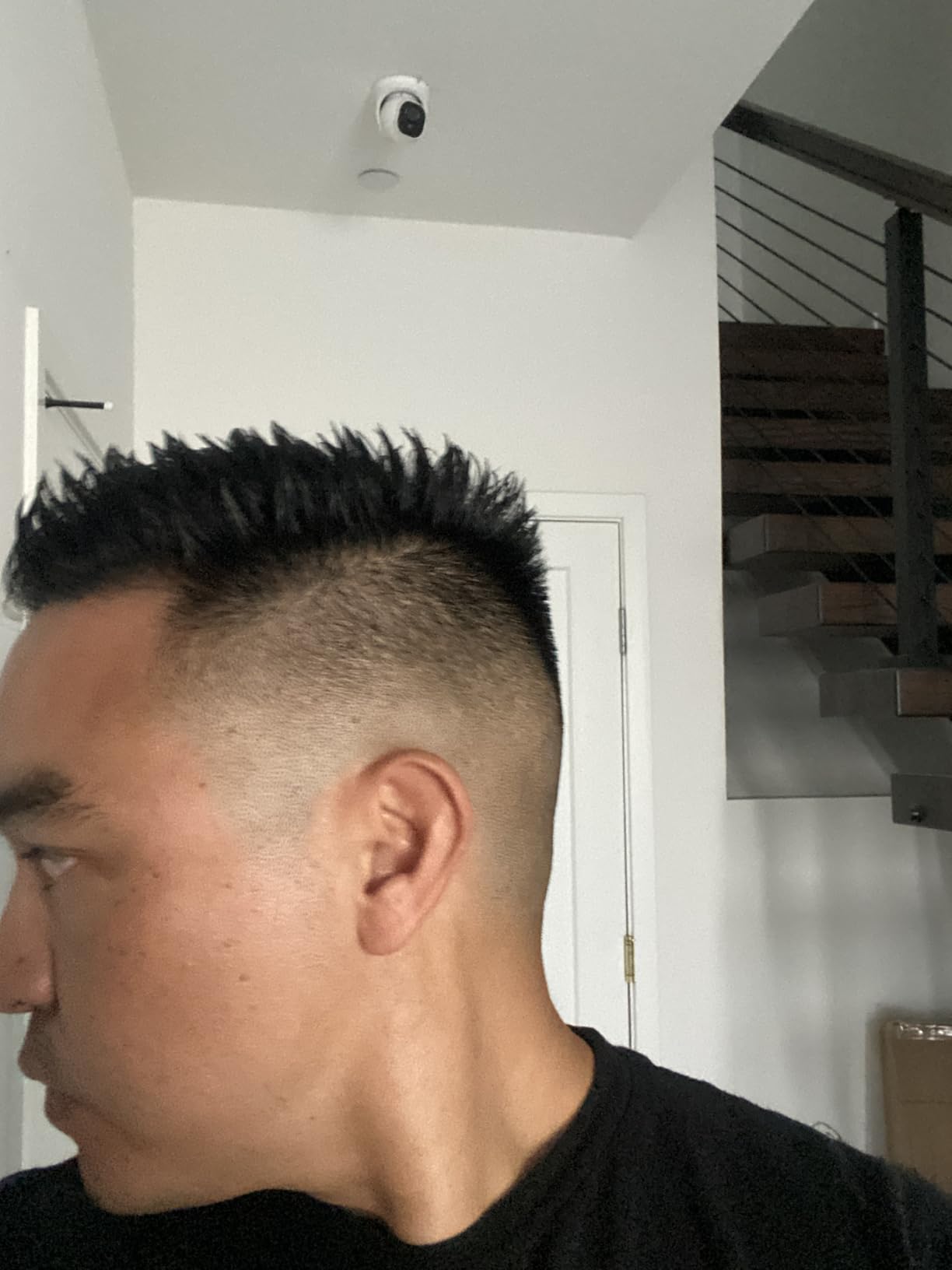
Three drawbacks show up in the reviews. The detent lever has a real learning curve, because you are learning five discrete gaps rather than one smooth adjustment, and it will feel stiff for the first week. The included guards are noticeably flimsier than the optional BaByliss premium guards, and the plug is a US two-pin.
A small number of reviews focus on packaging condition and missing accessories rather than the clipper itself. Worth checking the box before your first appointment rather than discovering a missing guard with a client in the chair.
What to check before you commit to the FX+
Spend an hour learning the five detents on a practice head. Once the gaps are in your fingers, the repeatability becomes the main reason you will not want to go back to a continuous lever, and blended work becomes far more consistent client to client.
Buy the premium guards rather than using the ones in the box. Flimsy guides are the cheapest thing to fix on a new machine and the most annoying thing to keep working with.
Where it falls short behind the chair
Five detents is not many positions. If you like fine control between very short lengths, a continuous lever or a fully adjustable blade gives you more room to work, at the cost of repeatability.
It is also a heavy machine at 1.83 pounds, so if wrist fatigue is already a problem in your day, the lighter cordless options are a better long-term answer than a heavier one with nicer detents.
7. BaBylissPRO x Tomb45 – Four Hours of Runtime and a Charge Display
BaBylissPRO x Tomb45 Wireless Charging Hair Clipper for Men, Black
DS1 dual-speed 6800/7500 RPM
Dual lithium batteries, 4 h
5-position locking lever
6 guards
Pros
- Highest rated machine in this roundup
- Charge display removes battery guesswork
- Up to 4 hours of runtime after about 2 hours charging
- Quiet and cool over long sessions
- Works cordless
- plugged in
- or on a charging pad
Cons
- Wireless charging pad sold separately
- Slightly heavy in the hand
- Overkill for occasional cutting
The Tomb45 carries the highest average rating in this roundup at 4.8, with an 88 percent five-star share, and the reason is straightforward: it removes the two things cordless barbers complain about most, which is running out of battery and not knowing how much is left.
It runs dual lithium-ion batteries for up to four hours of runtime after roughly two hours of charging, and one owner logged six full haircuts on a single charge. A charge-level display means you can see the remaining capacity instead of guessing and finding out halfway through a cut.
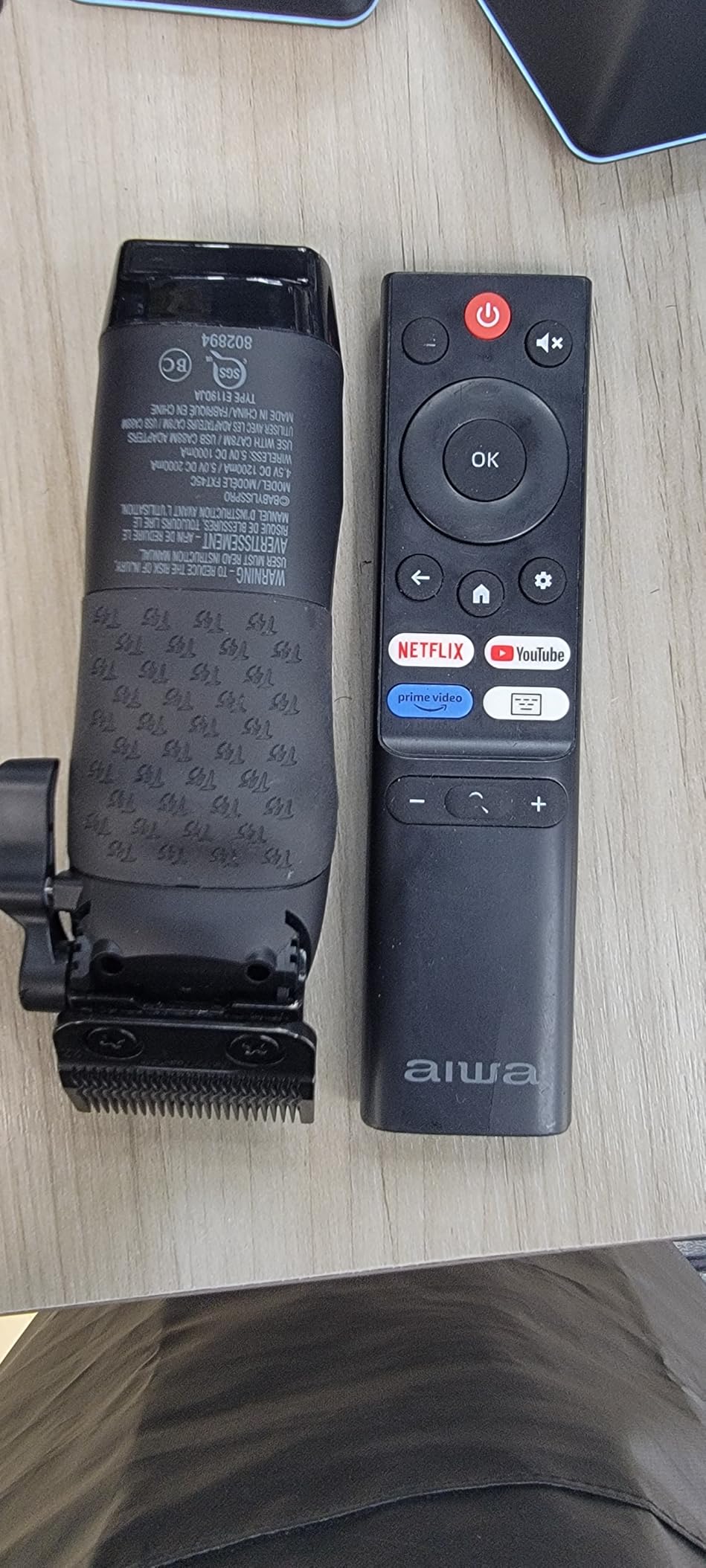
The DS1 dual-speed motor gives 7,500 RPM on high and 6,800 on low, and the high setting is what I would use for bulk removal on thick, coarse hair while the low setting handles the blend. You can also work it plugged in through the manufacturer cord, which removes the dead-end problem of a cordless-only design.
The 5-position locking stretch taper lever holds its setting once you lock it, and six precision guards at 0.5, 1, 1.5, 2, 3 and 4 cover most of the lengths a barber actually fits. It also takes standard BaBylissPRO guards, so the accessory world stays open.
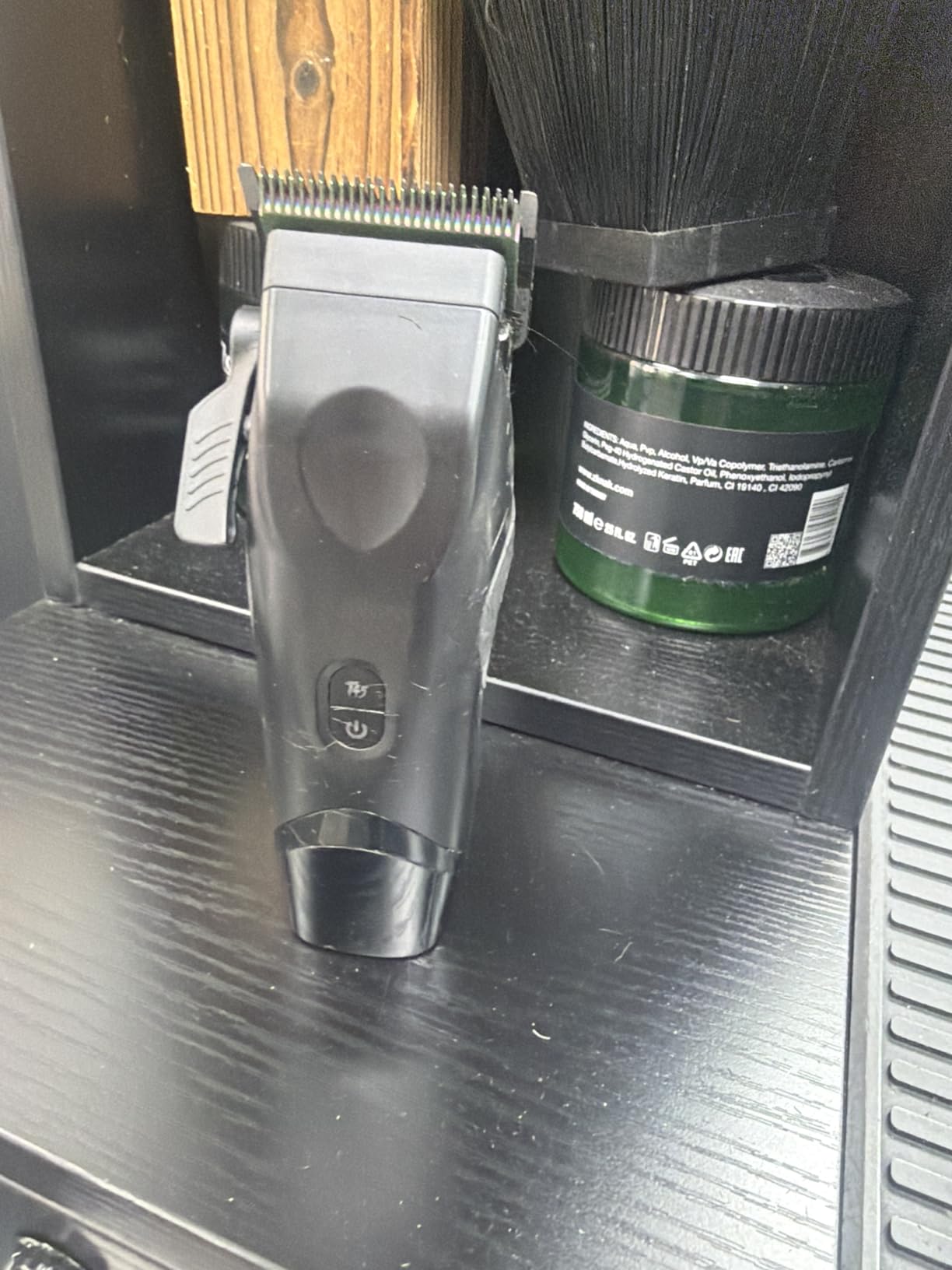
The catch is in the name. The wireless charging pad is sold separately, so the headline feature is a purchase rather than an inclusion, and that is the near-universal caveat across the reviews. It is also slightly heavy in the hand, and it is more machine than a barber cutting occasionally needs.
It carries a two-year warranty, which is the longest stated cover in this roundup and worth noting if you are outfitting a shop where machines get used hard.
What to check before you commit to the Tomb45
Do the math on your day. Four hours of runtime means a very different thing to a barber doing fifteen short cuts and one doing three long services, so count your actual client load before you assume battery life is the feature you need.
If you are buying for a shop, check where your charging station sits. The wireless pad is an extra purchase, and with the ability to run plugged in as well, decide whether you need the pad at all before adding it to the kit.
Where it falls short behind the chair
It is the heaviest cordless option here, and on a fifteen-client day that adds up. If your priority is minimum wrist fatigue rather than maximum runtime, a lighter brushless machine is a better trade.
The lower review count compared with the older mainstream models also means less long-term data. Rating is excellent, but a machine with a few hundred reviews tells you less about five-year durability than one with tens of thousands.
8. JRL Ghost FF2020C – Quiet Blending With Smart-Clip Load Sensing
JRL Ghost FF2020C-W Professional Cordless Hair Clipper for Barber Hair Cutting, Smart-Clip Technology Prevents Blade Drag, Reset IQ Charging Dock, For Fading, Dual-Speed 6000–7500 RPM Motor, White
Smart-Clip load sensing
Onyx Fade Blade
Reset IQ dock, 5 h
6000-7500 RPM
Pros
- Load sensing prevents drag in thick dense hair
- Exceptionally quiet with low vibration
- Produces the smoothest blends owners own
- Sharp Onyx fade blade with a smooth 5-position lever
- Long runtime for a cordless machine
Cons
- Blade can run warm during use
- Some deliveries arrive without the charging dock
- Occasional reports of used-condition machines
The JRL Ghost is the quietest machine I tested, and that turned out to matter more than I expected. It runs with low vibration, and barbers who own it say clients tolerate it without a guard, which is the highest compliment a fade clipper can earn.
Its distinguishing feature is Smart-Clip technology: the motor senses blade resistance and automatically boosts power to prevent drag or stalling. In practice that meant it kept moving through thick, dense hair at the same rate it moved through a one-and-a-half guard, which is exactly the behaviour you want when a client is sitting still and you are trying not to make three passes.
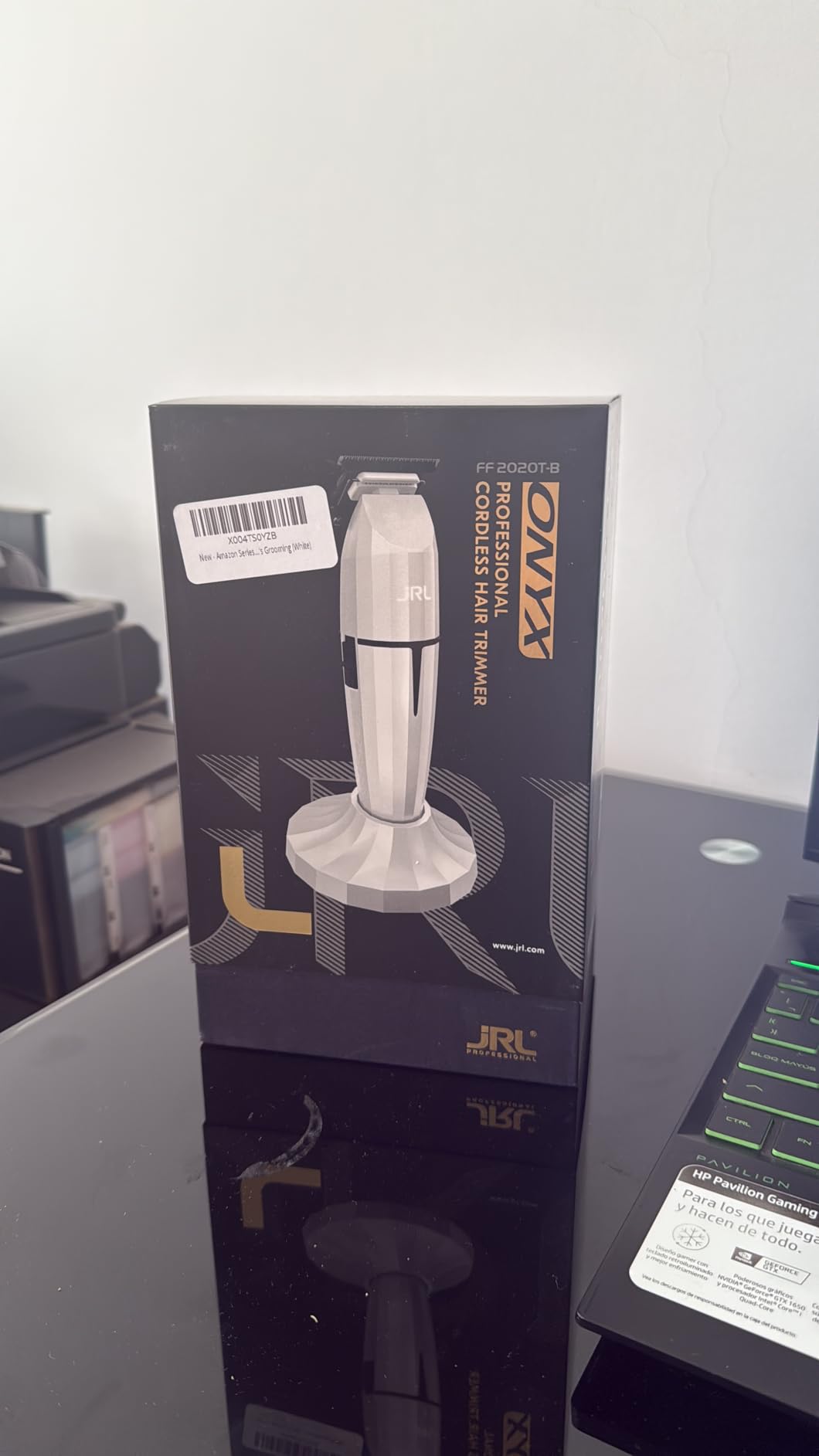
The Onyx Fade Blade is engineered for zero-gap skin fades, with clean blends, sharp transitions and skin-level work. Owners describe the results as the most even, effortless blends of anything in their kit, often preferring it to higher-priced Wahl and TPOB models they already own.
The dual-speed high-torque motor runs 6000 to 7500 RPM, covering bulk removal, precision fading and blending. The Reset IQ charging dock maintains battery health and delivers up to five hours of cordless runtime, the longest stated figure in this roundup.
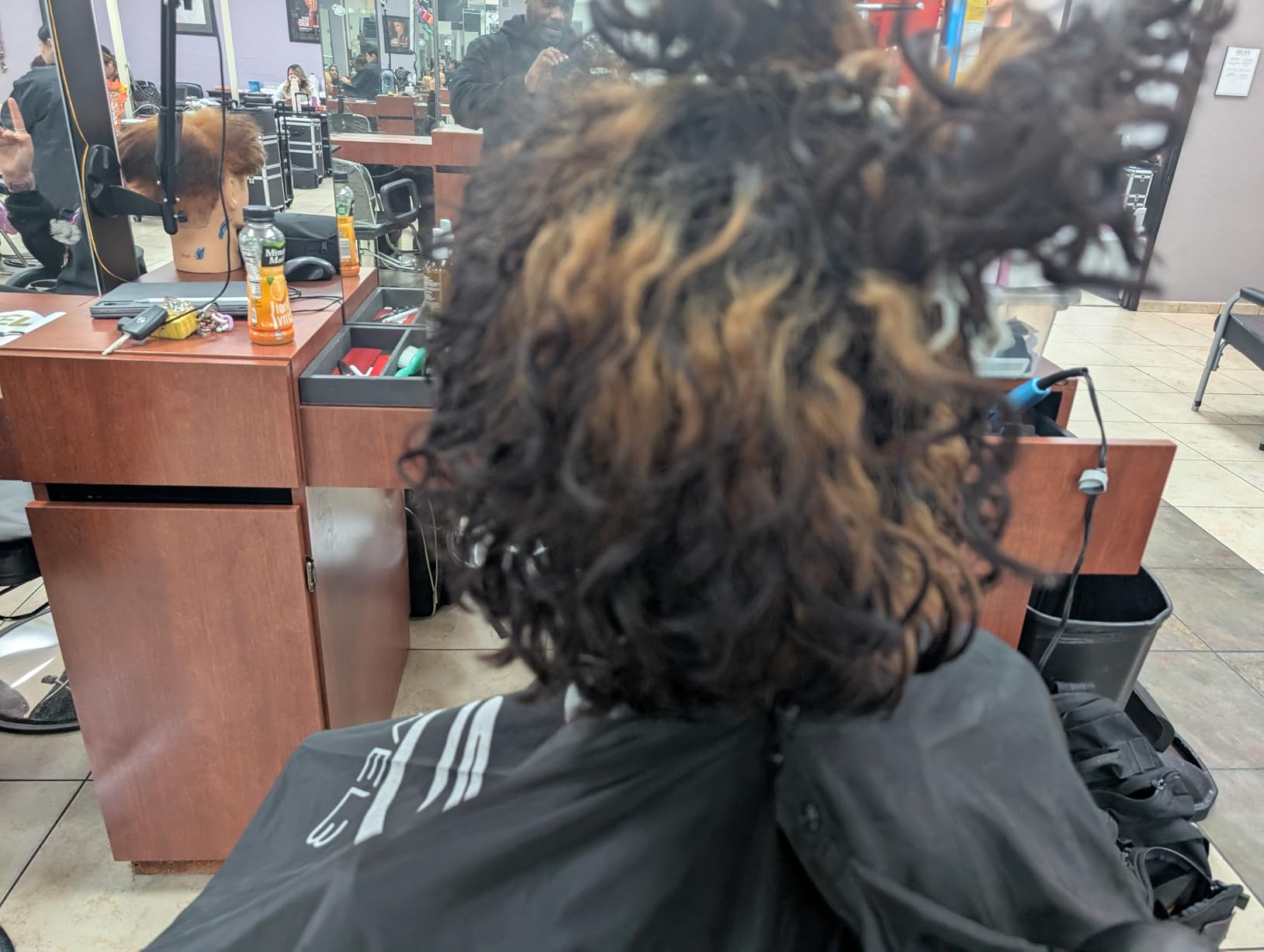
The negatives are few and narrow. Some users report the blade running warm during use, and a small number received scratched, used-condition units with a non-working LED display. Some deliveries also arrive without the charging dock, so check the box contents before your first day.
JRL is also less widely known than Wahl or Andis, and a lot of the long-term durability data simply does not exist yet. Barbers who standardize on JRL like it for good reason, but you are buying a shorter track record with it.
What to check before you commit to the JRL Ghost
Test it on your densest client before you commit a full book to it. The load sensing is the reason to buy this machine, and you only see its value on hair that would stall a lesser motor.
Confirm the charging dock is in the box. It is the single most repeated caveat in the reviews, and a station without a dock is a station where somebody is unplugging a clipper between clients.
Where it falls short behind the chair
The shorter track record is the real limitation. For a shop owner planning to outfit a chair for a decade, fewer years of owner data means more uncertainty about parts availability and long-term blade availability than you get with an established brand.
Warm blades under sustained use are also reported. Oil the Onyx blade before every client and this is a non-issue, but it is a machine that asks for more attention between appointments than a heavier corded rotary does.
9. Wahl 5 Star Senior Corded – The On-Scalp Taper and Backup Machine
Wahl Professional 5 Star Senior Corded Clipper, V9000 Motor, Model 8545
V9000 motor
Adjustable taper lever
Adjustable 0000 blade
19 oz, 8-foot cord
Pros
- Built for on-scalp tapering and clipper-over-comb
- V9000 motor runs cooler and faster than standard
- Durable aluminum housing
- Adjustable lever with 0000 blade for tight zero-overlap
- 8-foot cord and a full kit in the box
Cons
- Corded only with no cordless option
- Heavier than modern cordless at 19 ounces
The Senior is the machine most shops keep for a specific reason: it was designed for on-scalp work. Tapering, fading and clipper-over-comb are what the taper lever and the adjustable 0000 blade were built for, and it has been refined over decades of barbershop use rather than designed from a spec sheet.
Under the housing is the V9000 motor, which runs cooler and faster than a standard clipper. That combination of torque and heat management is why it holds up on a long day, and owners consistently credit the cool running alongside the precise tapering.
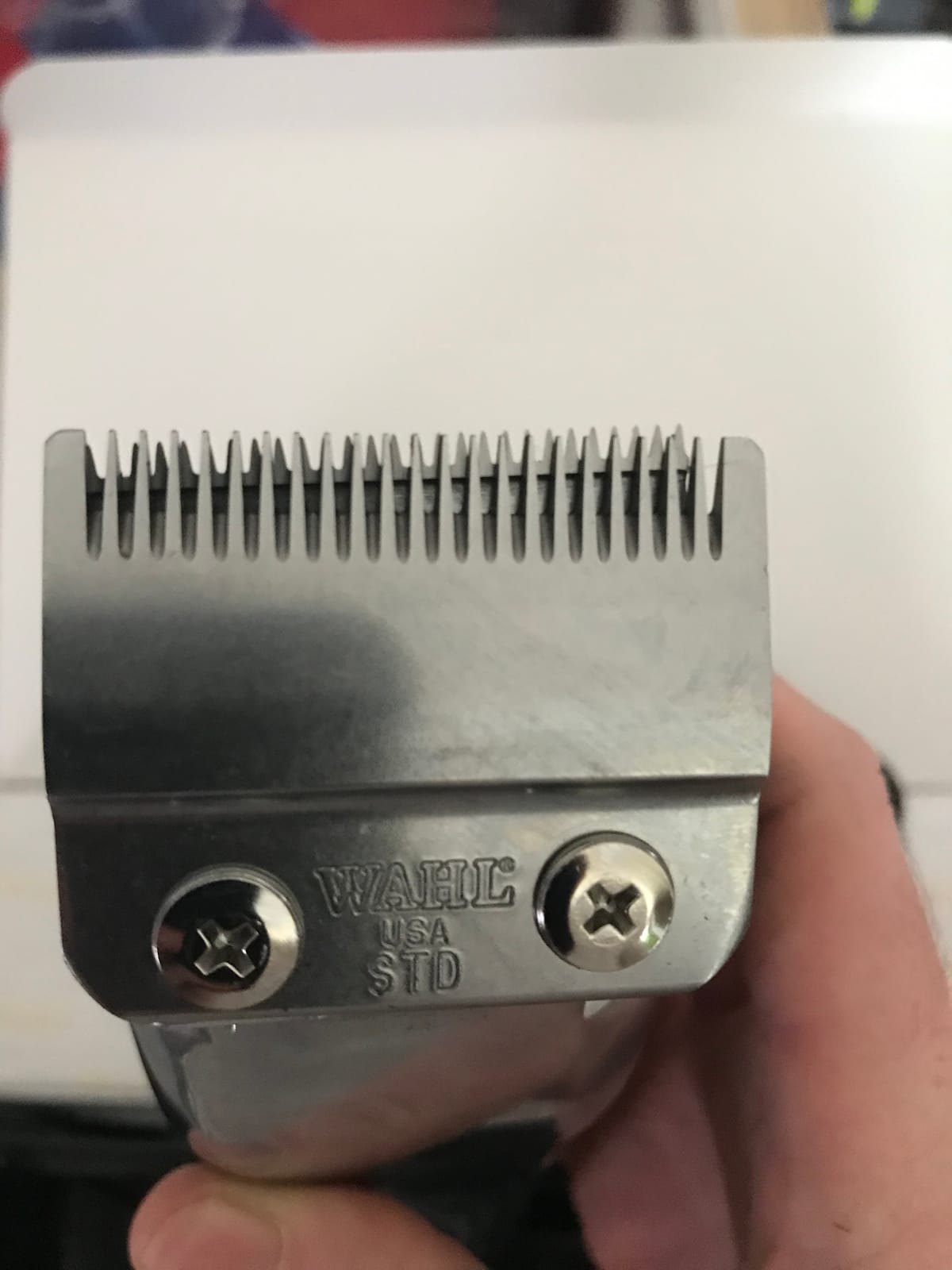
The blade adjusts to zero-overlap, and with the 0000 blade fitted you can get tight to the skin without a separate gap setting. At 19 ounces and 6.5 inches long it is a substantial machine, and I found that weight reassuring rather than tiring for on-scalp passes because it stays planted.
The 8-foot professional-grade chemical-resistant cord gives plenty of range around a chair, and the kit includes three cutting guides, oil, a cleaning brush, instructions and a red blade guard. For a student outfitting a first station, everything you need on day one is in the box.
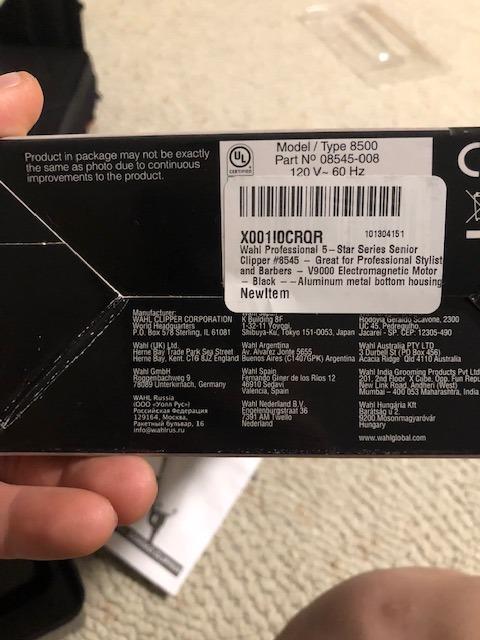
There are only two real drawbacks and both are the same drawback. It is corded, and at 19 ounces it is heavier than the modern cordless machines, so there is no battery to manage but there is weight to carry through every clipper-over-comb pass.
With more than 3,500 ratings behind it, the reliability question is largely settled. This is a known machine with a known blade ecosystem, which is a genuine advantage for anyone who wants to keep the same parts for a decade.
What to check before you commit to the Senior
Test it for a full book of clipper-over-comb work, because that is what it is for. If your day is heavy on tapering and scissor work over the top, this is the machine that will feel best in your hand all day.
Plan your station layout around the 8-foot cord. It is long enough to reach around a chair comfortably, but the weight and length mean you want a clipper cord holder on the wall rather than letting it hang by the cable.
Where it falls short behind the chair
Corded only, with no battery option at all. Mobile and house-call work is out, and a quick touch-up away from the chair means walking back to the station with a machine in your hand.
It is the heaviest clipper here at 19 ounces, so if wrist fatigue is already a concern in your day, a lighter brushless machine will serve you better over a fifteen-client shift even if the tapering is not quite as specialised.
10. Andis Master Adjustable Blade – 14,000 SPM Fade Speed on a Shoestring Budget
Andis 01815 Master Adjustable Blade Hair Clipper, 14000 SPM, Silver
14000 SPM rotary motor
Adjustable 000-1 blade
Thumb on/off
Corded
1.25 lb
Pros
- Very high cutting speed for fast fades
- Adjustable blade simplifies transitions
- Sturdy build with no rattling
- Quiet and cool when set up correctly
- Sharp consistent cuts without pulling
Cons
- Adjustment handle can shift mid-cut on some units
- Motor noise can grow over time
- Very sharp blades can catch skin
- Quality control is inconsistent on a minority of units
The Andis Master is the value pick here, and when it works it is genuinely fast. The high-torque rotary motor delivers 14,000 cutting strokes per minute, and owners describe finishing fades and blends in roughly half the time it takes them with a cordless machine.
The adjustable blade runs from fine to coarse, size 000 to 1, which means you can move between lengths without swapping guards. For a student learning fades, that is a real shortcut: you are learning blending rather than spending the first month learning which guard to fit.
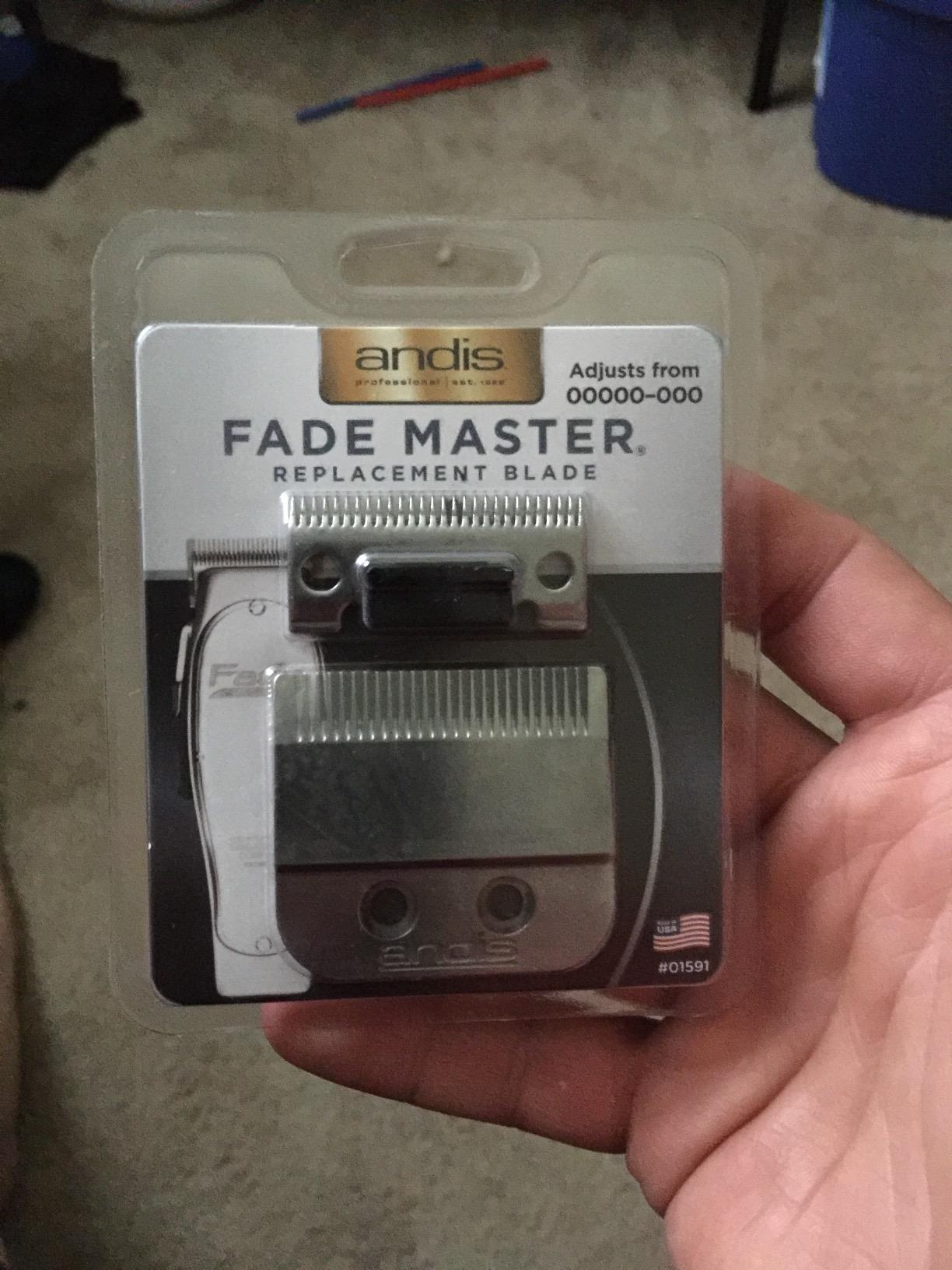
At 1.25 pounds and 2 by 1.75 by 6 inches it is a compact, corded machine with a thumb-controlled one-hand on and off. Owners describe a sturdy, solid-feeling build with no rattling or flimsy parts, and cuts that are sharp and consistent without pulling or snagging.
Run quietly and it stays cool to the touch when it is properly set up, which is the correct operating condition for any adjustable-blade clipper. The lever is the part that needs attention at purchase, not after.
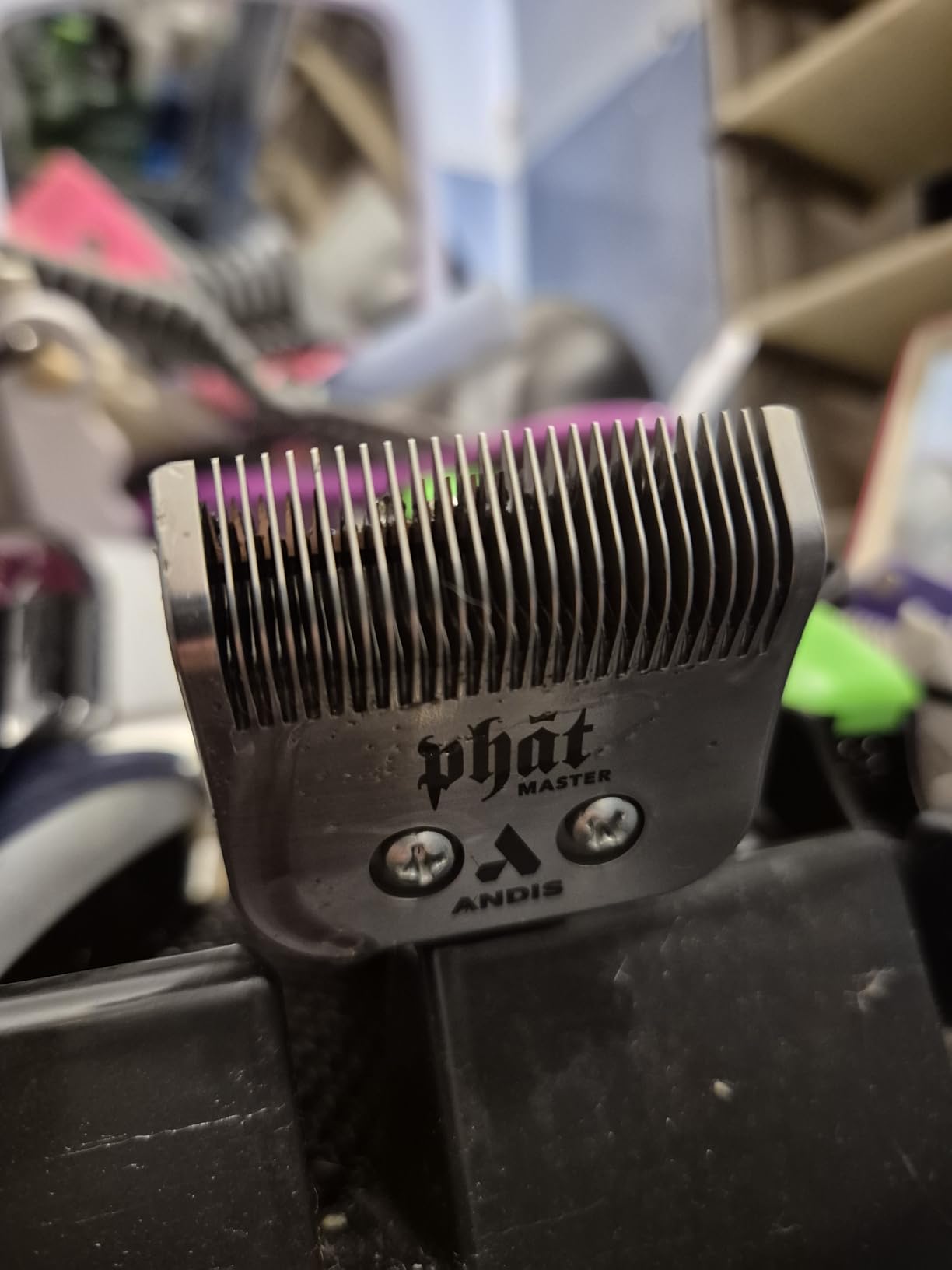
The one-star reviews concentrate on two things. A loose blade-adjustment handle that shifts mid-cut, and motor noise that grows over time and needs a screw adjustment. The noise is fixable with a screwdriver; a handle that moves during a fade is not, because it changes your gap without telling you.
There is also real quality control variance, with a minority of machines failing entirely within months. And those very sharp zero-gap-style blades will catch skin if you are careless, which is a technique issue but worth naming before a new barber picks one up.
What to check before you commit to the Andis Master
Check the adjustment handle before your first paid cut. Set the lever where you want it, tap the housing, and confirm the gap does not shift. If it moves, return it rather than trying to service it yourself.
Buy a spare set of blades and learn to sharpen them. This machine’s value depends on long-term ownership, and a blade you can maintain rather than replace is where most of that value comes from.
Where it falls short behind the chair
Build quality is inconsistent across units, and that is the honest reason to keep a second machine at the station. A machine that fails mid-week costs more than the difference between this and a better one.
It is corded, and the adjustable blade means less precision than a fixed-blade fade machine. If you are moving from school into a shop where fades are most of your book, spend the extra on a dedicated fade clipper and keep this as the bulk and backup machine.
How to Choose a Professional Clipper
Six things decide whether a clipper works behind a chair, and none of them are the ones on the box. Here is the order I would weigh them in.
Motor torque under load, not peak speed. Strokes per minute figures are not comparable across brands because manufacturers measure differently. What matters is whether the machine keeps its cutting rate when it meets dense hair, which is what brushless motors with load sensing are built to do.
Blade geometry and taper control. A Stagger-Tooth or wedge blade diffuses the line between two lengths, which is what produces a blended fade. An adjustable lever gives you range between lengths; a fixed-blade machine with the right geometry gives you blend. Decide which of those you need before you shop.
Runtime and cord versus cordless. A corded machine never dies mid-cut and gets heavy in the hand. A cordless machine gives you freedom and needs a charging plan. Most working barbers end up with both, for different reasons.
Weight and grip over a long shift. Anything under about 10 ounces feels noticeably different from 19 ounces by client twelve. A knurled or rubberized grip matters more than you think when your hands are wet and you are working fast.
Guard and accessory range. Most professionals work with a lever and clipper-over-comb, so a box full of plastic guides is not a selling point. What matters is whether the guards it takes are the ones you can buy again locally.
Blade and parts ecosystem. This is the factor that decides which brand stays inside your shop. Blades wear out on a schedule, and if the replacement blades for your machine are hard to get, you will end up standardising on a different brand entirely.
Wahl, Andis, JRL or BaBylissPRO: which ecosystem should you standardise on
Wahl and Andis have the deepest parts networks, and the practical effect is that a shop can keep every chair running on one blade system. Wahl’s adjustable taper lever and Andis’s detachable drive-cap and adjustable blades are the two most widely serviced mechanisms in the trade.
JRL and BaBylissPRO trade ecosystem breadth for machine quality. The JRL Onyx-style fade blade and the FXONE accessory range are excellent tools, and both brands are now widely sold through specialist barber supply stores, but you are committing to fewer available parts than you would with Wahl or Andis.
My advice is to pick the brand that matches the majority of blades already in your shop. If you are outfitting a new shop with several chairs, standardising on one ecosystem cuts your inventory and your training time.
Do you need a trimmer at the station too?
Yes, almost always. A clipper and a trimmer are not redundant. The clipper does bulk removal, tapers and blending, and the trimmer handles lineups, necklines, around the ears, beard work and edge detailing where you need absolute control in a small space.
The two questions barbers get most are which single clipper to buy as their first professional machine, and which pairing to run at a station. For a first machine, buy the best all-rounder you can afford rather than the cheapest, because a poor first clipper teaches you bad habits. For a station, a corded clipper plus a cordless trimmer is the setup most working barbers end up with.
How many clippers should a barber own?
Two. One cordless for fades and freedom, and one corded for bulk removal and long services, rotated so one charges while the other works. That rotation also answers the heat complaint that runs through the reviews on the heavy corded machines.
Do professional barbers use cordless clippers?
Most of them do, but rarely as the only machine. Cordless models now handle fades and bulk removal well enough that the flexibility matters behind a chair, and the charge-level displays on the newer machines have taken a lot of the anxiety out of it. The remaining holdouts tend to be shops where every service is long and every appointment is near a wall socket.
Clipper Maintenance: Clean, Oil, Align, Disinfect
Every complaint about heat, pulling and dull cutting on this list traces back to one of five things a barber skips between clients. The sequence takes about two minutes per machine.
Brush off loose hair first, dry. Do this before anything else, every client, every time. Hair in the drive housing is what makes a motor run hot and what makes a blade grab.
Check the blade screws and alignment. A moving blade that has drifted out of alignment is the number one cause of pulling, and it takes a screwdriver to fix.
Oil the blade, not the housing. One drop of clipper oil along the moving blade and let it run for a few seconds. Dry cutting is what dulls edges and generates the heat people report on heavy corded machines.
Brush the housing and vents clear. A compressed-air can or a stiff brush on the vents keeps the motor from cooking itself over a long shift.
Disinfect between clients per your state board rules. Wipe the body and the drive cap with a barber-grade disinfectant and let it air dry. Do not spray directly into the vents.
On blade changes, the honest guidance from working barbers is to plan around a replacement schedule rather than a condition. Budget for fresh blades on a regular cycle rather than waiting for a blade to go dull, because a dull blade pulls, pulls irritates the client, and irritates you for the rest of the day. Keep a spare blade for every machine at the station, because a dead clipper with a client in the chair is the most expensive minute in a barber’s week.
For readers cutting at home rather than behind a chair, our guide to the best hair clippers for home haircuts covers the lighter machines and value options, and our best dog clippers roundup covers the grooming-oriented Andis models in this list.
Frequently Asked Questions
Which clippers do professional barbers use?
Working barbers mostly use two or three machines rather than one. A corded rotary machine with an adjustable taper lever handles bulk removal and clipper-over-comb work, while a lighter brushless cordless machine handles skin fades and necklines. Wahl and Andis dominate because their blades and parts are the easiest to replace. Plenty of barbers add a JRL or BaBylissPRO fade machine once their book is mostly blends.
Which hair clipper is better, Wahl or Andis?
Wahl is the safer all-round choice, and Andis is faster on fades. Wahl’s 5 Star Senior and Magic Clip give you an adjustable taper lever and zero-overlap blades, and Wahl machines tend to run cooler under sustained load. Andis machines such as the Master and Excel push higher strokes per minute and adjust blade geometry for sharper, faster fades. Shops that standardise usually pick one brand so blades and parts stay interchangeable.
Is JRL or Wahl clippers better?
Wahl is better established and JRL is better for quiet blending. Wahl has decades of service data and the widest parts network, so a shop can standardise on it without hunting for replacements. JRL models pair a load-sensing motor with a fade-focused blade and run noticeably quiet, which owners value for close work without a guard. For a first professional machine, Wahl is the safer foundation; for fade-heavy work, JRL is worth the smaller parts network.
Are JRL Onyx clippers good?
Yes, and they are regularly recommended by working barbers for fades. JRL’s Onyx fade blade is built for zero-gap skin work, and the current JRL Ghost pairs it with Smart-Clip load sensing that boosts motor power when the blade meets resistance, so it does not drag through dense hair. Owners consistently praise the quiet, low-vibration operation and the blend quality. The reported drawbacks are occasional blade heat and a thinner long-term reliability record than Wahl.
Do professional barbers use cordless clippers?
Most do, but almost never as their only machine. Cordless brushless models now handle fades and bulk removal well enough that the freedom to move around the chair matters, and newer machines with charge-level displays have removed most of the battery anxiety. Barbers still keep a corded machine for long services because it never dies mid-cut. The common setup is a cordless fade machine rotated against a corded workhorse.
How often do barbers change clipper blades?
Most barbers replace a fade blade every few weeks and a bulk blade every couple of months, and they keep a spare at the station either way. Rather than waiting for a blade to dull, plan on a cycle, because a dull blade pulls, pulling irritates the client, and a dull blade generates the heat that shortens motor life. You can also extend blade life substantially by brushing loose hair and oiling after every single client.
What is the best brand of professional hair clippers?
Wahl and Andis are the safest answers for long-term ownership because their blades and parts are the easiest to source, and most shops standardise on one of them. JRL and BaBylissPRO make the strongest fade and brushless machines, and both are now widely sold through specialist barber supply stores. BaBylissPRO stands out for its all-metal housings and replaceable batteries, and JRL for quiet operation and load-sensing motors.
Can you bring barber clippers on a plane?
Yes, and it is straightforward. Corded clippers travel in your checked bag or carry-on with no special handling, and the removable blade and clip guards should be taken off and packed separately in case security wants to see them. Cordless models are also permitted, but the lithium-ion battery goes in your carry-on rather than a checked bag, and a damaged or swollen battery is not allowed through security at all.
Which Professional Clipper Should You Buy?
If you are choosing the best professional hair clippers for barbers and want one answer, take the Wahl 5 Star Magic Clip Cordless. It blends cleanly, runs quiet and cool, and has the deepest parts ecosystem of anything on this list, which is what matters when a machine has to survive five years behind a chair. It is our pick for 2026 because it is the one most barbers come back to.
Match the machine to the work instead. Fade-heavy book: Wahl 5 Star Vapor for skin work, or the JRL Ghost FF2020C if quiet blending matters more to your clients than heat management. Bulk removal on dense hair: the Andis UltraEdge Two-Speed, accepting the weight and the warm housing. Battery-driven days with mobile appointments: BaBylissPRO x Tomb45 for runtime, or the FXONE if a replaceable battery and an all-metal body matter more than having a cord option.
Students buying a first professional machine should start with the Andis Master Adjustable Blade and spend what they save on good blades and a second trimmer. Shop owners should standardise on one brand, keep two machines per chair on rotation so one charges while the other works, and buy a spare blade for every machine on the wall.
Whichever you pick, oil it after every client and check the alignment before every cut. That habit will do more for the quality of your fades than the difference between any two machines on this list.