

The best studio headphones under $200 are not one-size-fits-all: a vocalist needs isolation, while a mixer often needs an airy soundstage. My short answer is to start with the Audio-Technica ATH-M50x for a versatile closed-back pair, the beyerdynamic DT 990 PRO for private mixing, or the Sennheiser HD 280 Pro when keeping outside sound out is the priority.
There are eight legitimate choices here, not eight versions of the same decision. I compared their supplied driver, impedance, cable, comfort, isolation, replaceable-part, warranty, and review information, then matched those facts to recording, mixing, editing, streaming, and a small home studio.
Studio headphones are wired monitor headphones made to help you hear a recording clearly while you work. They are not automatically “flat,” and they cannot replace learning your room and speakers, but they give a practical second reference when speakers are impossible or when tracking requires a quiet cue mix.
The recurring question in producer communities is whether one set can do recording and mixing equally well. It can, with a compromise: closed-back headphones reduce bleed and distractions, while open or semi-open models trade isolation for a more spacious presentation.
If you make electronic music, headphones are only one part of the chain. Our complete dubstep production guide puts monitoring decisions in the wider context of arranging, sound design, and checking a mix on more than one system.
Every model below fits the stated budget at the time of the supplied product research, but listings and availability move. I have deliberately kept individual product prices out of this guide so the choice stays focused on the features that affect your sessions.
Table of Contents
Top 3 Picks Answer the Biggest Studio Needs
Pick the ATH-M50x if you want a flexible closed-back starting point, the DT 990 PRO if your room is quiet and mixing is the main job, and the HD 280 Pro if isolation matters more than an open soundstage. Those recommendations reflect the documented designs and features rather than a claim that one sound signature suits every ear.
The top-three cards are a fast route to a shortlist, not a substitute for deciding whether you record around microphones, work in a noisy room, or sit for long editing sessions. The next overview keeps all eight candidates visible before the detailed reviews.
Best Studio Headphones Under $200 in 2026 at a Glance
This comparison spans closed-back, semi-open, and open-back monitor headphones. Check the cable and impedance against your audio interface or headphone output before settling on a favorite.
| Product | Specifications | Action |
|---|---|---|
 Audio-Technica ATH-M50x Audio-Technica ATH-M50x |
|
Check Latest Price |
 Sony MDR-7506 Sony MDR-7506 |
|
Check Latest Price |
 beyerdynamic DT 770 PRO beyerdynamic DT 770 PRO |
|
Check Latest Price |
 Shure SRH840A Shure SRH840A |
|
Check Latest Price |
 AKG K240 Studio AKG K240 Studio |
|
Check Latest Price |
 Sennheiser HD 280 Pro Sennheiser HD 280 Pro |
|
Check Latest Price |
 beyerdynamic DT 990 PRO beyerdynamic DT 990 PRO |
|
Check Latest Price |
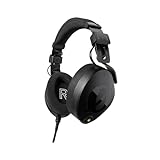 RØDE NTH-100 RØDE NTH-100 |
|
Check Latest Price |
“Best” depends on the job. Closed designs dominate vocal tracking and shared spaces; the DT 990 PRO and the AKG K240 Studio make more sense when sound leakage is acceptable and spatial perspective is useful.
1. Audio-Technica ATH-M50x Is Our Best All-Rounder
Audio-Technica ATH-M50X Professional Studio Monitor Headphones, Black, Professional Grade, Critically Acclaimed, with Detachable Cable
45mm drivers
38 Ohms
Detachable cable
Pros
- 45mm drivers
- Sound isolation
- Swivel cups
- Detachable cable
Cons
- Wired only
- Not water resistant
The ATH-M50x is the safest first recommendation because its circumaural closed design covers recording, editing, and everyday monitoring without asking you to build a specialized setup first. Audio-Technica specifies 45 millimeter large-aperture drivers, sound isolation, a detachable cable, and 90-degree swiveling earcups for one-ear monitoring.
I would choose this model when I need one pair to move between a desk, a vocal session, and a backpack. Its 38-ohm rating is also one of the less demanding figures in this list, so it is a sensible candidate for an interface, laptop, or controller headphone jack, though source output still matters.
The supplied data describes extended-range clarity with deep, accurate bass, rather than claiming a perfectly neutral response. That distinction matters: learn what familiar, well-mixed tracks sound like on it before making an EQ decision based on a single listen.
The ATH-M50x Fits Flexible Recording and Editing Workflows
The swivel cups are useful when an engineer needs one ear free to hear the room or communicate with an artist. A detachable cable also makes packing and replacement more convenient than it is on permanently wired alternatives.
Its foldable design adds another practical advantage for producers who alternate between a home studio and location work. The included information lists professional-grade earpad and headband materials, which speaks to routine session use rather than disposable consumer use.
The ATH-M50x Needs a Familiar-Track Reference Before Mixing
Use several tracks you know well before judging kick weight, vocal presence, or top-end balance. No supplied frequency plot is available here, so I would not invent a “flat” verdict or overstate how any one mix will translate.
For recording, the closed circumaural construction is the more direct benefit because it helps contain cue sound around microphones. For mixing, cross-check on speakers and another playback system when the project allows it.
2. Sony MDR-7506 Is the Practical Portable Classic
Sony MDR7506 Professional Large Diaphragm Headphone
40mm drivers
63 Ohms
9.8 foot fixed cord
Pros
- Detailed sound
- Closed-ear isolation
- Foldable
- Adapter included
Cons
- Fixed cord
- Short warranty
The Sony MDR-7506 has a straightforward workhorse brief: 40 millimeter drivers with neodymium magnets, a closed-ear design, a foldable frame, and a 9.8-foot non-detachable cord. Its supplied frequency range is 10 Hz to 20 kHz, and its impedance is 63 ohms.
That long cord is genuinely useful at a recording desk where the performer must move a little away from the interface. I would value the fold-up form and supplied soft case more for travel, podcast kits, and mobile editing than for a fixed control-room setup.
The high review count is a useful confidence signal, but it does not tell us whether its sound matches your ears or source. Treat it as evidence of broad owner experience, then prioritize fit and the fixed-cable trade-off.
The MDR-7506 Works Well When Portability Comes First
The closed-ear construction reduces external noise and the design folds down for storage, two traits that make sense for a location recordist or a creator who carries a small kit. The provided 1/4-inch adapter helps it meet common interface and console jacks.
A long cable can be an advantage at a desk and an annoyance on the move. Plan where the cable will run, especially near rolling chairs, foot pedals, and a microphone stand.
The MDR-7506 Makes Cable Care Part of the Decision
The cord is not detachable, so it deserves more care than a replaceable lead when putting the headphones away. If a detachable cable is non-negotiable for your workflow, compare the ATH-M50x, SRH840A, K240 Studio, or NTH-100 instead.
The supplied warranty period is 90 days, which is shorter than several alternatives listed here. That does not predict a fault, but it is a documented ownership difference worth weighing before a long-term purchase.
3. beyerdynamic DT 770 PRO Is the Strong Closed-Back Choice
beyerdynamic DT 770 Pro (80 Ohm), Closed-Back Studio Headphones, Black
Closed-back
80 Ohms
Replaceable velour pads
Pros
- High-resolution sound
- Soft pads
- Durable build
- Two-year warranty
Cons
- 80 Ohms
- Not foldable
The DT 770 PRO 80 Ohm is built around a closed over-ear design for professional recording and monitoring. The supplied record lists a 5 Hz to 35 kHz frequency range, a three-meter single-sided cable, soft replaceable velour pads, and a two-year warranty.
For tracking vocals, guitar, or spoken word, I would put the DT 770 PRO near the top of the shortlist because the closed construction targets isolation while the cable routes from one side. Its stated 80-ohm impedance is the important qualifier: audition it with the actual interface, controller, or amplifier you intend to use.
Its listing calls out a bass reflex system and high-resolution sound. That is useful product context, but it is not a reason to assume your low end is finished without checking on monitors, speakers, or trusted reference tracks.
The DT 770 PRO Suits Long Closed-Back Sessions
Velour pads can be appealing for long wear, and the pads are replaceable according to the product data. The adjustable soft padded headband also addresses a pain point producers raise often: a headphone that sounds good but becomes distracting after an hour is not productive.
The German-made, hard-wearing construction and documented two-year warranty make durability a clear part of this model’s case. It is a better fit for someone who expects regular studio use than someone needing a compact travel pair.
The DT 770 PRO Benefits From a Capable Headphone Output
At 80 ohms, it may need a headphone amplifier for the intended level and performance, as the product record notes. A higher ohm figure is not automatically better; it is simply a compatibility question between headphones and the voltage available from your source.
Start with your existing audio interface before adding equipment. If it cannot provide a comfortable, clean listening level, a dedicated amp or a lower-impedance alternative may be more appropriate.
4. Shure SRH840A Is the Detailed Closed-Back Studio Tool
Shure SRH840A Over-Ear Wired Studio Monitoring Headphones
40mm drivers
40 Ohms
Detachable locking cable
Pros
- Detailed mids
- Closed-back isolation
- Plush cushions
- Collapsible
Cons
- Wired only
- Fewer reviews
The Shure SRH840A combines a 40-ohm load, 40 millimeter neodymium drivers, a 5 Hz to 25 kHz stated range, and a closed-back circumaural shell. Shure describes the response as controlled bass, detailed mids, and extended highs, which makes its stated intention unusually direct for recording, mixing, and monitoring work.
I would consider it for a producer who wants a closed-back pair but values vocal and midrange detail in a mix. The lightweight collapsible frame, wide padded headband, and plush cushions show that session comfort and storage were part of the brief.
Its review total is much smaller than the large-volume alternatives in this roundup. The 4.6 rating is useful context, but a smaller review base means I would give fit, the cable connection, and the return policy extra attention.
The SRH840A Keeps Audio Contained Around a Microphone
Closed-back noise-isolating construction is relevant when a vocalist, narrator, or instrumentalist receives a headphone cue close to a live microphone. Lower bleed makes editing easier and can keep a quiet performance from becoming a cleanup job.
This does not mean every closed-back headphone creates the same seal on every person. Glasses, hair, ear shape, and pad wear can all affect isolation, so comfort is also a recording variable.
The SRH840A Offers a Secure Cable Approach
The detachable locking cable is designed for a secure connection and simpler storage or replacement. That is practical in a busy home studio where a cable can be snagged, packed, or switched between a desktop interface and a portable recorder.
It remains a wired-only model. For critical work that is usually a sensible limitation because it avoids wireless encoding and battery management, but it will not suit a listener who needs cable-free mobility.
5. AKG K240 Studio Is the Semi-Open Mixing Entry Point
AKG K240STUDIO Semi-Open Studio Headphones
Semi-open
55 Ohms
30mm Varimotion drivers
Pros
- Natural presentation
- Self-adjusting band
- Detachable cable
- Wide range
Cons
- Less isolation
- Bleed near microphones
The AKG K240 Studio brings a semi-open design into a field dominated by closed cups. Its supplied specifications list 55 ohms, 30 millimeter XXL transducers with Varimotion diaphragms, a 15 Hz to 25 kHz stated range, a detachable three-meter cable, and a self-adjusting headband.
I would view it as a focused mixing, editing, podcast, or relaxed critical-listening option in a quiet room rather than an all-purpose tracking headphone. AKG describes solid bass, clear highs, and a wide dynamic range, while the semi-open construction is intended to give a more natural presentation.
It is also a useful reminder that “studio” is not synonymous with closed-back. A semi-open cup can make it easier to hear spatial relationships, but its reduced isolation changes where and when it is practical.
The K240 Studio Favors Quiet-Room Perspective Work
For balancing reverb tails, panning decisions, or the relationship between layers, a less enclosed presentation can be welcome. The K240 Studio is especially relevant when you work alone and do not need to protect a live microphone from headphone sound.
The self-adjusting headband and over-ear pads target a comfortable fit over a long session. As with every design, the actual seal and headband pressure are personal, so take regular breaks rather than mixing through fatigue.
The K240 Studio Does Not Replace Tracking Isolation
The supplied product data explicitly identifies less isolation and sound bleed as limits of the semi-open design. Do not make it the default cue headphone for vocal recording or any close-mic work where spill can reach the microphone.
Its detachable three-meter cable, stereo 1/8-inch connector, and screw-on 1/4-inch adapter make physical connection flexible. Check that the cable length suits your desk before buying, because a long studio cable is not always convenient at a small workstation.
6. Sennheiser HD 280 Pro Is the Isolation-First Option
Sennheiser HD 280 Pro Headphone, Black
Closed-back
64 Ohms
Up to 32 dB attenuation
Pros
- Strong attenuation
- Replaceable parts
- Collapsible
- Two-year warranty
Cons
- Wired only
- May need an amp
The Sennheiser HD 280 Pro makes its priority clear: dynamic closed-ear monitoring with up to 32 dB attenuation of outside sound. The supplied details also list a 64-ohm impedance, an 8 Hz to 25 kHz response, a coiled cable that extends from 3.3 to 9.8 feet, and a two-year warranty.
I would start here if your recording environment has computer noise, family activity, street sound, or performers who need to focus on a cue mix. Strong passive isolation can help a musician hear detail at a safer, lower playback level instead of turning the interface up to overpower the room.
Its documented replaceable earpads, headband padding, and audio cord make the ownership case stronger than that of a sealed, disposable design. Long-term serviceability matters when headphones will be used several times a week.
The HD 280 Pro Addresses Noisy Home-Studio Conditions
Outside attenuation is useful for tracking, editing dialogue, and monitoring a podcast recording, especially when room treatment and speaker monitoring are not available. It also helps make a clear dividing line between a casual listening pair and a purpose-built studio tool.
Isolation should not make you ignore room noise during a recording. Before a take, briefly remove the headphones and listen for fans, traffic, hum, or an air conditioner that may reach the microphone.
The HD 280 Pro Rewards Careful Fit and Source Checks
The around-ear padded design and collapsible earpieces support repeated use and transport, but a tight seal can feel different from an open design during a long session. Give yourself a few breaks and check whether the pads sit evenly around both ears.
The supplied review notes that an amplifier may be helpful for intended performance. Test the 64-ohm load from your interface first; an amp is a response to insufficient clean level, not an automatic upgrade.
7. beyerdynamic DT 990 PRO Is the Open-Back Mixing Specialist
beyerdynamic DT 990 PRO Studio Headphones (80 Ohm, Gray)
Open-back
80 Ohms
Replaceable velour pads
Pros
- Open soundstage
- Spatial imaging
- Comfortable pads
- Serviceable parts
Cons
- No isolation
- May need an amp
The DT 990 PRO 80 Ohm is the clear open-back choice in this lineup. beyerdynamic specifies a natural soundstage and detailed spatial imaging, a 5 Hz to 35 kHz response, soft replaceable circumaural pads, a three-meter straight cable, and a two-year warranty.
For mixing and mastering in a quiet, private room, I would pick the DT 990 PRO over a closed-back model when hearing width and placement is the main aim. The open rear lets sound move more freely than a sealed cup, so the presentation can feel less enclosed.
That advantage comes with a hard limitation, not a minor flaw: open-back headphones leak sound and let outside sound in. They are not suitable for close-mic recording, a noisy household, or situations where people nearby need quiet.
The DT 990 PRO Helps With Spatial Mix Decisions
Use this model for critical editing, panning, ambience, and balance checks when the room is quiet. The supplied information specifically positions it for professional editing, mixing, and mastering, which aligns with its open-back architecture.
Open headphones still need reference material. Compare a handful of commercial mixes in your genre, then make incremental changes and revisit them later rather than trusting a tired first impression.
The DT 990 PRO Requires a Private Listening Space
The lack of isolation is a feature of the design, not a manufacturing shortcoming. Anyone near you can hear the program, and a microphone can hear it too, so separate tracking and mixing tasks if this is your only pair.
Like the DT 770 PRO listed above, the 80-ohm rating may call for an amplifier depending on the source. Its fully serviceable parts and replaceable pads provide a meaningful longevity advantage for a dedicated desk setup.
8. RØDE NTH-100 Is the Comfort-Focused Modern Monitor
RØDE NTH-100 Professional Over-Ear Headphones for Content Creation
40mm drivers
32 Ohms
CoolTech gel pads
Pros
- Accurate drivers
- CoolTech pads
- Locking cable
- Lifetime warranty
Cons
- Lower rating
- Durability reports
The RØDE NTH-100 uses custom-matched 40 millimeter drivers, a 32-ohm impedance, a 5 Hz to 35 kHz stated response, and a detachable locking cable with connections on either side. It is a closed over-ear model aimed at music production, mixing, audio editing, and content work.
What separates it on paper is comfort engineering: Alcantara cushions and RØDE’s CoolTech gel earpads are designed to absorb and dissipate heat. I would put it on the shortlist for a creator who frequently ends a session because hot, uncomfortable pads become distracting.
The supplied rating is 4.2 from 1.2k+ reviews, below the ratings of other models in this group, and the data flags some durability concerns. That does not invalidate its design, but it is a reason to inspect current owner feedback and warranty terms carefully.
The NTH-100 Targets Long Editing and Content Sessions
A 32-ohm specification should be more accommodating for many common headphone outputs than the 80-ohm options, while still being a wired monitor headphone. The dual-sided cable attachment also lets you choose the more convenient cable direction at your desk.
Comfort is not a luxury detail for production. Heat buildup and pressure can make you second-guess decisions or take unnecessary breaks, so a pad system designed to manage heat has practical relevance.
The NTH-100 Calls for a Warranty and Build Check
The lifetime manufacturer warranty applies once registered, according to the supplied record. Registration and proof-of-purchase rules are worth confirming at the point of purchase rather than assuming coverage later.
The removable cable with a locking connector is useful for storage and replacement, yet it does not erase the reported durability concern in the research. Consider it if its fit and cooling design solve your real pain point, not just because its specifications look competitive.
Choose Studio Headphones by the Work You Actually Do
The fastest way to choose is to separate tracking from mixing. For recording vocals, acoustic instruments, voiceovers, or a live podcast, choose closed-back headphones such as the ATH-M50x, MDR-7506, DT 770 PRO, SRH840A, HD 280 Pro, or NTH-100 because their cups reduce spill and outside distraction.
For private mixing, editing, and mastering, open-back headphones such as the DT 990 PRO can present a wider, more natural sense of space. Semi-open headphones such as the K240 Studio sit between those options, but they still leak more sound than a closed design.
Closed-Back Headphones Are Better for Recording
Closed-back cups place a solid barrier behind the driver. That helps keep the performer’s cue mix from entering a microphone and can make a noisy room less intrusive.
They also make a practical all-rounder for a beginner who has one pair and must do many jobs. The trade-off is that some listeners find a sealed presentation less airy during critical mix decisions.
Open-Back Headphones Are Better for Quiet Mixing
Open-back cups allow air and sound to pass through the rear of the driver. The result is typically a more open spatial impression, but it gives up privacy and noise isolation.
Use an open design only when you can control the environment. It is a poor match for vocal tracking, commuting, shared rooms, and any situation where leakage would disturb another person.
Impedance Should Match Your Interface or Headphone Output
Impedance, measured in ohms, describes an electrical load; it does not rank headphone quality. This guide includes 32-, 38-, 40-, 55-, 63-, 64-, and 80-ohm models, so do not assume every source will drive each one to the same clean listening level.
A 32- or 38-ohm model may be a more convenient place to start with modest portable outputs, while an 80-ohm model may benefit from a stronger headphone amp. Your interface’s manual, a direct listening check, and enough clean level without strain are better evidence than an ohm number alone.
If the sound is quiet, thin, distorted, or the volume control must sit near maximum, investigate the source before blaming the headphones. A dedicated amplifier can be useful, but it cannot correct a mix or make an unsuitable headphone type right for tracking.
Comfort and Repairability Matter After the First Hour
Community discussion repeatedly brings up long-session comfort, and rightly so. Check weight, pad material, clamp sensation, heat, and whether your glasses disrupt the seal, then take a short break before you commit to a sound judgment.
Replaceable parts give a studio headphone a more realistic service life. The DT 770 PRO and DT 990 PRO list replaceable pads, while the HD 280 Pro lists replaceable pads, headband padding, and cord; those details can matter more over years than a small specification difference.
Use Headphones as One Reference, Not the Whole Studio
Start a new mix with a few familiar commercial tracks at a moderate level. Listen to vocal loudness, kick and bass relationship, brightness, stereo width, and reverb length, then compare your own work without chasing a single “correct” curve.
Check important decisions on more than one playback system whenever possible. A car, small speakers, studio monitors, and another headphone can reveal translation issues that one pair will hide.
Calibration software is often suggested by experienced users, but it does not replace knowing your headphones or making multiple checks. Think of it as an optional reference aid after you have selected the right closed, semi-open, or open construction for your room.
Answers to Common Studio Headphone Questions
What are the best studio headphones under $200 for music production?
The Audio-Technica ATH-M50x is a versatile closed-back choice for recording and editing, the beyerdynamic DT 990 PRO is an open-back option for private mixing, and the Sennheiser HD 280 Pro prioritizes attenuation. Choose by your task: closed-back for tracking and open-back for quiet mix work.
What is the difference between open-back and closed-back studio headphones?
Closed-back headphones have sealed cups that reduce outside noise and headphone bleed, making them suitable for recording near microphones. Open-back headphones let sound pass through the cups, which can feel more spacious for mixing in a quiet room but leaks sound and offers little isolation.
How do I choose studio headphones for mixing?
First decide whether you will record near microphones or mix privately. Next, check impedance against your actual interface or headphone output, then prioritize long-session comfort, cable arrangement, and replaceable parts. Learn the sound with familiar reference tracks and check your mix on other playback systems.
Are expensive headphones worth it for a home studio?
A more expensive headphone is worthwhile only when its design solves a real problem, such as stronger isolation, a suitable open soundstage, better comfort, or replaceable parts. A well-matched model plus reference listening and playback checks is more useful than paying for features that do not suit your workflow.
What impedance should studio headphones have?
There is no single best impedance. Models from 32 to 64 ohms may be convenient with many common outputs, while 80-ohm headphones can need a more capable headphone amp for adequate clean volume. Check the headphone output you own instead of treating higher ohms as a quality rating.
The Right Pair Is the One That Matches Your Studio Task
For the best studio headphones under $200, I would choose the Audio-Technica ATH-M50x for flexible closed-back work, the Sennheiser HD 280 Pro for isolation, the beyerdynamic DT 770 PRO for a durable 80-ohm tracking option, and the DT 990 PRO when a quiet mixing room makes open-back listening practical.
Start with the type of work you do most often, confirm the impedance works with your source, and give comfort serious weight. Pick a familiar reference track, listen for a week, and use a second playback system before making your largest mix changes.
That simple process matters more in 2026 than chasing a universal winner. Choose the headphone whose documented construction helps you hear and finish more work in your own room.