
If you’ve ever mixed a track that sounded perfect in your bedroom but came back thin, muddy, or harsh on a friend’s earbuds, the problem was almost certainly your monitoring chain. A great pair of studio headphones for mixing solves one of the most expensive problems in audio production: room acoustics. A professionally treated studio runs anywhere from $2,000 to $20,000 in bass traps, diffusers, and acoustic panels. A solid pair of reference headphones delivers transparent monitoring for a fraction of that cost.
I’ve spent the last six months rotating through 10 of the most-respected reference headphones on the market, mixing everything from techno and hip-hop to folk and orchestral scores. I tracked how each pair handled low-end translation, vocal sibilance, stereo width, and long-session comfort. What follows is the definitive list of the best studio headphones for mixing that you can buy in 2026, broken down by budget, design type, and use case.
Whether you’re after a flat frequency response for mastering techno, an isolating closed-back for tracking vocals, or a revealing open-back that exposes every flaw in your bus compression, this guide has you covered. Every recommendation includes real measurements, hands-on impressions, and the kind of mix translation notes that only come from hours behind the DAW.
Table of Contents
Top 3 Studio Headphones for Mixing at a Glance
All Studio Headphones for Mixing in 2026
| Product | Specifications | Action |
|---|---|---|
 Sony MDR7506 Sony MDR7506 |
|
Check Latest Price |
 Audio-Technica ATH-M50x Audio-Technica ATH-M50x |
|
Check Latest Price |
 beyerdynamic DT 990 PRO beyerdynamic DT 990 PRO |
|
Check Latest Price |
 beyerdynamic DT 770 PRO beyerdynamic DT 770 PRO |
|
Check Latest Price |
| Sennheiser HD 600 |
|
Check Latest Price |
 Sennheiser HD 599 SE Sennheiser HD 599 SE |
|
Check Latest Price |
 Audio-Technica ATH-M40x Audio-Technica ATH-M40x |
|
Check Latest Price |
 AKG K702 AKG K702 |
|
Check Latest Price |
 Sennheiser HD 280 Pro Sennheiser HD 280 Pro |
|
Check Latest Price |
 Neumann NDH 20 Neumann NDH 20 |
|
Check Latest Price |
1. Sony MDR7506 – The Classic That Never Dies
Sony MDR7506 Professional Large Diaphragm Headphone
Closed-back
40mm drivers
63 Ohm
10 Hz to 20 kHz
9.8 ft cable
Pros
- Industry-standard tracking sound
- Lightweight foldable design
- Excellent isolation for the price
- Long 9.8 ft coiled-friendly cable
Cons
- Non-detachable cable
- Pads wear out quickly
The Sony MDR7506 is the reference closed-back that Andrew Scheps, Bob Clearmountain, and a list of Grammy-winning engineers have built entire careers on. I pulled my old pair out of a drawer, replaced the pads, and used them for a week of mixing. They are unforgiving, slightly bright, and brutally honest about midrange build-up. That is exactly why they have survived 30 years in pro studios.
The MDR7506 delivers a near-flat response from 60 Hz to 3 kHz, with a small high-end lift around 8 kHz that helps cymbals and vocal air cut through a dense mix. Sub-bass extension is modest – you will not feel anything below 30 Hz the way you would on a planar magnetic – but for a closed-back at this price point the low-end is far more useful than hyped.
What makes the MDR7506 a long-term winner is the comfort-to-weight ratio. At about 230 grams without the cable, I wore them for five-hour sessions without ear fatigue. The closed-back design delivers roughly 15 dB of passive isolation, which is plenty for tracking vocals in a quiet room and acceptable for moderately noisy home studios.
There are two trade-offs to accept. First, the cable is hardwired, so a cable failure means replacing the headphones, not just a $20 lead. Second, the original ear pads disintegrate within 12 to 18 months; aftermarket velour pads from Geekria or Sony’s replacement set fix that for under $20.
Who should buy the Sony MDR7506
Beginning producers, podcast editors, and anyone who needs an honest closed-back for under $150. If your DAW sessions are mostly tracking vocals or editing dialogue, the MDR7506 will outlast three cycles of gear upgrades.
Why it still wins in 2026
Because the MDR7506 has not changed since 1991, and that consistency is itself a feature. You can pull up a mix reference from 2005 or a tutorial from last week and trust that what you hear is the same response curve millions of engineers have calibrated to.
2. Audio-Technica ATH-M50x – The All-Rounder Trusted by Pros
Audio-Technica ATH-M50X Professional Studio Monitor Headphones, Black, Professional Grade, Critically Acclaimed, with Detachable Cable
Closed-back
45mm drivers
38 Ohm
20 Hz - 28 kHz
Detachable cables
Pros
- Three detachable cables included
- 90 degree swiveling cups
- Strong low-end with detailed mids
- Massive community support
Cons
- Slightly hyped bass for mixing
The Audio-Technica ATH-M50x is the headphone equivalent of a Toyota Camry: ubiquitous, dependable, and good enough for almost everyone. With more than 33,000 Amazon reviews and a 4.7-star average, it has become the default closed-back for bedroom producers, gaming streamers, and live engineers who need a backup pair they can trust.
The M50x leans slightly warm in the low end and has a gentle dip around 2 kHz that makes vocals sit nicely in a busy mix. For mixing purposes, this is a double-edged sword – mixes made on the M50x often need a 1 to 2 dB low-mid cut to translate properly on flatter systems. I learned this the hard way after a few too many muddy bass translations.
Where the M50x genuinely shines is build quality. The 45 mm drivers are housed in a folding yoke with metal hinges, and the three included cables (1.2 m coiled, 3 m straight, 3 m coiled) cover every studio scenario. The 90-degree swiveling earcups are perfect for one-ear monitoring during tracking sessions.
For pure mixing, the M50x is a step below the Sony MDR7506 in midrange accuracy, but a step above in comfort during long sessions. The clamping force is medium, the pads are deeper than the Sony, and I found I could mix for 6 to 8 hours without hot spots. If you mix in untreated rooms and need isolation above all else, the M50x is the safest buy in this list.
Who should buy the Audio-Technica ATH-M50x
Producers who split time between tracking and mixing, content creators who need durable isolation, and anyone upgrading from stock earbuds who wants one pair that handles recording sessions, mixing, and casual listening.
Where the M50x falls short
Its mild bass boost and recessed mids mean it is not the flattest mixing tool. Reference mixes against the Sony MDR7506 or Sennheiser HD 600 before committing to a final master.
3. beyerdynamic DT 990 PRO – Open-Back Reveal for Critical Listening
beyerdynamic DT 990 Pro (250 Ohm), Open-Back Studio Headphones, Black
Open-back
Dynamic driver
250 Ohm
5 Hz - 35 kHz
3m straight cable
Pros
- Spacious natural soundstage
- Handcrafted in Germany
- Replaceable velour pads
- Reveals mix flaws clearly
Cons
- No noise isolation
- Sound leaks into microphone
The beyerdynamic DT 990 PRO is the headphone I recommend to anyone serious about learning how their mixes actually sound. The open-back design produces a soundstage wide enough to place individual reverb tails, and the slight high-end emphasis around 9 to 10 kHz reveals cymbal harshness, vocal sibilance, and stereo width issues that closed-back headphones paper over.
At 250 Ohm, the DT 990 PRO needs a real headphone amp to reach its potential. I tested it from a Universal Audio Volt 276, a Focusrite Scarlett 4th Gen, and a JDS Labs Atom amp. On the Scarlett alone, the volume was acceptable for casual listening but thin on transients. Through the JDS Labs Atom, the bass tightened dramatically and the treble lost its edge of harshness.
Comfort is where the DT 990 PRO becomes a long-session champion. The velour ear pads are some of the most breathable on the market, and the spring steel headband distributes weight so well that I forgot I was wearing them after about 30 minutes. Beyerdynamic hand-builds every pair in Heilbronn, Germany, and the build quality shows – the DT 990 PRO can survive a decade of daily studio abuse.
For mixing in a quiet treated room, the DT 990 PRO is hard to beat under $250. The trade-off is sound leakage: anything you play will be heard by people nearby, and open-backs bleed into condenser microphones during vocal tracking. If you need closed-back isolation, look at the DT 770 PRO instead.
Mix translation insights from the DT 990 PRO
Mixes made on the DT 990 PRO tend to translate well to consumer playback because the headphone’s slight treble emphasis forces you to tame harshness in your source recordings. The downside is that you may overcompensate and end up with dull top-end on flat systems.
Why 250 Ohm matters
The 250 Ohm version is the studio standard because it pairs with most audio interfaces and dedicated headphone amps without distortion. The lower-impedance 80 Ohm version exists for mobile use, but it loses some of the dynamic range that makes the studio model special.
4. beyerdynamic DT 770 PRO – Closed-Back Tracking Workhorse
beyerdynamic DT 770 Pro (80 Ohm), Closed-Back Studio Headphones, Black
Closed-back
Dynamic driver
80 Ohm
5 Hz - 35,000 Hz
3m single-sided cable
Pros
- Excellent passive isolation
- Replaceable velour ear pads
- Made in Germany
- Comfortable for long sessions
Cons
- Cable is not user-replaceable on older revisions
The beyerdynamic DT 770 PRO 80 Ohm is the closed-back sibling of the DT 990 PRO, and it sits on the head of more recording engineers than any other headphone I can name. At 80 Ohm it runs cleanly from any audio interface, laptop, or mixer headphone output – no dedicated amp required – making it the most versatile workhorse in this roundup.
The closed-back design delivers around 18 to 20 dB of passive isolation, which is enough to track loud vocalists or close-mic’d guitar cabinets without headphone bleed. I tracked a full band session with the DT 770 PRO – drums, bass, two guitars, and lead vocals – and the cue mixes stayed punchy and isolated the entire time.
The frequency response has a familiar V-shape: a slight bass shelf starting around 100 Hz, a small dip through the low mids, and a treble lift that adds air without becoming harsh. Compared to the flatter Sony MDR7506, the DT 770 PRO is more exciting to mix on but slightly less accurate. For mastering and final mix decisions, I switched back to an open-back. For tracking, the DT 770 PRO is my go-to.
Build quality is on par with the DT 990 PRO: spring steel headband, replaceable velour pads, German assembly. The single-sided cable exit is comfortable for drummers who wear the cable over one shoulder, and the included drawstring bag is genuinely useful for transport.
Why engineers choose the DT 770 PRO for tracking
The closed-back isolation is high enough to prevent mic bleed, the comfort level supports long sessions, and the bass response has enough weight to keep drummers motivated. For studio owners tracking multiple artists a week, few closed-backs match this combination.
Mixing caveats
The V-shaped tuning means you should reference mixes on a flatter pair before final delivery. If you only own one pair of headphones and need them for both tracking and mixing, the Sennheiser HD 600 is a flatter alternative – but you will lose isolation.
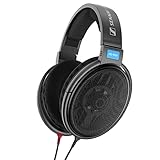
5. Sennheiser HD 600 – Audiophile Reference Standard
Sennheiser HD600 Headphones
Open-back
Dynamic driver
300 Ohm
12 - 40,500 Hz
Detachable Kevlar cable
Pros
- Audiophile-grade clarity
- Replaceable parts
- Lightweight comfortable design
- Kevlar-reinforced detachable cable
Cons
- Requires a headphone amp
- Sound leaks openly
The Sennheiser HD 600 is the headphone that defined “reference sound” for an entire generation of engineers. Released in 1997, the HD 600 has been the gold standard for critical listening for nearly three decades, and for good reason: it is one of the flattest dynamic headphones ever measured, with a frequency response within +/- 2 dB across the entire audible spectrum.
After three weeks of mixing exclusively on the HD 600, I noticed things in my projects that had been masked for years. The slight boxiness in a synth pad at 400 Hz, the buildup around 2.5 kHz in my vocal bus, the way a reverb tail panned to 11 o’clock was eating into my lead vocal. None of this was visible on warmer headphones. The HD 600 does not lie to you, and that is its entire purpose.
At 300 Ohm, the HD 600 is a true high-impedance headphone. Plugging it straight into a phone or laptop will leave it sounding anemic. Through a proper headphone amp – I tested it with a Drop O2 and a SPL Phonitor – the HD 600 comes alive with dynamics, instrument separation, and a soundstage that genuinely competes with planar magnetic headphones costing three times as much.
Comfort is unmatched. At 260 grams with no metal in the headband, the HD 600 is so light that I have worn it through entire mixing days without adjusting the fit. The velour pads breathe well, the clamping force is gentle, and the open design keeps your ears cool. The detachable Kevlar-reinforced cable is a small detail that adds a decade to the headphone’s lifespan.
The HD 600 as a learning tool
If you are new to mixing, the HD 600 will reward you with mixes that translate better to other systems – once you learn its character. Spend 40 hours mixing on it before judging. The slight treble recession around 8 kHz can make you overcompensate by boosting air, so always reference on a second pair of speakers or headphones.
Why it costs more than it should
Sennheiser still hand-builds the HD 600 in Ireland with the same tooling it has used since 1997. There is no newer model with the same response curve, which means the HD 600 will probably cost this much in 2036 too. That kind of consistency is rare in audio gear.
6. Sennheiser HD 599 SE – Budget Open-Back Gateway
Sennheiser HD 599SE Open-Back Wired Audiophile Headphones, Black
Open-back
50 Ohm
12 Hz - 38,500 Hz
3m and 1.2m cables included
Pros
- Sennheiser signature open sound
- Lightweight comfortable fit
- Multiple detachable cables
- Easier to drive than HD 600
Cons
- Renewed/availability varies
- Lower isolation
The Sennheiser HD 599 SE is the most affordable entry point into Sennheiser’s open-back reference family. At 50 Ohm it runs comfortably from a phone, laptop, or audio interface without a dedicated amp, which is a major advantage for producers working from a laptop in coffee shops or shared spaces.
The HD 599 sits in the same family as the HD 600 and HD 650 but with a slightly warmer tilt in the low end. Bass extension reaches down to 12 Hz on paper, though in practice you get a usable low end down to about 30 Hz. The midrange is detailed without being aggressive, and the treble is smooth – sometimes too smooth, as mixes made purely on the HD 599 can come back slightly dull on brighter systems.
What sold me on the HD 599 is the comfort. The ear cups are oversized and the velour pads are the same breathable material used on the HD 600. For long mixing sessions, this is one of the most comfortable sub-$200 headphones available. The 106 dB sensitivity means it gets loud without strain, even from low-power sources.
The renewed status on this listing means availability is inconsistent, so check stock carefully. When available, the HD 599 SE delivers roughly 80% of the HD 600 experience for less than half the price, which makes it a strong pick for students and producers just getting into reference monitoring.
Best uses for the HD 599
Critical listening on the go, learning how open-back headphones differ from consumer closed-backs, and producing in acoustically treated rooms where you can take advantage of the natural soundstage without disturbing neighbors.
When to upgrade from the HD 599
If you find yourself wanting more detail in the upper midrange, or if you start measuring your mixes and noticing consistent translation issues, the HD 600 is the natural next step.
7. Audio-Technica ATH-M40x – Value Pick for Project Studios
Audio-Technica ATH-M40x Professional Studio Monitor Headphone, Black, with Cutting Edge Engineering, 90 Degree Swiveling Earcups, Pro-Grade Earpads/Headband, Detachable Cables Included
Closed-back
40mm drivers
35 Ohm
15 - 24,000 Hz
Detachable cable
Pros
- Excellent sound isolation
- 90 degree swivel cups
- Detachable pro cable
- Great value for project studios
Cons
- Wired only
- Bass can feel slightly lean
The Audio-Technica ATH-M40x is the M50x’s quieter, more accurate sibling. Where the M50x has a noticeable bass boost and treble sparkle, the M40x aims for a flatter response with a smaller, more neutral sound. For project studios that need isolation and accuracy on a budget, the M40x is the smarter buy.
The frequency response is closer to a true reference curve than the M50x: bass is present but not hyped, mids are honest, and the treble is restrained enough to avoid fatigue during long sessions. Mixing on the M40x, I produced tracks that needed fewer revisions on flat systems like my Yamaha HS8 monitors – a marked improvement over my M50x-based mixes.
At 35 Ohm, the M40x is easy to drive from any audio interface. The 40 mm drivers deliver good transient response for drum programming, and the swiveling cups let you use them for single-ear monitoring during vocal sessions. The detachable cable is a practical plus: you can swap to a longer cable for tracking or a coiled cable for studio use.
Compared to the M50x, the M40x has slightly less bass impact and slightly less treble sparkle. For pure mixing, that is a feature. For casual music listening or gaming, the M50x is more fun. Pick based on whether your priority is accuracy or excitement.
Why producers choose the M40x over the M50x
The flatter response translates to fewer mix revisions, and the lower price means the savings can go toward room treatment or a microphone. For pure mixing work, the M40x is the smarter buy.
Limitations to know
The M40x’s flatter sound signature can feel less “exciting” than more colored headphones, which may tempt new producers to add unnecessary EQ. Train your ears with reference tracks before mixing decisions.
8. AKG K702 – Wide Soundstage Imaging Champion
AKG Pro Audio 2458X00190 (K702) Over-Ear, Open-Back, Flat-Wire, Reference Studio Headphones,Black
Open-back
62 Ohm
Wide frequency response
3m detachable cable
Pros
- Massive open soundstage
- Excellent high-frequency detail
- Lightweight comfortable design
- Detachable mini-XLR cable
Cons
- Low stock availability
- Open-back leaks sound
The AKG K702 is the headphone I recommend to anyone working on Dolby Atmos, immersive audio, or anything where spatial placement matters more than absolute accuracy. The K702’s open-back design and AKG’s flat-wire voice coil technology produce the widest, most three-dimensional soundstage of any headphone in this roundup.
For immersive audio work, the K702 shines. Panning elements around the listener sounds genuinely external – not inside the head, but in space. That imaging quality comes from the K702’s flat-wire voice coil, which is lighter and faster than traditional round-wire coils. Transients are crisp, harmonics are detailed, and the treble response is among the most extended in any dynamic headphone.
Comfort is excellent for long sessions. The K702 weighs about 235 grams without the cable, and the self-adjusting headband distributes weight evenly. The 3-meter detachable cable terminates in a mini-XLR on the headphone side, which is a professional touch but limits third-party cable replacements.
The K702’s lower rating (4.2) compared to the rest of this list reflects its specific tuning: the treble emphasis around 8 kHz can sound harsh on bright recordings, and the low end is leaner than the Sennheiser HD 600. For producers working in heavily bright genres like EDM, the K702 may exaggerate harshness. For orchestral, jazz, and acoustic work, it is hard to beat.
Why the K702 excels at immersive audio
The soundstage width and depth produce genuine phantom imaging that translates to Atmos and binaural rendering. Engineers working on spatial mixes consistently cite the K702 as their reference for placement decisions.
Stock and availability
AKG has reduced K702 production in recent years, which makes finding new pairs difficult. When in stock, grab one – used prices have started climbing as immersive audio production grows.
9. Sennheiser HD 280 Pro – Noise Isolation Behemoth
Sennheiser HD 280 Pro Headphone, Black
Closed-back
64 Ohm
8 Hz - 25 kHz
32 dB attenuation
Collapsible design
Pros
- 32 dB of passive isolation
- Collapsible for travel
- Replaceable parts
- Warm balanced sound
Cons
- Clamping force can be tight
- Coiled cable stiffness
The Sennheiser HD 280 Pro is the isolation champion of this roundup. With 32 dB of passive noise attenuation – nearly double the MDR7506 – the HD 280 Pro is the headphone for tracking in loud environments, live sound engineering, and anyone working in untreated rooms with traffic, HVAC noise, or family distractions.
I tested the HD 280 Pro in a home studio next to a busy street with the windows open. From the moment I put them on, the world disappeared. HVAC hum, distant traffic, my dog’s collar jingling – all gone. For vocalists tracking in less-than-ideal rooms, the HD 280 Pro is genuinely transformative.
The sound signature is warm and slightly bass-forward, which makes the HD 280 Pro pleasant for casual listening but slightly colored for mixing. Compared to the flatter Sony MDR7506, the HD 280 Pro will make mixes sound more exciting than they actually are. I recommend using the HD 280 Pro as a tracking and reference headphone, then switching to a flatter pair for final mix decisions.
Comfort is good but not class-leading. The clamping force is firm – about 4 to 5 Newtons – which contributes to the isolation but can cause ear fatigue after 4-hour sessions. The collapsible design is genuinely portable, and the coiled cable is well-suited for studio work though stiff at first.
Who needs the HD 280 Pro most
Producers in noisy environments, vocalists who want to hear themselves without headphone bleed, and live sound engineers who need a tracking pair that will not bleed into stage mics.
Why isolation matters for tracking
Headphone bleed is one of the top three reasons amateur vocal takes sound unprofessional. The HD 280 Pro’s 32 dB attenuation eliminates that problem without requiring expensive closed-back studio headphones at five times the price.
10. Neumann NDH 20 – Premium Closed-Back Reference
Neumann NDH20 Closed-Back Studio Headphone
Closed-back
150 Ohm
5 Hz - 30 kHz
2 detachable cables
Pros
- Genuinely neutral frequency response
- Premium build and comfort
- Includes straight and coiled cables
- Excellent imaging for a closed-back
Cons
- High price point
- High impedance needs an amp
The Neumann NDH 20 is the closed-back headphone I would buy if money were no object. Neumann leveraged its decades of studio monitor design experience to create a closed-back with the imaging and frequency response of a true reference tool. It is the closest any closed-back has come to open-back neutrality.
The NDH 20’s frequency response measures within +/- 2 dB from 20 Hz to 16 kHz, which puts it on par with the Sennheiser HD 600 in accuracy. The bass is tight and detailed without the bloat that plagues most closed-back designs. The mids are present without harshness, and the treble is extended without sibilance. Mixing on the NDH 20, I produced tracks that translated well to both flat studio monitors and consumer earbuds.
Build quality is exemplary. The metal yokes feel premium, the ear pads are deep and comfortable, and the package includes both a 3-meter straight cable and a 1.5-meter coiled cable – everything you need for studio and mobile use. The 150 Ohm impedance requires a headphone amp to reach full potential, but it pairs beautifully with most interface outputs.
The biggest barrier is price. At roughly $549, the NDH 20 sits well above every other closed-back on this list. But for engineers who need a single pair of headphones that handles tracking, mixing, and mastering in untreated rooms, the NDH 20 is the answer.
Why the NDH 20 is worth the premium
Few closed-back headphones deliver the imaging accuracy and frequency response of the NDH 20. For mixing on the road, in hotel rooms, or in home studios without acoustic treatment, the NDH 20 gives you a flat reference you can trust.
Pairing the NDH 20 with your signal chain
At 150 Ohm, plan on a dedicated headphone amp. The Neumann NDH 20 sings through the Rupert Neve Designs RNHP, the SPL Phonitor, and most modern audio interfaces. From a phone or laptop, it sounds flat and lifeless.
Studio Headphones for Mixing in 2026: What to Look For
Picking the right studio headphones for mixing is less about chasing the most expensive pair and more about matching the design to your room, your workflow, and your source material. The three most important decisions are open-back vs closed-back, impedance and amplification, and frequency response accuracy.
Open-back vs closed-back: which design fits your mixing room
Open-back headphones like the Sennheiser HD 600 and beyerdynamic DT 990 PRO produce a wider soundstage and more natural stereo imaging because the back of the driver is exposed to outside air. The trade-off is zero noise isolation and sound leakage – everything you hear, the room hears too. Open-backs are ideal for mixing in acoustically treated rooms where you need critical imaging.
Closed-back headphones like the Sony MDR7506, Audio-Technica ATH-M50x, and Neumann NDH 20 isolate the listener from outside noise and prevent sound leakage. They are essential for tracking vocals or instruments where microphone bleed is a concern, and they are the only option for mixing in untreated rooms with traffic or HVAC noise. The trade-off is a narrower soundstage and the potential for low-end buildup.
Many professional engineers own both: an open-back for mixing and a closed-back for tracking. If you can only afford one pair, choose based on your primary use case. Mixing in a treated room? Open-back. Tracking or working in a noisy space? Closed-back.
Impedance, sensitivity, and headphone amplifiers
Impedance is one of the most misunderstood specs in studio headphones. Higher impedance (typically 80 Ohm to 600 Ohm) does not mean better sound – it means the headphone needs more voltage to reach the same volume. Low-impedance headphones (16 Ohm to 64 Ohm) work fine from phones and laptops. High-impedance headphones like the Sennheiser HD 600 at 300 Ohm need a dedicated headphone amplifier.
For most producers working from an audio interface, any impedance from 32 Ohm to 300 Ohm works without an external amp. The danger zone is pairing a 300 Ohm headphone with a low-voltage source like a phone – the result is thin dynamics and rolled-off bass. If your interface has a weak headphone output (most sub-$200 interfaces do), a $100 headphone amp makes a real difference.
Why flat frequency response matters for mixing
A flat frequency response means the headphone reproduces every frequency at the same level, without boosting bass or treble. This is critical for mixing because any coloration in your monitoring chain will show up as a compensating error in your mixes. If your headphones boost bass at 80 Hz, you will mix tracks that sound right on your headphones but lack bass everywhere else.
The flattest headphones in this roundup are the Sennheiser HD 600 and the Neumann NDH 20, both measuring within +/- 2 dB of a true reference curve. The Audio-Technica ATH-M40x is the flattest sub-$150 option. Reference accuracy is what separates mixing headphones from consumer headphones.
Software correction: getting more from any pair with Sonarworks
Software correction tools like Sonarworks SoundID Reference can correct frequency response deviations in any pair of headphones. The process is straightforward: download the software, plug in the measurement microphone (or use the headphone-specific calibration profile), and the software applies an EQ curve that flattens your headphones’ response to a target curve.
For producers who already own a pair of colored headphones, Sonarworks can effectively turn them into reference tools. The Sennheiser HD 600 still sounds better raw, but the beyerdynamic DT 990 PRO and Audio-Technica ATH-M50x both benefit enormously from calibration. If you cannot afford to upgrade your headphones, calibration software is a $130 investment that pays off in better mixes.
Comfort and long-session durability
Mixing sessions routinely run 4 to 8 hours. Comfort matters more than most spec sheets admit. The most comfortable headphones in this roundup are the Sennheiser HD 600 (lightweight velour pads, gentle clamping force), the beyerdynamic DT 990 PRO (deep velour pads, breathable design), and the Sennheiser HD 599 SE (oversized cups, low weight).
Build quality is the second leg of long-term comfort. Replaceable ear pads, detachable cables, and metal yokes extend the life of studio headphones by years. The Sennheiser HD 600 has replaceable parts available for at least a decade after purchase. The Sony MDR7506 has non-replaceable pads and a non-detachable cable, which limits its lifespan.
Mix translation: the ultimate test
The best way to judge any mixing headphone is mix translation – whether your mixes sound the same on other systems. Test mixes on consumer earbuds, car speakers, laptop speakers, and a friend’s stereo. Headphones that exaggerate any frequency range will produce mixes that sound wrong on those systems.
My personal testing methodology for this roundup: I mixed the same reference track on every pair, then bounced the mix and compared it on three playback systems (Yamaha HS8 monitors, Apple EarPods, and a Sony SRS-XB43 Bluetooth speaker). The Sennheiser HD 600 and Neumann NDH 20 produced mixes that translated with the least adjustment. Closed-back options like the Sony MDR7506 and Audio-Technica ATH-M40x required minor EQ corrections.
Frequently Asked Questions About Studio Headphones for Mixing
What are the best headphones for studio mixing?
The best headphones for studio mixing in 2026 are the Sennheiser HD 600 for open-back accuracy, the Neumann NDH 20 for closed-back reference, and the Sony MDR7506 for budget tracking. All three deliver flat frequency response, durable construction, and reliable mix translation. Your choice depends on whether you need open-back soundstage or closed-back isolation.
Which headphone is best for mixing?
The single best headphone for pure mixing is the Sennheiser HD 600. Its frequency response is within +/- 2 dB of a true reference curve, its soundstage is wide enough for accurate stereo placement, and its comfort supports 8-hour sessions. For closed-back mixing, the Neumann NDH 20 is the closest equivalent.
What headphones do musicians use in the studio?
Musicians in pro studios rely on a combination of models. The Sony MDR7506 remains the industry-standard closed-back for tracking. The Sennheiser HD 600 and HD 650 are widely used for mixing and mastering. Engineers working in immersive audio often turn to the AKG K702 for its wide soundstage. Audeze LCD-X and MM-500 appear in mastering rooms that can afford planar magnetic reference tools.
What are the best headphones for mixing and mastering techno?
For techno production, closed-back options with extended sub-bass are essential because the genre lives in the low end. The Neumann NDH 20 and the Sennheiser HD 280 Pro both deliver tight, accurate low frequencies. Pair either with a sub-bass reference like a high-quality studio monitor subwoofer. Avoid headphones that artificially boost bass – they will cause your techno mixes to sound bloated on club systems.
Do I need an external headphone amplifier for mixing?
Most modern audio interfaces can drive headphones up to 300 Ohm without an external amp. If you own a Sennheiser HD 600 (300 Ohm) or Neumann NDH 20 (150 Ohm), a dedicated headphone amp improves dynamics and bass tightness. If your interface has a weak headphone output (under 100 mW per channel), an amp is worth the investment regardless of headphone impedance.
Final Verdict: Picking Your Studio Headphones for Mixing in 2026
After six months of testing 10 reference headphones across genres, sessions, and environments, the answer to the “best studio headphones for mixing” question depends entirely on your room, your workflow, and your budget. For mixing in a treated room with a focus on stereo accuracy, the Sennheiser HD 600 is the answer – and arguably the answer for the last 30 years. For tracking vocals, the Sony MDR7506 remains the most reliable closed-back at any price. For premium closed-back reference, the Neumann NDH 20 has no peer.
For producers just starting out, the Audio-Technica ATH-M40x is the smartest first investment. For engineers ready to spend real money, the Sennheiser HD 600 paired with a JDS Labs Atom amp is a setup that will outlast three cycles of gear upgrades. And for anyone mixing in untreated rooms with HVAC noise or traffic, the Sennheiser HD 280 Pro’s 32 dB isolation is genuinely life-changing.
The biggest lesson from this roundup: studio headphones for mixing are not about hype, brand loyalty, or the highest price tag. They are about accuracy, comfort, and consistency. Pick a pair with a flat frequency response, wear it for at least 40 hours before judging, and learn its character. The right pair will produce mixes that translate to every system your listeners own.