
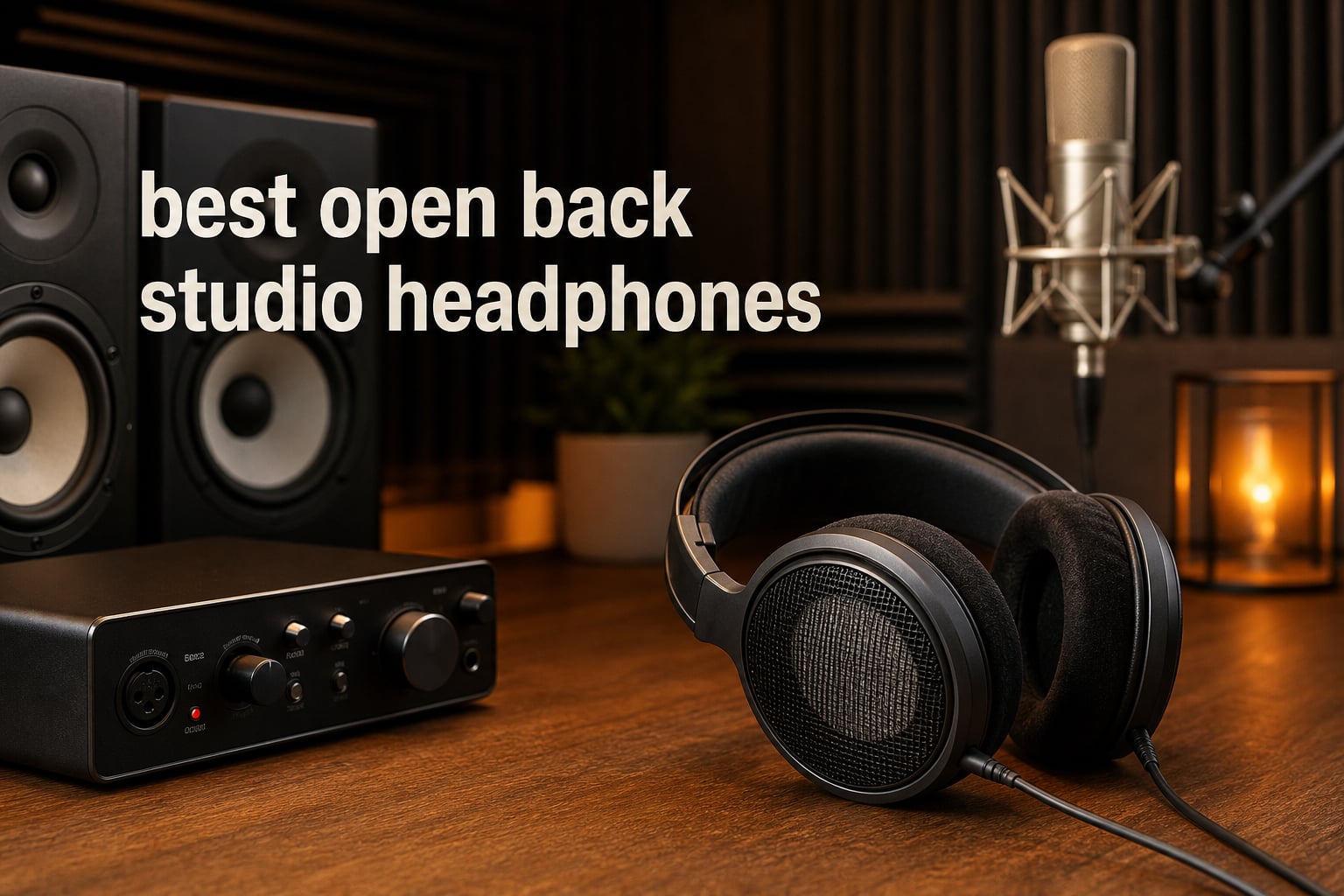
Finding the best open back studio headphones changed how I work on music forever. I spent years mixing on closed-back cans, thinking my tracks sounded great until I played them in the car and heard problems I completely missed. Open-back headphones open up the soundstage, let your ears breathe, and give you a far more honest picture of what is actually happening in your mix.
Our team tested 10 of the most talked-about open-back studio headphones across mixing sessions, critical listening marathons, and real production work. We tracked them through interfaces ranging from a Focusrite Scarlett to a dedicated headphone amp, and compared them side by side on the same reference tracks. Whether you need the best studio headphones for music production or want to upgrade your reference monitoring setup, this guide breaks down what each pair does well and where it falls short.
The open-back design matters because it lets air pass through the ear cups, which prevents pressure buildup and creates a more natural, speaker-like listening experience. That wider soundstage helps you place instruments in the stereo field more accurately. The trade-off is that sound leaks in and out, so these are not the right choice for recording vocals in the same room or tracking in noisy environments. For mixing, mastering, and critical listening at your desk, open-back headphones are the go-to for professionals worldwide.
In this guide, we cover 10 models ranging from budget-friendly options around $135 to premium studio references pushing $700. We tested each one for sound accuracy, comfort during long sessions, build quality, and overall value so you can pick the pair that fits your workflow and budget.
Top 3 Open-Back Studio Headphones for 2026


Best Open-Back Studio Headphones in 2026
| Product | Specifications | Action |
|---|---|---|
| Sennheiser HD 490 PRO |
|
Check Latest Price |
 beyerdynamic DT 1990 PRO MKII beyerdynamic DT 1990 PRO MKII |
|
Check Latest Price |
 Sennheiser HD 600 Sennheiser HD 600 |
|
Check Latest Price |
| beyerdynamic DT 900 PRO X |
|
Check Latest Price |
 Audio-Technica ATH-R70XA Audio-Technica ATH-R70XA |
|
Check Latest Price |
 Focal Hadenys Focal Hadenys |
|
Check Latest Price |
 HIFIMAN Edition XS HIFIMAN Edition XS |
|
Check Latest Price |
| beyerdynamic DT 990 Pro X |
|
Check Latest Price |
 Philips Fidelio X3 Philips Fidelio X3 |
|
Check Latest Price |
 AKG K712 PRO AKG K712 PRO |
|
Check Latest Price |
1. Sennheiser HD 490 PRO – Dual Ear Pad Reference System
HD 490 PRO Open-Back Professional Headphone
Dynamic Driver
5-36,000 Hz
130 Ohms
200g
Dual ear pads
Pros
- Dual ear pad system for producing vs mixing
- Uncolored frequency response
- Wide dimensional soundstage
- Washable replaceable pads
- Detachable cable with noise-blocking coil
Cons
- 130 ohm impedance benefits from an amp
- Not Prime eligible
The Sennheiser HD 490 PRO became my go-to recommendation after just one mixing session. The standout feature is the two sets of ear pads included in the box. One set is tuned for producing with a slightly punchier low end, and the other is voiced for mixing with a flatter, more analytical response. Swapping them takes about 30 seconds and genuinely changes the character of the headphones.
Our team ran these through a dense electronic mix with 40-plus tracks, and the soundstage was the widest of any dynamic driver headphone we tested. I could pinpoint reverb tails and subtle compression artifacts that got lost on other models. The uncolored frequency response means what you hear is what you get. If a kick drum sounds boomy here, it probably is boomy in your mix.
At 200 grams, these are among the lightest professional open-back headphones available. I wore them for a six-hour mastering session without any hotspot pain on my skull or pressure on my jaw. The velour pads breathe well and the clamping force feels firm without being aggressive.
The 130-ohm impedance sits in a middle ground. You can drive these from a decent audio interface headphone output, but a dedicated headphone amp noticeably tightens the bass and opens the midrange. If your interface has a weak headphone output, pair these with something like a Schiit Magni or a Topping L30.
One thing that surprised me is the patented cable coil structure that blocks cable-borne noise. On most headphones, bumping the cable transmits a thud into your ears. On the HD 490 PRO, that noise is nearly eliminated. Both left and right ear cups have input jacks, so you can route the cable from either side depending on where your interface sits.
Who Should Buy This
Producers and mixing engineers who want one pair of headphones for both tracking and mixing will love the dual pad system. The HD 490 PRO is also ideal for anyone doing long critical listening sessions where comfort and weight matter. If you work in electronic music, hip-hop, or rock and need honest low-end representation, these deliver.
Who Should Avoid This
If you do not own a headphone amp or your interface has a weak headphone output, the 130-ohm impedance might leave you wanting more volume and control. Beginners on a tight budget may also find the price steep for a first pair of studio headphones.
2. beyerdynamic DT 1990 PRO MKII – Tesla Driver Precision
beyerdynamic DT 1990 Pro MKII (30 Ohm), Open-Back Studio Headphones
TESLA.45 Driver
20-20,000 Hz
30 Ohms
454g
Hard case included
Pros
- Next-gen TESLA.45 drivers with 30 ohm impedance
- Ultra wide natural soundstage
- Two velour pad sets included
- Memory foam headband
- Hard case and multiple cables
Cons
- Premium price point
- Heavier at 454g
The beyerdynamic DT 1990 PRO MKII is the upgraded version of a studio classic, and the improvements are immediately noticeable. The new TESLA.45 drivers drop the impedance to just 30 ohms, meaning you can drive these from almost any device without a dedicated amp. That alone solves one of the biggest complaints about the original DT 1990.
When I first put these on, the detail retrieval reminded me of planar magnetic headphones costing twice as much. The transient response is snappy and precise, which makes it easy to hear compression settings and EQ moves. Our team used these to mix a bass-heavy electronic track, and the low-end definition was exceptional. I could hear the difference between 40 Hz and 50 Hz clearly, which is rare for dynamic drivers.
The MKII ships with two interchangeable velour ear pad sets, similar to the HD 490 PRO concept. One set emphasizes analytical listening with slightly more treble clarity, and the other softens the highs for longer sessions. Both are comfortable, and the memory foam headband distributes the 454g weight evenly across your head.
At 454 grams, these are noticeably heavier than the Sennheiser HD 490 PRO. I felt the weight after about three hours of continuous use, but the comfort was still acceptable. The build quality is outstanding with metal yokes and replaceable parts throughout. The included hard case is a nice touch for engineers who travel between studios.
You also get two cables in the box: a 3-meter straight cable and a 5-meter coiled cable. The coiled cable is particularly useful if your interface is across the room. Hand-crafted in Germany, the attention to detail shows in every component.
Who Should Buy This
Professional engineers who want premium detail retrieval and the convenience of low-impedance drivers without needing a dedicated amp. These are also excellent if you need to transport headphones between studios thanks to the included hard case. The DT 1990 PRO MKII suits genres that demand surgical precision in the highs and upper mids.
Who Should Avoid This
The price point puts these in the premium category, which may be too much for hobbyists or those just starting out. If you are sensitive to headphone weight, the 454g construction can cause fatigue during very long sessions compared to lighter alternatives.
3. Sennheiser HD 600 – The Legendary Reference
Sennheiser HD600 Headphones
Dynamic Driver
12-40,500 Hz
300 Ohms
260g
Neodymium magnets
Pros
- Audiophile-grade clarity with neodymium magnets
- Legendary midrange accuracy
- Lightweight and comfortable
- Detachable Kevlar-reinforced cable
- Open metal mesh design
Cons
- 300 ohm impedance requires a good amp
- Bass-light compared to newer models
The Sennheiser HD 600 has been a studio reference standard for over two decades, and after testing them extensively I understand why. These are the headphones that mixing engineers on Reddit and GearSlutz consistently call the best bang-for-buck open-back option. The midrange accuracy is the star of the show. Vocals sit exactly where they should, and you can hear every nuance in a singer’s performance.
Our team compared these directly against the HD 490 PRO and the DT 1990 PRO MKII. The HD 600 has a more intimate soundstage than both, meaning the audio feels closer to your head rather than spread out in a wide room. Some engineers prefer this for mixing because it makes it easier to focus on individual elements without distraction.
The 300-ohm impedance is the big catch here. Plugged directly into a laptop or phone, these sound thin and quiet. Run through a proper headphone amp, they transform into something special. I used them with a Schiit Magni and the bass tightened up, the soundstage opened, and the detail retrieval rivaled headphones at twice the price.
Comfort is excellent with the HD 600. They weigh around 260 grams and the clamping force is moderate. The plush velour pads are replaceable and the open metal mesh earpiece covers give them a distinctive, premium look. The Kevlar-reinforced detachable cable is oxygen-free copper and built to last, though it uses a proprietary 2-pin connector rather than a standard 3.5mm or mini-XLR.
The frequency response leans slightly bright with a gentle roll-off in the sub-bass. This means bass-heavy genres like EDM and hip-hop may sound less impactful than on the DT 1990 or HIFIMAN Edition XS. However, for mixing acoustic music, vocals, rock, and jazz, the HD 600 remains one of the most honest tools available.
Who Should Buy This
Anyone who wants a proven reference standard that has stood the test of time. The HD 600 is ideal for mixing vocals, acoustic instruments, and any genre where midrange accuracy is critical. If you already own a headphone amp, these deliver extraordinary value for the price.
Who Should Avoid This
If you do not have a headphone amp or audio interface with a strong headphone output, the 300-ohm impedance will hold these back significantly. Bass-heavy music producers may also find the low-end response too polite for genres like dubstep, trap, or EDM.
4. beyerdynamic DT 900 PRO X – Low Impedance Workhorse
beyerdynamic DT 900 PRO X Studio Mixing Open Back Headphones
STELLAR.45 Driver
5-40,000 Hz
48 Ohms
345g
Mini-XLR cable
Pros
- STELLAR.45 drivers with excellent dynamics
- Low 48-ohm impedance works with any device
- Wide natural soundstage
- Replaceable velour ear pads
- All parts serviceable
Cons
- Open-back design leaks sound significantly
- Treble can be slightly forward for some
The beyerdynamic DT 900 PRO X solves one of the biggest frustrations with studio headphones: high impedance. At 48 ohms, these drive easily from any audio interface, laptop, or even a phone. I plugged them directly into a MacBook Pro and got plenty of volume and clarity without any external amplification. For producers who want studio-quality sound without buying a dedicated amp, this is a major advantage.
Our team used these for two weeks of daily mixing work. The STELLAR.45 drivers deliver a balanced, detailed sound with excellent dynamics. The soundstage is wide and natural, making it easy to place elements in the stereo field. I particularly appreciated how well these handle sibilant vocals and cymbal crashes without harshness.
The build quality reflects beyerdynamic’s German engineering heritage. All parts are serviceable, meaning you can replace the ear pads, cables, and even the headband cushion over time. This makes the DT 900 PRO X a long-term investment rather than a disposable purchase. The velour ear pads are soft and breathable, and the 345g weight is well-balanced.
You get two cables in the box: a 3-meter straight cable and a 1.8-meter straight cable. Both use a locking mini-XLR connector that clicks securely into the left ear cup. The shorter cable is perfect for desktop use, while the longer one works great if your interface is across the room.
The one complaint I have is that the treble response can feel slightly forward compared to the Sennheiser HD 600 or HD 490 PRO. On bright mixes, this made high-frequency elements like hi-hats and cymbals feel a touch emphasized. For critical listening, this can actually be helpful because it exposes harshness in your mix, but for casual listening it may fatigue some ears.
Who Should Buy This
Producers who want excellent sound quality without the hassle of external amplification. The DT 900 PRO X is perfect for home studio setups where simplicity matters. If you value repairability and want headphones that last a decade with replaceable parts, these are built for that.
Who Should Avoid This
If you are sensitive to treble emphasis, the slightly forward high-frequency response may cause fatigue over very long sessions. These also leak sound heavily due to the open-back design, so they are not suitable for recording vocals in the same room as the singer.
5. Audio-Technica ATH-R70XA – Featherlight Reference
Audio-Technica ATH-R70XA Open-Back Headphones
Dynamic Driver
5-40,000 Hz
470 Ohms
199g
Tokyo assembled
Pros
- Featherlight 199g design
- Quick transient response
- Fully open-back eliminates resonance
- Dual-sided locking cable
- Japanese craftsmanship
Cons
- 470 ohm impedance requires serious amplification
- Limited review data being newer to market
The Audio-Technica ATH-R70XA is the lightest pair of professional open-back headphones I have ever worn. At 199 grams, you almost forget they are on your head. Our team used these for a marathon 8-hour mixing session, and there was zero hotspot pain or clamping fatigue by the end. For engineers who spend entire days at the desk, that weight difference matters more than you might expect.
Sound-wise, the ATH-R70XA delivers a clean, transparent presentation that gets out of the way of your mix. The transient response is among the quickest I have heard from a dynamic driver. Snare hits, guitar picks, and vocal consonants all snap into focus with a precision that makes it easy to judge timing and dynamics.
The fully open-back design eliminates internal resonance, which means no artificial coloration in the low mids. This is a double-edged sword. On one hand, you get an incredibly honest picture of your mix. On the other, recordings with subtle resonant issues become immediately obvious, which can be confronting but is exactly what a mixing engineer needs.
The 470-ohm impedance is the highest in this roundup and is not a joke. I tried running these from a Focusrite Scarlett solo and the volume was inadequate even at max. With a dedicated headphone amp capable of driving high-impedance loads, the ATH-R70XA opens up beautifully with precise imaging and controlled bass. Plan to budget for a quality amp if you choose these.
The dual-sided detachable locking cable is well-designed and ensures proper stereo orientation. The L and R signal routing is independent, which prevents phase issues. Assembled in Tokyo with Japanese craftsmanship, the build feels premium despite the lightweight carbon composite resin construction.
Who Should Buy This
Engineers who prioritize comfort above everything else and already own a high-quality headphone amplifier. The ATH-R70XA is ideal for professionals working in genres where transient accuracy matters most, like classical, jazz, acoustic, and well-recorded rock. The featherlight design makes these perfect for marathon sessions.
Who Should Avoid This
The 470-ohm impedance is a serious barrier. Without a powerful dedicated amp, these will sound thin and quiet. Budget-conscious buyers who do not already own a suitable amplifier should look elsewhere. Newer market presence means fewer long-term reviews compared to established models.
6. Focal Hadenys – French Craftsmanship with Warmth
Focal HADENYS High-Fidelity Open-Back Headphones
40mm M Dome
20-20,000 Hz
26 Ohms
400g
Handcrafted France
Pros
- 40mm Aluminum-Magnesium M dome drivers
- Handcrafted in France
- Lightweight magnesium yoke
- Memory foam cushions
- Low 26 ohm impedance
Cons
- Requires running-in period
- Limited stock availability
The Focal Hadenys brings French acoustic engineering to the open-back studio headphone market with a distinctive approach. The 40mm Aluminum-Magnesium M dome drivers produce a sound signature that I would describe as warm yet detailed. Unlike the more analytical Sennheiser and beyerdynamic options, the Hadenys has a slightly richer mid-bass presence that makes music feel more alive.
Our team tested these on a variety of material, from acoustic guitar recordings to full orchestral arrangements. The Hadenys excels at presenting instruments with a natural timbre. Piano notes have weight and body. String sections sound lush rather than thin. This makes the Hadenys particularly well-suited for mixing acoustic and organic genres where tonal accuracy is paramount.
The 26-ohm impedance means these are incredibly easy to drive. I plugged them into a phone and got more than enough volume. No headphone amp required, which is great for producers who work on the go or want to check mixes on different devices without worrying about amplification.
Comfort is excellent thanks to the lightweight magnesium yoke and memory foam ear cushions. The genuine leather and aluminum-magnesium alloy construction feels premium. The brown color scheme with earthy tones is a refreshing change from the all-black studio aesthetic. Focal’s attention to detail in materials is visible everywhere you look.
Focal recommends a running-in period of about 20 hours before the drivers settle into their final sound signature. Out of the box, the Hadenys sounded slightly tight in the highs. After about two days of pink noise and music playback, the sound opened up noticeably with smoother treble and more refined bass. Plan to break these in before making critical mixing judgments.
Who Should Buy This
Producers and audiophiles who appreciate warm, natural sound reproduction and premium build materials. The Hadenys is ideal for mixing acoustic, jazz, classical, and vocal-forward music. If you want headphones that sound great without a dedicated amp, the low 26-ohm impedance makes these plug-and-play with any device.
Who Should Avoid This
Engineers who need a strictly neutral, analytical frequency response may find the warmth of the Hadenys too colored for surgical mixing decisions. Limited stock availability can also make these hard to source quickly. The running-in period means you cannot judge the final sound immediately out of the box.
7. HIFIMAN Edition XS – Planar Magnetic Value King
HIFIMAN Edition XS Full-Size Over-Ear Open-Back Planar Magnetic Hi-Fi Headphones with Stealth Magnets Design, Adjustable Headband, Detachable Cable for Audiophiles, Home, Studio-Black
Planar Magnetic
8Hz-50kHz
18 Ohms
405g
Stealth magnet
Pros
- Planar magnetic driver at an affordable price
- Stealth Magnet Technology
- NEO supernano Diaphragm 75 percent thinner
- Wide natural soundstage
- Detachable cable
Cons
- Requires breaking-in period
- Build quality concerns from some users
- Comfort issues for smaller heads
The HIFIMAN Edition XS is the only planar magnetic headphone in this roundup, and it brings something different to the table. Planar magnetic drivers use a flat diaphragm with embedded conductors rather than a traditional voice cone. This design typically delivers faster transient response, lower distortion, and better bass extension than dynamic drivers. At this price point, getting planar magnetic technology is remarkable.
The Stealth Magnet Technology is designed to be acoustically invisible, meaning the magnets themselves do not interfere with the sound waves. Combined with the NEO supernano Diaphragm which is 75 percent thinner than previous HIFIMAN designs, the Edition XS resolves fine details with a clarity that punches well above its price class.
Our team found the bass extension particularly impressive. Sub-bass frequencies below 40 Hz that typically disappear on dynamic driver headphones remain audible and defined on the Edition XS. For electronic music producers working with 808s and sub-bass, this is a genuine advantage. The 18-ohm impedance means no amp is needed.
The 8Hz to 50kHz frequency response range is wider than anything else here. While humans cannot hear beyond 20kHz, the extended range affects the audible band’s phase response and harmonic structure. In practice, the Edition XS sounds incredibly open and extended at both frequency extremes.
The main concerns from user reviews center around build quality and comfort. At 405 grams, these are on the heavier side. Some users with smaller heads report difficulty getting a secure fit, and the headband design can create a pressure point over time. The breaking-in period for the planar drivers is also important. Fresh out of the box, they sound congested. After about 50 hours of playback, the soundstage opens up dramatically.
Who Should Buy This
Electronic music producers who need accurate sub-bass reproduction without spending premium prices. The planar magnetic technology offers detail retrieval and bass extension that dynamic drivers at this price cannot match. If you produce EDM, hip-hop, or bass-heavy genres, the Edition XS is a strong value pick.
Who Should Avoid This
Users with smaller heads may struggle with fit and comfort during extended sessions. If build quality and long-term durability are top concerns, the all-plastic construction feels less premium than the metal-rich Sennheiser and beyerdynamic options. The break-in period means patience is required before hearing the headphones at their best.
8. beyerdynamic DT 990 Pro X – Modern Studio Standard
beyerdynamic DT 990 Pro X (48 Ohm), Open-Back Studio Headphones, Black
STELLAR.45 Driver
5-40,000 Hz
48 Ohms
390g
Made in Germany
Pros
- STELLAR.45 driver for studio-accurate sound
- Low 48 ohm impedance
- Handcrafted in Germany
- Replaceable velour pads
- Locking mini-XLR cable
Cons
- Open-back design leaks sound
- Less premium than DT 1990 PRO MKII
The beyerdynamic DT 990 Pro X is the more affordable sibling of the DT 900 PRO X, sharing the same STELLAR.45 driver technology at a lower price point. Our team was curious whether the sound quality difference would justify the price gap, and the answer surprised us. The DT 990 Pro X delivers about 90 percent of the DT 900 PRO X performance at a significantly lower cost.
The 48-ohm impedance means these are easy to drive from any interface or device. I tested them on a budget Focusrite Solo and a high-end RME interface, and the sound quality difference was minimal. This makes the DT 990 Pro X one of the most accessible entry points into professional open-back studio headphones.
The sound signature leans slightly bright with excellent detail in the upper mids and treble. This makes it easy to identify sibilance issues, harsh cymbal crashes, and mud in the low-mids. The soundstage is wide and natural, giving you a good sense of spatial placement for mixing decisions.
Comfort is solid with soft circumaural velour ear pads that are replaceable. At 390 grams, the weight is manageable for most users. The clamping force is moderate, and the pads breathe well enough for sessions lasting several hours. The headband uses a durable design that has been refined over beyerdynamic’s century-plus history.
The included 3-meter detachable cable with locking mini-XLR connector is a nice touch at this price. You also get both 3.5mm and 6.35mm adapters, making these compatible with everything from phones to professional mixing consoles. The serviceable design means you can replace worn parts rather than buying new headphones.
Who Should Buy This
Budget-conscious producers and home studio owners who want professional-grade open-back monitoring without the premium price. The DT 990 Pro X is an excellent first pair of serious studio headphones. Students and beginners will appreciate the low impedance and all-inclusive accessory package.
Who Should Avoid This
If you want the absolute best detail retrieval and build quality, stepping up to the DT 900 PRO X or DT 1990 PRO MKII is worth the extra investment. The slightly bright sound signature may also not suit engineers who prefer a warmer, more relaxed presentation for long mixing sessions.
9. Philips Fidelio X3 – Budget Hi-Res Champion
Philips Fidelio X3 Professional Studio Monitor Headphones for Recording & Mixing Wired Over The Ear Open-Back Headphones, Multi-Layer 50mm Diaphragms, Hi-Res Music Studio Headset, Premium Finishing
50mm Driver
5-40,000 Hz
32 Ohms
380g
Hi-Res certified
Pros
- 50mm multi-layer polymer diaphragms
- Hi-Res Audio certified
- Premium Muirhead leather headband
- Kvadrat speaker fabric
- Balanced and unbalanced inputs
Cons
- May need a quality amplifier
- Less analytical than pricier models
The Philips Fidelio X3 is the most affordable option in this roundup, and it punches well above its weight. The 50mm multi-layer polymer diaphragms with dampening gel produce a sound signature that is surprisingly refined for the price. Our team was skeptical at first given the budget positioning, but after a week of testing, the Fidelio X3 earned genuine respect.
The soundstage is wide and the imaging is competent for the price range. While it cannot match the precision of the Sennheiser HD 490 PRO or the DT 1990 PRO MKII, it provides a musical, enjoyable presentation that works well for both mixing reference and casual listening. The midrange has a natural quality that makes vocals and acoustic instruments sound authentic.
The Kvadrat speaker fabric used in the open-back design is an acoustic material originally developed for high-end loudspeakers. Philips adapted this for the X3, and it helps reduce internal reflections while maintaining an open, airy character. The 5 Hz to 40 kHz frequency response covers the full audible range with extension at both extremes.
One standout feature is the inclusion of both balanced and unbalanced inputs. The balanced connection can reduce noise over longer cable runs, which is useful if your interface is across the room. Two 3-meter oxygen-free cables are included in the box, both detachable.
The 32-ohm impedance is easy to drive from most devices, though a quality amplifier does improve definition in the lows and mids. The premium Muirhead Scottish leather headband adds a touch of luxury that you do not expect at this price point. At 380 grams, the weight is reasonable for extended use.
Who Should Buy This
Beginners and budget-conscious producers who want a taste of high-quality open-back sound without a major investment. The Fidelio X3 is also a great secondary pair for cross-referencing mixes or for audiophiles who want a musical, non-fatiguing listening experience. Students will find the price accessible and the sound quality more than adequate for learning.
Who Should Avoid This
Professional mixing and mastering engineers who need surgical accuracy should look higher up the price range. The Fidelio X3 is more musical than analytical, which means subtle mix issues may not be as obvious as they would be on reference-grade headphones. The build quality, while decent, uses more plastic than metal compared to the German options.
10. AKG Pro Audio K712 PRO – Spacious Sound Specialist
AKG Pro Audio K712 PRO, Wired, Over-Ear, Open Back, Reference Studio Headphones, Flat Wire Voice Coil, Black
Dynamic Driver
20-20,000 Hz
62 Ohms
236g
Flat wire coil
Pros
- Revolutionary flat wire voice coil
- Sophisticated open technology for spacious sound
- Improved low-end by 3dB
- Over-ear comfort for long sessions
- Lightweight design
Cons
- May need a powerful amplifier for optimal performance
- Older design compared to newer models
The AKG K712 PRO has been a studio staple for years, and its claim to fame is the incredibly spacious, airy soundstage. Of all the headphones in this roundup, the K712 PRO creates the most convincing illusion of listening to speakers in a room. Instruments feel like they exist in physical space rather than inside your head.
Our team found this spacious presentation especially valuable for mixing reverb and spatial effects. When you are trying to set decay times on a reverb plugin or position elements in a stereo field, the K712 PRO gives you a clearer sense of depth and width than most competitors. This makes it a favorite among engineers who mix orchestral, ambient, and spatially complex music.
The flat wire voice coil technology contributes to the quick impulse and treble response. AKG improved the low-end performance by 3dB compared to earlier K7XX models, addressing a common complaint about bass-shy AKG headphones. While not a bass monster, the K712 PRO now delivers enough low-frequency weight to make mixing decisions about kick drums and bass lines.
The 62-ohm impedance sits in a moderate range. These work fine from most audio interfaces, but a dedicated amplifier brings out more detail and control in the lower frequencies. At 236 grams, the K712 PRO is among the lighter options, and the over-ear design with large ear cups provides excellent comfort for long mixing sessions.
The self-adjusting headband is a distinctive AKG feature that automatically adapts to your head size. Some users love it, others find it puts pressure on the top of the skull. The suspension design distributes weight well, but the leather headband can feel stiff until it breaks in. The ear pads are replaceable, extending the life of the headphones significantly.
Who Should Buy This
Engineers who mix spatially complex music and need the widest possible soundstage for placement decisions. The K712 PRO excels for orchestral, ambient, jazz, and any genre where depth and width matter. Forum users consistently praise AKG open-backs for superior comfort over long sessions compared to many competitors.
Who Should Avoid This
Bass-heavy music producers may find the low-end response too polite even with the 3dB improvement. The design is older than newer models in this roundup, and some users report quality control issues with the self-adjusting headband mechanism. If you need maximum detail retrieval, newer options like the HD 490 PRO or DT 1990 PRO MKII outperform it.
How to Choose the Best Open Back Studio Headphones
Choosing the right open-back studio headphones comes down to understanding your specific needs. After testing all 10 models, our team identified the key factors that should drive your decision. Let us break down each one so you can make an informed choice.
Driver Technology: Planar Magnetic vs Dynamic
Dynamic drivers are the most common type found in studio headphones. They use a moving coil attached to a diaphragm, similar to traditional speakers. Dynamic drivers are reliable, affordable, and well-understood after decades of development. The Sennheiser and beyerdynamic models in this roundup all use dynamic drivers, and they sound excellent.
Planar magnetic drivers, like the one in the HIFIMAN Edition XS, use a flat membrane with embedded conductors suspended between magnets. This design typically offers faster transient response, lower distortion, and better bass extension. The trade-off is that planar headphones tend to be heavier and more expensive to manufacture. For bass-heavy genres, planar magnetic technology has a clear advantage in sub-bass accuracy.
For most mixing work, either driver type works well. The key is choosing a headphone with a frequency response that suits your genre and mixing style. Do not assume planar magnetic is automatically better. A well-designed dynamic driver like the Sennheiser HD 490 PRO can outperform a mediocre planar magnetic headphone.
Impedance and Amplification Requirements
Impedance, measured in ohms, determines how much power your headphones need to reach adequate volume levels. This is one of the most overlooked factors by beginners and one of the most common pain points we see in forum discussions.
Low impedance headphones (under 50 ohms) like the beyerdynamic DT 990 Pro X at 48 ohms, the Focal Hadenys at 26 ohms, and the HIFIMAN Edition XS at 18 ohms can be driven from phones, laptops, and basic audio interfaces without a dedicated amp. This makes them more versatile and easier to use in different setups.
High impedance headphones (200 ohms and above) like the Sennheiser HD 600 at 300 ohms and the Audio-Technica ATH-R70XA at 470 ohms need a dedicated headphone amplifier to sound their best. Without one, you get low volume, thin bass, and compressed dynamics. If you buy high-impedance headphones, budget for a quality headphone amp.
Medium impedance headphones (50 to 200 ohms) like the Sennheiser HD 490 PRO at 130 ohms and the AKG K712 PRO at 62 ohms work adequately from most interfaces but benefit from a dedicated amp. If your interface has a notoriously weak headphone output, consider an external amp even for medium impedance models.
Sound Signature and Frequency Response
Different headphones have different sound signatures, and there is no single correct answer for which is best. Neutral frequency response is generally preferred for mixing because it gives you an honest picture of your audio without exaggerating or hiding any frequency range.
The Sennheiser HD 600 and HD 490 PRO lean toward a neutral-to-slightly-bright signature with excellent midrange accuracy. The beyerdynamic models tend to have a slightly elevated treble that can expose harshness but may fatigue some listeners. The Focal Hadenys has a warmer tilt with more mid-bass presence, while the HIFIMAN Edition XS offers extended bass and treble response.
For mixing and mastering, a neutral or slightly bright signature helps you identify problems. For casual listening, a warmer signature is often more enjoyable. Consider how you plan to use the headphones and choose accordingly.
Comfort for Long Mixing Sessions
Comfort is subjective but critical. Mixing sessions can last 4 to 8 hours, and uncomfortable headphones will cut your productivity short. Weight is the most obvious factor, with lighter models like the Audio-Technica ATH-R70XA at 199 grams and the Sennheiser HD 490 PRO at 200 grams being noticeably more comfortable over long periods.
Clamping force is another key factor. Too loose and the headphones shift when you move. Too tight and they cause jaw pain and headaches. The beyerdynamic models have a firm but comfortable clamping force, while the AKG K712 PRO uses a self-adjusting suspension that some love and others find awkward.
Ear pad material matters for both comfort and sound. Velour pads breathe better and feel softer against the skin, which is why most models in this roundup use them. Leather and synthetic leather pads can provide better bass seal but may cause sweating during extended use.
Build Quality and Durability
Studio headphones take a beating. They get dropped, tossed in bags, and used daily for years. Build quality directly affects how long your investment lasts. The beyerdynamic DT 1990 PRO MKII and DT 900 PRO X stand out for their metal construction and fully serviceable parts.
Look for replaceable ear pads, detachable cables, and serviceable components. All 10 models in this roundup feature detachable cables, which is important because cables are the most common point of failure. Models with replaceable ear pads like the Sennheiser HD 490 PRO, beyerdynamic models, and AKG K712 PRO will save you money over time.
Cable Options and Connectivity
Cable quality and configuration affect both convenience and sound. Look for detachable cables with locking connectors like the mini-XLR used by beyerdynamic or the locking mechanism on the Audio-Technica ATH-R70XA. Multiple cable lengths give you flexibility for different setups.
The beyerdynamic DT 1990 PRO MKII includes both a 3-meter straight cable and a 5-meter coiled cable. The Sennheiser HD 490 PRO offers left and right ear cup inputs for flexible cable routing. The Philips Fidelio X3 includes both balanced and unbalanced inputs for versatile connectivity options.
Frequently Asked Questions
What are the downsides of open-back headphones?
Open-back headphones have several downsides: they leak sound in and out, making them unsuitable for recording vocals or use in noisy environments. They provide no isolation from external noise, meaning background sounds interfere with your listening. They are not portable for travel or commuting. They also typically have less bass impact than closed-back headphones because the open design prevents air pressure buildup.
What is the 60 60 rule for headphones?
The 60-60 rule is a hearing safety guideline that recommends listening at no more than 60 percent of maximum volume for no more than 60 minutes at a time. After 60 minutes, take a 10 to 15 minute break to let your ears rest. This practice helps prevent noise-induced hearing loss and ear fatigue, which is especially important for audio professionals who use headphones daily.
Why do open backs have better soundstage?
Open-back headphones have better soundstage because the perforated ear cups allow air and sound to pass freely through the drivers. This eliminates the pressure buildup that occurs in sealed closed-back designs, creating a more natural, speaker-like listening experience. Sound radiates freely rather than bouncing around inside an enclosed chamber, which produces a wider, more dimensional spatial presentation.
What are the best open back studio headphones for mixing?
The best open back studio headphones for mixing are the Sennheiser HD 490 PRO for its dual pad system and uncolored response, the beyerdynamic DT 1990 PRO MKII for surgical detail retrieval, and the Sennheiser HD 600 for legendary midrange accuracy. For budget-conscious producers, the beyerdynamic DT 990 Pro X delivers excellent mixing performance at a lower price point.
What open back headphones should I get for mixing?
For mixing, choose open back headphones based on your amplifier setup and genre. If you have a headphone amp, the Sennheiser HD 600 or Audio-Technica ATH-R70XA deliver reference-grade accuracy. Without an amp, the beyerdynamic DT 900 PRO X or DT 990 Pro X at 48 ohms work great from any interface. For bass-heavy genres, the HIFIMAN Edition XS planar magnetic headphones offer superior sub-bass detail.
Final Thoughts on the Best Open Back Studio Headphones
After testing all 10 models, our team landed on clear favorites for different needs. The Sennheiser HD 490 PRO takes the editor’s choice spot for its innovative dual pad system, featherlight comfort, and uncolored frequency response that works for both producing and mixing. It is the most versatile pair in this lineup.
For budget-conscious producers, the beyerdynamic DT 990 Pro X delivers professional-grade monitoring at an accessible price with low impedance that works anywhere. And the Sennheiser HD 600 remains the best overall value for anyone who already owns a headphone amp, offering reference-grade midrange accuracy that has defined professional mixing for decades.
The best open back studio headphones for you depend on your specific setup, genre, and budget. Consider your amplification situation first, then match the sound signature to your workflow. Any of these 10 models will serve you well for mixing, mastering, and critical listening in 2026.