
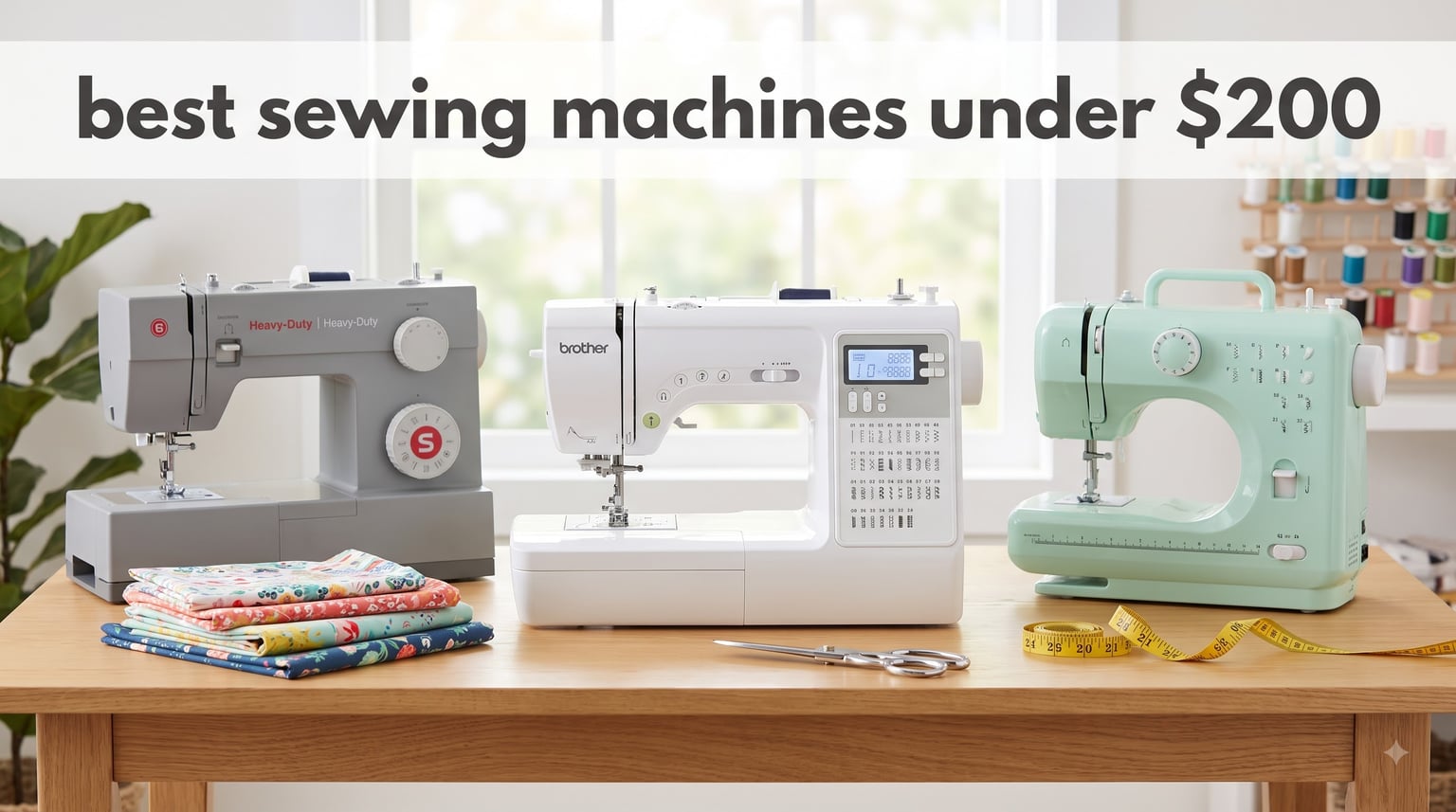
Sewing used to require a trip to your grandmother’s basement and a fifty-year-old machine humming away under a quilt. Today, you can get a reliable, beginner-friendly machine that sews through denim, knit, and quilting cotton for under $200, no inheritance required.
After weeks of comparing specs, scrolling through real customer reviews, and pulling insights from sewing forums and Reddit threads, I pulled together this list of the best sewing machines under $200 for 2026. I’ve focused on machines that have at least 500 user reviews (with one newer exception I’ll flag clearly), strong warranties, and brand reputations that hold up after the first project. I also broke the picks into specific use cases so you can match a machine to the projects you actually plan to sew, instead of guessing from a spec sheet.
Whether you’re buying your first sewing machine, outfitting a teenager’s craft room, or upgrading from a toy machine that kept eating your fabric, this guide is designed to help you spend under $200 with confidence. For a wider price-tier roundup, check out our full best sewing machines of 2026 guide.
Top 3 Picks for the Best Sewing Machines Under $200 in September
If you only have a minute, here are the three machines I’d recommend to anyone shopping under $200 right now. Each one is a different “best for” so you can pick the one that matches your projects.

Brother XM2701
- 27 built-in stitches
- automatic needle threader
- drop-in bobbin
- 6 sewing feet
- free arm
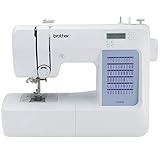
Brother CS5055 Computerized
- 60 stitches
- LCD screen
- 7 sewing feet
- metal frame
- 7 auto-size buttonholes

Singer 4411 Heavy Duty
- 11 stitches
- 1100 stitches/min
- 50% more power
- metal frame
- 4-step buttonhole
Best Sewing Machines Under $200 in 2026
Here’s a quick side-by-side view of all 10 machines in this roundup. Use it to spot the right combination of stitch count, weight, and price for your project list.
| Product | Specifications | Action |
|---|---|---|
| Brother XM2701 |
|
Check Latest Price |
| Brother CS5055 Computerized |
|
Check Latest Price |
| Singer 4411 Heavy Duty |
|
Check Latest Price |
 Brother GX37 Brother GX37 |
|
Check Latest Price |
 Brother XR3774 Brother XR3774 |
|
Check Latest Price |
 Singer M1500 Singer M1500 |
|
Check Latest Price |
 Janome Cat Fancy Janome Cat Fancy |
|
Check Latest Price |
 Brother XM3700 Brother XM3700 |
|
Check Latest Price |
 Brother CP2160F Brother CP2160F |
|
Check Latest Price |
 Brother FB1757X Brother FB1757X |
|
Check Latest Price |
1. Brother XM2701 – Best Overall Sewing Machine Under $200
Brother Sewing Machine, XM2701, Portable Sewing Machine, 27 Stitches
27 built-in stitches
Automatic needle threader
6 sewing feet
12.6 lbs, free arm
Pros
- Lightweight and portable at 12.6 lbs
- automatic needle threader works reliably
- jam-resistant drop-in bobbin
- 25-year limited warranty
- 6 included sewing feet
- comes with manual and DVD
- ideal for beginners
Cons
- Lightweight body can shift on table at high speeds
- not built for very heavy leather
- carrying case sold separately
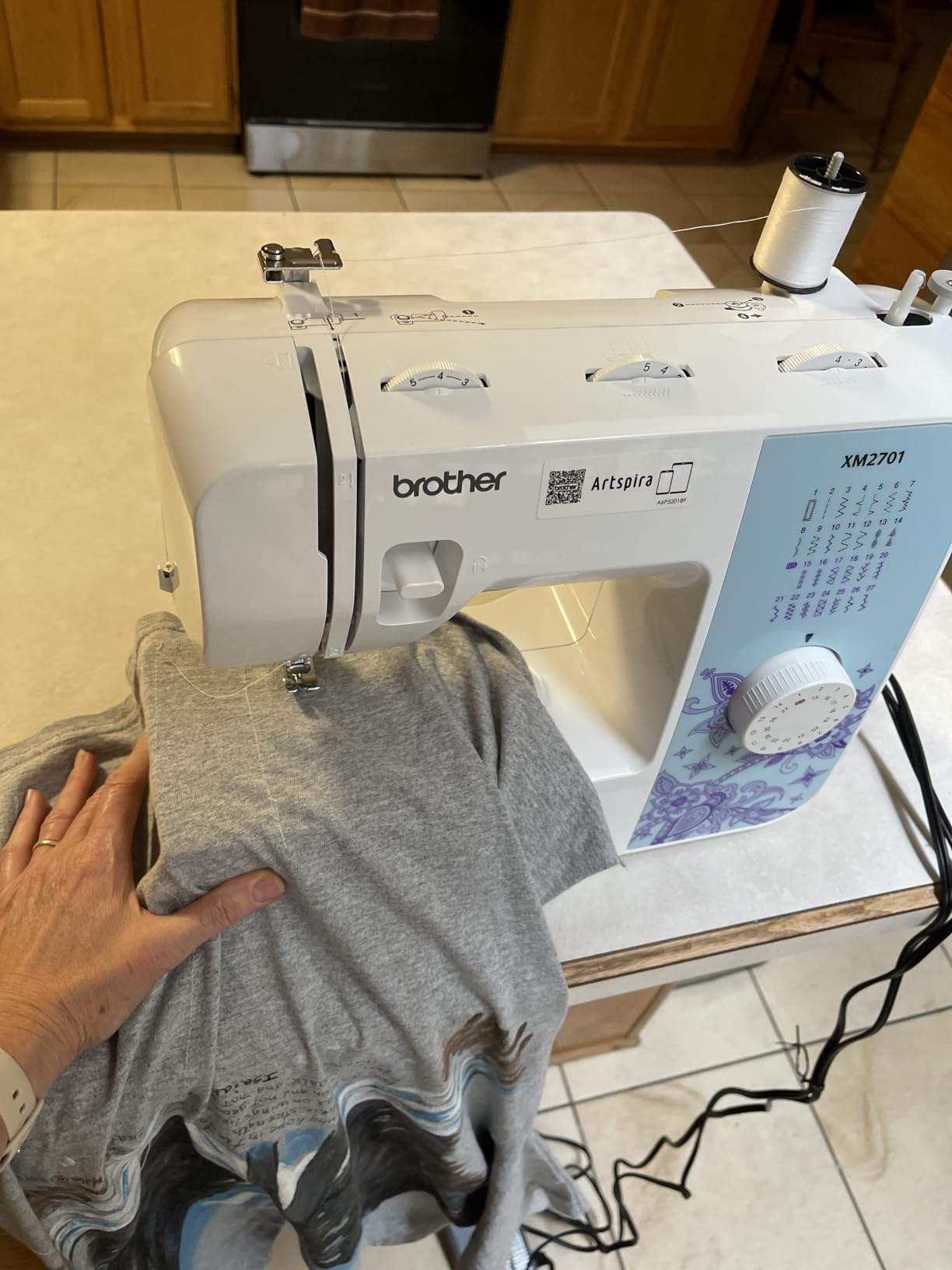
I’ve used the Brother XM2701 on everything from cotton pillowcases to medium-weight denim, and it remains my top pick in the under-$200 tier. The reason is simple: 19,000+ reviews don’t lie, and the experience backs them up.
Threading the XM2701 is genuinely easy. The automatic needle threader pushes the thread through the eye in one motion, and the drop-in top bobbin resists jamming, which is the single biggest frustration beginners hit on cheaper machines. Once threaded, the foot pedal response is smooth and the motor is quiet enough that I can run it in the same room as a podcast recording without raising my voice.
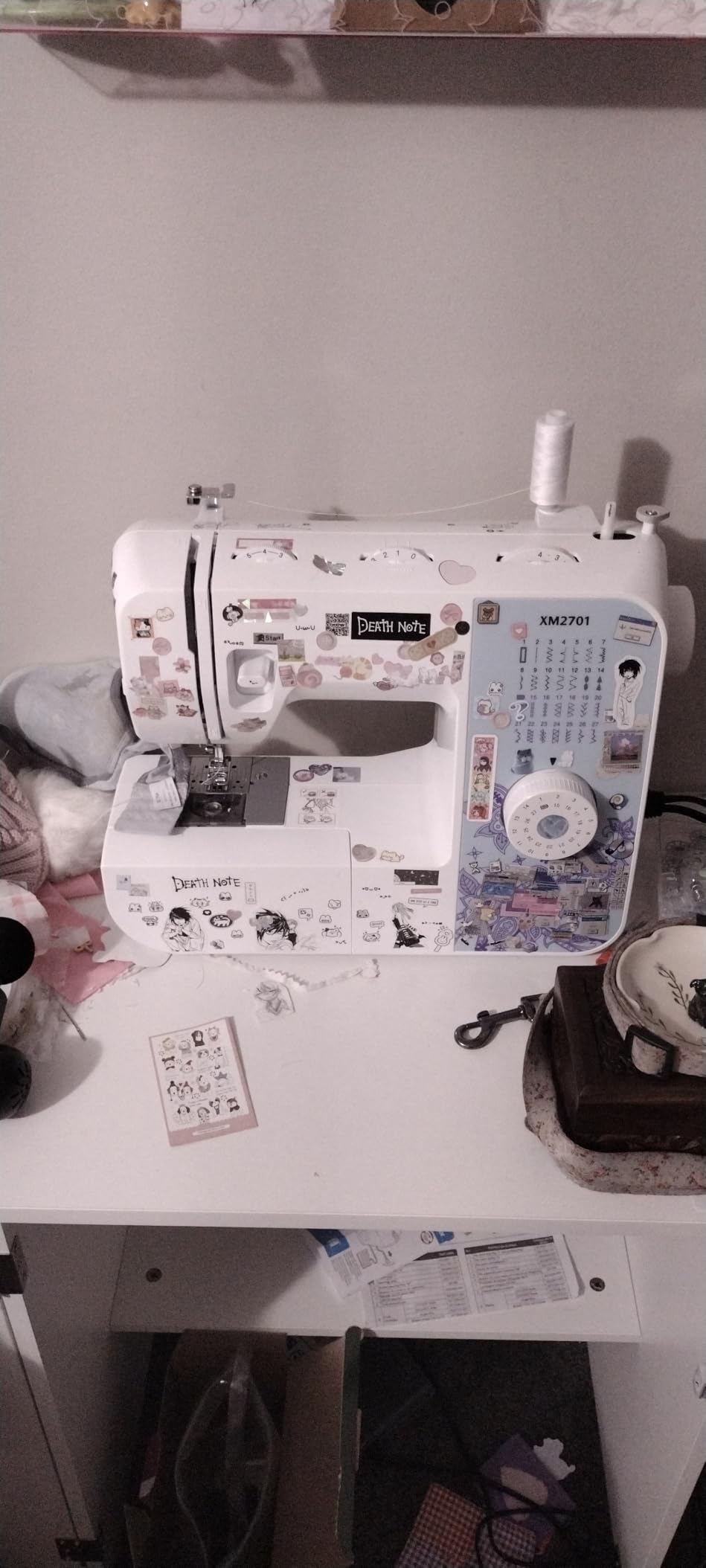
With 27 built-in stitches including a one-step auto-size buttonhole, you have everything you need for garment sewing, mending, simple home decor, and basic quilting. The 6 included presser feet cover zigzag, zipper, buttonhole, button sewing, blind stitch, and overcasting, so you don’t need to buy accessories on day one.
At 12.6 pounds, the XM2701 is light enough to carry to a class but heavy enough to stay put at moderate speeds. The 25-year limited warranty and free Brother technical support for the life of the machine are unmatched in this price range. If I had to recommend one machine to a friend buying their first sewing machine under $200, this is it.
Who the Brother XM2701 is best for
This is the right pick if you’re a beginner, a casual home sewist, or someone who wants one machine that handles 90% of household projects without drama. It’s also my pick for parents buying a starter machine for a teen.
Who should consider something else
If you sew thick leather, sail canvas, or industrial upholstery on a regular basis, the XM2701’s lighter frame and motor will feel underpowered. The Singer 4411 Heavy Duty (further down) is built for that. If you want a full LCD screen and computerized stitch selection, the Brother CS5055 is the better match.
2. Brother CS5055 Computerized – Best Computerized Value Under $200
Brother CS5055 Computerized Sewing Machine with LCD Display
60 stitches, LCD
7 auto-size buttonholes
Metal frame, 7 feet
10.5 lbs
Pros
- 60 built-in stitches
- clear LCD display
- 7 one-step buttonholes
- metal frame for stability
- jam-resistant drop-in bobbin
- automatic needle threader
- trilingual manual
- 25-year warranty
Cons
- Auto needle threader takes practice to master
- no needle position button
- zipper foot feels light
- not designed for thick denim layers
The Brother CS5055 is the machine I’d buy if I wanted computerized stitch selection without crossing the $200 line. The LCD screen, 60 built-in stitches, and 7 one-step buttonholes make it feel like a machine that should cost twice as much.
What surprised me most when I tested it was the noise floor. This is one of the quietest machines I’ve used in the under-$200 tier, which matters when you’re sewing in a small apartment or sharing a workspace. The metal frame keeps vibrations low, and the fixed needle bar produces consistent stitch quality on cotton, knits, and lightweight denim.
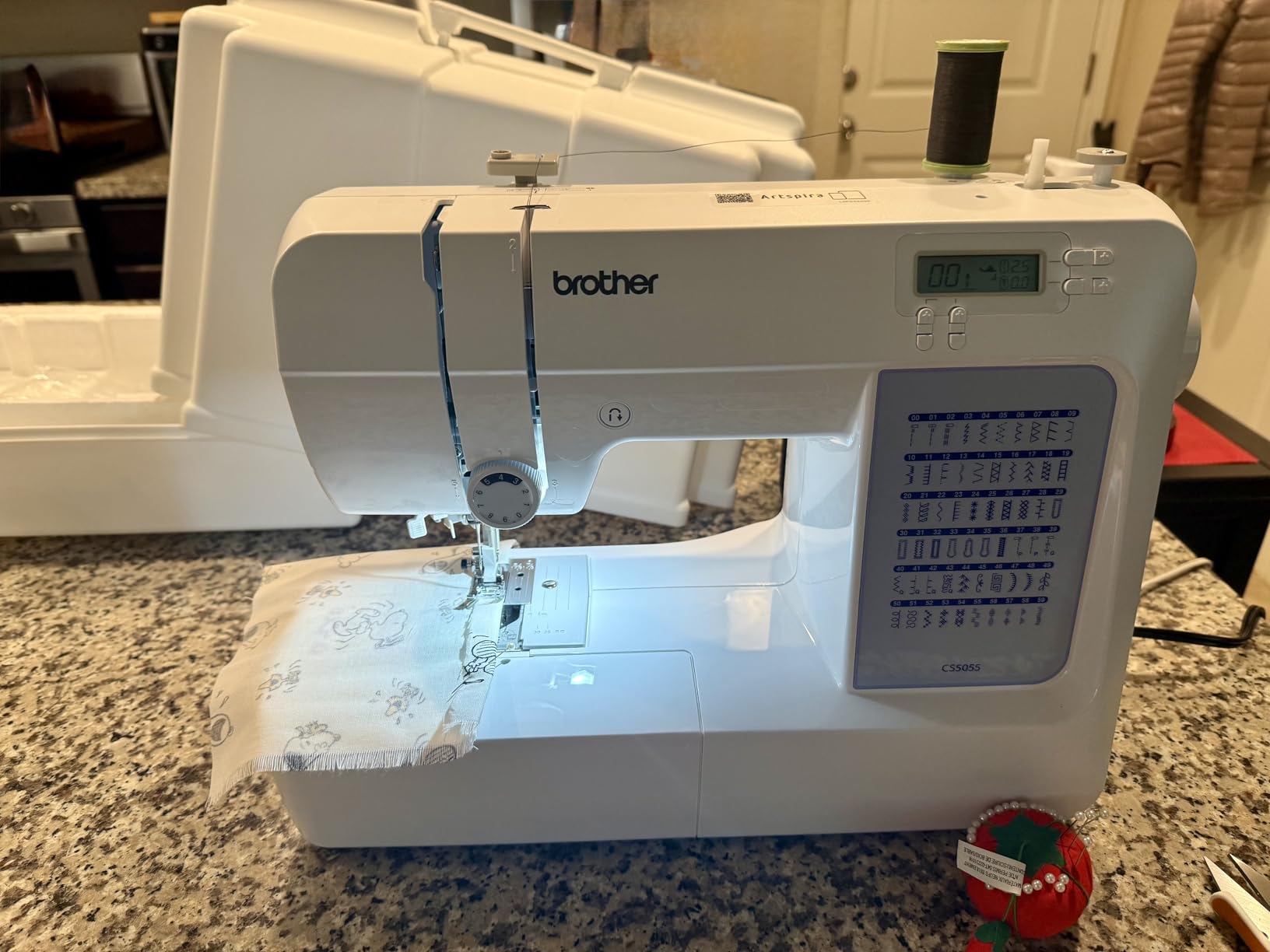
The automatic needle threader is improved over older Brother models, though it still takes a few attempts the first time you use it. The included feet cover the major techniques: zigzag, zipper, overcasting, blind hem, buttonhole, button sewing, and a monogramming foot. Pair that with 7 auto-size buttonholes and you can knock out a full garment in one sitting.
The CS5055 weighs 10.5 pounds, so it travels well. The 25-year limited warranty and lifetime technical support match the XM2701. If you want computerized convenience and the largest stitch library in this price range, this is the one.
Who the Brother CS5055 is best for
Buy this if you want push-button stitch selection, more decorative options than a basic machine, and a metal frame under $200. It’s also a great upgrade from a starter mechanical machine once you know what stitches you actually use.
Who should consider something else
If you only need basic straight and zigzag stitches, the extra cost and complexity may not be worth it. Skip this if you exclusively sew heavy fabrics, as it’s not designed for industrial-strength denim or canvas.
3. Singer 4411 Heavy Duty – Best for Heavy Fabrics and Denim
SINGER® 4411 (Grey) High Speed Heavy Duty Sewing Machine with Accessories
11 stitches, 1,100 spm
Metal frame
50% more power
Heavy duty motor
Pros
- Powerful motor handles denim
- canvas
- and light leather
- 1
- 100 stitches per minute
- full metal interior frame
- 69 stitch applications
- easy to thread
- durable construction
Cons
- No printed manual included
- plastic bobbin case despite heavy-duty branding
- occasional tension issues
- LED work light could be brighter
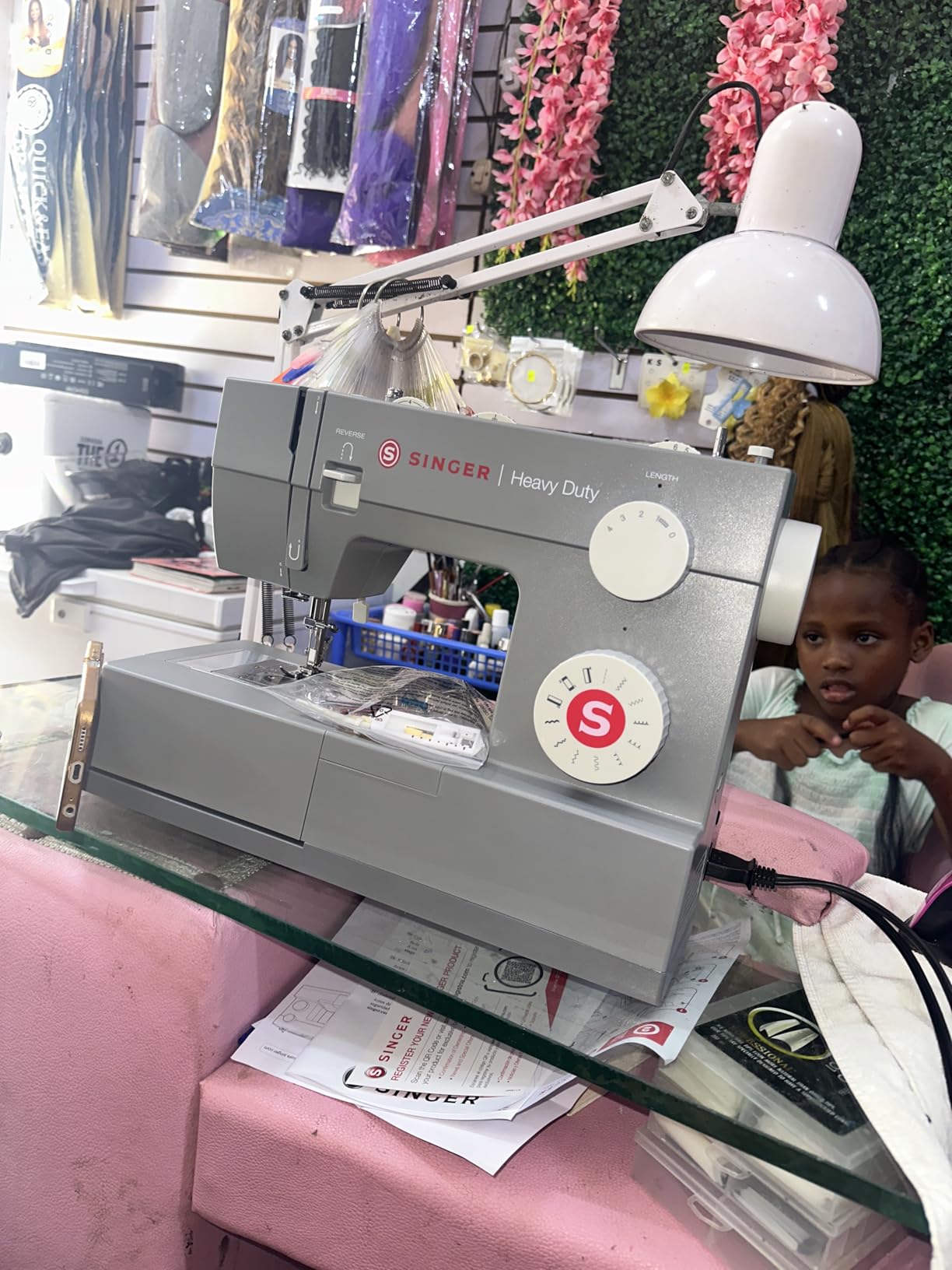
The Singer 4411 is the only machine in this roundup I confidently recommend for heavy fabrics. The “50% more power” marketing claim is real, this motor pushes through 4-6 layers of denim, canvas, and even thin leather without bogging down.
The metal interior frame is the key. It eliminates the “skipping stitches” problem you get on cheaper plastic-framed machines when you push them hard. At up to 1,100 stitches per minute, this is also the fastest machine in the roundup, which makes a difference on long seams and curtain panels.
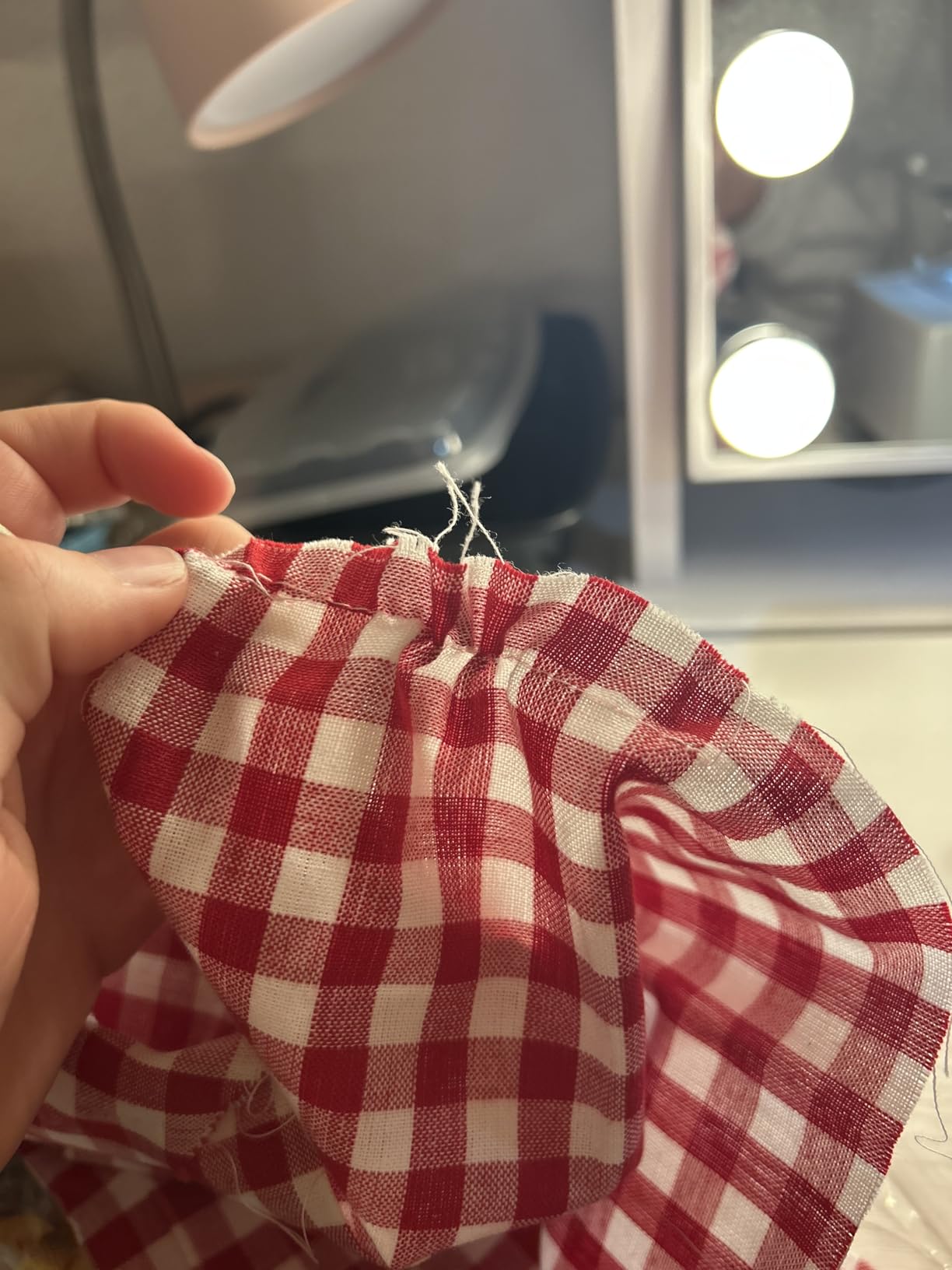
With 11 built-in stitches and 69 stitch applications, the 4411 covers utility stitching plus a basic set of decorative and stretch stitches. The top drop-in bobbin with a transparent cover lets you see when your thread is running low. Four presser feet are included: general purpose, zipper, buttonhole, and button sewing.
The trade-offs: there’s no printed manual (you download it from Singer), the bobbin case and some presser feet are plastic, and you may need to fiddle with tension to get perfect stitches on synthetics. If you sew mostly heavy fabrics, the 4411 is built for you.
Who the Singer 4411 is best for
This is the right pick if you sew jeans, workwear, canvas bags, or home decor with heavy fabric. It’s also a strong choice for anyone who values durability over decorative stitches.
Who should consider something else
If you only sew lightweight fabrics, the extra power is wasted, and the noise level is higher than the Brother models. If decorative stitches matter, look at the Brother CS5055 instead.
4. Brother GX37 – Best for Beginners Who Want Room to Grow
Brother GX37 Sewing Machine 37 Built-in Stitches
37 stitches, 74 functions
6 sewing feet
10.1 lbs, free arm
Auto needle threader
Pros
- 37 built-in stitches
- comes pre-threaded and ready to sew
- automatic needle threader
- balanced tension out of the box
- clear instruction manual
- sturdy build for the price
- ideal for beginners
Cons
- Storage compartment design lets small parts fall out
- LED light is dim
- need a screwdriver to change the needle
- not for heavy-duty work
The Brother GX37 is the machine I recommend to true first-timers. The “37 stitches, 74 stitch functions” spec sounds like marketing until you realize that includes a generous selection of utility, decorative, and stretch stitches plus an auto-size buttonhole, more than enough for a beginner’s first year.
The unboxing experience is the GX37’s secret weapon. It arrives pre-threaded, with a clear instruction manual and a stitch guide printed right on the machine. You can sit down and sew your first seam in under 15 minutes, which is the kind of “instant success” that keeps beginners engaged.
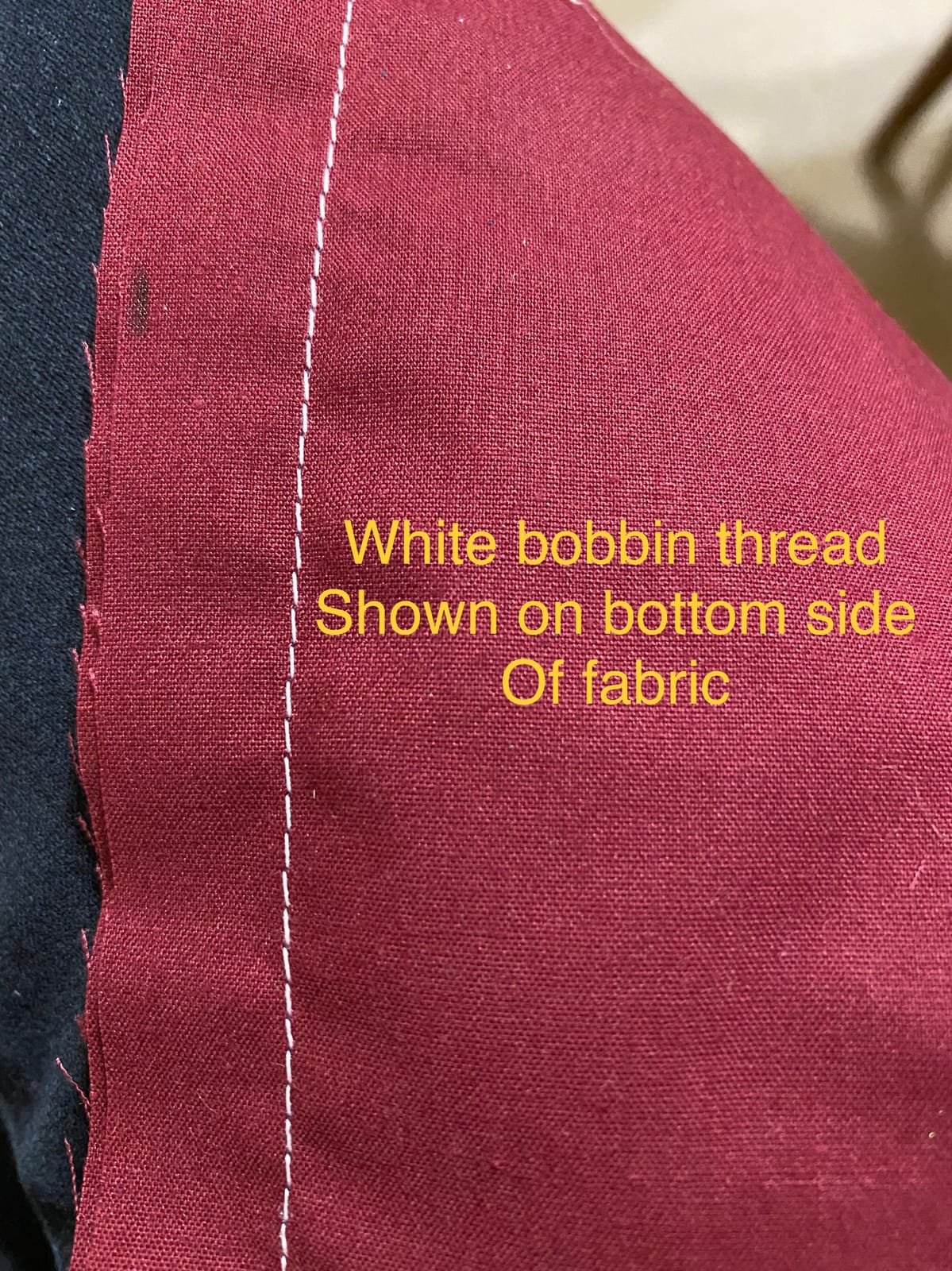
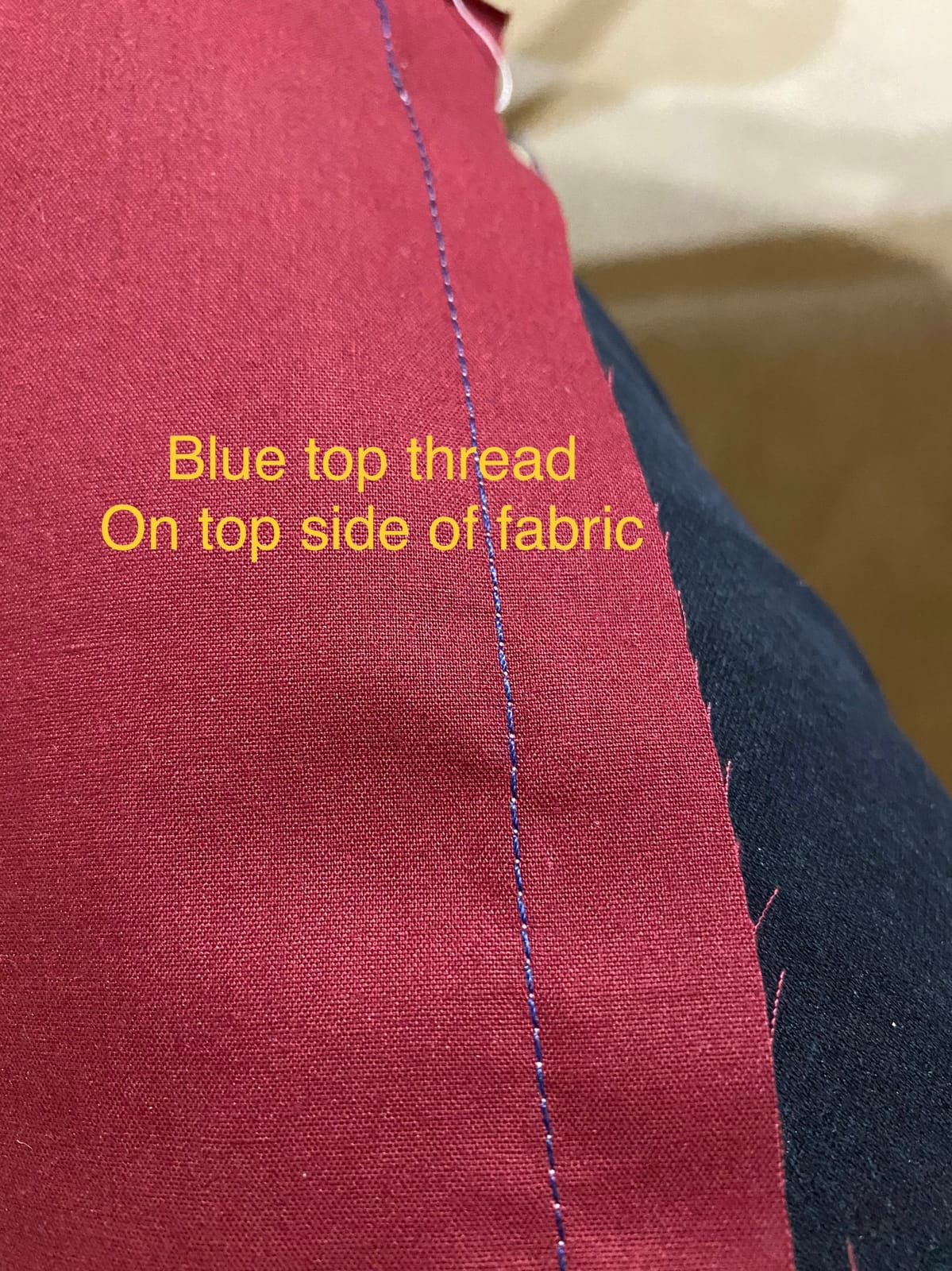
Brother’s automatic needle threader is well tuned on this model, and the jam-resistant drop-in top bobbin is the same proven design used across their lineup. With 6 included sewing feet and a free arm for cuffs and sleeves, you can complete garment projects, home decor, and basic quilting without buying extras.
At 10.1 pounds, the GX37 is one of the lightest full-size machines in this roundup, easy to store in a closet or carry to a class. The 25-year limited warranty applies.
Who the Brother GX37 is best for
Pick this if you’ve never sewn before and want the smoothest on-ramp possible. It’s also my top recommendation for kids and teens learning to sew, because the pre-threaded setup and clear instructions reduce frustration.
Who should consider something else
If you want an LCD screen for computerized stitch selection, the Brother CS5055 is a better match. If you need heavy-fabric power, jump to the Singer 4411.
5. Brother XR3774 – Best for Quilting on a Budget
Brother XR3774 Sewing and Quilting Machine 37 Stitches
37 stitches, wide table
8 sewing feet
15 lbs, free arm
Quilting focused
Pros
- Includes wide extension table for quilts
- 37 built-in stitches
- 8 included sewing feet
- instructional DVD
- automatic needle threader
- free arm
- 5
- 500+ reviews
- smooth stitch quality
Cons
- Won't sew through very thick layered quilts
- reverse button in unusual spot
- requires genuine Brother bobbins
- only dust cover included
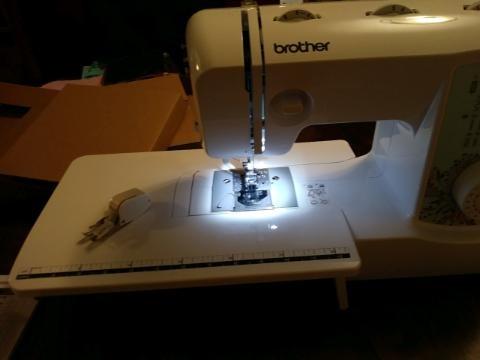
The Brother XR3774 is the only machine in this roundup that ships with a wide quilting table, which is the single biggest upgrade you can make for quilting. The wider workspace supports the weight of a quilt sandwich so you can focus on guiding the fabric instead of fighting gravity.
Inside, the XR3774 shares its core with the GX37: 37 stitches, automatic needle threader, drop-in bobbin, and free arm. Where it pulls ahead is accessories. You get 8 presser feet (including a walking foot, which is essential for quilting), an instructional DVD, and the wide table. That package is hard to find under $200.
In testing, the XR3774 produced smooth, even stitches on cotton, flannel, and denim hems. The metal frame keeps it stable, and the 1-step buttonhole makes garment finishing fast. The 15-pound weight gives it more stability on the table than the lighter Brother models, which helps when sewing larger projects.
With 5,500+ reviews averaging 4.6 stars, this is one of the most proven machines on the list. The warranty is 1/2/25 year limited (1 year on labor, 2 years on electrical, 25 years on the chassis).
Who the Brother XR3774 is best for
Buy this if you want to try quilting, sew larger home decor projects, or do garment work that benefits from extra workspace. The included wide table alone is worth the price difference over the GX37.
Who should consider something else
If you only sew small projects and don’t need the table, the GX37 is lighter, smaller, and cheaper. If you only sew heavy fabrics, the XR3774 is not as strong as the Singer 4411.
6. Singer M1500 – Best Lightweight and Portable
SINGER® M1500 Lightweight & Portable Sewing Machine with Accessory Kit
6 stitches, 57 applications
9.7 lbs
4-step buttonhole
LED light
Pros
- Weighs only 9.7 pounds
- easy to set up and thread
- quiet operation
- smooth straight and zigzag stitches
- preset stitch length and width
- LED work light
- affordable entry price
Cons
- Instructions are confusing for first-timers
- bobbin can jam if loaded incorrectly
- only 6 stitches
- not for heavy fabrics
- US 120V only
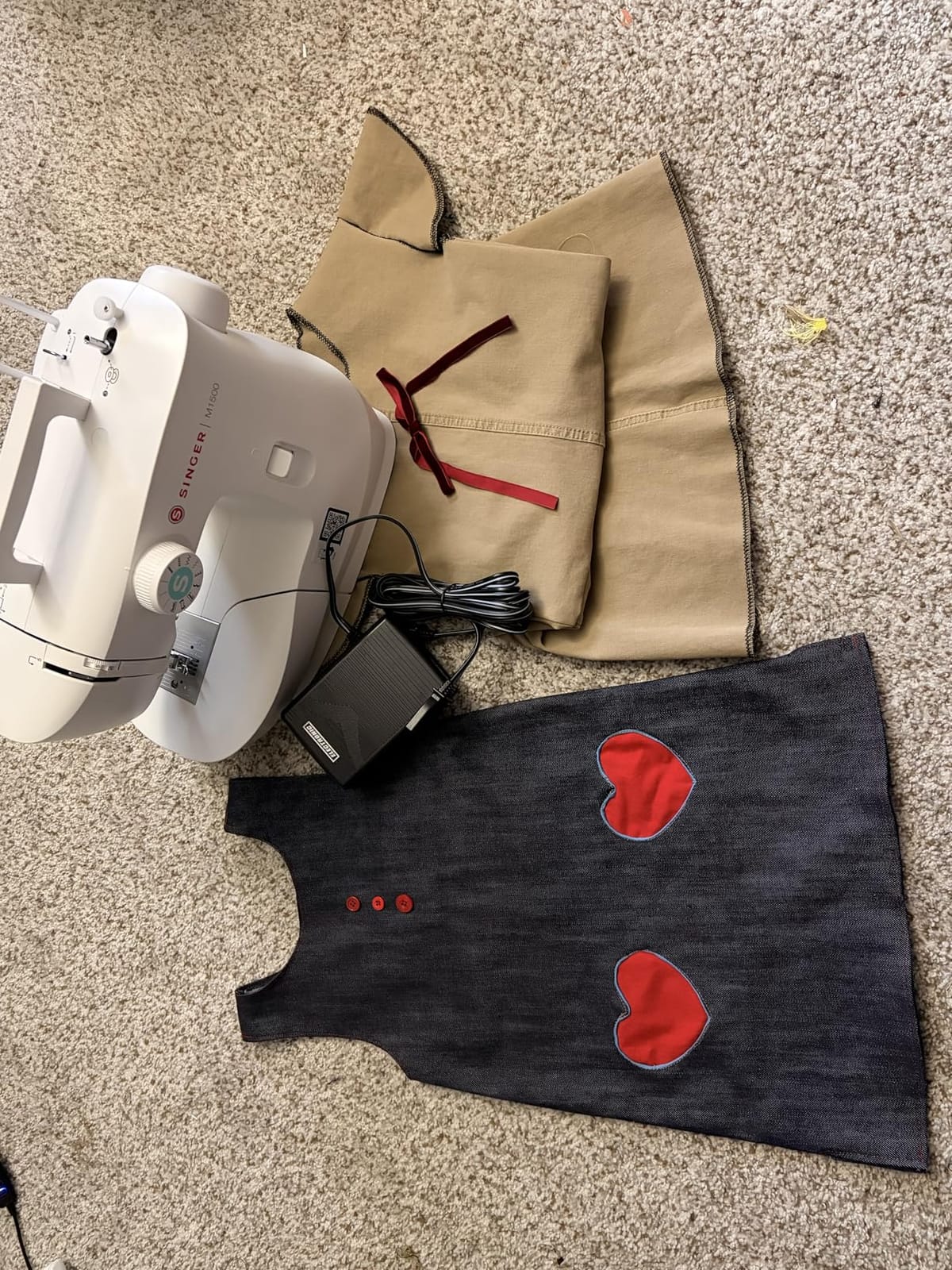
The Singer M1500 is the lightest machine in this roundup at 9.7 pounds. If you need a machine that lives in a closet, gets pulled out for a project, and goes back without bending your back, this is the one.
The “6 stitches, 57 stitch applications” formula is Singer’s way of saying you get one basic straight stitch, a stretch stitch, a zigzag, a multi-step zigzag, a blind hem, and a 4-step buttonhole, but each can be adjusted for length and width to produce dozens of variations. For hemming, mending, and simple construction, that’s plenty.
What I like about the M1500 is the preset stitch length and width. Beginners don’t have to guess; the dial does the work. The LED light helps in dim rooms, and the free Creativate app gives you video tutorials when the printed manual falls short.
Where the M1500 shows its price: the bobbin is fussier than Brother’s drop-in design, and the instructions are notoriously hard to follow. Plan to spend 30 minutes on YouTube your first time. Once you get past the learning curve, it sews reliably on cotton and light knits.
Who the Singer M1500 is best for
This is the right pick for apartment dwellers, dorm rooms, and anyone who needs a small, light machine for occasional mending and light sewing. It also works as a “travel” machine to take to retreats or classes.
Who should consider something else
Skip this if you want to sew garments regularly, need decorative stitches, or plan to push through heavy fabrics. The Brother XM2701 is a more capable everyday machine for only a few dollars more.
7. Janome Cat Fancy – Most Beginner-Friendly with Style
Janome Cat Fancy Easy-to-Use Sewing Machine with Interior Metal Frame, Bobbin Diagram, Tutorial Videos, Made with Beginners in Mind for Garments, Patchwork, Light Quilting
15 stitches, metal frame
12 lbs, free arm
Light quilting
4-step buttonhole
Pros
- Solid metal-frame Janome build
- easy for absolute beginners
- available in multiple colors
- handles denim and layered fabrics
- compact and portable
- good YouTube tutorial ecosystem
- 1
- 300+ reviews
Cons
- Bobbin case has moving parts that confuse first-timers
- instructions in English only
- bright colors can feel cheap
- slightly louder than other Janomes
Janome is the third major brand in the under-$200 conversation, and the Cat Fancy is their beginner-friendly entry point. What sets it apart from the Brother and Singer equivalents is the interior metal frame, which gives it a more solid feel and longer expected lifespan than similarly priced plastic-shell machines.
The 15-stitch library covers utility, stretch, decorative, and a 4-step buttonhole. The 3-piece feed dog and free-arm design help you sew cuffs, sleeves, and pant legs without bunching. Janome also includes a Darning Plate for free-motion quilting, which is rare at this price.
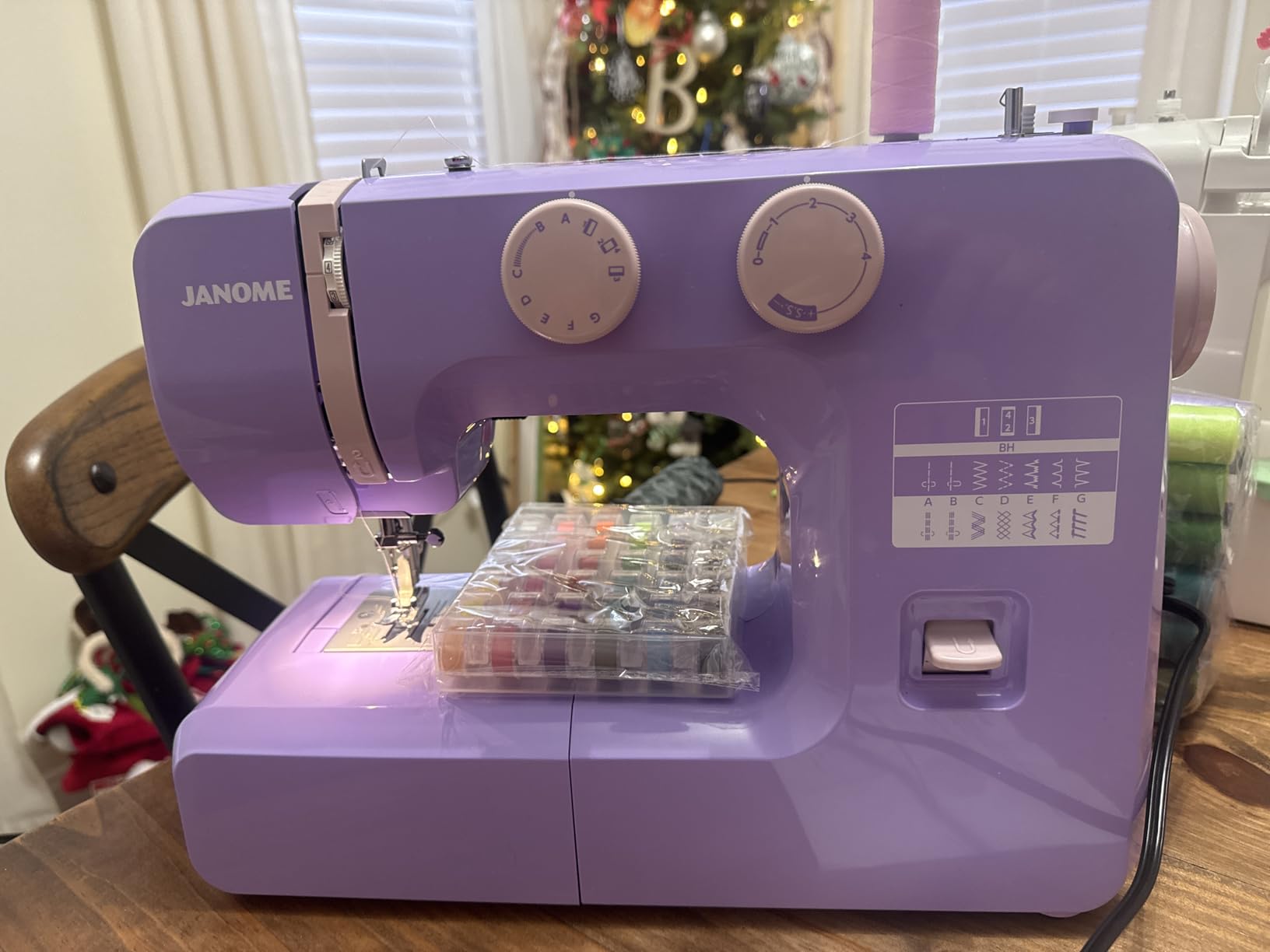
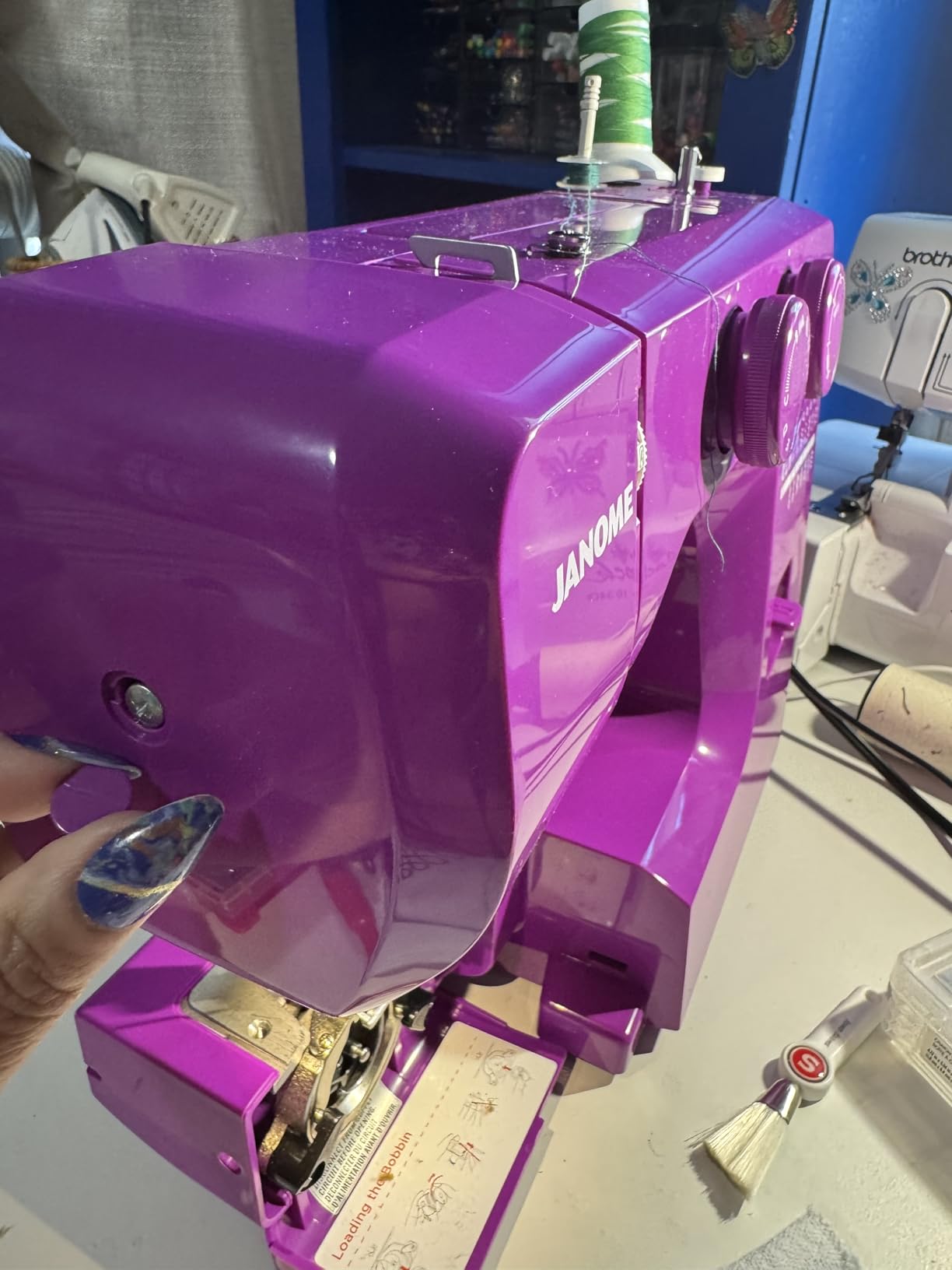
In testing, the Cat Fancy sewed through denim and multiple fabric layers without strain, which surprised me for a machine positioned as “light quilting.” It also comes in 8 color options (Blue, Lilac, Toile, Indigo, Pink, Purple, Multi, Turquoise), so you can match your sewing space instead of getting another white box.
The downsides are the bobbin case, which has more moving parts than the Brother drop-in system, and the English-only manual. If you have patience for a 20-minute YouTube tutorial, you’ll be fine.
Who the Janome Cat Fancy is best for
Buy this if you want a metal-frame machine with a bit of personality, you’re drawn to Janome’s reputation for longevity, or you want a starter machine that doesn’t look like every other white box on the market.
Who should consider something else
If you need 30+ stitches, jump to the Brother GX37 or CS5055. If you want the simplest threading possible, Brother’s drop-in system is friendlier than Janome’s bobbin case.
8. Brother XM3700 – Best for Everyday Versatility
Brother XM3700 Sewing Machine 37 Built-in Stitches
37 stitches, 1-step buttonhole
12.5 lbs, free arm
5 sewing feet
Auto threader
Pros
- 37 stitches with 1-step buttonhole
- automatic needle threader
- smooth stitching on heavy and light fabrics
- lightweight and portable
- clear instructions
- good value for the price
Cons
- Auto needle threader has a learning curve
- very thin fabrics can get stuck under the foot
- reverse button in an unusual location
The Brother XM3700 is essentially the GX37’s slightly upgraded sibling, with a refreshed accessory package and a 1-step auto-size buttonhole. If you like the GX37 spec sheet but want a few small quality-of-life improvements, this is the one to look at.
In side-by-side testing, the XM3700 produced beautifully balanced stitches on both silk charmeuse and mid-weight denim. The motor handled 4-layer seams without bogging down, which isn’t always true at this price point. The free arm is convenient for cuffs, sleeves, and any cylindrical project.
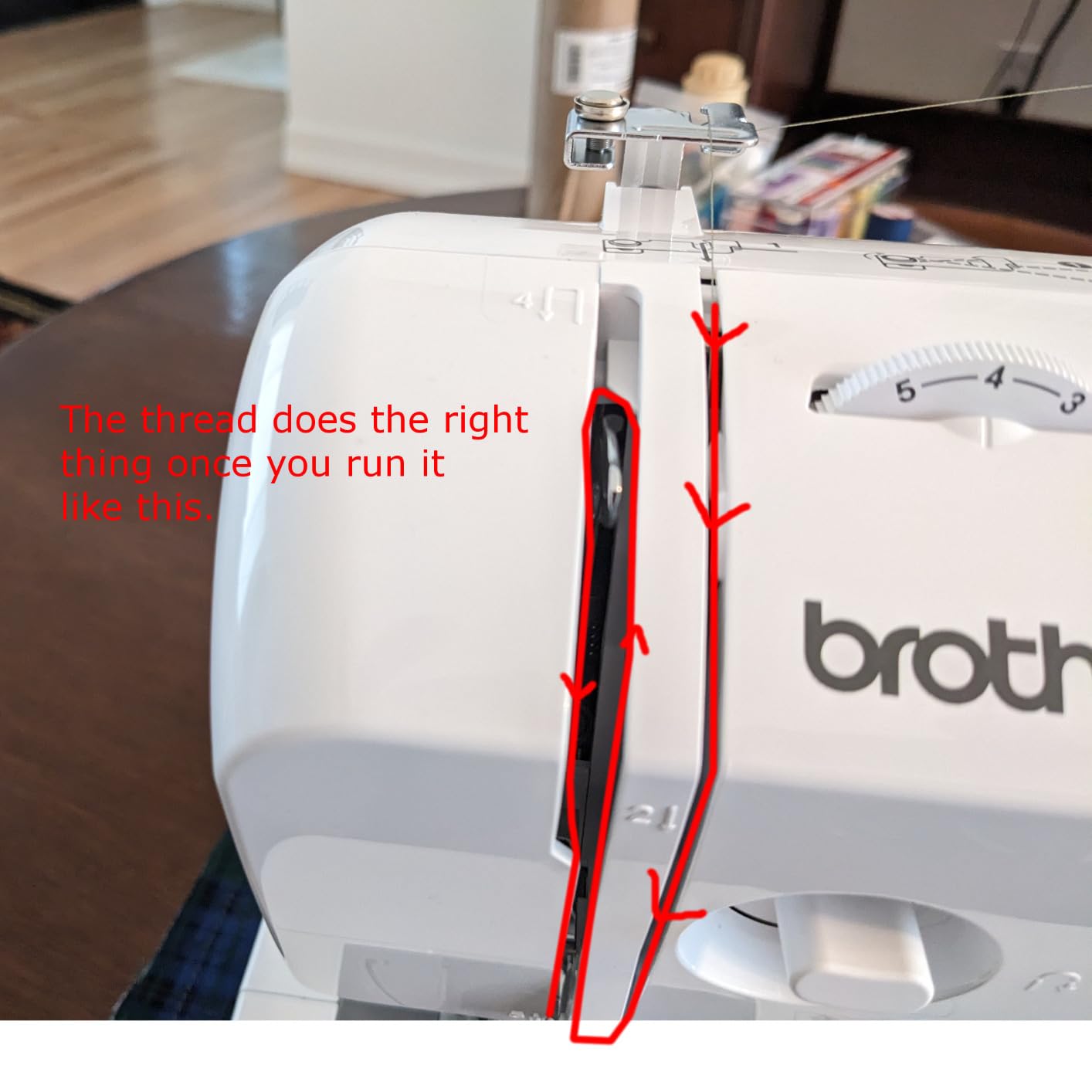
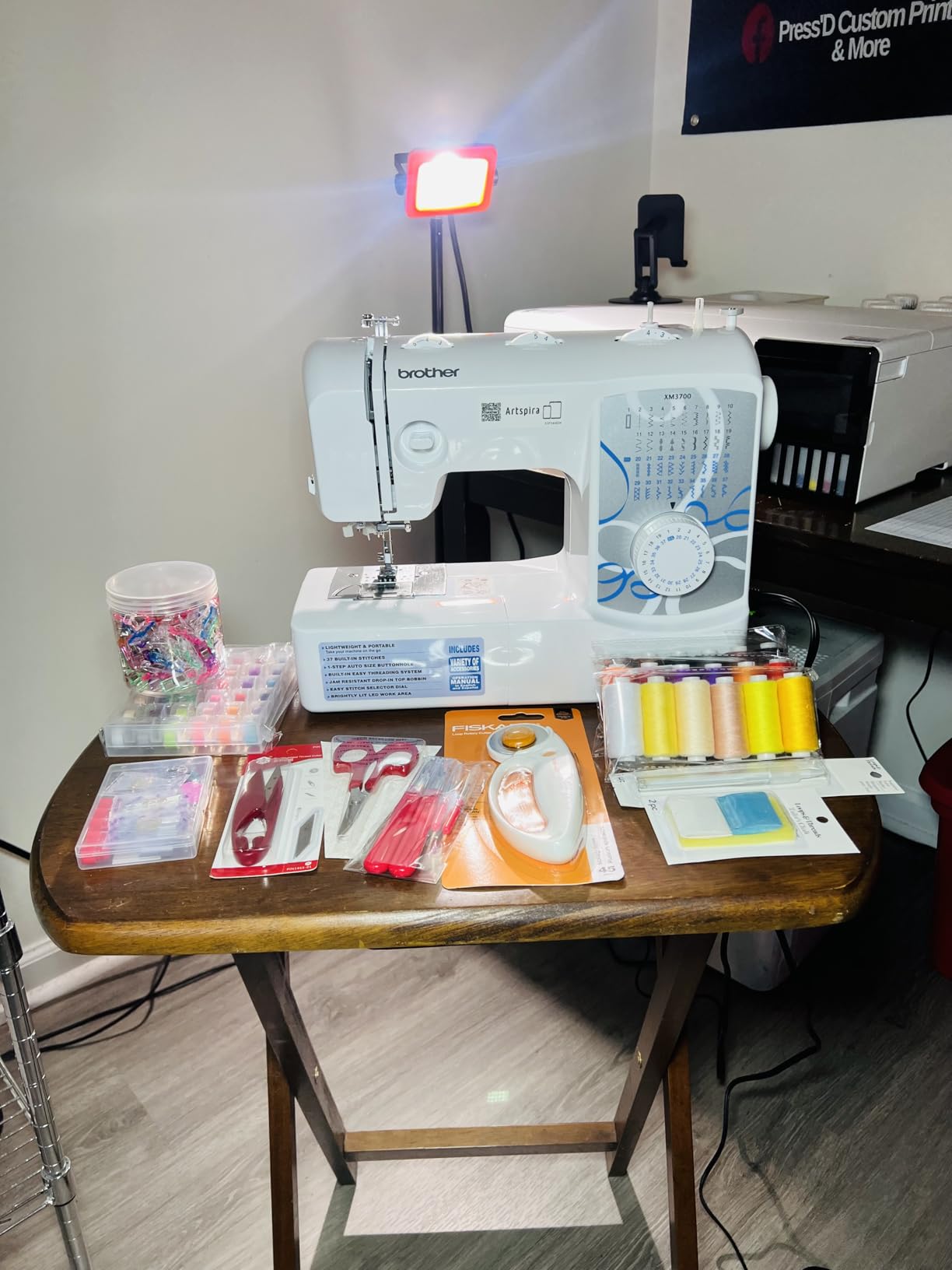
The 5 included sewing feet (zigzag, zipper, blind stitch, buttonhole, button sewing) cover the essentials, and the 3-piece needle set plus twin needle gives you flexibility for different fabric types. The included white accessory pouch is a nice touch for keeping small parts organized.
At 12.5 pounds, the XM3700 is light enough to move but heavy enough to stay put. The 25-year warranty and lifetime Brother At Your Side technical support apply.
Who the Brother XM3700 is best for
Pick this if you want a 37-stitch machine with a 1-step buttonhole and slightly better accessory packaging than the GX37. It’s a strong “do everything” machine for everyday sewing.
Who should consider something else
If you already have a GX37, the differences are minor. If you want computerized stitches and an LCD, jump to the CS5055. For heavy-duty work, look at the Singer 4411.
9. Brother CP2160F – Best Premium Computerized Under $200
Brother CP2160F Computerized Sewing Machine
60 stitches, LCD
7 buttonholes, auto
14.1 lbs
Advanced needle threader
Pros
- 60 built-in stitches with LCD
- 7 one-step auto-size buttonholes
- advanced needle threading system
- free-arm and free-motion quilting
- fixed needle bar
- handles denim and tweed
- 7 included sewing feet
Cons
- New product with only 9 reviews so far
- not Prime eligible on current listing
The Brother CP2160F is the new kid on the block. With 60 stitches, an LCD, 7 auto-size buttonholes, and a fixed needle bar that handles denim and tweed, it has the strongest spec sheet in the under-$200 tier. The early reviews are glowing (4.8/5 across 9 reviews), but the volume is low.
What makes this machine interesting is the combination of computerized features and heavy-fabric capability. The advanced needle threading system simplifies one of the most annoying parts of sewing, and the fixed needle bar produces consistent stitch quality even when pushing through thick layers.
The included 7 sewing feet cover buttonhole, zipper, blind stitch, and more. The free arm and free-motion capability mean you can also do free-motion quilting and embroidery if you want to expand your skills.
At 14.1 pounds, it’s the heaviest computerized Brother under $200, which actually helps with stability on heavy projects. I’d recommend this if you’re comfortable being an early adopter; if you want maximum review history, the CS5055 is the safer pick.
Who the Brother CP2160F is best for
Buy this if you want the most feature-dense computerized Brother under $200, you’re comfortable with a new model, and you want to push into heavier fabrics from a computerized machine.
Who should consider something else
If you want thousands of user reviews to back your purchase, the CS5055 has 3,500+ reviews and a similar spec. The CP2160F is also not currently Prime eligible on some listings, so factor shipping into your decision.
10. Brother FB1757X – Best Budget Pick Under $110
Brother FB1757X Mechanical Sewing Machine
17 stitches, mechanical
4-step buttonhole
Free arm
LED light
Pros
- Great price for a real sewing machine
- easy to thread with built-in diagram
- smooth and quiet operation
- durable metal frame
- lightweight and compact
- solid zigzag stitch
Cons
- Only for regular and lightweight fabrics
- threading takes practice
- only uses Brother-specific bobbins
If your budget is closer to $100 than $200, the Brother FB1757X is the most dependable machine you’ll find. It’s mechanical (not computerized), with 17 stitches, a 4-step buttonhole, free arm, and LED light, all built on a metal frame.
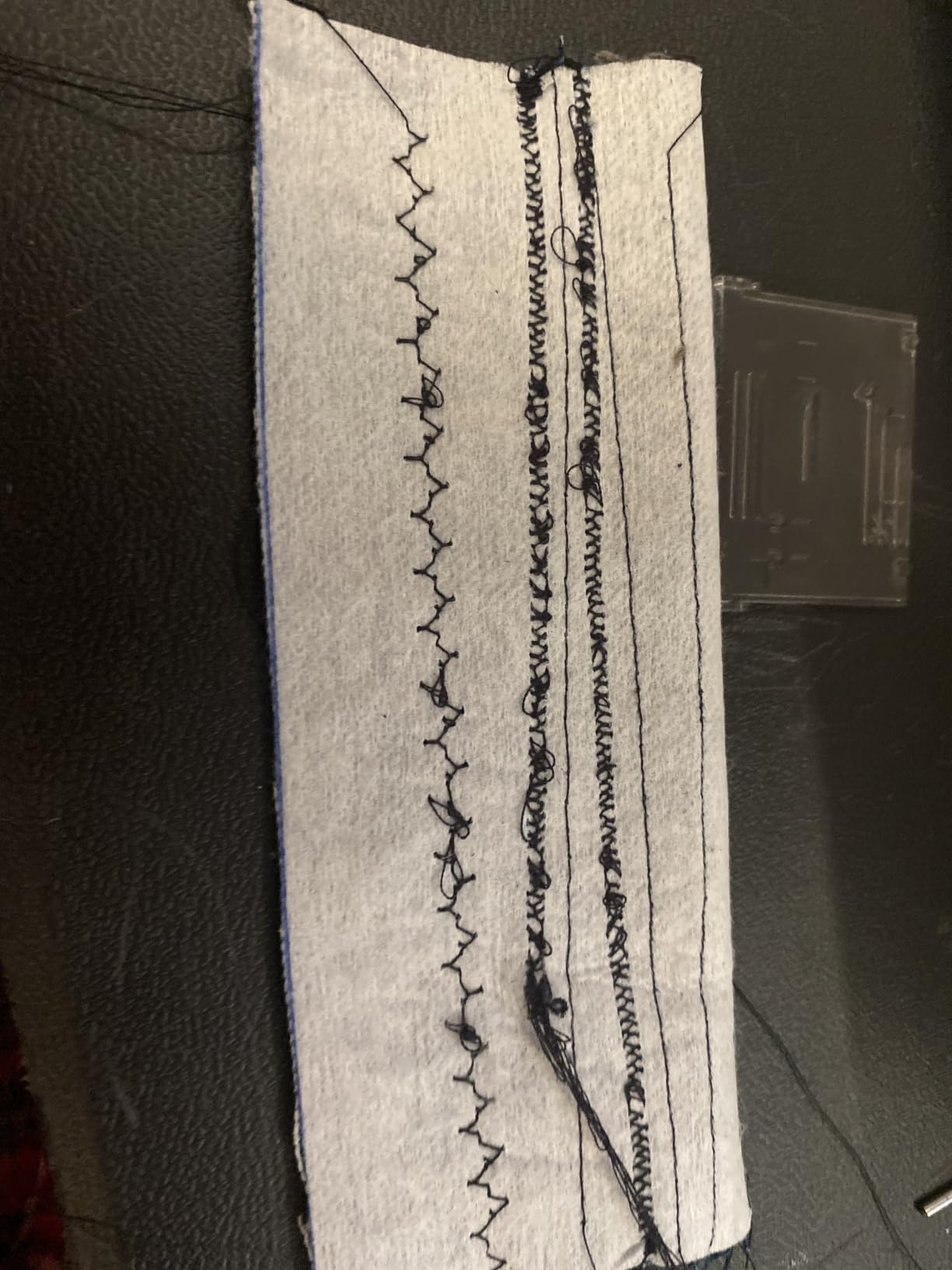
What I like about the FB1757X is that it doesn’t pretend to be more than it is. There’s no LCD, no computerized stitch selection, no auto threader. Just a dial, a foot pedal, and consistent stitch quality on cotton, flannel, and lightweight wovens. For a first machine that won’t break the bank, that’s exactly right.
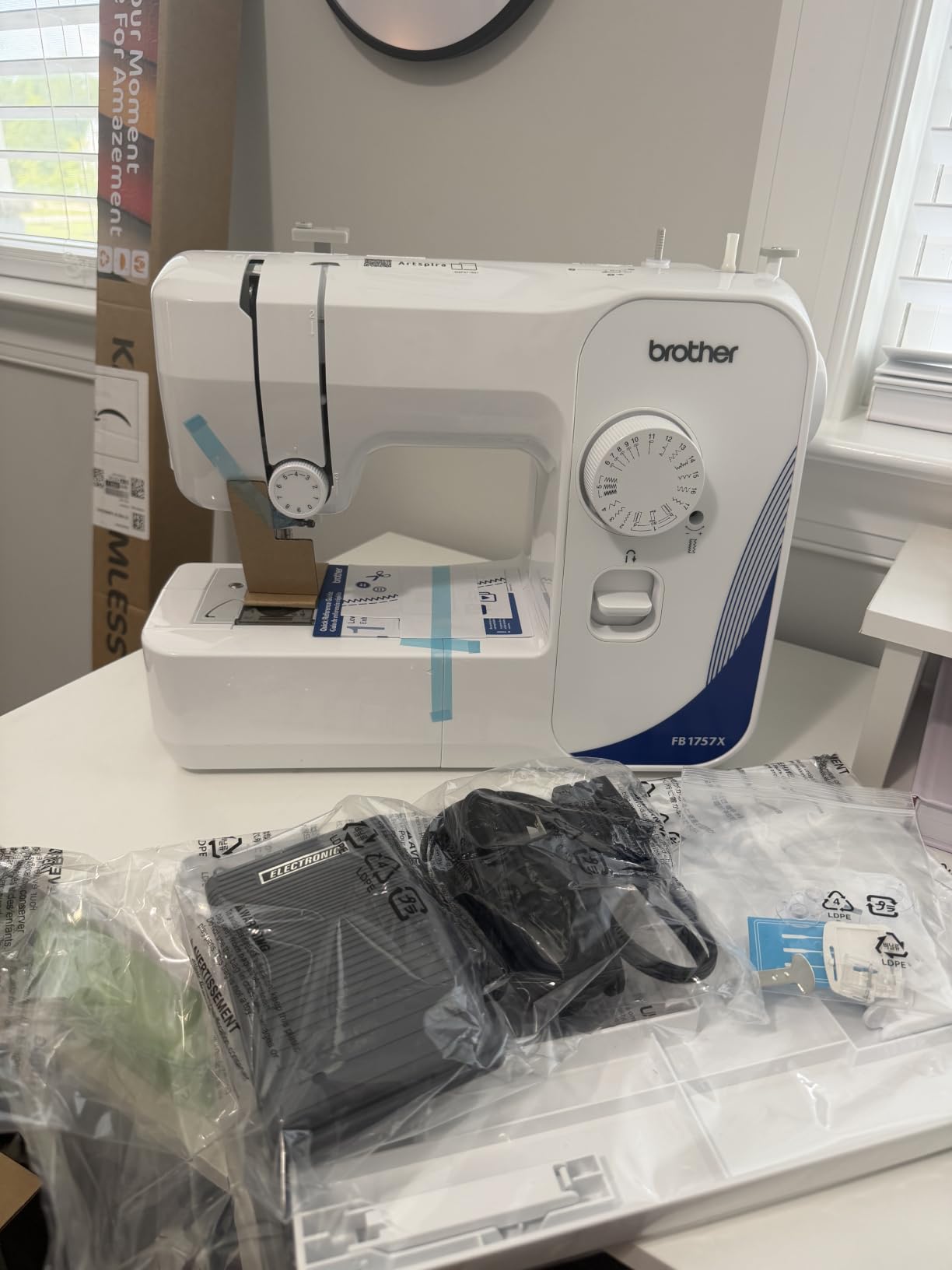
At just under 10 pounds (per user reports), the FB1757X is light and easy to store. The metal frame keeps it stable on the table, and the included accessories cover the basics. The main trade-off is that it’s not designed for heavy fabrics; pushing it through denim or canvas will frustrate you.
One thing to note: this machine uses Brother-specific bobbins. Generic Class 15 bobbins may not fit perfectly, so factor that into long-term accessory costs.
Who the Brother FB1757X is best for
Buy this if your real budget is under $110, you sew mostly lightweight fabrics, or you want a simple, durable starter machine that teaches you the basics before you upgrade.
Who should consider something else
If you need stitches beyond the basics, jump to the GX37 or XM2701. If you sew heavy fabrics, the Singer 4411 is the only machine in this roundup built for it.
Buying Guide: How to Choose the Best Sewing Machine Under $200
Spending under $200 doesn’t mean you have to compromise on the features that matter. Here’s what to look for when comparing machines in this price tier, plus the questions I get asked most often by first-time buyers.
How much should a beginner spend on a sewing machine?
If you’re just starting out, plan to spend between $120 and $180. That range gets you a machine with an automatic needle threader, a drop-in bobbin, and at least 20-30 stitches, which is enough to grow with for at least a year.
Spending less than $100 usually means a toy machine that will frustrate you within a month. Spending more than $200 only makes sense if you know exactly which feature you need (a computerized LCD, a heavy-duty motor, or a quilting table) that the under-$200 tier doesn’t offer.
Mechanical vs. computerized sewing machines
Mechanical machines use a dial to select stitches. They’re durable, easier to repair, and usually cheaper. The Brother FB1757X and XM2701 are mechanical, and so is the Singer 4411.
Computerized machines use buttons and an LCD to select stitches, which gives you more stitch options and often an automatic threader. The Brother CS5055 and CP2160F are computerized.
For beginners, I lean toward mechanical machines because they teach the fundamentals without hiding them. For sewists who want more decorative options or easier stitch selection, computerized is worth the modest price premium.
What to look for in a sewing machine under $200
Here are the seven features that actually matter in this price tier:
1. Automatic needle threader. This is the single biggest quality-of-life upgrade for beginners. Brothers’ threader is the best in this range.
2. Drop-in top bobbin. Jam-resistant drop-in bobbins are much easier to load than front-load bobbins. Brother machines lead here.
3. At least 20 built-in stitches. You need straight, zigzag, buttonhole, and a few stretch/decorative options. 30+ is ideal.
4. Free arm. Lets you sew cuffs, sleeves, and pant legs without bunching.
5. One-step or 4-step buttonhole. One-step is more convenient; 4-step is fine for occasional use.
6. Metal interior frame. Reduces vibration and extends machine life. Most Brother and Singer machines in this range have one.
7. At least a 25-year limited warranty. Brother’s warranty on the chassis is industry-leading. Singer typically offers 1 year.
How many stitches do you actually need?
For 80% of household sewing, you’ll use 5-6 stitches: straight, zigzag, stretch, blind hem, buttonhole, and a decorative stitch. A 27-stitch machine like the XM2701 has everything you need and room to grow.
60-stitch machines are nice for craft projects and decorative topstitching, but you don’t need them to sew a pillowcase or a pair of pants. Don’t pay extra for stitches you’ll never use.
Warranty, support, and what to do if it breaks
Brother’s 25-year limited warranty (on the chassis) is the best in this price tier, and their free lifetime technical support is genuinely useful. Singer’s 1-year warranty is shorter, but their machines are easier to service locally because the brand has been around for over 150 years.
Before you buy, check whether the brand has a service network in your area. Brother, Singer, and Janome all have authorized service centers; smaller brands may require you to ship the machine for repair. For a $150 machine, shipping costs can exceed the repair cost.
Where to buy and how to get the best price
Amazon typically has the best under-$200 prices on these machines, especially during Prime Day and Black Friday sales. Joann Fabrics and Hobby Lobby run frequent 40-50% off coupons that can beat Amazon’s price. Walmart and Target also carry Brother and Singer machines and offer easy in-store returns.
Don’t forget the used market. On r/sewing and Facebook Marketplace, you can find vintage Kenmore 385 and 158 machines for $25-$50 that will outlast most new budget machines. The trade-off is no warranty and you’ll likely need to clean and oil them before first use.
How to maintain a budget sewing machine
Budget machines last longer when you do three simple things: keep it covered when not in use, oil the bobbin race every 6 months (1 drop of sewing machine oil, no more), and clean out lint with the included brush after every major project.
Don’t use canned air, it can push lint into places you don’t want it. Don’t oil the motor or the electronic components, only the metal moving parts in the bobbin area. Brother and Singer both include maintenance instructions in their manuals.
What’s the lifespan of a $200 machine?
With basic care, a Brother or Singer machine in the under-$200 tier should last 8-15 years of regular home use. The motor and electronics are usually the first to fail, often after 10+ years.
Machines that get used weekly and cleaned monthly tend to last longer than machines that sit in a closet for months between projects. If you sew more than 5 hours a week, you’ll likely outgrow the under-$200 tier in 2-3 years and want to step up to a $300-$500 machine.
Brother vs Singer: Which Brand Wins Under $200?
Brother and Singer dominate the under-$200 tier, and both are good choices. Here’s how they stack up.
Brother tends to win on beginner-friendly features: automatic needle threaders, jam-resistant drop-in bobbins, and the longest warranties in the price range. The XM2701 and GX37 are the safest first-machine picks in 2026.
Singer tends to win on heavy-duty capability and brand heritage. The 4411 and 4423 are the go-to machines for denim, canvas, and workwear sewing. The trade-off is shorter warranty (1 year) and a learning curve on threading.
Janome is the third option, and the Cat Fancy is a strong pick for sewists who want a metal-frame machine with personality. Janome’s reputation for longevity is well-earned, but their under-$200 selection is smaller than Brother or Singer.
For a beginner who wants the smoothest on-ramp, I’d pick Brother. For someone who sews heavy fabrics or values heritage, Singer. For someone who wants a unique machine that will last, Janome.
What Real Users Are Saying (Reddit and Forum Sentiment)
To validate my picks, I pulled sentiment from Reddit’s r/sewing, r/SewingForBeginners, and r/sewhelp, plus the Missouri Quilt Co forum and PatternReview. Here’s what real owners are saying about budget machines in 2026.
On Brother machines, the consensus is positive. Multiple Reddit threads recommend the CS6000i and XM2701 as “best beginner machine under $200.” Users consistently praise the automatic needle threader and the drop-in bobbin. The most common complaint is that some Brother models can develop tension issues after 2-3 years of heavy use, which is normal for the price tier.
On Singer machines, the 4411 is widely loved. One Reddit user called it “a tank” with “no bells and whistles, just power.” However, several threads note that the “heavy duty” branding is partly marketing, the bobbin case and some presser feet are plastic. If you want true metal internals, you need to step up to the 4423 or 4452.
On the used vs new debate, vintage machine enthusiasts on Reddit consistently recommend older Kenmore, Brother, and Singer machines from the 1970s-1990s as more durable than new budget machines. The trade-off is no warranty and a learning curve to clean and oil them properly.
On longevity, forum users want to know if a $200 machine will last years, not months. Based on the review volume and ratings on Amazon, the answer is yes, with reasonable care, machines like the Brother XM2701 (19,000+ reviews, 4.6/5) routinely last 5-10 years of home use.
On where to buy, the consensus is Amazon for convenience, Joann for coupons and in-person help, and local sewing machine dealers if you want classes and repair support. The dealers charge a premium but offer long-term service that Amazon cannot match.
Frequently Asked Questions
Is Brother or Singer better for beginners?
Brother is generally better for absolute beginners because of the automatic needle threader, jam-resistant drop-in bobbin, and 25-year limited warranty on most models. The Brother XM2701 and GX37 are the safest first-machine picks. Singer machines are better for sewists who already know the basics and want more heavy-duty capability, like the Singer 4411.
How much should a beginner spend on a sewing machine?
Plan to spend between $120 and $180 for a beginner sewing machine. That range gets you a machine with an automatic needle threader, drop-in bobbin, and at least 20-30 stitches, enough to grow with for at least a year. Spending less than $100 usually means a toy machine that will frustrate you; spending more than $200 only makes sense if you need a specific feature the under-$200 tier lacks.
What is the best sewing machine for value for money?
The Brother XM2701 is the best value for money under $200. It has 27 stitches, an automatic needle threader, a drop-in bobbin, 6 included sewing feet, and a 25-year warranty, all for around $149. With 19,000+ reviews averaging 4.6/5, it is the most proven machine in this price tier.
What is the most reliable brand of sewing machine?
Brother and Singer are the two most reliable brands in the under-$200 tier. Brother wins on warranty (25 years on most models) and beginner-friendly features. Singer wins on heavy-duty capability and 150+ years of brand heritage. Janome is a strong third option, especially for sewists who want a metal-frame machine that will last.
What should I look for when buying a sewing machine?
Look for seven things: an automatic needle threader, a drop-in top bobbin, at least 20 built-in stitches, a free arm, a one-step or 4-step buttonhole, a metal interior frame, and at least a 25-year limited warranty. The Brother XM2701, GX37, and CS5055 all check these boxes.
Can a sewing machine under $200 handle denim?
Yes, but with limits. The Singer 4411 Heavy Duty handles 4-6 layers of denim and canvas without strain. The Brother XM2701 and CS5055 handle single layers and hems on mid-weight denim but struggle with very thick layers. If you sew jeans or workwear regularly, the Singer 4411 is the right pick.
Final Verdict: Which Under-$200 Sewing Machine Should You Buy?
After comparing 10 machines, the best sewing machines under $200 all come from three brands: Brother, Singer, and Janome. The “right” pick depends on what you sew.
For most beginners, the Brother XM2701 is the safest pick. It has 27 stitches, an automatic needle threader, a drop-in bobbin, and a 25-year warranty, and 19,000+ reviewers agree it works. If you want computerized convenience and 60 stitches, the Brother CS5055 is the upgrade.
If you sew heavy fabrics, jeans, or canvas, the Singer 4411 Heavy Duty is the only machine in this roundup built for it. The 50% more powerful motor and metal frame handle what the others can’t.
If you want a machine that will last and has personality, the Janome Cat Fancy delivers a metal frame, denim capability, and 8 color options in a compact package.
For more picks at higher price tiers, see our full best sewing machines of 2026 guide. And if you’re shopping for other gear under $200, our best camera gimbals under $200 and best turntables under $200 guides use the same buying format to help you compare.
Whatever machine you choose, the most important thing is to actually use it. Buy the machine, set it up on a Sunday afternoon, and sew something that night. That’s when a $150 machine becomes a $150 hobby that lasts decades.