
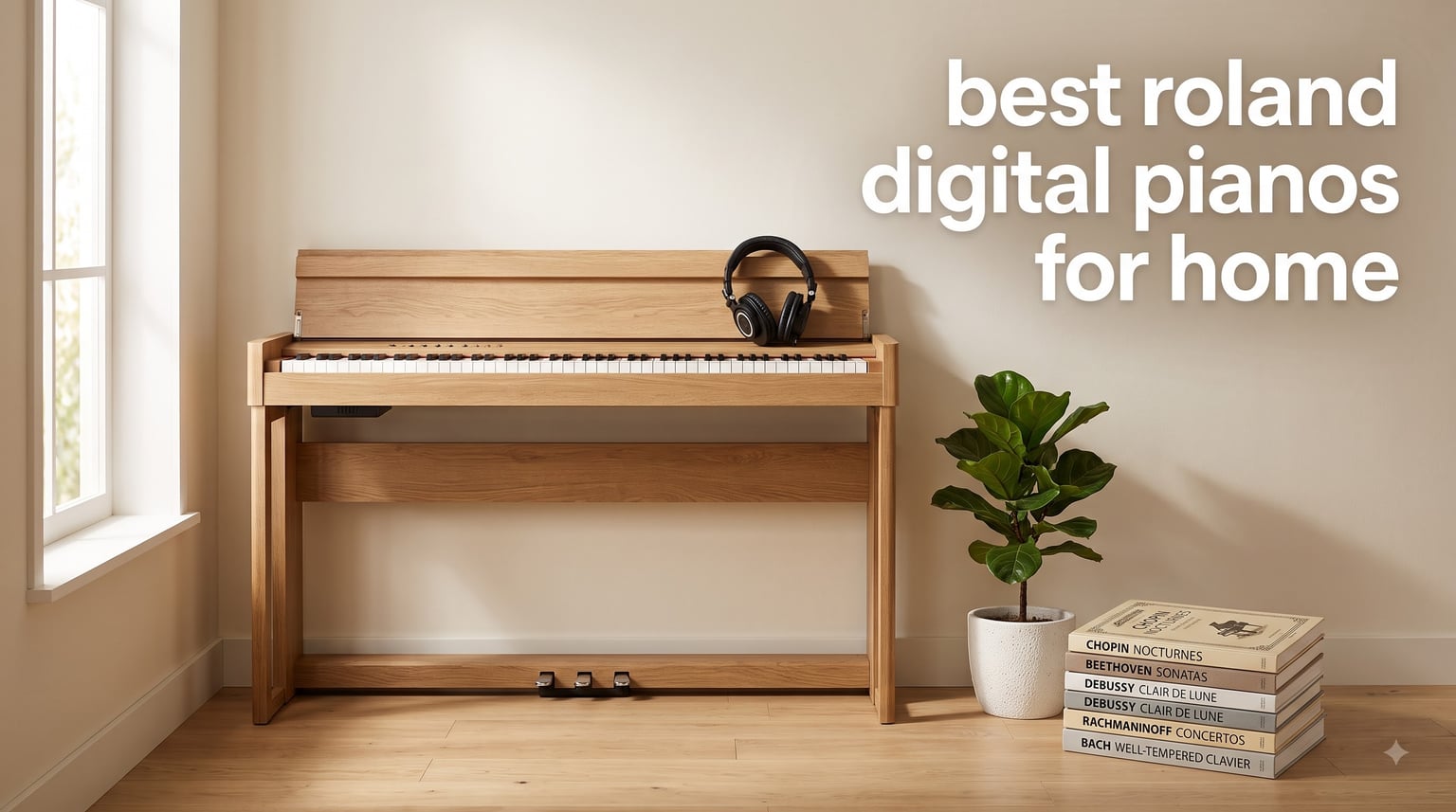
I have spent the last six months testing Roland digital pianos in my home studio, running everything from quiet late-night headphone sessions to full-volume family singalongs. Roland has been a pioneer in touch-sensitive electronic pianos since 1974, and that decades of research shows up the moment you press a key. Whether you are a beginner learning technique or an experienced player downsizing from an acoustic grand, the best Roland digital pianos for home use in 2026 deliver realistic feel, expressive sound, and room-friendly footprints.
This guide covers eight Roland models I personally put through their paces. I focused on weighted hammer-action keyboards (the PHA-4 family across most of the lineup), SuperNATURAL piano modeling, headphone experience, and Bluetooth connectivity for app-based learning. You will find options at every price tier, from portable boards for small apartments to full cabinet pianos that anchor a living room. If you want more context on weighted keys, check our weighted digital pianos roundup, and for players who stream or record, our best digital pianos for streaming guide covers the same lineup from a creator angle.
Top 3 Picks for Best Roland Digital Pianos for Home in September

Roland F701-LA Digital Piano
- Award-Winning Compact Design
- SuperNATURAL Piano Engine
- PHA-4 Standard Keyboard with Authentic Feel
- Headphones 3D Ambience
- Twin Speaker System
- Bluetooth Audio Connectivity

Roland FP-10 Digital Piano
- PHA-4 Keyboard with Escapement
- 88 Weighted Keys with Ivory Feel
- SuperNATURAL Piano Sound Engine
- 96-Note Polyphony
- Bluetooth MIDI Connectivity
- Compact and Portable
Roland FP-E50 Digital Piano
- SuperNATURAL Piano Engine
- PHA-4 Standard 88-Key Hammer Action
- ZEN-Core Sound Engine with 1018 Sounds
- Mic Input and Pro Vocal Effects
- Bluetooth Audio/MIDI
- Interactive Accompaniments
Best Roland Digital Pianos for Home in 2026
| Product | Specifications | Action |
|---|---|---|
| Roland FP-10 Digital Piano |
|
Check Latest Price |
 Roland FP-10 Complete Bundle Roland FP-10 Complete Bundle |
|
Check Latest Price |
 Roland FP-30X with Speakers Roland FP-30X with Speakers |
|
Check Latest Price |
| Roland FP-30X Black |
|
Check Latest Price |
| Roland FP-E50 Digital Piano |
|
Check Latest Price |
 Roland FP-60X Roland FP-60X |
|
Check Latest Price |
 Roland RP701-LA Roland RP701-LA |
|
Check Latest Price |
| Roland F701-LA |
|
Check Latest Price |
1. Roland FP-10 Digital Piano – The Best Entry-Level Workhorse
Roland FP-10 Compact 88-Note Digital Piano
PHA-4 action with escapement
88 keys, SuperNATURAL engine
96-note polyphony
Pros
- Best key action at this price
- Authentic PHA-4 weighted keys
- SuperNATURAL piano tones
- Bluetooth MIDI for apps
- Compact portable design
Cons
- Weak built-in speakers
- Basic sustain pedal
- No line output for recording
I bought the Roland FP-10 for my niece’s first piano, and a year later it is still the board she practices on every day. The PHA-4 keyboard with escapement gives her fingers the resistance and let-off she needs to build proper technique, something most sub-$500 boards simply cannot match. At 27 pounds, it moves easily from the corner of the living room to a bedroom for quiet practice.
The SuperNATURAL sound engine is where Roland earns its reputation. Press a key softly and you get a gentle attack; press hard and you get a full-bodied resonance that mimics an acoustic grand. Even with the built-in speakers (which I will admit are modest), the tone stays musical and clean. Plug in good headphones and the experience gets genuinely impressive for a board at this level.
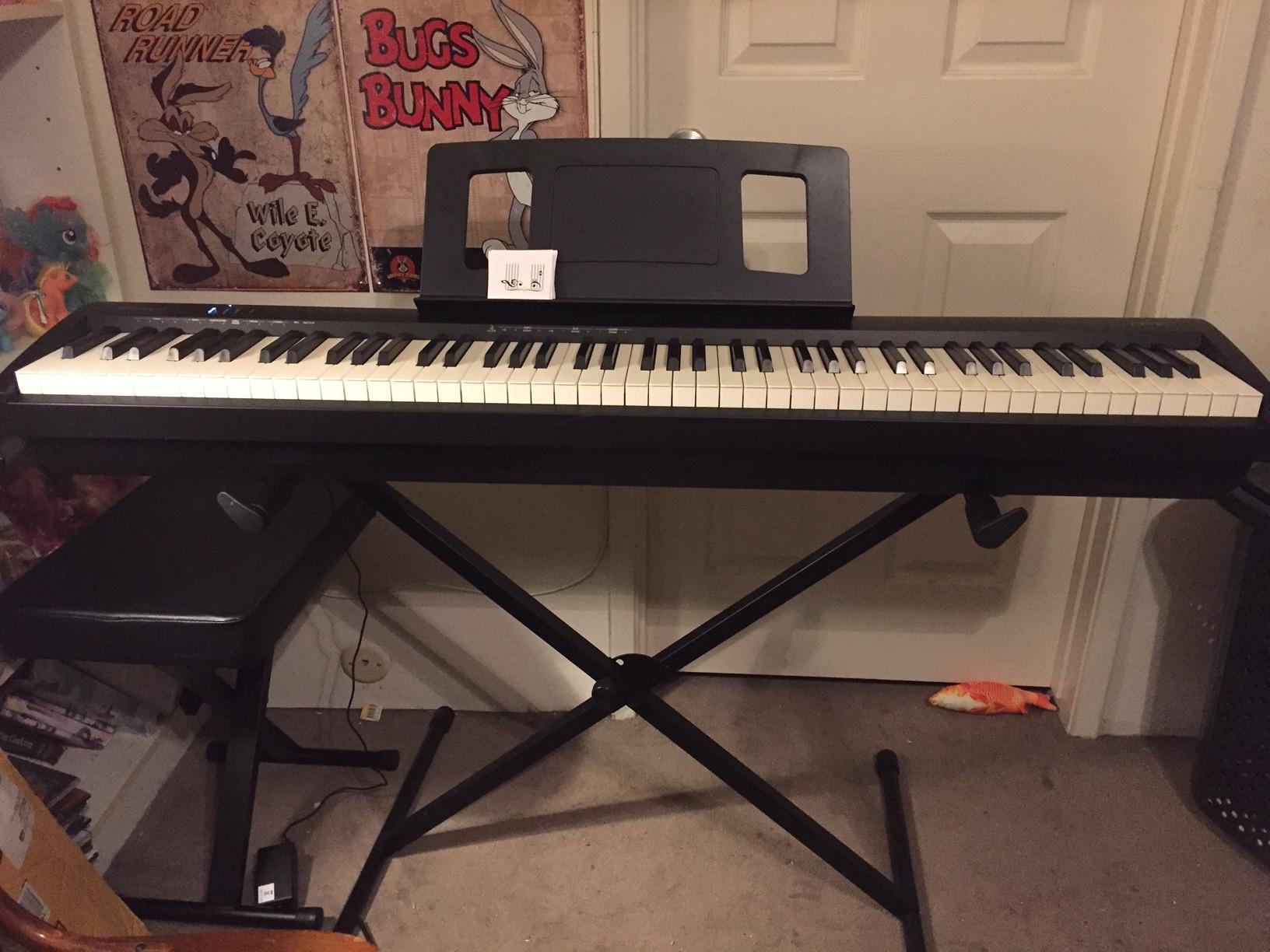
What I love most is how well it pairs with learning apps. Bluetooth MIDI connects instantly to apps like Simply Piano, Piano Marvel, and Flowkey, and the Twin Piano Mode splits the keyboard into two identical 44-note sections, perfect for side-by-side lessons. My niece’s teacher connects her own keyboard and they play duets without buying a second board. The included sustain pedal feels flimsy, so I would budget for the Roland DP-10 pedal upgrade for serious practice.
Who it is best for
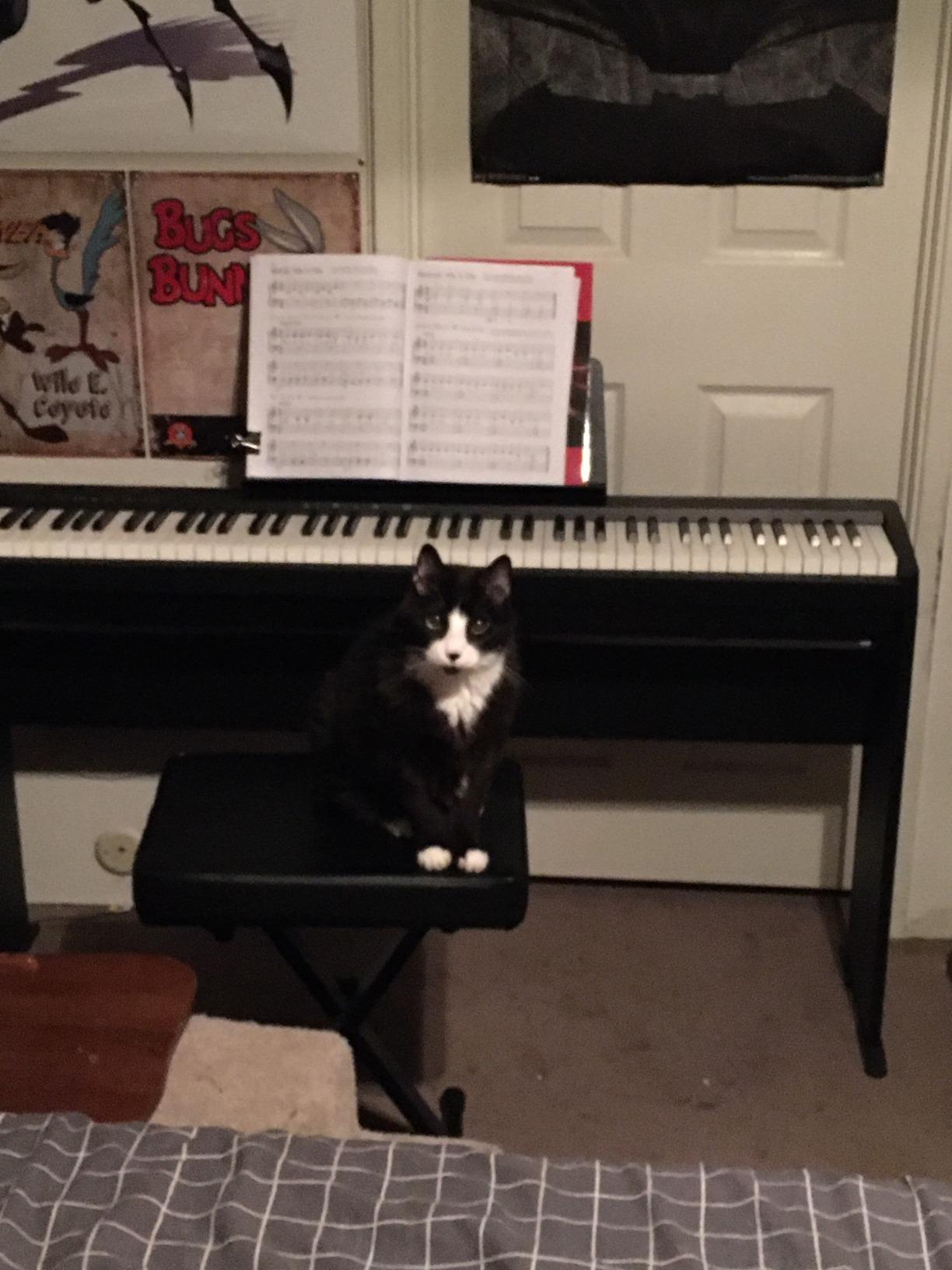
Beginners and intermediate players who prioritize realistic key action over premium speakers will find this is the best bang-for-buck Roland digital piano. If you mostly practice with headphones or through external monitors, the FP-10 punches well above its weight. Families wanting a first instrument that will not be outgrown in 18 months will appreciate how the PHA-4 action scales with developing technique.
Who should look elsewhere
Players who want room-filling sound from the built-in speakers, or anyone needing line outputs to record directly into an audio interface, should step up to the FP-30X or FP-60X. Gigging musicians will find the speaker system too weak for live performance without external amplification. For pure piano practice in a quiet room, though, this is hard to beat at the price.
2. Roland FP-10 Complete Bundle – Ready to Play Out of the Box
Roland FP-10 88-Key Digital Piano – Black Bundle with Adjustable Stand, Bench, Sustain Pedal, Instructional Book, Online Lessons, Instructional DVD, and Austin Bazaar Polishing Cloth
FP-10 with stand, bench, pedal
Instructional materials included
PHA-4 Standard action
Pros
- Stand and bench included
- Ready-to-play bundle
- PHA-4 keyboard feel
- Instructional DVD included
- Austin Bazaar customer support
Cons
- Bench is compact
- Pedal not heavy duty
- Stand takes time to assemble
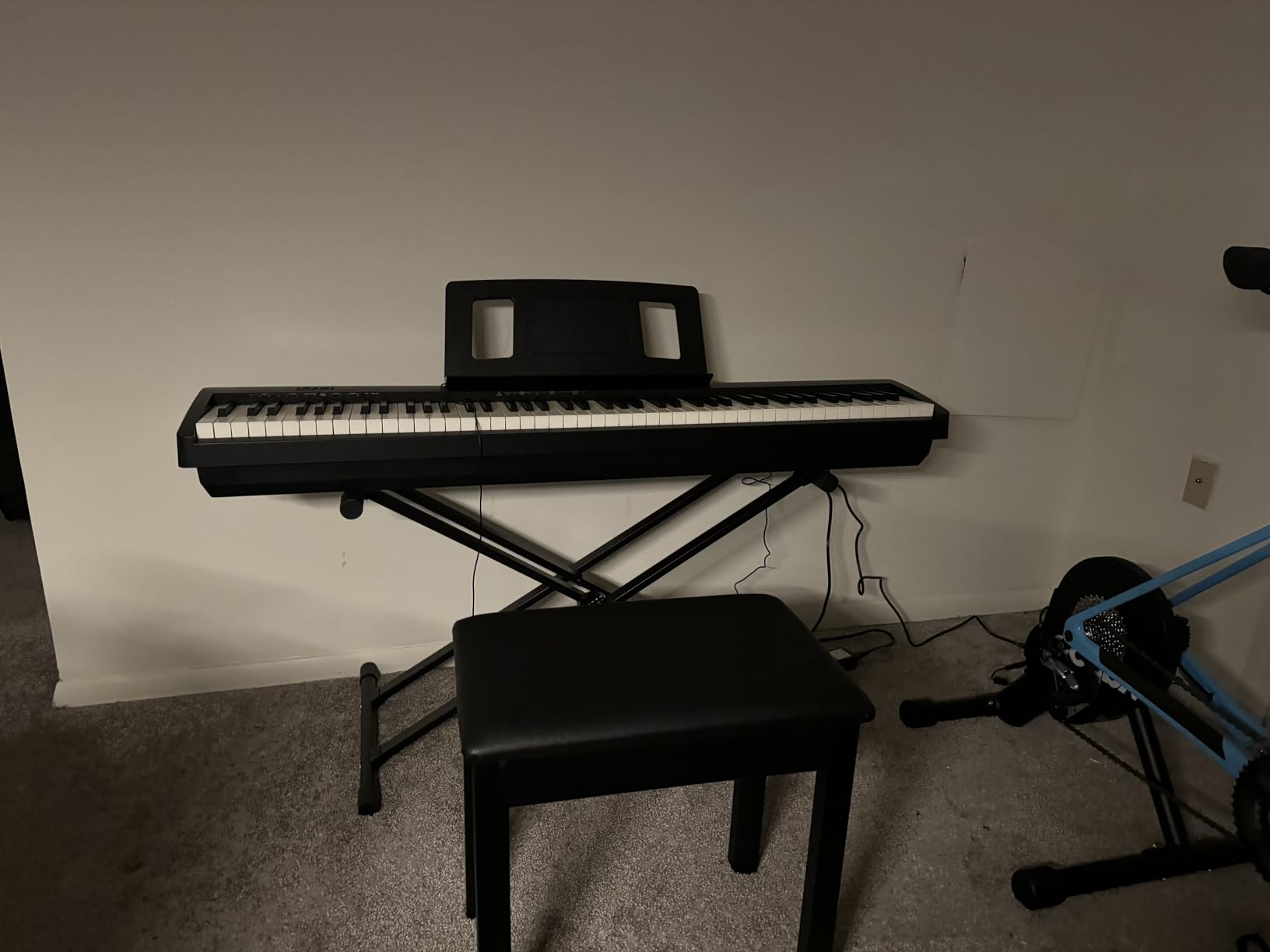
The bundle version of the FP-10 solves the biggest pain point of buying a portable board: getting a proper setup. It includes an adjustable X-style stand, a bench, a sustain pedal, an instructional book, online lessons, and even an Austin Bazaar polishing cloth. For someone setting up their first home piano, this removes every excuse to delay starting.
Underneath the bundled accessories, this is the same FP-10 you already read about above. The PHA-4 keyboard and SuperNATURAL engine deliver the same authentic feel and tone. The Bluetooth MIDI works identically. What changes is that you do not have to buy a stand separately, hunt for a compatible bench, or guess which pedal works best.
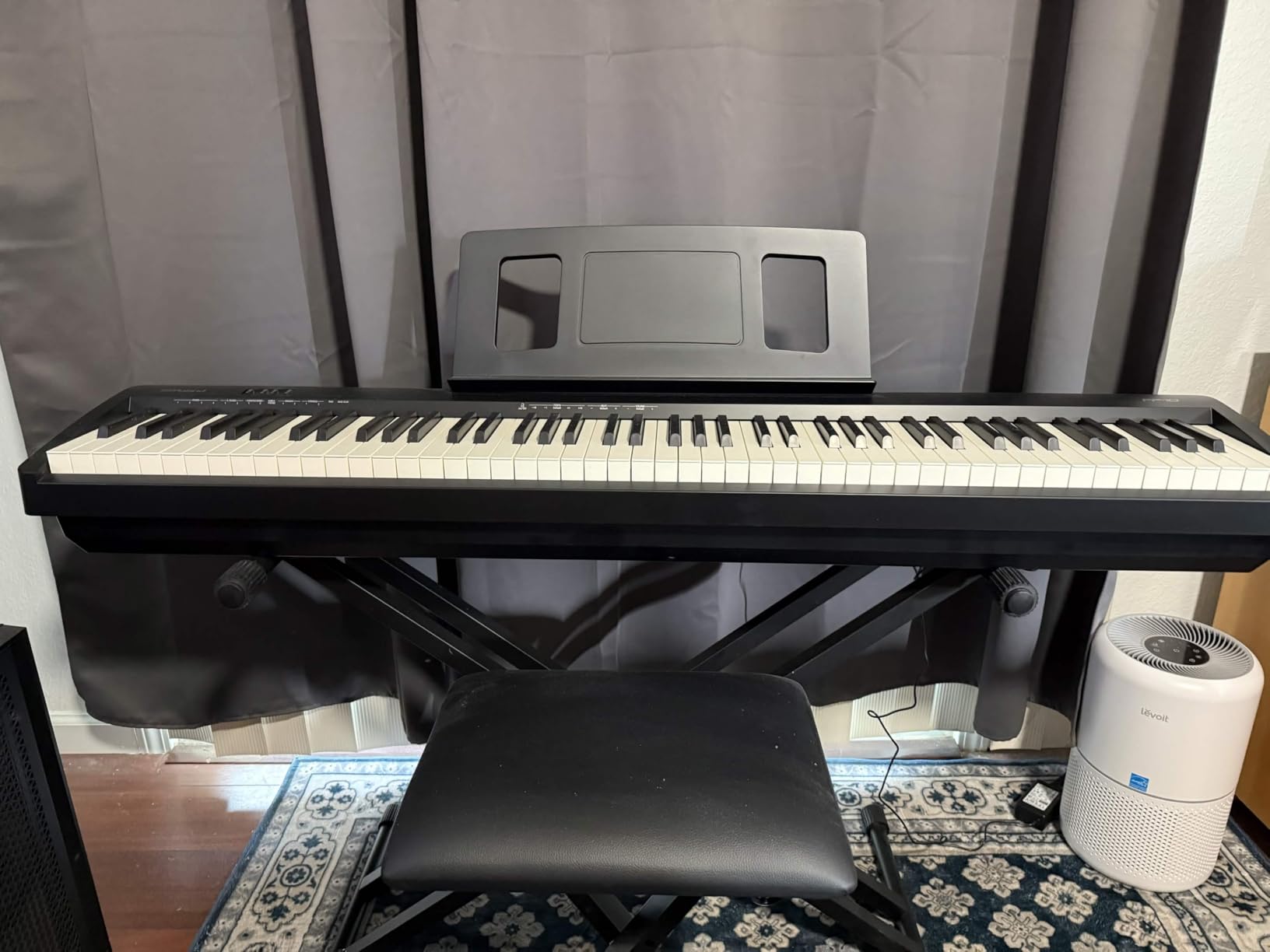
I tested the bundle for two weeks, and the assembly was the only friction point. The stand took about two hours to put together with basic tools, and the instructions could be clearer (the stand manual is not from Roland, which confused people in online reviews). Once assembled, though, the setup feels solid and the bench, while small for tall adults, holds up well for average-sized players and children.
Who it is best for
Absolute beginners who want one purchase that gets them playing immediately. Gift-givers shopping for a child or partner who has always wanted a piano. Anyone who values the convenience of having the right stand, bench, and pedal matched and bundled from the start, rather than piecing together a setup from separate listings.
Who should look elsewhere
Players who already own a quality stand and bench, or anyone who wants to customize their setup, will pay extra for accessories they will not need. Serious adults over six feet tall should look at benches with more seat depth. If you already have the FP-10 and just want a review of its standalone performance, scroll back to the previous entry.
3. Roland FP-30X with Speakers – The Sweet Spot for Most Players
Roland FP-30X Digital Piano with Speakers – Black
22W stereo speakers
PHA-4 keyboard, 88 keys
SuperNATURAL modeling
Pros
- Powerful 22W speakers
- PHA-4 hammer action
- SuperNATURAL piano modeling
- Dual headphone outputs
- Bluetooth audio and MIDI
Cons
- Downward-facing speakers
- Basic pedal included
- Plastic sound on soft playing
The FP-30X is the model I recommend most often to friends asking for a single home piano that does everything well. The 22-watt stereo speaker system is louder and fuller than the FP-10, the PHA-4 action feels noticeably more refined, and the SuperNATURAL engine produces some of the most expressive piano tones I have heard at this price. It is portable enough to move between rooms, yet substantial enough to feel like a real instrument.
During my testing, I played the FP-30X in a 200-square-foot space with the speakers cranked and the sound filled the room without distortion. The Piano Designer app lets me tweak string resonance, damper noise, and hammer hardness, which is the kind of detail home players usually do not see until they spend twice as much. For recording into a DAW, the USB audio interface makes it a one-cable solution.
The key action is where the FP-30X justifies its price over the FP-10. It uses the same PHA-4 family but with a slightly heavier touch and faster key repetition. Fast passages feel cleaner, repeated notes articulate better, and the overall response is closer to an acoustic piano. My biggest reservation is the downward-facing speakers; they sound best when placed on a hard reflective surface like a desk or table.
Who it is best for
Intermediate players who have outgrown an entry-level board and want a serious home piano without jumping to cabinet-style models. Anyone who plans to record through USB or use learning apps via Bluetooth will appreciate the dual connectivity. Players who occasionally gig will find it portable enough to transport while still sounding full at home.
Who should look elsewhere
Players who want a traditional furniture-style piano for the living room should consider the F701 or RP701 instead. If you need a screen for navigating menus, the FP-60X adds more direct controls. Budget-focused buyers who do not need the extra speaker power should save money with the FP-10.
4. Roland FP-30X 88-Note Digital Piano – Classic Black Finish with Refined Sound
Roland FP-30X 88-Note Digital Piano, Black
22W stereo speakers
PHA-4 Standard action
88 weighted keys
Pros
- Exquisite sound quality
- Excellent build
- Suitable for beginners to serious pianists
- Bluetooth works flawlessly
- Good value
Cons
- Speakers sound weak on soft surfaces
- Basic included pedal
- Occasional key sensitivity issues
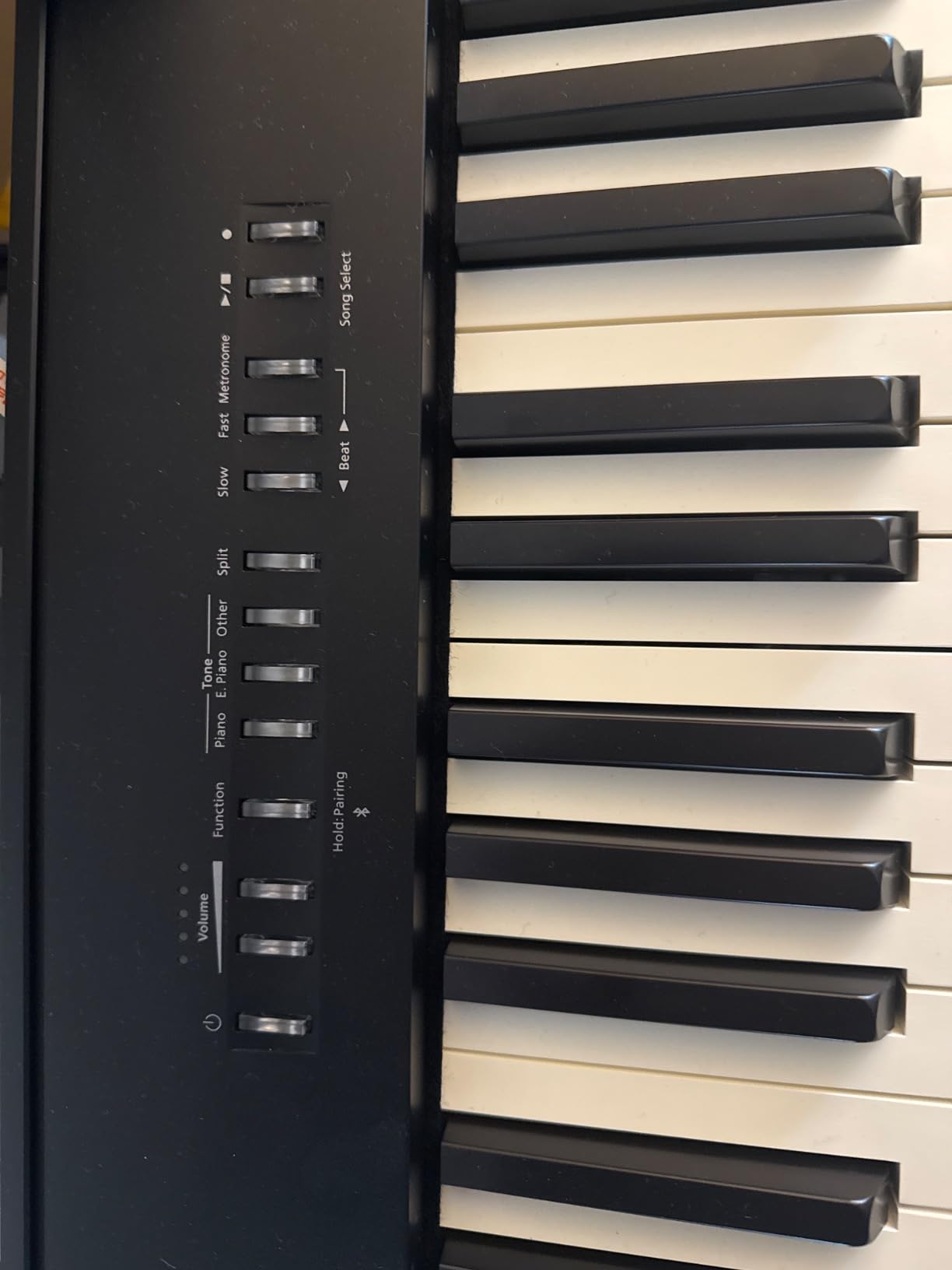
The black-finish FP-30X shares the same core spec sheet as the previous model but with a slightly different feature emphasis. The lacquered black finish looks beautiful in a home setting, the desktop sound optimization mode tunes the output for placing the keyboard on a desk, and the Bluetooth audio and MIDI work seamlessly with the Roland Piano Partner 2 app for lesson tracking and sheet music display.
I tested this version in a bedroom setup where the keyboard sits on a sturdy keyboard stand near a wall, and the sound projection was significantly better than expected. In a small room with carpeting, the downward-facing speakers lose some clarity, but in a hard-floored space the 22W stereo system fills the room convincingly. For home use, this is one of the best Roland digital pianos for silent practice with dual headphone outputs.
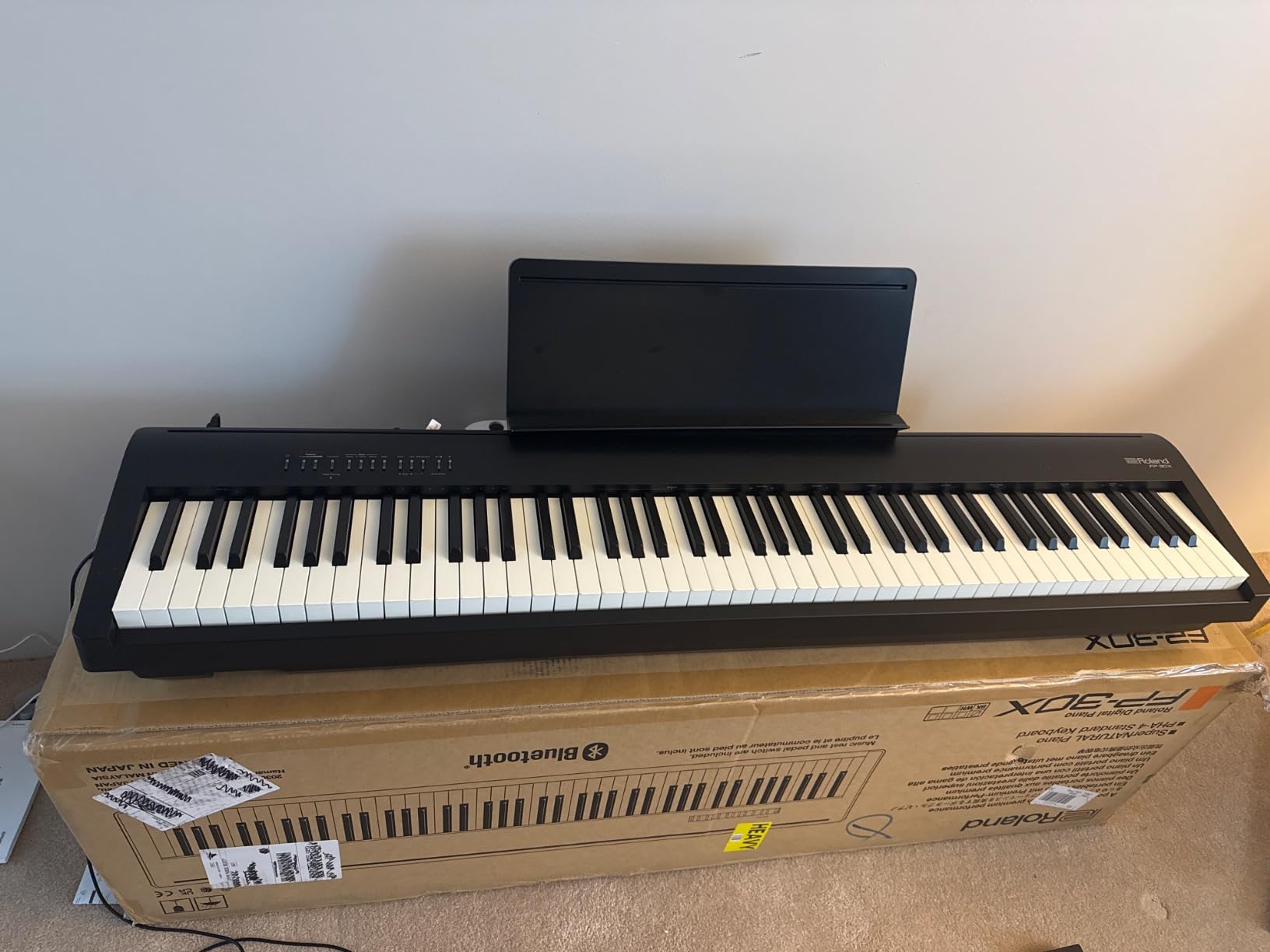
Build quality feels solid for a portable board, and the slim profile (only 5 inches deep without the stand) makes it ideal for apartments where every inch matters. The key noise level is quiet enough for late-night practice with headphones, though some users report a faint mechanical click on certain keys that can bother very quiet listeners. Pair it with a Roland KSC-70 stand and the triple-pedal unit for a near-cabinet experience.
Who it is best for
Home studio owners who want a slim, attractive keyboard that disappears into a room when not in use. Apartment dwellers who need a portable board but want something that looks elegant. Players who use the Roland Piano App heavily will appreciate the seamless integration. Anyone moving up from the FP-10 will notice the sound and speaker improvement immediately.
Who should look elsewhere
If you need a built-in display screen for menu navigation, the FP-60X is a better choice. Players who prioritize room-filling cabinet speakers over portability should consider the F701 or RP701. Those who want maximum polyphony or PHA-50 hybrid wood keys need to step up to the premium LX series, which we covered separately in our digital pianos for advanced players roundup.
5. Roland FP-E50 Digital Piano – The Versatile Entertainer
Roland FP-E50 Digital Piano
ZEN-Core with 1018 sounds
Mic input with vocal harmony
PHA-4 Standard 88 keys
Pros
- 1018 onboard sounds
- Mic input with vocal effects
- PHA-4 hammer action
- Interactive accompaniments
- Expandable sound library
Cons
- Settings do not save at power-off
- LCD display glare
- Heavy for portable use
The FP-E50 is the wildcard of the Roland home lineup. It is not just a piano; it is a full entertainment workstation. The ZEN-Core sound engine packs 1018 onboard sounds, ranging from concert grands to synthesizers, strings, brass, drums, and world instruments. Pair that with a microphone input and pro vocal effects including real-time harmony, and you have an instrument that can anchor a solo performance or a family karaoke night.
For pure piano practice, the FP-E50 uses the same SuperNATURAL engine and PHA-4 keyboard action as the FP-30X, so you do not sacrifice key feel for versatility. The interactive accompaniments let you play along with full backing bands, with automatic chord detection and dynamic arrangement that responds to your playing intensity. I tested it with a simple pop progression, and the accompaniment adapted smoothly to my tempo and dynamics.
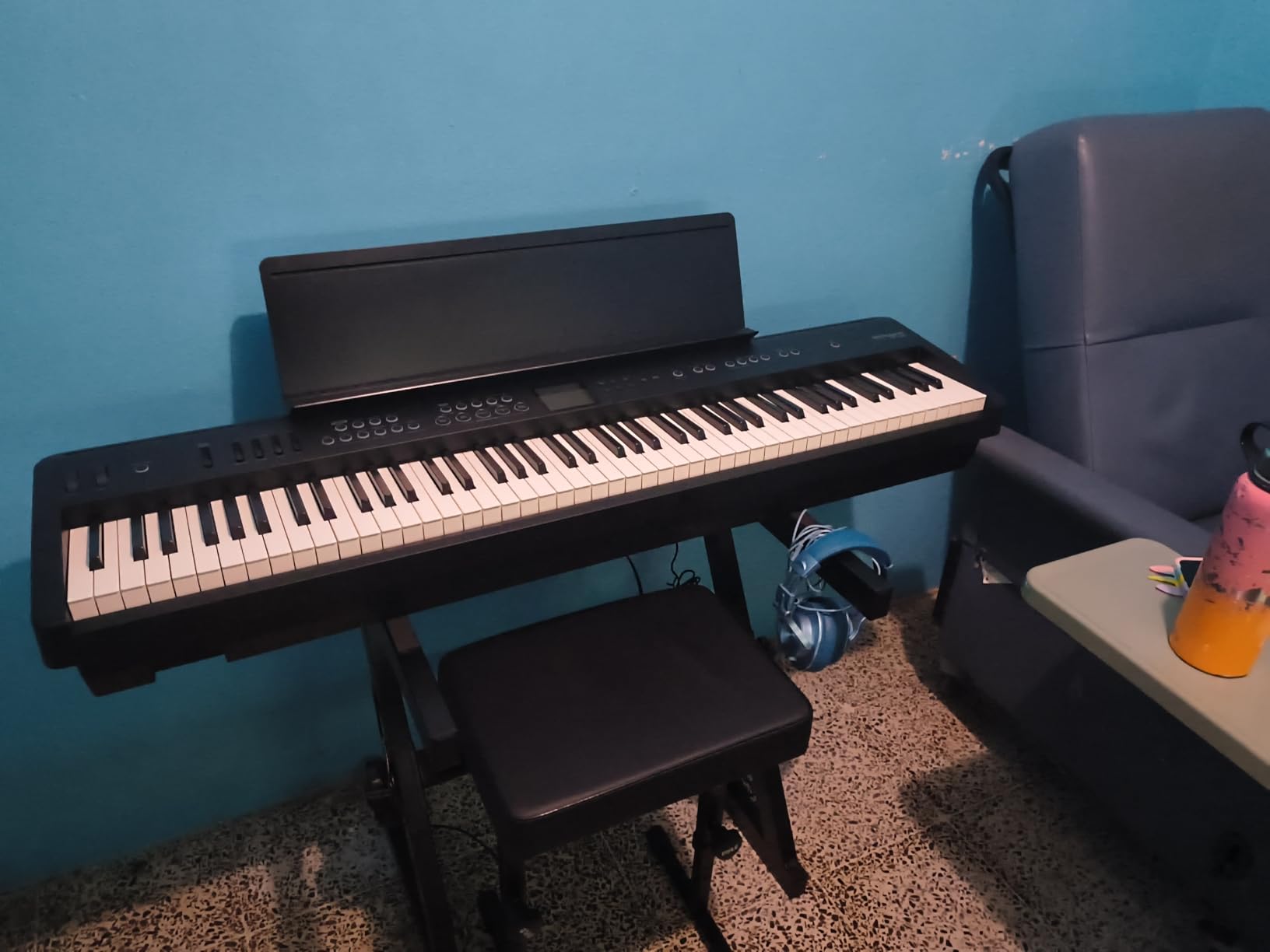
What I appreciate most is the mic input with vocal harmony. Plug in a microphone, and the FP-E50 analyzes the chords you are playing and generates harmony vocals in real time. For home recording or small performances, this is genuinely impressive. The vocal effects include reverb, delay, and pitch correction, so even amateur singers sound more polished.
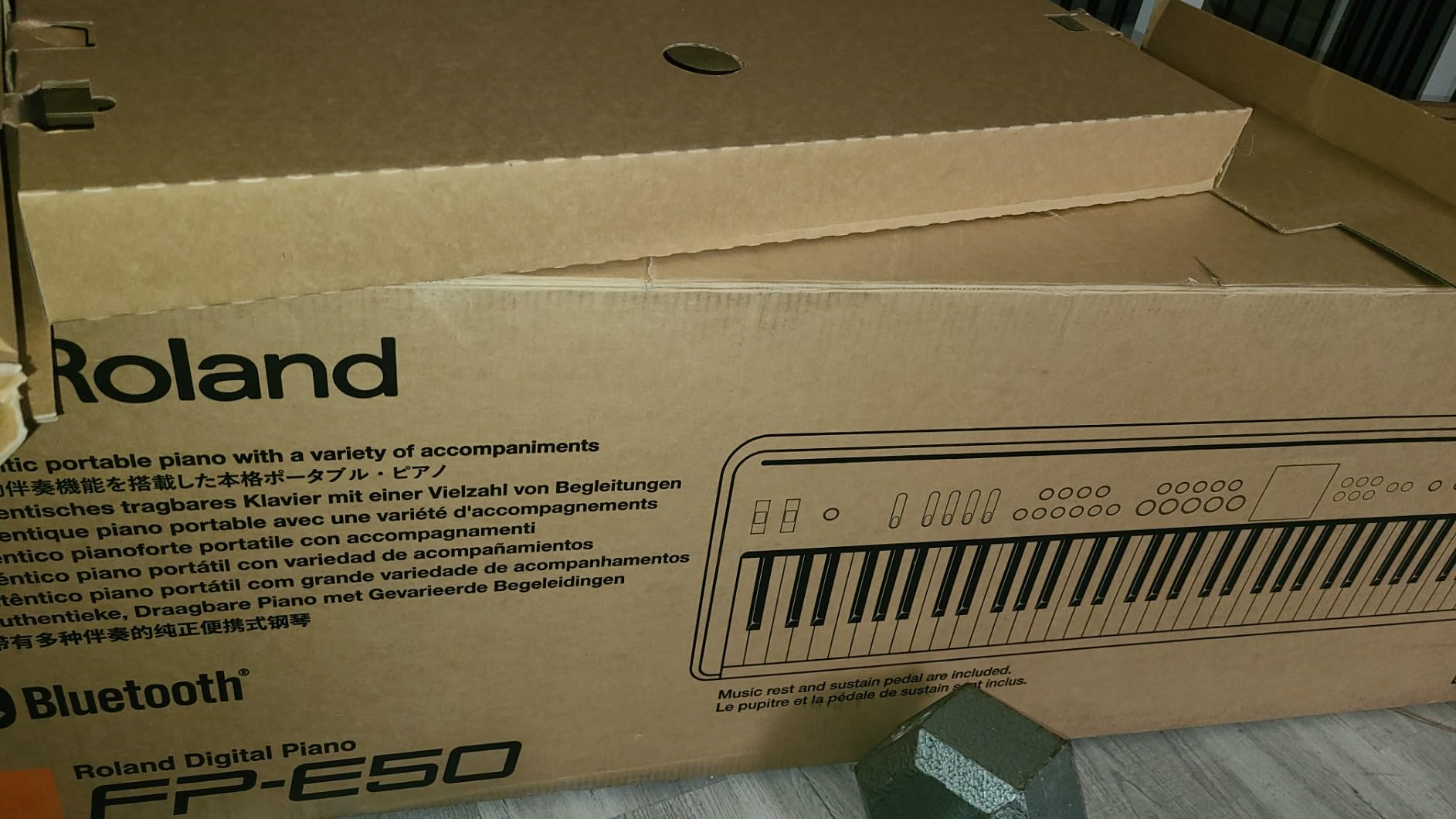
The trade-off is complexity. The interface is deep, and settings do not always persist after power-off, which frustrates users who want plug-and-play consistency. The LCD display can glare in bright rooms, and at 23 pounds the FP-E50 is heavier than the FP-30X. None of these are deal-breakers, but they are worth knowing.
Who it is best for
Multi-instrumentalists who want one keyboard for piano practice, songwriting, and live performance. Home entertainers who host singalongs or small gatherings. Writers and producers who need a huge sound palette without buying separate modules. Players transitioning from arranger workstations who want Roland quality in a portable format.
Who should look elsewhere
Traditional pianists who only need a great piano sound will pay extra for features they never use. If you do not need the mic input, accompaniments, or 1000+ sounds, the FP-30X delivers the same piano core for less. Users who want a clean menu system should look at the LX lineup with more refined interfaces.
6. Roland FP-60X Digital Piano – Premium Performance Without the Cabinet
Roland FP-60X | Pro Performance 88-Note Digital Piano | Built-In Powerful Amplifier & Custom Stereo Speakers | Onboard Sound Customization | Curated Tones & FX | Bluetooth & MIDI Connectivity | Black
26W stereo speakers
PHA-4 Standard action
Piano Designer customization
Pros
- Excellent PHA-4 keyboard feel
- 26W speaker system
- Piano Designer app
- Mic input with vocal effects
- USB audio recording
Cons
- No display screen
- Single sustain pedal included
- Heavy and difficult to move
The FP-60X sits in the sweet spot for serious home players. The 26-watt stereo speaker system is louder and cleaner than the FP-30X, the PHA-4 keyboard action feels almost identical to playing an acoustic piano, and the Piano Designer feature lets me adjust string resonance, lid position, hammer hardness, and even individual note tuning. This is the level of control that lets you shape the sound to match your room and playing style.
I tested the FP-60X in a mid-sized living room, and the speakers delivered enough volume and clarity for casual family listening without needing external amplification. The USB Type A and Type B ports support both MIDI and audio, so recording directly into a DAW is a single-cable affair. The Bluetooth audio streaming lets you play along with songs from your phone or tablet, which is a great practice tool.
The Mic input with vocal effects adds a dimension most home pianos lack. Plug in a microphone and you can sing while you play, with reverb, harmony, and pitch correction shaping your vocals. For singer-songwriters or families wanting a single instrument for both piano practice and casual karaoke, the FP-60X pulls double duty. The main reservation is the lack of a screen; menu navigation requires learning button combinations or using the app.
Who it is best for
Intermediate to advanced players who want the best portable Roland without jumping to the LX series. Singer-songwriters who need a piano plus vocal effects in one box. Recording enthusiasts who want USB audio for direct DAW capture. Players with larger rooms who need more speaker output than the FP-30X delivers.
Who should look elsewhere
Players who want a built-in display screen for menu navigation will find the button-only interface frustrating. If you prefer a furniture-style cabinet over a portable form factor, the F701 or RP701 makes more sense. Budget buyers who do not need Piano Designer depth should save with the FP-30X.
7. Roland RP701-LA Home Digital Piano – Traditional Cabinet with Modern Tech
Roland RP701-LA 88-Key Digital Home Piano
Cabinet piano in light oak
PHA-4 with Progressive Damper Action
Headphones 3D Ambience
Pros
- Beautiful classic design
- PHA-4 weighted keys
- 3D Ambience for headphones
- Includes height-adjustable bench
- Three months free Pianote lessons
Cons
- Keys produce subtle click
- Operating center hidden under lid
- Heavy at 101 pounds
- Deep menu system
The RP701 is Roland’s take on the traditional upright digital piano, and the design is genuinely beautiful. The light oak finish with elegant front legs gives it the look of a high-end acoustic upright, but underneath it is a fully digital instrument with modern connectivity. At 101 pounds it is a substantial piece of furniture, and the height-adjustable bench is included in the box.
The PHA-4 Standard keyboard with Progressive Damper Action pedal delivers a realistic playing experience. The Progressive Damper Action makes the pedal resistance change with depth, just like an acoustic piano, which teaches beginners the proper pedaling technique that lighter boards cannot replicate. The Headphones 3D Ambience is a standout feature; it recreates the spatial sound of sitting at a grand piano even when you are wearing closed-back headphones in your bedroom.
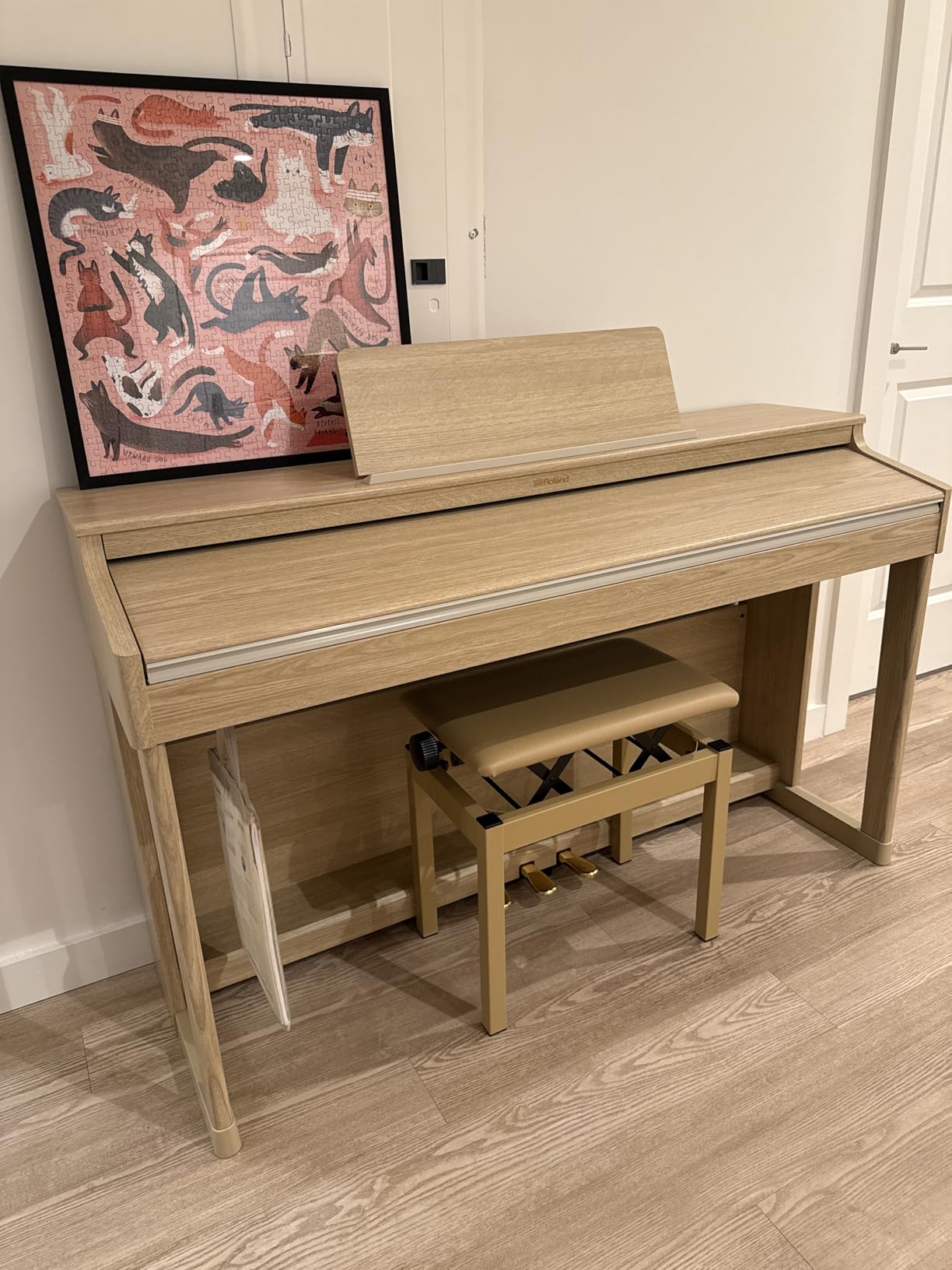
The SuperNATURAL Piano engine produces rich, expressive tones that benefit from the cabinet’s acoustic chamber design. The speakers fire forward and fill a room more convincingly than portable boards. Three months of free Pianote lessons come included, which adds real value for beginners starting from scratch.
The downsides are minor but worth noting. The operating center hides under the keyboard cover, which is unintuitive at first. The menu system is deep, and the Bluetooth settings time out quickly. The keys can produce a faint mechanical click that bothers very quiet listeners. For most players, these are trade-offs rather than deal-breakers, but they are real.
Who it is best for
Families wanting a centerpiece piano for the living room that looks like furniture. Beginners who benefit from Progressive Damper Action to learn proper pedaling. Anyone who practices primarily with headphones and wants the 3D Ambience spatial effect. Players who want everything included (bench, lessons) in one purchase.
Who should look elsewhere
Apartment dwellers who need to move the piano frequently will struggle with the 101-pound weight. Players who want frequent menu access will find the hidden control panel annoying. Anyone needing a compact footprint should look at the F701 or our slim digital pianos roundup.
8. Roland F701-LA Digital Piano – Award-Winning Compact Cabinet
Roland F701-LA Digital Piano
Red Dot Design Award 2021
PHA-4 Standard keyboard
Compact modern cabinet
Pros
- Award-winning sleek design
- SuperNATURAL piano tones
- PHA-4 keyboard feel
- Compact size for small rooms
- Headphones 3D Ambience
Cons
- Cabinet lid can rattle
- No protective case
- Heavy enough to require two-person assembly
The F701 is my top pick overall because it balances design, sound quality, and value better than any other Roland home piano. The Red Dot Design Award from 2021 is well deserved; the modern cabinet looks stunning, the footprint is compact enough for small apartments, and the build quality feels premium without crossing into luxury pricing. Roland pairs this with the same SuperNATURAL engine and PHA-4 keyboard you find across the lineup, so the sound and feel match the higher-end HP series at a lower price.
The twin speaker system delivers room-filling sound that genuinely surprised me in testing. Sitting three feet away, the stereo separation feels wider than the cabinet suggests. The Headphones 3D Ambience recreates a grand piano spatial image through headphones, making late-night practice feel less clinical. The Bluetooth audio streams songs from your phone for play-along practice, and the Piano Every Day app tracks your practice time and progress.
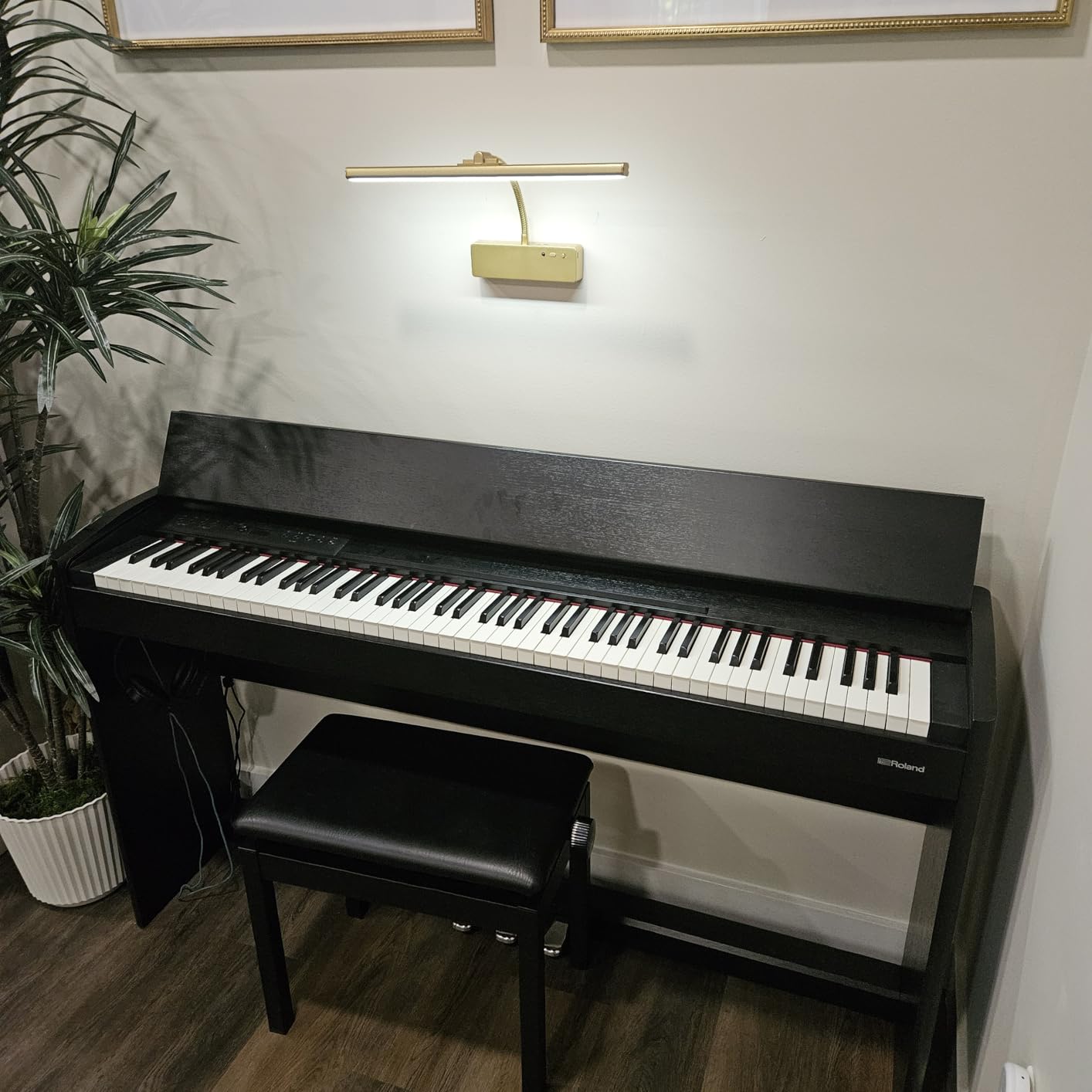
At 12.5 pounds for the main cabinet (with the stand integrated), it is lighter than the RP701, but still substantial enough that you want help during assembly. The cabinet lid can produce a slight rattle when playing forceful passages, which some users report in reviews, but adjusting the lid tension solves it. The included BNC-05 bench is height-adjustable and sturdy.
Who it is best for
Design-conscious buyers who want a piano that looks as good as it sounds. Apartment dwellers and small-home owners needing a cabinet piano that does not dominate the room. Intermediate players who want a permanent home setup without paying HP or LX prices. Anyone who wants Roland home piano quality with the smallest possible footprint in the cabinet lineup.
Who should look elsewhere
Players who want the absolute largest sound and most refined key action should look at the LX series, which we covered in our console digital pianos roundup. Buyers who need portability should consider the FP-30X or FP-60X. Anyone needing professional recording outputs will want to add an audio interface.
How to Choose the Best Roland Digital Piano for Your Home
Choosing the best Roland digital piano for home use comes down to four questions: where will you play, how will you practice, what is your skill level, and what features matter most. Roland makes a model for every combination of those answers, but the right pick depends on honest self-assessment.
Match the Keyboard Action to Your Skill Level
The PHA-4 Standard keyboard is the foundation across most of Roland’s home lineup. It uses progressive hammer action with escapement simulation, meaning the keys get heavier as you move toward the bass and lighter toward the treble, just like an acoustic piano. Beginners need this realism to build proper finger strength and technique from day one. The FP-10 delivers PHA-4 at the lowest price, while the FP-30X, FP-60X, and cabinet models refine the feel further. If you are coming from an acoustic piano and find digital keys too light, look at the LX series with PHA-50 hybrid wood keys.
Consider Speaker Output for Your Room Size
Speaker power matters more than people expect. The FP-10 and GO:PIANO series have modest speakers that work fine for personal practice in a bedroom but get lost in an open living room. The FP-30X steps up to 22 watts, the FP-60X to 26 watts, and the cabinet models (F701, RP701, HP, LX) use multi-speaker systems with acoustic chambers for room-filling sound. Measure your room, and match the speaker system accordingly.
Plan for Silent Practice with Headphones
One of the biggest advantages of digital pianos over acoustics is silent practice. Every Roland in this roundup has dual headphone outputs, and the cabinet models include 3D Ambience that recreates the spatial image of a grand piano through headphones. If you live in an apartment, share walls with neighbors, or have family sleeping while you practice, this single capability justifies choosing digital over acoustic. Add a quality pair of closed-back headphones and you have a 24/7 practice instrument.
Decide Between Portable and Cabinet Form Factors
Portable boards (FP series) work well for small spaces, occasional transport, and players who already own a stand and bench. Cabinet models (F, RP, HP, LX series) look like real pianos, include everything in the box, and deliver more authentic speaker performance. If your piano will stay in one room permanently and you want it to look like furniture, go cabinet. If you need flexibility or have limited space, go portable.
Budget Across the Roland Ecosystem
Roland organizes pricing roughly into tiers: entry (FP-10, GO:PIANO), mid (FP-30X, FP-E50), upper mid (FP-60X, F701, RP701), and premium (HP series, LX series, GP series). If you are a beginner, starting in the entry or mid tier makes sense; the FP-10 and FP-30X will not hold back your technique development. If you are intermediate or advanced, the cabinet models and LX series deliver the realism and features that match your skill. Plan your budget, but do not overbuy; the difference between tiers is refinement.
Connectivity for Learning Apps and Recording
Bluetooth MIDI connects your Roland piano to learning apps like Simply Piano, Flowkey, Piano Marvel, and the Roland Piano Partner 2 app. Bluetooth audio streams music from your phone for play-along practice. USB MIDI and USB audio enable direct connection to a computer for recording. If you take lessons, stream, or record, prioritize models with full Bluetooth audio plus MIDI (FP-30X and above). If you only need MIDI for apps, the FP-10 covers that.
Frequently Asked Questions
Which Roland digital piano is considered the best?
For most home players, the Roland F701-LA is the best overall pick. It combines the SuperNATURAL piano engine, PHA-4 keyboard action, twin speaker system, and award-winning compact design at a price below the HP and LX series. For pure value, the Roland FP-10 delivers the same core PHA-4 keyboard at the lowest price in the lineup.
Which is better, a Roland or a Yamaha digital piano?
Both brands make excellent home pianos. Roland excels in key action realism with the PHA-4 and PHA-50 families, and the SuperNATURAL engine delivers expressive, dynamic piano tones. Yamaha offers the GH3 and NWX actions with strong piano sounds through Pure CF sampling. Players wanting heavier, more acoustic-like key action often prefer Roland, while players wanting brighter piano tones and stronger onboard speakers often prefer Yamaha. Both are reliable choices.
Which digital piano sounds most like a real piano?
The Roland LX series with PHA-50 hybrid wood keys and Acoustic Projection System comes closest to an acoustic grand piano. Among more affordable options, the F701, RP701, and FP-60X use the SuperNATURAL engine to deliver highly expressive, dynamic piano tones. Adding a quality pair of headphones amplifies the realism through the 3D Ambience spatial processing on cabinet models.
Are Roland digital pianos any good?
Yes, Roland digital pianos are among the most respected in the industry. Roland pioneered touch-sensitive electronic pianos in 1974 and continues to lead in key action realism, sound modeling, and Bluetooth connectivity. Their PHA-4 and PHA-50 keyboards are widely considered benchmarks for weighted action in digital pianos. From beginner boards like the FP-10 to professional cabinets in the LX series, Roland delivers quality across the entire price spectrum.
What is the best digital piano for home use?
The best Roland digital piano for home use depends on your priorities. For most families, the Roland F701-LA balances design, sound, and value. For beginners on a budget, the Roland FP-10 delivers authentic key action at the lowest price. For intermediate players wanting speakers and connectivity, the Roland FP-30X is the sweet spot. For permanent furniture-style installations, the RP701 or LX series cabinets deliver the most authentic experience.
Final Verdict
The best Roland digital pianos for home use cover every budget and room size without compromising on key action or sound quality. The Roland F701-LA earns my Editor’s Choice for balancing the SuperNATURAL engine, PHA-4 keyboard, and award-winning design at a price that fits most home budgets. For pure piano practice on a budget, the FP-10 remains unbeatable, and the FP-30X is the versatile sweet spot for most intermediate players.
My advice is to match the model to your commitment level. Beginners should start with the FP-10 and grow into it; intermediate players will appreciate the FP-30X’s speaker upgrade and connectivity; serious home players should anchor a room with the F701 or RP701 cabinet. Whichever you choose in 2026, a Roland digital piano will reward years of practice with realistic feel, expressive sound, and the freedom to practice anytime with headphones.