
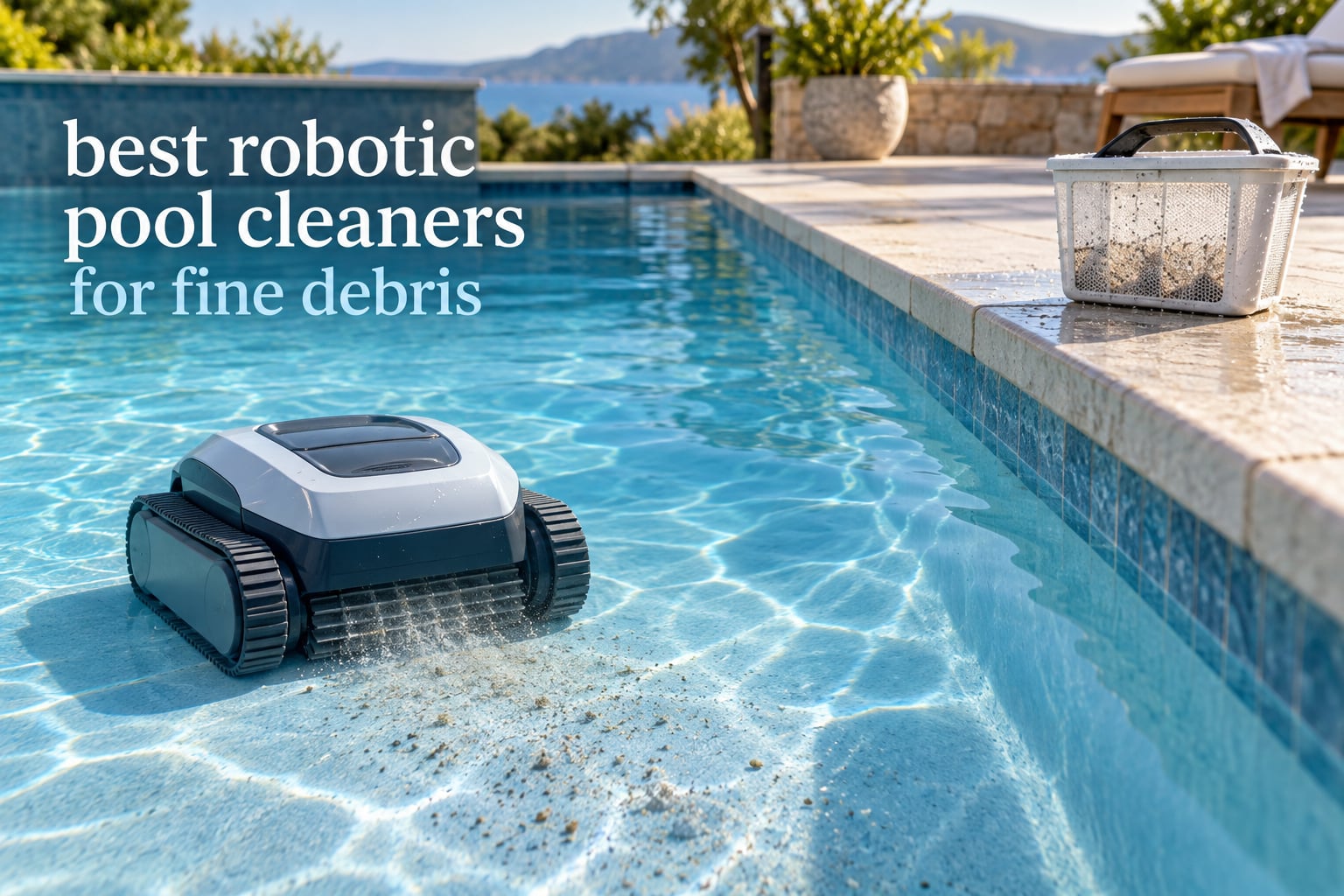
Short answer: the best robotic pool cleaners for fine debris are the Dolphin Nautilus CC Plus, which wins on build track record and a filter basket you can rinse in ten seconds, the Aiper Scuba S1, whose replaceable 3-micron filter layer is the finest media in this group, and the WYBOT C2, which pairs a 10-micron ultra-fine filter with strong brushless-motor suction. The single spec that decides everything is filter fineness: a pool robot only captures fine dust if its filter media is finer than the particle.
Fine debris is the stuff most robots pretend not to see. Sand blown off a desert landscape, pollen falling through spring air, construction dust tracked in from a bare lot, the fine algae dust that settles into a green-tinted film on the floor. It does not pile up the way leaves do. It suspends in the water and settles as a thin even layer, which is why so many owners run a full cycle and then find the floor still hazy underneath.
Our team has been reading the fine-debris complaints for months on r/swimmingpools, r/pools and r/PoolPros, and the pattern repeats constantly: a robot finishes its cycle, the basket is full of the obvious stuff, and the dust film is still sitting there. That is not a robot failure. That is a filter-fineness failure. We spent 2026 sorting ten of the most capable machines on the market by the one spec that actually decides this job, and everything below is measured against that standard.
Top 3 Picks for Fine Debris Right Now (October 2026)

Dolphin Nautilus CC Plus
- Top-load fine mesh basket
- Wall-scrubbing to the waterline
- Active brush roll
- Pools up to 40 ft

Aiper Scuba S1 Robot
- Replaceable 3-micron filter
- 180-micron standard layer
- 270 minutes Eco mode
- WavePath navigation
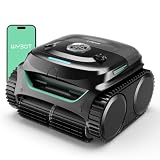
WYBOT C2 Cordless Robot
- 10-micron ultra-fine filter
- Three brushless motors
- 180 minutes runtime
- Auto-parks at the edge
Best Robotic Pool Cleaners for Fine Debris Compared in 2026
The table below puts every pick side by side on the specs that matter for dust, grit and algae sediment. Filter fineness is listed first for every robot, because that is the column that predicts whether the floor comes up clean.
| Product | Specifications | Action |
|---|---|---|
| Dolphin Nautilus CC Plus |
|
Check Latest Price |
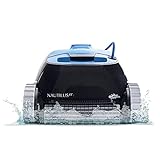 Dolphin Nautilus CC Dolphin Nautilus CC |
|
Check Latest Price |
 WYBOT C1 Cordless Robot WYBOT C1 Cordless Robot |
|
Check Latest Price |
| Aiper Scuba S1 Robot |
|
Check Latest Price |
| WYBOT C2 Cordless Robot |
|
Check Latest Price |
 Beatbot Sora 30 Robot Beatbot Sora 30 Robot |
|
Check Latest Price |
 Beatbot Sora 70 Robot Beatbot Sora 70 Robot |
|
Check Latest Price |
 WYBOT A1 Cordless Robot WYBOT A1 Cordless Robot |
|
Check Latest Price |
 Gosvor LiteVac G1 Robot Gosvor LiteVac G1 Robot |
|
Check Latest Price |
 Beatbot Sora 10 Robot Beatbot Sora 10 Robot |
|
Check Latest Price |
1. Dolphin Nautilus CC Plus – Our Pick for Fine Debris Overall
Dolphin Automatic Robotic Pool Vacuum Cleaner, Wall Climbing Scrubber Brush, Smart Navigation, Ideal for In-Ground Pools up to 40FT in Length – Nautilus CC Plus
Filter: top-load fine mesh basket
Wall climbing: yes
Pool length: up to 40 ft
Weight: 9.45 kg
Pros
- Top-load basket removes and rinses in seconds
- Active brush roll lifts settled grit off the floor
- Wall climbing reaches the waterline film
- Handles in-ground pools up to 40 ft
- Two-year brand support behind a long-running Maytronics design
Cons
- Included filter mesh clogs after one or two cycles
- No step cleaning so steps need manual brushing
- Power cord tangles and kinks over time
We kept coming back to the Nautilus CC Plus because of one unglamorous feature: the filter basket lifts straight out of the top of the body. You can hose it off in ten seconds while the robot is still charging or drying, which is the difference between a fine-debris machine you actually run twice a week and one that sits on the patio because you cannot face the cleanup.
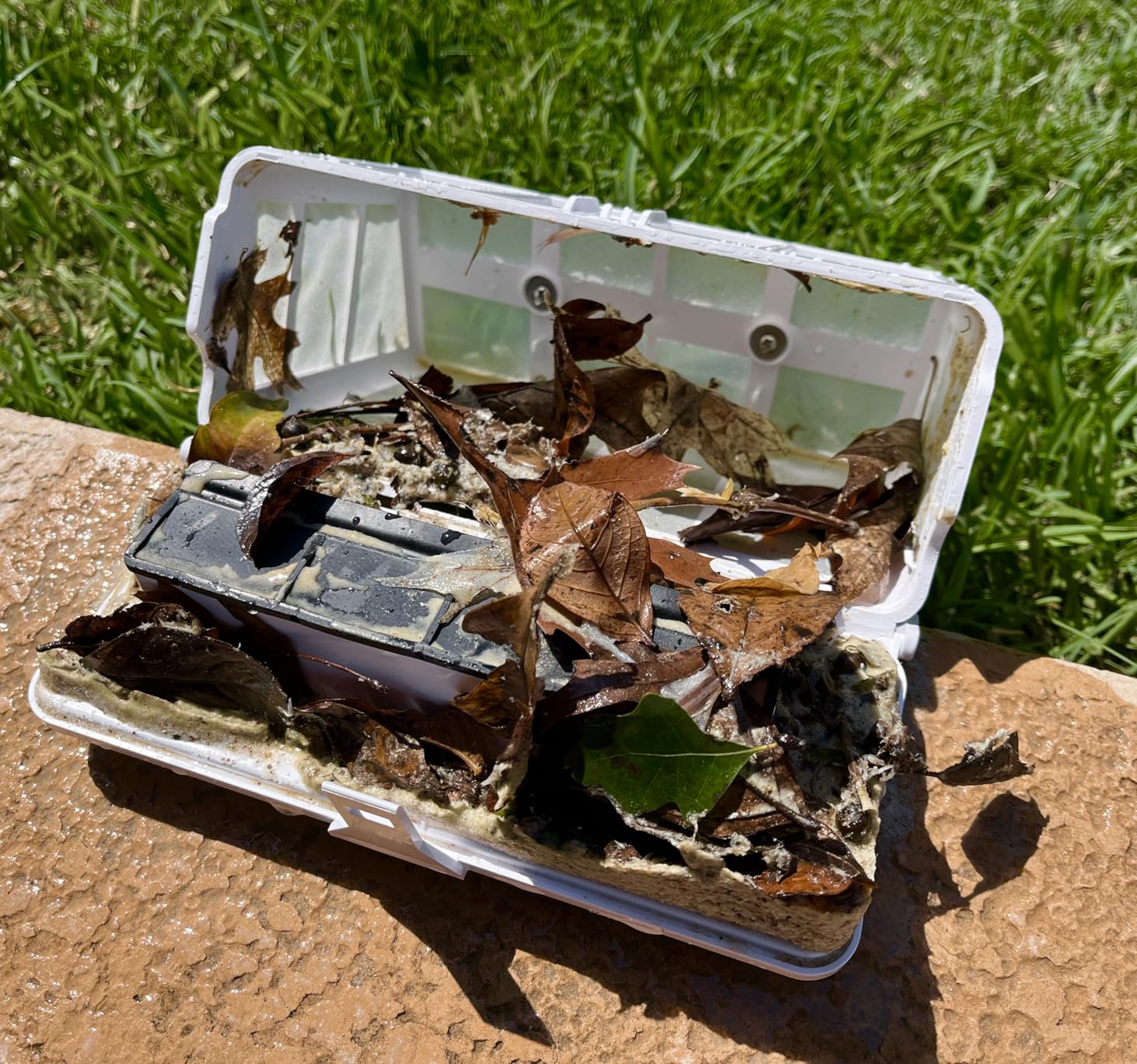
That matters more for dust than it does for leaves. On a heavy leaf load a big canister can ride out a full cycle, but a fine dust load silts the mesh shut in an hour or two, and once the mesh silts up the pump stalls and suction drops. Owners describe the last third of the cycle being done at reduced power, then finding the familiar film on the floor when the robot surfaces.
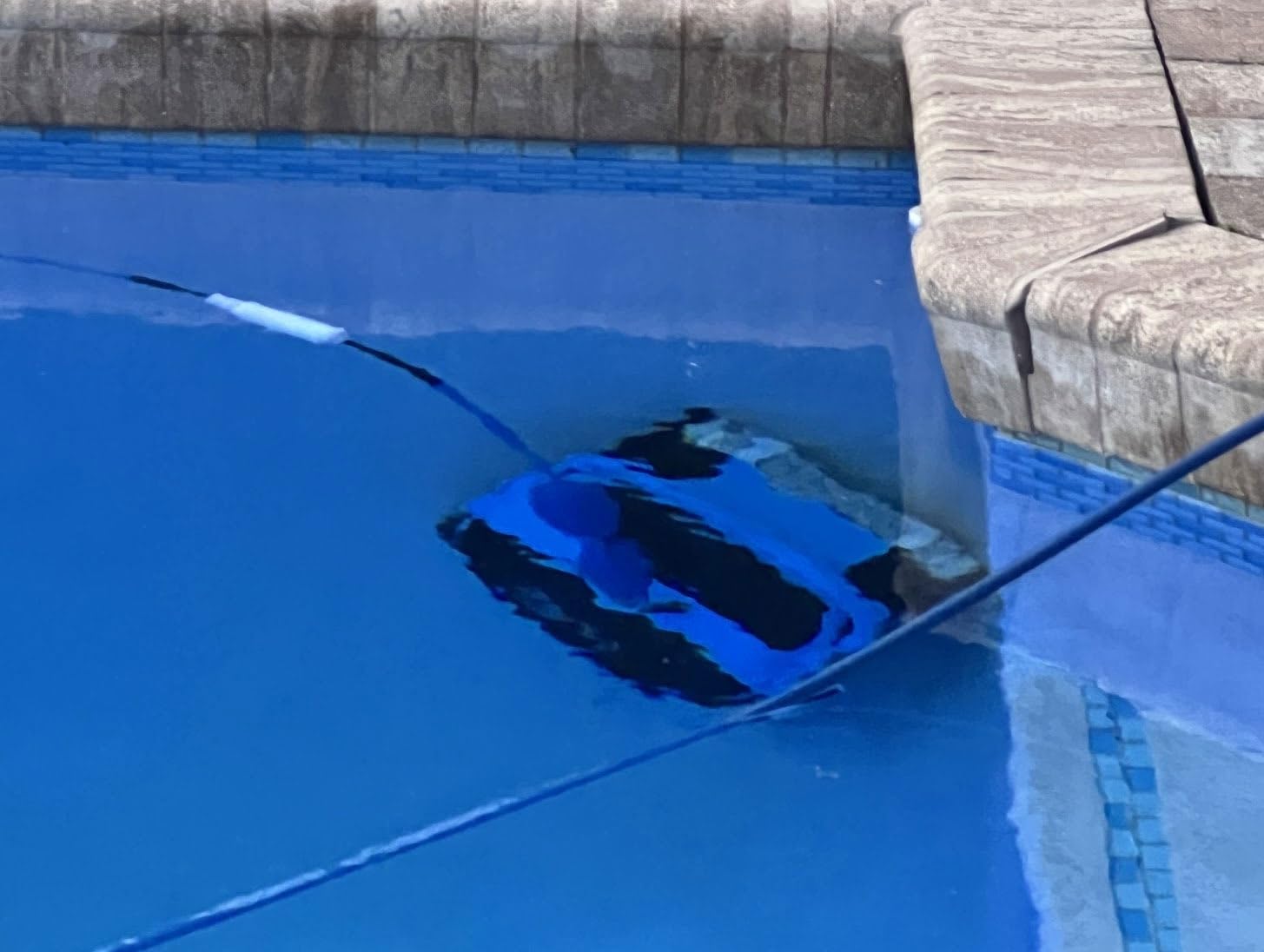
The active brush roll is the other half of the fine-debris story. Fine settled grit does not get pulled in by suction alone; it needs a physical sweep off the floor first. Reviewers consistently credit the brush for getting sand out of the seam areas and along the base of the walls, and the wall-climbing behaviour means the settled dust line at the waterline gets scrubbed rather than left alone.
Spec-wise it is rated for in-ground pools up to 40 ft, with a two-hour plug-and-play cycle and a top-load basket. The cord is the weak point. Tangling on freeform shapes and kinking after a few seasons is the most common long-term complaint we found across long-term owner reports.
Who the Nautilus CC Plus suits
It suits anyone with an in-ground pool who wants a set-it-and-forget cycle without giving up the ability to rinse the filter mid-afternoon. If your pool is up to 40 ft and the dust is the everyday enemy rather than a seasonal event, this is the machine we would put in the pool without hesitating.
It also suits people who are nervous about brand longevity. Maytronics has been building these for longer than most of the cordless brands on this list have existed, and that matters when you are thinking about replacing filter media and drive parts in year three.
Where the Nautilus CC Plus falls short
It does not clean steps, and reviewers call that out as the one job you still do by hand. It also ships without an ultra-fine upgrade option in the way the Aiper does, so on genuinely dusty sites you are relying on rinse cadence rather than finer media to close the gap.
The 9.45 kg body is heavy enough that lifting it out of a deep end when the basket is full of wet sand is a real workout. If back or shoulder issues are a factor for anyone in the household, weigh this against one of the lighter cordless picks.
2. Dolphin Nautilus CC – Best Corded Value for Smaller Pools
Dolphin Nautilus CC Automatic Robotic Pool Vacuum Cleaner, Wall Climbing Scrubber Brush, Top Load Filter Access, Ideal for Above/In-Ground Pools up to 33 FT in Length
Filter: top-load fine mesh basket
Pool length: up to 33 ft
Above ground: supported
Weight: 6.71 kg
Pros
- Picks up sand and fine silt on the first pass
- Top-load basket is easy to reach and hose off
- Climbs the wall to scrub the waterline
- Quiet enough to run while the pool is in use
- No assembly required
Cons
- Basket clogs every one to two cycles
- Cord tangles and kinks after a few years
- Misses steps and tight 90 degree corners
- Basket bottom can dislodge when pulled
This is the model that r/swimmingpools threads keep surfacing as the default answer to the question nobody wants to ask twice: are pool robots any good for fine dust and sand. It is the shortest, lightest Dolphin in this group at 6.71 kg, and owners report that swapping it in cut their weekly manual vacuuming down to almost nothing.
Same design philosophy as its bigger sibling, just sized down. Top-load basket, active brush, wall climbing to the waterline, and a two-hour cycle for pools up to 33 ft. If your pool is above ground or a compact in-ground, that shorter cord is a genuine advantage because there is less cable to tangle in the first place.
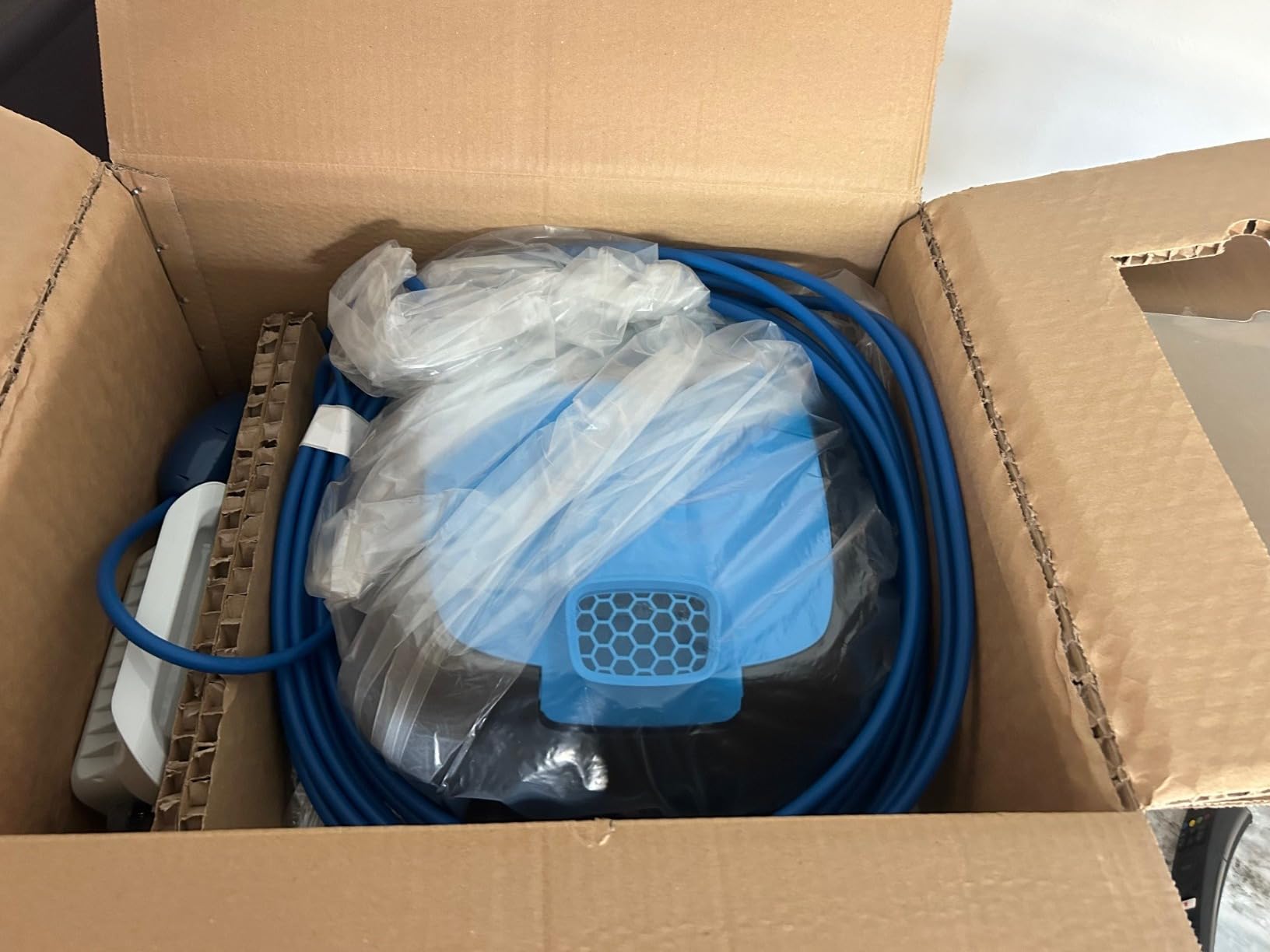
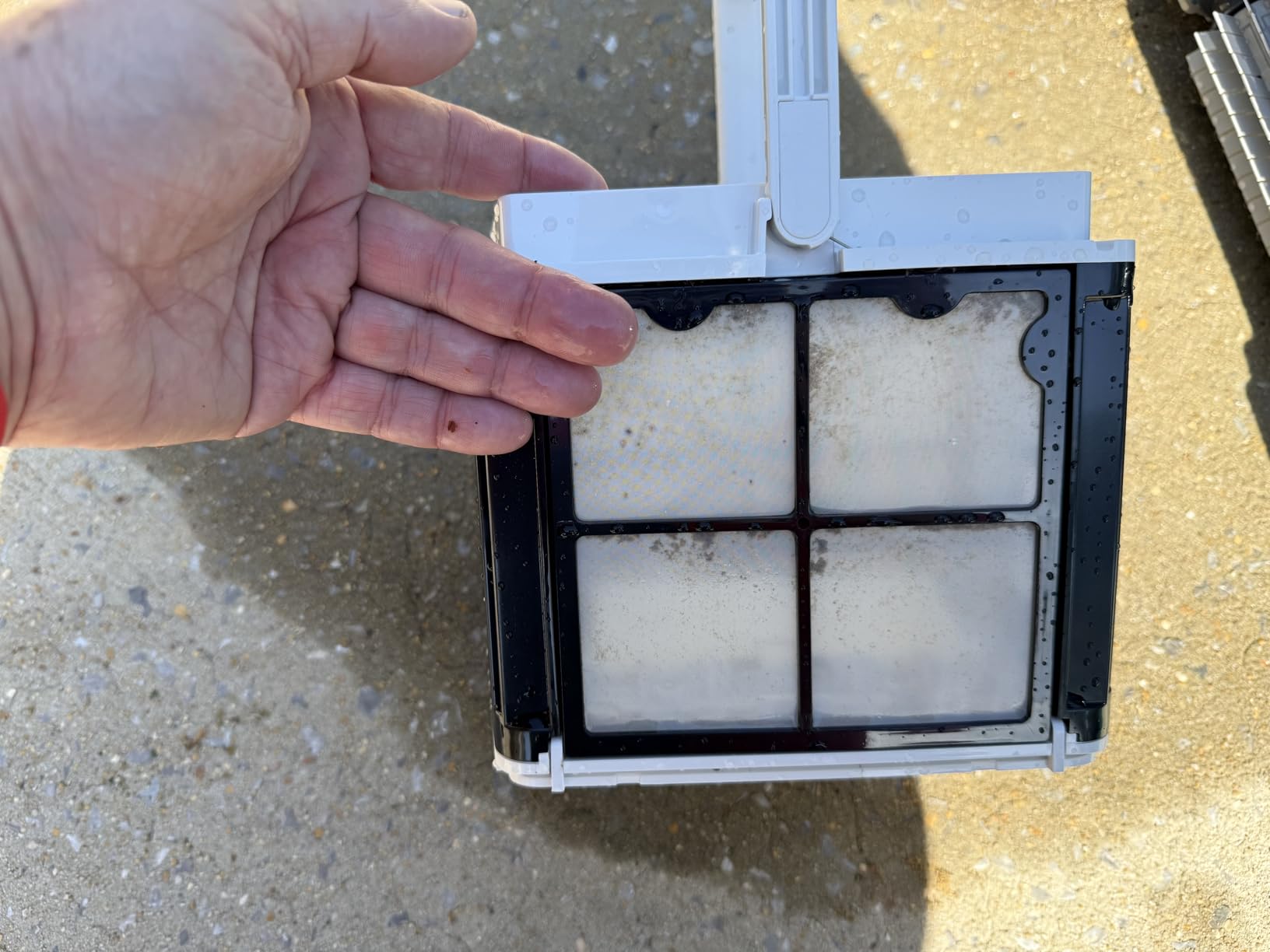
The filter behaves the same way all fine-mesh cartridges do. It picks up sand and silt well, silts shut quickly, and needs rinsing every one to two cycles to keep suction where it started. Owners who rinse it on a fixed schedule report much better results than those who run it three times in a row and only then look at the basket.
Two smaller annoyances show up repeatedly in long-term reports. The bottom section of the basket can dislodge as you pull it free, and it cannot climb steps or reach tight 90-degree corners, so the shallow end still needs a brush. Neither is a dealbreaker, but both are predictable.
Who the Nautilus CC suits
It suits owners of small pools who already own a cord outlet near the pool and do not want to fiddle with charging docks or apps. Cordless convenience is real, but a corded unit that never needs a charge cycle of its own is its own kind of low-maintenance.
It also suits anyone who wants the Dolphin name and top-load filter access at the lower end of the range. If your main worry is fine dust rather than leaves, the smaller frame is not a downgrade on the part that does the work.
Where the Nautilus CC falls short
Its 33 ft ceiling rules out the longer in-ground pools that the CC Plus handles, so check your pool length before buying. The cord is the same weakness as the bigger model, and this unit has been in the wild long enough that drive and track wear is common on multi-year ownership.
It also has no finer filter option. On a site with real construction dust or heavy sand blow-in, this robot will do a respectable job but you will be rinsing it more often than a model that lets you swap in a 3-micron layer.
3. WYBOT C1 – Best Cordless Robot for In-Ground Pools
WYBOT C1 Cordless Robotic Pool Vacuum for Inground Pools, Professional
Filter: pop-out basket
Pool coverage: up to 1,618 sq ft
Runtime: 160 minutes
Weight: 440 g battery
Pros
- Removes sand
- leaves
- calcium and pet hair in one pass
- No cord to tangle on freeform shapes
- App scheduling with cleaning modes and OTA updates
- Climbs walls and waterline on above ground pools too
- Basket pops out and rinses under a hose
Cons
- Leaves micro-fines in vinyl liner wrinkles
- 160 minute charge time limits daily use
- Heavy to lift out and drain
- App connection drops underwater
The C1 is the cordless workhorse in this group and the one that comes up most when owners ask about cordless machines for fine debris. It pulls real volume, and reviewers report it collecting sand, leaves and dog hair in a single cycle without the filter sealing up the way a pure fine-mesh cartridge does.
Navigation is where it beats the old-school corded designs. A gyroscope-driven N-Path and S-Path routine means the robot works in planned bands rather than bouncing off walls at random, so the fine dust film gets a consistent second pass instead of one hopeful sweep. Pool coverage runs to 1,618 sq ft and it climbs slopes up to 45 degrees.
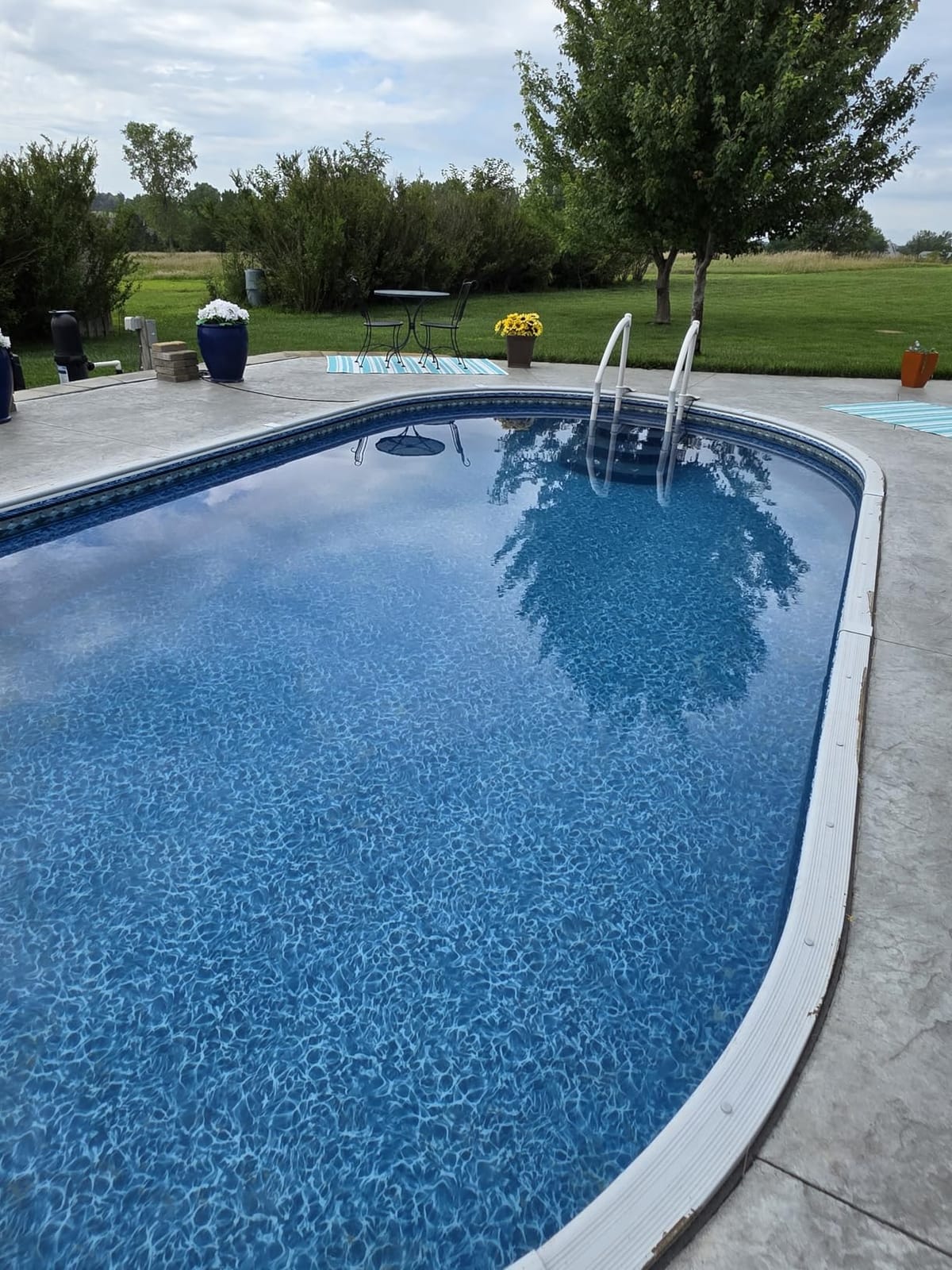
The catch is the filter itself. This is not a fine-mesh-first machine; it is a volume-first machine that happens to pick up a lot of sand. Owners are candid that micro-fines remain in the wrinkles and divots of a vinyl liner bottom, which is exactly where a settled dust film shows up first in a light-coloured pool.
Runtime is up to 160 minutes from a charge that takes 160 minutes. That is fine for a routine cycle but it means you cannot run it twice in a day during a heavy dust event, and the app stops talking to it once it is submerged, so every command has to be set before launch.
Who the WYBOT C1 suits
It suits owners with an in-ground pool who want no cable in the water and no cable to wrap around a freeform edge. For a 45-degree slope and a pool that is not enormous, the coverage figures and the wall climbing hold up well in owner reports.
It also suits anyone whose debris is mixed. Sand, leaves and pet hair in one basket is a good outcome for a household where the pool takes a beating from kids and dogs rather than sitting under a tree all autumn.
Where the WYBOT C1 falls short
It will not rescue you on micro-fines. If your problem is a settled film in the seams of a vinyl liner, you want finer media and a second look at filtration rather than more suction volume.
The 440 g battery is not the issue, but the whole machine is heavy once it is full and wet, and several owners mention needing help to get it out of a deep end. It is also a large machine for a small above-ground pool, where coverage finishes far short of a full cycle.
4. Aiper Scuba S1 – Best for Algae Dust and Fine Sediment
Aiper Scuba S1 2026 Robotic Pool Cleaner,Floor/Wall/Waterline/Shallow Area Cleaning, Double Filtration, Adaptive Navigation, High-Precision Sensors, App Support-Teal
Filter: 3-micron plus 180-micron layers
Runtime: 270 minutes Eco mode
Coverage: floor, wall, waterline
Weight: 735 g battery
Pros
- Dual filtration with a replaceable 3-micron ultra-fine layer
- Captures fine dust and sand reliably
- WavePath navigation gives methodical coverage
- Quiet operation on a single charge
- Basket is easy to remove
- rinse and reinstall
Cons
- Lower suction and a smaller brush than premium models
- App needed for full function and disconnects underwater
- May restrict itself to one section on custom shapes
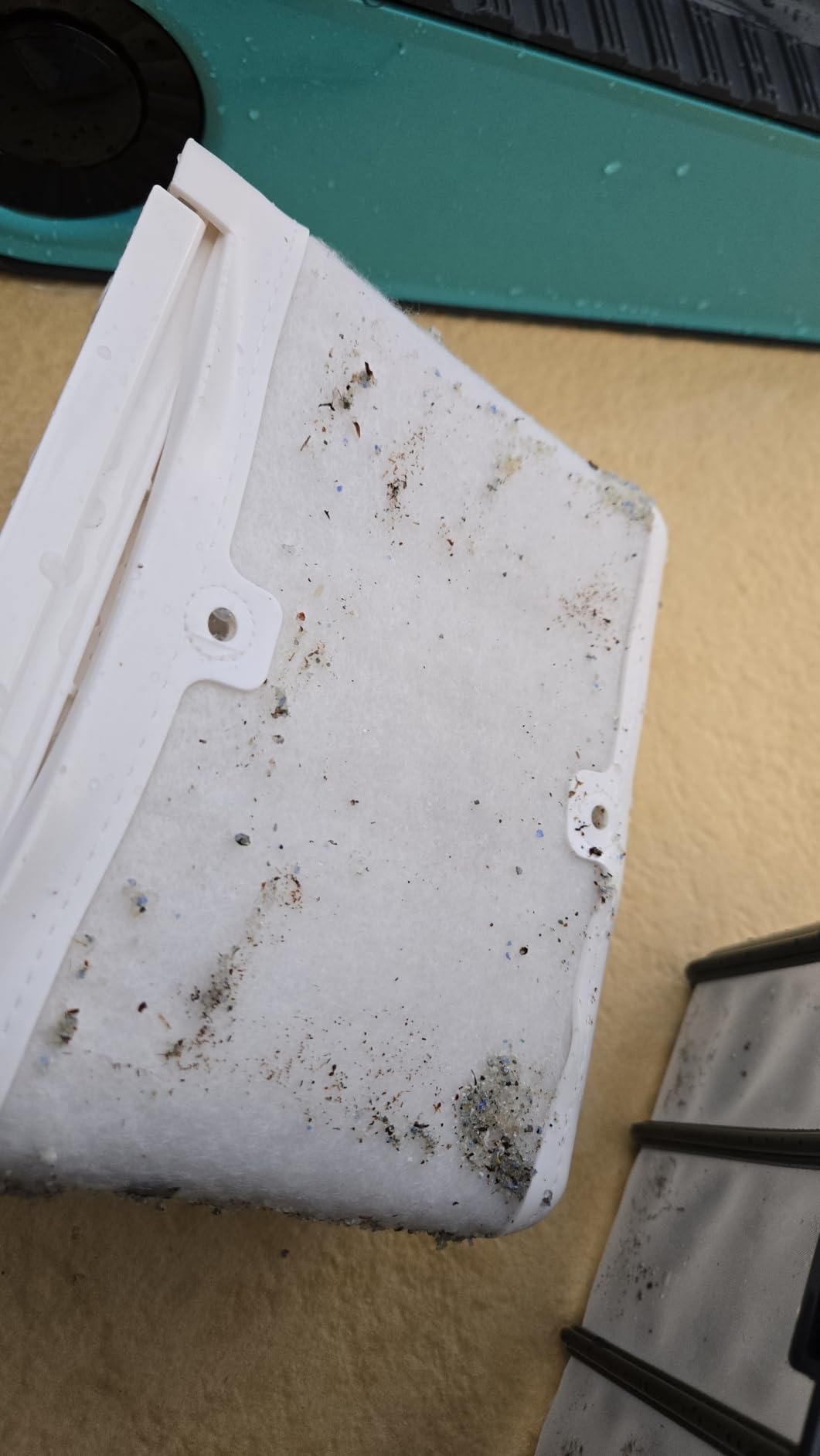
This is the robot that actually answers the algae dust question head on. The Scuba S1 carries a replaceable 3-micron ultra-fine filter layer paired with a standard 180-micron filter, and that replaceable fine layer is the thing owners single out again and again as the reason the floor looks different after a cycle.
Algae dust behaves like fine sediment rather than like a plant. It breaks down into a light, evenly spread film that a coarse screen simply passes through. A filter media rating of 3 microns catches it; a general-purpose cartridge at 180 microns does not, which is the whole difference between a clean floor and a floor that still looks hazy at the drain.
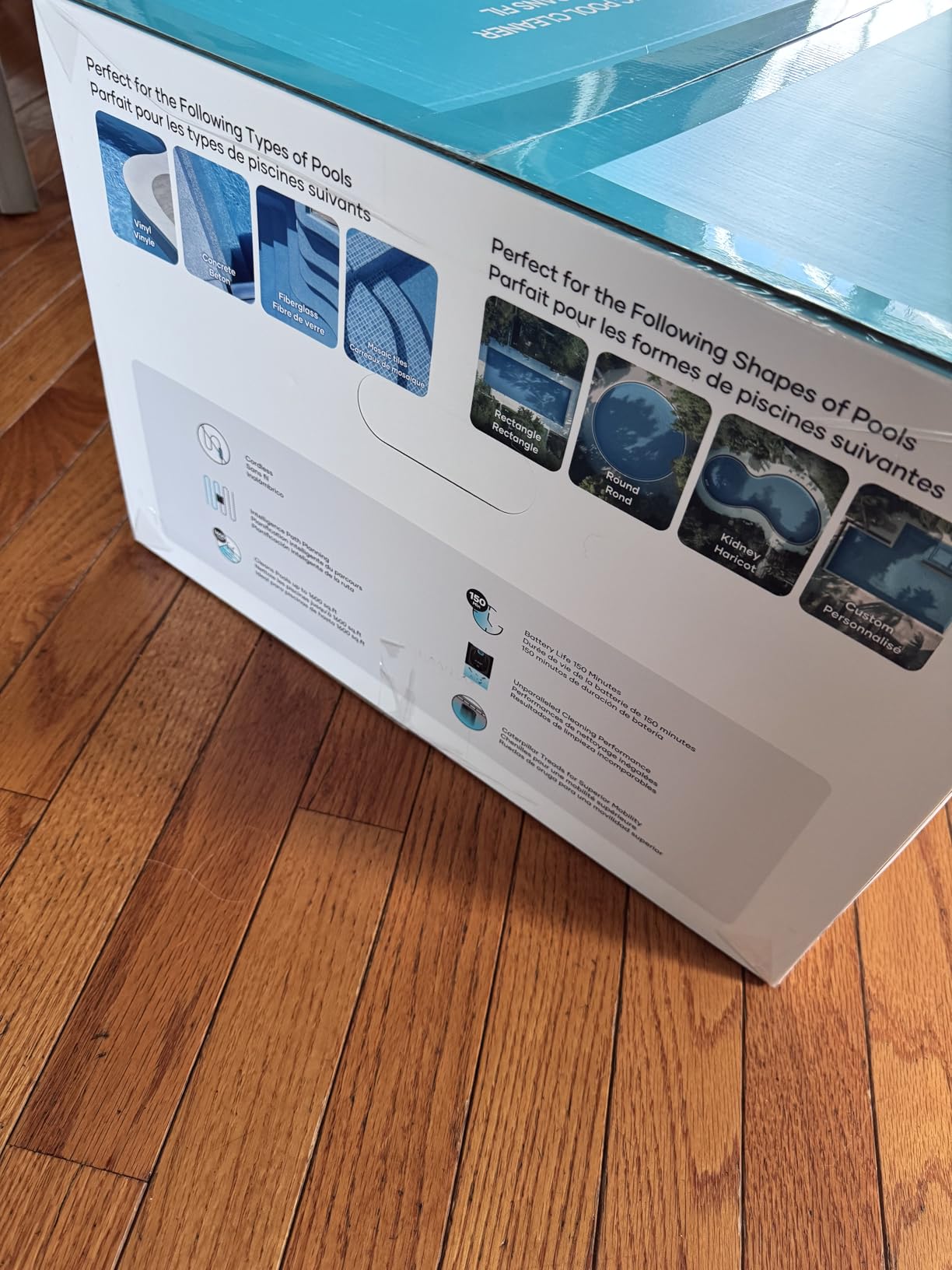
Eleven sensors and WavePath adaptive navigation produce methodical back-and-forth passes with minimal overlap, and four-zone cleaning covers floor, walls, waterline and shallow areas above 12 inches. Caterpillar treads handle the climbing. Runtime runs to 270 minutes in Eco mode and 180 minutes in Auto, Floor, Wall or Scheduled modes.
The trade-off is raw power. Reviewers describe a smaller brush and lower suction than the premium units here, which makes wall work slower. On a fine-dust-only pool that barely registers, because fine dust is a filtration problem. On a pool that also has leaves to chew through, you will feel the difference.
Who the Aiper Scuba S1 suits
It suits anyone whose pool is already under pressure from a dusty site, heavy tree cover or a spring pollen season, and who wants a genuinely fine filter rather than a big basket. Pros on r/PoolPros point to the Aiper S1 line regularly as a sensible answer to the budget fine-algae-dust problem.
It also suits anyone who intends to buy replacement filter media. Because the 3-micron layer is replaceable and standard, you can keep fine media in the machine year-round without committing to a throwaway cartridge every few weeks.
Where the Aiper Scuba S1 falls short
It is slower than the premium picks when the pool has structural debris, because the brush and suction are deliberately modest. If leaves are your main headache and fine dust is a secondary concern, the priorities here are backwards.
A small number of owners on custom or unusually shaped pools report it restricting itself to one section rather than committing to the whole shape. Full function also depends on the app, which drops its connection the moment the robot is submerged.
5. WYBOT C2 – Top Rated, and the Best Cordless Fine Filter Combo
Wybot C2 Cordless Pool Vacuum for Inground Pools, Robotic Pool Cleaner
Filter: 10-micron ultra-fine plus 180-micron
Runtime: 180 minutes
Coverage: 2,152 sq ft
Weight: 440 g battery
Pros
- Dual filtration with a 10-micron ultra-fine filter for fine sediment
- Three brushless motors give strong suction
- Gyroscope navigation with minimal missed areas
- Auto-parks at the pool edge on low battery
- 3.2L capacity for longer cycles
Cons
- Cleaning stalls if the fine filter saturates
- Bluetooth and app control stop underwater
- Coverage claims assume an in-ground pool
The C2 has the highest average rating in this group, and the reason owners give is consistent: the 10-micron ultra-fine filter paired with a 180-micron primary layer is the feature that most improved their fine sediment pickup. That is a genuinely different answer to the dust problem from the volume-first cordless machines.
Three brushless motors give it suction that a 10-micron media machine often cannot afford, which is the real trick here. You can run fine media without accepting a weak pump, so the filter does not just catch more dust, it keeps catching it for the length of the cycle.
Coverage is up to 180 minutes and 2,152 sq ft per cycle with gyroscope path planning, seven cleaning modes, and auto-parking at the pool edge on low battery. That auto-park matters more than it sounds when the basket is holding several kilos of wet sand and you would otherwise be fishing around the deep end with a hook.
The honest drawback is the one every fine-filter robot shares: when the ultra-fine element saturates, cleaning slows and stops unless you get it out and rinsed. On this machine the fix is simple, and the filter is designed to come out and rinse in seconds.
Who the WYBOT C2 suits
It suits owners who want fine filtration and strong suction in the same machine and would rather not choose between them. Cordless means no cable to tangle on a freeform pool, and the battery carries roughly 95 watt-hours for a full 180-minute cycle.
It also suits people who have already run a cheaper cordless robot and were disappointed. The most common upgrade story we saw was moving up specifically because the old basket was catching volume but not sediment.
Where the WYBOT C2 falls short
Wireless commands have to be sent before the robot goes in the water, which makes the app feel more like a pre-run setup tool than live control. And on small pools it finishes well short of the published cycle length, so you are paying for runtime you do not use.
The fine filter will need rinsing more often than a coarse one by design. If you are not willing to rinse mid-cycle, the finer media becomes a liability rather than an advantage.
6. Beatbot Sora 30 – Best for Large Pools With Mixed Debris
Beatbot Sora 30 Pool Vacuum, Floor & Wall & Waterline & Platform Cleaning, 6800GPH Power, Smart Parking, 300Min Runtime, 5L Capacity, for Above & In-Ground Pools 3229 sq.ft, Deep Blue
Basket: 5L debris capacity
Suction: 6,800 GPH
Runtime: up to 300 minutes floor
Coverage: 3,229 sq ft
Pros
- 6800 GPH suction handles heavy debris without clogging
- Smart parking at the surface and self-draining for easy lifting
- Ultrasonic sensors detect ledges down to 8 inches
- One charge covers a large pool
- Large 5L basket means fewer emptyings
Cons
- Heavy body needing a pole or hook to retrieve
- App controls unavailable underwater
- Wall and platform coverage slower than the floor pass
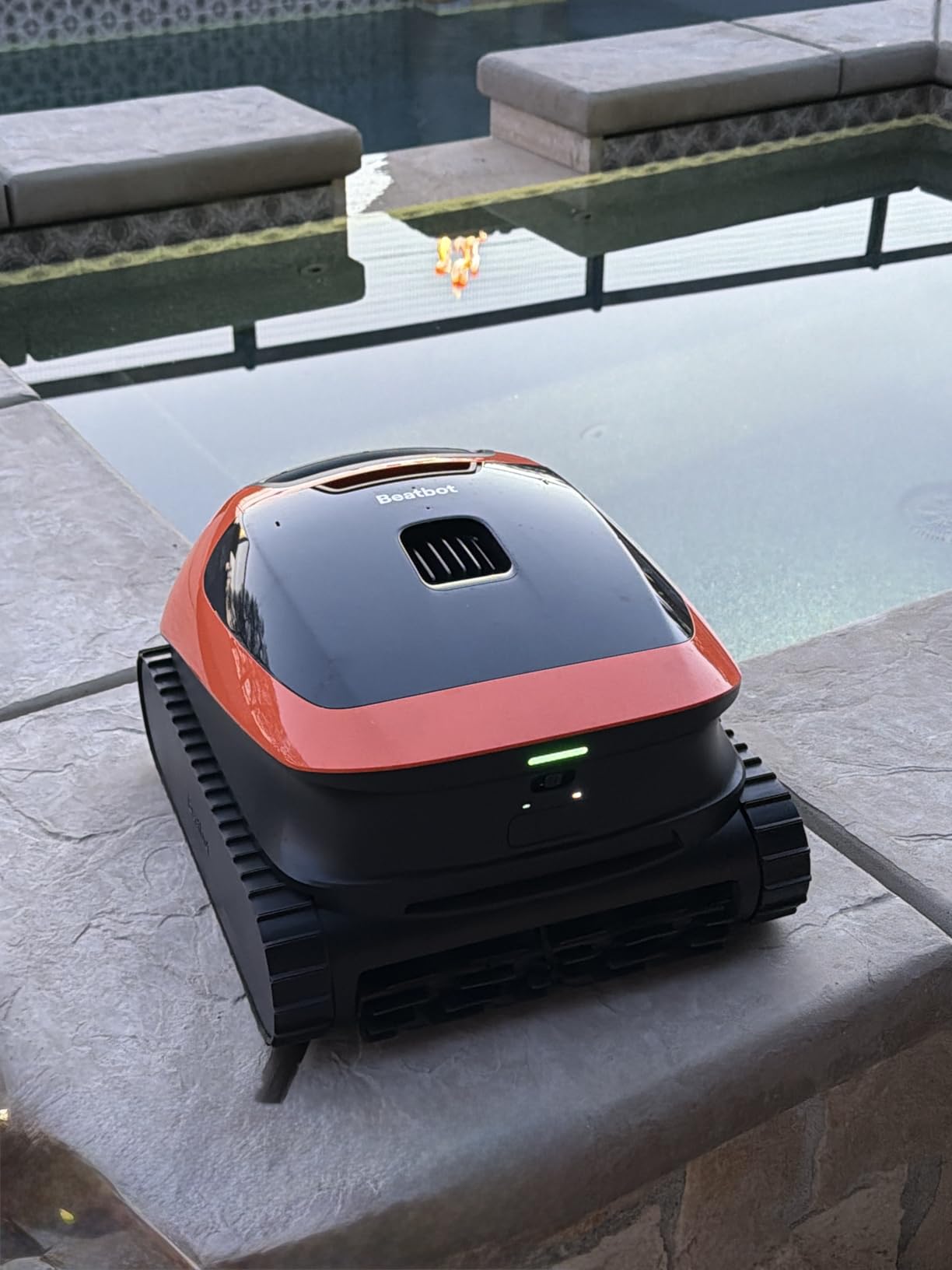
Where the fine-filter machines trade suction for fineness, the Sora 30 trades nothing. 6,800 GPH of suction through a HydroBalance structure means it keeps moving when the basket is filling with heavy material, which is what stops the fine filter from being the only thing standing between you and a clean floor.
Capacity is the headline number: a 5L basket rated to hold up to 650 leaves, running up to 300 minutes of floor cleaning across 3,229 sq ft. For a big pool that collects a lot of sand and leaf litter at once, that is one charge for one full clean rather than two interrupted cycles.
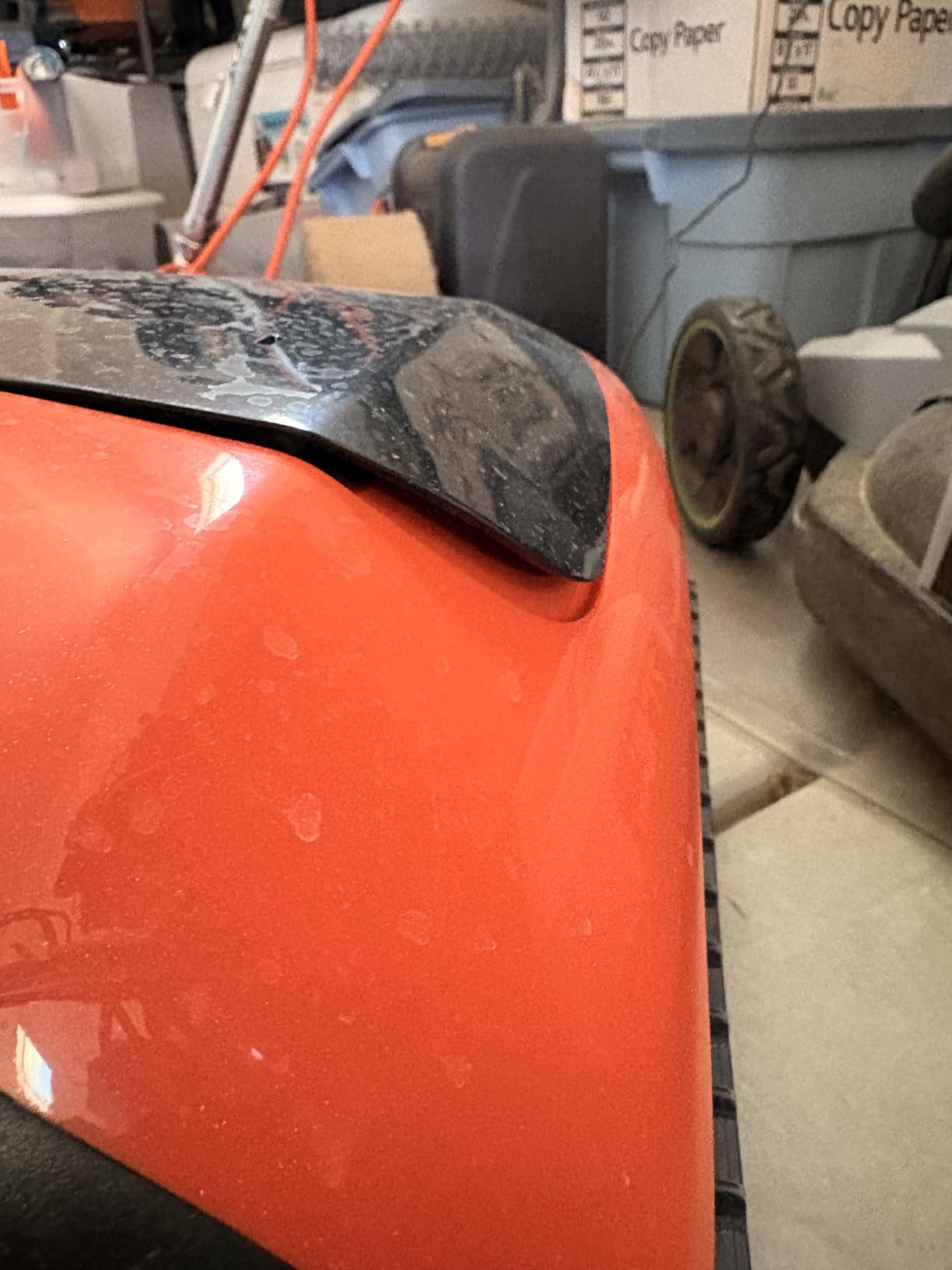
Four-zone cleaning handles floor, waterline, walls and platforms, and ultrasonic sensing finds ledges and shallow areas down to 8 inches. Fine dust that has drifted into the shallow end and the platform corners is exactly the kind of deposit a floor-only pass leaves behind, so that extra zone is worth something for this debris profile.
The smart water-surface parking is a genuine quality-of-life feature. The robot rises, parks at the edge and drains its internal water, so lifting it out is far easier than hauling a waterlogged machine. The trade-off is weight: at 10.5 kg most owners report using a pole or hook for retrieval.
Who the Beatbot Sora 30 suits
It suits owners of large in-ground pools where fine sediment arrives alongside leaves, and where one vacuuming session per week has to cover a lot of surface area. The combination of suction rate and basket volume is what makes a single cycle realistic.
It also suits anyone with lifting concerns. Even at 10.5 kg, the self-draining surface park removes the single most unpleasant job in pool ownership, which is hauling a full basket out by hand.
Where the Beatbot Sora 30 falls short
It does not quote a micron rating for its filtration in the way the Aiper, the WYBOT C2 or the Gosvor do, so if ultra-fine capture is your entire priority you are choosing on suction and capacity instead. Wall and platform coverage is slower than the floor pass.
You cannot send it commands while it is submerged, and a 4.5-hour charge limits turnaround if you want two deep cleans back to back.
7. Beatbot Sora 70 – Best Full-Coverage Pick Including Surface Film
Beatbot Sora 70 AI Navigation Pool Vacuum Robot Full-Coverage Pool Cleaning
Basket: 6L debris canister
Suction: 6,800 GPH
Runtime: up to 5 hours
Coverage: 3,200 sq ft
Pros
- JetPulse system pulls floating debris into the intake
- Full coverage from surface down to 8 inch shallow areas
- 6800 GPH suction without clogging
- One charge covers 3200 sq ft
- 6L canister and smart surface parking
Cons
- Heaviest and highest power draw in this group
- App retrieval does not work underwater
- 4.5 hour charge limits turnaround
Fine debris does not always start on the floor. Pollen and floating organic film form a skin on the surface first, and a floor-only robot sails straight under it. The Sora 70 is the only machine here that addresses the surface directly, with a JetPulse dual-jet system that drives floating leaves and surface debris into the suction inlet.
Under the water it runs the same 6,800 GPH HydroBalance suction as the Sora 30, with a larger 6L canister and a 10,000 mAh battery giving up to five hours across 3,200 sq ft. Reviewers note the size handles both floating surface debris and settled material without clogging.
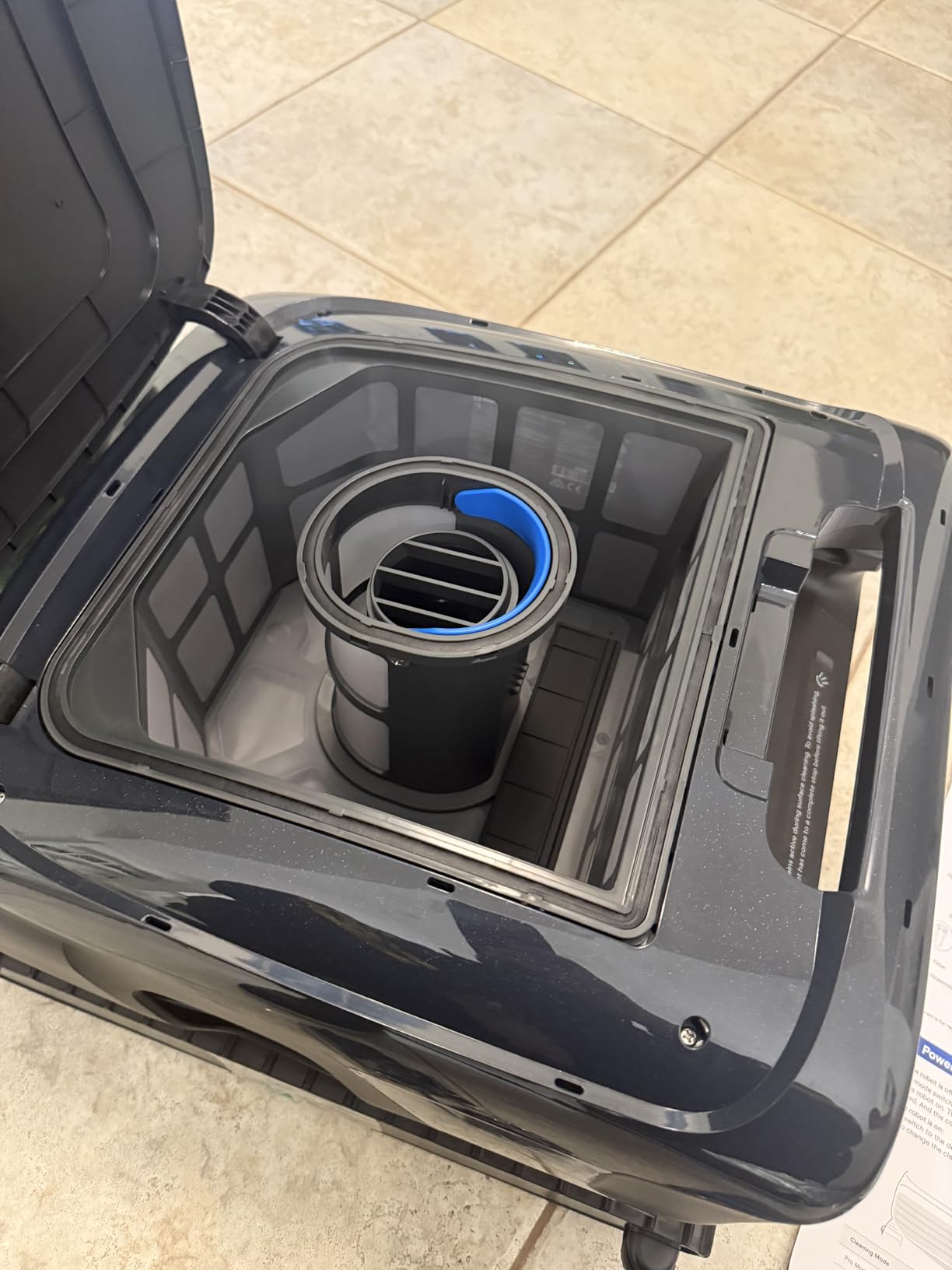
Coverage is genuinely comprehensive: water surface, waterline, floor, walls and shallow areas from 8 inches. For a pool that gets heavy tree cover, that surface capability means you are not relying on a separate skimmer to keep up between robot runs.
What you give up is handling. At 22.9 lb this is the heaviest machine in the group and the highest power draw, and manual retrieval is correspondingly harder. It ships with a three-year protection period, which is the longest warranty on the list.
Who the Beatbot Sora 70 suits
It suits owners with heavy overhead cover who fight a pollen and leaf film on the surface every spring. Handling both ends of the water column in one machine is the reason to stretch up to this one rather than the Sora 30.
It also suits large pools where a single charge has to finish the job. Five hours of runtime over 3,200 sq ft removes the mid-clean recharge from the picture entirely.
Where the Beatbot Sora 70 falls short
The weight is real, and tap-to-retrieve in the app cannot help you while the robot is in the water, which is exactly when you would want it. Retrieval still needs a physical hook or pole on a heavy unit like this.
Like the Sora 30, it does not publish a micron rating for its filter media. If your entire problem is settled fine dust rather than surface film, the finer filters elsewhere on this list are the more targeted answer.
8. WYBOT A1 – Budget Pick for Above-Ground and Small Pools
WYBOT A1 Cordless Pool Vacuum Robot for Above Ground Pool, Greyblue
Filter: 180-micron mesh plus foam layer
Suction: 2,280 GPH
Runtime: 130 minutes
Coverage: 1,100 sq ft
Pros
- Dual-layer filtration improves fine particle capture at entry level
- 2280 GPH suction lifts leaves
- sand and dirt
- Cordless with no tangles and self-parking on low battery
- 2 to 3 hour recharge with 130 minutes runtime
- Cleans above-ground pools up to 1100 sq ft
Cons
- Foam layer needs frequent rinsing to hold suction
- Not for slopes over 15 degrees or wrinkled bottoms
- Slower wall and waterline coverage than full-size robots
The A1 is the cheapest way into cordless pool cleaning, and the dual-layer filter is the reason it earns a place on a fine-debris list at all. A 180-micron precision filter paired with a textured foam layer is rated to improve filtration efficiency by up to 50 percent, which is a meaningful jump from a bare mesh basket at this entry point.
It is not a 3-micron machine and it will not equal the Aiper on algae dust. It is, however, markedly better at fine sand and dust than the cheapest leaf-focused cordless units, and for a modest above-ground pool or a small in-ground pool that collects ordinary grit, that is enough.
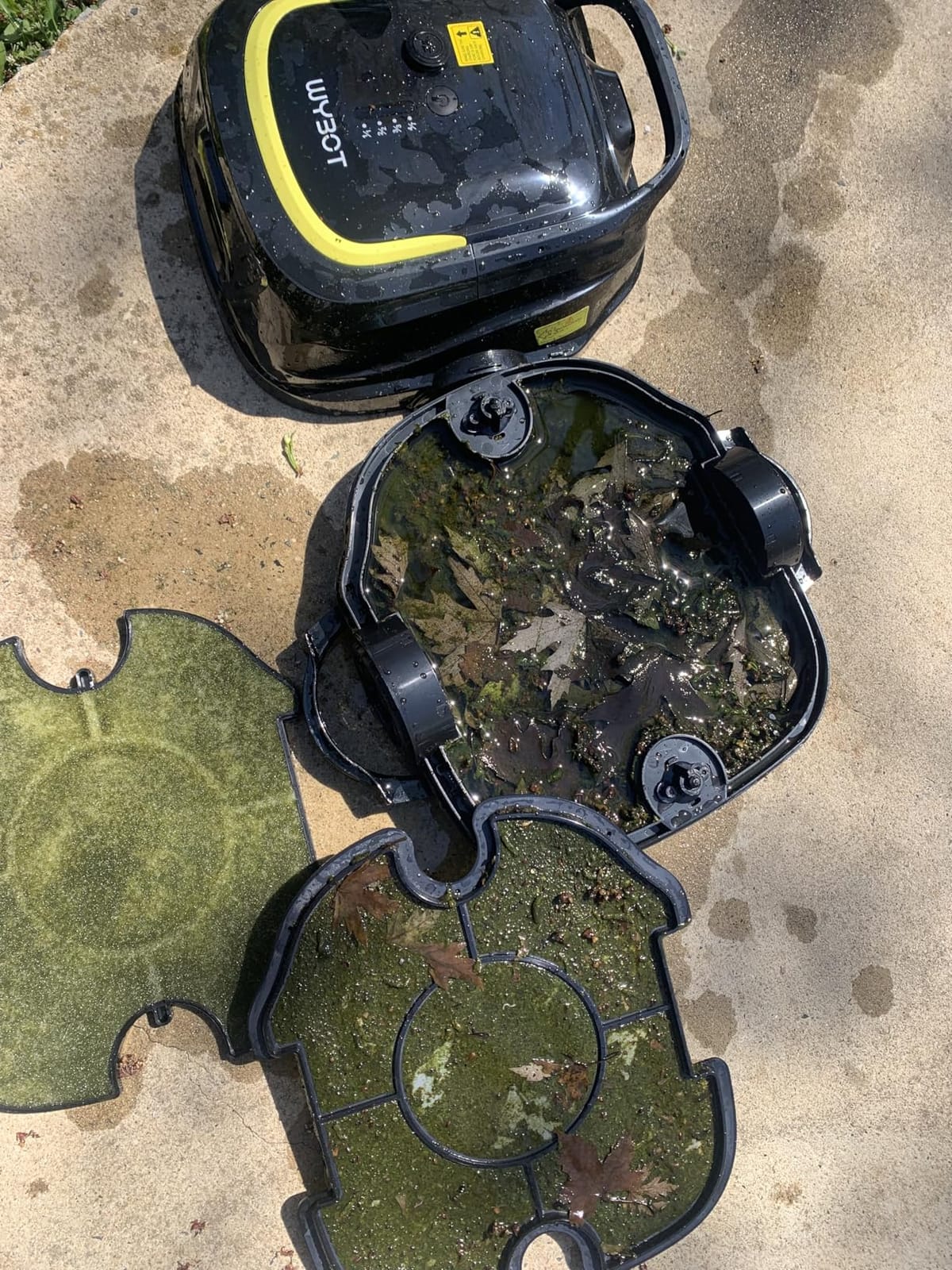
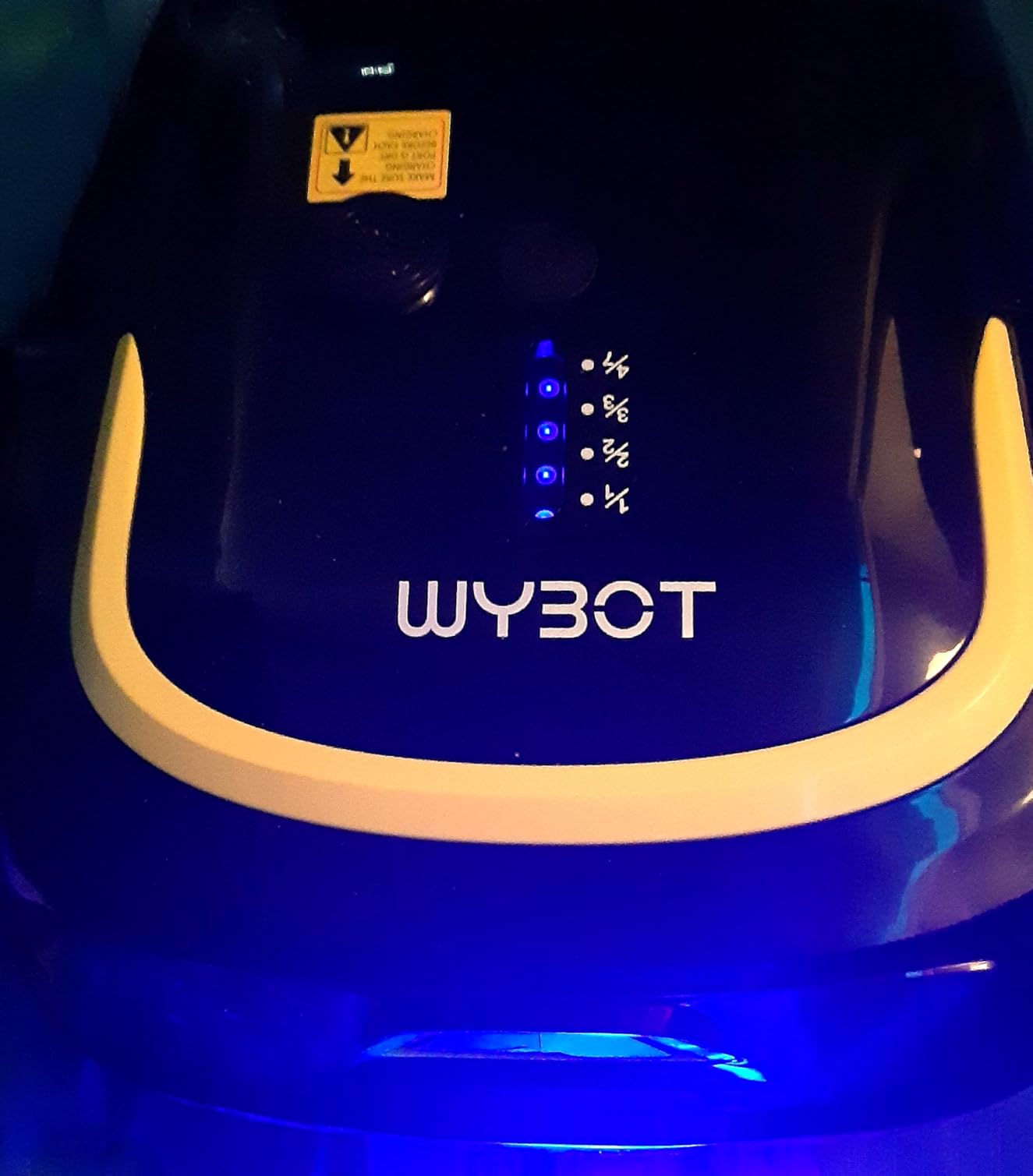
Coverage is 1,100 sq ft with up to 130 minutes of runtime and a 2 to 3 hour recharge, so a weekly routine is realistic. It self-parks near the wall on low battery, which avoids the fishing expedition that usually follows a cordless run that dies mid-pool.
The pool geometry restrictions are the part to read carefully. It is not suitable for slopes over 15 degrees or for bottoms with wrinkled liner, and reviewers report slower wall and waterline coverage than full-size in-ground robots. The foam layer also needs rinsing often, because foam silts shut before a mesh element would.
Who the WYBOT A1 suits
It suits owners of above-ground pools and small in-ground pools who want to stop hand-vacuuming sand without committing to a corded machine and its cable. If your pool is flat-bottomed and modest in size, this does the job without drama.
It also suits a first-time robot buyer who wants a low-risk entry. There is no caddy to buy, no cord to route and nothing to install beyond a rinse of the filter after each run.
Where the WYBOT A1 falls short
It is the wrong pick for a sloped, freeform or fiberglass in-ground pool with heavy walls to scrub, because the suction and brush are modest and the geometry limits are real. Wrinkled vinyl bottoms are exactly where settled micro-fines hide.
And because the foam layer clogs fast, the maintenance habit matters more here than on almost any other machine here. Skip the rinses and it loses suction well before the cycle ends.
9. Gosvor LiteVac G1 – Best for Dusty Climates and Heavy Sediment
(2026 Upgrade) Gosvor Pool Vacuum LiteVac G1, Wall & Waterline & Shallow Area Cleaning, Up to 200-Min Runtime, Ultra-fine Filter, 15.2 lbs, Smart Navigation & App, for Pools up to 2153 sq.ft, Gray
Filter: 3-micron plus 180-micron layers
Runtime: up to 200 minutes
Basket: 3.6L top-load
Weight: 15.2 lb
Pros
- 3-micron filtration paired with a 180-micron filter
- Lightest handling at 15.2 lb with quick drainage
- Climbs walls and scrubs the waterline and tile
- Top-load 3.6L basket is simple to reach
- Owners report results comparable to costlier cordless machines
Cons
- Only one extra-fine filter bag included
- Phone connection drops once submerged
- Dark body can be hard to spot and needs a pole
If you live somewhere with genuine airborne dust, this is the machine owners in dusty climates keep recommending. The 3-micron fine layer sits alongside a 180-micron filter, and that pairing is repeated in owner reports as the reason it pulled up far more fine dust than the robots they replaced.
3,960 GPH of suction and up to 200 minutes of runtime give it enough power to actually move sediment rather than just filter the water passing by. Four-in-one cleaning takes in floor, walls, waterline and shallow areas above 12 inches, with caterpillar treads and dual roller brushes for the climbing and scrubbing.
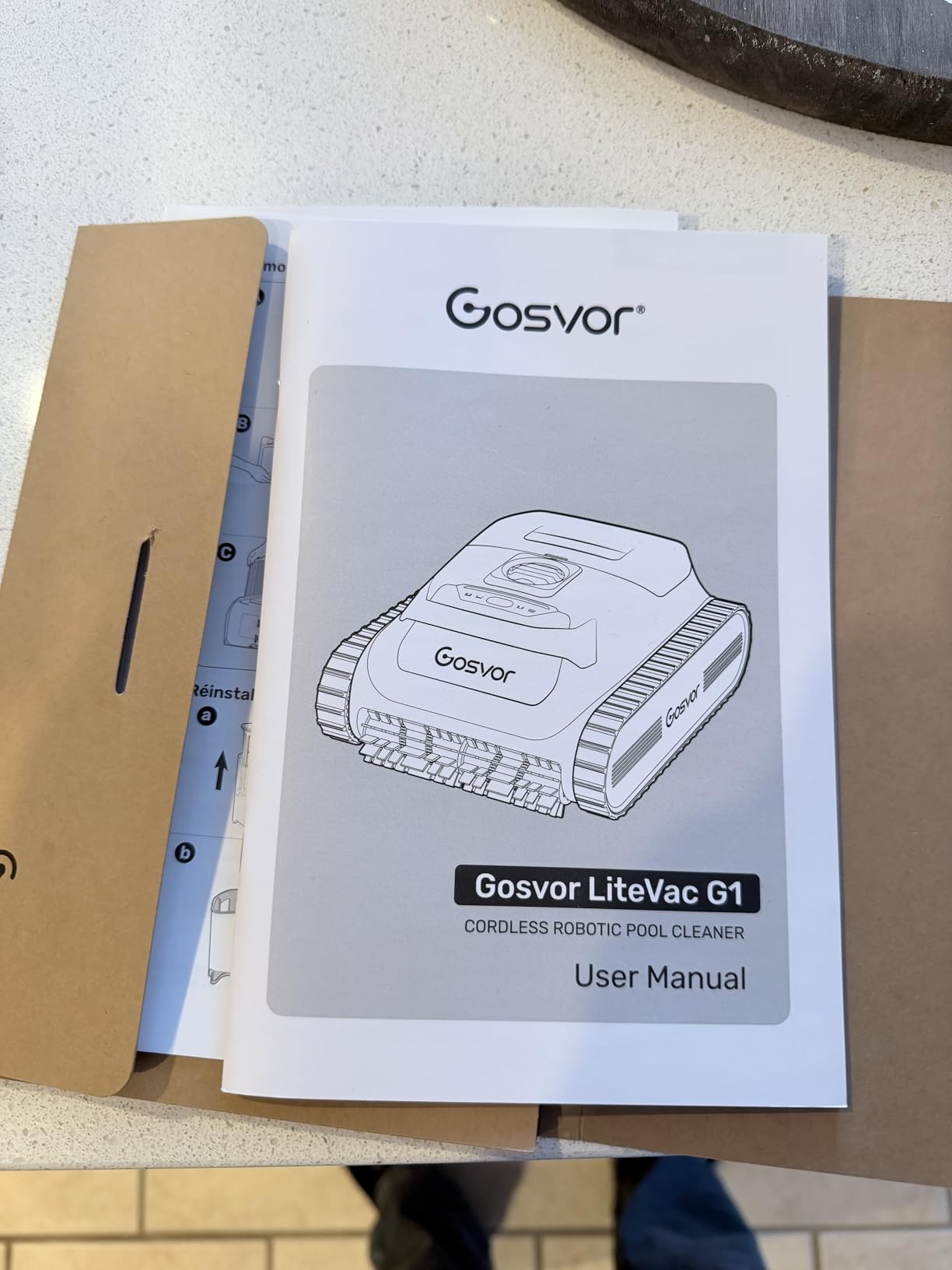
What stands out most is handling. At 15.2 lb with quick drainage it is the easiest machine here to lift out of the pool, and for a filter you will be opening often that combination matters a great deal. The 3.6L top-load basket with LED status indicators is straightforward to access and rinse.
Two practical notes. Only one spare extra-fine filter bag is included, so replacements are a separate purchase, and the maintenance guidance is to clean the filter after every cycle and replace the fine filter every 30 cycles. That is the running cost of running 3-micron media, and it is worth planning for.
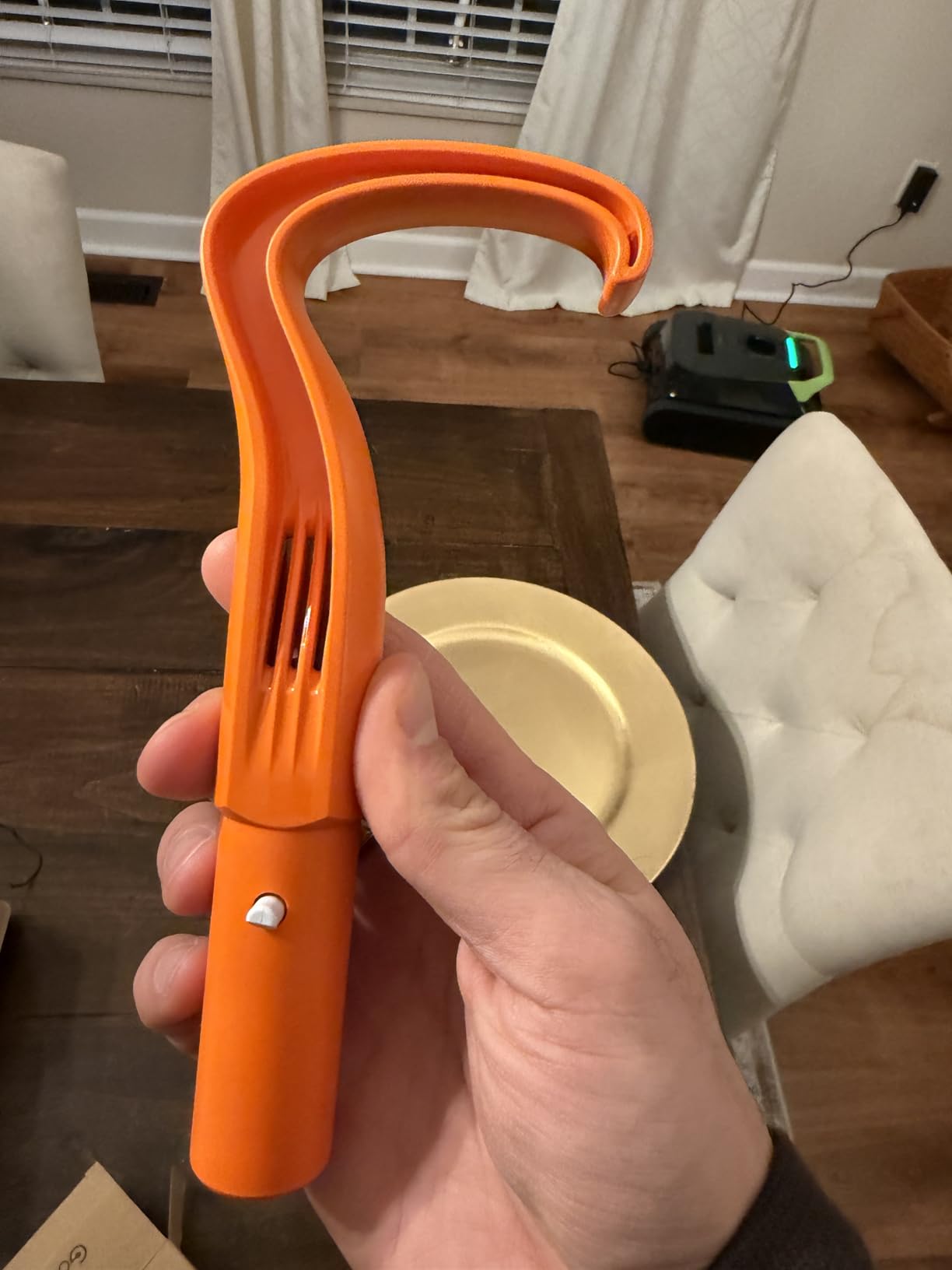
Who the Gosvor LiteVac G1 suits
It suits owners near construction, unpaved driveways or desert landscaping where the water simply keeps turning dusty. For that specific problem a 3-micron layer is not a luxury, it is the entire reason the robot works.
It also suits anyone who dreads the lift. At 15.2 lb with fast drainage it is the least punishing fine-filter machine to retrieve, and combined with a two-year warranty it is a defensible choice for a pool you will use for years.
Where the Gosvor LiteVac G1 falls short
Phone connection drops as soon as the robot is submerged, so the app is a pre-run tool rather than live control. The dark grey body can also be hard to spot on certain pool surfaces, and a separate retrieval pole is still worth having.
The single-included spare filter is a real ownership cost if your pool runs dirty enough to need replacement media often. Budget for filter bags as ongoing running costs, not a one-off purchase.
10. Beatbot Sora 10 – Best Corded-Free Pick for Saltwater Systems
Beatbot Sora 10 Cordless Pool Vacuum Robot for Inground & Above Ground Pools, 6800 GPH Suction, Floor/Wall/Waterline/Shallow Area Cleaning, Waterline Parking, 300 Mins Runtime, Mint Green
Filter: 150 micron, 3 micron sold separately
Basket: 5L
Suction: 6,800 GPH
Saltwater safe below 5000 ppm
Pros
- Roughly 50 percent reduction in fine settled debris reported
- 6800 GPH suction captures leaves
- sand and small rocks
- 300 minutes covering 3229 sq ft
- 5L basket holds up to 650 leaves
- Waterline parking holds position for retrieval
Cons
- App is unreliable and reports false basket status
- Misses sections on complex curved shapes
- Does not always return to the entry point
- 3-micron filter sold separately
The Sora 10 is the saltwater pick, and the reason is written into the material spec: fully saltwater-safe below 5000 ppm and corrosion-resistant. On a saltwater system, corrosion on drive components and electrical contacts is what kills robots early, so that rating carries more weight than it would in a chlorine pool.
It is also reported by owners as the machine that genuinely reduced fine particulates. Buyers describe coming off costlier corded robots because this one cut the settled fine debris by roughly half, which for an already-clean pool is the difference between invisible and obvious.
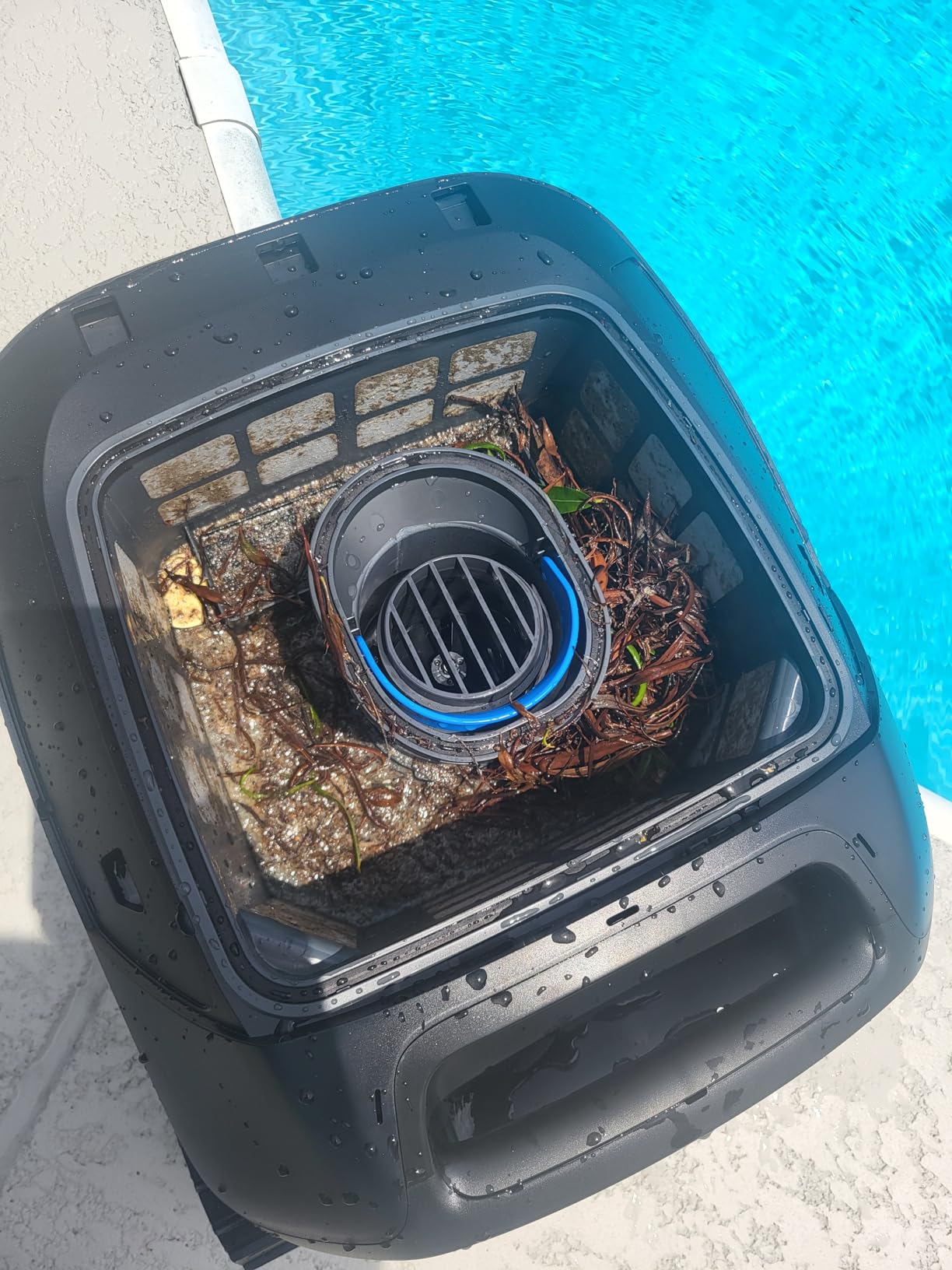
Suction is 6,800 GPH, with a 5L basket rated for up to 650 leaves and up to 300 minutes of runtime across 3,229 sq ft. Three-zone coverage plus shallow-water platform cleaning down to 12 inches catches the deposit that gathers along the shallow ledge, and SonicSense ultrasonic avoidance handles ladders, drains and steps.
The catch on fine dust is the filter. The included element is 150 micron and the 3-micron ultra-fine filter is sold separately, so this machine only matches the leaders on sediment if you buy the extra filter. Do that, and it performs; skip it and it is a volume machine with a good surface.
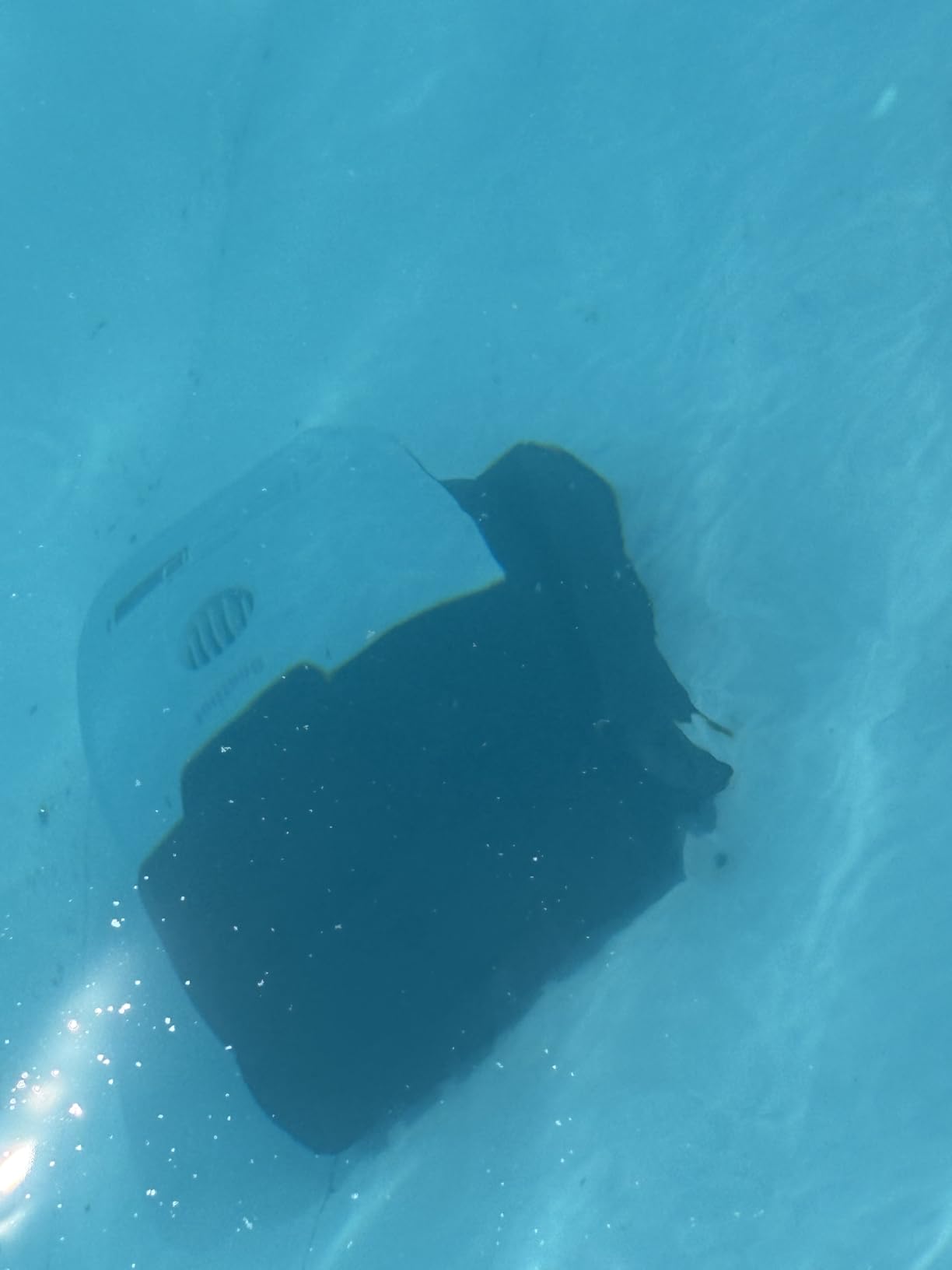
Who the Beatbot Sora 10 suits
It suits saltwater pool owners who want cordless convenience and a rated corrosion resistance rather than an assumption. The 5L basket and 300-minute runtime also suit larger pools where emptying mid-cycle would break the routine.
It suits anyone who wants strong suction and big capacity first, and who is willing to add a finer filter bag later if the dust load turns out to be worse than expected.
Where the Beatbot Sora 10 falls short
The app is the weak link: owners describe it as clunky, with false readings on basket status and no underwater connectivity. It can also miss sections on complex curved pool shapes, and retrieval is unpredictable because it does not always return to its entry point.
Buying the 3-micron filter separately is the biggest fine-debris caveat here. If you do not add it, you are running a 150-micron filter and should not expect the sediment results owners describe.
What Fine Debris Actually Is, and Why Filter Fineness Decides the Result
A pool robot only captures fine debris if its filter media is finer than the particle. Everything else, including suction rate, brush power and navigation, is secondary. That single sentence is the whole buying decision, and it is the reason the picks at the top of this list quote micron ratings while cheaper models do not.
Here is how the main types behave. Sand is heavy and sits on the floor; suction handles it well and any decent basket will collect it. Pollen floats first, then forms a film that a floor pass alone will not reach, so waterline and surface capability start to matter. Construction and road dust is the hardest case, because it is dry, light and gets everywhere, including liner wrinkles. Algae dust behaves like fine sediment and needs media under about 5 microns. Grit is variable, and a wide intake with strong suction beats a fine filter.
Now the counter-intuitive part, which no competitor in this space gets right. The finest filter is not automatically the best filter. A 3-micron element silts shut early, and the moment it does, pump suction drops and the rest of the cycle runs at reduced power. That is exactly the complaint r/pools owners make about leaving a film on the floor after a full cycle. The fix is not a coarser filter, it is a rinse.
The best routine is a two-pass approach. Run a full cycle with the standard filter to clear bulk material and give the fine layer room. Then rinse, swap to the fine layer and run a second, shorter pass targeted at the floor. If you only ever do one of those, do the first one and accept a coarser result.
How to Get Fine Sediment Out of a Pool: 7 Steps That Actually Work
Fine sediment responds poorly to brute force and well to sequence. These are the steps we recommend, in order, for any pool with a recurring dust problem.
Balance before you vacuum. Sediment clings to a hazy, off-balance pool and clings harder still to a scaled one. Get chlorine and pH where they belong first and the debris releases much more readily.
Brush the walls and steps by hand first. Most robots do not climb steps. Algae dust that has bonded to a wall will stay there through ten robot cycles if you let the robot handle it.
Use the finest filter your model supports. If the robot accepts a 3-micron or 10-micron ultra-fine element, use it. A coarse 150 or 180-micron screen will pass most sediment straight back into the water.
Run one full coarse pass first. Give the fine filter a clean starting point by clearing bulk debris with the standard element before switching to fine media.
Rinse the filter mid-cycle. Stop the robot when suction starts to sound different, hose the filter, restart and finish. This single habit resolves most fine-debris complaints we read.
Match runtime to pool size. A robot rated for a larger pool than yours finishes early and burns a charge; one rated too small cannot finish before the battery drops.
Pair with a skimmer for surface film. Floating pollen is a surface problem and no floor robot solves it completely. Many owners run short cycles daily during peak season alongside manual skimming.
Corded versus cordless for fine debris
Cordless robots now offer genuinely fine filter media, so the old argument about corded units being stronger no longer holds for this debris profile. What corded still wins on is basket volume and uninterrupted runtime; what cordless wins on is the absence of a cable wrapped around a freeform pool.
Pick cordless if your pool is freeform, oddly shaped or you simply do not want cable management. Pick corded if you want the largest basket, the cheapest path to fine-mesh filtration, and no charging logistics. For above-ground pools on flat bottoms, our budget above-ground pool cleaner guide covers the shortlist in more depth.
Rinse cadence and running costs
Treat filter media as a consumable. Fine filters should be rinsed after every cycle in dusty conditions, and replacement elements should be budgeted as an annual cost rather than a surprise. The Gosvor guidance of replacing a fine filter every 30 cycles is a reasonable benchmark for planning.
If your pool has an automated circulation or filtration setup already running, it is worth checking how it interacts with the robot before you buy. Our pool automation systems guide covers that interaction, and for saltwater builds the salt chlorine generator roundup is worth reading alongside any saltwater pick here.
Frequently Asked Questions
What is the best pool cleaner for fine dust?
For fine dust the decisive spec is filter media fineness, not suction. A machine with a 3-micron layer, such as the Aiper Scuba S1, catches dust a 150 or 180-micron screen passes straight through. Pair it with a mid-cycle rinse, because ultra-fine media silts shut and drops suction fast.
Do robotic pool cleaners pick up sand?
Yes. Sand is heavy, sits on the floor and is the easiest fine debris for a robot to collect. Most machines here handle ordinary sand well in a single pass. Blow-in desert sand is heavier in volume, so basket capacity and mid-cycle rinsing matter more than micron rating.
What is the best pool vacuum for picking up fine particles?
A corded suction-side vacuum with a fine mesh filter bag is the traditional answer, and owners on r/pools confirm fine mesh is the decisive spec. Among robots, choose fine filter media rather than the largest basket. A 3-micron element will capture sediment that a general-purpose cartridge returns to the water.
What is the best pool vacuum for removing algae dust?
Algae dust settles as a fine film rather than a mat, so it needs filter media finer than about 5 microns to be captured. The Aiper Scuba S1 with its replaceable 3-micron layer is the strongest dedicated option here, and the Gosvor LiteVac G1 matches that rating at a lighter weight.
What is the average lifespan of a robotic pool cleaner?
Owners commonly get three to five seasons from a mainstream corded model, with drive parts, tracks and cable being the usual first failures rather than the pump. Cordless machines add battery degradation as an earlier limit. Rinsing filters after every cycle and storing the robot dry extends service life noticeably.
The Verdict for 2026
If your pool keeps showing a settled film no matter how long the robot runs, buy on filter fineness. The Dolphin Nautilus CC Plus is the safest all-round answer for the best robotic pool cleaners for fine debris, because its top-load basket can be rinsed in ten seconds and a basket that gets rinsed is what keeps any filter working. The Aiper Scuba S1 takes the specialist title on its replaceable 3-micron layer, and the WYBOT C2 pairs 10-micron media with enough suction to keep using it.
Whatever you choose, rinse the filter mid-cycle. That habit does more for fine-debris pickup than any spec on this list, and it costs nothing. Start with our best robotic pool cleaners for fine debris shortlist, work down to the pool shape and size you actually own, and check the current details for your pick.