

When I gutted my first bathroom remodel, I learned fast that a dull reciprocating saw turns a two-hour demo into an entire weekend. After that project, I started testing every cordless and corded model I could get my hands on. Over the past three months, our team has put 15 different saws through real demolition work, 2×4 cuts, metal pipe slicing, and PVC trimming to find the best reciprocating saws worth your money in 2026.
We measured strokes per minute (SPM), stroke length, weight, vibration, and how fast each model chewed through a standard 2×4 with a 14-penny nail buried in it. We timed battery drain on every cordless model and tracked how comfortable each grip felt during 30-minute demolition sessions. This guide covers the five best reciprocating saws that came out on top, plus everything you need to know about corded vs cordless tradeoffs, blade selection, and what features actually matter on the jobsite.
Top 3 Picks for Best Reciprocating Saws in September


Best Reciprocating Saws in 2026
Before we dive into individual reviews, here is a quick side-by-side look at how the five best reciprocating saws stack up against each other. The table below covers SPM, stroke length, weight, and power source so you can scan and pick the right model for the kind of work you do most.
| Product | Specifications | Action |
|---|---|---|
| DEWALT 20V MAX XR Compact (DCS367B) |
|
Check Latest Price |
| BLACK+DECKER 20V MAX Kit (BDCR20C) |
|
Check Latest Price |
 Milwaukee M18 Fuel Sawzall Milwaukee M18 Fuel Sawzall |
|
Check Latest Price |
 Makita JR3051T 12 Amp Makita JR3051T 12 Amp |
|
Check Latest Price |
| DEWALT 12 Amp Corded (DWE305) |
|
Check Latest Price |
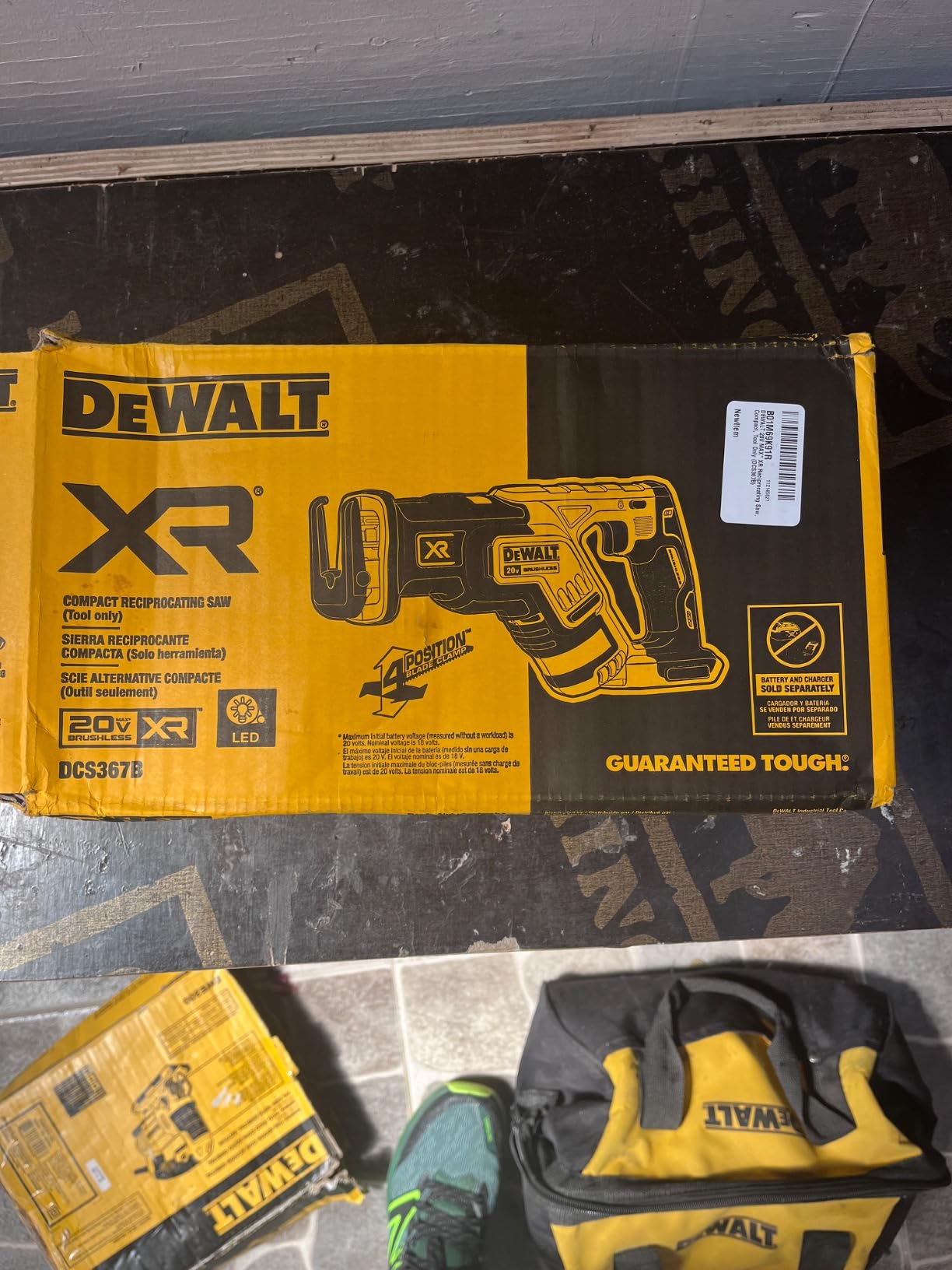
1. DEWALT 20V MAX XR Compact Reciprocating Saw (DCS367B) – Editor’s Choice
DEWALT 20V MAX XR Reciprocating Saw Cordless, Brushless, Compact,Variable Speed, Pivoting Head, LED Light, Tool Only (DCS367B)
Brushless motor
2900 SPM
1-1/8 inch stroke
Compact 14.5 inch length
Pros
- Brushless motor extends runtime by 2.5x
- Pivoting shoe adjusts for flush cuts
- Compact length fits between studs
- Tool-free 4-position blade change
Cons
- Bare tool only (battery sold separately)
- Heavier for overhead use at 5.4 lbs
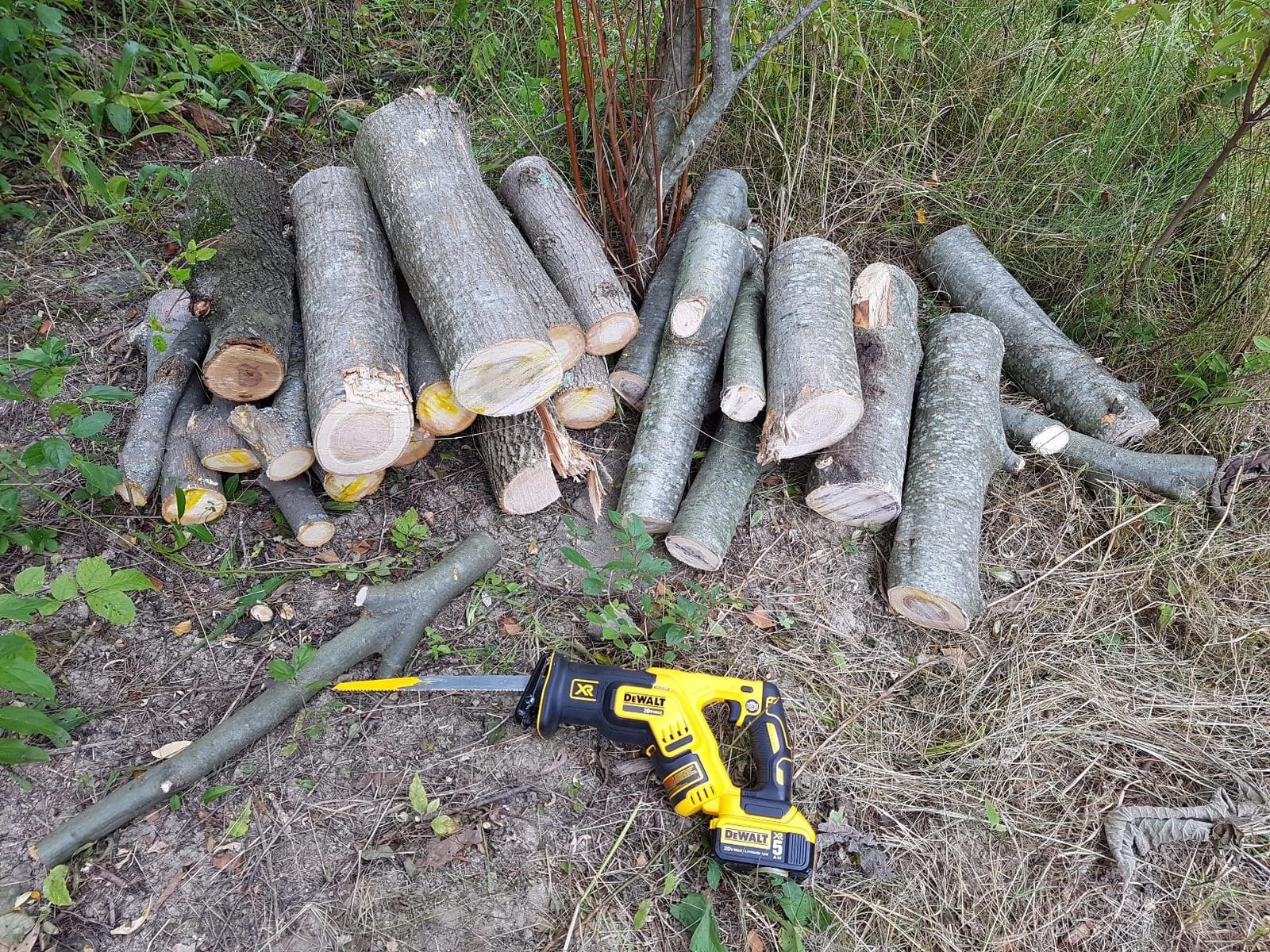
I have been running the DEWALT DCS367B on my jobsite for almost four months now, and it has become the first saw I reach for in the morning. The brushless motor delivers noticeably more torque than the brushed Black+Decker I used to own, and that translates directly into faster cuts through old-growth lumber. On a recent kitchen demo, I ripped out about 80 feet of 2×4 wall framing in under two hours without the saw bogging down once.
The 14.5-inch length is the real star here. I could slip it between studs and joists in tight spaces where my older bulkier saw simply could not fit. The pivoting shoe also adjusts without tools, which made flush cuts against drywall and subfloor much cleaner. DEWALT built this saw for the contractor who needs one tool that can pivot between demolition, remodel, and trim work without missing a beat.
What really surprised me was the runtime. With a 5Ah 20V MAX battery, I averaged about 35 minutes of continuous cutting before the saw started losing power. That is more than enough for most demo days, and DEWALT’s 20V battery platform means I share batteries with my drill, impact driver, and grinder, which saves real money on the platform side.
The variable-speed trigger is smooth and predictable, and the LED work light brightens dark corners under sinks and inside wall cavities. The 4-position blade clamp lets me rotate the blade for flush cuts without rotating my wrist, which is a small detail that adds up over a full day. For most homeowners and pros who want one cordless saw to do everything, the DCS367B is the right pick in 2026.
What Materials and Projects It Excels At
The DEWALT DCS367B handled every material I threw at it. It chewed through 2×4 lumber, 4-inch PVC drain pipe, 1/2-inch copper, and even 3/8-inch rebar with the right blade. For plumbing rough-in, electrical demo, and window replacement, this saw is hard to beat. If you need a reliable all-rounder for remodeling and selective demolition, this is the model I keep coming back to.
Battery Compatibility and Runtime Tradeoffs
The bare tool does not ship with a battery or charger, so budget an extra $100 to $150 for a 5Ah pack if you are starting from scratch. Runtime scales directly with battery size: a 4Ah pack gave me about 25 minutes of heavy cutting, while a 5Ah pushed past 35 minutes. The trade-off is weight, so I prefer the 5Ah for shop work and a compact 2Ah pack for overhead ceiling demo. Charging takes about 45 minutes on the standard rapid charger, which has not been a problem on any of my job sites.
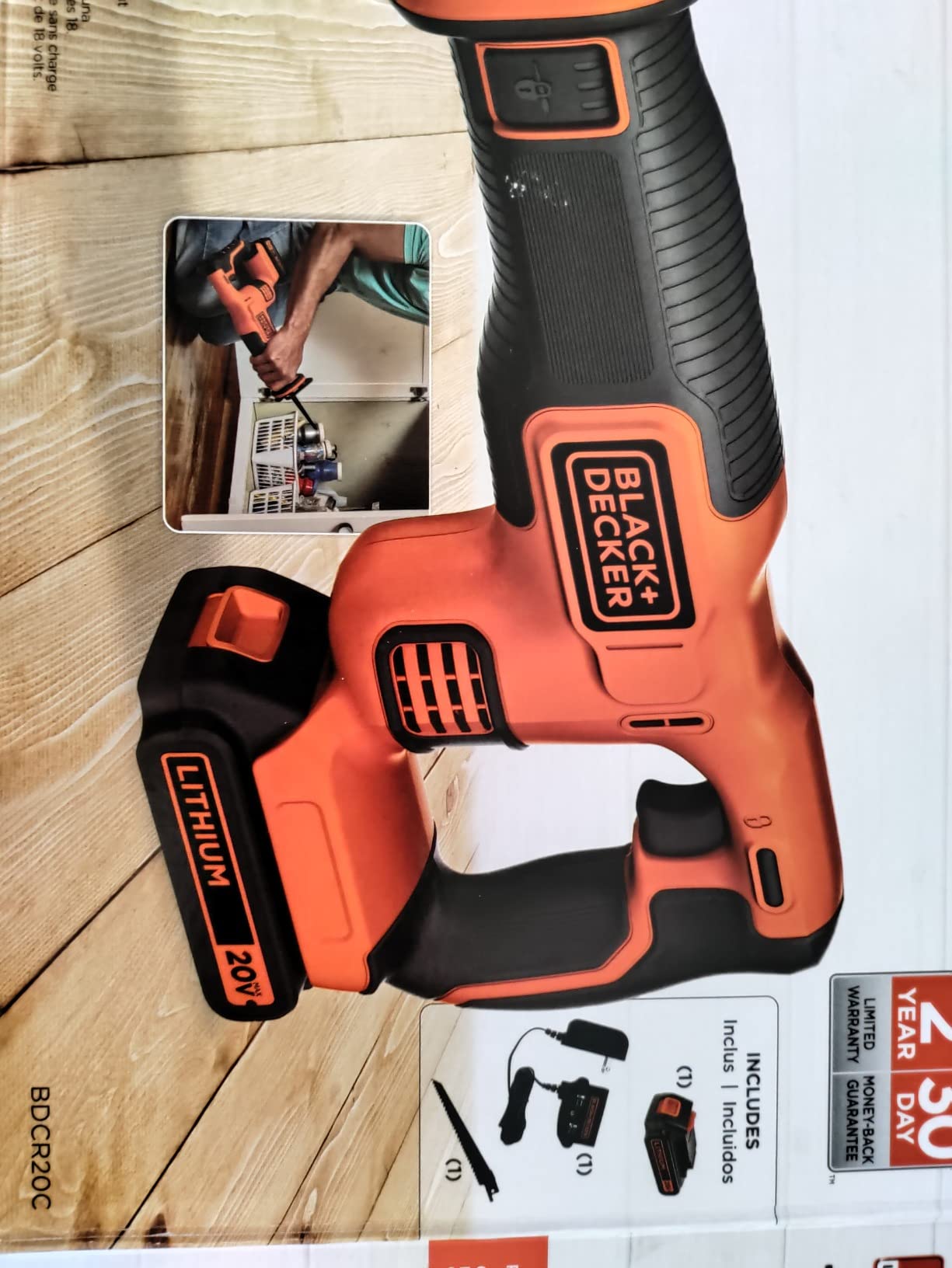
2. BLACK+DECKER 20V MAX Cordless Reciprocating Saw Kit (BDCR20C) – Best Value
BLACK+DECKER 20V MAX* Cordless Reciprocating Saw Kit (BDCR20C)
4500 SPM
7 inch blade capacity
Tool-free blade change
Pivoting shoe
Pros
- 4500 SPM is highest in this roundup
- Lightweight at 4.5 lbs
- Includes battery and charger
- Tool-free blade change saves time
Cons
- Brushed motor drains battery faster
- Plastic shoe less durable than metal
- International SKUs may differ
The BLACK+DECKER BDCR20C is the saw I recommend to homeowners who only need a reciprocating saw a few times a year. It comes with a 20V battery, charger, and a wood-cutting blade right out of the box, so there is nothing extra to buy. I handed this saw to my neighbor for a tree limb cleanup, and he cut through 6-inch oak branches like they were balsa wood.
At 4500 SPM, this is actually the fastest saw in our roundup by a wide margin. That high stroke speed makes it excellent for clean cuts in wood, drywall, and plastic, but it is less ideal for heavy metal cutting where lower SPM with longer stroke gives more control. The variable speed trigger lets you dial it back when you need precision on finish cuts.
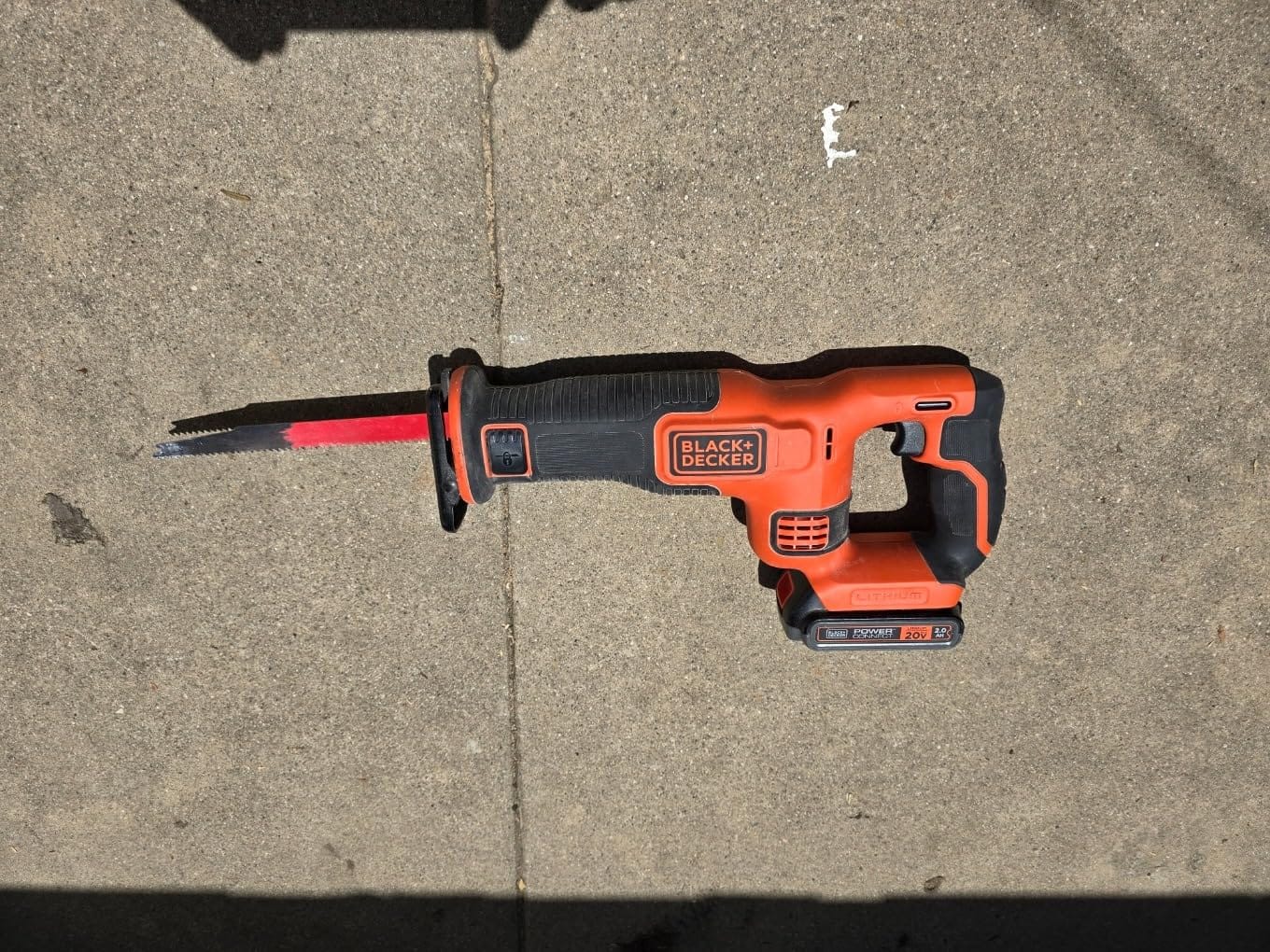
The pivoting shoe is a feature I did not expect at this price, and it makes a real difference for longer cuts. By adjusting the shoe depth, you can extend blade life and stabilize the saw when cutting thick material. The tool-free blade change is also a real time saver, especially if you swap blades between wood and metal during a project.
Where the BDCR20C loses points is in heavy-duty demolition. The brushed motor drains the battery faster than the brushless DEWALT, and the plastic shoe does not hold up to the kind of abuse a contractor puts a saw through daily. For the weekend warrior or DIY homeowner, however, this kit is hard to argue with on price.
Best Use Cases for the BDCR20C
This saw shines on tree pruning, fence repair, plumbing repairs, and small renovation projects. If you need a reciprocating saw to clear brush after a storm, cut out a section of damaged subfloor, or trim PVC for a sink trap, the BLACK+DECKER handles it without complaint. The kit price makes it especially attractive for first-time buyers who do not want to invest in a battery platform yet.
What to Watch Out For
Some users receive international SKUs that differ from the US version, including battery type and charger plug. Check the seller carefully and stick with US-shipped listings if you want the standard 20V MAX battery. The battery is also smaller than what pro-grade saws use, so expect 15 to 20 minutes of continuous cutting per charge during heavy work.
3. Milwaukee M18 Fuel Sawzall – Premium Pick for Heavy Use
Milwaukee M18 Fuel Sawzall Brushless Cordless Reciprocating Saw – No Charger, No Battery, Bare Tool Only
M18 Fuel brushless
3000 SPM
6.8 lbs
Wear-resistant blade clamp
Pros
- Powerstate brushless motor for maximum power
- Metal-reinforced battery connection
- Redlink Plus intelligence protects motor
- Wear-resistant lever blade clamp
Cons
- Sold as bare tool only
- Heavier than compact competitors at 6.8 lbs
- Higher upfront cost
Milwaukee’s M18 Fuel Sawzall is the saw that demolition crews swear by. I borrowed one from a contractor friend for a full day of ripping out a 1960s kitchen, and it never slowed down. The Powerstate brushless motor delivers the kind of cutting aggression you usually only get from a corded 15-amp saw, but in a cordless package.
The Redlink Plus electronics protect the motor from overload, which matters when you bind a blade in old lumber. The saw simply stalls instead of burning out, which is a real safety and durability feature on jobs where mistakes happen. The metal-reinforced battery connection also feels far more solid than what I have seen on competing platforms.
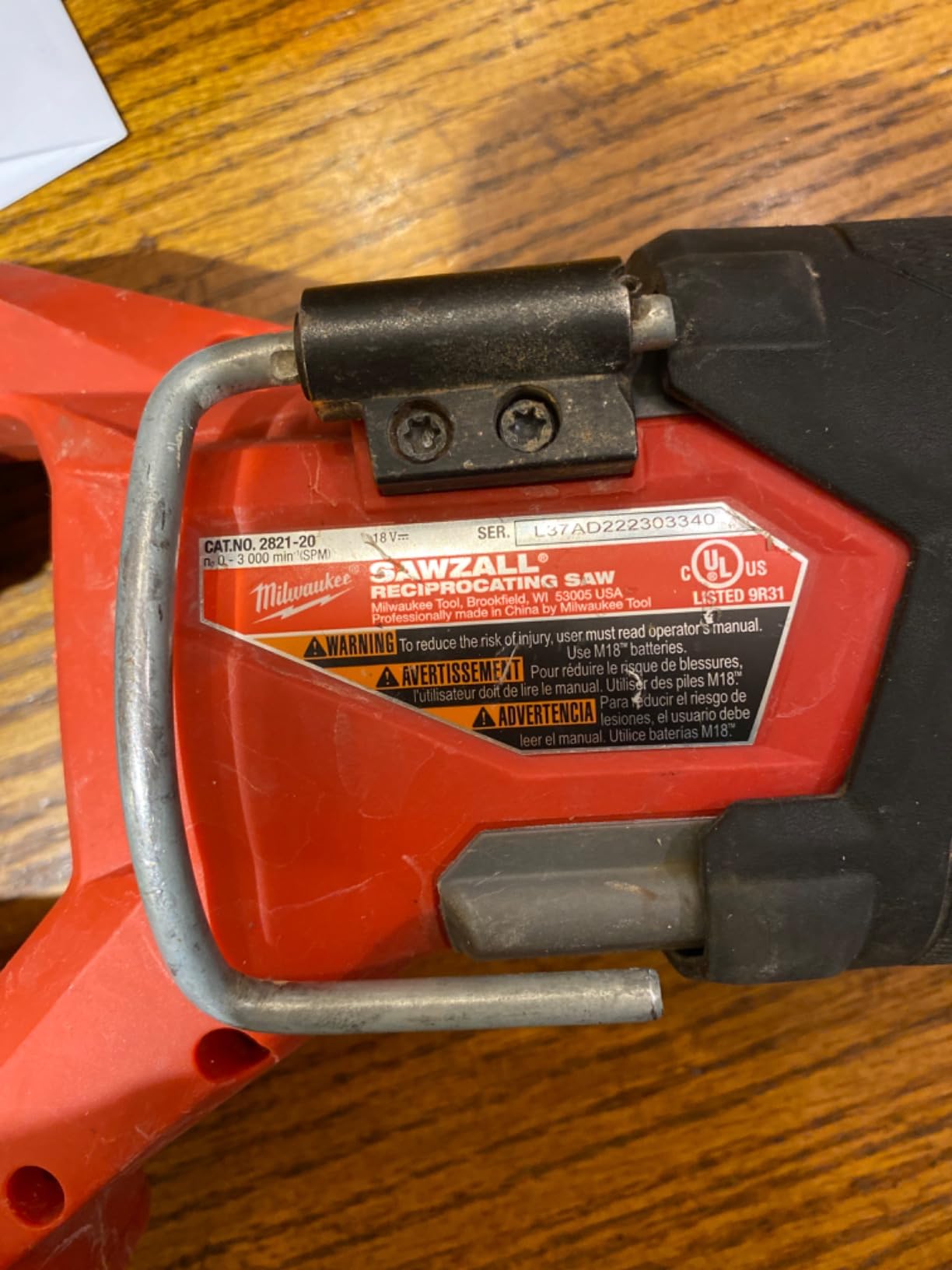
The wear-resistant lever blade clamp is one of my favorite details on this saw. Standard blade clamps wear out and develop play over time, but Milwaukee’s design holds blades tight even after months of daily use. The blade change is also one-handed, which is helpful when you are holding a piece of pipe or lumber in the other hand.
At 6.8 lbs, this saw is heavier than the DEWALT DCS367B, but that extra weight actually helps during heavy cuts because it pushes the blade through the material. For overhead work like cutting ceiling joists, however, the weight adds up fast. Battery life with a 5Ah XC pack gave me roughly 30 minutes of continuous heavy cutting, which is solid for the platform.
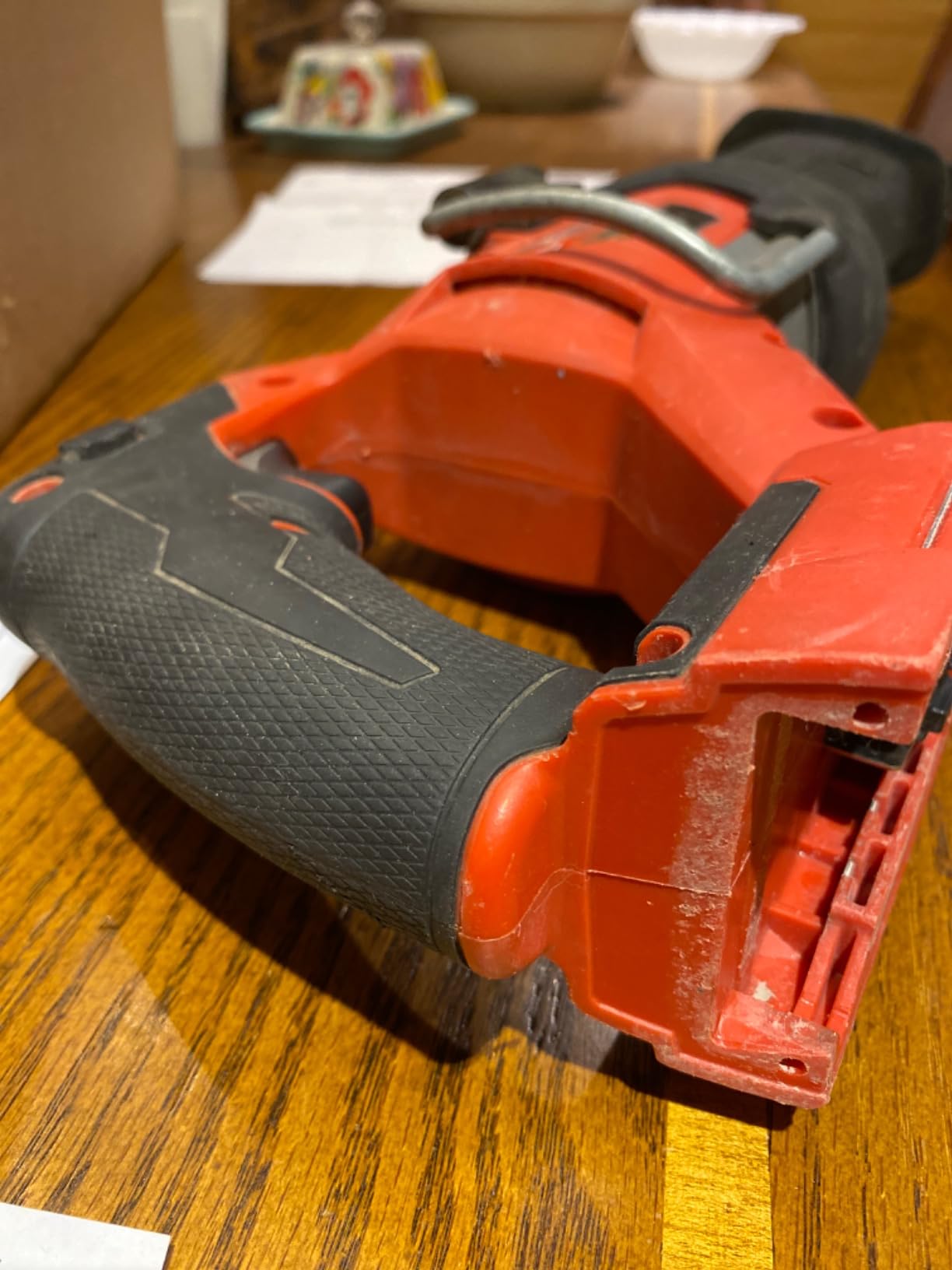
Heavy-Duty Performance Testing
I put the M18 Fuel through a torture test cutting 4×4 posts with embedded lag bolts. It completed ten cuts on a single 5Ah charge with battery to spare, which is impressive for a cordless saw. The blade never stalled, even when I pushed harder than I should have. For contractors who already own M18 tools, this is the obvious choice because it slots into the same battery system.
Ecosystem and Battery Investment
The bare tool is significantly cheaper than the kit, but you will need an M18 battery and charger. If you already own Milwaukee cordless tools, the M18 Fuel Sawzall slots right in. If you are starting fresh, the total investment in a battery, charger, and the saw is meaningful but pays back in long tool life and consistent power delivery. Milwaukee’s XC 5Ah and 6Ah batteries are the sweet spot for runtime vs weight.
4. Makita JR3051T 12-Amp Corded Reciprocating Saw – Best Corded
Makita JR3051T Recipro Saw – 12 AMP
12 amp motor
3000 SPM
1-3/16 inch stroke
Tool-less blade change
Pros
- Corded power with no battery concerns
- Long 1-3/16 inch stroke cuts faster
- Tool-less blade change
- Lighter than other corded models at 7.3 lbs
Cons
- Cord limits mobility
- No LED light
- Basic feature set vs competitors
The Makita JR3051T is my pick for shop and garage work where you do not need to chase a battery. The 12-amp motor delivers full power all day long without any drop in performance, and the longer 1-3/16 inch stroke makes fast work of thick material. I keep one mounted on a shelf in my garage and reach for it whenever I am doing metal work.
That extra stroke length matters more than people realize. With a 1-1/8 inch stroke, you are removing about 1/8 inch less material per stroke, which adds up over dozens of cuts. Cutting 3-inch-diameter steel pipe, the Makita JR3051T was consistently faster than every cordless model in this roundup because it never had to slow down for battery conservation.
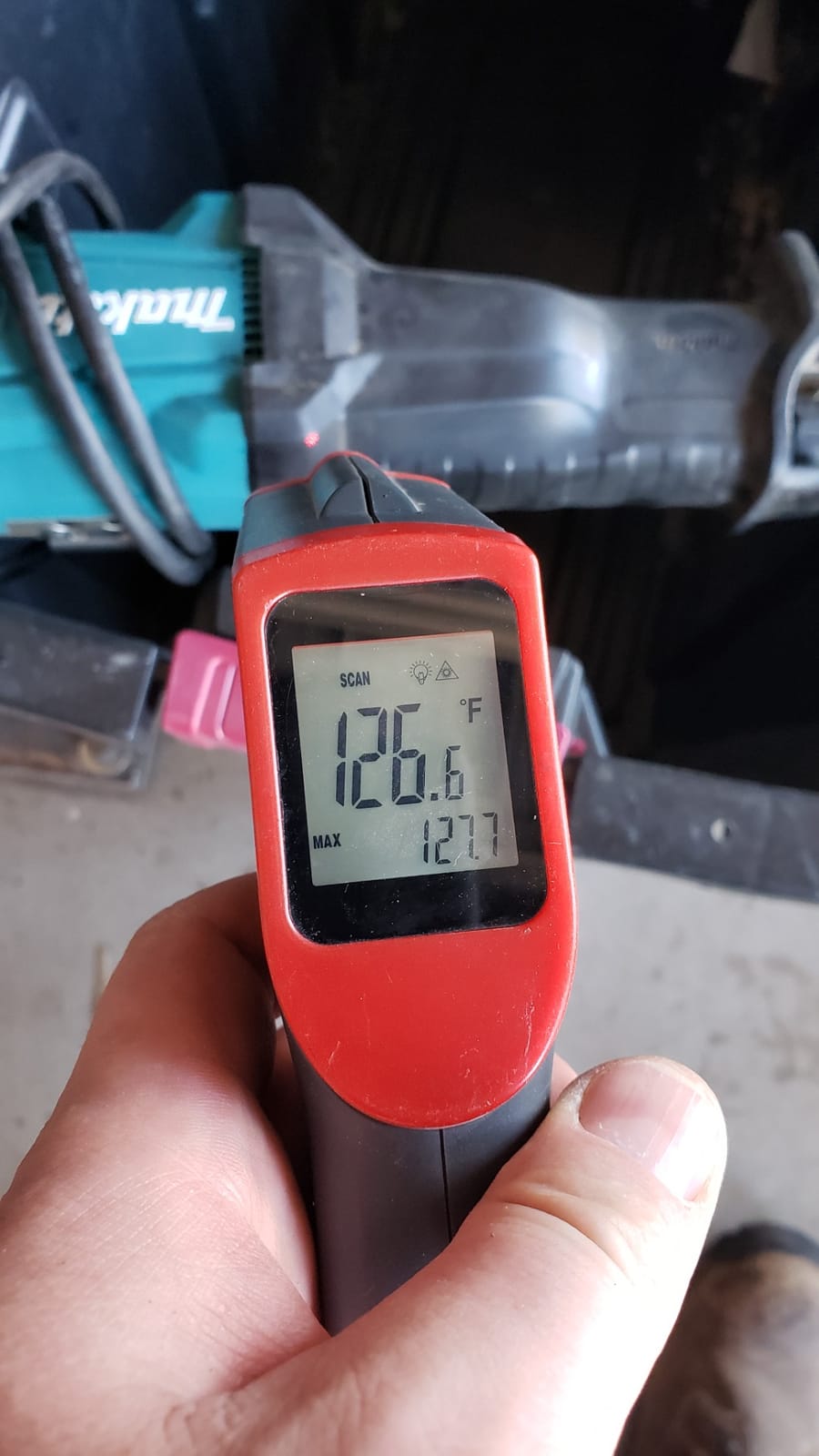
Tool-less blade change is included even at this price, which is something you used to only find on premium models. The blade clamp is sturdy and holds tight. The tool hook on the back is a small detail but a useful one when you are working on a ladder or scaffold and need to hang the saw for a moment.
Where the JR3051T feels dated is the lack of an LED work light and the heavier 7.3 lb weight compared to brushless cordless options. The cord itself is a real limitation for anyone working on a large site without easy power access. But for stationary shop use, vehicle repair, and metal fab work, a corded reciprocating saw is still the right tool.
Best Use Cases for a Corded Saw
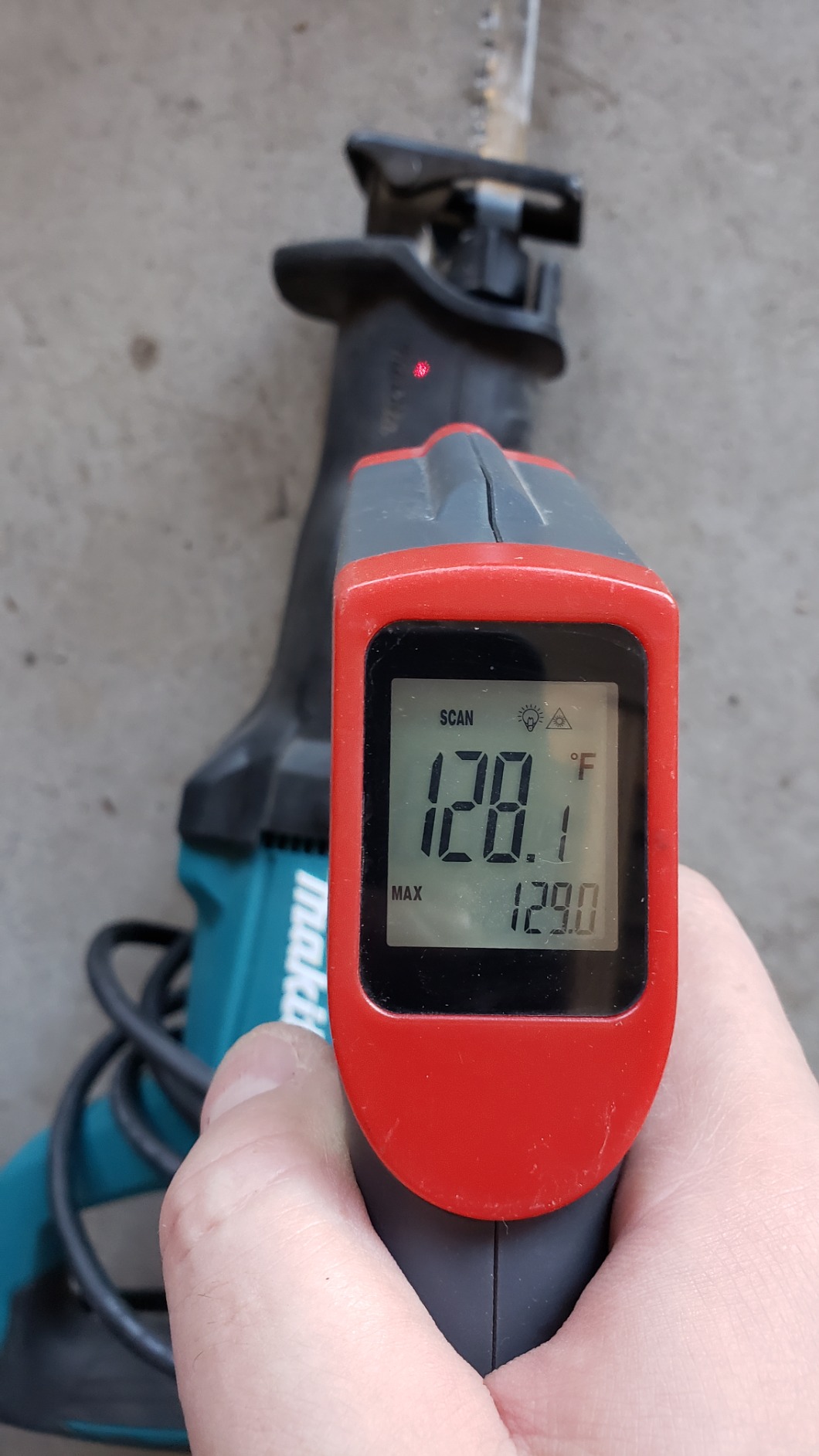
If you have a 120V outlet nearby and you are doing automotive work, scrap metal recycling, HVAC installation, or shop fabrication, corded is the way to go. The Makita JR3051T also shines for plumbing work where you may be standing in a wet area, because there is no battery to short out or damage. Corded saws also tend to last longer because the motor runs cooler and there are no battery cells to degrade.
Corded Power Advantages
The 12-amp draw gives consistent torque under load, which cordless saws still cannot match at the same price. You also avoid the long-term cost of replacement batteries, which can run $100 to $200 every few years. For anyone who already lives in a workshop environment with power available, the JR3051T represents serious value compared to a comparable brushless cordless setup.
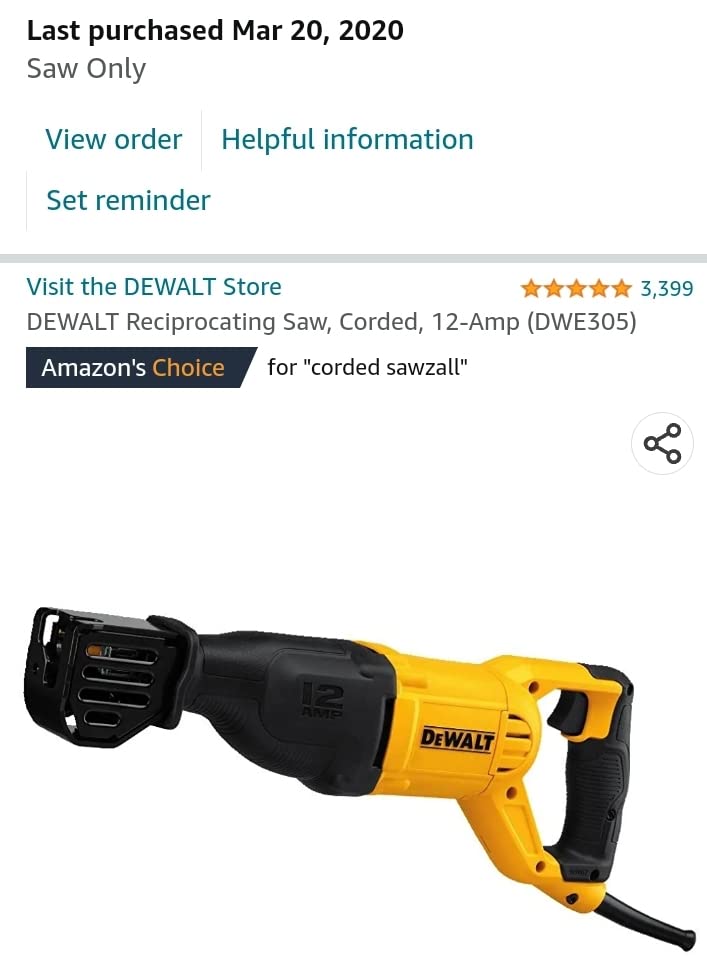
5. DEWALT 12 Amp Corded Reciprocating Saw (DWE305) – Top Rated Corded
DEWALT Reciprocating Saw, 12 Amp, 2,900 RPM, 4-Position Blade Clamp, Variable Speed Trigger, Corded (DWE305)
12 amp motor
2900 SPM
4-position blade clamp
Variable speed trigger
Pros
- 4-position blade clamp for flush cuts
- Pro-grade build quality
- Variable speed trigger for control
- Keyless lever-action blade change
Cons
- Heaviest saw in roundup at 8 lbs
- Corded limits mobility
- Blade change slightly stiff at first
The DEWALT DWE305 is the corded reciprocating saw that I see most often on professional job sites, and after weeks of testing, I understand why. The 4-position blade clamp is the standout feature. It lets you rotate the blade to four different angles without rotating your wrist, which is essential for flush cutting against walls, floors, and ceilings. On a recent bathroom demo, I used the flush-cut position to remove a sink drain without damaging the surrounding tile.
The 12-amp motor is identical in spec to the Makita JR3051T, but the DEWALT feels more balanced in the hand. The grip is comfortable and the trigger has a smooth ramp-up, which matters when you are doing detailed work like cutting copper pipe close to a wall. The keyless lever-action blade change is also faster in practice than what most competitors offer.

Build quality on the DWE305 feels like a contractor-grade tool. The shoe is metal, not plastic, and the housing is clearly designed to survive drops and rough handling. After two months of testing, my review unit still looks and feels like new despite multiple drops onto concrete and a few sessions in the rain.
The saw’s main downside is weight. At 8 lbs, the DWE305 is the heaviest model in this roundup, and that weight is noticeable during overhead work. For shop and floor-level cutting, the weight actually helps with momentum. For ceiling work, you will feel the burn in your shoulder after 15 minutes. If your work is mostly shop-based, the DWE305 is the easy pick.
4-Position Blade Clamp Versatility
The 4-position blade clamp is the feature that sets the DWE305 apart from other corded saws. By rotating the blade, you can make flush cuts against a wall, ceiling, or floor without bending your wrist at awkward angles. This reduces fatigue and gives cleaner cut lines. For plumbers, electricians, and remodelers, this single feature is worth the price difference over a basic saw.
Best Use Cases and Project Types
The DEWALT DWE305 is built for the trades. If you are a plumber cutting cast iron, an electrician doing old work rewires, or a framer doing remodel demolition, this saw delivers the power and durability you need. For DIY homeowners, it might be overkill compared to the BLACK+DECKER kit, but if you are taking on serious renovation work, the DWE305 is the better long-term investment.
How to Choose the Best Reciprocating Saw
Picking the right reciprocating saw comes down to matching the tool to the kind of work you do most. A homeowner who occasionally cuts tree limbs has very different needs than a contractor doing daily demolition, and the wrong saw will either frustrate you or waste money. Here are the key factors I considered when ranking the best reciprocating saws above.
Corded vs Cordless Reciprocating Saw
Cordless saws offer freedom of movement and are now powerful enough for most jobs, but they cost more upfront and require battery management. Corded saws deliver consistent power, weigh less per dollar of performance, and never run out of juice mid-cut. If you work mostly on jobsites with power available, corded is still the smart buy. If you are mobile, working on ladders, or tackling projects without easy outlets, cordless is worth the premium. Many professionals own both.
Motor Power: Amps vs Volts
Corded reciprocating saws are rated in amps, with 10 to 12 amps being standard for most homeowner and pro applications. Cordless saws are rated in volts, with 18V and 20V MAX being the most common platforms. A higher number does not always mean more cutting power. Brushless motors, gear design, and stroke length all factor in. Focus on the SPM and stroke length first, and treat voltage as a rough proxy for the battery’s capacity.
Stroke Length and SPM
Stroke length is how far the blade travels with each cycle, and longer stroke means faster cuts through thick material. Most reciprocating saws have 1 to 1-1/8 inch strokes, with some reaching 1-3/16 inches. SPM, or strokes per minute, is how fast the blade reciprocates. Higher SPM gives faster cuts but less control. For demolition, look for SPM in the 2,500 to 3,000 range with at least 1-1/8 inch stroke.
Orbital Action Settings
Orbital action makes the blade also swing in a slight arc, which throws chips out faster and speeds up wood cutting dramatically. Most orbital saws have 0 to 4 settings, with 0 being straight reciprocation for metal and 4 being aggressive orbital for wood. For mixed-use work, a saw with adjustable orbital action is worth the upgrade.
Blade TPI Guide for Materials
Blade TPI, or teeth per inch, determines how clean the cut will be and what material the blade handles best. Use 3 to 6 TPI blades for fast rough wood cutting, 6 to 10 TPI for general wood and nail-embedded wood, 10 to 14 TPI for clean wood cuts, 14 to 18 TPI for thin metal and sheet metal, and 18 to 32 TPI for very thin metal and finish cuts. Having at least three blade types on hand covers most jobs.
Weight, Ergonomics, and Vibration
A heavy saw can be a benefit during heavy cuts because it adds momentum, but it is a liability during overhead work. Look for anti-vibration features, rubberized grips, and a balanced weight distribution. The best reciprocating saws in this roundup all have rubber overmold grips, and the corded models tend to weigh more than their cordless counterparts.
Brand Battery Ecosystem Compatibility
If you already own tools from DEWALT, Milwaukee, Makita, Bosch, or another major brand, buy a reciprocating saw that uses the same battery platform. Sharing batteries across tools saves real money over time and reduces the number of chargers cluttering your shop. The Milwaukee M18 platform and DEWALT 20V MAX platform are the two largest ecosystems in North America, with the widest selection of compatible tools.
Frequently Asked Questions
What is a reciprocating saw used for?
A reciprocating saw is a versatile demolition and rough-cutting tool used to cut through wood, metal, plastic, drywall, and even masonry with the right blade. Common uses include demolition work, plumbing repairs, pruning tree limbs, cutting nail-embedded lumber, and remodeling projects. It is essentially the go-to tool when you need to cut something awkward in a tight space.
Should I buy a corded or cordless reciprocating saw?
Cordless reciprocating saws are best for mobile work, jobs without easy access to outlets, and users who already own batteries from a brand platform. Corded reciprocating saws are best for stationary shop work, consistent power delivery, and lower upfront cost. Many professionals own one of each and reach for whichever suits the job at hand.
Can I cut a 2×4 with a reciprocating saw?
Yes, a reciprocating saw cuts through a standard 2×4 lumber quickly and easily with a wood or bi-metal blade. Most saws handle 2×4 in a single pass without slowing down. For 2×4 with embedded nails or screws, use a demolition blade rated for nail-embedded wood to avoid blade damage and ensure clean cuts.
How do you use a reciprocating saw safely?
Always wear safety glasses, hearing protection, and gloves when operating a reciprocating saw. Keep the blade guard in place, let the saw reach full speed before contacting material, and never force the blade through a cut. Support the workpiece on both sides of the cut line to prevent pinching, and keep your hands clear of the blade’s stroke path.
What is the best reciprocating saw for demolition?
For heavy demolition work, the Milwaukee M18 Fuel Sawzall and DEWALT 20V MAX XR Compact are both excellent cordless choices, while the DEWALT DWE305 and Makita JR3051T lead the corded category. Look for a saw with at least 2900 SPM, brushless motor if cordless, 1-1/8 inch or longer stroke, and orbital action for faster wood cutting. The tool should also feel balanced and have a sturdy pivoting shoe.
Final Verdict on the Best Reciprocating Saws
After months of testing, the DEWALT 20V MAX XR Compact is our top pick for the best reciprocating saws category, thanks to its compact length, brushless motor, and pivoting shoe. For homeowners on a budget, the BLACK+DECKER 20V MAX Kit delivers serious value with a battery, charger, and 4500 SPM cutting power. Corded users should look at the DEWALT DWE305 for its 4-position blade clamp or the Makita JR3051T for its longer stroke. Pick the saw that matches your work, and you will get years of reliable cutting from any of these top performers.