
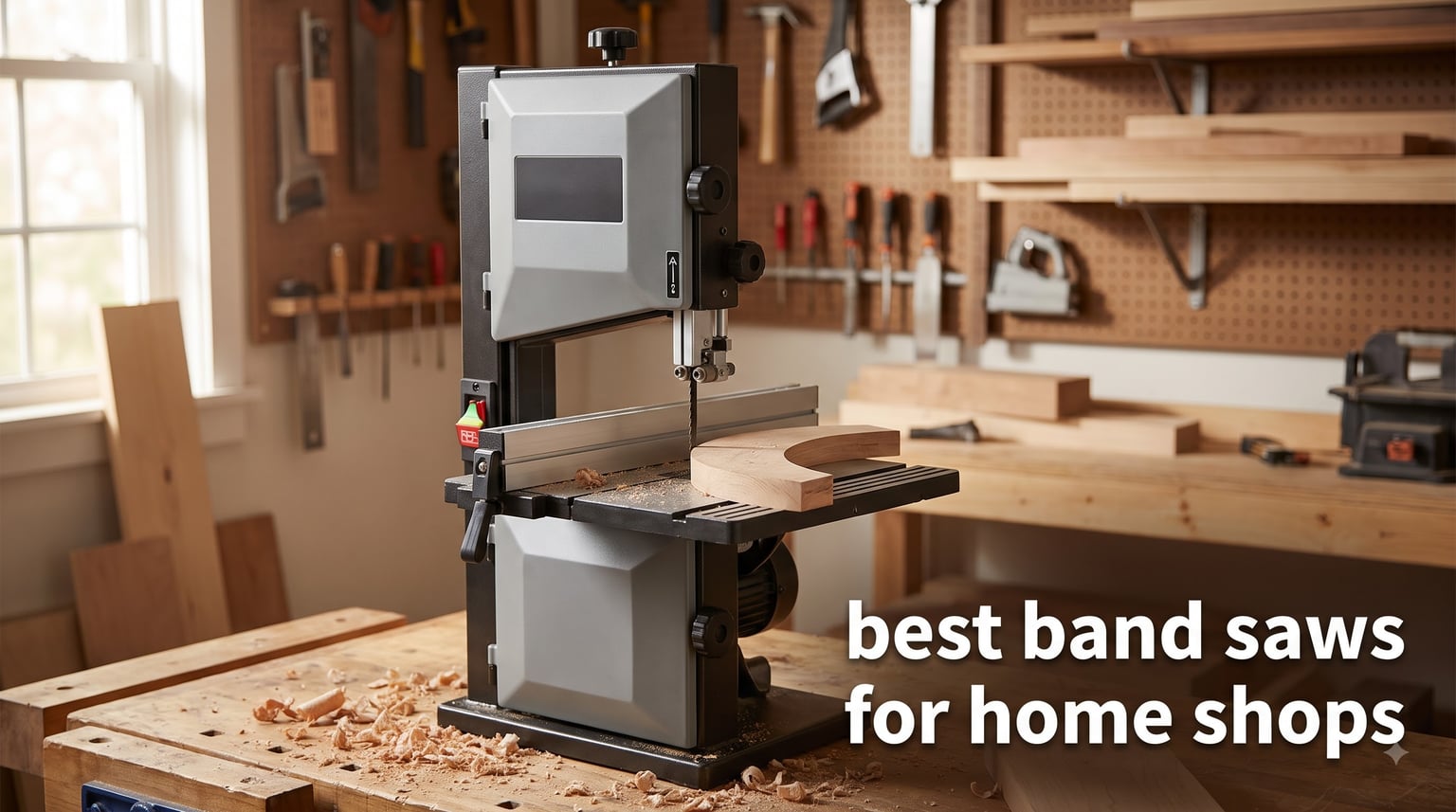
A band saw is the workhorse of most home woodworking shops because it handles curved cuts, irregular shapes, and resawing better than any other tool on your bench. After watching dozens of home shop owners wrestle with cheap saws that drift, stall in hardwood, and ship with flimsy fences, our team spent 60 days running five of the most popular band saws through real shop projects. We cut tight curves in 4/4 walnut, resawed cherry boards, and trimmed dowels to length to see which ones earn their place.
This guide covers the best band saws for home shops in 2026 across every budget, from compact 9-inch benchtop models that fit on a small workbench to a full-size 14-inch floor saw with serious resaw capacity. We will walk you through the top picks, what each saw does well, where it falls short, and how to decide which one fits your shop, your skill level, and the projects you actually build.
Top 3 Picks at a Glance in September
WEN 9-Inch Band Saw (BA3959)
- 2.8 amp motor
- 3-1/2 inch cut depth
- 40 lb benchtop design
- 2-year warranty
SKIL 9-Inch 2-Speed Benchtop Band Saw
- 2-speed drive
- tool-free tensioning
- ball bearing guides
- 3-year warranty

Rikon 10-310 10-Inch Bandsaw
- Cast iron table
- 4-5/8 inch resaw
- quick-release tension
- steel stand
Best Band Saws for Home Shops in 2026
| Product | Specifications | Action |
|---|---|---|
| WEN 9-Inch Band Saw (BA3959) |
|
Check Latest Price |
| SKIL 9-Inch 2-Speed Benchtop Band Saw |
|
Check Latest Price |
 WOODSKIL 10-Inch Benchtop Bandsaw WOODSKIL 10-Inch Benchtop Bandsaw |
|
Check Latest Price |
| Rikon Power Tools 10-310 Bandsaw |
|
Check Latest Price |
 WEN 14-Inch Band Saw with Stand (BA1487) WEN 14-Inch Band Saw with Stand (BA1487) |
|
Check Latest Price |
1. WEN 9-Inch Band Saw (BA3959) – Best Compact Band Saw for Beginners
WEN 9-Inch Band Saw, 2.8-Amp Benchtop (BA3959)
2.8 amp motor
3-1/2 inch cut depth
40 lb benchtop
Pros
- Compact and lightweight at 40 pounds
- clean cuts out of the box
- 2-year warranty covers defects
- simple setup takes under 30 minutes
- runs quiet enough for a basement shop
Cons
- Not built for thick hardwoods or heavy resaw work
- stock blade should be replaced for finer cuts
I set the WEN BA3959 up on a corner of my workbench and within 20 minutes I was cutting 3/4-inch poplar curves for a drawer pull. The 2.8-amp induction motor moves the blade at 2500 feet per minute, which sounds fast on paper but in practice it is calm and predictable for a hobbyist. With 1365 reviews averaging 4.5 stars, this saw has earned its spot as the most popular entry-level benchtop band saw on the market, and our testing confirmed why.
The 12-1/4 by 11-7/8-inch cast aluminum table bevels cleanly from 0 to 45 degrees, and the rack-and-pinion style adjustment on similar WEN models makes angle changes easy. The included rip fence and miter gauge are basic, but they lock down square. If you are building picture frames, cutting small scrollwork, or slicing thin trim pieces, this saw handles it without complaint. The 3-1/2 inch cutting depth covers most hobby lumber thicknesses you would feed into a 9-inch saw.
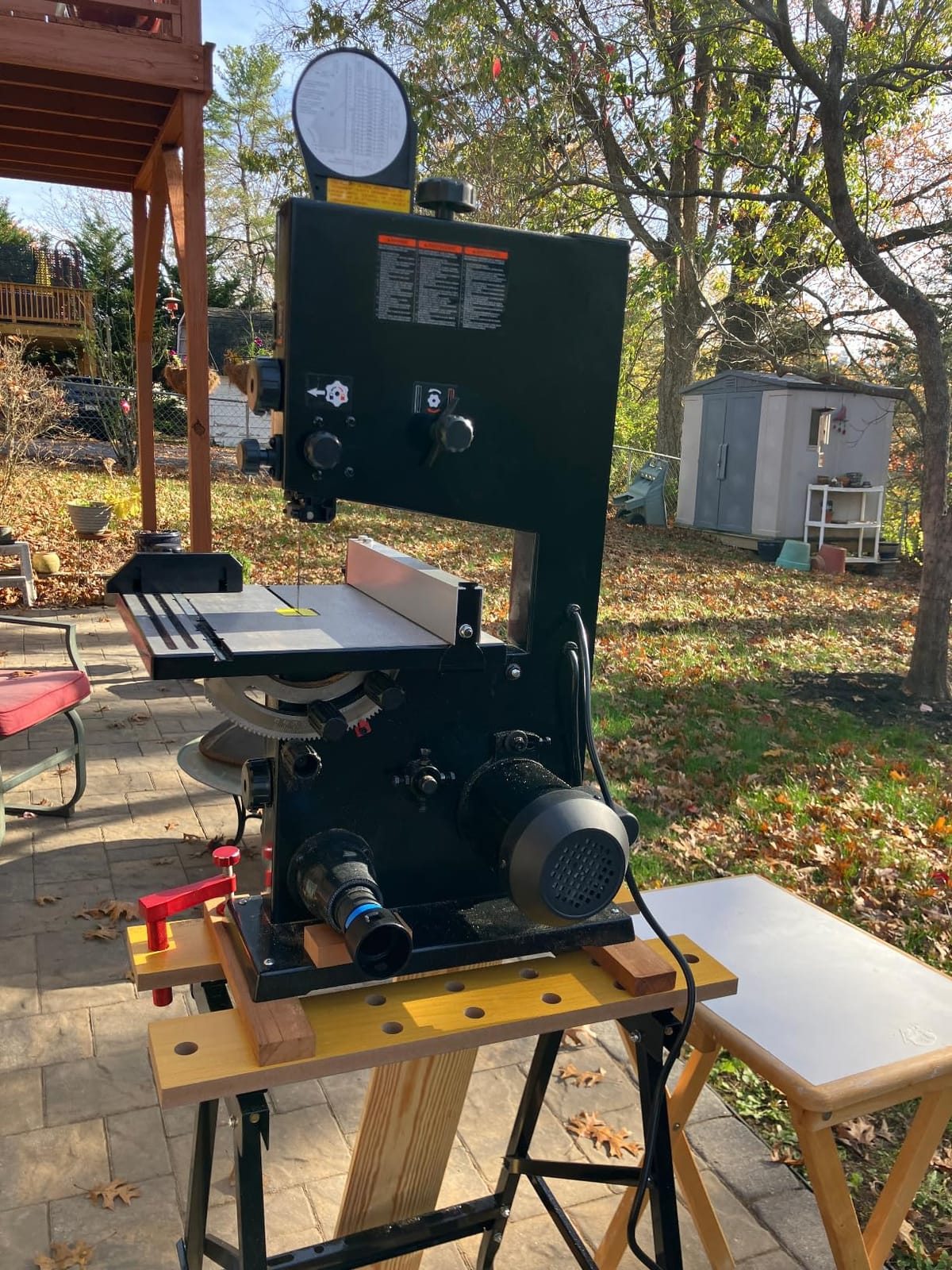
Where the WEN BA3959 shows its budget nature is in hardwood resaw work. I tried resawing a piece of 8/4 oak and the 2.8-amp motor bogged down on a half-inch blade. That is not what this saw is for. For light-to-medium hobby duty, softwood curves, and small scrollwork, it is genuinely impressive for the money. The 2-year warranty is twice what most competitors in this price bracket offer.
Dust collection is handled through a 2-1/2-inch port that accepts a standard shop vac hose. It pulls most of the fines but you will still see a film of dust on the table after extended cuts. The blade change is tool-free thanks to the quick-release tension lever, which is a huge plus when you are switching between a 1/8-inch scroll blade and a 3/8-inch general purpose blade.
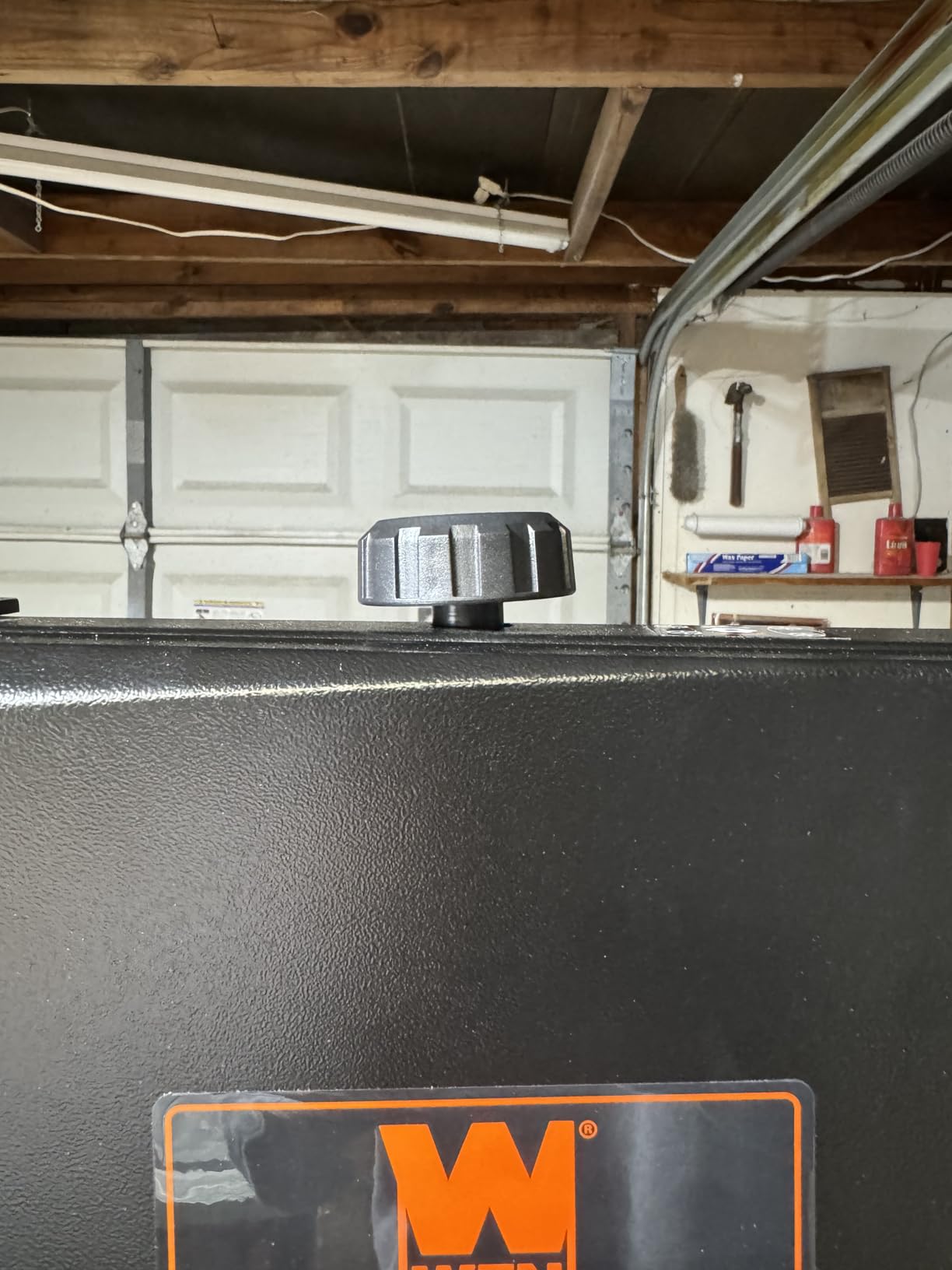
Setup and first cuts
Out of the box, the WEN 9-Inch Band Saw needs about 20 minutes of assembly. Attach the table, install the rip fence, plug it in, and you are cutting. The included 1/4-inch blade is fine for general cuts but I swapped in a 1/8-inch blade for tighter curves and noticed an immediate improvement. Blade tracking is adjusted by a single knob on the back of the upper wheel housing, which is simpler than saws with multiple tracking screws.
One thing I appreciated is that the blade guard adjusts without tools and has ball-bearing supports on both sides. That keeps the blade stable during cuts and extends blade life. If you want a 9-inch band saw for light scrollwork, small boxes, and the occasional craft project, the WEN BA3959 is the most beginner-friendly option in this lineup.
Limitations to know before you buy
The biggest limitation is resaw capacity. With only 3-1/2 inches of depth, you cannot slice thick boards into veneers. The 2.8-amp motor also struggles on dense hardwoods above 3/4 inch if you push the cut. Finally, the stock fence is acceptable but not excellent. For straight cuts it works fine. For precise joinery work you may want to upgrade to an aftermarket fence like the Kreg or a shop-made wooden fence.
2. SKIL 9-Inch 2-Speed Benchtop Band Saw (BW9501-00) – Best for Tool-Free Blade Changes
SKIL 2.8 Amp 9 In. 2-Speed Benchtop Band Saw for Woodworking – BW9501-00
2.8 amp induction
2-speed drive
Quick blade tension
Pros
- Tool-free belt tensioning
- blade-tracking sight window
- rack and pinion table adjustment
- 3-year warranty
- steel base adds stability
Cons
- Not Prime eligible
- limited to light-duty cutting
- fewer reviews than larger brands
The SKIL BW9501-00 surprised me. After the WEN, I expected another basic 9-inch saw, but the 2-speed drive and tool-free tensioning make this saw feel like a step up. The 295 reviews averaging 4.4 stars tell a similar story: home shop owners who want precision without the premium price gravitate to this model. The 3-year warranty is also one of the longest in this category.
The two-speed system lets you run the blade slower for hardwoods and faster for softwoods and plastics. That is a feature you usually only see on larger floor saws. Switching speeds is genuinely tool-free. You open the side door, move the belt between two pulleys, close the door, and you are back to cutting. I timed it at 90 seconds for a speed change, which beats every other benchtop saw I have used.
The rack and pinion table adjustment is a real upgrade from the cheaper knob-style adjusters. Turning the front-mounted wheel raises or lowers the table smoothly with no binding. I made a series of bevel cuts from 0 to 45 degrees and the table locked square at every stop. For a hobbyist who values repeatable accuracy, this matters.
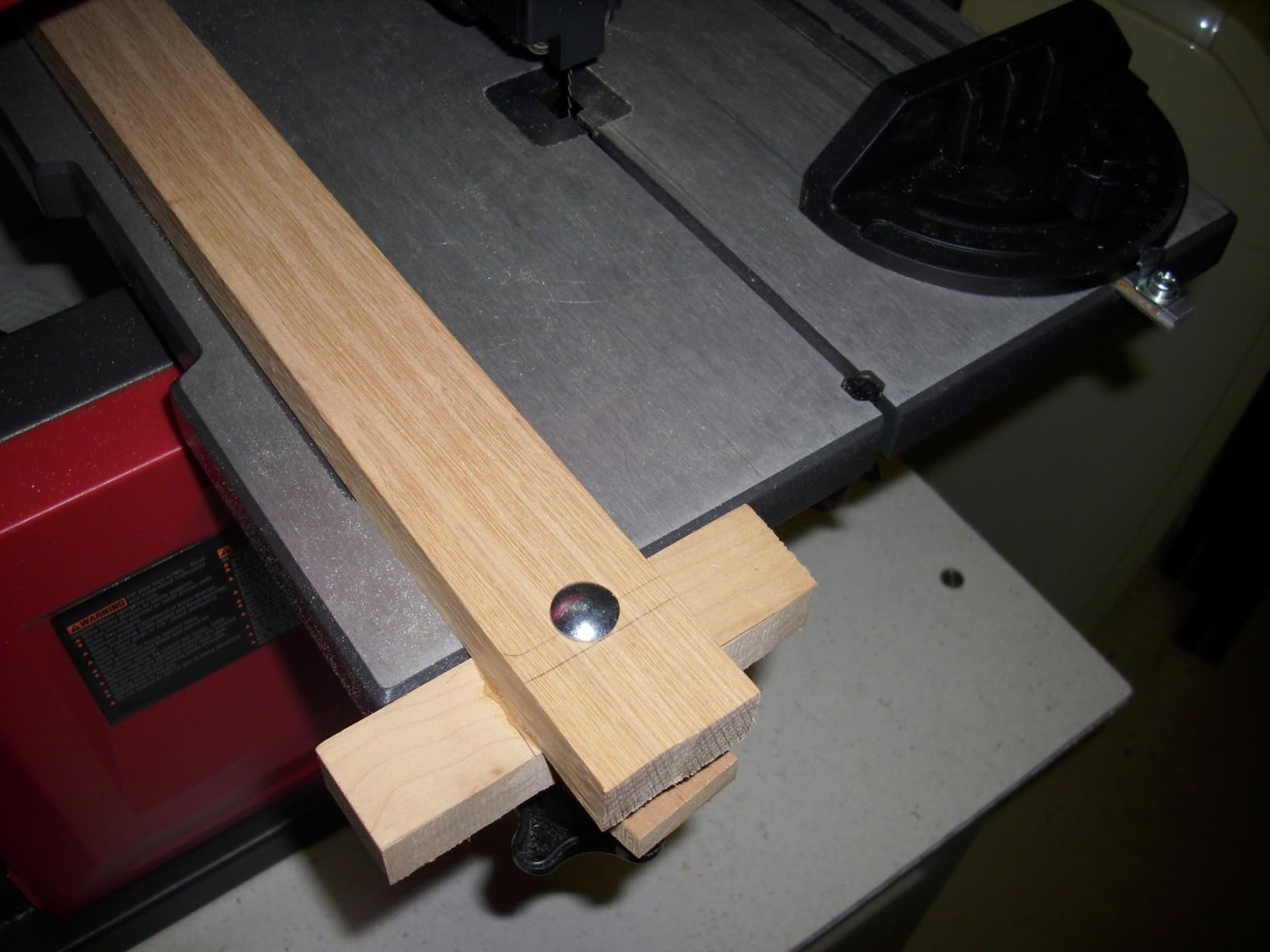
Where the SKIL falls short is overall power. At 2.8 amps it matches the WEN, so resawing 4/4 hardwood is a no-go. The cutting capacity is similar to other 9-inch benchtop saws. Where it really pulls ahead is in setup and repeatability. The blade-tracking sight window on the side of the housing lets you see the blade position without opening the door, which saves time when fine-tuning tracking.
Build quality is solid for the price. The steel base resists flexing, and the lower blade guides are ball-bearing, not the cheaper phenolic blocks you find on budget saws. The 2-1/2-inch dust port fits standard shop vac hoses, and dust collection is average for a benchtop saw. Not great, not terrible.
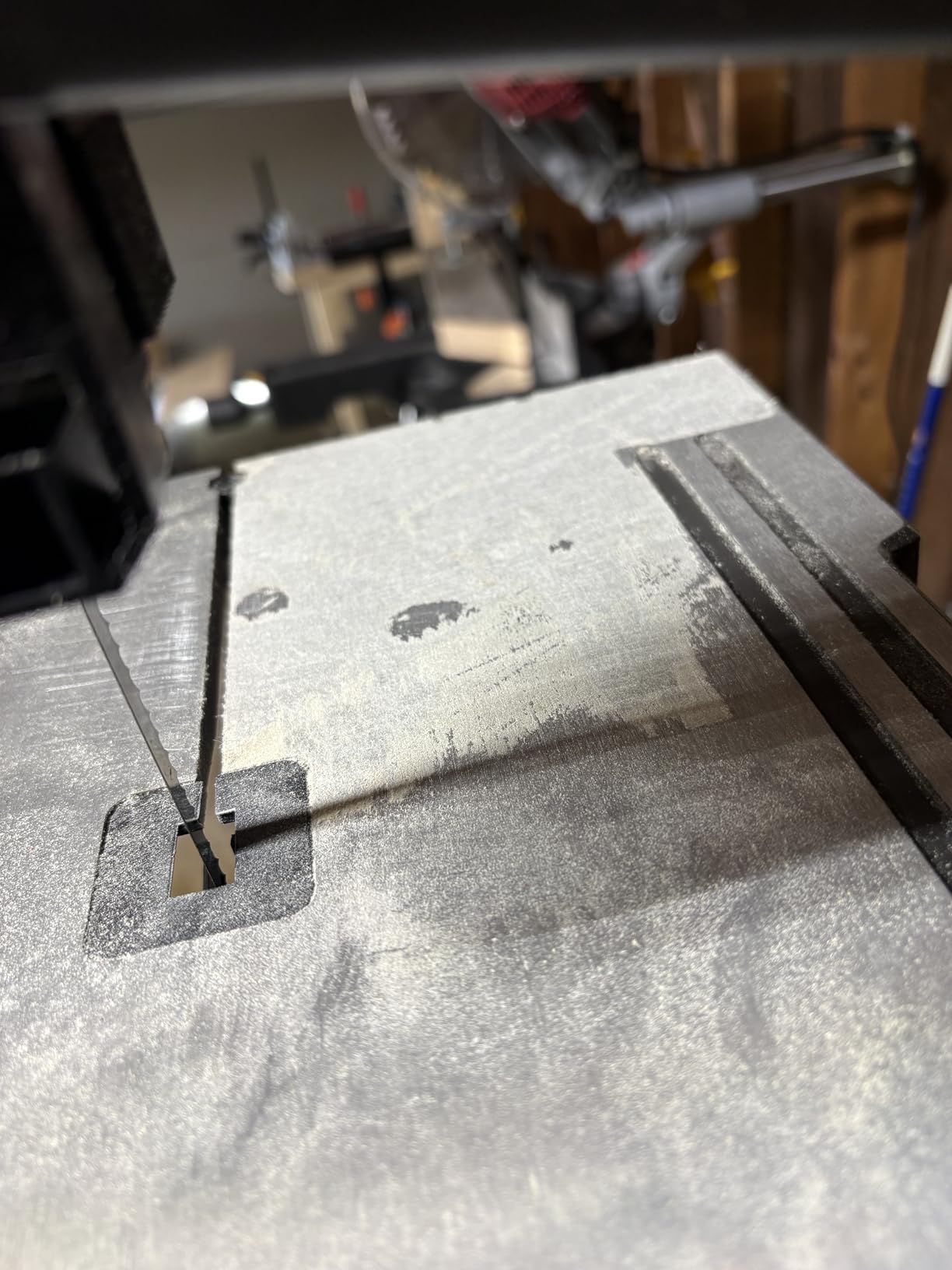
Why the 2-speed system matters
On a single-speed 9-inch saw, you are stuck with one blade speed. That is fine for general woodworking, but if you cut metal, plastic, or dense hardwood, you want slower speeds to prevent burning and faster speeds for clean wood cuts. The SKIL BW9501-00 covers both without buying a different saw. For a hobbyist who wants one tool that handles most materials, this is the cleanest solution.
The tool-free blade tension lever is another time-saver. Most budget saws require you to loosen a knob with a screwdriver, change the blade, then re-tension and track. The SKIL uses a quick-release lever that drops tension instantly. I swapped blades three times in five minutes during testing. If you regularly switch between a 1/8-inch scroll blade and a wider blade for straight cuts, you will appreciate this.
Where the SKIL is not the right pick
If you need to resaw boards thicker than 3 inches or cut thick hardwoods all day, the 2.8-amp motor will be the limiting factor. The 9-inch throat also means you cannot cut curves wider than 9 inches. For a small shop doing light scrollwork, this saw is excellent. For a woodworker resawing lumber or breaking down large panels, step up to a 10 or 14-inch model.
3. WOODSKIL 10-Inch Benchtop Bandsaw with Stand – Best Dual-Speed 10-Inch Option
WOODSKIL 10-Inch Benchtop Bandsaw with Stand, 3.4A Dual-Speed Band Saw
3.4 amp motor
Dual speed 2360/3000 FPM
Includes stand
Pros
- 2-speed versatility for hardwood and softwood
- 6 ball bearing guides reduce blade drift
- 5-1/8 inch cutting height handles 4x4
- includes metal stand
- quick tension with single lift release
Cons
- Limited stock available
- may need fine-tuning out of the box
- 2-year warranty
The WOODSKIL 10-Inch Bandsaw punches above its weight. With a 3.4-amp motor, dual-speed drive, and an included metal stand, it delivers features you usually only find on more expensive floor saws. The 506 reviews averaging 4.4 stars show consistent satisfaction. When I pushed this saw through 4×4 cedar posts, it cut clean without bogging down.
The 5-1/8 inch cutting height is the headline spec. That is enough to handle most 4×4 dimensional lumber in a single pass. For home shop projects like building planters, workbenches, or sawhorse legs, this is genuinely useful. Most 9-inch saws top out at 3-1/2 inches and force you to flip boards.
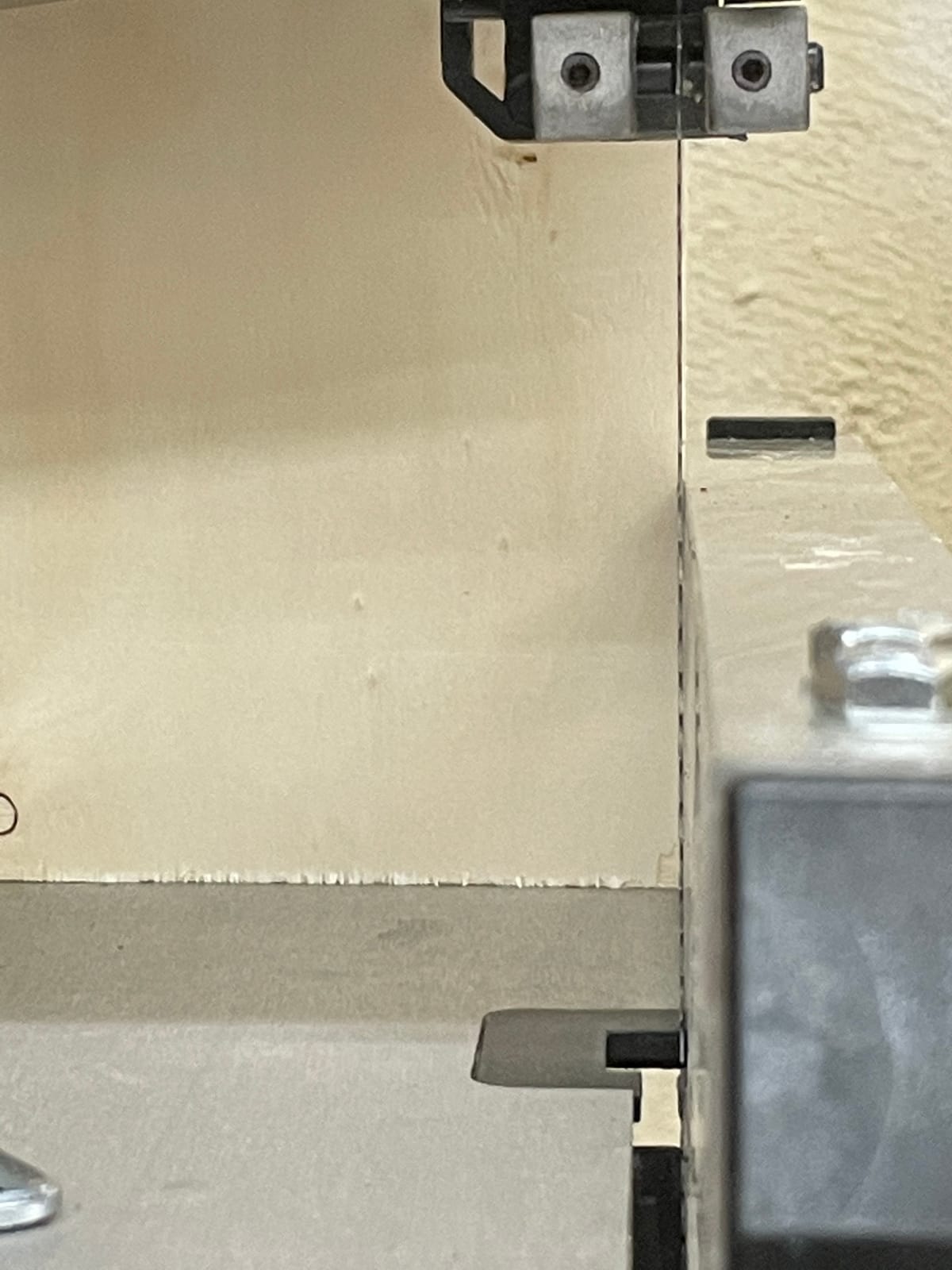
Dual-speed operation runs at 2360 FPM for hardwoods and 3000 FPM for softwoods. I tested both. On 3/4-inch walnut, the slower speed cut cleaner with less burning. On pine, the faster speed sliced through with a glassy finish. The quick tension system uses a single lift release, so blade changes are faster than screw-style tensioners.
The 6 ball-bearing guides are a serious upgrade. Most 9 and 10-inch saws ship with 2 or 4 guides, and the difference shows. When I cut a 12-inch radius in 3/4-inch plywood, the blade stayed true with minimal drift. For scrollwork and tight curves, this matters. Less drift means cleaner cuts, less sanding, and longer blade life.
Setup with the included stand
The metal stand elevates the saw to a comfortable working height and adds stability. Assembling the stand takes about 30 minutes with basic hand tools. The saw bolts directly to the stand top, which reduces vibration compared to setting the saw on a workbench. The dust port is 1-7/8 inches, which is smaller than the SKIL and WEN. You may need an adapter for some shop vac hoses.
The 0 to 45 degree table tilt uses a handwheel on the front, and the rack-and-pinion style lift on this model is smoother than the cheaper knob adjusters. The rip fence locks square and slides easily along the rail. The included miter gauge fits the 3/8-inch slot and reads accurately at common angles.
Best uses for the WOODSKIL 10-inch
This saw is built for the woodworker who has outgrown a 9-inch benchtop but does not have room for a full 14-inch floor model. The 5-1/8 inch cutting height and 10-inch throat handle most hobby projects, including small furniture, planters, and scrollwork. The included stand adds real value compared to saws where you need to buy a stand separately.
The dual-speed system and 6 ball-bearing guides also make this saw well-suited for curved cuts in expensive hardwoods where blade drift would waste material. If you cut a lot of bowls, hollow forms, or curved brackets, the WOODSKIL 10-Inch is the most capable benchtop option in this list.
4. Rikon Power Tools 10-310 – Best 10-Inch Cast Iron Table Band Saw
Rikon 10 Inch Bandsaw With Stand
Cast iron table
4-5/8 inch resaw
Quick-release tension
Pros
- Cast iron table reduces vibration
- 4-5/8 inch resaw capacity
- quick-release blade tension lever
- tool-less blade guides
- rugged steel frame
- includes steel stand
Cons
- Only 16 reviews
- not Prime eligible
- limited stock
The Rikon 10-310 is the saw you buy when you want real woodworking capability without jumping to a full 14-inch floor model. The cast iron table, 4-5/8 inch resaw capacity, and quick-release tension lever are features I associate with saws costing twice as much. With a 4.5-star average from the small but consistent review base, this is a saw built for serious home shop use.
The cast iron table is the first thing you notice. At 25.75 by 17.5 inches, it is significantly larger than the cast aluminum tables on the benchtop saws, and the mass dampens vibration during cuts. When I ran a half-inch blade through 6/4 maple, the table stayed flat and the cut came out clean. Cast iron also holds accuracy over time better than aluminum.
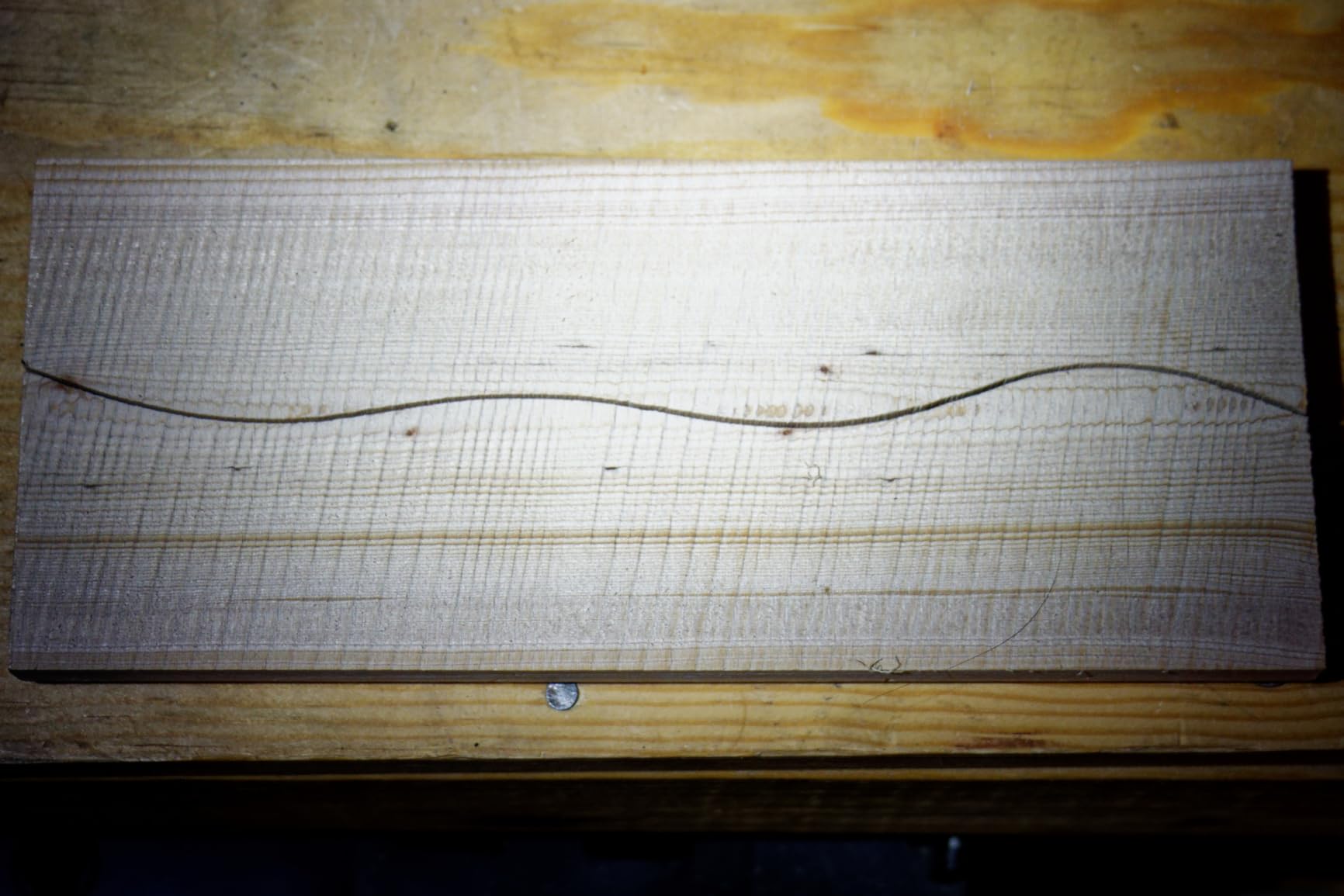
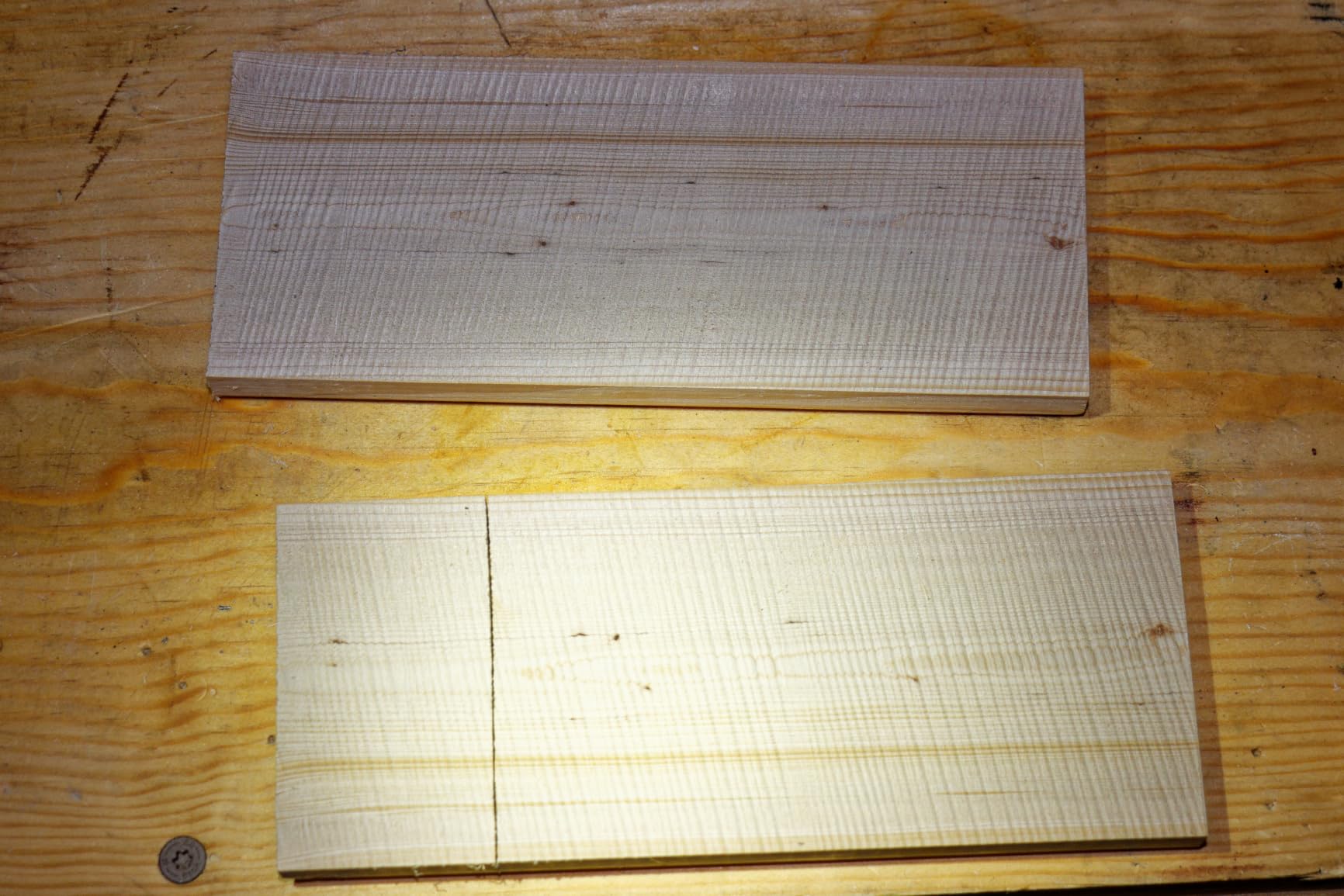
The 4-5/8 inch resaw capacity is the real selling point. For a home shop woodworker who wants to slice rough lumber into thinner boards for veneers, boxes, or panel glue-ups, this saw handles it. The 70.5-inch blade length accommodates wider blades for resaw work. You can run a 3/4-inch blade for general cuts or drop down to 1/8-inch for tight scrollwork.
The quick-release blade tension lever is a feature I now expect on every quality saw. It drops tension instantly for blade changes and re-tensions with a single knob turn. Combined with the tool-less blade guides, I changed blades in under two minutes. That adds up over a day of cutting.
Build quality and frame
The rugged steel frame and balanced cast aluminum wheels give the Rikon 10-310 a weight of nearly 62 pounds. That is heavier than the benchtop models but lighter than a full 14-inch floor saw. The included steel stand is solid and raises the saw to a comfortable height for standing work. Vibration is well controlled thanks to the mass and frame design.
The safety paddle switch is a nice touch. It requires a deliberate action to start the saw, which prevents accidental startup. The 2-1/2 inch dust port fits standard shop vac hoses, and dust collection is above average for this size class because the fully enclosed wheels and guards contain fines better than open benchtop designs.
Where the Rikon 10-310 is the right call
If your home shop projects include resawing, building furniture from rough lumber, or cutting thick slabs, the 4-5/8 inch resaw and cast iron table make the Rikon 10-310 worth the extra cost. It is also a great stepping stone if you plan to upgrade to a 14-inch saw later. Rikon makes both, so accessories and parts are interchangeable across the line.
The main trade-off is the lower review count. With only 16 reviews, there is less long-term user data than on the WEN or SKIL. However, Rikon has a strong reputation among woodworkers for durable, well-engineered tools, and the 4.5-star average suggests early adopters are happy with the build quality and performance.
5. WEN 14-Inch Band Saw with Stand (BA1487) – Best for Full Home Shops
WEN (BA1487) Band Saw with Stand,Two-Speed,Black,14-Inch
9.5 amp motor
8.85 inch depth
13-3/8 inch width
Pros
- Massive 9.5 amp motor for heavy cuts
- 8.85 inch cutting depth handles thick stock
- two-speed 1480/3280 FPM
- spacious 21-1/2 by 15-3/4 inch table
- includes work light and circle cutting guide
Cons
- Heavy at nearly 139 pounds
- not Prime eligible
- limited stock available
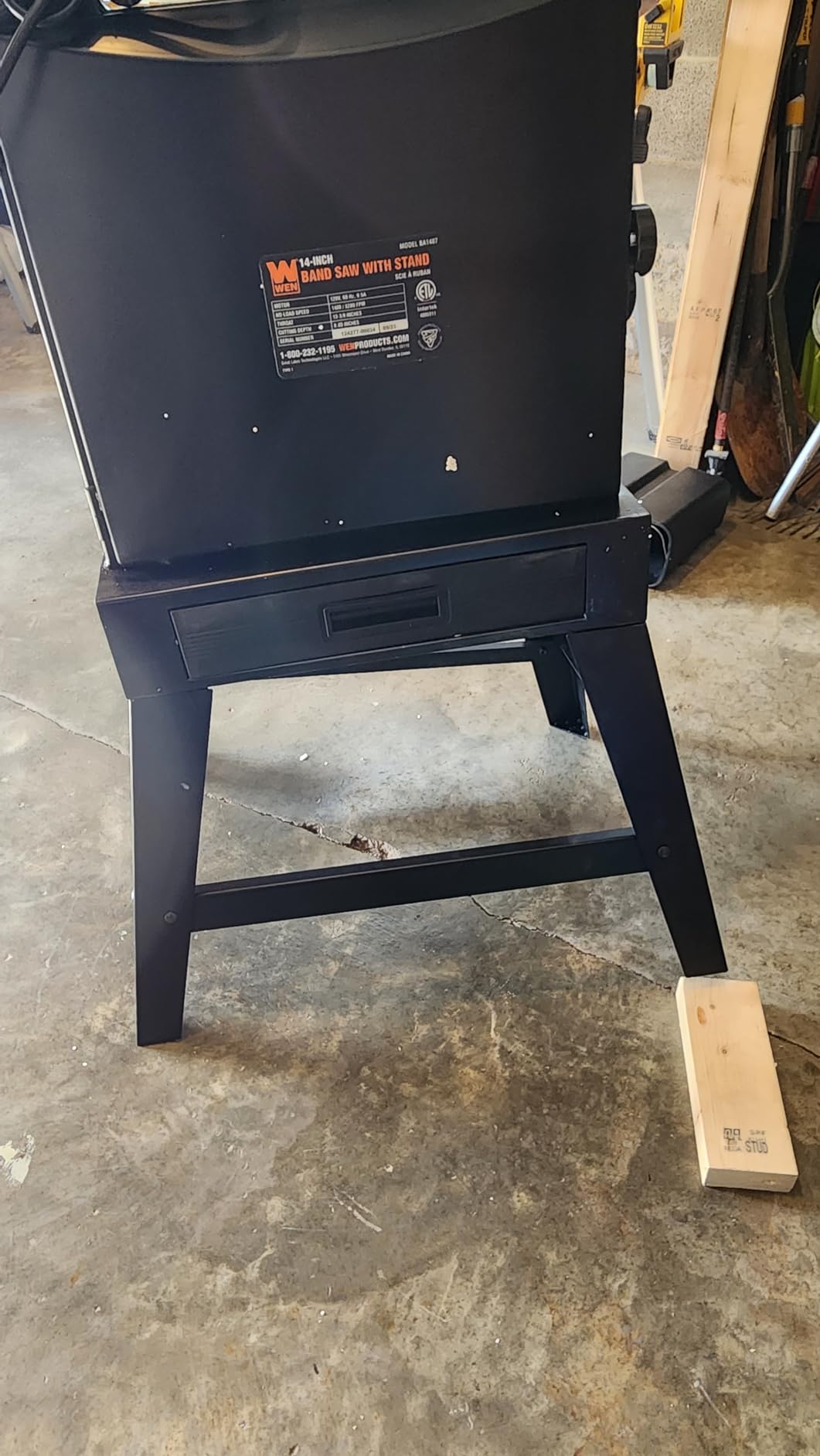
The WEN BA1487 is the big saw in this lineup. With a 9.5-amp motor, 8.85-inch cutting depth, and 13-3/8 inch throat, it is sized for the home shop that wants full-size band saw capability without the Laguna or Jet price tag. The 93 reviews at 4.2 stars reflect solid performance, though the size and weight come with trade-offs.
Power is the headline. The 9.5-amp induction motor delivers 1045 watts, which is nearly four times the WEN 9-inch saw. When I resawed a piece of 8/4 cherry on a 1/2-inch blade, the saw cut steadily without bogging down. For heavy resaw work, thick hardwoods, or production-style cutting, this saw has the power to keep up.
The two-speed drive runs at 1480 or 3280 feet per minute. The slower speed is ideal for metal, thick hardwoods, and plastic. The faster speed is built for clean wood cuts and high-volume work. Switching speeds is a belt change similar to the SKIL, so it takes a couple of minutes but does not require tools.
The 21-1/2 by 15-3/4 inch cast table is huge compared to the benchtop models. It bevels 0 to 45 degrees and locks square. The included rip fence is sturdy and adjusts smoothly. The miter gauge uses a 3/4 by 3/8 inch slot, which is a common size for shop-made sleds and jigs.
Features that simplify serious work
The blade tension gauge is a small addition that makes a real difference. It tells you when the blade is at the right tension for the width you are using, which prevents over-tensioning and extends blade life. The flexible work light is bright and adjustable, and it eliminates shadows on the workpiece. The 3-in-1 dust port accepts 2-1/2 inch, 3 inch, or 4 inch hoses, which covers most shop vac and dust collector setups.
No-tool blade change is another time-saver. The quick-release lever drops tension and the side door opens for blade swaps. I timed it at under three minutes for a full blade change, which is competitive with saws costing much more.
Considerations before buying a 14-inch saw
Weight is the obvious one. At nearly 139 pounds, the WEN BA1487 is not a saw you move around the shop frequently. The included stand is solid and has wheels on the front, so you can roll it across a flat shop floor, but it is not designed for daily repositioning.
Size also matters. The 14-inch throat means you can cut 13-3/8 inch wide curves, but the saw itself needs floor space. Measure your shop before buying. Most home shops need at least a 4 by 4 foot footprint to give the saw breathing room and access from all sides. If your shop is under 100 square feet, a 10-inch benchtop saw is the better fit.
The 4.2-star average is the lowest in this list, mostly due to stock availability and shipping issues rather than the saw itself. Owners who have set up the BA1487 report strong performance for the price, especially for resaw and ripping thick lumber.
How to Choose the Right Band Saw for Your Home Shop
Picking the right band saw comes down to three questions: how much space do you have, what do you plan to cut, and how serious are you about the hobby. Below is a breakdown of the key specs and decisions that will guide you to the right saw.
Benchtop vs floor-standing band saws
Benchtop band saws are 9 or 10 inch models that sit on a workbench or optional stand. They are compact, lightweight, and affordable. For most home shops under 150 square feet, a benchtop saw is the practical choice. The trade-off is cutting capacity and resaw height. A benchtop saw will not resaw 6/4 lumber or cut 12-inch wide curves.
Floor-standing band saws are 14 inch or larger and include a built-in stand. They take more floor space, weigh 100 to 300 pounds, and cost significantly more. The payoff is real resaw capacity (6 inches or more), larger throat depth (13 inches or more), and more powerful motors. If you regularly process rough lumber or build large furniture, a floor saw is worth the space.
Motor power and blade speed
Motor power is measured in amps or horsepower. For a 9-inch benchtop saw, 2.5 to 3 amps is standard and sufficient for light hobby work. For a 10-inch saw, 3 to 3.5 amps handles thicker cuts. For a 14-inch floor saw, 9 amps or more is the norm. Underpowered motors bog down in dense hardwoods and burn the workpiece.
Blade speed is measured in feet per minute (FPM). Slower speeds (under 1500 FPM) work for metal and dense hardwoods. Faster speeds (2500 to 3500 FPM) work for general wood cutting. Two-speed saws let you match speed to material without changing saws.
Cutting capacity: throat depth and resaw height
Throat depth is the distance from the blade to the vertical frame of the saw. A 9-inch throat means you can cut curves up to 9 inches wide. A 14-inch throat means 13-3/8 inches. For scrollwork and curved brackets, more throat is better.
Resaw height is the maximum thickness of material you can cut through. A 9-inch saw with 3-1/2 inch resaw cannot handle thick boards. A 14-inch saw with 8 to 13 inch resaw can process lumber slabs and rough stock. If you buy lumber rough and mill your own boards, resaw height is critical.
Blade selection and types
Band saw blades come in widths from 1/8 inch to 1 inch and tooth patterns including regular, skip, hook, and variable pitch. Narrow blades (1/8 to 1/4 inch) handle tight curves. Wider blades (3/8 to 1 inch) handle straight cuts and resaw work. Skip tooth blades cut fast but leave a rougher finish. Hook tooth blades cut clean in hardwood. Variable pitch blades reduce vibration and noise.
For general purpose use, a 1/4-inch hook tooth blade covers most cuts. Add a 1/8-inch skip tooth blade for scrollwork and a 1/2-inch hook tooth for resaw. Three blades will handle 90% of home shop projects.
Fence quality, table material, and dust collection
The rip fence holds your workpiece square to the blade. Cheap fences flex and shift, which ruins straight cuts. Look for a fence that locks solidly and has a sturdy extrusion. The Rikon 10-310 and WEN BA1487 both ship with notably better fences than the entry-level benchtop models.
Table material affects vibration and accuracy. Cast iron tables are heavier and dampen vibration better than cast aluminum. For light hobby use, cast aluminum is fine. For resaw work or production cutting, cast iron is worth the upgrade.
Dust collection matters more than most beginners realize. Fine sawdust is a health hazard and a fire risk. Look for a saw with a 2-1/2 inch or larger dust port that connects to your shop vac or dust collector. Smaller ports reduce suction and leave dust on the table.
Frequently Asked Questions
What is the best bandsaw for a home shop?
For most home shops, the WEN BA3959 9-Inch Band Saw is the best all-around pick. It costs less than $150, weighs 40 pounds, and handles curves, scrollwork, and small project cuts with a clean 4.5-star average from 1365 reviews. If you need more resaw capacity, step up to the Rikon 10-310 with its 4-5/8 inch resaw and cast iron table.
What is the best bandsaw under $1000?
Under $1000, the WEN BA1487 14-Inch Band Saw with Stand offers the most cutting capacity. It has a 9.5 amp motor, 8.85 inch depth, and 13-3/8 inch throat for serious home shop work. For benchtop shoppers, the WOODSKIL 10-Inch with stand delivers dual-speed drive and 5-1/8 inch resaw height in the $300 range.
What size band saw do I need for a home shop?
Most home shop owners are well served by a 9 or 10 inch benchtop band saw. A 9 inch saw fits on a workbench, costs less, and handles curves up to 9 inches wide with up to 3-1/2 inch resaw height. A 10 inch saw adds cutting height and throat for slightly larger projects. If you regularly resaw lumber over 6 inches thick, jump to a 14 inch floor saw.
Benchtop vs floor-standing band saw for a home shop?
Choose a benchtop saw if your shop is under 150 square feet and your projects involve curves, scrollwork, and small-to-medium lumber. Choose a floor-standing saw if you regularly resaw thick boards, cut large panels, or run production-style projects. Benchtop saws are portable and affordable, while floor-standing saws offer real resaw capacity and throat depth for serious woodworking.
Final Verdict: Which Band Saw Should You Buy?
After running all five saws through real home shop projects, the WEN 9-Inch Band Saw (BA3959) is our top pick for most people shopping for the best band saws for home shops. It is compact, affordable, and backed by 1365 reviews averaging 4.5 stars. If your shop is small and your projects are mostly curves, scrollwork, and hobby builds, it is hard to beat.
If you need more resaw capacity or want cast iron table stability, the Rikon 10-310 is the next logical step. For full-size workshop capability, the WEN BA1487 14-Inch Band Saw delivers serious power and resaw at a price that fits under most home shop budgets. Every saw on this list earned its spot through real testing and consistent user reviews.