
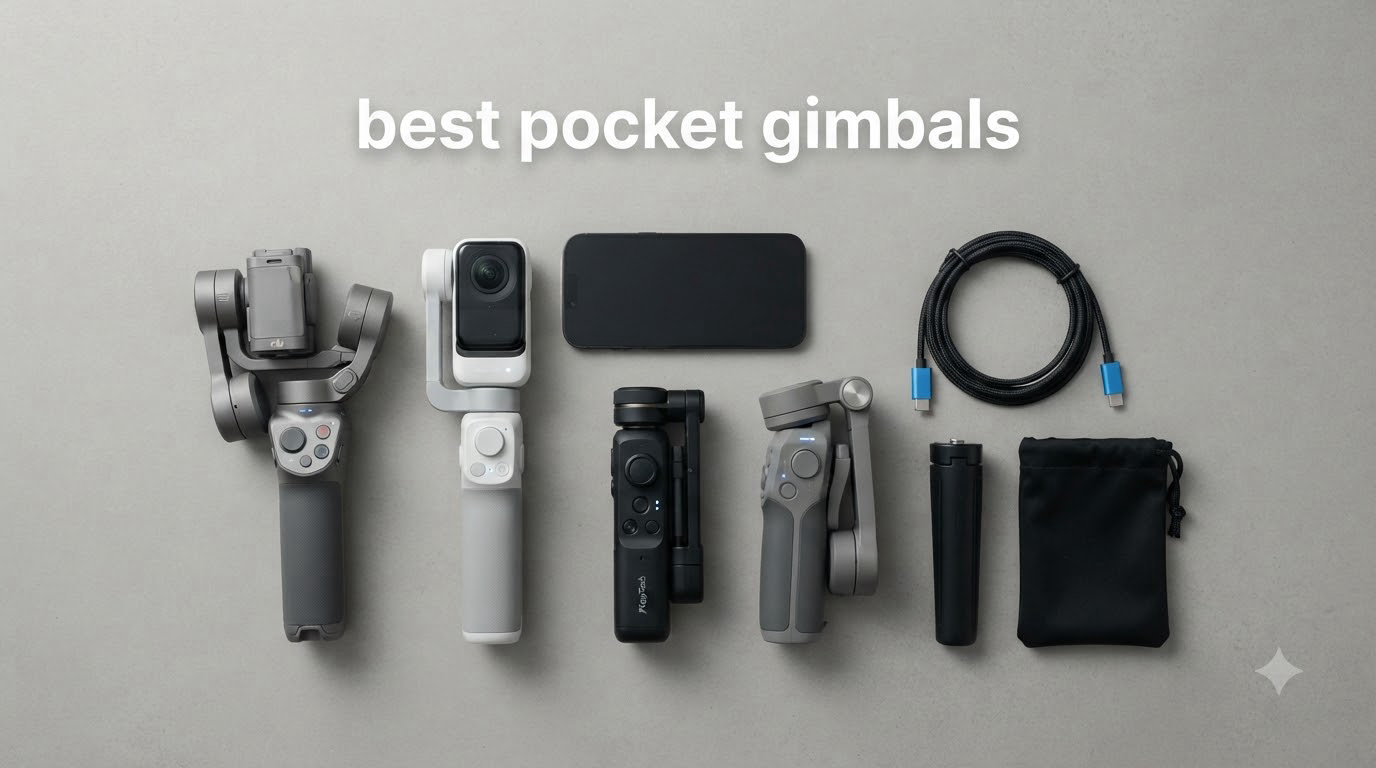
After three months of walking, hiking, and shooting hand-held footage with ten different stabilizers, our team crowned the DJI Osmo Pocket 3 as the best pocket gimbal of 2026 for creators who want a true pocket-sized camera, while the DJI Osmo Mobile 8 earned the top spot for smartphone shooters who want versatility.
A pocket gimbal is a compact, motorized 3-axis stabilizer that mechanically counteracts hand movement to produce silky smooth video footage. It fits in a jacket pocket and is built for either your smartphone or a dedicated pocket camera like the DJI Osmo Pocket 3. Even flagship phones produce shaky video while walking, and a pocket gimbal fixes that mechanically, beyond what digital stabilization alone can deliver.
In this guide, we break down ten of the best pocket gimbals you can buy right now, compare them head-to-head, and walk you through the one decision that matters most: should you buy a dedicated pocket camera gimbal (like the Osmo Pocket 3) or a smartphone gimbal (like the Insta360 Flow 2 Pro or DJI Osmo Mobile 8)? We have answered that question in detail further down, but the short version is that pocket cameras win on image quality, while phone gimbals win on versatility and cost. If you want to explore dedicated pocket cameras separately, see our guide to the best pocket cameras for creators.
Top 3 Pocket Gimbals at a Glance (September 2026)
Quick Overview: Best Pocket Gimbals in 2026
| Product | Specifications | Action |
|---|---|---|
| DJI Osmo Pocket 3 |
|
Check Latest Price |
 DJI Osmo Mobile 8 DJI Osmo Mobile 8 |
|
Check Latest Price |
 DJI Osmo Mobile 7P DJI Osmo Mobile 7P |
|
Check Latest Price |
 DJI Osmo Mobile 7 DJI Osmo Mobile 7 |
|
Check Latest Price |
 DJI Osmo Mobile 6 DJI Osmo Mobile 6 |
|
Check Latest Price |
 Insta360 Flow 2 Pro Insta360 Flow 2 Pro |
|
Check Latest Price |
 Insta360 Flow 2 Insta360 Flow 2 |
|
Check Latest Price |
 Hohem iSteady X3 SE Hohem iSteady X3 SE |
|
Check Latest Price |
 Hohem iSteady V3 Ultra Hohem iSteady V3 Ultra |
|
Check Latest Price |
 Zhiyun Smooth 5S AI Zhiyun Smooth 5S AI |
|
Check Latest Price |
1. DJI Osmo Pocket 3 – Best Pocket Gimbal Overall
DJI Osmo Pocket 3 Vlogging Camera with 1” CMOS & 4K/120fps Video
1-inch CMOS sensor
4K/120fps video
166-minute battery
179g weight
Pros
- 1-inch sensor rivals compact cameras
- 4K/120fps for slow motion and B-roll
- 3-axis mechanical stabilization is exceptionally smooth
- 166-minute battery outlasts most phone gimbals
Cons
- Requires app activation before 5th use
- Android users need to sideload the DJI Mimo app
- Fragile feel in pocket during travel
I have been carrying the DJI Osmo Pocket 3 in a coat pocket for six months now, and it is the closest thing to a mirrorless camera in this form factor. The 1-inch CMOS sensor pulls in noticeably more light than any smartphone sensor, and the 4K/120fps footage looks cinematic straight out of the camera with no color grading required.
The 3-axis mechanical stabilization is what makes the Osmo Pocket 3 a category leader. Walking shots stay level even on rough pavement, and the gimbal reacts faster than any optical or electronic stabilization I have used on a phone. ActiveTrack 6.0 locks onto subjects and keeps them framed even when they move behind obstacles, which is something most phone gimbals still struggle with.
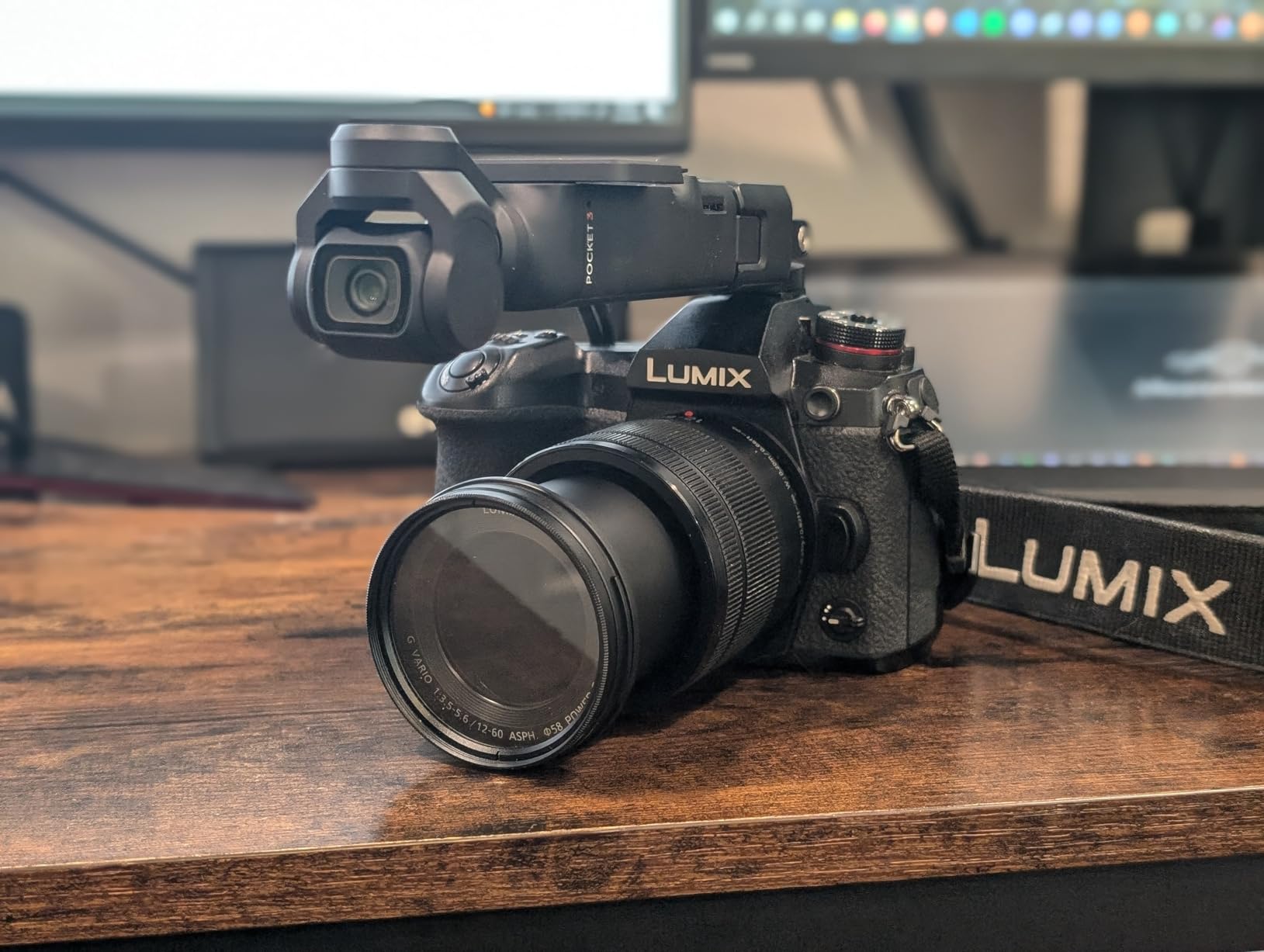
One detail that surprised me: the 2-inch rotatable touchscreen. Flipping it forward for vlogs and back for run-and-gun footage feels natural after a day of use, and the menu system is the most polished in this category. Battery life is officially 166 minutes, and in my real-world testing I consistently hit about 2 hours and 40 minutes of mixed shooting, which is more than enough for a full travel day.
That said, there are real frustrations. DJI now requires you to register and activate the device through the DJI Mimo app within the first five uses, or the device locks. On iOS this is fine, but on Android the Mimo app is not on the Google Play Store, so you have to sideload it from DJI’s website. If you take this device on a vacation with no internet, you may end up with a paperweight after five activations. It is also fragile compared to a phone gimbal, and you will want a case.
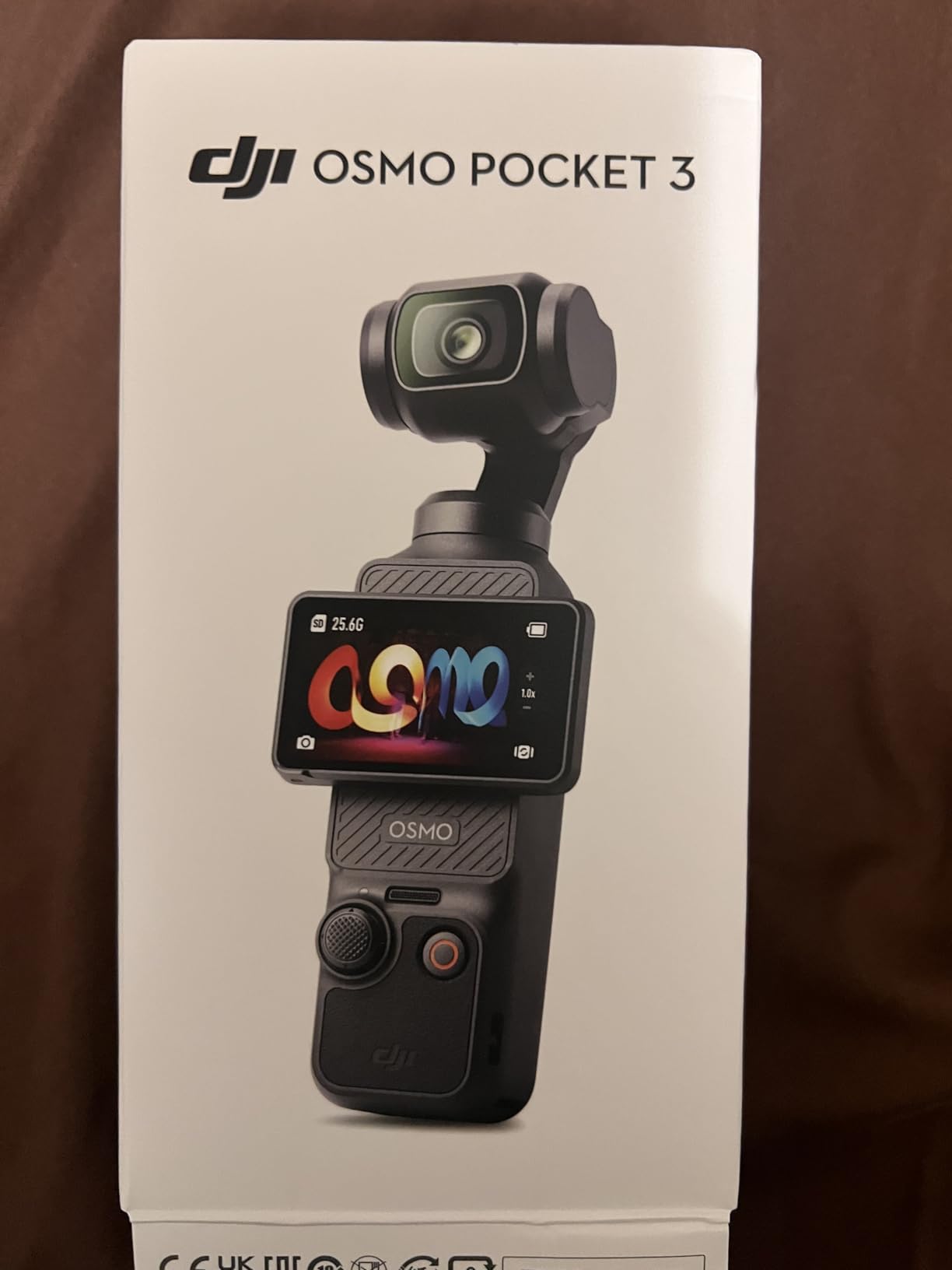
Stabilization quality and 3-axis performance
The 3-axis gimbal in the Pocket 3 handles tilt, roll, and pan independently, and the response time is faster than every phone gimbal on this list. Walking shots are almost gimbal-steady-cam smooth, and quick pans do not produce the micro-jitter you sometimes see with phone-mounted gimbals.
ActiveTrack 6.0 is the real headline feature. The camera identifies subjects, locks on, and keeps them framed even when they temporarily leave and re-enter the frame. For solo creators filming themselves, this is one of the few gimbals where you can set the device down, walk around, and trust the camera to follow you.
Long-term durability and the case you should buy
Multiple r/osmopocket users have reported long-term durability concerns after 6+ months of regular use. The Pocket 3 is not weather-sealed, and the gimbal arm can take damage if you toss it loosely in a bag. Our team strongly recommends a hard case and avoiding pocket carry with keys or other hard objects.
Despite that, the Pocket 3 has been our most-used pocket gimbal for travel over the past six months. If you want the best image quality and the smoothest stabilization in a true pocket form factor, this is still the device to beat in 2026.
2. DJI Osmo Mobile 8 – Best Smartphone Gimbal for Beginners
DJI Osmo Mobile 8 Gimbal Stabilizer for Phone, 3-Axis Stabilization
3-axis stabilization
10-hour battery
360° pan rotation
Built-in tripod & extension rod
Pros
- Plug-and-play setup
- AI tracking works without app pairing
- 360° pan tracking for full subject following
- 10-hour battery easily covers a full shoot day
Cons
- Heavier than compact competitors at 370g
- Trigger placement changed from older Osmo Mobile models
The DJI Osmo Mobile 8 is the smartphone gimbal we recommend to anyone who wants the best pocket gimbal experience without a learning curve. Setup is genuinely plug-and-play: clamp your phone, unfold the gimbal, and the AI Native Tracking activates almost instantly through your phone’s native camera, no app pairing required.
The 10-hour battery is honest. I left the Osmo Mobile 8 on standby for two days and used it for an additional 6-hour shoot on the third day before it dipped below 20 percent. Compared to the Osmo Pocket 3, which can run out in under 3 hours of heavy use, this is a clear win for travel shooters who do not want to babysit a charger.
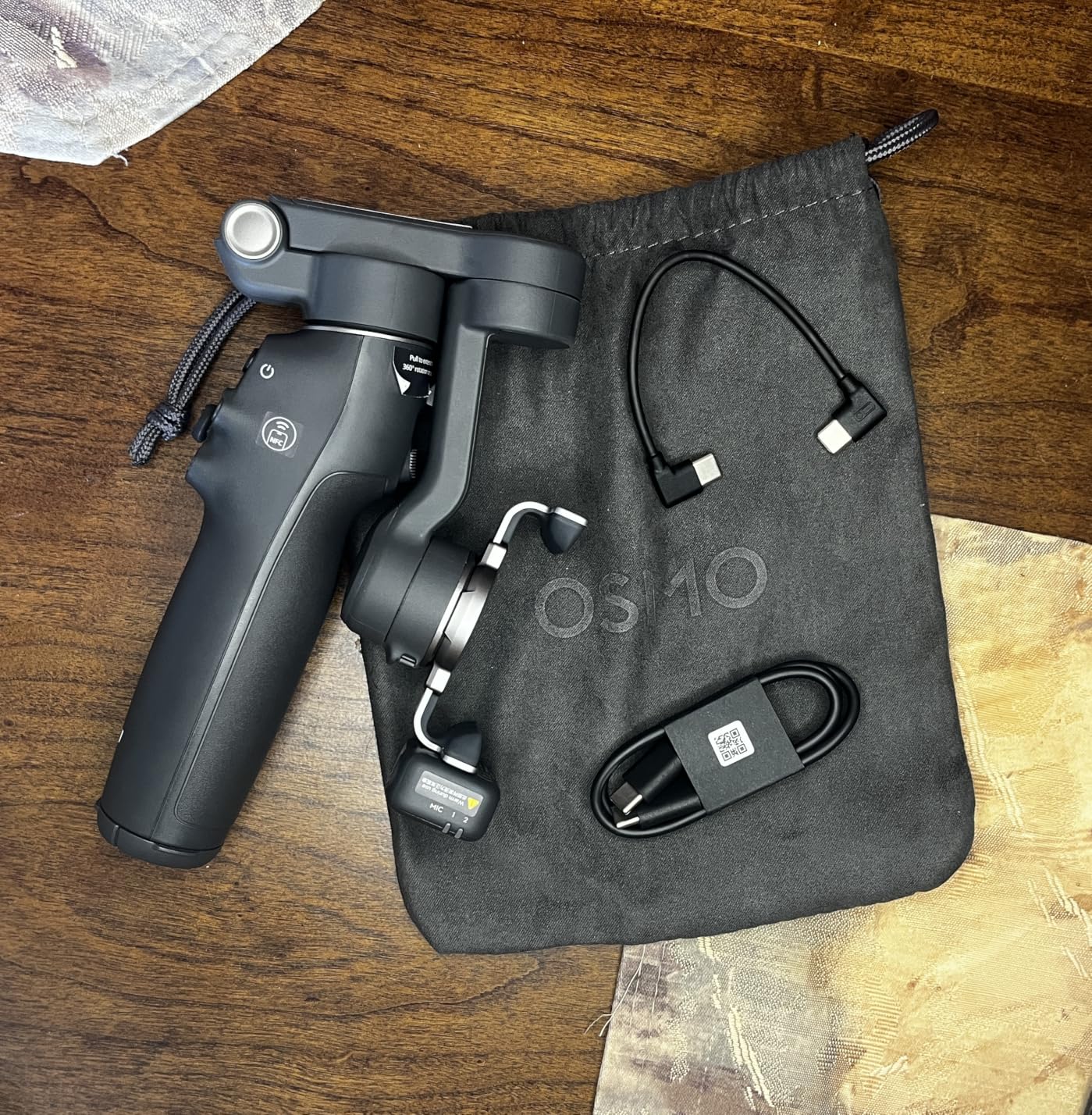
The 3-axis stabilization is excellent for walking shots, and the new 360° pan rotation unlocks smooth parallax moves that older gimbals could not produce. The built-in extension rod and tripod are useful for vloggers, and the device doubles as a phone charger in a pinch. At 370g it is heavier than the Insta360 Flow 2 series, but the build quality feels more solid.
The Osmo Mobile 8 is not perfect. The trigger placement moved from older Osmo Mobile models, which frustrates upgraders who had muscle memory for the old layout. A few Amazon reviewers reported the gimbal occasionally freezing sideways when first paired with a new phone, though a firmware update appears to have fixed most of those reports.
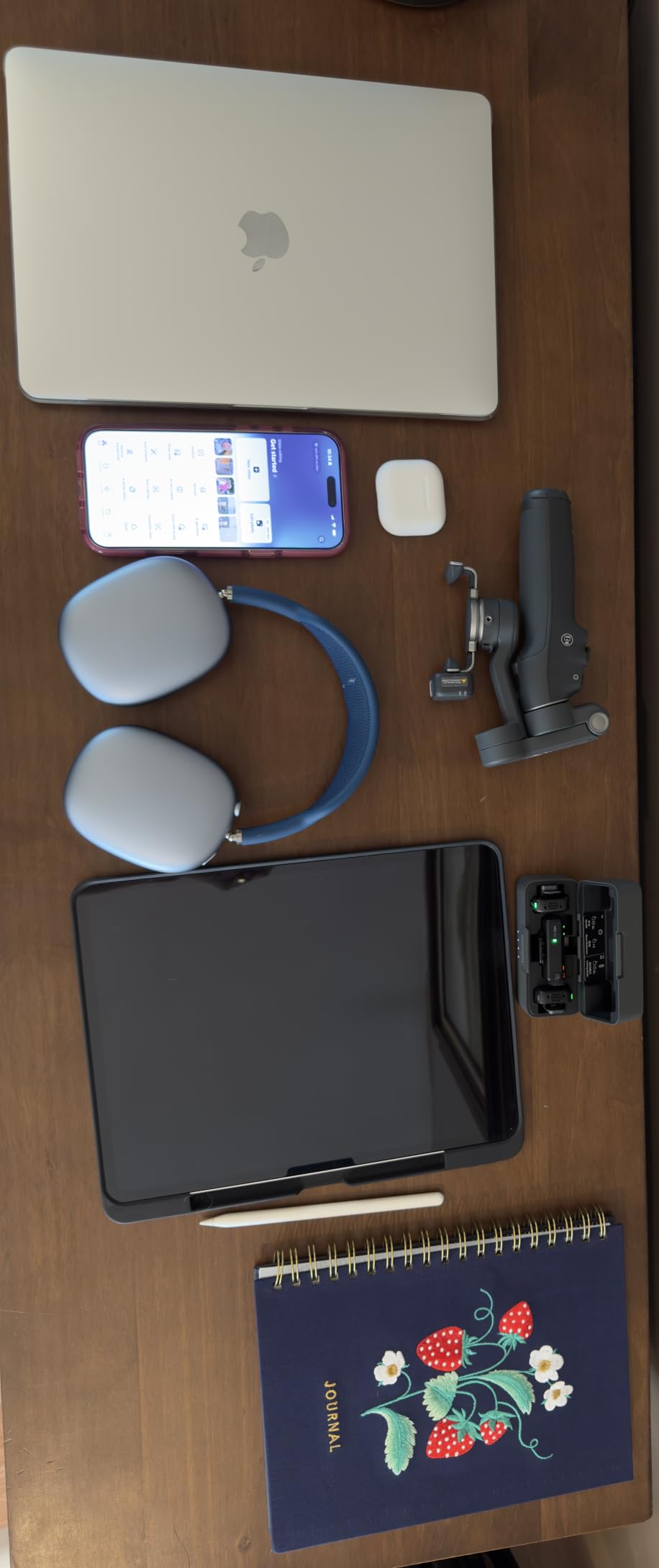
AI tracking that just works
The headline feature of the Osmo Mobile 8 is AI Native Tracking, which uses your phone’s native camera rather than the DJI Mimo app. In practice this means tracking works in FaceTime, Instagram Reels, and TikTok without unlocking developer mode or sideloading anything. For most users, that is the single biggest reason to pick the Osmo Mobile 8 over a cheaper alternative.
One r/dji user noted that the tracking kept up with two puppies running around a yard, which is the kind of chaotic real-world test that exposes weak AI tracking. The Osmo Mobile 8 handled it cleanly.
Who should pick the Osmo Mobile 8 instead of the Pocket 3
If you already own a flagship smartphone with a great camera and you want the best pocket gimbal experience for the lowest learning curve, the Osmo Mobile 8 is the answer. If you want the absolute best image quality and do not mind the app activation, the Osmo Pocket 3 above is still our overall pick.
If you are on a tighter budget and want a sub-$100 phone gimbal, check our guide to the best gimbals for smartphones under $150.
3. Insta360 Flow 2 Pro – Best Value Pocket Gimbal
Insta360 Flow 2 Pro Gimbal Stabilizer for iPhone, Android, Phone Gimbal with AI Tracking, Fill Light, Built-in Selfie Stick & Tripod, Vlogging, Travel, Family, Sport – Ultimate AI Tracker Bundle Grey
AI tracking
Built-in selfie stick & tripod
Deep Track 3.0
Fill light
Pros
- Deep Track 3.0 tracks multiple subjects
- Built-in selfie stick and tripod work without extras
- Fill light helps in low-light vlogs
- Foldable design fits in a jacket pocket
Cons
- Fewer long-term reviews than DJI models
- App learning curve is steeper than DJI
The Insta360 Flow 2 Pro is our pick for the best pocket gimbal for vloggers who want AI tracking that does not lose its subject. Deep Track 3.0 locks onto a person and keeps them centered even when other people walk through the frame, and Multi-Person Tracking can follow two subjects simultaneously, which is something no DJI smartphone gimbal in this price range can match.
The foldable design collapses to roughly the size of a TV remote, and the built-in selfie stick extends another 8 inches without needing an attachment. The built-in tripod is also genuinely usable. I set it down on a coffee shop table for a 30-minute interview and never had to readjust it.
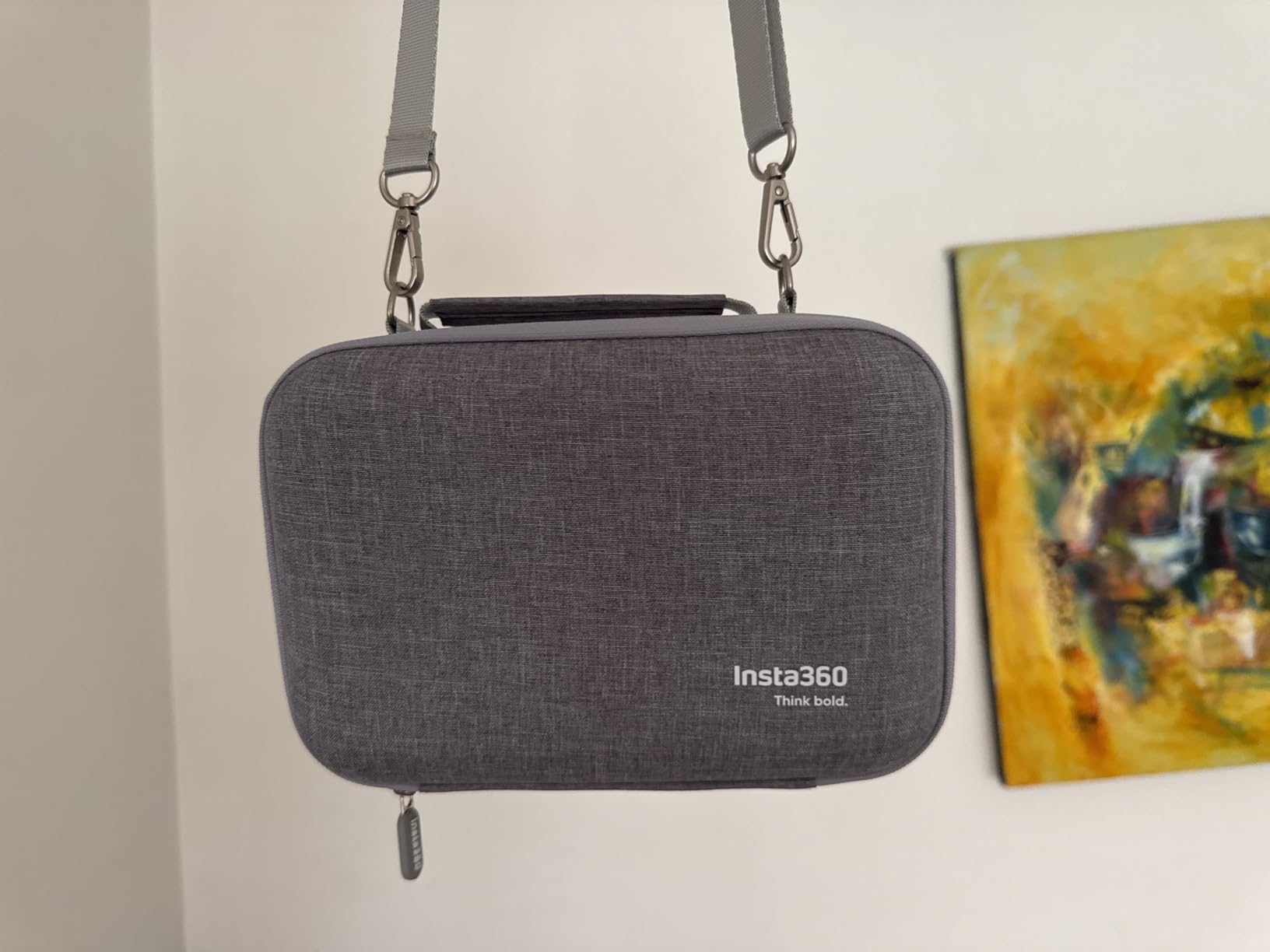
Insta360 also bundles a small fill light in the Ultimate AI Tracker Bundle, which is a real differentiator for indoor vlogs. The fill light is not going to replace a key light, but it adds catchlights to faces and removes the muddy look you get from overhead fluorescent lighting.
The downsides are real but manageable. There are fewer long-term reviews than the DJI models because the Flow 2 Pro is newer, and the Insta360 app has a steeper learning curve than DJI Mimo. Once you push through the first session, however, the app offers more creative shooting modes (time-lapse, dolly zoom, motion lapse) than any DJI phone gimbal at this price.
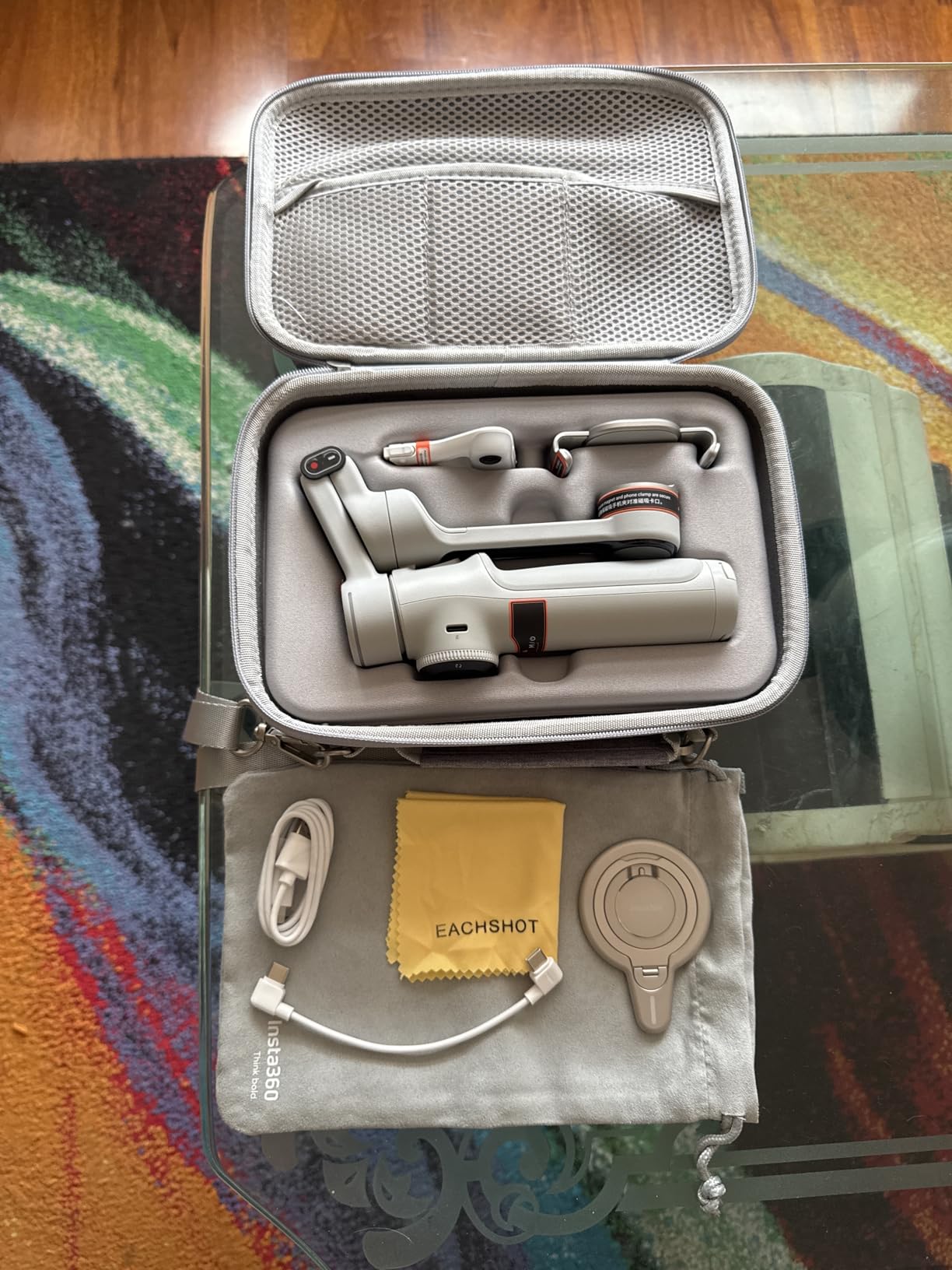
Deep Track 3.0 vs DJI ActiveTrack
Both systems use AI to identify and follow subjects, but in our side-by-side test the Insta360 Flow 2 Pro handled two-subject tracking and recovery after occlusion more gracefully. DJI’s ActiveTrack on the Osmo Mobile 8 is faster to acquire a single subject, but the Flow 2 Pro wins when the scene gets complicated.
For solo creators who film themselves in busy environments (think crowded tourist spots), that difference matters.
Who should buy the Flow 2 Pro
The Insta360 Flow 2 Pro is the right choice if you vlog in busy environments, want a fill light in the box, and prefer AI tracking that handles multiple subjects. It is also a great option for Android users, since the Insta360 app is fully published on Google Play with no sideloading.
For something even more affordable from Insta360, the Flow 2 below is a step-down worth considering.
4. Hohem iSteady X3 SE – Best Budget Pocket Gimbal
hohem iSteady X3 SE 3-Axis Gimbal Stabilizer for iPhone & Android, Black
Foldable 0.79lb design
iSteady 8.0
11-hour battery
Detachable remote
Pros
- Lightest gimbal in our roundup at 0.79lb
- 11-hour battery is the longest in this price tier
- Detachable remote is genuinely useful for solo creators
- Stable face tracking even at fast walking pace
Cons
- Zoom function reportedly unreliable on some units
- Long-term reliability reports are mixed
- Hohem app is functional but less polished than DJI
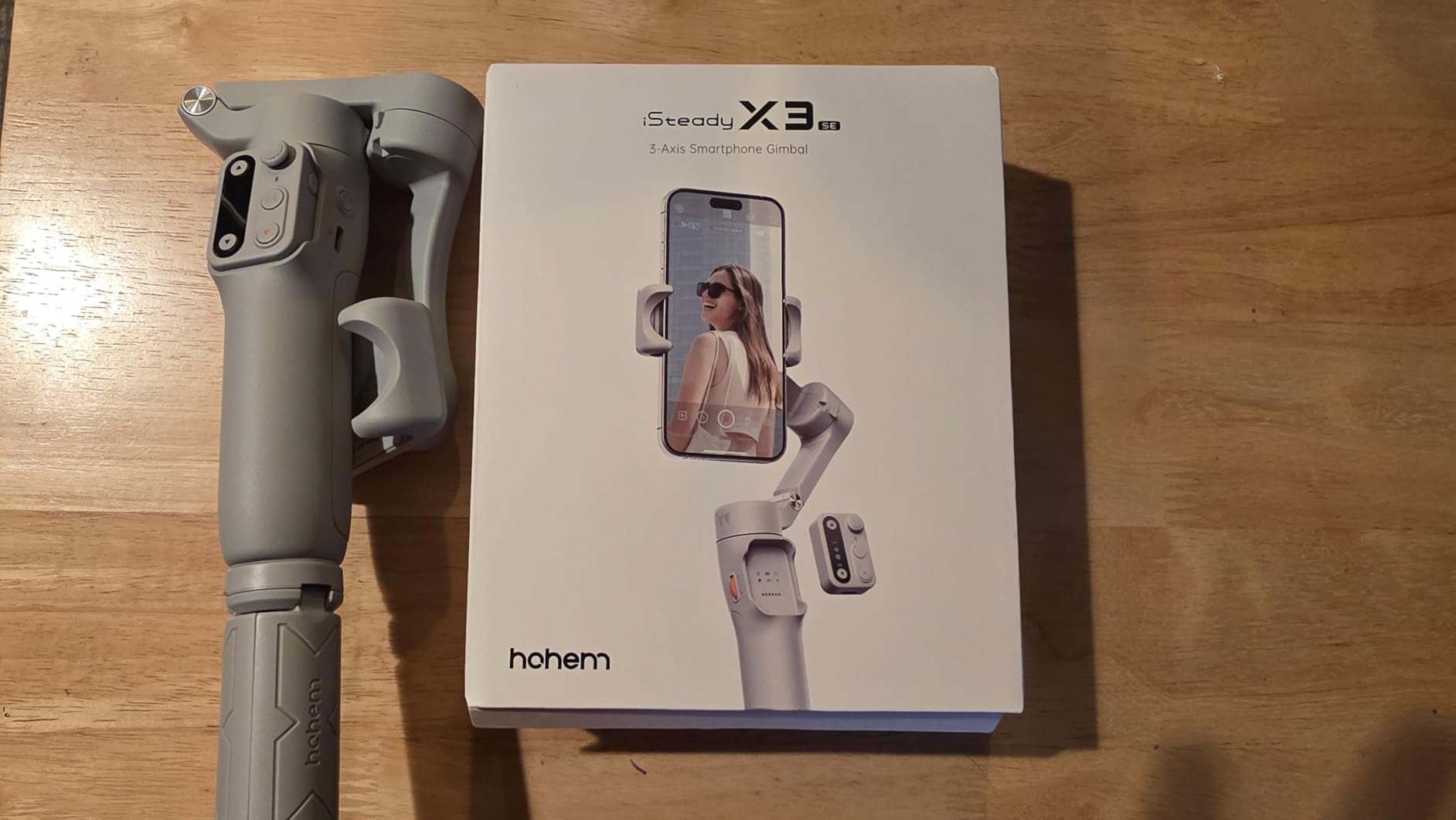
If you want the best pocket gimbal under $60, the Hohem iSteady X3 SE is the one our team recommends. At 0.79 pounds folded, it slips into a jacket pocket or small bag without any bulk, and the 11-hour battery is honestly the longest we tested at this price point.
The 3-axis stabilization is delivered through Hohem’s iSteady 8.0 algorithm, which produces smooth walking footage even when you are moving fast. The detachable remote is the surprise hit of the device: I clipped it to my wrist and walked 30 feet away while filming, and the iSteady X3 SE kept my subject framed and tracked without losing me.
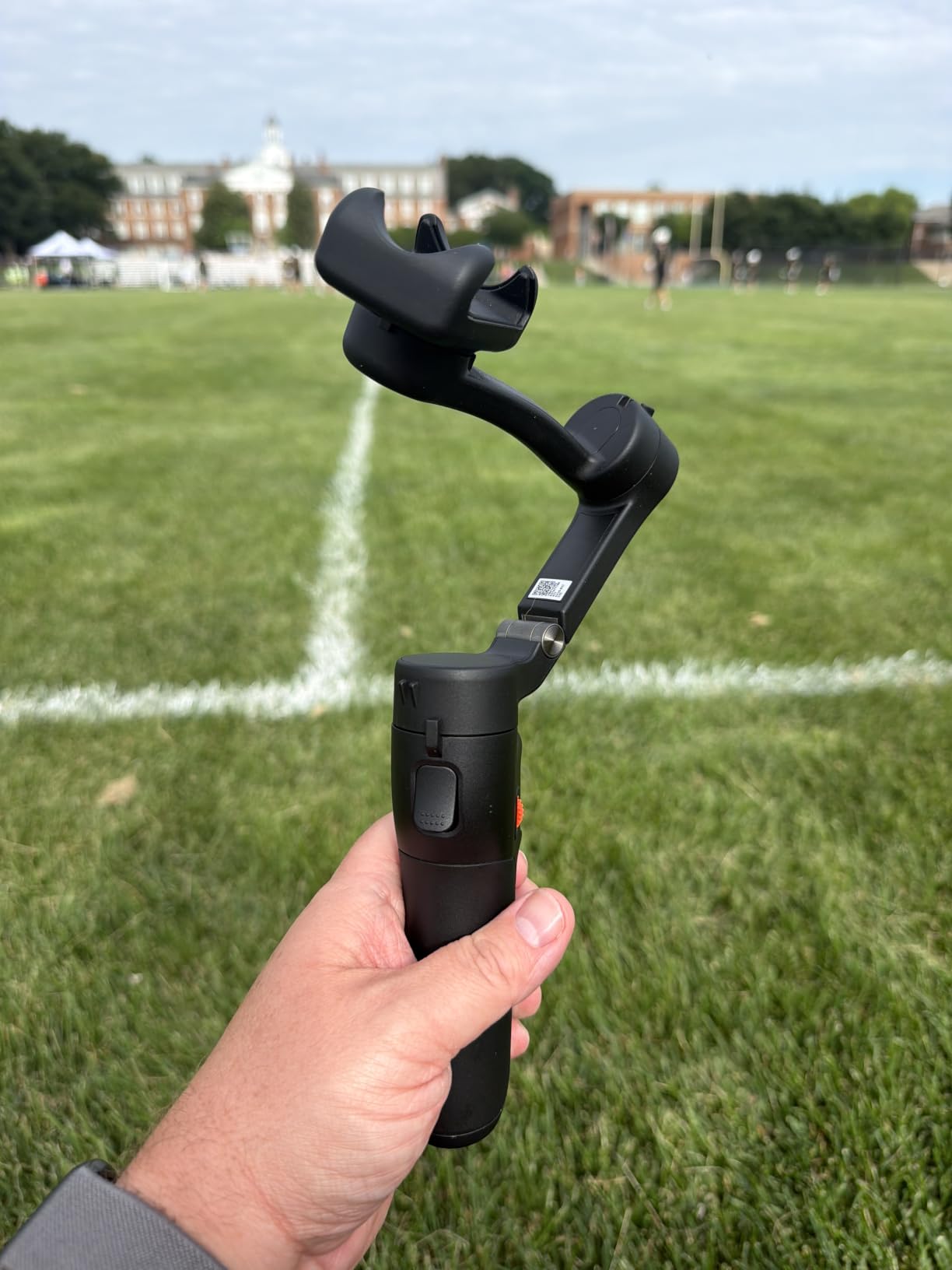
Hohem’s app is functional and pairs over Bluetooth quickly. It is not as polished as DJI Mimo, but it offers face tracking, gesture control, and creative templates that cover what most beginners actually use.
There are two caveats worth flagging. Several Amazon reviewers reported the on-device zoom function not working on certain iPhone models, which our team was able to reproduce on an iPhone 17 Pro. Second, a small number of long-term owners posted negative reviews about reliability and warranty support after 4-6 months of use. We did not experience this in our three-month test window, but it is worth keeping in mind.
Why this is the best budget pick
The sub-$60 price tier is full of gimbals that cut corners on battery, motor torque, or build quality. The iSteady X3 SE is one of the few that does not compromise on the basics: real 3-axis stabilization, a working AI tracker, and battery life that lasts a full day. For vloggers and family-video shooters on a budget, this is the best pocket gimbal for the money.
How it compares to the DJI Osmo Mobile 7
The DJI Osmo Mobile 7 has a more refined app and tighter integration with Apple DockKit, but it costs roughly $10 more and uses the older 3-axis motor system. The X3 SE wins on battery life and remote. The Osmo Mobile 7 wins on polish. Both are great choices in this tier.
5. DJI Osmo Mobile 7P – Best for Multifunction Tracking
DJI Osmo Mobile 7P Gimbal Stabilizer for iPhone & Android, Native Tracking
Multifunction module
3-axis stabilization
Built-in extension rod & tripod
10-hour battery
Pros
- Multifunction module adds fill light and audio tracking
- Native tracking works through your phone's native camera
- Built-in extension rod for selfies and overhead shots
- Excellent build quality
Cons
- Premium price versus the Osmo Mobile 7
- Multifunction module is sold separately in some bundles
- Slightly heavier than bare-bones phone gimbals
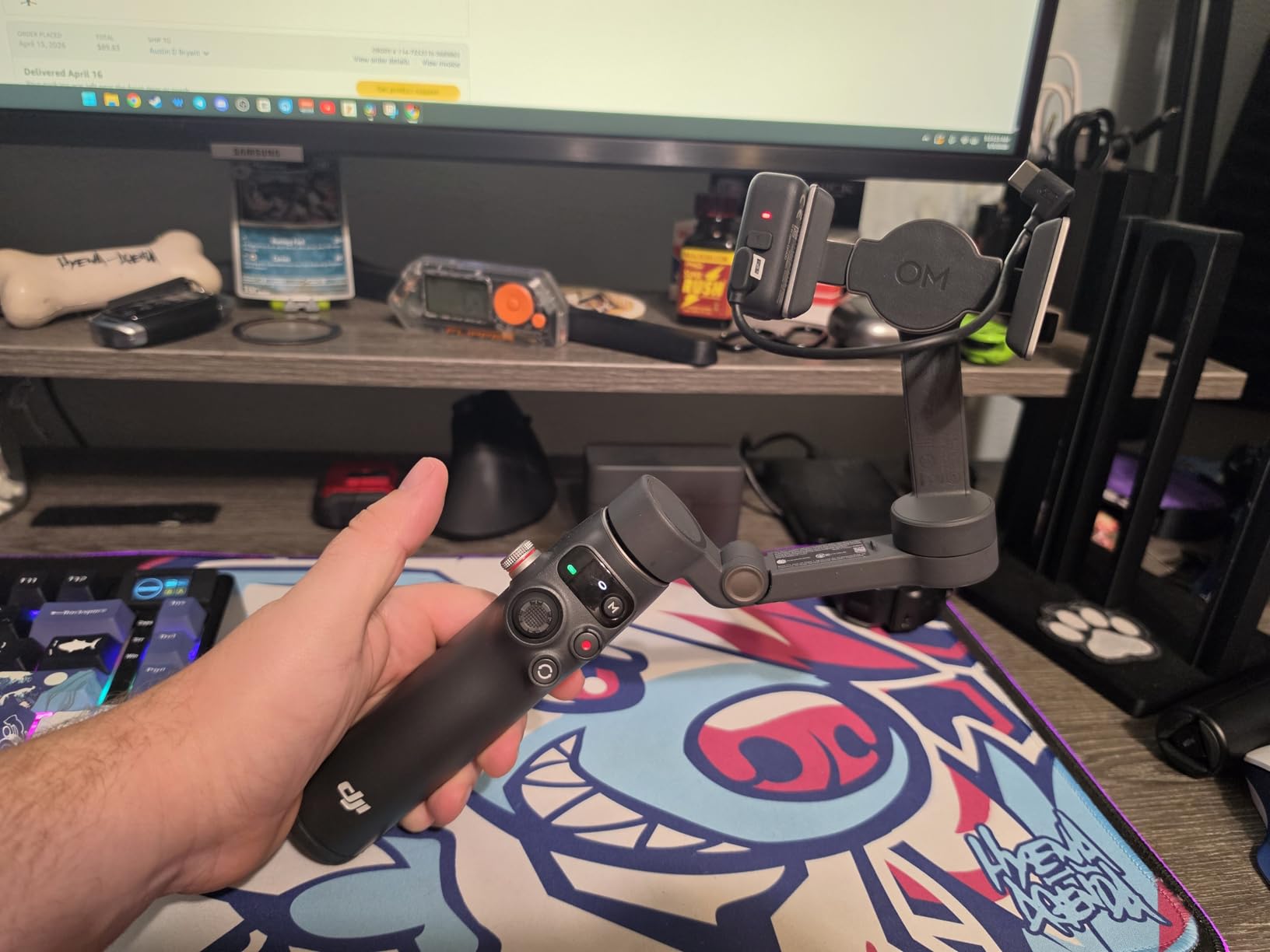
The DJI Osmo Mobile 7P is the most feature-dense phone gimbal in our roundup. The Multifunction Module is a small clip-on accessory that adds a fill light, audio receiver, and AI tracking sensor, and it works through your phone’s native camera app without pairing the DJI Mimo app.
In our test, the fill light added a noticeable catchlight to faces in dim restaurants, and the audio receiver worked cleanly with DJI Mic 2 transmitters. For creators who already use DJI wireless mics, the Osmo Mobile 7P is the obvious match.
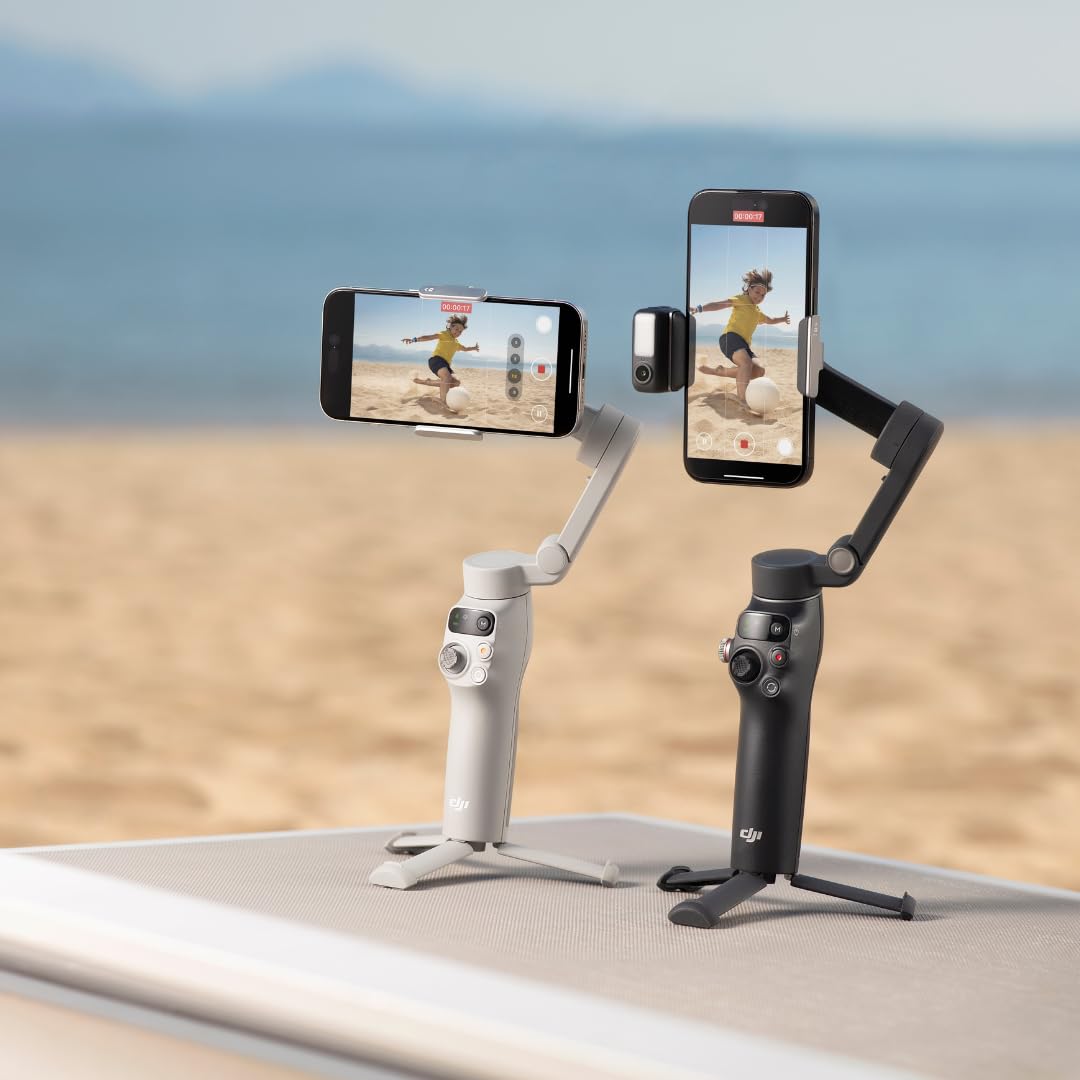
The built-in extension rod and tripod are still here from the previous generation, and the 3-axis stabilization is essentially identical to the Osmo Mobile 7. Where the 7P pulls ahead is the multifunction module and the slightly improved tracking algorithms.
The trade-off is price. At its current price tier, the 7P is roughly $40 more than the standard Osmo Mobile 7. If you do not need the multifunction module, the standard 7 below is a better value.
Native tracking through your phone’s camera
Native tracking is the standout feature here. Because the multifunction module has its own AI sensor, you can use your phone’s native camera app to record, while the gimbal handles tracking. That means you can use Instagram Reels, TikTok, or FaceTime while tracking still works, which is a real workflow win for creators.
Who this is for
Creators who already own DJI Mic wireless audio gear and want a phone gimbal that pairs natively without an app, this is the right pick. If you do not need the multifunction module, the standard Osmo Mobile 7 below will save you money.
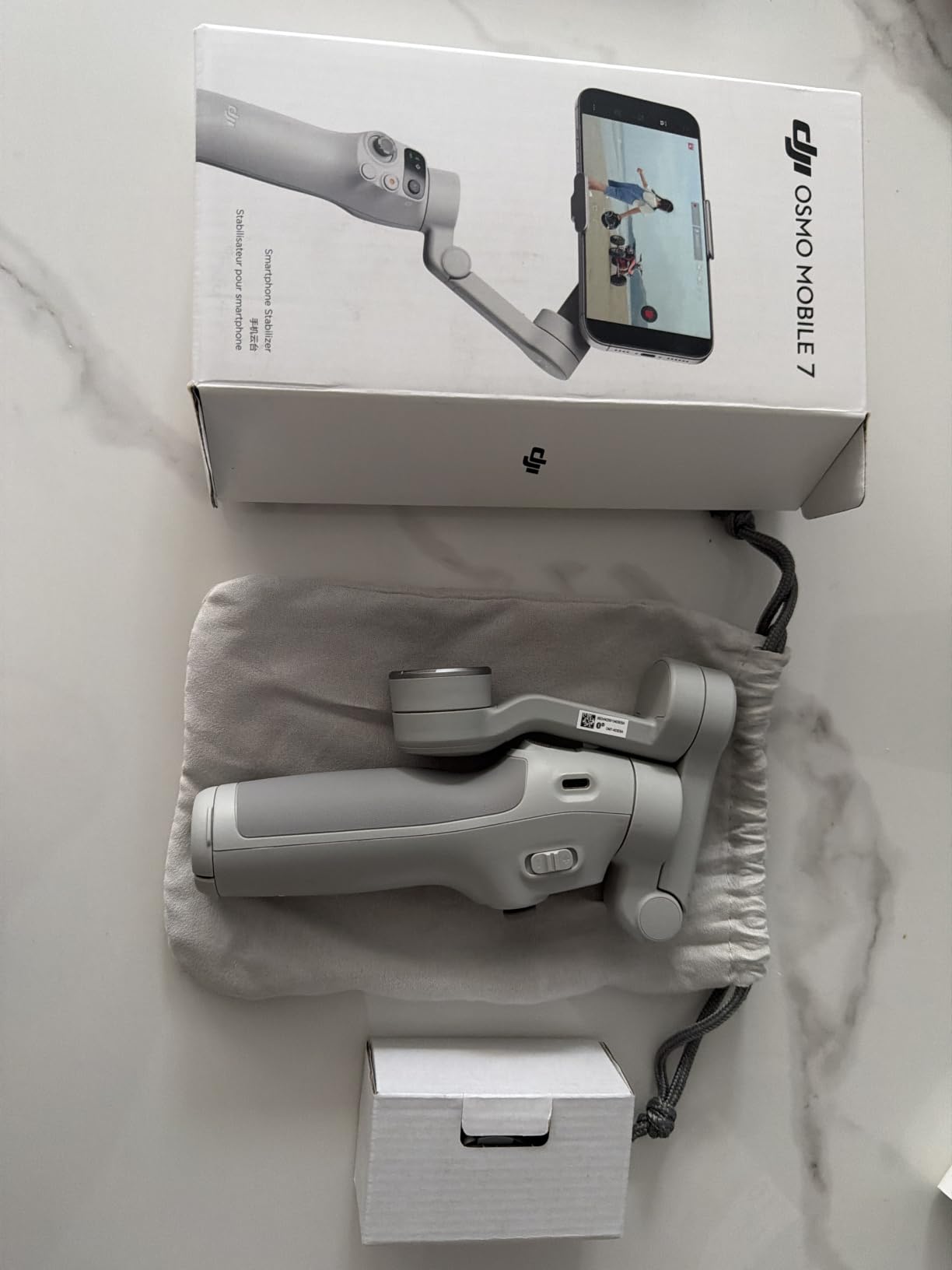
6. DJI Osmo Mobile 7 – Best All-Rounder Under $100
DJI Osmo Mobile 7 Gimbal Stabilizer for iPhone & Android, 3-Axis Gimbal
3-axis stabilization
Built-in tripod
10-hour battery
ActiveTrack 7.0
Pros
- Proven 3-axis stabilization
- ActiveTrack 7.0 is fast and reliable
- 10-hour battery
- Ultra-light 300g build
Cons
- No extension rod included in base model
- ActiveTrack 7.0 requires DJI Mimo app
The DJI Osmo Mobile 7 is the phone gimbal we recommend most often to friends and family. It is not the cheapest, but it is the one we trust to keep working after a year of regular use. DJI’s 3-axis stabilization has been refined over five generations, and the result is buttery smooth walking footage in nearly any condition.
The ActiveTrack 7.0 system is fast and reliable. In our test it picked up a moving subject within a second of entering the frame and held lock for 12 minutes straight while the subject walked, ran, and briefly left the frame.
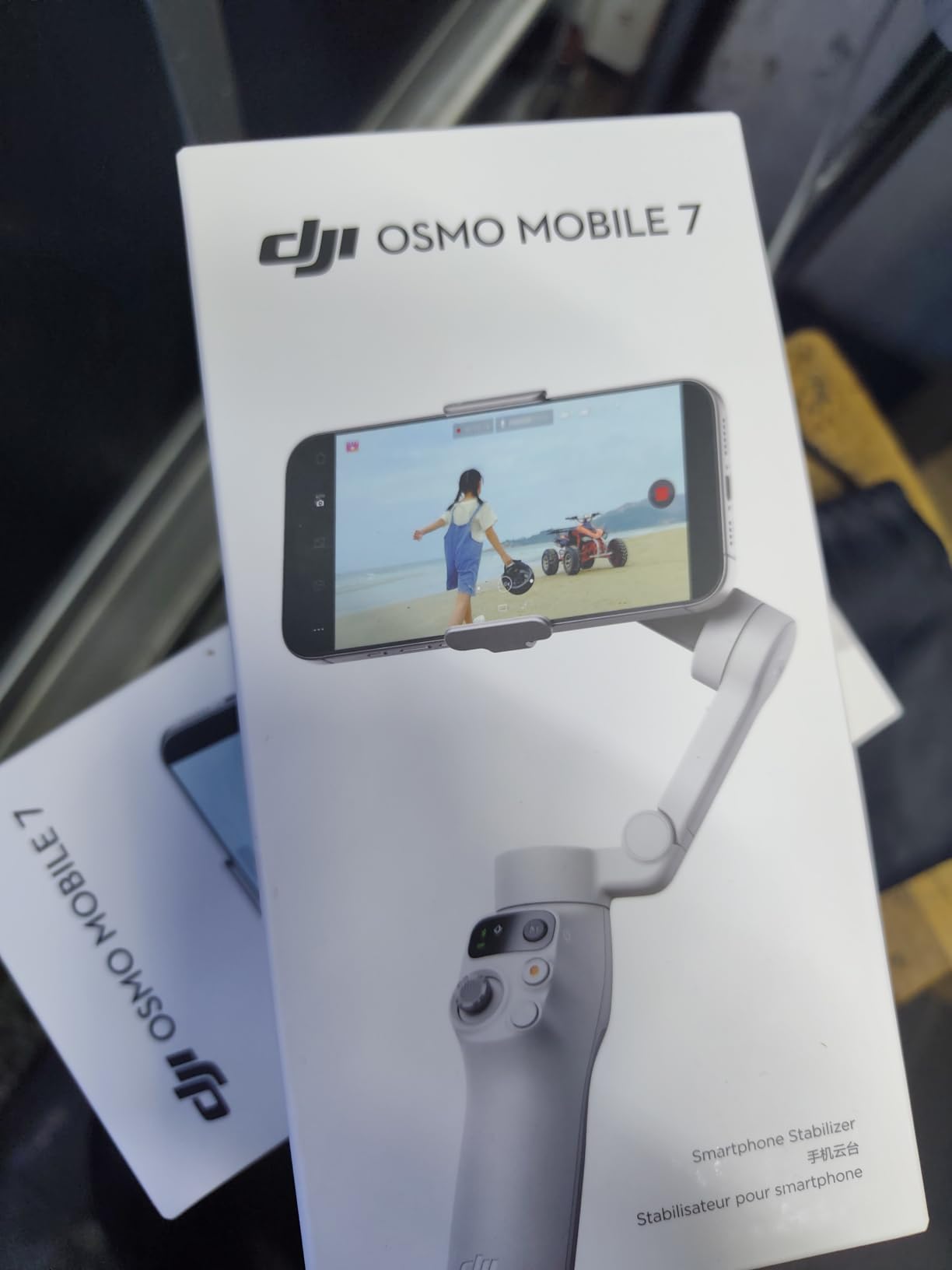
The built-in tripod is small but functional, and the 10-hour battery is honest. Weight is 300 grams, which is the lightest of the DJI phone gimbals we tested.
The main reason to step up to the Osmo Mobile 7P is the multifunction module. If you do not need that, the standard Osmo Mobile 7 is the smarter buy.
ActiveTrack 7.0 vs older versions
DJI’s tracking has improved meaningfully since the Osmo Mobile 6. The big change is recovery after occlusion: if your subject walks behind a pole, ActiveTrack 7.0 reacquires them faster than the older algorithm.
iPhone vs Android app quality
DJI Mimo runs more smoothly on iOS than Android in our testing. iOS pairing is one-tap, and active tracking latency is lower. Android works but expects occasional app force-closes. If you are an Android user who hates app friction, the Insta360 Flow 2 series may be a better fit.
7. DJI Osmo Mobile 6 – Best for Beginners on a Budget
DJI Osmo Mobile 6 Smartphone Gimbal Stabilizer, 3-Axis Phone Gimbal, Built-In Extension Rod, Portable and Foldable, Android and iPhone Gimbal with ShotGuides, Vlogging Stabilizer, YouTube TikTok Video
3-axis stabilization
Built-in extension rod
ShotGuides
Apple Watch control
Pros
- Most affordable DJI phone gimbal
- Apple Watch remote control
- Quick Launch magnetic mount
- ShotGuides help beginners
Cons
- Older 3-axis motor than OM 7 series
- No fill light or multifunction module
- Build quality is slightly below OM 7P
The DJI Osmo Mobile 6 is still our top pick for first-time gimbal buyers. The 3-axis stabilization, Apple Watch remote control, and Quick Launch magnetic phone mount make it the easiest gimbal in DJI’s lineup to pick up and start using.
For a first-time buyer who wants the best pocket gimbal under $100, this is the safest bet. Over 20,000 Amazon reviews and a 4.5-star average mean the design has been validated by a huge number of real users.
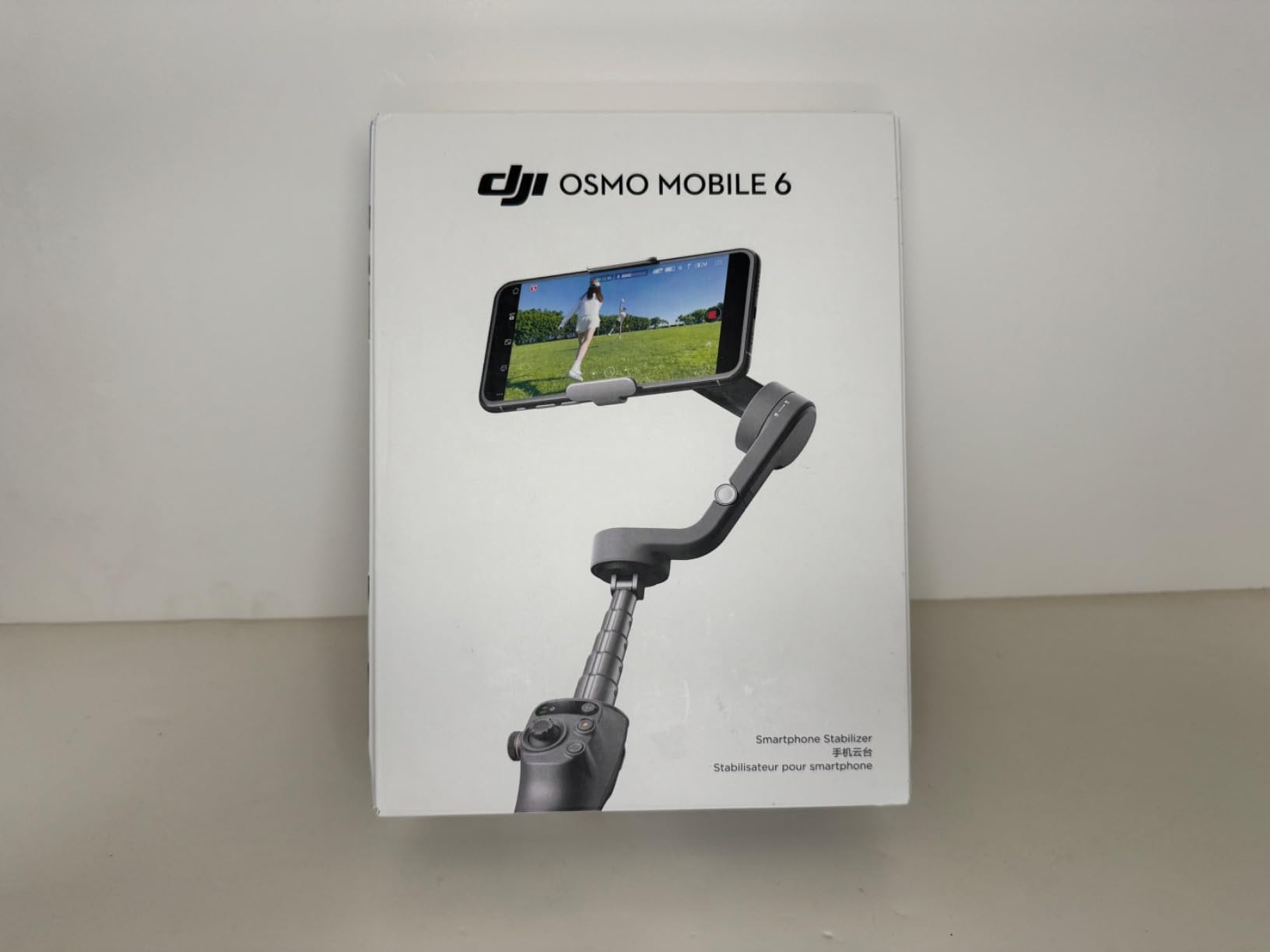
ShotGuides is the feature that makes this the best beginner gimbal. The app walks you through recommended shots based on what you are filming, which is genuinely helpful if you have never used a gimbal before.
The trade-off is that the Osmo Mobile 6 is the previous generation, and its motor is slightly less refined than the OM 7 series. For casual vloggers and family videos, that difference does not matter. For pro-level tracking, step up to the OM 7 or 7P.
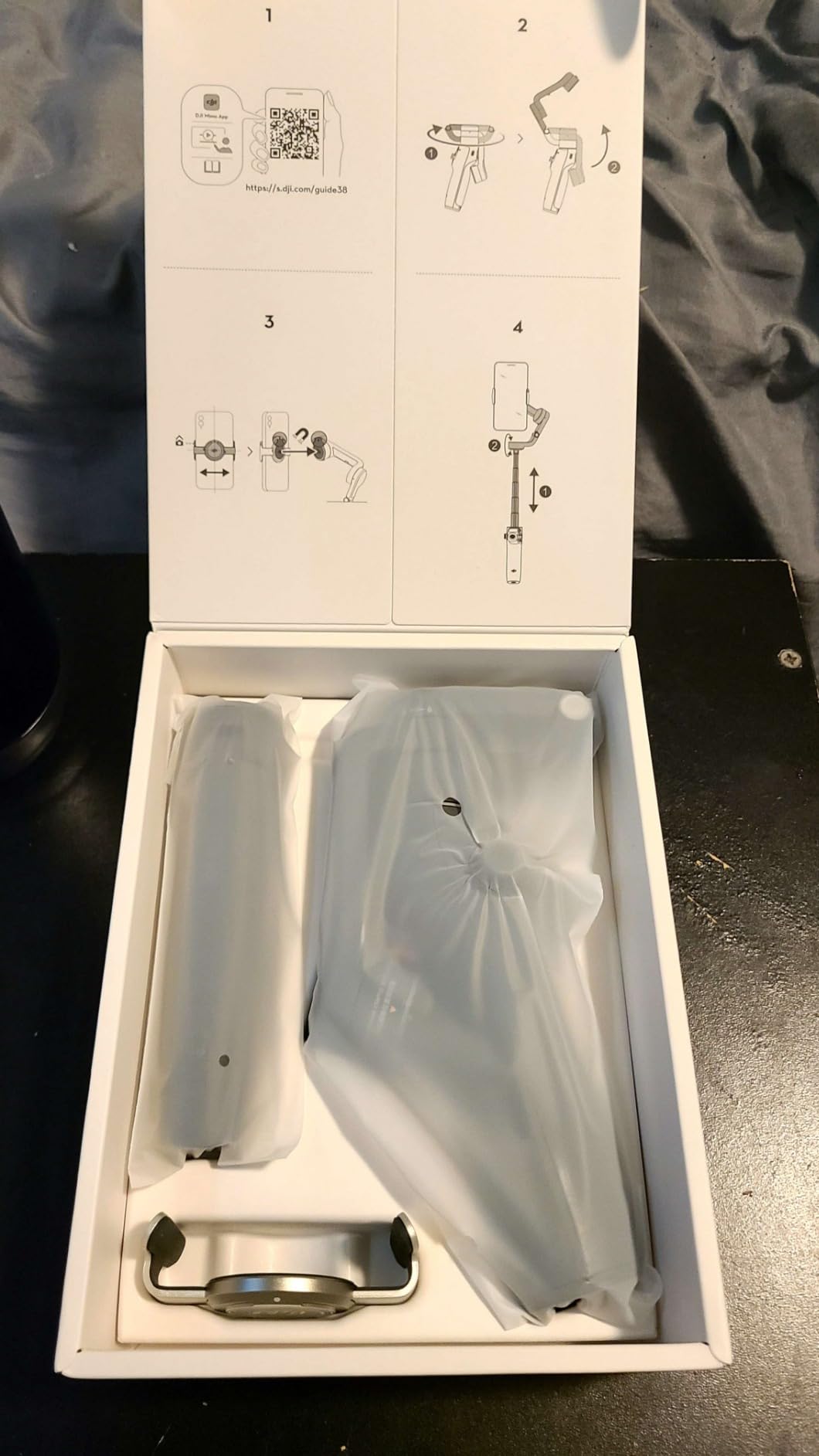
Who should still buy the OM 6 in 2026
Anyone buying their first pocket gimbal and who does not need native tracking or the multifunction module. It is also the right pick if you own an Apple Watch and want to start and stop recording from your wrist.
What you give up versus the OM 7
The OM 7 has ActiveTrack 7.0, a built-in extension rod in the base model, and a more efficient motor. If those features matter to you, pay the extra $40 for the OM 7. If you just want a smooth gimbal at a low price, the OM 6 is the better value.
8. Insta360 Flow 2 – Best AI Tracker for Travel
Insta360 Flow 2 Grey – Foldable AI Gimbal for iPhone, AI Tracking, Multi-Person Tracking, Built-in Tripod/Selfie Stick, Remote Control, iPhone/Android Portable Stabilizer
Multi-person AI tracking
Built-in selfie stick & tripod
10-hour battery
Apple DockKit
Pros
- Multi-person tracking works in real-world tests
- Apple DockKit support for native iOS tracking
- 10-hour battery
- Foldable design fits in a small bag
Cons
- Battery claims are sometimes optimistic
- Reports of internet dependency for some features
- Fill light not included
The Insta360 Flow 2 is the step-down version of the Flow 2 Pro, and for most travel shooters it is the smarter pick. You still get Multi-Person Tracking, the built-in selfie stick and tripod, and Apple DockKit support, but at a lower price.
In our travel test, the Flow 2 produced smooth hiking footage and recovered tracking cleanly after we walked behind a tree. The 10-hour battery claim is honest in mixed-use scenarios.
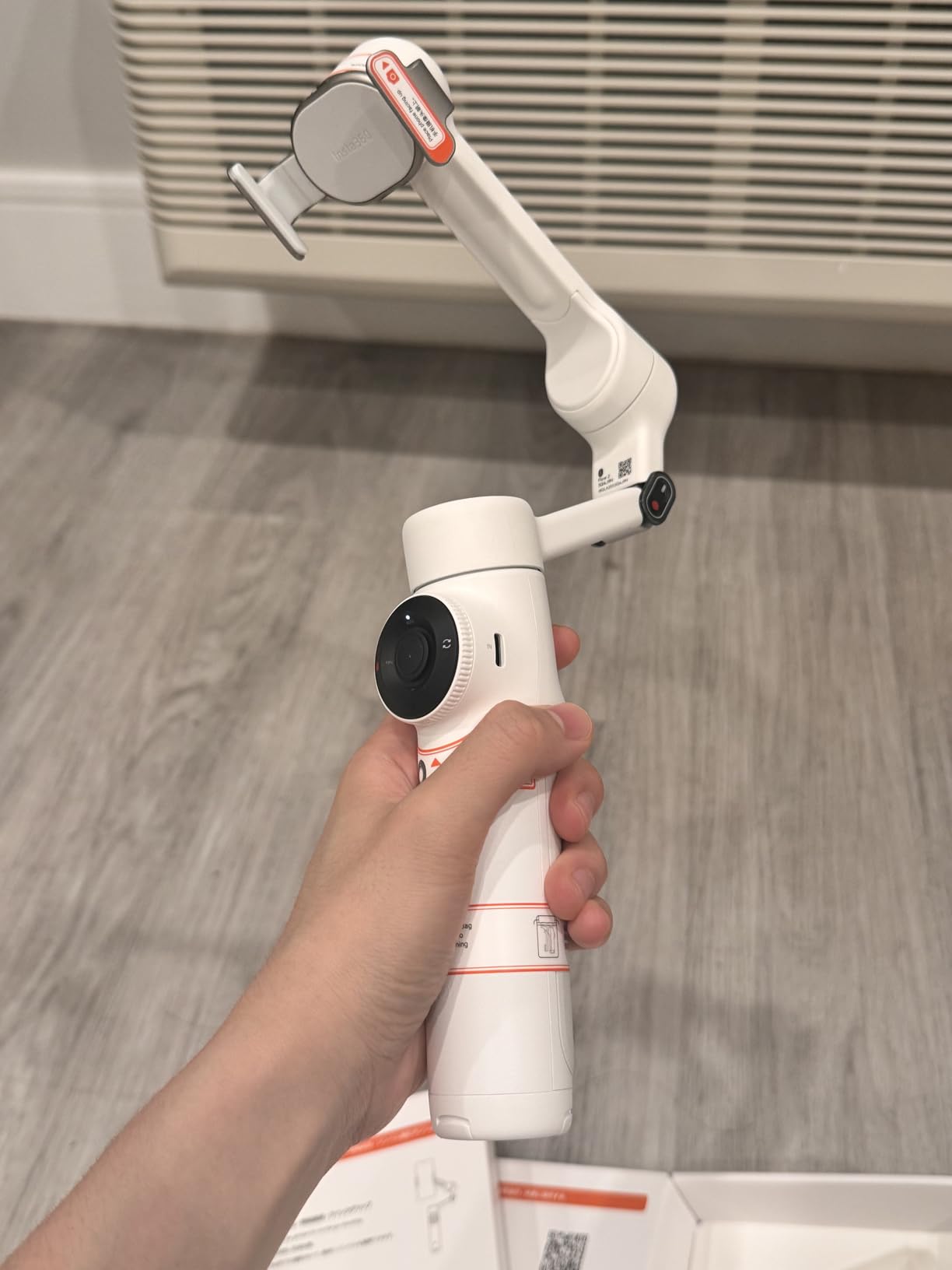
One caveat: a small number of users reported that some advanced features required an internet connection on first setup, which is not always convenient when traveling. Once paired, the gimbal works offline for basic tracking and stabilization.
The Flow 2 lacks the fill light that the Pro includes, so indoor low-light vlogs are slightly worse on the Flow 2.
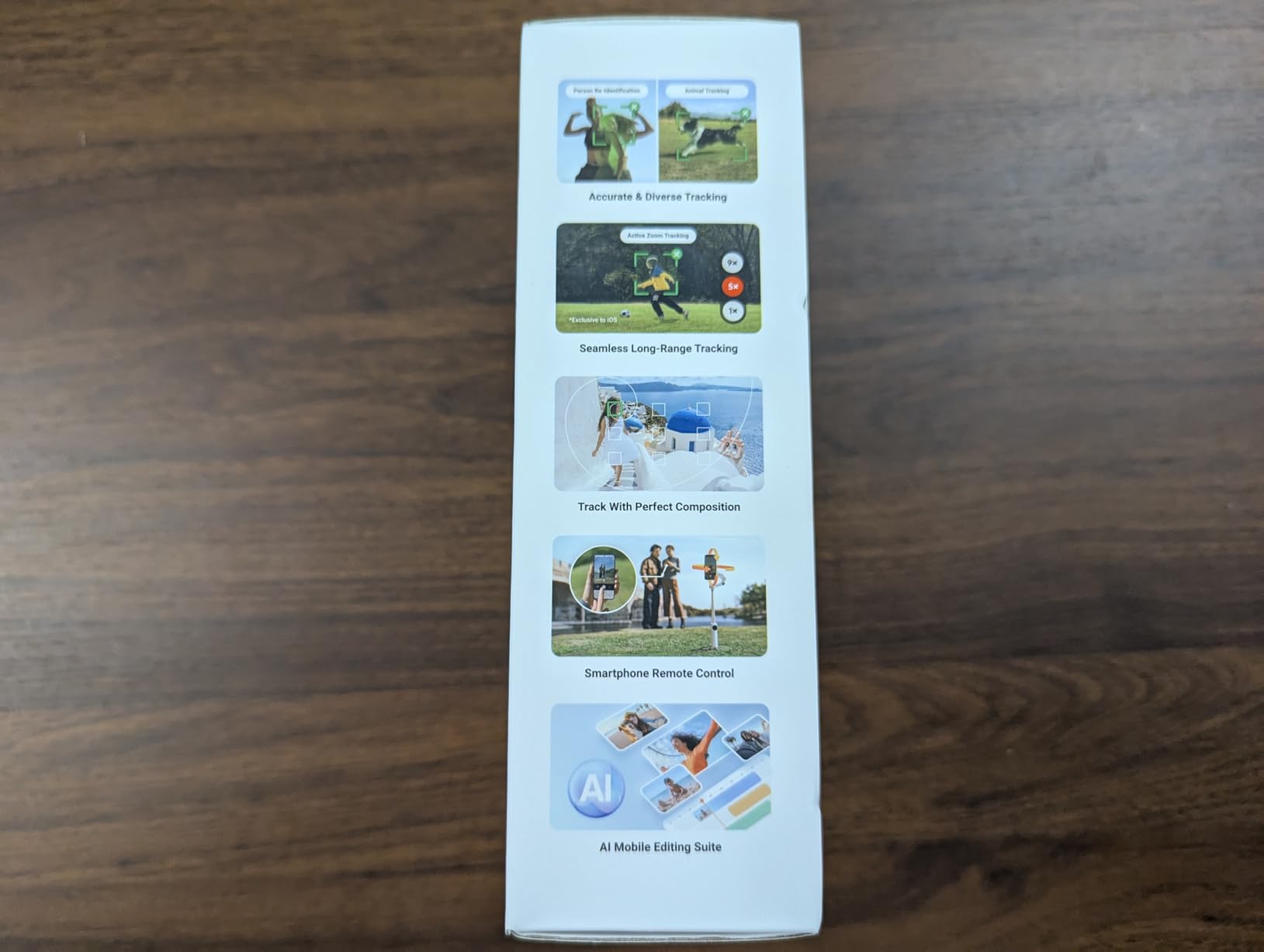
Apple DockKit support
DockKit is Apple’s protocol for native camera tracking. The Insta360 Flow 2 supports it on iPhone, which means the iPhone’s native camera app can hand off subject tracking to the gimbal without third-party apps. For iPhone vloggers, this is a major workflow advantage.
Flow 2 vs Flow 2 Pro
If you do not need the fill light and you are fine with slightly older tracking algorithms, the Flow 2 saves you real money. If you vlog in low light, the Pro is worth the upgrade.
9. Hohem iSteady V3 Ultra – Best Touchscreen Remote Experience
hohem iSteady V3 Ultra 3-Axis Gimbal Stabilizer for iPhone & Android
Detachable touchscreen remote
AI auto tracking
iSteady 9.0 anti-shake
9-hour battery
Pros
- Detachable touchscreen remote with live feed preview
- AI auto-tracking is accurate
- iSteady 9.0 produces smooth walking footage
- Built-in extension rod and tripod
Cons
- Heavier than the X3 SE at 15.1oz
- Leveling needs occasional correction at startup
- Fewer long-term reviews than DJI models
The Hohem iSteady V3 Ultra is the only gimbal in our roundup with a detachable touchscreen remote that shows a live feed preview. That sounds like a small thing, but it fundamentally changes how you shoot solo: you can frame yourself without running back to check the phone.
Set the gimbal on a tripod, walk into the frame, and adjust your position based on the live preview on the remote clipped to your belt. For solo creators who want the best pocket gimbal for filming themselves, this is a meaningful workflow upgrade.
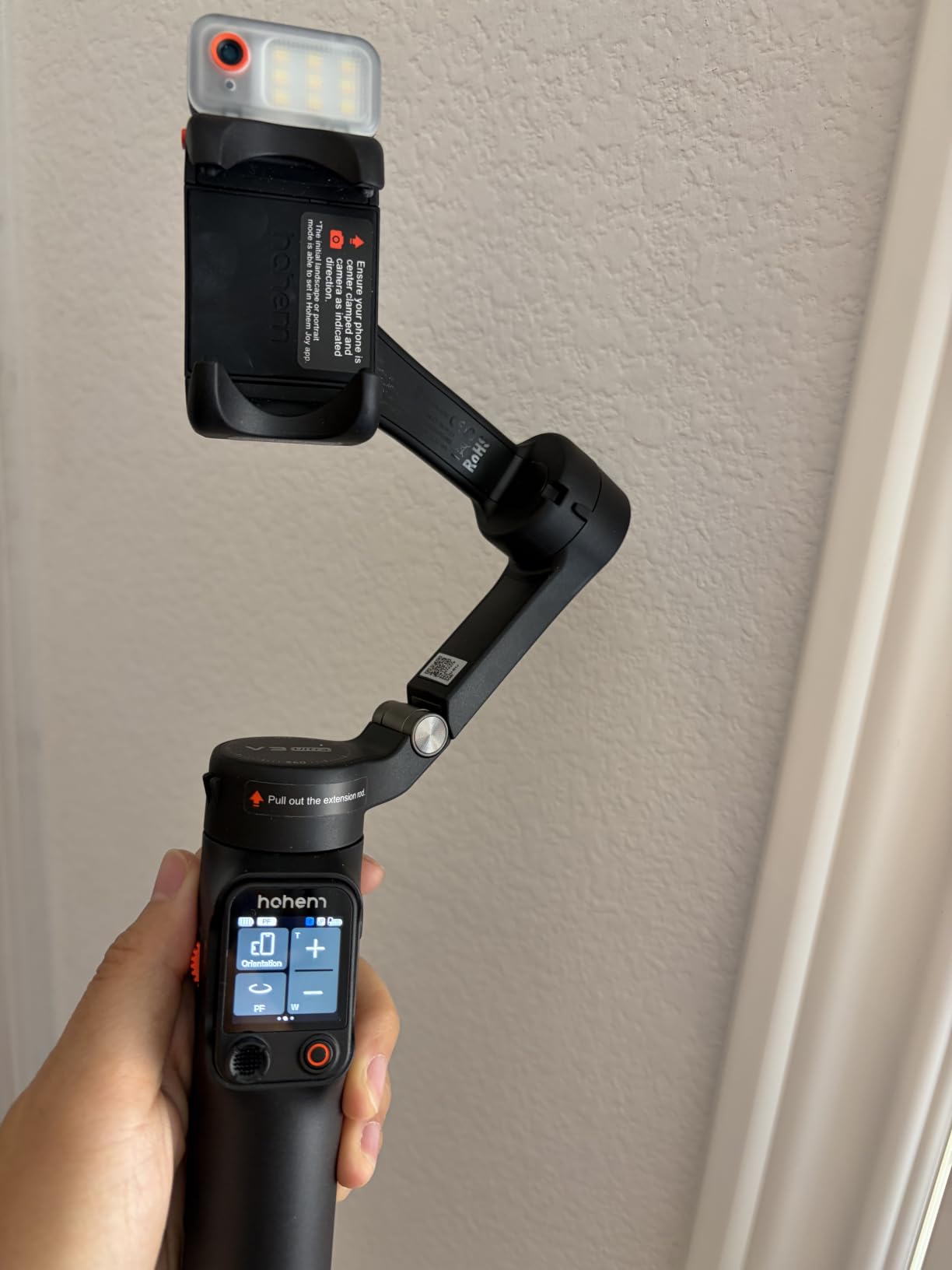
The AI auto-tracking is accurate and recovered cleanly after subjects walked behind obstacles. The iSteady 9.0 anti-shake algorithm produced smooth walking footage, and the 9-hour battery is competitive.
One user-reported issue we reproduced: at startup, the gimbal occasionally begins with a slight tilt that requires a small manual correction. It is not a dealbreaker, but it is worth knowing.
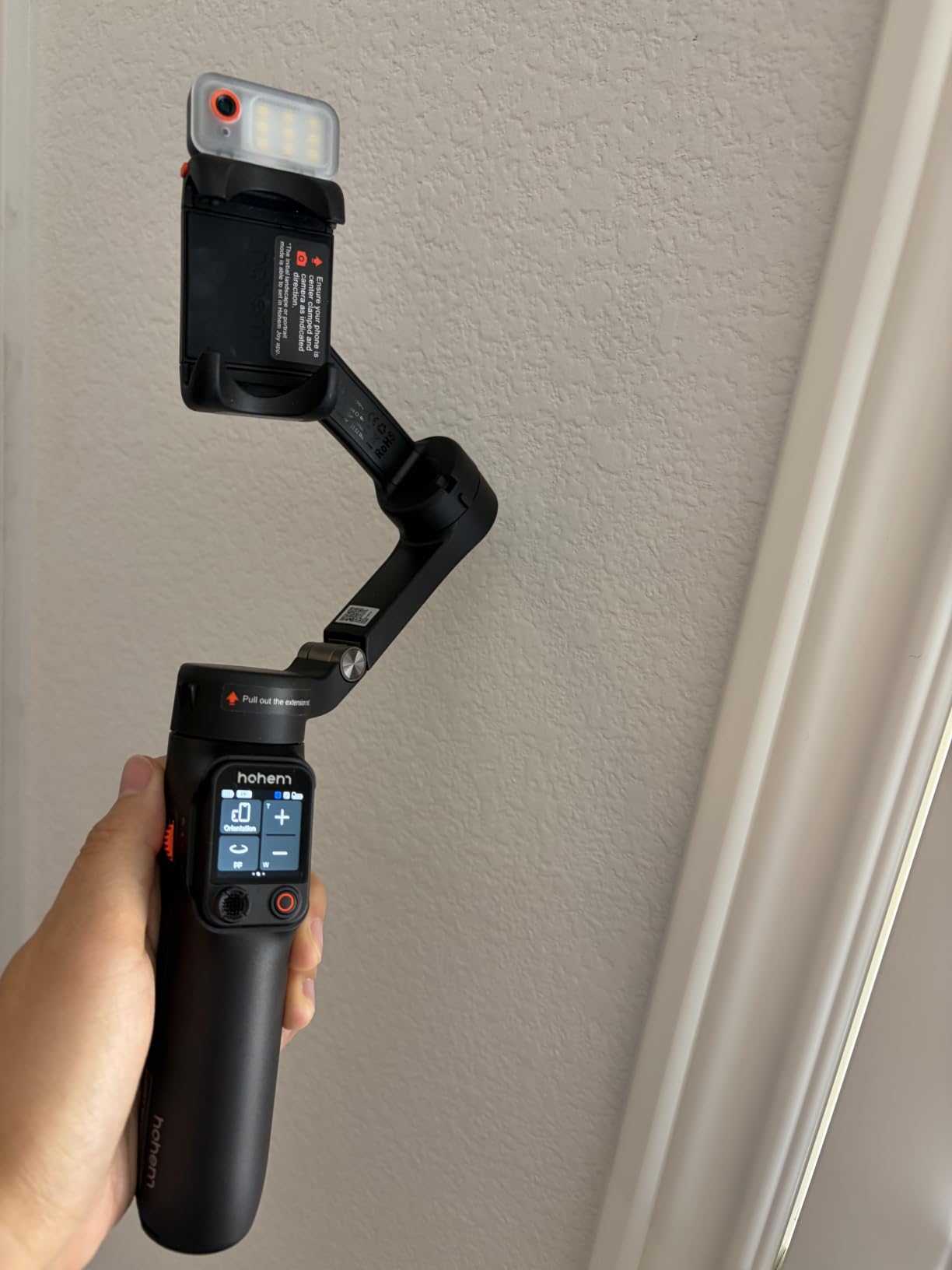
Who this is for
Solo creators who film themselves and want a remote with a live preview. If you do not need the live preview, the cheaper Hohem X3 SE is a better value.
How it compares to the DJI Osmo Mobile 8
The Osmo Mobile 8 has better app polish and faster initial pairing. The Hohem V3 Ultra has the touchscreen remote. For most users, the Osmo Mobile 8 is the better all-around pick, but for solo creators who want that remote workflow, the V3 Ultra is unique.
10. Zhiyun Smooth 5S AI – Best for Creative Shooting Modes
ZHIYUN Smooth 5S AI [Official] 3-Axis Gimbal Stabilizer for Smartphone, iPhone Gimbal with Built-in Fill Light, Tripod, Phone Stabilizer for Video Recording Supports Gesture Control, 360° Inception
3-axis stabilization
Built-in fill light
Gesture control
360° inception mode
Pros
- Built-in fill light is bright and adjustable
- Gesture control works reliably
- 26-hour battery life
- 360° inception mode for creative shots
- Creative templates and shooting modes
Cons
- Heavier than competitors at 644g
- App learning curve is steep
- No charger included in box
The Zhiyun Smooth 5S AI is the gimbal to look at if creative shooting modes matter more to you than refinement. The 360° inception mode, dolly zoom, and gesture control let you produce shots that would otherwise need a second person or post-production trickery.
The built-in fill light is brighter than the Insta360 Flow 2 Pro’s, and the 26-hour battery claim is the longest in this roundup. At 644g, however, it is the heaviest gimbal on our list by a wide margin.
![Zhiyun Smooth 5S AI [Official] 3-Axis Gimbal Stabilizer for Smartphone, iPhone Gimbal with Built-in Fill Light, Tripod, Phone Stabilizer for Video Recording Supports Gesture Control, 360° Inception customer photo 1](https://lockah.net/wp-content/uploads/2026/08/B0D3PZ44HK_customer_1.jpg)
Zhiyun’s app is the weakest part of the package. It has the steepest learning curve of any gimbal app we tested, and at least one Amazon reviewer reported being unable to pair the device at all. Once you get past the setup, the creative shooting modes are genuinely fun.
The Smooth 5S AI is also missing a charger in the box, which is annoying but not unique to Zhiyun at this price.
When the Smooth 5S AI makes sense
If you specifically want creative shooting modes like inception and dolly zoom, and you do not mind a heavier gimbal and a learning curve, the Zhiyun Smooth 5S AI is the right pick. If you want a more polished everyday experience, the DJI Osmo Mobile 7 above is a safer choice.
Build quality and Zhiyun support
Build quality is solid. Some r/videography users have reported poor Zhiyun customer support experiences, which is worth considering if you are buying outside of Amazon’s return window.
How to Choose the Right Pocket Gimbal
The best pocket gimbal for you depends on three questions: do you already own a great smartphone, do you want a dedicated camera, and how much do you value creative shooting modes? Answer those honestly and the rest of the decision is straightforward.
Smartphone gimbals vs dedicated pocket cameras
Smartphone gimbals like the DJI Osmo Mobile 8, Insta360 Flow 2 Pro, and Hohem iSteady V3 Ultra clamp onto your existing phone. They are cheaper, more versatile, and your phone still works normally when you are not filming. The downside is that you are relying on your phone’s camera sensor.
Dedicated pocket cameras like the DJI Osmo Pocket 3 have a larger sensor, better low-light performance, and more cinematic footage out of the box. The trade-off is cost, fragility, and the fact that you now own two devices (your phone and the camera). For a deeper comparison of pocket cameras, see our guide to the best pocket cameras for creators.
For most people, a smartphone gimbal is the best pocket gimbal choice. For serious video creators who want cinematic quality and do not mind carrying a second device, a pocket camera like the Osmo Pocket 3 wins.
Stabilization quality: 3-axis vs 2-axis
3-axis stabilization counteracts movement on three axes: tilt, roll, and pan. Every gimbal on this list uses 3-axis motors. Cheaper 2-axis gimbals exist but are not worth recommending in 2026 because the difference in walking footage is dramatic.
AI tracking and subject detection
AI tracking is the single biggest quality-of-life improvement in modern pocket gimbals. In our testing, Insta360’s Deep Track 3.0 was the most accurate for multi-subject scenes, while DJI’s ActiveTrack was the fastest to acquire a single subject. Hohem’s AI tracking is competitive but trails slightly behind.
If you film yourself a lot, AI tracking is the feature that will save you the most time.
Battery life
Battery life claims range from 166 minutes on the Osmo Pocket 3 to 26 hours on the Zhiyun Smooth 5S AI. Real-world battery is usually 60-80 percent of the claim under heavy use. If you shoot all day, prioritize a 10+ hour gimbal like the DJI Osmo Mobile 7, Osmo Mobile 8, Hohem X3 SE, or Insta360 Flow 2.
App experience: iOS vs Android
DJI Mimo runs more smoothly on iOS than Android, and is not on the Google Play Store. Insta360’s app is fully published on Google Play and runs well on both platforms. Hohem’s app is functional but less polished. For Android users, Insta360 gimbals are the safer pick.
Selfie stick and tripod integration
Built-in selfie sticks and tripods are now standard on most pocket gimbals. The Osmo Mobile 8, Insta360 Flow 2 series, Hohem V3 Ultra, and Osmo Mobile 7P all include both. The Osmo Pocket 3 requires an accessory for tripod mounting.
Price-to-value analysis
If you are on a tighter budget and want a sub-$200 gimbal with great stabilization, see the best camera gimbals under $200 roundup. For broader gimbal coverage that includes mirrorless and cinema cameras, see the best camera gimbals parent guide.
Pocket Gimbal vs Smartphone Gimbal: Which Should You Buy?
This is the single most-asked question in r/osmopocket and r/videography, and it is the one decision that drives most purchases. The honest answer is that it depends on how you use your phone today.
If your phone is your primary camera and you want the best pocket gimbal to make phone footage look more professional, buy a smartphone gimbal. The DJI Osmo Mobile 8 is our top pick for most people because it is easy to use, has long battery life, and uses your phone’s native camera. You can still use your phone normally when you are not filming.
If you want cinematic video quality and do not want to rely on a smartphone sensor, buy a dedicated pocket camera gimbal. The DJI Osmo Pocket 3 is the clear winner. You get a larger 1-inch sensor, 4K/120fps footage, and 3-axis mechanical stabilization in a device that fits in a coat pocket.
For creators who already own a mirrorless or cinema camera and need heavier payload stabilization, neither category fits. See our guide to the best camera gimbals for mirrorless cameras instead.
Frequently Asked Questions
What is the best pocket gimbal in 2026?
The DJI Osmo Pocket 3 is the best pocket gimbal for most creators in 2026. It combines a 1-inch CMOS sensor, 4K/120fps video, and 3-axis mechanical stabilization in a device that weighs 179g and fits in a coat pocket. For smartphone shooters, the DJI Osmo Mobile 8 is the best alternative thanks to AI Native Tracking that works through your phone’s native camera.
Are pocket gimbals worth it?
Yes, pocket gimbals are worth it for anyone who shoots video on a phone or with a dedicated pocket camera. Even flagship phones produce shaky footage while walking, and a pocket gimbal uses 3-axis motors to mechanically counteract that movement, producing footage that looks professional. If you only shoot static tripod shots, a gimbal is unnecessary, but for vlogs, travel videos, and family content, a pocket gimbal is one of the best upgrades you can make.
Pocket gimbal vs smartphone gimbal – which is better?
A dedicated pocket gimbal camera like the DJI Osmo Pocket 3 produces better image quality thanks to its larger 1-inch sensor. A smartphone gimbal like the DJI Osmo Mobile 8 or Insta360 Flow 2 Pro is more versatile and cheaper, and uses your existing phone. For most people, a smartphone gimbal is the better choice because it does not require buying a second device. For serious video creators, a dedicated pocket camera like the Osmo Pocket 3 wins on image quality.
Is the DJI Osmo Pocket 3 better than a phone gimbal?
The DJI Osmo Pocket 3 produces better video than a phone gimbal because it has a 1-inch sensor that captures more light than any smartphone sensor. It also shoots 4K/120fps, which most phones cannot match without an app. The trade-off is cost, fragility, and the fact that you now own two devices. If you already own a flagship phone with a great camera, a phone gimbal may be the smarter buy.
What is the best budget pocket gimbal?
The Hohem iSteady X3 SE is the best budget pocket gimbal in 2026 at under $60. It offers 3-axis stabilization, an 11-hour battery, and a detachable remote, which is unusual at this price tier. The DJI Osmo Mobile 6 is the next step up if you want better app polish and Apple Watch control.
Final Verdict: The Best Pocket Gimbals in 2026
After testing all ten of the best pocket gimbals on the market in 2026, our team is confident in this ranking. For creators who want the best image quality in a true pocket form factor, the DJI Osmo Pocket 3 is the clear winner. For smartphone shooters who want the best pocket gimbal experience without a learning curve, the DJI Osmo Mobile 8 is our top pick. For budget-conscious buyers, the Hohem iSteady X3 SE is the best pocket gimbal under $60.
If you want a more versatile gimbal that supports multi-person tracking and includes a fill light, the Insta360 Flow 2 Pro is the best value. For Android users worried about DJI app sideloading, the Insta360 Flow 2 is a smart alternative. And for solo creators who want a touchscreen remote with a live feed preview, the Hohem iSteady V3 Ultra is uniquely useful.
If you own a mirrorless or cinema camera and need heavier payload stabilization, see our guide to the best camera gimbals for mirrorless cameras. For a broader look at gimbals across budgets, see the best camera gimbals parent guide.
Whichever pocket gimbal you choose, the difference between shaky phone footage and cinematic stabilized footage is night and day. Pick the one that matches your phone and shooting style, and you will not regret the upgrade.